 Antioxidant related to nutrition, stomatal density, and yield in cilantro (Coriandrum sativum L.) nourished with leachate from compost based on vegetable waste
Abstract
The food crisis in Peru has intensified due to the increase in the costs of raw materials, such as energy sources, fertilizers, and other industrial inputs, as a result of global socioeconomic instability. For this reason, research was conducted on the antioxidant in relation to nutrition, stomatal density, and yield in cilantro nourished with compost leachate based on vegetable waste (CLPW). The objective was to analyze the antioxidants in relation to nutrition, stomatal density, and the yield of cilantro nourished with CLPW. The methodology was based on an applied experimental approach, so the statistical model of completely randomized block design was employed, which consisted of 3 blocks and 5 treatments: T1 with 0, T2 with 2, T3 with 3, T4 with 4, and T5 with 5 liters of CLPW per 200 liters of water. The doses were applied 15 and 30 days after planting. The data obtained from the physical characteristics of cilantro, such as total length, plant weight, number of leaves, and commercial yield, were processed using analysis of variance and the Duncan test. Additionally, the concentration of nutrients (nitrogen, potassium, phosphorus, calcium, magnesium, sulfur, molybdenum, iron, manganese, copper, zinc, boron, chlorides, and sodium), antioxidant capacity, stomatal density in leaves, and profitability were evaluated. The results determined that T5 stood out in total length with 55.23 cm, plant weight with 79.63 g, number of leaves with 162, and commercial yield with 27.017 t/ha. Regarding nutrient concentration, T5 stood out in calcium, magnesium, iron, boron, and chlorides, with a profitability of 334%. T4 stood out in antioxidant capacity with 4638.1 μmol Trolox/100 g sample, while T1 showed the highest stomatal density with 143 stomata/mm2. In conclusion, T4, with 4638.1 μmol Trolox/100 g sample, exhibited the highest antioxidant capacity. However, T5, with 4212.8 μmol Trolox/100 g sample, promoted greater nutrient absorption, lower stomatal density, and other biochemical reactions, which resulted in strengthening against environmental stress and, consequently, higher yield.
Keywords:
antioxidant; leachate; dosage; nutrition; plant residues; yield; cilantro
Resumo
A crise alimentar no Peru se intensificou devido ao aumento dos custos de matérias-primas, como fontes de energia, fertilizantes e outros insumos industriais, em decorrência da instabilidade socioeconômica global. Por esse motivo, foi realizada uma pesquisa sobre o antioxidante em relação à nutrição, densidade estomática e produtividade em coentro nutrido com chorume de composto à base de resíduos vegetais (CLPW). O objetivo foi analisar os antioxidantes em relação à nutrição, densidade estomática e produtividade de coentro nutrido com CLPW. A metodologia foi baseada em uma abordagem experimental aplicada, e para isso foi empregado o modelo estatístico de delineamento em blocos casualizados, que consistiu de três blocos e cinco tratamentos: T1 com 0, T2 com 2, T3 com 3, T4 com 4 e T5 com 5 litros de CLPW para 200 litros de água. As doses foram aplicadas 15 e 30 dias após o plantio. Os dados obtidos das características físicas do coentro, como comprimento total, massa da planta, número de folhas e produtividade comercial, foram processados por meio da análise de variância e do teste de Duncan. Adicionalmente, foram avaliadas a concentração de nutrientes (nitrogênio, potássio, fósforo, cálcio, magnésio, enxofre, molibdênio, ferro, manganês, cobre, zinco, boro, cloretos e sódio), capacidade antioxidante, densidade estomática nas folhas e lucratividade. Os resultados determinaram que T5 se destacou em comprimento total com 55,23 cm, peso da planta com 79,63 g, número de folhas com 162 e produtividade comercial com 27,017 t/ha. Em relação à concentração de nutrientes, T5 se destacou em cálcio, magnésio, ferro, boro e cloretos, com rentabilidade de 334%. T4 se destacou em capacidade antioxidante com 4638,1 μmol Trolox/100 g amostra, enquanto T1 apresentou a maior densidade estomática com 143 estômatos/mm2. Conclui-se que T4, com 4638,1 μmol Trolox/100 g amostra, apresentou a maior capacidade antioxidante. Já T5, com 4212,8 μmol Trolox/100 g amostra, promoveu maior absorção de nutrientes, menor densidade estomática e outras reações bioquímicas, o que resultou em fortalecimento contra estresse ambiental e, consequentemente, maior produtividade.
Palavras-chave:
antioxidante; lixiviado; dosagem; nutrição; resíduos vegetais; colheita; coentro
1. Introduction
The global food crisis has been exacerbated by the rising cost of raw materials such as energy, fertilizers, and other inputs. This is due to the economic confrontation between the US and China, the war between Russia and Ukraine, and the effects of the post-pandemic. According to Abubakr Naeem et al. (2023), empirical results indicate that economic instability had particularly high spillover effects during Covid-19 and the Russia-Ukraine war, with health and geopolitical risks significantly impacting the return system and volatility in the markets.
In Peru, the economic situation has also been affected by the increase in fertilizers by more than 25% compared to before the pandemic. This increase has raised production costs, put farmers in debt, and has been more noticeable in rural areas of the country. As a result, the price of food and other products necessary for comfort has increased. In this regard, Legua Cárdenas et al. (2023) mention that in Peru, the price of fertilizers increased by more than 25% compared to previous years, raising the agricultural production cost of many food products.
Due to this situation, it is necessary to innovate alternatives with a sustainable approach, such as the utilization of agricultural waste, such as cow manure and bean or pea vines, which are generated in large quantities and, in many cases, are not given added value. Synthetic fertilizers are often chosen, which contaminate the environment and affect soil properties due to nitrate leaching. According to Chojnacka et al. (2020), biological waste can be used as by-products in the production of fertilizers, adding value to their formulations and improving efficiency and sustainability. Likewise, Yepis Vargas et al. (1999) mention that the high amount of total inorganic nitrogen applied to the soil filters down to deeper layers, where it cannot be utilized by plants, causing nutritional deficiency, economic consequences, and possible environmental contamination.
It is important to mention that the residues generated in the field can be used to produce CLPW. When applied to cilantro crops via foliar spray, this liquid fertilizer provides nutrients such as nitrogen, phosphorus, potassium, and other elements that strengthen the plant against adverse factors like climate, nutritional deficiency, and pests. Javad Tahsini et al. (2024) highlight that the proper treatment of compost leachate is vital, as it reduces pollution and promotes sustainable waste management practices. Likewise, Gálvez Torres et al. (2019), cited by Cruz Nieto et al. (2022), mention that the leachate based on sugarcane residues, obtained by natural means, presented 1.60% nitrogen (N), 0.90% P2O5, 0.48% K2O, 4.98% CaO, 0.20% MgO, and a C/N ratio of 13.39, which influenced the radish yield.
In addition, foliar-applied CLPW must remain on the leaves for at least 4 hours for the nutrient solution to penetrate the epidermis. Nutrients move through the apoplast, the space between the cell wall and the plasma membrane, and the symplast, which transports nutrients to the cytoplasm of each cell, connected by plasmodesmata. According to Fageria et al. (2009), 3-4 hours are crucial for nutrients applied through the canopy to be absorbed, so rainy and windy days should be avoided. Azcon-Bieto and Talón (2000) mention that the apoplast is the space outside the plasma membrane where the cell wall is located and can present continuity in the tissue. Pérez Leal (2017) explains that the symplast is the space in which the plasma membrane is continuous and extends from one cell to another through the plasmodesmata.
It should be explained that the application of CLPW incorporates essential nutrients such as nitrogen, phosphorus, potassium, and other elements, which can promote optimal biochemical reactions. These nutrients increase antioxidants and stabilize reactive oxygen species (ROS) molecules, which are elevated due to environmental, nutritional stress, or pest damage, thereby improving cilantro yield. The aforementioned is supported by Ahmad Waraich et al. (2011), who indicate that water stress inhibits photosynthesis by closing the stomata and damaging the chlorophyll content and the photosynthetic apparatus, altering the balance between ROS production and antioxidant defense, which induces oxidative stress in proteins, membrane lipids, and other cellular components. Kapoor et al. (2019) argue that cells develop a balanced system to counteract the effect of ROS, composed of an antioxidant defense system with enzymes such as superoxide dismutase, catalase, and glutathione peroxidases, in addition to non-enzymatic antioxidants. Rostaei et al. (2024) determined that most organic fertilizers, especially those derived from broiler chickens, sheep, and vermicompost, increase antioxidant activity in medicinal plants, thereby improving their productivity and quality.
For this reason, the effect of the antioxidant on nutrition, stomatal density, and yield in cilantro nourished with CLPW was investigated. The objective was to analyze the antioxidant in relation to nutrition, stomatal density, and yield in cilantro nourished with CLPW. To this end, this experiment was conducted using the completely randomized block design statistical model, consisting of 3 blocks and 5 treatments.
Finally, the purpose of this research is to utilize the waste generated in the field, such as plant residues and cow manure, by adding value to them through their use as CLPW. In appropriate doses, this liquid fertilizer will increase antioxidant capacity, which will influence yield and serve as a recommendation for the farmers in the area.
2. Materials and Methods
2.1. Type of research
It is based on applied research with an experimental approach, as continuous evaluations of cilantro samples treated with different doses of CLPW were conducted, and the data were processed through statistical analysis. In this way, the appropriate dose to achieve the highest yield could be determined.
2.2. Population
The study population refers to cilantro plants cultivated between 0 and 150 meters above sea level. Therefore, the data obtained in this experiment were validated.
2.3. Sample
The sample consisted of 20 cilantro plants from each treatment, which represented 25% of the 80 plants in each plot. To avoid the edge effect, these plants were marked in the twin furrows at the center of each plot. Subsequently, their physical characteristics were evaluated.
2.4. Study factor
To establish the doses of CLPW, soil analysis, the amount of liquid fertilizer applied by local farmers (2 to 3 liters per 200 liters of water), and the recommendation of Tencio (2017), who indicated that the liquid fertilizer, made from organic and mineral waste, ferments for 15 days and is applied at a dose of 300 cc per 18 liters of water, were taken into account. Therefore, a standard dose of 3 liters of CLPW in 200 liters of water was established for cilantro cultivation. Likewise, it is noted that fieldwork, cleaning, irrigation, and other agronomic tasks were carried out in the same manner across all treatments; only the dose of leachate based on vegetable compost residues was varied. Next, Table 1 is presented, indicating the doses of CLPW.
2.5. Statistical processing
2.5.1. Statistical analysis of physical characteristics
-
Analysis of variance
Once the data on the physical characteristics of cilantro, such as total length, plant weight, number of leaves, and commercial yield, were obtained, they were processed using an analysis of variance. The F value for each evaluation was calculated and compared with the tabulated F values (F cal > F tab at a 5% error level). In this way, it was determined whether there was significance in the treatments; that is, whether the dose of CLPW had an effect or not. It should be noted that the tabulated F values were obtained from the Fisher table at a 5% error.
-
Duncan's test
After the data on the physical characteristics of the cilantro crop were processed using analysis of variance, the Duncan test at a 5% error level was conducted, which grouped the treatment averages with letters. In this way, it was determined whether there was homogeneity when the letters were the same or, on the contrary, if there was differentiation. Additionally, it was specified which treatment stood out in relation to the others.
2.5.2. Statistical processing of antioxidant capacity
A random selection of cilantro plants was made, taking at least 300 g representative of each treatment in the blocks before harvest. The samples were labeled and taken to the laboratory of the Institute of Nutritional Research (IIN), where they were analyzed to determine the antioxidant capacity in units of μmol Trolox/100 g of sample. Subsequently, the data were organized in a table from lowest to highest according to the doses of CLPW and compared with the commercial yields (See Table 2) (IIN, 2024). In this way, it was established that the amount of antioxidant capacity influenced the yield.
2.5.3. Statistical processing of stomata quantification
Representative samples of fresh cilantro leaves from each treatment were taken and placed on glass slides, which were examined with a Quanta model scanning electron microscope at 200 µm (micrometers). Subsequently, micrographs were taken and printed on A4 sheets. The measurement of 200 µm was projected onto the width and length of the leaf, resulting in an area of 0.133 mm2. In that area, the stomata were counted, and this number was divided by the area of the micrograph, thus obtaining the stomatal density. This procedure was carried out for all treatments and was related to the yield. Below is the Formula 1 for stomatal density.
where: De = Stomatal density; Ne = Number of stomata; Al. = Lens area (0.133 mm2).
2.6. Data collection techniques
For data collection, observation and measurement techniques were employed to assess the physical characteristics of cilantro, such as total length, plant weight, number of leaves, and commercial yield. For this, instruments such as a digital scale, ruler, and other precision materials were used. For the analysis of the chemical characteristics of the soil, antioxidant capacity, and nutrients in cilantro leaves, laboratory materials from the National Institute of Agrarian Innovation (INIA)-Huaral, AGQ Perú SAC, and IIN were used. For the observation and quantification of stomata, a Quanta model scanning electron microscope was used.
2.7. Techniques for the determination of nutrients in soil
To determine the chemical characteristics of the soil, a 1 kg soil sample was taken to INIA–Huaral, where the following methods were employed: pH was determined using method 9045D for soils and residues; organic matter was determined using the AS-07 method by Walkley and Black; phosphorus (P) was determined using the method by Olsen and collaborators; potassium (K) was determined using calcium carbonate techniques (AS-29 method of acid neutralization); and the exchangeable cations (Ca, Mg, Na, K) were determined using cation exchange capacity and the soil's exchangeable bases with ammonium acetate.
2.8. Technique for determining antioxidant capacity in coriander leaves
To determine the antioxidant capacity in cilantro, assays such as ABTS (2,2'-azino-bis(3-ethylbenzothiazoline-6-sulfonic acid)) and DPPH (decolorization of the 2,2-diphenyl-1-picrylhydrazyl radical) were employed. Materials such as carbonates, Trolox as a standard reagent, ethanol, a UV-Vis spectrophotometer (Terno Scientific Evolution™ 201/220), distilled water, micropipettes, and other measuring equipment were also used (Huaraca Aparco, 2019). Subsequently, the general formula for the percentage of inhibition (% inhibition) was presented, according to Del Carpio-Jiménez et al. (2024) and Giraldo et al. (2022).
Percentage inhibition Formula 2:
where: Inh.: Inhibition percentage; Abs Control.: Control absorbance; Abs Sample: Sample absorbance.
Then the antioxidant capacity formula of the TEAC DPP method was used, according to Paucar Luna et al. (2021).
Antioxidant capacity Formula 3:
where: C. A.: Antioxidant capacity; Y: μmol (Micro mol); W: Weight of the sample Weight of the sample (g); V: Volume of the solvent (ml); Fd: Dilution factor.
2.9. Procedures
60 kg of dry pea and bean residues, along with 40 kg of cow manure, were placed on a blanket. Each week, the residues were washed with water to remove the salts and removed with a shovel. In the second month, they were watered every 15 days with 40 liters of water over the compost, and a gutter was placed at the edges leading to a bucket, obtaining an average filtration of 7 to 10 liters of this liquid fertilizer. This procedure for collecting CLPW was carried out until the fourth month.
Afterwards, the land was prepared conventionally, just as the farmers in the district of Supe Puerto, in the province of Barranca, Lima, do. Then, the zigzag technique was used to collect soil samples at a depth of 0.25 m. These samples were piled up and removed on a blanket. From there, a 1 kg soil sample was taken, which was brought to INIA-Huaral, where the chemical and physical characteristics of the soil were determined.
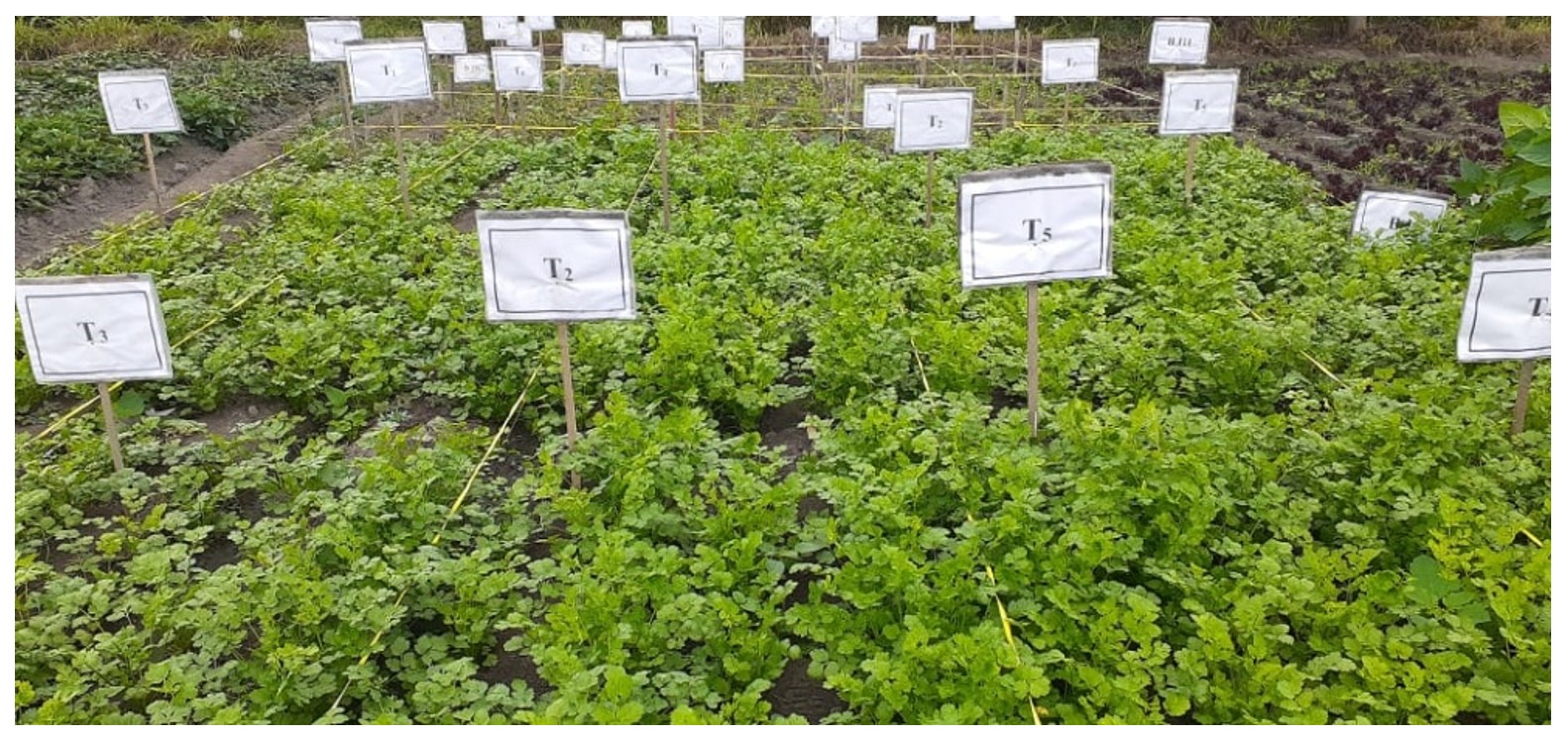
Next, the experimental area was delineated using the statistical model of Completely Randomized Block Design, which consisted of 3 blocks and 5 treatments. It is worth mentioning that each treatment comprised 2 twin furrows, with a distance of 2 m in length and 1 m in width, which is equivalent to an area of 2 m2. The spacing between blocks was 0.5 m.
Continuing, cilantro seeds were sown by broadcasting on April 19, 2024. After 10 days, thinning was carried out, leaving one plant every 0.1 m. At 15 and 30 days after planting, the doses established in Table 1 were applied.
Subsequently, evaluations were conducted until the last harvest, which was on June 2, 2024. During this period, data on the physical characteristics of cilantro were collected, such as total length, plant weight, number of leaves, and commercial yield.
The data on physical characteristics were processed using analysis of variance and Duncan's test, which determined whether there was a dose effect of CLPW or not, whether there was variation or homogeneity among the treatments, and which treatment stood out compared to the others.
Chemical analyses were conducted to evaluate the antioxidant capacity, for which 200 g samples of cilantro from each treatment were taken, randomly collected from the blocks, and taken to the IIN. Nutrient analyses were also conducted, taking 200 g samples from the 5 treatments and sending them to AGQ Perú SAC. Additionally, samples of fresh and undamaged leaves from the 5 treatments were taken to the laboratory with the Quanta scanning electron microscope, where the stomatal density was observed and quantified.
Finally, the data on the yield of each treatment were collected, and the costs were projected to commercial yield and production costs. Then, the commercial yield was multiplied by the unit price in kilograms, thus obtaining the total income. From this total income, the production costs were subtracted, resulting in the profit. This value was divided by the production cost and multiplied by 100, resulting in the final profitability. Below is the formula for profitability.
Profitability Formula 4:
where: P.: Profitability; U: Utility; P.C.: Production cost.
3. Results
3.1. Soil analysis of the experimental area
According to the soil analysis conducted at INIA-Huaral, it was determined that the hydrogen potential (pH) is alkaline, the electrical conductivity (E.C.) is low, and there is a low concentration of organic matter (O.M.) and nitrogen. However, the levels of phosphorus and potassium are high according to the ranges established by Prialé (2016). Moreover, the cation exchange elements, such as Ca, Mg, and Na, are within normal values, while K is high and the cation exchange capacity (CEC) is low, according to McKean's (1993) ranges. Therefore, this soil is suitable for cilantro cultivation; however, it is necessary to improve its physical, chemical, and biological properties through the application of organic matter (See Table 3) (INIA, 2023a).
3.2. Nutrient analysis of CLPW
In the nutrient analysis of CLPW, it was determined that the pH is alkaline, with an adequate percentage of organic matter and nitrogen, but low in phosphorus, potassium, and C/N ratio (See Table 4) (INIA, 2023b). These results can be compared with other liquid fertilizers such as those studied by Cando Pacheco and Malca Acuna (2016), who determined that the biol produced from waste such as bovine manure, legumes, bananas, and fish viscera, using a bioreactor, had a pH of 5.4, total dissolved solids (TDS) of 2.12%, organic matter (OM) of 36.4%, organic carbon of 21.11%, nitrogen of 1.82%, a C/N ratio of 11.6, phosphorus of 0.76%, sodium of 0.06%, potassium of 0.9%, calcium of 0.10%, magnesium of 0.05%, and other elements. Therefore, it is recommended to use this fertilizer for vegetable crops such as cilantro.
The analysis of microelements, presented in Table 5 (INIA, 2023c), determined a high concentration of iron, zinc, copper, and manganese. These results coincide with the ranges established by Granada Torres and Prada Millán (2015), who, in their study on an agroecological leachate based on compost from coffee waste, vegetables, bananas, and additions of rock phosphate and effective microorganisms, found that the leachate had 60 ppm of iron, 1.9 ppm of zinc, 3.8 ppm of copper, and 0.9 ppm of manganese. Therefore, when compared to this liquid fertilizer, CLPW is favorable due to its contribution of these micronutrients.
3.3. Chemical characteristics of water
The water used to irrigate the experimental area was analyzed, and it was determined that the pH is neutral, falling within normal values. The electrical conductivity is 729 µS/cm, indicating a moderate concentration. Cations such as calcium and sodium are within normal limits, but magnesium and potassium are elevated, according to the ranges established by Domingo (2017). Regarding anions such as bicarbonates, chlorides, and sulfates, these are within acceptable ranges, although the levels of carbonates and nitrates are slightly elevated (Salgado García et al., 2006). Therefore, the water analysis classifies it as C2–S1, indicating a moderate concentration of contaminants and dissolved solids. However, it is suitable for vegetable cultivation in this area, such as cilantro (See Table 6) (INIA, 2024d).
3.4. Physical characteristics of cilantro cultivation
Processing the data on the physical characteristics of cilantro cultivation through analysis of variance, it was determined that there were no significant differences between the treatments. However, it was observed that T5 excelled in terms of total cilantro length, plant weight, number of leaves, and commercial yield, qualifying as (a) and (ab), which suggests a homogeneous relationship between the treatments. Consequently, it was interpreted that applying this dose of CLPW did not have a significant effect or statistical differentiation; however, the higher dose stood out in all characteristics (See Table 7 and Figure 1).

3.5. Nutrient concentration in cilantro leaves
The chemical analysis of cilantro leaves determined that treatments T4 and T5 stood out in most nutrient concentrations. However, treatment T5, with a higher concentration of calcium, magnesium, iron, boron, and chlorides, influenced the higher yield of cilantro. This is interpreted as follows: A higher dose of CLPW, as in treatment T5, resulted in a greater concentration of the mentioned elements, which led to a considerable increase in antioxidants, resulting in the highest yield (See Table 8) (AGQ Perú SAC, 2024).
3.6. Antioxidant capacity in cilantro leaves
When analyzing the antioxidant capacity in cilantro leaves, it was determined that treatment T4 stood out with 4638.1 μmol Trolox/100 g of sample, which represents a 37.04% difference compared to treatment T1, which had 2919.7 μmol Trolox/100 g of sample. However, treatment T5, with an adequate antioxidant capacity of 4212.8 μmol Trolox/100 g of sample, influenced the higher yield of cilantro (See Table 2) (IIN, 2024).
3.7. Stomatal density in cilantro leaves
When evaluating the stomatal density in cilantro leaves, it was determined that treatment T1, with 143 stomata/mm2, stood out compared to the others. However, treatment T5, corresponding to the highest dose of CLPW, achieved the highest yield. This is interpreted as a higher dose of CLPW influencing a lower stomatal density. This measure is used as an indicator of stomatal density, as it contributed to a considerable increase in antioxidants, resulting in a higher yield of cilantro (See Table 9 y Figure 2).

3.8. Economic profitability analysis
In the economic profitability analysis, it was determined that treatment T5 reached 334%, surpassing treatment T1 by 40%, which obtained 200%. This indicates that by applying treatment T5 with 5 liters of CLPW, a 40% higher profitability was achieved compared to the control, resulting in a gain more than three times the investment, demonstrating its profitability (See Table 10).
4. Discussion
4.1. Physical characteristics of cilantro cultivation
After processing the data on the physical characteristics of cilantro using analysis of variance and the Duncan test, it was determined that T5 stood out in total length, plant weight, number of leaves, and commercial yield, without the CLPW dose having a significant effect (See Table 7). It is analyzed that a higher dose of this liquid fertilizer provided nutrients via foliar application, such as nitrogen, phosphorus, potassium, and other elements, which influenced optimal biochemical processes, such as photosynthesis, the formation and translocation of carbohydrates to the stem and foliage, and a considerable increase in antioxidant capacity. This strengthened the plant against nutritional, environmental, and pest stress, resulting in a higher yield, with a 36.73% increase compared to the control. These results are supported by the findings of Lerma-Moliz et al. (2024), who mention that the application of compost extracts improved plant growth and provided a stronger antioxidant barrier, making them an interesting product for fertilization and plant protection. Likewise, Vicent Civera et al. (2019) stated that optimal biostimulation is capable of activating the plant's metabolism to generate and accumulate natural antioxidant substances that can confront and nullify ROS, preventing premature cellular aging and reductions in the plant's activity and metabolism, positively influencing yield.
4.2. Nutrient concentration in cilantro leaves
According to the chemical analysis of cilantro leaves, it was determined that treatments T4 and T5 stood out in most nutrient concentrations. However, T5, with elements such as calcium, magnesium, iron, boron, and chlorides, significantly influenced the increase in antioxidant capacity, which improved the yield (See Table 8) (AGQ Perú SAC, 2024). It is analyzed that a higher application of CLPW, in a proportion of 5 l/200 l of water, provided these elements, optimizing biochemical reactions such as photosynthesis and the translocation of carbohydrates to the plant's reserves, significantly increasing the antioxidant capacity. This strengthened the plant against environmental, nutritional, and pest stress, resulting in a higher cilantro yield. According to Ahmad Waraich et al. (2011), the application of macronutrients such as N, K, and Ca reduces ROS toxicity by increasing the concentration of antioxidants like superoxide dismutase (SOD), catalase (CAT), and peroxidase (POD) in plant cells, thereby decreasing stress from environmental factors. Likewise, Limón-Pacheco and Gonsebatt (2009) mention that selenium, copper, zinc, and manganese are also important elements, as they act as cofactors for antioxidant enzymes. All of this influenced the increase in antioxidants and contributed to the higher yield of cilantro.
4.3. Antioxidant capacity in cilantro leaves
When analyzing the antioxidant capacity in cilantro leaves, it was determined that T4 stood out with 4638.1 μMol Trolox/100 g of sample, which represents a 37.04% difference compared to T1, which obtained 2919.7 μMol Trolox/100 g of sample (See Table 2). It is analyzed that the proper application of 4 liters of CLPW influenced the increase in antioxidant capacity, optimizing biochemical reactions such as photosynthesis, carbohydrate translocation, and the reduction of ROS. Moreover, this increase in antioxidant capacity strengthened the plant against environmental, nutritional, and pest stress, resulting in a higher cilantro yield. This result is consistent with what Mezanur Rahman et al. (2024) mentioned, who state that, to maintain ROS homeostasis, plants employ a sophisticated antioxidant defense system composed of enzymatic and non-enzymatic components that synergistically regulate ROS levels, ensuring low and stable concentrations.
4.4. Stomatal density in cilantro leaves
Regarding the evaluation of stomatal density in cilantro leaves, it was determined that T1, with 143 stomata/mm2, exhibited the highest stomatal density; however, T5, with 98 stomata/mm2, which showed the lowest stomatal density, achieved the highest yield (See Table 9, Figure 2). It is analyzed that a higher dose of CLPW applied foliarly added nutrients such as nitrogen, phosphorus, potassium, and other elements, promoting a lower stomatal density. This influenced optimal biochemical reactions such as transpiration, photosynthesis, the translocation of carbohydrates to the plant's reserves, and a considerable increase in antioxidant capacity. These biochemical reactions strengthened the plant against environmental, nutritional, and pest stress, resulting in higher yield and quality of cilantro. This analysis is consistent with the findings of Li et al. (2022), who mention that stomata play important roles in gas and water exchange in leaves. It is also mentioned that the increase of nutrients such as potassium is involved in many biochemical reactions, such as transpiration, which influence the formation of carbohydrates and the increase in cilantro yield. Larriva (2006) mentions that potassium accumulates early in the growth period and then is distributed to intervene in photosynthesis, regulating the opening of the stomata, allowing the assimilation of CO2 and the release of O2, maintaining a good water balance in the plant by reducing evapotranspiration. Likewise, Gálvez Torres et al. (2021) determined that a higher dose of organic fertilizer resulted in a lower stomatal density in beet leaves, which allowed for greater efficiency in utilizing moisture from evapotranspiration, reducing exchange with the atmosphere and favoring carbohydrate formation, thus achieving higher yields.
4.5. Economic profitability analysis
Regarding the economic analysis, it was highlighted that the highest profitability was achieved in T5 with 334%, surpassing T1 by 40%, which reached 200% (See Table 10). Therefore, it is analyzed that a higher dose of CLPW resulted in more than 40% profit compared to the control and more than triple the investment in cilantro cultivation. Therefore, it was indicated that this result is beneficial for the farmers in the area.
5. Conclusion
It was determined that an appropriate dose of CLPW, specifically T4 with 4 l/200 l of water, stood out for its antioxidant capacity with 4638.1 μmol Trolox/100 g of sample; however, T5, with 4212.8 μmol Trolox/100 g of sample, influenced the higher yield. Therefore, at this dosage, a greater absorption of nutrients was demonstrated, optimizing photosynthesis, the formation and translocation of carbohydrates, and the considerable increase in antioxidant capacity and other biochemical reactions, strengthening the plant against environmental stress, which resulted in a higher cilantro yield.
It was also determined that, in the leaf analysis, treatments T4 and T5 stood out in the concentration of elements. However, T5, with elements such as calcium, magnesium, iron, boron, and chlorides, was the one that influenced the highest yield. Therefore, at this dosage, the concentration of these nutrients allowed for the optimization of biochemical reactions, such as the considerable increase in antioxidant capacity, which resulted in the strengthening of the plant against environmental, nutritional, and pest stress, achieving a higher yield of cilantro.
Finally, it was determined that in stomatal density, T1 stood out with 143 stomata/mm2, which represents a 31.63% difference compared to T5 with 98 stomata/mm2; however, a lower stomatal density influenced the higher yield. Therefore, this number of stomata is established as an indicator that optimizes biochemical reactions such as photosynthesis, evapotranspiration, carbohydrate translocation, and a considerable increase in antioxidant capacity, strengthening the plant against environmental stress and thus achieving higher yield.
-
Data Availability Statement
I mention to you that the entire data set supporting the results of this study was published in the article itself.
References
-
ABUBAKR NAEEM, M., HAMOUDA, F., KARIM, S. and VIGNE, S.A., 2023. Return and volatility spillovers among global assets: comparing health crisis with geopolitical crisis. International Review of Economics & Finance, vol. 87, pp. 557-575. http://doi.org/10.1016/j.iref.2023.06.008
» http://doi.org/10.1016/j.iref.2023.06.008 - AGQ PERÚ SAC, 2024. Informe de Ensayo- Material Vegetal. Acreditado IAS, Testing Laboratory TL-502. Código V-24/032439, V-24/032440, V-24/032441, V-24/032442, V-24/032443 Lima: AGQ LABS.
-
AHMAD WARAICH, E., AHMAD, R., SAIFULLAH, ASHRA, M.Y. and EHSANULLAH, 2011 [viewed 10 November 2024]. Role of mineral nutrition in alleviation of drought stress in plants. Australian Journal of Crop Science [online], vol. 5, no. 6, pp. 764-777. Available from: https://www.cropj.com/waraich_5_6_2011_764_777.pdf
» https://www.cropj.com/waraich_5_6_2011_764_777.pdf -
AZCON-BIETO, J. and TALÓN, M., 2000 [viewed 10 November 2024]. Fundamentos de la fisiología vegetal [online]. España: Universidad de Barcelona - Mc Graw-Hill Interamericana. Edición Universitat de Barcelona, pp. 1-235. Available from: https://exa.unne.edu.ar/biologia/fisiologia.vegetal/FundamentosdeFisiologiaVegetalAzcon.pdf
» https://exa.unne.edu.ar/biologia/fisiologia.vegetal/FundamentosdeFisiologiaVegetalAzcon.pdf -
CANDO PACHECO, S.S. and MALCA ACUNA, L., 2016 [viewed 10 November 2024]. Desarrollo de un abono orgánico líquido tipo biol usando un proceso anaerobio en bio-reactores simples. Manglar [online], vol. 13, no. 1, pp. 35-40. Available from: https://revistas.untumbes.edu.pe/index.php/manglar/article/view/44/150
» https://revistas.untumbes.edu.pe/index.php/manglar/article/view/44/150 -
CHOJNACKA, K., MOUSTAKAS, K. and WITEK-KROWIAK, A., 2020. Bio-based fertilizers: a practical approach towards circular economy. Bioresource Technology, vol. 295, pp. 122223. http://doi.org/10.1016/j.biortech.2019.122223 PMid:31623921.
» http://doi.org/10.1016/j.biortech.2019.122223 -
CRUZ NIETO, D.D., GÁLVEZ TÓRRES, E.D., CASTRO BARTOLOMÉ, H.J., CASTAÑEDA CHIRRE, E.T., MORALES ALBERTO, M.N. and VILLARREAL RODRÍGUEZ, H.G., 2022. Efecto del lixiviado a base de residuos de caña de azúcar en las características física, química y estomática del rabanito. Revista Alfa, vol. 6, no. 16, pp. 186-195. http://doi.org/10.33996/revistaalfa.v6i16.161
» http://doi.org/10.33996/revistaalfa.v6i16.161 -
DEL CARPIO-JIMÉNEZ, C., GUTIERREZ-CHAVEZ, R.G., QUISPE-DÁVILA, H.A., TOMAYLLA-CRUZ, C., and URRUNAGA-ORMACHEA, M.J., 2024 [viewed 10 November 2024]. Chemical composition and evaluation of the synergism of the antioxidant activity of blends of the essential oils of Luma chequen (Arrayan) and Citrus maxima (Grapefruit). Bionatura [online], vol. 9, no. 1, pp. 1-12. Available from: https://revistabionatura.org/vol-9-no-1-2024-63/
» https://revistabionatura.org/vol-9-no-1-2024-63/ -
DOMINGO, R., 2017 [viewed 15 November 2024]. La calidad agronómica de las aguas de riego [online]. pp. 1-21. Apuntes de la Asignatura: Bases de la Producción Vegetal. Available from: https://georgiusm.com/wp-content/uploads/2017/12/tema-8-calidad-agronc3b3mica-del-agua-de-riego.pdf
» https://georgiusm.com/wp-content/uploads/2017/12/tema-8-calidad-agronc3b3mica-del-agua-de-riego.pdf -
FAGERIA, N.K., BARBOSA FILHO, M.P., MOREIRA, A. and GUIMARÃES, C.M., 2009. Foliar fertilization of crop plants. Journal of Plant Nutrition, vol. 32, no. 6, pp. 1044-1064. http://doi.org/10.1080/01904160902872826
» http://doi.org/10.1080/01904160902872826 -
GÁLVEZ TORRES, E., LEGUA CÁRDENAS, J., CRUZ NIETO, D.D. and CARO SOTO, F., 2019. Experimento con biol de subproductos de azúcar para mayor rendimiento ecológico en el cultivo de lechuga (Lactuca sativa L.). Revista Studium Veritatis, vol. 17, no. 23, pp. 285-304. http://doi.org/10.35626/sv.23.2019.305
» http://doi.org/10.35626/sv.23.2019.305 -
GÁLVEZ TORRES, E.G., CRUZ NIETO, D.D., LEGUA CÁRDENAS, J.A., NORIEGA CORDOVA, H.W., RODRÍGUEZ ESPINOZA, R.F. and VÉLEZ CHANG, Y.J., 2021. Evaluation by electron microscopy of the stomatal density in the leaves of the sugar beet (Beta vulgaris L.) crop fertilized with compost made from sugarcane by-products. Chemical Engineering Transactions, vol. 87, pp. 601-606. http://doi.org/10.3303/CET2187101
» http://doi.org/10.3303/CET2187101 -
GIRALDO, L., RAMOS, N. and CASTRO, A., 2022. Total polyphenols and in vitro antioxidant activity of the aqueous extract of the bark of Brunfelsia grandiflora D. Don. Ciencia e Investigacion, vol. 25, no. 1, pp. 61-66. http://doi.org/10.15381/ci.v25i1.23476
» http://doi.org/10.15381/ci.v25i1.23476 -
GRANADA TORRES, C. and PRADA MILLÁN, Y., 2015. Characterization of the agroecological leachate from organic residues of crops. Investigación Agraria y Ambiental, vol. 6, no. 2, pp. 169-182. http://doi.org/10.22490/21456453.1414
» http://doi.org/10.22490/21456453.1414 - HUARACA APARCO, R., 2019. Caracterización de los compuestos bioactivos y capacidad antioxidante en los frutos silvestres de Citharexylum dentatum D. Don (Yanali) y Hesperomeles escalloniifolia Schltdl (Capachu). Perú: Universidad Nacional José María Arguedas, 88 p. Tesis para Optar Título Profesional de Ingeniero Agroindustrial.
- INSTITUTO DE INVESTIGACIÓN NUTRICIONAL – IIN. Laboratorio de Análisis de Alimentos – LAA, 2024. Resultado de Laboratorio de Fisicoquímica La Molina: IIN. N° 000134 – 2024.
- INSTITUTO NACIONAL DE INNOVACIÓN AGRARIA – INIA, 2023a. Análisis de suelo: resultados de análisis de suelo. Perú: INIA. no. 09305-23/SU/ LABSAF – DONOSO.
- INSTITUTO NACIONAL DE INNOVACIÓN AGRARIA – INIA, 2023b. Análisis de lixiviación de compost Perú: INIA. no. 11268-23/AO/ LABSAF – DONOSO.
- INSTITUTO NACIONAL DE INNOVACIÓN AGRARIA – INIA, 2023c. Análisis de microelementos de lixiviado de compost Perú: INIA. no. 11268-23/AO/ LABSAF – DONOSO.
- INSTITUTO NACIONAL DE INNOVACIÓN AGRARIA – INIA, 2024d. Informe de ensayo del agua Perú: INIA. no. 080282-24/ AG / LABSAF – DONOSO.
-
JAVAD TAHSINI, M., NIKAEEN, M. and HOSSEIN NAFEZ, A., 2024. Biological treatment of compost leachate: assessing the efficacy of composting process and bioaugmentation of composting piles. Environmental Technology & Innovation, vol. 36, pp. 103859. http://doi.org/10.1016/j.eti.2024.103859
» http://doi.org/10.1016/j.eti.2024.103859 -
KAPOOR, D., SINGH, S., KUMAR, V., ROMERO, R., PRASAD, R. and SINGH, J., 2019. Antioxidant enzymes regulation in plants in reference to reactive oxygen species (ROS) and reactive nitrogen species (RNS). Plant Gene, vol. 19, pp. 100182. http://doi.org/10.1016/j.plgene.2019.100182
» http://doi.org/10.1016/j.plgene.2019.100182 -
LARRIVA, N., 2006 [viewed 21 November 2024]. Síntesis de la importancia del potasio en el suelo y plantas. La Granja Revista de Ciencias de La Vida [online], vol. 2, no. 1, pp. 23-24. Available from: https://lagranja.ups.edu.ec/index.php/granja/article/view/2.2003.09
» https://lagranja.ups.edu.ec/index.php/granja/article/view/2.2003.09 -
LEGUA CÁRDENAS, J.A., CAMPOS DIAZ, A.H., VÉLEZ CHANG, D.J. and VÉLEZ CHANG, Y.J., 2023. Efectos del biol industrial complementado con algas marinas sobre el rendimiento del cultivo rábano (Raphanus sativus L.). Revista Alfa, vol. 7, no. 20, pp. 442-452. http://doi.org/10.33996/revistaalfa.v7i20.227
» http://doi.org/10.33996/revistaalfa.v7i20.227 -
LERMA-MOLIZ, R., LÓPEZ-GONZÁLEZ, J.A., SUÁREZ-ESTRELLA, F., MARTÍNEZ-GALLARDO, M.R., JURADO, M.M., ESTRELLA-GONZÁLEZ, M.J., TORIBIO, A.J., JIMÉNEZ, R. and LÓPEZ, M.J., 2024. Antioxidant and biofertilizing effect of compost extracts on horticultural crops to minimize the use of agrochemicals. Environmental Technology & Innovation, vol. 36, pp. 103776. http://doi.org/10.1016/j.eti.2024.103776
» http://doi.org/10.1016/j.eti.2024.103776 -
LI, S., LI, L., FAN, W., MA, S., ZHANG, C., KIM, J.C., WANG, K., RUSSINOVA, E., ZHU, Y. and ZHOU, Y., 2022. LeafNet: a tool for segmenting and quantifying stomata and pavement cells. The Plant Cell, vol. 34, no. 4, pp. 1171-1188. http://doi.org/10.1093/plcell/koac021 PMid:35080620.
» http://doi.org/10.1093/plcell/koac021 -
LIMÓN-PACHECO, J. and GONSEBATT, M.E., 2009. The role of antioxidants and antioxidant-related enzymes in protective responses to environmentally induced oxidative stress. Mutation Research, vol. 674, no. 1-2, pp. 137-147. http://doi.org/10.1016/j.mrgentox.2008.09.015 PMid:18955158.
» http://doi.org/10.1016/j.mrgentox.2008.09.015 -
MCKEAN, S., 1993 [viewed 21 October 2024]. Manual de análisis de suelos y tejido vegetal: una guía teórica y práctica de metodologías [online]. Laboratorio de Servicios Analíticos, Centro Internacional de Agricultura Tropical (CIAT). Documento de trabajo, no. 129. Available from: https://drive.google.com/file/d/1CwfNJhMeY0JuUCwjPUkwceF8chg45wN9/view?usp=sharing
» https://drive.google.com/file/d/1CwfNJhMeY0JuUCwjPUkwceF8chg45wN9/view?usp=sharing -
MEZANUR RAHMAN, M.D., KUMAR GHOSH, P., AKTER, M., MAHMUD AL NOOR, M.D., ATIKUR RAHMAN, M.D., SULTANA KEYA, S., SHYDUZZAMAN RONI, M.D., BISWAS, A. and BULLE, M., 2024. Green vanguards: harnessing the power of plant antioxidants, signal catalysts, and genetic engineering to combat reactive oxygen species under multiple abiotic stresses. Plant Stress, vol. 13, pp. 100547. http://doi.org/10.1016/j.stress.2024.100547
» http://doi.org/10.1016/j.stress.2024.100547 -
PAUCAR LUNA, J., PESANTES ARRIOLA, G.C., TEJADA OVALLE, S.E. and FRANCO MEDINA, J., 2021. Effect of the process of making blueberry juice (Vaccinium corymbosum) on the antioxidant capacity and bioactive compounds. Brazilian Journal of Animal and Environmental Research, vol. 4, no. 3, pp. 4256-4275. http://doi.org/10.34188/bjaerv4n3-112
» http://doi.org/10.34188/bjaerv4n3-112 -
PÉREZ LEAL, F., 2017 [viewed 2 November 2024]. Fisiología Vegetal. Parte I: introducción a la fisiología vegetal estructura y función vegetal: células, tejidos y órganos relaciones hídricas: absorción, transporte y pérdida de agua transporte de sustancias orgánicas [online]. Perú: Facultad de Ciencias Agropecuarias, Universidad Nacional de Ucayali. Available from: https://www.biblioteca.unu.edu.pe/wp-content/uploads/2016/06/LIBRO-P1.pdf
» https://www.biblioteca.unu.edu.pe/wp-content/uploads/2016/06/LIBRO-P1.pdf -
PRIALÉ, C.A., 2016 [viewed 12 October 2024]. Muestreo de suelos: referencias sobre el análisis e interpretación de resultados [online]. Peru: INIA. Available from: https://repositorio.inia.gob.pe/handle/20.500.12955/286
» https://repositorio.inia.gob.pe/handle/20.500.12955/286 -
ROSTAEI, M., FALLAH, S., CARRUBBA, A. and LORIGOOINI, Z., 2024. Organic manures enhance biomass and improve content, chemical compounds of essential oil and antioxidant capacity of medicinal plants: a review. Heliyon, vol. 10, no. 17, e36693. http://doi.org/10.1016/j.heliyon.2024.e36693 PMid:39296011.
» http://doi.org/10.1016/j.heliyon.2024.e36693 -
SALGADO GARCÍA, S., PALMA LÓPEZ, D.J., LAGUNES ESPINOZA, L. and CASTELÁN ESTRADA, M., 2006 [viewed 15 November 2024]. Manual para muestreo de suelos plantas y aguas e interpretación de análisis [online]. 2. ed. México: Colegio de Postgraduados, Institución de Enseñanza e Investigación en Ciencias Agrícolas. pp. 1-90. Available from: https://www.academia.edu/98600762/MANUAL_PARA_MUESTREO_DE_SUELOS_PLANTAS_Y_AGUAS_E_INTERPRETACI%C3%93N_DE_AN%C3%81LISIS
» https://www.academia.edu/98600762/MANUAL_PARA_MUESTREO_DE_SUELOS_PLANTAS_Y_AGUAS_E_INTERPRETACI%C3%93N_DE_AN%C3%81LISIS - TENCIO, C., 2017 [viewed 7 November 2024]. Guía de elaboración y aplicación de bioinsumos para una producción agrícola sostenible [online]. Costa Rica: Ministerio de Agricultura y Ganadería. Guía, no. 1. Available from: http://www.mag.go.cr/bibliotecavirtual/F08-10924.pdf
-
VICENT CIVERA, A., SANCHO ORTEGA, J., BAIGORRI EKISOAIN, R. and SAN FRANCISCO ELIA, S., 2019 [viewed 18 November 2024]. El efecto de los antioxidantes sobre el estrés oxidativo en los cultivos. Phytoma [online], no. 314, pp. 76-79. Available from: https://www.phytoma.com/images/pdf/2019/314_tomate_antioxidantes_estres_oxidativo.pdf
» https://www.phytoma.com/images/pdf/2019/314_tomate_antioxidantes_estres_oxidativo.pdf -
YEPIS VARGAS, O., FUNDORA HERRERA, O., PEREIRA MARÍN, C. and CRESPO BORGES, T., 1999 [viewed 20 November 2024]. La contaminación ambiental por el uso excesivo de fertilizantes nitrogenados en el cultivo del tomate. Scientia Gerundensis [online], no. 24, pp. 5-12. Available from: https://revistes.udg.edu/scientia-gerundensis/article/view/1633/2722
» https://revistes.udg.edu/scientia-gerundensis/article/view/1633/2722
Edited by
-
Editor:
Ana Paula Peron
I mention to you that the entire data set supporting the results of this study was published in the article itself.