 Overview of the discus fish (Symphysodon spp.): narrative review combined with potential for ornamental aquaculture
Abstract
The discus fish (Symphysodon spp.) is an Amazonian cichlid species with great appeal in the ornamental fish market due to its characteristic shape, coloration, and behavior. This study aims to conduct a narrative review of the discus fish. In the wild, discus fish are found in acidic waters with low levels of nitrogen compounds and warm waters. Despite being a well-known species among aquarium hobbyists, large-scale breeding is still considered difficult and surrounded by myths about the species, discouraging the interest of professional breeders. This work contributes information on the general biology of a group of Amazonian fishes with ornamental importance. Therefore, it is important for the knowledge of aquarists, producers, exporters, scientists, students, and public agencies that regulate the use of this fish, which constitutes an essential component of the Amazonian aquatic fauna.
Keywords:
discus fish; ornamental fish; cichlid; aquarism
Resumo
O peixe-disco (Symphysodon spp.) é uma espécie de ciclídeo amazônico com grande apelo no mercado de peixes ornamentais devido à sua forma, coloração e comportamento característicos. Este estudo tem como objetivo realizar uma revisão narrativa sobre o peixe-disco. Na natureza, o peixe-disco é encontrado em águas ácidas, com baixos níveis de compostos nitrogenados e águas mornas. Apesar de ser uma espécie bem conhecida entre os aquaristas, a reprodução em larga escala ainda é considerada difícil e cercada de mitos sobre a espécie, desestimulando o interesse de criadores profissionais. Este trabalho contribui com informações sobre a biologia geral de um grupo de peixes amazônicos com importância ornamental. Portanto, é importante para o conhecimento de aquaristas, produtores, exportadores, cientistas, estudantes e órgãos públicos que regulamentam o uso deste peixe, que constitui um componente essencial da fauna aquática amazônica.
Palavras-chave:
peixe disco; peixe ornamental; ciclídeo; aquarismo
1. Introduction
According to Tribuzy-Neto et al. (2021), between 2006 and 2015, 375 species of ornamental fish were exported, with a significant portion going to European countries (Germany, the United Kingdom, Portugal, Spain), Asian countries (China, Singapore, and Indonesia), and the United States, which are currently the largest consumers. However, being an extractive and rustic activity by today's standards, the commercialization of Amazonian ornamental fish has been losing competitiveness in the international market (Santos and Fujimoto, 2012; Tribuzy-Neto et al., 2021).
With the new Normative Instruction No. 10 of April 17, 2020, established by the Brazilian government (BRASIL, 2020), there was a new legal framework for ornamental fish, replacing the old list of 725 permitted species with a negative list of prohibited species, facilitating the trade of ornamental fish and streamlining the process of selling and shipping fish for ornamental purposes. The states of Amazonas and Pará stand out as the primary sources of fish traded in the regional, national, and international markets (SECEX, 2017). Therefore, it is possible to affirm that the aquarium market is one of the most promising sectors for aquaculture, combined with the national pet market (Vidigal, 2016; ABINPET, 2022).
In the state of Amazonas, the exploitation and sale of ornamental fish have been taking place for over six decades, mainly concentrated along the middle Rio Negro basin, which boasts a great diversity of fish and constitutes the largest ornamental fishery area in Brazil (Santos et al., 2012, 2022, 2025a, 2025b; Prang et al., 2013; Lemos et al., 2015; Magro et al., 2016; Ladislau et al., 2020, 2021; Oliveira et al., 2015a, 2015b, 2016, 2017, 2020, 2021, 2023, 2025; Ribeiro et al., 2021, 2024, 2025; Mattos et al., 2021; Andrade et al., 2024, 2025). This activity plays an important economic, environmental, and social role, providing employment and income generation for riverside communities (Prang et al., 2013; Tribuzy-Neto et al., 2021; Ladislau et al., 2021).
Among the species of Amazonian fish, cichlids, characterized by a divided lateral line and spines in the dorsal and anal fins, stand out in the global ornamental trade due to their beauty, diverse body coloration patterns, territorial behavior, and good adaptation to cultivation systems (Selvatici et al., 2017). These animals have trophic and survival adaptations, inhabiting areas with abundant decomposing plant material, rapids, dense submerged vegetation, floodplain lakes, whitewater rivers (nutrient-rich with neutral pH), and blackwater rivers (nutrient-poor with acidic pH) (Lowe-McConell, 1999).
Some species of cichlids are easily maintained under confinement conditions, making them of great interest for ornamental fishing and presenting significant potential for national aquaculture (Selvatici et al., 2017). Therefore, it is essential to understand the biological aspects of commercially important species to develop protocols of good management practices that can contribute to maintaining organic balance and, consequently, animal welfare (Gauy et al., 2018; Solomon-Lane and Hofmann, 2019).
Among these commercially traded cichlid species, the discus fish Symphysodon spp. stands out, being widely used as an ornamental fish due to its body coloration pattern and behavioral characteristics (Tribuzy-Neto et al., 2021; Jesus et al., 2022). Hence, it presents excellent interest for production and economic viability in ornamental aquaculture. Given the above, this study aims to conduct a narrative review on the discus fish Symphysodon spp.
2. Diversity, Behavior, and Reproduction
Symphysodon spp. is a genus of Neotropical cichlid characterized by a disc-shaped body, 12 to 20 cm in standard length and 25 cm in height in adulthood; small mouth, does not present apparent sexual dimorphism, feeding on small fish, live worms, and microcrustacean nauplii; batch spawning; biparental care; and inhabiting streams, lakes, and riverbanks (Rossoni et al., 2014; Jesus et al., 2022) with water temperature ranging between 26 to 30°C (Riehl and Baensch, 1991). It is now understood that the Symphysodon genus comprises three distinct species: S. aequifasciatus, S. discus, and S. tarzoo, along with other subspecies (Bleher et al., 2007; Amado et al., 2011).
In their natural environment, discus fish form large shoals near fallen trees and branches during the dry season and small shoals within flooded forests during the wet season (Crampton 2008). According to Celik et al. (2008), Symphysodon species require the maintenance of stable water parameters, as factors such as pH, conductivity, and hardness are essential in the commercial breeding of discus fish.
Crampton (2008) suggests that discus fish are iteroparous, reaching sexual maturity within a year, with spawning starting at the beginning of the flood season, influenced by changes in water conductivity. This reproductive strategy indicates a concern for ensuring that the offspring mature by the next dry season. In this sense, spawning is influenced by biotic parameters (such as high predation on eggs, larvae, and young adults) and local and regional environmental dynamics (such as sudden increases in river water levels, locally known as “repiques”). Thus, it can be affirmed that females spawn only one batch of eggs at a time, with the most developed ones being released, while the rest are held back in case of high predation on eggs, larvae, or fry (Rossoni et al., 2014).
According to Chellappa et al. (2005), S. discus specie exhibit social organization based on dominance hierarchy and territoriality, involving competitions for mates and spawning areas and elaborate courtship and mating behaviors (Figure 1). The social hierarchy is established through aggressive interactions, with conflicts typically starting with low-intensity, energetically economical behavioral units performed at a greater distance between the animals, such as displays, and escalating to more costly behavioral units completed at closer proximity, such as threats (Maan et al., 2001). Attacks and chases usually occur in the final stages of conflicts and contribute to their resolution, which occurs after reaching high levels of escalation and when one of the opponents gives up the conflict (Teresa and Gonçalves-de-Freitas, 2003; Mattos et al., 2016, 2021, 2024).

Female discus fish choose more significant partners and defend territories of better quality (Rossoni et al., 2014; Mattos et al., 2016). During courtship and mating, females approach dominant males with territories that offer more resources (Mattos et al., 2016). Mattos et al. (2016) also describe the reproductive behavior of S. aequifasciatus in the following behavioral units: female staying in the male's territory, substrate cleaning before spawning, spawning, egg aeration, parental care division, substrate cleaning after hatching, and changes in male and female body coloration. As the larvae develop, they swim erratically and may move away from the territory/substrate. In general, discus larvae exhibit characteristics similar to those of other cichlid species and are altricial, meaning that when the larvae start swimming, they already have all functional structures (Önal et al., 2010; Mattos et al., 2015).
During this parental care phase, the pair displays darker coloration, which may be related to negative phototaxis behavior, meaning that discus larvae are attracted to darker objects, and the coloration of adults can serve as guidance toward the substrate. Parental care is carried out by both parents and is characterized by defending the offspring and feeding the larvae with mucus produced by the couple's bodies (Chong et al., 2005; Khong et al., 2009; Wen et al., 2020).
Buckley et al. (2009) suggest that parental care occurs equally for both males and females during this phase. As the offspring consume parental mucus and bites, the exchange between parents increases the frequency of parental care shifts, with no significant difference between males and females. The mucus provided at this stage presents interesting peculiarities; studies in this regard have observed that when parents are caring for the offspring, the mucus exhibits different protein concentrations and even differences between sexes, providing a source of immunity, nutrition, and hormones essential for the survival of the offspring in the acidic and ion-poor Amazon environment.
This peculiarity suggests that the discus fish exhibits similarities in parental care to that of mammals and birds, demonstrating a high level of complexity in its unique behavioral repertoire (Buckley et al., 2009). Understanding such peculiarities can guide professional breeders, as it is understood that offspring require adequate nutrition during this critical phase. Based on this requirement, artificial mucus with these properties can be provided, increasing the efficiency of artificial breeding. While natural mucus is essential for the survival and growth of the offspring, it can also be a source of contaminants and parasites from the parentes (Maunder et al., 2013; Sylvain and Derome, 2017), making artificial mucus an alternative in captive production.
3. Taxonomy
The genus Symphysodon, classified as teleostei, belongs to the order Cichliformes and the family Cichlidae, and had a confusing taxonomic classification. Until 2006, it was understood that there were two species recognized in scientific literature: Symphysodon discus Heckel, 1840, and Symphysodon aequifasciatus Pellegrin, 1904 (Kullander, 1986, 1996), and four subspecies in popular literature: S. discus willischwartzi Burgess, 1981 (pineapple phenotype), S. discus tarzoo Lyons, 1959 (green phenotype), S. aequifasciatus haraldi Schultz, 1960 (blue phenotype), and S. aequifasciatus axelrodi Schultz, 1960 (brown phenotype), with the nominal subspecies S. discus discus Heckel, 1840 (Heckel phenotype), and S. aequifasciatus aequifasciatus Pellegrin, 1904 (green phenotype), being restricted to just one central phenotype (Amado et al., 2011).
Revisions in 2007 suggest the existence of three species in the genus Symphysodon: Symphysodon discus Heckel, 1840, Symphysodon aequifasciatus Pellegrin, 1904, and Symphysodon haraldi Schultz, 1960 (Bleher et al., 2007), with new revisions in 2011 understanding Symphysodon to comprise five significant evolutionary units: S. discus (Heckel and pineapple phenotypes), S. aequifasciatus (brown phenotype), S. tarzoo (green phenotype), Symphysodon sp. 1 (blue phenotype), and Symphysodon sp. 2 (Xingu group) (Amado et al., 2011).
Morphological and molecular analyses suggest a phylogenetic relationship of Symphysodon with Uaru, Heros, Mesonauta, and Pterophyllum (Amado et al., 2011). Analyses of discus fish diversification indicate that the species is undergoing diversification, with taxonomic classification remaining controversial (Farias and Hrbek, 2008; Silva et al., 2008; Gross et al., 2010) (Table 1). Such diversity helps us understand the requirements regarding habitat water parameters such as pH and conductivity.
Common names and taxonomic classification of discus fish modified from (Livengood et al., 2010).
Another genetic peculiarity of this genus reveals that males and females express genes from their testes and ovaries differently. This difference can be very efficient in captive breeding, especially considering the species does not present apparent sexual dimorphism (Lin et al., 2017). The use of genetic tools can be highly effective in selecting breeding stock.
Gross et al. (2009) suggest that S. discus is the oldest species, which could have hybridized with an ancestral species of discus that may now be extinct, helping us understand that crossings between species occur naturally in the natural environment. Understanding this supports the assertion that the discus fish is not a fragile species; on the contrary, due to its genetic diversity, it exhibits plasticity in responding to changes in the physicochemical properties of water, favoring its adaptation to artificial cultivation environments (Gross et al., 2009).
4. Physiology
Similar to other Amazonian cichlids, the discus fish exhibits significant adaptability because the Amazonian environment undergoes constant changes due to its different seasonal periods. In this sense, the discus fish adapts to moderate hypoxia conditions, where the heart undergoes suppression of oxidative metabolism, followed by activation of anaerobic glycolysis, as observed by Chippari-Gomes et al. (2005) (Figure 2). They also suggest that such adaptation is related to its habitat preference, as it favors well-oxygenated areas.

Studies focused on exposure to low pH have demonstrated that S. discus is more tolerant to acidic waters, being more efficient in maintaining ionic balance under acidic and ion-poor conditions (Duarte et al., 2013). This observation aligns with what breeders have empirically noted, that S. discus requires acidic water in its management.
Another peculiarity of discus physiology is its resistance to temperature-related oxidative stress. Jin et al. (2021) observed a specific thermal resistance of the species. Their experiments involving temperature reduction in two discus species (S. haraldi found in the central region of the Amazon basin - Manacapuru River, and S. aequifasciatus found in the western region of the Amazon basin - Tefé River) determined that S. haraldi exhibits more excellent resistance to temperature reduction than S. aequifasciatus. Depending on the geographical area and speciation, different discus species may show distinct responses and tolerance to thermal stress (Wen et al., 2018a; Jin et al., 2021). In this regard, it is understood that a widely spread notion among discus breeders that discus fish must be kept at 28°C is inaccurate. Discus fish have a wide range of thermal tolerance, capable of modifying metabolic pathways for physiological regulation in response to cold stress or temperature changes (Wen et al., 2018b). However, being a tropical cichlid, they prefer warm waters.
The discus fish is also well-known for its striking coloration. There are various colors both in wild specimens and hybrids. Recent studies have observed that discus coloration is linked to its metabolism. Yang et al. (2021) found that discus fish have specific chromophores in the skin associated with metabolic pathways. This is particularly interesting when related to behavioral displays observed in discus fish. A notable color change occurs when the fish is stressed or shows signs of illness. Such results aid in understanding the composition of body coloration and even discus behavior (Ng et al., 2023).
Studies on blood parameters demonstrate that discus fish naturally have a low number of monocytes and neutrophils, indicating that discus fish have lower resistance to pathogens than other cichlids (Paixão et al., 2017). This suggests that discus breeders face challenges, as these animals are prone to illness in captivity. However, it is not necessarily that the species is more fragile than others, but rather, it is more related to improper handling and prolonged stress during capture and management (Rossoni et al., 2014; Paixão et al., 2017).
5. Diseases
Among the ailments affecting discus fish, the most common are those caused by gill parasites, such as (Sciadicleithrum spp.) monogeneans, protozoa (Hexamita intestinalis) hole-in-the-head disease, (Ichthyophthirius multifiliis), and bacteria, mainly of the genus Aeromonas, as well as other intestinal parasites (Paull and Matthews, 2001; Yanong et al., 2004; Moravec and Laoprasert, 2008; Guz and Szczepaniak, 2009; Hooman et al., 2010; Onal et al., 2011; Aquaro et al., 2012; Mohammadi et al., 2012; El-Ghany et al., 2014; Košuthova et al., 2015; Roh et al., 2019; Amesberger-Freitag et al., 2019; Satora et al., 2022).
Parasites, combined with inadequate feed and water quality management, favor the emergence of diseases and loss of productivity due to discus fish's reduced resistance to pathogens, leading to the loss of entire flocks. It is noteworthy that the lack of specialized literature on pathogens and disease control for this species exacerbates the problem (Yanong et al., 2004; El-Ghany et al., 2014).
Trials conducted by El-Ghany and colleagues (2014) with two chemotherapeutic agents and physical management indicate the effectiveness of metronidazole against a mixed infection of flagellated protozoa. According to the study, when tested with 5 ppm of metronidazole for 12 hours, for 3 days, with 50% water changes before medication administration each day, the animals recovered from the infection within 2 weeks after treatment, with complete disappearance of clinical signs. For Group 2, treated with ciprofloxacin (5 ppm for 5 days and 50% water changes before medication administration), it was observed that they did not fully recover from the infection, and two weeks after treatment, the mortality rate was 50% of the fish.
The treatment results indicated that the physical-chemical management with metronidazole and partial water changes effectively overcame parasitic and bacterial infections, with no morbidity and mortality after two weeks (El-Ghany et al., 2014). It is worth noting that it is not only the use of chemotherapeutic agents that will combat such diseases; the water is naturally inhabited by bacteria, fungi, and omnipresent parasites, and any stress factors can cause diseases in fish (El-Ghany et al., 2014; Paixão et al., 2017).
Studies on managing discus stocks raised in captivity demonstrate that sanitary control of stocks is fundamental. Aquaro et al. (2012) observed infestation of Dactylogyridae due to improper management, as young animals were kept with adults, which ended up infesting them, as the adults were asymptomatic about the parasite, leading to significant losses. Therefore, physical management and chemical treatment should be applied if the disease becomes established (El-Ghany et al., 2014).
6. Nutrition
In their natural environment, discus fish feed on small crustaceans, insect larvae, periphyton, and algae (Crampton, 2008; Rossoni et al., 2014; Jesus et al., 2022) (Figure 3). Therefore, in a captive environment, a balanced and varied diet can promote good production and health of these animals.

From their larval stage, discus fish require a diet rich in protein. Studies on the feeding of offspring indicate that parents, during the parental care phase, alter the protein composition of the mucus, indicating the need for diets with high protein concentrations (Khong et al., 2009; Buckley et al., 2010; Wen et al., 2020; Zhang et al., 2021). Studies involving the inclusion of probiotics in the diet of young individuals demonstrate enhanced fish immunity (Sanaya, 2022), indicating the need for diets rich in proteins and amino acids, considering that discus fish are susceptible to low immunity under stress.
In this regard, protein-rich diets can pose challenges for breeders as they increase production costs in captivity. However, plant-based diets consisting of soybean and wheat flour can be efficient for the nutrition of the animals (Chong et al., 2002). Along with an efficient protein diet, the addition of vitamins C and E, natural carotenoids (such as astaxanthin), and minerals can be adequate for growth, improved immunity, and coloration of discus fish (Liu et al., 2016, 2019, 2021; Song et al., 2017). Studies on protein requirements determine a crude protein diet ranging from 44.9 to 50.1% (beef heart). Therefore, a diet rich in animal protein should be included in the feeding of these animals, with both dry and moist feeds being effective for captive breeding (Chong et al., 2000; Sales and Janssens, 2003; Wen et al., 2018a, 2018b; Santos et al., 2022).
7. Water Quality
Discus fish also require excellent water quality (Celik et al., 2008). In this regard, breeders worldwide invest in sophisticated filtration systems. Like other fish species, discus fish need good water and stable parameters (Celik et al., 2008). Therefore, the aquarist or breeder must understand how aquatic systems function. In Amazonian aquatic systems, soft water with low salt content is observed, high oxygenation, no nitrogenous compounds, and low-temperature variation (Lowe-McConell, 1999; Crampton, 2008; Celik et al., 2008). Thus, discus fish require similarity in parameters in an artificial environment.
Due to its presence in different Amazonian environments, discus fish exhibit a certain plasticity regarding parameters, with a pH tolerance range between 4.5 to 7 (Duarte et al., 2013), showing good adaptability in slightly acidic water (pH 6.8) in artificial environments (Celik et al., 2008). However, in static systems with low water renewal, pH levels close to neutral or even slightly alkaline can lead to the accumulation of nitrogenous compounds, potentially causing stress and even mortality, as discus fish have a low tolerance to high concentrations of ammonia and nitrite in the water (Celik et al., 2008).
In this sense, breeding systems for discus fish should be designed to provide a stable environment with minimal water quality variation and the least possible amount of nitrogenous compounds (Din et al., 2002; Livengood et al., 2010; Celik et al., 2008; Kristiany and Prabowo, 2022), which can be static recirculation systems, provided there are good water exchange regimes and proper management.
8. Market and Production
Discus fish are sought after by all aquarium enthusiasts due to their coloration, shape, peaceful behavior, and high value. However, their captive production is challenging (Din et al., 2002; Livengood et al., 2010; Kristiany and Prabowo, 2022), as they are captured in different environments where the water is acidic, black, and clear with a pH of 5 or below, as well as poor in nutrients, and also in white waters with pH close to neutral. Thus, it can be very challenging for breeders to provide a favorable environment for reproduction (Riehl and Baensch, 1991; Crampton, 2008; Livengood et al., 2010; Farias and Hrbek, 2008; Gross et al., 2009; Rossoni et al., 2014).
The larviculture of the species in captivity becomes another challenge in production because these animals exhibit parental care, with the larvae being dependent on the initial feeding provided by the parents (Rossoni et al., 2014; Mattos et al., 2016). Additionally, there are no significant differences between males and females, making choosing and selecting breeding stock difficult (Livengood et al., 2010). Despite these difficulties, Asian countries such as China, Singapore, Indonesia, and Thailand have excelled in producing this species (Din et al., 2002).
In the quest for large-scale production, breeders have used different breeding systems, from closed systems to recirculation systems (in aquariums), considering the species' requirement for high water quality. Recirculation systems have proven to be efficient in breeding (Din et al., 2002; Livengood et al., 2010; Kristiany and Prabowo, 2022). Different strategies to encourage spawning are employed by breeders, such as significant water changes, temperature increase, slight pH reduction, and use of deionized and reverse osmosis water (Livengood et al., 2010; Celik et al., 2008). However, there is still no definitive protocol for discus fish reproduction, so each producer uses their reproductive management, causing confusion and the creation of myths around discus fish production in captivity.
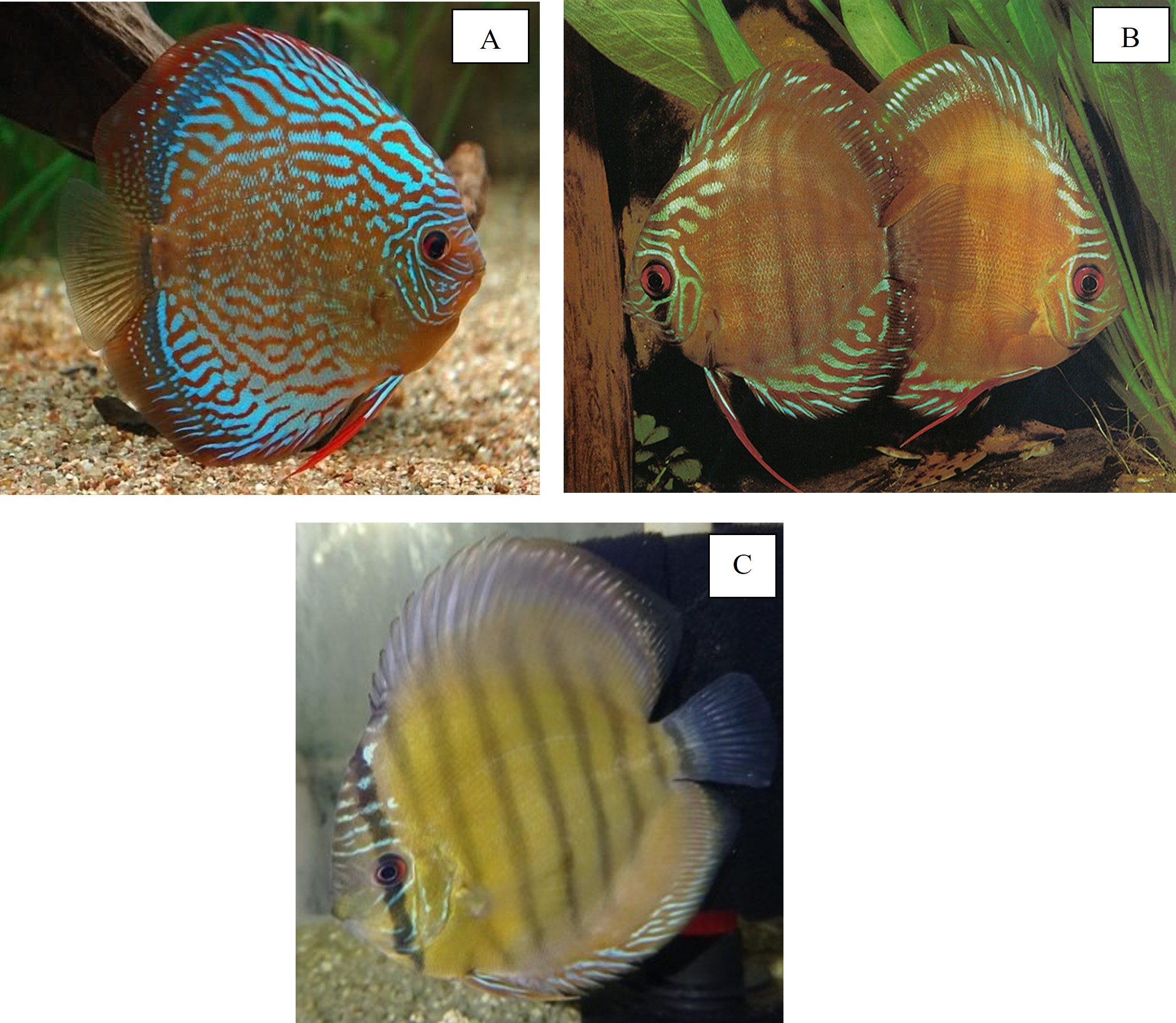
Regarding economic value, discus fish are among the top 10 species for the ornamental fish trade (Livengood et al., 2010). Their price in the aquarium market can reach a high value in the foreign market, ranging from $50 to $170 per unit depending on the variant, commercially classified by the consumer market as royal, semi-royal, or typical (Figure 4) (Livengood et al., 2010; Anjos et al., 2009; Rossoni et al., 2014; Tribuzy-Neto et al., 2021; Jesus et al., 2022).

Its importance has been observed in the numbers recorded between 2006 and 2015, with exports accounting for 0.16% of all ornamental fish exports from Brazil (Tribuzy-Neto et al., 2021). Unlike other producing countries such as China, Thailand, Singapore, the USA, and Germany, Brazil only exports wild specimens because it does not have significant captive production, failing to meet domestic demand.
9. Perspectives
Looking at national production, it's clear we need to improve. We haven't yet fully mastered the breeding and larval culture of this species, which means it doesn't attract the interest of professional breeders. This is due to a lack of scientific information. Although we have several studies on discus fish, these studies remain restricted to academia and receive little visibility.
In recent years, the discus fish market has grown in Brazil. Interest in high-quality wild and hybrid specimens has attracted the attention of national breeders and aquarists. With the growth of social media, groups and forums dedicated to discus fish breeding have fueled interest and stimulated the consumer market. Currently, Brazil has the Brazilian Discus Fish Confederation (CBRAD), which, in partnership with the Federal University of Rio Grande do Norte (UFRN), organizes exhibition competitions for national breeders and aquarists, facilitating outreach activities between academia and the producer market. This has strengthened the hobby and fostered interest in the activity. However, we still lack information and educational materials for breeders and aquarists. Nutrition, diseases, and pathogens, as well as reproduction and larval culture, have proven to be fundamental bottlenecks for production. Universities and research institutes can provide scientifically based materials and language appropriate for this audience. Through easily accessible pamphlets, technical notes, and booklets, the need for reliable information about this species, which sparks interest among aquarists and breeders worldwide, can be met.
10. Conclusion
Among the Amazonian species with ornamental interest, the discus fish is an excellent candidate for large-scale production. However, its larviculture remains a bottleneck for most commercial breeders. With research focused on reproduction, nutrition, and health, developing an appropriate and replicable management protocol is possible. Due to the prices practiced in the ornamental fish market, investment in aquaculture technologies and systems is favorable for the commercial production of this species, considered the king of aquariums.
Acknoledgements
Conselho Nacional de Desenvolvimento Científico e Tecnológico (CNPq) and Fundação de Amparo à Pesquisa do Estado do Amazonas (FAPEAM, PDPG Project CAPES/FAPEAM Notice No. 018/2020 and NOTICE No. 020/2024 - PRODUCTIVITY IN STATEMENTS AND INVESTMENT).
Data availability statement
The research data analyzed in this study are not publicly available by any means.
References
-
AMADO, M.V., FARIAS, I.P. and HRBEK, T., 2011. A molecular perspective on systematics, taxonomy and classification amazonian discus fishes of the genus Symphysodon. International Journal of Evolutionary Biology, vol. 2011, pp. 360654. http://doi.org/10.4061/2011/360654 PMid:21811676.
» http://doi.org/10.4061/2011/360654 -
AMESBERGER-FREITAG, A., TICHY, A., EL-MATBOULI, M. and LEWISCH, E., 2019. Hole-in-the-head disease in discus fish, Symphysodon (Heckel, 1840): is it a consequence of a dietary Ca/P imbalance? Journal of Fish Diseases, vol. 42, no. 8, pp. 1133-1142. http://doi.org/10.1111/jfd.13023 PMid:31131465.
» http://doi.org/10.1111/jfd.13023 -
ANDRADE, J.C., OLIVEIRA, A.T., AMAZONAS, M.G.F.M., GALVAN, D., TESSARO, L. and CONTE-JUNIOR, C.A., 2024. Fingerprinting based on spectral reflectance and chemometrics - An analytical approach aimed at combating the illegal trade of stingray meat in the Amazon. Food Chemistry, vol. 436, pp. 137637. http://doi.org/10.1016/j.foodchem.2023.137637 PMid:37832414.
» http://doi.org/10.1016/j.foodchem.2023.137637 -
ANDRADE, J.C., OLIVEIRA, C.A., OLIVEIRA, A.T., TESSARO, L., AMAZONAS, M.G.F.M., SANTOS, B.B., OLIVEIRA, P.L.C., YAMAMOTO, K.C. and CONTE-JUNIOR, C.A., 2025. A rapid and non-destructive approach using data fusion to track and monitor endangered Amazon Freshwater stingray eat. Journal of Food Composition and Analysis, vol. 139, pp. 107147. http://doi.org/10.1016/j.jfca.2024.107147
» http://doi.org/10.1016/j.jfca.2024.107147 - ANJOS, H.D.B., AMORIM, R.M.S., SIQUEIRA, J.A. and ANJOS, C.R., 2009. Exportação de peixes ornamentais do Estado do Amazonas, Bacia Amazônica, Brasil. Boletim do Instituto de Pesca, vol. 35, no. 2, pp. 259-274.
-
AQUARO, G., SALOGNI, C., GALLI, P., GIBELLI, L. and GELMETTI, D., 2012. Sciadicleithrum variabilum (Dactylogyridae: Monogenea) Infection in Symphysodon discus: a case report. Fish Pathology, vol. 47, no. 1, pp. 23-26. http://doi.org/10.3147/jsfp.47.23
» http://doi.org/10.3147/jsfp.47.23 - ASSOCIAÇÃO BRASILEIRA DA INDÚSTRIA DE PRODUTOS PARA ANIMAIS DE ESTIMAÇÃO – ABINPET, 2022. Mercado pet Brasil 2022 São Paulo: ABINPET. 11 p.
- BLEHER, H., STÖLTING, K.N., SALZBURGER, W. and MEYER, A., 2007. Revision of the Genus Symphysodon Heckel, 1840 (Teleostei: Perciformes: Cichlidae) based on molecular and morphological characters. Aqua: International Journal of Ichthyology, vol. 12, pp. 133-174.
-
BRASIL. 2020 [viewed 20 April 2025]. Instrução Normativa nº 10, de 17 de abril de (2020). Estabelece no âmbito do Ministério da Agricultura, Pecuária e Abastecimento normas, critérios e padrões para o uso sustentável de peixes nativos de águas continentais, marinhas e estuarinas, com finalidade ornamental e de aquariofilia [online]. Diário Oficial da República Federativa do Brasil, Brasilia, 17 abril. Available from: http://www.in.gov.br/web/dou/-/instrucao-normativa-n-10-de-17-de-abril-de-2020-253136548
» http://www.in.gov.br/web/dou/-/instrucao-normativa-n-10-de-17-de-abril-de-2020-253136548 -
BUCKLEY, J., MAUNDER, R.J., FOEY, A., PEARCE, J., VAL, A.L. and SLOMAN, K.A., 2010. Biparental mucus feeding: a unique example of parental care in an Amazonian cichlid. The Journal of Experimental Biology, vol. 213, no. 22, pp. 3787-3795. http://doi.org/10.1242/jeb.042929 PMid:21037057.
» http://doi.org/10.1242/jeb.042929 - BURGESS, W.E., 1981. Studies on the family Cichlidae: 10. New information on the species of the genus. Tropical Fish Hobbyist, vol. 29, pp. 32-42.
-
ÇELIK, I., ÖNAL, U. and CIRIK, Ş., 2008. Determinated effects of some factors on reproduction on discus (Symphysodon spp). Journal of FisheriesSciences.Com, vol. 2, no. 3, pp. 419-426. http://doi.org/10.3153/jfscom.mug.200731
» http://doi.org/10.3153/jfscom.mug.200731 -
CHELLAPPA, S., CAMARA, M.R. and VERANI, J.R., 2005. Ovarian development in the Amazonian Red Discus, Symphysodon discus Heckel (Osteichthyes: cichlidae). Brazilian Journal of Biology, vol. 65, no. 4, pp. 609-616. http://doi.org/10.1590/S1519-69842005000400007 PMid:16532184.
» http://doi.org/10.1590/S1519-69842005000400007 -
CHIPPARI-GOMES, A.R., GOMES, L.C., LOPES, N.P., VAL, A.L. and VAL, V.M.F., 2005. Metabolic adjustments in two Amazonian cichlids exposed to hypoxia and anoxia. Comparative Biochemistry and Physiology, vol. 141, no. 3, pp. 347-355. http://doi.org/10.1016/j.cbpc.2005.04.006 PMid:15950510.
» http://doi.org/10.1016/j.cbpc.2005.04.006 -
CHONG, A.S.C., HASHIM, R. and ALI, A.B., 2000. Dietary protein requirements for discus (Symphysodon spp.). Aquaculture Nutrition, vol. 6, no. 4, pp. 275-278. http://doi.org/10.1046/j.1365-2095.2000.00151.x
» http://doi.org/10.1046/j.1365-2095.2000.00151.x -
CHONG, A.S.C., HASHIM, R., CHOW-YANG, L. and ALI, A.B., 2002. Partial characterization and activities of proteases from the digestive tract of discus fish (Symphysodon aequifasciata). Aquaculture, vol. 203, no. 3-4, pp. 321-333. http://doi.org/10.1016/S0044-8486(01)00630-5
» http://doi.org/10.1016/S0044-8486(01)00630-5 -
CHONG, K., YING, T.S., FOO, J., JIN, L.T. and CHONG, A., 2005. Characterization of proteins in epidermal mucus of discus fish (Symphysodon spp.) during parental phase. Aquaculture, vol. 249, no. 1-4, pp. 469-476. http://doi.org/10.1016/j.aquaculture.2005.02.045
» http://doi.org/10.1016/j.aquaculture.2005.02.045 -
CRAMPTON, W.G.R., 2008. Ecology and life history of an Amazon floodplain cichlid: The discus fish Symphysodon (Perciformes: Cichlidae). Neotropical Ichthyology, vol. 6, no. 4, pp. 599-612. http://doi.org/10.1590/S1679-62252008000400008
» http://doi.org/10.1590/S1679-62252008000400008 -
DIN, G.Y., ZUGMAN, Z. and DEGANI, G., 2002. Evaluating innovations in the ornamental fish industry: case study of a discus, Symphysodon aequifasciata, farm. Journal of Applied Aquaculture, vol. 12, no. 2, pp. 31-50. http://doi.org/10.1300/J028v12n02_02
» http://doi.org/10.1300/J028v12n02_02 -
DUARTE, R.M., FERREIRA, M.S., WOOD, C.M. and VAL, A.L., 2013. Effect of low pH exposure on Na+ regulation in two cichlid fish species of the Amazon. Comparative Biochemistry and Physiology. Part A, Molecular & Integrative Physiology, vol. 166, no. 3, pp. 441-448. http://doi.org/10.1016/j.cbpa.2013.07.022 PMid:23911980.
» http://doi.org/10.1016/j.cbpa.2013.07.022 - EL-GHANY, N.A.A., EL-KHATIB, N.R. and SALAMA, S.S.A., 2014. Causes of mortality in discus fish (Symphysodon) and trials for treatment. Egyptian Journal for Aquaculture, vol. 4, no. 2, pp. 1-12.
-
FARIAS, I.P. and HRBEK, T., 2008. Patterns of diversification in the discus fishes (Symphysodon spp. cichlidae) of the Amazon basin. Molecular Phylogenetics and Evolution, vol. 49, no. 1, pp. 32-43. http://doi.org/10.1016/j.ympev.2008.05.033 PMid:18762435.
» http://doi.org/10.1016/j.ympev.2008.05.033 -
GAUY, A.C.S., BOSCOLO, C.N.P. and GONÇALVES-DE-FREITAS, E., 2018. Less water renewal reduces effects on social aggression of the cichlid Pterophyllum scalare. Applied Animal Behaviour Science, vol. 198, pp. 121-126. http://doi.org/10.1016/j.applanim.2017.10.003
» http://doi.org/10.1016/j.applanim.2017.10.003 -
GROSS, M.C., SCHNEIDER, C.H., VALENTE, G.T., PORTO, J.I., MARTINS, C. and FELDBERG, E., 2009. Comparative cytogenetic analysis of the genus Symphysodon (discus fishes, cichlidae): chromosomal characteristics of retrotransposons and minor ribosomal DNA. Cytogenetic and Genome Research, vol. 127, no. 1, pp. 43-53. http://doi.org/10.1159/000279443 PMid:20110656.
» http://doi.org/10.1159/000279443 -
GROSS, M.C., SCHNEIDER, C.H., VALENTE, G.T., MARTINS, C. and FELDBERG, E., 2010. Variability of 18S rDNA locus among Symphysodon fishes: chromosomal rearrangements. Journal of Fish Biology, vol. 76, no. 5, pp. 1117-1127. http://doi.org/10.1111/j.1095-8649.2010.02550.x PMid:20409165.
» http://doi.org/10.1111/j.1095-8649.2010.02550.x - GUZ, L. and SZCZEPANIAK, K., 2009. Intestinal amoebiasis in Heckel discus Symphysodon discus case report. Bulletin of the European Association of Fish Pathologists, vol. 29, no. 1, pp. 28-33.
- HOOMAN, R.H., HOSSEIN, M.E.A., MEHDI, S., SEYEDHOSSEIN, H., MASOOMEH, G. and REZA, S., 2010. Capillariosis in breeder discus (Symphysodon aequifasciatus) in Iran. Journal of Agricultural Science, vol. 55, no. 3, pp. 253-259. https://doi.org/10.2298/jas1003253r.
-
JESUS, G.M., CHAGAS, R.A. and JESUS, A.M., 2022. Pesca e bioecologia do acará-disco Symphysodon aequifasciatus Pellegrin 1904 (Perciformes: cichlilidae). ActaPesca News, vol. 10, no. 1, pp. 19-25. http://doi.org/10.46732/actafish.ano.10.1.19-25
» http://doi.org/10.46732/actafish.ano.10.1.19-25 -
JIN, S.R., WANG, L., LI, X.X., WEN, B., GAO, J.Z. and CHEN, Z.Z., 2021. Integrating antioxidant responses and oxidative stress of ornamental discus (Symphysodon spp.) to decreased temperatures: evidence for species-specific thermal resistance. Aquaculture, vol. 535, pp. 736375. http://doi.org/10.1016/j.aquaculture.2021.736375
» http://doi.org/10.1016/j.aquaculture.2021.736375 -
KHONG, H.K., KUAH, M.K., JAYA-RAM, A. and SHU-CHIEN, A.C., 2009. Prolactin receptor mRNA is upregulated in discus fish (Symphysodon aequifasciata) skin during parental phase. Comparative Biochemistry and Physiology. Part B, Biochemistry & Molecular Biology, vol. 153, no. 1, pp. 18-28. http://doi.org/10.1016/j.cbpb.2009.01.005 PMid:19272315.
» http://doi.org/10.1016/j.cbpb.2009.01.005 -
KOŠUTHOVÁ, L., ŠMIGA, Ľ., OROS, M., BARČÁK, D. and KOŠUTH, P., 2015. The pathogenic Asian fish tapeworm, Bothriocephalus acheilognathi Yamaguti, 1934 (Cestoda) in the Red discus (Symphysodon discus). Helminthologia, vol. 52, no. 3, pp. 287-292. http://doi.org/10.1515/helmin-2015-0044
» http://doi.org/10.1515/helmin-2015-0044 -
KRISTIANY, M.G.E. and PRABOWO, G., 2022. Productivity study of Pigeon, Turquois, and Marlboro discus brook-stock’s strain (Symphysodon discus) at Mischosella Fish Cipayung Farm. Pelagicus, vol. 3, no. 3, pp. 165-183. http://doi.org/10.15578/plgc.v3i3.12490
» http://doi.org/10.15578/plgc.v3i3.12490 - KULLANDER, S.O., 1986. Cichlid fishes of the Amazon River drainage of Peru Stockholm: Swedish Museum of Natural History. 431 p.
- KULLANDER, S.O., 1996. Eine weitere übersicht der diskusfische, gattung Symphysodon Heckel. DATZ: Die Aquarienund Terrarienzeitschrift, vol. 1, pp. 10-16.
- KULLANDER, S.O., 2003. Cichlidae (Cichlids). In: R.E. REIS, S.O. KULLANDER and C.J. FERRARI, eds. Checklist of the Freshwater Fishes of South and Central America. Porto Alegre: EDIPUCRS, 605–654.
-
LADISLAU, D.S., RIBEIRO, M.W.S., CASTRO, P.D.S., ARIDE, P.H.R., PAIVA, A.J.V., POLESE, M.F., SOUZA, A.B., BASSUL, L.A., LAVANDER, H.D. and OLIVEIRA, A.T., 2020. Ornamental fishing in the region of Barcelos, Amazonas: socioeconomic description and scenario of activity in the view of -piabeiros-. Brazilian Journal of Biology, vol. 80, no. 3, pp. 544-556. http://doi.org/10.1590/1519-6984.215806 PMid:31596358.
» http://doi.org/10.1590/1519-6984.215806 -
LADISLAU, S., RIBEIRO, W.S.R., CASTRO, P.D.S., PANTOJA-LIMA, J., ARIDE, P.H.R. and OLIVEIRA, A.T., 2021. Ichthyological ethnoknowledge of the “piabeiros” from the Amazon region, Brazil. Journal of Ethnobiology and Ethnomedicine, vol. 7, pp. 1-14. http://doi.org/10.1186/s13002-021-00468-7
» http://doi.org/10.1186/s13002-021-00468-7 -
LEMOS, J.R.G., OLIVEIRA, A.T., SANTOS, M.Q.C., PEREIRA, C.N., NASCIMENTO, R.B. and TAVARES-DIAS, M., 2015. Influência do transporte na relação peso-comprimento e fator de condição de Paracheirodon axelrodi (Characidae). Biota Amazônia, vol. 5, no. 4, pp. 22-26. http://doi.org/10.18561/2179-5746/biotaamazonia.v5n4p22-26
» http://doi.org/10.18561/2179-5746/biotaamazonia.v5n4p22-26 -
LIN, R., WANG, L., ZHAO, Y., GAO, J. and CHEN, Z., 2017. Gonad transcriptome of discus fish (Symphysodon haraldi) and discovery of sex-related genes. Aquaculture Research, vol. 48, no. 12, pp. 5993-6000. http://doi.org/10.1111/are.13424
» http://doi.org/10.1111/are.13424 -
LIU, X., WANG, H. and CHEN, Z., 2016. Effect of carotenoids on body color of discus fish (Symphysodon aequifasciatus Schultz, 1960). Aquaculture Research, vol. 47, no. 4, pp. 1309-1314. http://doi.org/10.1111/are.12591
» http://doi.org/10.1111/are.12591 -
LIU, H., WEN, B., CHEN, Z., GAO, J., LIU, Y., ZHANG, Y., WANG, Z.X. and PENG, Y., 2019. Effects of dietary vitamin C and vitamin E on the growth, antioxidant defense and digestive enzyme activities of juvenile discus fish (Symphysodon haraldi). Aquaculture Nutrition, vol. 25, no. 1, pp. 176-183. http://doi.org/10.1111/anu.12841
» http://doi.org/10.1111/anu.12841 -
LIU, Y., LIU, Y.N., TIAN, X.C., LIU, H.P., WEN, B., WANG, N., GAO, J.Z. and CHEN, Z.Z., 2021. Growth and tissue calcium and phosphorus deposition of juvenile discus fish (Symphysodon haraldi) fed with graded levels of calcium and phosphorus. Aquaculture, vol. 541, pp. 736755. http://doi.org/10.1016/j.aquaculture.2021.736755
» http://doi.org/10.1016/j.aquaculture.2021.736755 -
LIVENGOOD, E.J., OHS, C.L. and CHAPMAN, F.A., 2010. Candidate species for Florida aquaculture: Discus Symphysodon spp., a profitable but challenging species for Florida aquaculture: FA166/FA166, 12/2009. EDIS, vol. 2010, no. 2, pp. 1-8. http://doi.org/10.32473/edis-fa166-2009
» http://doi.org/10.32473/edis-fa166-2009 - LOWE-MCCONNELL, R.H., 1999. Estudos ecológicos de comunidades de peixes tropicais São Paulo: Edusp.
-
MAAN, M.E., GROOTHUIS, T.G.G. and WITTENBERG, J., 2001. Escalated fighting despite predictors of conflict outcome: solving the paradox in a South American cichlid fish. Animal Behaviour, vol. 62, no. 4, pp. 623-634. http://doi.org/10.1006/anbe.2001.1819
» http://doi.org/10.1006/anbe.2001.1819 -
MAGRO, N.M., OLIVEIRA, A.T. and ODWYER, L.H., 2016. First report and description of a Cyrilia sp. (Apicomplexa: Haemogregarinidae) from a freshwater Cururu Stingray Potamotrygon cf. histrix (Elasmobranchii: Potamotrygonidae), from the Amazon Region, Brazil. Journal of Fish Diseases, vol. 39, no. 8, pp. 907-911. http://doi.org/10.1111/jfd.12425 PMid:26642832.
» http://doi.org/10.1111/jfd.12425 -
MATTOS, D.C., CARDOSO, L.D., FOSSE, P.J., RADAEL, M.C., FOSSE FILHO, J.C., MANHÃES, J.V.A., ANDRADE, D.R. and VIDAL JUNIOR, M.V., 2015. Description of the ontogenic and larval period of discus fish (Symphysodon aequifasciatus). Zygote, vol. 23, no. 3, pp. 460-466. http://doi.org/10.1017/S0967199414000069 PMid:24698705.
» http://doi.org/10.1017/S0967199414000069 -
MATTOS, D.C., SCRENSI-RIBEIRO, R., CARDOSO, L.D. and VIDAL JUNIOR, M.V., 2016. Description of the reproductive behavior of Symphysodon aequifasciatus (Cichlidae) in captivity. Acta Amazonica, vol. 46, no. 4, pp. 433-438. http://doi.org/10.1590/1809-4392201600234
» http://doi.org/10.1590/1809-4392201600234 -
MATTOS, D.C., MANHÃES, J.V.A., CARDOSO, L.D., ARIDE, P.H.R., OLIVEIRA, A.T., RADAEL, M.C. and AZEVEDO, R.V. and VIDAL JUNIOR, M.V., 2021. Influence of garlic extract on larval performance and survival of juvenile angelfish Pterophyllum scalare during transport. Brazilian Journal of Biology, vol. 83, pp. e244480. https://doi.org/10.1590/1519-6984.244480 PMid:34259780.
» https://doi.org/10.1590/1519-6984.244480 -
MATTOS, D.C., CARDOSO, L.D., OLIVEIRA, A.T., SCRENCI-RIBEIRO, R., MATTOS, B.O., ARIDE, P.H.R., RADAEL, M.C., MOTTA, J.H.S. and VIDAL JUNIOR, M.V., 2024. Effect of temperature on the embryonic and larvae development of discus fish Symphysodon aequifasciatus and time of first feeding. Zygote, vol. 32, no. 4, pp. 279-284. http://doi.org/10.1017/S0967199424000236 PMid:39291700.
» http://doi.org/10.1017/S0967199424000236 -
MAUNDER, R.J., BUCKLEY, J., VAL, A.L. and SLOMAN, K.A., 2013. A toxic diet: transfer of contaminants to offspring through a parental care mechanism. Journal Experimental Biology, vol. 216, no. 19, pp. 3587-3590. http://doi.org/10.1242/jeb.089102 PMid:23821715.
» http://doi.org/10.1242/jeb.089102 - MOHAMMADI, F., MOUSAVI, S.M. and REZAIE, A., 2012 [viewed 20 April 2025]. Histopathological study of parasitic infestation of skin and gill on Oscar (Astronotus ocellatus) and discus (Symphysodon discus). Aquaculture, Aquarium, Conservation & Legislation [online], vol. 5, no. 1, pp. 88-93. Available from: https://bioflux.com.ro/docs/AACL_5.2.6.pdf.
-
MORAVEC, F. and LAOPRASERT, T., 2008. Redescription of Ichthyouris bursata Moravec & Prouza, 1995 (Nematoda: Pharyngodonidae), a parasite of wild and aquarium-reared discus Symphysodon spp. (Osteichthyes). Systematic Parasitology, vol. 71, no. 2, pp. 137-143. http://doi.org/10.1007/s11230-008-9144-8 PMid:18716901.
» http://doi.org/10.1007/s11230-008-9144-8 -
NG, T.T., LAU, C.C., TAN, M.P., WONG, L.L., SUNG, Y.Y., MUHAMMAD, T.S.T., PEER, Y.V., LIYING, S. and DANISH-DANIEL, M., 2023. Cutaneous transcriptomic profiling and candidate pigment genes in the wild discus (Symphysodon spp). New Zealand Journal of Zoology, vol. 50, no. 4, pp. 478-496. http://doi.org/10.1080/03014223.2023.2180763
» http://doi.org/10.1080/03014223.2023.2180763 - OLIVEIRA, A.T., LIMA, J.P., ARIDE, P.H.R., TAVARES-DIAS, M. and MARCON, J.L., 2015a. Fisiologia de arraias de água doce: subsídios para aplicabilidade na aquicultura. In: M. TAVARES-DIAS and W.S. MARIANO, eds. Aquicultura no Brasil: novas perspectivas. São Carlos: Pedro & João Editores, pp. 45-74.
-
OLIVEIRA, A.T., SANTOS, M.Q.C., LEMOS, J.R.G., TAVARES-DIAS, M. and MARCON, J.L., 2015b. Comparison of the effects of anticoagulants used in blood collection to determine blood parameters of free-living stingrays from the Potamotrygon genus (Elasmobranchii: potamotrygonidae). Biota Amazônia, vol. 5, no. 3, pp. 55-58. http://doi.org/10.18561/2179-5746/biotaamazonia.v5n3p55-58
» http://doi.org/10.18561/2179-5746/biotaamazonia.v5n3p55-58 -
OLIVEIRA, A.T., SANTOS, M.Q.C., ARAUJO, M.L.G., LEMOS, J.R.G., SALES, R.S.A., ARIDE, P.H.R., PANTOJA-LIMA, J., TAVARES-DIAS, M. and MARCON, J.L., 2016. Hematological parameters of three freshwater stingray species (Chondrichthyes: Potamotrygonidae) in the middle Rio Negro, Amazonas state. Biochemical Systematics and Ecology, vol. 69, pp. 33-40. http://doi.org/10.1016/j.bse.2016.07.002
» http://doi.org/10.1016/j.bse.2016.07.002 -
OLIVEIRA, A.T., ARAÚJO, M.L.G., LEMOS, J.R.G., SANTOS, M.Q.C., PANTOJA-LIMA, J., ARIDE, P.H.R., TAVARES-DIAS, M. and MARCON, J.L., 2017. Ecophysiological interactions and water-related physicochemical parameters among freshwater stingrays. Brazilian Journal of Biology, vol. 77, no. 3, pp. 616-621. http://doi.org/10.1590/1519-6984.01816 PMid:27783760.
» http://doi.org/10.1590/1519-6984.01816 -
OLIVEIRA, A.T., LADISLAU, D.S., RIBEIRO, M.W.S., BASSUL, L.A., PAIVA, A.J.V., CARDOSO, L.D., LAVANDER, H.D., MATTOS, D.C., LIEBL, A.R.S. and ARIDE, P.H.R., 2020. Conhecimento tradicional de pescadores de arraias de água doce da região Amazônica. Revista Ibero-americana de Ciências Ambientais, vol. 11, no. 2, pp. 128-135. http://doi.org/10.6008/CBPC2179-6858.2020.002.0015
» http://doi.org/10.6008/CBPC2179-6858.2020.002.0015 -
OLIVEIRA, A.T., LEMOS, J.R.G., SANTOS, M.Q.C., SALES, R.S.A., PANTOJA-LIMA, J., ARIDE, P.H.R., ARAUJO, M.L.G., TAVARES-DIAS, M., MARCON, J.L., 2021. Morphological, cytochemical and ultrastructural aspects of blood cells in freshwater stingray species in the middle Rio Negro basin of Amazonian Brazil. Scientific Reports, vol. 11, no. 1, pp. 15685. http://doi.org/10.1038/s41598-021-95183-4 PMid:34344958.
» http://doi.org/10.1038/s41598-021-95183-4 -
OLIVEIRA, A.T., RODRIGUES, P.A., RAMOS FILHO, A.M., GOMES, M.F.S., LIEBL, A.R.S., PINHO, J.V., ARIDE, P.H.R. and CONTE-JUNIOR, C.A., 2023. Levels of total mercury and health risk assessment of consuming freshwater stingrays (Chondrichthyes: Potamotrygoninae) of the Brazilian Amazon. International Journal of Environmental Research and Public Health, vol. 20, no. 21, pp. 6990. http://doi.org/10.3390/ijerph20216990 PMid:37947548.
» http://doi.org/10.3390/ijerph20216990 -
OLIVEIRA, A.T., LIEBL, A.R.S., GOMES, M.F.S., RIBEIRO, M.W.S., PAIXÃO, R.M., PAIVA, A.J.V., SANTOS, S.M., RUFINO, J.P.F., CARVALHO, J.R., ARIDE, P.H.R., 2025. Influence of the level of the middle River Negro in the Amazon, Brazil, on the properties of the blood of the Cururu Freshwater Stingray Potamotrygon wallacei. Limnological Review, vol. 25, no. 2, pp. 1-11. http://doi.org/10.3390/limnolrev25020017
» http://doi.org/10.3390/limnolrev25020017 -
ÖNAL, U., ÇELIK, I. and CIRIK, Ş., 2010. Histological development of digestive tract in discus, Symphysodon spp. larvae. Aquaculture International, vol. 18, no. 4, pp. 589-601. http://doi.org/10.1007/s10499-009-9278-y
» http://doi.org/10.1007/s10499-009-9278-y -
ÖNAL, U., ÇELIK, I., TOKŞEN, E., SEPIL, A. and ÇAYDAN, E., 2011. Early infection of discus Symphysodon aequifasciatus altricial larvae by Sciadicleithrum variabilum (monogenea). Journal of Fish Biology, vol. 78, no. 2, pp. 647-650. http://doi.org/10.1111/j.1095-8649.2010.02841.x PMid:21284641.
» http://doi.org/10.1111/j.1095-8649.2010.02841.x -
PAIXÃO, P.E.G., MENESES, J.O., CUNHA, F.S., SANTOS, R.F.B., SOUSA, N.C., COUTO, M.V.S., SOUSA, J.C.N., SANTOS, R.T.V.S., NEVES, M.S. and FUJIMOTO, R.Y., 2017. Características hematológicas do peixe ornamental amazônico Symphysodon aequifaciatus submetido a condições de cativeiro. Interfaces Científicas-Saúde e Ambiente, vol. 6, no. 1, pp. 53-62. http://doi.org/10.17564/2316-3798.2017v6n1p53-62
» http://doi.org/10.17564/2316-3798.2017v6n1p53-62 -
PAULL, G.C. and MATTHEWS, R.A., 2001. Spironucleus vortens, a possible cause of hole-in-the-head disease in cichlids. Diseases of Aquatic Organisms, vol. 45, no. 3, pp. 197-202. http://doi.org/10.3354/dao045197 PMid:11558728.
» http://doi.org/10.3354/dao045197 - PELLEGRIN, J., 1904. Contribution á l’étude anatomique, biologique et taxinomique des poissons de la familie des Cichlidés. Mémoires de la Société Zoologique de France, vol. 16, pp. 41-399.
- PRANG, G., ARAÚJO, M.L.G. and RAMOS, F.M., 2013. Avaliação da viabilidade econômica do projeto de criação de peixes ornamentais do Rio Xingu 35 p. Relatório técnico.
-
RIBEIRO, M.W.S., OLIVEIRA, A.T. and CARVALHO, T.B., 2021. Water temperature modulates social behaviour of ornamental cichlid (Pterophyllum scalare) in an artificial system. Journal of Applied Aquaculture, vol. 35, no. 2, pp. 410-422. http://doi.org/10.1080/10454438.2021.1973936
» http://doi.org/10.1080/10454438.2021.1973936 -
RIBEIRO, M.W.S., LIEBL, A.R.S. and OLIVEIRA, A.T., 2024. Hematology in ornamental discus fish Symphysodon discus from Amazonian, Brazil. Brazilian Journal of Biology, vol. 84, pp. e283172. http://doi.org/10.1590/1519-6984.283172 PMid:39383407.
» http://doi.org/10.1590/1519-6984.283172 - RIBEIRO, M.W.S., CARVALHO, T.B., RIBEIRO, B.S. and OLIVEIRA, A.T., 2025. Social behavior and welfare of fish of interest to fish farming. In: A.T. OLIVEIRA, A.R.S. LIEBL, S.M. SANTOS, J.R. CARVALHO, J.P.F. RUFINO, J.M. MENDES, P.H.R. ARIDE. Science and Technology in studies with animals in the Amazon. Curitiba: Editora CRV, pp. 169-180.
- RIEHL, R. and BAENSCH, H.A., 1991. Aquarien Atlas. 1st ed. Germany: Mergus, Verlag für Natur-und Heimtierkunde: 992 p.
-
ROH, H.J., KIM, B.S., KIM, A., KIM, N.E., LEE, Y., CHUN, W.K., HO, T.D. and KIM, D.H., 2019. Whole-genome analysis of multi-drug-resistant Aeromonas veronii isolated from diseased discus (Symphysodon discus) imported to Korea. Journal of Fish Diseases, vol. 42, no. 1, pp. 147-153. http://doi.org/10.1111/jfd.12908 PMid:30350465.
» http://doi.org/10.1111/jfd.12908 -
ROSSONI, C.F., FERREIRA, E. and ZUANON, J., 2014. A pesca e o conhecimento ecológico local dos pescadores de acará-disco (Symphysodon aequifasciatus, Pellegrin 1904: Cichlidae) na Reserva de Desenvolvimento Sustentável Piagaçu-Purus, baixo rio Purus, Brasil. Boletim do Museu Paraense Emílio Goeldi. Ciências Humanas, vol. 9, no. 1, pp. 109-128. http://doi.org/10.1590/S1981-81222014000100008
» http://doi.org/10.1590/S1981-81222014000100008 -
SALES, J. and JANSSENS, G.P.J., 2003. Nutrient requirements of ornamental fish. Aquatic Living Resources, vol. 16, no. 6, pp. 533-540. http://doi.org/10.1016/j.aquliv.2003.06.001
» http://doi.org/10.1016/j.aquliv.2003.06.001 -
SANAYA, O.V., 2022 [viewed 20 April 2025]. Probiotics as means of discus fish (Symphysodon haraldi) disease prevention in aquaculture. Aquaculture, Aquarium, Conservation & Legislation [online], vol. 15, no. 2, pp. 737-743. Available from: https://bioflux.com.ro/docs/2022.737-743.pdf
» https://bioflux.com.ro/docs/2022.737-743.pdf -
SANTOS, M.Q.C., LEMOS, J.R.G., PEREIRA, C.N., OLIVEIRA, A.T., TAVARES-DIAS, M. and MARCON, J.L., 2012. Length-weight relationships of four freshwater ornamental fish species from the Brazilian Negro River basin. Journal of Applied Ichthyology, vol. 28, no. 1, pp. 148-149. http://doi.org/10.1111/j.1439-0426.2011.01895.x
» http://doi.org/10.1111/j.1439-0426.2011.01895.x - SANTOS, R.F.B. and FUJIMOTO, R.Y., 2012. A Pesca de peixes ornamentais amazônicos, pontos críticos e soluções. Aqualon, vol. 5, no. 15, pp. 23-25.
-
SANTOS, R.F.B., SOUZA-MELO, J.C., REIS, R.G.A., SIQUEIRA, M.S., ZIEMNICZAK, H.M. and HONORATO, C.A., 2022 [viewed 20 April 2025]. Evaluation of commercial and experimental grower diets for use in intensive culture of Symphysodon aequifasciatus. Pan-American Journal of Aquatic Sciences [online], vol. 17, no. 3, pp. 190-200. Available from: https://panamjas.org/pdf_artigos/PANAMJAS_17(3)_190-200.pdf
» https://panamjas.org/pdf_artigos/PANAMJAS_17(3)_190-200.pdf - SANTOS, M.Q.C., LEMOS, J.R.G., PEREIRA, C.N., NASCIMENTO, R.B., VIEIRA-SILVA, T., ARIDE, P.H.R. and OLIVEIRA, A.T., 2025a. Length-weight relationships of five ornamental fish species of the middle section of the Negro River basin, Amazon, Brazil. Anais da Academia Brasileira de Ciências, vol. 97, pp. e20241516-e20241516.
-
SANTOS, M.Q.C., ARIDE, P.H.R., FARIAS, F.D.F. and OLIVEIRA, A.T., 2025b. Morphology and morphometry of blood cells of two species of freshwater stingrays (Chondrichthyes: Potamotrygoninae) from the lower Solimões river, Amazon. Anais da Academia Brasileira de Ciências, vol. 97, no. 3, pp. e20241149-e20241149. http://doi.org/10.1590/0001-3765202520241149 PMid:40802452.
» http://doi.org/10.1590/0001-3765202520241149 -
SATORA, L., BILSKA-KOS, A., MAJCHROWICZ, L., SUSKI, S., SOBECKA, E., KORZELECKA-ORKISZ, A. and FORMICKI, K., 2022. The gill monogenean Sciadicleithrum variabilum induces histomorphological alterations in the gill tissues of the discus Symphysodon aequifasciatus. Diseases of Aquatic Organisms, vol. 152, pp. 37-46. http://doi.org/10.3354/dao03703 PMid:36394139.
» http://doi.org/10.3354/dao03703 - SCHULTZ, L.P., 1960. A review of the pompadour or discus fishes, genus Symphysodon of South America. Tropical Fish Hobbyist, vol. 8, pp. 5-17.
-
SECEX, 2017 [viewed 20 April 2025]. Sistema de análise de informações do comércio exterior – ALICEWEB [online]. Available from: http://www.aliceweb.gov.br
» http://www.aliceweb.gov.br -
SELVATICI, P.D.C., VALÉRIO JÚNIO, J.F., FARIAS, W.M., SANTOS, B.D. and MENDONÇA, P.P., 2017 [viewed 20 April 2025]. Manejo alimentar do acará bandeira (Pterophyllum scalare). Nutritime [online], vol. 14, no. 01, pp. 4919-4927. Available from: https://nutritime.com.br/wp-content/uploads/2020/02/Artigo-406.pdf
» https://nutritime.com.br/wp-content/uploads/2020/02/Artigo-406.pdf -
SILVA, C.A., LIMA, R.C.A. and TEIXEIRA, A.S., 2008. Isoenzyme electrophoretic patterns in discus fish (Symphysodon aequifasciatus Pellegrin, 1904 and Symphysodon discus Heckel, 1840) from the Central Amazon. Genetics and Molecular Research. vol. 7, no. 3, pp. 791-805. http://doi.org/10.4238/vol7-3gmr450 PMid:18949699.
» http://doi.org/10.4238/vol7-3gmr450 -
SOLOMON-LANE, T.K. and HOFMANN, H.A., 2019. Early-life social environment alters juvenile behavior and neuroendocrine function in a highly social cichlid fish. Hormones and Behavior, vol. 115, pp. 104552. http://doi.org/10.1016/j.yhbeh.2019.06.016 PMid:31276665.
» http://doi.org/10.1016/j.yhbeh.2019.06.016 -
SONG, X., WANG, L., LI, X., CHEN, Z., LIANG, G. and LENG, X., 2017. Dietary astaxanthin improved the body pig-mentation and antioxidant function, but not the growth of discus fish (Symphysodon spp). Aquaculture Research, vol. 48, no. 4, pp. 1359-1367. http://doi.org/10.1111/are.13200
» http://doi.org/10.1111/are.13200 -
SYLVAIN, F.E. and DEROME, N., 2017. Vertically and horizontally transmitted microbial symbionts shape the gut microbiota ontogenesis of a skin-mucus feeding discus fish progeny. Scientific Reports, vol. 7, no. 1, pp. 5263. http://doi.org/10.1038/s41598-017-05662-w PMid:28701764.
» http://doi.org/10.1038/s41598-017-05662-w - TERESA, F.B. and GONÇALVES-DE-FREITAS, E., 2003. Interação agonística em Geophagus surinamensis (Teleostei, Cichlidae). Revista de Etologia, vol. 5, no. 2, pp. 121-126.
-
TRIBUZY-NETO, I.A., BELTRAO, H., BENZAKEN, Z.S. and YAMAMOTO, K.C., 2021. Analysis of the ornamental fish exports from the Amazon state, Brazil. Boletim do Instituto de Pesca, vol. 46, no. 4. http://doi.org/10.20950/1678-2305.2020.46.4.554
» http://doi.org/10.20950/1678-2305.2020.46.4.554 - VIDIGAL, L., 2016. Crise econômica não afeta comércio de peixes ornamentais em Minas. Estado de Minas, Belo Horizonte, 25 abr.
-
WEN, B., CHEN, Z., QU, H. and GAO, J., 2018a. Growth and fatty acid composition of discus fish Symphysodon haraldi given varying feed ratios of beef heart, duck heart, and shrimp meat. Aquaculture and Fisheries, vol. 3, no. 2, pp. 84-89. http://doi.org/10.1016/j.aaf.2018.01.002
» http://doi.org/10.1016/j.aaf.2018.01.002 -
WEN, B., JIN, S., CHEN, Z. and GAO, J., 2018b. Physiological responses to cold stress in the gills of discus fish (Symphysodon aequifasciatus) revealed by conventional biochemical assays and GC- TOF-MS metabolomics. The Science of the Total Environment, vol. 640–641, pp. 1372-1381. http://doi.org/10.1016/j.scitotenv.2018.05.401 PMid:30021304.
» http://doi.org/10.1016/j.scitotenv.2018.05.401 -
WEN, B., ZHOU, J., GAO, J., CHEN, H., SHEN, Y. and CHEN, Z., 2020. Sex-dependent changes in the skin mucus metabolome of discus fish (Symphysodon haraldi) during biparental care. Journal of Proteomics, vol. 221, pp. 103784. http://doi.org/10.1016/j.jprot.2020.103784 PMid:32305595.
» http://doi.org/10.1016/j.jprot.2020.103784 -
YANG, B.T., WEN, B., JI, Y., WANG, Q., ZHANG, H.R., ZHANG, Y., GAO, J.Z. and CHEN, Z.Z., 2021. Comparative metabolomics analysis of pigmentary and structural coloration in discus fish (Symphysodon haraldi). Journal of Proteomics, vol. 233, pp. 104085. http://doi.org/10.1016/j.jprot.2020.104085 PMid:33378721.
» http://doi.org/10.1016/j.jprot.2020.104085 -
YANONG, R. P.E., CURTIS, E., RUSSO, R., FRANCIS-FLOYD, R., KLINGER, R., BERZINS, I., KELLEY, K. and POYNTON, S. L., 2004. Cryptobia iubilans infection in juvenile discus. Journal of the American Veterinary Medical Association, vol. 224, no. 10, pp. 1644-1650. http://doi.org/10.2460/javma.2004.224.1644 PMid:15154736.
» http://doi.org/10.2460/javma.2004.224.1644 -
ZHANG, Y., WEN, B., MENG, L.J., GAO, J.Z. and CHEN, Z.Z., 2021. Dynamic changes of gut microbiota of discus fish (Symphysodon haraldi) at different feeding stages. Aquaculture, vol. 531, pp. 735912. http://doi.org/10.1016/j.aquaculture.2020.735912
» http://doi.org/10.1016/j.aquaculture.2020.735912
Edited by
-
Editor:
Elisabeth Henschel