
 Effects of crossbreeding on phenotypic traits of newborn lambs of Kazakh sheep breeds in diverse climatic zones
Abstract
The article presents the results of research aimed at improving sheep productivity in the Republic of Kazakhstan through the effective use of genetic resources and reproductive crossbreeding. The objective of the study was to examine the live weight, exterior, and phenotypic characteristics of newborn lambs obtained from various breeding combinations in the farms “KH Bepen” (Abai region) and “LLP KH Aq Bas-Pavlodar” (Pavlodar region). A comparison was made between purebred and crossbred groups of animals in terms of live weight, wool yield, fertility rate, total lamb crop, and morphological parameters of newborns. The results of the research showed that the use of reproductive crossbreeding contributes to an increase in live weight and improvement of exterior traits in the offspring. Under the conditions of “Bepen,” crossbred lambs (KMW×KFTCW) demonstrated an increase in birth weight by 0.85–0.59 kg compared to purebred counterparts, as well as a more harmonious body conformation. In the “LLP Ak Bas-Pavlodar” farm, the differences were less pronounced, indicating that the manifestation of heterosis depends on the combination of breeds and management conditions. It was established that the offspring from interbreed crossbreeding exhibited greater diversity in coat color and tail shape, reflecting the genetic influence of paternal lines. An analysis of body conformation indices revealed an advantage of crossbred lambs in terms of body length and chest indices, indicating better trunk and chest development. The obtained results confirm the effectiveness of reproductive crossbreeding as a means of enhancing meat and wool productivity in sheep and improving the exterior characteristics of young stock. The conducted research has practical significance for the further improvement of breeding and selection programs, optimization of breed composition, and the development of strategies to increase the economic efficiency of sheep farming in Kazakhstan.
Keywords:
reproductive crossbreeding; sheep productivity; live weight of lambs; phenotypic traits; heterosis effect
Resumo
O artigo apresenta os resultados de uma pesquisa que visa melhorar a produtividade ovina na República do Cazaquistão por meio do uso eficaz de recursos genéticos e do cruzamento reprodutivo. O objetivo do estudo foi examinar o peso vivo, as características externas e fenotípicas de cordeiros recém-nascidos, obtidos a partir de diferentes combinações de cruzamentos nas fazendas “KH Bepen” (região de Abai) e “LLP KH Aq Bas-Pavlodar” (região de Pavlodar). Foi feita uma comparação entre grupos de animais de raça pura e mestiços em termos de peso vivo, produção de lã, taxa de fertilidade, número total de cordeiros nascidos e parâmetros morfológicos dos recém-nascidos. Os resultados da pesquisa mostraram que o uso do cruzamento reprodutivo contribui para o aumento do peso vivo e a melhoria das características externas da prole. Nas condições da fazenda “Bepen”, os cordeiros mestiços (KMW×KFTCW) demonstraram um aumento no peso ao nascer de 0,85 kg a 0,59 kg em comparação com os cordeiros de raça pura, bem como uma conformação corporal mais harmoniosa. Na fazenda “LLP Ak Bas-Pavlodar”, as diferenças foram menos pronunciadas, indicando que a manifestação da heterose depende da combinação de raças e das condições de manejo. Constatou-se que a prole resultante do cruzamento entre raças apresentou maior diversidade na cor da pelagem e no formato da cauda, refletindo a influência genética das linhagens paternas. A análise dos índices de conformação corporal revelou uma vantagem dos cordeiros mestiços em termos de comprimento corporal e índices torácicos, indicando melhor desenvolvimento do tronco e do tórax. Os resultados obtidos confirmam a eficácia do cruzamento reprodutivo como meio de aumentar a produtividade de carne e lã em ovinos e melhorar as características externas dos animais jovens. A pesquisa realizada tem importância prática para o aprimoramento dos programas de melhoramento genético e seleção, otimização da composição racial e desenvolvimento de estratégias para aumentar a eficiência econômica da ovinocultura no Cazaquistão.
Palavras-chave:
cruzamentos reprodutivos; produtividade de ovinos; peso vivo de cordeiros; características fenotípicas; efeito heterose
1. Introduction
The increase in agricultural production and the improvement of its quality are among the most important tasks in ensuring food security in the Republic of Kazakhstan. Sheep breeding has always been and remains an important branch of productive animal husbandry, playing a significant role in providing the population with food and raw materials for industry.
Under the transition to market relations, the inefficiency of narrow specialization in sheep farming, based solely on wool production, became apparent. The experience of global sheep breeding development shows that improving the competitiveness of the sector is directly related to more complete utilization of the potential for meat and wool productivity in sheep.
Currently, the economic efficiency of sheep breeding is mainly determined by the level of wool and mutton production, as in recent years there has been an increased demand for sheep products. Therefore, the economic efficiency of sheep breeding can be enhanced by increasing wool and mutton production. Thus, improving the meat and wool productivity of sheep is the main pathway to increasing the economic efficiency of the sheep industry.
Sheep breeding is a leading sector of animal husbandry in Kazakhstan, with a significant concentration of sheep populations in the eastern regions of the country. Among the priority breeds in these regions are the Kazakh fat-tailed semi-coarse-wooled and Kazakh fat-tailed coarse-wooled sheep breeds.
The Kazakh fat-tailed semi-coarse-wooled breed is the first and only fat-tailed sheep breed producing semi-coarse wool of white and gray colors, officially recognized in 1994. The main value of this breed lies in the successful combination of semi-coarse, carpet-type wool with meat-fat productivity and high adaptability to local breeding conditions. The intrabreed type “Baiys” of the Kazakh fat-tailed semi-coarse-wooled sheep was developed by G.N. Kydyrniyazov, N.M. Maitkanov, Z.K. Tokayev, B.B. Nurgaliyev, A.A. Musulmankulov, S.I. Kametov, and N.B. Burambayeva. The breeding area is the Abai region of Kazakhstan. Animals of the desired type are characterized by high productivity: breeding rams have a live weight of 100–120 kg, wool yield of 4.0–5.0 kg with a clean wool yield of 70–72%. Ewes have a live weight of 65–67 kg, wool yield of 2.2–2.8 kg, and clean wool yield of 68–70%. The fleece of these sheep is noted for its high uniformity (Kineev and Yerdenov, 2009).
The Kazakh fat-tailed coarse-wooled breed is the most widespread meat-fat type sheep breed in Kazakhstan, created through folk selection as a result of centuries-long natural selection under harsh living conditions. A characteristic feature of the fat-tailed sheep is the presence of a fat deposit at the base of the tail, known as the fat-tail or “kurdyuk” in Kazakh meaning. These sheep successfully combine high meat-fat productivity and precocity with resistance to extreme environmental factors, as well as the production of biologically pure products. Breeding flocks of fat-tailed sheep are concentrated in breeding farms in the Aktobe, Zhambyl, Abai, Karaganda, Pavlodar, and Turkestan regions of Kazakhstan (Kineev and Yerdenov, 2009).
Selection does not stand still; therefore, it is necessary to intensively utilize the potential of these breeds in industrial crossbreeding in the region to achieve the heterosis effect and to produce high-quality young lamb meat. In addition, by leveraging the positive characteristics of the intrabreed type "Baiys," efforts should be made to create a highly productive population of Kazakh semi-coarse-wooled sheep with improved wool and meat qualities.
Alongside this, interbreed crossbreeding is particularly relevant for increasing sheep productivity. It should also be noted that there is a lack of detailed study on the factors influencing crossbreeding efficiency, as the effect is observed in some breed combinations but not in others. The imperfection of fundamental methods such as the selection of animals for crossbreeding, taking into account not only their productive qualities but also their biological and interior features, proves the need for in-depth study of factors affecting crossbreeding efficiency.
Questions remain underexplored regarding the influence on crossbreeding outcomes of the selection and genetic parameters of paternal and maternal groups, their homogeneity, stability, differences from each other, and factors affecting the manifestation of heterosis in crossbreeding. The efficiency of breeding animals obtained from different crossbreeding variants also remains insufficiently studied.
In recent years, special attention in sheep breeding has been given to improving the productive and breeding qualities of animals. One of the key areas is the study of inheritance of phenotypic traits such as coat color, tail shape, exterior features, as well as live weight indicators in newborn lambs. These data allow for more accurate prediction of offspring productivity, facilitate selection, and help form high-quality breeding flocks. Accordingly, the objective of the present study is to investigate the effects of crossbreeding on the phenotypic traits of newborn lambs of Kazakh sheep breeds raised in different climatic zones.
All the above underscores the need for further theoretical exploration and scientific research aimed at developing methods to enhance the efficiency of utilizing existing sheep genetic resources.
2. Materials and Methods
The research objects were purebred and crossbred lambs of the Kazakh fat-tailed semi-coarse-wooled breed from farm "Bepen" in the Beskaragay district of Abai region, and the Kazakh fat-tailed coarse-wooled breed from LLP "Ak Bas-Pavlodar" in the Pavlodar district of Pavlodar region, Republic of Kazakhstan.
The farm “Bepen” is located in an arid climatic zone characterized by a predominance of evaporation over precipitation in summer. The soils in this area are mainly chestnut and solonetzic, with low moisture levels and strong seasonal temperature fluctuations. The region is marked by a steppe ecosystem, sharply continental climate, low snow cover, cold winters, and hot dry summers. The vegetation consists primarily of fescue-feather grass communities, including Artemisia, Stipa capillata, Festuca valesiaca, and other grasses such as Koeleria, Poa bulbosa, Carex duriuscula, and various minor species. The average pasture productivity in this region reaches up to 3.3 centners per hectare.
LLP “Ak Bas-Pavlodar” is located in the West Siberian climatic zone, within the temperate belt, and is classified as a moderately humid climatic region. The dominant soil types include chestnut and dark chestnut soils, with occurrences of solonetzic areas. The climate is sharply continental, with hot, dry summers and prolonged winters. The natural vegetation is of steppe type and includes Stipa, Festuca, Artemisia, Poa pratensis, and other forage grasses. The pasture productivity in this zone ranges from 4 to 8 centners per hectare.
For conducting the scientific and production experiment on reproductive crossbreeding at the base farms, experimental and control groups of animals were formed using the paired-analogue method.
At farm "Bepen", for reproductive crossbreeding, the experimental group consisted of 160 elite-class ewes and two breeding rams of the Kazakh meat-wool breed (KMW). The control group included 200 elite-class ewes and 10 breeding rams of the Kazakh semi-coarse-wooled breed of the intrabreed type "Baiys." At LLP "Ak Bas-Pavlodar", the experimental group consisted of 160 elite-class ewes and two breeding rams of the Merino-meat breed, while the control group included 200 elite-class ewes and 10 breeding rams of the Kazakh fat-tailed coarse-wooled breed (KFTCW).
In order to identify the most successful combinations for crossbreeding, rams from four breeds were selected for the experimental groups: KMW, Merino-meat, KFTCW, and CW.
The Kazakh meat-wool breed (KMW) is a semi-fine-wooled breed of sheep, distinguished by relatively high live weight and meat-wool productivity. These animals have well-defined meat conformation, precocity, and high reproductive ability.
The Merino-meat breed is a fine-wooled meat-type sheep breed that combines high meat productivity with merino wool quality, meeting global standards.
The Kazakh fat-tailed coarse-wooled breed (KFTCW) is characterized by high meat-fat productivity, precocity, and strong adaptive traits.
The Kazakh fat-tailed semi-coarse-wooled breed is the only fat-tailed breed producing semi-coarse wool in white and gray colors.
For the study, the information databases of the farms (IAS) were analyzed. These included data on breed affiliation, sex, age of animals in experimental and control groups. During the research, productive traits (live weight, fleece weight, class of evaluation, wool color) of ewes and breeding rams of the experimental and control groups were studied, as well as live weight and exterior traits of the newborn lambs.
The productivity indicators of sheep were determined in accordance with the instruction for sheep grading (bonitisation).
To study live weight at birth and exterior characteristics of lambs obtained from reproductive crossbreeding, two groups were formed in each farm (control group – purebred lambs, experimental group – crossbred lambs).
The live weight of lambs was determined immediately after birth using special scales, and exterior measurements were taken using specialized measuring tools (measuring stick, measuring tape, caliper).
A crossbreeding scheme was developed to carry out reproductive crossbreeding. According to this scheme, first-generation purebred and crossbred lambs were obtained (Scheme 1).

All research was conducted in accordance with the national legislation of the Republic of Kazakhstan (Kazakhstan, 2021).
All results obtained during the experiment were processed using a personal computer with Microsoft Office and STATISTICA software. The significance of differences was determined using Student’s t-test.
3. Research Results
The stagnation of domestic sheep breeding is largely associated with the insufficient investment attractiveness of the sector. One of the most economically promising ways to increase the efficiency of sheep farms is through expanding mutton production. Under these conditions, skillful utilization of the sector’s genetic resources — primarily breeds and types characterized by high precocity, fattening, and slaughter qualities — should be considered an important means of achieving positive outcomes.
To the greatest extent, this objective is addressed by the intensive meat-fat breeds of sheep in the base farms. These breeds efficiently utilize both traditional feeds and industrially prepared feeds, as well as their combinations. As a result of intensive fattening of young animals of these breeds and their various crossbred combinations, crossbred animals will yield standardized, high-quality meat carcasses.
At farm "Bepen", for reproductive crossbreeding, an experimental group consisting of 160 elite-class ewes and two breeding rams of the Kazakh meat-wool breed (KMW) was selected and formed. The control group included 200 elite-class ewes and 10 breeding rams of the intrabreed type "Baiys."
At LLP "Ak Bas-Pavlodar", the experimental group consisted of 160 elite-class ewes and two breeding rams of the Merino-meat breed, while the control group comprised 200 elite-class ewes and 10 breeding rams of the Kazakh fat-tailed coarse-wooled breed (KFTCW).
According to the data in Table 1, when using reproductive crossbreeding, rams and ewes in the experimental groups surpassed those in the control groups in terms of live weight and fleece weight. At farm "Bepen", the live weight and fleece weight of breeding rams were higher by 11.0 kg (P<0.001) and 3.45 kg (P<0.001), respectively. At LLP "Ak Bas-Pavlodar," the advantage of experimental group rams was also evident: they exceeded the control group by 16.2 kg (P<0.001) in live weight and by 4.6 kg (P<0.001) in fleece weight.
In terms of productivity indicators, ewes in both experimental and control groups met the requirements of the elite class. The high productivity and breeding value of the animals involved in the experiment will contribute, in the long term, to the maximum improvement of the genotype of future desired-type animals.
To analyze the reproductive efficiency depending on the breed, fertilization rate and total lamb yield in the experimental and control groups were determined (Table 2).
The research results indicate differences in reproductive efficiency among the breeds and experimental groups. Thus, at LLP "Ak Bas-Pavlodar", the experimental group of the CW breed demonstrated a higher total lamb yield (104.2%) compared to the control group (101.1%). This result was due to cases of twin births, which point to increased prolificacy of the breeding rams. In addition, the results may have been influenced by optimized experimental conditions, including improved feeding and enhanced veterinary supervision.
At farm "Bepen," the experimental group of the KFTCW breed showed a high fertilization rate (98.8%), comparable to the control group (100%), which confirms the stable reproductive characteristics of this breed.
The distribution of lambs by sex is an important aspect, as the ratio of ram lambs to ewe lambs determines further strategies for offspring utilization on the farms. Overall, the analysis of these indicators allows the identification of optimal breed combinations and management conditions that contribute to increasing sheep productivity, with an emphasis on prolificacy as a key factor in enhancing total lamb yield.
Phenotypic diversity arising from artificial or natural selection in sheep has made a significant contribution to human civilization. The Hu sheep breed, a unique local breed in China, is characterized by high reproductive performance and rapid growth (Zhao et al., 2024).
As a result of crossbreeding, the hereditary traits of the parental flocks in the experimental and control groups were determined based on the phenotypes of the obtained lambs, which were categorized by tail shape and color, and their proportion in the total population was established (Table 3).
In the control groups of LLP "Ak Bas-Pavlodar" and farm "Bepen", the lambs mainly retained the original breed characteristics — coat color and tail shape typical of the maternal line. In the control group of LLP "Ak Bas-Pavlodar," all 182 lambs were colored with a fat-tail ("fat tail"). At farm "Bepen", the control group also predominantly exhibited a light coat color with a fat-tail — 202 lambs (100%).
In the experimental groups of both farms, significant diversity in coat color and tail shape was observed (Figure 1). Among the lambs in the experimental group of LLP "Ak Bas-Pavlodar," black, colored, and spotted coat patterns with a “cushion” type tail were present, accounting for up to 78.4% of the group. This indicates a strong genetic influence from the breeding rams.

In the experimental group of farm "Bepen," changes in coat color and tail shape were also recorded: white and light-colored individuals with a short tail (39.1%), and individuals with cream-colored spots (60.9%).
The use of meat-type breeds as sires led to significant phenotypic diversity among the offspring. The trend toward changing the tail shape from fat-tail ("fat tail") to the “cushion” type was particularly noticeable. These data confirm the effectiveness of reproductive crossbreeding for improving exterior traits and adapting the offspring to market demands.
Tail docking in sheep is a widespread practice that is banned or critically discussed in some countries in order to improve animal welfare (Hümmelchen et al., 2025).
The study of the live weight of purebred and crossbred lambs at birth is of great importance for assessing the influence of the parental breed traits on the initial growth performance of the offspring. The body weight of newborn lambs serves as one of the key biometric indicators that determine their viability, subsequent growth and development, as well as survival during the first weeks of life.
A comparative analysis between purebred and crossbred lambs allows researchers to identify the advantages of reproductive crossbreeding and evaluate the level of heterosis effect. The obtained data have practical significance for improving breeding programs, selecting maternal and breeding stock, and for planning feeding and management systems.
Thus, the study of the live weight of newborn lambs is an integral part of a comprehensive assessment of sheep productivity and plays a crucial role in enhancing the overall efficiency of sheep farming.
According to the data in Table 4, there are differences in birth weight between purebred and crossbred lambs in both ewe lambs and ram lambs.
In farm "Bepen", the body weight of crossbred ewe lambs (KMW×KFTCW) was 4.60 ± 0.03 kg, which is 0.85 kg higher than that of their purebred counterparts (KFTCW×KFTCW), whose weight was 3.75 ± 0.03 kg. The coefficient of variation in crossbred ewe lambs was lower (3.69%), indicating a more uniform group in terms of weight.
A similar trend was observed at LLP "Ak Bas-Pavlodar": the weight of ewe lambs from the Merino-meat × CW cross was 4.2 ± 0.07 kg, slightly higher than that of the purebreds (CW×CW) at 4.1 ± 0.06 kg. However, in this case, the difference was less pronounced, and the coefficient of variation was even higher among the crossbreds — 9.28% versus 8.33%.
Among ram lambs, the trend was also maintained: at farm "Bepen", the weight of crossbred lambs was 5.0 ± 0.04 kg, which is 0.59 kg higher than that of purebreds (4.41 ± 0.05 kg). Moreover, crossbreds showed more stable results (Cv = 4.60%). At LLP "Ak Bas-Pavlodar", the birth weight of purebred ram lambs was 4.4 ± 0.07 kg, while that of crossbreds was 4.3 ± 0.07 kg, indicating no weight gain in crossbreds; furthermore, a higher dispersion was noted among the crossbreds (Cv = 9.53%).
Overall, the data indicate a positive effect of crossbreeding under the conditions of farm "Bepen", especially among ewe and ram lambs, whereas at LLP "Ak Bas-Pavlodar", the weight gain in crossbreds was weakly expressed or absent. This highlights the importance of selecting appropriate sire breeds and management conditions to achieve the heterosis effect.
For a complete description of the exterior traits of newborn lambs, body measurements were taken (Figure 2).
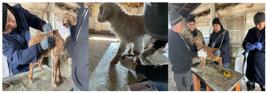
Body measurements of newborn lambs are important morphological indicators reflecting the development and constitution of the animal from the first days of life. Studying these parameters allows assessment of prenatal development, body type, and potential productivity of lambs in the future (Diagram 1 and 2).


Data on body length, withers height, chest girth, and other parameters make it possible to carry out early selection of animals with desirable zootechnical traits. In addition, measurements are used to compare purebred and crossbred individuals, assess the influence of breed combinations and management conditions on the development of young animals. This is crucial for optimizing breeding work and improving the overall efficiency of sheep farming.
Analysis of the data in the table shows that the newborn lambs from the crossbred group KMW × KFTCW) demonstrated slightly higher values for all measured parameters compared to the purebred group (KFTCW × KFRCW). For instance, the withers height of crossbred ewe lambs was 38.8 cm versus 38.1 cm in purebreds, and for ram lambs, 39.0 cm compared to 38.8 cm, respectively.
The oblique body length of crossbred lambs was noticeably greater than that of purebreds: among ram lambs, the difference exceeded 2 cm (35.6 cm versus 33.4 cm).
The chest depth and chest width of crossbred lambs were also slightly higher, indicating a more developed thoracic region. For example, the chest depth of crossbred ram lambs was 14.0 cm, while that of purebreds was 13.5 cm. Chest girth and cannon bone circumference also showed a slight but consistent advantage in favor of the crossbreds. The difference was especially pronounced in chest girth: in crossbred ram lambs, it was 39.0 cm versus 37.2 cm in purebreds.
Thus, the obtained data indicate better body development in crossbred lambs at birth, which may suggest the manifestation of the heterosis effect in interbreed crossbreeding. These parameters represent a favorable factor for the subsequent growth and development of the animals.
According to the diagram data, newborn lambs from the crossbred group (KMW × KFTCW) exhibited higher values for several body measurements compared to purebred lambs (KFTCW × KFTCW). In crossbred ewe lambs, chest depth was 12.8 cm, whereas in purebreds it was 11.1 cm. Chest girth in crossbred ewe lambs reached 33.9 cm versus 31.7 cm in purebreds.
Among ram lambs of both groups, the values for withers and croup height were practically identical; however, the crossbreds showed slightly higher measurements for chest width and rump width.
The oblique body length in purebred animals was occasionally greater than in crossbreds, but the differences were minor. Cannon bone circumference in ram lambs was the same across both groups — 5.8 cm, while in ewe lambs, it was slightly higher in the crossbreds.
Overall, quantitative differences were observed between the groups for most measurements, with the variation in mean values remaining within acceptable ranges.
The obtained data reflect differences in conformation traits between purebred and crossbred lambs at birth, without a pronounced predominance of one group across all parameters.
During the research, body conformation indices of newborn lambs were determined to provide a comprehensive assessment of the influence of breed combinations on the morphological characteristics of the young animals. This allowed for a comparative analysis of the body conformation parameters of purebred and crossbred animals and revealed the expression of exterior traits at an early stage of postnatal development.
The determination of indices such as leg length index, body length index, compactness index, chest index, and bone index made it possible to assess the development of individual body regions, which is important for predicting growth, meat productivity, and adaptive capacity of the animals.
The data obtained are significant not only for evaluating intra- and inter-breed variability but also for selecting the most promising animals for breeding programs. The analysis of body conformation indices complements the overall picture of exterior evaluation of lambs and serves as a scientific basis for substantiating the choice of directions in future crossbreeding and selection efforts (Figures 3 and 4).


The body conformation indices of newborn lambs (n = 30) showed certain differences between the purebred and crossbred groups.
Analysis of the diagram indicates that crossbred lambs surpass purebreds in terms of body length index (up to 86.6%) and chest index (up to 86.1%), suggesting a longer body conformation and a more developed thoracic cavity.
Purebred ram lambs had the highest compactness index (110.4%), indicating a more compact body structure. Differences in leg length index were minimal, but crossbred ram lambs had a slightly higher value (66.9%) compared to purebred ewe lambs (65.3%).
The bone index was nearly identical across all groups (15.9–16.1%), indicating similar bone robustness.
Thus, according to the body conformation indices, crossbred lambs demonstrated superior values for body length and chest indices, while purebreds excelled in compactness. This may indicate different trends in the development of constitutional characteristics in the compared animals.
Analysis of Figure 4 shows that the highest leg length index was observed in crossbred ram lambs (69.7%), indicating longer limbs, whereas the lowest value was found in purebred ewe lambs (66.0%). The body length index was higher in crossbreds (up to 83.9%), reflecting a more elongated body conformation compared to purebred animals. The chest index was also higher in crossbred ewe lambs and ram lambs (80.8% and 79.8%, respectively), indicating a broader and deeper chest cavity. The compactness index was significantly higher in crossbreds (up to 59.4%) compared to purebreds (up to 56.2%), suggesting a less compact body structure. The bone index was similar across all groups (14.7–15.0%), with minimal differences. Thus, crossbred lambs are characterized by a more elongated and developed body, while purebreds have lower values for body length and compactness indices.
4. Discussion of Research Results
Sheep farming is a promising sector within the agricultural industry in many countries. According to global statistics on lamb production and consumption, the top five global producers include China, Australia, New Zealand, Turkey, and Algeria. Australia is the world’s largest exporter (503.6 thousand tons), while China is the largest importer (357.8 thousand tons).
Kazakhstan ranks 16th in the world in lamb production, accounting for 1.2% of global output (155.4 thousand tons per year). The sheep population in Kazakhstan began to increase from 2018; however, compared to 1990, it still represents just over half of the numbers recorded in that year. Sheep farming is primarily concentrated in the southern regions (58.9%), and there are seven breeding centers operating in the country.
The main export destinations for Kazakhstani lamb are Uzbekistan — 78.6% (8.1 thousand tons), the UAE — 18.9% (1.9 thousand tons), and Kuwait — 2.1% (216 tons). The top three exporting regions are Turkestan Region (79.2%), Zhambyl Region (8.8%), and Almaty (4.5%).
For Kazakhstan, the most promising markets for lamb exports are China (350 thousand tons) and the Gulf countries (100 thousand tons). Besides China, other major lamb-consuming countries with growing markets include Sudan, Iran, Uzbekistan, Algeria, Turkey, Oman, Tajikistan, Yemen, and Azerbaijan. In this regard, increasing sheep production is one of the most important objectives for agricultural science and practice.
Achieving this goal requires improving the efficiency of using existing breed resources. Under current conditions, one of the main tasks is to enhance the productive potential of sheep, to create highly productive, competitive breeds, types, and lines of animals that ensure profitable production of high-quality products in demand on both domestic and international markets.
The breeding of small ruminants plays a key role in agriculture, especially in developing countries, due to the multifunctional roles of sheep and their ability to adapt to diverse climatic conditions (Arero and Ozmen, 2025).
Turkey is one of the largest sheep producers in the world, and its sheep production system heavily relies on local breeds (Aydin et al., 2024).
In the work by Henk Mathijs et al., the historical development of fat-tailed sheep in Indonesia is examined, including the dynamics of production systems, production and reproduction indicators under farming conditions, and the role of sheep in supporting livelihoods (Udo and Budisatria, 2011).
The results of research by Aline Vieira Landim et al. confirm the hypothesis that crossbreeding between local breeds represents a viable alternative for sheep meat production systems in semi-arid regions (Landim et al., 2021).
Petrovic M., Caro-Petrovic V., Ruzic-Muslic D., et al. note that crossbreeding serves as a predictable and economically effective method of genetically increasing lamb live weight by mating two or more sheep breeds. The crossbred population offers a greater number of gene combinations and, therefore, is more likely to reveal carriers of favorable alleles for economically important traits. Their studies experimentally confirm that heterosis is the result of extremely complex interactions within the genome as well as between the genome and the environment (Petrovic et al., 2019).
In studies evaluating meat productivity and morphometric characteristics of cuts of Santa Ines lamb carcasses and their crossbreds with Dorper rams, thirty uncastrated lambs from the following genetic groups were used: 10 Santa Ines, 10 ½-Dorper + ½-Santa Ines, and 10 ¾-Dorper + ¼-Santa Ines at 115 days of age, averaging 20 kg live weight. It was noted that the carcasses of lambs from Dorper crossbreds had higher mass and yield, as well as greater chest and croup widths, and larger chest, croup, and limb perimeters. Dorper crossbred carcasses also showed higher slaughter weights. Santa Ines lamb carcasses had a higher yield of shoulder and neck primal cuts, whereas Dorper crossbred carcasses had a higher yield of loin. In the crossbred lamb carcasses, higher yields of loin, tenderloin, and French rack cuts were recorded. The genetic group influenced the linear and rounded dimensions of the lamb carcasses as well as the weights of primary and secondary cuts (Sousa et al., 2024).
The development of sheep breeding in Kazakhstan, as well as livestock farming in general, is inconceivable without the involvement of sheep scientists who have extensive scientific and practical experience in creating new breeds, intrabreed and factory types of animals, and enhancing the genetic potential of sheep for various productive purposes. In the agro-industrial complex, it is necessary not only to consolidate the achievements already attained but also to ensure the growth of agricultural production, stabilize the country’s food market, and prevent a decline in the supply of domestic products to the population. It is necessary to create prerequisites for sustainable economic growth through the cooperation of the agricultural and industrial sectors, as well as to accelerate the development of rural infrastructure. Solving these tasks for the development of the agro-industrial complex must rely on a strong, theoretically and practically well-developed scientific foundation (Minakhmetova, 2022).
The use of crossbreeding in meat-fat sheep farming, where ewes of the Saryarka fat-tailed coarse-wooled breed were mated with Edilbay rams, and ewes of the Kazakh fat-tailed semi-coarse-wooled breed were mated with Saryarka fat-tailed coarse-wooled rams, contributed to the production of lambs and young animals that outperformed their purebred counterparts in live weight at birth, weaning, and at 16–18 months of age, as well as in slaughter indicators and meat quality (Zhumadillayev, 2023).
In the study and comparative assessment of growth, development, and meat productivity of young animals of the Volgograd fine-wooled breed and crossbreds obtained by introductory crossbreeding of Volgograd ewes with Akzhaik meat-wool rams in the "Saltanat" peasant farm, differences in live weight were revealed. These differences were attributed to breed-specific characteristics of the paternal forms and the manifestation of heterosis (Yesengaliyev et al., 2023).
For the successful development of sheep farming in general and for improving the productivity of sheep breeds, selection for increased prolificacy, precocity, and milk production plays a significant role.
Sebkhi, K. et al. evaluated the impact of rotational crossbreeding on reproductive traits and productivity in sheep. They used two local Algerian sheep breeds: Ouled Djellal (OD), known for its exceptional meat qualities, and D’man (D), recognized for its outstanding reproductive performance. Their results demonstrated an improvement in prolificacy (fertility × prolificacy productivity) of ewes in the first, second, and third generations compared to the standard value (95%) for purebred sheep (G1: 97.69 ± 66.43%; G2: 122.54 ± 53.98%; G3: 114.94 ± 58.13%). The D breed, possessing high reproductive potential, can be utilized in crossbreeding to increase the productivity of sheep farms operating in local meat-oriented conditions. Moreover, it could be used to create a synthetic breed through alternative crossbreeding with the local OD breed (Sebkhi et al., 2024).
The findings of Černá, M. et al. indicated that the effect of crossbreeding on increased milk yields in sheep plays an important role. A positive heterosis effect was demonstrated. Therefore, breeders should cross local breeds adapted to specific production environments with highly productive breeds to increase milk production (Černá et al., 2023).
Under modern market conditions, special attention should be given to sheep breeds of the intensive type, characterized primarily by high genetically determined prolificacy combined with versatile productivity.
When selecting animals for breeding, priority should be given to genotypic traits, such as production indicators (e.g., average daily gain, feed efficiency, live weight, and carcass characteristics), as well as reproductive parameters (prolificacy, number of lambs weaned, etc.) (Maquivar et al., 2021).
Awassi sheep produce more lambs due to the presence of the FecB gene, inherited from Garole sheep in the Indian state of West Bengal. Awassi ewes have superior reproductive efficiency and litter size compared to non-prolific Indian sheep breeds. They also give birth to larger lambs, have higher litter weights, and provide adequate milk for their newborns. Therefore, farmers can double their income through the sale of additional lambs obtained by utilizing the prolificacy trait. At the commercial level, under intensive systems, breeding Awassi sheep is most suitable for maximizing profits. The study highlights that, in the future, due to the depletion of natural resources, Awassi sheep will meet the growing demand for meat in the country (Meena et al., 2023).
Findings from analogous studies on other livestock species, including Altai Mountain goats, Simmental, Aberdeen Angus cattle Simmental cattle, and Kazakh horses of the Zhabe type confirm that crossbreeding and adaptation to varying climatic conditions significantly influence morphological and productive traits such as body weight, muscular development, and resilience to environmental stressors factors that are likewise critical when evaluating the phenotypic traits of lambs from Kazakh sheep breeds across diverse ecological zones (Assanbayev et al., 2025; Kazhgaliyev et al., 2023; Shakirov et al., 2023; Assanbayev et al., 2024).
Our research results indicate high variability of phenotypic traits in lambs born from ewes with different genotypes. There is a trend towards increased live weight in the experimental groups, which confirms the prospects of selecting sires based on exterior and weight traits. At the same time, the preservation of the traditional fat-tail shape (kurdyuk) in the control groups demonstrates the stability of this trait in Kazakh coarse-wooled and semi-coarse-wooled breeds. The analysis of coat color shows the possibility of identifying lines with a predominant phenotype, which can be used for further breeding work.
Thus, the study demonstrates that reproductive crossbreeding using meat breeds (KMW, Merino-meat) improves the productive and exterior characteristics of lambs, especially under the conditions of farm "Bepen". These data can serve as a basis for developing strategies to increase the economic efficiency of sheep farming by optimizing breeding programs and management conditions. Based on the obtained results, it can be concluded that the existing genetic material of sheep must be efficiently used: the best genotypes should be actively involved in the breeding process to obtain superior genetic material and improve productivity.
The obtained results are consistent with international studies on crossbreeding and heterosis, confirming the importance of their application in domestic sheep breeding.
5. Conclusion
The results of the conducted research confirm the high efficiency of reproductive crossbreeding when using Kazakh fat-tailed semi-coarse and coarse-wooled ewes crossed with rams of meat and meat-wool productivity types. The crossbred lambs were characterized by higher live weight at birth, better morphological body conformation indicators, and pronounced phenotypic diversity in coat color and tail shape, which indicates the manifestation of the heterosis effect. The greatest increase in live weight and development of exterior traits were observed in the offspring obtained at the “KH Bepen” farm from crossing the Kazakh fat-tailed semi-coarse-wooled “Baiys” type with Kazakh meat-wool rams. At the “LLP KH Aq Bas-Pavlodar” farm, the research results showed a less pronounced heterosis effect, emphasizing the necessity of careful selection of parental pairs considering breed characteristics, producer genotypes, and management conditions. The identified differences in phenotypic traits (coat color, tail shape, and morphological parameters) make it possible to regard interbreed reproductive crossbreeding as an effective tool for the targeted development of new sheep genotypes combining high meat-fat productivity, precocity, and adaptability to the natural and climatic conditions of Kazakhstan.
The practical prospects of applying the obtained results include: developing regional crossbreeding programs using intensive-type breeds to improve the profitability of sheep farming; improving breeding and selection work based on the study of heritability of phenotypic and exterior traits; forming new intrabreed types of the Kazakh fat-tailed semi-coarse-wooled breed with enhanced meat and wool qualities; increasing the competitiveness of domestic sheep breeding in domestic and foreign markets through the production of high-quality mutton and wool.
Thus, reproductive crossbreeding, aimed at combining the best qualities of meat and locally adapted breeds, represents one of the most promising directions for the development of sheep breeding in Kazakhstan, ensuring a stable increase in productivity and improvement of the genetic potential of the national flock.
Acknowledgements
This research has been/was/is funded by the Committee of Science of the Ministry of Science and Higher Education of the Republic of Kazakhstan (Grant No. BR24992940) "Creation of a highly productive sheep population in the northeastern region of Kazakhstan based on the development of effective breeding methods and the implementation of resource-saving technologies."
Data Availability Statement
The datasets generated and/or analyzed during the current study are available from the corresponding author upon reasonable request.
References
-
ARERO, G.B. and OZMEN, O., 2025. Effects of heat stress on reproduction and gene expression in sheep. Animal Reproduction, vol. 22, no. 1, pp. e20240067. https://doi.org/10.1590/1984-3143-ar2024-0067 PMid:40123803.
» https://doi.org/10.1590/1984-3143-ar2024-0067 -
ASSANBAYEV, T., AKILZHANOV, R., SHARAPATOV, T., BEKTAYEV, R., SAMATKYZY, D., KARABAYEV, D., GABDULKAYUM, A., DANIYAROV, A., RAKHIMOVA, S., KOZHAMKULOV, U., SARBASSOV, D., AKILZHANOVA, A. and KAIROV, U., 2024. Whole genome sequencing and de novo genome assembly of the Kazakh native horse Zhabe. Frontiers in Genetics, vol. 15, pp. 1466382. https://doi.org/10.3389/fgene.2024.1466382 PMid:39529846.
» https://doi.org/10.3389/fgene.2024.1466382 -
ASSANBAYEV, T., SHAIKENOVA, K., SHAUYENOV, S., YERZHANOV, N., IBRAYEV, D., OMAROVA, K., SADENOVA, M., MUKHAMETZHAROVA, I., DOLDASHEVA, G., IBRAEVA, A. and SHARAPATOV, T., 2025. Seasonal behavioral characteristics and meat productivity of Altai Mountain goats in the Northeastern region of Kazakhstan. Journal of Animal Behaviour and Biometeorology, vol. 13, no. 2, pp. 2025015. https://doi.org/10.31893/jabb.2025015
» https://doi.org/10.31893/jabb.2025015 -
AYDIN, K.B., BI, Y., BRITO, L.F., ULUTAŞ, Z. and MOROTA, G., 2024. Review of sheep breeding and genetic research in Türkiye. Frontiers in Genetics, vol. 15, pp. 1308113. https://doi.org/10.3389/fgene.2024.1308113 PMid:38333619.
» https://doi.org/10.3389/fgene.2024.1308113 -
ČERNÁ, M., MARGETÍN, M., VESELÁ, Z. and MILERSKI, M., 2023. Effects of crossbreeding on milk production of sheep. Czech Journal of Animal Science, vol. 68, no. 10, pp. 407-413. https://doi.org/10.17221/39/2023-CJAS
» https://doi.org/10.17221/39/2023-CJAS -
HÜMMELCHEN, H., WAGNER, H., BRÜGEMANN, K., KÖNIG, S. and WEHREND, A., 2025. Effects of breeding for short-tailedness in sheep on parameters of reproduction and lamb development. Veterinary Medicine and Science, vol. 11, no. 1, pp. e70138. https://doi.org/10.1002/vms3.70138 PMid:39792579.
» https://doi.org/10.1002/vms3.70138 -
KAZHGALIYEV, N.Z., TITANOV, Z., ATEIKHAN, B., SHARAPATOV, T.S., GABBASSOV, M.B., SEITEUOV, T.K., BURAMBAYEVA, N.B. and TEMIRZHANOVA, A.A., 2023. Maternal instinct of imported meat direction cattle and ethology of their calves. Journal of Animal Behaviour and Biometeorology, vol. 11, no. 3, pp. 2023019. https://doi.org/10.31893/jabb.23019
» https://doi.org/10.31893/jabb.23019 - KAZAKHSTAN, 2021. Law of the Republic of Kazakhstan dated December 30, 2021, No. 97-VII LRK. On Responsible Treatment of Animals Law of the Republic of Kazakhstan, 30 dec.
- KINEEV, M.A. and YERDENOV, B.K., 2009. Breeds of sheep and goats of Kazakhstan Almaty: Publishing House Bastau, 43 p.
-
LANDIM, A.V., RORIZ, N.D., SILVEIRA, R.M.F., VEGA, W.H.O., COSTA, H.H.A., DE SOUSA, L.C.O., ALVES, G.C., FERREIRA, J. and MOURÃO, G.B., 2021. Sheep meat production in the Brazilian semi-arid region: crossing between indigenous breeds. Tropical Animal Health and Production, vol. 53, no. 5, pp. 510. https://doi.org/10.1007/s11250-021-02947-1 PMid:34628538.
» https://doi.org/10.1007/s11250-021-02947-1 -
MAQUIVAR, M.G., SMITH, S.M. and BUSBOOM, J.R., 2021. Reproductive management of rams and ram lambs during the pre-breeding season in US sheep farms. Animals, vol. 11, no. 9, pp. 2503. https://doi.org/10.3390/ani11092503 PMid:34573469.
» https://doi.org/10.3390/ani11092503 -
MEENA, A.S., SHARMA, R.C., KUMAR, R., MALLICK, P.K. and KUMAR, A., 2023. Prolific avishaan sheep toward doubling the farmer income: A review. Bhartiya Krishi Anusandhan Patrika, vol. 38, no. 1, pp. 1-5. https://doi.org/10.18805/BKAP565
» https://doi.org/10.18805/BKAP565 - MINAKHMETOVA, Z.R., 2022. The role of sheep farming in improving the welfare of the rural population. In: NCJSC S. SEIFULLIN KAZAKH AGROTECHNICAL UNIVERSITY, org. Seifullin readings - 18: youth and science - A look into the future Astana: NCJSC S. Seifullin Kazakh Agrotechnical University, vol. 1, pp. 216-219.
-
PETROVIC, M., CARO-PETROVIC, V., RUZIC-MUSLIC, D., MAKSIMOVIC, N., PAVLOVIC, I., CEKIC, B. and COSIC, I., 2019. The phenomenon of heterosis and experience in crossing different breeds of sheep in Serbia. Biotechnology in Animal Husbandry, vol. 35, no. 4, pp. 311-321. https://doi.org/10.2298/BAH1904311P
» https://doi.org/10.2298/BAH1904311P -
SEBKHI, K., ADAOURI, M., TRIKI, S., LEBIED, M., HOUARI, A., BOURADA, A. and SEBBAGH, L., 2024. Evaluation of the reproductive and productive performance of an alternating genetic cross between two local sheep breeds, Ouled Djellal and D’man. Revue d’Elevage et de Medecine Veterinaire Des Pays Tropicaux, vol. 77, pp. 37249. https://doi.org/10.19182/remvt.37249
» https://doi.org/10.19182/remvt.37249 -
SHAKIROV, Q., SHOKIROV, A. and SHARAPATOV, T., 2023. Adaptation of phlegfix simmental cattle to the mountainous climate and formation of breeding and production potential in Uzbekistan. IOP Conference Series. Earth and Environmental Science, vol. 1142, no. 1, pp. 012090. https://doi.org/10.1088/1755-1315/1142/1/012090
» https://doi.org/10.1088/1755-1315/1142/1/012090 -
SOUSA, W.H., CEZAR, M.F., CARTAXO, F.Q., RAMOS, J.P.F., GOMES, J.T., CAVALCANTE, I.T.R., MORAIS, L.K.C., MELO, T.S., OLIVEIRA, F.G., SANTOS, E.M. and OLIVEIRA, R.V., 2024. Primal and sub primal lamb carcass cuts from three different genetic groups finished in feedlot. Arquivo Brasileiro de Medicina Veterinária e Zootecnia, vol. 76, no. 1, pp. 93-102. https://doi.org/10.1590/1678-4162-12981
» https://doi.org/10.1590/1678-4162-12981 -
UDO, H.M.J. and BUDISATRIA, I.G.S., 2011. Fat-tailed sheep in Indonesia; an essential resource for smallholders. Tropical Animal Health and Production, vol. 43, no. 7, pp. 1411-1418. https://doi.org/10.1007/s11250-011-9872-7 PMid:21523494.
» https://doi.org/10.1007/s11250-011-9872-7 -
YESENGALIYEV, Y., KASIMOVA, K. and KOZHAKHMETOVA, K., 2023. Use of Akzhai meat-and-wool breed rams to improve the meat productivity of fine-wool sheep. Gylym Zhane Bilim, vol. 4, no. 73, pp. 21-27. https://doi.org/10.52578/2305-9397-2023-4-21-27
» https://doi.org/10.52578/2305-9397-2023-4-21-27 -
ZHAO, L., YUAN, L., LI, F., ZHANG, X., TIAN, H., MA, Z., ZHANG, D., ZHANG, Y., ZHAO, Y., HUANG, K., LI, X., CHENG, J., XU, D., YANG, X., HAN, K., WENG, X. and WANG, W., 2024. Whole-genome resequencing of Hu sheep identifies candidate genes associated with agronomic traits. Journal of Genetics and Genomics, vol. 51, no. 8, pp. 866-876. https://doi.org/10.1016/j.jgg.2024.03.015 PMid:38582298.
» https://doi.org/10.1016/j.jgg.2024.03.015 -
ZHUMADILLAYEV, N.K., 2023. Increase in live weight and meat productivity of young fat-tailed sheep breeds by crossing. Sheep, Goats. Wool Business, no. 1, pp. 30-33. https://doi.org/10.26897/2074-0840-2023-1-30-33
» https://doi.org/10.26897/2074-0840-2023-1-30-33
Edited by
-
Editor:
Takako Matsumura Tundisi


