 THE APPROACH OF NOMS FRAMEWORK IN THE MANAGEMENT OF SPINAL METASTASIS
ABSTRACT
Malignant tumors often metastasize to spine. Metastases in the spine account for 20-40% of cases in cancer patients. Increased mobility and pain control are two forms of treatment for spinal metastases that aim to improve quality of life. Three components of an interdisciplinary team that offers the best therapeutic treatment for spinal metastases are chemotherapy, radiation and surgery. Different authors have created various decision-making frameworks for the treatment of spinal metastases. They are mainly categorized as prognostic systems based on principles and classifications. Four fundamental and comprehensive assessments are integrated into the NOMS framework, a decision-making approach: neurological, oncological, mechanical (stability) and systemic disease. When NOMS is compared to other scoring systems or methods, it turns out that NOMS can manage almost all facets of spinal metastases. To improve patient outcomes and personalize the treatment plan for each patient, the NOMS framework offers a standardized, evidence-based approach to the treatment of spinal metastases. This approach takes into account many characteristics of the disease to inform treatment decisions. Level of Evidence II; Review Article.
Keywords:
Neoplasm Metastasis; Spine; Spinal Neoplasms; Clinical Decision-Making; Classification
RESUMO
Os tumores malignos frequentemente apresentam metástases na coluna vertebral. Em pacientes com câncer, as metástases na coluna vertebral são responsáveis por 20 a 40% dos casos. O aumento da mobilidade e o controle da dor são duas formas de tratamento das metástases na coluna vertebral que visam melhorar a qualidade de vida. Os três componentes de uma equipe interdisciplinar que oferece o melhor tratamento terapêutico para metástases na coluna vertebral são quimioterapia, radiação e cirurgia. Diferentes autores criaram diversas estruturas de tomada de decisão para o tratamento de metástases na coluna vertebral. Elas são categorizadas principalmente como sistemas de prognóstico baseados em princípios e classificações. Quatro avaliações fundamentais e abrangentes estão integradas à estrutura NOMS, uma abordagem de tomada de decisão: neurológica, oncológica, mecânica (estabilidade) e doença sistêmica. Quando o NOMS é comparado a outros sistemas ou métodos de pontuação, descobre-se que o NOMS pode gerenciar quase todas as facetas das metástases da coluna vertebral. Para melhorar os resultados do paciente e personalizar o plano de tratamento para cada paciente, a estrutura NOMS oferece uma abordagem padronizada e baseada em evidências para o tratamento de metástases na coluna vertebral. Essa abordagem leva em conta muitas características da doença para informar as decisões de tratamento. Nível de Evidência II; Artigo de Revisão.
Descritores:
Metástase Neoplásica; Coluna Vertebral; Neoplasias Da Coluna Vertebral; Tomada De Decisão Clínica; Classificação
RESUMEN
Los tumores malignos suelen metastatizar en la columna vertebral. En los pacientes con cáncer, las metástasis espinales representan entre el 20% y el 40% de los casos. El aumento de la movilidad y el control del dolor son dos formas de tratamiento de las metástasis espinales que pretenden mejorar la calidad de vida. Los tres componentes de un equipo interdisciplinar que ofrece el mejor tratamiento terapéutico para las metástasis vertebrales son la quimioterapia, la radioterapia y la cirugía. Diferentes autores han creado diversos marcos de toma de decisiones para el tratamiento de las metástasis medulares. Se clasifican principalmente en sistemas pronósticos basados en principios y clasificaciones. En el marco del NOMS, un enfoque para la toma de decisiones, se integran cuatro evaluaciones fundamentales y exhaustivas: neurológica, oncológica, mecánica (estabilidad) y enfermedad sistémica. Cuando se compara el NOMS con otros sistemas o métodos de puntuación, resulta que el NOMS puede gestionar casi todas las facetas de las metástasis vertebrales. Para mejorar los resultados de los pacientes y personalizar el plan de tratamiento para cada paciente, el marco NOMS ofrece un enfoque estandarizado y basado en la evidencia para el tratamiento de las metástasis vertebrales. Este enfoque tiene en cuenta numerosas características de la enfermedad para fundamentar las decisiones terapéuticas. Nivel de Evidencia II; Artículo de Revisión.
Descriptores:
Metástasis de la Neoplasia; Columna Vertebral; Neoplasias de la Columna Vertebral; Toma de Decisiones Clínicas; Clasificación
INTRODUCTION
Third after the lung and liver, the spine is a common location of metastasis for malignant tumors.1 Spine metastases have been reported for breast, lung, prostate, and kidney cancers. About 20-40% of cancer patients have spinal metastases, and 10-20% of those patients experience spinal cord compression, which can lead to pain, neurological impairments, and a decline in quality of life.2 The initial tumor histology, the patient’s systemic condition, and comorbidities affect the survival rate. The two-year survival rate for patients with spinal metastases is only 10-20%, and this will take the purpose of treatment into account.3 The goal of treating spinal metastases is improving mobility and pain management by increasing quality of life.4 The optimal clinical management of spinal metastasis requires an interdisciplinary team consisting of chemotherapy, radiotherapy, and surgical treatment. New treatment modalities have improved over the past ten to fifteen years. Evolution in radiotherapy aspects such as spine stereotactic radiosurgery (SRS) and surgical aspects like minimal invasive spine surgery (MISS) have given some options for treating spinal metastasis.5 Several authors have developed multiple decision-making systems for spinal metastasis treatment strategies. They are grouped as classification-based prognostic (e.g., Tomita, Tokuhashi, NESMS) and principle-based systems (LMNOP, Gasbarrini, Sunnybrook, NOMS). It is difficult to determine the most appropriate system because patients’ clinical conditions are various.6 Since cancer treatment requires interdisciplinary roles, the NOMS framework is the closest approach to treating spinal metastasis patients. In this article, we will discuss the advantages of the NOMS Framework compared to other systems.
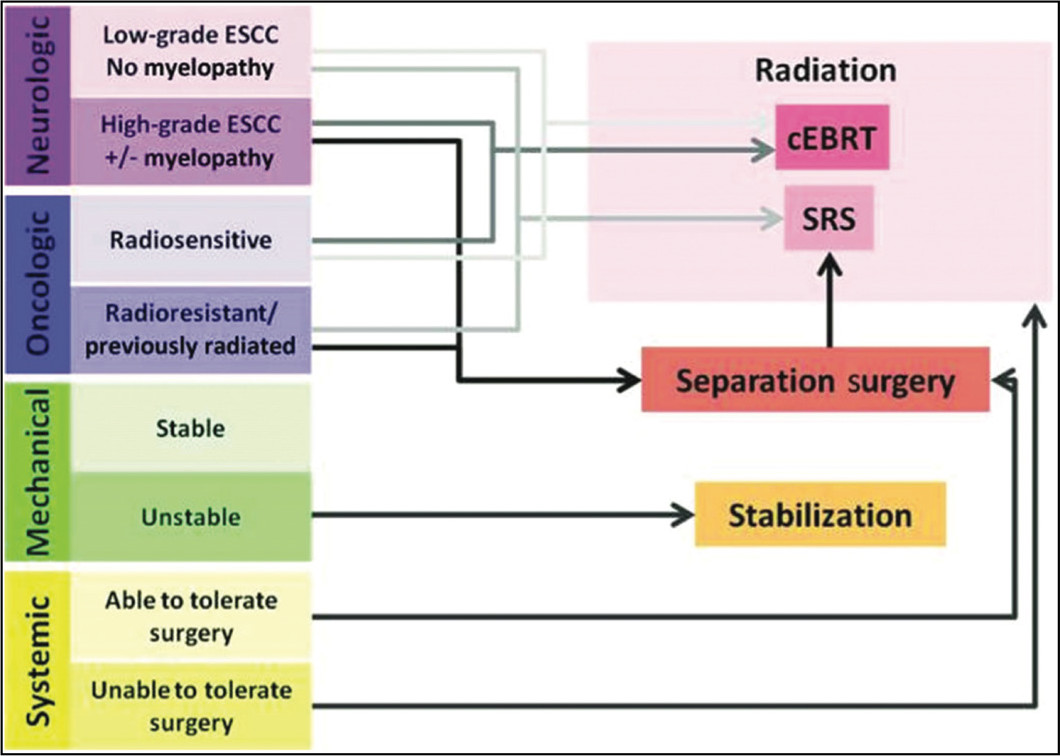
The multidisciplinary spine team at Memorial Sloan-Kettering Cancer Center created the NOMS framework, a decision-making strategy that integrates four basic assessments: neurologic, oncologic, mechanical (stability), and systemic illness. With the combination of developments in surgical procedures, medical oncology, radiation oncology, and interventional radiology, this paradigm offers a dynamic approach to treating spinal metastases that maximizes patient outcomes. Radiographic and clinical data, including the degree of functional radiculopathy, myelopathy, and epidural spinal cord compression (ESCC), are considered in the neurologic assessment.3,7 The mechanical assessment concerns the spine’s stability, whereas the oncologic assessment assesses how sensitive the tumor is to radiation. The patient’s entire systemic illness condition is considered during the systemic assessment.7
The NOMS framework offers a way for all practitioners to assess the four sentinel assessments needed to make decisions in patients with spinal metastases, and it is updated continuously with the integration of fresh technology and evidence.7 By incorporating critical characteristics, this strategy helps patients with spinal metastatic cancers make therapy options that maximize local tumor control, alleviate pain, preserve neurologic function, and minimize morbidity.8,9 The NOMS framework is intended to help standardize and streamline the decision-making process for managing spine metastases, guaranteeing a thorough and patient-specific treatment plan.
NOMS FRAMEWORK ASSESSMENTS
Neurologic Assessment (N)
The NOMS’s neurologic evaluation measures the extent of functional radiculopathy, myelopathy, and epidural spinal cord compression (ESCC). Based on axial T2-weighted MRI images, the ESCC score is used to rate the severity of spinal cord compression. Grades range from 0 to 3, indicating the amount of compression and its effect on the spinal cord. The results of this assessment are essential in assessing the patient’s neurologic condition and helping to make decisions about the best course of treatment, which may include surgery, systemic therapy, radiation therapy, or a combination of these procedures. The assessment enables a thorough assessment of the patient’s neurologic status, which is crucial for figuring out the best course of action for managing local tumor control, relieving pain, maintaining neurologic function, and reducing morbidity.7,8,10
Oncologic Assessment (O)
The projected tumor response and its endurance to various treatments, including surgery, chemotherapy, hormone therapy, immunotherapy, biologics, conventional external beam radiation therapy, and stereotactic radiosurgery, are taken into account in the oncologic assessment. The oncologic evaluation is crucial for choosing the best course of action to attain local tumor control, considering the unique features of the tumor as well as its possible reaction to various treatment methods. It maximizes patient outcomes and the likelihood of local tumor control. The oncologic assessment determines the most successful therapeutic approaches, which may involve radiation therapy, surgery, systemic therapy, or a mix of these modalities, based on how receptive the tumor is to current treatments.11-13
Mechanical Assessment (M)
The mechanical assessment in the NOMS is based on the Spinal Instability Neoplastic Score (SINS), which considers various factors such as the tumor’s location, the extent of vertebral body collapse, the involvement of the posterior elements, and the presence of pain. The SINS score categorizes the spine’s stability as stable, potentially unstable, or unstable. It guides the decision-making process for the most appropriate treatment approach, whether it involves radiation therapy, surgery, systemic therapy, or a combination of these interventions. By considering factors such as vertebral body collapse and the involvement of the posterior elements, this assessment will optimize patient outcomes and minimize the risk of spinal instability.14-16
Systemic Assessment (S)
The systemic assessment considers the patient’s medical co-morbidities, expected survival, and the extent of systemic disease. It impacts the decision to offer surgical treatment and radiation or systemic therapy, guiding the selection of the most appropriate therapeutic interventions to optimize patient outcomes. The systemic assessment is a crucial component of the NOMS framework, providing a comprehensive evaluation of the patient’s systemic condition, which is essential for tailoring the treatment plan to the specific needs of each patient By considering factors such as medical co-morbidities, expected survival, and the extent of systemic disease, the systemic assessment guides the selection of the most effective therapeutic interventions, which may include surgery, radiation therapy, systemic therapy, or a combination of these modalities.17-19
The contemporary approach to managing metastatic spine cancers should prioritize achieving long-lasting tumor control while reducing the negative effects of treatment. This involves carefully considering effective medications, radiation therapy, and surgical interventions. The NOMS framework offers a structure that streamlines decision-making and potentially enhances patient care. (Table 1 and Figure 1)

Schematic depiction of the neurologic, oncologic, mechanical, and systemic (NOMS) decision framework. cEBRT, conventional external beam radiation; SRS, stereotactic radiosurgery.
COMPARISON TO OTHER SYSTEMS
Tomita Scoring System
The Tomita system relies on three parameters: tumor growth, visceral metastases, and the quantity of bone metastases. Its main objective is forecasting life expectancy to identify the appropriate treatment approach. Conversely, the NOMS framework is a flexible decision-making method that integrates four essential evaluations: Neurologic, Oncologic, Mechanical instability, and Systemic illness. The treatment of spinal metastases is approached comprehensively, incorporating advancements in interventional radiology, radiation oncology, medicinal oncology, and surgical procedures to maximize patient results. The Tomita method primarily aims to predict life expectancy. This system does not consider systemic aspects, and there is no place for radiation.16,17 (Table 2)
Tokuhashi Scoring System
The Tokuhashi scoring system, introduced in 1989, is a prognostic scoring system that considers the type of primary tumor, the burden of bone secondary lesions, the presence of visceral metastases, and the patient’s general condition to predict life expectancy and determine the scope of treatment. While the Tokuhashi system focuses on predicting life expectancy to determine the scope of treatment, the NOMS framework considers multiple aspects of the disease to guide treatment decisions and optimize patient outcomes, especially in improving quality of life, including pain and neurological aspects.20,21 (Table 3)
The New England Spinal Metastasis Score (NESMS)
The New England Spinal Metastasis Score comprises three factors: pre-operative albumin, ambulatory status, and modified Bauer score, with a total score range from 0 to 3. This score is to predict one-year survival following surgery for spinal metastasis. However, this system only addresses spinal metastasis patients who will have surgery and does not consider another option plan, such as radiotherapy, which is commonly used for metastatic disease of the spine.22 (Table 4)
LMNOP System
LMNOP system stands for the following factors: the location and level(s) of spinal illness (L), mechanical instability (M), neurology (N), oncology (O), patient fitness, prognosis, patient wishes, and past therapy (P). LMNOP encompasses three crucial factors that were only tangentially discussed in NOMS: (1) the positioning of the disease about the anterior and posterior columns of the spine; (2) the extent of spinal involvement by the tumor, whether contiguous or noncontiguous; and (3) the reaction to prior treatments.23,24 However, this system does not provide the optimum surgery, radiotherapy, or radiosurgery treatment, which is important for spinal metastasis. (Table 5)
The Gasbarrini Algorithm
The Gasbarrini algorithm focuses on surgical strategy selection, considering factors such as operability, neurological dysfunction, and the American Society of Anesthesiology grade. It provides treatment options for emergency surgery based on these factors, aiming to minimize neurological deterioration and improve local tumor control. However, it does not consider contraindications for surgery, such as cardiac or pulmonary dysfunction, and it lacks treatment options for radiotherapy or SRS.7,25 (Figure 2)
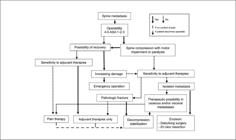
Gasbarrini algorithm for surgical strategy selection. ASA: American Society of Anesthesiology.
The Sunnybrook Protocol
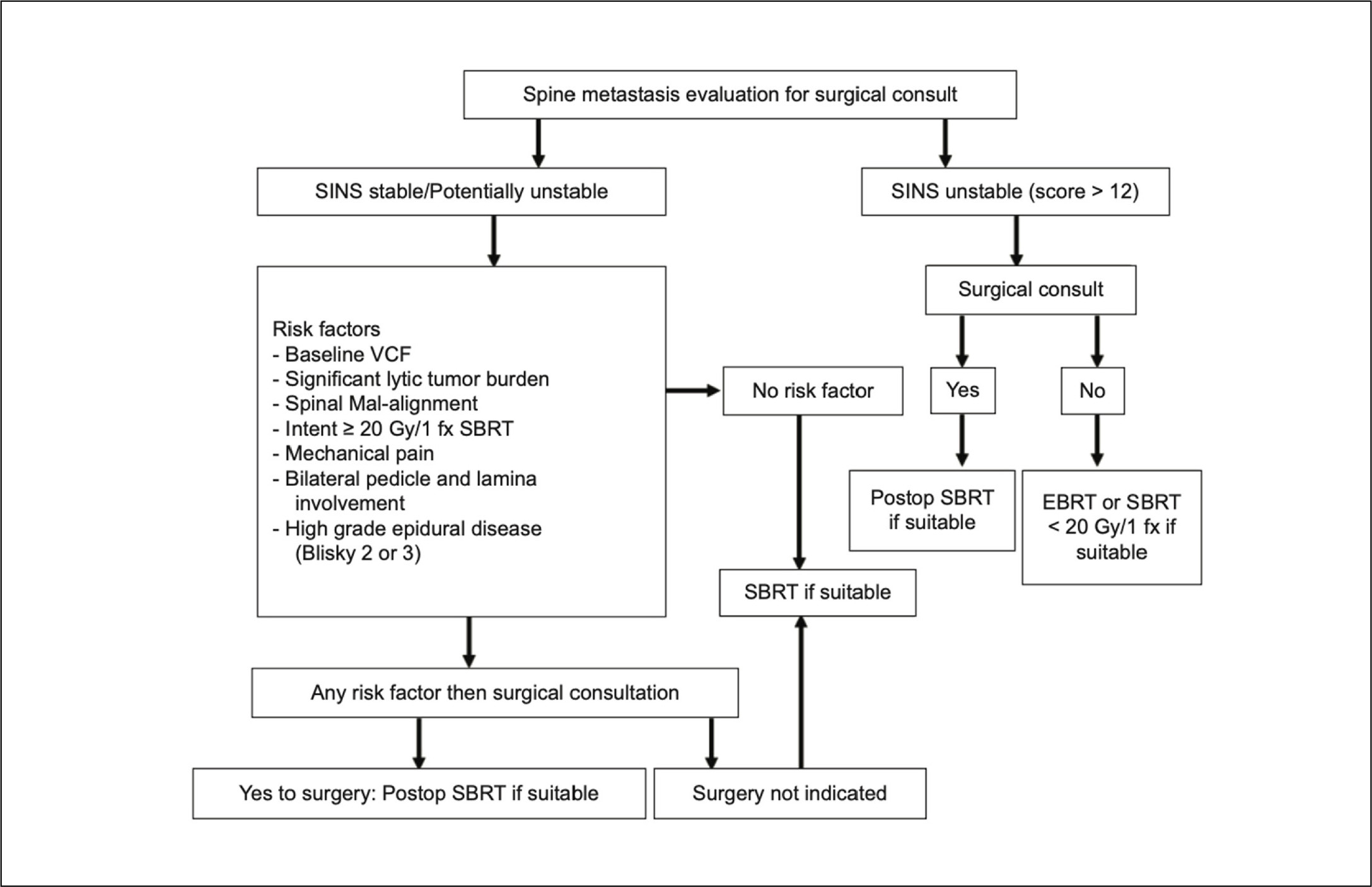
The Sunnybrook protocol focuses on whether surgery should be performed or whether SBRT or postoperative SBRT should be decided on spinal instability and spinal cord compression. The important aspect of this system is the assessment of VCF because, based on the literature, the VCF rate increases after SBRT >20 Gy.26 However, this algorithm has not discussed oncological assessment (primary tumor and chemotherapy), but SBRT and surgical aspects. (Figure 3)
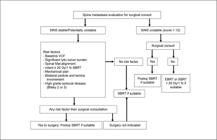
Sunnybrook Odette Cancer Center protocol for spinal metastasis treatment. SINS: spine instability neoplastic score, VCF: vertebral compression fracture, SBRT: stereotactic body radiation therapy, EBRT: external beam radiation therapy, fx: fraction, Postop: postoperative.
The New Algorithm from Incheon-Korea
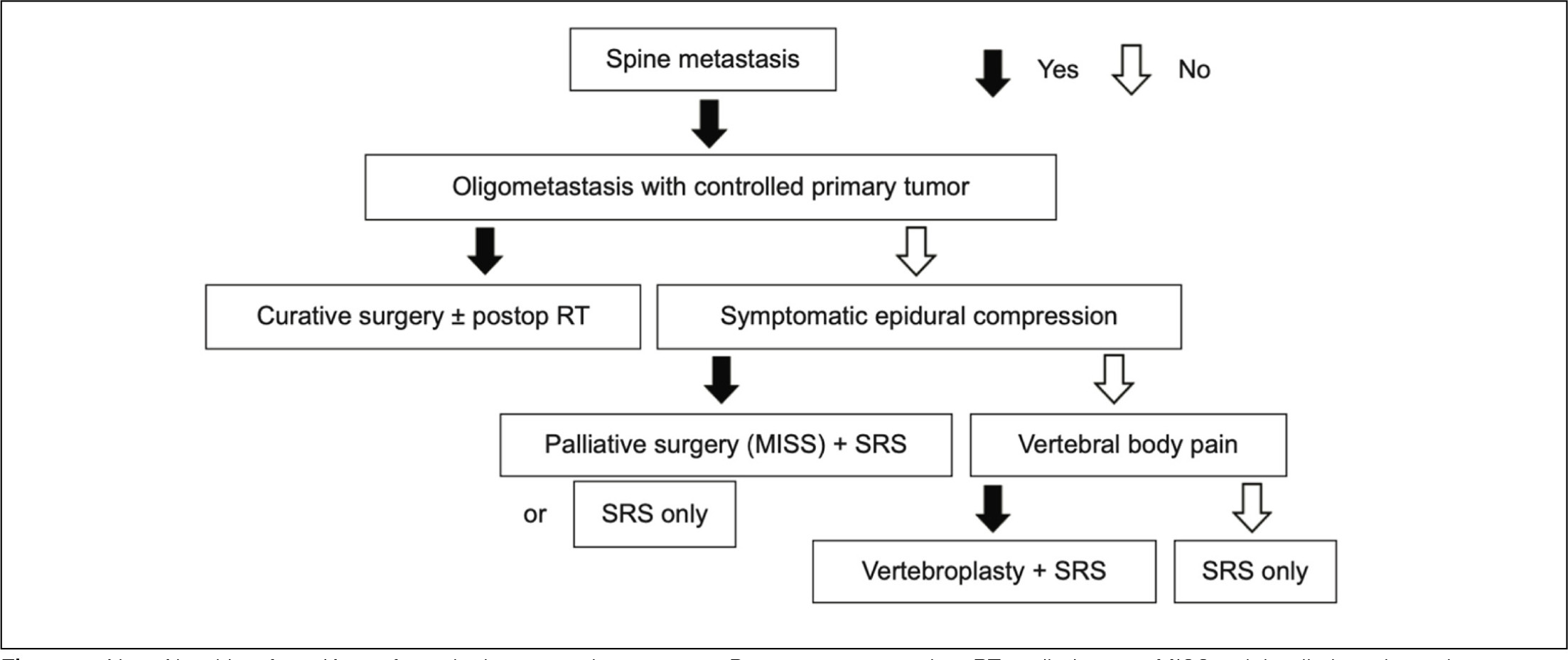
This new algorithm from Gil Medical Center, Gachon University College of Medicine, Incheon, Korea, was introduced in 2021. They added stereotactic radiosurgery (SRS) and minimally invasive spine surgery (MISS) aspects to their algorithm since previous strategies have limitations in applying SRS and MISS. Compared with the NOMS framework, this algorithm is new and needs to be evaluated in several years. It also does not consider patients’ systemic status in deciding surgery options.27 (Figure 4)
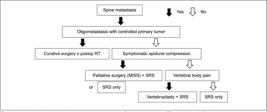
New Algorithm from Korea for spinal metastasis treatment. Postop: postoperative, RT: radiotherapy, MISS: minimally invasive spine surgery, SRS: stereotactic radiosurgery.
DISCUSSION
Of cancer patients, approximately 30% have spinal metastases, which are common sites of metastatic spread for malignant tumors. People with spinal metastatic cancer frequently exhibit evident clinical signs due to the unique positioning of the spinal cord next to the nerve roots. In addition to damaging normal spinal structures and resulting in pain, dysfunction, and sensory impairment-and, in extreme cases, paraplegia and loss of bowel function-tumors can compress the spinal cord and nerve roots. Together with improvements in treatment technology and techniques, assessment techniques for single-site metastatic cancer have evolved. Imaging must be obtained as soon as possible to diagnose the symptoms and indicators and begin an effective treatment plan as soon as possible. Treatment for metastatic spine cancers involves a multimodal approach involving radiation, chemotherapy, and surgery because patients with cancer react differently to treatment.28 As a result, various authors created frameworks for making decisions about treating metastatic spine cancers. Physicians and surgeons could use this to determine each patient’s best course of action.29
Neurologic, Oncologic, Mechanical Stability, and Systemic Disease are the four sentinel decision points that must be addressed in every patient with metastatic spine. The NOMS framework offers a targeted road map for all practitioners to identify these points. This classification should prioritize persistent tumor control while minimizing treatment-related morbidity; to this end, it should consider efficacious pharmacological, surgical, and radiation treatment options. NOMS guarantees a framework that facilitates decision-making and can improve patient care and treatment. Taking into account factors such as spinal stability, the extent of epidural tumor extension about the tumor’s radiosensitivity, and systemic comorbidities enables an accurate assessment of the best mix of radiation therapy and surgery.
Multidisciplinary collaboration is necessary to identify the best course of action for treating spinal metastases and enhancing patients’ quality of life. Spinal metastatic sickness follows the current interdisciplinary paradigm for cancer diagnosis and treatment.30,31 A team of medical oncologists, radiation oncologists, spine surgeons, and other healthcare specialists (such as neurologists, palliative nurses, rehabilitation teams, radiologists, and other medical specialties) is necessary for the best therapy of spinal metastases. Different therapy modalities are available for spinal metastatic disease, with individual patient differences. Each modality has unique characteristics. Radiation therapy, minimally invasive surgery, open surgery, and systemic treatment are common therapeutic modalities.
Several systems and algorithms above show some approaches to this disease. Comparing NOMS with other scorings/systems, it is found that NOMS can cover almost all aspects of spinal metastasis management. First, the Neurological aspect (pain, palsy/paralysis) is not discussed in the Gasbarrini and Sunnybrook system, even though this is quite affecting the quality of life. Second, the oncologic aspect (the primary tumor and level of the metastasis) is not discussed in Tomita and NESMS. Even though spinal metastasis is very closely related to the primary tumor, it must be immediately considered for treatment. The mechanical aspect (bone stability) is important, especially when deciding on a patient’s surgery treatment. However, Tomita, Tokuhashi, and NESMS do not discuss this aspect. The Systemic aspect (ability to do surgery and its complications) is not discussed in Tomita, Sunnybrook, and The New Algorithm from Korea. However, this aspect is also important in choosing the best treatment comprehensively.
The NOMS decision framework has made selecting the most effective course of action for these patients easier, based on Table 6. Based on all the scoring, surgery is recommended according to the existing algorithm. Only NOMS, Sunnybrook, and the New Algorithm from Korea have a place for radiotherapy.
Patients with metastatic spinal cancers are treated with a multimodal strategy that includes radiation, chemotherapy, and surgery. First, the hospital must have supporting diagnostic facilities such as MRI to detect spinal metastasis. Then, the hospital also needs radiotherapy facilities to run cEBRT and SRS. In the surgical sector, hospitals must upgrade facilities to carry out spine operations, such as open and minimally invasive spine surgery (MISS). Don’t forget that hospitals must have the capability for systemic cancer therapy such as chemotherapy. (Table 6)
CONCLUSION
The NOMS (Neurologic, Oncologic, Mechanical, and Systemic) framework is a dynamic and comprehensive approach to the treatment of spinal metastatic tumors. It incorporates four fundamental assessments: neurologic, oncologic, mechanical instability, and systemic disease, allowing the integration of advances in interventional radiology, radiation oncology, medical oncology, and surgical techniques to optimize patient outcomes. A multidisciplinary oncology team must make integrated decisions to treat spinal metastases. The NOMS decision framework has made selecting the most effective course of action for these patients easier. The NOMS framework provides a standardized and evidence-based approach to managing spinal metastases, ensuring that the treatment plan is tailored to each patient’s specific needs, considering multiple aspects of the disease to guide treatment decisions and optimize patient outcomes. Novel decision-making algorithms should, therefore, integrate prognostic and decision-making systems and simultaneously evaluate the remaining survival and the best course of action.
-
Study conducted by the MRCCC Siloam Hospital Semanggi, Jakarta, Indonesia.
REFERENCES
- 1 Yahanda AT, Buchowski JM, Wegner AM. Treatment, complications, and outcomes of metastatic disease of the spine: from Patchell to PROMIS. Ann Transl Med. 2019;7(10):216.
- 2 Perrin RG, Laxton AW. Metastatic spine disease: epidemiology, pathophysiology, and evaluation of patients. Neurosurg Clin N Am. 2004;15(4):365-73.
- 3 Laufer I, Rubin DG, Lis E, Cox BW, Stubblefield MD, Yamada Y, et al. The NOMS framework: approach to the treatment of spinal metastatic tumors. Oncologist. 2013;18(6):744-51.
- 4 Nathan SS, Healey JH, Mellano D, Hoang B, Lewis I, Morris CD, et al. Survival in patients operated on for pathologic fracture: implications for end-of-life orthopedic care. J Clin Oncol. 2005;23(25):6072-82.
-
5 Ryken TC, Eichholz KM, Gerszten PC, Welch WC, Gokaslan ZL, Resnick DK. Evidence-based review of the surgical management of vertebral column metastatic disease. Neurosurg Focus. 2003;15(5):E11. doi: 10.3171/foc.2003.15.5.11.
» https://doi.org/10.3171/foc.2003.15.5.11. -
6 Chang SY, Mok S, Park SC, Kim H, Chang BS. Treatment Strategy for Metastatic Spinal Tumors: A Narrative Review. Asian Spine J. 2020 Aug;14(4):513-525. doi: 10.31616/asj.2020.0379. Epub 2020 Aug 13. PMID: 32791769; PMCID: PMC7435309.
» https://doi.org/10.31616/asj.2020.0379 - 7 Newman WC, Larsen AG, Bilsky MH. The NOMS approach to metastatic tumors: Integrating new technologies to improve outcomes. Rev Esp Cir Ortop Traumatol. 2023;67(6):487-99.
- 8 Newman WC, Patel A, Goldberg JL, Bilsky MH. The importance of multidisciplinary care for spine metastases: initial tumor management. Neurooncol Pract. 2020;7(Suppl 1):i25-32.
- 9 Barzilai O, Boriani S, Fisher CG, Sahgal A, Verlaan JJ, Gokaslan ZL, et al. Essential Concepts for the Management of Metastatic Spine Disease: What the Surgeon Should Know and Practice. Global Spine J. 2019;9(1 Suppl):98S-107S. Erratum in Oncologist. 2019;24:424.
- 10 Bilsky MH, Laufer I, Fourney DR, Groff M, Schmidt MH, Varga PP, et al. Reliability analysis of the epidural spinal cord compression scale. J Neurosurg Spine. 2010;13(3):324-8.
- 11 Rades D, Huttenlocher S, Bajrovic A, Karstens JH, Adamietz IA, Kazic N, et al. Surgery followed by radiotherapy versus radiotherapy alone for metastatic spinal cord compression from unfavorable tumors. Int J Radiat Oncol Biol Phys. 2011;81(5):e861-8.
- 12 Gerszten PC, Mendel E, Yamada Y. Radiotherapy and radiosurgery for metastatic spine disease: what are the options, indications, and outcomes?. Spine (Phila Pa 1976). 2009;34(22 Suppl):S78-92.
- 13 Katagiri H, Takahashi M, Inagaki J, Kobayashi H, Sugiura H, Yamamura S, et al. Clinical results of nonsurgical treatment for spinal metastases. Int J Radiat Oncol Biol Phys. 1998;42(5):1127-32.
- 14 Bilsky MH, Boakye M, Collignon F, Kraus D, Boland P. Operative management of metastatic and malignant primary subaxial cervical tumors. J Neurosurg Spine. 2005;2(3):256-64.
- 15 Bilsky MH, Shannon FJ, Sheppard S, Prabhu V, Boland PJ. Diagnosis and management of a metastatic tumor in the atlantoaxial spine. Spine (Phila Pa 1976). 2002;27(10):1062-9.
- 16 Fisher CG, DiPaola CP, Ryken TC, Bilsky MH, Shaffrey CI, Berven SH, et al. A novel classification system for spinal instability in neoplastic disease: an evidence-based approach and expert consensus from the Spine Oncology Study Group. Spine (Phila Pa 1976). 2010;35(22):E1221-9.
- 17 Joaquim AF, Powers A, Laufer I, Bilsky MH. An update in the management of spinal metastases. Arq Neuropsiquiatr. 2015;73(9):795-802.
- 18 Wang JC, Boland P, Mitra N, Yamada Y, Lis E, Stubblefield M, et al. Single-stage posterolateral transpedicular approach for resection of epidural metastatic spine tumors involving the vertebral body with circumferential reconstruction: results in 140 patients. Invited submission from the Joint Section Meeting on Disorder. J Neurosurg Spine. 2004;1(3):287-98.
- 19 MacLean MA, Touchette CJ, Georgiopoulos M, Brunette-Clément T, Abduljabbar FH, Ames CP, et al. Systemic considerations for the surgical treatment of spinal metastatic disease: a scoping literature review. Lancet Oncol. 2022;23(7):e321-33.
- 20 Iinuma M, Akazawa T, Torii Y, Ueno J, Umehara T, Asano K, et al. Optimization of the Revised Tokuhashi Scoring System: New Prognostic Criteria for Metastatic Spinal Tumor in Surgical Cases. Spine Surg Relat Res. 2021;5(2):81-5.
- 21 Yen H-K, Chen C-W, Lin W-H, Wang Z-Y, Huang C-C, Chen H-Y, et al. Optimization of Tokuhashi Scoring System to Improve Survival Prediction in Patients with Spinal Metastases. J Clin Med. 2022;11(18):5391.
- 22 Shi D, Chen YH, Lam TC, Leonard D, Balboni TA, Schoenfeld A, et al. Assessing the utility of a prognostication model to predict 1-year mortality in patients undergoing radiation therapy for spinal metastases. Spine J. 2018;18(6):935-40.
- 23 Ivanishvili Z, Fourney DR. Incorporating the Spine Instability Neoplastic Score into a Treatment Strategy for Spinal Metastasis: LMNOP. Global Spine J. 2014;4(2):129-36.
- 24 Paton GR, Frangou E, Fourney DR. Contemporary treatment strategy for spinal metastasis: the “LMNOP” system. Can J Neurol Sci. 2011;38(3):396-403.
- 25 Gasbarrini A, Cappuccio M, Mirabile L, Bandiera S, Terzi S, Barbanti Bròdano G, et al. Spinal metastases: treatment evaluation algorithm. Eur Rev Med Pharmacol Sci. 2004;8(6):265-74.
- 26 Thibault I, Atenafu EG, Chang E, Chao S, Ameen AO, Zhou S, et al. Risk of vertebral compression fracture specific to osteolytic renal cell carcinoma spinal metastases after stereotactic body radiotherapy: a multi-institutional study. J Radiosurg SBRT. 2015;3:297-305.
- 27 Park K, Son S, Lee SG, Cho EK, Ahn HK, Park IK, et al. An updated algorithm for the treatment of spinal metastasis. J Korean Ster Func Neurosurg. 2021;17(2):70-7.
- 28 Curtin M, Piggott RP, Murphy EP, Munigangaiah S, Baker JF, McCabe JP, et al. Spinal metastatic disease: a review of the role of the multidisciplinary team. Orthop Surg. 2017;9(2):145-51.
- 29 Ahmed AK, Goodwin CR, Heravi A, et al. Predicting survival for metastatic spine disease: a comparison of nine scoring systems. Spine J 2018;18:1804-14.
-
30 Esperança-Martins M, Roque D, Barroso T, Abrunhosa-Branquinho A, Belo D, Simas N, Costa L. Multidisciplinary Approach to Spinal Metastases and Metastatic Spinal Cord Compression-A New Integrative Flowchart for Patient Management. Cancers (Basel). 2023 Mar 16;15(6):1796. doi: 10.3390/cancers15061796. PMID: 36980681; PMCID: PMC10046378.
» https://doi.org/10.3390/cancers15061796 - 31 Wallace AN, Robinson CG, Meyer J, Tran ND, Gangi A, Callstrom MR, et al. The metastatic spine disease multidisciplinary working group algorithms. Oncologist. 2015;20(10):1205-15.
Edited by
-
Reviewed by:
Robert Meves