
 Polypharmacy associated with low functional capacity in older adults: results from the SHIP-Brazil Study
Abstract
Objective To investigate the association between polypharmacy and low functional capacity among older adults residing in southern Brazil.
Method This cross-sectional observational study involved 511 older adults participating in the Study of Health in Pomerode (SHIP-Brazil) study. A structured questionnaire interview was conducted, including sociodemographic, behavioral, general health, and healthcare variables. Functional capacity was assessed using a 0-to-100 scale and quartiles based on the SF- 36 questionnaire. The association between polypharmacy (five or more medications) and low functional capacity (25th percentile or lower) was estimated using logistic regression.
Results Among the participants, 48.3% used five or more medications. The median functional capacity was 65 (IQR 40–85). A negative correlation was observed between the functional capacity scale and the number of medications (rho = -0.3068; p > 0.001). The likelihood of having low functional capacity was 2.8 times higher (95% CI 1.8–4.1) among those consuming five or more medications compared to those consuming four or fewer. This association remained significant across all adjusted models, with the greatest reductions observed for clinical (OR = 1.6; 95% CI 1.1–2.6) and healthcare-related variables (OR = 1.8; 95% CI 1.2–2.9).
Conclusion There is an association between polypharmacy and low functional capacity, even after adjusting for socioeconomic, lifestyle, general health, and healthcare-related factors. It is essential to implement health promotion actions targeted at the population aged 60 years or older who use medications, ensuring effective and safe treatment while preventing low functional capacity.
Keywords
Polypharmacy; Functional Physical Performance; Older Adult Health; Chronic Medication Use
Resumo
Objetivo Investigar a associação entre a polifarmácia e baixa capacidade funcional entre pessoas idosas, residentes no sul do Brasil.
Método Estudo do tipo observacional seccional realizado com 511 pessoas idosas participantes do estudo “Vida e Saúde em Pomerode-SHIP Brazil”. Uma entrevista com questionário estruturado foi realizada, contendo variáveis sociodemográficas, comportamentais, condições gerais, de saúde e assistenciais. A capacidade funcional foi estimada em escala de zero a 100 e quartis com base no questionário SF-36. A associação entre a polifarmácia (cinco medicamentos ou mais) e baixa capacidade funcional (quartil 25 ou menos) foi estimada por regressão logística. Resultado: Dentre os participantes, 48,3% utilizavam 5 ou mais medicamentos. A mediana da capacidade funcional foi de
Conclusão Há uma associação entre polifarmácia e baixa capacidade funcional, mesmo após ajuste por fatores socioeconômicos, de estilo de vida, condições gerais, de saúde e assistenciais. Faz-se necessário implementar ações de promoção a saúde direcionadas à população de 60 anos ou mais que utilizam medicamentos, de modo a garantir tratamento efetivo, seguro e que evite a baixa capacidade funcional.
Palavras-Chave:
Polimedicação; Desempenho Físico Funcional; Saúde do Idoso; Medicamentos de Uso Contínuo
INTRODUCTION
The functional capacity of the population aged 60 years or older can be attributed to the interaction between their abilities and the conditions of the environment in which they live, enabling them to perform their activities of daily living (ADL). During aging, hormonal and physiological changes, combined with the occurrence of multiple diseases and the concomitant use of various medications, compromise the autonomy and independence of older adults, thereby reducing their functional capacity1.
Functional incapacity is a concept that has been expanding over the past years and represents the difficulty an individual experiences in performing basic or complex daily tasks necessary to maintain an independent life within the community2. In a study conducted in 22 European countries, it was observed that 27.7% of the population aged 60 years or older were unable to perform ADLs1.
Similarly, literature reviews³ suggest that functional incapacity in older adults may be associated with the number of medications consumed. In the literature, the use of five or more medications by an individual is defined as polypharmacy4. A study conducted in ten countries across three different continents (America, Europe, and Oceania) showed that the prevalence of polypharmacy increased in all countries, with the largest increases observed in Ireland (42.6%), Sweden (38.3%), and the United States (26.2%)5. In Germany, approximately 66% of older adults engage in polypharmacy6. In Brazil, the prevalence of polypharmacy among the population aged 65 years or older is 18.1%7.
Moreover, studies conducted in England8 and Germany9 have found associations between medication use and functional incapacity in the population aged 60 years or older. Identifying this association contributes to the appropriate use of medications and improved functional capacity among older adults. Understanding the origin, ancestry, beliefs, or culture of populations is another key aspect that helps comprehend the realities of these groups and determine the best approaches healthcare professionals should adopt to enhance the effectiveness of health treatments10.
Studies on polypharmacy and functional incapacity, particularly among descendants of immigrants, can help identify factors that predispose individuals to multiple medication use and functional incapacity in these populations. However, we did not identify population-based studies addressing the association between these two topics among populations of German heritage residing in Brazil. Thus, this study aims to analyze the association between polypharmacy and low functional capacity among older adults living in Pomerode, Santa Catarina, Brazil.
METHOD
This is a cross-sectional observational, population-based study involving participants from the cohort Study of Health in Pomerode (SHIP-Brazil). The study is a partnership between the University of Greifswald, located in the Pomerania region of Germany, and the Universidade Regional de Blumenau (FURB), involving residents of the municipality of Pomerode, SC. The city of Pomerode is located in the state of Santa Catarina, in the Médio Vale do Rio Itajaí region, and was colonized by Germans from the Pomerania region.
The methodological procedures have been previously described11. Briefly, the SHIP-Brazil sample was estimated through simple random sampling, stratified by sex and age, including individuals aged 20 to 79 years (n = 3,678). Participants were included if they had resided in the municipality of Pomerode, Santa Catarina, for at least six months and signed the Informed Consent Form (ICF). Exclusion criteria were self-reported or family-reported physical or cognitive limitations that prevented participants from answering questionnaires or undergoing examinations.
Baseline data collection for SHIP-Brazil occurred between 2014 and 2018. Participant recruitment was conducted via telephone contact, followed by a home visit during which the ICF was administered. Participants were interviewed using structured questionnaires, with interviews lasting an average of two hours (including two breaks for participant comfort). At the end of the visit, participants were invited to undergo examinations at the Examination Center (EC) located at the Hospital Universitário de Blumenau, Santa Catarina, on a pre-scheduled date and time. Upon arrival at the EC in the early morning, volunteers were provided with detailed explanations about each examination and procedure. If they agreed to proceed, they signed a new ICF. Examinations and data collection were performed by trained and certified personnel following the completion of a pilot study. A total of 2,488 individuals participated.
All data collection procedures and information about the tests performed are detailed in the study's Standard Operating Procedures (available at www.furb.br/vspomerode). SHIP-Brazil adheres to the Declaration of Helsinki and was approved by the Ethics Committee of the Universidade Regional de Blumenau (approval number 2.969.842).
For this study, a subset of the SHIP-Brazil sample was used, consisting of older adults aged 60 to 79 years of both sexes (n = 733).
During the home visit, participants were asked about the occasional use of medications in the last 15 days and the continuous use of medications. Those who reported using medications were asked to present their prescriptions and respective medications. For continuous medications, the name, pharmaceutical form, dose, and dosage regimen were recorded. The total number of continuous medications per participant was calculated. Polypharmacy was defined as the use of five or more continuous medications by an individual4.
Functional capacity was assessed using the first section of the SF-36 questionnaire, adapted and validated in Portuguese. This instrument includes 10 questions related to basic and instrumental activities of daily living, preceded by the question: “Because of your health, do you have difficulty performing these activities?” The activities assessed are as follows: (1) Vigorous activities requiring significant effort, such as running, lifting heavy objects, or participating in strenuous sports; (2) Moderate activities, such as moving a table, vacuuming, playing ball, or sweeping the floor; (3) Lifting or carrying groceries; (4) Climbing several flights of stairs; (5) Climbing one flight of stairs; (6) Bending, kneeling, or stooping; (7) Walking more than one kilometer; (8) Walking several blocks; (9) Walking one block; and (10) Bathing or dressing oneself.
Participants had three response options: no difficulty, some difficulty, and significant difficulty in performing each activity. The resulting scores were summed and converted to a scale ranging from 0 (lowest functional capacity) to 100 (highest functional capacity). Low functional capacity was defined as scores below the 25th percentile.
The sociodemographic and lifestyle variables included: biological sex (male/female), age (in complete years and categorized into age groups: 60-69 years and 70-79 years), education level, consumer economy class, German heritage (yes/no), alcohol consumption risk, and smoking status (never smoked/former smoker/current smoker). Education level was estimated based on completed years of schooling and categorized as follows: none (illiterate), 1-4 years, 5-8 years, 9-11 years, and 12 years or more. In the consumer economy class13, participants were classified into categories ranging from A1 (highest) to E (lowest) based on the household head's education level and the number of declared consumer goods. Based on descriptive analysis, participants were reclassified into three grouped strata (A1/A2, B1/B2, and C/D/E). German heritage was defined as present when participants reported regularly speaking German at home and participating in some type of German community/cultural association14.
Alcohol consumption was assessed using the AUDIT-C questionnaire, adapted and validated in Portuguese15. The questionnaire consists of three questions that generate a final score ranging from zero to 12 points. Participants were then classified into low, moderate, high, and severe risk categories. Smoking status was classified as current smoker, former smoker, or non-smoker. Physical activity was assessed using the International Physical Activity Questionnaire (IPAQ-short version)16. This instrument measures the amount of physical activity performed in minutes over the past seven days, considering frequency, duration in minutes, and intensity. Participants were considered sufficiently active if they reported engaging in moderate or vigorous physical activities for 150 minutes or more per week17.
Muscle strength was assessed using the Handgrip Strength (HGS) test. The HGS test was measured with a Jamar® Plus+ digital dynamometer, following the recommendations of the American Society of Hand Therapists18,19. Three measurements were taken for each hand, with the participant seated in an upright position, without leaning against the chair backrest, feet flat on the floor, and the elbow of the testing arm flexed at a 90-degree angle. The highest value in kilograms (kg) was selected from the recorded measurements.
Nutritional status was determined based on the body mass index (BMI), calculated by dividing body mass by the square of height. Participants were classified as underweight (BMI < 22), normal weight (BMI = 22-27), and overweight (BMI > 27)20.
The health-related and healthcare variables included healthcare service utilization in the last 30 days (yes/no), hospitalization in the past year (yes/no), health insurance (yes/no), musculoskeletal disease (0 or 1/2 or more), pain in the last 30 days (yes/no), and self-perceived health (very good/good, fair, poor/very poor). Information on these variables was collected through interviews with the participants.
The data were tested for distribution (which did not approximate a normal distribution according to the D'Agostino K2 test), examined using descriptive statistics (median and interquartile range [IQR]), and presented in tabular and/or graphical form. The correlation between the number of medications consumed and functional capacity was estimated using Spearman's correlation (rho). Spearman’s correlation interpretation was performed according to Harris and Taylor21.
The association between the functional capacity scale and number of medications (categorized as none, 1-4 medications, and 5 or more) was examined using the Kruskal-Wallis test, followed by the Mann-Whitney U test.
The association between low functional capacity (dichotomous variable) and polypharmacy (dichotomous variable) was estimated using Odds Ratio obtained through crude and adjusted logistic regression (robust variance) in blocks: 1. sex and age; 2. sex, age, education level, smoking status, alcohol consumption; 3. sex, age, moderate or vigorous physical activity, handgrip strength, nutritional status; 4. sex, age, musculoskeletal conditions, pain in the last 30 days; 5. sex, age, healthcare service utilization, health insurance, self-perceived health. Model fit was assessed using the Hosmer-Lemeshow test. A p-value <0.05 was considered statistically significant.
RESULTS
Of the 733 older adults interviewed at home, 677 attended the examination center. A total of 166 older adults declined to answer the functional capacity assessment questionnaire, resulting in a final sample of 511 participants. The median age of the final sample was lower (67.0 vs. 70.8; p<0.0001), and the median number of medications used by participants was higher (4 vs. 3; p<0.001) compared to those who declined to answer the questionnaire. Functional capacity did not differ significantly between the groups.
Table 1 presents the sociodemographic, lifestyle, healthcare, and health condition characteristics according to the number of medications used.
Characteristics of participants according to the number of medications used (N=511) (N=511). Pomerode, SC, 2014-2018.
The median number of medications used was 4 (IQ = 2–7). A total of 49 participants (9.6%) reported not taking any medication, 215 (42.1%) used 1 to 4 medications, and 247 (48.3%) used 5 or more medications (polypharmacy). The median functional capacity scale score of the participants was 65 (IQ 40–85). There is a low negative correlation between the functional capacity scale and the number of medications (rho = -0.3068; p < 0.001).
The Table 2 shows the correlations between the functional capacity scale and the number of medications, stratified by some study variables. The strongest negative correlations between the number of medications used and the functional capacity scale score were observed among women (rho = -0.3222), participants aged 60 to 69 years (rho = -0.3554), and those who do not belong to the German cultural group (rho = -0.3534).
Correlation between the functional capacity scale and the number of medications used, stratified by selected study variables (N = 511). Pomerode, SC, 2014–2018.
Regarding all participants, those who did not use medications had a higher median functional capacity scale compared to those who used 1 to 4 medications (functional capacity: 85 vs. 75; p = 0.0212) and those who used 5 or more medications (functional capacity: 85 vs. 60; p < 0.0001). The median functional capacity was also higher among those who used 1 to 4 medications compared to those consuming 5 or more (75 vs. 60; p < 0.001).
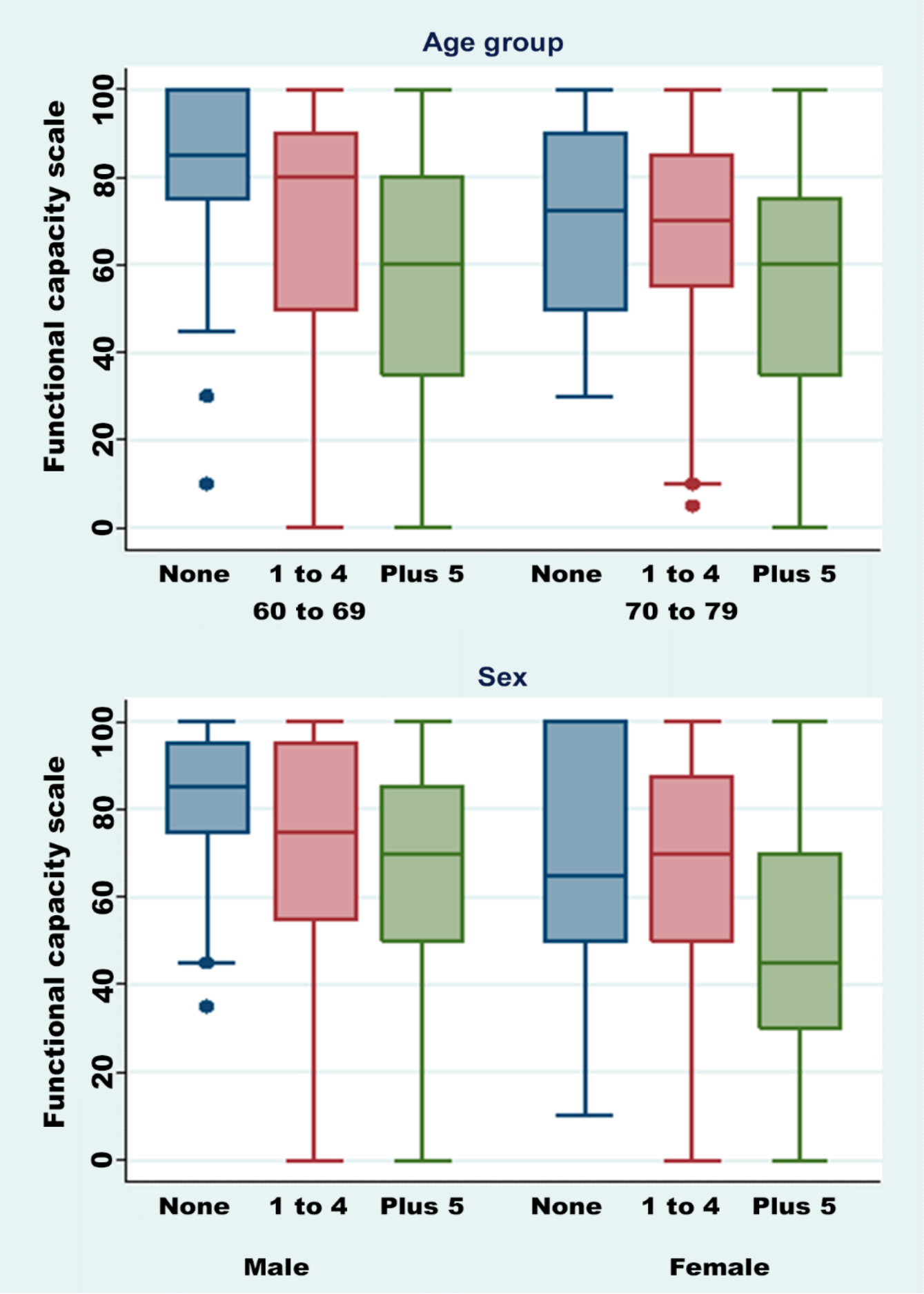
Figure 1 shows the distribution of the functional capacity scale among participants according to the number of medications used, grouped by age group and sex.
Male participants who did not use any medications had a higher median functional capacity score compared to those who used 4 or more medications (functional capacity 85 vs. 75; p<0.0235) and those who used 5 or more medications (functional capacity 85 vs. 70; p<0.0014). Female participants who used 1 to 4 medications had a higher median functional capacity score compared to those who used 5 or more medications (70 vs. 45; p<0.0001). In the 60 to 69 age group, those who did not use medications had a higher median functional capacity score compared to those who used 5 or more medications (85 vs. 60; p<0.0001), and the same pattern was observed among participants in the 70 to 79 age group.
The frequency of individuals with polypharmacy was higher among those with low functional capacity (39.7 vs 19.3; p<0.001). Table 3 presents the frequency of low functional capacity and its association with some participant characteristics.

Distribution of Functional Capacity and Number of Medications by Sex and Age Group, SHIP-Brazil, 2014-2018.
Frequency of low functional capacity and respective odds ratios according to participant characteristics (N=511). Pomerode, SC, 2014 – 2018.
Table 4 presents logistic regression models for the crude and adjusted association between the presence of polypharmacy and low functional capacity. The odds of having low functional capacity were 2.8 times higher among those using 5 or more medications compared to those using 4 or fewer medications. The observed crude association (OR=2.8) remains in all adjusted models, with the greatest reduction observed in models 4 and 5.
Odds ratios and respective 95% Confidence Intervals of the crude and adjusted logistic regression models for the association between polypharmacy and low functional capacity. Pomerode, SC, 2014 – 2018.
DISCUSSION
In the present study, polypharmacy was found to be associated with low functional capacity in older adults, considering demographic, behavioral, health, and healthcare characteristics. The negative correlation observed between the number of medications and the functional capacity scale is consistent with findings from previous studies22,23. Some medication classes may be linked to functional disability in older adults, due to adverse events and long-term use, such as benzodiazepines and Z-drugs23.
Women and those aged 60 to 69 showed a negative correlation and lower median values between the functional capacity scale and the number of medications. Hormonal changes in women, such as the decrease in estrogen levels due to menopause, may predispose individuals to muscle mass decline, weight gain, and increased susceptibility to musculoskeletal diseases, such as osteoporosis24. Population-based studies from 22 European countries1 and in Brazil7 have found that one of the main characteristics influencing the decline in functional capacity on the scale used was being older than 60 years. Gender and age factors may contribute to the decline in functional capacity, though other associated factors may also be at play.
It was observed that individuals of German heritage used a greater number of medications, but there were no differences in functional capacity. It is reasonable to assume that older adults of Germanic culture in Pomerode, in addition to a possible legacy of German ancestry and cultural heritage14, have better socioeconomic conditions, with access to and care for health services11. These characteristics have been associated with polypharmacy and functional incapacity8,25. A condition of greater social vulnerability could explain, at least in part, why the negative correlation observed between the number of medications consumed and the functional capacity scale was stronger among individuals who were not of German heritage.
Regarding our main hypothesis, polypharmacy was significantly associated with low functional capacity in all the models studied. It is important to note that there is a bidirectional association between polypharmacy and physical function in the population aged 65 and older25. On one hand, genetic, environmental, and social factors are considered predisposing factors for individuals to experience a decline in physiological functions and reduced functional capacity27. In contrast, healthcare services play a key role in the prevention and control of diseases, and the use of medications in the appropriate quantity, dose, and frequency is a tool available to health professionals.
Studies26,28 have reported that variables such as sex, age, education, smoking status, and alcohol consumption have been associated with polypharmacy and functional incapacity. Variables like tobacco and alcohol consumption may predispose the population aged 60 and older to diseases, which consequently lead to the use of medications. Socioeconomic conditions are also determinants for access to medications as well as better functional capacity9. Despite this, these characteristics do not seem to have significantly interfered with the association between polypharmacy and low functional capacity among the study participants.
Conversely, variables that aimed to estimate the general physical conditions of the participants, such as physical activity, muscle strength, and nutritional status, provided a greater adjustment in the association between polypharmacy and low functional capacity. The level of physical activity performed by an individual can have a protective effect on aging, the preservation of functional capacity, and the number of medications consumed by individuals29. Muscle strength and body composition are important components for preserving functional capacity in older adults28,30,31. Thus, public policies promoting physical activity and healthy eating for older adults can contribute to overall health promotion, recover and/or preserve muscle strength, and minimize the potential negative effects of polypharmacy.
The models that produced the greatest adjustment in the association between polypharmacy and low functional capacity were those composed of clinical conditions (musculoskeletal diseases and pain) and healthcare assistance (having health insurance, using healthcare services, and self-perception of health). Musculoskeletal diseases are common among individuals aged 60 and older and are associated with medication use and functional incapacity25. Similarly, the presence of pain is a limiting factor for daily activities32. Both conditions exacerbate the use of analgesics and anti-inflammatory drugs, often in an irrational and inappropriate manner. Studies have identified that the highest chances of an individual experiencing functional incapacity associated with polypharmacy are among those with health insurance33, those reporting worse self-perception of their health34, and those utilizing healthcare services (both outpatient35 and inpatient34). Healthcare services aim to prevent and care for older adults while simultaneously increasing the use of medications7. Rational and appropriate medication23 use by a qualified healthcare team can result in adequate polypharmacy, with improvements in clinical conditions and better health perception.
The Unified Health System (SUS) provides healthcare to the population in a universal and comprehensive manner. It is essential that its services are aware of the patient's history, such as their lifestyle, existing diseases, and medications in use, especially if they are using five or more medications and experiencing difficulties in performing daily activities. Primary care services stand out in this regard, as they are the entry point to the system and should be equipped to assess functional capacity26,35 and prescribe and dispense medications rationally23.
This study has some limitations. As it is a cross-sectional study, it is not possible to establish causal relationships. A limitation in data collection was the decision to exclude individuals with physical or cognitive limitations that would prevent them from responding to questionnaires and exams, which may have caused selection bias. Data collection occurred over an extended period (4 years), which could have led to distortions in the prevalence estimate. However, this study focused on the association between the study variables. The various ways to measure functional capacity and the variety of existing concepts of polypharmacy made it difficult to compare our results with those of other authors. Despite this, our findings were consistent with other national and international studies, although we did not identify studies involving individuals of German heritage for comparison. Finally, not analyzing the association stratified by the classes of medications consumed may have limited the understanding of the phenomenon.
CONCLUSION
In our study, polypharmacy was found to be associated with low functional capacity in older adults after adjusting for various sociodemographic, lifestyle, health condition, and healthcare-related variables. Women, individuals aged 60 and older, those with musculoskeletal conditions, and those without German heritage showed a stronger negative correlation between the number of medications consumed and low functional capacity. Longitudinal studies that provide more detailed information about the medications used (such as therapeutic classes) should be conducted to clarify the causality of the observed association. Finally, it is recommended that healthcare services implement targeted interventions for individuals taking five or more medications and exhibiting low functional capacity.
-
Funding: The SHIP-Brazil study was supported by the Fundação de Amparo à Pesquisa do Estado de Santa Catarina (FAPESC), Departamento de Ciência e Tecnologia do Ministério da Saúde do Brasil (MSDECIT), Conselho Nacional de Desenvolvimento Científico e Tecnológico (CNPq), Secretaria de Estado da Saúde de Santa Catarina (SES-SC) through the Programa de Pesquisa para o Sistema Único de Saúde (PPSUS) (number 003/2012).
-
DATA AVAILABILITY
The entire dataset supporting the results of this study is available upon request to the corresponding author [Ana Beatriz dos Santos].
References
- 1 Guidet B, de Lange DW, Boumendil A, Leaver S, Watson X, Boulanger C et al. The contribution of frailty, cognition, activity of daily life and comorbidities on outcome in acutely admitted patients over 80 years in European ICUs: the VIP2 study. Intensive Care Med 2020; 46: 57–69.
- 2 Alves LC, Leite IDC, Machado CJ. Conceituando e mensurando a incapacidade funcional da populaçã o idosa: Uma revisão de literatura. Ciencia e Saude Coletiva 2008; 13: 1199–1207.
-
3 Janice Jia Yun Toh, Hui Zhang, Yang Yue Soh, Zeyu Zhang XVW. Prevalence and health outcomes of polypharmacy and hyperpolypharmacy in older adults with frailty: A systematic review and meta-analysis. Ageing Res Rev 2023; 83. doi:https://doi.org/10.1016/j.arr.2022.101811.
» https://doi.org/10.1016/j.arr.2022.101811 - 4 Masnoon N, Shakib S, Kalisch-Ellett L, Caughey GE. What is polypharmacy? A systematic review of definitions. BMC Geriatr 2017; 17: 1–10.
- 5 Wastesson JW, Morin L, Tan ECK, Johnell K. An update on the clinical consequences of polypharmacy in older adults: a narrative review. Expert Opin Drug Saf 2018; 17: 1185–1196.
- 6 Mielke N, Huscher D, Douros A, Ebert N, Gaedeke J, Van Der Giet M et al. Self-reported medication in community-dwelling older adults in Germany: Results from the Berlin Initiative Study. BMC Geriatr 2020; 20: 1–12.
- 7 do Nascimento RCRM, Álvares J, Guerra Junior AA, Gomes IC, Silveira MR, Costa EA et al. Polypharmacy: A challenge for the primary health care of the Brazilian Unified Health System. Rev Saude Publica 2017; 51: 1s–12s.
- 8 Rawle MJ, Cooper R, Kuh D, Richards M. Associations Between Polypharmacy and Cognitive and Physical Capability: A British Birth Cohort Study. J Am Geriatr Soc 2018; 66: 916–923.
- 9 Buttery AK, Busch MA, Gaertner B, Scheidt-Nave C, Fuchs J. Prevalence and correlates of frailty among older adults: Findings from the German health interview and examination survey. BMC Geriatr 2015; 15. doi:10.1186/s12877-015-0022-3.
- 10 McQuaid EL, Landier W. Cultural Issues in Medication Adherence: Disparities and Directions. J Gen Intern Med 2018; 33: 200–206.
- 11 Santa Helena ET, Sousa CA, Silveira JLGC da, Nunes CRO, Azevedo LC De, Nilson LG et al. Study of Health in Pomerode (SHIP-Brazil): aims, methodological issues and descriptive results. Scielo Preprints 2023; 22: 1–34.
- 12 Ciconelli, Rozana Mesquita; Ferraz, Marcos Bosi; Santos, Wilton; Meinão, Ivone; Quaresma MR. Tradução para a língua portuguesa e validação do questionário genérico de avaliação de qualidade de vida SF-36 (Brasil SF-36). Rev bras reumatol 1999; 39: 143–150.
- 13 ABEP. Critério de Classificação do Brasil. Ibope. 2014; : 1–5.
- 14 Maltzahn P. The German language as a defining feature of ethnic identity in Pomerode. Pandaemonium Germanicum 2017; 21: 113–135.
- 15 Lima CT, Freire ACC, Silva APB, Teixeira RM, Farrell M, Prince M. Concurrent and construct validity of the audit in an urban Brazillian sample. Alcohol and Alcoholism 2005; 40: 584–589.
- 16 Matsudo S, Araújo T, Matsudo V, Andrade D, Andrade E, Oliveira LC et al. Questionário Internacional De Atividade Física (Ipaq): Estupo De Validade E Reprodutibilidade No Brasil. Revista Brasileira de Atividade Física Saúde 2012; 6: 5–18.
- 17 World Health Organization. WHO guidelines on physical activity and sedentary behaviour: at a glance. Geneva, 2020.
- 18 Fess ECM. American Society of Hand Therapists Clinical Assessment Recommendations. 2016.
- 19 Roberts HC, Denison HJ, Martin HJ, Patel HP, Syddall H, Cooper C et al. A review of the measurement of grip strength in clinical and epidemiological studies: Towards a standardised approach. Age Ageing 2011; 40: 423–429.
- 20 Lipschitz DA. Screening for nutritional status in the elderly. Primary Care: Clinics in Office Practice 1994; 21: 55–67.
- 21 Harris M, Taylor G. MEDICAL STATISTICS MADE EASY. Taylor and Francis Group: London, 2003 doi:https://doi.org/10.3109/9780203502778.
- 22 Frochen S, Mehdizadeh S. Functional Status and Adaptation: Measuring Activities of Daily Living and Device Use in the National Health and Aging Trends Study. J Aging Health 2018; 30: 1136–1155.
- 23 Fick DM, Semla TP, Steinman M, Beizer J, Brandt N, Dombrowski R et al. American Geriatrics Society 2019 Updated AGS Beers Criteria® for Potentially Inappropriate Medication Use in Older Adults. J Am Geriatr Soc 2019; 67: 674–694.
- 24 Minkin MJ. Menopause: Hormones, Lifestyle, and Optimizing Aging. Obstet Gynecol Clin North Am. 2019; 46: 501–514.
- 25 Katsimpris A, Linseisen J, Meisinger C, Volaklis K. The Association Between Polypharmacy and Physical Function in Older Adults: a Systematic Review. J Gen Intern Med. 2019; 34: 1865–1873.
- 26 Cabral JF, Silva AMC da, Andrade AC de S, Lopes EG, Mattos IE. Vulnerabilidade e Declínio Funcional em pessoas idosas da Atenção Primária à Saúde: estudo longitudinal. Revista Brasileira de Geriatria e Gerontologia 2021; 24. doi:10.1590/1981-22562021024.200302.
-
27 World Health Organiation. WORLD REPORT ON AGEING AND HEALTH. 2015 https://reliefweb.int/sites/reliefweb.int/files/resources/world-report-ageing-exs-embargo-en.pdf
» https://reliefweb.int/sites/reliefweb.int/files/resources/world-report-ageing-exs-embargo-en.pdf - 28 Jyrkkä J, Enlund H, Lavikainen P, Sulkava R, Hartikainen S. Association of polypharmacy with nutritional status, functional ability and cognitive capacity over a three-year period in an elderly population. Pharmacoepidemiol Drug Saf 2011; 20: 514–522.
-
29 Fernández-Araque A, García-de-Diego L, Martínez-Ferrán M, Diez-Vega I, Yvert T, Mingo-Gómez MT et al. Physical Condition and Risk of Hospitalization and Polypharmacy in Older Adults. Rejuvenation Res 2022; 25. doi:https://doi.org/10.1089/rej.2021.0030.
» https://doi.org/10.1089/rej.2021.0030 - 30 Melo Filho J, Moreira NB, Vojciechowski AS, Biesek S, Bento PCB, Gomes ARS. Frailty prevalence and related factors in older adults from southern brazil: A cross-sectional observational study. Clinics 2020; 75: 1–8.
- 31 Makizako H, Kubozono T, Kiyama R, Takenaka T, Kuwahata S, Tabira T et al. Associations of social frailty with loss of muscle mass and muscle weakness among community-dwelling older adults. Geriatr Gerontol Int 2019; 19: 76–80.
- 32 Mallon T, Ernst A, Brettschneider C, König HH, Luck T, Röhr S et al. Prevalence of pain and its associated factors among the oldest-olds in different care settings - Results of the AgeQualiDe study. BMC Fam Pract 2018; 19: 1–9.
- 33 Silva IR, Giatti L, Chor D, da Fonseca M de JM, Mengue SS, Acurcio F de A et al. Polypharmacy, socioeconomic indicators and number of diseases: Results from elsa-Brasil. Revista Brasileira de Epidemiologia 2020; 23: 1–14.
- 34 Oliveira A, Nossa P, Mota-Pinto A. Assessing functional capacity and factors determining functional decline in the elderly: A cross-sectional study. Acta Med Port 2019; 32: 654–660.
- 35 Silva AM de M, Mambrini JV de M, Peixoto SV, Malta DC, Lima-Costa MF. Use of health services by Brazilian older adults with and without functional limitation. Rev Saude Publica 2017; 51: 1S-9S.
Edited by
-
Edited by: Andressa Coelho Gomes
The entire dataset supporting the results of this study is available upon request to the corresponding author [Ana Beatriz dos Santos].

 Source: SHIP-Brazil, 2014-2018.