
 Minimally processed lettuces: extending shelf life through packaging and treatment with salicylic acid and calcium chloride solutions
Abstract
The use of postharvest treatments and packaging in minimally processed foods has been studied as a step to extend the shelf life of highly perishable products such as vegetables. In this context, this research aimed to evaluate the effect of packaging and immersion in calcium chloride (CaCl2) and/or salicylic acid (SA) solutions on the relevant physicochemical properties of minimally processed lettuce. A completely randomized factorial design was used; packaging (with and without vacuum), and immersion in solutions (2% CaCl2, 2mM SA, 2% CaCl2+2mM SA, and water as control) as independent study variables. The response variables were monitored for sixteen days, and the content of phenolic compounds was determined at the beginning and end of the storage period. The samples that showed less weight loss corresponded to the mixture of CaCl2+SA+vacuum packaging, while the treatment with CaCl2+vacuum packaging showed less degradation of compounds such as total chlorophylls (TC) and vitamin C (VC). This last treatment also significantly influenced the color of the product, obtaining a lower browning index in the samples evaluated. Finally, the lettuce treated with SA+CaCl2+ vacuum packaging and SA+vacuum packaging did not present caffeic acid (CA) and chlorogenic acid (CGA) content at the end of storage, while CaCl2+vacuum packaging exhibited a low content of caffeic acid and lower antioxidant capacity at the end of the evaluation period, which can be associated with a lower browning effect compared to the control treatments with water. According to the results obtained, it can be concluded that immersion in solutions and packaging effectively contributes to preserving the quality of minimally processed lettuce.
Keywords:
DPPH; Total chlorophylls; Vitamin C; Phenols; Browning; Weight loss
Highlights
The combination of vacuum packaging and immersion in CaCl₂+salicylic acid solutions significantly reduced weight loss and extending the shelf life of minimally processed lettuce
Calcium chloride + vacuum packaging treatment minimized the degradation of chlorophylls and vitamin C, resulting in a lower browning index
Vacuum packing and immersion in calcium chloride reduce enzymatic browning
1 Introduction
Minimally processed products are those that have undergone the fewest possible modifications from harvest to final consumption. These foods maintain a large part of their nutritional value, which allows them to be an important source of nutrients (Kim et al., 2005). Lettuce (Lactuca sativa L.) is one of the most common vegetables in ready-to-eat foods, due to its availability and nutritional content. This vegetable contains a wide range of nutrients of importance for the human diet such as vitamins, minerals, dietary fiber, and antioxidants. It contains high levels of chlorogenic acids (CGA) and other derivatives of caffeic acid (CA) or flavonoids (Materska et al., 2019). Its composition with high water content and with a significantly high respiration rate makes it perishable and once harvested its quality decreases rapidly, especially, when undergoing cuts for its preparation, it tends to suffer physicochemical changes, which shortens its shelf life (Złotek & Gawlik-Dziki, 2015).
The advent of new consumer preferences has significantly increased the demand for minimally processed foods. Minimal processing involves altering vegetables in ways that may accelerate their quality decline, potentially affecting nutrient content, shelf life, and overall quality at each stage of the production process (Kenny & O’Beirne, 2009). To extend the commercial and consumption shelf life of minimally processed foods, various techniques have been studied to preserve their properties for longer periods. Vacuum packaging is widely used for its advantages in preserving fruits, vegetables, and meats. By reducing oxygen availability within the packaging, this technique decreases the respiration rate of products, limits microbial activity, and improves both shelf life and sensory quality (Rico et al., 2007).
Postharvest immersion treatments with solutions of salts and acids, such as calcium chloride (CaCl2) and salicylic acid (SA), are methods that have been widely applied in various agricultural products, due to their multiple benefits in the stability of the product once it is harvested. Some researchers aimed to enhance the preservation of fresh vegetables by concentrating on the utilization of preservatives like anti-browning agents and firming agents. Calcium is essential for the structure of cell walls in vegetables and fruits; studies have demonstrated that applying CaCl2 after harvest at recommended doses does not negatively impact consumer acceptance but effectively reduces damage and maintains the quality of stored produce (Materska et al., 2019). Thus, CaCl2 reduces weight loss, maintains vegetable firmness, and reduces respiration rate, leading to longer shelf life (Aghdam et al., 2013; Mazumder et al., 2021). In addition, it improves the nutritional quality of food, as it helps retain vitamin C (VC) and other nutrients (El-Beltagi et al., 2022). SA is a phenolic compound found naturally in plants. It has been applied as a post-harvest treatment to delay senescence and enhance the firmness of plant products (Asghari & Aghdam, 2010).
To preserve lettuce optimally, it is recommended to use chlorine compounds, antioxidants, or preservatives during washing or before packaging (Gross et al., 2016; Kenny & O’Beirne, 2009). This helps maintain a low oxygen and high carbon dioxide concentration, along with an appropriate temperature that considers the tissue's respiratory characteristics. Additionally, lettuce responds well to controlled atmosphere (CAt), which helps preserve its appearance and prevent discoloration. To control browning, lettuce is packaged in an atmosphere with less than 1% oxygen and at least 10% carbon dioxide. Higher levels of carbon dioxide are particularly effective in reducing darkening on cut surfaces (Gross et al., 2016).
Concerning previous research on the effects of immersion treatments with CaCl2 and SA solutions, there is limited knowledge regarding their impact on the quality and shelf life of minimally processed lettuce, especially when combined with packaging technologies. Therefore, the objective of this study was to evaluate how immersion treatments with CaCl2 and SA, along with different packaging methods (vacuum and non-vacuum), influence the quality and shelf life of minimally processed lettuce, aiming to establish optimal conditions for effective post-harvest preservation.
This research was conducted in response to the needs of farmers in the district of Gualmatán-Pasto, as part of the Project: “Fortalecimiento de capacidades para la innovación en la agricultura campesina, familiar y comunitaria, dirigido a mejorar los medios de vida de la población vulnerable frente a los impactos del COVID-19 en la subregión Centro del departamento de Nariño”.
2 Material & methods
2.1 Plant material, treatments, and storage
A completely randomized factorial arrangement with three replicates was used. The factors included immersion solutions (CaCl2 2%, 2mM SA, CaCl2 2%+2mM SA, and deionized water as control) and vacuum (VP) and non-vacuum (NVP) packaging.
The lettuce (var. Batavia) was harvested by family and community agriculture associations (ACFC). The heads were selected and processed on the same day. The leaves were removed from the stems and washed with water for 6 minutes; those that showed yellowing defects or decomposition were discarded. The lettuce was cut into sheets of approximately 0.5 × 4 cm and immediately submerged in the corresponding solution for 10 minutes at room temperature (19 °C), subsequently, in batches of 200 grams, excess water was removed with a manual vegetable centrifuge for one minute. Samples (200 g) from each treatment were packed in polyethylene bags, sealed in an Egarvac vacuum packer, and stored at 4 °C for 16 days. Physicochemical properties were evaluated every two days during storage.
The concentrations of CaCl2, SA and the storage temperature were defined according to studies reported by several authors (Arthur et al., 2015; El-Beltagi et al., 2022) and according to previous analyzes carried out.
2.2 Weight loss
It was calculated according to the methodology reported by Akhtar et al., (2010) as the difference between the initial mass and the mass of each day of measurement and expressed as a percentage of mass loss through Equation 1.
2.3 Browning index
The surface color of lettuce was determined using a Konica Minolta CR-20 colorimeter, illuminant D65, and 10° observer. The obtained CIE Lab* coordinates were used to calculate the browning index (BI) using Equations 2 and 3, as an indicator of deterioration (Maskan, 2001). All measurements were made by triplicate on the surface, immediately after cutting and every two days during storage.
where:
2.4 Vitamin C
To measure VC content, 35 g of sample were taken and homogenized in a food processor with 30 mL of 1% oxalic acid solution. Titration was performed with 0.001 N iodine as a titrating agent, with an unmeasured excess of potassium iodide to the solution slightly acidified with 3M hydrochloric acid, using 1% starch as an endpoint indicator. The result was expressed as mg ascorbic acid per 100 g dry matter lettuce sample (Ikewuchi & Ikewuchi, 2012; Skoog et al., 2000).
2.5 Total chlorophylls
The quantification of chlorophylls was performed according to the methodology reported by López-Mejía & Ordóñez-Santos (2018), for which 5 g of each product was taken and 20 mL of acetone (80% v/v) was added. The sample was homogenized and centrifuged at 7000 rpm at 4 °C for 15 minutes; the absorbance at 645 and 663 wavelengths was measured to the extract obtained in a Thermo Scientific Genesys 10S UV-Vis spectrophotometer.
With the values of the absorbance measurements, the total chlorophyll content was calculated (Equation 4).
where: A: Absorbance at wavelength according to compound, FD: Dilution factor, Wm= Sample weight (g).
2.6 Antioxidant capacity
For the determination of the antioxidant capacity by DPPH, 10 g of the sample were taken and 5 mL of methanol were added to it. It was centrifuged at 3500 rpm. 100 µL of the methanolic extract was mixed with 1900 μL of DPPH (2,2-diphenyl-1-picrylhydrazyl) solution (0.05 mM) in methanol and allowed to react in the dark for 30 minutes. The absorbance was determined at a wavelength of 517 nm in a Thermo Scientific Genesys 10S UV-Vis spectrophotometer. The calculations were performed according to the calibration curve, and the result was reported as milligrams equivalent to trolox (Cerón et al., 2010).
2.7 Determination of caffeic acid, chlorogenic acid, and quercetin
Identification was performed on the lettuce sample on the first and last day of each treatment according to the methodology reported by Bojilov et al. (2020) and Materska et al. (2019) with modifications. A Breeze modular High Performance Liquid Chromatography (HPLC) with a 1525 binary pump, equipped with a PDA 2998 detector, was used at 280 nm and 320 nm (Waters, Milford, MA, USA). Polyphenol compounds were separated using a 150 mm x 4.6 mm C18 column (Xterra, Waters Corp, MA, USA), and with Rheodyne 7725I manual injector with 20 μL Loop, with mobile phase A: Water: 0.1% formic acid and mobile phase B: ACN: 0.1% formic acid, at a flow rate of 1 ml/min, the solvents used for the solutions were methanol and acetonitrile HPLC grade (Merck, Darmstadt, Germany). The identification of individual polyphenols was performed by comparison of retention times and UV spectra of phenolic compound standards. Quantification of the identified compounds was performed by comparison of the chromatographic areas with an intermediate concentration point, with authentic analytical standards of CA, CGA and quercetin (isoquercitrin) of 98-99% purity Sigma-Aldrich (St Louis - USA).
2.8 Statistical analysis
The results were presented as the mean of three measurements ± standard deviation. Data were analyzed using analysis of variance (ANOVA), and statistical differences between treatments were determined with Tukey’s test at a 95% confidence level. Pearson correlation analysis was performed to assess the relationships between the evaluated variables. All analyses were conducted using RStudio software.
3 Results & discussion
3.1 Weight loss (WL)
The Weight loss (WL) increased gradually during the storage time regardless of the treatment and packaging, as observed in Figure 1. For this study, the water loss of the product was exacerbated by the cutting process for its preparation, which is why the WL levels were high, although they were significantly reduced by the postharvest solutions and the packaging used. Statistically significant effects (p < 0.01) were obtained for both the treatments and the packaging on the lettuce WL. Compared with the control treatment (water), minimally processed lettuce treated with CaCl2, SA, or their combination significantly reduced WL. Packaging, on the other hand, also had a positive influence on the studied variable; Figure 1A shows that VP reduces the response variable by over 30% from the first day of storage compared to NVP (Figure 1B).

Effect of solutions and packaging on Weight loss (WL). (A) Vacuum Packaging (VP); (B) Non-Vacuum Packaging (NVP). Data (mean ± SD) on the same day with different letters were significantly different (p ≤ 0.05). n=3.
The combination of SA and CaCl2+ VP was more effective than CaCl2+VP in reducing weight loss. After 16 days of storage, the WL with the control treatment was 0.64 ± 0.001% and 0.5 ± 0.0015% (Fresh Weight-FW) for NVP and VP, respectively, while values around 0.2 ± 0.002% were reached for CaCl2+SA+VP. Different studies have shown that the use of postharvest treatments with CaCl2 and SA has allowed for reducing WL in vegetables and fruits, such as broccoli (El-Beltagi et al., 2022), bell pepper (Maurine et al., 2022), kiwi (Kazemi et al., 2011), tomato (Arthur et al., 2015) and grape (Cai et al., 2014).
It has been reported that SA has inhibitory effects on ethylene synthesis, in addition to reducing the respiration rate of some fruit and vegetable products. On the other hand, CaCl2 would favor the stability of the cell membrane by reducing its permeability, thus delaying the loss of water due to product respiration (Anthon et al., 2005; Bhatla & Lal, 2018; Vandana et al., 2015). Additionally, immersion in solutions in combination with packaging and low temperatures can reduce respiratory metabolism and help slow metabolic processes such as perspiration, which implies a loss of weight in the form of water vapor from plant tissues to the environment, where a small loss of moisture can be enough to cause dehydration, wilting and dryness in the lettuce, which directly affects its visual quality (Öz & Akyol, 2020).
The vacuum packaging reduces the availability of oxygen during storage, which delays several processes that contribute to WL. Minimally processed products are packaged in polyethylene bags that limit the gas exchange of the product with the outside, this characteristic results in an increase in the product's relative humidity (Alfonzo et al., 2018; Miceli et al., 2015, 2019). As a result, small percentages of WL are observed in the results obtained. However, a synergistic effect of vacuum packaging with the solutions was evidenced, especially with the combination of SA and CaCl2, whose values at the end of storage were lower than the product without vacuum.
The tests carried out showed a clear impact on the sensory quality of the lettuce; at the end of the storage period, the control samples (Water+NVP and Water+VP) turned brown, and had a flaccid appearance and an unpleasant odor. On the other hand, the lettuce treated with the different study substances exhibited a better appearance, an acceptable green color, and no bad odor (Figure 2). This figure demonstrates the effect of packaging and solutions on the shelf life of minimally processed lettuce.
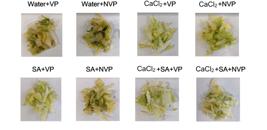
Effect of solutions and packaging on visual appearance of minimally processed lettuce at the end of the 16-day storage. VP: Vacuum Packaging; NPV: Non-Vacuum Packaging; SA: Salicylic Acid.
The findings are consistent with other research studies, such as El-Beltagi et al. (2022) and Kazemi et al. (2011) who reported less WL with the combination of SA and CaCl2. On the other hand, in their studies on minimally processed lettuce, Liu et al. (2022) reported lower respiration rates in vacuum-packaged products with postharvest acid treatments.
3.2 Browning index, total chlorophylls, and vitamin C
The appearance of minimally processed vegetables is an attribute that influences the consumer's purchase decision. For this reason, the values of the browning index (BI) were taken as an indicator of lettuce quality. The appearance of compounds of brown tones, as well as the green discoloration became evident over the days, which affected the visual quality, especially of the control samples. Figure 3A and Figure 3B show that the browning index increased during the storage period, both in VP and NVP.

Effect of solutions on Browning (A, B), Vitamin C (C, D), and Total chlorophylls (E, F) of minimally processed lettuce stored at 4 °C for 16 days. VP: Vacuum Packaging; NPV: Non-Vacuum Packaging; SA: Salicylic Acid. Data (mean ± SD) on the same day with different letters were significantly different (p ≤ 0.05). n=3.
The lowest BI values were obtained with CaCl2 (89 ± 0.7) and SA (95.5 ± 0.7) treatments, while the control exhibited values 35% higher. In the same way, the packaging affects significantly (p < 0.05) on BI, thus observing inferior results in all the treatments including the control for vacuum packaging (Figure 3A). It is evident that, although the treatments (solutions and packaging) do not stop the process of deterioration of the product, they do preserve the characteristics for a longer time. Although VP helps preserve the physico-chemical and color characteristics of lettuce, it may slightly affect its textural attributes. However, the treatments with solutions help maintain the textural properties a bit longer, reducing the impact on texture
The variables VC (Figure 3C and 3D) and total chlorophylls (TC) (Figure 3E and 3F) exhibited a decreasing behavior as the days went by in all the evaluated treatments. There were highly significant differences between all treatments related to the control (p < 0.001). In the same way, it was evidenced that the packaging influenced the response variable, obtaining better results with VP for both VC (Figure 3C) and TC (Figure 3E). The CaCl2 + VP treatment exhibited significantly higher values (p < 0.001) at the end of the storage period for VC and TC with 11.9 ±0.18 mg/100 g and 9 ± 0.3 mg/100 g respectively. On the other hand, the control with VP obtained minimum undetectable values for VC for the same period. This indicates that the combination of these factors (packaging and immersion solutions) generates a synergistic effect in reducing the degradation of VC and TC in minimally processed lettuce.
he color change in vegetable products is related to yellowing and enzymatic browning, which were observed in minimally processed lettuce. The results showed that all the treatments presented an increase in the BI, which could be related to the degradation of chlorophyll (Figure 3C and 3D). Table 1 shows a high negative correlation between the BI and TC (r=-0.886), as well as between the BI and the VC (r= -0.735), which can be associated with the aforementioned processes.
Enzymatic browning results in the formation of brown substances that are the product of the polymerization of quinones generated by the action of enzymes on certain compounds present in the tissues of fruits and vegetables. The presence of substances such as enzymes, phenolic compounds, and reactive oxygen species are sufficient for the development of enzymatic browning, which is common in foods such as lettuce (Liu et al., 2022; Manzocco et al., 2000). Several authors have pointed out that the degradation of chlorophyll and the loss of VC in minimally processed lettuce could derive from the rupture of cell membranes (Aguiló-Aguayo et al., 2014). This would allow the contact of enzymes present in lettuce, such as chlorophyllase, peroxidase (POD), polyphenol oxidase (PPO), and phenylalanine ammonia lyase (PAL), with chlorophylls and ascorbic acid. As a consequence, the browning and degradation reactions of these compounds would be facilitated (Aguiló-Aguayo et al., 2014; Artés et al., 2002; Hunter et al., 2017). The aforementioned could explain the inverse relationship between BI, VC, and TC.
The effect of CaCl2+VP on the reduction of TC and VC degradation could be attributed, among other reasons, to its capacity to reduce enzymatic activity (Abou El-Wafa, 2020) and the limited availability of oxygen within the vacuum package, which inhibits the metabolism and respiration of the products, thus preserving the food properties for a longer period (Manju et al., 2007; Wu et al., 2004).
The effect of treatment with CaCl2 on the preservation of some quality properties of fruit and vegetable products has been reported by several authors on different foods, such as tomatoes, carrots, eggplant, zucchini (Chepngeno et al., 2016), bananas (Minh, 2021) and bell pepper (Maurine et al., 2022). Studies have shown the influence of CaCl2 on the rate of degradation of compounds such as chlorophyll and VC, as well as on color retention in products, thereby extending their shelf life and sensory quality. Likewise, the synergy of barrier technologies such as VP and exogenous treatments with different substances has been reported in products such as lettuce (Liu et al., 2022) and oregano (Mudalal et al., 2022). In these cases, VP limited the respiration of the products and the bacterial growth inside the container, which, together with the additives or treatment substances used, contributed to maintaining the properties of the food over time.
3.3 Antioxidant capacity and phenol content
The antioxidant capacity results determined by the DPPH analysis presented in Figure 4A and 4B showed differences between some treatments. The monitoring over 16 days evidenced that, on the final day, there were high statistically significant differences (p < 0.001) between the CaCl2+VP treatments and the control assays (Water+VP and Water+NVP). Specifically, the treatment with water and NVP was the one that showed the highest antioxidant capacity. The analysis of variance indicated that both the solutions and packaging had significant effects on the response variable (p < 0.01).

Effect of solutions and packaging on antioxidant capacity of minimally processed lettuce stored at 4 °C for 16 days. (A) Vacuum Packaging (VP); (B) Non-Vacuum Packaging (NVP). Data (mean ± SD) on the same day with different letters were significantly different (p ≤ 0.05). n=3.
In all cases, a decrease in the antioxidant capacity was observed during all the days evaluated. Except for the control treatment with water (VP and NVP), in which an increase in the response variable is observed on the first day. According to the results, the lowest values of antioxidant capacity correspond to the treatments with CaCl2+VP and SA+VP (Figure 4A), which coincides with the samples showing lower BI values (Figure 3A). This could explain the positive correlation (Table 1) presented between BI and DPPH (r=0.776), which in turn could be associated with the presence of reaction by-products generated from enzymatic browning.
The quantification of phenolic compounds in lettuce samples with the different study treatments is presented in Table 2. The coefficients of variation for the data were less than 5%, suggesting that the results are reliable and well-fitted to the conducted analysis. The chromatographic conditions used in the analysis allowed the identification of some phenolic compounds, such as CGA and quercetin, at the beginning of the storage period, while on the 16th day of the trial, in the samples treated with water+NVP, CGA and CA were identified, in the presence of other hydroxycinnamic acids (HCAs).
The results demonstrated that the use of all studied solutions (CaCl2, SA, and SA+CaCl2) contributed to prolonging the shelf life of minimally processed lettuce. At the end of the experiment, CA and CGA were not quantified in the samples treated with SA+CaCl2+VP or SA+VP. On the other hand, although concentrations of these phenolic compounds were detected in the CaCl2 treatment, the results obtained with CaCl2+VP were significantly lower than the content found in the control samples, both with VP and NVP.
The production of phenolic compounds after a period of storage is associated with processes such as enzymatic browning. Similar results have been reported in other research studies, where it is inferred that factors related to postharvest management and physiological disorders in lettuce under stress conditions such as mechanical injuries stimulate ethylene production and further facilitate phenolic metabolism in plant tissues (Kang & Saltveit, 2002). In this sense, the production of ethylene increases the activity of enzymes such as PAL, POD, and PPO, whose chemical reactions are accelerated in the presence of oxygen and represent the first step in the synthesis of phenylpropanoid compounds (Campos-Vargas & Saltveit, 2002).
The metabolism of phenylpropanoids causing enzymatic browning generates reaction by-products that could exhibit in vitro antioxidant activity, showing absorbance above 300 nm (Pati et al., 2006; Ramsden & Riley, 2014; Weber et al., 2019). Although some authors suggest that the antioxidant capacity in fresh stored lettuce could be related to the presence of low levels of compounds such as carotenoids, tocopherols, and ascorbic acid (Mai & Glomb, 2013), the results obtained demonstrate the presence of phenolic compounds on day 16 of the test in almost all samples, especially those stored in NVP, which are attributed with antioxidant capacity.
It was found that CA was not present in the fresh lettuce samples but was quantified at the end of the trial in the control treatments, suggesting that it could be a reaction byproduct. However, it is important to mention that the increase in the quantification of certain phenolic compounds does not necessarily imply their availability in active form to neutralize free radicals since their action is limited by their easy degradation. This could explain why the lowest values of antioxidant capacity correspond to the CaCl2+VP treatment, in which CA was indeed identified at the end of the experiment.
Saltveit. (2004) studied the behavior of stored fresh lettuce cuts, the author related the increase in antioxidant capacity with the accumulation of phenolic compounds such as chlorogenic acid, isochlorogenic acid, and CA. Among the findings, it stands out that the compounds were highly susceptible to oxidation processes and were associated with subsequent darkening of the tissue, and poor quality and useful life of lettuce cuts.
Other authors, such as Ramsden & Riley (2014), reported on the oxidation of phenolic compounds by the enzyme polyphenol oxidases (PPO) in fresh vegetables. The reported results infer that, in the presence of oxygen, an oxidation of mono-phenols and ortho-diphenols to quinones can develop. Quinones are a group of phenolic compounds characterized by the presence of one or more aromatic rings and hydroxyl groups; Therefore, it has been shown that quinones also have antioxidant properties (Peñarrieta et al., 2014).
The effect of saline solutions such as CaCl2 on the enzymatic reactions of fresh vegetables has been studied and is attributed to the concentration of hydrogen ions during treatment. This phenomenon reinforces cellular structures and provides firmness through cross-linking with the pectins of the cell wall. As a result, enzyme activity decreases due to the strengthening of cellular structures, which prevents contact between the enzyme and the substrate (Gomes et al., 2010).
The use of CaCl2 has been tested on several fresh fruits and vegetables, including pears, apples, melon and watermelons (Aguayo et al., 2010; Dong et al., 2000; Gomes et al., 2010). Effectiveness was found against the enzymatic activity of PAL and greater structural resistance. Likewise, Martin-Diana et al. (2005) confirmed the formation of calcium pectate, a result of the interaction of calcium with pectin in vegetables. Results indicated that calcium-treated fruits and vegetables were firmer than controls during storage.
SA has been studied as an enzyme inhibitor, such as PPO, and as an anti-browning agent. As demonstrated in this study, both SA+VP and SA+CaCl2+VP treatments showed no evidence of phenolic acid content. Consistent with research by Liao et al. (2021), SA exhibits competitive inhibition and binds reversibly to PPO molecules through hydrogen bonds and hydrophobic interactions. Nogales-Delgado (2021) reported on the effect of salicylic acid as a PPO inhibitor in fresh fruit pieces. The authors highlighted that SA can acidify the environment and facilitate an inhibitory effect on PPO activity.
In the present research, it was demonstrated that the use of substances like CaCl2 contributes to prolonging the quality of minimally processed lettuce; in his regard, it is worth mentioning that the appearance of the lettuce, including its visual aspect, color, and aroma, was notably improved in samples treated with CaCl2 and vacuum packaging. The vacuum packaging plays a role in inhibiting enzymatic activity by limiting the presence of oxygen, which is the primary external factor triggering oxidation reactions, leading to the generation of reactive oxygen species (ROS) that can affect the phenolic compounds present (Zhang et al., 2023).
The findings of the present study align with several authors who have reported a higher content of antioxidant compounds, reduced enzymatic browning, and improved appearance in vegetables treated with CaCl2 and vacuum packaging. In this regard, the results reported by Franco-Crespo (2022) demonstrate that a longer shelf life and better preservation of phenolic compounds are achieved for cut and packaged lettuce with a pre-treatment of CaCl2 immersion. The research concludes that the use of calcium salts reduces water loss in vegetables due to calcium's association with pectins in the cell walls, strengthening the firmness of cellular structures in the food. The work carried out by Materska et al. (2019) showed that CaCl2 can be used as an agent to influence the stability of health-promoting compounds in cold-stored lettuce. Conversely, Bistgani et al. (2019) reported a reduction in quercetin content after treating lettuce samples with CaCl2, while the quantification of other phenolic compounds increased.
4 Conclusions
Post-harvest treatments with CaCl2, SA, or their combination, along with VP, have a synergistic effect on preserving product quality. The treatment with CaCl2 and VP proved to be more effective in reducing the loss of bioactive compounds such as TC and VC. Additionally, this solution decreased the production of phenols like CA by the end of the trial, which influences its antioxidant capacity and improves product color by minimizing enzymatic browning. These post-harvest techniques can be effectively applied to preserve the characteristics of minimally processed lettuce for up to 16 days.
Acknowledgements
We extend our thanks for the financial support provided by the Ministerio de Ciencia, Tecnología e Innovación, Departamento Nacional de Planeación (DNP), Sistema General de Regalías (SGR), Órgano Colegiado de Administración y Decisión (OCAD), Gobernación de Nariño, Corporación Colombiana de Investigación Agropecuaria (AGROSAVIA), Parquesoft Nariño and Universidad de Nariño for funding the project: “Fortalecimiento de capacidades para la innovación en la agricultura campesina, familiar y comunitaria tendiente a mejorar los medios de vida de la población vulnerable frente a los impactos del COVID-19, en la subregión Centro del departamento de Nariño” BPIN 2020000100702.
-
Cite as: Chaves Morillo, D. M., Tobar Delgado, E., Valencia Flórez, L. F., Latorre Vásquez, L., Trejo Escobar, D., & Mejía España, D. F. (2025). Minimally processed lettuces: extending shelf life through packaging and treatment with salicylic acid and calcium chloride solutions. Brazilian Journal of Food Technology, 28, e2023116. https://doi.org/10.1590/1981-6723.11623
-
Funding:
Sistema General de Regalías de Colombia, Universidad de Nariño.
References
- Abou El-Wafa, S. (2020). Delay yellowing and maintain quality of fresh broccoli florets during refrigerated storage by hot water and calcium chloride treatments. Journal of Horticultural Science & Ornamental Plants, 12(2), 123-135.
-
Aghdam, M. S., Dokhanieh, A. Y., Hassanpour, H., & Rezapour Fard, J. (2013). Enhancement of antioxidant capacity of cornelian cherry (Cornus mas) fruit by postharvest calcium treatment. Scientia Horticulturae, 161, 160-164. http://doi.org/10.1016/j.scienta.2013.07.006
» http://doi.org/10.1016/j.scienta.2013.07.006 -
Aguayo, E., Requejo-Jackman, C., Stanley, R., & Woolf, A. (2010). Effects of calcium ascorbate treatments and storage atmosphere on antioxidant activity and quality of fresh-cut apple slices. Postharvest Biology and Technology, 57(1), 52-60. http://doi.org/10.1016/j.postharvbio.2010.03.001
» http://doi.org/10.1016/j.postharvbio.2010.03.001 -
Aguiló-Aguayo, I., Oms-Oliu, G., Martín-Belloso, O., & Soliva-Fortuny, R. (2014). Impact of pulsed light treatments on quality characteristics and oxidative stability of fresh-cut avocado. Lebensmittel-Wissenschaft + Technologie, 59(1), 320-326. http://doi.org/10.1016/j.lwt.2014.04.049
» http://doi.org/10.1016/j.lwt.2014.04.049 - Akhtar, A., Akhtar, N., & Hussain, A. (2010). Effect of calcium chloride treatments on quality characteristics of loquat fruit during storage. Pakistan Journal of Botany, 42(1), 181-188.
-
Alfonzo, A., Gaglio, R., Miceli, A., Francesca, N., Di Gerlando, R., Moschetti, G., & Settanni, L. (2018). Shelf life evaluation of fresh-cut red chicory subjected to different minimal processes. Food Microbiology, 73, 298-304. PMid:29526216. http://doi.org/10.1016/j.fm.2018.02.008
» http://doi.org/10.1016/j.fm.2018.02.008 -
Anthon, G. E., Blot, L., & Barrett, D. M. (2005). Improved firmness in calcified diced tomatoes by temperature activation of pectin methylesterase. Journal of Food Science, 70(5), C342-C347. http://doi.org/10.1111/j.1365-2621.2005.tb09964.x
» http://doi.org/10.1111/j.1365-2621.2005.tb09964.x -
Artés, F., Mínguez, M. I., & Hornero, D. (2002). Analysing changes in fruit pigments. In D. B. MacDougall (Ed.), Colour in food: Improving quality (pp. 248-282). Boca Raton: CRC Press. http://doi.org/10.1533/9781855736672.2.248
» http://doi.org/10.1533/9781855736672.2.248 - Arthur, E., Oduro, I., & Patrick, K. (2015). Postharvest quality response of tomato (Lycopersicon Esculentum, Mill) fruits to different concentrations of calcium chloride at different dip- times. American Journal of Food and Nutrition, 5(1), 1-8.
-
Asghari, M., & Aghdam, M. S. (2010). Impact of salicylic acid on post-harvest physiology of horticultural crops. Trends in Food Science & Technology, 21(10), 502-509. http://doi.org/10.1016/j.tifs.2010.07.009
» http://doi.org/10.1016/j.tifs.2010.07.009 -
Bhatla, S. C., & Lal, M. A. (2018). Plant physiology, development and metabolism. Singapore: Springer. http://doi.org/10.1007/978-981-13-2023-1
» http://doi.org/10.1007/978-981-13-2023-1 -
Bistgani, Z. E., Hashemi, M., DaCosta, M., Craker, L., Maggi, F., & Morshedloo, M. R. (2019). Effect of salinity stress on the physiological characteristics, phenolic compounds and antioxidant activity of Thymus vulgaris L. and Thymus daenensis Celak. Industrial Crops and Products, 135, 311-320. http://doi.org/10.1016/j.indcrop.2019.04.055
» http://doi.org/10.1016/j.indcrop.2019.04.055 -
Bojilov, D., Dagnon, S., Kostadinov, K., & Filipov, S. (2020). Polyphenol composition of lettuce cultivars affected by mineral and bio-organic fertilisation. Czech Journal of Food Sciences, 38(6), 359-366. http://doi.org/10.17221/97/2020-CJFS
» http://doi.org/10.17221/97/2020-CJFS -
Cai, H., Yuan, X., Pan, J., Li, H., Wu, Z., & Wang, Y. (2014). Biochemical and proteomic analysis of grape berries (Vitis labruscana) during cold storage upon postharvest salicylic acid treatment. Journal of Agricultural and Food Chemistry, 62(41), 10118-10125. PMid:25242003. http://doi.org/10.1021/jf503495z
» http://doi.org/10.1021/jf503495z -
Campos-Vargas, R., & Saltveit, M. E. (2002). Involvement of putative chemical wound signals in the induction of phenolic metabolism in wounded lettuce. Physiologia Plantarum, 114(1), 73-84. PMid:11982937. http://doi.org/10.1034/j.1399-3054.2002.1140111.x
» http://doi.org/10.1034/j.1399-3054.2002.1140111.x - Cerón, I., Higuita, J., & Cardona, C. (2010). Capacidad antioxidante y contenido fenólico total de tres frutas cultivadas en la región. Vector, 5, 17-26.
-
Chepngeno, J., Owino, W. O., Kinyuru, J., & Nenguwo, N. (2016). Effect of calcium chloride and hydrocooling on postharvest quality of selected vegetables. Journal of Food Research, 5(2), 23. http://doi.org/10.5539/jfr.v5n2p23
» http://doi.org/10.5539/jfr.v5n2p23 -
Dong, X., Wrolstad, R. E., & Sugar, D. (2000). Extending shelf life of fresh-cut pears. Journal of Food Science, 65(1), 181. http://doi.org/10.1111/j.1365-2621.2000.tb15976.x
» http://doi.org/10.1111/j.1365-2621.2000.tb15976.x -
El-Beltagi, H. S., Ali, M. R., Ramadan, K. M. A., Anwar, R., Shalaby, T. A., Rezk, A. A., El-Ganainy, S. M., Mahmoud, S. F., Alkafafy, M., & El-Mogy, M. M. (2022). Exogenous postharvest application of calcium chloride and salicylic acid to maintain the quality of broccoli florets. Plants, 11(11), 1513. PMid:35684286. http://doi.org/10.3390/plants11111513
» http://doi.org/10.3390/plants11111513 -
Franco-Crespo, C. (2022). Evaluación y análisis de técnicas de preservación de hortalizas de IV gama. RIA. Revista de Investigaciones Agropecuarias, 48(3), 242-252. Retrieved in 2023, September 12, from http://www.scielo.org.ar/scielo.php?script=sci_arttext&pid=S1669-23142022000300242&lng=es&tlng=es
» http://www.scielo.org.ar/scielo.php?script=sci_arttext&pid=S1669-23142022000300242&lng=es&tlng=es -
Gomes, M. H., Fundo, J. F., Santos, S., Amaro, A. L., & Almeida, D. P. F. (2010). Hydrogen ion concentration affects quality retention and modifies the effect of calcium additives on fresh-cut “Rocha” pear. Postharvest Biology and Technology, 58(3), 239-246. http://doi.org/10.1016/j.postharvbio.2010.07.004
» http://doi.org/10.1016/j.postharvbio.2010.07.004 - Gross, K., Wang, C., & Saltveit, M. (2016). The commercial storage of fruits, vegetables, and florist and nursery stocks (Vol. 1, Agriculture Handbook, No. 66). Washington, D.C.: Department of Agriculture & Agricultural Research Service.
-
Hunter, P. J., Atkinson, L. D., Vickers, L., Lignou, S., Oruna-Concha, M. J., Pink, D., Hand, P., Barker, G., Wagstaff, C., & Monaghan, J. M. (2017). Oxidative discolouration in whole-head and cut lettuce: Biochemical and environmental influences on a complex phenotype and potential breeding strategies to improve shelf-life. Euphytica, 213(8), 180. PMid:32025042. http://doi.org/10.1007/s10681-017-1964-7
» http://doi.org/10.1007/s10681-017-1964-7 - Ikewuchi, C. J., & Ikewuchi, C. C. (2012). Iodometric determination of the ascorbic acid (Vitamin c) content of some fruits consumed in a university community in Nigeria. Global Journal of Pure and Applied Sciences, 17(1), 47-49. http://dx.doi.org/10.4314/gjpas.v17i1
-
Kang, H. M., & Saltveit, M. E. (2002). Antioxidant capacity of lettuce leaf tissue increases after wounding. Journal of Agricultural and Food Chemistry, 50(26), 7536-7541. PMid:12475267. http://doi.org/10.1021/jf020721c
» http://doi.org/10.1021/jf020721c -
Kazemi, M., Aran, M., & Zamani, S. (2011). Effect of Calcium Chloride and Salicylic Acid Treatments on Quality Characteristics of Kiwifruit (Actinidia deliciosa cv. Hayward) During Storage. American Journal of Plant Physiology, 6(3), 183-189. http://doi.org/10.3923/ajpp.2011.183.189
» http://doi.org/10.3923/ajpp.2011.183.189 -
Kenny, O., & O’Beirne, D. (2009). The effects of washing treatment on antioxidant retention in ready‐to‐use iceberg lettuce. International Journal of Food Science & Technology, 44(6), 1146-1156. http://doi.org/10.1111/j.1365-2621.2009.01935.x
» http://doi.org/10.1111/j.1365-2621.2009.01935.x -
Kim, J., Luo, Y., Saftner, R., & Gross, K. (2005). Delayed modified atmosphere packaging of fresh-cut romaine lettuce: Effects on quality maintenance and shelf-life. Journal of the American Society for Horticultural Science, 130(1), 116-123. http://doi.org/10.21273/JASHS.130.1.116
» http://doi.org/10.21273/JASHS.130.1.116 -
Liao, T., Zhou, L., Liu, J., Zou, L., Dai, T., & Liu, W. (2021). Inhibitory mechanism of salicylic acid on polyphenol oxidase: A cooperation between acidification and binding effects. Food Chemistry, 348, 129100. PMid:33515954. http://doi.org/10.1016/j.foodchem.2021.129100
» http://doi.org/10.1016/j.foodchem.2021.129100 -
Liu, H., Zhao, H., Ye, L., Fan, D., & Wang, Z. (2022). Effects of the combination of phytic acid and vacuum packaging on storage quality of fresh-cut lettuce. Food Science and Technology Research, 28(1), 45. http://doi.org/10.3136/fstr.FSTR-D-21-00172
» http://doi.org/10.3136/fstr.FSTR-D-21-00172 -
López-Mejía, N., & Ordóñez-Santos, L. E. (2018). Efecto del tiempo de almacenamiento y sistema de envase en el color del pimentón verde (Capsicum annuum) mínimamente procesado. TecnoLógicas, 21(43), 127-134. http://doi.org/10.22430/22565337.1060
» http://doi.org/10.22430/22565337.1060 -
Mai, F., & Glomb, M. A. (2013). Isolation of phenolic compounds from iceberg lettuce and impact on enzymatic browning. Journal of Agricultural and Food Chemistry, 61(11), 2868-2874. PMid:23473017. http://doi.org/10.1021/jf305182u
» http://doi.org/10.1021/jf305182u -
Manju, S., Jose, L., Srinivasa Gopal, T. K., Ravishankar, C. N., & Lalitha, K. V. (2007). Effects of sodium acetate dip treatment and vacuum-packaging on chemical, microbiological, textural and sensory changes of Pearlspot (Etroplus suratensis) during chill storage. Food Chemistry, 102(1), 27-35. http://doi.org/10.1016/j.foodchem.2006.04.037
» http://doi.org/10.1016/j.foodchem.2006.04.037 -
Manzocco, L., Calligaris, S., Mastrocola, D., Nicoli, M. C., & Lerici, C. R. (2000). Review of non-enzymatic browning and antioxidant capacity in processed foods. Trends in Food Science & Technology, 11(9-10), 340-346. http://doi.org/10.1016/S0924-2244(01)00014-0
» http://doi.org/10.1016/S0924-2244(01)00014-0 -
Martin-Diana, A. B., Rico, D., Barry-Ryan, C., Frias, J. M., Mulcahy, J., & Henehan, G. T. M. (2005). Calcium lactate washing treatments for salad-cut Iceberg lettuce: Effect of temperature and concentration on quality retention parameters. Food Research International, 38(7), 729-740. http://doi.org/10.1016/j.foodres.2005.02.005
» http://doi.org/10.1016/j.foodres.2005.02.005 -
Maskan, M. (2001). Kinetics of colour change of kiwifruits during hot air and microwave drying. Journal of Food Engineering, 48(2), 169-175. http://doi.org/10.1016/S0260-8774(00)00154-0
» http://doi.org/10.1016/S0260-8774(00)00154-0 -
Materska, M., Olszówka, K., Chilczuk, B., Stochmal, A., Pecio, Ł., Pacholczyk-Sienicka, B., Piacente, S., Pizza, C., & Masullo, M. (2019). Polyphenolic profiles in lettuce (Lactuca sativa L.) after CaCl2 treatment and cold storage. European Food Research and Technology, 245(3), 733-744. http://doi.org/10.1007/s00217-018-3195-0
» http://doi.org/10.1007/s00217-018-3195-0 -
Maurine, A. A., Arnold, M. O., & Mwanarusi, S. (2022). Influence of Ca CaCl2 dipping on postharvest quality and shelf life of bell pepper (Capsicum annuum L. cv. California Wonder). African Journal of Agricultural Research, 18(7), 510-521. http://doi.org/10.5897/AJAR2022.16058
» http://doi.org/10.5897/AJAR2022.16058 -
Mazumder, M. N. N., Misran, A., Ding, P., Wahab, P. E. M., & Mohamad, A. (2021). Effect of harvesting stages and calcium chloride application on postharvest quality of tomato fruits. Coatings, 11(12), 1445. http://doi.org/10.3390/coatings11121445
» http://doi.org/10.3390/coatings11121445 -
Miceli, A., Gaglio, R., Francesca, N., Ciminata, A., Moschetti, G., & Settanni, L. (2019). Evolution of shelf life parameters of ready-to-eat escarole (Cichorium endivia var. latifolium) subjected to different cutting operations. Scientia Horticulturae, 247, 175-183. http://doi.org/10.1016/j.scienta.2018.12.023
» http://doi.org/10.1016/j.scienta.2018.12.023 - Miceli, A., Romano, C., Moncada, A., D’Anna, F., & Vetrano, F. (2015). Effect of cold storage on the quality of minimally processed cauliflower. Carpathian Journal of Food Science and Technology, 7, 70-75.
-
Minh, N. P. (2021). Effectiveness of CaCl2 treatment on quality attributes of banana fruit during storage. Plant Science Today, 9(1), 206-214. http://doi.org/10.14719/pst.1458
» http://doi.org/10.14719/pst.1458 -
Mudalal, S., Kanan, D., Anabtawi, O., Irshaid, A., Sabbah, M., Shtaya, M., Shraim, F., & Mauriello, G. (2022). Application of the hurdle technology concept to the fresh Za’atar (Origanum syriacum) preservation. Foods, 11(19), 3002. PMid:36230077. http://doi.org/10.3390/foods11193002
» http://doi.org/10.3390/foods11193002 -
Nogales-Delgado, S. (2021). Polyphenoloxidase (Ppo): Effect, current determination and inhibition treatments in fresh-cut produce. Applied Sciences, 11(17), 7813. http://doi.org/10.3390/app11177813
» http://doi.org/10.3390/app11177813 -
Öz, A. T., & Akyol, B. (2020). Effects of calcium chloride plus coating in modified-atmosphere packaging storage on whole-radish postharvest quality. Journal of the Science of Food and Agriculture, 100(10), 3942-3949. PMid:32337735. http://doi.org/10.1002/jsfa.10437
» http://doi.org/10.1002/jsfa.10437 -
Pati, S., Losito, I., Palmisano, F., & Zambonin, P. G. (2006). Characterization of caffeic acid enzymatic oxidation by-products by liquid chromatography coupled to electrospray ionization tandem mass spectrometry. Journal of Chromatography. A, 1102(1–2), 184-192. PMid:16325827. http://doi.org/10.1016/j.chroma.2005.10.041
» http://doi.org/10.1016/j.chroma.2005.10.041 -
Peñarrieta, J. M., Tejeda, L., Mollinedo, P., Vila, J. L., & Bravo, J. A. (2014). Phenolic compounds in food. Revista Boliviana de Química, 31(2), 68-81. Retrieved in 2023, September 12, from http://www.bolivianchemistryjournal.org
» http://www.bolivianchemistryjournal.org -
Ramsden, C. A., & Riley, P. A. (2014). Tyrosinase: The four oxidation states of the active site and their relevance to enzymatic activation, oxidation and inactivation. Bioorganic & Medicinal Chemistry, 22(8), 2388-2395. PMid:24656803. http://doi.org/10.1016/j.bmc.2014.02.048
» http://doi.org/10.1016/j.bmc.2014.02.048 -
Rico, D., Martín-Diana, A. B., Barat, J. M., & Barry-Ryan, C. (2007). Extending and measuring the quality of fresh-cut fruit and vegetables: A review. Trends in Food Science & Technology, 18(7), 373-386. http://doi.org/10.1016/j.tifs.2007.03.011
» http://doi.org/10.1016/j.tifs.2007.03.011 -
Saltveit, M. E. (2004). Effect of 1-methylcyclopropene on phenylpropanoid metabolism, the accumulation of phenolic compounds, and browning of whole and fresh-cut “iceberg” lettuce. Postharvest Biology and Technology, 34(1), 75-80. http://doi.org/10.1016/j.postharvbio.2004.05.001
» http://doi.org/10.1016/j.postharvbio.2004.05.001 - Skoog, D., West, D., Holler, F., & Crouch, S. (2000). Analytical chemistry: An Introduction (7th ed.). New York: McGraw Hill.
- Vandana, A., Suresha, G., & Swamy, G. (2015). Impact of calcium chloride pre-storage treatment on jamun (Syzygium cumini skeels) fruits under cold storage. The Bioscan, 10(1), 199-202.
-
Weber, F., Engelke, G. H., & Schieber, A. (2019). Structure elucidation and tentative formation pathway of a red colored enzymatic oxidation product of caffeic acid. Food Chemistry, 297, 124932. PMid:31253253. http://doi.org/10.1016/j.foodchem.2019.05.206
» http://doi.org/10.1016/j.foodchem.2019.05.206 -
Wu, S., Lu, Y.-C., McMurtrey, J. E., Weesies, G., Devine, T. E., & Foster, G. R. (2004). Soil conservation benefits of Large Biomass Soybean (LBS) for increasing crop residue cover. Journal of Sustainable Agriculture, 24(1), 107-128. http://doi.org/10.1300/J064v24n01_09
» http://doi.org/10.1300/J064v24n01_09 -
Zhang, L., Wang, Z., Zeng, S., Yuan, S., Yue, X., Tian, T., Zhu, X., Zheng, S., Xu, X., Zuo, J., & Wang, Q. (2023). Browning mechanism in stems of fresh-cut lettuce. Food Chemistry, 405, 134575. http://doi.org/10.1016/j.foodchem.2022.134575
» http://doi.org/10.1016/j.foodchem.2022.134575 -
Złotek, U., & Gawlik-Dziki, U. (2015). Selected biochemical properties of polyphenol oxidase in butter lettuce leaves (Lactuca sativa L. var. capitata) elicited with dl-β-amino-n-butyric acid. Food Chemistry, 168, 423-429. PMid:25172730. http://doi.org/10.1016/j.foodchem.2014.07.033
» http://doi.org/10.1016/j.foodchem.2014.07.033
Edited by
-
Associate Editor: Ivan Sestari


