
 Encapsulation of ZnO nanoparticles in modified pectin-protein complexes for food fortification and their antibacterial characteristics
Abstract
Zinc deficiency is linked to the occurrence of chronic illnesses, such as stunting, which is still at high rates, primarily in low-income countries, due to poor nutrition and lack of access to essential micronutrients. This study developed a cost-effective material to fulfill zinc requirements and address this issue through food fortification. Zinc oxide nanoparticles (ZnO-NP) are promising zinc sources to consume, but they need to be modified through encapsulation using the combination of pectin and yogurt-derived protein complexes to enhance their stability and bioavailability. The encapsulation layer also prevents the interaction between the good bacteria in yogurt, as the target product in food fortification, and the ZnO nanoparticles, so that the good bacteria in the yogurt remain alive with the addition of this additive. Interaction between pectin and protein forms a coating complex influenced by the heating treatment during encapsulation. The successful formation of the encapsulation complex in this study is confirmed through the infrared spectrum and antibacterial characteristics of the material. The absence of a Zn-O peak in the infrared spectrum validates the successful formation of the coating layer. Encapsulated ZnO-NP exhibits lower antibacterial activity compared to the unencapsulated ZnO-NP due to the circumvented interaction between ZnO-NP and bacterial cells.
Keywords:
Antibacterial; Encapsulation; Fortification; Nanoparticle; Pectin; Protein; Zinc oxide
Highlights
Pectin acts as a capping agent to control the size of ZnO nanoparticles and as a coating material
Pectin-protein forms an encapsulation layer only with heating treatment
Encapsulated nanoparticles exhibit lower antibacterial activity because the encapsulation layer limits the exposure of ZnO nanoparticles to bacteria
1 Introduction
Zinc is one of the essential micronutrients that is involved in many major processes in the human body, such as reproduction, growth, and immune function (Ozden et al., 2015). However, more than 17% of the global population is still at risk of zinc deficiency (Skalny et al., 2021). Zinc deficiency numbers have not significantly shifted until 2025. Zinc deficiency is linked to the occurrence of chronic illnesses and infections that will lead to growth and development disorders, such as stunting. Based on stunting time series data from 148 countries, in 2012, the World Health Organization (WHO) targeted the number of stunted children to be reduced by 40%, from 171 million to 100 million, in 2025 (Onis et al., 2013). However, based on WHO statistics, the prevalence of stunting is still 22.3% in 2022, and it is projected that there will still be 127 million stunted children in 2025. Moreover, the rates of stunting are significantly higher in low-income countries due to poor nutrition and lack of access to essential micronutrients (Subramanian et al., 2016). Addressing this matter through affordable and accessible sources is essential to mitigate stunting. Therefore, this study developed a cost-effective material aimed at fulfilling zinc requirements to overcome this issue.
Food fortification is the addition of essential components into food to prevent deficiency of essential nutrients in the human body (Mishra et al., 2018). Food fortification can be a good strategy to enhance zinc intake. Based on the previous study, zinc consumption is a feasible and effective strategy to prevent growth retardation, especially in children, due to its role in growth processes (Abdollahi et al., 2019). Although protein intake is considered one of the most crucial factors in addressing stunting due to its role in building tissues and bone growth, zinc acts as a cofactor in numerous enzymes that are critical for protein synthesis (Millward, 2017). Hence, ensuring a balanced intake of zinc is also crucial for effective interventions against stunting.
This study uses zinc oxide nanoparticles (ZnO-NP) due to their physicochemical characteristics, such as smaller size, surface modification, and higher bioavailability in the digestive system than larger particles (Cho et al., 2013). Moreover, zinc oxide contains the highest amount of zinc among other zinc materials, around 80.34% (Youn & Choi, 2022). However, ZnO-NP has low water solubility and is sensitive to chemical degradation, affecting their delivery process (Joye et al., 2015; Fang et al., 2018). The interaction between ZnO-NP and matrix components in food products also alters its physicochemical characteristics (Wang et al., 2017). Encapsulating ZnO-NP in an edible and inert material is a potential way to address these issues by preventing undesirable reactions between the core material and the environment (Pateiro et al., 2021). Encapsulation of a nanomaterial enhances the stability of the core material and protects it from degradation and extreme environmental conditions. Encapsulation of nanomaterials also prevents interactions between the nanomaterial and matrix components in food products (Wang et al., 2017).
This study employs pectin as a capping agent to control the size of ZnO-NP during the synthesis process. Furthermore, pectin is not discarded, as it is subsequently utilized as an encapsulation material. However, pectin has low solubility in water, which affects the ZnO-pectin complex delivery process in the body. To address this issue, pectin is combined with protein, which has a relatively high water solubility, forming a complex that coats the ZnO-NP. This complex is formed due to electrostatic interactions between the negatively charged pectin and the positively charged protein. Protein is widely used as an encapsulating material in the food industry because it forms a stable outer layer structure. However, proteins can degrade in the digestive tract due to the presence of peptidase enzymes. Additionally, the antioxidant properties of proteins can enhance the stability of the core material against oxidation processes (Matalanis & McClements, 2013). The protein used in this study is derived from yogurt, which can change or denature due to high temperatures, eventually aggregating to form a gel-like structure. This material structure affects the formation of the encapsulation layer, supporting its interaction with other coating materials.
In this research, the ZnO-NP encapsulation layer formation is studied through the antibacterial activity of the materials. The encapsulation layer surrounding the ZnO-NP circumvents the interaction with the external environment, such as bacteria (Ijaz et al., 2020). Therefore, encapsulated ZnO-NP is expected to exhibit lower antibacterial activity than the bare ZnO-NP. This is also related to the projected application of ZnO-NP as an additive in yogurt products. The interaction between ZnO-NP and the beneficial bacteria in yogurt is expected to be circumvented, preventing the bactericidal effect of the addition of these nanoparticles. The encapsulation layer of pectin and protein also serves as a prebiotic. Therefore, with the encapsulation layer surrounding the ZnO-NP, the lactobacilli in yogurt will remain alive with the addition of these nanoparticles, and the material can also be protected from degradation due to the interactions with the yogurt matrix.
2 Methods
2.1 Materials
The materials used in this research were high methoxyl pectin (Ceamsa pectin citrus), plain yogurt (Greenfields Dairy, Indonesia), NaOH 1 M (Merck), zinc(II) acetate dihydrate (Zn(CH3COO)2·2H2O) 0.1 M (Merck), distilled water, universal pH indicator, Staphylococcus aureus (ATCC-25923), Escherichia coli (ATCC-25922), Muller-Hinton agar, ciprofloxacin, and KBr.
2.2 Experimental
2.2.1 Synthesis of ZnO using pectin as a capping agent
The ZnO synthesis method referred to Wang et al. (2012) with modifications. A total of 50 mL of 0.25% (w/v) pectin was mixed with 12.5 mL of water and then stirred with a magnetic stirrer. The solution was then added with 12.5 mL of 0.1 M Zn(CH3COO)2·2H2O and stirred for 5–10 minutes, and the pH of the mixture was measured. After that, 5 mL of 1M NaOH was added to the solution dropwisely until the pH reached 13 and the changes were observed. The solution was stirred at 1000 rpm, then heated for 10 minutes using a heating plate with a temperature of 80 °C, and the bottle was closed. The hot solution was reacted hydrothermally in the oven for 2 hours at a temperature of 80 °C. The solution that was heated in the oven was then cooled, and the pH of the solution was measured. The solution was cooled and left at room temperature until it settled. The precipitate was separated from the supernatant, washed with distilled water until the pH was neutral, and dried. Other samples were encapsulated in their solution form without the supernatant and precipitate separation.
2.2.2 ZnO nanoparticles encapsulation
A total of 3 g of liquid yogurt as the protein material for coating was stirred using a magnetic stirrer for 5 minutes at a speed of 500 rpm. After that, ZnO-pectin nanoparticles were added to the yogurt dropwisely according to the various volumes of the ZnO nanoparticle solution used, which are 2 mL, 3 mL, and 4 mL, which contain only 0.75, 1.13, and 1.50 mg pure ZnO, respectively. After that, the mixture was stirred for 1 hour and then heated using a water bath until the temperature reached 70 °C to 80 °C. The mixture was then allowed to settle. The precipitate obtained was washed using distilled water and dried in an oven.
2.2.3 Material characterization with Fourier Transform Infrared (FTIR) spectrophotometer
The functional groups of the material were characterized using an FTIR spectrophotometer. The material was mixed with KBr in a ratio of 1:1 and then formed into pellets. The pellet was then inserted into an FTIR spectrophotometer at 4000–400 cm-1 wavenumber.
2.2.4 Material characterization with Scanning Electron Microscope (SEM)
SEM characterized the morphology and particle size of encapsulated ZnO and ZnO at a magnification value of 10,000–25,000 times. The material is prepared by coating using gold metal.
2.2.5 Antibacterial analysis
The antibacterial characteristics of ZnO nanoparticles and encapsulated ZnO nanoparticles were tested using the disk diffusion method, following the procedure described by Ramadan et al. (2016). The bacteria used in the antibacterial test were Staphylococcus aureus as a model for Gram-positive bacteria and Escherichia coli as a model for Gram-negative bacteria. Muller-Hinton agar was poured into petri dishes and left to solidify. After that, the bacteria were evenly spread across the surface of the agar. ZnO nanoparticles and encapsulated ZnO nanoparticles were then distributed in specific zones on the agar surface. The samples were incubated at 37°C for 24 hours. The diameter of the clear zone formed on the agar after the incubation process was then measured using calipers.
3 Results and discussions
3.1 Synthesized ZnO-Pectin
ZnO was synthesized through the combination of precipitation and hydrothermal methods. Zn(CH3COO)2·2H2O was used as a zinc source, NaOH as a precipitant to form ZnO crystals, and pectin as a capping agent. Pectin was first mixed with Zn(CH3COO)2·2H2O. The white solution was formed during the precipitation process. The mixture was then reacted hydrothermally in the oven at a temperature of 80 °C. The white color of the solution became more intense after the hydrothermal reaction, indicating an increase in ZnO crystal formation during the hydrothermal reaction. The sample was washed and dried for characterization, resulting in a white powder-like solid with a yield of more than 90% (Figure 1). The ZnO formation reaction occurred as follows (Ha et al., 2013).

The infrared spectra of the synthesized ZnO and ZnO-pectin samples exhibit characteristic peaks at 509 and 517 cm-1 wavenumbers, corresponding to the stretching vibration of the Zn-O bond (Figure 2). These peaks confirm the ZnO formation. Additionally, the ZnO-pectin spectrum shows a higher infrared absorption intensity in the region of 1402–607 cm-1 compared to the ZnO spectrum. This result corresponds to the presence of higher organic material content in the ZnO-pectin samples (Babu et al., 2013). The size range of ZnO particles synthesized without a capping agent is around 100–1000 nm in size with a flower-like morphology, as analyzed through the SEM (Figure 3). Sakata et al. (2020) reported that the ZnO synthesized with a pH close to or more than 11 is flower-like shaped. Meanwhile, particles synthesized using capping agents tend to be smaller with higher particle size uniformity in the 100–200 nm range.


SEM images of ZnO samples synthesized without a capping agent (left) and with a capping agent (right).
3.2 Encapsulation layer formation
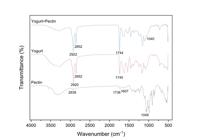
The FTIR spectrum of yogurt with pectin addition showed the same pattern as the FTIR spectrum of plain yogurt due to the dominant composition of yogurt in the sample (Figure 4). However, the infrared absorption peak at 1040 cm−1 corresponds to the -C-O ether functional group in pectin. This indicates that pectin and yogurt form a coating or encapsulation complex. Additionally, the intensity of the infrared absorption peak at 1744 cm−1 also increases, which corresponds to the stretching vibration absorption of the -C=O ester or carboxylic acid functional group from the combination of yogurt and pectin.
The casein protein in yogurt has a total charge that depends on the pH and ionic conditions of the environment. Casein tends to have a negative total charge at a pH higher than 6.6 (Francis et al., 2019). The addition of base ZnO and ZnO-pectin solution to the yogurt increases the pH of the yogurt environment. Arief et al. (2023) also reported that the addition of ZnO nanoparticles reduces the acidity of yogurt, making the total charge of the proteins in the yogurt tends to be negative. The negatively charged yogurt repulses the negatively charged pectin molecules that will obstruct the encapsulation layer formation. However, the final pH of the mixture of yogurt with ZnO or ZnO-pectin is still in the range of 5-6, indicating that there is still more positive charge on the yogurt protein that will interact with the negatively charged carboxylate groups on the pectin.
The addition of ZnO and ZnO-pectin samples with high pH also causes the formation of negatively charged sodium caseinate from casein in yogurt. This negative charge controls the size of the encapsulated complex formed. This negative charge induces repulsive interactions between the remaining negative charges on the protein, making the size of the encapsulated complex formed smaller. The size of the aggregates or encapsulated complex fractions formed depends on the interaction between pectin and protein in yogurt. More pectin molecules interact with the positive charge of the protein in the yogurt, making the total charge on the protein more negative. This condition triggers a more massive repulsive interaction between complexes. Therefore, the aggregates formed in samples with more ZnO-pectin composition are smaller (Figure 5). In addition, the larger volume of ZnO-pectin in the sample also increases the amount of pectin that interacts with the protein polymer chains in the yogurt. The pectin attaches to the surface of the casein micelles in yogurt (Arioui et al., 2017). The proteins that have interacted with the pectin are heated and denatured to form smaller or smoother aggregates.

Encapsulated ZnO-pectin samples were heated with the addition of 2 mL (B1), 3 mL (B2), and 4 mL (B3) ZnO-pectin.
The FTIR spectrum patterns of yogurt, yogurt with the addition of ZnO, and yogurt with the addition of ZnO-pectin are relatively the same (Figure 6). The Zn-O stretching vibration peak, at 509 cm-1, appears in the spectrum of the sample containing ZnO nanoparticles and yogurt. This peak indicates that ZnO could not be encapsulated without pectin. The Zn-O stretching vibration peak is absent in the spectrum of the sample containing ZnO nanoparticles encapsulated in pectin and yogurt. The pectin interacts electrostatically with the proteins in the yogurt to form a coating complex to cover the surface of ZnO nanoparticles. Therefore, the stretching vibration of Zn-O was not detected. Apart from that, the spectrum pattern at the 500–700 cm-1 region of yogurt added with ZnO-pectin is also relatively similar to that of the yogurt added with the pectin sample. Abidin et al. (2024) reported that ZnO addition does not affect the functional group of yogurts, which is similar to the result that the interaction of yogurt with pectin is not affected by the presence of ZnO as a core material in the encapsulation complex.

3.3 Antibacterial characteristics of encapsulated ZnO-NP and other materials
3.3.1 Antibacterial activity of yogurt
Antibacterial test results showed that the yogurt sample, as the blank control, exhibited antibacterial properties, as indicated by the inhibition zone formed around the sample in the petri dish with a diameter of more than 5 mm, categorized as medium antibacterial activity (Davis & Stout, 1971) (Table 1). Parasthi et al. (2020) also reported that the inhibition zone diameter produced by yogurt ranges from 5 to 10 mm for both Gram-positive and Gram-negative bacteria. There was no significant difference in the antibacterial activity of heated and unheated yogurt samples. In this study, heating was only carried out below the pasteurization temperature for yogurt, approximately 70–80 °C. Therefore, the heating process did not significantly affect the structure and chemical content of the yogurt (Ichimura et al., 2023).
The antibacterial activity of yogurt comes from the lactic acid content and secondary metabolites produced by lactic acid bacteria (LAB), primarily Streptococcus thermophilus, used in yogurt production. Both heated and unheated yogurt samples have a pH of 5–6, creating a relatively acidic environment for the tested bacteria. The lactic acid content in yogurt causes this acidity. In an acidic condition, protonated lactic acid becomes uncharged and lipophilic, allowing the molecule to pass through the lipid bilayer membrane and enter the bacterial cell. Once permeated, the lactic acid releases its proton in the internal environment of the cell, leading to a decrease in cytoplasmic pH and disrupting the proton gradient between the cell and its external environment. The proton gradient plays a role in the energy generation of the cell. Therefore, the loss of this proton gradient disrupts the biological processes of cells, ultimately leading to cell death (Lund et al., 2020). LAB in yogurt also produces secondary metabolites, such as bacteriocins, which have antibacterial activity. Bacteriocins form pores in the cell membrane, resulting in damaged membrane permeability and the loss of the proton gradient in bacterial cells (Parasthi et al., 2020).
3.3.2 Antibacterial activity of high methoxyl pectin
High methoxyl pectin used in this study did not exhibit antibacterial activity against S. aureus and E. coli. Gao et al. (2023) also reported that pectin does not possess antibacterial activity. Pectin is a prebiotic that serves as a food source for bacteria and enhances bacterial growth stimulation (Blanco-Perez et al., 2021). Pectin contains carbohydrates and fibers that are indigestible by humans due to the absence of enzymes capable of degrading pectin in the human digestive system (Roman-Benn et al., 2023). Through these characteristics, pectin protects ZnO nanoparticles from the external environment in the digestive tract, allowing the nanoparticles to reach their target site, the small intestine, especially in the proximal small bowel, where the body can absorb zinc as essential micromaterials (Krebs, 2000). However, pectin binds to the divalent cations, such as zinc, potentially reducing the availability of zinc absorption (Rousseau et al., 2019). This research used high methoxyl pectin (HMP), which has a high degree of esterification, and fewer free carboxyl groups are available to interact with zinc. This results in weaker binding compared to low methoxyl pectin (LMP). The lower affinity of HMP to zinc is less likely to interfere with zinc bioavailability and absorption in the small intestines.
The results of the antibacterial test also demonstrate the characteristics of pectin as a prebiotic. The area surrounding the pectin sample on the agar medium visually appears more turbid than other areas. The more turbid area indicates that more bacteria have grown than in the clearer areas on the agar medium. These results demonstrate that bacterial growth around the sample is more extensive than in other areas due to the role of pectin as a prebiotic, serving as food for the test bacteria.
3.3.3 Antibacterial activity of synthesized ZnO nanoparticles
The ZnO-pectin exhibits an inhibition zone of more than 10 mm, indicating the material has strong antibacterial activity (Davis & Stout, 1971). The ZnO nanoparticles in this study were synthesized using pectin as a capping agent to minimize or prevent aggregation. Pectin surrounds the surface of the ZnO nanoparticle and reduces its surface energy. The capping agent used during synthesis hinders the interaction between ZnO nanoparticles. Therefore, the ZnO nanoparticles do not aggregate or agglomerate.
3.3.4 Antibacterial activity of encapsulated ZnO nanoparticles
The yogurt+ZnO sample exhibited significantly higher antibacterial activity against S. aureus compared to yogurt as the blank control (Table 2). This trend was consistently observed in both treatments and test bacteria. However, no significant difference was observed in the antibacterial activity against E. coli (Table 3). Lallo da Silva et al. (2019) reported that ZnO nanoparticles exhibit different effectiveness against specific strains. Gram-negative bacteria, such as E. coli, are less sensitive to ZnO nanoparticles compared to Gram-positive bacteria, such as S. aureus (Yusof et al., 2019). Gram-negative bacteria have a more complex outer membrane, which contains lipopolysaccharides. Lipopolysaccharides improve the barrier characteristic of Gram-negative bacteria against the outer environment, such as antibacterial material, including ZnO nanoparticles (Kashef et al., 2017). Therefore, these bacteria are more resistant or less sensitive to ZnO nanoparticles as an antibacterial material. Accordingly, the antibacterial analysis of materials in this study against E. coli did not give statistically different results for different materials, concentrations, and treatments as factors.
The higher antibacterial activity observed in the yogurt+ZnO sample, relative to the yogurt as blank control, suggests that the ZnO-NP was not encapsulated. This absence of encapsulation allows direct interaction between the unencapsulated ZnO-NP and bacterial cells, resulting in higher antibacterial activity. This antibacterial activity was attributed not only to the yogurt itself but also to the presence of the unencapsulated ZnO-NP. These findings were corroborated by the FTIR analysis of the yogurt+ZnO sample, which exhibited the characteristic stretching vibration peak of the Zn-O bond (Figure 5).
The ZnO nanoparticles encapsulated in pectin-yogurt (yogurt+ZnO-pectin) with heat treatment also exhibited lower antibacterial activity compared to the ZnO-pectin nanoparticles encapsulated without heat treatment. These findings suggest the presence of unencapsulated ZnO nanoparticles in the unheated sample. The unencapsulated ZnO content interacted with the test bacteria used, exhibiting a bactericidal effect. Meanwhile, the ZnO nanoparticles encapsulated with heat treatment are effectively encapsulated, as evidenced by the similar antibacterial activity of the sample with yogurt as the control. The interaction between the ZnO nanoparticles and the bacteria was circumvented by the encapsulation layer, preventing the nanoparticles from exerting lethal effects on the bacteria. Consequently, the antibacterial activity exhibited in this sample was attributed to the yogurt content. These results indicate that the heating process facilitates the formation of a complex pectin-yogurt encapsulation layer.
The heating temperature used during the encapsulation process in this study, around 70 °C to 80 °C, promoted the whey denaturation and interaction with casein micelles through disulfide bonds, forming aggregates (Mahomud et al., 2017). The aggregation of whey due to heating supported the gel formation process, exaggerating the interaction between yogurt and pectin through the electrostatic interaction between the amino group in yogurt protein and the carboxyl group in pectin to form the encapsulation layer (Figure 7). Therefore, heating also affected the encapsulation layer that formed. The aggregation of denatured whey allowed the layer to better coat the nanoparticles than non-denatured protein. The non-denatured whey protein structure still left parts of the ZnO nanoparticles uncoated by the encapsulation layer, allowing those parts of the ZnO nanoparticles to interact with bacteria. This mechanism was also evidenced by the infrared spectrum of the ZnO nanoparticle sample encapsulated without heating, which still showed the stretching vibration peak of the Zn-O bond (Figure 8).

The denaturation mechanism of whey (due to heating) and its interaction with pectin to form an encapsulation layer.

The potential excessive heating causes partial degradation or densification of the encapsulating material, thereby restricting nanoparticle diffusion and resulting in reduced antibacterial activity. Differences in nanoparticle distribution within the encapsulated formulations and inhomogeneous dispersion could lead to localized areas of higher or lower nanoparticle concentration, impacting the measured inhibition zones. Additionally, while some variations in antibacterial activity were observed, these differences were not always statistically significant. This could be due to the sensitivity limits of the agar diffusion method used, where small variations in diffusion rates or sample placement can influence the measured zones of inhibition. However, to mitigate these issues, the experimental conditions have been standardized, such as the consistent heating temperatures and durations across all formulations, to minimize variability due to thermal effects. The encapsulation process has also been optimized using prolonged stirring to achieve better nanoparticle dispersion. In addition, all antibacterial assays were performed in triplicate, and results were averaged to minimize the influence of random variations.
The ZnO-pectin nanoparticle samples encapsulated with heating treatment exhibited lower antibacterial activity compared to the ZnO nanoparticle samples encapsulated without heating treatment. These results suggest that the encapsulation layer forms from the combination of pectin and yogurt. The heating process also promotes the formation of the encapsulation layer. The encapsulation layer surrounds ZnO-NP and circumvents direct contact between ZnO-NP and the bacterial cells, significantly reducing antibacterial activity such as the generation of reactive oxygen species (ROS), disruption of bacterial cell membranes, and release of Zn2+that interferes with bacterial metabolism and enzyme function. Meanwhile, the yogurt+ZnO-pectin sample, which was encapsulated without heating treatment, exhibited higher activity compared to the blank control due to direct contact between ZnO-NP and bacterial cells. Therefore, based on these results, it can be concluded that some ZnO nanoparticles remain unencapsulated and exhibit higher antibacterial activity.
Encapsulated ZnO-NP has an excellent potential for food fortification in functional dairy products, such as yogurt. Encapsulation helps protect ZnO-NP from undesirable interactions with the food components to preserve its nutritional effectiveness. Moreover, the pectin-protein encapsulation layer helps stabilize the ZnO-NP and improve controlled release during digestion. This layer also serves as a prebiotic that promotes the growth, activity, and survival of the good bacteria in yogurt as the target product. Incorporating encapsulated ZnO-NP into functional dairy products enhances their nutritional profile to support immune function, enzymatic reactions, and protein synthesis. Therefore, this material is potentially effective in addressing zinc deficiencies and promoting health benefits.
4 Conclusion
ZnO nanoparticles can be encapsulated using a pectin-protein complex through a simple precipitation method. Pectin serves as an encapsulating and capping agent, effectively controlling the ZnO particle size during the synthesis. Pectin subsequently interacts with yogurt-derived protein through electrostatic interactions and facilitates the formation of a stable encapsulation layer. The size of the encapsulated ZnO complex can be modulated by adjusting the amount of ZnO-pectin complex added during the encapsulation process. Furthermore, the interaction between pectin and protein forms a coating complex influenced by the heating treatment during encapsulation. The successful formation of the encapsulation complex in this study is confirmed through the antibacterial characteristics of the material. Encapsulated ZnO-NP exhibits lower antibacterial activity compared to the unencapsulated ZnO-NP and has antibacterial activity similar to the yogurt blank without the addition of ZnO nanoparticles. Meanwhile, ZnO nanoparticles encapsulated without heat treatment exhibited higher antibacterial activity compared to the yogurt blank.
Acknowledgements
The authors acknowledge financial support from Penelitian Tesis Magister (PTM) under the Directorate General of Higher Education, Research and Technology, Ministry of Education of Indonesia, with contract No. 22329/IT3.D10/PT.01.03/P/B/2024.
Data Availability Statement
All data generated or analyzed in this study are included in this published article.
-
Cite as:
Angelina, P. N., Abidin, Z., Arief, I. I., & Trivadila, T. (2025). Encapsulation of ZnO nanoparticles in modified pectin-protein complexes for food fortification and their antibacterial characteristics. Brazilian Journal of Food Technology, 28, e2024122. https://doi.org/10.1590/1981-6723.12224
-
Funding:
Ministry of Education of Indonesia (22329/IT3.D10/PT.01.03/P/B/2024)
References
-
Abdollahi, M., Ajami, M., Abdollahi, Z., Kalantari, N., Houshiarrad, A., Fozouni, F., Fallahrokni, A., & Mazandarani, F. S. (2019). Zinc supplementation is an effective and feasible strategy to prevent growth retardation in 6 to 24 month children: A pragmatic double blind, randomized trial. Heliyon, 5(11), e02581. PMid:31720482. http://doi.org/10.1016/j.heliyon.2019.e02581
» http://doi.org/10.1016/j.heliyon.2019.e02581 -
Abidin, Z., Kamila, E. A., Arief, I. I., & Wulandari, Z. (2024). ZnO and lactic acid bacteria interaction in yogurt: Sensory, surface morphology, and functional group analysis. Brazilian Journal of Food Technology, 27, e2023093. http://doi.org/10.1590/1981-6723.09323
» http://doi.org/10.1590/1981-6723.09323 -
Arief, I. I., Abidin, Z., Wulandari, Z., Budiman, C., Adiyoga, R., & Kamila, E. A. (2023). Physicochemical profile, amino acid, and flavors of probiotic yogurt with the addition of nano ZnO food grade. Food Science and Technology, 43, 1-8. http://doi.org/10.5327/fst.13123
» http://doi.org/10.5327/fst.13123 -
Arioui, F., Saada, D. A., & Cheriguene, A. (2017). Physicochemical and sensory quality of yogurt incorporated with pectin from peel of Citrus sinensis Food Science & Nutrition, 5(2), 358-364. PMid:28265371. http://doi.org/10.1002/fsn3.400
» http://doi.org/10.1002/fsn3.400 -
Babu, K. S., Reddy, A. R., Sujatha, C., Reddy, K. V., & Mallika, A. N. (2013). Synthesis and optical characterization of porous ZnO. Journal of Advanced Ceramics, 2(3), 260-265. http://doi.org/10.1007/s40145-013-0069-6
» http://doi.org/10.1007/s40145-013-0069-6 -
Blanco-Perez, F., Steigerwald, H., Schulke, S., Vieths, S., Toda, M., & Scheurer, S. (2021). The dietary fiber pectin: health benefits and potential for the treatment of allergies by modulation of gut microbiota. Current Allergy and Asthma Reports, 21(10), 43. PMid:34505973. http://doi.org/10.1007/s11882-021-01020-z
» http://doi.org/10.1007/s11882-021-01020-z -
Cho, E. J., Holback, H., Liu, K. C., Abouelmagd, S. A., Park, J., & Yeo, Y. (2013). Nanoparticle characterization: state of the art, challenges, and emerging technologies. Molecular Pharmaceutics, 10(6), 2093-2110. PMid:23461379. http://doi.org/10.1021/mp300697h
» http://doi.org/10.1021/mp300697h -
Davis, W. W., & Stout, T. R. (1971). Disc plate method of microbiological antibiotic assay. I. Factors influencing variability and error. Applied Microbiology, 22(4), 659-665. PMid:5002143. http://doi.org/10.1128/am.22.4.659-665.1971
» http://doi.org/10.1128/am.22.4.659-665.1971 -
Fang, R. H., Kroll, A. V., Gao, W., & Zhang, L. (2018). Cell membrane coating nanotechnology. Advanced Materials, 30(23), e1706759. PMid:29582476. http://doi.org/10.1002/adma.201706759
» http://doi.org/10.1002/adma.201706759 -
Francis, M. J., Glover, Z. J., Yu, Q., Povey, M. J., & Holmes, M. J. (2019). Acoustic characterisation of pH-dependent reversible micellar casein aggregation. Colloids and Surfaces. A, Physicochemical and Engineering Aspects, 568, 259-265. http://doi.org/10.1016/j.colsurfa.2019.02.026
» http://doi.org/10.1016/j.colsurfa.2019.02.026 -
Gao, M., Wang, X., Lin, J., Liu, X., Qi, D., Luo, Y., Aheyeli-kai, Y., & Ma, H. (2023). Separation, structural identification and antibacterial activity of pectin oligosaccharides derived from seed melon. Food Bioscience, 53, 102616. http://doi.org/10.1016/j.fbio.2023.102616
» http://doi.org/10.1016/j.fbio.2023.102616 -
Ha, T. T., Canh, T. D., & Tuyen, N. V. (2013). A quick process for synthesis of ZnO nanoparticles with the aid of microwave irradiation. International Scholarly Research Notices: Nanotechnology, 2013(1), 497873. http://doi.org/10.1155/2013/497873
» http://doi.org/10.1155/2013/497873 -
Ichimura, T., Kusaka, M., & Nakamura, T. (2023). The effect of high temperature heat treatment and homogenization on the microstructure of set yogurt curd networks. The Journal of Dairy Research, 90(3), 306-311. PMid:37649410. http://doi.org/10.1017/S0022029923000523
» http://doi.org/10.1017/S0022029923000523 -
Ijaz, M., Zafar, M., Islam, A., Afsheen, S., & Iqbal, T. (2020). A review on antibacterial properties of biologically synthesized zinc oxide nanostructures. Journal of Inorganic and Organometallic Polymers and Materials, 30(1), 2815-2826. http://doi.org/10.1007/s10904-020-01603-9
» http://doi.org/10.1007/s10904-020-01603-9 -
Joye, I. J., Nelis, V. A., & McClements, D. J. (2015). Gliadin-based nanoparticles: Stabilization by post-production polysaccharide coating. Food Hydrocolloids, 43(1), 236-242. http://doi.org/10.1016/j.foodhyd.2014.05.021
» http://doi.org/10.1016/j.foodhyd.2014.05.021 -
Kashef, N., Huang, Y. Y., & Hamblin, M. R. (2017). Advances in antimicrobial photodynamic inactivation at the nanoscale. Nanophotonics, 6(5), 853-879. PMid:29226063. http://doi.org/10.1515/nanoph-2016-0189
» http://doi.org/10.1515/nanoph-2016-0189 -
Krebs, N. F. (2000). Overview of zinc absorption and excretion in the human gastrointestinal tract. The Journal of Nutrition, 130(5S, Suppl.), 1374S-1377S. PMid:10801946. http://doi.org/10.1093/jn/130.5.1374S
» http://doi.org/10.1093/jn/130.5.1374S -
Lallo da Silva, B., Caetano, B., Chiari-Andreo, B. G., Pietro, R. C. L. R., & Chiavacci, L. A. (2019). Increased antibacterial activity of ZnO nanoparticles: Influence of size and surface modification. Colloids and Surfaces. B, Biointerfaces, 177, 440-447. PMid:30798065. http://doi.org/10.1016/j.colsurfb.2019.02.013
» http://doi.org/10.1016/j.colsurfb.2019.02.013 - Lund, P. A., Biase, D. D., Liran, O., Scheler, O., Mira, N. P., Cetecioglu, Z., Fernandez, E. N., Bover-Cid, S., Hall, R., Sauer, M., & O’Byrne, C. (2020). Understanding how microorganisms respond to acid pH is central to their control and successful exploitation. Perspective, 11, 556140. PMid:33117305. http://doi.org/10.3389/fmicb.2020.556140
-
Mahomud, M. S., Katsuno, N., & Nishizu, T. (2017). Role of whey protein-casein complexes on yoghurt texture. Reviews in Agricultural Science, 5(0), 1-12. http://doi.org/10.7831/ras.5.1
» http://doi.org/10.7831/ras.5.1 -
Matalanis, A., & McClements, D. J. (2013). Hydrogel microspheres for encapsulation of lipophilic components: optimization of fabrication and performance. Food Hydrocolloids, 31(1), 15-25. http://doi.org/10.1016/j.foodhyd.2012.09.012
» http://doi.org/10.1016/j.foodhyd.2012.09.012 -
Millward, D. J. (2017). Nutrition, infection and stunting: The roles of deficiencies of individual nutrients and foods, inflammation, as determinants of reduced line growth of children. Nutrition Research Reviews, 30(1), 50-72. PMid:28112064. http://doi.org/10.1017/S0954422416000238
» http://doi.org/10.1017/S0954422416000238 - Mishra, S.K., Kaur, R., & Mishra, K.K.. (2018). Fermented dairy products as zinc fortification vehicle. International Journal of Fermented Foods, 7(1), 55-63. http://doi.org/10.30954/2321-712X.01.2018.7
-
Onis, M., Dewey, K. G., Borghi, E., Onyango, A. W., Blossner, M., Daelmans, B., Piwoz, E., & Branca, F. (2013). The World Health Organization’s global target for reducing childhood stunting by 2025: Rationale and proposed actions. Maternal and Child Nutrition, 9(Suppl. 2), 6-26. PMid:24074315. http://doi.org/10.1111/mcn.12075
» http://doi.org/10.1111/mcn.12075 -
Ozden, T. A., Gokcay, G., Cantez, M. S., Durmaz, O., Issever, H., Omer, B., & Saner, G. (2015). Copper, zinc, and iron levels in infants and their mothers during the first year of life: A prospective study. BMC Pediatrics, 15(1), 157. PMid:26467093. http://doi.org/10.1186/s12887-015-0474-9
» http://doi.org/10.1186/s12887-015-0474-9 -
Parasthi, L. Y. E., Afifah, D. N., Nissa, C., & Panunggal, B. (2020). Total lactic acid bacteria and antibacterial activity in yoghurt with addition of Ananas comosus Merr. and Cinnamomum burmannii. Amerta Nutrition, 4(4), 257-264. http://doi.org/10.20473/amnt.v4i4.2020.257-264
» http://doi.org/10.20473/amnt.v4i4.2020.257-264 -
Pateiro, M., Gomez, B., Munekata, P. E. S., Barba, F. J., Putnik, P., Kovacevic, D. B., & Lorenzo, J. M. (2021). Nanoencapsulation of promising bioactive compounds to improve their absorption, stability, functionality, and the appearance of the final food products. Molecules, 26(6), 1547-1572. PMid:33799855. http://doi.org/10.3390/molecules26061547
» http://doi.org/10.3390/molecules26061547 -
Ramadan, M. A., Nassar, S. H., Montaser, A. S., El-Khatib, E. M., & Abdel-Aziz, M. S. (2016). Synthesis of nano-sized zinc oxide and its application for cellulosic textiles. Egyptian Journal of Chemistry, 59(4), 523-535. http://doi.org/10.21608/ejchem.2016.1412
» http://doi.org/10.21608/ejchem.2016.1412 -
Roman-Benn, A., Contador, C. A., Li, M. W., Lam, H. M., Ah-Hen, K., Ulloa, P. E., & Ravanal, M. C. (2023). Pectin: An overview of sources, extraction and applications in food products, biomedical, pharmaceutical and environmental issues. Food Chemistry Advances, 2(1), 1-13. http://doi.org/10.1016/j.focha.2023.100192
» http://doi.org/10.1016/j.focha.2023.100192 -
Rousseau, S., Kyomugasho, C., Celus, M., Yeasmen, N., Hendrickx, M. E., & Grauwet, T. (2019). Zinc bioaccessibility is affected by the presence of calcium ions and degree of methylesterification in pectin-based model systems. Food Hydrocolloids, 90, 206-215. http://doi.org/10.1016/j.foodhyd.2018.12.019
» http://doi.org/10.1016/j.foodhyd.2018.12.019 -
Sakata, K., Macounová, K. M., Nebel, R., & Krtil, P. (2020). pH dependent ZnO nanostructures synthesized by hydrothermal approach and surface sensitivity of their photoelectrochemical behavior. SN Applied Sciences, 2(203), 1-8. http://doi.org/10.1007/s42452-020-1975-1
» http://doi.org/10.1007/s42452-020-1975-1 -
Skalny, A. V., Aschner, M., & Tinkov, A. A. (2021). Zinc. Advances in Food and Nutrition Research, 96, 251-310. PMid:34112355. http://doi.org/10.1016/bs.afnr.2021.01.003
» http://doi.org/10.1016/bs.afnr.2021.01.003 - Subramanian, S. V., Mejia-Guevara, I., & Krishna, A. (2016). Rethinking policy perspectives on childhood stunting: Time to formulate a structural and multifactorial strategy. Maternal & Child Nutrition, 12, 219-236. PMid:27187918. http://doi.org/10.1111/mcn.12254
-
Wang, A. J., Liao, Q. C., Feng, J. J., Zhang, P. P., Li, A. Q., & Wang, J. J. (2012). Apple pectin-mediated green synthesis of hollow double-caged peanut-like ZnO hierarchical superstructures and photocatalytic applications. CrystEngComm, 14(1), 256-263. http://doi.org/10.1039/C1CE05830D
» http://doi.org/10.1039/C1CE05830D -
Wang, H., Yang, B., & Sun, H. (2017). Pectin-chitosan polyelectrolyte complex nanoparticles for encapsulation and controlled release of nisin. American Journal of Polymer Science and Technology, 3(5), 82-88. http://doi.org/10.11648/j.ajpst.20170305.11
» http://doi.org/10.11648/j.ajpst.20170305.11 -
Youn, S. M., & Choi, S. J. (2022). Food additive zinc oxide nanoparticles: dissolution, interaction, fate, cytotoxicity, and oral toxicity. International Journal of Molecular Sciences, 23(11), 6074. PMid:35682753. http://doi.org/10.3390/ijms23116074
» http://doi.org/10.3390/ijms23116074 -
Yusof, N. A. A., Zain, N. M., & Pauzi, N. (2019). Synthesis of ZnO nanoparticles with chitosan as stabilizing agent and their antibacterial properties against Gram-positive and Gram-negative bacteria. International Journal of Biological Macromolecules, 124, 1132-1136. PMid:30496864. http://doi.org/10.1016/j.ijbiomac.2018.11.228
» http://doi.org/10.1016/j.ijbiomac.2018.11.228
Edited by
-
Associate Editor:
Fabiana Andrea B. Galland.


