 Analysis of the implementation of the Kangaroo Method in a tertiary maternity hospital in Recife, Brazil
ABSTRACT
Objective: To analyze the implementation of the Kangaroo Method in a tertiary maternity hospital in the city of Recife.
Method: Evaluative research analyzing the implementation of the 2nd and 3rd stages of the Kangaroo Method. Conducted between November 2021 and May 2022. A logical model of the Kangaroo Method and the respective matrix of indicators were developed, validated by the Delphi technique, referring to the structure, process, definers of the degree of implementation (implemented/partially implemented/incipient), and the outcomes. Professionals from the Kangaroo Unit (n=9), discharge clinic (n=2), basic health units (n=15), municipal manager (n=1) and parents (n=18) were interviewed; medical records were checked along with direct observation. Plausibility relations were established using a deductive approach based on the logical model to compare the degree of implementation of the Kangaroo Method with its outcomes.
Results: The 2nd stage was partially implemented (79.2%), as was its integration with the 3rd stage (78.0%). The implementation of the 3rd stage was incipient (58.4%). The mothers adhered to the recommended care and a strengthened bond with their babies (100%). The children were followed up at the discharge clinic (100%), but only 38.8% are in primary health care. Professionals were trained in the maternity ward (90%) and in primary care (37.5%).
Conclusion: The Kangaroo Method was partially implemented, showing greater fragility in follow-up after hospital discharge.
Descriptors:
Premature birth; Kangaroo-mother care method; Primary healthcare; Health evaluation; Program evaluation
RESUMO
Objetivo: analisar a implantação do Método Canguru em uma maternidade terciária no município de Recife.
Método: Pesquisa avaliativa do tipo análise da implantação da 2ª e 3ª etapa do Método Canguru. Realizada entre novembro/2021 e maio/2022. Elaborou-se um modelo lógico do Método Canguru e a respectiva matriz de indicadores, validada pela técnica Delphi, referente a estrutura, processo, definidores do grau de implantação (implantado/parcialmente implantado/incipiente), e os resultados. Entrevistou-se profissionais da Unidade Canguru (n=9), ambulatório de egresso (n=2), unidades básicas de saúde (n=15), gestor municipal (n=1) e genitores (n=18); averiguou-se prontuários além de observação direta. Estabeleceu-se relações de plausibilidade utilizando abordagem dedutivista a partir do modelo lógico para comparar o grau de implantação do Método Canguru com os seus resultados.
Resultados: A 2ª etapa apresentou-se parcialmente implantada (79,2%), bem como a sua integração com a 3ª (78,0%). A implantação da 3ª etapa foi incipiente (58,4%). As genitoras aderiram aos cuidados preconizados e apresentaram vínculo fortalecido com seus bebês (100%), as crianças estão em acompanhamento no ambulatório de egresso (100%), mas apenas 38,8% na atenção primária. Foram capacitados profissionais na maternidade (90%) e atenção primária (37,5%).
Conclusão: O Método Canguru esteve parcialmente implantado, apresentando maior fragilidade no seguimento após a alta hospitalar.
Descritores:
Nascimento prematuro; Método canguru; Atenção primária à saúde; Avaliação em saúde; Avaliação de programas e projetos de saúde
RESUMEN
Objetivo: Analizar la implementación del Método Madre-canguro en una maternidad de tercer nivel de la ciudad de Recife.
Método: Investigación evaluativa analizando la implementación de la 2da y 3ra etapa del Método Madre-canguro. Realizada entre noviembre/2021 y mayo/2022. Se desarrolló un modelo lógico del Método Madre-canguro y la respectiva matriz de indicadores, validados por la técnica Delphi, referentes a la estructura, proceso, definiciones del grado de implementación (implementado, parcialmente implementado, incipiente) y los resultados. Se entrevistaron profesionales de la Unidad Canguro (n=9), clínica de egreso (n=2), unidades básicas de salud (n=15), gerente municipal (n=1) y padres de familia (n=18); Se verificaron los registros médicos además de la observación directa. Se establecieron relaciones de plausibilidad mediante un enfoque deductivista basado en el modelo lógico para comparar el grado de implementación del Método Canguro con sus resultados.
Resultados: La 2ª etapa se implementó parcialmente (79,2%), así como su integración con la 3ª (78,0%). La implementación de la 3ª etapa fue incipiente (58,4%). Las madres adhirieron a los cuidados recomendados y tienen un vínculo fortalecido con sus bebés (100%), los niños están en seguimiento en el ambulatorio (100%), pero sólo el 38,8% en atención primaria. Se capacitaron profesionales en la maternidad (90%) y en la atención primaria (37,5%).
Conclusión: El Método Madre-canguro fue implementado parcialmente, presentando mayor fragilidad en el seguimiento luego del alta hospitalaria.
Descriptores:
Nacimiento prematuro; Método madre-canguro; Atención primaria de salud; Evaluación em salud; Evaluación de programas y proyectos de salud
INTRODUCTION
Despite technological advances, prematurity remains an important cause of morbidity and mortality in children under five years old, especially in low- and middle-income countries1. The Kangaroo Method (KM) was developed as a strategy to improve neonatal care and reduce infant mortality2. Among its benefits are reduced risk of hospital infection, sepsis and respiratory infections, increasing the prevalence and duration of breastfeeding (BF) and exclusive breastfeeding (EBF), improving thermal control of preterm newborns (PTNBs), improving sleep-wake cycles and modulation of the arousal system3.
In Brazil, the method emerged as a public policy in 2000, after the publication of the “Guidelines for the Implementation of the Kangaroo Method” based on the successes of the Kangaroo Mother Program at the Guilherme Álvaro Hospital in Santos, São Paulo, in 1991; and the Kangaroo Mother Ward at the Instituto de Medicina Integral Prof. Fernando Figueira (IMIP), Recife, Pernambuco, in 19944. The KM consists of three stages, two conducted in the hospital and the third initiated after hospital discharge at home, with the support from the maternity ward and the Basic Health Unit (BHU)3,5.
In 2000, the National Reference Centers (Centros Nacionais de Referência - CNR) were created, aiming to intensify the introduction of the KM throughout the national territory, considering the diverse socioeconomic and cultural scenarios of the country5. IMIP was one of the five hospitals assigned as CNR. In Brazil, all Kangaroo Neonatal Intermediate Care Units KNICU aim to provide quality care for preterm newborns and their families, through welcoming, guidance and clinical assistance, and follow-up in the discharge clinic, shared with primary health care (PHC). However, despite the dissemination of KM since its creation, there are reports of difficulties in its establishment nationwide. Among these, the following stand out: insufficient institutional support and lack of knowledge about the method, little experience and resistance of the team, and lack of knowledge of families and professionals regarding the role of PHC services in the KM2,4,6-8.
The emergence of a Public Health Emergency of International Importance due to the Coronavirus in 2020 led to restrictive measures, leading to adaptations in the care provided to newborns and their mothers9,10. Contradictory global guidelines have negatively impacted the continuity of KM, with substantial changes in services aimed at preterm newborns, despite evidence regarding the benefits of maintaining the method11-13. Similarly, in Brazil, the COVID-19 pandemic has destabilized health services for women and preterm newborns, threatening high-impact practices such as BF and KM2,10. During this period, KM was adapted in hospitals and PHC services, influenced by local needs resulting from COVID-19, regardless of the recommendations of the Ministry of Health (MH)10. This raised the question of whether the KM was adequately implemented in a CNR for the method and in primary health care during the COVID-19 pandemic.
Analyzing KM’s implementation during the pandemic, after the reopening of services, as well as the sharing of care with the BHU, was essential to identify critical points in its operationalization to improve routines and ensure the quality of care for PTNB and their families. Studies like these, which explore the relationships between the intervention and its context, transfer theoretical ideals to operational realities during events like the COVID-19 pandemic, can also contribute to essential strategies for its full implementation14. This study aimed to analyze the implementation of the KM in a tertiary maternity hospital in the city of Recife.
METHOD
Study Design and Theoretical Evaluation Model
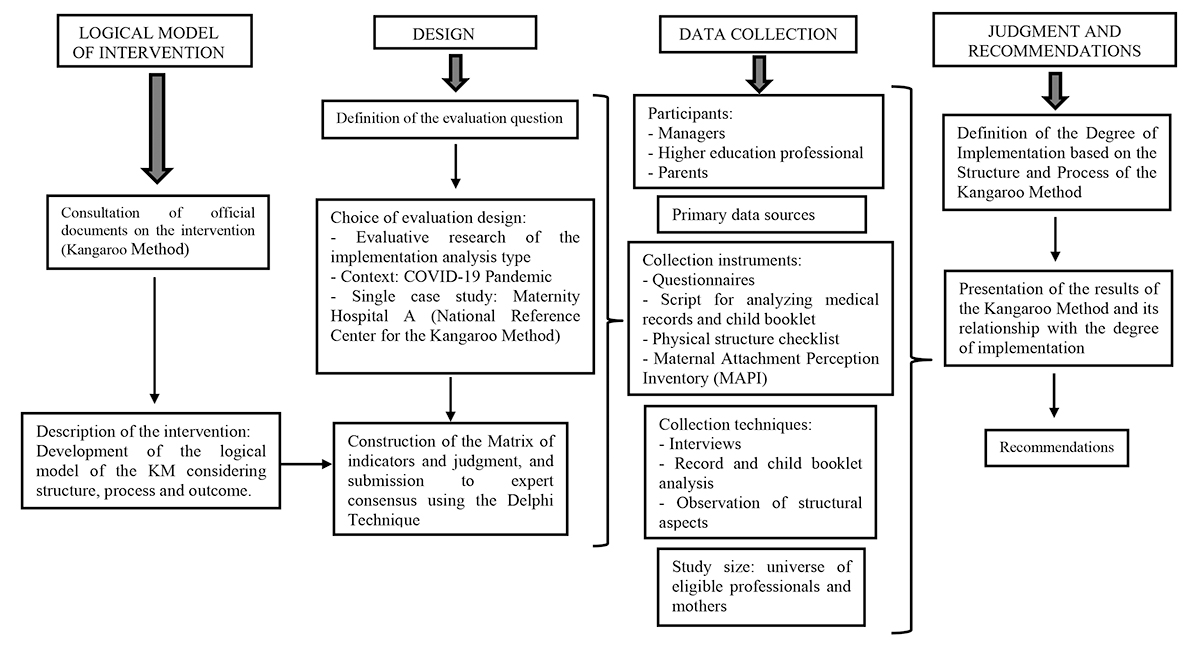
An Evaluative Research of the type analyzing the implementation of the KC during the COVID-19 pandemic. This analysis assessed the influence of variations in implementation on the observed outcomes15. A single case study strategy was adopted, particularly indicated for empirical research in which the phenomenon studied can hardly be separated from its context. The theoretical evaluation model shown in Figure 1 presents a summary of the study plan, including the evaluation question, the study design, the consensus technique used to construct the indicator matrix, data collection, and judgment (Chart 1). The recommendations of the Reporting Guidelines for Quality Improvement Studies (SQUIRE)16 were followed.

Intervention under analysis: the Kangaroo Method
The KM encompasses actions aimed at improving care for preterm newborns and their families who require hospitalization in a neonatal unit (NU). It is characterized by skin-to-skin contact between the newborn and the caregiver, exclusive breastfeeding, early hospital discharge and follow-up after discharge4. In Brazil, the CM guidelines advocate humanized perinatal care complementing the use of technological advances, carried out in three stages4. The 1st stage begins in prenatal care, identifying pregnant women at risk of premature birth, which may lead to hospitalization of the PTNB in a Neonatal Intensive Care Unit (NICU) or Conventional Neonatal Intermediate Care Unit (CNICU). In this stage, the aim is to establish a bond between the family and the PTNB, by encouraging the parents to freely enter the NU, starting skin-to-skin contact and the Kangaroo position as early as possible2,5.
The 2nd stage takes place in the CNICU, where the mother assumes most of the care for the PTNB, supported by the hospital team. This stage aims to continue breastfeeding, provide guidance on care for the NB, and practice the kangaroo position in clinically stable babies, receiving full enteral nutrition and weighing at least 1,250g. It serves as a transition period for the mother to discharge, seeking to enable her to recognize the PTNB communication signals and develop the ability to handle the baby in the kangaroo position2,5.
The 3rd stage begins with hospital discharge, at home with outpatient support from the maternity hospital of origin and the Basic Health Unit (BHU), after the PTNB reaches 1,600g, with the mother feeling safe, motivated, and guided on care to maintain the Kangaroo position for as long as possible2,5. The first consultation after discharge should be held within 48 hours17.
Context and Study Location
The study was conducted during the COVID-19 pandemic, the greatest public health challenge of the century, due to its exponential spread, overwhelming healthcare systems, causing deaths and socioeconomic repercussions in all countries. In Recife, the mortality rate (346 deaths/100,000 inhabitants) and fatality rate (3.5%) were higher than the national average. To address this issue, health care and surveillance needed to adapt quickly to increase the supply of beds, implement diagnostic tests, monitor and treat cases, reorganize the healthcare system and adapt primary and specialized care services to the new reality18.
The study was conducted at the KNICU and the outpatient clinic of one of the CNR for the CM (Maternity A), a philanthropic entity that works in medical care, teaching and research, located in Recife. Its kangaroo unit, created to address the unavailability of incubators for all PTNB who needed them, has been active since 1994, with adjustments to the MH guidelines as they are released. In the pre-pandemic period, the NU had NICU beds (n=18), CNICU (n=32) and KNICU (n=22), in addition to the outpatient clinic for discharged patients.
During the pandemic, the institution became the only state reference for care for pregnant women with COVID-19, resulting in the reallocation of professionals from the KNICU to other care sectors that cared for patients with COVID-19, temporarily closing its activities. It reopened at the end of 2021, with five beds, expanded to ten during the data collection period. The routine in the NICU was minimally changed during the pandemic, due to the presence of clinically severe newborns, which is why it was excluded from this evaluation. The study also included the BHU that attended PTNBs, residing in Recife, who were hospitalized in the KNICU. The municipality that adhered to the family health strategy (FHS) since 1995, during the pandemic, in the first months, childcare services were restricted but normalized during the data collection period.
Stages of the Kangaroo Method evaluation process
Stage 1: Explanation of the Logical Model of the Kangaroo Method
To perform the implementation analysis, a logical model (LM) was developed to represent the theory underlying the KM, making it verifiable, explaining through a visual scheme the way in which it should be implemented and the expected results. The Donabedian triad of structure, process and outcome was used, where the structure refers to the physical, human and material resources necessary for the provision of care; the process, to the activities developed by healthcare professionals; and the outcome, to the effects obtained in health care19.
The LM was organized based on consultations with institutional documents and technical standards on the KM. These were: Kangaroo Method: care guidelines (2019), Manual of the third stage of the Kangaroo Method in Primary Care (2018), Humanized care for newborns: Kangaroo Method: technical manual (2017), Guidelines for the Kangaroo Method in Primary Care: Shared Care (2016) and Shared Follow-up between Hospital Care and Primary Care (2015); in addition to SAS/MS Ordinance No. 930/2012 and GM/MS Ordinance No. 1683/2007. State and municipal plans and laws were not included, as they are local strategies for the application of the KM that cannot be generalized to the entire country. The logical model of the KM was presented through three components: 2nd stage (KNICU); Integration of the 2nd and 3rd stages (Outpatient Clinic and PHC) and 3rd stage, presented in an article20.
Stage 2: Construction of the Kangaroo Method indicators and judgment matrix
Based on the LM and the evaluation question guiding the study, a judgment matrix was developed containing structure, process and outcome indicators for each component of the model, the parameters for arbitration of each indicator, the scoring methods, data collection techniques and the respondents. The judgment parameters for the structure and process indicators were based on the provisions of the consulted Ordinances and Manuals and, when not available, empirically defined by the researcher based on experience in a university hospital.
To enhance the reliability and validity of the construct, the indicator matrix was submitted to the consensus of experts in the field of study using the Delphi technique. The step-by-step process used and the outcomes of the consensus technique are detailed in an article20. The final indicator matrix consisted of 116 indicators: 54 structures, 50 processes and 12 outcomes, available in supplementary material.
Stage 3: Participants, techniques, and instruments used in data collection
Data collection period was from November 2021 to May 2022. All professionals with higher education degree working at KNICU, in the discharge outpatient clinic, in the reference BHU for PTNB who were in the third stage, the KM coordinators, and the municipal child health manager participated in the study. Higher education level health professionals who provided care to these children and those responsible for preterm newborns admitted to KNICU residing in Recife who were in their second or third consultation at the discharge outpatient clinic during data collection were eligible.
Primary data collected using various techniques were used: the structural aspects of the units were directly observed, the medical records and child booklets of eligible newborns were analyzed using a structured script, and professionals from the services were interviewed. To minimize response bias, triangulation of selected information obtained in interviews with the responsible for the newborn was performed and compared with that obtained through different data collection techniques.
The indicators of the component - 2nd stage of the KM resulted in questionnaires for professionals at the KNICU and those responsible for hospitalized PTNB. The indicators of the component - integration of 2nd and 3rd stages of the KM resulted in the questionnaire for the municipal child health coordinator, and those for the component - 3rd stage, resulted in questionnaires for professionals at the PHC and the discharge outpatient clinic and for those responsible for children discharged from hospital. The service observation scripts were prepared based on the structure provided for each component. The script for analyzing medical records and the child booklet was based on the process indicators. To assess the bond, the Maternal Attachment Perception Inventory (IVPM)21 was applied to the mothers.
All 11 professionals at maternity hospital A were interviewed, including a medical coordinator and a nursing staff coordinator; two nursing assistants, one physician, a speech therapist, a physical therapist and two psychologists at the KNICU; in addition to one physician and one nurse at the discharge clinic. At the PHC, all 12 nurses and three physicians who provide care for PTNB in their area and were not on leave during the data collection period were interviewed. The caregivers of the children admitted to the KNICU were interviewed and based on their experience, the BHU to be visited were defined. Of the 90 babies admitted during the data collection period, 20 lived in Recife. Additionally, 18 children were recruited at the discharge clinic and of these, 15 BHU were visited, while three mothers reported not receiving care at the PHC. There were no refusals by any of the interviewees.
Stage 4: Classification of the degree of implementation of the Kangaroo Method
To define the degree of implementation, structure and process indicators were used. The classification was based on structure, process and component, and ultimately, the degree of implementation of the KM was defined. The degree of implementation was taken as the proportion of the score obtained in relation to the maximum score achievable for each component and for the KM, as outlined in the indicator matrix.
The degree of implementation was classified as implemented when percentages of 100.0 to 80.0% were reached; partially implemented, between 79.9 and 60.0%; incipient, between 59.9 and 40.0%; and not implemented, less than or equal to 39.9%, as determined by the authors based on a previous study of a public health emergency(22).
Stage 5: Analysis of the results and the influence of the degree of implementation of the Kangaroo Method on these results
To assess the results, the ratio between the achieved and expected values for each outcome indicator was calculated, and its analysis was conducted based on the observation of the outcomes by system component, using the indicator matrix as a reference. The degree of implementation observed by KM component in stage 4 was compared to the result indicators, based on the logical model, establishing plausible relationships to identify elements that influenced the results produced.
Ethical aspects
This study followed the recommendations of Resolution 466/2012 of the National Health Council and was submitted to the IMIP Research Ethics Committee under CAAE No. 35017420,7,3002,5201 and opinion No. 4,309.
RESULTS
In Maternity A, 100% of the interviewees were female, the average age was 46.8 (± 13.9) years old, the majority had a master’s degree, 05 (45.4%). The length of professional practice was 13.5 (7-32) years and the length of experience with the KM, 12.5 (2-28) years. In the PHC, all were female, with an average age of 49.6 (± 11.2) years old, the majority had a specialist title, 12 (75.0%). The length of professional practice was 20 (13.2-26.5) years. Only one professional reported having experience in the KM (three years). Among the mothers interviewed, the average age was 26.85 (± 6.8) years, 13 (70%) were in a stable union, 7 (35%) had completed high school and 10 (50%) had a monthly income between 1 and 2 minimum wages.
The KM was classified as partially implemented (68.7%). The Structure is implemented in the components - 2nd stage as well as in its - Integration with the 3rd stage (97% and 100%, respectively), and partially implemented in the 3rd stage (78%). The process in the KNICU component was partially implemented (79.2%). In the Education subcomponent, the indicators with the lowest scores were Proportion of professionals who: guiding parents and caregivers on artificial breastfeeding; guiding parents and caregivers on recognizing warning signs; guiding parents and caregivers on follow-up after discharge. In the component - Integration 2nd and 3rd stages, the managers of the KNICU and the PHC denied that there was any reference or counter-reference between the maternity ward and the BHU, as well as the sharing of clinical objectives, exams and treatments. In the component - 3rd stage, the process was classified as incipient (50.2%). Some of the PHC professionals reported not carrying out education and assistance activities as recommended by the KM when there were PTNBs in the assigned area (Chart 1).
All mothers interviewed at KNICU reported having received guidance on warning signs, however 60% of those who were on mixed breastfeeding stated that they had received guidance on artificial breastfeeding, and 45% on follow-up after discharge. Analysis of the medical records identified that 100% of them described the physical examination, request for tests and prescription of analgesics when necessary, corroborating the professionals’ report. While 87.5% of the professionals stated that they encouraged family visits and the support network, 55% of the mothers reported not having received this encouragement. In the 3rd stage, 08 (53.3%) professionals mentioned that follow-up occurs in the first week after the hospital discharge of the PTNB. Analysis of the medical records of the children in the PHC identified that 07 (38.8%) children received care at the BHU and only 02 (11.1%) received home visits after discharge (Chart 2).
Regarding outcome indicators, 100% of mothers reported that they perform the care recommended by the KM. Regarding breastfeeding, 85% are breastfeeding, but only 25% of them are exclusively breastfeeding (EBF). Mothers reported a strengthened bond with their babies (100%) and 45% reported a support network. Regarding returns for outpatient follow-up, 100% of mothers interviewed at KNICU who were discharged during the data collection period returned for follow-up at maternity hospital A, but only 38.8% were recruited by the PHC. While 90% of professionals at maternity hospital A received training, only 35.7% received training at the PHC (Chart 3).
DISCUSSION
The evaluation of the KM in a CNR for the method during the COVID-19 pandemic showed that it was partially implemented, as well as the components, 2nd stage and its integration with the 3rd stage. In contrast, the 3rd stage was classified as incipient. The structure proved to be better than the processes in the degree of implementation of the units.
The temporary closure of the KNICU during the pandemic, with professionals reassigned to other services of the institution and its gradual reopening, may explain the partial implementation. International multicenter studies indicate that several countries made changes in the care of PTNB due to the pandemic, which included redistributing professionals to care for patients with COVID-19 and reassignment of unit space12,13. Other repercussions included earlier discharge (30.8%), restriction of visits (51.2%), reduction in skin-to-skin contact (26.5%), and total interruption of KM services (7%)13.
Despite almost all professionals stated that they encouraged visits from family members and support networks, more than half of the mothers reported not having received this encouragement. The establishment of social isolation measures during the pandemic caused restrictions on visitation policies and family involvement in providing care to newborns10,12,13,23, aspects that are essential for the well-being and mental health of mothers.
All mothers interviewed during hospitalization at the KNICU stated that they had adhered to the care recommended by the KM, and the application of the IVPM identified a strengthened bond between mothers and their babies, despite the risks of decreased bond formation and adherence to the method caused by restrictive measures. The support of the KNICU team is vital in providing emotional assistance and practical help for mothers, as well as mitigating the adverse effects of distancing caused by hospitalization, facilitating interaction and care with the NB7,10,23.
Despite the low “Proportion of professionals who guide parents on recognizing warning signs”, all mothers interviewed reported receiving guidance. This may occur because some professionals understand that certain activities should be performed by other members of the multiprofessional team rather than being everyone’s responsibility, as recommended. A study conducted with nurses from a NU of a teaching hospital found that, although they recognize the potential benefits of KM, there is a predominance of little knowledge about the method, little experience, team resistance and lack of institutional support for its implementation6.
Both professionals and mothers agree on the low “Proportion of professionals who guide parents and caregivers on follow-up after discharge”. Consistent guidance during hospitalization is essential so that the family, after discharge from the KNICU, knows the necessary care at home and the importance of shared follow-up for the PTNB, among other duties. Thus, the nursing team’s role in discharge is significant. However, a study with KM nurses found that they prioritize immediate care, disregarding educational activities and preparation for discharge. Consequently, problems that may occur at home are not anticipated and solutions are not suggested24.
Among the mothers interviewed at the KNICU, some did not intend to accompany their baby in the PHC, only in the discharge clinic. This finding corroborates a study that found that mothers consider follow-up in the hospital outpatient clinic more important than in other services, since it is the child birthplace25. It is up to the KNICU professionals to guide families regarding the continuity of care in the PHC and its connection to the BHU teams26. Even so, it is common for these professionals to believe that the PHC team is not qualified to handle the specificities of preterm or low-weight NB2, or even to advise families to perform follow-up only in the discharge outpatient clinic8.
The lack of sharing of clinical objectives, exams and treatments among the KNICU, discharge outpatient clinic and the BHU identified in this research, are obstacles to an effective referral and counter-referral network that is essential for the method26. A study showed failures in the articulation between the PHC specialized services due to misalignments in establishing dialogic relationships among professionals across different levels of care, as well as the lack of adequate mechanisms for articulation between services27. The weak communication between the different levels of care can fragment and discontinue care2,8. The persistence of a hospital-centric vision and specialized care as having superior knowledge weakens the PHC27. Some PHC professionals do not recognize their importance in the 3rd stage of the KM, while others from the KNICU and discharge outpatient clinic adopt an authoritarian and non-reflective stance, negatively impacting the care of the PTNB25,27.
Regarding professional training, while most professionals at maternity hospital A received training on the method, only a third of professionals at PHC received training. Following the launch of the 3rd stage of the KM Manual at PHC in 2018, the municipality began training for FHS professionals, which was suspended during the pandemic. A well-trained team handles challenges related to physical structure, human and material resources, especially in the pandemic context4. This safety is achieved through training, ensuring the quality of care for PTNBs and their families at all stages7,13,28.
In the 3rd stage of the KM, implementation was incipient. While professionals at maternity hospital A reported conducting educational and care activities, not all PHC professionals reported the same. Most mothers reported that these activities were conducted only in the discharge outpatient clinic. These findings are corroborated by several studies that identified difficulties in fully adhering to the 3rd stage and the need for strategies to strengthen the method in PHC to ensure continuity of care2,4,6-8. On the other hand, most PTN were not monitored by the FHS, despite it being the reference for them. Mothers reported difficulty in accessing the BHU to schedule appointments or preferred to receive care at the discharge service. A study conducted during the pandemic found a reduction or even interruption of childcare services at BHU9. Although all children received weekly follow-ups as recommended, this was conducted by the discharge outpatient clinic, and even the children referred to PHC did not have their appointments scheduled within the timeframe stipulated by the KM.
Half of the PHC professionals reported not making home visits in the first week after discharge of the PTNB. Among the mothers of PTNB who were in the 3rd stage, only two received the visit, as reported by them, confirmed by the medical records. Studies show that many children do not receive home visits in the first week after hospital discharge. The justification was the lack of adequate guidance from KNICU professionals on sharing care with the PHC. Furthermore, FHS professionals stated that visits were hindered by the absence of information about the mother-child binomial after childbirth2,8.
A small percentage of newborns were on EBF during hospitalization in the 2nd stage. Strengthening BF is one of the goals during hospitalization in the KNICU, thus, it is common to admit children using infant formula and promote the replacement of the supplement with breast milk during the 2nd stage aiming at EBF at hospital discharge17. However, after discharge, a reduction in EBF rates was observed, even though all children were on some form of breastfeeding. The pandemic context, during the data collection period, may have contributed to this scenario, as the recommendation for social isolation after hospital discharge may have influenced, weakening the support network, which is crucial for maintaining breastfeeding at home. A study comparing two groups of very low birth weight PTNB identified that being assisted by the KM increased the probability of being in EBF at hospital discharge by 11.2 times and of remaining in EBF at the first discharge consultation by 14.4 times29.
Despite the reported difficulties, vaccination coverage rates remained high, unlike a study that identified reduced demand for vaccines during the pandemic9. Finally, the adherence rate of mothers in the third stage of KM remained high, despite the difficulties in access reported during the COVID-19 pandemic. Increased maternal confidence and skills in caring for the PTNB contribute to better clinical outcomes29. Moreover, improvement in their babies’ growth and development may strengthen the bond and trust in continuing to practice kangaroo care and other recommended KM care at home30.
Among the limitations of the research, the reduced external validity stands out when evaluating only a single situation regarding the KM, a single case study, unlike multiple case studies that allow for the reproduction of analyses and generalizations of results with greater certainty. To minimize this limitation, the case study of the KM in maternity hospital A exposed the intervention through its textual description associated with the explanation of the logical model and the local context in which the evaluation took place. Additionally, the submission of the model and its operational indicators was associated with a consensus technique involving experts to support an approach based on both theory and practice. This approach has the potential to reduce the limits considering that the number of variables analyzed greatly exceeded the observation points. Furthermore, to enhance the robustness and rigor of the analysis of the implementation of the KM, considering the control of biases, the information triangulation regarding the structure and process was used, through interviews with professionals and mothers, analysis of the child’s medical records and booklet, in addition to direct observation in the KNICU and in the PHC.
Another limitation of this study was the instability of the construct and content of the intervention, as it was an evaluation during a COVID-19 pandemic, about which at the beginning there was no knowledge or clear care guidelines for pregnant women, postpartum women and newborns, and which were developed as evidence emerged. This instability is related to the inseparability of the local pandemic context with the intervention under analysis. Additionally, the field preparation period and the beginning of data collection occurred while the FHS teams were reorganizing to cope with mild cases of COVID-19, along with other secondary conditions at the beginning of the pandemic, and maternity hospital A remained as a reference for pregnant women with COVID-19. Hospitalization in the KNICU and follow-up in the PHC, temporarily suspended, were being resumed, leading to a lower demand for children.
It is also important to highlight that the interviews were conducted with residents of Recife, which contributed to reducing the number of parents interviewed, since the hospital is a high-risk reference for all municipalities in the state. On the other hand, this is a nationally recognized unit of the KM, one of the first in the country, and its practices changed during the pandemic, an important aspect to be considered in similar situations, as lessons learned in times of public health emergency. Finally, we emphasize that in this type of study, the potential for dissemination to other contexts is related to the logical model of the intervention and the theoretical model of the evaluation used, rather than its results, especially in an unusual context such as the COVID-19 pandemic.
CONCLUSION
During the COVID-19 pandemic, the KM was partially implemented in a tertiary maternity hospital in the city of Recife, a national reference center, due to inadequacies, especially in the care and education work process, in the KNICU and in the management of its integration with the PHC. The shared follow-up of PTNB between the discharge clinic and the BHU was incipient. In all components of the KM, the structure of services was better than the degree of implementation of the activities in the work process. The contribution of this study is related to the need for continuous planning and evaluation for the organization of the health system and the restructuring of the services so that the KM functions in full, without detriment to the PTNB and their families.
The importance of integrating and qualifying the care of PTNB after hospital discharge is highlighted, with the promotion of strategies that articulate the 2nd and 3rd stages. The training of professionals, especially on the importance of sharing care and the role of PHC professionals, remains essential, as do strategies to strengthen the method and improve communication among those involved in care to promote comprehensive and quality attention for PTNB and their families. In this sense, nursing professionals play a fundamental role by providing follow-up for PTNB from admission to discharge from the KM, through direct assistance, health education and follow-up in PHC.
It is recommended that, to overcome shortcomings, the structures of services be strengthened during responses to public health emergencies, improve integrated action plans among services and develop assessments to facilitate the identification of obstacles within the care network. Such initiatives are essential for the qualification of the KM and greater effectiveness in responses during pandemic situations.
REFERENCES
-
1. World Health Organization (WHO). Born too soon: decade of action on preterm birth [Internet]. Geneva: World Health Organization; 2023 [cited 2023 Oct 05]. Available from: https://www.who.int/publications/i/item/9789240073890
» https://www.who.int/publications/i/item/9789240073890 -
2. Silva MV, Lamy ZC, Sousa AF, Hartz Z, Mendes CM, Ramos CV. Evaluation of the third stage of the kangaroo method in primary health care. Rev Pesqui Cuid Fundam. 2022;14:e11116. https://doi.org/10.9789/2175-5361.rpcfo.v14.11116
» https://doi.org/10.9789/2175-5361.rpcfo.v14.11116 -
3. Forde D, Deming DD, Tan JC, Phillips RM, Fry-Bowers EK, Barger MK, et al. Oxidative stress biomarker decreased in preterm neonates treated with kangaroo mother care. Biol Res Nurs. 2020;22(2):188-96. https://doi.org/10.1177/1099800419900231
» https://doi.org/10.1177/1099800419900231 -
4. Aires LCP, Padilha MI, Santos EKA, Lamy ZC, Bellaguarda MLR, Alves IFBO, et al. Power relations and knowledge of neonatal teams in the Kangaroo Mother Care implementation and dissemination. Rev Esc Enferm USP. 2022;56:e20220200. https://doi.org/10.1590/1980-220X-REEUSP-2022-0200en
» https://doi.org/10.1590/1980-220X-REEUSP-2022-0200en -
5. Souza NA, Lamy ZC, Goudard MJ, Marba ST, Costa Ferreira DO, Silva MP, et al. Kangaroo method: perceptions on knowledge, potencialities and barriers among nurses. Esc Anna Nery. 2019;23(4):e20190100. https://doi.org/10.1590/2177-9465-ean-2019-0100
» https://doi.org/10.1590/2177-9465-ean-2019-0100 -
6. Souza AN, Lamy ZC, Goudard MJF, Marba STM, Costa R, Caldas LN. Factors associated with skin-to-skin contact less than 180 min/day in newborns weighing up to 1,800g: multicenter study. Ciên Saúde Colet. 2023;28(4):1021-9. https://doi.org/10.1590/1413-81232023284.14822022
» https://doi.org/10.1590/1413-81232023284.14822022 -
7. Aires LCP, Koch C, Santos EKA, Costa R, Mendes JS, Medeiros GMS. Kangaroo-mother care method: a documentar study of theses and dissertations of the Brazilian nurse (2000-2017). Rev Bras Enferm. 2020;73(2):e20180598. https://doi.org/10.1590/0034-7167-2018-0598
» https://doi.org/10.1590/0034-7167-2018-0598 -
8. Reichert APS, Soares AR, Bezerra ICS, Guedes ATA, Pedrosa RKB, Vieira DS. The third stage of kangaroo method: experience of mothers and primary health care professionals. Esc Anna Nery. 2021;25(1):e20200077. https://doi.org/10.1590/2177-9465-EAN-2020-0077
» https://doi.org/10.1590/2177-9465-EAN-2020-0077 -
9. Reichert APS, Guedes ATA, Soares AR, Brito PKH, Bezerra ICS, Silva LCL, et al. Repercussions of the Covid-19 pandemic in the care of premature infants. Esc Anna Nery 2022;26(spe):e20210179. https://doi.org/10.1590/2177-9465-EAN-2021-0179
» https://doi.org/10.1590/2177-9465-EAN-2021-0179 -
10. Custodio ZAO, Morsch DS, Marba STM, Gomes MAM, Machado LG, Lamy ZC. Kangaroo Care: how to guarantee and expand in Covid-19 times. 2020. SciELO Preprints. https://doi.org/10.1590/SciELOPreprints.773
» https://doi.org/10.1590/SciELOPreprints.773 -
11. CoşkunŞimşek D, Günay U, Özarslan S. The impact of the COVID-19 pandemic on nursing care and nurses' work in a neonatal intensive care unit. J Pediatr Nurs 2022;66:44-48. https://doi.org/10.1016/j.pedn.2022.05.013
» https://doi.org/10.1016/j.pedn.2022.05.013 -
12. Minckas N, Medvedev MM, Adejuvigbe EA, Brotherton H, Chellani H, Estifanos AS, et al. Preterm care during the COVID-19 pandemic: a comparative risk analysis of neonatal deaths averted by kangaroo mother care versus mortality due to SARS-CoV-2 infection. E Clin Med. 2021;33:100733. https://doi.org/10.1016/j.eclinm.2021.100733
» https://doi.org/10.1016/j.eclinm.2021.100733 -
13. Rao SPN, Minckas N, Medvedev MM, Gathara D, Prashantha YN, Estifanos AS, et al. Small and sick newborn care during the COVID-19 pandemic: global survey and thematic analysis of healthcare providers’ voices and experiences. BMJ Glob Health 2021;6:e004347. https://doi.org/10.1136/bmjgh-2020-004347
» https://doi.org/10.1136/bmjgh-2020-004347 -
14. Bittencourt DAS, Vilela MEA, Marques COM, Santos AM, Silva CKRT, Domingues RMSM, et al. Labor and child birth care in maternities participating in the “Rede Cegonha/Brazil”: an evaluation of the degree of implementation of the activities. Ciênc Saúde Colet. 2021;26(3):801-21. https://doi.org/10.1590/1413-81232021263.08102020
» https://doi.org/10.1590/1413-81232021263.08102020 - 15. Champagne F, Brousselle A, Hartz ZMA, Contandriopoulos AP, Denis JL. A análise de implantação. In: Brousselle A, Champagne F, Contandriopoulos AP, Hartz ZMA. Avaliação conceitos e métodos. Rio de Janeiro: Ed. Fiocruz; 2011. p. 217-238.
-
16. Kelz RR, Schwartz TA, Haut ER. SQUIRE Reporting Guidelines for Quality Improvement Studies. JAMA Surg. 2021;156(6):579-81. https://doi.org/10.1001/jamasurg.2021.0531
» https://doi.org/10.1001/jamasurg.2021.0531 -
17. Ministério da Saúde (BR). Secretaria de Atenção à Saúde. Departamento de Ações Programáticas Estratégicas. Atenção humanizada ao recém-nascido: Método Canguru: diretrizes de cuidado [Internet]. Brasília (DF): Ministério da Saúde; 2019[cited 2023 Apr 23]. https://bvsms.saude.gov.br/bvs/publicacoes/metodo_canguru_diretrizes_cuidado_revisada.pdf
» https://bvsms.saude.gov.br/bvs/publicacoes/metodo_canguru_diretrizes_cuidado_revisada.pdf -
18. Ibrahim NK. Epidemiologic surveillance for controlling COVID-19 pandemic: types, challenges and implications. J Infect Public Health. 2020;13(11):1630-8. https://doi.org/10.1016/j.jiph.2020.07.019
» https://doi.org/10.1016/j.jiph.2020.07.019 -
19. Donabedian A. Quality assessment and assurance: unity of purpose, diversity of means. Inquiry [Internet]. 1988[cited 2023 Apr 23];25(1):173-92. Available from: https://pubmed.ncbi.nlm.nih.gov/2966122/
» https://pubmed.ncbi.nlm.nih.gov/2966122/ -
20. Cândido JLA, Frias PG, Sarinho SW. Construction and validation of indicators to evaluate the implementation of the Kangaroo Method using the Delphi technique. Rev Enferm UFPI. 2023;12:e4435. https://doi.org/10.26694/reufpi.v12i1.4435
» https://doi.org/10.26694/reufpi.v12i1.4435 -
21. Bertoldo LTM, Serralta FB. Apego em um Estudo Comparativo com Mães de Crianças com TDAH. Rev Psicol IMED. 2022;14(2):70-86. https://doi.org/10.18256/2175-5027.2022.v14i2.4702
» https://doi.org/10.18256/2175-5027.2022.v14i2.4702 -
22. Aguiar LR, Frias PG, Quinino LRM, Miranda-Filho DB. Avaliação da implantação da resposta à emergência de saúde pública de microcefalia no Estado de Pernambuco, Brasil. Cad Saúde Pública. 2021;37(8):e00271020. https://doi.org/10.1590/0102-311X00271020
» https://doi.org/10.1590/0102-311X00271020 -
23. Morsch DS, Custódio ZAO, Lamy ZC. Psycho-emotional care in a neonatal unit during the Covid-19 pandemic. Rev Paul Pediatr. 2020;38:e2020119. https://doi.org/10.1590/1984-0462/2020/38/2020119
» https://doi.org/10.1590/1984-0462/2020/38/2020119 -
24. Sales IMM, Santos JDM, Rocha SS, Gouveia MTO, Carvalho NAR. Contributions of the nursing team in the second stage of the Kangaroo-Mother Care Method: Implications for hospital discharge of the newborn. Esc Anna Nery 2018;22(4):e20180149. https://doi.org/10.1590/2177-9465-EAN-2018-0149
» https://doi.org/10.1590/2177-9465-EAN-2018-0149 -
25. Tanaka MC, Bernardino FBS, Braga PP, Alencastro LCS, Gaíva MAM, Viera CS. Weaknesses in the continuity of care for preterm infants discharged from the neonatal unit. Rev Esc Enferm USP. 2024;58:e20230228. https://doi.org/10.1590/1980-220X-REEUSP-2023-0228en
» https://doi.org/10.1590/1980-220X-REEUSP-2023-0228en - 26. Ministério da Saúde (BR). Secretaria de Atenção à Saúde. Departamento de Ações Programáticas Estratégicas. Manual da terceira etapa do Método Canguru na Atenção Básica. Brasília: Ministério da Saúde (BR); 2018.
-
27. Almeida HB, Vanderlei LCM, Mendes MFM, Frias PG. Communicational relations between healthcare professionals and their influence on coordination of care. Cad Saúde Pública. 2021;37(2):e00022020. https://doi.org/10.1590/0102-311X00022020
» https://doi.org/10.1590/0102-311X00022020 -
28. Costa MC, Neves APSM, Cavalcanti MCAS, Morais ES. Proposta interprofissional de educação permanente em assistência perinatal no contexto da pandemia covid-19. Rev Multidiscip Saúde. 2023;4(3):614-619. https://doi.org/10.51161/conais2023/21803
» https://doi.org/10.51161/conais2023/21803 -
29. Alves FN, Wolkers PCB, Araujo LB, Ferreira DMLM, Azevedo VMGO. Impacto da segunda e terceira etapas do método canguru: do nascimento ao sexto mês. Rev Enferm Cent O Min. 2021;11:e4200. http://doi.org/10.19175/recom.v11i0.4200
» http://doi.org/10.19175/recom.v11i0.4200 -
30. Cañedo MC, Nunes CB, Gaiva MAM, Vieira ACG, Schultz IL. “Vou para casa. E agora?” a difícil arte do Método Canguru no domicílio. Rev Enferm UFSM. 2021;11:e52. https://doi.org/10.5902/2179769263253
» https://doi.org/10.5902/2179769263253
Access to the dataset can be obtained upon request to the corresponding author.