Biofertilizer enriched with Paenibacillus polymyxa and Trichoderma sp. for radish cultivation
ABSTRACT
Agricultural residues can be transformed into organic fertilizers through the inoculation of efficient microorganisms, which influence plant growth, disease and pest resistance, and stimulate physiological activities. The primary objective of this study was to develop a biofertilizer from agricultural residues using anaerobic fermentation, inoculated with Paenibacillus polymyxa and Trichoderma sp., for cultivating three radish cultivars (Raphanus sativus L.): Scarlet Champion, Crimson Giant, and Reggae. The experiment followed a completely randomized block design (CRBD) with 12 treatments and five replications, totaling 60 experimental units. The inoculation mixture consisted of 10% biofertilizer, 89.65% irrigation water, and 0.35% of either P. polymyxa or Trichoderma sp. Fertilization was applied to the soil at 7, 12, and 17 days after planting. The three radish cultivars exhibited higher survival rates, plant height, bulb diameter, foliage weight, and bulb weight when treated with the biofertilizer enriched with P. polymyxa, which influenced their morphological traits. This approach enables farmers to reduce chemical fertilizer use, lower economic costs, and develop new environmentally friendly biotechnological products. The biofertilizer enriched with P. polymyxa significantly enhanced plant morphology in all three radish cultivars. Crimson Giant achieved a 100% survivalrateduring fertilization, witha plant heightof 26.49 cm at 32 days, a bulb diameter of 4.78 cm, a foliage weight of 0.81 kg, and a bulb weight of 46.00 g.
Keywords:
Biofertilizer; Microorganisms efficient; Sustainable agriculture; Microbial inoculation; Raphanus sativus L
RESUMO
Resíduos agrícolas podem ser transformados em fertilizantes orgânicos através da inoculação de microrganismos eficientes, que influenciam o crescimento das plantas, resistência a doenças e pragas, e estimulam as atividades fisiológicas. O objetivo principal deste estudo foi desenvolver um biofertilizante a partir de resíduos agrícolas utilizando fermentação anaeróbica, inoculado com Paenibacillus polymyxa e Trichoderma sp., para o cultivo de três cultivares de rabanete (Raphanus sativus L): Scarlet Champion, Crimson Giant e Reggae. O experimento seguiu um delineamento de blocos totalmente casualizados (DBCA) com 12 tratamentos e cinco repetições, totalizando 60 unidades experimentais. A mistura de inoculação consistia em 10% de biofertilizante, 89,65% de água de irrigação e 0,35% de P. polymyxa ou Trichoderma sp. A fertilização foi aplicada no solo aos 7, 12 e 17 dias após o plantio. As três cultivares de rabanete apresentaram maiores taxas de sobrevivência, altura das plantas, diâmetro dos bulbos, peso da folhagem e peso dos bulbos quando tratadas com o biofertilizante enriquecido com P. polymyxa, o que influenciou suas características morfológicas. Essa abordagem permite aos agricultores reduzir o uso de fertilizantes químicos, diminuir custos econômicos e desenvolver novos produtos biotecnológicos ambientalmente amigáveis. O biofertilizante enriquecido com P. polymyxa aprimorou significativamente a morfologia das plantas em todas as três cultivares de rabanete. O Crimson Giant alcançou uma taxa de sobrevivência de 100% durante a fertilização, com altura de planta de 26,49 cm aos 32 dias, diâmetro do bulbo de 4,78 cm, peso da folhagem de 0,81 kg e peso do bulbo de 46,00 g.
Palavras-chave:
Biofertilizante; Microrganismos eficientes; Agricultura sustentável; Inoculação microbiana; Raphanus sativus L..
INTRODUCTION
In recent years, global population growth has increased the demand for high-quality food systems and agricultural products (GALIC; BILANDZIJA; ZGORELEC, 2023). To achieve this, the soil used for cultivation must maintain optimal physical, chemical, and microbiological conditions to promote plant development (BADAGLIACCA et al., 2023). Unfortunately, due to soil exploitation, these conditions often deteriorate, leading to the necessity of synthetic fertilizers to supply nutrients and accelerate plant growth (MOLINA; MATILLA, 2020). However, long-term use of synthetic fertilizers adversely affects crop yield and soil health, including salinity, reduced organic matter, accumulation of toxic substances, and pH changes that affect microbial fauna. Consequently, this presents challenges for bioremediation if surface conditions are unsuitable and overuse of chemical fertilizers negatively impacts economic, environmental, and production factors, while physical exposure also poses a risk to human health (BULIGON et al., 2023). Additionally, soil acidification reduces phosphate absorption by crops, increases harmful ion concentrations, and inhibits crop growth. In response, farmers actively seek ways to minimize agrochemical use in agriculture (SOLOMOU et al., 2023).
The current trend is towards sustainable agriculture and clean, fertilizer-free food consumption. The application of organic fertilizers affects soil quality by introducing organic matter, micro and macronutrients, humus, and beneficial microorganisms, leading to enhanced agricultural yields (DAUD et al., 2019) while mitigating soil degradation caused by conventional fertilizers (ETESAMI; JEONG; GLICK, 2023). Additionally, organic fertilizers offer solutions to issues related to agroindustrial waste, such as the negative impacts of swine manure, including greenhouse gas emissions and soil contamination if improperly managed (PRADO et al., 2023). Before incorporating organic fertilizers from agroindustrial residues, biodegradation processes must be considered to achieve the balance between soil, plants, and roots (LAMOLINARA et al., 2022). This can be accomplished via methods like composting, vermicomposting, mechanical biological treatment, or anaerobic digestion (BULIGON et al., 2023). Anaerobic digestion decomposes organic matter in oxygen-free environments, releasing biogas and producing solid and liquid biofertilizers (SAMORAJ et al., 2022). Biofertilizers positively impact plant performance, but their effectiveness depends on the substrate used for production (SUHANI et al., 2023).
A study reported in the literature investigated the effects of vermicompost on various characteristics of common bean (Phaseolus vulgaris) under salinity stress, showing that vermicompost significantly mitigated the negative effects of salinity (BEYKKHORMIZI et al., 2016). Furthermore, efficient microorganisms such as bacteria and fungi play a crucial role in sustainable agriculture due to their nitrogenfixing abilities and production of growth-regulating hormones like auxins, gibberellins, and cytokinins (OMER et al., 2023). These microorganisms enhance soil fertility, break down agrochemicals, and regulate other soil-associated microorganisms, reducing pathogenic effects (PII et al., 2015). Inoculating microorganisms into biofertilizers promotes plant growth more effectively than individual inoculations, as each strain interacts positively in mineral solubilization and other processes beneficial to plant health (ETESAMI; JEONG; GLICK, 2023).
This study aimed to develop a biofertilizer using agroindustrial waste inoculated with Paenibacillus polymyxa and Trichoderma sp. and to evaluate its effectiveness in promoting the growth and development of three radish cultivars (Scarlet Champion, Crimson Giant, and Reggae). The cultivars were assessed under treatments with and without applying the biofertilizer and microbial inoculants. Few studies have explored this combination of factors, highlighting the potential of this approach as a promising alternative for enhancing radish growth and development.
MATERIALS AND METHODS
Location
The field research was carried out between March and April 2023 at the Recinto Nuevo Porvenir site in the Chillanes canton, Ecuador (latitude of 9755579.92 and longitude of 706262.40, with an elevation of 330.95 meters above sea level). During the experimental period, meteorological data were recorded. The temperature ranged from 18.04 to 24.01 ° C, with relative humidity reaching 88.89%. The atmospheric pressure recorded was 975.51 hPa, and the total precipitation was 0.022 mm.
Table 1 presents the physicochemical properties of the soil at the study site. These properties were determined by homogenizing 20 subsamples collected at a depth of 20 cm using a shovel. The final sample, properly homogenized, was analyzed at the National Institute of Agricultural Research (INIAP) to assess its chemical parameters. Colorimetry was employed for the quantification of nitrogen (N), phosphorus (P), and boron (B), while atomic absorption was used to determine the levels of potassium (K), calcium (Ca), magnesium (Mg), zinc (Zn), copper (Cu), iron (Fe), and manganese (Mn). Turbidimetry was applied for sulfur (S) measurement, pH was determined by potentiometry, and organic matter was quantified using the Walkley-Black method with colorimetry.
Preparation of swine manure-based biofertilizer
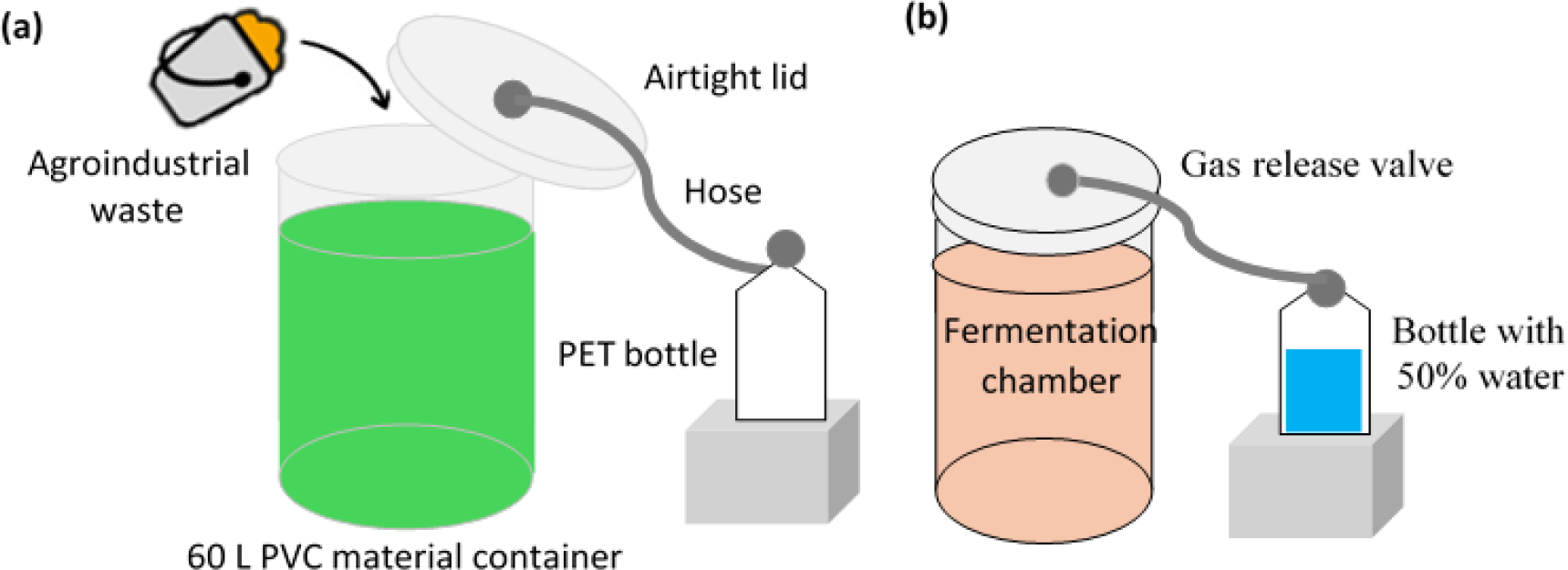
Firstly, a biodigester was constructed using a 60 L PVC plastic drum equipped with an airtight lid to seal the container (CHONTAL et al., 2019). The gas outlet was also regulated using a hose, sealed with adhesive tape to prevent leaks. This hose was subsequently connected to a 2 L PET bottle, as illustrated in Figure 1. The anaerobic fermentation followed the protocol proposed in a study reported in the literature with some modifications (OMER et al., 2023). The biofertilizer was formulated using agroindustrial residues in the following proportions: 40 kg of water, 15 kg of swine manure, 3 kg of forage peanut (Arachis pintoi Krapov. & W. C. Greg.), 1.5 kg of banana peels (Musa x paradisiaca L.), 1.25 kg of alfalfa (Medicago sativa L.), 1 kg of guava (Psidium guajava L.), 1 kg of whey, 0.93 kg of ash, 0.5 kg of bone meal, 0.5 kg of coarse salt, and 0.5 kg of yeast.

The fermentation period lasted 90 days at room temperature, with weekly agitation to ensure uniform fermentation of all materials. Subsequently, the obtained product was filtered to remove impurities and particulate matter and then stored in amber containers at 4°C.
Management of the experimental area and inoculation method
The soil preparation was carried out manually, involving the removal of weeds, soil excavation with a pickaxe, and soil leveling with a rake, followed by land leveling. Subsequently, the experimental design follows a 3×4 factorial scheme, where Factor A represents three commercial radish varieties (Raphanus sativus L.) (Scarlet Champion, Crimson Giant, and Reggae). Factor B represents four fertilization techniques: Control, Biofertilizer 10%, Biofertilizer 10% + Paenibacillus polymyxa, and Biofertilizer 10% + Trichoderma sp. This results in 12 different treatment combinations (Table 2). Each treatment combination was replicated five times, totaling 60 experimental units established in 1.0 × 0.5 m plots.
The strains of Paenibacillus polymyxa and Trichoderma sp. were obtained from the Microbiolab Laboratory (Quito, Ecuador). Radish seeds were sown with a spacing of 10 cm between plants and 20 cm between rows, with one seed per hole. This resulted in a population of 15 plants per experimental unit and 900 plants for the entire experimental area. Irrigation was performed manually and adjusted daily to meet the specific needs of each treatment in the radish crop. Weed control was maintained through manual weeding 12 and 24 days after crop emergence. The biofertilizer preparation involved the inoculation of microorganisms, adapting procedures described in previous work reported in the literature (LI et al., 2023). A total solution of 7500 mL was used in the following proportions: 10% (750 mL) biofertilizer, 89.65% (6723 mL) irrigation water, and 0.35% (26.25 g) strains of Paenibacillus polymyxa and Trichoderma sp., with a concentration of 1×10⁹ CFU g-1, at a dose of 700 g per 200 L of water. The plants were treated by soil application with 100 mL of the total solution of the organic fertilizer enriched with P. polymyxa and Trichoderma sp. at 7, 12, and 17 days after planting, according to the different treatments.
Study variables
The evaluated variables included the survival rate during fertilization (%), calculated by manually counting the number of surviving plants per experimental unit at 17 days, and plant height (cm), measured at 14, 21, and 32 days using a standard ruler and a Stanley tape measure. After harvesting at 32 days, the foliage weight (kg) and bulb weight (g) were evaluated using a precision balance with an accuracy of 0.01 g. The bulb diameter (cm) was also measured.
Statistical analysis
Data were analyzed by analysis of variance (ANOVA) under a 3 × 4 factorial design, with radish variety and fertilization technique as factors. Interaction plots were generated to illustrate the effects, and all statistical analyses were performed using Minitab software (version 2018).
RESULTS AND DISCUSSION
Characterization of the biofertilizer
The quality of the anaerobic fermentation-derived biofertilizer depends on several factors, including the type of manure used (cattle, pig, guinea pig, among others), fermentation time, temperature, C to N ratio, and the operating conditions of the biodigester used (SOLOMOU et al., 2023). Table 3 presents the results of the chemical properties obtained from the liquid biofertilizer, which were consistent with results reported in other studies in the literature (CHONTAL et al., 2019). Regarding the fermentation time, an optimal period could be around 40 days. However, each raw material has a different nutritional composition and decomposition rate (OLIVEIRA NETO et al., 2017). In our case, the organic biofertilizer was produced over a 90-day fermentation period because shorter durations may not allow sufficient decomposition to release all of its nutrients.
Assessment of variables during plant development and the harvesting phase
The results obtained from the ANOVA conducted with various biofertilizer treatments applied to three radish cultivars, Scarlet Champion, Crimson Giant, and Reggae, are shown in Table 4. The analysis revealed that radish variety, fertilization technique, and their interaction had a statistically significant effect (P < 0.05) on survival rate at 17 days and plant height at 14 and 21 days, compared to the unfertilized control. Thus, the interaction between radish variety and fertilization technique indicates that the effect of one factor depends on the level of the other, suggesting that specific combinations of these two factors are key to optimizing radish growth. Moreover, it is evident that introducing microorganisms in the biofertilizer positively influences the quality of radish crop production.
Factorial ANOVA for radish survival and growth according to variety (Scarlet Champion, Crimson Giant, and Reggae) and fertilization treatments involving biofertilizer, Paenibacillus polymyxa, and Trichoderma sp.
Radish plants are exposed to environmental conditions, including drought, heat, cold, flooding, heavy metals, salinity, and UV radiation, significantly impacting crop sustainability. In this context, the survival rate at 17 days post-fertilization was evaluated, with favorable outcomes observed in plants treated with the biofertilizer inoculated with both P. polymyxa and Trichoderma sp. across all three radish cultivars studied, likely influencing plant growth, health, and resistance to diseases and external conditions (MANZAR et al., 2022). Furthermore, treatment with biofertilizer 10% + P. polymyxa increased Crimson Giant radish height at 14 and 21 days, which is consistent with previous studies (ETESAMI; JEONG; GLICK, 2023).
On the other hand, plants without fertilization showed deficiency symptoms, such as yellowing leaves, slower growth, and reduced survival, especially in the Crimson Giant variety, probably due to nutrient deficiency. The results suggest that biofertilizer treatments, particularly those inoculated with Paenibacillus polymyxa and Trichoderma sp., probably contribute to plant tolerance to environmental conditions. The results suggest biofertilizer treatments, particularly those inoculated with Paenibacillus polymyxa and Trichoderma sp., likely enhance plant tolerance to environmental conditions. This aligns with previous studies reporting that microbial activity positively influences plant survival and yield by promoting nitrogen fixation and the production of growth hormones (auxins and cytokinins), stimulating root development, and increasing resistance to stress conditions (LI et al., 2023).
Evaluation of the studied variables
Plant height was assessed in radish plants 32 days after planting, as shown in Figure 2. The results obtained using biofertilizer inoculated with P. polymyxa were 26.49 cm (Crimson Giant), 26.35 cm (Scarlet Champion), and 25.7 cm (Reggae), compared to the control treatment, which demonstrates its potential for promoting plant growth. Additionally, Balbande et al. (2023) used organic fertilizer (vermicompost + poultry manure) inoculated with Azotobacter, reporting similar results to those obtained in this work. However, other factors can influence plant growth, including nutritional content, soil salinity, and environmental conditions.

Interaction plot showing the effect of radish variety and fertilization technique on plant height at 32 days, based on ANOVA results.
The average foliage weight of radish plants (after harvest at 32 days) with the application of biofertilizer enriched with P. polymyxa was 0.81 kg for Crimson Giant and 0.73 kg for Scarlet Champion), as shown in Figure 3. This is probably attributed to the bacteria acting as growth promoters, enhancing the fixation of atmospheric N and the solubilization of phosphate, thereby affecting nutrient use efficiency. Furthermore, the plant's growth during its development promotes increased absorption of sunlight and enhances the photosynthetic process, which enhances the growth of radish roots, leaves, stems, and bulbs (ABOYEJI et al., 2019).

Interaction plot showing the effect of radish variety and fertilization technique on fresh weight with foliage at 32 days (harvest), based on ANOVA results.
The bulb diameter was evaluated after harvesting at 32 days (Figure 4). As can be noted, the biofertilizer enriched with P. polymyxa shows higher results in its three studied radish cultivars, with values of 4.78 cm (Crimson Giant), 4.55 cm (Scarlet Champion), and 4.43 cm (Reggae). Therefore, this study presents several advantages, including i) the development of environmentally sustainable technology, ii) the use of beneficial microorganisms in biofertilizers as a source of macro and micronutrients, and iii) the use of organic matter and the valorization of waste from agricultural activities, promoting a circular economy (ZHENG et al., 2023). Additionally, radish growth (bulb diameter) depends on additional factors such as plant growth-promoting bacteria, soil type, seed cultivar, and weather conditions. Thus, selecting the inoculated microbial component in the liquid biofertilizer is key to the formulation's effectiveness.

Interaction plot of ANOVA results showing the effect of radish variety and fertilization technique on the bulb diameter of radish plants measured at 32 days (harvest).
Assessing the bulb weight of radishes after harvest is crucial for measuring yield and comparing performance across different radish cultivars. Thus, the use of biofertilizer inoculated with P. polymyxa reports superior values compared to other treatments, with weights of 46 g (Crimson Giant), 42.8 g (Scarlet Champion), and 29.29 g (Reggae) (Figure 5). These values are similar to those obtained by Garcia et al. (2022), which used biochar as an alternative fertilization method, and Al-Huqail et al. (2022), which utilized digestate in radish biofertilization as a byproduct of biogas production. On the other hand, the lower bulb weight of Scarlet Champion when combined with Trichoderma sp. could be due to competition between Trichoderma and other microorganisms in the biofertilizer, which can affect plant growth. Furthermore, microbial interactions are also influenced by factors like microorganism concentration, plant variety, and environmental conditions (BALBANDE et al., 2023; ABOYEJI et al., 2019). In this sense, the sustainable use of biofertilizers enriched with microorganisms significantly improves yield and nutritional properties in radish roots, increasing radish production.

Interaction plot showing the effect of radish variety and fertilization technique on bulb weight at 32 days (harvest), based on ANOVA results.
Effect of biofertilizer treatments and control
Radishes harvested using biofertilizer enriched with P. polymyxa showed no presence of pests or disease attacks compared to the control treatment (Figure 6). Each treatment plays a direct role in radish growth as a source of macro and micronutrients and biocontrollers against pests and diseases (VELECELA et al., 2019). In a study on the fermentation of P. polymyxa in an optimized medium, increased colonization was observed over a 49-day trial, demonstrating both antibacterial activity and plant growth-promoting effects. The antibacterial effect was shown by an increase in the inhibition zone by 59%, 45%, and 26% against Ralstonia solanacearum, Erwinia carotovora, and Xanthomonas campestris, respectively. Additionally, improved plant growth effects were observed in tomato and strawberry plants, with a 47% increase in plant height (RAN et al., 2023). According to the literature, P. polymyxa is a well-established root colonizer in plants, and its biocontrol activity is primarily attributed to mechanisms such as mycoparasitism and antibiosis against plant pathogens (LI et al., 2023).

Harvested radishes: (a) biofertilizer inoculated with Paenibacillus polymyxa; (b) without fertilization.
In addition, biofertilizers inoculated with microorganisms enhance soil texture and pH levels, augmenting its water absorption capacity and providing pathogen control through increased microbial activity (WEI et al., 2024). This approach contributes to organic environmental protection as an alternative to harmful chemical fertilizers (LANGENDRIES; GOORMACHTIG, 2021). In this context, this study promotes sustainable development in the livestock and agricultural sectors by utilizing waste from swine production and the agroindustrial sector. This not only reduces the reliance on landfills but also promotes a shift from the current linear economic model to a circular economy (ORTIZ et al., 2023). Finally, the presence of one or more microorganisms inoculated in the biofertilizer has significant potential to benefit plant health, particularly in agroecosystems facing multiple abiotic stressors.
CONCLUSIONS
This study demonstrates that the biofertilizer enriched with Paenibacillus polymyxa improves the growth and quality of three radish cultivars, with particularly strong results in the Crimson Giant variety across studied variables, including survival rate, plant height, bulb diameter, foliage weight, and bulb weight. Additionally, its use reduces the reliance on chemical fertilizers, offering a sustainable alternative while promoting a circular economy by managing agroindustrial waste.
Data Availability:
The data that support the findings of this study can be made available, upon reasonable request, from the corresponding author.
REFERENCES
- ABOYEJI, C. M. et al. Growth, yield and vitamin C content of radish (Raphanus sativus L.) as affected by green biomass of Parkia biglobosa and Tithonia diversifolia. Agroforestry Systems, 93: 803-812, 2019.
- AL-HUQAIL, A. A. et al. Sustainable Valorization of Four Types of Fruit Peel Waste for Biogas Recovery and Use of Digestate for Radish (Raphanus sativus L. cv. Pusa Himani) Cultivation. Sustainability, 14: 10224, 2022.
- BADAGLIACCA, G. et al. Effect of Solid Digestate Amendment on The Dynamics of N Soluble Forms in Two Contrasting Soil Profiles under Mediterranean Environment. Agriculture, 13: 1311, 2023.
- BALBANDE, V. et al. Effect of integrated nutrient management on growth, yield and quality of radish (Raphanus sativus L.) cv MAHY 22. The Pharma Innovation Journal, 12: 1103-1107, 2023.
- BEYKKHORMIZI, A. et al. Effect of vermicompost on some morphological, physiological and biochemical traits of bean (Phaseolus vulgaris L.) under salinity stress. Journal of Plant Nutrition, 39: 883-893, 2016.
- BULIGON, E. L. et al. Fertilizer Performance of a Digestate from Swine Wastewater as Synthetic Nitrogen Substitute in Maize Cultivation: Physiological Growth and Yield Responses. Agriculture, 13: 565, 2023.
- CHONTAL, M. A. H. et al. Nutrient content of fermented fertilizers and its efficacy in combination with hydrogel in Zea mays L. International Journal of Recycling of Organic Waste in Agriculture, 8: 309-315, 2019.
- DAUD, N. et al. Paenibacillus polymyxa bioactive compounds for agricultural and biotechnological applications. Biocatalysis and Agricultural Biotechnology, 18: 101092, 2019.
- ETESAMI, H; JEONG, B.R; GLICK, B. Potential use of Bacillus spp. as an effective biostimulant against abiotic stresses in crops - A review. Current Research in Biotechnology, 5: 100128, 2023.
- GALIC, M; BILANDZIJA, D; ZGORELEC, Z. Influence of Long-Term Soil Management Practices on Carbon Emissions from Corn (Zea mays L.) Production in Northeast Croatia. Agronomy, 13: 2051, 2023.
- GARCIA, T. et al. Combined effect of biochar and fertilizers on Andean Highland soils before and after cropping. Sustainability, 14: 8912, 2022.
- LAMOLINARA, B. et al. Anaerobic digestate management, environmental impacts, and techno-economic challenges. Waste Management, 140: 14-30, 2022.
- LANGENDRIES, S; GOORMACHTIG, S. Paenibacillus polymyxa, a Jack of all trades’, Environmental Microbiology, 23: 5659-5669, 2021.
- LI, X. et al. Characterization of Antagonistic Bacteria Paenibacillus polymyxa ZYPP18 and the Effects on Plant Growth. Plants, 12: 2504, 2023.
- MANZAR, N. et al. Trichoderma: Advent of Versatile Biocontrol Agent, Its Secrets and Insights into Mechanism of Biocontrol Potential. Sustainability, 14: 12786, 2022.
- MOLINA, S. C; MATILLA, M. A. Chemical fertilization: a short-term solution for plant productivity. Microbial Biotechnology, 13: 1311-1313, 2020.
- OLIVEIRA NETO, H. T. et al. Growth, gas exchanges and production of beet CV. katrina under organo-mineral fertilization. Bioscience Journal, 33: 1126-1133, 2017.
- OMER, R.M. et al. Chemical, Anatomical, and Productivity Responses of Cowpea (Vigna unguiculata L.) to Integrated Biofertilizer Applications with PGPR, Cyanobacteria, and Yeast. Sustainability, 15: 7599, 2023.
- ORTIZ, N. et al. Improved Organic Fertilisers Made from Combinations of Compost, Biochar, and Anaerobic Digestate: Evaluation of Maize Growth and Soil Metrics. Agriculture, 13: 1557, 2023.
- PII, Y. et al. Microbial interactions in the rhizosphere: beneficial influences of plant growth-promoting rhizobacteria on nutrient acquisition process. A review. Biology and Fertility of Soils, 51: 403-415, 2015.
- PRADO, J. et al. Assessment of the Agronomic Value of Manure-Based Fertilizers. Agronomy, 13: 140, 2023.
- RAN, J. et al. Paenibacillus polymyxa Antagonism towards Fusarium: Identification and Optimisation of Antibiotic Production. Toxins, 15: 138, 2023.
- SAMORAJ, M. et al. The challenges and perspectives for anaerobic digestion of animal waste and fertilizer application of the digestate. Chemosphere, 295: 133799, 2022.
- SOLOMOU, N. et al. The Design and Performance Prediction Model of an Integrated Scheme of a Membrane Bioreactor and Anaerobic Digester for the Treatment of Domestic Wastewater and Biowaste. Sustainability, 15: 11455, 2023.
- SUHANI, I. et al. Effect of Compost and Vermicompost Amendments on Biochemical and Physiological Responses of Lady’s Finger (Abelmoschus esculentus L.) Grown under Different Salinity Gradients. Sustainability, 15: 11590, 2023.
- VELECELA, S. et al. Microbial enrichment vermicompost under two production system and its effects on radish (Raphanus sativus L.) production. Scientia Agropecuaria, 10: 229-239, 2019.
- WEI, X. et al. Enhancing Soil Health and Plant Growth through Microbial Fertilizers: Mechanisms, Benefits, and Sustainable Agricultural Practices. Agronomy, 14: 609, 2024.
- ZHENG, W. et al. Comparative Evaluation of Microbially- Produced Biostimulants on Peanut Growth. Sustainability, 15: 8025, 2023.
Edited by
-
Editor in Chief:
Aurélio Paes Barros Júnior