Optimization of C. procera biomass on the productive and economic yield of coriander
ABSTRACT
The production of vegetables in organic systems with spontaneous species from the Caatinga biome, such as the roostertree (Calotropis procera [Ait.] R. Br.), is an alternative cultivation practice that ensures environmental sustainability without harming the health of producers and consumers. This study aimed to evaluate and optimize the physical and economic efficiencies of coriander in monocropping, influenced by varying amounts of roostertree biomass in two cultivations. The experimental design used was randomized blocks, with five treatments and five replicates. The treatments consisted of the following amounts of roostertree biomass (20, 38, 56, 74 and 92 t ha-1 on a dry basis). In each block, a treatment with coriander without fertilization (absolute control) was added for comparison with the roostertree treatment of maximum agroeconomic efficiency. The coriander cultivar "Verdão" was fertilized for maximum production efficiency using 67.29 t ha-1 of dry biomass of C. procera, yielding 4.73 t ha-1. The maximum economic efficiency of coriander in terms of net income was BRL 23,430.82 ha-1, achieved with 60.78 t ha-1 of dry biomass of C. procera. The rate of return was BRL 1.89 for each real invested, with a profit margin of 48.44% in the added amounts of green manure of 55.09 and 59.75 t ha-1, respectively. Therefore, using C. procera biomass as green manure is a viable technology for coriander producers in semiarid regions.
Keywords:
Calotropis procera; Coriandrum sativum; Organic farming; Productive and economic optimization.
RESUMO
A produção de hortaliças em sistemas orgânicos com espécie espontânea do bioma Caatinga, como a flor-de-seda (Calotropis procera [Ait.] R. Br.) é uma prática alternativa de cultivo, que garante a sustentabilidade do ambiente, sem trazer danos à saúde dos produtores e consumidores. Este estudo teve como objetivo avaliar e otimizar as eficiências física e econômica do coentro em monocultivo, influenciadas por quantidades variáveis de biomassa de flor-de-seda em dois cultivos. O delineamento experimental utilizado foi em blocos casualizados, com cinco tratamentos e cinco repetições. Os tratamentos consistiram das seguintes quantidades de biomassa de flor-de-seda (20, 38, 56, 74 e 92 t ha-1 em base seca). Em cada bloco, foi adicionado um tratamento com coentro sem adubação (controle absoluto), para comparação com o tratamento de flor-de-seda de máxima eficiência agroeconômica. A cultivar de coentro "Verdão" foi adubada para máxima eficiência produtiva usando 67,29 t ha-1 de biomassa seca de C. procera, rendendo 4,73 t ha-1. A máxima eficiência econômica do coentro em termos de renda líquida foi de 23.430,82 R$ ha-1, alcançada com 60,78 t ha-1 de biomassa seca de C. procera. A taxa de retorno foi de R$ 1,89 para cada real investido, com um índice de rentabilidade de 48,44% nas quantidades adicionadas do adubo verde de 55,09 e 59,75 t ha-1, respectivamente. Assim, utilizar biomassa de C. procera como adubo verde é uma tecnologia viável para produtores de coentro em regiões semiáridas.
Palavras-chave:
Calotropis procera; Coriandrum sativum; Agricultura orgânica; Otimização produtiva e econômica.
INTRODUCTION
Coriander (Coriandrum sativum L.) is a leafy vegetable, rich in vitamins A, B1, B2, C, calcium and iron, widely sold in the Brazilian market, with great economic importance, especially in the North and Northeast regions of Brazil, where the crop is intended for the production of fresh or green leaves, widely used in cooking due to their characteristic flavor and aroma (DUARTE et al., 2020; PINTO et al., 2018). According to IBGE (2017), Brazil produced approximately 120,583 tons of coriander, of which approximately 41% (49,439 t) came from the Brazilian semiarid region.
Because it has a relatively short cycle, coriander is considered a nutritionally demanding leafy vegetable, and the lack of any essential nutrient can affect its growth, yield, composition, and quality (DAFLON et al., 2014). ‘Verdão’ coriander, a material widely used in the region and in this research, has this characteristic of a fast cycle that varies around 30 to 35 days for leaf production under the semiarid conditions of northeastern Brazil (AGRISTAR, 2023). Its cultivation has mostly been done with chemical fertilizers to meet its nutritional needs and increase its yield (CERQUEIRA et al., 2019). However, due to the high cost of chemical fertilizers and the fact that they cause an increase in salinity levels (LINHARES et al., 2009), soil degradation and contamination, alternatives have been used for its production, one of which has been organic fertilization.
The production of vegetables in organic systems is an alternative cultivation practice that guarantees environmental sustainability without harming the health of producers and consumers (SEDIYAMA et al., 2014). Among the organic fertilization practices is green fertilization, which consists of using plant material that, when incorporated into the soil, increases the levels of organic matter and nutrients, in addition to contributing to the physical, chemical and biological properties, aiding in aeration and in the water storage capacity of the soil (SILVA et al., 2020).
In the semiarid region of the Northeast, this type of fertilization can be carried out with spontaneous species from the Caatinga Biome, mainly due to the wide distribution and availability of species such as hairy woodrose (Merremia aegyptia L.) and roostertree [Calotropis procera (Ait.) R. Br.], which have rapid growth, high production of green and dry phytomass, good C/N ratio and adaptation to the edaphoclimatic conditions of the region and can be used in the production of coriander in family farming systems (BATISTA et al., 2020).
Roostertree stands out among naturally occurring species for providing phytomass throughout the year, even under conditions of thermal, water and salt stress (RANGEL; NASCIMENTO, 2011). Its average phytomass production is around 3 t ha-1 per cut (at 120 days), and can reach 9 t ha-1 per year on a dry basis (EMPARN, 2004). Furthermore, according to Freitas et al. (2024), the species has favorable characteristics to be incorporated as green manure, either associated with other plants or in isolation, as it has a rich composition in nutrient contents with N content of 18.4 g kg-1 and K content of 24.5 g kg-1 in dry matter and a carbon:nitrogen (C:N) ratio of 25:1.
In order to understand the efficiency of roostertree as green manure in coriander crops grown in a semi-arid environment, the objective of this study was to evaluate the maximum physical and economic efficiencies of the agroeconomic characteristics of coriander as a function of different amounts of roostertree biomass in two cultivations.
MATERIAL AND METHODS
Two coriander cultivations were carried out, the first from July 3 to September 20, 2024, and the second from July 24 to October 18, 2024, at the Experimental Farm 'Rafael Fernandes' of the Federal Rural University of the Semi-Arid Region (UFERSA), located in the district of Lagoinha, 20 km from the city of Mossoró, RN, at geographic coordinates, 5° 03' 37" S, 37° 23' 50" W, at an altitude of 80 m.
The climate of the region, according to Köppen’s classification, is BShw - dry and very hot, with two distinct seasons: a dry season typically from June to January, and a rainy season from February to May (BECK et al., 2018). The average meteorological data recorded during the periods of development and growth of coriander in each experiment are presented in Table 1 (LABIMC, 2024).
Climatic data during the periods of development and growth of coriander in their cultivations (C1/C2).
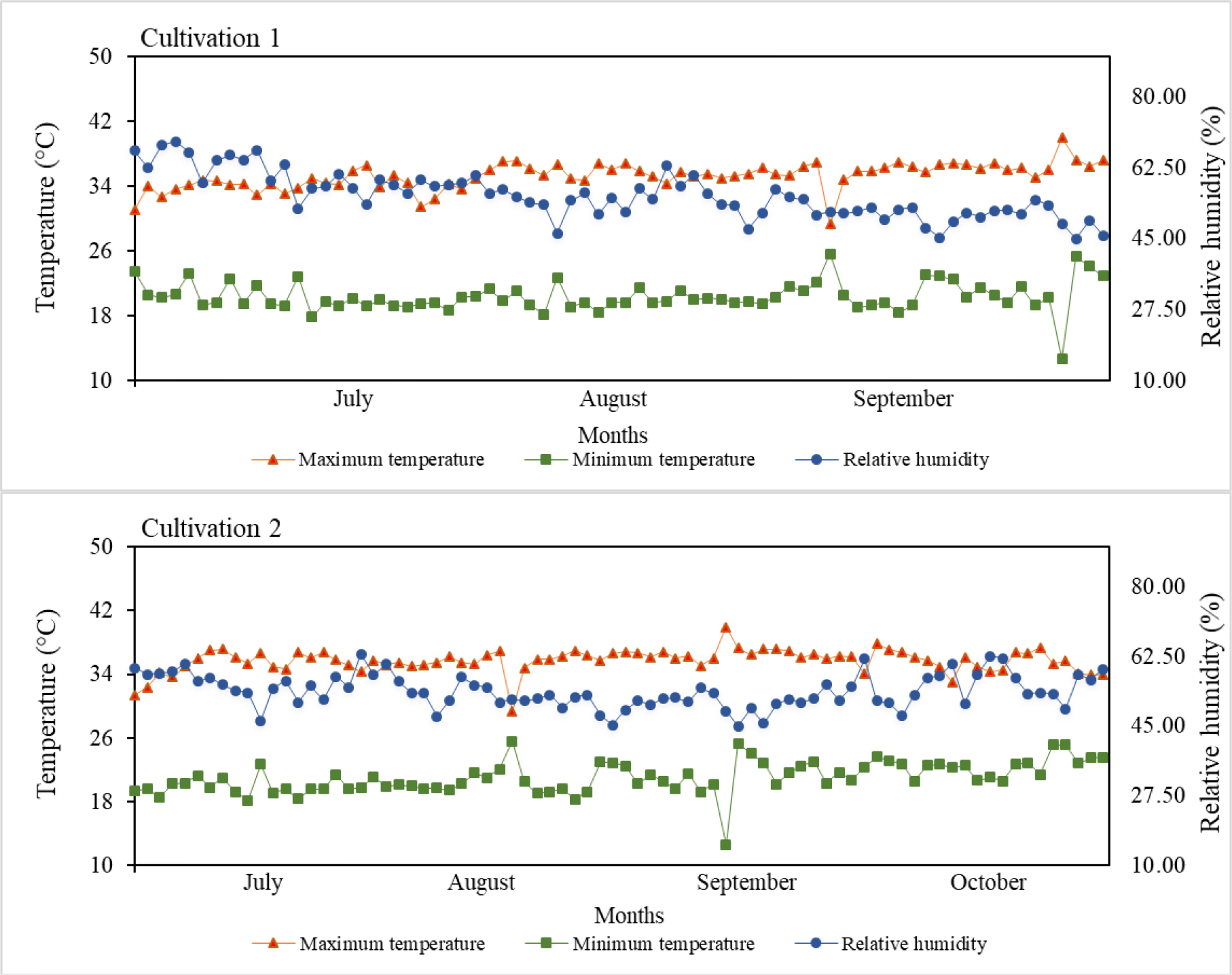
The average daily data of temperatures and relative humidity during the coriander cultivation C1 and C2 are presented in Figure 1.

Data on daily averages of temperatures and air relative humidity during coriander cultivations (C1) and (C2).
The soil in the experimental areas was classified as Argissolo Vermelho Amarelo Distrófico Típico (Ultisol) with a sandy loam texture. Surface soil samples (0-20 cm) were collected and homogenized to form a composite sample, which was sent for analysis to the Agricultural Research Company of Rio Grande do Norte (EMPARN) Laboratory, and the results obtained for the chemical attributes were: H2O = 6.20; organic matter (OM) = 14.70 g dm-3; organic carbon (OC) = 4.55 g kg-1; phosphorus (P) = 27.00 mg dm-3; potassium(K)=0.33cmolcdm-3;calcium(Ca) = 1.93 cmolc dm-3; magnesium (Mg) = 1.37 cmolc dm-3; sodium (Na) = 0.21 cmolc dm-3; copper (Cu) = 4.09 mg dm-3; iron (Fe) = 4.90 mg dm-3; manganese (Mn) = 11.31 mg dm-3; zinc (Zn) = 5.51 mg dm-3; and aluminum (Al) = 0.00 cmolc dm-3.
The experimental design used was randomized blocks, with five treatments and five replicates. The treatments consisted of the following amounts of roostertree biomass (20, 38, 56, 74 and 92 t ha-1 on a dry basis). In each block, a treatment with coriander without fertilization (absolute control) was added as a control, for comparison with the roostertree treatment of maximum agroeconomic efficiency.
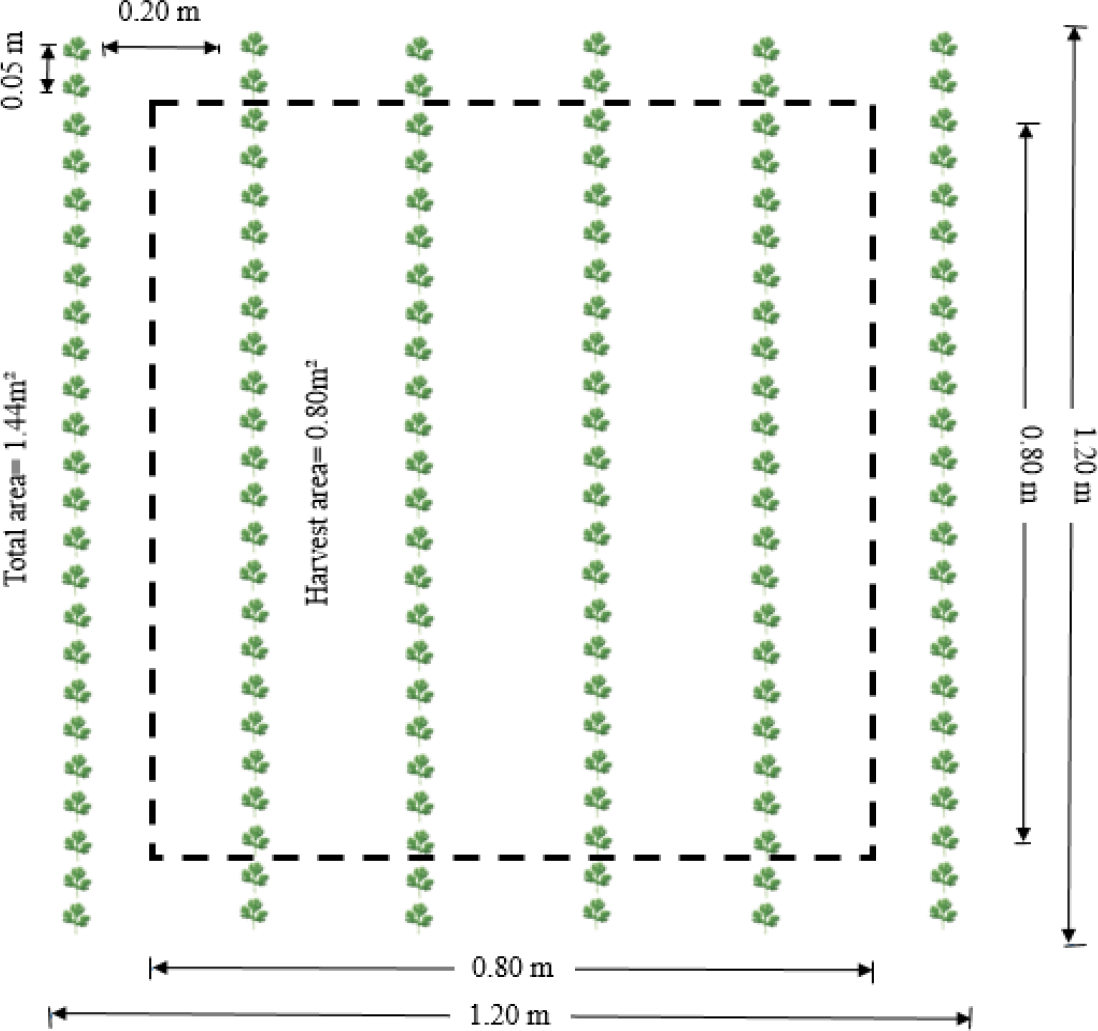
Each experimental plot had a total area of 1.44 m2, with a harvest area of 0.80 m2. It was composed of six rows of coriander with 24 plants per row, at a spacing of 0.20 m x 0.05 m (ANDRADE FILHO et al., 2020), making an estimated population of 1,000,000 plants per hectare, as shown in Figure 2.

Graphic representation of an experimental plot of coriander as a monocrop planted at a spacing of 0.20 m × 0.05 m.
The roostertree used as green manure was collected from native vegetation in several locations in the urban and rural areas of the municipality of Mossoró, RN, before the beginning of its flowering. After collecting the plants, they were crushed in a conventional forage crusher machine into fragments of two to three centimeters, and placed outdoors on a tarp for dehydration until they reached a moisture content of 10%. Samples of this material were subjected to laboratory analysis, and their chemical compositions are presented in Table 2.
To prepare the soil in the experimental areas, each area was mechanically cleaned with plowing and harrowing, and then the beds were raised with a rotary hoe. Afterwards, the area was solarized before planting for 30 days, with 30 μm transparent plastic (Vulca Brilho Bril Fles), as recommended by Amaral and Araújo (2021). The incorporation of the roostertree was carried out 20 days before sowing the coriander, in the 0-20 cm layer with the aid of hoes.
The coriander cultivar planted was Verdão. It has characteristics of vigorous plants, dark green leaves, thick stems, intense and pleasant aroma and flavor, a cycle of 30 to 40 days for leaf production, in addition to being recommended for the semiarid conditions of northeastern Brazil (AGRISTAR, 2023). The planting of the first experiment was carried out on 08/21/2024 and the planting of the second experiment on 09/18/2024. In each experiment, planting was carried out by direct sowing in holes three centimeters deep, placing four to five seeds per hole and covering them with soil.
Seven days after planting (DAP), thinning was performed, leaving three plants per hole, and at 20 DAP, a second thinning was performed, leaving one plant per hole. Harvest was performed at 32 DAP in the first experiment and at 34 DAP in the second experiment. Cultural practices during the experimental period consisted of manual weeding every 7 days to control weeds and soil scarification when necessary. Irrigation was performed daily by a micro-sprinkler system, containing a micro-sprinkler every 2 m, with a flow rate equivalent to 54 L h-1, at two times (morning and afternoon), providing a water depth of 8 mm day-1.
Agronomic characteristics of coriander were evaluated from a sample of 20 plants from the harvest area, randomly chosen. These were: plant height (cm), determined with the aid of a measuring tape; number of stems per plant, obtained by separating and counting the stems; leaf/stem ratio, defined by the ratio of the fresh leaf mass to the fresh mass of the stems; number of bunches per m2, obtained by counting the number of 100 g bunches obtained from the green mass yield; green mass yield (t ha-1), obtained from the fresh mass of the shoot of the plants from the harvest area; and dry mass yield (t ha-1), determined by drying in an oven with forced air circulation at 65 °C, until reaching constant weight.
The economic indicators evaluated were: gross income (GI), expressed in BRL ha-1, obtained by multiplying the green mass yield by the value of the product paid to the producer in the region (BRL 10.00 per kilogram); net income (NI), derived from subtracting the gross income from the production costs, originating from inputs and services performed in each treatment; rate of return (RR) per real invested, obtained through the relationship between the gross income and the production costs of each treatment; and the profit margin (PM), obtained from the relationship between the net income and the gross income, expressed as a percentage. The production costs calculated for each treatment were obtained based on the cost and service coefficients of one hectare planted with coriander, considering the services used by the producer in the production process per hectare, including the services provided by stable and circulating capital, such as depreciation, acquisition and maintenance costs and repairs of machinery, implements and improvements; labor; machinery and implement operations; and inputs, which vary depending on the quantity of green manure tested.
Statistical analysis of the data involved a univariate analysis of variance for each experiment to confirm that the assumptions of normality, homoscedasticity, and additivity were met. A ratio between the variances of the experiments was obtained to determine whether it was below seven, that is, whether they were homogeneous (PIMENTEL-GOMES, 2023). In the agronomic and economic characteristics evaluated, relationships between the variances of the cultivations were observed to be less than seven, consequently revealing homogeneity of the variances.
Subsequently, a regression analysis was performed on each variable using the Table Curve 2D software (SYSTAT SOFTWARE, 2022), and a regression curve fitting procedure was performed to estimate the behavior of each characteristic or indicator as a function of the amounts of C. procera biomass studied, based on the following criteria: biological logic (BL) of the variable, that is, when it is verified that there is no increase in the variable after a certain dose of fertilizer; significance of the mean square of the regression residual (MSRR); high value of the coefficient of determination (R2); significance of the parameters of the regression equation and maximization of the variable. Tukey test was used to compare the mean values of maximum agronomic and economic efficiency with the mean value of the treatments fertilized with green manure and with the mean value of the control treatment (not fertilized).
RESULTS AND DISCUSSION
Agronomic characteristics of coriander
In the agronomic characteristics evaluated in the coriander croppings (C1 and C2), the relationships between the variances of these croppings were calculated, where the results were less than seven, that is, revealing that there is homogeneity of the variances between them. Given these results, an average was calculated between the values obtained from the treatments tested among the croppings, and consequently, a univariate analysis of variance was performed for each characteristic, whose results of the averages for coriander are presented in Table 3. These characteristics were: plant height, number of leaves per plant, leaf/stem ratio, number of bunches per square meter, green mass yield and dry mass of shoots.
Mean values for the control (without fertilization) (Twf), for the treatment of maximum physical efficiency (MPE), and for the fertilized treatments (Tf) in the plant height, number of stems per plant, leaf/stem ratio, number of bunches per m2, and in the green mass yield and dry mass of coriander shoots over two cultivations.
The mean values of maximum physical efficiencies (MPE) and treatments that received green manure (Tf) differed significantly from the mean of the control treatment (Twf) in the characteristics plant height (PH), number of stems per plant (NSP), number of bunches per m2 (NB), green mass yield (GMY) and dry mass of shoots (DMS) of coriander (Table 3). The mean MPE values of PH, NSP, NB, GMY and DMS were approximately 2.6, 1.8, 6.7, 6.8 and 8.8 times the mean values of their control treatments (Twf). In all these characteristics, the mean MPE values did not differ significantly from the mean values of the treatment fertilized with green manure (Tf). On the other hand, for the characteristic L/S R, the control treatment (Twf) had a higher mean than the means of MPE and Tf (Table 3). Based on the results obtained for these agronomic characteristics, it is possible to observe the superiority of treatments fertilized with green manure compared to the control. This is due to a series of benefits to the soil and crop promoted by the green manure, whose number and intensity vary according to the soil conditions, climate, species and management used (BEZERRA NETO; ROCHA; LIMA, 2024). Ferreira et al. (2022), when studying the fertilization of Verdão coriander fertilized with Merremia aegyptia, recorded the same behavior and benefits to the coriander crop of this research, using the green manure Calotropis procera.
Therefore, using C. procera as green manure offers a sustainable alternative for coriander cultivation in semiarid environments, achieving an average green mass yield of approximately 4.73 t ha-1. When evaluating the impact of the amounts of this green manure on plant height, number of bunches per square meter, green mass yield and dry mass of shoots, an increasing polynomial behavior was recorded with increasing amounts of C. procera biomass incorporated into the soil, producing maximum values of 15.36 cm in plant height, 7.54 in the number of stems per plant, 1.13 in the leaf/ stem ratio, 4.69 for number of bunches per m2, 4.73 t ha-1 for green mass yield and 0.71 t ha-1 for dry mass of shoots when the amounts of 67.92, 72.44, 92.00, 67.29, 67.25 and 69.28 t ha-1 of roostertree dry biomass, respectively, were added to the soil, decreasing afterwards until the last amount of green manure added to the soil (Figures 3A, 3B, 3C, 3D, 3E and 3F).
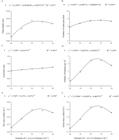
Plant height (A), number of stems per plant (B), leaf/stem ratio (C), number of bunches per m2 (D), dry mass yield (E) and green mass yield (F) of coriander as a function of biomass amounts of C. procera incorporated into the soil over two cultivations.
These ascending responses and optimizations (MPE values) of the agronomic characteristics of coriander in polynomial models can be attributed to the Law of Maximum, according to which there is an increase in these characteristics up to the maximum point due to the increase in organic matter and nutrient availability in the soil (NERY; FRANCO JUNIOR, 2023), and after this point the excess of a nutrient in the soil provided by the amounts of C. procera can have a toxic effect and/or decrease the effectiveness of other nutrients, resulting in a reduction of the characteristic under analysis after the maximum point (ALMEIDA et al., 2015). Another factor that may be related to this behavior of the leafy vegetable is the synchrony between the decomposition and mineralization of the green manure added to the soil and the moment of greatest nutritional demand of the crop (FONTANÉTTI et al., 2006).
In the leaf/stem ratio, it is possible to observe a proportional increase with the increase in doses, indicating that it is a characteristic less sensitive to the adverse effects of high doses. This behavior can probably be attributed to the greater availability of nutrients such as nitrogen, which favors leaf expansion (ZHANG et al., 2021).
The green manure used in this research has a C:N ratio between 25:1 and 30:1, which contributed to faster decomposition and nutrient release, evidenced by the incorporation 20 days before coriander sowing in the evaluated characteristics. However, it is known that the decomposition rate of organic residues is linked to the C:N ratio of the material subjected to this process, which in the case of C. procera is 27:1, and N mineralization is strongly influenced by this C:N ratio of the decomposing material.
Lima et al. (2025), when studying the optimization of the maximum physical efficiencies of the agronomic characteristics evaluated in arugula in monocropping, influenced by variable amounts of roostertree biomass, obtained an increasing polynomial behavior up to the highest values recorded: 16.94 cm for plant height, 8.59 for number of leaves per plant 8.45 t ha-1 for green mass yield and 1.47 t ha-1 for dry mass of shoot. The maximum green manure levels corresponding to these MPE values were 63.98, 58.09, 63.31 and 68.95 t ha-1, respectively, after which the benefits decreased. These green manure dose values were slightly lower than those obtained in the agronomic characteristics of coriander. These differences are due to the type of leafy vegetable used and its management. These results highlight the effectiveness of green manure in aligning nutrient supply with crop demand, leveraging the C/N ratio of C. procera between 24:1 and 30:1 (FERREIRA et al., 2022).
Economic performance of coriander
The total production costs of 1 ha of coriander fertilized with green manure were BRL 13,717.52, BRL 18,587.49, BRL 23,346.37, BRL 28,276.95 and BRL 33,035.82 in the tested quantities of 20, 38, 56, 74 and 92 t ha-1 of dry biomass of roostertree and BRL 8,129.78 for the control treatment (without fertilization). The total costs of fertilization involve varied expenses such as cutting, transportation, shredding, drying, bagging, distribution, incorporation of the forage and electricity, which varies according to the quantity that must be incorporated into the soil (Table 4).
Total costs of production of 1 hectare of coriander in different amounts of C. procera biomass and in the control treatment (without fertilization) over two coriander cultivations.
In the economic indicators evaluated in the C1 and C2 croppings of coriander, the relationships between the variances of these croppings were calculated, and the results obtained were less than seven, that is, revealing that there is homogeneity of the variances between them. Given these results, an average was calculated between the values obtained from the treatments tested among the croppings, and consequently, a univariate analysis of variance was performed for each indicator, whose average values of the treatments tested are presented in Table 5. These economic indicators were: gross income, net income, rate of return and profit margin.
Mean values for the control (Twf), for the treatment of maximum economic efficiency (MEE), and for the fertilized treatments (Tf) in the gross income, net income, rate of return and profit margin over two cultivations.
The average values of maximum economic efficiency (MEE) and treatments that received green manure (Tf) differed significantly from the control (Twf) in all economic indicators evaluated in coriander production. In terms of gross income and rate of return, these average MEE values were approximately 6.7 and 2.2 times the average values of their control treatments (Twf), thus providing an advantage for the coriander producer. On the other hand, if the producer chooses to use the treatment without fertilization, he will have a loss of BRL -1,111.30 ha-1 in net income and 16.01% in profit margin (Table 5).
In the estimates of the maximum economic efficiency (MEE) of these economic indicators, increasing responses were observed for these evaluated indicators, with a decrease after the maximum point in the form of a polynomial model, as a function of the amounts of C. procera biomass (Figure 4). The maximum values of BRL 46,885.25 and BRL 23,430.82 ha-1 were reached for gross income and net income and 1.89 and 48.44% for the rate of return and profit margin when using, respectively, the amounts of 67.25, 60.78, 55.09 and 59.75 t ha-1 of roostertree biomass, decreasing until the largest amount of C. procera biomass tested (Figures 4A, 4B, 4C and 4D).

Gross income (A), net income (B), rate of return (C), and profit margin (D) of coriander as a function of equitable biomass amounts of C. procera incorporated into the soil over two cultivations.
The results obtained in these experiments are in agreement with those obtained by Ferreira et al. (2022) in the production of coriander under different equitable amounts of the biomass mixture of M. aegyptia and C. procera. These authors obtained the maximum values of 46,002.32 and 30,243.92 BRL ha-1 for gross income and net income, of 2.79 and 63.54% for the rate of return and profit margin, in the amounts of green fertilizers of 49.11, 42.68, 41.64 and 44.44 t ha-1, respectively, decreasing then to the highest amount of fertilizers tested. The differences between these results and those of the present research are due to the mixture of the green manures’ biomass used, since both studies were conducted in the same experimental area.
The upward responses of the economic indicators evaluated in coriander through a polynomial model with optimizations in economic efficiency as a function of the amounts of C. procera biomass added to the soil were due to the leafy crop responding very well to green manure. Green manuring is known to improve fertility, increase organic matter content, decrease erosion rates, increase soil water retention and soil microbiota activity, increase nutrient availability and reduce the number of invasive plants (BEZERRA NETO; ROCHA; LIMA, 2024).
The maximum physical efficiency (MPE) of coriander from treatments that received green manure was translated into economic terms in all indicators evaluated, thus providing optimized economic efficiency in coriander croppings (Table 5). This behavior allows the producer of coriander in monocropping to choose the optimal amount of green manure for incorporation and the economic indicator that best suits him in terms of green mass yield. It is worth mentioning that the cultivation of coriander with spontaneous species of the Caatinga biome as green manure provides a financial return compatible with the capital invested, making it a viable alternative, especially for small producers who do not have a very high investment capital (SOUZA et al., 2017). In addition, it is worth noting that spontaneous species of the Caatinga biome for use as green manure are readily available in the region, in large populations. Roostertree (Calotropis procera), in turn, produces year-round and allows up to four annual cuts, with dry biomass productivity of 3.00 t ha-1 per cut (at 120 days), and can reach 9 t ha-1 per year on a dry basis (EMPARN, 2004). Given this quantity, this species has enormous potential to be used as green manure in crop production, especially for leafy and tuberous vegetables.
On the other hand, the benefits that this species can bring to family farming encourage the training of farmers to strategically select fertilization practices, considering the financial and environmental cost-benefits and the market niche they intend to reach, especially given the growing demand for sustainably produced foods that command higher market prices than conventionally produced alternatives (SILVA et al., 2023; FAO, 2023).
CONCLUSIONS
The maximum agronomic efficiency achieved in terms of green mass yield of 4.73 t ha-1 and number of bunches per m2 of coriander of 4.7 was possible with the incorporation of C. procera into the soil in biomass quantities of 67.29 and 67.25 t ha-1, respectively. The maximum economic efficiency of coriander production assessed in terms of net income (23,430.82 BRL ha-1) and rate of return (1.89) was achieved with the addition to the soil of biomass quantities of 60.78 and 55.09 t ha-1 of green manure, respectively. The use of C. procera biomass is a viable alternative for producers who grow coriander in monoculture in the semiarid region of the Northeast.
Data Availability:
The data that support the findings of this study can be made available, upon reasonable request, from the corresponding author.
REFERENCES
-
AGRISTAR. TopSeed Garden: Hortaliças tradicionais. Coentro Verdão. 2023. Available at: <https://agristar.com.br/topseed-garden/tradicional-hortalicas/coentroverdao/552109/>. Access on: Aug. 30, 2023.
» https://agristar.com.br/topseed-garden/tradicional-hortalicas/coentroverdao/552109/ - ALMEIDA, A. E. S. et al. Eficiência agronômica do consórcio alface-rúcula fertilizado com flor-de-seda. Revista Caatinga, 28: 79-85, 2015.
- AMARAL, L. S.; ARAUJO, E. O. Biocontrole de fitonematóides: atualidades e perspectivas. 1. ed. São Paulo, SP: Editora Dialética, 2021. 264 p.
- ANDRADE FILHO, F. C. et al. Agro-economic viability from two croppings of broadleaf vegetables intercropped with beet fertilized with roostertree in different population densities. Revista de la Facultad de Ciencias Agrarias, 52: 210-224, 2020.
- BATISTA, M. A. V. et al. Eficiência agronômica do coentro adubado com flor-de-seda. In: OLIVEITA, R. J. (Ed.) Extensão rural e foco: apoio à agricultura familiar. Empreendedorismo e inovação. Guarujá-SP: Editora Científica Digital, 2020. v. 2, cap. 2, p. 24-28.
- BECK, H. et al. Data descriptor: Present and future Köppen- Geiger climate classification maps at 1-km resolution. Scientific Data, 5: 1-12, 2018.
- BEZERRA NETO, F.; ROCHA, J. L. A.; LIMA, J. S. S. Adubação verde. In: BEZERRA NETO et al. (Eds.). Adubação verde em cultivos agroecológicos em ambiente semiárido. Curitiba, PR: Appris, 2024, v. único, cap. 1, p. 33-50.
- CERQUEIRA, D. C. O. et al. Performance of coriander plants fertilized with doses of cattle manure and chemical fertilizer. Revista Ambientale, 11: 1-11, 2019.
- DAFLON, D. G et al. Sintomas visuais de deficiência de macronutrientes e boro em coentro. Horticultura Brasileira, 32: 28-34, 2014.
- DUARTE, J. R. M. et al. Foliar spraying of doses of boric acid in coriander (Coriandrum sativum L.). Revista de Agricultura Neotropical, 7: 66-69, 2020.
- EMPARN - Empresa de Pesquisa Agropecuária do Rio Grande do Norte. Armazenamento de forragens para a agricultura familiar. Natal, RN: Emparn, 2004. 38 p.
- FAO. The State of Food and Agriculture 2023: Revealing the true cost of food to 22 transform agrifood systems. Rome. 2023.
- FERREIRA, R. C. et al. Biomass use of Merremia aegyptia and Calotropis procera in coriander cultivation in semiarid environment. Revista Caatinga, 35: 595-605, 2022.
- FONTANÉTTI, A. et al. Adubação verde na produção orgânica de alface americana e repolho. Horticultura Brasileira, 24: 146-150, 2006.
- FREITAS, E. A. S. et al. Eficiência produtiva e econômica de beterraba adubada com flor-de-seda em ambiente semiárido. Revista Caatinga, 37: e12349, 2024.
-
IBGE - Instituto Brasileiro de Geografia e Estatística. Produção Agrícola Nacional. 2017. Available at: <https://sidra.ibge.gov.br/Tabela/6954#resultado> Access on: Aug. 25 ago, 2023.
» https://sidra.ibge.gov.br/Tabela/6954#resultado -
LABIMC - Laboratório de Instrumentação Meteorologia e Climatologia. Estação Meteorológica Automática (EMA). Universidade Federal Rural do Semi-Árido (UFERSA), 2024. Available at: <https://usinasolar.ufersa.edu.br/dados-emas/>. Access on: Jul. 10, 2024.
» https://usinasolar.ufersa.edu.br/dados-emas/ - LIMA, L. S. S. et al. Otimização da biomassa de flor-de-seda na produção de rúcula em regiões semiáridas. Revista Caatinga, 38: e12604, 2025.
- LINHARES, P. C. F. et al. Influência da jitirana em cobertura como adubação verde sobre o desempenho agronômico da alface. Revista Caatinga, 22: 65-69, 2009.
- NERY, J. S.; FRANCO JUNIOR, K. S. Plantas de cobertura como estratégia de melhoria da fertilidade do solo. Research, Society and Development, 12: e36121043363, 2023.
- PIMENTEL-GOMES, F. Curso de estatística experimental. 15. ed. Piracicaba, SP: FEALQ, 2023. 451 p.
- PINTO, A. A. et al. Desenvolvimento e produtividade do coentro em função da adubação nitrogenada. Agrarian Academy, 5: 160-168, 2018.
- RANGEL, E. S.; NASCIMENTO, M. T. Ocorrência de Calotropis procera (Ait.) R. Br. (Apocynaceae) como espécie invasora de restinga. Acta Botanica Brasilica, 25: 657-663, 2011.
- SEDIYAMA, M. A. N. et al. Cultivo de hortaliças no sistema orgânico. Revista Ceres, 61: 829-837, 2014.
- SILVA, J. N. et al. Production and benefits in carrot and vegetable cowpea associations under green manuring and spatial arrangements. Revista Ciência Agronômica, 51: 1-11, 2020.
- SILVA, J. P. P. et al. Agro-economic optimization of radish cultivation fertilized with doses of roostertree in a semi-arid environment. Revista Caatinga, 36: 802-813, 2023.
- SOUZA, E. G. F. et al. Green manuring with Calotropis procera for the production of coriander in two growing seasons. Ciência e Agrotecnologia, 41: 533-542, 2017.
- SYSTAT SOFTWARE. TableCurve 2D - Curve Fitting Made Fast and Easy. San Jose: Systat Software Inc., 2022.
- ZHANG, Y. et al. Biomass allocation between leaf and stem regulates community-level plant nutrient resorption efficiency response to nitrogen and phosphorus additions in a temperate wetland of Northeast China. Journal of Plant Ecology, 14: 58-66, 2021.
Edited by
-
Editor in Chief:
Aurélio Paes Barros Júnior
-
Section Editor:
Bráulio Luciano Alves Rezende