 Mineralogical changes in mortars, with potential delayed ettringite formation, exposed to high temperatures
Abstract
Abstract Precast concrete structures may be affected by delayed ettringite formation (DEF) if an improper curing method is used. DEF can lead to cracking and a reduction in the concrete's strength, which, in the event of a fire, may decrease the structure's fire resistance duration. Given that, in both DEF occurrence and fire scenarios, microstructural changes are the primary causes of alterations in mechanical properties, this study evaluated the mineralogical changes induced by exposure to high temperatures in mortars with potential DEF. To accomplish this, samples of reference mortars and mortars with a potential for DEF formation (molar ratio SO3/Al2O3 of 1.1) were prepared. The samples underwent a DEF induction period (curing in water at 80°C) and were subsequently exposed to high temperatures (200, 400, 600 and 900ºC). X-ray diffraction and scanning electron microscopy analyses revealed that mortars with a molar ratio SO3/Al2O3 equal to 1.1 exhibited a higher incidence of ettringite with type II morphology, which possesses an expansive behavior. Additionally, the curing process resulted in the decomposition of ettringite. For specimens subjected to 200°C, there was no significant increase in the intensity of portlandite peaks in the thermally cured samples. Regarding the change in the SO3/Al2O3 molar ratio, its influence became evident in samples heated to 600 and 900ºC. At these temperatures, anhydrite was observed, which might hinder material recovery in a post-fire scenario.
Keywords:
delayed ettringite formation; high temperatures; mortar; mineralogical changes
Resumo
Resumo Estruturas de concreto pré-moldado podem ser afetadas pela formação de etringita tardia (DEF) caso um método de cura inadequado seja empregado. A DEF pode levar ao aparecimento de fissuras e à redução da resistência do concreto, o que, em caso de incêndio, pode diminuir a duração da resistência ao fogo da estrutura. Considerando que, tanto na ocorrência da DEF quanto em cenários de incêndio, as alterações microestruturais são as principais responsáveis pelas mudanças nas propriedades mecânicas, este estudo avaliou as transformações mineralógicas induzidas pela exposição a altas temperaturas em argamassas com potencial de formação retardada de etringita (DEF). Para isso, foram preparadas amostras de argamassas de referência e argamassas com potencial de formação de DEF (razão molar SO3/Al2O3 de 1,1). As amostras foram submetidas a um período de indução da DEF (cura em água a 80°C) e, posteriormente, expostas a altas temperaturas (200, 400, 600 e 900ºC). As análises de difração de raios X e microscopia eletrônica de varredura revelaram que as argamassas com razão molar SO3/Al2O3 de 1,1 apresentaram maior incidência de etringita com morfologia do tipo II, que possui caráter expansivo. Além disso, o processo de cura resultou na decomposição da etringita. Para os corpos de prova submetidos a 200°C, não houve aumento significativo na intensidade dos picos de portlandita nas amostras termicamente curadas. No que diz respeito à alteração na razão molar SO3/Al2O3, sua influência tornou-se evidente nas amostras aquecidas a 600 e 900ºC. Nessas temperaturas, foi observada a formação de anidrita, o que pode dificultar a recuperação do material em um cenário pós-incêndio.
Palavras-chave:
formação de etringita tardia; altas temperaturas; argamassa; mudanças mineralógicas
1 INTRODUCTION
Delayed ettringite formation (DEF) is a chemical phenomenon in concrete and mortars [1]. It is caused by the recrystallization of expansive ettringite when concrete or mortar are no longer in their plastic phase and can lead to cracking or deterioration of the material [2], [3]. DEF is associated with ettringite decomposition at temperatures above 70ºC during curing and the type of cement, especially those with high sulfate content [1], [4].
Products from ettringite decomposition are absorbed in C-S-H and re-released when concrete or mortar cools and encounters humidity. The resulting ettringite recrystallization inside the hardened matrix increases internal stresses [5]. As a result, the primary effect of DEF is the overall cracking of the material, which may lead to a reduction in its mechanical strength and durability [2]. Laboratory testing conducted by Bouzabata et al. [6] determined that a 1.5% expansion resulted in a 40% loss in mechanical strength for the mortars tested. In practice, DEF can occur rapidly; according to Torres et al. [7], cracks and deterioration were observed in a foundation structure of a building in Recife, Brazil, just two years after its construction.
In addition to pathological phenomena, cementitious materials could be exposed to abnormal conditions such as a fire. In such cases, materials subjected to temperatures much higher than ambient temperature undergo changes in products formed during the hydration of Portland cement. Free and adsorbed water are released between 30ºC and 100ºC, and ettringite decomposes [8]. Beyond 100ºC, loss of water occurs from hydrated products, resulting in cracking and initial reductions in compressive strength and modulus of elasticity [9]. At 150ºC, the dehydration of C-S-H gel begins, progressing to complete degradation at 900 °C [10], [11], [12]. Another compound that changes is portlandite, which decomposes into CaO and H2O around 500ºC [11].
In addition to chemical alterations when exposed to high temperatures, the state of preservation of Portland cement-based materials also affects mechanical performance [13]. Sinaie et al. [14] noted that concretes with the most cracking induced by cyclical loads also presented the highest losses in strength and rigidity when exposed to high temperatures. Zhang et al. [15] observed that the damage sustained by a beam due to service loading did not affect its residual mechanical strength after exposure to high temperatures. However, when the beam exhibited more severe damage, a reduction in residual mechanical strength was observed. While the state of preservation is relevant when evaluating fire resistance, few studies have been conducted in this area. Therefore, it is essential to conduct studies that examine the combined impact of the condition of concretes and mortars and their exposure to high temperatures, assessing both the microstructure and mechanical properties.
This study is part of a larger research project encompassing DEF and exposure to high temperatures, and the results presented are focused on mineralogical and microstructural effects.
2 MATERIALS AND METHODS
2.1 Materials
The mortars were produced with high early-strength Portland cement, the chemical and physical properties of the cement are shown in Tables 1 and 2.
The chemical composition of gypsum (CaSO4.2H2O) used to adjust the Portland cement’s SO3/Al2O3 molar ratio was determined with X-ray fluorescence (XRF). The measuring equipment consisted of a PANalytical Epsilon 1 device. Loss on ignition was measured with a Milestone model Pyro microwave kiln oven. Results from these measurements are shown in Table 3.
Fine aggregate was river quartz sand with a specific mass of 2,620 kg/m3. Table 4 shows grain size distribution results for the sand obtained with procedures from standard NBR 15577-4:2018 [16].
2.2 Methods
The experimental program consisted of 4 steps: sample preparation, induction of DEF, sample conditioning, and exposure to high temperatures.
2.2.1 Sample preparation
Two samples were produced for this study: a reference mortar (G0) and a test mortar (G1) with addition of gypsum. The composition of mortar G0 was by standard NBR 15577-4:2018 [16]. This composition was selected due to the lack of references in standards regarding DEF and the fact that it produced a type of internal expansive alkali-aggregate reaction. Mortar G1 had added gypsum to achieve a SO3/Al2O3 ratio of 1.1. The review by Zhang et al. [1] noted that this ratio resulted in mortars with the most expansion in several studies. The compositions of G0 and G1 mortars are shown in Table 5.
Mortars were produced by the procedures of standard NBR 15577-4:2018 [16]. All water, cement and gypsum (G1 mortar) were mixed for 30 s at low speed; the sand was added gradually and mixed for a further 30 s, followed by high-speed mixing for another 30 s. The mixture rested for 1 min 30 s while covered with a wet cloth to prevent moisture loss. Following rest, it was further mixed at high speed for 1 min.
Mortars were poured in prismatic molds measuring 40 x 40 x 160 mm in height, width, and length, respectively. A total of 24 samples were produced, 12 for each mortar type (G0 and G1). All samples are presented in Table 6 with specifications regarding the addition of gypsum (G), curing temperature (C), exposure temperature (E), and age when analyses were performed (A). These specifications were incorporated in the nomenclature of the samples: CR and C80 for curing temperature; ER, E200, E400, E600, and E900 for exposure temperature and A2 and A146 for an age when analyses were performed, respectively.
2.2.2 Induction of DEF
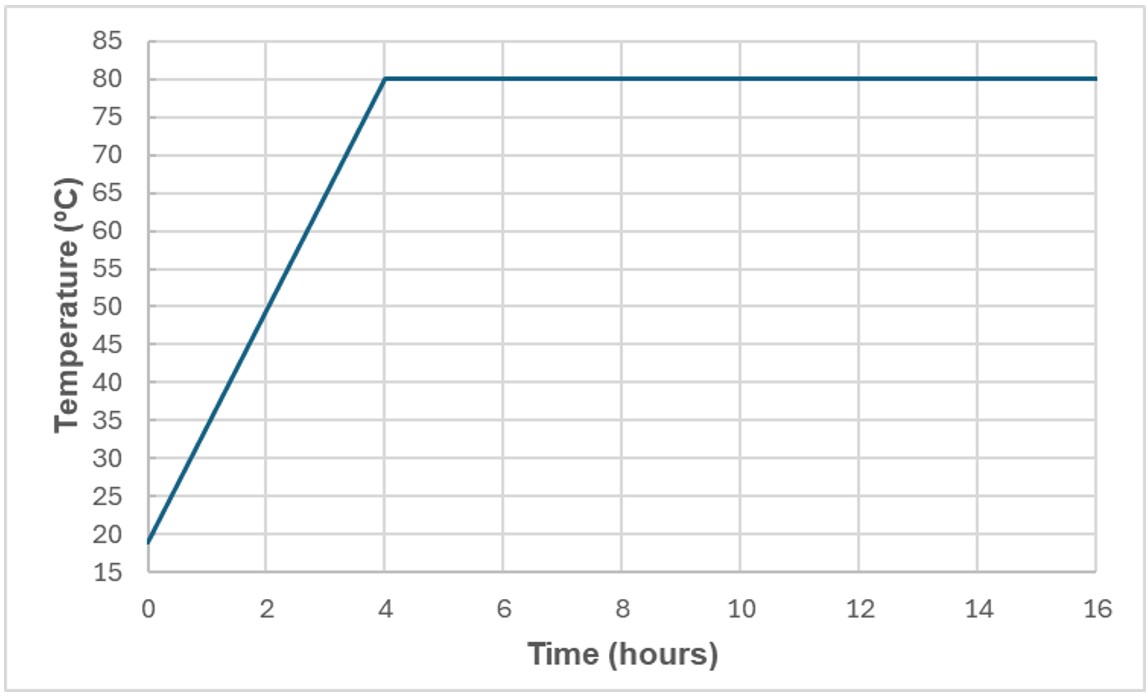
After pouring, samples were kept in the molds for 24 h at ambient temperature to prevent damage in the demolding process. After demolding, samples were separated into two groups for different curing temperatures. The control group was cured and immersed in water at an average ambient temperature of 19ºC for 91 days. The DEF group was subjected to heat curing underwater in a climate-controlled chamber. A heating profile used by Al Shamma et al. [17], Deboucha et al. [18], and Yammine et al. [19], was applied and consisted of a heating rate of 20ºC/h until a temperature of 80ºC. The heating curve is exposed in Figure 1. The DEF group was kept at 80ºC for 12 h and then cooled naturally to an ambient temperature of 19ºC. After cooling, the samples were stored under water at ambient temperature for 91 days. Each sample group was held in different containers to prevent cross-contamination.

2.2.3 Conditioning and exposure to high temperature
After curing for 91 days, samples were removed from their immersion containers and conditioned for 56 days in a climate-controlled chamber kept at 20 ± 2ºC and relative humidity of 50 ± 5%, as recommended by standard RILEM TC 129-MHT [20]. This was conducted to reduce internal moisture in the samples and decrease the possibility of spalling during heating. Thus, in total, samples were aged for 146 days.
Exposure to high temperatures occurred in an industrial electrical oven rated at 18 kW and a maximum temperature of 1,000ºC without simultaneous loads. Samples were subjected to a heating rate of 4ºC/min up to plateaus of 200ºC, 400ºC, 600ºC, and 900ºC. At each plateau, the temperature was kept constant for 1 h, then cooling naturally to an ambient temperature of 19ºC. The heating rate and plateau period were adopted based on the recommendations of standard RILEM TC 129-MHT [20], which, despite being for concrete samples, used samples with similar dimensions (40 x 40 x 160 mm) as the ones in this study.
2.3 Mineralogical analysis
The mineralogical composition after curing period was verified using X-ray diffraction (XRD) analysis on samples aged 2 days. The idea of using this technique at this stage of aging was to verify if there was ettringite decomposition. The same method was also applied to verify the samples aged 146 days, after conditioning.
For the samples aged 146 without high-temperature exposure, Scanning Electron Microscopy (SEM) was also used to visualize the morphology of the compounds formed, and Thermogravimetric Analysis (TGA) was conducted. As noted by Scrivener et al. [21], the combination of X-ray Diffraction (XRD) and TGA provided a more comprehensive insight into material transformations. TGA provided information related to both amorphous and crystalline compounds, which is not achievable through XRD alone. For heated samples, only XRD analysis was performed. The curves generated in XRD and TGA analyses are examined by identifying characteristic peaks and thermal events, respectively. For XRD analysis, the diffractograms are compared with references from literature, focusing primarily on peak positions and intensities. For TGA, weight loss events are correlated with temperature ranges, providing insights into decomposition, hydration, or thermal stability.
The XRD equipment consisted of an Empyrean PANalytical model with CuKα diffraction (λ=1.54178 Å). Data were collected in the 2θ range of 5º–65º with a step size of 0.02º and a scanning rate of 0.5º/min. A sample spinner was used at a rotation speed of 2 rpm. Analysis was conducted on samples collected from several points on the test bodies after rupturing and ground down in ceramic grinders. Material that passed through a 0.075 mm sieve had its hydration level fixed through solvent replacement. This involved submerging the material in acetone for 10 min, followed by drying it in an oven at 50ºC for 10 min, as proposed by Vargas [22].
For SEM analysis, a Joel microscope model JSM 6360 was used. Samples approximately 1 x 1 x 1 cm were collected from the test bodies aged 146 days not exposed to high temperatures. The fractures on the surface of the samples were analyzed without polishing to avoid affecting the compounds' morphology, as noted by Tosun and Baradan [23]. Hydration levels were blocked by submerging the material in acetone for 10 min, followed by drying in an oven at 50ºC for 10 min. Samples were then wrapped in shrink wrap and kept in a vacuum drier with silica. Before SEM analysis, samples were metalized with gold coating.
The TGA was conducted in a Shimadzu model DTG-60 apparatus with a platinum crucible. Test conditions consisted of a heating rate of 10ºC/min and a maximum temperature of 900ºC. Nitrogen gas was injected at a 40 ml/min flow rate during the analysis. The technique used for sample preparation was the same as that used for the XRD samples.
3. RESULTS
Results are presented in 3 sections: post-curing DEF, ettringite recrystallization DEF, and exposure to high temperatures.
3.1 Post-curing DEF
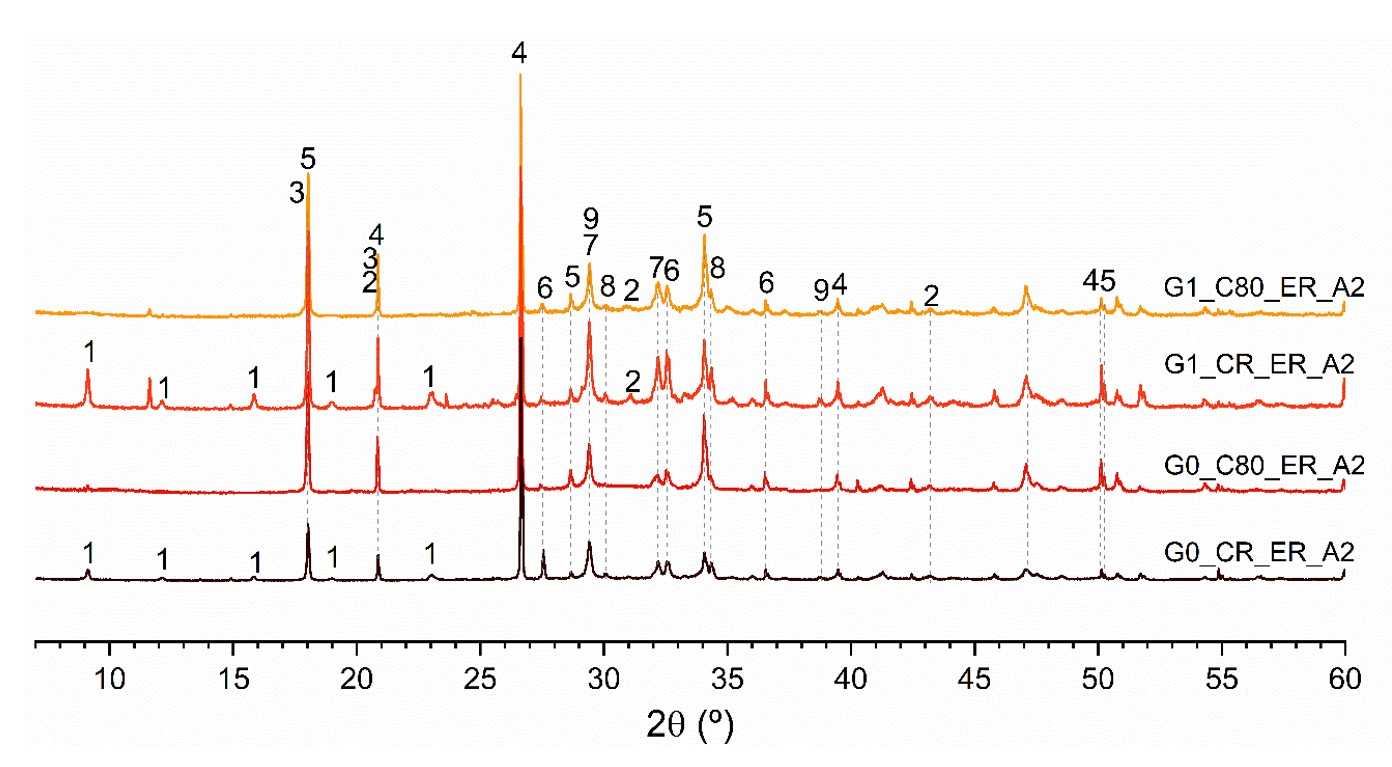
Figure 2 presents the diffractograms of mortars aged 2 days after moist curing at 23ºC and 80ºC.

Normalized diffractograms of mortars aged 2 days after moist curing at 23ºC and 80ºC. Legend: 1 = ettringite ([Ca3Al(OH)6.12H2O]2.(SO4)3.2H2O); 2 = gypsum (CaSO4.H2O); 3 = gismondine (CaAl2.Si2O8.4H2O); 4 = α-quartz (SiO2); 5 = portlandite (CaOH); 6 = β-belite (β-C2S); 7 = monoclinic alite (C3S); 8 = orthorhombic tricalcium aluminate (C3A); 9 = calcite (CaCO3).
Figure 2 shows that mortar G1_CR_ER_A2 had characteristic ettringite peaks at 2θ ≈ 9.09º, 12.28º, and 15.78º, which were more intense than for mortar G0_CR_ER_A2. Also, mortars G1_CR_ER_A2 and G1_C80_ER_A2 presented increased peak intensity at 18º with adding gypsum. This was the result of the superposition effects of portlandite (2θ ≈ 18.09º, 28.66º and 34.09º) and gismondine (2θ ≈ 18.02º and 20.79º), the latter being a calcium aluminosilicate of hydrated calcium (CaAl2.Si2O8.4H2O). As other authors [24] observed, gismondine was formed from the reaction between silicates or C-S-H with aluminates released during cement hydration. This reaction could be accelerated with calcium ions from gypsum.
Results also showed that the addition of gypsum delayed cement hydration. Mortars G1_CR_ER_A2 and G1_C80_ER_A2 had characteristic peaks of β-C2S (2θ ≈ 27.50º, 59º and 36.68º), C3S (2θ ≈ 29.51º and 32.68º) and C3A (2θ ≈ 30.04º and 34.35º) with intensities higher than the mortars without gypsum addition. This was likely caused by changes in the thermodynamic parameters of hydration reactions in cement [24].
Mortars cured at 80ºC for 12 h (G0_C80_ER_A2 and G1_C80_ER_A2) did not present characteristic ettringite peaks (2θ ≈ 9.09º, 12.28º and 15.78º). This indicated that ettringite had decomposed at this temperature. Zhang et al. [25] noted that, above 80ºC, the solubility and decomposition rate of ettringite increased. Another characteristic was the reduction in the characteristic gypsum peak after curing. This released a more significant amount of sulfate ions which would later be used in ettringite recrystallization. Fu and Beaudoin [26] explained that gypsum dissociated between 65ºC and 85ºC and released Ca2+ and SO42- ions. Sulfate ions were adsorbed into C-S-H gel until saturation. Once the material cooled and was continuously exposed to humidity, these ions were gradually re-released, contributing to ettringite formation.
In addition to ettringite decomposition, heat curing at 80ºC also accelerated hydration as indicated by the decrease in peaks of C3A (2θ ≈ 30.04º and 34.35º), C2S (2θ ≈ 27.50º, 59º and 36.68º) and C3S (2θ ≈ 29.51º and 32.68º) in mortars G0_C80_ER_A2 and G1_C80_ER_A2. This was an expected result for Portland cement, especially early in the process [27]. However, no changes in crystalline phases were identified from the increase in curing temperature from 23°C (G0_CR_ER_A2 and G1_CR_ER_A2) to 80°C (G0_C80_ER_A2 and G1_C80_ER_A2). Kurdowski [28] stated that heat curing under standard pressure and temperatures below 100ºC did not change the compounds formed during hydration.
Consequently, in addition to increasing ettringite characteristic peak intensity, SO3/Al2O3 molar ratio changes also decreased cement hydration. Heat curing at 80ºC for 12 h led to ettringite decomposition and promoted hydration without forming new crystalline hydrated compounds. This indicates that, most likely, the ettringite observed in the micrographs, which will be discussed in the next section, formed after the hardening of the mortars.
3.2 Ettringite recrystallization
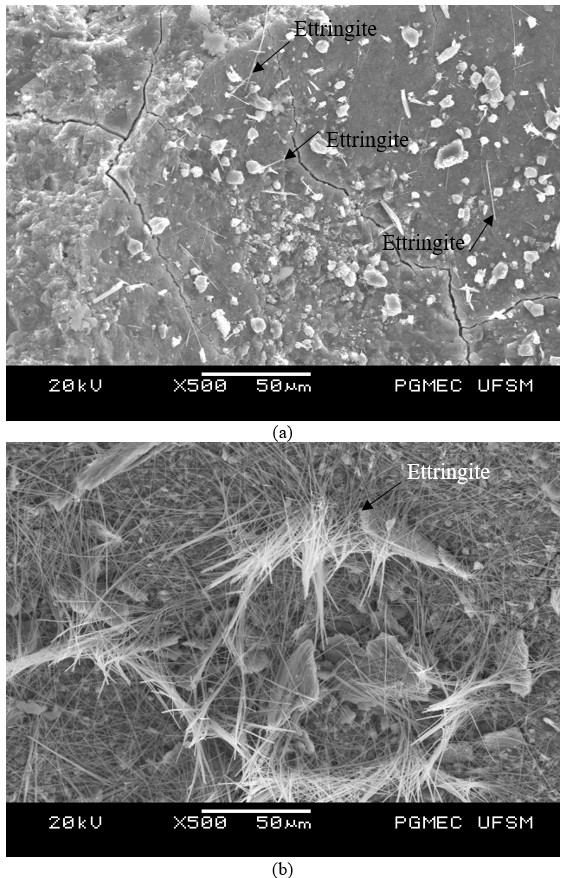
Figure 3 shows micrographs of surface fractures of mortars cured at 23ºC (G0_CR_ER_A146) and 80ºC (G0_C80_ER_A146) aged 146 days after DEF induction and conditioning.

Micrographs of surface fractures of reference mortars cured immersed in water at (a) 23ºC and (b) 80ºC.
The reference mortars exhibited surface dispersion of ettringite, with the heated-curing sample displaying needle-shaped crystals that were closely grouped. In contrast, the gypsum-added mortars (G1_CR_ER_A146 and G0_C80_ER_A146) revealed the presence of ettringite crystals embedded within the C-S-H, as depicted in Figures 4a and 4b.

Surface fracture micrographs of mortars with added gypsum aged 146 days and cured immersed in water at (a) 23ºC and (b) 80ºC.
A rod-shaped crystal, 8 μm in length, is shown in Figure 4b but, due to the surface magnification and since ettringite crystals were bounded to C-S-H, could not be positively identified as ettringite. However, Adamopoulou et al. [29] observed ettringite with similar characteristics in heat-cured mortars with higher sulfate content. In this case, ettringite was identified as type II, producing expansions resulting in the material’s cracking. Furthermore, this type of ettringite formation may result from the adsorption of S and Al ions onto C-S-H, forming AFm phases within the C-S-H structure. These phases, later acting as a source of S and Al, become nucleation sites for ettringite, generating expansive pressure [23], [30].
Results suggest that changes to the morphology of ettringite crystals can be associated with alterations in the SO3/Al2O3 molar ratio. Namely, the length of the ettringite crystal decreased as the molar ratio increased. As noted previously, ettringite recrystallization with such morphology could damage the cementitious matrix by fissuring.
3.3 Exposure to high temperatures
Observed effects from exposure to high temperatures were determined from XRD and TGA and are summarized in Table 7.
3.3.1 X-ray diffraction results
Figure 5 shows the diffractograms of samples aged 146 days after exposure to high temperatures.

Normalized diffractograms of mortars aged 146 days after exposure to high temperatures: (a) G0_CR, (b) G0_C80, (c) G1_CR, and (d) G1_C80. Legend: 1 = ettringite ([Ca3Al(OH)6.12H2O]2.(SO4)3.2H2O); 2 = gismondine (CaSO4.0,5H2O); 3 = α-quartz (SiO2); 4 = portlandite (CaOH); 5 = β-belite (β-C2S); 6 = monoclinic alite (C3S); 7 = orthorhombic tricalcium aluminate (C3A); 8 = calcite (CaCO3); 9 = γ-belite (γ-C2S); 10 = calcium oxide (CaO); 11 = monoclinic tricalcium aluminate (C3A); 12 = anidrite (CaSO4).
As noted in Figures 5b and 5d, samples aged 146 days and cured at 80 °C presented ettringite recrystallization. The adjusted SO3/Al2O3 molar ratio provided more significant amounts of ettringite even at later ages, as indicated by the higher peak intensities of Figure 4c and 4d.
Heating to the first plateau of 200ºC produced changes in the diffractograms. In samples cured at ambient temperature, an increase in the intensity of portlandite peaks (2θ ≈ 18.09º, 28.66º, and 34.09º) was noticeable. This was due to the hydration of anhydrous cement from water steam generated from heating [31], [32] and was not observed in samples cured at 80ºC. Kurdowski [28] proposed that heat curing induced the formation of a shell of hydrated products around grains of anhydrous cement. Thus, no increase in portlandite peaks was measured in heat-cured samples. However, ettringite was detected in mortar G0_C80 at 200ºC, which indicated that internal test body temperatures might not have been homogeneous.
At the 400ºC plateau, all mortars presented a decrease in characteristic portlandite peaks, which signaled the beginning of dehydration observed in other [33]. Increases in intensity of gismondine peaks (2θ ≈ 18.02º and 20.79º) in mortars G1_CR and G1_C80 were also noted, which suggested that portlandite decomposition contributed to gismondine production.
Heating to 600ºC decreased portlandite (2θ ≈ 18.09º, 28.66º and 34.09º) in all mortars and, gismondine (2θ ≈ 18.02º and 20.79º) in G1_CR and C1_C80 mortars. Heating to 900ºC denoted an increase in the intensity of portlandite peaks in all samples. This was a result of reversible dehydration noted in other studies [34], [35]. It was postulated that, during cooling or preparation of samples for analysis, CaO (2θ ≈ 29.45º and 47.36º) from portlandite decomposition and CaCO3 (2θ ≈ 29.45º and 39.47º) decarbonation in contact with humidity recomposed portlandite [35].
Characteristic β-C2S peaks (2θ ≈ 27.50º, 59º, and 36.68º) were identified in all samples with the most in mortar G1_CR because gypsum addition delayed cement hydration. Samples heated to 600ºC presented decreases in characteristic β-C2S peaks and detected the presence of γ-C2S (2θ ≈ 23.22º and 32.51º). The appearance of this C2S polymorph was likely due to the transition from β to γ phases occurring around 500ºC, and the samples were cooled slowly post-heating [28]. At 900ºC, increases in peak intensity of both crystals were detected alongside the appearance of other compounds common in Portland cement, such as C3A (2θ ≈ 30.04º and 34.35º) and C3S (2θ ≈ 29.51º and 32.68º). This phenomenon was observed by Caetano et al. [36] and Gao et al. [37], and was concluded to be linked to C-S-H decomposition. Samples with added gypsum also presented anhydrite (CaSO4) (2θ ≈ 25.56º, 31.67º, and 47.46º) at 600ºC and 900ºC. This suggested that recovery of the material post-fire might not be a viable option. Anhydrite in contact with water would generate gypsum with a larger volume, and the cementitious matrix would be affected with more cracking [38].
In general, all mortars presented similar behaviors across all temperatures. However, the presence of anhydrite in samples with higher sulfate content translated into a higher DEF potential. Due to the expansive nature of the reaction between anhydrite and moisture, this presented an increased risk of damage after exposure to high temperatures.
3.3.2 Thermogavimetry analysis
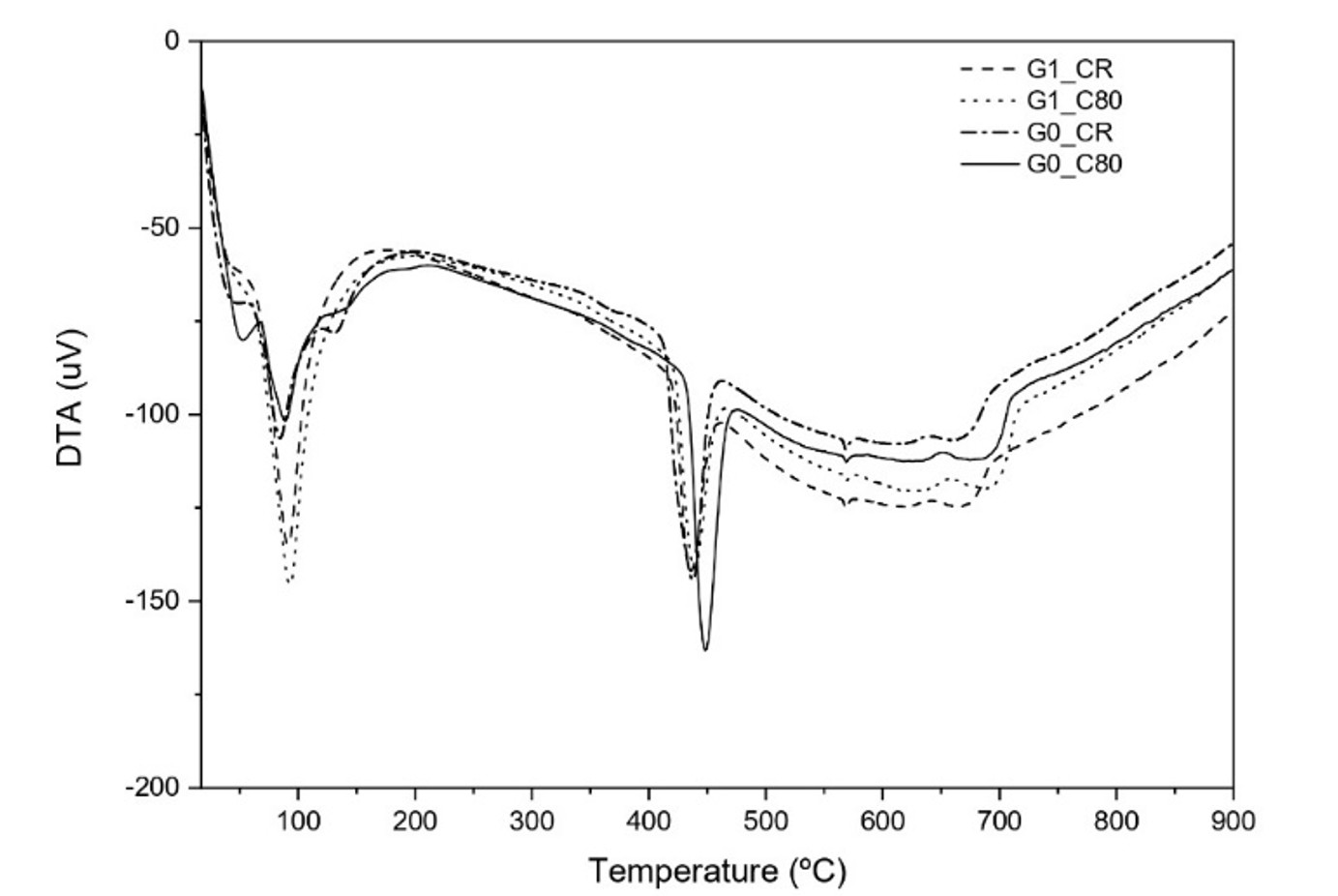
The XRD analysis was complemented with the TGA of samples aged 146 days. Results are shown in the TG and DTG curves of Figure 6 and the DTA curve of Figure 7.

TG and DTG curves of mortars (a) G0_CR, (b) G0_C80, (c) G1_CR, and (d) G1_C80 after 146 days of curing immersed in water and conditioned.

DTA curve of mortars (a) G0_CR, (b) G0_C80, (c) G1_CR, and (d) G1_C80 after 146 days of curing immersed in water and conditioned.
The results in Figure 7 show that samples from mortars G1_CR and G1_C80 had a pronounced endothermic peak at around 100ºC. This peak was related to free water losses, water present in C-S-H layers, and ettringite decomposition [31], [36], [39]. Also, at this temperature, the TG and DTG curves denoted a higher mass loss for mortars G1_CR and G1_C80, further reinforcing that increasing SO3/Al2O3 molar ratio increased ettringite content.
Between 200ºC and 400ºC, a steady decrease in DTA was noted. Caetano et al. [36], attribute this trend to the ongoing loss of water from the C-S-H gel and its initial decomposition.
Figure 7 also showed that portlandite dehydration occurred in all samples at temperatures between 400ºC and 500ºC. This phenomenon was also observed by the Gallucci et al. [40] and further reinforced the hypothesis of Sec. 3.3.1; that portlandite was unstable above 500ºC, and its presence in samples heated between 600ºC and 900ºC was due to CaO hydration.
At around 600ºC, quartz transitioned from α to β phase [31], [41]. This phase change of the aggregate was known to produce an increase in volume due to the incompatible deformations of cementitious matrix and aggregate that could lead to cracking [36]. However, the diffractograms of Fig. 4 did not identify β-phase quartz, likely due to the transformation reversing itself upon cooling [31].
Losses of mass between 600ºC and 700ºC were attributed to the decomposition of C-S-H into C2S. Above 700ºC, the mass losses were associated with CaCO3 decay into CaO.
4. CONCLUSIONS
In general, results indicated that an increase in SO3/Al2O3 molar ratio and heat curing promoted the occurrence of DEF and affected microstructural modifications in the material if exposed to high temperatures. The following conclusions were drawn:
-
A SO3/Al2O3 molar ratio of 1.1 resulted in increased ettringite production, confirmed through XRD and TGA.
-
Heat curing at 80ºC after 24 h of molding resulted in the decomposition of the initial ettringite. However, this did not affect the morphology of recrystallized ettringite after storage immersed in water.
-
Adding gypsum to adjust the SO3/Al2O3 molar ratio and heat curing have impacted cement hydration at 2 days of age. Excess sulfates from gypsum delayed cement hydration and were detected through characteristic peaks of anhydrous phases of Portland cement. On the other hand, the heat treatment accelerated the hydration process.
-
Heat curing altered portlandite behavior when exposed to high temperatures. At 200ºC, samples G0_C23 and G1_C23 presented increases in characteristic portlandite peaks but not the samples G0_C80 and G1_C80. At 400ºC, reductions in peak intensity indicated a dehydration process confirmed through TGA. For temperatures of 600ºC and 900ºC, recrystallization of portlandite was observed, probably from the hydration of CaO. This compound originated from the dehydration and decomposition of CaCO3 from contact with ambient humidity during cooling or preparation of the sample for analysis.
The findings of this study highlight the microstructural changes that an SO3/Al2O3 molar ratio of 1.1 and inadequate heat curing can cause in Portland cement matrices, reducing their durability due to delayed ettringite formation (DEF). Additionally, the changes induced by high temperatures hindered material recovery after cooling and exposure to moisture. These damages can be prevented during cement production by controlling the SO3/Al2O3 molar ratio, rather than only regulating the individual amounts of each component. Furthermore, precast concrete manufacturers should strictly monitor the temperatures reached during heat curing to ensure material integrity.
ACKNOWLEDGEMENTS
We thank Primorati and Supertex for providing the materials; we thank Microscopy Laboratory-UFSM for the micrograph; we thank itt Oceanon for the diffractograms.
FINANCIAL SUPPORT:
Data Availability:
How to cite:
REFERENCES
-
1 Y. Zhang, Y. Pan, and D. Zhang, "A literature review on delayed ettringite formation: mechanism, affect factors and suppressing methods," Mag. Concr. Res., vol. 73, no. 7, pp. 325–342, Apr 2021, http://doi.org/10.1680/jmacr.20.00268
» http://doi.org/10.1680/jmacr.20.00268 -
2 B. Höhlig et al., "Heat treatment of fresh concrete by radio waves – Avoiding delayed ettringite formation," Constr. Build. Mater., vol. 143, pp. 580–588, Jul 2017, http://doi.org/10.1016/j.conbuildmat.2017.03.111
» http://doi.org/10.1016/j.conbuildmat.2017.03.111 -
3 V. H. Nguyen, N. Leklou, and P. Mounanga, "The development of accelerated test method for internal sulfate attack by delayed ettringite formation," Mater. Sci. Forum, vol. 987, pp. 27–32, Apr 2020, http://doi.org/10.4028/www.scientific.net/MSF.987.27
» http://doi.org/10.4028/www.scientific.net/MSF.987.27 -
4 H. V. A. N. Sanjeewa and S. Asamoto, "A review of mechanical properties of deteriorated concrete due to delayed ettringite formation and its influence on the structural behavior of reinforced concrete members," Constr. Build. Mater., vol. 422, pp. 135795, Apr 2024, http://doi.org/10.1016/j.conbuildmat.2024.135795
» http://doi.org/10.1016/j.conbuildmat.2024.135795 -
5 M. Collepardi, "A state-of-the-art review on delayed ettringite attack on concrete," Cement Concr. Compos., vol. 25, no. 4–5, pp. 401–407, May 2003, http://doi.org/10.1016/S0958-9465(02)00080-X
» http://doi.org/10.1016/S0958-9465(02)00080-X -
6 H. Bouzabata, S. Multon, A. Sellier, and H. Houari, "Effects of restraint on expansion due to delayed ettringite formation," Cement Concr. Res., vol. 42, no. 7, pp. 1024–1031, Jul 2012, http://doi.org/10.1016/j.cemconres.2012.04.001
» http://doi.org/10.1016/j.cemconres.2012.04.001 -
7 I. F. Torres, S. M. Torres, and T. Andrade, "From risk study to field evidence: an unprecedented and isolated case of delayed ettringite formation in Brazil," Mag. Concr. Res., vol. 76, no. 18, pp. 1033–1047, Sep 2024, http://doi.org/10.1680/jmacr.23.00272
» http://doi.org/10.1680/jmacr.23.00272 -
8 C. Zemri and M. Bachir Bouiadjra, "Comparison between physical–mechanical properties of mortar made with Portland cement (CEMI) and slag cement (CEMIII) subjected to elevated temperature," Case Stud. Constr. Mater., vol. 12, pp. e00339, Jun 2020, http://doi.org/10.1016/j.cscm.2020.e00339
» http://doi.org/10.1016/j.cscm.2020.e00339 -
9 C. Chen, X. Chen, and X. Li, "Dynamic Compressive Behavior of 10-Year-Old Concrete Cores after Exposure to High Temperatures," J. Mater. Civ. Eng., vol. 32, no. 5, pp. 04020076, May 2020, http://doi.org/10.1061/(ASCE)MT.1943-5533.0003156
» http://doi.org/10.1061/(ASCE)MT.1943-5533.0003156 -
10 S. Alani, M. S. Hassan, A. A. Jaber, and I. M. Ali, "Effects of elevated temperatures on strength and microstructure of mortar containing nano-calcined montmorillonite clay," Constr. Build. Mater., vol. 263, pp. 120895, Dec 2020, http://doi.org/10.1016/j.conbuildmat.2020.120895
» http://doi.org/10.1016/j.conbuildmat.2020.120895 -
11 I. Hager, "Behaviour of cement concrete at high temperature," Bull. Pol. Acad. Sci. Tech. Sci., vol. 61, no. 1, pp. 145–154, Mar 2013, http://doi.org/10.2478/bpasts-2013-0013
» http://doi.org/10.2478/bpasts-2013-0013 -
12 E. Horszczaruk, P. Sikora, K. Cendrowski, and E. Mijowska, "The effect of elevated temperature on the properties of cement mortars containing nanosilica and heavyweight aggregates," Constr. Build. Mater., vol. 137, pp. 420–431, Apr 2017, http://doi.org/10.1016/j.conbuildmat.2017.02.003
» http://doi.org/10.1016/j.conbuildmat.2017.02.003 -
13 M. Noman, A. Khattak, Z. Alam, M. Yaqub, and E. Noroozinejad Farsangi, "Predicting the residual compressive strength of concrete exposed to elevated temperatures using interpretable machine learning," Pract. Period. Struct. Des. Constr., vol. 29, no. 4, pp. 04024055, Nov 2024, http://doi.org/10.1061/PPSCFX.SCENG-1536
» http://doi.org/10.1061/PPSCFX.SCENG-1536 -
14 S. Sinaie, A. Heidarpour, and X. L. Zhao, "A micro-mechanical parametric study on the strength degradation of concrete due to temperature exposure using the discrete element method," Int. J. Solids Struct., vol. 88–89, pp. 165–177, Jun 2016, http://doi.org/10.1016/j.ijsolstr.2016.03.009
» http://doi.org/10.1016/j.ijsolstr.2016.03.009 -
15 H. Y. Zhang, Q. Y. Li, V. Kodur, and H. R. Lv, "Effect of cracking and residual deformation on behavior of concrete beams with different scales under fire exposure," Eng. Struct., vol. 245, pp. 112886, Oct 2021, http://doi.org/10.1016/j.engstruct.2021.112886
» http://doi.org/10.1016/j.engstruct.2021.112886 - 16 Associação Brasileira de Normas Técnicas, Agregados — Reatividade Álcali-agregado Parte 4: Determinação da Expansão em Barras de Argamassa pelo Método Acelerado, NBR 15577, 2018.
-
17 M. Al Shamaa, S. Lavaud, L. Divet, J. B. Colliat, G. Nahas, and J. M. Torrenti, "Influence of limestone filler and of the size of the aggregates on DEF," Cement Concr. Compos., vol. 71, pp. 175–180, Aug 2016, http://doi.org/10.1016/j.cemconcomp.2016.05.007
» http://doi.org/10.1016/j.cemconcomp.2016.05.007 -
18 W. Deboucha, N. Leklou, A. Khelidj, O. Plé, and U. J. Alengaram, "Combination effect of limestone filler and slag on delayed ettringite formation in heat-cured mortar," J. Mater. Civ. Eng., vol. 32, no. 3, pp. 04019365, Mar 2020, http://doi.org/10.1061/(ASCE)MT.1943-5533.0003020
» http://doi.org/10.1061/(ASCE)MT.1943-5533.0003020 -
19 A. Yammine, N. Leklou, M. Choinska, F. Bignonnet, and J.-M. Mechling, "DEF damage in heat cured mortars made of recycled concrete sand aggregate," Constr. Build. Mater., vol. 252, pp. 119059, Aug 2020, http://doi.org/10.1016/j.conbuildmat.2020.119059
» http://doi.org/10.1016/j.conbuildmat.2020.119059 - 20 RILEM Technical Committee, Test Methods for Mechanical Properties of Concrete at High Temperatures, RILEM TC 129-MHT, 2004.
-
21 K. Scrivener, R. Snellings, e B. Lothenbach, Orgs., A Practical Guide to Microstructural Analysis of Cementitious Materials, Boca Raton, CRC Press, 2018. http://doi.org/10.1201/b19074
» http://doi.org/10.1201/b19074 - 22 A. S. Vargas, "Cinzas volantes álcali-ativadas para a obtenção de aglomerantes especiais", Doctoral thesis, Univ. Fed. Rio Grande do Sul, Porto Alegre, 2006.
-
23 K. Tosun and B. Baradan, "Effect of ettringite morphology on DEF-related expansion," Cement Concr. Compos., vol. 32, no. 4, pp. 271–280, Apr 2010, http://doi.org/10.1016/j.cemconcomp.2010.01.002
» http://doi.org/10.1016/j.cemconcomp.2010.01.002 -
24 Y. Wang, J. Jia, Q. Cao, and X. Gao, "Effect of calcium formate on the compressive strength and hydration process of cement composite containing fly ash and slag," J. Build. Eng., vol. 50, pp. 104133, Jun 2022, http://doi.org/10.1016/j.jobe.2022.104133
» http://doi.org/10.1016/j.jobe.2022.104133 -
25 G. Zhang, C. Wu, D. Hou, J. Yang, D. Sun, and X. Zhang, "Effect of environmental pH values on phase composition and microstructure of Portland cement paste under sulfate attack," Compos., Part B Eng., vol. 216, pp. 108862, Jul 2021, http://doi.org/10.1016/j.compositesb.2021.108862
» http://doi.org/10.1016/j.compositesb.2021.108862 -
26 Y. Fu and J. J. Beaudoin, "Microcracking as a precursor to delayed ettringite formation in cement systems," Cement Concr. Res., vol. 26, no. 10, pp. 1493–1498, Oct 1996, http://doi.org/10.1016/0008-8846(96)00134-2
» http://doi.org/10.1016/0008-8846(96)00134-2 - 27 F. M. Lea, P. C. Hewlett, and M. Liska, Lea’s Chemistry of Cement and Concrete, 5th ed. Oxford, Cambridge, MA: Butterworth-Heinemann, 2019.
-
28 W. Kurdowski, Cement and Concrete Chemistry. Dordrecht: Springer Netherlands, 2014. http://doi.org/10.1007/978-94-007-7945-7
» http://doi.org/10.1007/978-94-007-7945-7 -
29 E. Adamopoulou, P. Pipilikaki, M. S. Katsiotis, M. Chaniotakis, and M. Katsioti, "How sulfates and increased temperature affect delayed ettringite formation (DEF) in white cement mortars," Constr. Build. Mater., vol. 25, no. 8, pp. 3583–3590, Aug 2011, http://doi.org/10.1016/j.conbuildmat.2011.03.051
» http://doi.org/10.1016/j.conbuildmat.2011.03.051 -
30 F. P. Glasser, "The role of sulfate mineralogy and cure temperature in delayed ettringite formation," Cement Concr. Compos., vol. 18, no. 3, pp. 187–193, Jan 1996, http://doi.org/10.1016/0958-9465(96)00015-7
» http://doi.org/10.1016/0958-9465(96)00015-7 -
31 H. Fares, S. Remond, A. Noumowe, and A. Cousture, "High temperature behaviour of self-consolidating concrete," Cement Concr. Res., vol. 40, no. 3, pp. 488–496, Mar 2010, http://doi.org/10.1016/j.cemconres.2009.10.006
» http://doi.org/10.1016/j.cemconres.2009.10.006 -
32 Y. Liu, B. Jin, J. Huo, and Z. Li, "Effect of microstructure evolution on mechanical behaviour of concrete after high temperatures," Mag. Concr. Res., vol. 70, no. 15, pp. 770–784, Aug 2018, http://doi.org/10.1680/jmacr.17.00197
» http://doi.org/10.1680/jmacr.17.00197 -
33 S. K. Handoo, S. Agarwal, and S. K. Agarwal, "Physicochemical, mineralogical, and morphological characteristics of concrete exposed to elevated temperatures," Cement Concr. Res., vol. 32, no. 7, pp. 1009–1018, Jul 2002, http://doi.org/10.1016/S0008-8846(01)00736-0
» http://doi.org/10.1016/S0008-8846(01)00736-0 -
34 M. Abdi Moghadam and R. A. Izadifard, "Effects of zeolite and silica fume substitution on the microstructure and mechanical properties of mortar at high temperatures," Constr. Build. Mater., vol. 253, pp. 119206, Aug 2020, http://doi.org/10.1016/j.conbuildmat.2020.119206
» http://doi.org/10.1016/j.conbuildmat.2020.119206 -
35 H. D. S. Kramer, A. S. Daronco, A. S. De Vargas, L. D. Kirchhof, E. B. Da Costa, and R. C. A. De Lima, "Effect of rice husk ash on the mechanical properties and microstructure of concrete subjected to high temperatures," J. Mater. Civ. Eng., vol. 35, no. 4, pp. 04023005, Apr 2023, http://doi.org/10.1061/(ASCE)MT.1943-5533.0004664
» http://doi.org/10.1061/(ASCE)MT.1943-5533.0004664 -
36 H. Caetano, G. Ferreira, J. P. C. Rodrigues, and P. Pimienta, "Effect of the high temperatures on the microstructure and compressive strength of high strength fibre concretes," Constr. Build. Mater., vol. 199, pp. 717–736, Feb 2019, http://doi.org/10.1016/j.conbuildmat.2018.12.074
» http://doi.org/10.1016/j.conbuildmat.2018.12.074 -
37 D. Gao, L. Yang, and Y. Li, "In situ monitoring the deterioration processes of hardened cement pastes and mortars exposed to continuous heating," Constr. Build. Mater., vol. 192, pp. 515–525, Dec 2018, http://doi.org/10.1016/j.conbuildmat.2018.10.149
» http://doi.org/10.1016/j.conbuildmat.2018.10.149 -
38 S. K. Haldar, "Sedimentary rocks" in Introduction to Mineralogy and Petrology, USA, Elsevier, 2020, p. 187–268. http://doi.org/10.1016/B978-0-12-820585-3.00006-5
» http://doi.org/10.1016/B978-0-12-820585-3.00006-5 -
39 C. Alonso and L. Fernandez, "Dehydration and rehydration processes of cement paste exposed to high temperature environments," J. Mater. Sci., vol. 39, no. 9, pp. 3015–3024, May 2004, http://doi.org/10.1023/B:JMSC.0000025827.65956.18
» http://doi.org/10.1023/B:JMSC.0000025827.65956.18 -
40 E. Gallucci, X. Zhang, and K. L. Scrivener, "Effect of temperature on the microstructure of calcium silicate hydrate (C-S-H)," Cement Concr. Res., vol. 53, pp. 185–195, Nov 2013, http://doi.org/10.1016/j.cemconres.2013.06.008
» http://doi.org/10.1016/j.cemconres.2013.06.008 - 41 A. M. Neville, Propriedades do concreto, Porto Alegre: Bookman, 2016.