 Dental Trauma Care According to the Perception of Pediatric Dentists in Brazil during the Initial COVID-19 Pandemic Period: A Cross-Sectional Study
ABSTRACT
Objective: To evaluate dental trauma care including teledentistry use by Brazilian pediatric dentists in the early pandemic period (2020/2021).
Material and Methods: This cross-sectional study, collected through a self-administered online survey, sociodemographic characteristics, use of teledentistry as a resource for remote Traumatic Dental Injuries (TDIs) care, and variables regarding trauma, such as etiology and type of trauma. Data were described by frequencies and analyzed with the chi-square test.
Results: Of 374 pediatric dentists, 323 attended TDIs during the pandemic period. Majority of the participants were women (88.5%). Associations were found between some characteristics of pediatric dentists with having attended dental trauma, specifically age 21-39 years (p=0.001) and graduation time (p<0.00l). TDI appointments increased compared to the pre-pandemic period. Teledentistry was used as a valuable resource for remote orientation and monitoring patients who suffered TDIs. Etiology and trauma types remained the same compared to the period before the pandemic.
Conclusion: Teledentistry was a useful resource for guidance and monitoring trauma. However, to be implemented in daily practice, it is necessary to develop regulatory norms.
Keywords:
Tooth Injuries; COVID-19; Pediatric Dentistry; Telemedicine
Introduction
Traumatic dental injuries (TDIs) are impacts to the teeth and other hard and soft tissues, both in and around the mouth and oral cavity; [1] they are classified as common and urgent situations in pediatric dental offices. They frequently occur at home, and a higher occurrence would be expected during the quarantine period. The treatment should be immediate to avoid sequelae, yet many cases are neglected and do not receive prompt care due to lack of knowledge of parents/guardians and some dentists that feels uncertain about how to proceed, particularly in the context of the COVID-19 pandemic, where concerns about infection transmission were prevalent [2].
In 2019, the World Health Organization (WHO) alerted of pneumonia cases in Wuhan leading to COVID-19’s global pandemic in 2020 [3,4,5]. In order to prevent the virus from spreading, most countries declared a quarantine with millions of cases and deaths worldwide by 2022, including millions in Brazil [6]. COVID-19 transmission via fluids/saliva prompted essential biosafety measures [3,4,7,8]. The high risk of contamination between dental professionals and patient affected dental services, and dental trauma care was limited. Over time, more knowledge was gained, and patient triage prioritized urgent care [9]. The International Association of Pediatric Dentistry (IAPD) offered tips to prevention and instructions of how to proceed in trauma situations at home. During this period, Teledentistry use increased. Offering remote patient assessment, education, and guidance avoiding direct contact. In addition, can be used to remotely evaluating and following up TDI, especially in primary dentition, by exchanging information such as pictures and giving remote orientations to caregivers and patients, remote consults were recommended to evaluate and follow up TDIs in primary dentition [2,6]. According to the American Academy of Pediatric Dentistry (AAPD), teledentistry is a complement but not substitute the establishment of a dental check-up and should adhere to similar documentation and privacy to protect patient information as in traditional visits.
Given this scenario, this study aimed at evaluating dental trauma care and the relation between sociodemographic characteristics and professional profile with having attended trauma including the use of teledentistry during the pandemic’s initial period according to the perception of Brazil’s pediatric dentists (2020/2021).
Material and Methods
Study Design and Ethical Aspects
This cross-sectional study was part of a larger research project that collected data from pediatric dentists from Brazil. It was reported according the “Strengthening the Reporting of Observational Studies in Epidemiology” (STROBE) [10]. Approved by the Human Research Ethics Committee of the Faculty of Dentistry of the Federal University of Pelotas (#4.913.636). Informed consent was required to all participants prior to completing the questionnaire. Their participation was voluntary, they all were informed of the potential risks and benefits.
Sample Size
Based on the total number of registered pediatric dentists in Brazil in the Federal Council of Dentistry (CFO is the acronym in Portuguese), which was 12,374. Using the OpenEpi website (Copyright (c) 2003, 2008 Andrew G. Dean and Kevin M. Sullivan, Atlanta, GA, USA), the sample size was estimated to achieve a statistical power of 80%, considering a confidence level of 95% and a standard error of 5%. The results indicated a minimum sample size of 373 pediatric dentists.
Selection of Participants (Inclusion and Exclusion Criteria)
The inclusion criterion was being a pediatric dentist who provided treatment for TDIs in their daily practice. Brazilian pediatric dentists who treated TDIs during the pandemic early period were included, regardless of their practice setting (public and/or private). Excluded from the study were dental surgeons with other specialties, pediatric dentists who did not treat dental trauma, as well as professors who do not attend patients in their daily routine.
Questionnaire Development
A 30-question self-administered online survey was created and sent to pediatric dentists in Brazil in 2022. It included different sections covering topics such as daily routine, children’s behavior, maltreatment, bruxism, and specific sections for dental trauma and orthodontics. Access to these sections was restricted to respondents who had experience in these areas or were specialists. The self-administered electronic questionnaire was hosted on the Survey Monkey platform (Momentive Inc., San Mateo, CA, USA) to collect data about the services provided during the pandemic. The questionnaire was previously tested with 14 dentists who were not included in the study to estimate the time to assess completion and comprehension. The questionnaire was applied from December 2021 to May 2022.
Administration of the Questionnaire
Brazilian pediatric dentists were contacted by e-mail, WhatsApp® and Instagram®. Initially, requests were sent to dental councils, postgraduate centers, regional and national associations of Pediatric Dentistry, and e-mails were sent to registered dentists. Instagram® (META Inc, Menlo Park, CA, USA) publications were made on the profile named “pesquisacovidodonto”, some with paid sponsorship, and direct messages to professionals with the research profile were sent requesting their participation. In addition, the questionnaire link was sent via WhatsApp® to dentists and pediatric dentist’s groups across Brazil, seeking a greater participation of professionals.
Variables
Sociodemographic variables: age, gender, state of practice, network (place of service - public or private), graduation time, specialization in Pediatric Dentistry, and teledentistry as an alternative of trauma care were considered. Questions related to TDIs included etiology and type of trauma. The occurrence of TDI during the Covid-19 period was evaluated using the question: Did you attend patients with dental trauma? ‘yes’ or ‘no’; The TDI consultations in relation to other types of dental care, such as elective or pain-related, were evaluated in two periods during the pandemic “year 2020” and “2021”, with the response options: “increased”, “decreased” or “remained the same”. The use of teledentistry for guidance, monitoring and diagnosing trauma patients was assessed. Changes in etiology during the pandemic period were investigated with the question: “Did you notice any changes regarding the etiology of trauma during the pandemic period?” Response options were ‘No, it continued to be falls’, ‘Yes, accidents increased’, ‘Yes, violence increased’ and ‘I Don’t know’; The type of trauma was also assessed with the question: What was the type of TDI you attended the most during the pandemic? with the answer options ‘supporting tissue (subluxations, luxations, lateral luxations, intrusions, avulsions)’, ‘hard tissue (coronal/ radicular fractures)’ or ‘soft tissue (laceration, abrasion or contusion) in the lip, cheek, tongue’.
Regarding the pediatric dentists’ professional profile, the variables considered were network (public or private place of care), federal state of professional activity, graduation time, age in years and sex.
Data Analysis
The collected data were exported to Microsoft Excel 365 (Microsoft, Redmond, USA) and a database was created, manually excluding duplicate entries. Descriptive statistics and Chi-square were performed to check for association between variables, using Stata software version 12.0 (Stata Corp. LP, College Station, TX, USA).
Results
A total of 374 pediatric dentists answered the questionnaire. Approximately 74.3% reported attending dental trauma and answered the specific section. Table 1 presents the sociodemographic characteristics of Brazilian pediatric dentists included in this study. The majority were women (88.5%) aged between 31 and 50 years (54.8%), working predominantly in the South (48.1%) and Southeast (32.1%) regions. Regarding the time of graduation, the groups were proportional (up to 5 years at more than 25 years), whereas regarding the place of practice, most respondents worked in private service (73.5%).
The pediatric dentists who reported having attended dental trauma during the pandemic (n=323) were 21-39 years old (86.1%) (p=0.001), had 0 to 15 years of graduation (87.3%) (p≤0.001), and currently attend in private service (80.6%) (Table 2).
Association between characteristics of pediatric dentists with having attended dental trauma (TDI) during the COVID-19 pandemic (2020-2021).
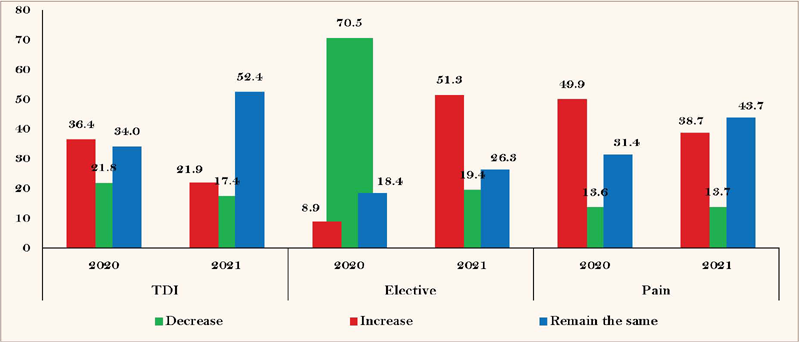
Regarding the impact of the pandemic on dental appointments in 2020, elective visits decreased by 70.5%, while appointments for dental trauma and pain increased by 36.4% and 49.9%, respectively, compared to the pre-pandemic period. In 2021, elective consultations increased to 51.3% compared to the pre-pandemic period. Consultations for dental trauma remained consistent at 52.4% and appointments for pain remained at 43.7% (Figure 1).

Impact on TDIs attendances between two pandemic periods (2020 and 2021) compared to pre-pandemic period.
The professionals included in this study reported having used teledentistry to manage remote TDI, mainly for patient orientation (61.6%), followed by monitoring (5.3%), and a smaller proportion used it as a diagnostic resource (2.4%) (Table 3).
Use of teledentistry during the pandemic COVID-19 (2020-2021) in relation to TDIs attendances
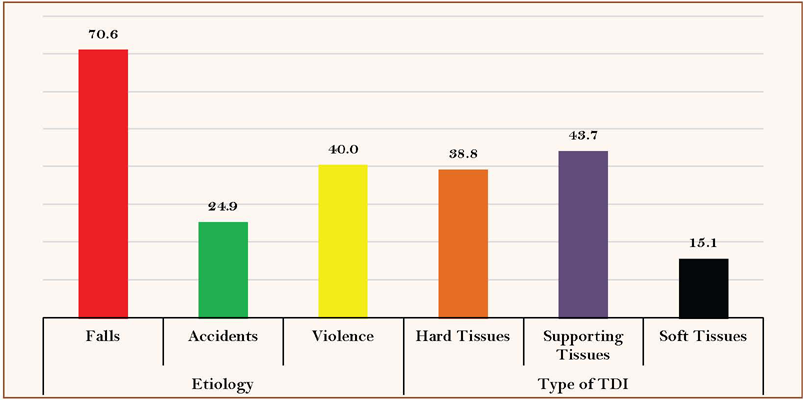
During the entire pandemic period, the main cause of dental trauma according to the perception of the participants, continued to be falls (70.6%) and trauma due to accidents (24.9%). According to the respondents’ perception, most of the TDIs were respectively on supporting and hard tissues (43.7% and 38.8%) (Figure 2).

Etiologies and types of traumatic dental injuries according to type of tissue involved attended during pandemic COVID-19.
Discussion
During the COVID-19 pandemic, some of Brazil’s pediatric dentists continued to attend dental trauma cases considering it an urgent care. They perceived an increase in consultations for TDI compared to the period before the pandemic. This finding is consistant with the nature of dental trauma, which required immediate attention and care. To adapt to the challenging circumstances, these dentists reported using other alternatives, such as teledentistry, to provide remote follow-ups and orientations, particularly during the pandemic’s most critical periods when face-to-face visits were limited.
From the pediatric dentists who attended trauma during the pandemic, those aged 31-50 years and recently graduated were the most actively involved. This observation could be related to the government’s recommendations, which urged older people or those with comorbidities to take greater health care to avoid Covid-19 infection. Notably, this study is the first to evaluate the care of TDI among pediatric dentists in Brazil. According to the data, not all pediatric dentists in the country attend TDI cases in children and adolescents. This may be attributed to different factors, including the lack of adequate academic training or insufficient emphasis on dental trauma in the dental education programs, which is important giving the high prevalence of dental trauma, well established in the literature [11]. The prevalence of dental trauma in both primary (35%) and permanent dentition (21%), is higher in Brazil compared to other countries [12]. University dental curricula were not a variable included in this study, further highlighting the need for attention to this topic in dental programs.
Despite the continued provision of dental trauma care during the pandemic, the dentists reported an impact on treatment demand and consultations. Interestingly, there was perceived an increase in visits for TDIs, which diverges from previous studies reporting less visits in 2020, particularly in the months marked by COVID-19 waves and related restrictions. The observed increased in TDI visits could probably be attributed due to the lockdown period that forced people to stay home, leading to a higher incidence of accidents and the fear of being infected [13,14].
The pandemic significantly affected healthcare-seeking behavior, with emergency cases becoming the main reason for seeking dental care. Whereas infectious diseases, besides COVID-19, showed a notable decrease in 2020, dental trauma cases slightly decreased in number but increased in proportion [14] which is similar to the findings of the present study. Considering the two-year duration of the pandemic, the dentists’ perception was that the demand for TDIs attendance rose in 2020 and remained the same in 2021.
Throughout the pandemic, face-to-face consultations were not always possible. In some cases, it was necessary to use teledentistry [15]. Teledentistry emerged as a valuable resource, particularly for patient orientation and follow-up during all stages of dental trauma care, from initial accident response to diagnosis, treatment and follow up. Most of these steps can be performed through digital resources, which agrees with the findings of a study from the UK that supports the effectiveness of teledentistry in closely monitoring TDI, ensuring proper splinting and soft tissue healing while reducing unnecessary visits and minimizing the risk of COVID- 19 infection for patients and caregivers [16].
However, the use of teledentistry for diagnosis has limitations, such as the two-dimensional representation of the lesions and the inability to perform physical examinations [17,18]. Confidence in the diagnosis was a highlighted concern [19], and only a small percentage of respondents reported using teledentistry as a diagnostic method. Clinical photographs can improve the quality of assessment, although in the absence of an examination, specific information should be provided to manage the condition if it deteriorates. Multiple forms of telecommunication can promptly facilitate this communication [20].
In Brazil, since 1964, the practice of long-distance consultation, diagnosis, prescription and treatment planning has been expressly forbidden. However, telemonitoring, which is the distance tracking of patients who are already in treatment and any actions taken should be expressed in the medical record; and tele-orientation, with the only and exclusive purpose of identifying the best time to perform a face-to-face assistance, are permitted [21]. These legal restrictions could have influenced the use of teledentistry.
A study, conducted in Wuhan, showed that the most prevalent TDI in a hospital involved supporting tissues (51.8%), followed by hard (28.6%), and soft tissues (17.8%). This finding aligns with the perception of pediatric dentists in Brazil, who reported attending mainly to supporting tissue injuries (43.7%), including dislocations and avulsions, followed by hard tissues, including coronal and root fractures (38.8%). Soft tissue injuries, including laceration, abrasion or contusion in the lips, cheek, and tongue (15.1%) were the least common. Another study showed that type of TDI was related to the age of patients, which was not a variable investigated in this study [13].
The main cause of TDI during the pandemic period continued to be falls, as it was found in other studies [22,23]. Although it is expected that the causes are related to the patients’ age, with a higher risk of falls in the 0-6 age group and a greater association with sports accidents at 7-12 years. Interestingly, no sports injuries were reported during 2020, which can be attributed to children being lockdown, leading to reduced outdoor activities and limited opportunities for accidents. Yet, another factor was reported, violence, but less frequently [13].
One strength of this study is its broad sample from various Brazilian states, yielding many responses. It is the first to examine pediatric dental care during the pandemic in Brazil, revealing challenges and adaptations in trauma care. The focus on teledentistry as a key tool for remote care is another advantage, showing how technology can be integrated into dental practice during crises. Collecting data from frontline professionals during the pandemic gives practical and realistic insights into needed changes. However, responses based on dentists’ perceptions may introduce bias.
Conclusion
Most pediatric dentists in Brazil continued to attend traumatic dental injuries during the pandemic, emphasizing the urgency of such care. Given the high prevalence of traumatic dental injuries in both dentitions, it is crucial for dental education programs to address this topic adequately. Enhancing academic training on dental trauma management can help improve the overall provision of care and contribute to better outcomes for patients. Teledentistry was used during the pandemic, especially when face-to-face services were interrupted, enabling remote guidance and monitoring patients. Teledentistry showed great potential for remote diagnosis, and it is an important resource in the orientation and follow-up of traumatic dental injuries, the dental community can expand access to care and ensure the provision of urgent dental service in challenging circumstances, not only in situations such as the recent outbreak. Thus, further research can contribute to the establishment of appropriate protocols or guidelines to be implemented more safely.
-
Financial Support
This study was financed in part by the Coordenação de Aperfeiçoamento de Pessoal de Nível Superior - Brasil (CAPES) - Finance Code 001.
-
Data Availability
The data used to support the findings of this study can be made available upon request to the corresponding author.
References
-
1 Lam R. Epidemiology and outcomes of traumatic dental injuries: A review of the literature. Aust Dent J 2016; 6l(Suppl l):4-20. https://doi.org/10.1111/adj.12395
» https://doi.org/10.1111/adj.12395 -
2 Almeida FV, Costa VPP da, Schuch HS, Goettems ML. Prevention and management of dental trauma in primary teeth in the context of the COVID-19: A critical literature review. Pesqui Bras Odontopediatria Clin Integr 2021; 21:e210077. https://doi.org/10.1590/pboci.2021.161
» https://doi.org/10.1590/pboci.2021.161 -
3 Rocha JR, Neves MJ, Guilherme HG, Moreira JMM, Marques DMC, Feitosa MÁL, et al. Odontologia no contexto da pandemia por COVID-19: Uma visão crítica. Braz J Health Rev 2020; 3(6):19498-19509. https://doi.org/10.34119/bjhrv3n6-329 [In Portuguese].
» https://doi.org/10.34119/bjhrv3n6-329 -
4 Silva Moura JF da, Moura KS, Pereira R da S, Marinho RRB. COVID-19: A odontologia frente à pandemia. Braz J Health Rev 2020; 3(4):7276-7285. https://doi.org/10.34119/bjhrv3n4-006
» https://doi.org/10.34119/bjhrv3n4-006 -
5 Organização Pan-Americana da Saúde. Histórico da pandemia de COVID- 19. 2020. Available from: https://www.paho.org/pt/covid19/historico-da-pandemia-covid-19 [Accessed on February 19, 2024]. [In Portuguese].
» https://www.paho.org/pt/covid19/historico-da-pandemia-covid-19 -
6 World Health Organization. WHO Coronavirus (COVID-10 Dashboard). 2020. Available from: https://covid19.who.int/ [Accessed on February 22, 2024].
» https://covid19.who.int/ -
7 Meng L, Hua F, Bian Z. Coronavirus disease 2019 (COVID-19): Emerging and future challenges for dental and oral medicine. J Dent Res 2020; 99(5):481-487. https://doi.org/10.1177/0022034520914246
» https://doi.org/10.1177/0022034520914246 -
8 Oliveira JJM de, Soares K de M, Andrade K da S, Farias MF, Romão TCM, Pinheiro RC de Q, et al. O impacto do Coronavirus (COVID-19) na prática odontológica: Desafios e métodos de prevenção. Rev Eletrônica Acervo Saúde 2020; 46(46):e3487. https://doi.org/10.25248/reas.e3487.2020
» https://doi.org/10.25248/reas.e3487.2020 -
9 Marcenes W. The impact of the COVID-19 pandemic on dentistry. Community Dent Health 2020; 37(4):239-241. https://doi.org/10.1922/cdh_dec20editorialmarcenes03
» https://doi.org/10.1922/cdh_dec20editorialmarcenes03 - 10 von Elm E, Altman DG, Egger M, Pocock SJ, Gøtzsche PC, Vandenbroucke JP. The Strengthening the Reporting of Observational Studies in Epidemiology (STROBE) Statement: Guidelines for reporting observational studies. Int J Surg 2014; 12(12):1495-1499.
-
11 Petti S, Glendor U, Andersson L. World traumatic dental injury prevalence and incidence, a meta-analysis-One billion living people have had traumatic dental injuries. Dent Traumatol 2018; 34(2):71-86. https://doi.org/10.1111/edt.12389
» https://doi.org/10.1111/edt.12389 -
12 Vieira W de A, Pecorari VGA, Figueiredo-de-Almeida R, Carvas Junior N, Vargas-Neto J, Santos ECA, et al. Prevalence of dental trauma in Brazilian children and adolescents: A systematic review and meta-analysis. Cad Saude Publica 2021; 37(12):e00015920. https://doi.org/10.1590/0102-311X00015920
» https://doi.org/10.1590/0102-311X00015920 -
13 Yang Y, Zhang W, Xie L, Li Z, Li Z. Characteristic changes of traumatic dental injuries in a teaching hospital of Wuhan under transmission control measures during the COVID-19 epidemic. Dent Traumatol 2020; 36(6):584-589. https://doi.org/10.1111/edt.12589
» https://doi.org/10.1111/edt.12589 -
14 Carmagnola D, Toma M, Henin D, Perrotta M, Gianolio L, Colombo A, et al. Dental emergencies in an Italian pediatric hospital during the COVID-19 pandemic. Healthcare 2022; 10(3):537. https://doi.org/10.3390/healthcare10030537
» https://doi.org/10.3390/healthcare10030537 -
15 Talla PK, Levin L, Glogauer M, Cable C, Allison PJ. Delivering dental care as we emerge from the initial phase of the COVID-19 pandemic: Teledentistry and face-to-face consultations in a new clinical world. Quintessence Int 2020; 51(8):672-677. https://doi.org/10.3290/j.qi.a44920
» https://doi.org/10.3290/j.qi.a44920 -
16 Ilyas N, Green A, Karia R, Sood S, Fan K. Demographics and management of paediatric dental-facial trauma in the ‘lockdown’ period: A UK perspective. Dent Traumatol 2021; 37(4):576-582. https://doi.org/10.1111/edt.12667
» https://doi.org/10.1111/edt.12667 -
17 Khan SA, Omar H. Teledentistry in practice: Literature review. Telemed e-Health 2013; 19(7):565-567. https://doi.org/10.1089/tmj.2012.0200
» https://doi.org/10.1089/tmj.2012.0200 -
18 Hung M, Lipsky MS, Phuatrakoon TN, Nguyen M, Licari FW, Unni EJ. Teledentistry implementation during the COVID-19 pandemic: Scoping review. Interact J Med Res 2022; 11(2):e39955. https://doi.org/10.2196/39955
» https://doi.org/10.2196/39955 -
19 Virdee J, Sharma R, Ponduri S. Spotlight on teledentistry. Br Dent J 2020; 228(11):815-815. https://doi.org/10.1038/s41415-020-1750-0
» https://doi.org/10.1038/s41415-020-1750-0 -
20 Royale College of General Practitioners. 10 Tips for COVID-19 Telephone Consultations. 2020. Available from: https://www.rcgp.org.uk/Blog/COVID-19-telephone-consultations. [Accessed on January 01, 2024].
» https://www.rcgp.org.uk/Blog/COVID-19-telephone-consultations. - 21 Conselho Federal de Odontologia. Resolução CFO-226, de 04 de junho de 2020. Dispõe sobre o exercício da Odontologia a distância, mediado por tecnologias, e dá outras providências. Brasilia-DF, Brasil; 2020. [In Portuguese].
-
22 Ilyas N, Agel M, Mitchell J, Sood S. COVID-19 pandemic: The first wave - An audit and guidance for paediatric dentistry. Br Dent J 2020; 228(12):927-931. https://doi.org/10.1038/s41415-020-1702-8
» https://doi.org/10.1038/s41415-020-1702-8 -
23 Woolley J, Djemal S. Traumatic dental injuries during the COVID-19 pandemic. Prim Dent J 2021; 10(1):28-32. https://doi.org/10.1177/2050168420980994
» https://doi.org/10.1177/2050168420980994
Edited by
-
Academic Editor:
Alessandro Leite Cavalcanti
The data used to support the findings of this study can be made available upon request to the corresponding author.