
 Inclusion of Pediatric Dentistry in the Curricular Structure of Dental Courses in the State of Rio Grande do Sul, Brazil
ABSTRACT
Objective: To investigate the inclusion of pediatric dentistry in the curricular matrix of dental courses in the state of Rio Grande do Sul, Brazil.
Material and Methods: A descriptive exploratory study was conducted. Searches were conducted from the e-MEC systems in December of 2023. The variables of interest were the categorization of the course (public or private), total course load, structuring of the teaching of pediatric dentistry (curricular, elective/optative or extension), course load of pediatric dentistry, number of semesters and nomenclature.
Results: There are 28 dental courses in the state (three public and 25 private). Total course load ranged from 4,000 to 4,700 hours and 80% of the courses had ten semesters. Pediatric dentistry is curricular and normally available between the seventh and ninth semesters, with a total hourly load between 120 and 420 hours, generally in two consecutive semesters.
Conclusion: The state of Rio Grande do Sul, Brazil, underwent an exponential expansion of dental courses, especially in the form of private schools. The courses follow the national curricular guidelines (NCGs), and pediatric dentistry is a curricular discipline normally offered in the last semesters of the course. Considerable divergence, however, was found in the course load for pediatric dentistry. There is an evident need for the definition of theoretical content and minimum clinical training to enable students to develop skills for treating children.
Keywords:
Pediatric Dentistry; Oral Health; Curriculum; History of Dentistry; Education, Dental
Introduction
The first dental course in Brazil was established by the imperial government under Decree number 9311 on October 25th, 1884, in the states of Bahia and Rio de Janeiro [1,2]. The document envisaged that schools of medicine would be integrated by courses in medical sciences and surgery as well as three additional courses: pharmacy, dentistry and obstetrics/gynecology. Historical data reveal that there were only three dental courses in the country at the end of the 19th Century, located in the cities of Rio de Janeiro, Salvador and Porto Alegre [3,4].
By the mid-20th Century, 24 dental courses existed in Brazil and were distributed among all geographic regions of the country, most of which were public institutions. A university renewal movement begun in the 1960s added a new driving force for the expansion of dental courses, which was the advent of higher education by private for-profit institutions and opened the teaching market to institutions with a business profile [5]. Currently, there are 587 authorized courses in the country. Despite the slight improvement in the regional distribution of the courses, the greater concentration in the Southeast, which is the wealthiest region, remains to the present day [4,6].
The National Law of Education Guidelines and Bases (LDB) (Law nº 9394/1996) [7] established the legal framework for changes in higher education. This introduced the national evaluation process, new renewal mechanisms and the recognition of courses, stimulating student qualification and eliminating the minimum curriculum [8]. The approval of the National Curricular Guidelines (NCGs) for undergraduate dental courses in 2002 changed the scenario. This new conjuncture focuses on flexibilization in the organization of curricula and the existence of a common basis for courses in the health field [8]. NCGs approved in 2021 strengthened the principles and foundations of dental education, emphasizing ethical and legal principles as well as the comprehension of social, economic and cultural aspects, guiding the work of dentists to transference for the benefit of society [8].
The purpose of the curricular matrix of undergraduate courses is to define and organize educational practices to meet cultural demands and ensure the occupational education of students. Per the NCGs, dental courses emphasize the integration of biological and health sciences, human and social sciences, and dental sciences [8]. This integration is designed to be developed in an interconnected manner with the aim of providing comprehensive care to individuals across the spectrum of their activities. The NCGs do not intend to establish a formatted curriculum but underscore the importance of providing dentistry students with a comprehensive understanding of patient care across all life stages [8].
Pediatric dentistry is a specialty with a relatively recent history in Brazil. The leap in the quality of the specialty occurred only in the 1970s, with the creation of graduate courses standardized by the Coordination for the Advancement of Higher Education Personnel (CAPES), the expansion of undergraduate courses under the norms of the Federal Dentistry Council (in Portuguese “Conselho Federal de Odontologia” -CFO) and the creation of the Brazilian Group of Professors of Orthodontics and Pediatric Dentistry (in Portuguese “Grupo Brasileiro de Professores de Ortodontia e Odontopediatria” - GRUPO), achieving international recognition, projection and academic prestige [9].
According to Articles 58 and 59, Section VI of Resolution 185/93 of the Federal Dentistry Council (CFO) [10], pediatric dentistry is a specialty with the objectives of the prevention, diagnosis and treatment of oral health problems of infants, children and adolescents, oral health education and integration with other professionals in the health field. Thus, pediatric dentistry is presented as a field that encompasses all aspects involving the health/illness process, demonstrating the specialty's intrinsic interdisciplinarity.
Considering the competencies to be developed during the undergraduate dental course, few studies have sought to identify the characteristics of the disciplines offered. The aim of the present study was to provide an overview of the inclusion of pediatric dentistry in the curricular structure of dental courses in the state of Rio Grande do Sul, Brazil.
Material and Methods
Study Design
An exploratory, descriptive study with a quantitative approach was conducted to identify the dental courses in the state of Rio Grande do Sul, Brazil. Searches were conducted by three researchers (SHF, ABSH and EMRBC) from the e-MEC systems (www.emec.mec.gov.br) as well as sites of higher education institutions in the state.
Data Collection
Data collection was performed in December of 2023. The variables of interest were the number of dental courses in the state, classification as public or private, total course load and number of semesters. The courses were then classified according to the structuring of the teaching of pediatric dentistry (curricular, elective/optative or university extension), teaching method (theory and practice), total course load, semester offered and nomenclature.
Data Analysis
The data were tabulated and analyzed using descriptive statistics. As the data were obtained from public electronic sites, there was no need for approval from an ethics committee or informed consent.
Results
The state of Rio Grande do Sul comprises 497 municipalities and has an estimated total population of approximately 11 million. This accounts for approximately 5.4% of the overall population of Brazil, positioning it as the sixth most populous state in the nation. Furthermore, the state exhibits an Infant Mortality Rate (IMR) of 10.6 per 1,000 live births and a Human Development Index (HDI) of 0.787 [11]. According to the National Registry of Higher Education Courses and Institutions (e-MEC), Rio Grande do Sul currently has 21 universities, 12 university centers, 97 colleges, and 3 Federal Institutes of Education, Science and Technology. The total enrollments in in-person and distance learning courses are approximately 575,885 [12].
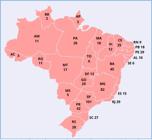
Based on data from the Ministry of Education (MEC) [12], there are 587 dental courses in Brazil distributed across all states (Figure 1). A total of 28 higher education institutions in Rio Grande do Sul offer undergraduate courses in dentistry, distributed among 17 cities (seven in the state capital and metropolitan area and 21 in other parts of the state). Three of the dental schools are public and 25 are private.
The first dental course was founded in 1898, with the inauguration of the School of Dentistry of Universidade Federal do Rio Grande do Sul (UFRGS), followed by Universidade Federal de Pelotas (UFPEL) in 1911, Pontifícia Universidade Católica do Rio Grande do Sul (PUCRS) in 1943, Universidade Federal de Santa Maria (UFSM) and Universidade de Passo Fundo (UPF) in 1961 and Universidade Luterana do Brasil (ULBRA) in 1990. An increase in the number of higher education institutions and courses in the health field was observed beginning in 2010. The most recent higher education institution with a dental course was founded in 2022 by Centro Universitário Uniftec Bento Gonçalves (UNIFTEC).
Most dental courses (82%) have a curricular structure composed of 10 semesters, with a total course load ranging from 4000 to 4700 hours (mean: 4265 h; standard deviation: 205.9 h). In recent years, the number of public and private dental schools offering night classes has increased.
The discipline of pediatric dentistry is an integral, mandatory part of the curriculum of dental courses and is generally offered between the seventh and ninth semesters in two consecutive semesters. The course load ranges from 120 to 420 hours (mean: 227 h; standard deviation: 76.8 h), corresponding to 3% to 9% of the total course load of the undergraduate course. It should be pointed out that theoretical and practical activities are addressed in all disciplines. The discipline of pediatric dentistry in the curricula is predominantly identified by terms related to the specialty, such as "children's clinical dentistry", "children's dentistry", "pediatric dental care", "child health" and other variations (Table 1).
Description of dental courses in the state of Rio Grande do Sul/Brazil and respective course loads (total and pediatric dentistry).
Discussion
The data collected enable identifying the quantitative expansion and distribution of dental courses in the state of Rio Grande do Sul /Brazil as well as the characteristics of the disciplines of pediatric dentistry. As in other regions of Brazil, an exponential increase in private higher education institutions has occurred in the last ten years. Moreover, there are evident differences in the pediatric dentistry course load, which raises the question of ensuring students' capacity through the programmed content and clinical activities necessary for their education.
Brazil is the country with the largest number of dental courses in the world (n = 587), followed by India (n = 313), China (n = 96) and the United States of America (n = 67). Moreover, Brazil has the largest proportion of dentists per 10,000 inhabitants (16.9), followed by China (4.5) and India (1.77) [4]. In the 100 years from 1898 to 1998, nine dental courses were created in the state of Rio Grande do Sul (RS), whereas double this number of courses (n = 18) were created in the state between 2010 and 2023 [13].
Only three higher education institutions with dental courses are public universities in the state. The roots of the current situation, however, are not specific to the profession. A large part stems from the contemporary context, which is characterized as a process of globalization that occurs in economic, financial, political and cultural realms, reflecting another facet of the expansion of capitalism. Neoliberal ideologies and conservative positions have decisively influenced the orientation of educational and health systems, placing the market as the foundation of political decisions in this field.
An analysis of courses in the health field between 1995 and 2015 found a growth rate of more than 600% in private colleges/universities compared to a growth of 126% in public universities [14]. Part of this growth is due to governmental programs, such as the University for Everyone Program (PROUNI) and Program Supporting Plans for the Restructuring and Expansion of Federal Universities (REUNI). Other influential aspects include progressive technological incorporation, the fragmentation of knowledge into specialties, the reduction in the exercise of freelance work and the popularization of group dentistry systems with precarious employment relations, very often with a clear negative impact on the population.
With regards to course load, Resolution nº 4 of the National Education Council (CNE) from April of 2009 established a minimum of 3200 hours for undergraduate courses in the health field and a minimum of 4000 hours for dental courses [13]. The courses analyzed in the present study had a higher course load than that stipulated in the resolution, ranging from 4000 to 4700 hours, and most (82%) courses involved a total of ten semesters. Moreover, night classes have been offered in recent years, especially for individuals who work during the day and often have a greater number of semesters.
Pediatric dentistry is synonymous with dentistry for children, and the discipline is part of the curricular structure of all dental courses in the state. On April 11th, 1931, the teaching of pediatric dentistry at dental schools in Brazil was made official through Governmental Decree no 19,851 [15]. Initially characterized nearly exclusively by guided extractions, pediatric dentistry went through the era of restorations with an emphasis on the maintenance of the integrity of the dental arch until reaching the era of prevention and health promotion. It is important to note that the NCGs do not specify the number of hours required for each subject, giving higher education institutions significant autonomy in structuring their curricula [8]. On the other hand, NCGs have influenced the content of curricula in the health field by guiding changes in the educational process founded on attitudes, competencies and skills for dentists to work in the universal healthcare system, as well as modern learning methods founded on the integration between teaching and healthcare services.
By definition, curriculum is how we temporarily organize knowledge and know-how so that information can be transmitted. The traditional model of higher education in Brazil conceived knowledge through disciplines with well-established limits by fields of knowledge and operating in an individualized manner. However, information is transmitted in a fragmented way and integration normally only occurs at the end of the course, which compromises a holistic, multi-professional perspective on the part of students.
Despite the existence of an official curriculum that offers administrators, teaching staff and students relevant information related to the functioning of the teaching-learning process (distribution of content, academic progression and evaluation systems), there is another "hidden" curriculum that corresponds to norms that are not openly recognized but may exert a substantial impact on students. Likewise, there may be material and content that, although present on paper, are not taught, or content and experiences outside the curriculum that are equally important to the learning process [16,17].
Competence is understood as the capacity to mobilize knowledge, skills and attitudes for the sake of initiatives and actions that are expressed in efforts capable of successfully addressing the challenges that arise in professional practice. In the present study, considerable variation was found in the pediatric dentistry course load, which ranged from 3 to 9% of the total course load and was normally divided among the last semesters of the course. The differences in course load expand the responsibility of the teaching institutions as they require the inclusion of new content, new forms of work organization, the incorporation of knowledge that is acquired in practice and methods that develop the capacity to solve problems, communicate ideas and make decisions [8].
This study contributes important information to the discussion of teaching dentistry and pediatric dentistry but has limitations that should be considered, such as the lack of access to detailed content from the disciplines ministered by each institution, which prevented an in-depth analysis of the theoretical and practical content of the courses. Also, the findings relied on self-reported data from educational institutions, which could introduce biases. Furthermore, the study is geographically limited to the State of Rio Grande do Sul and may not represent curricular structures in other regions of the country.
Pediatric dentistry involves comprehensive clinical care, including prevention, diagnosis, and treatment of oral conditions from infancy through adolescence. The elements and dimensions discussed here could help guide future investigations on the quality of the education of general dentists as well as the teaching of pediatric dentistry.
Conclusion
The state of Rio Grande do Sul underwent an exponential expansion of dental courses in the last ten years, especially in the form of private schools, following a trend that has occurred throughout Brazil. The courses follow the national curricular guidelines, and pediatric dentistry is a curricular discipline in all courses. The results also demonstrated that there is a huge discrepancy in the pediatric dentistry curriculum regarding the total workload. Although the concept of institutional autonomy, the differences in course load expand the responsibility of the quality of undergraduate education in pediatric dentistry as they increasingly require the inclusion of new content and clinical protocols. Studies such as this one can assist in guiding the necessary changes in education so that future dentists can integrally contribute to healthcare processes.
Data Availability
The data used to support the findings of this study can be made available upon request to the corresponding author.
-
Financial Support
None.
References
- [1] Brasil. Decreto n° 9.311, de 25 de outubro de 1884. Dá novos Estatutos às Faculdades de Medicina. Coleção de Leis do Império do Brasil. 1884. [In Portuguese].
- [2] Silva RHA, Sales-Peres A. Odontologia: Um breve histórico. Odontol Clín-Cient 2007; 6(1):7-11. [In Portuguese].
- [3] Cunha EMS. História da odontologia no Brasil (1500-1900). 2nd ed. Rio de Janeiro: Científica; 1952. 288p. [In Portuguese].
-
[4] Morita MC, Uriarte Neto M, Fontanella VRC, Haddad AE. The unplanned and unequal expansion of Dentistry courses in Brazil from 1856 to 2020. Braz Oral Res 2020; 35:e009. https://doi.org/10.1590/1807-3107bor-2021.vol35.0009
» https://doi.org/10.1590/1807-3107bor-2021.vol35.0009 -
[5] Neto AJF. A evolução dos cursos de Odontologia no Brasil. Rev ABENO 2002; 2(1):55-56. https://doi.org/10.30979/rev.abeno.v2i1.1391 [In Portuguese].
» https://doi.org/10.30979/rev.abeno.v2i1.1391 -
[6] Conselho Federal de Odontologia. Endereço da Instituição de Ensino. Available from: http://crors.org.br/servicos-formacao/?c=2 [Accessed on June 1, 2024]. [In Portuguese].
» http://crors.org.br/servicos-formacao/?c=2 - [7] Brasil. Lei no 9.394, de 20 de dezembro de 1996. Estabelece as diretrizes e bases da educação nacional. Diário Oficial da União. 2015. [In Portuguese].
-
[8] Angar K, Busato ALS, dos Santos RB, Vargas IA, Macedo RP, Hernandez PAG. Curricular structure of Mercosur countries’ Dentistry undergraduate programs. Rev ABENO 2021; 21(1):1199. https://doi.org/10.30979/revabeno.v21i1.1199
» https://doi.org/10.30979/revabeno.v21i1.1199 -
[9] da Costa VS, Wanderley MT, Haddad AE, Rezende KM, Raggio DP, Imparato JC, et al. Paediatric Dentistry curriculum in under-graduate Dental courses in Brazil. Rev ABENO 2020; 20(2):93-101. https://doi.org/10.30979/rev.abeno.v20i2.963
» https://doi.org/10.30979/rev.abeno.v20i2.963 -
[10] Conselho Federal de Odontologia. Resolução CFO-22, de 27 de dezembro de 2001. Baixa Normas sobre anúncio e exercício das especialidades odontológicas e sobre cursos de especialização revogando as redações do Capítulo VIII, Título I; Capítulo I, II e III, Título III, das Normas aprovadas pela Resolução CFO-185/93, alterada pela Resolução CFO-198/95. Available from: https://sistemas.cfo.org.br/visualizar/atos/RESOLUÇÃO/SEC/2001/22 [Accessed on June 01, 2024]. [In Portuguese].
» https://sistemas.cfo.org.br/visualizar/atos/RESOLUÇÃO/SEC/2001/22 -
[11] Instituto Brasileiro de Geografia e Estatística. Painel de Indicadores. 2024. Available from: https://www.ibge.gov.br [Accessed on June 01, 2024]. [In Portuguese].
» https://www.ibge.gov.br -
[12] Brasil. Ministério da Educação. Cadastro Nacional de Cursos e Instituições de Educação Superior. Cadastro e-MEC. 2024. Available from: https://emec.mec.gov.br/emec/nova [Accessed on June 01, 2024]. [In Portuguese].
» https://emec.mec.gov.br/emec/nova -
[13] Brasil. Ministério da Educação. Conselho Nacional de Educação. Câmara de Educação Superior. Resolução no 4, de 6 de abril de 2009. Dispõe sobre a carga horária mínima e procedimentos relativos à integralização e duração dos cursos de graduação em Biomedicina, Ciências Biológicas, Educação Física, Enfermagem, Farmácia, Fisioterapia, Fonoaudiologia, Nutrição e Terapia Ocupacional, bacharelados, na modalidade presencial. 2009. Available from: http://portal.mec.gov.br/dmdocuments/rces004_09.pdf [Accessed on June 01, 2024]. [In Portuguese].
» http://portal.mec.gov.br/dmdocuments/rces004_09.pdf -
[14] Vieira ALS, Moyses NMN. Graduation trajectory of the fourteen health professions in Brazil. Saúde Debate 2017; 41(113):401-414. https://doi.org/10.1590/0103-1104201711305
» https://doi.org/10.1590/0103-1104201711305 - [15] Brasil. Decreto no. 19.851, de 11 de abril de 1931. Dispõe sobre o ensino superior no Brasil. Diário Oficial da União. 1941. [In Portuguese].
-
[16] Masella RS. The hidden curriculum: Value added in dental education. J Dent Educ 2006; 70(3):279-283. https://doi.org/10.1002/j.0022-0337.2006.70.3.tb04083.x
» https://doi.org/10.1002/j.0022-0337.2006.70.3.tb04083.x - [17] Guedes-Pinto AC. A história da Odontopediatria no Brasil. São Paulo: Santos; 2014. 472p. [In Portuguese].
Edited by
-
Academic Editor:
Alessandro Leite Cavalcanti

