
 BRAF V600E Mutation in Odontogenic Keratocyst: A Systematic Review and Meta-Analysis
ABSTRACT
Objective: To assess the frequency of the BRAF V600E mutation in odontogenic keratocyst, correlating the methods of evaluation and detection of the mutated protein.
Material and Methods: This systematic review was conducted following the PRISMA guidelines and registered in PROSPERO (CRD 42022379570). An electronic search was performed up to January 20th, 2024, in the databases of Medline, Scopus, Embase, and gray literature (Google Scholar, BDTD). One hundred and sixty-six cases in seven studies were included. The methodological quality of the studies was performed according to the Joanna Briggs Institute.
Results: Only two of the seven studies reported positivity for the BRAF V600E mutation, both by molecular methods. In the remaining five studies, the BRAF V600E mutation was not present, one evaluated by RT-PCR, three by DNA sequencing, and one by IHC.
Conclusion: Through analysis of the articles, the BRAF V600E gene mutation alone does not play a significant role in the pathogenesis of OKC. Further research and new studies are necessary.
Keywords:
Odontogenic Cysts; Proto-Oncogene Proteins B-raf; Polymerase Chain Reaction
Introduction
According to the World Health Organization's 5th Edition of Head and Neck Tumors, the Odontogenic Keratocyst (OKC) is a jaw cyst that originates from a remnant of odontogenic epithelium. Despite its classification as an odontogenic cyst, there are several studies on this lesion, including reports of a solid variant with aggressive clinical behavior [1,2]. However, the discussion continues, as there is extensive literature characterizing the biological-histopathological profile, mainly on molecular markers [1].
Biological markers act as intracellular signals, aiding in the diagnosis of lesions and understanding of pathogenesis [3]. The RAF proto-oncogene encodes a protein of the serine-threonine kinase family that plays an important role in the regulation of cell growth and proliferation through the mitogen-activated protein kinase (MAPK) pathway. Activating mutations in this gene have been linked to oncogenesis [4]. The most common mutation in the RAF gene is a substitution of valine for glutamic acid at codon 600 (V600E). This mutation received the name BRAF V600E and has been reported in several tumors, such as melanoma, colorectal cancer, papillary thyroid carcinoma, and hairy cell leukemia [5,6]. Recent serial reports have shown the oncogenic function of BRAF V600E in ameloblastoma, OKC, and other odontogenic tumors as an inducer of mitogenic signaling [3,5-10].
With the development of technology and study techniques, molecular findings may help to elucidate the pathogenesis, as well as to open non-surgical pharmaceutical treatment options for BRAF V600E-expressing lesions. Therefore, this systematic review and meta-analysis aim to critically evaluate the available data on BRAF V600E mutation in OKC, in addition to the epidemiological analysis of the studies.
Material and Methods
Study Design
The systematic review was performed according to the PRISMA guidelines and registered in PROSPERO (CRD 42022379570) [11].
Data Sources and Search Strategy
An electronic search was performed up to January 20th, 2024 in Medline, Scopus, Embase, and grey literature (Google Scholar, Brazilian Digital Library of Theses and Dissertations - BDTD). Databases by two authors individually (JSC and AVMB), using a combination of DeCS/MeSH terms and free text as follows: ("BRAF" OR "V600E") AND ("Odontogenic Tumors" OR "Odontogenic Keratocyst" OR "Odontogenic Cysts"). No restrictions were placed on the language of the articles or the date of publication. The cited references in the review articles related to the topic were assessed to widen the search for further relevant papers.
After removing duplicate articles, the two authors listed and screened the publications according to title and abstracts and assessed their eligibility. The studies were then read in their entirety. Disagreements were analyzed by a third author (LNR), and a consensus was reached by discussion.
Eligibility Criteria
The selection of studies for this systematic frequency review met the criteria established by the PECO approach (Population, Exposure, Comparison, and Outcome) based on the following research question: "What is the frequency of BRAF V600E mutation in OKC?". According to the PECO criteria: Population was defined as patients diagnosed with OKC. Exposure was BRAF V600E mutation in OKC, and the absence of BRAF V600E mutation was the Comparison. The Outcome of interest will be the frequency of BRAF V600E.
Exclusion Criteria
Animal studies, single case reports, studies that did not specify the method used to evaluate BRAF V600E expression in OKC, and studies that did not report relevant data for the purpose of this study were excluded.
Data Extraction
The extracted data were classified as quantitative or qualitative, tabulated for comparison, and verified by all the authors. Any disagreement will be resolved by a third person. The following data were identified and evaluated: authorship; year of publication; country; sex; study design; sample size; keratocyst types: sporadic and syndromic; cyst location; method of evaluation: sensitivity and specificity of IHC, and molecular test for BRAF V600E detection; and BRAF V600E immunoexpression.
Critical Appraisal of the Selected Studies
The assessment of the methodological quality and risk of bias of the selected articles was based on the JBI critical appraisal checklist for systematic reviews and research synthesis (Joanna Briggs Institute) and the methodological quality chart constructed from the Rob.vis tool [12], performed independently by two researchers, and disagreements were resolved through discussion. This tool is recommended to assess a study’s methodological quality and determine the extent to which a study addressed the possibility of bias in its design, conduct, and analysis. The checklist consisted of 8 questions that were answered in the 7 studies selected in the systematic review. Each question was answered as "Yes", "No", "Unclear", or "Not applicable".
Synthesis of Results
Data synthesis was performed qualitatively and quantitatively by meta-analysis using the JAMOVI software. The estimation of the focal effect was calculated using the prevalence measure, from the data of the number of events (expression of the BRAF 600E gene mutation) and the total population sample. The random model and the Restricted-Maximum-Likelihood statistical method were adopted, considering the statistical significance level of 5% (p< 0.05) and 95% confidence interval. Heterogeneity was evaluated using the Chi-square test, I2, Tau, and prediction interval.
Results
Literature Search
The search of the databases identified 62 articles, including 10 in PubMed, 9 in Scopus, 12 in Embase, and 31 in the gray literature (Google Scholar). Duplicate references were excluded, and the titles and abstracts of the remaining 16 articles were analyzed according to eligibility criteria. Seven articles were identified and selected for full-text analysis. All of them met the criteria to be included in this review and were processed for data extraction, as shown in the PRISMA flow diagram in Figure 1.

Cohen's kappa coefficient was used to calculate the inter-rater agreement during the inclusion of publications, with an almost perfect level of agreement between the authors (Kappa = 0.90).
Description of the Studies
Seven cross-sectional studies reported 166 cases of OKC with BRAF V600E mutation [3,8,13-17]. The sample of the studies ranged from 7 to 38 cases and was composed of formalin-fixed paraffin-embedded tissue samples from patients diagnosed with odontogenic keratocyst retrieved from Pathology Centers. A detailed description of the included studies and the outcome variables are summarized in Table 1.
Epidemiological and Clinical Features
The articles included in this review were published between 2014 and 2021. The worldwide distribution of the cases selected showed 6 countries. Most of the cases were reported in China (26.50%), South Korea (22.89%), India (18.10%), and Brazil (16.87%). The worldwide distribution of the cases is presented in Figure 2.

The distribution by sex showed a high prevalence in men with 86 cases (51.80%), and 61 cases in women (36.74%). However, in 19 cases this information was not reported. Both sporadic and syndromic OKC were included. The most common place of Sporadic OKC was reported in the mandible with 78 cases, while 31 were in the maxilla. In the case of Syndromic OKC, 8 cases were in the mandible, 2 cases were reported in the maxilla, and 28 were as multiple lesions (maxilla and mandible).
BRAF V600E Mutation Detection in OKC
The BRAF V600E mutation was evaluated by molecular (DNA sequencing and PCR) and immunohistochemical (IHC) methods. Of the 7 studies, only 1 used both immunohistochemical and molecular methods (DNA sequencing), and 1 study performed both molecular methods (qPCR and DNA sequencing). The other 5 studies used only one method of evaluation.
Five studies performed DNA sequencing, while Brown et al. [8] used allele-specific PCR, and França et al. [13] used TaqMan allele-specific PCR for this purpose. Furthermore, two studies performed IHC, one of them, used a novel rabbit monoclonal antibody clone RM8 specific for BRAF V600E mutation in FFPE tissues [14]. The other one used mouse monoclonal antibody clone VE1 [3]. Only 2 studies reported positivity for the BRAF V600E mutation, both by molecular methods [3,13]. In the rest of the studies BRAF V600E mutation was not present, 1 of them by RT- PCR, 3 by DNA sequencing, and 1 by IHC.
Quality Assessment / Analysis
According to the critical appraisal tool for use in systematic reviews (JBI), the risk of bias in all included studies was classified as low for the domains "Inclusion criteria", "Detailed description", "Measured exposure", "Objective" and "Measured outcomes". For the "Confounding factors" domain, only the study of França et al. [13] presented a confounding factor, which was minimized during laboratory processing. The other studies did not explicitly report confounding factors, so they presented high risk for domains. Only Brown et al. [8] and Cha et al. [3] described the statistical analysis in detail, so they were classified as low risk and the other studies did not describe this analysis so they were scored with high risk of bias. The JBI risk of bias assessment is shown in Figure 3. Methodological quality and risk of bias assessment of the selected studies according to the JBI critical appraisal checklist for systematic reviews.

Methodological quality and risk of bias assessment according to the JBI critical appraisal checklist for systematic reviews.
Meta-Analysis
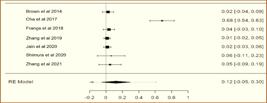
Figure 4 shows the forest plot of the meta-analysis of the prevalence of BRAF V600E mutation in OKC. A prevalence of 12% was found (0.12-0.05 to 0.30, 95% CI, I2 = 97.7%, p<0.001, tau=0.23, prediction interval = - 0.02 to 0.48).
Discussion
According to the World Health Organization, the OKC is a developmental odontogenic cyst characterized histologically by a thin para-keratinized stratified squamous epithelial lining with palisade and hyperchromatic basal cells. Although the OKC was once classified as an odontogenic tumor. In the 5th Edition of the Classification of Head and Neck Tumors, the OKC remained in the category of the odontogenic cyst. It presents specific characteristics, such as a marked tendency to recur after surgical treatment, aggressive behavior, and also a correlation with the nevoid basal cell carcinoma syndrome [1]. Some studies have reported a possible variant of odontogenic keratocysts categorized as a solid variant (SOKC) [18,19]. It is composed of several small cysts and epithelial islands in a dense collagenous stroma [19]. However, there are few studies in the literature that prove this subtype and therefore, the latest edition of the WHO classification in 2022 did not substantiate this theory. So, due to this lack of information, this categorization was not included in this systematic review.
Activating mutations in important cell signaling pathways are known to contribute to the pathogenesis of various odontogenic lesions. The pathogenesis of the OKC seems to be related to genetic mutations in genes such as PTCH1, mainly found in syndromic keratocyst [2,20-22]. Also, PTCH1 may activate the Hedgehog signaling chain, which may increase the risk of developing OKC [15].
The BRAF belongs to the Rapidly Accelerated Fibrosarcoma (RAF) kinase family. It is an oncogene, downstream regulator in the MAPK signaling pathway [14]. It produces a protein kinase responsible for the regulation of the intracellular signal transduction pathway. Dysregulation in this pathway results in structural alterations, mainly in the substitution of valine for glutamic acid at codon 600 (BRAF V600E). BRAF V600E is a mutation that has been found in different types of cancer as well as in odontogenic tumors, being most common in mandibular ameloblastomas.
This mutated gene can be an important key to clarifying the biological behavior of OKC, as it participates in cell signaling in the MAPK pathway and acts as an accelerator in cell reproduction. In addition, the role of this mutation as a prognostic marker is important. It can contribute to future non-surgical therapeutic modalities, mainly for those cases where the risk of recurrence is high since many times the therapeutic approach is invasive surgeries, which affects the quality of life of these patients [2,4].
There are several methods to evaluate oncogenes and their expressions. Currently, DNA-based molecular methods such as polymerase chain reaction (PCR), Sanger sequencing, and mass spectrometry, are considered the gold standard. On the other hand, IHC is widely used in pathology centers. This is because it is more affordable, does not require high-tech equipment, and is less time-consuming. Also, many samples cannot be tested for molecular methods, due to their inadequate tumor content, process of fixation, and the variable quality of DNA extracted, especially when it comes from archival blocks [14]. However, the sensitivity and specificity measures of BRAF V600E-specific IHC can vary substantially between different lesions, and little is known about the ability of IHC to detect the BRAF V600E mutation in OKCs.
However, in the study of Martins-de-Barros et al., 2022 about the diagnostic accuracy between IHC and molecular methods detecting BRAF V600E mutation in ameloblastoma, they obtained high specificity and sensitivity using IHC, not seen in any of the seven studies in this systematic review [23].
After a thorough search, no other systematic review with meta-analysis was found that summarizes and evaluates the diagnostic accuracy of IHC compared to the gold standard molecular reference in the detection of the BRAF V600E mutation in OKC specimens.
This systematic review and meta-analysis showed a prevalence of 12% of BRAF V600E in OKC. The authors assume that this result is due to the fact of the heterogeneity used in the different studies selected. Although only molecular methods showed positivity in our review, IHC shows excellent specificity and positive predictive value compared to molecular methods according to several reports in the literature [24].
In general, the assessment of the methodological quality of the studies showed a low risk of bias in most of the criteria analyzed, demonstrating the high reliability of the data. However, regarding heterogeneity, the statistical tests showed an I2 (97.7%) due to the variability of the true effects, i.e., the size of the studies; moreover, between-study variability was observed from the results of the Chi-square test (p<0.001).
From the selected studies in this review on the correlation between evaluation methods and mutated gene expression, only 2 found positivity for BRAF V600E mutation [3,13]. Cha et al. [3] performed BRAF V600E analysis in a sample of 38 cases of OKC using both Sanger sequencing and IHC. A high positivity for BRAF V600E was found in DNA sequencing, with 63.2% (24/38) of cases harboring the mutation, while no immunoexpression positivity was detected in IHC.
The Second study was described by França et al. [13] who in a sample of 28 OKC cases, only 1 (3.57%) showed positivity for BRAF V600E mutation by using Taqman allele-specific qPCR. Although one case expresses the BRAF V600E mutation, it does not play a significant role in the pathogenesis of odontogenic keratocyst. And, therefore, in the absence of sufficient evidence, there is no support for the use of BRAF inhibitors in the treatment of patients with this lesion.
The other five studies observed a complete absence of BRAF V600E expression with molecular and immunohistochemical methods. One such study was reported by Jain et al., with a total of 30 cases, immunohistochemistry with RM8 antibody was used [14]. According to the author, these results may be due the presence of BRAF V600E mutated protein below the levels detected by IHC in the cells, also the use of the rabbit-specific RM8 antibody is relatively new and requires additional studies with a larger number of patients and with diverse odontogenic lesions since the number of studies with this antibody is limited [23]. The IHC results were in accordance by Cha et al. [3] although they used the VE1 clone mouse antibody, the results were the same, with no positivity for the mutation.
Zhang et al. [15] described the absence of BRAF V600E mutation in odontogenic keratocyst cases using DNA sequencing, however, identified that there was a high presence in ameloblastoma cases, suggesting that different pathogenic mechanisms may be involved in various odontogenic lesions, influencing outcomes.
Zhang et al. [16] and Shimura et al. [17] used the method of DNA sequencing in 9 and 7 cases of OKC, respectively. None of them harbored BRAF V600E mutation. This is not in agreement with the results reported by Cha et al. [3] in which more than 2/3 of the cases were positive for the mutation. This divergence may be related to methodological differences since the use of additional microdissection techniques prior to DNA extraction was performed by Cha et al. [3] to avoid or minimize sequencing noise due to stromal or inflammatory cells.
Through the data resulting from the meta-analysis and the reading of the studies, it is possible to verify the need for new studies that provide similar methodologies, identifying the lesions using the most current classification, as well as the description of the statistical analysis. All of this with the goal of minimizing methodological biases.
Conclusion
Because different pathogenic mechanisms could be involved in different odontogenic lesions, and according to the result of this meta-analysis, only a 12% prevalence of BRAF V600E mutation in odontogenic keratocyst could be shown in the studies of this review. Therefore, we can suggest that BRAF V600E gene mutation alone does not play a significant role in the pathogenesis of the odontogenic keratocyst. However, this may be due to the high heterogeneity among studies, in addition to the small sample sizes, and few primary studies, necessary to substantiate this correlation and influence on the pathogenesis of odontogenic keratocyst. Furthermore, the analyses are heterogeneous about to detection techniques, requiring further studies.
Data Availability
The data used to support the findings of this study can be made available upon request to the corresponding author.
-
Financial Support
None.
References
-
[1] Soluk-Tekkesin M, Wright JM. The World Health Organization classification of odontogenic lesions: A summary of the changes of the 2022 (5th) edition. Turk Patoloji Derg 2022; 38(2):168-184. https://doi.org/10.5146/tjpath.2022.01573
» https://doi.org/10.5146/tjpath.2022.01573 -
[2] Mohanty S, Dabas J, Verma A, Gupta S, Urs AB, Hemavathy S. Surgical management of the odontogenic keratocyst: A 20-year experience. Int J Oral Maxillofac Surg 2021; 50(9):1168-1176. https://doi.org/10.1016/j.ijom.2021.02.015
» https://doi.org/10.1016/j.ijom.2021.02.015 -
[3] Cha YH, Cho ES, Kang HE, Ko J, Nam W, Kim HJ, et al. Frequent oncogenic BRAF V600E mutation in odontogenic keratocyst. Oral Oncol 2017; 74:62-67. https://doi.org/10.1016/j.oraloncology.2017.09.016
» https://doi.org/10.1016/j.oraloncology.2017.09.016 -
[4] Cantwell-Dorris ER, O’Leary JJ, Sheils OM. BRAFV600E: Implications for carcinogenesis and molecular therapy. Mol Cancer Ther 2011; 10(3):385-394. https://doi.org/10.1158/1535-7163.MCT-10-0799
» https://doi.org/10.1158/1535-7163.MCT-10-0799 -
[5] Loo E, Khalili P, Beuhler K, Siddiqi I, Vasef MA. BRAF V600E mutation across multiple tumor types: Correlation between dna-based sequencing and mutation-specific immunohistochemistry. Appl Immunohistochem Mol Morphol 2018; 26(10):709-713. https://doi.org/10.1097/PAI.0000000000000516
» https://doi.org/10.1097/PAI.0000000000000516 -
[6] You Z, Liu SP, Du J, Wu YH, Zhang SZ. Advancements in MAPK signaling pathways and MAPK-targeted therapies for ameloblastoma: A review. J Oral Pathol Med 2019; 48(3):201-205. https://doi.org/10.1111/jop.12807
» https://doi.org/10.1111/jop.12807 -
[7] Sweeney RT, McClary AC, Myers BR, Biscocho J, Neahring L, Kwei KA, et al. Identification of recurrent SMO and BRAF mutations in ameloblastomas. Nat Genet 2014; 46(7):722-725. https://doi.org/10.1038/ng.2986
» https://doi.org/10.1038/ng.2986 -
[8] Brown NA, Rolland D, McHugh JB, Weigelin HC, Zhao L, Lim MS, et al. Activating FGFR2-RAS-BRAF mutations in ameloblastoma. Clin Cancer Res 2014; 20(21):5517-5526. https://doi.org/10.1158/1078-0432.CCR-14-1069
» https://doi.org/10.1158/1078-0432.CCR-14-1069 -
[9] Kurppa KJ, Catón J, Morgan PR, Ristimäki A, Ruhin B, Kellokoski J, et al. High frequency of BRAF V600E mutations in ameloblastoma. J Pathol 2014; 232(5):492-498. https://doi.org/10.1002/path.4317
» https://doi.org/10.1002/path.4317 -
[10] Brunner P, Bihl M, Jundt G, Baumhoer D, Hoeller S. BRAF p.V600E mutations are not unique to ameloblastoma and are shared by other odontogenic tumors with ameloblastic morphology. Oral Oncol 2015; 51(10):e77-78. https://doi.org/10.1016/j.oraloncology.2015.07.010
» https://doi.org/10.1016/j.oraloncology.2015.07.010 -
[11] Page MJ, McKenzie JE, Bossuyt PM, Boutron I, Hoffmann TC, Mulrow CD, et al. The PRISMA 2020 statement: An updated guideline for reporting systematic reviews. BMJ 2021; 372:n71. https://doi.org/10.1136/bmj.n71
» https://doi.org/10.1136/bmj.n71 -
[12] Moola S, Munn Z, Sears K, Sfetcu R, Currie M, Lisy K, et al. Conducting systematic reviews of association (etiology): The Joanna Briggs Institute’s approach. Int J Evid Based Healthc 2015; 13(3):163-169. https://doi.org/10.1097/XEB.0000000000000064
» https://doi.org/10.1097/XEB.0000000000000064 -
[13] França JA, de Sousa SF, Diniz MG, Pereira TDSF, de Resende TAC, Santos JND, et al. Absence of BRAFV600E mutation in odontogenic keratocysts. J Oral Pathol Med 2018; 47(2):186-191. https://doi.org/10.1111/jop.12671
» https://doi.org/10.1111/jop.12671 -
[14] Jain KS, Bodhankar K, Desai RS, Bansal S, Shirsat P, Prasad P, et al. Absence of BRAFV600E immunohistochemical expression in sporadic odontogenic keratocyst, syndromic odontogenic keratocyst and orthokeratinized odontogenic cyst. J Oral Pathol Med 2020; 49(10):1061-1067. https://doi.org/10.1111/jop.13081
» https://doi.org/10.1111/jop.13081 -
[15] Zhang R, Yang Q, Qu J, Hong Y, Liu P, Li T. The BRAF p.V600E mutation is a common event in ameloblastomas but is absent in odontogenic keratocysts. Oral Surg Oral Med Oral Pathol Oral Radiol 2020; 129(3):229-235. https://doi.org/10.1016/j.oooo.2019.04.001
» https://doi.org/10.1016/j.oooo.2019.04.001 -
[16] Zhang R, Yang J, Zhang J, Hong Y, Xie X, Li T. Should the solid variant of odontogenic keratocyst and keratoameloblastoma be classified as the same entity? A clinicopathological analysis of nine cases and a review of the literature. Pathology 2021; 53(4):478-486. https://doi.org/10.1016/j.pathol.2020.09.028
» https://doi.org/10.1016/j.pathol.2020.09.028 -
[17] Shimura M, Nakashiro KI, Sawatani Y, Hasegawa T, Kamimura R, Izumi S, et al. Whole exome sequencing of SMO, BRAF, PTCH1 and GNAS in odontogenic diseases. In Vivo 2020; 34(6):3233-3240. https://doi.org/10.21873/invivo.12159
» https://doi.org/10.21873/invivo.12159 -
[18] Kahraman D, Gunhan O, Celasun B. A series of 240 odontogenic keratocysts: Should we continue to use the terminology of ‘keratocystic odontogenic tumour’ for the solid variant of odontogenic keratocyst J Craniomaxillofac Surg 2018; 46(6):942. https://doi.org/10.1016/j.jcms.2018.04.007
» https://doi.org/10.1016/j.jcms.2018.04.007 -
[19] Santana DCP, Xavier FCA, Santos JND, Henriques ÁCG. Is the solid variant of odontogenic keratocyst the neoplastic counterpart of the lesion? Oral Dis 2022; 28(8):2215-2218. https://doi.org/10.1111/odi.14157
» https://doi.org/10.1111/odi.14157 -
[20] Guo YY, Zhang JY, Li XF, Luo HY, Chen F, Li TJ. PTCH1 gene mutations in keratocystic odontogenic tumors: A study of 43 Chinese patients and a systematic review. PLoS One 2013; 8(10):e77305. https://doi.org/10.1371/journal.pone.0077305
» https://doi.org/10.1371/journal.pone.0077305 -
[21] Khan AA, Qahtani S Al, Dawasaz AA, Saquib SA, Asif SM, Ishfaq M, et al. Management of an extensive odontogenic keratocyst: A rare case report with 10-year follow-up. Medicine 2019; 98(51):e17987. https://doi.org/10.1097/MD.0000000000017987
» https://doi.org/10.1097/MD.0000000000017987 -
[22] Valdivia ADCM, Ramos-Ibarra ML, Franco-Barrera MJ, Arias-Ruiz LF, García-Cruz JM, Torres-Bugarín O. What is currently known about odontogenic keratocysts? Oral Health Prev Dent 2022; 20(1):321-330. https://doi.org/10.3290/j.ohpd.b3240829
» https://doi.org/10.3290/j.ohpd.b3240829 -
[23] Martins-de-Barros AV, Anjos RSD, Silva CCG, Silva EDOE, Araújo FADC, Carvalho MV. Diagnostic accuracy of immunohistochemistry compared with molecular tests for detection of BRAF V600E mutation in ameloblastomas: Systematic review and meta-analysis. J Oral Pathol Med 2022; 51(3):223-230. https://doi.org/10.1111/jop.13278
» https://doi.org/10.1111/jop.13278 -
[24] Fisher KE, Cohen C, Siddiqui MT, Palma JF, Lipford EH, Longshore JW. Accurate detection of BRAF p.V600E mutations in challenging melanoma specimens requires stringent immunohistochemistry scoring criteria or sensitive molecular assays. Hum Pathol 2014; 45(11):2281-2293. https://doi.org/10.1016/j.humpath.2014.07.014
» https://doi.org/10.1016/j.humpath.2014.07.014
Edited by
-
Academic Editor:
Alessandro Leite Cavalcanti


