Treatment of wastewater from a printing industry using electrocoagulation
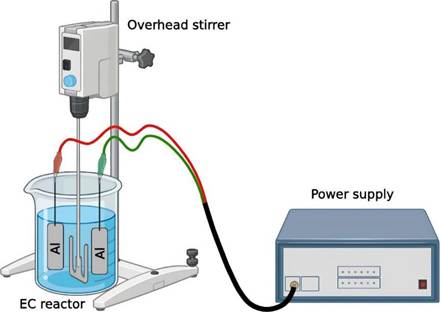
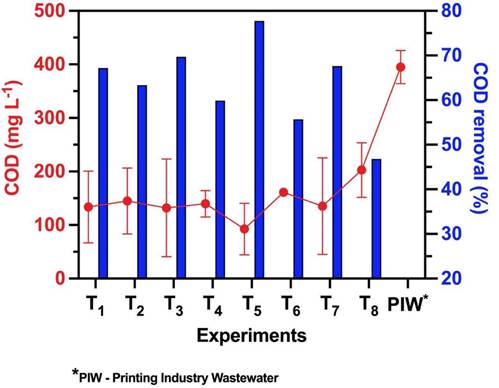
This study investigated the use of the electrocoagulation process in the treatment of wastewater generated from printing with graphic ink. The efficiency of the electrocoagulation process was assessed employing the following study variables in the experimental tests: electrolyte concentration (1 g L-1 and 2 g L-1), electric current intensity (2 A and 4 A), and stirring speed (400 rpm and 800 rpm). The experimental tests were conducted in a batch reactor with a monopolar parallel electrical connection for 30 min. The performance of the electrocoagulation process evinced a 76.54% reduction in COD, 96.09% turbidity removal and 76% color removal. The results obtained with the application of the acute toxicity tests with the freshwater microcrustacean Daphnia magna (Crustacea, Cladocera) revealed a considerable reduction of the toxicological risk of the printing ink wastewater stemming from the electrocoagulation process. The acute toxicity tests point to values in the range from 11.50% to 85.92% in terms of lethal concentration (LC50) after 48 h of exposure of microcrustacean Daphnia magna. Comparatively, the lethal concentration for the wastewater stemming from the printing process with printing ink presented a value of 0.11%, indicating substantial sensitivity to the possible toxic compounds present in the wastewater.
Keywords:
acute toxicity; COD; electrocoagulation; printing ink; wastewater
 Thumbnail
 Thumbnail