 Effect of respiratory muscle training on functional capacity related to the quality of life of patients undergoing coronary artery bypass grafting with cardiopulmonary bypass: randomized clinical trial
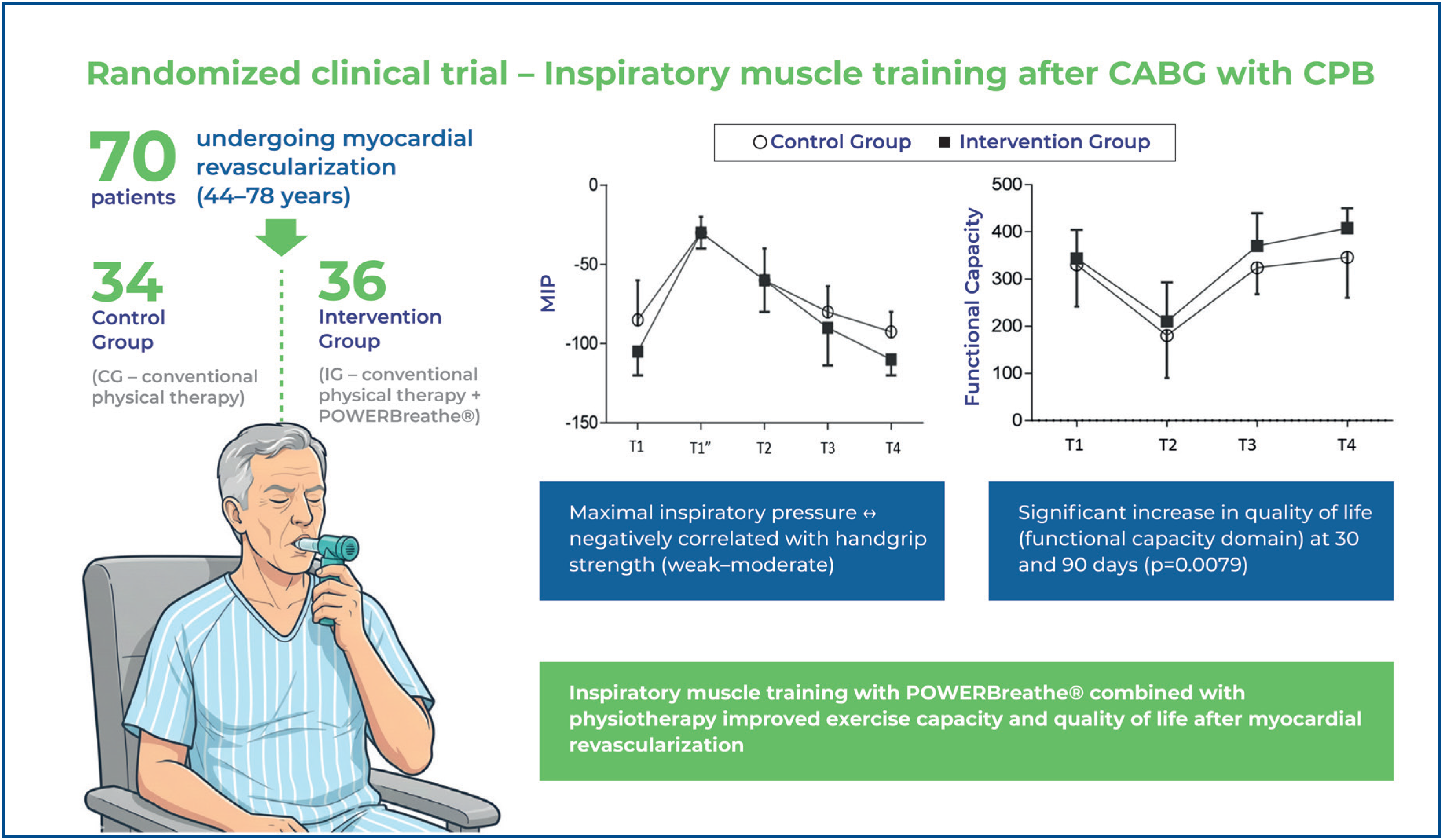
Objective: To evaluate the effects of inspiratory muscle training using POWERbreathe® in patients undergoing myocardial revascularization with extracorporeal circulation, focusing on respiratory and peripheral muscle strength, exercise capacity, functional independence, and quality of life, from hospitalization to a 30 and 90 day followup.
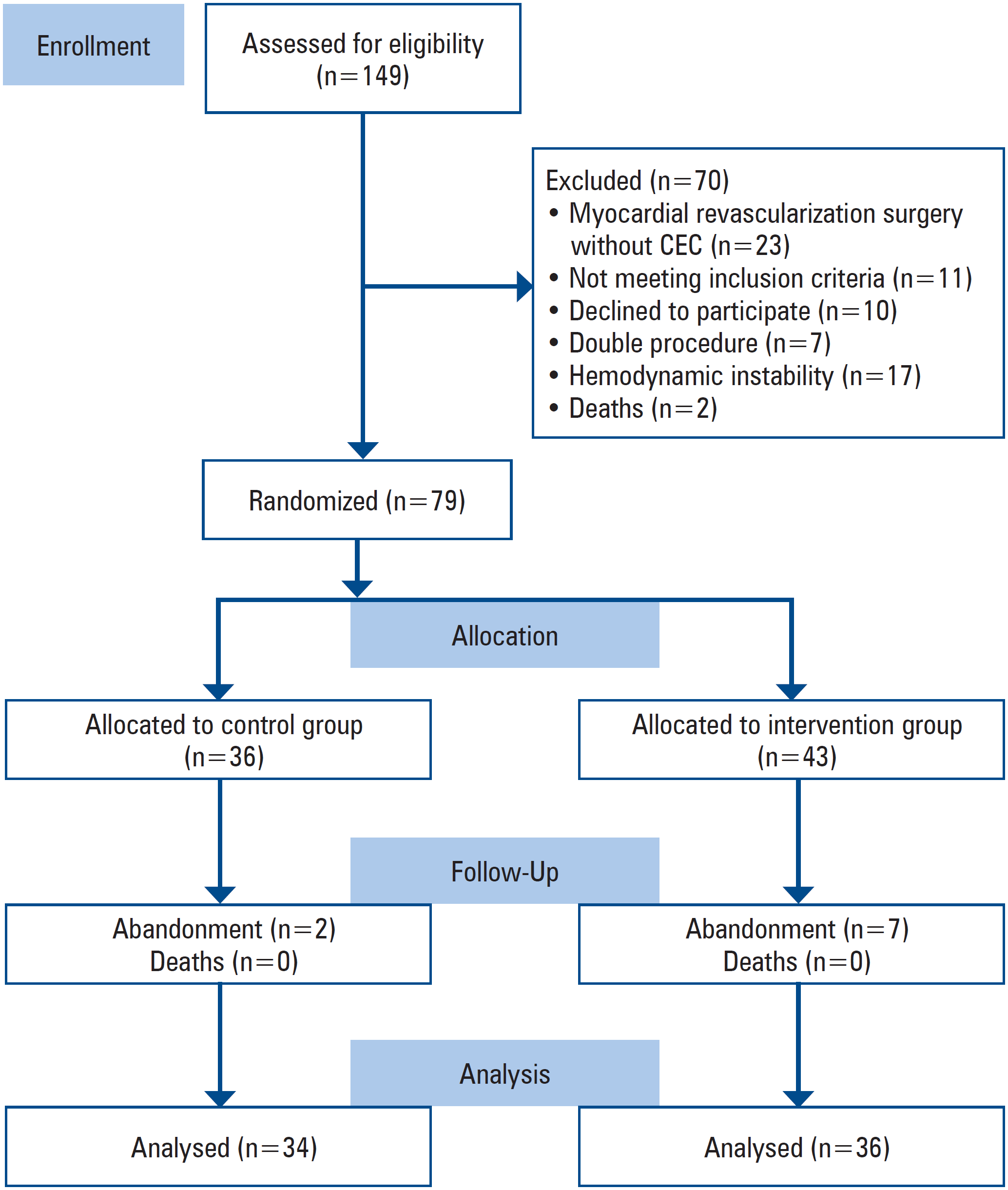
Methods: This randomized controlled clinical trial included 70 patients aged 44-78 years who were randomized into two groups. The Control Group underwent conventional physical therapy (Control Group, n=34), whereas the Intervention Group underwent conventional physical therapy combined with inspiratory muscle training using POWERbreathe® (Intervention Group, n=36). Respiratory and peripheral muscle strength, capacity, functional independence, and quality of life were evaluated preoperatively and 5, 30, and 90 days after surgery.
Results: A statistically significant increase in exercise capacity in the Intervention Group was observed 90 days after surgery (p=0.0192), as well as in the functional capacity domain of quality of life at 30 and 90 days after surgery (p=0.0079). The maximal inspiratory pressure and handgrip strength showed a negative correlation, ranging from weak to moderate intensity, in both groups over time.
Conclusion: Inspiratory muscle training with the POWERBreathe combined with physical therapy improves exercise capacity and quality of life in patients undergoing myocardial revascularization. Prospero database registration: RBR-2p4mz5.
Keywords:
Thoracic surgery; Breathing exercises; Rehabilitation; Physical therapy modalities
■Cardiovascular diseases reduce exercise tolerance and impair quality of life.
■Quality of life monitoring is essential after cardiac surgery.
■Poor postoperative quality of life predicts worse functional recovery.
■Inspiratory muscle training improves exercise capacity and quality of life.
Patients undergoing coronary artery bypass grafting with cardiopulmonary bypass frequently experience reduced functional capacity, respiratory impairment, and decreased quality of life. Despite advances in perioperative care, evidence of the role of inspiratory muscle training in this setting is limited. Ribeiro et al. proposed a randomized controlled clinical trial to evaluate the effects of inspiratory muscle training using an electronic device (POWERbreathe®) in patients undergoing cardiac surgery with cardiopulmonary bypass.
 Thumbnail