 Outcomes and other characteristics of the nutritional screening and assessment tools validation processes in hospitalized adults: a systematic review
ABSTRACT
Background: Hospital malnutrition has been studied for decades; however, its prevalence remains high, and research in this area is still relevant. Nutritional screening and assessment tools are routinely used in hospital settings.
Objective: We aimed to describe and discuss the general characteristics of studies that used nutritional screening and assessment instruments in hospitalized adult populations, with a focus on clinical outcomes.
Methods: We conducted a systematic review without meta-analysis. Eligible studies were original prospective or retrospective studies published in Portuguese or English, with no inception date, conducted in hospitalized adult populations, and reporting clinical outcomes. Information sources included PubMed, LILACS, Web of Science, Embase, and Scopus. The search covered articles published up to July 2022. Risk of bias was assessed for all included studies using the Quality Assessment of Diagnostic Accuracy Studies-2 (QUADAS-2) tool. Results presented in the tables were transcribed from the main findings of each evaluated study, and no new statistical analyses were performed.
Results: Seventy-seven studies were included, encompassing 20 tools evaluated in hospital settings. The Mini Nutritional Assessment was the most extensively tested in relation to clinical outcomes. Among studies conducted in Brazilian populations, the nutritional assessment tool Subjective Global Assessment and the screening tool Nutritional Risk Screening 2002 were the most frequently studied. Among full-text articles assessed for tool evaluation in hospitals, 77% were excluded because clinical outcomes were not reported.
Discussion: The evidence has some limitations. First, the exclusive focus on hospitalized populations may limit generalizability. Second, validation studies that did not evaluate clinical outcomes were not described in detail. Third, the use of "clinical outcomes" as a search term may have led to an underestimation of validation studies focusing solely on diagnostic or screening performance. Overall, nutritional screening and assessment tools commonly used in daily practice have been validated many years ago, largely based on subjective clinical assessments, with relatively few studies reporting clinical outcomes. In addition, most studies were single-center and conducted predominantly in non–Latin American populations. Future research should prioritize multicenter designs, improve population representativeness, and incorporate clinically relevant outcomes.
Prospero database registration: ID CRD42022347507.
Keywords:
Nutrition assessment; Malnutrition; Risk factors; Screening
INTRODUCTION
Hospital malnutrition has been studied for decades; however, its prevalence remains high, highlighting the continued importance of research in this field.(1,2) Hospital malnutrition is associated with poor prognosis, a high risk of complications, functional impairment, increased morbidity and mortality, prolonged hospital stays, and high readmission rates.(3) In addition, malnutrition imposes a substantial economic burden on healthcare systems.(4,5)
Nutritional screening is an essential first step in identifying patients at nutritional risk and should be performed at hospital admission by nutritionists or other healthcare professionals.(6-9) Screening should be quick and straightforward and can be completed by any trained healthcare professional within 24–48 hours of admission.(6-9) Patients identified as being at nutritional risk should then undergo a comprehensive nutritional assessment; those not at risk may be rescreened within 7 days. Despite their clinical importance, many nutritional screening tools currently in use were validated approximately two decades ago.(10-12)
Nutritional assessment is a systematic and comprehensive process that integrates nutritional and clinical information and provides the basis for planning nutrition interventions.(13,14) In hospital practice, validated tools are commonly used for assessment, although they are often regarded as semi–gold standards.(13,14) Key limitations include the lack of a single standard tool and heterogeneity in assessed parameters, validation methods, and reported outcomes, which may contribute to misclassification of malnutrition.(14,15)Notably, some widely used nutritional tools were originally validated in retrospective studies and/or relied primarily on subjective parameters or laboratory tests.(12,16)
OBJECTIVE
We aim to describe and discuss the general characteristics of studies that validated nutritional screening and assessment instruments in hospitalized adult populations, with a focus on clinical outcomes.
METHODS
This systematic review was conducted without meta-analysis and was reported in accordance with the Preferred Reporting Items for Systematic Reviews and Meta-Analyses (PRISMA) guidelines.(17)
Eligibility criteria
We included original prospective or retrospective studies published in Portuguese or English, with no restriction on inception date, conducted in hospitalized adult human populations, and reporting clinical outcomes. We excluded reviews, editorials, and case reports.
Information sources
We searched PubMed, LILACS, Web of Science, Embase, and Scopus for articles published up to July 2022.
Search strategy
The main search strategy used in this review (initiated with a PubMed/MEDLINE search) is described below: (((("malnutrition"[MeSH Terms]) AND ((("mass screening"[MeSH Terms]) OR ("nutrition assessment"[MeSH Terms])))) AND (("physical functional performance"[MeSH Terms]) OR ("treatment outcome"[MeSH Terms]))) OR ((((((((("mass screening"[Title/Abstract]) OR ("nutrition assessment"[Title/Abstract])) OR ("nutritional risk screening"[Title/Abstract])) OR ("mini nutritional assessment short form"[Title/Abstract])) OR ("sga"[Title/Abstract])) OR ("subjective global assessment"[Title/Abstract])) OR ("mini nutritional assessment"[Title/Abstract])) AND ((("malnutrition"[Title/Abstract]) OR ("malnourish"[Title/Abstract])) OR ("malnourished"[Title/Abstract]))) AND (("physical functional performance"[Title/Abstract]) OR ("functionality"[Title/Abstract])))) OR ((((((((("mass screening"[Text Word]) OR ("nutrition assessment"[Text Word])) OR ("nutritional risk screening"[Text Word])) OR ("mini nutritional assessment short form"[Text Word])) OR ("sga"[Text Word])) OR ("subjective global assessment"[Text Word])) OR ("mini nutritional assessment"[Text Word])) AND ((("malnutrition"[Text Word]) OR ("malnourish"[Text Word])) OR ("malnourished"[Text Word]))) AND (("physical functional performance"[Text Word]) OR ("functionality"[Text Word]))).
Selection process
Three independent researchers systematically identified studies, with support from a librarian from the Instituto de Ensino e Pesquisa Albert Einstein. Study selection was managed using Rayyan (Cambridge, MA, USA; 2023).(18) Titles and abstracts were screened against the inclusion criteria. Disagreements were resolved through reassessment and discussion in a formal consensus meeting.
Data collection process and data items
For studies included in the full-text analysis, we extracted the following information: country, study design, population, place of hospitalization, diagnosis, tool(s) evaluated, comparators, number of centers, inclusion criteria, sample size, outcomes/metrics, and main results. Data were transcribed directly from the included articles to minimize interpretation bias. Study design (prospective vs retrospective) was not always explicitly reported; in such cases, we classified design based on the described methodology for the purposes of tabulation. When variables were not clearly reported, they were recorded as "not specified."
Study risk bias, reporting bias, and certainty assessment
Risk of bias was assessed for all included studies using the Quality Assessment of Diagnostic Accuracy Studies-2 (QUADAS-2) tool. A calibration meeting was held before assessment to standardize interpretation of each domain. Five authors conducted the assessments independently, and two authors subsequently reviewed all ratings in full, including one reviewer who had not participated in the initial assessments. Discrepancies were resolved by consensus. All authors reviewed the final report after manuscript completion.
Effect measures
Because the data were not suitable for meta-analysis, only descriptive analyses were performed.
Synthesis methods
We verified eligibility by confirming study design, publication language, and population characteristics (human adults hospitalized in a hospital setting) based on the Methods sections of the included articles. The results presented in the tables were transcribed from the main findings of each evaluated study, and no new statistical analyses were performed. References were managed using Mendeley (Mendeley Ltd., United Kingdom; version 2.80.1; 2022).
RESULTS
Study selection
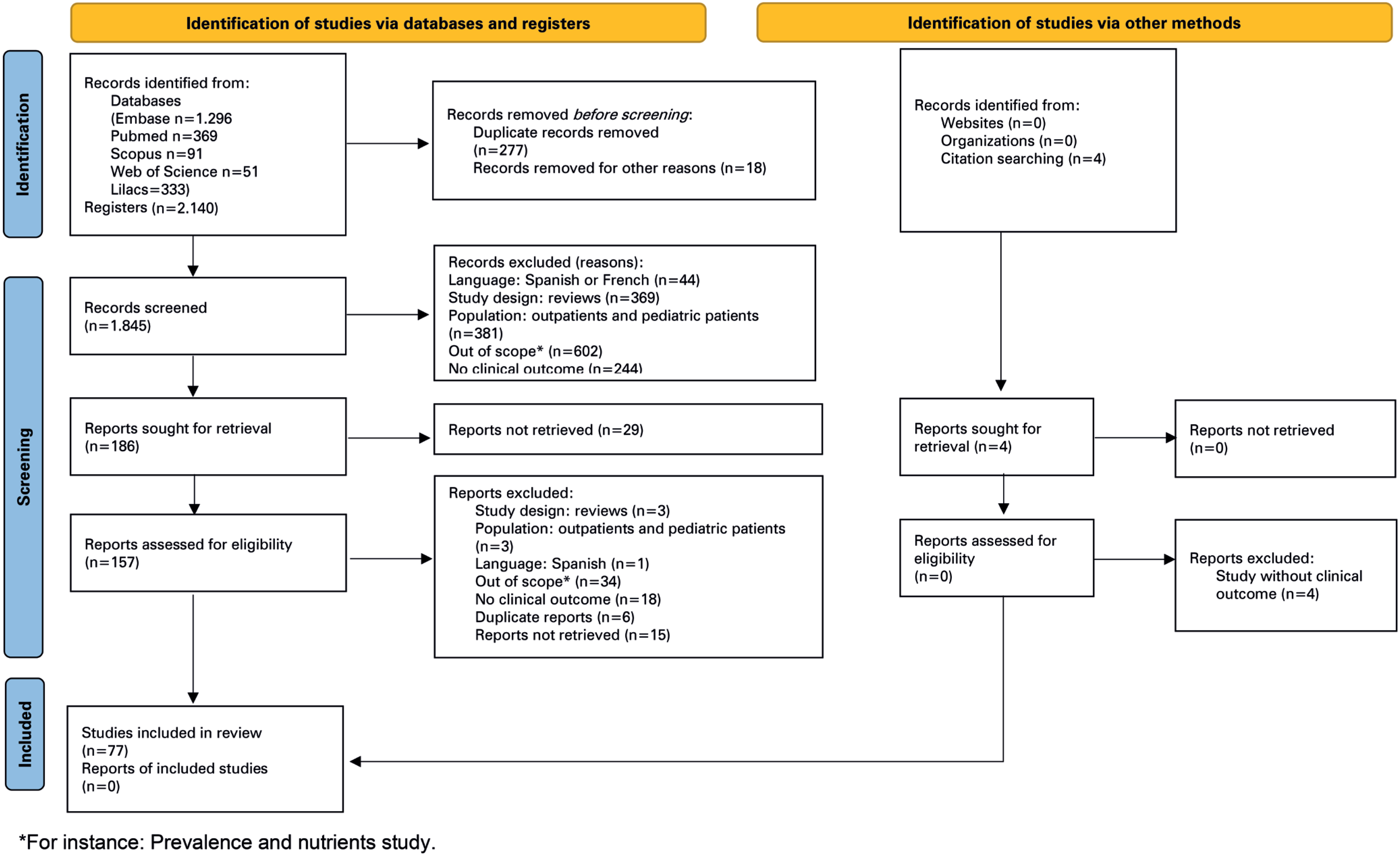
A total of 2,140 articles were found by the search strategy. After peer analysis and evaluation, 77 studies were included in the final analysis. Figure 1 provides the flowchart of article selection and the reasons for exclusions.
Study characteristics
Among the articles eligible for the evaluation of nutritional tools, 77% were excluded from the analysis because clinical outcomes were not considered in any of the analyses. The results below detail the 77 studies included because they used clinical outcomes in testing nutritional tools.
The included studies involved populations from 31 countries. Twenty-one studies (28%) had a prospective observational design, and 19 (25%) were prospective cohort studies. Overall, 77% were conducted in single-center settings, while 18% were multicenter studies. In 30 studies, only populations aged >60 years were evaluated. Most studies included clinical and surgical patients (90%).
Regarding outcomes, 51 studies (66%) assessed mortality, and 34 assessed length of hospital stay (44%). Functional outcomes, such as frailty and functional capacity, were evaluated in only six studies (8%).
Overall, 20 tools were tested in the hospital setting: Mini Nutritional Assessment (MNA), Mini Nutritional Assessment Short Form (MNA-SF), Nutritional Risk Screening 2002 (NRS 2002), Malnutrition Universal Screening Tool (MUST), Malnutrition Screening Tool (MST), Modified Nutrition Risk in Critically Ill (m-NUTRIC), Nutrition Risk in Critically Ill (NUTRIC), Subjective Global Assessment (SGA), Patient-Generated Subjective Global Assessment (PG-SGA), Geriatric Nutritional Risk Index (GNRI), Malnutrition-related Complications Score (MCRS), Automated Nutrition Score (ANS), Prognostic Nutritional Index (PNI), Controlling Nutritional Status (CONUT), Onodera's Prognostic Nutritional Index (O-PNI), Short Nutritional Assessment Questionnaire (SNAQ), Royal Free Hospital-Nutritional Prioritizing Tool (HFR-TNP), 3-Minute Nutrition Screening (3-MinNS), European Society for Clinical Nutrition and Metabolism Diagnostic Criteria for Malnutrition (ESPEN-DCM), and Academy of Nutrition and Dietetics-European Society for Clinical Nutrition and Metabolism Criteria (AND-ESPEN). Studies evaluating the Global Leadership Initiative on Malnutrition (GLIM) criteria in combination with tools were also included.
Risk of bias in studies:
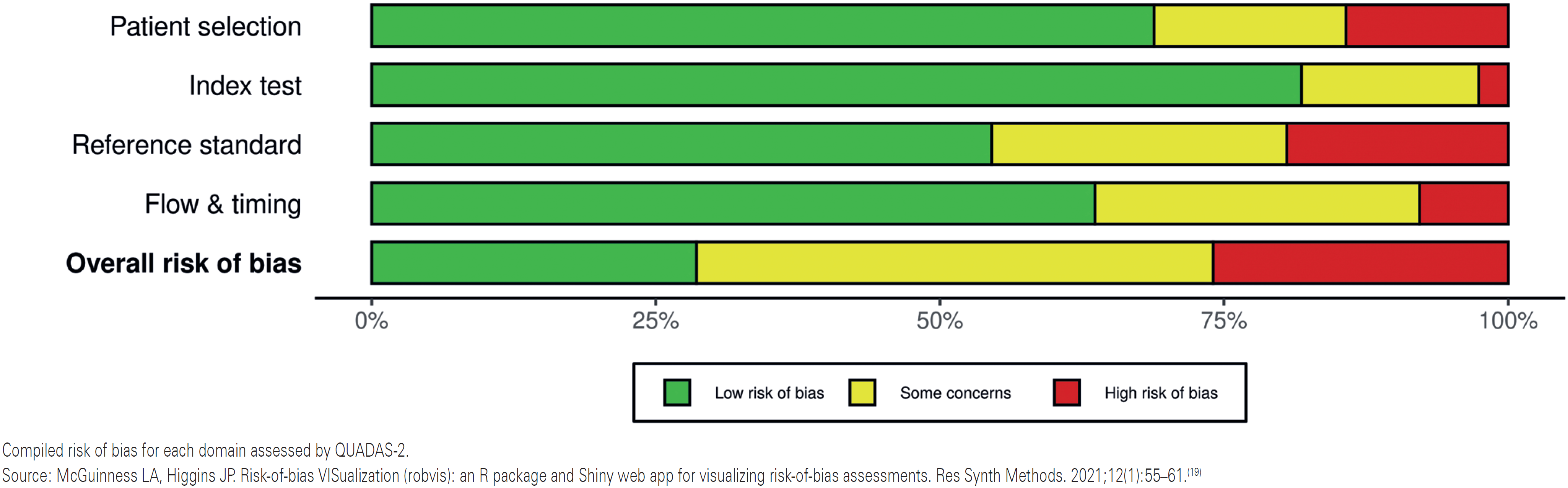
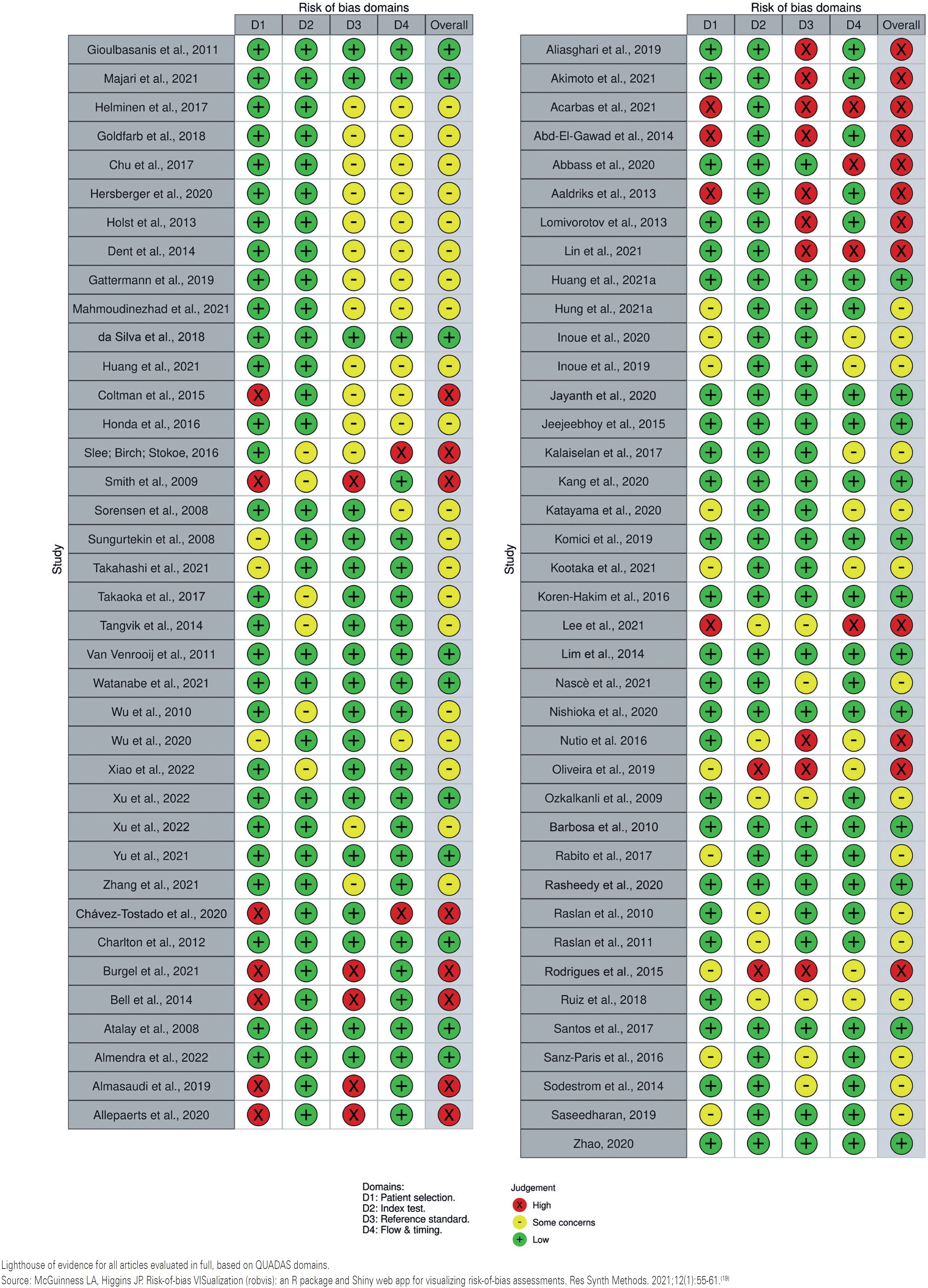
Risk of bias is summarized in figure 2 and presented by article in figure 3. Overall, approximately 30% of studies were rated as low risk of bias, 45% as some concerns, and 25% as high risk.
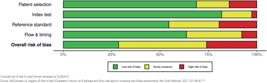
Summary of risk of bias for each domain and overall risk in the included studies assessed using QUADAS-2
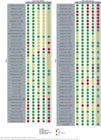
Results of individual studies:
The comprehensive analysis of the retrieved articles is presented in table 1. Table 2 provides a summary of the tools discussed, along with their respective outcomes.
Tools evaluated in the included studies and the evidence of positive outcomes associated with their use
Results of syntheses
Results are presented below, highlighting clinical outcomes and the tested instruments.
The MNA and MNA-SF nutritional tools were studied in 21% of trials related to clinical outcomes,(20,24,27,53,67,75,80,82,94) length of hospital stays,(51,55) readmission,(77) postoperative complications,(64) functional outcomes,(69) and chemotherapy toxicity.(63) Notably, the MNA-SF screening tool demonstrated strong predictive value for mortality.(22-24,34,53,75,77,93)
Other nutritional screening tools also demonstrated an association with mortality in the studies included: 8% NRS 2002,(25,30,36,48,49,88) 5% MUST,(41,56,78,86) 5% NUTRIC,(32,72,95) 5% GNRI,(33,61,68) 3% m-NUTRIC,(72,83) HFR-TNP,(44) 1% AND-ESPEN,(52) 1%MST,(91) 1% NRS modified,(40) and 1% 3-MinNS.(79)
Regarding nutritional assessment tools, evidence of mortality prediction was found for 5% PG-SGA,(65,90,92) 5% SGA,(37,65,89) and 1%ESPEN-DCM.(76)
In terms of hospital length of stay, the tools that demonstrated an association were 9% SGA,(28,37,39,43,71,85,95) 3% MNA,(51,64) 1% AND-ESPEN,(52) and 1% O-PNI(39) among the assessment tools; and 5% NRS 2002,(39,88,95) 5% MUST,(39,56,64) 3% MST,(86,91) 1% MUST modified,(41) 1%CONUT,(39) 1% 3-MinNS,(79) 1% SNAQ,(86) and 1% m-NUTRIC(72) among the screening tools.
CONUT demonstrated predictive value for postoperative complications, survival, performance, and quality of life across six studies.(38,45,50,59,60,68) ANS was the only screening tool that did not show a positive relationship with clinical outcomes in the included studies.
Functional capacity was evaluated in four studies, with reported associations for MNA-SF,(69) SGA,(29) MUST,(49) and GNRI tools.(87)
When stratifying the analysis for Latin populations, only 13 of the 77 studies (17%) were conducted in this subgroup, with 11 (14%) conducted in Brazil.
Of the Brazilian studies, only one was multicenter; the median sample size was 470 patients, and 7 studies were prospective. Mortality and hospital length of stay were the most frequently assessed outcomes. Among tools analyzed in Brazilian populations, SGA (assessment) and NRS 2002 (screening) were the most studied. In two studies,(85,89) the combination of SGA and NRS 2002 provided more reliable results for length of hospital stay, complications, and mortality among hospitalized individuals.
Regarding tools commonly used in Brazilian hospitals, such as NRS 2002,(10) MNA,(97) MNA-SF,(98) and SGA,(99) the original validation articles did not validate these tools based on clinical outcomes. Instead, they were validated using clinical parameters such as biochemical and clinical assessments, including both positive and negative studies on the impact of nutritional therapy. These articles were considered in the PRISMA flowchart under "Identification of studies via other methods."
Concerning GLIM, it is not a screening or nutritional assessment tool but rather a set of diagnostic criteria. Six articles evaluated different criteria,(31,46,47,57,66,76) all within surgical or clinical populations. Of these, 83% were conducted in Asian populations and 83% in oncological patients. The median sample size was 711 patients, and all studies were single-center. Across studies, the initial screening tool varied (NRS 2002, MUST, MNA-SF, or ESPEN-DCM). The studies also differed in the number and combinations of GLIM variables tested and added to the initial parameters. In two studies, functional measures such as walking speed and handgrip strength were included.(66,76) In one study that analyzed variables independently, weight loss showed the highest correlation with survival, and low muscle mass identified by tomography was associated with worse outcomes.(46)
DISCUSSION
The included studies covered populations from 31 countries and were predominantly conducted in single-center settings. Across the included evidence, 20 nutritional screening and assessment tools were evaluated. Mortality was the most frequently assessed clinical outcome, whereas hospital readmission was the least frequently reported. Overall, MNA/MNA-SF appeared to be associated with the broadest range of favorable clinical endpoints. When considering mortality specifically, MNA and NRS 2002 were most consistently associated with mortality risk. Among nutritional assessment tools, the subjective instruments PG-SGA and SGA were among the most extensively studied and showed associations with clinical outcomes.
Regarding specific populations, relatively few studies evaluated critically ill patients. This gap may reflect an important limitation of applying existing screening and assessment tools in the ICU population. The European Society for Clinical Nutrition and Metabolism (ESPEN) guideline for critically ill patients also highlights limitations of conventional screening and assessment tools in this setting, particularly because most tools were not developed using variables that are sensitive to critical illness.(100) As a consensus recommendation (low level of evidence; expert opinion), ESPEN suggests considering any critically ill patient who remains in the ICU for >48 hours to be at nutritional risk (strong consensus, 96%). For nutritional assessment, ESPEN recommends detailed clinical assessment given the lack of a specific screening tool for this population (strong consensus, 100%).(100) Together, these points support the need for additional prospective, multicenter studies to validate tools for critically ill patients or to develop instruments that incorporate ICU-relevant variables, given the high risk of pre-existing malnutrition and the catabolic response associated with critical illness.
In the context of GLIM, the heterogeneity of populations, variables, and tested combinations identified in this review limits direct comparisons across studies and reduces the ability to draw definitive conclusions. Similar concerns have been reported in prior literature, including a review by Fonseca et al.(101) and another review by Correia et al.(102) Establishing standardized research protocols will be important to improve comparability across populations and to support more consistent implementation of GLIM criteria alongside screening tools.
An additional limitation is the scarcity of studies involving Latin American populations (17%), particularly from Brazil (14%). This gap raises concerns regarding the reliability and applicability of commonly used tools in these settings, as population-specific socioeconomic and clinical characteristics may not be adequately represented in the broader evidence base.(103) Future studies should prioritize Latin American populations and explicitly consider socioeconomic disparities and context-specific determinants that may influence nutritional risk and clinical outcomes.
Finally, further research is needed that prioritizes clinically relevant outcomes, evaluates distinct subpopulations, and assesses both established tools and the development of new instruments. Machine-learning approaches, supported by large clinical databases, may enable the development of simpler and more accurate tools that integrate screening and assessment functions to better guide nutrition interventions. However, clinical studies combining nutritional screening or assessment with machine learning remain limited. Notably, Muñoz Díaz et al.(104) combined MNA-SF with additional features in a logistic regression model and reported improved performance using a novel variable set. Duan et al.(105) used PG-SGA-based diagnoses with selected predictors in an XGBoost model to identify key predictive variables. These initiatives illustrate the potential for more efficient, concise, and accurate nutritional evaluation methods.
This study has limitations. First, the exclusive focus on hospitalized populations may limit generalizability. Second, validation studies that did not evaluate clinical outcomes were not described in detail. Third, the inclusion of "clinical outcomes" in the search strategy may have underestimated the total number of validation studies that focused primarily on diagnostic or screening performance rather than clinical endpoints.
CONCLUSION
Overall, nutritional screening and assessment tools used in routine practice were validated many years ago, often relying primarily on subjective clinical assessments and with relatively limited reporting of clinical outcomes. In addition, most studies were conducted in single-center settings and predominantly in non–Latin American populations. Future research should prioritize multicenter designs, improve population representativeness, and incorporate clinically relevant outcomes when evaluating both established and newly developed tools.
DATA AVAILABILITY
The underlying content is contained within the manuscript.
ACKNOWLEDGMENT
The authors would like to thank Daniela Alaminos for their overall support during the study period.
REFERENCES
- 1 Correia MI, Perman MI, Waitzberg DL. Hospital malnutrition in Latin America: A systematic review. Clin Nutr. 2017;36(4):958-67.
- 2 Correia MIT, Caiaffa WT, Waitzberg DL. Inquerito brasileiro de avaliaçäo nutricional hospitalar (IBRANUTRI): Metodologia do estudo multicêntrico. Rev Bras Nutri Clínica. 1998;13:30-40.
- 3 Correia MI, Waitzberg DL. The impact of malnutrition on morbidity, mortality, length of hospital stay and costs evaluated through a multivariate model analysis. Clin Nutr. 2003;22(3):235-9.
- 4 Curtis LJ, Bernier P, Jeejeebhoy K, Allard J, Duerksen D, Gramlich L, et al. Costs of hospital malnutrition. Clin Nutr. 2017;36(5):1391-6.
-
5 Kruizenga HM, Van Tulder MW, Seidell JC, Thijs A, Ader HJ, Ae M, et al. Effectiveness and cost-effectiveness of early screening and treatment of malnourished patients 1-3. 2005. Available from: https://academic.oup.com/ajcn/article-abstract/82/5/1082/4607526
» https://academic.oup.com/ajcn/article-abstract/82/5/1082/4607526 - 6 Sociedade Brasileira de Nutrição Parenteral e Enteral. Associação Brasileira de Nutrologia. Triagem e Avaliação do Estado Nutricional; 2011.
- 7 Cederholm T, Barazzoni R, Austin P, Ballmer P, Biolo G, Bischoff SC, et al. ESPEN guidelines on definitions and terminology of clinical nutrition. Clin Nutr. 2017;36(1):49-64.
- 8 Castro MG, Ribeiro PC, de Matos LB, Abreu HB, de Assis T, Barreto PA, et al. Diretriz BRASPEN de Terapia Nutricional no Paciente Grave. BRASPEN J. 2023;38(Supl 2):2-46.
- 9 Gonçalves TJ, Horie LM, Gonçalves SE, Bacchi MK, Marisa Chiconelli Bailer TG, Barrére AP, et al. Diretriz BRASPEN de terapia nutricional no envelhecimento. BRASPEN J. 2019;34(3° Supl):2-58.
- 10 Kondrup J, Allison SP, Elia M, Vellas B, Plauth M; Educational and Clinical Practice Committee, European Society of Parenteral and Enteral Nutrition (ESPEN). ESPEN guidelines for nutrition screening 2002. Clin Nutr. 2003;22(4):415-21.
- 11 Guigoz Y, Vellas B, Garry PJ. Assessing the nutritional status of the elderly: the Mini Nutritional Assessment as part of the geriatric evaluation. Nutr Rev. 1996;54(1 Pt 2):S59-65.
- 12 Detsky AS, McLaughlin JR Jr, Baker JP, Johnston N, Whittaker S, Mendelson RA, et al. What is subjective global assessment of nutritional status? JPEN J Parenter Enteral Nutr. 1987;11(1):8-13.
- 13 Mueller C, Compher C, Ellen DM; American Society for Parenteral and Enteral Nutrition (A.S.P.E.N.) Board of Directors. A.S.P.E.N. clinical guidelines: nutrition screening, assessment, and intervention in adults. JPEN J Parenter Enteral Nutr. 2011;35(1):16-24.
- 14 Cederholm T, Jensen GL, Correia MI, Gonzalez MC, Fukushima R, Higashiguchi T, Baptista G, Barazzoni R, Blaauw R, Coats A, Crivelli A, Evans DC, Gramlich L, Fuchs-Tarlovsky V, Keller H, Llido L, Malone A, Mogensen KM, Morley JE, Muscaritoli M, Nyulasi I, Pirlich M, Pisprasert V, de van der Schueren MA, Siltharm S, Singer P, Tappenden K, Velasco N, Waitzberg D, Yamwong P, Yu J, Van Gossum A, Compher C; GLIM Core Leadership Committee; GLIM Working Group. GLIM criteria for the diagnosis of malnutrition - A consensus report from the global clinical nutrition community. Clin Nutr. 2019;38(1):1-9.
- 15 de van der Schueren MA, Keller H; GLIM Consortium; Cederholm T, Barazzoni R, Compher C, Correia MITD, Gonzalez MC, Jager-Wittenaar H, Pirlich M, Steiber A, Waitzberg D, Jensen GL. Global Leadership Initiative on Malnutrition (GLIM): Guidance on validation of the operational criteria for the diagnosis of protein-energy malnutrition in adults. Clin Nutr. 2020;39(9):2872-80.
- 16 Kondrup J, Rasmussen HH, Hamberg O, Stanga Z; Ad Hoc ESPEN Working Group. Nutritional risk screening (NRS 2002): a new method based on an analysis of controlled clinical trials. Clin Nutr. 2003;22(3):321-36.
- 17 Page MJ, McKenzie JE, Bossuyt PM, Boutron I, Hoffmann TC, Mulrow CD, et al. The PRISMA 2020 statement: an updated guideline for reporting systematic reviews. BMJ. 2021;372:n71.
- 18 Ouzzani M, Hammady H, Fedorowicz Z, Elmagarmid A. Rayyan-a web and mobile app for systematic reviews. Syst Rev. 2016;5(1):210.
- 19 McGuinness LA, Higgins JP. Risk-of-bias VISualization (robvis): an R package and Shiny web app for visualizing risk-of-bias assessments. Res Synth Methods. 2021;12(1):55-61.
- 20 Gioulbasanis I, Baracos VE, Giannousi Z, Xyrafas A, Martin L, Georgoulias V, et al. Baseline nutritional evaluation in metastatic lung cancer patients: mini Nutritional Assessment versus weight loss history. Ann Oncol. 2011; 22(4):835-41.
- 21 Majari K, Imani H, Hosseini S, Amirsavadkouhi A, Ardehali SH, Khalooeifard R. Comparison of Modified NUTRIC, NRS-2002, and MUST Scores in Iranian critically ill patients admitted to intensive care units: a prospective cohort study. JPEN J Parenter Enteral Nutr. 2021;45(7):1504-13.
- 22 Helminen H, Luukkaala T, Saarnio J, Nuotio M. Comparison of the Mini-Nutritional Assessment short and long form and serum albumin as prognostic indicators of hip fracture outcomes. Injury. 2017;48(4):903-8.
- 23 Goldfarb M, Lauck S, Webb JG, Asgar AW, Perrault LP, Piazza N, et al. Malnutrition and mortality in frail and non-frail older adults undergoing aortic valve replacement. Circulation. 2018;138(20):2202-11.
- 24 Chu CS, Liang CK, Chou MY, Lu T, Lin YT, Chu CL. Mini-Nutritional Assessment Short-Form as a useful method of predicting poor 1-year outcome in elderly patients undergoing orthopedic surgery. Geriatr Gerontol Int. 2017;17(12):2361-8.
- 25 Hersberger L, Bargetzi L, Bargetzi A, Tribolet P, Fehr R, Baechli V, et al. Nutritional risk screening (NRS 2002) is a strong and modifiable predictor risk score for short-term and long-term clinical outcomes: secondary analysis of a prospective randomised trial. Clin Nutr. 2020;39(9):2720-9.
- 26 Holst M, Yifter-Lindgren E, Surowiak M, Nielsen K, Mowe M, Carlsson M, et al. Nutritional screening and risk factors in elderly hospitalized patients: association to clinical outcome? Scand J Caring Sci. 2013;27(4):953-61.
- 27 Dent E, Chapman IM, Piantadosi C, Visvanathan R. Performance of nutritional screening tools in predicting poor six-month outcome in hospitalised older patients. Asia Pac J Clin Nutr. 2014;23(3):394-9.
- 28 Gattermann Pereira T, da Silva Fink J, Tosatti JA, Silva FM. Subjective global assessment can be performed in critically ill surgical patients as a predictor of poor clinical outcomes. Nutr Clin Pract. 2019;34(1):131-6.
- 29 Mahmoudinezhad M, Khalili M, Rezaeemanesh N, Farhoudi M, Eskandarieh S. Subjective global assessment of malnutrition and dysphagia effect on the clinical and Para-clinical outcomes in elderly ischemic stroke patients: a community-based study. BMC Neurol. 2021;21(1):466.
- 30 da Silva Fink J, Marcadenti A, Rabito EI, Silva FM. The New European Society for Clinical Nutrition and Metabolism Definition of Malnutrition: Application for nutrition assessment and prediction of morbimortality in an emergency service. JPEN J Parenter Enteral Nutr. 2018;42(3):550-6.
- 31 Huang DD, Yu DY, Song HN, Wang WB, Luo X, Wu GF, et al. The relationship between the GLIM-defined malnutrition, body composition and functional parameters, and clinical outcomes in elderly patients undergoing radical gastrectomy for gastric cancer. Eur J Surg Oncol. 2021;47(9):2323-31.
- 32 Coltman A, Peterson S, Roehl K, Roosevelt H, Sowa D. Use of 3 tools to assess nutrition risk in the intensive care unit. JPEN J Parenter Enteral Nutr. 2015;39(1):28-33.
- 33 Honda Y, Nagai T, Iwakami N, Sugano Y, Honda S, Okada A, Asaumi Y, Aiba T, Noguchi T, Kusano K, Ogawa H, Yasuda S, Anzai T; NaDEF investigators. Usefulness of Geriatric Nutritional Risk Index for Assessing Nutritional Status and Its Prognostic Impact in Patients Aged ≥65 Years With Acute Heart Failure. Am J Cardiol. 2016;118(4):550-5.
- 34 Slee A, Birch D, Stokoe D. The relationship between malnutrition risk and clinical outcomes in a cohort of frail older hospital patients. Clin Nutr ESPEN. 2016;15:57-62.
- 35 Smith RC, Ledgard JP, Doig G, Chesher D, Smith SF. An effective automated nutrition screen for hospitalized patients. Nutrition. 2009;25(3):309-15.
- 36 Sorensen J, Kondrup J, Prokopowicz J, Schiesser M, Krähenbühl L, Meier R, Liberda M; EuroOOPS study group. EuroOOPS: an international, multicentre study to implement nutritional risk screening and evaluate clinical outcome. Clin Nutr. 2008;27(3):340-9.
- 37 Sungurtekin H, Sungurtekin U, Oner O, Okke D. Nutrition assessment in critically ill patients. Nutr Clin Pract. 2008;23(6):635-41.
- 38 Takahashi M, Sowa T, Tokumasu H, Gomyoda T, Okada H, Ota S, et al. Comparison of three nutritional scoring systems for outcomes after complete resection of non-small cell lung cancer. J Thorac Cardiovasc Surg. 2021;162(4):1257-1268.e3.
- 39 Takaoka A, Sasaki M, Nakanishi N, Kurihara M, Ohi A, Bamba S, et al. Nutritional screening and clinical outcome in hospitalized patients with Crohn's disease. Ann Nutr Metab. 2017;71(3-4):266-72.
- 40 Tangvik RJ, Tell GS, Eisman JA, Guttormsen AB, Henriksen A, Nilsen RM, et al. The nutritional strategy: four questions predict morbidity, mortality and health care costs. Clin Nutr. 2014;33(4):634-41.
- 41 van Venrooij LM, van Leeuwen PA, Hopmans W, Borgmeijer-Hoelen MM, de Vos R, De Mol BA. Accuracy of quick and easy undernutrition screening tools – Short Nutritional Assessment Questionnaire, Malnutrition Universal Screening Tool, and modified Malnutrition Universal Screening Tool – in patients undergoing cardiac surgery. J Am Diet Assoc. 2011;111(12):1924-30.
- 42 Watanabe D, Miura K, Yamashita A, Minowa T, Uehara Y, Mizushima S, et al. A Comparison of the predictive role of the geriatric nutritional risk index and immunonutritional parameters for postoperative complications in elderly patients with renal cell carcinoma. J Invest Surg. 2021;34(10):1072-7.
- 43 Wu B, Yin TT, Cao W, Gu ZD, Wang X, Yan M, et al. Validation of the Chinese version of the Subjective Global Assessment scale of nutritional status in a sample of patients with gastrointestinal cancer. Int J Nurs Stud. 2010;47(3):323-31.
- 44 Wu Y, Zhu Y, Feng Y, Wang R, Yao N, Zhang M, et al. Royal Free Hospital-Nutritional Prioritizing Tool improves the prediction of malnutrition risk outcomes in liver cirrhosis patients compared with Nutritional Risk Screening 2002. Br J Nutr. 2020;124(12):1293-302.
- 45 Xiao Q, Li X, Duan B, Li X, Liu S, Xu B, et al. Clinical significance of controlling nutritional status score (CONUT) in evaluating outcome of postoperative patients with gastric cancer. Sci Rep. 2022;12(1):93.
- 46 Xu LB, Mei TT, Cai YQ, Chen WJ, Zheng SX, Wang L, et al. Correlation between components of malnutrition diagnosed by global leadership initiative on malnutrition criteria and the clinical outcomes in gastric cancer patients: a propensity score matching analysis. Front Oncol. 2022;12:851091.
- 47 Xu LB, Shi MM, Huang ZX, Zhang WT, Zhang HH, Shen X, et al. Impact of malnutrition diagnosed using Global Leadership Initiative on Malnutrition criteria on clinical outcomes of patients with gastric cancer. JPEN J Parenter Enteral Nutr. 2022;46(2):385-94.
- 48 Yu J, Li D, Jia Y, Li F, Jiang Y, Zhang Q, et al. Nutritional Risk Screening 2002 was associated with acute kidney injury and mortality in patients with acute coronary syndrome: insight from the REACP study. Nutr Metab Cardiovasc Dis. 2021;31(4):1121-8.
- 49 Zhang M, Ye S, Huang X, Sun L, Liu Z, Liao C, et al. Comparing the prognostic significance of nutritional screening tools and ESPEN-DCM on 3-month and 12-month outcomes in stroke patients. Clin Nutr. 2021;40(5):3346-53.
- 50 Chávez-Tostado M, Cervantes-Guevara G, López-Alvarado SE, Cervantes-Pérez G, Barbosa-Camacho FJ, Fuentes-Orozco C, et al. Comparison of nutritional screening tools to assess nutritional risk and predict clinical outcomes in Mexican patients with digestive diseases. BMC Gastroenterol. 2020;20(1):79.
- 51 Charlton K, Nichols C, Bowden S, Milosavljevic M, Lambert K, Barone L, et al. Poor nutritional status of older subacute patients predicts clinical outcomes and mortality at 18 months of follow-up. Eur J Clin Nutr. 2012;66(11):1224-8.
- 52 Burgel CF, Teixeira PP, Leites GM, Carvalho GD, Modanese PV, Rabito EI, et al. Concurrent and Predictive Validity of AND-ASPEN Malnutrition Consensus Is Satisfactory in Hospitalized Patients: A Longitudinal Study. JPEN J Parenter Enteral Nutr. 2021;45(5):1061-71.
- 53 Bell JJ, Bauer JD, Capra S, Pulle RC. Concurrent and predictive evaluation of malnutrition diagnostic measures in hip fracture inpatients: a diagnostic accuracy study. Eur J Clin Nutr. 2014;68(3):358-62.
- 54 Atalay BG, Yaǧmur C, Nursal TZ, Atalay H, Noyan T. Use of subjective global assessment and clinical outcomes in critically ill geriatric patients receiving nutrition support. JPEN J Parenter Enteral Nutr. 2008;32(4):454-9.
- 55 Almendra AA, Leandro-Merhi VA, Aquino JL. Agreement between nutritional screening instruments in hospitalized older patients. Arq Gastroenterol. 2022;59(1):145-9.
- 56 Almasaudi AS, McSorley ST, Dolan RD, Edwards CA, McMillan DC. The relation between Malnutrition Universal Screening Tool (MUST), computed tomography-derived body composition, systemic inflammation, and clinical outcomes in patients undergoing surgery for colorectal cancer. Am J Clin Nutr. 2019;110(6):1327-34.
- 57 Allepaerts S, Buckinx F, Bruyère O, Reginster JY, Paquot N, Gillain S. Clinical impact of nutritional status and energy balance in elderly hospitalized patients. J Nutr Health Aging. 2020;24(10):1073-9.
- 58 Aliasghari F, Izadi A, Khalili M, Farhoudi M, Ahmadiyan S, Deljavan R. Impact of premorbid malnutrition and dysphagia on ischemic stroke outcome in elderly patients: a community-based study. J Am Coll Nutr. 2019;38(4):318-26.
- 59 Akimoto T, Hara M, Morita A, Uehara S, Nakajima H. Relationship between Nutritional Scales and Prognosis in Elderly Patients after Acute Ischemic Stroke: Comparison of Controlling Nutritional Status Score and Geriatric Nutritional Risk Index. Ann Nutr Metab. 2021;77(2):116-23.
- 60 Acarbaş A, Baş NS. Which Objective Nutritional Index Is Better for the Prediction of Adverse Medical Events in Elderly Patients Undergoing Spinal Surgery? World Neurosurg. 2021;146:e106-11.
- 61 Abd-El-Gawad WM, Abou-Hashem RM, El Maraghy MO, Amin GE. The validity of Geriatric Nutrition Risk Index: simple tool for prediction of nutritional-related complication of hospitalized elderly patients. Comparison with Mini Nutritional Assessment. Clin Nutr. 2014;33(6):1108-16.
- 62 Abbass T, Dolan RD, MacLeod N, Horgan PG, Laird BJ, McMillan DC. Comparison of the prognostic value of MUST, ECOG-PS, mGPS and CT derived body composition analysis in patients with advanced lung cancer. Clin Nutr ESPEN. 2020;40:349-56.
- 63 Aaldriks AA, van der Geest LG, Giltay EJ, le Cessie S, Portielje JE, Tanis BC, et al. Frailty and malnutrition predictive of mortality risk in older patients with advanced colorectal cancer receiving chemotherapy. J Geriatr Oncol. 2013;4(3):218-26.
- 64 Lomivorotov VV, Efremov SM, Boboshko VA, Nikolaev DA, Vedernikov PE, Deryagin MN, et al. Prognostic value of nutritional screening tools for patients scheduled for cardiac surgery. Interact Cardiovasc Thorac Surg. 2013;16(5):612-8.
- 65 Lin HS, Lin MS, Chi CC, Ye JJ, Hsieh CC. Nutrition assessment and adverse outcomes in hospitalized patients with tuberculosis. J Clin Med. 2021;10(12):2702.
- 66 Huang DD, Wu GF, Luo X, Song HN, Wang WB, Liu NX, et al. Value of muscle quality, strength and gait speed in supporting the predictive power of GLIM-defined malnutrition for postoperative outcomes in overweight patients with gastric cancer. Clin Nutr. 2021;40(6):4201-8.
- 67 Hung CY, Hsueh SW, Lu CH, Chang PH, Chen PT, Yeh KY, et al. A prospective nutritional assessment using Mini Nutritional Assessment-short form among patients with head and neck cancer receiving concurrent chemoradiotherapy. Support Care Cancer. 2021;29(3):1509-18.
- 68 Inoue K, Matsumoto T, Yamashita S, Yoshiga R, Yoshiya K, Matsubara Y, et al. Malnutrition diagnosed by controlling nutrition status is a negative predictor of life prognosis in aortic arch aneurysm patients treated with thoracic endovascular aneurysm repair. Vascular. 2020;28(1):31-41.
- 69 Inoue T, Misu S, Tanaka T, Kakehi T, Ono R. Acute phase nutritional screening tool associated with functional outcomes of hip fracture patients: A longitudinal study to compare MNA-SF, MUST, NRS-2002 and GNRI. Clin Nutr. 2019;38(1):220-6.
- 70 Jayanth KS, Maroju NK. Utility of nutritional indices in preoperative assessment of cancer patients. Clin Nutr ESPEN. 2020;37:141-7.
- 71 Jeejeebhoy KN, Keller H, Gramlich L, Allard JP, Laporte M, Duerksen DR, et al. Nutritional assessment: comparison of clinical assessment and objective variables for the prediction of length of hospital stay and readmission. Am J Clin Nutr. 2015;101(5):956-65.
- 72 Kalaiselvan MS, Renuka MK, Arunkumar AS. Use of nutrition risk in critically ill (NUTRIC) score to assess nutritional risk in mechanically ventilated patients: A prospective observational study. Indian J Crit Care Med. 2017; 21(5):253-6.
- 73 Kang MK, Kim TJ, Kim Y, Nam KW, Jeong HY, Kim SK, et al. Geriatric nutritional risk index predicts poor outcomes in patients with acute ischemic stroke - Automated undernutrition screen tool. PLoS One. 2020;15(2):e0228738.
- 74 Katayama T, Hioki H, Kyono H, Watanabe Y, Yamamoto H, Kozuma K. Predictive value of the geriatric nutritional risk index in percutaneous coronary intervention with rotational atherectomy. Heart Vessels. 2020;35(7):887-93.
- 75 Komici K, Vitale DF, Mancini A, Bencivenga L, Conte M, Provenzano S, et al. Impact of malnutrition on long-term mortality in elderly patients with acute myocardial infarction. Nutrients. 2019;11(2):224.
- 76 Kootaka Y, Kamiya K, Hamazaki N, Nozaki K, Ichikawa T, Nakamura T, et al. The GLIM criteria for defining malnutrition can predict physical function and prognosis in patients with cardiovascular disease. Clin Nutr. 2021;40(1):146-52.
- 77 Koren-Hakim T, Weiss A, Hershkovitz A, Otzrateni I, Anbar R, Gross Nevo RF, et al. Comparing the adequacy of the MNA-SF, NRS-2002 and MUST nutritional tools in assessing malnutrition in hip fracture operated elderly patients. Clin Nutr. 2016;35(5):1053-8.
- 78 Lee YC, Chen YC, Wang JT, Wang FD, Hsieh MH, Hii IM, et al. Impact of nutritional assessment on the clinical outcomes of patients with non-albicans candidemia: A multicenter study. Nutrients. 2021;13(9):3218.
- 79 Lim SL, Lee CJ, Chan YH. Prognostic validity of 3-Minute Nutrition Screening (3-MinNS) in predicting length of hospital stay, readmission, cost of hospitalisation and mortality: a cohort study. Asia Pac J Clin Nutr. 2014;23(4):560-6.
- 80 Nascè A, Malézieux-Picard A, Hakiza L, Fassier T, Zekry D, et al. How Do Geriatric Scores Predict 1-Year Mortality in Elderly Patients with Suspected Pneumonia? Geriatrics (Basel). 2021;6(4):112.
- 81 Nishioka S, Omagari K, Nishioka E, Mori N, Taketani Y, Kayashita J. Concurrent and predictive validity of the Mini Nutritional Assessment Short-Form and the Geriatric Nutritional Risk Index in older stroke rehabilitation patients. J Hum Nutr Diet. 2020;33(1):12-22.
- 82 Nuotio M, Tuominen P, Luukkaala T. Association of nutritional status as measured by the Mini-Nutritional Assessment Short Form with changes in mobility, institutionalization and death after hip fracture. Eur J Clin Nutr. 2016;70(3):393-8.
- 83 Oliveira ML, Heyland DK, Silva FM, Rabito EI, Rosa M, Tarnowski MD, et al. Complementarity of modified NUTRIC score with or without C-reactive protein and subjective global assessment in predicting mortality in critically ill patients. Rev Bras Ter Intensiva. 2019;31(4):490-6.
- 84 Ozkalkanli MY, Ozkalkanli DT, Katircioglu K, Savaci S. Comparison of tools for nutrition assessment and screening for predicting the development of complications in orthopedic surgery. Nutr Clin Pract. 2009;24(2):274-80.
- 85 Barbosa M. Desempenho de testes de rastreamento e avaliação nutricional como preditores de desfechos clínicos negativos em pacientes hospitalizados [tese]. São Paulo: Universidade de São Paulo; 2010.
- 86 Rabito EI, Marcadenti A, da Silva Fink J, Figueira L, Silva FM. Nutritional Risk Screening 2002, Short Nutritional Assessment Questionnaire, Malnutrition screening tool, and malnutrition universal screening tool are good predictors of nutrition risk in an emergency service. Nutr Clin Pract. 2017;32(4):526-32.
- 87 Rasheedy D, El-Kawaly WH. The accuracy of the Geriatric Nutritional Risk Index in detecting frailty and sarcopenia in hospitalized older adults. Aging Clin Exp Res. 2020;32(12):2469-77.
- 88 Raslan M, Gonzalez MC, Dias MC, Nascimento M, Castro M, Marques P, et al. Comparison of nutritional risk screening tools for predicting clinical outcomes in hospitalized patients. Nutrition. 2010;26(7-8):721-6.
- 89 Raslan M, Gonzalez MC, Torrinhas RS, Ravacci GR, Pereira JC, Waitzberg DL. Complementarity of Subjective Global Assessment (SGA) and Nutritional Risk Screening 2002 (NRS 2002) for predicting poor clinical outcomes in hospitalized patients. Clin Nutr. 2011;30(1):49-53.
- 90 Rodrigues CS, Chaves GV. Patient-Generated Subjective Global Assessment in relation to site, stage of the illness, reason for hospital admission, and mortality in patients with gynecological tumors. Support Care Cancer. 2015;23(3):871-9.
- 91 Ruiz AJ, Buitrago G, Rodríguez N, Gómez G, Sulo S, Gómez C, et al. Clinical and economic outcomes associated with malnutrition in hospitalized patients. Clin Nutr. 2019;38(3):1310-6.
- 92 Santos AF, Rabelo Junior AA, Campos FL, Sousa RM, Veloso HJ, Chein MB. Et al. Scored patient-generated Subjective Global Assessment: length of hospital stay and mortality in cancer patients. Rev Nutr. 2017;30(5):545-53.
- 93 Sanz-París A, Gómez-Candela C, Martín-Palmero Á, García-Almeida JM, Burgos-Pelaez R, Matía-Martin P, Arbones-Mainar JM; Study VIDA group. Application of the new ESPEN definition of malnutrition in geriatric diabetic patients during hospitalization: A multicentric study. Clin Nutr. 2016;35(6):1564-7.
- 94 Söderström L, Rosenblad A, Adolfsson ET, Saletti A, Bergkvist L. Nutritional status predicts preterm death in older people: a prospective cohort study. Clin Nutr. 2014;33(2):354-9.
- 95 Saseedharan S. Comparison of Nutric Score, Nutritional Risk Screening (NRS) 2002 and Subjective Global Assessment (SGA) in the ICU: a cohort study. J Nutrit Health Food Sci. 2019;7(4):1-4.
- 96 Zhao Q, Zhang TY, Cheng YJ, Ma Y, Xu YK, Yang JQ, et al. Impacts of geriatric nutritional risk index on prognosis of patients with non-ST-segment elevation acute coronary syndrome: results from an observational cohort study in China. Nutr Metab Cardiovasc Dis. 2020p;30(10):1685-96.
- 97 Guigoz Y, Vellas B, Garry PJ, Assessing the nutritional status of the elderly: the mini nutritional assessment as part of the geriatric evaluation. nutrition reviews. 1996;54(1):S59-S65.
- 98 Rubenstein LZ, Harker JO, Salvà A, Guigoz Y, Vellas B. Screening for undernutrition in geriatric practice: developing the short-form mini-nutritional assessment (MNA-SF). J Gerontol A Biol Sci Med Sci. 2001; 56(6):M366-72.
- 99 Detsky AS, Baker JP, O’Rourke K, Johnston N, Whitwell J, Mendelson RA, et al. Predicting nutrition-associated complications for patients undergoing gastrointestinal surgery. JPEN J Parenter Enteral Nutr. 1987;11(5):440-6.
- 100 Singer P, Blaser AR, Berger MM, Calder PC, Casaer M, Hiesmayr M, et al. ESPEN practical and partially revised guideline: clinical nutrition in the intensive care unit. Clin Nutr. 2023;42(9):1671-89.
- 101 Fonseca AL, Ferreira LG. A critical analysis of the methodological processes applied in the studies using the Global Leadership Initiative on Malnutrition. Rev Nutr. 2021;34:34.
- 102 Correia MI, Tappenden KA, Malone A, Prado CM, Evans DC, Sauer AC, et al. Utilization and validation of the Global Leadership Initiative on Malnutrition (GLIM): A scoping review. Clin Nutr. 2022;41(3):687-97.
- 103 Dhillon J, Jacobs AG, Ortiz S, Diaz Rios LK. A systematic review of literature on the representation of racial and ethnic minority groups in clinical nutrition interventions. Adv Nutr. 2022;13(5):1505-28.
- 104 Muñoz Díaz B, Martínez De La Iglesia J, Romero-Saldaña M, Molina-Luque R, Arenas de Larriva AP, Molina-Recio G. Development of predictive models for nutritional assessment in the elderly. Public Health Nutr. 2021;24(3):449-56.
- 105 Duan R, Li Q, Yuan QX, Hu J, Feng T, Ren T. Predictive model for assessing malnutrition in elderly hospitalized cancer patients: A machine learning approach. Geriatr Nurs. 2024;58:388-98.
Edited by
-
Associate Editor:
Claudio Roberto Cernea Hospital Israelita Albert Einstein, São Paulo, SP, Brazil ORCID: https://orcid.org/0000-0001-5899-0535