| Rocha et al., 2025 Brazil Cross-sectional study |
To analyze indicators related to prenatal care using information from the 2013 and 2019 editions of the National Health Survey. |
Between 2013 and 2019, prenatal care coverage remained high and stable (>95.0%), HIV testing increased by about 20.0%, reaching almost 100% (99.3%), while early initiation of prenatal care, the minimum number of consultations, and referral for delivery showed little progress, despite the high coverage of these indicators (>80.0%). |
| Lima et al., 2025 Brazil Retrospective cohort |
To assessing the use of antiretroviral drugs in pregnant women living with HIV in Brazil: a retrospective cohort, 2014-2019. |
Among pregnant women, 46.7% had non-White skin color, 27.7% had between 8 and 11 years of schooling, and the median age observed was 27 years. The majority were concentrated in the Southeast (34.6%) and South (30.6%) regions. The North (9.7%) and Midwest (6.8%) regions presented lower proportions. |
| Ferreira et al., 2025 Brazil National survey |
To investigate prevalence and factors associated with adherence to measures to prevent perinatal HIV transmission. |
Only 21.0% of the maternity wards evaluated followed all recommendations to prevent vertical transmission of HIV. Locations with greater social vulnerability and fewer monthly births showed lower adherence to prevention measures (ORa 1.2; 95%CIb 0.7; 2.0). |
| Domingues et al., 2025 Rio de Janeiro Descriptive study |
To analyze gestational and maternal outcomes in women with living HIV and evaluate indicators for the prevention of vertical transmission of HIV in Rio de Janeiro. |
Between 2021 and 2023, prenatal care coverage was 93.7%, but less than 80.0% had early initiation of care or six consultations. HIV testing reached 79.7%, with 97.2% in public services and 20.6% in the private sector. Use of antiretroviral therapy was recorded on 40.0% of the records, and viral load on 26.6%. |
| De Lannoy et al., 2024 Border region Ecological study |
To analyze the profile and trend of vertical HIV transmission in the Brazilian border region. |
Prenatal care coverage was 92.8%, and 69.6% used antiretroviral therapy. Data on delivery, postpartum prophylaxis, and gestational outcome were missing in 38.0% of the records. Among newborns, 51.3% had no records on birth prophylaxis or use of infant formula. |
| Miranda et al., 2023 Brazil Descriptive study |
To assess trends in vertical transmission in Brazil over the last decade (2011-2021). |
Between 2011 and 2021, 85,470 pregnant women and 3,781 children were diagnosed with HIV. The incidence rate among pregnant women was 2.5 per 1,000 live births. Incidence rate among children fell from 0.18 to 0.04. Antiretroviral therapy coverage among pregnant women living with HIV remained high, between 92.3% and 94.3%. |
| Miranda et al., 2023 Brazil Experience report |
To describe the subnational certification process for elimination of vertical transmission of HIV and/or syphilis, identifying challenges, barriers and opportunities. |
By 2022, 43 municipalities with more than 100,000 inhabitants had been subnationally certified for HIV, syphilis and/or hepatitis B, totaling 24.6 million people, especially in the Southeast and South regions. Despite integration between surveillance and care, shortcomings were revealed in the implementation of electronic medical records and in the recording of prenatal testing. |
| Aguiar et al., 2023 Rio Branco, Acre Retrospective cohort |
To assess the effect of the quality of prenatal and birth care in a cohort of postpartum women cared for in the city of Rio Branco. |
63.2% of the pregnant women were aged 20-34, 85.1% were mixed-race, 49.2% had completed high school, and 80.3% belonged to socioeconomic classes C, D and E. Although prenatal care coverage was high (90.9%), inadequate follow-up more than tripled the risk of vertical transmission of HIV, syphilis and hepatitis B (OR 3.49; 95%CI 1.06; 11.52). |
| Figueredo et al., 2023 São Luís, Maranhão Prospective cohort |
To estimate the rate of vertical transmission of HIV in a university hospital in the city of São Luís and to evaluate factors related to vertical transmission of HIV in the period 2013-2017. |
86.9% of the pregnant women were over 20 years old, 92.7% were Black, and 46.9% were employed. Prenatal care was received by 86.3%, and antiretroviral therapy was used by 74.6%. During childbirth, 81.8% of mothers and 92.8% of newborns received HIV prophylaxis. Even so, the rate of vertical transmission of HIV was 7.3%, i.e. 4 times higher than the national target of 2.0%. |
| Perotta et al., 2023 Curitiba, Paraná Cross-sectional study |
To describe the sociodemographic and gestational profile of HIV-positive women in the city of Curitiba-PR, from 2018 to 2020. |
58.3% of the pregnant women were between 13 and 30 years old, 74.6% were White, and 24.4% had incomplete elementary education. Prenatal care was received by 93.8%, and 82.4% used antiretroviral therapy. During childbirth, 65.1% of the pregnant women and 71.0% of newborns received HIV prophylaxis. Notifiable Health Conditions Information System data showed limitations for assessing the quality of prenatal care. |
| Pompeu et al., 2022 Pará Analytical retrospective study |
To analyze HIV prevalence and associated factors among pregnant women in Pará state. |
From 2010 to 2019, average HIV prevalence among pregnant women was 2.4%, predominating in women aged 21-30 years (58.1%), of mixed race (94.3%) and housewives (71.1%). Despite 85.8% prenatal coverage, there was a low number of adequate prenatal consultations (6 or more) (53.9%), use of antiretroviral therapy during pregnancy (74.1%) and knowledge of serological status (15.7%) at the time of child delivery. |
| Feitoza et al., 2021 Rio Branco, Acre Cross-sectional study |
To investigate vertical transmission of HIV in Rio Branco, Acre, Brazil, and to assess the possibility of its elimination. |
HIV infection was associated with age ≥20 years and low schooling levels. Prenatal care coverage was 85.7%, but only 36.4% began in the first trimester. Antiretroviral therapy use was below 90.0%, and neonatal prophylaxis reached 85.7%. Case underreporting was found in the Notifiable Health Conditions Information System. |
| Trindade et al., 2021 Pará Cross-sectional study |
To analyze the epidemiological profile of HIV infection in pregnant women. |
59.8% of the pregnant women were between 20 and 29 years old, 89.8% were mixed-race, 50.1% had elementary education and 46.8% were housewives. Prenatal care coverage reached 90.5%, but only 34.5% started in the first trimester. Use of antiretroviral therapy during pregnancy was less than 70.0%. There were sociodemographic and access inequalities related to education (p-value<0.001). |
| Gouvêa et al., 2020 Rio de Janeiro Retrospective cohort |
To assess the prevalence of vertical transmission of HIV and associated factors at the Rio de Janeiro State University Hospital, Brazil, from 2007 to 2018. |
Average age was 27.4 years, 61.0% were Black, 50.5% had less than 10 years of schooling and 53.6% were unemployed. Prenatal care (90.5%), early initiation in the first trimester, and use of antiretroviral therapy (93.8%) were below 95.0%. Despite high rates of intrapartum (90.4%) and neonatal (98.9%) prophylaxis, the HIV vertical transmission rate reached 2.7%. |
| Holzmann et al., 2020 Montes Claros, Minas Gerais Retrospective cohort |
To assess the implementation of actions to prevent vertical transmission of HIV in two maternity hospitals in Montes Claros, Minas Gerais. |
The average age of the pregnant women was 30.2 years, 97.7% were non-White and 54.8% had low education levels (<8 years of schooling). Prenatal care coverage reached 95.7%, and 58.1% had six or more prenatal consultations. Antiretroviral therapy was used during pregnancy in 87.2% of cases, but 62.5% had a detectable viral load at delivery. Among newborns, 84.1% received prophylaxis within the first 24 hours of life, although 30.4% had inadequate case management. |
| Leal et al., 2020 Brazil Hospital-based national study |
To examine regional inequalities in access to and quality of prenatal and childbirth care in public health services in Brazil and their association with perinatal health. |
Childbirths were concentrated in adolescents with low levels of education and lower economic status, especially in the North and Northeast regions (p-value<0.001). Prenatal care coverage was 98.5%, but only 56.5% of pregnant women started prenatal care in the first trimester in the North (46.0%) and Northeast (52.2%). 72.1% of the women had six or more prenatal visits. HIV testing occurred in 52.1% of visits. |
| Freitas et al., 2019 Brazil Descriptive study |
To assess the social determinants of access to HIV and VDRL testing during pregnancy in Brazil – National Program for Improving Access and Quality of Primary Care. |
Fewer than six prenatal visits were associated with low human development indices (HDI) (≤0.694), low schooling levels (<8 years), and being income transfer programs beneficiaries. Absence of HIV/syphilis testing was related to low HDIs and greater social inequality (Gini≥0.521). |
| Freitas et al., 2019 Brazil Descriptive study |
To evaluate the factors associated with HIV and syphilis testing not being performed during pregnancy in primary health care in Brazil. |
Absence of testing was more frequent among White women aged 15-19 years, with low education and social program beneficiaries (PR 1.43; 95%CI 1.19; 1.72). Fewer than six prenatal visits were associated with low education (<8 years) (PR 1.31; 95%CI 1.19; 1.45; p-value<0.001) and receiving social benefits (PR 0.80; 95%CI 0.72; 0.88; p-value<0.001). |
| Hofer et al., 2019 Rio de Janeiro Retrospective cohort |
To assess association between geographic distance, prenatal care coverage and vertical transmission of HIV in Rio de Janeiro. |
Living more than 9.5 km from the place of birth significantly reduced the likelihood of receiving prenatal care (OR 0.35; 95%CI 0.18; 0.68). Absence of prenatal care was more prevalent among infected babies (38.1%) compared to uninfected babies (27.3%). |
 Análisis de la evolución de las políticas públicas y estrategias para la eliminación de la transmisión vertical del virus de la inmunodeficiencia humana: revisión narrativa, Brasil, 1985-2025
 Thumbnail
 Thumbnail
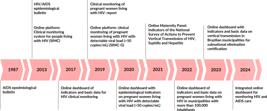 Thumbnail
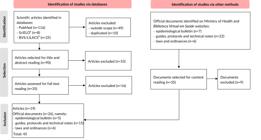
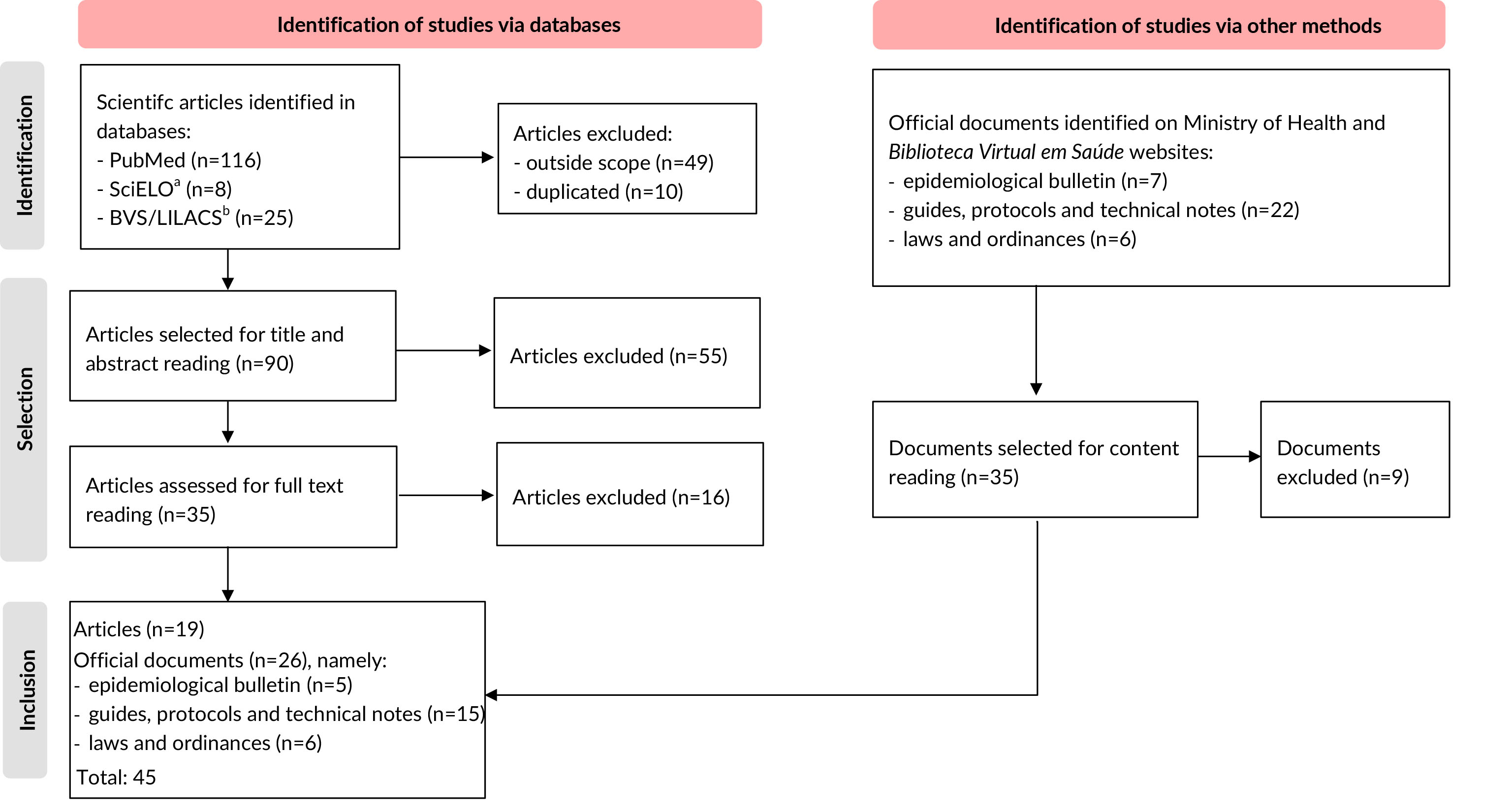 aSciELO: Scientific Electronic Library Online; bBVS/LILACS: Biblioteca Virtual em Saúde/Literatura Latino-Americana e do Caribe em Ciências da Saúde.
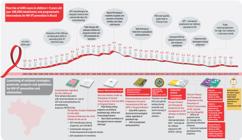
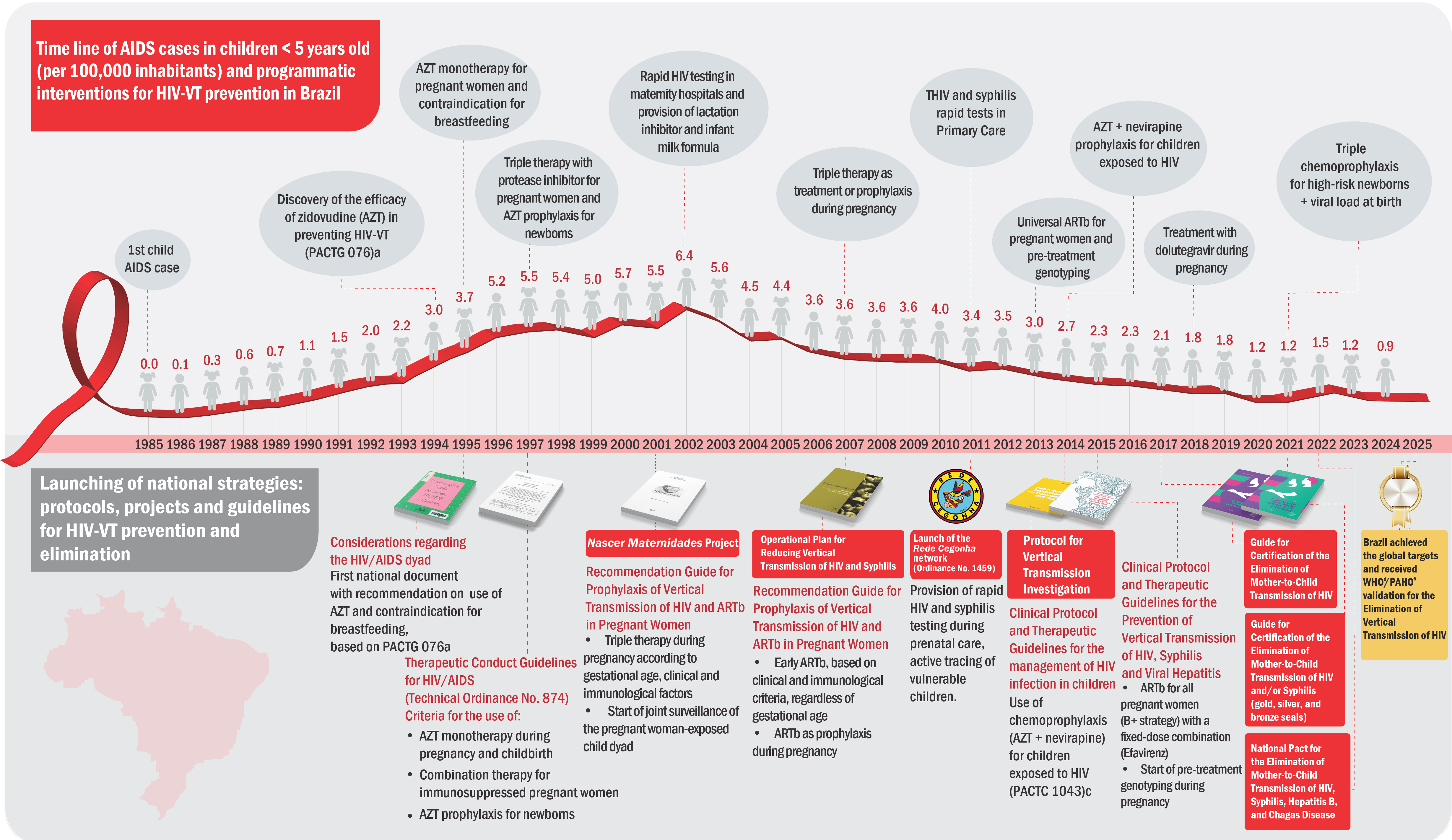 aPACTG 076: Pediatric AIDS Clinical Trials Group Protocol 076; bART: antiretroviral therapy; cPACTG 1043: Pediatric AIDS Clinical Trials Group Protocol 10431043; dWHO: World Health Organization; ePAHO: Pan American Health Organization.