 Pattern of psychiatric hospitalization among women of childbearing age: a time series analysis, Brazil, 2012-2022
Objective: To analyze the trend and pattern of psychiatric hospitalizations among women aged 15 to 49 in Brazil, from 2012 to 2022, characterizing hospitalizations by macro-region, age group, race/skin color and reason for hospitalization.
Methods: This is a time series analysis with data obtained from the Brazilian Unified Health System Department of Information Technology Hospital Morbidity System. The temporal trend of hospitalization rates was assessed using the Joinpoint Regression program, taking a 95% confidence interval (95%CI).
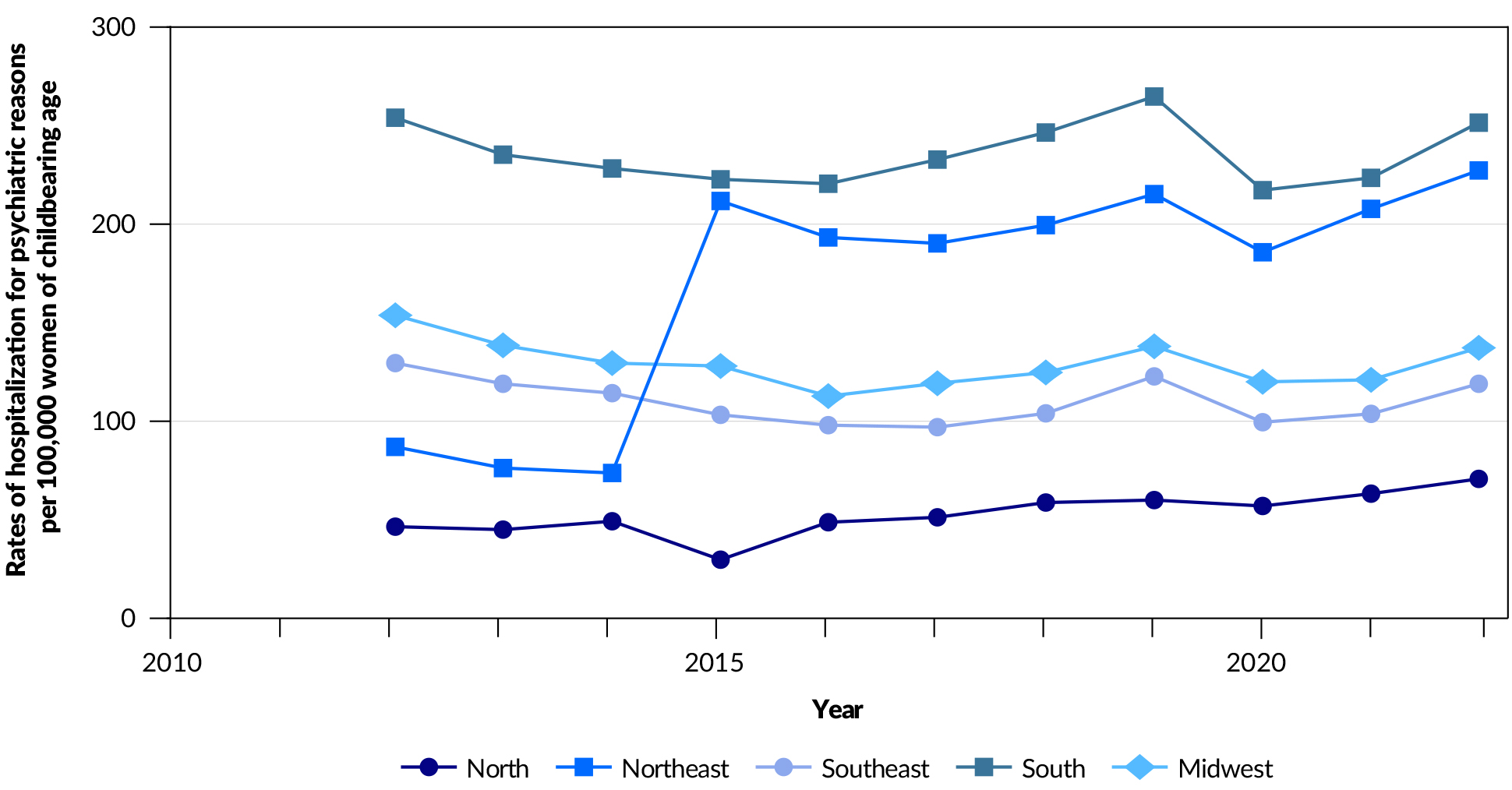
Results: During the period, 677,608 psychiatric hospitalizations were recorded among women of childbearing age, corresponding to an average annual rate of 113 hospitalizations per 100,000 women. Between 2012 and 2016, an annual decrease of 5.1% in hospitalization rates was observed. The highest rates were identified in the Southern region (236.2/100,000), followed by the Northeast (169.9/100,000) and the Midwest (129.5/100,000). The 15-19 age group showed a significant upward trend, with an annual increase of 10.8% between 2015 and 2022. There was a significant increase in hospitalizations among women of Asian, mixed-race and Indigenous race/skin color, with 4.9% annual change between 2016 and 2022. The main reasons for hospitalization were mood disorders (38.1%) and schizophrenia, schizotypal disorders and delusional disorders (28.9%).
Conclusion: There was an overall trend towards a decrease in psychiatric hospitalization rates, although there was an increase among younger women. Regional and racial disparities suggest difficulties in access to and continuity of mental health care. The predominance of psychotic disorders highlights gaps in care and the need for strategies focused on women’s mental health.
Keywords:
Mental Disorders; Fertile Period; Hospitalization; Women’s Health; Time Series Studies
 Thumbnail