 Analysis of the Guazuma crinita site index as a predictor of forest plantation quality in the Aguaytía River basin, Ucayali, Peru
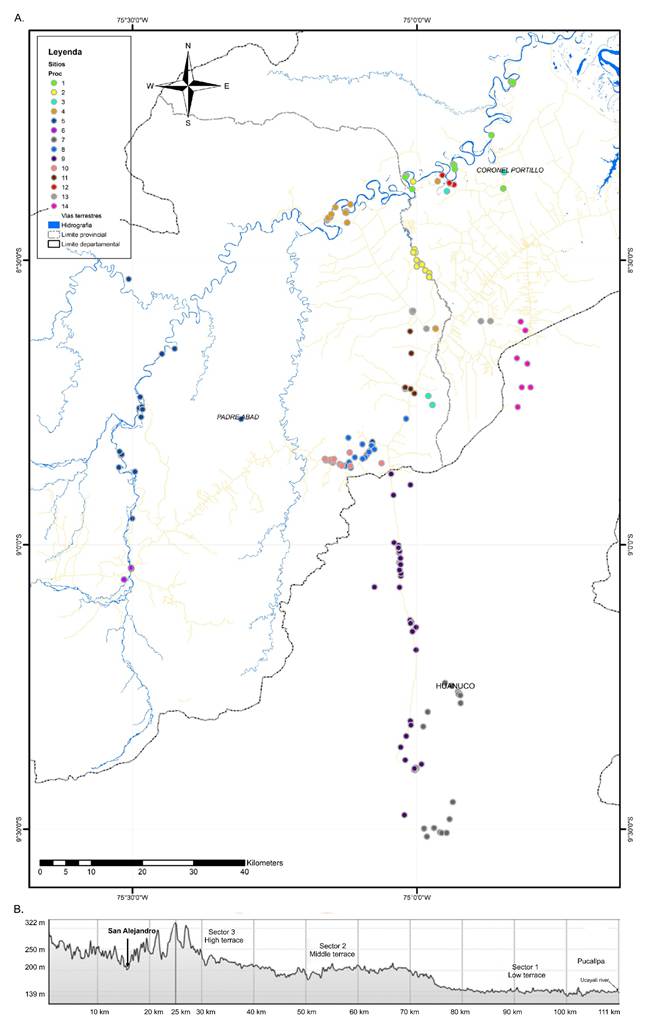
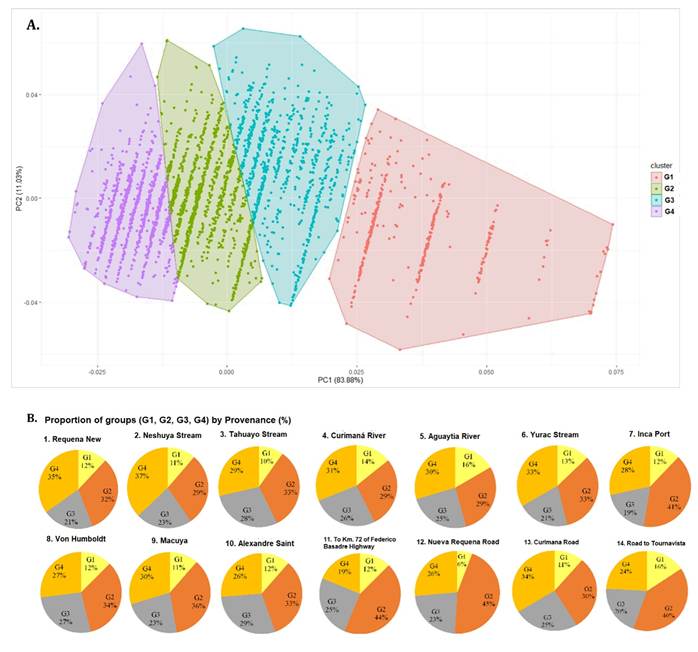
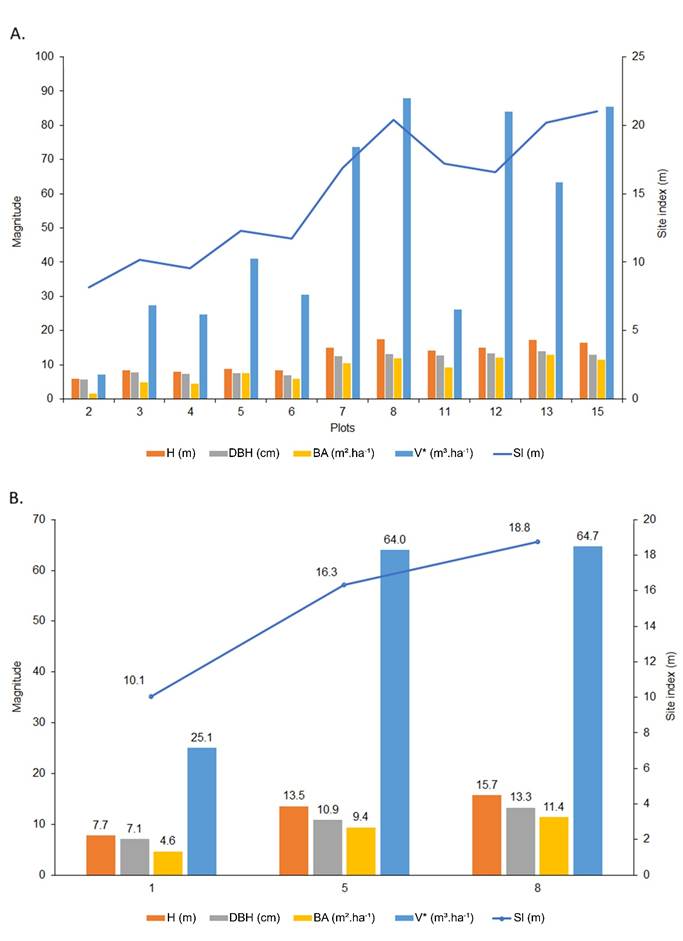
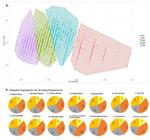
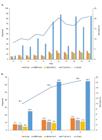
The site index (SI) was evaluated in Guazuma crinita plantations for the Aguaytía River region, Ucayali, Peru, with seedlings from 200 open-pollinated families from 14 sites using a randomized block design in three sectors of the basin. At 48 months, the height (H), diameter at breast height (DBH), and the number of branches with leaves (C/Leaf) and without leaves (S/Leaf) of the trees in 11 plantations were measured. The population means were 9.8 cm (DAP), 1139.6 cm (H), 12.4 branches (C/Leaf) and 2.4 branches (S/Leaf), distributed in four phenotypic groups (G1, G2, G3, G4). Groups G1 and G3 presented greater growth in DAP and H. The correlations between SI and edaphic variables show a significantly positive association with calcium (Ca+2: 0.62), cation exchange capacity (CEC: 0.67), magnesium (Mg+2: 0.61), and pH (059), and non-significant negative association with texture (-0.38), sand (-0.38), potassium (K+: -0.15) and aluminum (Al+3: -0.39). Physiographic and climatic correlations indicate a significantly strong association between SI and elevation (0.85) and precipitation (0.97), while correlations between SI and DBH, H, basal area (BA) and volume (V) They have a high significance of 0.8, 0.7, 0.7 and 0.8, respectively. The middle and upper sectors of the basin present more favorable conditions for the development of commercial plantations that improve with the selection of the best phenotypic groups from the Río Aguaytía, San Alejandro, Río Curimana and Von Humboldt collection sites.
Keywords:
Amazon Forest; forest plantation; white bolaina; site index; provenance
 Thumbnail
 Thumbnail
 Thumbnail