
 Ultrasound-based control of water hyacinth proliferation in tropical reservoirs: experimental design and acoustic attenuation modeling
Abstract
The proliferation of floating macrophytes such as Eichhornia crassipes, driven by eutrophication, compromises the ecological and operational quality of hydroelectric reservoirs. This study developed and evaluated an ultrasonic (US) system for controlling this species. Controlled experiments tested frequencies of 40, 80, and 120 kHz, identifying 40 kHz as the most effective. E. crassipes seedlings were exposed daily to US in pure and eutrophic water. Growth and seed production were assessed through physical, visual, and photographic analyses. US exposure reduced growth rates, inhibited flowering, and decreased seed production compared to the control group. Acoustic modeling indicated an average attenuation coefficient of 1.00 × 10⁻⁴ dB/cm in eutrophic water. Based on simulated acoustic signal decay derived from experimentally obtained attenuation coefficients, the system using piezoelectric transducers operating at 40 kHz showed a theoretically estimated effective operational range of up to approximately 50 m per transducer, not validated by field tests. The system features an adaptable design and consistent performance across different water compositions, offering a scalable approach for macrophyte control. Continuous environmental monitoring is recommended to ensure efficiency and ecological safety. Overall, US represents a promising and sustainable alternative for macrophyte management, considering potential effects on non-target organisms and environmental variability.
Key words
Acoustic attenuation; Eichhornia crassipes; Eutrophication; Hydroelectric reservoirs; Ultrasound
INTRODUCTION
The excessive growth of aquatic macrophytes in lentic environments, such as reservoirs and lakes, poses a significant challenge to maintaining ecological balance and the multiple uses of these water bodies. The proliferation of species like Eichhornia crassipes (water hyacinth) is often associated with nutrient enrichment, especially nitrogen and phosphorus, resulting from anthropogenic activities such as the discharge of domestic sewage and improper agricultural management (Lu et al. 2018, Manolaki et al. 2020). These eutrophication events can trigger a series of negative impacts, such as the reduction of biodiversity, the decline in water quality, and harm to economic activities such as fishing and hydroelectric power generation.
The proliferation of Eichhornia crassipes also disrupts gas exchange and light penetration, leading to hypoxic or anoxic conditions that threaten fish and benthic communities (Malik 2007, Noleto et al. 2019). The dense mats formed by this species increase evapotranspiration and reduce water availability, affecting irrigation and reservoir storage capacity (Karouach et al. 2022). Furthermore, decaying biomass promotes secondary eutrophication through the release of nutrients and organic matter, intensifying algal blooms and unpleasant odors (Lu et al. 2018). From an operational perspective, excessive growth clogs turbines, pumps, and navigation channels, raising maintenance costs and reducing the efficiency of hydroelectric plants and water supply systems (Schneider et al. 2024). In socio-economic terms, these impacts extend to public health, by creating breeding habitats for disease vectors such as Anopheles and Aedes mosquitoes, and to local livelihoods dependent on fisheries and tourism (Manolaki et al. 2020). Therefore, understanding and mitigating the multifaceted consequences of water hyacinth proliferation is crucial for maintaining both ecological integrity and the sustainable use of aquatic resources.
In light of this scenario, various conventional macrophyte control techniques have been developed and applied worldwide, each with specific advantages and limitations. Mechanical, chemical, and biological methods have been employed with varying degrees of success, and the choice of strategy depends on the specific conditions of each aquatic system (Karouach et al. 2022, Thiemer et al. 2021). Mechanical control, although effective for immediate removal, can negatively impact the aquatic habitat and require high operational costs. Chemical control, while offering rapid effectiveness, raises concerns regarding toxicity and environmental contamination. On the other hand, biological control is considered a more sustainable alternative, although it requires strict monitoring to prevent ecological imbalances (Cerveira Junior et al. 2023, Misteli et al. 2023).
Recent studies highlight that integrated approaches, combining physical and biological techniques with nutrient load management, tend to be more effective and sustainable in the long term, mitigating the environmental and economic impacts associated with uncontrolled macrophyte growth (Poveda 2022, Thiemer et al. 2023). In this context, it becomes essential to further evaluate the available strategies and seek innovative alternatives that reconcile control efficiency with the preservation of environmental quality.
One of these emerging alternatives is the use of ultrasound (US) for macrophyte control. US can interfere with the physiological and reproductive processes of the plants, destabilizing their buoyancy and inhibiting their growth and seed production (Rizvi et al. 2024). However, the success of this technique depends on an accurate understanding of the acoustic behavior of ultrasonic waves in the aquatic environment. Wave attenuation is influenced by several variables, such as the applied frequency, temperature, turbidity, concentration of organic matter, and the electrical conductivity of the water (Mendonck et al. 2021). Eutrophic waters, such as those found in reservoirs, exhibit physicochemical characteristics that intensify attenuation, requiring careful adjustments in the system’s frequency and power to ensure its effectiveness (Liu et al. 2024).
Despite recent studies investigating the use of ultrasound for the suppression of microalgae and cyanobacteria, its direct application for the control of large aquatic macrophytes remains scarcely explored. Existing works have primarily focused on algae (Microcystis, Chlorella) or submerged species in small-scale mesocosms (Wu & Wu 2007, Peng et al. 2024), often lacking quantitative modeling of acoustic propagation in eutrophic conditions. The present study introduces a system specifically designed for floating macrophytes such as E. crassipes, integrating controlled exposure tests with an acoustic attenuation model validated in eutrophic water. This integration, combining experimental performance with predictive modeling, addresses a critical knowledge gap and represents an innovative approach within the emerging field of acoustic-based macrophyte management.
Therefore, this study was designed under the following hypotheses: (i) ultrasonic waves at specific frequencies can inhibit the vegetative and reproductive growth of Eichhornia crassipes; (ii) the acoustic propagation and attenuation of ultrasound in eutrophic water differ significantly from those in pure water, influencing control efficiency; and (iii) it is possible to model these attenuation effects to predict the effective operational range of an ultrasonic control system in tropical reservoirs. Based on these hypotheses, the main objective of this research was to design, calibrate, and experimentally evaluate an ultrasonic system for macrophyte control, as well as to model acoustic attenuation in eutrophic water typical of hydroelectric reservoirs. The specific objectives included: (1) determining the growth and seed production response of E. crassipes under controlled ultrasonic exposure; (2) quantifying attenuation coefficients under distinct water conditions; and (3) developing an acoustic model capable of predicting wave intensity decay with distance.
The present study aims to develop and evaluate an ultrasonic system for controlling the proliferation of E. crassipes, a type of floating macrophyte, in hydroelectric reservoirs. The development and adjustment of this system will contribute to the practical application of ultrasonic technologies in the sustainable management of aquatic ecosystems and the mitigation of environmental impacts associated with macrophyte proliferation. In this context, we propose and evaluate an ultrasonic system specifically designed for controlling E. crassipes in tropical reservoirs, combining controlled experiments with acoustic attenuation modeling to assess its feasibility, effectiveness, and operational range.
MATERIALS AND METHODS
To facilitate reproducibility and ensure methodological transparency, the experimental procedures were organized in sequential stages: species selection and acclimation, preparation of water media (pure and eutrophic), ultrasonic exposure under calibrated conditions, and acoustic attenuation modeling. Each stage is described in detail below, with the corresponding parameters, instruments, and statistical analyses clearly specified.
The research methodology, presented in a flowchart in Figure 1, began with the selection of the macrophyte species and seedlings for the experimental tests. Next, analyses were conducted on distilled water (pure water) and reservoir water (eutrophic water). Subsequently, a bench-scale experimental setup was assembled to expose the macrophyte seedlings to US operating at 40 kHz and a nominal ultrasonic power density of 1095 W/cm2 at the transducer face (Schneider et al. 2024). Analyses were then carried out regarding growth and seed production. Subsequently, the attenuation coefficient was determined in both pure and eutrophic water. A simulation was then performed using a program developed in Python.

Flowchart of the methodology applied for the control of macrophytes in hydroelectric reservoirs.
Selection and Preparation of Macrophyte Seedlings
The macrophyte species E. crassipes, shown in Figure 2, was selected as the target of this research. The exclusive focus on the control of water hyacinth is justified by the predominance of this species in water bodies in northeastern Brazil, where it causes serious environmental and operational problems. The E. crassipes seedlings were collected from a natural reservoir and transferred to an acclimation tank in the laboratory. The selected plants were homogeneous in size and developmental stage, ensuring uniformity in the experiments. Before exposure to the ultrasonic treatment, the seedlings were kept in fresh water for 48 hours to stabilize in the new environment.

Floating macrophyte seedling of the species Eichhornia crassipes, commercially supplied by HTM VENDAS ONLINE.
The plants were organized into six distinct groups, with five seedlings in each group. Five groups were exposed to different sonication durations (5, 10, 20, and 30 seconds), while the sixth group served as the control and was not exposed to US. This experimental setup allowed for a clear comparison of the effects of ultrasonic treatment relative to the untreated group.
Monitoring of Selected Physicochemical Properties of the Medium
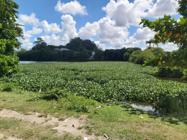
The site chosen for collecting eutrophic water, which resembles water from hydroelectric reservoirs, was the Apipucos Reservoir located in the Metropolitan Region of Recife, Pernambuco. Figure 3 shows the surface of this reservoir covered by macrophytes of the species E. crassipes. Physicochemical analyses were then conducted on both pure and eutrophic water. The parameters analyzed were turbidity, electrical conductivity, pH, and temperature. The results of these analyses are essential for determining the attenuation coefficient of the liquid media.
Water quality has a significant influence on the attenuation coefficient of ultrasonic waves. This coefficient reflects the medium’s ability to absorb and scatter the energy of sound waves as they propagate. Attenuation is affected by various factors intrinsic to the water composition, such as the presence of suspended solids, organic matter, microorganisms, dissolved salts, and physicochemical variables such as pH, temperature, and electrical conductivity (Trusler 2020, Mohite-Patil et al. 2010).
Description of the Experimental Setup
The visual and photographic analysis of the macrophyte seedlings used in the experiment was carried out using two containers of the same dimensions. Both containers, made of Styrofoam, were rectangular in shape, with internal dimensions of 35.5 cm in length, 21.5 cm in width, and 26 cm in height. In one of the containers, the walls were kept intact to hold five E. crassipes aquatic macrophyte seedlings. In this case, the container served as a reference, that is, the control group. The second container was adapted so that the five macrophyte seedlings could receive daily doses of ultrasonic waves. For this purpose, a lateral opening was made on one of the container’s side walls, extending from the base to the top of the wall (Figure 4). This circular window, made of aluminum sheet, allowed for the attachment of an ultrasonic transducer at the height of the bulb responsible for the plant’s flotation.
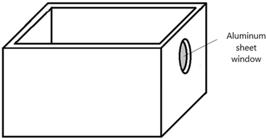
Container used for testing the effects of ultrasonic waves on the vegetative proliferation of floating macrophytes.
The ultrasonic waves were generated by an electronic circuit, shown in Figure 5, designed to produce electrical oscillations in the range of 20 to 40 kHz using piezoelectric ceramic transducers. The US generator was used to convert the power supply (110–220 Volts, 50–60 Hz) into a 20 to 40 kHz electrical signal with a voltage of 1000–1800 Volts. This signal was then applied to a piezoelectric ceramic element (included in the converter), which transformed the signal into mechanical oscillations. These oscillations were amplified by the converter, thereby creating a kind of “hammer” effect. The converter transforms electrical energy into high-frequency mechanical vibration. A fan was used to keep the ambient temperature of the circuit below 50°C. The power delivered to the transducers ranged from 60 W/cm2 to 1000 W/cm2.

The transducer is the active part of the US generation unit. It was in contact with the surface that received the ultrasonic wave and operated by pressing and transmitting mechanical vibrations. This component induces the vibration of molecules within the medium through which the ultrasonic wave propagates. Figure 6 illustrates the experimental setup resulting from the coupling between the US generation and transmission system and the test container for macrophytes.

Schematic diagram of the experimental setup used for exposing Eichhornia crassipes macrophyte seedlings to ultrasonic waves.
Calibration of Ultrasonic Equipment and Acoustic Intensity Verification
Prior to the experimental tests, the ultrasonic transducer and generator were calibrated using a reference decibel meter (Minipa MSL-1352C, accuracy ±1.5 dB) and a frequency counter (M-Scope 60) to ensure frequency stability and reproducibility of acoustic output. The emitted acoustic intensities were verified by measuring sound pressure levels at known distances in water, applying the conversion from sound pressure (Pa) to acoustic intensity (W/cm2) according to Ensminger & Bond (2024). Calibration was repeated every two days to account for potential transducer drift and temperature fluctuations. The maximum deviation in measured intensity during the experiments was below 3%, confirming the reliability of the applied ultrasonic dose. This procedure ensured that the acoustic energy delivered to the macrophytes was both measurable and consistent, providing the necessary basis for a quantitative dose–response interpretation.
Techniques Used to Analyze the Effects of US
It is important to clarify that the ultrasonic power values reported in this study (expressed in W/cm2) correspond to the nominal power density at the transducer surface, as specified by the equipment and verified during calibration, and do not represent the spatially averaged acoustic intensity propagating throughout the water column. Due to geometric spreading, acoustic impedance mismatch, and attenuation effects in water—particularly under eutrophic conditions—the effective acoustic intensity experienced by the macrophyte tissues is substantially lower than the nominal transducer value. Direct in situ measurement of spatially averaged ultrasonic intensity in such environments presents significant experimental limitations; therefore, attenuation modeling and relative dose–response comparisons were adopted to ensure reproducibility and internal consistency.
To evaluate the impact of US on the growth of floating macrophytes, controlled experiments were conducted using containers that simulated conditions similar to those found in natural reservoirs. The containers were divided into two distinct groups, each containing five seedlings: one group was exposed to US, while the other served as the control group, with no US exposure. In the study, three ultrasonic frequencies were tested: 40 kHz, 80 kHz, and 120 kHz. Based on experimental observations, preliminary results indicated that the 40 kHz frequency was the most effective in influencing macrophyte development and was therefore adopted for the subsequent tests.
One of the containers with macrophytes was exposed to ultrasound at a frequency of 40 kHz, using a transducer operated at a nominal power density of 980 W/cm2 at the transducer face, for 10 seconds, applied three times a day over a period of 14 consecutive days. An equal amount of fertilizer and composted soil was added to the containers of both groups to create a nutrient-rich environment similar to reservoir conditions. The fertilizers consisted of Class “A” organic compost – vermicompost (worm humus).
The macrophyte analyses were carried out systematically, with daily measurements during the US application period, in addition to an additional evaluation conducted one week after the last exposure to investigate potential residual effects. The heights of the macrophytes were measured using scales positioned vertically next to the containers, and growth was documented both visually and photographically (Figures 7a, b).

Containers with groups of macrophyte seedlings: In Figures a) and b), container (a’) was not subjected to US, whereas container (b’) was exposed to US.
Ultrasonic Attenuation
In this study, the acoustic attenuation coefficient (α) is defined as the rate at which ultrasonic energy is lost per unit distance as waves propagate through water, expressed in dB/cm. Higher α values indicate stronger attenuation and reduced effective range. Acoustic attenuation, the reduction of ultrasonic energy, can compromise the effectiveness of the system, especially when the goal is to interfere with the metabolism and reproduction of floating macrophytes in large environments such as hydroelectric reservoirs.
For the system to function properly, the intensity of the transmitted ultrasonic waves (W/cm2) must be sufficient to effectively reach the macrophytes, disrupting their cells and inhibiting their growth and reproduction. However, if attenuation is excessive, the energy required for the waves to have a biological effect may not be sufficient over the necessary distance, especially in areas where macrophyte proliferation occurs in a widespread and dispersed manner (Moyano et al. 2022).
The attenuation of ultrasonic waves in water was modeled by the following exponential expression (Ensminger & Bond 2024, Gallego-Juárez et al. 2023):
Where,
- is the acoustic pressure at a distance (r) from the transducer,
- is the initial pressure near the transducer,
- is the attenuation coefficient (dependent on frequency and the characteristics of the medium),
- is the distance from the transducer.
The attenuation coefficient α was approximated by the following formula (Ensminger & Bond 2024, Gallego-Juárez et al. 2023):
Where:
- is the US frequency.
In the context of acoustic wave propagation, the attenuation coefficient (α) quantifies the rate at which ultrasonic energy decreases as it travels through a medium. It is typically expressed in decibels per centimeter (dB/cm) and is influenced by the frequency of the wave and the physical-chemical properties of the medium, such as temperature, turbidity, and dissolved solids. Although the theoretical expression provided in equation (2) allows an approximate estimation of α based on wave frequency, this value can vary significantly in real environments. Therefore, in this study, α was not only calculated theoretically but also determined experimentally by measuring the decrease in ultrasonic intensity at known distances in both pure and eutrophic water, using a calibrated decibel meter. These experimental values provide a more reliable representation of attenuation under realistic aquatic conditions, enriching the model’s applicability to natural reservoirs.
Ultrasound Intensity and Power
Sound intensity is the average temporal energy transported by a sound wave through a unit area perpendicular to the direction of wave propagation, per unit of time. In this context, “ultrasonic dose” refers to the combination of acoustic intensity (W/cm2) and exposure time (s), which together determine the effective energy delivered to plant tissues. The sound intensity I as a function of distance can be expressed by (Ensminger & Bond 2024, Gallego-Juárez et al. 2023):
Where:
- is the sound intensity at a distance r,
- is the initial intensity near the transducer.
The sonication time required to achieve the desired effectiveness depends on the US intensity and the resistance of the target tissue. To optimize the sonication time, the following formula was used (Ensminger & Bond 2024, Gallego-Juárez et al. 2023):
Where:
- is the required sonication time,
- is the required dose of acoustic energy (in joules per square meter),
- is the effective US intensity on the surface of the target tissue.
These models provide a theoretical basis for the experimental setup and help determine the most effective sonication parameters to damage the macrophytes without causing undesirable impacts on the aquatic environment.
Experimental Setup for Determining Attenuation Coefficients
To measure the attenuation coefficient of an ultrasonic wave in a liquid medium (in dB/cm), the most recommended technique is the Transmission Method or the Amplitude Comparison Method (Galicia et al. 2012). The equipment required to implement this procedure includes: (i) an ultrasonic signal generator capable of producing waves at the desired frequency; (ii) an ultrasonic transducer and a receiver, both tuned to the same frequency; (iii) an oscilloscope or spectrum analyzer to measure the amplitude of the received signal; and (iv) an attenuation cell or experimental setup containing the liquid medium (in this case, water), with a length that allows variation in the distance between the transducer and the receiver.
As part of the procedure, the transmitting transducer and the receiver were placed in an attenuation cell or chamber assembly, aligned in a straight line (Figure 8). The experimental chamber for measuring acoustic intensities at different distances from the transducer was built using PVC pipes typically used for sanitary sewage systems. Five 100 mm diameter cross fittings formed five chambers. These fittings were interconnected using 4 cm long pipes necessary to join them. Cap-type fittings were used at the ends and bases of the assembly, allowing the structure to hold water inside as the medium for propagating the generated acoustic waves.

Schematic diagram of the experimental setup used to measure the attenuation coefficient of ultrasonic waves in water.
An ultrasonic transducer, electrically connected to a signal generator, was fixed to one end of the chamber assembly. The ultrasonic wave generator used in the attenuation experiments was connected to an Immersion Ultrasonic Transducer Box (side-mounted, 240 mm height × 130 mm length × 80 mm width, 40 kHz, 300 W, with generator), selected for its precise frequency control and stable performance during continuous operation. This configuration ensured consistent acoustic emission during intensity measurements. The signal was monitored and recorded using a high-resolution decibel meter and frequency counter. Since the tops of the measurement chambers remained open to the atmosphere, a decibel meter was inserted through these openings to measure the acoustic intensities.
To measure the attenuation coefficients of ultrasonic waves, high-precision transducers and signal generators were used in a controlled environment, ensuring the minimization of external interferences such as waves or currents in the water. It was also ensured that the temperature of the medium remained constant during the measurements, as thermal variations can affect both the speed of sound and attenuation.
The transducers were initially positioned at a minimum distance of 5 cm. The amplitude of the received signal, A₀ (dB), was recorded as a reference for comparison. Subsequently, the distance between the transducers was increased in regular increments (5 cm, 10 cm, 15 cm, etc.), and for each new distance d, the amplitude of the received signal, A(d), was recorded. This procedure was repeated for various distances, and the attenuation coefficient was calculated for each one. The average value of these coefficients was considered the most representative for the frequency used in the liquid in question.
The attenuation coefficient (α) was calculated using the following equation:
Where:
- is the distance between the transducers (in cm),
- is the initial amplitude in dB (at the minimum distance),
- is the signal amplitude at a distance d.
Specific experiments were conducted to evaluate the attenuation of ultrasonic waves using a fixed-frequency transducer operating at 40 kHz and operated at a nominal power density of 1000 W/cm2 at the transducer face. This value was adopted as the reference emission condition for attenuation analysis. Acoustic measurements were then performed along the main axis of propagation at distances of 10, 38, 66, 94, and 122 cm from the transducer. The acoustic signal recorded at the reference position was used as the baseline for calculating relative attenuation with increasing distance.These experiments were carried out under controlled conditions, both in pure water and in eutrophic water, to assess the influence of the medium on the propagation of ultrasonic waves.
The experimental data were processed using a Python script, which also calculated the average values of acoustic power intensities (W/cm2) as a function of distance x (cm).
Statistical Analysis of the Data
The experimental data obtained were analyzed using the Analysis of Variance (ANOVA) technique to assess the existence of significant differences among the means of the applied treatments. ANOVA made it possible to verify whether the variation between experimental groups was statistically greater than the variation within groups, considering a significance level of 5% (p < 0.05). In cases where ANOVA indicated significant differences, Tukey’s multiple comparison test was applied as a post-hoc test to identify which pairs of means showed significant differences (Kim et al. 2002). This test calculates the least significant difference (LSD) between means and adjusts the results to avoid Type I errors resulting from multiple comparisons. All calculations and statistical analyses were performed using specialized software, ensuring the robustness of the results and their proper interpretation.
The experimental protocol also included preliminary dose–response observations to determine effective exposure levels. Nominal transducer power densities ranging from 900 to 1100 W/cm2 were tested at exposure times between 5 and 30 seconds. These exploratory trials identified ultrasound at 40 kHz, operated at a nominal surface power density of 1085 W/cm2 for 10 seconds, as the optimal compromise between biological response and acoustic stability. Although absolute cavitation thresholds were not directly quantified, relative comparisons among treatments provided a consistent basis for assessing ultrasound–plant interactions under controlled laboratory conditions.
RESULTS AND DISCUSSION
The results are presented in a way that links ultrasonic exposure conditions, observed biological responses, and acoustic propagation behavior, allowing a clear evaluation of the effectiveness and limitations of the proposed system. The following subsections present the experimental findings, emphasizing the relationship between ultrasonic exposure and macrophyte response. Whenever possible, results are interpreted alongside the corresponding physical and biological mechanisms to support transparency and reproducibility.
Comparison with Previous Ultrasonic Control Systems
Several ultrasonic prototypes have been proposed for aquatic vegetation management, including portable transducers for algal bloom mitigation and fixed piezoelectric emitters targeting submerged plants (Quarato et al. 2023, Tischer et al. 2025). However, most of these systems operate in open water without accounting for attenuation effects caused by turbidity, conductivity, and organic load, factors that substantially influence acoustic transmission in tropical reservoirs. The present work advances beyond previous prototypes by (i) experimentally quantifying attenuation coefficients in eutrophic water, (ii) simulating acoustic intensity profiles over operational distances up to 50 m, and (iii) designing a lateral transducer coupling at the plant’s buoyancy region, ensuring direct acoustic contact with the bulb tissue. These features collectively enhance both precision and scalability, differentiating this system from generic ultrasonic emitters previously described in literature.
Selection of Macrophyte Seedlings
Water hyacinth (E. crassipes) is a problematic invasive species due to its high capacity for adaptation and reproduction, either through rhizome fragmentation or viable seeds that can persist for up to 15 years (Karouach et al. 2022). The environmental impact of this macrophyte includes interference with water flow, reduced oxygenation, harm to biodiversity, and obstruction of water intake systems, affecting the operation of hydroelectric plants and navigability (Noleto et al. 2019).
These characteristics reinforce the relevance of focusing exclusively on the control of this species to ensure greater experimental precision and reduce variability in the results. This focus also facilitates the development of efficient protocols, such as the use of ultrasonic technologies, which can later be adapted for the management of other macrophytes with similar characteristics.
Visual and Photographic Analysis Technique
The data collected over time were compared between the two experimental groups to assess the impact of US exposure on plant development. More intense macrophyte growth was observed, both vertically and horizontally, with greater overall growth and even flowering occurring in the container holding the control group. Figure 9 illustrates the visual differences between control and US-treated plants, highlighting flowering in the control group and the absence of flowering in the sonicated group.

Visual aspects of the macrophytes in the observed groups: (a) Flowering in the control group; (b) No flowering in the group exposed to US.
The absence of inflorescences in the US-treated group indicates a clear inhibitory effect on the reproductive structures of E. crassipes, which is consistent with the proposed mechanism of ultrasonic interference in tissue integrity.
During the two-week period of daily US exposure, the macrophytes in the control group showed consistent height growth, with an average increase of 2 cm, reaching a total of 18 cm by the end of the second week. These results are illustrated in Figure 10, which depictsthe 14-day growth progression of E. crassipes in both the control and US-treated groups.

Behavior of macrophytes without and with the action of US for 10 seconds, applied twice daily for two days using 40 kHz waves at an intensity of 1000 W/cm2.
The lower growth curve for US-treated plants compared to controls demonstrates a sustained reduction in vegetative development, supporting the hypothesis that repeated ultrasonic exposure moderates E. crassipes proliferation.
These results suggest that, although US did not completely prevent the growth of the macrophytes, it had a moderating effect on the growth rate. The impact was more evident after the exposure week ended, with the growth of the group exposed to US consistently remaining lower than that of the control group. In addition to the absence of flowering, the leaves of the macrophytes in the US-treated group showed yellowish spots, indicating a loss of viability in a much shorter time compared to the control group.
Reduction in Seed Production
The flowering of the macrophyte E. crassipes plays a crucial role in its sexual reproduction, resulting in the formation of fruits that produce seeds. These seeds contribute significantly to the perpetuation of the species, complementing its vegetative reproduction capacity, which occurs through the formation of stolons that generate new roots and leaves (Malik 2007).
In the experiments conducted, it was observed that ultrasonic waves interfere with seed production. This interference was visually detected, especially in the seedlings exposed to US, which showed a lower occurrence of flowering compared to the seedlings in the control group that did not receive ultrasonic treatment (Catian et al. 2019, Peng et al. 2024, Wu & Wu 2007).
As shown in Figure 9, flowering occurred only in the control group, while no inflorescences were observed in the US-treated plants. This clear difference indicates that the applied ultrasonic protocol effectively suppressed the formation of reproductive structures, reducing the potential for seed production.
As one of the results of the analysis of the effects of ultrasonic waves on macrophytes, visual evidence of US interference in seed production was observed. This was due to the appearance of flowering in the seedlings that were not exposed to the US effect (Catian et al. 2019, Peng et al. 2024, Wu & Wu 2007). Figure 9 illustrate the flowering observed in the respective seedlings. According to Malik (2007) seeds of the macrophyte species Eichhornia crassipes are responsible for part of the species’ reproductive process, in addition to vegetative proliferation through the formation of stolons that generate roots and leaves.
Attenuation Coefficient of Ultrasonic Wave in Water
Higher ultrasonic frequencies, although more effective in interacting with biological organisms, tend to undergo greater attenuation in water (Quarato et al. 2023). Therefore, understanding the attenuation rate as a function of frequency is essential for selecting the ideal frequency that maximizes the effect on macrophytes without compromising the system’s range. Moreover, reservoir water often contains suspended organic matter and sediments, which can significantly increase wave attenuation, further reducing the range and effectiveness of ultrasonic control. Another important factor is the variability of environmental conditions, such as temperature and turbidity, which can change over time or at different depths within the reservoir (Liu et al. 2024).
These variables also affect ultrasonic wave attenuation, making it necessary to implement dynamic adjustments in the system or sensors that allow for real-time monitoring of conditions and adjustment of ultrasonic wave parameters. Therefore, understanding ultrasonic attenuation is essential not only to ensure that the energy emitted by the system is sufficient to control macrophytes but also to optimize energy consumption and avoid the unnecessary use of energy that would otherwise be ineffectively dissipated. A well-designed floating macrophyte proliferation control system must take attenuation into account to ensure that ultrasonic waves reach the target organisms at the appropriate intensity, maximizing system efficiency while minimizing environmental impacts (Galicia et al. 2012).
The characterization of the physicochemical properties of treated water and water from eutrophic reservoirs is essential for accurately estimating the attenuation coefficient of ultrasonic waves in aquatic environments, especially for designing macrophyte control systems in hydroelectric reservoirs. The behavior of ultrasonic waves is directly influenced by the characteristics of the medium through which they propagate. Thus, preliminary tests with treated and eutrophic water made it possible to simulate the actual conditions found in such reservoirs, ensuring greater precision in the calibration and effectiveness of ultrasonic systems (Grekov et al. 2021, Martinez et al. 2010). Four physicochemical parameters of the medium were monitored during the experimental tests:
Turbidity: The presence of suspended particles and sediments increases the scattering of ultrasonic waves, raising the attenuation coefficient. Eutrophic waters generally exhibit high turbidity due to the proliferation of algae and macrophytes, as well as sediments carried by erosion processes in the watershed.
Electrical conductivity: Reservoir waters may contain higher concentrations of dissolved ions, such as nitrates, phosphates, and salts, which increase conductivity. This affects the propagation of ultrasonic waves by promoting greater absorption of acoustic energy.
pH: Eutrophic reservoirs tend to exhibit wider pH variations, especially during algal blooms, which influence ultrasonic absorption. Tests with treated water should simulate these pH patterns to approximate the acoustic behavior to field conditions.
Temperature: Temperature directly affects the propagation speed of ultrasonic waves and the attenuation coefficient. Waters in natural reservoirs exhibit seasonal thermal variations and thermal stratification, which must be considered when designing the control system.
For the experiments with ultrasonic radiation intensities in the aqueous medium, samples of pure and eutrophic water were characterized. Temperature, pH, conductivity, and turbidity tests were conducted. The average values of these physicochemical properties of the analyzed samples are shown in Table I, which compares pure water and eutrophic reservoir water. This table presents the average values of the physicochemical parameters of the waters for understanding the attenuation values of ultrasonic acoustic intensity in the medium. Figure 11 shows the visual characteristics of pure and eutrophic waters, the latter densely populated with floating macrophytes.
Average values of physicochemical properties of the water samples used as medium for measuring the intensities of 40 kHz ultrasonic waves at different distances from the transducer.

Water samples used in the experiments for measuring ultrasonic radiation intensities: (a) pure water; (b) eutrophic water.
These results confirm that the eutrophic water presents higher turbidity and electrical conductivity, conditions that are expected to increase ultrasonic attenuation and must therefore be considered in the design of the control system.
Table II presents the mean acoustic intensity values of the 40 kHz ultrasonic wave measured at distances of 10, 38, 66, 94, and 122 cm from the transducer in both pure and eutrophic water. The transducer operating condition at the emission point (0 cm) was defined as a nominal surface power density of 1000 W/cm2, which served as the reference for comparative analyses across distances and media.
Average acoustic intensity values of the 40 kHz ultrasonic wave with an initial intensity of 1000 W/cm2 obtained in the laboratory as a function of the distance from the transducer in pure and eutrophic water
As the distance from the transducer increased, the acoustic intensity progressively decreased in both media, reflecting the expected effect of wave attenuation. The reduction was more pronounced in eutrophic water, which exhibits higher scattering and absorption due to its greater concentration of suspended particles and organic matter. This behavior underscores the importance of quantifying attenuation under realistic reservoir conditions to ensure accurate modeling and effective ultrasonic system design. Table III shows that there are significant differences between the attenuation coefficients of pure water and hydroelectric reservoir water. The Python code also calculated the ultrasonic wave attenuation coefficients based on the experimental data provided, in addition to applying ANOVA to check for significant differences between the two types of water, using a criterion of p < 0.05. In the interpretation of the table, based on the p-value of < 0.05, the term “water type” is significant with p = 0.00281; the term “distance” is also significant with p = 0.00102.
ANOVA table for acoustic intensity measurements in the evaluation of attenuation coefficients of a 40 kHz, 1000 W/cm2 ultrasonic wave.
To statistically evaluate whether water type and distance significantly affected acoustic attenuation, an ANOVA was performed. The results are summarized in Table III.
The significant p-values for both water type and distance (p < 0.05) confirm that attenuation is not random, but systematically influenced by these factors. This statistical support justifies the use of different attenuation coefficients for pure and eutrophic water in the proposed acoustic model.
Figure 12 illustrates the attenuation of the ultrasonic signal in two different water types pure water and water from a hydroelectric reservoir using a 40 kHz transducer operated at a nominal surface power density of 1000 W/cm2. The reference operating condition corresponds to the macrophyte location point. The data were measured at increasing distance intervals from the origin of the ultrasonic transducer up to 122 cm, and the intensity at each point was recorded with a decibel meter connected to a frequency meter. The vertical axis represents the acoustic signal level, expressed relative to the nominal transducer surface power density (W/cm2), and is used to indicate the attenuation of the ultrasonic signal during propagation through both media.The horizontal axis shows the distance in centimeters (cm) from the ultrasonic transducer (zero distance), marking points at 10, 38, 66, 94, and 122 cm. The dark gray line indicates the attenuation of the ultrasonic wave in pure water. A linear decline in intensity is observed, suggesting a regular loss of energy as the wave propagates. The light gray line represents the attenuation in eutrophic water collected from the Apipucos Reservoir (Recife/PE), water with characteristics similar to that of hydroelectric reservoir water, showing a similarly linear decline, but with a slightly steeper slope, indicating greater attenuation in this medium.

Ultrasonic wave intensities emitted by a 40 kHz piezoelectric transducer at an intensity of 1000 W/cm2 in pure water and hydroelectric reservoir water.
The difference in the slopes of the lines between the two media suggests that the water from the hydroelectric reservoir has characteristics (such as a higher presence of minerals, or other chemical/biological factors) that increase the attenuation of the ultrasonic wave compared to pure water. The greater attenuation in hydroelectric reservoir water may be due to a higher absorption of sound energy, which is critical for understanding the behavior of ultrasonic waves in different environmental contexts and their practical applications, such as the control of aquatic organism proliferation. These patterns validate the experimental attenuation coefficients used in our model and demonstrate that eutrophic water conditions meaningfully constrain the effective range of ultrasonic propagation.
Understanding the attenuation characteristics in different types of water is vital for adjusting ultrasonic systems that rely on the effective propagation of acoustic energy for operations such as cleaning, measurement, or biological control in aquatic environments. For applications in hydroelectric reservoirs, it may be necessary to adjust the power of the transducers or reconsider the configuration of the ultrasonic systems to compensate for greater attenuation.
The average attenuation coefficients for pure water and eutrophic water were 9.94×10⁻⁵ dB/cm and 1.00×10⁻⁴ dB/cm, respectively. The attenuation coefficient for hydroelectric reservoir water is slightly higher than for pure water, indicating a greater loss of ultrasonic wave energy in the hydroelectric reservoir water.
Unlike previous studies, which primarily explored ultrasonic effects on algae or general aquatic vegetation, this work introduces a customized ultrasonic system specifically designed for E. crassipes control in tropical eutrophic reservoirs. The structural design of the experimental unit, including the transducer coupling with the container and lateral aluminum window, ensures direct targeting of the buoyancy region of the plants—an innovative configuration not addressed in earlier studies. Furthermore, the precise calibration of frequency (40 kHz), nominal transducer power density (980–1085 W/cm2), and exposure duration (three times daily for 14 days) under controlled physicochemical conditions reflects a novel operational protocol. The comparative analysis between pure and eutrophic water, combined with attenuation modeling and distance-effect simulation, extends the understanding of ultrasound applicability under real environmental constraints.
Macrophyte-Transducer Distance in Proliferation Control Systems
The graph presented in Figure 13 illustrates a simulation of the ultrasonic signal attenuation profile in the water of a hydroelectric reservoir, considering a 40 kHz transducer operated at a nominal surface power density of 1085 W/cm2 as the reference emission condition. This phenomenon is described up to a distance of 50 meters from the emission point, with an average attenuation coefficient of 8.0 × 10⁻⁵ dB/cm. The vertical axis represents the ultrasonic signal level, expressed relative to the nominal transducer surface power density (W/cm2).The intensities are presented on a logarithmic scale, which helps visualize the rapid decrease in values even when they change by orders of magnitude. The horizontal axis shows the distance in meters from the ultrasonic transducer, also on a logarithmic scale. This allows for visualization of the wave behavior over a range of distances, facilitating understanding of how intensity decreases with increasing distance.

Acoustic intensity profile of a 40 kHz ultrasonic wave at 1095 W/cm2 propagating over a distance of 50 m in waters of a reservoir infested with macrophytes.
The curve represents the exponential attenuation of the ultrasonic signal with increasing distance from the transducer. The reference operating condition, defined by a nominal transducer surface power density of 1085 W/cm2, is used as the baseline, from which the signal level decreases rapidly, a behavior emphasized by the logarithmic scale.The shape of the curve clearly shows that energy loss is more significant in the first meters after emission. The attenuation coefficient of 1.0 × 10⁻⁴ dB/cm indicates that the wave loses intensity as it travels through the water. Attenuation can be caused by various factors, including energy absorption by the water and scattering due to impurities or suspended particles in the liquid.
The aforementioned graph is important for engineers and environmental scientists who design ultrasonic control systems for managing aquatic vegetation in hydroelectric reservoirs. Through it, one can determine the effectiveness of the ultrasonic system over varying distances, allowing for adjustments in the power or configuration of the transducers to achieve the desired coverage and the intensity necessary to inhibit the growth of macrophytes or unwanted algae.
This simulated profile integrates the experimentally derived attenuation coefficient with the reference transducer operating condition, defined by a nominal surface power density of 1085 W/cm2, supporting a theoretical estimate of a potential operational range of up to approximately 50 m, as predicted by the attenuation model and requiring confirmation through field-scale validation.
It should be noted that the predicted operational range of approximately 50 m is derived from model-based extrapolation beyond the experimental measurement domain. While the attenuation model is grounded in experimentally obtained coefficients, its application to larger distances represents a theoretical projection that requires confirmation through dedicated field-scale testing. Consequently, the proposed range should be regarded as an indicative estimate rather than a field-validated operational boundary.
Patent Landscape and Novelty Statement
A preliminary patent search in the Brazilian (INPI) and international (WIPO, Espacenet) databases identified a limited number of filings related to ultrasonic or sonic control of aquatic vegetation, most of which target algae or cyanobacteria rather than macrophytes. No patent was found describing the specific configuration or modeling framework adopted in this study, namely, the lateral-coupled 40 kHz transducer array designed for Eichhornia crassipes and the experimentally derived acoustic attenuation coefficients applied to tropical eutrophic reservoirs. Therefore, the originality of this work resides in its combination of a calibrated ultrasonic delivery system, an acoustic propagation model adjusted to reservoir conditions, and an experimentally validated dose–response framework for macrophyte inhibition. This integrated methodology offers both scientific and technological novelty, extending beyond incremental replication of previous sonic systems.
Environmental Considerations and the Need for Long-Term Studies
Although the present study has demonstrated the effectiveness of ultrasound (US) in inhibiting the proliferation of E. crassipes, its broader ecological implications warrant careful consideration. Aquatic ecosystems are highly complex and harbor a wide diversity of organisms, many of which may be sensitive to physical disturbances such as high-frequency acoustic waves. Previous studies have reported that prolonged or high-intensity US exposure can negatively affect non-target organisms, including zooplankton, benthic invertebrates, beneficial phytoplankton, and even juvenile fish, depending on the frequency, intensity, and duration of exposure (Getchell et al. 2022, Klemenčič & Klemenčič 2021).
In addition, ultrasound-induced cell lysis may result in the release of intracellular contents, such as nitrogen, phosphorus, and organic matter, into the water column. If not properly controlled, this nutrient release could stimulate new episodes of algal blooms and eutrophication, especially in already nutrient-rich environments (Ghernaout & Elboughdiri 2020). These indirect effects must be taken into account when designing and implementing ultrasonic-based control systems in natural settings.
A distinguishing feature of the present study lies in the use of short-term, spatially focused applications—limited to 10 seconds per session, three times daily, over a 14-day period. This low-dose, time-limited exposure protocol was designed to minimize acoustic disturbance while still achieving measurable suppression of plant growth and seed production. By avoiding prolonged and continuous operation, the strategy adopted here reduces the risk of cumulative impacts, making it more compatible with ecologically sensitive areas.
Moreover, this experimental setup mimics field conditions but under controlled laboratory scenarios, which is crucial for understanding the mechanistic effects of US before scaling up to real-world applications. Nonetheless, it is acknowledged that extrapolating from controlled environments to complex ecosystems involves uncertainties, including spatial heterogeneity, species interactions, and seasonal dynamics.
Therefore, it is recommended that any future deployment of ultrasonic systems in natural reservoirs be supported by comprehensive ecological risk assessments, including laboratory-based ecotoxicological tests on non-target taxa and in situ pilot tests with multi-trophic monitoring protocols. Environmental variables such as temperature, turbidity, stratification, and conductivity should also be continuously monitored, as they influence both acoustic propagation and ecosystem vulnerability (Robles et al. 2022, Tischer et al. 2025).
Ultimately, the effectiveness and safety of US as a macrophyte management tool will depend on adaptive implementation, where technological configurations are aligned with ecological thresholds, and system performance is regularly assessed through long-term ecological monitoring. Such precautionary and science-based approaches are essential to ensure that the ecological benefits of controlling invasive macrophytes are not offset by unintended environmental consequences.
In addition, it is acknowledged that all experiments were conducted under controlled laboratory conditions without field validation. While this approach allows precise control of acoustic and physicochemical parameters, it does not fully capture environmental variability such as water currents, stratification, and heterogeneous plant distribution. Future studies should therefore include semi-controlled mesocosm and field-scale experiments to evaluate system robustness and ecological safety over extended periods. Long-term acoustic monitoring and calibration under in situ conditions are also recommended to verify transducer performance and ensure consistent ultrasonic energy delivery during real reservoir applications. Taken together, these findings provide a coherent experimental and theoretical basis for the use of calibrated ultrasonic systems as a complementary tool for macrophyte management in tropical eutrophic reservoirs.
Beyond the demonstrated laboratory-scale efficacy, it is acknowledged that the present results represent an initial proof of concept rather than full-scale validation. The absence of field tests limits the extrapolation of the system’s performance under natural hydrodynamic, thermal, and biological variability. Additionally, the ecological risks associated with ultrasonic applications must be carefully evaluated prior to real-world implementation. Studies have shown that high-intensity or prolonged acoustic exposure can cause unintended effects, such as the release of intracellular nutrients or toxins from lysed plant cells and potential harm to non-target organisms, including zooplankton and juvenile fish (Getchell et al. 2022, Klemenčič & Klemenčič 2021, Ghernaout & Elboughdiri 2020). Therefore, any practical application should be preceded by comprehensive ecological risk assessments, including controlled mesocosm and pilot-scale experiments that monitor ecosystem responses across multiple trophic levels.
Despite these limitations, the present study provides an essential foundation for understanding the ultrasonic inhibition mechanisms on E. crassipes and quantifying acoustic propagation under eutrophic conditions. The integration of experimental data with predictive modeling represents a crucial step toward the design of environmentally compatible ultrasonic systems for macrophyte control.
Comparison with Conventional Macrophyte Control Methods
To contextualize the relevance of this study, Table IV summarizes the main characteristics of traditional macrophyte control techniques—mechanical, manual, chemical, and biological—and compares them with the proposed ultrasonic approach. Conventional methods, although effective in short-term biomass reduction, often involve high operational costs, re-infestation risks, or ecological disturbances. In contrast, the ultrasonic system operates without chemical inputs, can be automated for continuous monitoring, and minimizes physical disruption of habitats.
Compared to conventional methods, the ultrasonic approach offers a sustainable alternative that avoids chemical pollutants and minimizes operational waste. Although its current validation is limited to controlled laboratory conditions, its scalability, low maintenance, and automation potential position it as a promising tool for integration into hybrid macrophyte management programs. Future field evaluations should address cost–benefit analysis, system durability, and potential non-target effects to fully establish its applicability in tropical reservoirs.
CONCLUSIONS
The results of this study demonstrate that the developed ultrasonic system, operating at 40 kHz and using a transducer operated at a nominal surface power density of 1085 W/cm2, represents a promising alternative for controlling the proliferation of floating macrophytes (Eichhornia crassipes) in hydroelectric reservoirs. Ultrasonic exposure led to a significant reduction in plant growth rate and seed production when compared to the control group. These biological effects are directly supported by the growth curves (Figure 10), visual records of flowering inhibition (Figure 9), and the consistent differences observed between treated and untreated groups throughout the 14-day experimental period.
The average attenuation coefficient obtained in eutrophic water (1.00 × 10⁻⁴ dB/cm) highlights the strong influence of water quality on ultrasonic propagation and reinforces the need for environment-specific calibration of the system. Based on the experimentally derived attenuation coefficients (Table III) and the simulated acoustic attenuation profile (Figure 13), a theoretical operational range of up to approximately 50 m per transducer is estimated. This distance results from a model-based extrapolation beyond the experimental measurement domain and has not been validated by field-scale experiments at that distance. Therefore, it should not be interpreted as an empirically demonstrated performance limit, but rather as a quantitative guideline for system design, scaling considerations, and the planning of future field validation studies.
The innovation of this study lies not only in the experimental demonstration of ultrasound as a biological control method, but also in the development of a low-cost, adaptable transducer system suitable for potential field deployment in tropical reservoirs. By integrating controlled biological exposure, acoustic attenuation modeling, and physicochemical characterization of the medium, the proposed framework enables more reliable prediction of system performance across different aquatic environments, addressing both technological and environmental challenges associated with macrophyte management.
Despite the promising outcomes, the present study is subject to limitations inherent to its laboratory-scale scope. The number of treated plants was limited, and the exposure period was relatively short (14 days), which may not fully capture long-term ecological responses or the potential for macrophyte regrowth under dynamic environmental conditions. Future investigations should therefore extend the duration of ultrasonic application, increase sample size, and prioritize validation under semi-controlled or open-field conditions to assess long-term population dynamics, resilience, and ecosystem-level effects.
The results further indicate that, while ultrasound exerts a measurable inhibitory effect on macrophyte growth, it does not completely suppress proliferation, highlighting the importance of integrating this technology with complementary management strategies. Continuous monitoring of physicochemical parameters—such as turbidity, temperature, and organic matter content—is also essential, as these factors can vary seasonally and significantly influence acoustic attenuation and system efficiency.
Overall, the findings presented in Sections 3.1–3.5 consistently demonstrate that ultrasonic exposure can be optimized to achieve targeted inhibition of E. crassipes, supported by visual observations, quantitative growth metrics, and experimentally calibrated acoustic modeling. Although still at an early stage of development, the proposed ultrasonic system represents a viable and eco-efficient component of integrated aquatic vegetation management frameworks. Future field-scale pilot studies and long-term ecological assessments will be crucial to validate the operational range, energy efficiency, cost-effectiveness, and environmental safety of this approach in diverse reservoir conditions, paving the way for a modular and adaptable technology for sustainable macrophyte control.
Acknowledgements
This study was funded by the Fundação de Amparo à Ciência e Tecnologia do Estado de Pernambuco (FACEPE), Brazil, Project Number: IBPG-1577-2.00/21, the Conselho Nacional de Desenvolvimento Científico e Tecnológico (CNPq), and the Coordenação de Aperfeiçoamento de Pessoal de Nível Superior (CAPES). The authors are grateful to the Centro de Ciências e Tecnologia da Universidade Católica de Pernambuco (UNICAP), the Universidade Federal Rural de Pernambuco (UFRPE), and the Instituto Avançado de Tecnologia e Inovação (IATI).
-
Data availability
The dataset supporting the findings of this study is publicly available in Zenodo at https://doi.org/10.5281/zenodo.17652298.
References
-
CATIAN G, SCREMIN-DIAS E & POTT A. 2019. Reproductive phenology of macrophyte community in response to wetland flooding cycle. Oecol Aust 23(4): 856-873. https://doi.org/10.4257/oeco.2019.2304.11.
» https://doi.org/10.4257/oeco.2019.2304.11 -
CERVEIRA JUNIOR WR, BRUNETTI IA, PEREIRA PC, ALCÁNTARA-DE LA CRUZ R, DA CRUZ C & DE CARVALHO LB. 2023. Chemical management of aquatic macrophytes under simulated floodplain condition in mesocosms. J Environ Sci Health Part B 58(3): 255-261. https://doi.org/10.1080/03601234.2023.2178790.
» https://doi.org/10.1080/03601234.2023.2178790 -
ENSMINGER D & BOND LJ. 2024. Ultrasonics: fundamentals, technologies, and applications. 4ª ed., Boca Raton: CRC Press. https://doi.org/10.1201/9780429286964
» https://doi.org/10.1201/9780429286964 -
GALICIA DN, HERNÁNDEZ AV & SALAS LL. 2012. Experimental determination of the amplitude attenuation coefficient of US in pure water - 2012. In: 2012 9th International Conference on Electrical Engineering, Computing Science and Automatic Control (CCE). IEEE, p. 1-6. https://doi.org/10.1109/ICEEE.2012.6421146
» https://doi.org/10.1109/ICEEE.2012.6421146 - GALLEGO-JUÁREZ JA, GRAFF KF & LUCAS M. 2023. Power ultrasonics: applications of high-intensity US. 2ª. ed., Elsevier.
-
GETCHELL RG, GEORGE E, RICE AN, MALATOS JM, CHAMBERS BM, GRIEFEN A, NIEDER C & RUDSTAM LG. 2022. Effects of ultrasonic algal control devices on fish. Lake Reserv Manag 38(3): 240-255. https://doi.org/10.1080/10402381.2022.2077865.
» https://doi.org/10.1080/10402381.2022.2077865 -
GHERNAOUT D & ELBOUGHDIRI N. 2020. Dealing with Cyanobacteria and Cyanotoxins: Engineering Viewpoints. OALib 07(05): 1-20. https://doi.org/10.4236/oalib.1106363.
» https://doi.org/10.4236/oalib.1106363 -
GREKOV AN, GREKOV NA, SYCHOV E & KUZMIN KA. 2021. Development of In Situ acoustic instruments for the aquatic environment study. arXiv preprint arXiv:2109.09684. 8 p. https://doi.org/10.48550/arXiv.2109.09684
» https://doi.org/10.48550/arXiv.2109.09684 - KAROUACH F, BEN BAKRIM W, EZZARIAI A, SOBEH M, KIBRET M, YASRI A, HAFIDI M & KOUISNI L. 2022. A Comprehensive Evaluation of the Existing Approaches for Controlling and Managing the Proliferation of Water Hyacinth (Eichhornia crassipes): Review Front Environ Sci 9: 767871. https://doi.org/10.3389/FENVS.2021.767871/BIBTEX.
-
KIM BY, MOON JH, SUNG TH, YANG SM & KIM JD. 2002. Demulsification of water-in-crude oil emulsions by a continuous electrostatic dehydrator. Separation Sci Technol 37(6): 1307-1320. https://doi.org/10.1081/SS-120002613.
» https://doi.org/10.1081/SS-120002613 -
KLEMENČIČ P & KLEMENČIČ AK. 2021. The effect of ultrasound for algae growth control on zooplankton. Acta Hydrotech 34(60): 1-9. https://doi.org/10.15292/ACTA.HYDRO.2021.01.
» https://doi.org/10.15292/ACTA.HYDRO.2021.01 -
LIU Z, ZHANG T, YUAN Y, LI Y & GENG Y. 2024. Evaluation method for underwater ultrasonic energy radiation performance based on the spatial distribution characteristics of acoustic power. Sensors 24(12): 3942. https://doi.org/10.3390/S24123942.
» https://doi.org/10.3390/S24123942 -
LU J, BUNN SE & BURFORD MA. 2018. Nutrient release and uptake by littoral macrophytes during water level fluctuations. Sci Total Environ 622-623: 29-40. https://doi.org/10.1016/J.SCITOTENV.2017.11.199
» https://doi.org/10.1016/J.SCITOTENV.2017.11.199 -
MALIK A. 2007. Environmental challenge vis a vis opportunity: The case of water hyacinth. Environ Int 33(1): 122-138. https://doi.org/10.1016/J.ENVINT.2006.08.004.
» https://doi.org/10.1016/J.ENVINT.2006.08.004 -
MANOLAKI P, MOURIDSEN MB, NIELSEN E, OLESEN A, JENSEN SM, LAURIDSEN TL, BAATTRUP-PEDERSEN A, SORRELL BK & RIIS T. 2020. A comparison of nutrient uptake efficiency and growth rate between different macrophyte growth forms. J Environ Manag 274: 111181. https://doi.org/10.1016/J.JENVMAN.2020.111181.
» https://doi.org/10.1016/J.JENVMAN.2020.111181 -
MARTINEZ R, LEIJA L & VERA A. 2010. Ultrasonic attenuation in pure water: Comparison between through-transmission and pulse-echo techniques. [s.l.] In: 2010 Pan American Health Care Exchanges. IEEEIEEE. https://doi.org/10.1109/PAHCE.2010.5474593
» https://doi.org/10.1109/PAHCE.2010.5474593 -
MENDONCK M, APARICIO S, GONZÁLEZ DÍAZ C, HERNÁNDEZ MG, MUÑOZ CARO GM, ANAYA JJ & CAZAUX S. 2021. Ultrasonic propagation in liquid and ice water drops. effect of porosity. Sensors 21(14): 4790. https://doi.org/10.3390/S21144790.
» https://doi.org/10.3390/S21144790 -
MISTELI B ET AL. 2023. Short-term effects of macrophyte removal on aquatic biodiversity in rivers and lakes. J Environ Manag 325: 116442. https://doi.org/10.1016/J.JENVMAN.2022.116442.
» https://doi.org/10.1016/J.JENVMAN.2022.116442 - MOHITE-PATIL TB, SARAN AK, SAWANT SR & MOHITE-PATIL TT. 2010. Modeling of Acoustic Wave Absorption in Ocean. Int J Comput Appl 9(12): 19-24. Available at: https://citeseerx.ist.psu.edu/document?repid=rep1&type=pdf&doi=c1d7d23ca54d66f78f1cdcae4f0241d73c2d9e6a. Accessed on October 20, 2024.
-
MOYANO DB, PARAISO DA & GONZÁLEZ-LEZCANO RA. 2022. Possible Effects on Health of Ultrasound Exposure, Risk Factors in the Work Environment and Occupational Safety Review. Healthcare (Switz.) 10(3): 423. https://doi.org/10.3390/healthcare10030423.
» https://doi.org/10.3390/healthcare10030423 -
NOLETO EV, BARBOSA MVM & PELICICE FM. 2019. Distribution of aquatic macrophytes along depth gradients in Lajeado Reservoir, Tocantins River, Brazil. Acta Limnol Bras 31: e6. https://doi.org/10.1590/S2179-975X9317.
» https://doi.org/10.1590/S2179-975X9317 -
PENG Y, XIAO X, REN B, ZHANG Z, LUO J, YANG X & ZHU G. 2024. Biological activity and molecular mechanism of inactivation of Microcystis aeruginosa by ultrasound irradiation. J Hazard Mater 468: 133742. https://doi.org/10.1016/j.jhazmat.2024.133742.
» https://doi.org/10.1016/j.jhazmat.2024.133742 -
POVEDA J. 2022. The use of freshwater macrophytes as a resource in sustainable agriculture. J Clean Prod 369: 133247. https://doi.org/10.1016/J.JCLEPRO.2022.133247.
» https://doi.org/10.1016/J.JCLEPRO.2022.133247 -
QUARATO CMI ET AL. 2023. A review on biological effects of ultrasounds: key messages for clinicians. Diagnostics 13(5): 855. https://doi.org/10.3390/DIAGNOSTICS13050855.
» https://doi.org/10.3390/DIAGNOSTICS13050855 -
RIZVI ZF, JAMAL M, PARVEEN H, SARFRAZ W, NASREEN S, KHALID N & MUZAMMIL K. 2024. Phytoremediation potential of Pistia stratiotes, Eichhornia crassipes, and Typha latifolia for chromium with stimulation of secondary metabolites. Heliyon 10(7): e29078. https://doi.org/10.1016/j.heliyon.2024.e29078.
» https://doi.org/10.1016/j.heliyon.2024.e29078 -
ROBLES M, GARBAYO I, WIERZCHOS J, VÍLCHEZ C & CUARESMA M. 2022. Effect of low-frequency ultrasound on disaggregation, growth and viability of an extremotolerant cyanobacterium. J Appl Phycol 34(6): 2895-2904. https://doi.org/10.1007/s10811-022-02831-x.
» https://doi.org/10.1007/s10811-022-02831-x -
SCHNEIDER SC ET AL. 2024. Causes of macrophyte mass development and management recommendations. Sci Total Environ 931: 172960. https://doi.org/10.1016/J.SCITOTENV.2024.172960.
» https://doi.org/10.1016/J.SCITOTENV.2024.172960 -
THIEMER K ET AL. 2023. Drivers of Perceived Nuisance Growth by Aquatic Plants. Environ Manag 71(5): 1024-1036. https://doi.org/10.1007/S00267-022-01781-X/FIGURES/6.
» https://doi.org/10.1007/S00267-022-01781-X/FIGURES/6 -
THIEMER K, SCHNEIDER SC & DEMARS BOL. 2021. Mechanical removal of macrophytes in freshwater ecosystems: Implications for ecosystem structure and function. Sci. Total Environ 782: 146671. https://doi.org/10.1016/J.SCITOTENV.2021.146671.
» https://doi.org/10.1016/J.SCITOTENV.2021.146671 -
TISCHER MA, MURPHY KA, WEAVER CR, CRAFTON-NELSON E & WEAVERS LK. 2025. Sound field and water quality in reservoirs using ultrasound as a management strategy to control cyanobacteria blooms. J Environ Manage 380: 125057. https://doi.org/10.1016/J.JENVMAN.2025.125057.
» https://doi.org/10.1016/J.JENVMAN.2025.125057 - TRUSLER JPM. 2020. Physical acoustics and metrology of fluids. [s.l.] CRC Press.
- WU M-Y & WU J. 2007. In-vitro investigations on ultrasonic control of water chestnut. Anal Biochem 169: 227-233. Available at: https://www.apms.org/wp-content/uploads/japm-45-02-076.pdf. Accessed on September 10, 2024.
Edited by
-
Handling editor
Sebnem Tavman
The dataset supporting the findings of this study is publicly available in Zenodo at https://doi.org/10.5281/zenodo.17652298.


