 Can low-cost, open-access journals from the Global South have a high impact?
Abstract
This study examines whether Brazilian journals indexed in SciELO can achieve significant academic and policy impact. The 20,000 most-cited documents, out of 368,000 papers found in Scopus, were evaluated. These articles, especially in health and agricultural sciences, had citation impacts more than twice the global average. The impact was strongly influenced by the journal’s quartile ranking and publisher type, with Q1 journals and those managed by associations or commercial publishers outperforming those in other quartiles. Impactful papers also frequently came from institutional and university publishers. SciELO publications have relevance beyond academia, as evidenced by their citations in major policy documents issued by the WHO, UNESCO, FAO, and Brazilian government agencies. These were associated with significantly higher academic impact. Leading pharmaceutical and technology firms referenced these papers in patent filings. International collaboration was limited and did not significantly influence citation rates. Although citation counts have increased, few SciELO articles are published in top-tier global journals, reflecting structural inequalities and biases in scholarly publishing. Findings challenge the notion that journals from the Global South are inherently low-impact. They affirm the importance of platforms like SciELO in promoting equitable scientific visibility and influence, and support policies that strengthen research from developing regions.
Key words
Global South; Policy Citation; Equity in Publishing; Open Access; Patent Citation
INTRODUCTION
Studies (Figueiredo et al. 2024) have shown that, in general, open-access journals from the Global South exhibit low citation impact. This may be due to limited visibility, language barriers, funding and infrastructure, editorial practices, and citation bias. Journals from the Global South may have less visibility and reach than those from more established academic regions (McManus et al. 2020a, McManus et al. 2023a). The result is lower citation rates, as researchers are less likely to come across these journals. Many Global South scientific journals publish articles in languages other than English, which can limit their accessibility to researchers outside those regions (McManus & Baeta Neves 2021a). English is the dominant language in scientific communication, and language barriers can impact citation rates. Journals in the Global South may face challenges due to limited funding, resources, and infrastructure compared to those in more developed regions (McManus & Baeta Neves 2021b, McManus et al. 2023b). This can affect the quality of the publications and the ability to attract high-impact research. Some Global South journals may have editorial practices that do not align with international standards for quality control, peer review, and indexing (McManus & Baeta Neves 2022). This can impact the perceived credibility of the journals and the likelihood of their articles being cited. There may also be a bias toward citing articles from more well-known established journals, which can further contribute to the lower citation impact of Global South scientific journals.
As such, this study aimed to examine these journals and see if a high citation impact is possible. We used Brazilian journals registered in the SciELO (Scientific Electronic Library Online) database as the basis for our study. SciELO is a digital library and open-access publishing platform. The platform provides free access to a vast collection of peer-reviewed scholarly journals across various disciplines, including sciences, social sciences, and the humanities. Journals included in SciELO undergo rigorous quality control processes and are selected based on specific criteria to ensure high scientific publishing standards.
SciELO plays a significant role in open access publishing, particularly in Latin America and other developing regions, by providing free access to a vast array of scientific journals (Packer & Bambini 2020). This democratizes knowledge, enabling researchers, students, and the general public to access credible, reliable research articles. Journals in the SciELO network adhere to strict quality criteria, thereby enhancing the overall integrity of the scientific literature (Bojo-Canales & Melero 2023). Additionally, SciELO aims to increase the visibility of research from developing countries, elevating the global standing of their scientists and institutions while addressing local issues through relevant publications. It offers a platform for researchers to publish their work without financial barriers, which is crucial for early-career researchers and those with limited funding. As part of the larger open access movement, SciELO supports the principles of open science by promoting transparency (Carvajal Tapia & Carvajal Rodríguez 2019), reproducibility, and collaboration among researchers, making it a vital resource for advancing equitable access to scientific information and fostering high-quality research.
Open access publishing offers several key benefits for researchers, significantly enhancing their academic experience and impact (Gäal & Martins 2022). Research indicates that these publications often receive more citations than those behind paywalls, positively impacting a researcher’s reputation and career. Additionally, open access enables a wider audience, including policymakers and practitioners, facilitating the real-world application of findings. It fosters collaboration among researchers across institutions and disciplines by promoting the free exchange of ideas. Open access also helps researchers comply with funding agency requirements, as many now mandate that results be freely accessible. Furthermore, it contributes to the democratization of knowledge, enabling researchers from developing countries and institutions with limited budgets to access and contribute to the scientific literature. Many open-access platforms ensure the long-term digital preservation of articles, safeguarding the integrity of the scholarly record. Ultimately, open access enables broader public engagement with research findings, fostering informed discussion and encouraging public support for scientific endeavors.
The objective of the present study was to examine impact of highly cited articles published in SciELO journals, using SciVal (Elsevier based on Scopus) and Incites (Clarivate Analytics based on the Web of Science). SciVal and InCites conceptualize research impact as a multidimensional construct encompassing scholarly, technological, and societal influence. SciVal derives citation impact from Scopus data using the Field-Weighted Citation Impact (FWCI), while InCites uses Web of Science data to calculate the Category-Normalized Citation Impact (CNCI). Patent impact in SciVal is based on citations of scholarly outputs in patent documents sourced from LexisNexis Intellectual Property databases, whereas InCites relies on Derwent Innovation patent data. Policy impact in SciVal is measured through citations in policy documents curated by Altmetric, while InCites tracks policy influence using Overton and Clarivate’s policy document integrations.
MATERIALS AND METHODS
Using their ISSN codes (https://analytics.scielo.org/w/reports and Supplementary Material - Appendix S1), data on Brazilian journals were recovered from Scopus and Web of Science. The data were divided into four periods: journals before the creation of SciELO, the first 10 years of SciELO (2004 to 2013), and 2014 to 2023. Field-Weighted Citation Impact (FWCI) from Scopus and Category-Normalized Citation Impact (CNCI) from Web of Science were calculated. These are normalized bibliometric indicators that compare the observed citation counts of a publication to the expected citation rates for publications in the same research field or subject category, publication year, and document type, with values above 1.00 indicating above-average citation performance and values below 1.00 indicating below-average impact. Journal quartiles were also noted. These are commonly used to classify academic journals into four groups (Q1-Q4) based on their relative citation performance within a specific subject area. Q1 journals represent the top 25% of journals in a field, indicating the highest scientific impact, while Q4 journals represent the lowest 25%. This system provides a standardized way to assess the comparative visibility and influence of journals within their disciplines.
From all papers registered on the Scopus platform, the 20,000 (the maximum number permitted) with the highest number of citations were imported into SciVal and evaluated for citation, patent, and policy impacts. SciVal evaluates research impact through three complementary dimensions: citation impact, patent impact, and policy impact. Citation impact reflects the academic influence of research outputs and is derived from publications indexed in the Scopus database. Additional indicators, such as citations per publication and percentile-based rankings, are used to contextualize scholarly visibility.
Patent impact represents the contribution of research to technological development and innovation and is measured by identifying scientific publications cited in patent documents. These data are sourced primarily from global patent databases aggregated by LexisNexis Intellectual Property Solutions, which integrate records from central patent offices, including the United States Patent and Trademark Office (USPTO), European Patent Office (EPO), World Intellectual Property Organization (WIPO), and the Japan Patent Office (JPO). Metrics include the number of patent citations and the volume of patent-cited scholarly outputs, indicating the relevance of academic research to industrial and technological applications.
Policy impact assesses the influence of research on public policy and societal governance by tracking citations of scholarly outputs in policy-related documents. Overton (overton.io) was recently added to Scival and includes a core set of policy documents with sufficient citations to the academic literature, supporting various citation analyses that may be informative for research evaluation, impact assessment, and policy review (Szomszor & Adie 2022). These data are derived from Altmetric-curated policy sources (Overton), which aggregate documents from international and national organizations, including the World Health Organization (WHO), Organisation for Economic Cooperation and Development (OECD), World Bank, national government agencies, and intergovernmental bodies. Indicators such as the number of policy citations and policy-cited scholarly outputs quantify the extent to which research informs regulatory frameworks, standards, and strategic public-sector decision-making.
Data were also analysed in SAS (Statistical Analysis System Institute, Cary, North Carolina), creating a decision tree (PROC CALIS) to determine factors affecting citation impact.
We assessed the effects of the journal’s area of knowledge, publisher type (Association, Society, University, Foundation, or Institution), and journal quartile on impact. This was carried out in Incites. We also broke the data into the same journals before SciELO was created, the first ten years, 2004 to 2013, and 2014 to 2023, in the areas of health, Life sciences, Agricultural Sciences, and Social Sciences and Humanities (SSH).
Bibliographic maps were created in Vosviewer. VOSviewer is designed to construct and visualize bibliometric networks, which are commonly used in academic and scientific research. It allows users to explore relationships between publications, authors, journals, keywords, and institutions. The software can generate several types of maps, including co-authorship networks, citation and co-citation networks, bibliographic coupling, and keyword co-occurrence maps. These visualizations help reveal patterns of collaboration, influential publications, emerging research themes, and the structure of scientific knowledge in a particular field.
VOSviewer analyzes the relationships between items based on specific criteria — for example, how often two authors have published together or how frequently two articles are cited together (Pimentel et al. 2023, McManus et al. 2024c). These relationships are then represented as networks, with nodes representing items (such as authors or keywords) and links indicating the strength of their connection. The software visualizes these networks using a technique called VOS (Visualization of Similarities), which positions items so that the distance between them reflects their relatedness — the closer two items are, the stronger their connection. VOSviewer offers three primary visualization modes: network visualization, which displays items and their connections; overlay visualization, which utilizes color to represent additional data, such as publication year or citation impact; and density visualization, which highlights areas with a high concentration of items or connections. VOSviewer can be used to identify key contributors, track citation patterns, and uncover research trends. For instance, someone studying artificial intelligence in healthcare might use the tool to map keyword co-occurrences or track collaborations between research institutions, gaining insights into the field’s development and leading voices. We also investigated SciELO as a study topic in document titles, abstracts, and keywords.
The workflow for this paper is shown in Figure 1.

RESULTS
All SciELO documents
A total of 368,255 documents were found in Scopus related to SciELO documents. There was an increase in the number of documents from the 1990s and 2010s. From 2010 to 2015, there was a stabilization, followed by an increase up to 2020 (Figure 2a).

All SciELO documents: (a) Number of papers per year, (b) Number of papers per journal source, (c) number of papers by institution of author, (d) number of papers by area of knowledge, (e) number of papers by funder, (f) heat map by author country (except Brazil).
Most of the papers originate from the University of São Paulo (Figure 2c) and the Medicine area (Figure 2d). American and Chinese authors (Figure 2f) are important (as well as Brazilian). The journal quartile is important for increasing impact, while commercial and association publishers tend to have higher impact (Table I).
Category Normalised Citation Impact (CNCI) by journal quartile, area of knowledge, and owner of journal.
The institutions citing SciELO documents (Table II) in different periods for policy documents are mainly Brazilian (IPEA, Brazilian Government and EMBRAPA). The World Heath Organisation, UNESCO and FAO also used the documents. The impact is not limited to scientific publishing but is also evident in socio-economic and political circles. Overton (overton.io) was recently added to Scival and contains a core set of policy documents with sufficient citation links to the academic literature, supporting various citation analyses that may be informative for research evaluation, impact assessment, and policy review (Szomszor & Adie 2022). Examining the multiple timelines, before the creation of Scielo, there was limited use of papers in policy documents. The highest use was from 2004 to 2013, but more recent documents may not have had time to be cited. FWCI’s due to use in policy documents approximately doubled from 1.2 to 2.18.
Number of citations by top 30 Institutes using top 20,000 cited SciELO papers for policy (1996 - 2023).
Top applicants (Table III) for patents demonstrate that many international pharmaceutical companies utilized SciELO documents; however, this trend has declined in the most recent period.
Number of patents applied for using top 20,000 cited SciELO papers (1996 - 2023) by top 30 companies making the application.
Publications discussing other SciELO publications
Over the years, 11,683 documents have discussed other SciELO papers, the majority (6,163) being reviews, authored by Brazilian authors (6,241), and financed by CAPES (794), CNPq (650), and FAPESP (166). These documents have been published in English (7863), Spanish (2868), and Portuguese (2289), with 64.9% in Q1 and Q2 journals. These documents had an impact of 1.23, with key phrases in Figure 3. 12.6% were in the top 10% of citations, 15.3% in the top 10% of journals, and 25.3% in collaboration with international researchers. While most were published in Brazilian journals, such as Ciência e Saúde Coletiva, Revista Paulista de Pediatria, and Jornal de Pediatria, many were also featured in international journals, including the International Journal of Nutrology, Scientometrics, and PLOS Neglected Tropical Diseases, among others. 19.1% of these were used for policy documents with an impact of 2.21, and 1.8% in patents. Unlike research papers, these have been used more extensively in policy documents worldwide, including those from the WHO, UNESCO, and the World Bank.

Keyphrases (a) from SciVal and Topics (b) from Vosviewer from papers citing SciELO in the title, keywords, or abstract.
Top 20,000 documents
The maximum number of citations by area of knowledge varied from 476 (Exact) to 1565 (Agriculture). Looking at the top 20,000 cited papers, we see a wide distribution in different journals (Table IV), with citation impacts reaching 2.40. The total number of citations of these documents was 6,605,590 (average of 33 citations per paper). As shown, most journals are in the Health Sciences. The most cited papers were registered in SciELO journals from 1961 to 2023. Only 259 of the 20,000 most-cited papers were published in SciELO journals before 1997 (the platform’s official creation date).
Top 28 journals with the highest numbers of papers in the top 20,000 most cited in SciELO, with their Field Weighted Citation Impact and Number of Citations.
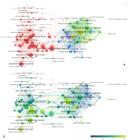
Figure 4 shows the bibliographic maps of the journals with higher citations. We see a separation between the medical journals and the rest, with health and agriculture dominating. Citations varied within groups.
Top papers (Table V) are linked to techniques (Katz et al. 1972, Ciconelli et al. 1999, Souza et al. 2018) or computer programs (Cruz 2013), and to neglected diseases (such as Trypanosoma cruzi).
In Figure 5, we note that Brazil, China, India, and the United States are the major collaborators with SciELO. Major clusters are seen for Latin America (green), the Middle East and Asia (red), and Europe (blue and yellow). Average publication year (Figure 3b) shows that Asian countries are more recent contributors.

Collaboration Networks (a) for Brazilian articles published in SciELO and the average year of publication (b).
Themes of interest in major cited papers include biodiversity and agriculture (red) and different areas of health (yellow, orange, lilac, dark blue) (Figure 6). Some themes are related to neglected diseases such as Chagas, mental health, diabetes, and obesity, among others.

Table VI summarizes SciELO papers over time. As can be seen, several indicators improved, including the number of articles in the top 10% of citations and FWCI, the percentage of international collaborations, but not the top 10% of journals, the number of Q1/Q2 journals, or Academic-Corporate cooperation. Use in policy and patents has declined in the most recent period, but this may also reflect insufficient time for these articles to be cited.
A decision tree (Figure 7) for increasing citation impact (CNCI) revealed that factors such as the area of knowledge and journal quartile (Q1 has the highest impact) contributed to the impact. International collaborations, contrary to other publications (McManus et al. 2020b), did not affect impact. This may be due, in part, to the overall low level of international cooperation in these papers. Worldwide, international collaborations reach over 20%, and for Brazilian publications, overall, this reaches almost 34% (Table VII).
Summary of publication indices for the top 20,000 cited papers from SciELO, compared to the World and Brazil.

Decision tree for high journal Category Normalised Citation Impact publishing in SciELO (CNCI – Category Normalised Citation Impact, JIF Journal Impact Factor; n/a, Q1-Q4 – journal Quartile), n/a not applicable.
When looking at the documents by area of knowledge (Table VII), it can be seen that FWCIs in Agriculture and Health are above the world mean (which is 1 (one)). The percentage of health papers among the top 20,000 SciELO-cited documents is double the world mean, even though there are very few in the top 10% of journals. International collaborations are low, as is the percentage of academic-corporate collaborations. There is a higher percentage of documents cited by policy (primarily agriculture and health) and patents (Exact) than seen overall worldwide and in Brazil, in particular.
DISCUSSION
Many prestigious indexing databases primarily index journals from high-income countries, making it challenging for journals from the Global South to achieve more comprehensive visibility and recognition. Being indexed in major databases is crucial for increasing citations. Scielo is working on indexing its journals in DOAJ, LILACS, MEDLINE, Redalyc, Scopus, and Web of Science (Packer & Babini 2020). The launch of the SciELO Citation Index in the Web of Science (WoS) can also be seen as a recognition of the quality of publications in the region (Minniti et al. 2018). The number of Latin American and Caribbean (LAC) journals indexed in international databases has recently increased (Machin-Mastromatteo 2019).
Global South journals may have limited resources for marketing, promotion, and dissemination. As a result, they may struggle to attract the attention of researchers and readers worldwide, leading to lower citation rates. Universities, associations, and research institutes represent 90% of LAC journals in SciELO (Vélez-Cuartas et al. 2016). This is the same proportion of Brazilian journals indexed in WoS and Scopus maintained by universities and associations (Rodrigues & Abadal 2014). Although not all academic journals are of low scientific quality, as seen in the present study, funding shortages can hinder scientific publishing. Additionally, the lower productivity of academic journals also reflects on international visibility, as WoS and Scopus prioritize the most productive publications (Repiso et al. 2019).
Further factors that may reduce citations include limited research networks, limited indexing and database coverage, a lack of resources for promotion, career incentives and recognition, and historical factors. Researchers in the Global South may have fewer opportunities to collaborate with peers from other countries or regions, thereby affecting the visibility and reach of their research. Strong research networks are essential for increasing citations and impact (McManus et al. 2020b). Brazil is the most endogamous country in Latin America, with 88% of local journal articles authored by Brazilians (Collazo-Reyes 2014).
In some academic systems, researchers are incentivized to publish in high-impact journals to advance their careers or obtain funding. Researchers from the Global South may prioritize publishing their best papers in established, high-impact journals, even if they have valuable research to publish in local journals. The historical dominance of Western science and academic publishing has influenced citation practices and perceptions of quality. Overcoming historical biases and promoting diverse voices in academia can help elevate the visibility and impact of scientific journals from the Global South. Beigel et al. (2024) demonstrated a predominance of diamond journals, university publishing institutions, and multiscalar forms of circulation, as seen in Scielo and Redalyc journals. The authors claim that, despite linguistic and disciplinary diversity, these characteristics can contribute effectively to science communication within the context of open science.
High-impact publications are not exclusive to journals from high-income countries or commercial publishers. Many SciELO journals, particularly in the health and agricultural sciences, reached citation levels above the global average (with Field-Weighted Citation Impact [FWCI] exceeding 2.0 for some titles). This suggests that research published in these journals resonates both nationally and internationally, primarily when it addresses locally relevant issues with broader applicability, such as public health, biodiversity, and agriculture. This is in contrast to Do Canto et al. (2022), who stated that preferences for local and regional research subjects lead to low impact.
Notably, the data indicate that journal quartile and publisher type significantly influence impact. Journals in Q1 and those managed by commercial publishers or scientific associations tend to have higher CNCI scores. However, a substantial proportion of the highly cited papers still come from university or institutional publishers, indicating that quality research and rigorous editorial standards can also be maintained with modest resources. Journal registration in databases such as Web of Science or Scopus (Pranckutė 2021) can help increase citations in other journals (Martín-Martín et al. 2018), with 53% of Brazilian journals and 52% of papers in Web of Science (Maricato et al. 2023). These authors showed that Scopus (in 2007) and Web of Science (in 2014) partially incorporated SciELO data, although there may be a lack of retrospective coverage, issues related to indexing policies, and a reduction in the communication of SciELO journals to these databases, among others (Bojo-Canales & Melero 2023). Coverage was wider in Dimensions and Open Alex.
Another significant contribution of this study is the demonstration of policy relevance. SciELO papers have been cited by major international organizations, including the World Health Organization (WHO), the Food and Agriculture Organization (FAO), and the United Nations Educational, Scientific, and Cultural Organization (UNESCO), as well as Brazilian government bodies and policy think tanks. The integration of SciELO articles into policy documents more than doubled the FWCI of the most-cited papers, highlighting their influence beyond academia. While there has been a recent decline in policy citations, this may reflect a time lag in uptake rather than a reduction in relevance.
The citation by patents further underscores the applied value of research from these journals. Although there has been a reduction in recent years, companies such as GlaxoSmithKline, Novartis, and Unilever have cited SciELO articles, showing tangible connections between open-access science and innovation. This adds a layer of socio-economic impact to the argument for supporting open-access publication models in the Global South. McManus et al. (2020, 2024a, 2024b) demonstrated that international collaboration and collaboration with industry increased the impact of Brazilian research.
Despite these strengths, we acknowledge enduring challenges. International collaboration remains limited, although it is slowly increasing. Interestingly, in contrast to previous studies, international collaboration did not significantly enhance impact in this dataset. This could reflect the endogenous nature of Brazilian science, where domestic researchers author a high proportion of publications. This insularity may reduce visibility in international networks, even if the work is of high quality. Cintra et al. (2020) note that, in the Social Sciences and Humanities, papers published in English had lower impact than those in Portuguese or Spanish in the SciELO Brazil collection.
Moreover, the findings highlight a disconnect between open access and publication in top-tier journals. Despite increases in FWCI and citations, few SciELO articles appear in the top 10% of journals by impact factor. This suggests that while open access boosts visibility and citation, it does not necessarily translate into placement in elite journals (Figueiredo et al. 2024), likely due to structural barriers, language bias, or legacy perceptions of prestige.
This study confirms the importance of open-access platforms, such as SciELO, in democratizing knowledge production and dissemination. It also signals the need for continued investment in journal indexing, editorial training, multilingual dissemination, and regional networks. As the ecosystem of scholarly publishing evolves, models that combine low-cost access with high impact, as demonstrated by SciELO, could serve as a blueprint for other regions in the Global South.
Boosting the number of citations of a scientific article requires a combination of strategic efforts by the authors and coordinated support from funding agencies, publishers, universities, and the broader research community.
At the individual level, authors have the most direct impact on the visibility and citation potential of their work (Martín-Martín et al. 2021, Huang et al. 2025). Publishing in reputable, well-indexed journals that attract a broad readership increases the likelihood that an article will be cited. Authors need to craft clear, concise titles and abstracts rich in relevant keywords to enhance discoverability through academic search engines. Making articles openly accessible is another key factor, as open access significantly improves visibility and citation rates (Komaritsa 2022, Figueiredo et al. 2024), as well as data or program availability (Colavizza et al. 2020, Frachtenberg 2022). Beyond publication, authors should actively disseminate their work through academic platforms such as ResearchGate and Academia.edu (Ebrahimzadeh et al. 2020), as well as via social media networks like Twitter and LinkedIn (Adriaanse et al. 2024, Doulani et al. 2020, Peres et al. 2022). Conference presentations and webinars (Hauss 2021, Aguinis et al. 2020) also offer valuable opportunities to reach broader audiences. Engaging in international or interdisciplinary collaborations can further broaden the article’s reach (McManus et al. 2020b). When appropriate (Szomszor et al. 2020), citing one’s own relevant prior publications can help reinforce the continuity and visibility of a research trajectory.
Funding agencies (Shin et al. 2022, Aagaard et al. 2021) play a crucial role in enhancing research visibility and, consequently, citations. They often encourage or require open-access publishing and provide financial support for publication fees, thereby helping make research outputs more widely accessible. Many agencies maintain their own repositories or require grantees to deposit work in national or thematic databases, ensuring long-term discoverability (Montague-Hellen & Montague-Hellen 2023). Moreover, by recognizing citation impact (as a proxy for quality) in project evaluations or researcher performance assessments, funding bodies incentivize dissemination and outreach activities (Park et al. 2023). Funding agencies can also stimulate collaboration, both nationally and internationally (Davies et al. 2022), thereby increasing impact and visibility.
Publishers also contribute to citation growth by ensuring that articles are indexed in major academic databases such as Scopus, Web of Science, and Google Scholar, and by maintaining high-quality metadata (Vasudevan et al. 2025, Maddi et al. 2025). Many offer promotional services, such as featuring articles in newsletters, press releases, and social media campaigns. They increasingly support open science practices, including preprint sharing and open data mandates, and provide tools such as altmetrics and citation alerts to track and boost article visibility. The continued training of journal editors and reviewers is also necessary (Dengler 2023, Knöchelmann et al. 2022, Noel 2022, Veltman 2025), as these may ultimately affect innovative discoveries (Baccini & Re 2025). The importance of the editor role for SciELO and Redalyc is highlighted in Beigel (2025).
Universities and research institutions support their researchers (Aboagye et al. 2021, Lancho-Barrantes & Cantu-Ortiz 2021, Niles et al. 2020) by promoting published work on institutional websites, in press communications, and through open-access repositories. They also offer training in scientific writing, publishing strategies, and research communication. Recognizing citation metrics — alongside qualitative indicators — in hiring, promotion, and funding decisions encourages researchers to engage more actively in publicizing their work.
Broader systemic practices are essential. The use of standardized metadata (Ulrich et al. 2022), the adoption of persistent identifiers such as ORCID (Baglioni et al. 2021), and compliance with FAIR data principles (Findable, Accessible, Interoperable, and Reusable) (Jacobsen et al. 2020) all enhance the discoverability and usability of scientific outputs. Initiatives such as the San Francisco Declaration on Research Assessment (DORA) also promote more balanced and responsible use of citation metrics in evaluating research quality and impact (Boury et al. 2023).
Increasing citations is not solely the responsibility of individual researchers but also depends on coordinated actions across all actors in the research ecosystem (Wigdorowitz et al. 2024). When aligned, these efforts can significantly enhance the reach, relevance, and recognition of scientific publications.
CONCLUSIONS
The results of this study challenge prevailing assumptions about the limited global impact of open-access journals from the Global South. By focusing on Brazilian journals indexed in SciELO, the analysis reveals that, contrary to expectations, such journals can indeed achieve high impact, particularly in terms of citation metrics and policy relevance. Improving the visibility, accessibility, quality, and international collaboration of Global South scientific journals can help enhance their citation impact over time. Highly cited papers are published in Global South journals, addressing themes relevant both nationally and internationally, and have been referenced in policy documents worldwide. This study can help inform the development of policies to enhance the impact of scientific journals from the Global South.
Acknowledgements
To Coordenação de Aperfeiçoamento de Pessoal de Nível Superior (CAPES), Fundação de amparo à Pesquisa do Estado de São Paulo (FAPESP), and Conselho Nacional de Desenvolvimento Científico e Tecnológico (CNPq) for funding.
References
- AAGAARD K, MONGEON P, RAMOS-VIELBA I & THOMAS DA. 2021. Getting to the bottom of research funding: Acknowledging the complexity of funding dynamics. PLoS ONE 16(5): e0251488.
- ABOAGYE E, JENSEN I, BERGSTRÖM G, BRÄMBERG EB, PICO-ESPINOSA OJ & BJÖRKLUND C. 2021. Investigating the association between publication performance & the work environment of university research academics: a systematic review. Scientometrics 126(4): 3283-3301.
- ADRIAANSE L, NIEMAND CJ & RENSLEIGH C. 2024. Altmetric & bibliometric indicators for academic social networks: Academia.edu & ResearchGate. S Afr J Inf Manag 26(1): 1869.
- AGUINIS H, VILLAMOR I, LAZZARINI SG, VASSOLO RS, AMORÓS JE & ALLEN DG. 2020. Conducting management research in Latin America: why & what’s in it for you? J Manag 46(5): 615-636.
- BACCINI A & RE C. 2025. Who are the gatekeepers of economics? Geographic diversity, gender composition, and interlocking editorship of journal boards. Rev Political Econ 37(2): 681-708.
- BAGLIONI M, MANGHI P, MANNOCCI A & BARDI A. 2021. We can make a better use of ORCID: five observed misapplications. Data Sci J 20: 38-38.
- BEIGEL F. 2025. The transformative relation between publishers & editors: Research quality & academic autonomy at stake. Quant Sci Stud: 1-17.
- BEIGEL F, PACKER AL, GALLARDO O & SALATINO M. 2024. OLIVA: The Scientific output in journals edited in Latin America. Disciplinary Diversity, Institutional Collaboration, & Multilingualism in SciELO & Redalyc (1995-2018). Dados 67: e20210174.
-
BOJO-CANALES C & MELERO R. 2023. Open access editorial policies of SciELO health sciences journals. J Inf Sci 49(3): 685-698. DOI: 10.1177/01655515211015135.
» https://doi.org/10.1177/01655515211015135 - BOURY H ET AL. 2023. Exploring the merits of research performance measures that comply with the San Francisco Declaration on Research Assessment & strategies to overcome barriers of adoption: qualitative interviews with administrators & researchers. Health Res Policy Syst 21(1): 43.
-
CARVAJAL TAPIA AE & CARVAJAL RODRÍGUEZ E. 2019. Producción científica en ciencias de la salud en los países de América Latina 2006-2015: análisis a partir de SciELO. Rev Interam Bibliotecol 42(1): 15-21. DOI: 10.17533/udea.rib.v42n1a02.
» https://doi.org/10.17533/udea.rib.v42n1a02 - CICONELLI RM, FERRAZ MB, SANTOS W, MEINAO I & QUARESMA MR. 1999. Brazilian-portuguese version of the sf-36. a reliable & valid quality of life outcome measure; [traducao para a lingua portuguesa e validação do questionário genérico de avaliação de qualidade de vida sf-36 (brasil sf-36)]. Rev Bras Reumatol 39(3): 143-150.
- CINTRA R, DA SILVA MDP & FURNIVAL AC. 2020. Uso do inglês como estratégia de internacionalização da produção científica em Ciências Sociais Aplicadas: estudo de caso na SciELO Brasil. Em Questão: 17-41.
- COLAVIZZA G, HRYNASZKIEWICZ I, STADEN I, WHITAKER K & MCGILLIVRAY B. 2020. The citation advantage of linking publications to research data. PLoS ONE 15(4): e0230416.
-
COLLAZO-REYES F. 2014. Growth of the number of indexed journals of Latin America & the Caribbean: The effect on the impact of each country. Scientometrics 98(1): 197-209. DOI: 10.1007/s11192-013-1036-2.
» https://doi.org/10.1007/s11192-013-1036-2 - CRUZ CD. 2013. Genes - a software package for analysis in experimental statistics & quantitative genetics; [Genes - software para análise de dados em estatística experimental e em genética quantitativa]. Acta Sci Agron 35(3): 271-276.
- DAVIES B, GUSH J, HENDY SC & JAFFE AB. 2022. Research funding & collaboration. Res Policy 51(2): 104421.
- DENGLER J. 2023. Priorities in journal selection for authors, reviewers, editors, librarians & science funders. Veg Classif Surv 4: 219-229.
- DO CANTO FL, PINTO AL, GAVRON EM & TALAU M. 2022. Latin American & Caribbean journals indexed in Google Scholar Metrics. Scientometrics 127(2): 763-783.
- DOULANI A, SHABANI Z & BARADAR R. 2020. Information science academic members of iranian public universities sharing information resources in ResearchGate social scientific network: It’s relation on their scientific output in Scopus database & Google Scholar search engine. Payavard Salamat 14(1): 53-64.
- EBRAHIMZADEH S, REZAEI SHARIFABADI S, KARBALA AGHAIE KAMRAN M & DALKIR K. 2020. Triggers & strategies related to the collaborative information-seeking behaviour of researchers in ResearchGate. Online Inf Rev 44(5): 1077-1096.
- FERREIRA DF. 2011. Sisvar: a computer statistical analysis system. Cienc Agrotec 35: 1039-1042.
-
FIGUEIREDO C, NEVES AAB, PIMENTEL F, PIMENTEL D, MOTA-ARAUJO HP, DE BEM AF, NETO BAD & MCMANUS C. 2024. Impact of Open Access Policy on Brazilian Science and Global Trends. An Acad Bras Cienc 96: e20231068. DOI: 10.1590/0001-3765202420231068.
» https://doi.org/10.1590/0001-3765202420231068 - FRACHTENBERG E. 2022. Research artifacts & citations in computer systems papers. PeerJ Comput Sci 8: e887.
- GÄAL LPM & MARTINS MS. 2022. Acesso aberto no contexto da pesquisa em Ciência da Informação. Transinformação 34: e220016.
- HAUSS K. 2021. What are the social & scientific benefits of participating at academic conferences? Insights from a survey among doctoral students & postdocs in Germany. Res Eval 30(1): 1-12.
- HUANG SS, SHAO Y & ZHANG D. 2025. What drives citations in tourism research? Ann Tour Res 110: 103870.
- JACOBSEN A ET AL. 2020. FAIR principles: interpretations & implementation considerations. Data Intell 2(1-2): 10-29.
- KATZ N, CHAVES A & PELLEGRINO J. 1972. A simple device for quantitative stool thick-smear technique in Schistosomiasis mansoni. Rev Inst Med Trop Sao Paulo 14(6): 397-400.
- KNÖCHELMANN M, HESSELMANN F, REINHART M & SCHENDZIELORZ C. 2022. The rise of the guest editor—Discontinuities of editorship in scholarly publishing. Front Res Metr Anal 6: 748171.
- KOMARITSA VN. 2022. Benefits of using open access: Citation analysis. Autom Doc Math Linguist 56(4): 197-202.
- LANCHO-BARRANTES BS & CANTU-ORTIZ FJ. 2021. Quantifying the publication preferences of leading research universities. Scientometrics 126(3): 2269-2310.
-
MACHIN-MASTROMATTEO JD. 2019. Latin American triple-A journals 2: The Venezuelan case. Inf Dev 35(5): 839-845. DOI: 10.1177/0266666919877962.
» https://doi.org/10.1177/0266666919877962 - MADDI A, MAISONOBE M & BOUKACEM-ZEGHMOURI C. 2025. Geographical & disciplinary coverage of open access journals: OpenAlex, Scopus, & WoS. PLoS ONE 20(4): e0320347.
-
MARICATO JM, MAZONI A, MUGNAINI R, PACKER AL & COSTAS R. 2023. SciELO as an open scientometric research infrastructure: General discussion of coverage in OpenAlex, WoS, Scopus & Dimensions. In 27th International Conference on Science, Technology & Innovation Indicators (STI 2023). International Conference on Science, Technology & Innovation Indicators. Available at: https://dapp.orvium.io/deposits/6442c231903ef57acd6dc640/view
» https://dapp.orvium.io/deposits/6442c231903ef57acd6dc640/view - MARTÍN-MARTÍN A, ORDUNA-MALEA E, THELWALL M & LÓPEZ-CÓZAR ED. 2018. Google Scholar, Web of Science, & Scopus: A systematic comparison of citations in 252 subject categories. J Informetr 12(4): 1160-1177.
- MARTÍN-MARTÍN A, THELWALL M, ORDUNA-MALEA E & DELGADO LÓPEZ-CÓZAR E. 2021. Google Scholar, Microsoft Academic, Scopus, Dimensions, Web of Science, & OpenCitations’ COCI: a multidisciplinary comparison of coverage via citations. Scientometrics 126(1): 871-906.
- MCMANUS C & BAETA NEVES AA. 2021a. Production Profiles in Brazilian Science, with special attention to social sciences & humanities. Scientometrics 126(3): 2413-2435.
- MCMANUS C & BAETA NEVES AA. 2021b. Funding research in Brazil. Scientometrics 126(1): 801-823.
-
MCMANUS C & BAETA NEVES AA. 2022. Bibliometric measures in social sciences & humanities from different sources based on Brazilian data. COLLNET J Scientometrics Inf Manag 16(2): 279-304. DOI: 10.1080/09737766.2022.2097896.
» https://doi.org/10.1080/09737766.2022.2097896 - MCMANUS C, BAETA NEVES AA, AUDY JN & PRATA AT. 2024a. Public research institutes in Brazil: evidence of research & innovation impact. Innov Eur J Soc Sci Res: 1-23. DOI: 10.1080/13511610.2024.2396505.
-
MCMANUS C, BAETA NEVES AA, DINIZ FILHO JA, PIMENTEL F & PIMENTEL D. 2023b. Funding as a determinant of Citation Impact in Scientific Papers in different countries. An Acad Bras Cienc 95: e20220515. DOI: 10.1590/0001-3765202320220515.
» https://doi.org/10.1590/0001-3765202320220515 - MCMANUS C, BAETA NEVES AA, MARANHÃO AQ, SOUZA FILHO AG & SANTANA JM. 2020b. International collaboration in Brazilian science: financing & impact. Scientometrics 125(3): 2745-2772.
- MCMANUS C, BAETA NEVES AA, PIMENTEL F, PIMENTEL D & FINAN T. 2023a. Brazilian regions & international scientific collaboration. Rev Tempo Mundo 31: 173-203.
-
MCMANUS C, BAETA NEVES AB, AUDY JN & PRATA AT. 2024b. Innovation in Brazil: Universities, Embraer and Petrobras. An Acad Bras Cienc 96: e20230938. DOI: 10.1590/0001-3765202420230938.
» https://doi.org/10.1590/0001-3765202420230938 - MCMANUS C, PIMENTEL F, FERRAZ JBS, NÚÑEZ-DOMÍNGUEZ R, GUIMARÃES RF, PIMENTEL D, DA GAMA LT, DA SILVA COSTA N & PERIPOLLI V. 2024c. Mapping the composite cattle worldwide using bibliometric analysis. Livest Sci 290: 105593.
-
MCMANUS CM, NEVES AAB & MARANHÃO AQ. 2020a. Brazilian Publication Profiles: Where and How Brazilian authors publish. An Acad Bras Cienc 92: e20200328. DOI: 10.1590/0001-3765202020200328.
» https://doi.org/10.1590/0001-3765202020200328 -
MINNITI S, SANTORO V & BELLI S. 2018. Mapping the development of open access in Latin America & Caribbean countries. An analysis of Web of Science core collection & SciELO citation index (2005–2017). Scientometrics 117: 1905-1930. DOI: 10.1007/s11192-018-2950-0.
» https://doi.org/10.1007/s11192-018-2950-0 -
MONTAGUE-HELLEN B & MONTAGUE-HELLEN K. 2023. Publishers, funders and institutions: who is supporting UKRI-funded researchers to share data? Insights 36: 4. DOI: 10.1629/uksg.602.
» https://doi.org/10.1629/uksg.602 - NILES MT, SCHIMANSKI LA, MCKIERNAN EC & ALPERIN JP. 2020. Why we publish where we do: Faculty publishing values & their relationship to review, promotion & tenure expectations. PLoS ONE 15(3): e0228914.
- NOEL M. 2022. Opening Up of Editorial Activities at Chemistry Journals. What Does Editorship Mean & What Does It Involve? Front Res Metr Anal 7: 747846.
- PACKER AL & BABINI D. 2020. The pasts, presents, & futures of SciELO. In: Reassembling Scholarly Communications: Histories, Infrastructures, & Global Politics of Open Access. Edited by Martin Paul Eve, Jonathan Gray. The MIT Press. DOI: 10.7551/mitpress/11885.001.0001.
-
PARK M, LEAHEY E & FUNK RJ. 2023. Papers & patents are becoming less disruptive over time. Nature 613: 138-144. DOI: 10.1038/s41586-022-05543-x.
» https://doi.org/10.1038/s41586-022-05543-x - PERES MF, BRASCHINSKY M & MAY A. 2022. Effect of Altmetric score on manuscript citations: A randomized-controlled trial. Cephalalgia 42(13): 1317-1322.
- PIMENTEL F, PAIVA S, DIAS LT, PIMENTEL D & MCMANUS C. 2023. Donkeys in Brazil: Bibliometric Mapping & Breed Information: Bibliographic Mapping for Brazilian Donkeys. Int J Equine Sci 2(1): 34-46.
- PRANCKUTĖ R. 2021. Web of Science (WoS) & Scopus: The titans of bibliographic information in today’s academic world. Publications 9(1): 12.
- REPISO R, CASTILLO-ESPARCIA A & TORRES-SALINAS D. 2019. Altmetrics, alternative indicators for Web of Science Communication studies journals. Scientometrics 119(2): 941-958.
-
RODRIGUES RS & ABADAL E. 2014. Scientific journals in Brazil & Spain: Alternative publishing models. J Assoc Inf Sci Technol 65(10): 2145-2151. DOI: 10.1002/asi.23115.
» https://doi.org/10.1002/asi.23115 -
SHIN H, KIM K & KOGLER DF. 2022. Scientific collaboration, research funding, & novelty in scientific knowledge. PLoS ONE 17(7): e0271678. DOI: 10.1371/journal.pone.0271678.
» https://doi.org/10.1371/journal.pone.0271678 -
SOUZA AC, ALEXANDRE NMC & GHIRARDELLI EB. 2018. Psychometric properties in instruments evaluation of reliability & validity. Epidemiol Serv Saúde 26(3): 649-659. DOI: 10.5123/S1679-49742017000300022.
» https://doi.org/10.5123/S1679-49742017000300022 - SZOMSZOR M & ADIE E. 2022. Overton: A bibliometric database of policy document citations. Quant Sci Stud 3(3): 624-650.
- SZOMSZOR M, PENDLEBURY DA & ADAMS J. 2020. How much is too much? The difference between research influence & self-citation excess. Scientometrics 123(2): 1119-1147.
- ULRICH H ET AL. 2022. Understanding the nature of metadata: systematic review. J Med Internet Res 24(1): e25440.
- VASUDEVAN B, CHATTERJEE M, SHARMA V & SAHDEV R. 2025. Indexing of Journals & Indices of Publications. Indian J Radiol Imaging 35(Suppl. 1): S148-S154.
-
VÉLEZ-CUARTAS G, LUCIO-ARIAS D & LEYDESDORFF L. 2016. Regional & global science: Publications from Latin America & the Caribbean in the SciELO citation index & the Web of Science. Prof Inf 25(1): 35. DOI: 10.3145/epi.2016.ene.05.
» https://doi.org/10.3145/epi.2016.ene.05 -
VELTMAN JA. 2025. Ethics in editorship: lessons from a major retraction incident. Eur J Hum Genet 33(5): 561-562. DOI: 10.1038/s41431-025-01847-4.
» https://doi.org/10.1038/s41431-025-01847-4 -
WIGDOROWITZ M, RIBARY M, FARINA A, LIMA E, BORKOWSKI D, MARONGIU M, SORENSEN AH, TIMIS C & MCGILLIVRAY B. 2024. It takes a village! Editorship, advocacy, & research in running an open access data journal. Publications 12(3): 24. DOI: 10.3390/publications12030024.
» https://doi.org/10.3390/publications12030024
Edited by
-
Handling editor
Alexander Kellner
Commercial paywalls protect Scopus, Web of Science, InCites, and Scival, and, as such, the data are not available.


