
 Fungal community in the soil of Punta Hannequim, Antarctica, assessed by environmental DNA metabarcoding
Abstract
The fungal community present in soil collected from Punta Hannequim on King George Island, Antarctica, was evaluated using DNA metabarcoding through high-throughput sequencing. A total of 123 fungal amplicon sequence variants (ASVs) were detected, belonging to the phyla Ascomycota, Basidiomycota, Chytridiomycota, Mortierellomycota, and Rozellomycota. The most dominant ASVs were from the genera Trichoderma, Gorgomyces, and Neobulgaria. In addition, many unassigned ASVs were identified and may represent previously unknown fungal diversity in Antarctic microbial ecology. The observed ASV richness rarefaction curve showed that all diversity of the sample was recovered. The taxonomic groups observed in the sampled region included endemic, cosmopolitan, and opportunistic plant pathogenic taxa. The results presented expand knowledge of the fungal community in the soil of King George Island, aiming to guide the development of selective culture media capable of recovering greater microbial diversity from this environment and consequently, broadening perspectives in the field of Antarctic mycology.
Key words
Cold microbial communities; Fungi; Antarctica; Metabarcoding; unassigned ASVs
INTRODUCTION
The Antarctic continent is considered an extreme and unknown place. Environmental factors such as low temperatures, very strong winds, low humidity, high levels of UV radiation, and limited nutritional availability severely limit life in this environment (Duarte et al. 2018, Silva et al. 2018). Although these adverse conditions make life in Antarctica difficult, the microorganisms that inhabit these environments have undergone evolutionary adaptations that confer molecular modifications, making this community highly adapted to these inhospitable conditions (Ladygina et al. 2006, Rosa et al. 2020).
Fungi that inhabit Antarctic soils play an important ecological role, such as the decomposition of organic matter, and are dominant components of the biomass in this cold ecosystem (Wentzel et al. 2019), in addition to being able to influence the sequestration and balance of carbon in the soil (Větrovský et al. 2019). Fungi present in Antarctica may yet represent an unknown proportion of the diversity, and their true diversity may be much greater than currently estimated (Rosa et al. 2019). Environmental conditions on the Antarctic Peninsula are milder compared to the continental region, and the composition of organic matter and nutrients is higher. This difference has provided distinct diversity and higher fungal abundance in this region, compared to the continental zone (Rosa et al. 2019).
The characterization of microbial communities present in diverse environments has been considered an important tool for the discovery of new taxonomic groups and understanding their ecological interactions, key points involved in the prosperity of these communities in little-known environments (Ottoni et al. 2022a, Gonçalves et al. 2023, Olmedo-Rojas et al. 2023, Zhang et al. 2022). Culture-independent approaches have been used in recent years as an efficient mechanism in the search for microbial communities in environmental samples, where culture-dependent tools have limitations, such as the inability to reproduce in culture medium the nutritional conditions that these communities need to develop outside the natural ecosystem (Ottoni et al. 2022b). According to the panorama described above, in the present study, we evaluated fungal diversity in a soil sample from Punta Hannequim, King George Island, South Shetland Islands, using a DNA metabarcoding tool.
MATERIALS AND METHODS
Sampling
A soil sample was collected at Punta Hannequim, Admiralty Bay, King George Island, South Shetland Islands (Figure 1). A spatula cleaned with 70% ethanol was used to scrape the surface region of the collection point and to collect the soil, in triplicate. Three sterilized Falcon-type plastic tubes were used to store the collected soil. The tubes were stored at -20°C until laboratory processing. The samples were collected during the summer of OPERNTAR XL (2021-2022), on 12/27/2021.

Map obtained from Google Earth (2023) of the location where the soil sample was collected. Punta Hannequim, Admiralty Bay, King George Island, South Shetland Islands (yellow dot indicates pickup location).
DNA Extraction, Sequencing, and Bioinformatics Analyses
All stages of DNA extraction, library construction, quality control, sequencing, and bioinformatics analysis were performed by a company specialized in genomic studies. About 0.5 g of the three soil samples was used for fungal DNA extraction using the DNeasy Powersoil Pro kit (Qiagen), according to the manufacturer’s recommendations. The integrity of the extracted DNA was checked by electrophoresis on 0.8% agarose gel, followed by purity analysis on a NanoDrop 1000 (Thermo Fischer Scientific, Waltham, MA, USA), using absorbance ratios of 260/280 and 260/230. The ITS1-5F (Internal Transcribed Spacer) rRNA gene region was amplified using primers ITS5-1737F (5’- GGAAGTAAAAGTCGTAACAAGG-3’) and ITS2-2043R (5’-GCTGCGTTCTTCATCGATGC-3’). The PCR product was purified with the AMPure XP Beads kit (Beckman Coulter, Life Sciences), and ligation was performed in a PCR reaction using Index Nextera XT Index Primer 1 (N7xx) and Nextera XT Index Primer 2 (S5xx). Large-scale sequencing of amplicons was performed on the Illumina MiSeq platform (2 x 250 bp), in 2x250 bp runs.
The quality of the sequences was checked using the FASTQC v0.11.5 program (Andrews 2010). Sequences from the primers were removed using the tool Cutadapt v4.2 (Martin 2011). Microbiome analyses were performed using the DADA2 v1.24.0 tool (Callahan et al. 2016), comprising: removal of low-quality reads (Phred score <20), noise removal of chimeras (denoising) (consensus method), and grouping of representative sequences based on amplicon sequence variants (ASVs). The taxonomic classification was assigned using the UNITE fungal ITS database version 7.2 (Abarenkov et al. 2024). The analyses were performed in the R statistical environment (v. 4.2.1). The taxonomic table was analyzed in the Phyloseq package (McMurdie & Holmes 2013) of R. Sequencing coverage was assessed by rarefaction analysis. The microbial composition was expressed in relative abundance for all taxonomic levels.
Chemical-physical analysis
The analysis was performed following the standard internal protocols, not informed by a specialized company. The parameters evaluated were carbon and nitrogen contents.
RESULTS AND DISCUSSION
Chemical-physical analysis
Chemical-physical analyses showed the presence of 2.52% and < 50.0 mg/kg related to the TOC parameters (total organic carbon) and total nitrogen, respectively.
Fungal richness
A total of 51.661 reads were recovered from soil samples, of which 38.117, 37.838, 27.940, 27.940, and 27.928 reads were about information input, filtered, denoised, denoisedR, merged, and nonchimeric, respectively. The observed ASV richness rarefaction curve showed that the sampling reached saturation, or its plateau, and all the diversity of the sample was recovered (Figure 2).

Rarefaction curves of fungal amplicon sequence variants (ASVs) obtained from a soil sample on Punta Hannequim, King George Island, South Shetland Islands, Antarctica, using the metabarcoding method. ASVs were calculated at 99% identity.
Metabarcoding analyses revealed the fungal profile of the soil sample, represented by five different phyla, including Ascomycota, Basidiomycota, Chytridiomycota, Mortierellomycota, and Rozellomycota (Figure 3a). The two dominant phyla were Ascomycota (~80%), with the most abundant classes Leotiomycetes and Sordariomycetes (Figure 3b), followed by Basidiomycota (~10%), with the most abundant class Agaricomycetes. A significant number of unassigned ASVs were observed in the analysis (Figure 3a). The most dominant ASV genera were Trichoderma, Gorgomyces, and Neobulgaria (Figure 3c).
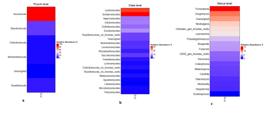
Relative abundance values of the phylum and hierarchical level of classes found in the soil sample.
Fungal microbial communities in the soil perform fundamental ecological functions, including decomposers, pathogens, and symbionts. The most abundant genus in the present study was Trichoderma (Figure 3c), a taxon often reported from the Antarctic continent and one of the most common genera in this region (Menezes et al. 2019). Representatives from this genus and from Penicillium (also observed in the present study; however, in a very low abundance) are cosmopolitan mesophilic fungi (non-native microorganisms) and can be isolated from samples from different sources on this continent (Menezes et al. 2022). A low C: N ratio (~0.5) in the studied sample was observed, which may have influenced the low abundance of saprotrophs such as Penicillium and Cladosporium, important groups in the soil decomposition process (Newsham et al. 2016).
The second most abundant genus in the present study, Gorgomyces (Figure 3c) previously reported in a sample of lichens from the Antarctic continent (Beck et al. 2023, Park et al. 2015), but it is not commonly found in soil or other non-lichen samples recovered from the Antarctic continent. This suggests that it may be a genus associated with cold environments, as individuals of this group have been isolated from oak leaves collected from the forest floor under a snow layer, in Japan (Miyamoto et al. 2017), and associated with lichen in Svalbard, High Arctic (Zhang et al. 2015).
The third most abundant genus observed was Neobulgaria (Figure 3c), a taxon present in the sampled region and has already been found in coastal water from King George Island, South Shetlands, Antarctica (Garmendia et al. 2021), in a great abundance in sediment samples from lakes in the Fildes Peninsula, King George Island, Antarctica, as well as in other cold places such as permafrost (Siberia and Alaska) and lake (Alaska), (Ogaki et al. 2020), which demonstrates its dominance in extreme cold regions.
In the present study, a relatively large abundance of ASVs from the Orbiliales_gen_Incertae_sedis taxonomic group was observed (Figure 3c). Representatives of the Orbiliales order are known as nematode-trapping fungi, a unique and intriguing group of carnivorous microorganisms able to capture and digest nematodes through specialized structures and important agents for nematode regulation in the soil (Jiang et al. 2017). This group is scarcely reported in Antarctica, being previously mentioned only in the work of Gray et al. (1982).
Other abundant genera observed were Pseudogymnoascus, Fusarium, Melanospora, and Verrucaria from the phylum Ascomycota. Representatives of the genus Pseudogymnoascus, a psychrophilic fungus with ubiquitous distribution in Antarctica (Shi et al. 2021a), have already been well reported in substrates collected in this continent, including soil, plants, sediments, and lakes (Villanueva et al. 2021). This genus is considered a widely distributed group across various cold regions worldwide. Is the causal agent of white-nose syndrome (WNS), a lethal disease that affects bats in North America (Villanueva et al. 2021). Representatives of this genus have been increasingly investigated for their biotechnological properties, including antiparasitic activity against Trypanosoma cruzi, selective herbicidal activity (Gomes et al. 2018), antibacterial activities (Shi et al. 2021a), and cytotoxic activities against human cancer (Shi et al. 2021b).
Santiago et al. (2015) performed a study evaluating the diversity of fungi that inhabit the lichensphere of samples of Usnea antarctica and U. aurantiaco-atra collected in Elephant, King George, and Deception Island in the Antarctic Peninsula. The authors noted that one of the most abundant genera was Fusarium. Fungi of this genus are considered cosmopolitan and can be recovered from several substrates, including soil, plant debris, and other substrates in polar regions with extreme conditions (Santiago et al. 2015). Species of the Fusarium genus, found as endophytes in leaves of Colobanthu quitensis, have also been reported to be commonly associated with diseases in wild plants, justifying a great abundance of this genus in Punta Hannequim (sampling site of the present study), Rei George Island, since there is a great diversity of mosses in this place, as well as these fungi can attack wood-based materials that were left behind by ancient explorers in the Antarctic continent (Rosa et al. 2010). According to Alves et al. (2019), some rock-associated Antarctic fungi, including Fusarium species, are reported to be endophytes. Thus, we can say that this taxon can be widely distributed throughout the entire Antarctic Peninsula.
Melanospora, a genus belonging to the order Melanosporales, is a group composed of a great majority of mycoparasites (Fusarium spp., as one of the hosts) (Bills et al. 2004), with pigmented ascospores (Marin-Felix et al. 2018). Because it is a mycoparasite of Fusarium species, its relative abundance may be related to the presence of Fusarium found in the present study. Verrucaria is a genus that inhabits rocks in Antarctica; therefore, the detection of this genus in the soil is probably associated with its free-living state as spores or other propagules (Newsham et al. 2016). Previous reports have already described the presence of species of this genus in lake and marine environments (Hospitaleche et al. 2011).
In the present work, several other genera associated with the collected soil were also found; however, in a lower abundance (<1%) (Figure S1 – Supplementary Material). Some of these genera are endemic fungi of the Antarctic continent, characterized as psychrophilic, such as Antarctomyces (Rosa et al. 2019), the genus Dactylospora, a group of lichenicolous fungi possibly endemic and already reported in the Antarctic continent (Olech & Alstrup 1996), and the genus Herpotrichia, described as an endophyte of plants from cold ecosystems (Santiago et al. 2012). Other genera have already been reported in cold environments such as Humicola, a genus isolated from Signy Island, Antarctica (Weinstein et al. 2000); Linnemannia, a cold-adapted species isolated from early 19th century archaeological artifacts collected on Livingston Island, Antarctica (Menezes et al. 2022); Microascus, a genus of endophytic fungus associated with seaweed, collected on Deception Island (Teixeira et al. 2019); Microdochium, a genus of endophytic fungi collected from living plants on King George Island, Antarctica (Santiago et al. 2012); Paranamyces observed in analysis using metabarcoding in lakes in the South Shetland Islands (de Souza et al. 2021); Sarocladium and Thelebolus isolated from glacial soil samples collected after glacial retreat (Collins Glacier), in the Fildes Peninsula, King George Island (Santos et al. 2020); and Xenopolyscytalum, which was first reported as plant endophytes in the study by Zhang et al. (2013), isolated from bryophyte collected on King George Island, Antarctica.
Cold-tolerant cosmopolitan taxa that have adapted to the cold climate of Antarctica, including Acremonium, Aspergillus (Rosa et al. 2019), Exophiala, a genus of black yeast recovered from Sub-Antarctic Macquarie Island (Zhang et al. 2019), and Filobasidium, a genus of epiphytic yeasts already reported on the icy continent (Ferreira et al. 2019), were also found in our study. The genus Chaetomium, comprising bryophyte-associated endophytic fungi, was isolated from the Fildes region, King George Island, maritime Antarctica (Zhang et al. 2013). Cytospora, a genus that causes plant diseases, has been observed in tree samples in Argentine Patagonia (Molina et al. 2020). We found unusual taxa present in polar soil communities, such as the genus Cladophialophora, previously reported in association with Antarctic rocks and widely distributed in rocks from the various islands of this continent (Alves et al. 2019) (Figure S1).
In the Basidiomycota phylum, some genera were observed in low abundance, including Cortinarius, an ectomycorrhiza isolated from the Chilean Antarctic (Torres et al. 2017). Lycoperdon (puffball mushroom) an edible fungus with a previous report of isolation from the Canadian Arctic environment (Bergin et al. 2021). Malassezia (yeast) was found in a study using Illumina MiSeq with brine samples collected from Antarctic permafrost in Northern Victoria Land (Borruso et al. 2018). However, we did not find reports of some genera of the same phylum from substrates collected in the Antarctic continent, including Psathyrella (Figure S1). We observed a certain abundance (~5%) of the genus Bergerella, a basidiomycete from the lichenicolous group, a genus not yet reported in association with any substrate collected in the Antarctic environment.
The genus Mortierella was the most abundant, representing the phylum Mortierellomycota. Representatives of this same genus have already been reported in the study with samples from Fildes Peninsula (glacial soil) (Santos et al. 2020) and Punta Plaza, Keller Peninsula (air), both from King George Island (Rosa et al. 2021). On the other hand, it was possible to observe a slightly higher abundance (~3.75%) of the enigmatic ASVs (Incertae sedis) belonging to the phylum Rozellomycota, which still do not have defined relationships, as well as a high abundance (~11%) of unassigned ASVs, affiliated to the phyla Ascomycota and Chytridiomycota.
Interestingly, the results showed a great diversity of genera, including Lasionectria, Chaetocapnodium, Conlarium, Coleophoma, Didymella (cosmopolitan), Epithamnolia, Kazachstania, Lasiosphaeria, Phylliscum (lichenized fungi), Pseudopithomyces, Thelonectria, Xenodevriesia, and Yunnania, representatives from Ascomycota phylum, and the genus Geranomyces, from Chytridiomycota phylum (Figure S1), which it was not possible to find reported or others studies about these taxonomic groups recovered and/or observed on the Antarctic continent, thus possibly being reported for the first time in this present study.
In this way, the results of the present study demonstrate that Punta Hannequim on King George, Antarctica, remains an unknown and potentially promising environment for the recovery of microbial taxa not yet described. It is likely that the great biological diversity found in Punta Hannequim, even considering the oligotrophic soil collected, commonly found in the Antarctic environment, can be observed by the activity of different birds that spawn in this place, the presence of moss carpet and other plants that grow in this place serves as a great nutritional source for the microbial communities that inhabit the soils of this inhospitable point of the Antarctic environment. Thus, the present work encourages future studies to develop differentiated culture media that allow the isolation of these taxonomic groups, which until then had not been recovered from substrate samples from Antarctica, and which were revealed using the Metabarcoding approach.
Acknowledgements
We thank the PROANTAR and INCT Criosfera. This work was supported by the Program Institutional Triple Agenda EDITAL PRPPG Nº 205/2021. PROIPG/PRPPG 2021; PROAP Coordenação de Aperfeiçoamento de Pessoal de Nível Superior (CAPES). Conselho Nacional de Desenvolvimento Científico e Tecnológico (CNPq) PROANTAR 442258/2018-6, CAPES Fundação de Amparo à Pesquisa do Estado de Minas Gerais (FAPEMIG), INCT Criosfera, and FNDCT.
Data availability
References
- ABARENKOV K, NILSSON RH, LARSSON KH, TAYLOR AF, MAY TW, FRØSLEV T G & KÕLJALG U. 2024. The UNITE database for molecular identification and taxonomic communication of fungi and other eukaryotes: sequences, taxa and classifications reconsidered. Nucleic Acids Res 52: D791-D797.
- ALVES IM, GONÇALVES VN, OLIVEIRA FS, SCHAEFER CE, ROSA CA & ROSA LH. 2019. The diversity, distribution, and pathogenic potential of cultivable fungi present in rocks from the South Shetlands archipelago, Maritime Antarctica. Extremophiles 23: 327-336.
-
ANDREWS S. 2010. FastQC: a quality control tool for high-throughput sequence data. Available at: https://www.bioinformatics.babraham.ac.uk/projects/fastqc/
» https://www.bioinformatics.babraham.ac.uk/projects/fastqc/ - BECK A, CASANOVA-KATNY A & GERASIMOVA J. 2023. Metabarcoding of Antarctic Lichens from Areas with Different Deglaciation Times Reveals a High Diversity of Lichen-Associated Communities. Genes 14: 1019.
- BERGIN R, KOCH I, RUTTER A, SHIRLEY J & ZEEB B. 2021. Evaluating mercury concentrations in edible plant and fungi species in the Canadian Arctic Environment. J Environ Qual 50: 877-888.
- BILLS GF, FOSTER MS & MUELLER GM. 2004. Biodiversity of fungi: inventory and monitoring methods. Ed., Elsevier Academic Press.
- BORRUSO L, SANNINO C, SELBMANN L, BATTISTEL D, ZUCCONI L, AZZARO M, BENEDETTA T, PIETRO B & GUGLIELMIN M. 2018. A thin ice layer segregates two distinct fungal communities in Antarctic brines from Tarn Flat (Northern Victoria Land). Sci Rep 8: 6582.
- CALLAHAN B, MCMURDIE P, ROSEN MJ, HAN AW, JOHNSON AJA & HOLMES SP. 2016. DADA2: High-resolution sample inference from Illumina amplicon data. Nat Methods 13: 581-583.
- DE SOUZA LM, OGAKI MB, CÂMARA PE, PINTO OH, CONVEY P, CARVALHO-SILVA M, ROSA CA & ROSA LH. 2021. Assessment of fungal diversity present in lakes of Maritime Antarctica using DNA metabarcoding: a temporal microcosm experiment. Extremophiles 25: 77-84.
- DUARTE AWF, BARATO MB, NOBRE FS, POLEZEL DA, DE OLIVEIRA TB, DOS SANTOS JA, RODRIGUES A & SETTE LD. 2018. Production of cold-adapted enzymes by filamentous fungi from King George Island, Antarctica. Pol Biol 41: 2511-2521.
- FERREIRA EMS, DE SOUSA FMP, ROSA LH & PIMENTA RS. 2019. Taxonomy and richness of yeasts associated with angiosperms, bryophytes, and meltwater biofilms collected in the Antarctic Peninsula. Extremophiles 23: 151-159.
- GARMENDIA G, ÁLVAREZ A, VILLARREAL R, MARTÍNEZ-SILVEIRA A, WISNIEWSKI M & VERO S. 2021. Fungal diversity in the coastal waters of King George Island (maritime Antarctica). World J Microbiol Biotechnol 37: 1-12.
- GOMES EC ET AL. 2018. Cultivable fungi present in Antarctic soils: taxonomy, phylogeny, diversity, and bioprospecting of antiparasitic and herbicidal metabolites. Extremophiles 22: 381-393.
- GONÇALVES VN, LIRIO JM, CORIA SH, LOPES FA, CONVEY P, DE OLIVEIRA FS, CARVALHO-SILVA M, CÂMARA PEAS & ROSA LH. 2023. Soil fungal diversity and ecology assessed using DNA metabarcoding along a deglaciated chronosequence at Clearwater Mesa, James Ross Island, Antarctic Peninsula. Biology 12: 275.
- GRAY N, WYBORN C & SMITH R. 1982. Nematophagous fungi from the maritime Antarctic. Oikos 38: 194-201.
- HOSPITALECHE CA, MÁRQUEZ G, PÉREZ LM, ROSATO V & CIONE AL. 2011. Lichen bioerosion on fossil vertebrates from the Cenozoic of Patagonia and Antarctica. Ichnos 18: 1-8.
- JIANG X, XIANG M & LIU X. 2017. Nematode-trapping fungi. Microbiol Spec 5: 5-1.
- LADYGINA N, DEDYUKHINA EG & VAINSHTEIN MB. 2006. A review on microbial synthesis of hydrocarbons. Process Biochem 41: 1001-1014.
- MARIN-FELIX Y, GUARRO J, GARCÍA D & STCHIGEL AM. 2018. Melanospora (Sordariomycetes, Ascomycota) and its relatives. MycoKeys 44: 81.
- MARTIN M. 2011. Cutadapt Removes Adapter Sequences from High-Throughput Sequencing Reads. EMBnet J 17: 10-12.
- MCMURDIE PJ & HOLMES S. 2013. phyloseq: An R Package for Reproducible Interactive Analysis and Graphics of Microbiome Census Data. PLoS ONE 8: e61217.
- MENEZES GCA, ALVES RP, DE CARVALHO VICTORIA F, PUTZKE J, PEREIRA AB & DE ALBUQUERQUE MP. 2019. Study of physiological and enzymatic properties and characterization of pathogenic activity of a fungus isolated from moss Sanionia uncinata (Hedw.) Loeske in Antarctica. Polar Biol 42: 783-792.
-
MENEZES GCA, PORTO BA, RADICCHI GA, SOARES FC, ZARANKIN A & ROSA LH. 2022. Fungal impact on archaeological materials collected at Byers Peninsula Livingston Island, South Shetland Islands, Antarctica. An Acad Bras Cienc 94: e20210218. DOI 10.1590/0001-3765202220210218.
» https://doi.org/10.1590/0001-3765202220210218 - MIYAMOTO T, KODA K, KAWAGUCHI A & URAKI Y. 2017. Ligninolytic activity at 0°C of fungi on oak leaves under snow cover in a mixed forest in Japan. Microbial Ecol 74: 322-331.
- MOLINA L, RAJCHENBERG M, DE ERRASTI A, AIME MC & PILDAIN MB. 2020. Sapwood-inhabiting mycobiota and Nothofagus tree mortality in Patagonia: Diversity patterns according to tree species, plant compartment and health condition. For Ecol Manag 462: 117997.
- NEWSHAM KK, HOPKINS DW, CARVALHAIS LC, FRETWELL PT, RUSHTON SP, O’DONNELL AG & DENNIS PG. 2016. Relationship between soil fungal diversity and temperature in the maritime Antarctic. Nat Clim Change 6: 182-186.
- OGAKI MB ET AL. 2020. Diversity, ecology, and bioprospecting of culturable fungi in lakes impacted by anthropogenic activities in Maritime Antarctica. Extremophiles 24: 637-655.
- OLECH M & ALSTRUP V. 1996. Dactylospora dobrowolskii sp. nov. and additions to the flora of lichens and lichenicolous fungi of Bunger Oasis, East Antarctica. Pol Polar Res 17: 165e168.
- OLMEDO-ROJAS P, JEUNEN GJ, LAMARE M, TURNBULL J, TERAUDS A, GEMMELL N & FRASER CI. 2023. Soil environmental DNA metabarcoding in low-biomass regions requires protocol optimization: a case study in Antarctica. Antarctic Sci 35: 15-30.
- OTTONI JR, BERNAL SPF, MARTERES TJ, LUIZ FN, DOS SANTOS VP, MARI ÂG, SOMER JG, DE OLIVEIRA VM & PASSARINI MRZ. 2022b. Cultured and uncultured microbial community associated with biogas production in anaerobic digestion processes. Arch Microbiol 204: 340.
- OTTONI JR, DOS SANTOS GRIGNET R, BARROS MGA, BERNAL SPF, PANATTA AAS, LACERDA-JÚNIOR GV, CENTURION VB, DELFORNO TP, GONÇALVES CCS & PASSARINI MRZ. 2022a. DNA Metabarcoding from Microbial Communities Recovered from Stream and Its Potential for Bioremediation Processes. Curr Microbiol 79: 70.
- PARK CH, KIM KM, ELVEBAKK A, KIM OS, JEONG G & HONG SG. 2015. Algal and fungal diversity in Antarctic lichens. J Eukaryot Microbiol 62: 196-205.
- ROSA LH, ALMEIDA VIEIRA MDL, SANTIAGO IF & ROSA CA. 2010. Endophytic fungi community associated with the dicotyledonous plant Colobanthus quitensis (Kunth) Bartl. (Caryophyllaceae) in Antarctica. FEMS Microbiol Ecol 73: 178-189.
- ROSA LH, PINTO OHB, CONVEY P, CARVALHO-SILVA M, ROSA CA & CÂMARA PEAS. 2021. DNA metabarcoding to assess the diversity of airborne fungi present over Keller Peninsula, King George Island, Antarctica. Microb Ecol 82: 165-172.
- ROSA LH, PINTO OHB, ŠANTL-TEMKIV T, CONVEY P, CARVALHO-SILVA M, ROSA CA & CÂMARA PE. 2020. DNA metabarcoding of fungal diversity in air and snow of Livingston Island, South Shetland Islands, Antarctica. Sci Rep 10: 21793.
- ROSA LH, ZANI CL, CANTRELL CL, DUKE SO, VAN DIJCK P, DESIDERI A & ROSA CA. 2019. Fungi in Antarctica: diversity, ecology, effects of climate change, and bioprospection for bioactive compounds. In: Fungi of Antarctica: diversity, ecology and biotechnological applications, Springer International Publishing, p. 1-17.
- SANTIAGO IF, ALVES TM, RABELLO A, SALES JUNIOR PA, ROMANHA AJ, ZANI CL, ROSA CA & ROSA LH. 2012. Leishmanicidal and antitumoral activities of endophytic fungi associated with the Antarctic angiosperms Deschampsia antarctica Desv. and Colobanthus quitensis (Kunth) Bartl. Extremophiles 16: 95-103.
- SANTIAGO IF, SOARES MA, ROSA CA & ROSA LH. 2015. Lichensphere: a protected natural microhabitat of the non-lichenised fungal communities living in extreme environments of Antarctica. Extremophiles 19: 1087-1097.
- SANTOS JAD, MEYER E & SETTE LD. 2020. Fungal community in Antarctic soil along the retreating Collins Glacier (Fildes Peninsula, King George Island). Microorganisms 8: 1145.
- SHI T, LI XQ, ZHENG L, ZHANG YH, DAI JJ, SHANG EL, YU Y-Y, ZHANG YT, HU W-P & SHI DY. 2021b. Sesquiterpenoids from the Antarctic fungus Pseudogymnoascus sp. HSX2#-11. Front Microbiol 12: 688202.
- SHI T, YU YY, DAI JJ, ZHANG YT, HU WP, ZHENG L & SHI DY. 2021a. New polyketides from the Antarctic fungus Pseudogymnoascus sp. HSX2#-11. Mar Drugs 19: 168.
- SILVA TR, DUARTE AW, PASSARINI MR, RUIZ ALT, FRANCO CH, MORAES CB & OLIVEIRA VM. 2018. Bacteria from Antarctic environments: diversity and detection of antimicrobial, antiproliferative, and antiparasitic activities. Polar Biol 41: 1505-1519.
- TEIXEIRA TR, SANTOS GS, TURATTI ICC, PAZIANI MH, VON ZESKA KRESS MR, COLEPICOLO P & DEBONSI HM. 2019. Characterization of the lipid profile of Antarctic brown seaweeds and their endophytic fungi by gas chromatography–mass spectrometry (GC–MS). Polar Biol 42: 1431-1444.
- TORRES S, CAJAS D, PALFNER G, ASTUYA A, ABALLAY A, PÉREZ C, HERNÁNDEZ V & BECERRA J. 2017. Steroidal composition and cytotoxic activity from fruiting body of Cortinarius xiphidipus. Nat Prod Res 31: 473-476.
- VĚTROVSKÝ T ET AL. 2019. A meta-analysis of global fungal distribution reveals climate-driven patterns. Nat Commun 10: 5142.
- VILLANUEVA P, VÁSQUEZ G, GIL-DURÁN C, OLIVA V, DÍAZ A, HENRÍQUEZ M, ÁLVAREZ E, LAICH F, CHÁVEZ R & VACA I. 2021. Description of the first four species of the genus Pseudogymnoascus from Antarctica. Front Microbiol 12: 713189.
- WEINSTEIN RN, MONTIEL PO & JOHNSTONE K. 2000. Influence of growth temperature on lipid and soluble carbohydrate synthesis by fungi isolated from fellfield soil in the maritime Antarctic. Mycologia 92: 222-229.
- WENTZEL LCP, INFORSATO FJ, MONTOYA QV, ROSSIN BG, NASCIMENTO NR, RODRIGUES A & SETTE LD. 2019. Fungi from Admiralty Bay (King George Island, Antarctica) Soils and Marine Sediments. Microb Ecol 77: 12-24.
- ZHANG C, SIRIJOVSKI N, ADLER L & FERRARI BC. 2019. Exophiala macquariensis sp. nov., a cold adapted black yeast species recovered from a hydrocarbon contaminated sub-Antarctic soil. Fungal Biol 123: 151-158.
- ZHANG T, WEI XL, ZHANG YQ, LIU HY & YU LY. 2015. Diversity and distribution of lichen-associated fungi in the Ny-Ålesund Region (Svalbard, High Arctic) as revealed by 454 pyrosequencing. Sci Rep 5: 1-10.
- ZHANG T, YAN D, JI Z, CHEN X & YU L. 2022. A comprehensive assessment of fungal communities in various habitats from an ice-free area of maritime Antarctica: diversity, distribution, and ecological trait. Environ Microbiome 17: 54.
- ZHANG T, ZHANG YQ, LIU HY, WEI YZ, LI HL, SU J, ZHAO L-X & YU LY. 2013. Diversity and cold adaptation of culturable endophytic fungi from bryophytes in the Fildes Region, King George Island, maritime Antarctica. FEMS Microbiol Lett 341: 52-61.


