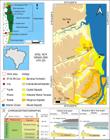
Figure 1
Maps showing the location of the studied section (RT-01-PB) in the proximity of the Municipality of Lucena State of Paraíba, Brazil. a) Map of Brazil, indicating the Paraíba Basin in green rectangle; b) Map of the Paraíba Basin and its sub-basins; red star indicating the location of the core. Adapted from Mabesoone & Alheiros (1993); c) map of the Miriri Sub-Basin; d) Stratigraphic Chart of the Paraíba Basin, with emphasis on the Upper Cretaceous units that are the focus of this work.
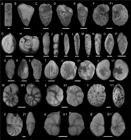
Figure 2
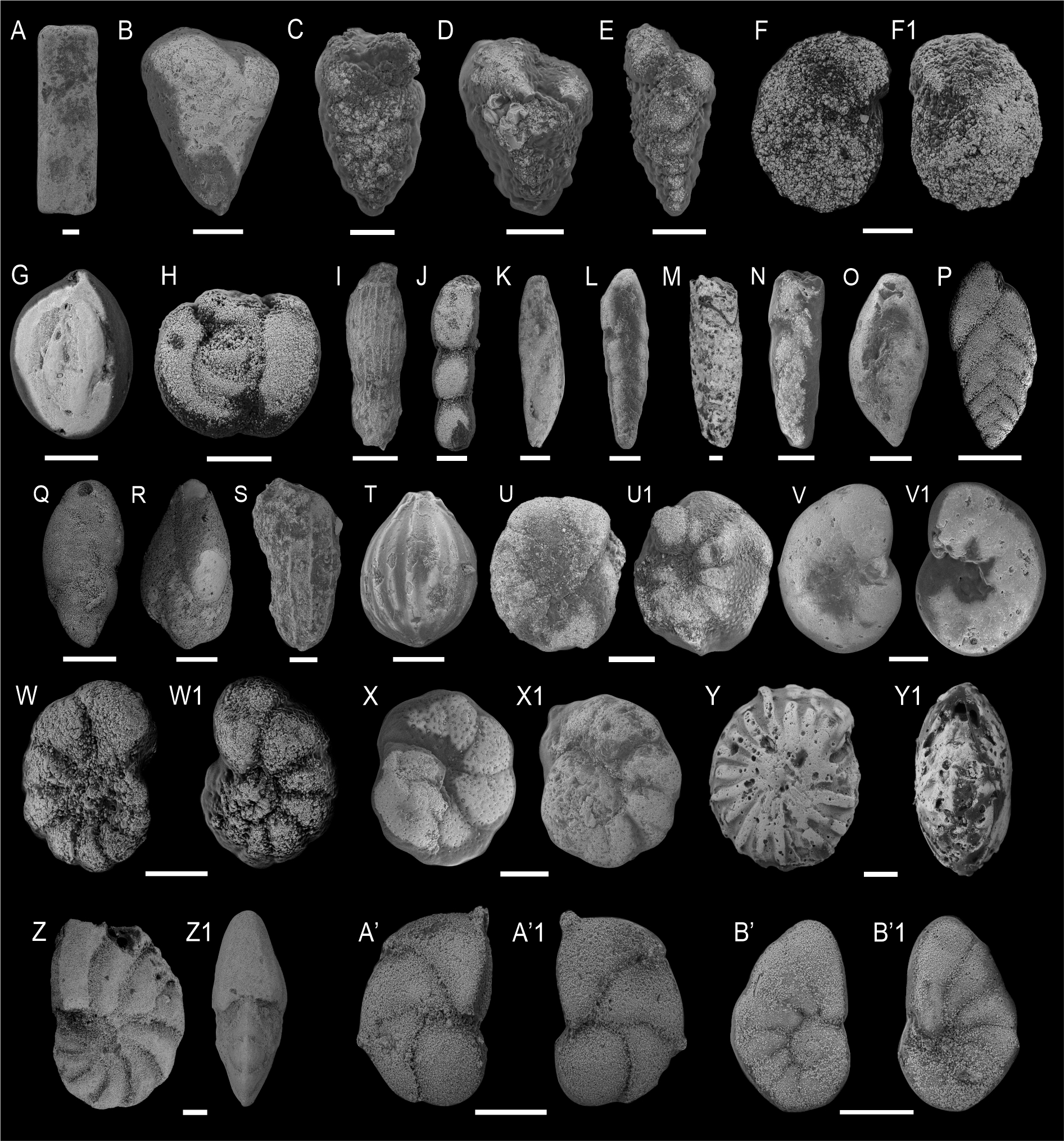
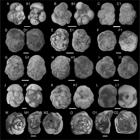
SEM photomicrographs of selected benthic foraminifera of RT-01-PB Core: a - Bathysiphon sp., LMA-00713, 11.7–11.77 m; b - Marssonella sp., LMA-00714, 10.28–10.36 m; c - Textularia sp., LMA-00715, 22.89–22.95 m; d - Gaudryina sp., LMA-00716, 22.89–22.95 m; e - Verneuilina sp., LMA-00717, 20.86–20.91 m; f - f1 - Haplophragmoides sp., LMA-00718, 14.18–14.28 m; g - Quinqueloculina sp., LMA-00719, 16.93–16.98 m; h - Sigmoihauerina sp., LMA-00720, 29.97–29 m; i - Dentalina sp., LMA-00721, 8.28–8.32 m; j - Laevidentalina sp., LMA-00722, 23.33–23.38 m; k - Marginulina sp., LMA-00723, 9.6–9.67 m; l - Coryphostoma sp., LMA-00724, 17.46–17.52 m; m - Vaginulina taylorama, LMA-00725, 8.63–8.68 m; n - Loxostomoides sp., LMA-00726, 8.63–8.68 m; o - Pyrulina sp., LMA-00727, 8.63–8.68 m; p - Bolivina sp., LMA-00728, 17.46–17.52 m; q - Bulimina sp., LMA-00729, 8.63–8.68 m; r - Guttulina sp., LMA-00730, 14.18–14.28 m; s - Siphogenerinoides bramletti, LMA-00731, 7.76–7.81 m; t - Lagena sulcata, LMA-00732, 8.28–8.32 m; u - u1 - Trochulina sp., LMA-00733, 23.33–23.38 m; v - v1 - Gyroidinoides sp., LMA-00734, 6.92–6.84 m; w - w1 - Gavelinella sp., LMA-00735, 6.92–6.94 m; x - x1 - Cibicidis sp., LMA-00736, 6.92–6.94 m; y - y1 - Lenticulina sp., LMA-00737, 22.89–22.95 m; z - z1 - Lenticulina sp. 1, LMA-00738, 11.7–11.77 m; a’ - a’1 - Astacolus sp., LMA-00739, 17.46–17.52 m; b’ - b’1 - Nonnionella sp., LMA-00740, 17.46–17.52 m, Scale bars = 100 μm.
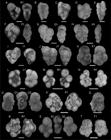
Figure 3
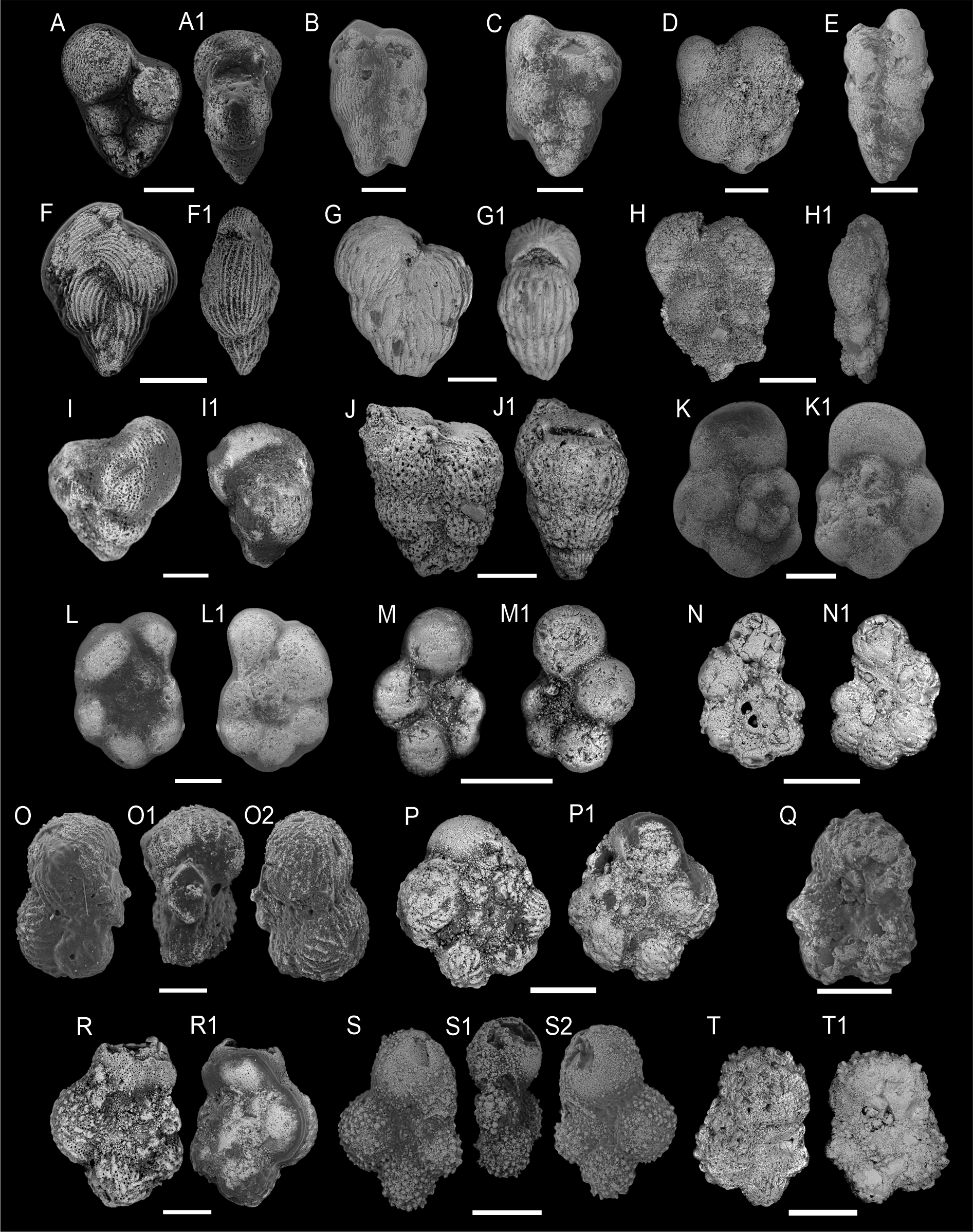
SEM photomicrographs of selected planktic foraminifera of RT-01-PB Core: a–a1 - Planoheterohelix globulosa, LMA-00741, 9.6–9.67 m; b - Planoheterohelix planata, LMA-00742, 9.9–9.97 m; c - Planoheterohelix sp., LMA-00743, 6.57–6.62 m; d - Planoglobulina sp., LMA-00744, 9.6–9.67 m; e - Pseudoguembelina praehariaensis, LMA-00745, 7.76–7.81 m; f–f1 - Pseudoguembelina costulata, LMA-00746, 9.3–9.37 m; g–g1 - Pseudoguembelina excolata, LMA-00747, 8.63–8.68 m; h–h1 – Laeviheterohelix sp., LMA-00748, 22.89–22.95 m; i–i1 - Pseudotextularia elegans, LMA-00749, 6.92–6.94 m; J–J1 - Braunella punctalata, LMA-00750, 7.76–7.81 m; K–K1 - Globotruncanella pschadae, LMA-00751, 16.1–16.16 m; l–l1 - Muricohedbergella sliteri, LMA-00752, 10.28–10.36 m; m–m1 - Muricohedbergella monmouthensis, LMA-00753, 6.92–6.94 m; n–n1 - Planohedbergella prairiehillensis, LMA-00754, 6.92–6.97 m; o–o2 - Rugoglobigerina macrocephala, LMA-00755, 10.28–10.36 m; p–p1 - Rugoglobigerina rugosa, LMA-00756, 6.57–6.62 m; q - Rugoglobigerina spinosa, LMA-00757, 9.9–9.97 m; r–r1 - Rugotruncana subcircumnodifer, LMA-00758, 6.57–6.62 m; s–s2 - Globotruncanella petaloidea, LMA-00759, 8.9–8.97; t–t1 - Globotruncanella minuta, LMA-00760, 7.76–7.81 m. Scale bars = 100 μm.
Figure 4
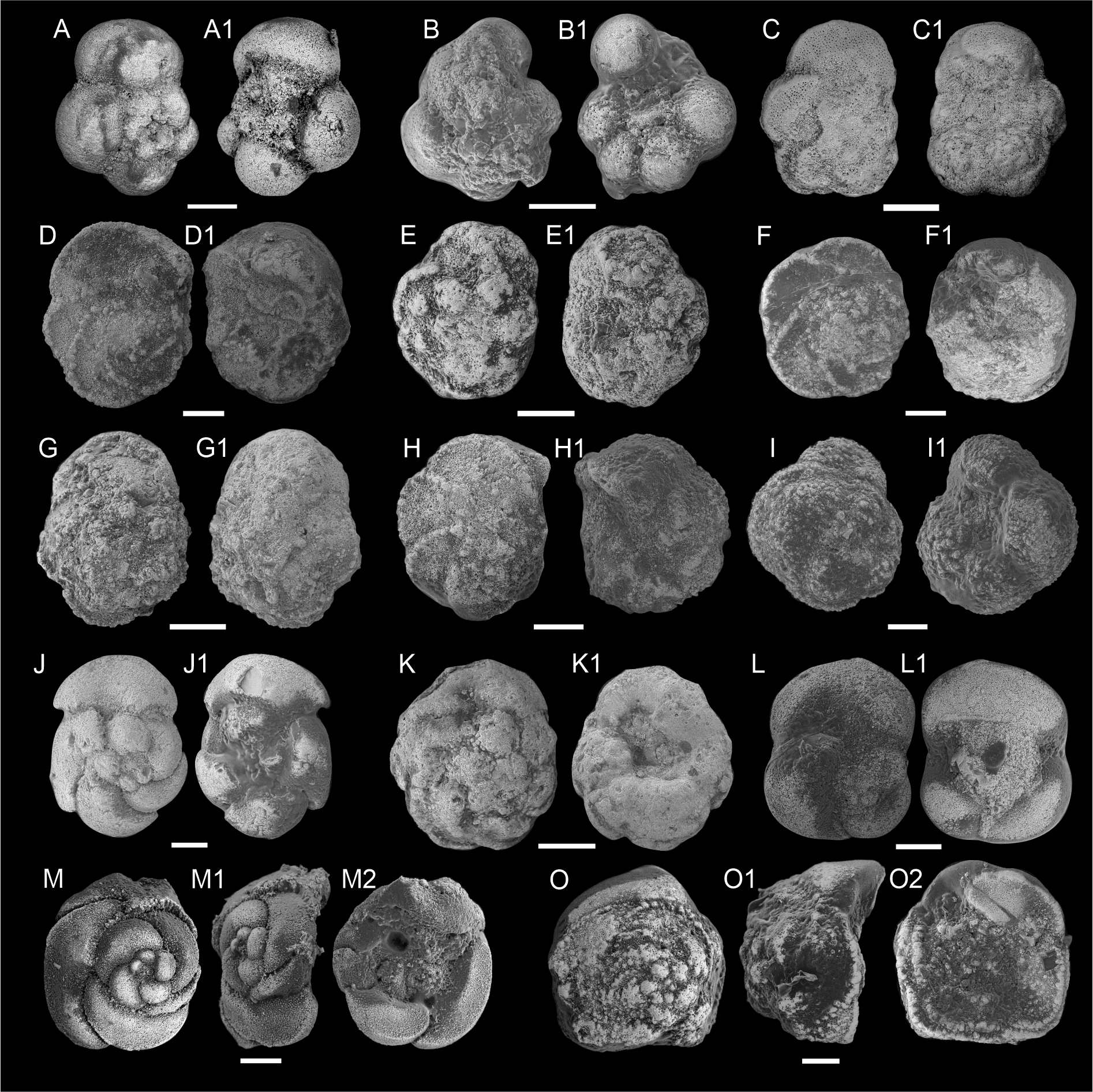
SEM photomicrographs of selected Planktic foraminífera of RT-01-PB Core: a–a1 - Archaeoglobigerina blowi, LMA-00761, 6.92–6.94 m; b–b1 - Archaeoglobigerina cf. australis, LMA-00762, 16.1–16.16 m; c–c1 – Gansserina gansserri, LMA-00763, 17.46–17.52 m; d–d1 - Globotruncana aegyptiaca, LMA-00764, 9.3–9.37 m; e–e1 - Globotruncana bulloides, LMA-00765, 7.76–7.81 m; f–f1 - Globotruncana arca, LMA-00766, 8.28–8.32 m; g–g1 - Globotruncana rosetta, LMA-00767, 8.9–8.97 m; h–h1 - Globotruncanita pettersi, LMA-00768, 9.3–9.37 m; i–i1 - Globotruncanita sp., LMA-00769, 10.95–11 m; j–j1 - Globotruncanita sp. 1, LMA-00770, 8.63–8.68 m; k–k1 - Contusotruncana morozovae, LMA-00771, 8.63–8.68 m; ; l–l1 - Contusotruncana fornicata, LMA-00772, 6.92–6.94 m; m–m2- Contusotruncana patelliformis, LMA-00773, 7.07–7.12 m; n–n2 - Contusotruncana contusa, LMA-00774, 6.92–6.94 m. Scale bars = 100 μm.
Figure 5
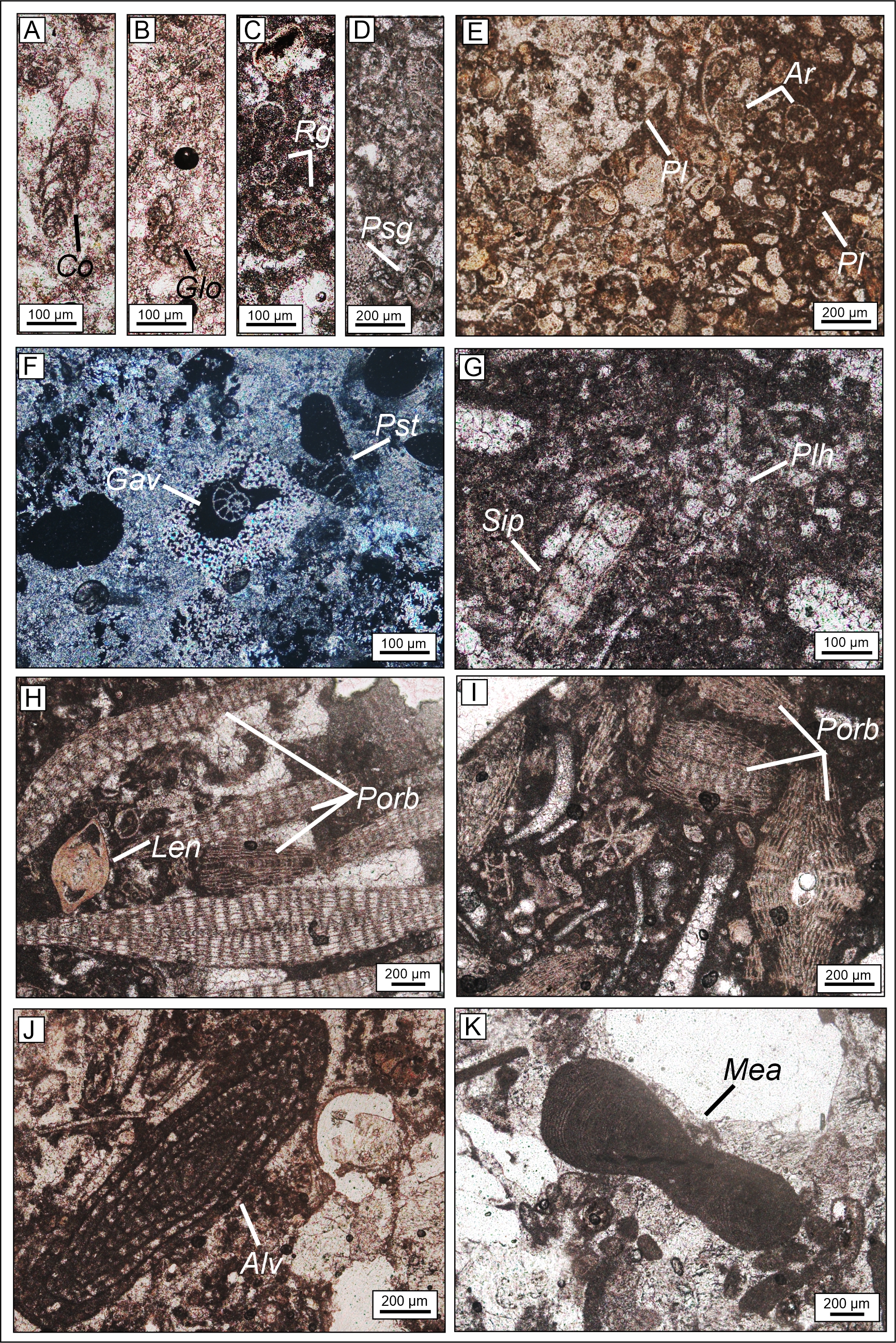
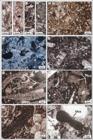
Thin section photomicrographs of the foraminifera in the RT-01-PB core.: a. Coryphostoma sp. (Co), 8.63–8.68 m; b. Globotruncanella sp. (Glo), 6.57–6.62 m; c. Rugoglobigerina sp. (Rg), 16.93–16.98 m; d. Pseudoguembelina sp. (Psg), 22.23–22.28 m; e. Planoheterohelix sp. (Pl) and Archaeoglobigerina (Ar), 9.3–9.37 m; f. Gavelinella sp. (Gav) and Pseudotextularia elegans (Pst), 9.6–9.67 m; g. Planohedbergella sp. (Plh) and Siphogenerinoides bramletti (Sip), 11.7–11.77 m; h. Lenticulina sp. (Len) and Pseudorbitoides sp., (Porb), 14.8–14.86 m; i. Pseudorbitoides sp., (Porb), 12.2–12.26 m; j. Alveolinidae (Alv), 17.46–17.52 m; k. Meandropsinidae? (Mea), 27.93–27.99 m.
Figure 6
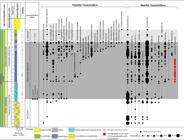
Biostratigraphic zonation, distribution of main foraminifera in the RT-01-PB core, Paraíba Basin.
Figure 7
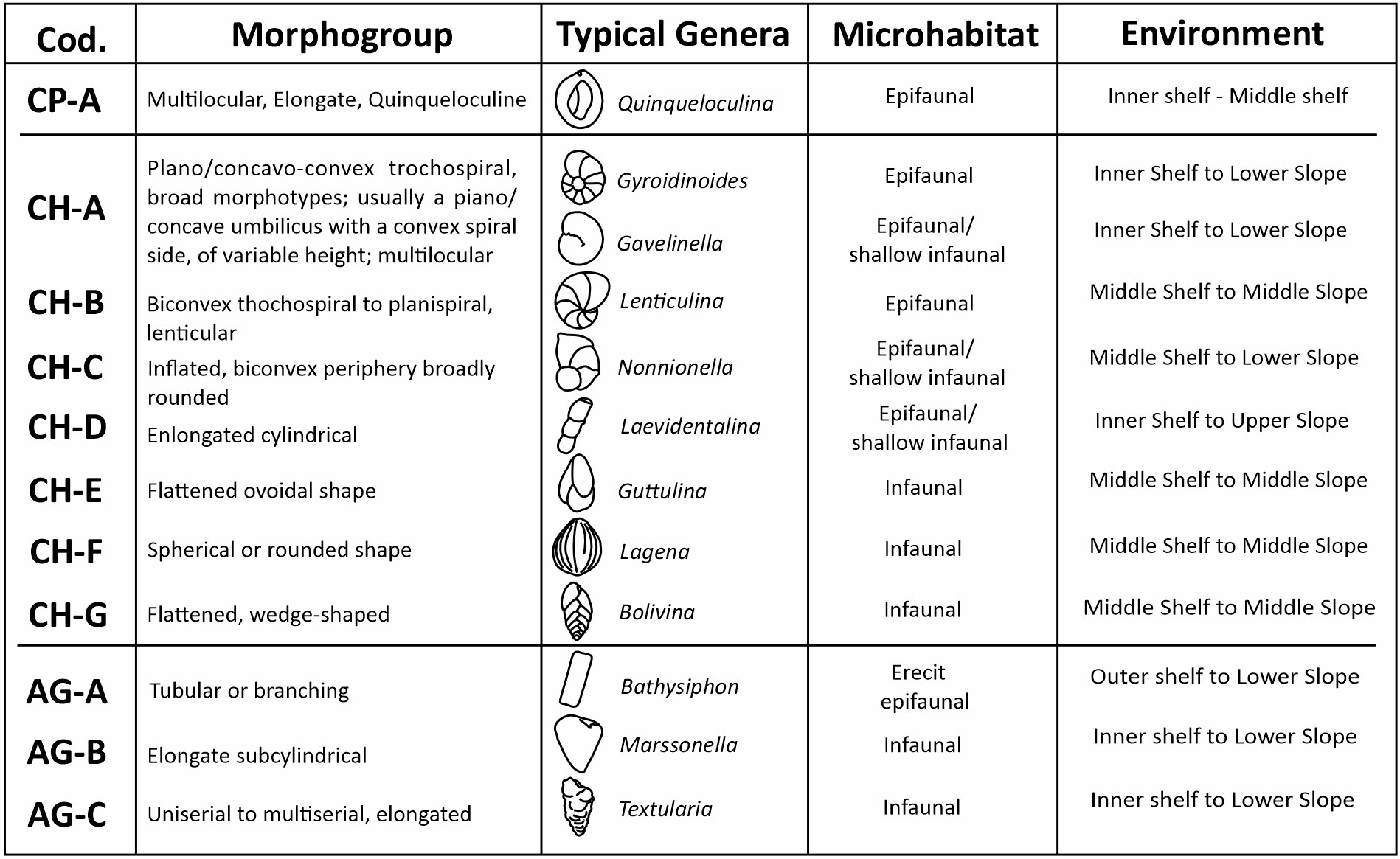
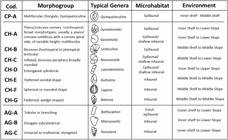
Summary of the morphogroups, based on Koutsoukos & Hart (1990) and Linner et al. (2019).
Figure 8
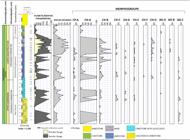
Planktic/Benthic foraminifera ratio, species richness and morphogroups occurrence, in the RT-01-PB core, Paraíba Basin.
Figure 9
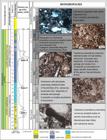
Microbiofacies identified in the RT-01-PB core, Paraíba Basin.
Figure 10
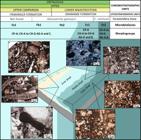
Paleoenvironmental model interpreted from microbiofacies and morphogroup data. Bv - bivalve fragment; Co - coral fragment; Fos - Phosphate grain; Os - Ostracod; Mfb - large benthic foraminifera; Porb - Pseudorbitoides; Fb - benthic foraminifera; Fp - planktic foraminifera.

 Foraminifera from the Campanian–Maastrichtian of the Miriri Sub-Basin, Paraíba Basin, Brazil: implications for biostratigraphy and paleoenvironmental reconstruction
 Thumbnail
 Thumbnail
 Thumbnail
 Thumbnail
 Thumbnail
 Thumbnail
 Thumbnail
 Thumbnail
 Thumbnail
 Thumbnail