 Lung function in children residents in the largest coal region in Brazil
Abstract
Coal mining activities release harmful air pollutants, which affect children’s health, particularly the lung function. Brazil has a large coal reserve in the southern region, where a coal-fired power plant and two coal mines are located. The study aimed to evaluate the prevalence of altered respiratory function and associated factors in children living in this region. A cross-sectional study was conducted in seven cities. It collected socioeconomic and demographic, prenatal and postnatal care, neonatal outcomes, child health information as well as lung function and air quality. The study included 396 children who lived in a high socio-environmental vulnerability due to low education levels and family income, high percentage of unemployed and families with a high bedroom density. There was a high prevalence of preterm birth, low birth weight and long-term exposure to environmental conditions. The most common respiratory problem in the parents was rhinitis, while in the children was wheezing and pneumonia. The prevalence of respiratory function alteration in the region was 7.78%. Variables associated with altered respiratory function were passive smoking, low birth weight, history of wheezing. The concentration of pollutants was equivalent when comparing stations within the coal mining host town (Candiota) and surrounding towns.
Key words
Schoolchildren; Air pollution; Spirometry; Vulnerability; Candiota
INTRODUCTION
Nearly all of world’s population (99%) is exposure to higher outdoor air pollution levels that exceeded the World Health Organization (WHO) proposed air quality limits, especially in low- and middle-income countries. The effects of pollution are not perceived in the same way among different peoples, as socioeconomic conditions are capable of increasing vulnerability to chemical substances. Knowing that seventy percent of heavy chemical production takes place in low- and middle-income countries (Landrigan et al. 2019). In 2019, an estimated 6.7 million deaths globally were attributed to the joint effects of ambient and household air pollution (WHO 2023).
Coal is the most polluting fossil fuel in the world due to the large amounts of coal dust harmful particles emitted into the environmental during mining extraction and combustion (Landrigan et al. 2018, Leonard et al. 2020, World Energy Council 2016). Pollution exposures from coal mining in early life can increase the risk of genotoxic damage and the development of several chronic diseases, such as cardiovascular disease, stroke, respiratory diseases (asthma, pneumoconiosis and chronic obstructive pulmonary disease) and mortality (Budnik et al. 2019, Penteado et al. 2022, da Silva et al. 2021, Da Silva Pinto et al. 2017).
Respiratory diseases are one of the most important causes of death in worldwide (Collaborators 2020) and disability in children under 10 years of age (Vos et al. 2020). The respiratory tract is extremely vulnerable to the adverse effects of environmental pollutants, especially during childhood. In this period the lungs are in development and the immune system are immature, contributing factor to their increased susceptibility to injury (Zhang et al. 2022). Exposure to air pollution during early human development, can be extremely deleterious to children’s health and development, impacting permanently lung function (Landrigan et al. 2019, Varona et al. 2018).
There is an association between exposure (acute and chronic) to environmental pollutants and adverse respiratory symptoms, decreased lung function, increased subsequent risk for asthma, pneumonia and chronic obstructive pulmonary disease (Gauderman et al. 2015, Korten et al. 2017) and increased exacerbations of cardiopulmonary diseases in all age’s groups. In addition, several chronic respiratory diseases observed in adults have their etiology in infants and children, which is commonly attributed to the increased susceptibility of infants and children to the toxic effects of environmental pollutants. Pollution is also associated with several childhood non-communicable diseases (NCDs) in children, low birth weight, asthma, cancer and neurodevelopmental disorders. The full impact of pollution, particularly chemical pollution on the global burden of childhood disease is not yet known, but is almost certainly is underestimated (Kajekar 2007, Landrigan et al. 2019).
Brazil, a nation characterized by its status as a low- to middle-income country, has significant reserves of mineral coal, primarily located in the southern region. In this region, a single coal-fired power plant operates alongside two surface coal mining companies, which together control over 40% of the country’s coal reserves. In addition to the well-documented negative public health impacts of coal pollution, highlighted by Bigliardi et al. (2021, 2022), da Silva Júnior et al. (2018, 2019), and dos Santos et al. (2019), the socioeconomic landscape of this region further exacerbates the effects of environmental exposure to air pollutants (Dupont-Soares et al. 2021, Soares et al. 2022). Evidence from human health risk assessment efforts underscores the critical need for epidemiologic investigations in this locale (Da Silva Bonifácio et al. 2021, dos Santos et al. 2021, Müller et al. 2021).
Several studies have been conducted in this region to elucidate the health effects of coal mining, particularly in adults and workers. Bigliardi reported a significant rate of lung function disorders in adults (Bigliardi et al. 2022), but the impact of coal pollution in childhood has not yet been reported. Therefore, the aim of this study was to evaluate the prevalence of altered respiratory function by spirometry and associated factors in children living in the largest coal mining region in Brazil.
METHODS
Study area
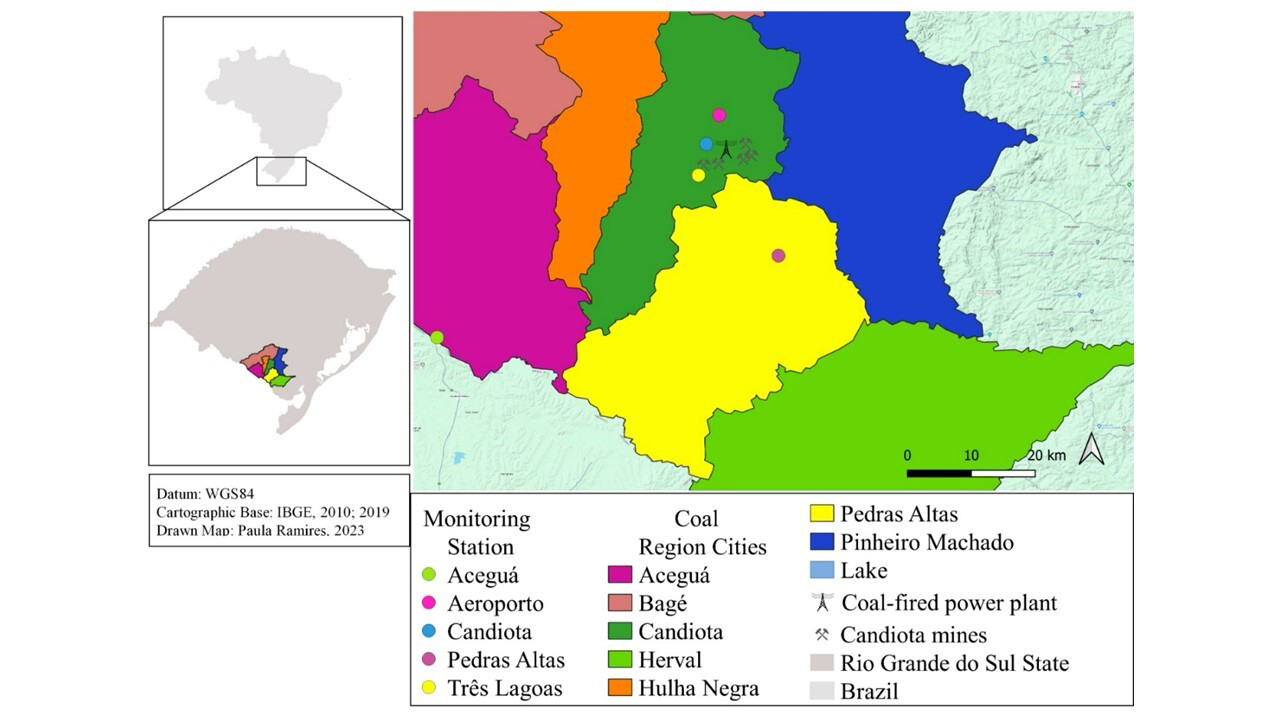
This cross-sectional study was conducted in seven communities in the state of Rio Grande do Sul, Brazil, all of which are affected by coal mining activities. Candiota (31°33’28”S/53°40’22‘‘W) is where a power plant and two coal surface mines are situated and others six neighboring municipalities, Acegua (31°52’S 54°09’W), Bage (31°19’51’’S 54°06’25‘‘W), Hulha Negra (31°24’14’’S 53°52’08‘‘W), Pedras Altas (31°43’58’’S 53°35’02‘‘W), Pinheiro Machado (31°34’40’’S 53°22’51‘‘W), and Herval (32°10’26’’S 53°23’45‘‘W) (Fig. 1).
Sample
The sample size was defined considering with an alpha error of 0.05, a relative risk of 2.0, a power of 80% and the prevalence of respiratory function disorders was 34%. Ten percent was added for losses, 20% for possible confounding factors and 20% for design purposes. Thus, the sample size should be 309 children. However, the sample was increased to allow for geographic representation of the entire study region.
Sampling was done by random drawing among the students. Schoolchildren with malformations and/or genetic syndromes, neurological and/or sensory deficiencies, osteoarticular pathologies, severe chronic pathologies or debilitating chronic ones were excluded. Considering the presence of siblings in this group of students, in order to avoid overestimating certain aspects in the characterization of the sample studied, the variables related to socioeconomic conditions and family housing, as well as those related to the children’s mothers were analysed separately, totalling information from 396 families.
The study was conducted in accordance with the ethical standards proposed by Resolution 466/12 of the National Health Council of the Ministry of Health, which regulates research involving human subjects. Those who agreed to participate in the study signed beforehand the informed consent form. The study was approved by the Research Ethics Committee in Health at the Universidade Federal do Rio Grande-FURG (CEPAS/FURG), noº 36/2013.
Data collection
General characteristics
A structured questionnaire to collect socioeconomic and demographic information was applied in the child’s guardian. The questionnaire also included information on prenatal and postnatal care, neonatal outcomes, children’s health and questions from the American Thoracic Society questionnaire (ATS-DLD-78 Children).
Pulmonary function assessment
To assess pulmonary function was realized spirometry by a spirometer (Microlab 3500 - model MK-8) with a printer and pediatric stimulation (animation). A nose clip and disposable mouthpieces were used. All spirometries were performed by a physiotherapist, previously qualified and the exams interpretation by a child pulmonologist. In addition to the child’s age, gender, ethnic, weight and height, this test uses the following parameters to assess respiratory function: expiratory volume in one second (FEV1), forced vital capacity (FVC), Tiffenau Index (FEV1/FVC) and peak expiratory flow (PEF). FEV1 and FVC values were considered normal between 80 and 120%. Values between 60 and 80% characterize disturbances considered mild; between 40 and 60%, moderate, and below 40%, severe. The study evaluated the presence or absence of alteration in respiratory function, regardless of the type of disorder (obstructive, restrictive or mixed) or severity change (mild, moderate or severe)(Jones et al. 2020).
Air quality assessment
Air quality assessment Hourly values were obtained for PM10 and SO2 over a period of seven days, including the day of collection and six successive days, as suggested by Poursafa (Poursafa et al. 2011), from the five air quality monitoring stations; these data were used to calculate the daily averages.
Data analysis
The data were digitalized twice, checked and corrected for possible errors. In addition, the consistency of the data was evaluated. First, frequency distribution was performed to describe the variables investigated. Poisson regression with robust variance estimates was used to analyse the outcome and associated factors to estimate crude and adjusted prevalence ratios and their respective 95% confidence intervals and p-value. To avoid confounding factors, variables with p ≤ 0.20 were retained in the model until the end. Statistical analysis was performed using Stata 10.0. Statistical significance was established at p < 0.05.
RESULTS
The study included 396 children, aged between 7 to 12 years old, who attended the public schools. There is no significant difference between the variables studied among the seven cities, excepted for skin color that Candiota had significant more Caucasian individuals (p=0.04). Therefore, the results presented the data of the whole region. Socioeconomic and demographic information is shown in Table I. The most of families were Caucasian (57.3%), lived with partner (80.6%), had 4 to 8 years of education (57.8%), had an income below half the minimum wage per capita (88.6) and worked (53.5%). In addition, 26.0% of the families did not live in masonry housing and 2.5% did not have piped water at home. Almost one third of the families had high density of people in the bedroom (32.3%).
Maternal socioeconomic and demographic conditions and environmental exposure among a coal mining region, Brazil.
Regarding exposure to environmental factors, 77.2% of reports revel that the study population lived for at least 20 years. Additionally, children of both areas were highly exposure to smoking, 23.7% of the mothers smoked during pregnancy, 35.9% were smokers, and 10.1% of the families had another resident who smoked.
The study children were majority female (51.4%) and caucasian (57.1%) (Table II). Regarding birth conditions, the most of children born vaginally delivery (64.2%). Only 11.6% were pre-term and 10.4% had low birth weight. Ventilatory assistance after birth were necessary to 6.6% of children. The prevalence of children who were not Breastfed were 8.3%. The most part of children did not frequent daycare (66.0%).
Table III shown the occurrence of respiratory morbidities in family members and children. Th most common respiratory problem among parents was rhinitis (22.2%). Regarding children’s respiratory morbidities 55.4% had history of wheezing and 18.6% pneumonia. The study showed that 19.3% of the children had already required hospitalization and 15.3% demanded seeking emergency due to respiratory problems.
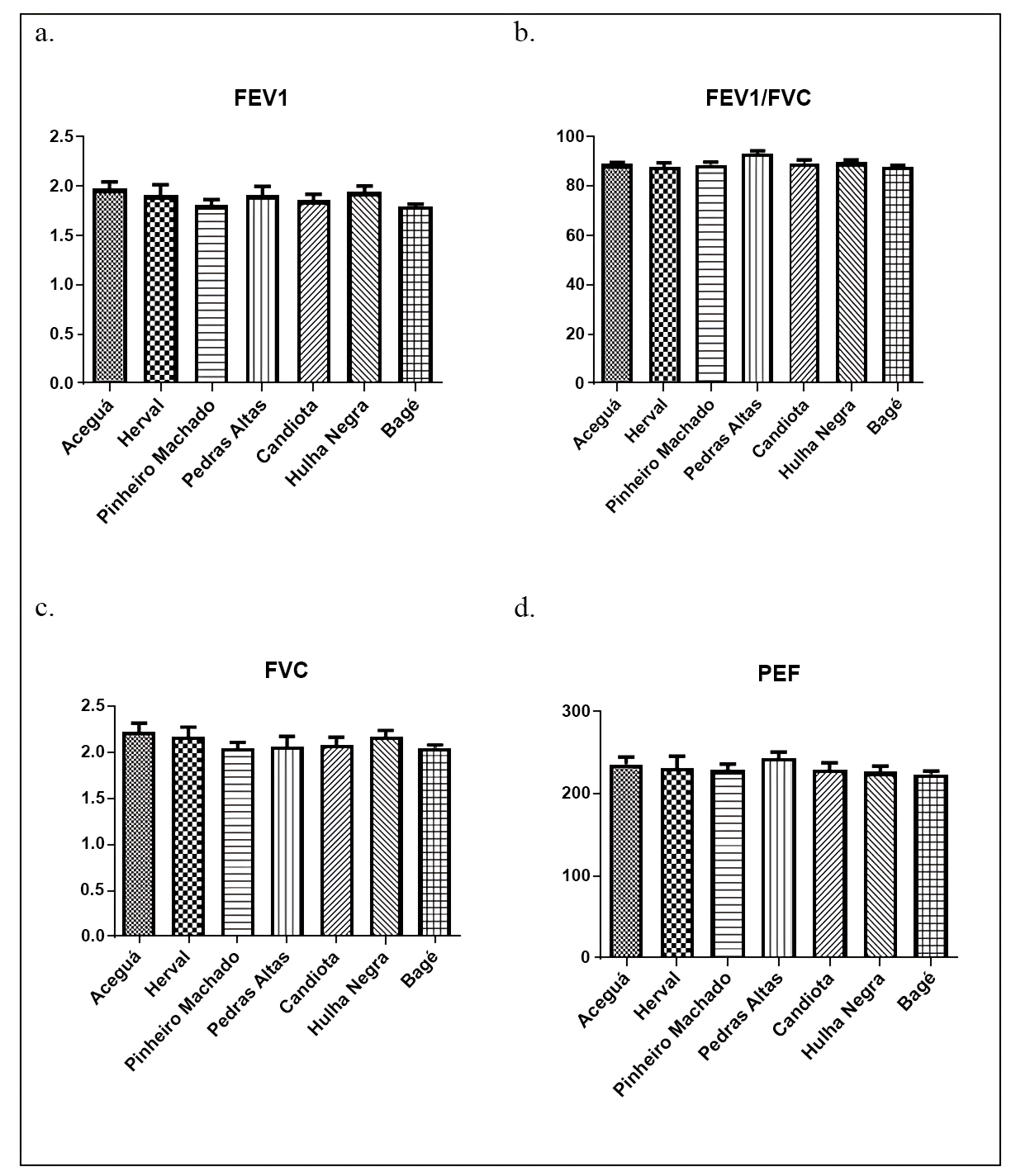
Figure 2 shown the pulmonary parameters evaluated by each one of the seven cities. Individuals from the whole region had similar pulmonary parameters, since there was no significant statistic difference between the parameters: VEF1 (p=0.08); VEF1 CFV (p=0.05); CFV (p=0.33); PFE (p=0.74). The prevalence of respiratory function alteration in the region was 7.78%.
Variables associated with the studied outcome or remained in the analysis model were shown in Table IV. Maternal socioeconomic and demographic conditions was not significantly associated with the occurrence of pulmonary alterations. However environmental exposure such as child’s exposure to smoking at the house increased the risk (PR=1.33; p<0.00) of alteration in respiratory function. Children with a history of low birth weight had a 61% higher risk (p<0.00) of alteration in respiratory function. When analysing the block of variables related to morbidities and respiratory symptoms of the children, it was found that the risk of alteration in lung function was more than twice as high (PR= 2.10; p< 0.0) among children with a history of wheezing. In the bivariate analysis, this risk was also higher among those children with a history of pneumonia (PR=1.71), but this association ceased to be significant after adjusting for the other variables.
Factors associated with respiratory function alteration among children from a coal mining region, Brazil.
Table V describe information about five air pollution station of the study region. The concentration of pollutants was equivalent when comparing stations within the coal mining host city (Candiota) and surrounding cities.
DISCUSSION
This study evaluates the prevalence of altered respiratory function and associated factors in children living in the largest coal mining region in Brazil, which can be considered a region with high socio-environmental vulnerability due to the simultaneous presence of socioeconomic and environmental precarious conditions, such as low education level and family income per capita, as well as a high percentage of unemployed and families with a high bedroom density. Adverse socioeconomic conditions in both adulthood and childhood were additionally associated with a greater decline in lung function (Polak et al. 2019).
The results of this study confirm to the literature that living in coal mining areas is associated with adverse birth outcomes (Ahern et al. 2011a, b, Amster & Levy 2019, Cortes-Ramirez et al. 2018). The prevalence of preterm birth (<37 weeks gestational age) was higher than the declining trend observed in Brazil (9.95%) (Martinelli et al. 2021) and globally (10.6%) (Chawanpaiboon et al. 2019), as was the prevalence of low birth weight, which was 1.8 percentage points higher than that observed in South America (Blencowe et al. 2019). However, these prevalences were similar comparing when compared to other coal mining areas worldwide (Ahern et al. 2011b, Kravchenko & Lyerly 2018). Preterm birth and low birth weight are considered risks for infants born within 20 km one of more than one coal-fired power plants, with significantly higher odds of a low birth weight and preterm birth (Amster & Levy 2019).
It is also important to emphasize that the majority of the population responsible for the children studied has lived in the community since birth, which shows that this population has long-term exposure to adverse environmental conditions (Go et al. 2016). In addition to these socio-environmental vulnerability, significant part of the population was exposed to secondhand smoke, which is an environmental factor that negatively affects lung and human health (Kajekar 2007), and was associated with altered respiratory function in the children studied.
Children are more susceptible to the adverse effects of exposures to coal power plant emissions due to their developing physiology, anatomy and metabolism, particularly their pulmonary metabolic capacity and greater air consumption relative to lung mass and body weight. In addition, children’s health is unique due their health behaviors, such as prolonged time of outdoor activities, frequent mouth breathing (which allows for less filtering through nasal passages) (Amster & Levy 2019, Bergstra et al. 2018, Kravchenko & Lyerly 2018). Coal power plant generate significant air pollution compared to other industrial areas (Amster & Levy 2019), which can also affect lung function (Garcia et al. 2021, Korten et al. 2017).
It is well known that coal mining pollution causes respiratory symptoms, especially in children, affecting in the most of cases the lower respiratory tract, causing cough, shortness of breath and wheezing (Arbex et al. 2012, Gasparotto & Martinello 2021). This study observed respiratory disorders in children and their parents, and also highlighted the high prevalence of wheezing, rhinitis and asthma comparing with other chemical industry and power plant regions, which were more than double in the study region (Idavain et al. 2019). Although pneumonia was not significantly associated with lung changes in this study, another study of Brazilian children showed a significant association between exposure to PM and hospitalization for pneumonia and asthma (César et al. 2016). In addition, Bigliard (Bigliardi et al. 2022) had reported a significant rate of lung function disorders in adults of the same coal mining region.
Recently, there is a renewed interest in the study of PM10−2.5 and the effects of particles in this size fraction on child lung function. However, a recent review (Garcia et al. 2021) highlights the small number of assessments of lung function in studies of long-term air pollution at contemporary levels of exposure, and identified only eight studies that evaluated lung function following measures: FEV1, FVC, or FEF25–75, one of them were conducted in South America children, emphasizing the importance of the present results. In this study there is no significant statistical difference between these parameters evaluated, showing that all region in affected in the same intensity.
The most studies show lung function impairment only by individual standard measurements (Gauderman et al. 2015, Bergstra et al. 2018) without showing the total prevalence of this impairment, which makes it difficult to understand the results to generate policies to minimize air pollution data on lung development in children. In this study, the prevalence of lung function impairment was assessed by the prevalence of the presence or absence of changes in lung function in addition to individual measurements (Jones et al. 2020) to estimate the total number of children affected by air pollution in the region. Especially, because the intensive use of coal-fired energy sources has been shown to predict a decrease in life expectancy of 0.5 year in European countries and up to a 3.5 year in developing economies (Gohlke et al. 2011). Emphasizing the importance of early monitoring of air quality in coal mining regions, especially in developing countries as Brazil.
Air pollution is a complex mixture of different gaseous and particulate components, which can be mensurated by PM2.5, PM10, ozone, nitrogen dioxide, sulfur dioxide and carbon monoxide. Although, as yet, insufficient data are available of PM, there are health concerns related to this pollutant (WHO, 2021). Ambient PM air pollution is a major public concern worldwide, some studies suggest an independent association between PM air pollution exposure with lower lung function and daily all-cause, cardiovascular and mortality in more than 600 cities worldwide (Amster & Levy 2019, Leonard et al. 2020, Yang et al. 2021). According to the WHO, PM levels have exceed the interim target of 15 µg/m³, especially in developing regions (WHO 2023), as observed in this study. All of the air quality monitoring stations of the present study have higher means than the WHO limits to preventing mortality (WHO 2023). However, the values of PM10 were in accordance with national air quality standards, which were more permissive with the annual mean of 20 µg/m³ (CONAMA 2018).
This study used data from five air quality monitoring stations, highlighting its area of coverage, since the state of Rio Grande do Sul has a limited number of air quality monitoring stations in the interior of the state, as well as a limited number of studies (Gutierrez et al. 2020). Besides that, in low-income-and middle-income countries air quality monitoring tend to be inadequate, as well as the dissemination of the data obtained (De Moura & Da Silva Júnior 2023).
Despite the important environmental pollution caused by coal activities (Go et al. 2016), it is well known that socioeconomic conditions are one of the main predictors of health (Mariosa et al. 2018, Polak et al. 2019). Other studies conducted in the region have highlighted the impact of socioeconomic conditions on the health of the population (Dupont-Soares et al. 2021, Soares et al. 2022). Therefore, the study points out the importance and need to consider socio-environmental vulnerability in the elaboration of public health policies and in the management of environmentally protected areas.
REFERENCES
- AHERN M, HENDRYX M, CONLEY J, FEDORKO E, DUCATMAN A & ZULLIG K. J. 2011a. The association between mountaintop mining and birth defects among live births in central Appalachia, 1996-2003. Environ Res 111(6): 838-846. https://doi.org/10.1016/j.envres.2011.05.019.
-
AHERN M, MULLETT M, MACKAY K & HAMILTON C. 2011b. Residence in coal-mining areas and low-birth-weight outcomes. Matern and Child Health J 15(7): 974-979. https://doi.org/10.1007/s10995-009-0555-1.
» https://doi.org/10.1007/s10995-009-0555-1 - AMSTER E & LEVY CL. 2019. Impact of Coal-fired Power Plant Emissions on Children ’ s Health : A Systematic Review of the Epidemiological Literature. Int J Environ Res Public Health 16(11): 2008. https://doi: 10.3390/ijerph16112008.
-
ARBEX MA, SANTOS U DE P, MARTINS LC, SALDIVA PHN, PEREIRA LAA & BRAGA ALF. 2012. Air pollution and the respiratory system. J Bras Pneumol Publicacao 38(5): 643-655. https://doi.org/10.1590/S1806-37132012000500015.
» https://doi.org/10.1590/S1806-37132012000500015 -
BERGSTRA AD, BRUNEKREEF B & BURDORF A. 2018. The effect of industry-related air pollution on lung function and respiratory symptoms in school children. Environ Health 17(1). https://doi.org/10.1186/s12940-018-0373-2.
» https://doi.org/10.1186/s12940-018-0373-2 -
BIGLIARDI AP, DOS SANTOS M, FERNANDES CLF, GARCIA EM, DOS SANTOS, MET, JONES MH, SOARES MCF, BAISCH ALM & DA SILVA JÚNIOR FMR. 2022. Lung function among residents from the largest coal region in Brazil. Environ Sci and Pollut Res 29(31): 46803-46812. https://doi.org/10.1007/s11356-022-19242-7.
» https://doi.org/10.1007/s11356-022-19242-7 -
BIGLIARDI AP, FERNANDES CLF, PINTO EA, DOS SANTOS M, GARCIA EM, BAISCH PRM, SOARES MCF, MUCCILLO-BAISCH AL & DA SILVA JÚNIOR FMR. 2021. Blood markers among residents from a coal mining area. Environ Sci Pollut Res 28(2): 1409-1416. https://doi.org/10.1007/s11356-020-10400-3.
» https://doi.org/10.1007/s11356-020-10400-3 -
BLENCOWE H ET AL. 2019. National, regional, and worldwide estimates of low birthweight in 2015, with trends from 2000: a systematic analysis. Lancet Glob Health 7(7): 849-860. https://doi.org/10.1016/S2214-109X(18)30565-5.
» https://doi.org/10.1016/S2214-109X(18)30565-5 -
BUDNIK LT, CASTELEYN L, PASCHALIDOU AK & KASSOMENOS P. 2019. Pollution in living and working environments, climate variability, and their impact on non-communicable disease burden. Sci Total Environ 660: 593-594. https://doi.org/10.1016/j.scitotenv.2019.01.055.
» https://doi.org/10.1016/j.scitotenv.2019.01.055 -
CÉSAR ACG, NASCIMENTO LFC, MANTOVANI KCC & POMPEO VIEIRA LC. 2016. Fine particulate matter estimated by mathematical model and hospitalizations for pneumonia and asthma in children. Rev Paulista Ped 34(1): 18-23. https://doi.org/10.1016/j.rppede.2015.12.005.
» https://doi.org/10.1016/j.rppede.2015.12.005 -
CHAWANPAIBOON S. ET AL. 2019. Global, regional, and national estimates of levels of preterm birth in 2014: a systematic review and modelling analysis. Lancet Glob Health 7(1): 37-46. https://doi.org/10.1016/S2214-109X(18)30451-0.
» https://doi.org/10.1016/S2214-109X(18)30451-0 - COLLABORATORS. 2020. Prevalence and attributable health burden of chronic respiratory diseases, 1990–2017: a systematic analysis for the Global Burden of Disease Study 2017. Lancet Respir Med 8: 585-596.
- CONAMA - CONSELHO NACIONAL DO MEIO AMBIENTE. 2018. Dispõe sobre padrões de qualidade do ar. Nº 491 DE 21/11/2018
-
CORTES-RAMIREZ J, NAISH S, SLY PD & JAGALS P. 2018. Mortality and morbidity in populations in the vicinity of coal mining: A systematic review. BMC Public Health 18(721). https://doi.org/10.1186/s12889-018-5505-7.
» https://doi.org/10.1186/s12889-018-5505-7 -
DA SILVA BONIFÁCIO A, DE LIMA BRUM R, TAVELLA RA, RAMIRES PF, LESSA IM DOS SANTOS M & DA SILVA JÚNIOR FMR. 2021. Human health risk assessment of metals and anions in surface water from a mineral coal region in Brazil. Environ Monit Assess 193(9): 567. https://doi.org/10.1007/s10661-021-09359-6.
» https://doi.org/10.1007/s10661-021-09359-6 -
DA SILVA FMR, TAVELLA RA, FERNANDES CLF & DOS SANTOS M. 2021. Genetic damage in coal and uranium miners. MRGTEM 866. https://doi.org/10.1016/j.mrgentox.2021.503348
» https://doi.org/10.1016/j.mrgentox.2021.503348 -
DA SILVA JÚNIOR FMR, RAMIRES PF, DOS SANTOS M, SEUS ER, SOARES MCF, MUCCILLO-BAISCH AL, MIRLEAN N & BAISCH PRM. 2019. Distribution of potentially harmful elements in soils around a large coal-fired power plant. Environ Geoch Health 41(5): 2131-2143. https://doi.org/10.1007/s10653-019-00267-w.
» https://doi.org/10.1007/s10653-019-00267-w -
DA SILVA JÚNIOR FMR, TAVELLA RA, FERNANDES CLF, SOARES MCF, DE ALMEIDA KA, GARCIA EM, DA SILVA PINTO EA & BAISCH ALM. 2018. Genotoxicity in Brazilian coal miners and its associated factors. Hum Exp Toxicol 37(9): 891-900. https://doi.org/10.1177/0960327117745692.
» https://doi.org/10.1177/0960327117745692 -
DA SILVA PINTO EA, GARCIA EM, DE ALMEIDA KA, FERNANDES CFL, TAVELLA RA, SOARES MCF, BAISCH PRM, MUCCILLO-BAISCH AL & DA SILVA JÚNIOR FMR. 2017. Genotoxicity in adult residents in mineral coal region—a cross-sectional study. Environ Sci Pollut Res 24(20): 16806-16814. https://doi.org/10.1007/s11356-017-9312-y.
» https://doi.org/10.1007/s11356-017-9312-y - DE MOURA FR & DA SILVA JÚNIOR FR. 2023. 2030 Agenda: discussion on Brazilian priorities facing air pollution and climate change challenges. Environ Sci Pollut Res Int 30(3): 8376-8390.
-
DOS SANTOS M, PENTEADO JO, SOARES MCF, MUCCILLO-BAISCH AL & DA SILVA-JÚNIOR FMR. 2019. Association between DNA damage, dietary patterns, nutritional status, and non-communicable diseases in coal miners. Environ Sci Pollut Res Int 26(15): 15600-15607. https://doi.org/10.1007/s11356-019-04922-8.
» https://doi.org/10.1007/s11356-019-04922-8 -
DOS SANTOS M, RAMIRES PF, GIRONÉS MCR, RUBIO ARMENDÁRIZ M DEL C, MONTELONGO SP, MUCCILLO-BAISCH AL & DA SILVA JUNIOR FMR. 2021. Multiple exposure pathways and health risk assessment of selenium for children in a coal mining area. Environ Sci and Pollut R 28(11): 13562-13569. https://doi.org/10.1007/s11356-020-11514-4.
» https://doi.org/10.1007/s11356-020-11514-4 -
DUPONT-SOARES M, DOS SANTOS M, GARCIA EM, SOARES MCF, MUCCILLO-BAISCH AL & DA SILVA JÚNIOR FMR. 2021. Maternal, neonatal and socio-economic factors associated with intellectual development among children from a coal mining region in Brazil. Environ Geoch Health 43(8): 3055-3066. https://doi.org/10.1007/s10653-021-00817-1.
» https://doi.org/10.1007/s10653-021-00817-1 -
GARCIA E, RICE MB & GOLD DR. 2021. Air pollution and lung function in children. J Allergy Clin Immunol 148(1): 1-14. https://doi.org/10.1016/j.jaci.2021.05.006.
» https://doi.org/10.1016/j.jaci.2021.05.006 -
GASPAROTTO J & MARTINELLO K. 2021. Coal as an energy source and its impacts on human health. EG 2(2): 113-120. https://doi.org/10.1016/j.engeos.2020.07.003.
» https://doi.org/10.1016/j.engeos.2020.07.003 -
GAUDERMAN WJ, URMAN R, AVOL E, BERHANE K, MCCONNELL R, RAPPAPORT E, CHANG R, LURMANN F & GILLILAND F. 2015. Association of Improved Air Quality with Lung Development in Children. New England J Med 372(10): 905-913. https://doi.org/10.1056/nejmoa1414123.
» https://doi.org/10.1056/nejmoa1414123 -
GO LHT, KREFFT SD, COHEN RA & ROSE CS. 2016. Lung disease and coal mining: What pulmonologists need to know. In Curr Opin Pulm Med 22(2): 170-178. https://doi.org/10.1097/MCP.0000000000000251.
» https://doi.org/10.1097/MCP.0000000000000251 -
GOHLKE JM, THOMAS R, WOODWARD A, CAMPBELL-LENDRUM D, PRÜSS-ÜSTÜN A, HALES S & PORTIER CJ. 2011. Estimating the global public health implications of electricity and coal consumption. Environ Health Perspec, 119(6): 821-826. https://doi.org/10.1289/ehp.1002241.
» https://doi.org/10.1289/ehp.1002241 -
GUTIERREZ FB, ESLAVA MARTINS S, HONSCHA LC, DE LIMA BRUM R, VARGAS VMF, MIRLEAN N, BAISCH PRM & DA SILVA JUNIOR FMR. 2020. Is There Something in the Air? Sources, Concentrations and Ionic Composition of Particulate Matter (PM2.5) in an Industrial Coastal City in Southern Brazil. Water Air and Soil Poll 231(5). https://doi.org/10.1007/s11270-020-04611-0.
» https://doi.org/10.1007/s11270-020-04611-0 -
IDAVAIN J, JULGE K, REBANE T, LANG A & ORRU H. 2019. Respiratory symptoms, asthma and levels of fractional exhaled nitric oxide in schoolchildren in the industrial areas of Estonia. Sci Total Environ 650: 65-72. https://doi.org/10.1016/j.scitotenv.2018.08.391.
» https://doi.org/10.1016/j.scitotenv.2018.08.391 -
JONES MH ET AL. 2020. Reference values for spirometry in Brazilian children. J Bras Pneumol 46(3): 20190138. https://doi.org/10.36416/1806-3756/e20190138.
» https://doi.org/10.36416/1806-3756/e20190138 -
KAJEKAR R. 2007. Environmental factors and developmental outcomes in the lung. Pharm Ther 114(2): 129-145. https://doi.org/10.1016/j.pharmthera.2007.01.011.
» https://doi.org/10.1016/j.pharmthera.2007.01.011 -
KORTEN I, RAMSEY K & LATZIN P. 2017. Air pollution during pregnancy and lung development in the child. Paediatr Respir Rev 21:38–46. https://doi.org/10.1016/j.prrv.2016.08.008
» https://doi.org/10.1016/j.prrv.2016.08.008 - KRAVCHENKO J & LYERLY HK. 2018. The Impact of Coal-Powered Electrical Plants and Coal Ash Impoundments on the Health of Residential Communities. N C Med J 79(5): 289-300.
-
LANDRIGAN PJ ET AL. 2018. Lancet Com pollut health 391: 461-512. https://doi.org/10.1016/S0140-6736(17)32345-0
» https://doi.org/10.1016/S0140-6736(17)32345-0 -
LANDRIGAN PJ, FULLER R, FISHER S, SUK WA, SLY P, CHILES TC & BOSE-O’REILLY S. 2019. Pollution and children’s health. Sci Total Environ 650: 2389-2394. https://doi.org/10.1016/j.scitotenv.2018.09.375
» https://doi.org/10.1016/j.scitotenv.2018.09.375 -
LEONARD R, ZULFIKAR R & STANSBURY R. 2020. Coal mining and lung disease in the 21st century. Curr Opin Pulm Med 26(2): 135-141. Lippincott Williams and Wilkins. https://doi.org/10.1097/MCP.0000000000000653.
» https://doi.org/10.1097/MCP.0000000000000653 -
MARIOSA DF, FERRAZ RRN & DOS SANTOS-SILVA EN. 2018. Influence of environmental conditions on the prevalence of systemic hypertension in two riverine communities in the Amazon, Brazil. Cienc Saude Colet 23(5): 1425-1436. https://doi.org/10.1590/1413-81232018235.20362016.
» https://doi.org/10.1590/1413-81232018235.20362016 -
MARTINELLI KG, DIAS BAS, LEAL ML, BELOTTI L, GARCIA ÉM & NETO ET DS. 2021. Preterm births in Brazil between 2012 and 2019: Data from the information system on live births. Rev Bras Est Pop 38. https://doi.org/10.20947/S0102-3098a0173
» https://doi.org/10.20947/S0102-3098a0173 -
MÜLLER L, RAMIRES PF, DOS SANTOS M, CORONAS MV, LIMA JV, DIAS D, MUCCILLO-BAISCH AL, BAISCH PRM & DA SILVA JÚNIOR FMR. 2021. Human health risk assessment of arsenic in a region influenced by a large coal-fired power plant. International J Environ Sci Technol 19: 281-288. https://doi.org/10.1007/s13762-021-03167-8.
» https://doi.org/10.1007/s13762-021-03167-8 -
PENTEADO JO, PERES TG, RAMIRES PF, DE LIMA BRUM R, DA SILVA FREITAS L, VOLCÃO LM, DOS SANTOS M & DA SILVA FMR. 2022. Trends in pneumoconiosis in Brazil, 1979–2019. Occup Med 72(6): 386-393. https://doi.org/10.1093/occmed/kqac017.
» https://doi.org/10.1093/occmed/kqac017 -
POLAK M, SZAFRANIEC K, KOZELA M, WOLFSHAUT-WOLAK R, BOBAK M & PAJAK A. 2019. Socioeconomic status and pulmonary function, transition from childhood to adulthood: Cross-sectional results from the polish part of the HAPIEE study. BMJ Open 9(1): e022638. https://doi.org/10.1136/bmjopen-2018-022638.
» https://doi.org/10.1136/bmjopen-2018-022638 -
POURSAFA P, KELISHADI R, AMINI A, AMINI A, AMIN MM, LAHIJANZADEH M & MODARESI M. 2011. Associação da poluição atmosférica com parâmetros hematológicos em crianças e adolescentes. J Ped 87(4): 350-356. https://doi.org/10.2223/JPED.2115.
» https://doi.org/10.2223/JPED.2115 -
SOARES RD, DOS SANTOS M, DE MOURA FR, MUCCILLO-BAISCH AL, BAISCH PRM, SOARES MCF & DA SILVA JÚNIOR FMR. 2022. Gestational and Neonatal Outcomes in Cities in the Largest Coal Mining Region in Brazil. Int J Environ Res Public Health 19(19): 12107. https://doi.org/10.3390/ijerph191912107.
» https://doi.org/10.3390/ijerph191912107 -
VARONA M, IBÁÑEZ-PINILLA M, BRICEÑO L, GROOT H, NARVÁEZ D, PALMA M, HERRERA D, MORGAN G & TORRES C. 2018. Evaluación de la exposición al polvo de carbón y de sílice en sitios de minería subterránea en tres departamentos de Colombia. Biomedica 38(4): 467-478. https://doi.org/10.7705/biomedica.v38i4.4183.
» https://doi.org/10.7705/biomedica.v38i4.4183 -
VOS T ET AL. 2020. Global burden of 369 diseases and injuries in 204 countries and territories, 1990–2019: a systematic analysis for the Global Burden of Disease Study 2019. Lancet 396(10258): 1204-1222. https://doi.org/10.1016/S0140-6736(20)30925-9.
» https://doi.org/10.1016/S0140-6736(20)30925-9 -
WHO. 2023. World Health Statistics 2023 Monitoring health for the SDGs Sustainable Development Goals HEALTH FOR ALL. https://www.who.int/publications/book-orders
» https://www.who.int/publications/book-orders - WORLD ENERGY COUNCIL. 2016. World Energy Resources. 978 0 946121 58 8.
-
YANG T ET AL. 2021. Association of fine particulate matter air pollution and its constituents with lung function: The China Pulmonary Health study. Environ Inter 156: 106707. https://doi.org/10.1016/j.envint.2021.106707.
» https://doi.org/10.1016/j.envint.2021.106707 -
ZHANG W, MA R, WANG Y, JIANG N, ZHANG Y & LI T. 2022. The relationship between particulate matter and lung function of children: A systematic review and meta-analysis. In Environ Pollut 309: 119735. https://doi.org/10.1016/j.envpol.2022.119735.
» https://doi.org/10.1016/j.envpol.2022.119735