 Perspectives on the impact of microplastics (MPs) on fish of the Amazon that exhibit air-breathing and aquatic surface respiration
Abstract
Fish in the Amazon basin have adapted to bouts of low water O2 and high CO2, with many species evolving air-breathing or aquatic surface respiration mechanisms to supplement respiratory gas exchange. While concurrently coping with greater instances of hypoxic and hypercarbic stress, fish in the Amazon are also facing microplastic pollution. Assessments of the Amazon basin reveal some of the highest microplastic concentrations globally. In this article, we highlight instances in which the evolution of air-breathing and aquatic surface respiration may make fish of the Amazon particularly susceptible to the effects of microplastic pollution. We consider these effects as they relate to gill morphology, specialized air-breathing organs, ion transport processes, aquatic surface respiration, and oxidative stress. Finally, we relate our perspectives with the recently published Executive Summary of the Status of Water Quality in the Amazon Basin to highlight the importance of considering microplastics alongside other pollutants threatening the ecological, economical, and cultural values of the Amazon.
Key words
Arapaima gigas; Bodo; Hoplerthrynus unitaneniatus; Colossoma macropomum
INTRODUCTION
Microplastics (MPs) are plastic polymers ranging from 1 µm – 5 mm that are ubiquitous in aquatic environments globally. Approximately 70% of anthropogenic waste is plastic which is projected to continue to increase in coming decades; therefore, watersheds receiving high amount of effluent are of particular concern for MP pollution (Tursi et al. 2022). Once in aquatic environments, MPs can interact with biota through external mechanisms such as abrasion and adhesion as well as internally by ingestion and inhalation (Anbumani & Kakkar 2018, Scherer et al. 2018).
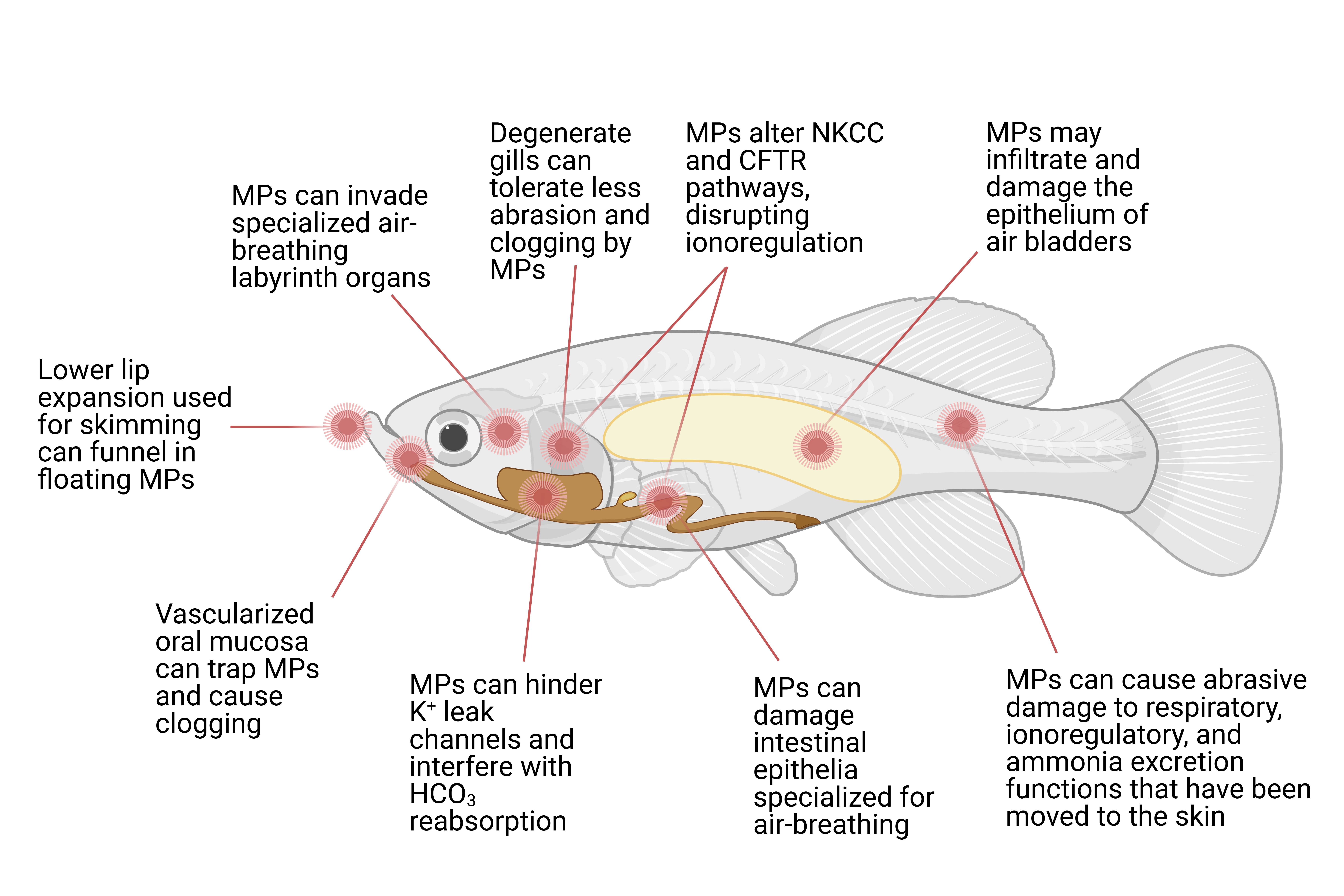
The ecological drivers for the evolution of air-breathing are generally considered to be aquatic hypoxia (Randall et al. 1981) and/or aquatic hypercarbia (Ultsch 1987). In modern air-breathing fish of the Amazon, these remain the important stimuli, and the functional significance is to supplement O2 uptake and/or CO2 excretion, when water-breathing alone cannot satisfy these requirements (Bayley et al. 2019, Damsgaard et al. 2020, Milsom et al. 2022, Wood et al. 2025). Kramer (1983) theorized that the clear success of this strategy reflects the balance of meeting ventilation, circulation, locomotion, and respiratory needs while considering costs of time, energy, and predation risk. This balance drives ecological (habitat selection and suitability), morphological, and behavioural adaptations (Kramer 1983). The adaptations required to achieve this balance evolved before microplastics (MPs) were present in the environment, and some of them may render air-breathing fish particularly vulnerable to the pathological effects of MPs. This situation is exacerbated when considered simultaneously with predicted climate trends causing greater instances of hypoxic and hypercarbic stress and altering water quality characteristics (including MP pollution) known to influence fish physiology (Braz-Mota & Almeida-Val 2021, Val & Wood 2022). The abundance of MPs reported in the Amazon watershed is amongst the highest in the world (dos Santos Silva et al. 2024, Morais et al. 2024, Rico et al. 2023, Souza et al. 2023), yet research of how MPs affect fish evolutionarily adapted to the Amazon basin remains scarce. At present, there is almost nothing known about the effects of microplastics on air-breathing fish of the Amazon, based on a Google Scholar search using iterations of the keywords “air-breathing fish, Amazon, and microplastic(s)”. This article therefore is a prospective review based on the authors’ own knowledge of microplastics, the Amazon environment, and the physiology and morphology of air-breathing fish. The conclusions reflect the opinions of the authors. We hope that this article will stimulate future research in this important area. We consider the distinct physiology and morphology of air-breathing fish in relation to the physical and toxicological risks posed by MPs with focus on the highly specialized tissues and organs of air-breathing Amazonian fish (Figure 1).
Areas of particular concern in air-surface and air-breathing fish exposed to microplastics (MPs) that have been summarized in the following sections. Created in BioRender (https://BioRender.com/p22e266).
Theme 1: Susceptibility of gill morphology and branchial gas exchange in air-breathing fish
The size of the gill in air-breathing fish is smaller than in their closely related, water-breathing counterparts; for example, gills of the water-breathing arowana (Osteoglossum bicirrhosum) are 2- to 2.5-fold larger than those of the closely related, pirarucu Arapaima gigas (Hulbert et al. 1978a) which is an obligate air-breather. A similar difference occurs between the water-breathing traira (Hoplias malabaricus) and its facultative air-breathing relative, the jeju (Hoplerythrinus unitaeniatus) (Cameron & Wood 1978). MPs adhere to gills, causing gill clogging (Limonta et al. 2019, Zeng et al. 2023, Zheng & Wang 2023). The amount of gill clogging by microplastics has been linked to the size and number of gill rakers present (Lin et al. 2020), of which air-breathing fish have both fewer and smaller (Brauner et al. 2004, Frommel et al. 2021).
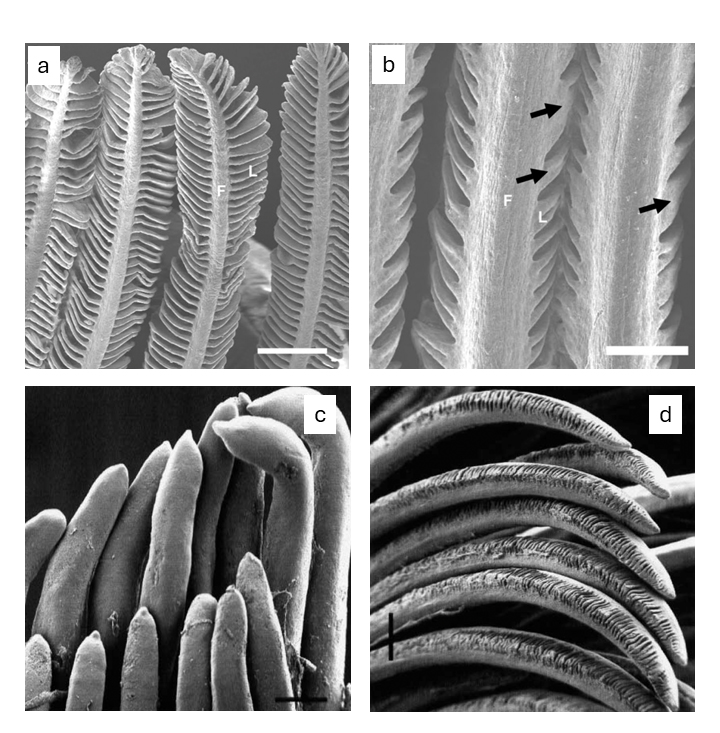
In addition to being smaller overall, the gills of air-breathing fish are less intricate and vascularized than those of water-breathing fish (Figure 2). A study manipulating the functional surface area of the gill in an air-breathing African catfish (Clarias gariepinus) found that removal of the first pair of gill arches altered oxygen chemoreception and ventilatory responses more severely than in other fish (Belão et al. 2015). The ability for some species to remodel their gills in response to environmental changes has been a focus of recent research, though work has primarily been in water-breathing fish exhibiting an interlamellar cell mass (ILCM) (Nilsson et al. 2012). Some species of air-breathing fish exhibit a comparable epithelial covering on their gills (Aaskov et al. 2024). Indeed, in adult pirarucu, the lamellae are completely blanketed by this layer, such that the filaments become stubby finger-like projections, the ionocytes are mountain on the surface of these structures (Brauner et al. 2004, Frommel et al. 2021). The gill ILCM increases considerably during air exposure in the mangrove rivulus, Kryptolebias marmoratus, probably as a water conservation mechanism (Ong et al. 2007, Wright 2021). The ICLM (or equivalent) may be particularly susceptible to the mechanical abrasion/clogging risk of MPs due to its functionally inherent plasticity (Mak et al. 2019, Zink & Wood 2024). The majority of physical gill damage caused by MPs has been observed in the secondary lamellae of water-breathing fish including sloughing, fusion, hyperplasia, desquamation, and clubbing of tips, all of which decrease the functional surface area of the gill and increase the diffusion distance for respiratory gases between blood and water (Karami et al. 2017, 2016, Limonta et al. 2019, Raza et al. 2023, Wang et al. 2022, Xing et al. 2023). It is likely that O2 uptake, CO2 excretion, and ammonia excretion will be impeded. As air-breathing fish have smaller gills, with fewer secondary lamellae of lesser individual surface area, damage to these structures may be more detrimental.
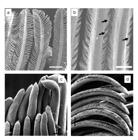
Scanning electron micrographs of the gills of a) the water-breathing catfish Calophysus macropterus, b) the facultive air-breathing armoured catfish Hypostomus aff. pyreneusi, c) the obligate air-breathing osteoglossid Arapaima gigas (1 kg body mass) and d) the water-breathing osteoglossid, Osteoglossum bicirrhosum (300 g). F filament, L lamellae, black arrows indicate fused lamellae. Scale bars are (a) 300 μm, (b, c, d) 500 μm. Micrographs a and b were extracted from Scott et al. (2017), and c and d from Brauner et al. (2004).
The gill plays a multi-faceted role in gas exchange, ionoregulation, acid-base balance, and nitrogenous waste excretion (Evans et al. 2005). Even when air-breathing is implemented, the gills continue to perform most of the ionoregulation, acid-base balance, and nitrogenous waste excretion, together with substantial CO2 excretion and some O2 uptake. However, this is complicated by the fact that some air-breathing fish are able to open vascular shunts to facilitate a partial bypass so that less blood flows through the gill lamellae (Graham & Wegner 2010, Pelster 2021), further restricting the function of the branchial ionocytes. Perhaps the best studied example is the South American lungfish (Lepidosiren paradoxa) (Fishman et al. 1985). The functional significance is to minimize O2 loss to the hypoxic external water from the partially oxygenated blood returning from the air-breathing organ, as recently documented in the pirarucu (Aaskov et al. 2022). So, MP clogging this region would impair this vital function.
To maintain these critical physiological functions, a number of compensatory adaptations are observed in air-breathing fish. For example, as noted above, the ionocytes may be moved to the outer surface of the ILCM (Brauner et al. 2004, Frommel et al. 2021). Furthermore, the degenerate gill structure of air-breathing fish may impede ammonia excretion (Ip & Chew 2018). In this regard, the obligate air-breathing pirarucu has a plasma ammonia level several-fold higher than in most water-breathing fish, and has transferred a significant portion of the ammonia excretion to the kidney (Gonzalez et al. 2010, Wood et al. 2020). Amphibious fish may compensate by inducing mechanisms (e.g. cutaneous Rh proteins, which facilitate ammonia transport) for volatilization of ammonia from the skin, as seen in the mangrove rivulus (Frick & Wright 2002, Hung et al. 2007, Wright 2021), or for active ammonia excretion by the gill ionocytes, as seen in the Asian mudskipper Periophthalmodon schlosseri (Randall et al. 1999). In the obligate air-breathing pirarucu, the ionoregulatory function of the gills has been partially transferred to the kidney (Wood et al. 2020), in the facultatively air-breathing jeju, Hoplerythrinus unitaeniatus it has been partially transferred to the gut (Wood et al. 2016), and in the facultatively air-breathing marbled swamp eel Symbranchus marmoratus, it has been mainly transferred to the skin (Stiffler et al. 1986). Pelster & Wood (2024) have reviewed other studies indicating that air-breathing fish may alter ionic gradients at the gills, thereby favouring NH4+ excretion, through changes in activity of the basolateral Na+/K+-ATPase, the apical Na+/H+ exchanger, the Na+/K+/2Cl− co-transporter (NKCC), and a Cl- channel, the cystic fibrosis transmembrane conductance regulator. Abrasion damage by external MPs to the gills or skin, or internal damage to gut epithelium, or to the kidney which is exposed to the air space in the “lung” of the pirarucu (Wood et al. 2020) may place additional stress on all these compensations. In higher vertebrates, MPs have been found to reduce the transcription of genes related to ion-transporters including NKCC and CFTR (Banerjee & Shelver 2021). Therefore, this strategy may become less effective for air-breathing fish in MP-polluted environments.
Species Spotlight: Arapaima gigas (pirarucu)
Arapaima gigas, family Arapaimidae, is the largest freshwater fish of the Amazon, where it is a species of immense iconic and economic importance. As pirarucu develop, their gills change from being comparable to water-breathing fish to exhibiting indiscernible lamellae within the first 5 months of life (Figure 2c) (Brauner et al. 2004). The early-life stage reliance on water-breathing would make young pirarucu particularly susceptible to MP damage at the gills, compounded by their unique vasculature of a branched secondary arteriole emanating from the afferent branchial artery perfusing a single secondary lamella. Concurrently, during rapid development, pirarucu develop a modified gas bladder (commonly referred to as the air bladder, or air-breathing organ, ABO) used for air-breathing. By as little as 3 weeks post-hatch, the pirarucu takes more than 60% of its O2 requirement from air (Pelster et al. 2020a). They soon become obligate air-breathers, highly reliant on arial respiration, not being able to withstand more than ten minutes without air contact (Brauner et al. 2004). The ABO connects to the pharynx through a pneumatic duct guarded by a glottis. The latter houses neuroepithelial cells containing a number of neurotransmitters including serotonin (5-HT) and acetylcholine as well as G-protein subunits and receptors; the neuroepithelial cells in the glottis are hypothesized to be responsible for the sensing of O2 and CO2 (Zaccone et al. 2020). The opening of the glottis is covered by a strip of tissue, thought to act as a valve to regulate the flow of air or prevent water/food from entering the air bladder (Scadeng et al. 2020). As MPs have been observed to clog similarly structured tissue flaps (such as gill filaments and digestive structures) and destabilize cell membranes, the glottis flap may be particularly susceptible to mechanical damage by MPs (Amponsah et al. 2024, Fleury & Baulin 2021, Mak et al. 2019, Zink & Wood 2024). The subsequent consequence to damage of this flap may include damage to the neuroepithelial cells housed within the glottis, MPs have been found to interfere with neuronal development and cause lowering of neurotransmitter levels (Chen et al. 2021, Li et al. 2024); as such, infiltration of the glottis by MPs may lead to O2 and CO2 sensory dysfunction. Another possible consequence of damage to the glottis may be entry of water and MPs into the ABO. As the kidney lies within the ABO (Wood et al. 2020), damage to both respiratory and kidney function may occur.
Theme 2: Susceptibility of air-breathing fish utilizing specialized air-breathing organs
Some air-breathing fish have evolved to extract oxygen from the air using segments of their gut through modified epithelia which includes increased vascularization, capillaries, and surfactant (Nelson 2014, Nelson & Dehn 2010). The diffusion distance between the lumen and the capillaries is also generally thinner than in the rest of the tract. The mouth, esophagus, stomach, and intestine have all been adapted to serve as air-breathing organs, with the latter two, being recruited more frequently than the esophagus or mouth (Braz-Mota & Almeida-Val 2021). Indeed air-breathing with the stomach or intestine is extremely common in Amazonian catfish. Many critical physiological processes associated with the digestion and absorption of nutrients from ingested food normally occur in the digestive tract of fish, and overall, the literature suggests that these processes are only partially sacrificed in the parts of the tract that have been modified for air-breathing (Nelson 2014, Nelson & Dehn 2010). MPs are ingested by fish when they are already present in prey items or detritus; however, they may also be ingested directly by targeted feeding. The primary driving factors of this targeted ingestion remain elusive. The condition and satiation state (de Vries et al. 2020) have been dismissed as drivers of plastic ingestion while feeding strategy and habitat have been suggested to play governing roles (Collard et al. 2019). In water-breathing fish, the ingestion of MPs has been reported to disrupt the gut microbiome (Usman et al. 2022). In some instances, fluorescently labelled MPs have been found to cross the gut barrier; however, others using unlabelled microplastics did not see this same movement (Campbell et al. 2017, Deng et al. 2017, Zink et al. 2023). It is possible that the surface chemistry of the plastic is a determinant of whether MPs can move out of the digestive tract into the systemic tissues. Regardless, the observed ingestion of MPs and their apparently long retention time in the digestive tract poses mechanical risk, especially to the more delicate, thinner, and highly vascularized respiratory epithelia. In some cases, such as with the Paraná sailfin catfish (Pterygoplichthys anisitsi), despite air-breathing potential through the stomach, the gills remain a more efficient respiratory structure than the air-breathing organ under ideal conditions (da Cruz & Fernandes 2016); however, this has not been studied under stressors such as MP exposure, which may cause a shift in the efficiency of each respiratory organ capacity.
Other species utilize chambers as air-breathing organs. Some air-breathing fish utilize modified swim bladders, such as pirarucu and jeju (further explored in the Species Spotlights of Themes 1 and 3, respectively). In such fish, the respiratory epithelia can be extremely thin, finely divided, and expansive (Frommel et al. 2021, Pelster 2021). Indeed, the air-blood barrier of the ABO in the pirarucu is much thinner than that of the water-blood barrier of the gill (Fernandes et al. 2012). Therefore, if plastics invade the bladder via the pneumatic duct, there may be even greater mechanical damage, and greater potential for MP absorption into the tissues, than in the gills. The gourami (Trichogaster trichopterus), native to Asia, performs air-breathing using labyrinth organs within the suprabranchial chamber. This species can alter the mode of respiration (water or aerial) within this chamber to maximize O2 uptake and CO2 elimination (Burggren 1979). When considering the risks of MPs in these types of air-breathing organs, the thickness and durability of the chamber epithelium are likely to determine the mechanical risks associated with MP infiltration.
Truly amphibious fish, as well as those that make short migrations across land back to the main river as ephemeral ponds dry up, can use the skin as an accessory air-breathing organ. A well studied extreme example is the mangrove rivulus, a killifish that is endemic to the mangrove swamps at the mouth of the Amazon. During extended periods of air exposure, this tiny fish is capable of maintaining approximately comparable rates of O2 uptake, CO2 excretion, and ammonia excretion as in water (Frick & Wright 2002, Ong et al. 2007), and most of these fluxes appear to occur through the skin rather than the gills. Wright (2021) has summarized the many morphological and molecular changes that occur to engineer this functional transition to cutaneous respiration. Prior mechanical damage to the skin by waterborne MPs would presumably impede this transition.
The electric eel (Electrophorus electricus) is an obligate air-breather that utilizes a structurally modified mouth for air-breathing. This species exhibits a vascularized oral mucosa populated with diverticula (Johansen et al. 1968). The ingestion of MPs by this species may lead to the entrapment of MPs in the oral mucosa. While this may decrease the amount of MPs found within the digestive tract of the eel, it may also greatly impede the functionality of the modified mouth as an air-breathing organ by physical blockage/clogging and cause increased physiological expense of producing additional mucus to rid the oral cavity of MPs. Similar considerations may apply to the marbled swamp eel, a facultative air-breather which uses its bucco-pharyngeal cavity for air-breathing (Graham et al. 1995, Johansen et al. 1968). In this species, the highly modified gills, as well as the bucco-pharyngeal epithelia, appear to play a role in O2 extraction from air, and may be subject to similar clogging by MPs and mucus.
Species spotlight: Armoured catfish (bodo)
There are numerous armoured catfish (“bodo”) of the family Loricariidae in Amazonia that are very similar in appearance; these are poorly described taxonomically and often referred to as just “bodo” or “acari-bodo”. These facultative air-breathers utilize a vascularized, highly modified gastric or intestinal segment as an air-breathing organ. Perhaps the best studied are Hoplosternum sp. and Pterygoplichthys sp. (Affonso & Rantin 2005, Brauner et al. 1995, Jucá-Chagas 2004, Pelster et al. 2025). Like pirarucu, early-life stages of these species rely on branchial respiration but as they grow, they increasingly use the respiratory stomach or intestine as an ABO to survive aquatic hypoxia. The ABO develops by increasing in size and surface area through folding (Persaud et al. 2006). The surface area of tissue used for breathing in these species is smaller than those of comparably sized air-breathing fish using modified air-bladders or “lungs”, necessitating the need for greater efficiency of the smaller area to satisfy respiratory demand (Jucá-Chagas 2004). The relatively small amount of respiratory tissue also increases the inherent risk of MP damage to the ABO. Interestingly, as they grew, Pterygoplichthys pardalis increased air-breathing frequency but not breath volume, whereas Pterygoplichthys gibbiceps increased breath volume but not air-breathing frequency (Pelster et al. 2025). It is possible that the more frequent visits to the surface by larger P. pardalis may elevate their risk of ingestion of floating MPs. Of 48 Hoplosternum littorale, collected from the Amazon basin, 40 of them had ingested MPs (Silva-Cavalcanti et al. 2017), indicating that ingestion of plastics by this species is frequent, making their air-breathing organ susceptible to damage by MPs.
Theme 3: Susceptibility of ion transport processes in extra-branchial tissues in air-breathing fish
As discussed in Theme 1, and also by Pelster & Wood (2018), the reduction in gill size and area, the infilling of the interlamellar spaces, as well as blood shunting away from the respiratory surface may compromise the ability of the gills to maintain ionic homeostasis. Many air-breathing fish have compensated by putting more ionocytes on the skin. Extreme examples are again the marbled swamp eel (Stiffler et al. 1986) and the mangrove rivulus (Wright 2021). In the rivulus (Leblanc et al. 2010) and the African lungfish (Protopterus dolli) (Wilkie et al. 2007), it is the ionocytes on the ventral skin in contact with wet substrate that appear to perform most of the ionoregulatory function when the fish are air-exposed. This is the area most likely to receive mechanical damage from MPs. Interestingly, in those fish which use an internal air-bladder or “lung” for air-breathing, this organ itself may serve an important ionoregulatory function, albeit an indirect one. In the pirarucu, (Pelster 2021, Pelster et al. 2020b) and Pelster (2021) hypothesized that unexpectedly high levels of Na+, K+, ATPase and v-H+ ATPase activities in the air-breathing organ serve to power ion absorption that would be important for the clearing (by osmotic attraction) of accidentally ingested water from the air space. MPs accidentally entering the lung with the water could compromise this function. Far higher activities of these two enzymes, even higher than those in the gills or intestine, help explain the impressive performance of the kidney in this species, which reabsorbs Na+ and Cl- at a rate 12-fold-higher than their rate of uptake through the gills (Wood et al. 2020). If MPs passing through the bloodstream attack this organ (e.g. by blocking glomerular filtration), consequences for the fish would be disastrous. The position of the kidney, which runs through the middle of the air-breathing organ in this species, may also render it susceptible to direct surface damage by MPs.
Theme 2 covered the risks of MP ingestion to respiratory function in fish which use the gastro-intestinal tract for air-breathing. However, damage to gastrointestinal epithelia by MPs, which has been well documented in zebrafish (Qiao et al. 2019), may pose similar risk to ion-transport processes in the stomach and intestine, whether or not the species uses the gut for air-breathing. It is often over-looked that ion acquisition from the food may be greater than from the water, especially for fish living in ion-poor blackwaters (Wood & Bucking 2010). Indeed, Wood et al. (2016) based on experiments measuring ion transport rates at gills and intestine in the jeju (a facultative air-breather) versus the closely related traira (an obligate water-breather), postulated a shift of ionoregulatory capacity from the gills to the gut may have occurred in the evolutionary transition to air-breathing. More work on other species is needed to confirm the generality of this conclusion, but again it points to the special dangers of ingested MPs to air-breathing fish.
In the stomach, fish utilize K+ leak channels to recycle K+ which indirectly facilitates gastric HCl secretion (Wood 2019). MPs ingested by fish alter gut microbiota and alter bile acid metabolism (Del Piano et al. 2024, Hu et al. 2022, Montero et al. 2022, Usman et al. 2022). MPs within the digestive environment will degrade faster, producing nano-plastics. Nano-plastics have been found to alter K+ channels and the movement of Cl− and HCO3− in higher vertebrates (Banerjee & Shelver 2021, McCarthy et al. 2011). Interference with these digestive and ionoregulatory processes can result in poor nutrient extraction and ionoregulatory dysfunction, particularly for air-breathing fish who rely on these functions to compensate for a degenerate gill structure. In four species of facultative air-breathing Anabantiform fish of Vietnam, intestinal chyme exhibited high HCO3− concentrations (Goodrich et al. 2020). Detailed investigation on one of these, the climbing perch (Anabas testudineus) revealed that a unique reabsorption of both Cl- and HCO3- occurred across the intestinal wall (Goodrich et al. 2020), in contrast to the normal HCO3- secretion versus Cl- absorption seen in water-breathers (Wood 2019). This was hypothesized to be important for blood pH regulation to counter the high blood PCO2 associated with air-breathing (Goodrich et al. 2020). If this proves to be a general phenomenon in air-breathing fish, the reliance on intestinal HCO3− reabsorption would make them particularly susceptible to intestinal epithelia damage, which can be caused by MPs (Qiao et al. 2019).
Species Spotlight: Hoplerthrynus unitaneniatus (jeju)
The jeju is facultative air-breathing characid fish of the family Erythrinidae in the Amazon basin that utilizes a modified swim bladder for air-breathing, mainly during aquatic hypoxia (Farrell & Randall 1978, Kramer 1978). It has been often compared with another closely related erythrinid, the traira (Hoplias malabaricus) which has a large but minimally vascularized air-bladder. The traira does not breathe air. Such studies have yielded valuable insights on how kidney function (Cameron & Wood 1978), gill morphology and metabolism (Cameron & Wood 1978), branchial versus intestinal ionoregulation (Wood et al. 2016), and oxidative stress responses (Pelster et al. 2018, 2016) have been altered with the evolution of air-breathing (Pelster & Wood 2018). The jeju shows plasticity of the lamellar epithelium in response to ionoregulatory challenge, specifically the expression of chloride cells and mucous cells. It is hypothesized that the increase in mucous cells serves as a protection against desiccation during air exposure and provides a physical barrier against diffusive ion loss in ion-poor water (Hulbert et al. 1978b, Moron et al. 2003, 2009). MPs have been found to increase the secretion of mucus in fish, hypothesized to be an irritant response (Zink & Wood 2024). The potentially synergistic stimulation of mucous secretion may prove physiologically costly to jeju in constantly producing mucus in MP-polluted waters, ion-poor waters, and when exposed to air. Due to their smaller gills, jeju shift ionoregulatory processes from the gills to the gut (Wood et al. 2016); while this shift allows jeju to cope with variations in water O2 levels, maintaining the integrity of the gut epithelium which is commonly exposed to MPs becomes even more vital.
Theme 4: Special susceptibility of fish that use aquatic surface respiration
Fish that lack a specialized air-breathing organ can still increase oxygen uptake through increasing Hb-O2 affinity (Val 1995, Val et al. 1992) and aquatic surface respiration (ASR; also commonly referred to as skimming). ASR involves fish gulping or funneling water from the surface, which is richer in oxygen, enhancing the survival of fish in hypoxic conditions (Kramer & McClure 1982). While ASR is observed in fish that show no adaptations to utilize the surface film, many species exhibit morphological plasticity increasing their efficiency in ASR (Kramer & McClure 1982). The dominant morphological adaptations for ASR involve modifications to the lower lip or jaw.
Several characids of the family Serrasalmidae, including the tambaqui (Colossoma macropomum), spotlighted below, employ ASR to survive hypoxia. Two others, Mylossoma duriventris and Mylossoma aurea, the silver and golden mylossoma respectively, increase their activity and begin ASR in hypoxic conditions during which the top of their head protrudes from the water, the lower jaw makes rhythmic movements, and opercular movements increase to approximately 160 movements per minute (Saint-Paul & Soares 1988). As this activity is sustained, the dermis of the lower jaw swells, creating two peaks laterally forming disc-shaped “lips” that guide the surface layer of the water into the mouth cavity (Saint-Paul & Soares 1988). The surface area of the lower lip increases by 50%. When considered concurrently with MP pollution, ASR poses additional potential for MP ingestion and gill effects. Common types of plastics float on water and therefore many MPs entering aquatic systems begin by floating on the surface of the water. Floating MPs would pose the same mechanical risk to the buccal epithelia as previously discussed for other tissues. It is only through processes of degradation (mechanical, chemical, and physical) that most MPs sink and distribute through the water column and sediment, primarily through the colonization of biofilm and algae on the plastic surface (Chen et al. 2019, Kowalski et al. 2016, Lobelle et al. 2021). Additionally, plastics newly introduced to aquatic systems are more likely to still contain additives (many of which are toxic to fish) that will subsequently leach out over time (Yu et al. 2024). During ASR, fish are susceptible to ingesting additive-riddled MPs, which are less likely to be present by the time plastics degrade and sink. Furthermore, fish performing ASR may ingest greater quantities of plastics aggregating on the surface than when they are breathing subsurface water where plastics are dispersed throughout the entire water column.
Species Spotlight: Tambaqui (Colossoma macropomum)
The tambaqui is a water-breathing characid of the family Serrasalmidae, one of immense economic importance in aquaculture and artisanal fisheries in the Amazon basin. This species utilizes ASR to tolerate hypoxia. Like the other serrasalmids previously described, the tambaqui exhibits expansion of the lower lip in response to hypoxia. This reflects the accumulation of lymphatic fluids in intercellular spaces of the dermis, producing a barbel-shaped protrusion on either side laterally with a membranous flap on the posterior edge; these structures collectively form a funnel to optimize efficiency of ASR (Val & de Oliveira 2021). As previously detailed, ASR increases the potential for fish to ingest “fresh” (i.e., additives still included, non-degraded) floating MPs. As tambaqui exhibit the unique adaptation of a lower lip funnel, this would also increase the potential risk of MP ingestion. Tambaqui perform ASR as a response to hypoxia but not hypercarbia; rather, tambaqui exhibit receptors in the gills which produce excitatory responses to prolonged hypercarbia, which in turn activates cardiorespiratory adjustment to regain homeostasis (Florindo et al. 2004). The isolation of hypercarbia response to the gill of tambaqui highlights the heightened risk of MP abrasion to the gill during increased opercular movement during ASR, The recent demonstration in goldfish that waterborne MPs can instantaneously depolarize the TEP, which is an important contributor to ionoregulation (Zink et al. 2024b), suggests that the tambaqui would be an excellent candidate for follow-up studies. To our knowledge, the tambaqui is the only Amazonian fish in which the branchial transepithelial potential (TEP) has been thoroughly characterized (Wood et al. 2025).
Theme 5: Susceptibility to oxidative stress associated with exposure to MPs
Oxidative stress results from the over-production of ROS (reactive oxygen species) in mitochondria and peroxisomes, which can damage cell structure and function in multiple ways. In water-breathing fish, MPs have been found to induce oxidative stress in numerous tissues including the gut and gill (Kim et al. 2021, Solomando et al. 2020). There are several reasons to predict that air-breathing fish may be more susceptible to oxidative stress than water-breathing fish. O2 concentrations in air are invariably higher than in water because of the very different solubilities of this gas (much higher in air) in the two media. Furthermore, unless the water is hyperoxic due to high photosynthetic activity, the partial pressure of O2 (PO2) in air is usually also higher than that in water. This is especially true during aquatic hypoxia, the condition under which most air-breathing occurs in Amazonian fish. If the ABO is an enclosed internal air bladder or “lung”, the problem will be even greater when the fish dives after a breath, because the increasing hydrostatic pressure will compress the sac, raising its PO2 to potentially hyperoxic levels (Pelster 2021, Pelster & Wood 2018). The rapid changes from hypoxic to normoxic or hyperoxic conditions experienced by air-breathing fish would be predicted to increase the production of reactive oxygen species (ROS) (Pelster & Wood 2018). Acute hypoxia, and/or sudden transitions between normoxia and hypoxia can also cause oxidative stress (Johannsson et al. 2018). Thus, the tissues of air-breathing fish that are exposed to air are potentially more vulnerable to oxidative stress than are the tissues of water-breathers. In support of this hypothesis, the facultatively air-breathing jeju, in comparison with the closely related water-breathing traira, showed higher constituent levels of anti-oxidant mechanisms in its ABO tissues (air bladder) than in the swim-bladder of the traira, which serves only as a buoyancy organ (Pelster et al. 2016). However, this augmented ROS defense system in the jeju was actually less responsive to changes in environmental PO2 than that of the traira (Pelster et al. 2018). The obligate air-breathing pirarucu similarly exhibited a high capacity to degrade ROS, not only in its ABO, but also in its reduced gill tissue, and highly active kidney tissue (Pelster et al. 2020b). This suggests that all three organs experience high levels of ROS production during their normal function. While air-breathing fish clearly show a heightened capacity of ROS defense, it is unknown whether changes in environmental oxygen and MPs simultaneously would result in synergistic effects and whether this would overwhelm even the elevated ROS defense system currently observed in air-breathing fish. This is an important area for future research.
Theme 6: Amazon water quality priorities and plastic risk to air-breathing fish
Recently (2023), four organizations: Amazon Cooperation Treaty Organization (ACTO), National Water and Basic Sanitation Agency (ANA), Brazilian Cooperation Agency (ABC), and Brasileira de Projetos e Empreendimentos (Brazilian Company of Projects and Undertakings, COBRAPE – CIA) have collectively published the Executive Summary of the Status of Water Quality in the Amazon Basin as part of the Amazon Project - Regional Action in the Area of Water Resources (herein referred to as “the summary”) (Status of Water Quality in the Amazon Basin - Executive Summary 2023). The summary lists major stressors negatively influencing Amazonian waters leading to ecological (biodiversity loss, increase in disease) and economical (reduction in fishing, tourism decline, landscape value) decline of the region (Status of Water Quality in the Amazon Basin - Executive Summary 2023).

The summary describes deforestation, forest fires, mining, agriculture and livestock, hydroelectric plants, oil exploration, domestic sewage and solid waste pollution, and climate change as being the prioritized threats to the Amazon (Status of Water Quality in the Amazon Basin - Executive Summary 2023) (Figure 3). Plastic pollution is mentioned as a component of solid waste discharge in the summary; however, it is important to consider MP pollution in conjunction with the other listed environmental threats as MPs can interact with outputs of the other threats through complexation reactions (Figure 3). The summary clearly states that deforestation, forest fire, and sewage alter the organic matter profiles within the Amazon basin. For example, it has been found that the humification index of organic matter determines how much cadmium (a metal that can be found in mining effluent) will adsorb to the surface of microplastics which can then be ingested by fish (Zink et al. 2024a). Further, microplastics can complex with organic matter and alter ionoregulation at the gill (Zink et al. 2024b); this complexation is dependent on the degradation state of the plastics. In turn, the degradation state can be influenced by mechanical abrasion (an increase in suspended solids from solid waste pollution, silt effluent from mining, and sediment erosion from deforestation and fire would increase mechanical degradation of plastics), chemical shifts (acidification from hydroelectric plants and increased conductivity from climate change would expedite chemical degradation), and biological degradation which is determined by the ability for microorganisms to colonize the plastic surface in a given environment. Given the complexity of microplastic pollution, it is important not to consider its prevalence as a separate threat but rather as an additional risk component to all threats in the Amazon basin.
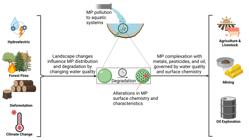
Integration of microplastic pollution with prioritized environmental threats listed in the summary. Threats of hydroelectric power plants, forest fires, deforestation, and climate change alter water quality and MP degradation, which in turn affects its complexation with the (by)products of agriculture and livestock, mining, and oil exploration. Created in BioRender (https://BioRender.com/y98u419).
The improper disposal of solid urban waste represents a critical environmental challenge, particularly in the Amazon region. This practice not only contributes to land pollution but also exacerbates water contamination through the introduction of microplastics and other pollutants into aquatic ecosystems. These materials often find their way into the river systems, posing significant threats to both water quality and the diverse aquatic life that depends on these habitats. It is crucial to address these issues through enhanced waste management strategies and public awareness campaigns to mitigate the impact on the Amazon’s delicate ecological balance. Effective waste management not only prevents the physical pollution of habitats but also reduces the chemical and biological alterations that can have cascading effects on biodiversity and human health in these regions. By prioritizing the proper handling, recycling, and disposal of urban waste, we can help preserve the Amazon’s natural heritage for future generations.
The species noted in each of the Species Spotlight sections above play important ecological and economical roles in the Amazon. Pirarucu, bodo, jeju, and tambaqui all hold economic importance in Amazonia. Pirarucu are the most historically important and overexploited fish of the Amazon basin, being listed in Appendix II of the Convention on International Trade of Endangered Species of Wild Fauna and Flora (Castello et al. 2015, Stokes et al. 2021). The armoured catfish is of very high commercial value in many countries of South America. They are often supplied by importations from Brazil (Luquet et al. 1989). In optimal habitats, the species attains marketable size in a relatively short amount of time which has also garnered interest to use them in aquaculture to allow for continued economic productivity in the face of worsening natural habitat conditions (Sabapathy Allen 2019). Tambaqui is of both economic and ecological interest due to its ability to disperse seeds and to its production in farms, importance in artisanal fisheries, unique flavour and its physiological plasticity (Araujo-Lima & Goulding 1997, Val & de Oliveira 2021). The jeju is crucial for nutrient cycling in Amazonian waters due to its role as a omnivore. It also holds economic value for local fisheries and aquaculture, aiding community livelihoods amidst environmental challenges. The physiology of these and other air-breathing fish species would appear to make them particularly susceptible to the effects of MP pollution. To date there has been almost no research on the impacts of MPs on these fish. When considered in conjunction with the other threats listed in the summary, this susceptibility highlights the importance of prioritizing research and conservation efforts to protect these regionally important air-breathing fish.
Acknowledgements
We thank Pat Wright for advice on rivulus. Lauren Zink was supported by a Natural Sciences and Engineering Research Council of Canada (NSERC) Postdoctoral Fellowship. This study was partially funded by an NSERC Discovery Grant (RGPIN-2023-03714) to Chris M. Wood, and by Conselho Nacional de Desenvolvimento Científico e Tecnológico (CNPq), Coordenação de Aperfeiçoamento de Pessoal de Nível Superior (CAPES), and Fundação de Amparo à Pesquisa do Estado do Amazonas (FAPEAM) via funding for INCT ADAPTA (CNPQ process no. 465540/2014-7, CAPES—finance code 001, and FAPEAM process 062.01187/2017) to Adalberto Luis Val. Adalberto Luis Val is the recipient of a research fellowship from CNPq. We thank the two anonymous reviewers for their thoughtful and constructive comments that improved the paper.
References
- AASKOV ML, ISHIMATSU A, NYENGAARD JR, MALTE H, LAURIDSEN H, HA NTK, HUONG DTT & BAYLEY M. 2024. Modulation of gill surface area does not correlate with oxygen loss in Chitala ornata Proc Biol Sci 291: 20241884.
- AASKOV ML, JENSEN RJ, SKOV PV, WOOD CM, WANG T, MALTE H & BAYLEY M. 2022. Arapaima gigas maintains gas exchange separation in severe aquatic hypoxia but does not suffer branchial oxygen loss. J Exp Biol 225: jeb243672.
- AFFONSO EG & RANTIN FT. 2005. Respiratory responses of the air-breathing fish Hoplosternum littorale to hypoxia and hydrogen sulfide. Comp Biochem Physiol Part C Toxicol Pharmacol 141: 275-280.
- AMPONSAH AK, AFRIFA EA, ESSANDOH PK & ENYOH CE. 2024. Evidence of microplastics accumulation in the gills and gastrointestinal tract of fishes from an estuarine system in Ghana. Heliyon 10: e25608.
- ANBUMANI S & KAKKAR P. 2018. Ecotoxicological effects of microplastics on biota: a review. Environ. Sci Pollut Res 25: 14373-14396.
- ARAUJO-LIMA C & GOULDING M. 1997. So fruitful a fish: Conservation ecology of the Amazon’s tambaqui. Columbia University Press, 191 p.
- BANERJEE A & SHELVER WL. 2021. Micro- and nanoplastic-mediated pathophysiological changes in rodents, rabbits, and chickens: A review. J Food Prot 84: 1480-1495.
- BAYLEY M, DAMSGAARD C, THOMSEN M, MALTE H & WANG T. 2019. Learning to air-breathe: The first steps. Physiol. Bethesda Md 34: 14-29.
- BELÃO TC, ZERAIK VM, FLORINDO LH, KALININ AL, LEITE CAC & RANTIN FT. 2015. Control of cardiorespiratory function in response to hypoxia in an air-breathing fish, the African sharptooth catfish, Clarias gariepinus Comp Biochem Physiol A Mol Integr Physiol 187: 130-140.
- BRAUNER CJ, BALLANTYNE CL, RANDALL DJ & VAL AL. 1995. Air breathing in the armoured catfish (Hoplosternum littorale) as an adaptation to hypoxic, acidic, and hydrogen sulphide rich waters. Can J Zool 73: 739-744.
- BRAUNER CJ, MATEY V, WILSON JM, BERNIER NJ & VAL AL. 2004. Transition in organ function during the evolution of air-breathing;insights from Arapaima gigas, an obligate air-breathing teleost from the Amazon. J Exp Biol 207: 1433-1438.
- BRAZ-MOTA S & ALMEIDA-VAL VMF. 2021. Ecological adaptations of Amazonian fishes acquired during evolution under environmental variations in dissolved oxygen: A review of responses to hypoxia in fishes, featuring the hypoxia-tolerant Astronotus spp. J Exp Zool Part Ecol Integr Physiol 335: 771-786.
- BURGGREN WW. 1979. Biomodal gas exchange during variation in environmental oxygen and carbon dioxide in the air breathing fish Trichogaster trichopterus J Exp Biol 82: 197-213.
- CAMERON JN & WOOD CM. 1978. Renal function and acid–base regulation in two Amazonian erythrinid fishes: Hoplias malabaricus, a water breather, and Hoplerythrinus unitaeniatus, a facultative air breather. Can J Zool 56: 917-930.
- CAMPBELL SH, WILLIAMSON PR & HALL BD. 2017. Microplastics in the gastrointestinal tracts of fish and the water from an urban prairie creek. FACETS 2: 395-409.
- CASTELLO L, ARANTES CC, MCGRATH DG, STEWART DJ & SOUSA FSD. 2015. Understanding fishing-induced extinctions in the Amazon. Aquat Conserv Mar Freshw Ecosyst 25: 587-598.
- CHEN H ET AL. 2021. Chronic exposure to UV-aged microplastics induces neurotoxicity by affecting dopamine, glutamate, and serotonin neurotransmission in Caenorhabditis elegans J Hazard Mater 419: 126482.
- CHEN X, XIONG X, JIANG X, SHI H & WU C. 2019. Sinking of floating plastic debris caused by biofilm development in a freshwater lake. Chemosphere 222: 856-864.
- COLLARD F, GASPERI J, GABRIELSEN GW & TASSIN B. 2019. Plastic particle ingestion by wild freshwater fish: A critical review. Environ Sci Technol 53: 12974-12988.
- DA CRUZ AL & FERNANDES MN. 2016. What is the most efficient respiratory organ for the loricariid air-breathing fish Pterygoplichthys anisitsi, gills or stomach? A quantitative morphological study. Zoology 119: 526-533.
- DAMSGAARD C, BALIGA VB, BATES E, BURGGREN W, MCKENZIE DJ, TAYLOR E & WRIGHT PA. 2020. Evolutionary and cardio-respiratory physiology of air-breathing and amphibious fishes. Acta Physiol Oxf Engl 228: e13406.
- DE VRIES AN, GOVONI D, ÁRNASON SH & CARLSSON P. 2020. Microplastic ingestion by fish: Body size, condition factor and gut fullness are not related to the amount of plastics consumed. Mar Pollut Bull 151: 110827.
- DEL PIANO F ET AL. 2024. Polystyrene microplastic exposure modulates gut microbiota and gut-liver axis in gilthead seabream (Sparus aurata). Sci Total Environ 957: 177857.
- DENG Y, ZHANG Y, LEMOS B & REN H. 2017. Tissue accumulation of microplastics in mice and biomarker responses suggest widespread health risks of exposure. Sci Rep 7: 46687.
- DOS SANTOS SILVA J, CIDADE MJA, PANERO FS, RIBEIRO LB & CAMPOS DA ROCHA FO. 2024. Microplastic pollution in the Amazon Basin: Current scenario, advances and perspectives. Sci Total Environ 946: 174150.
- EVANS DH, PIERMARINI PM & CHOE KP. 2005. The multifunctional fish gill: dominant site of gas exchange, osmoregulation, acid-base regulation, and excretion of nitrogenous waste. Physiol Rev 85: 97-177.
- FARRELL AP & RANDALL DJ. 1978. Air-breathing mechanics in two Amazonian teleosts, Arapaima gigas and Hoplerythrinus unitaeniatus Can J Zool 56: 939-945.
- FERNANDES MN, DA CRUZ AL, DA COSTA OTF & PERRY SF. 2012. Morphometric partitioning of the respiratory surface area and diffusion capacity of the gills and swim bladder in juvenile Amazonian air-breathing fish, Arapaima gigas Micron 43: 961-970.
- FISHMAN AP, DELANEY RG & LAURENT P. 1985. Circulatory adaptation to bimodal respiration in the dipnoan lungfish. J Appl Physiol Bethesda Md 59: 285-294.
- FLEURY JB & BAULIN VA. 2021. Microplastics destabilize lipid membranes by mechanical stretching. Proc Natl Acad Sci 118: e2104610118.
- FLORINDO LH, REID SG, KALININ AL, MILSOM WK & RANTIN FT. 2004. Cardiorespiratory reflexes and aquatic surface respiration in the neotropical fish tambaqui (Colossoma macropomum): acute responses to hypercarbia. J Comp Physiol B 174: 319-328.
- FRICK NT & WRIGHT PA. 2002. Nitrogen metabolism and excretion in the mangrove killifish Rivulus marmoratus II. Significant ammonia volatilization in a teleost during air-exposure. J Exp Biol 205: 91-100.
- FROMMEL AY, KWAN GT, PRIME KJ, TRESGUERRES M, LAURIDSEN H, VAL AL, GONÇALVES LU & BRAUNER CJ. 2021. Changes in gill and air-breathing organ characteristics during the transition from water- to air-breathing in juvenile Arapaima gigas J Exp Zool Part Ecol Integr Physiol 335: 801-813.
- GONZALEZ RJ, BRAUNER CJ, WANG YX, RICHARDS JG, PATRICK ML, XI W, MATEY V & VAL AL. 2010. Impact of ontogenetic changes in branchial morphology on gill function in Arapaima gigas Physiol Biochem Zool PBZ 83: 322-332.
- GOODRICH HR ET AL. 2020. Understanding the gastrointestinal physiology and responses to feeding in air-breathing Anabantiform fishes. J Fish Biol 96: 986-1003.
- GRAHAM J, LAI N, CHILLER D & ROBERTS J. 1995. The transition to air breathing in fishes. V. Comparative aspects of cardiorespiratory regulation in Synbranchus marmoratus and Monopterus albus (Synbranchidae). J Exp Biol 198: 1455-1467.
- GRAHAM JB & WEGNER NC. 2010. Breathing air in water and in air: the air-breathing fishes, In: Nilsson GE (Ed), Respiratory Physiology of Vertebrates: Life With and Without Oxygen. Cambridge University Press, Cambridge, p. 174-221.
- HU J, ZUO J, LI J, ZHANG Y, AI X, ZHANG J, GONG D & SUN D. 2022. Effects of secondary polyethylene microplastic exposure on crucian carp (Carassius carassius) growth, liver damage, and gut microbiome composition. Sci Total Environ 802: 149736.
- HULBERT WC, MOON TW & HOCHACHKA PW. 1978a. The osteoglossid gill: correlations of structure, function, and metabolism with transition to air breathing. Can J Zool 56: 801-808.
- HULBERT WC, MOON TW & HOCHACHKA PW. 1978b. The erythrinid gill: Correlations of structure, function, and metabolism. Can J Zool 56: 814-819.
- HUNG CYC, TSUI KNT, WILSON JM, NAWATA CM, WOOD CM & WRIGHT PA. 2007. Rhesus glycoprotein gene expression in the mangrove killifish Kryptolebias marmoratus exposed to elevated environmental ammonia levels and air. J Exp Biol 210: 2419-2429.
- IP YK & CHEW SF. 2018. Air-breathing and excretory nitrogen metabolism in fishes. Acta Histochem 120: 680-690.
- JOHANNSSON OE, GIACOMIN M, SADAUSKAS-HENRIQUE H, CAMPOS DF, BRAZ-MOTA S, HEINRICHS-CALDAS WD, BAPTISTA R, WOOD CM, ALMEIDA-VAL VMF & VAL AL. 2018. Does hypoxia or different rates of re-oxygenation after hypoxia induce an oxidative stress response in Cyphocharax abramoides (Kner 1858), a Characid fish of the Rio Negro? Comp. Biochem. Physiol A Mol Integr Physiol 224: 53-67.
- JOHANSEN K, LENFANT C, SCHMIDT-NIELSEN K & PETERSEN JA. 1968. Gas exchange and control of breathing in the electric eel, Electrophorus electricus Z Für Vgl Physiol 61: 137-163.
- JUCÁ-CHAGAS R. 2004. Air breathing of the neotropical fishes Lepidosiren paradoxa, Hoplerythrinus unitaeniatus and Hoplosternum littorale during aquatic hypoxia. Comp Biochem Physiol A Mol Integr Physiol 139: 49-53.
- KARAMI A, GROMAN DB, WILSON SP, ISMAIL P & NEELA VK. 2017. Biomarker responses in zebrafish (Danio rerio) larvae exposed to pristine low-density polyethylene fragments. Environ Pollut 223: 466-475.
- KARAMI A, ROMANO N, GALLOWAY T & HAMZAH H. 2016. Virgin microplastics cause toxicity and modulate the impacts of phenanthrene on biomarker responses in African catfish (Clarias gariepinus). Environ Res 151: 58-70.
- KIM JH, YU YB & CHOI JH. 2021. Toxic effects on bioaccumulation, hematological parameters, oxidative stress, immune responses and neurotoxicity in fish exposed to microplastics: A review. J Hazard Mater 413: 125423.
- KOWALSKI N, REICHARDT AM & WANIEK JJ. 2016. Sinking rates of microplastics and potential implications of their alteration by physical, biological, and chemical factors. Mar Pollut Bull 109: 310-319.
- KRAMER DL. 1978. Ventilation of the respiratory gas bladder in Hoplerythrinus unitaeniatus (Pisces, Characoidei, Erythrinidae). Can J Zool 56: 931-938.
- KRAMER DL. 1983. The evolutionary ecology of respiratory mode in fishes: an analysis based on the costs of breathing. Environ Biol Fishes 9: 145-158.
- KRAMER DL & MCCLURE M. 1982. Aquatic surface respiration, a widespread adaptation to hypoxia in tropical freshwater fishes. Environ Biol Fishes 7: 47-55.
- LEBLANC DM, WOOD CM, FUDGE DS & WRIGHT PA. 2010. A fish out of water: Gill and skin remodeling promotes osmo- and ionoregulation in the mangrove killifish Kryptolebias marmoratus Physiol Biochem Zool PBZ 83: 932-949.
- LI X, ZHENG T, ZHANG J, CHEN H, XIANG C, SUN Y, DANG Y, DING P, HU G & YU Y. 2024. Photoaged polystyrene microplastics result in neurotoxicity associated with neurotransmission and neurodevelopment in zebrafish larvae (Danio rerio). Environ Res 250: 118524.
- LIMONTA G, MANCIA A, BENKHALQUI A, BERTOLUCCI C, ABELLI L, FOSSI MC & PANTI C. 2019. Microplastics induce transcriptional changes, immune response and behavioral alterations in adult zebrafish. Sci Rep 9: 15775.
- LIN L, MA LS, LI HX, PAN YF, LIU S, ZHANG L, PENG JP, FOK L, XU XR & HE WH. 2020. Low level of microplastic contamination in wild fish from an urban estuary. Mar Pollut Bull 160: 111650.
- LOBELLE D, KOOI M, KOELMANS AA, LAUFKÖTTER C, JONGEDIJK CE, KEHL C & VAN SEBILLE E. 2021. Global modeled sinking characteristics of biofouled microplastic. J Geophys Res Oceans 126: e2020JC017098.
- LUQUET P, BOUJARD T, PLANQUETTE P, MOREAU Y & HOSTACHE G. 1989. The culture of Hoplosternum littorale: state of the art and perspectives. Presented at the 9. Colloque Aquacop Ifremer, Ifremer.
- MAK CW, CHING-FONG YEUNG K & CHAN KM. 2019. Acute toxic effects of polyethylene microplastic on adult zebrafish. Ecotoxicol Environ Saf 182: 109442.
- MCCARTHY J, GONG X, NAHIRNEY D, DUSZYK M & RADOMSKI MW. 2011. Polystyrene nanoparticles activate ion transport in human airway epithelial cells. Int J Nanomedicine 6: 1343-1356.
- MILSOM WK, GILMOUR KM, PERRY S, GARGAGLIONI LH, HEDRICK MS, KINKEAD R & WANG T. 2022. Control of breathing in ectothermic vertebrates. Compr Physiol 12: 3869-3988.
- MONTERO D, RIMOLDI S, TORRECILLAS S, RAPP J, MORONI F, HERRERA A, GÓMEZ M, FERNÁNDEZ-MONTERO Á & TEROVA G. 2022. Impact of polypropylene microplastics and chemical pollutants on European sea bass (Dicentrarchus labrax) gut microbiota and health. Sci Total Environ 805: 150402.
- MORAIS LMS, QUEIROZ AFS, BRITO BKF, DE FENZL N, SOARES MO, GIARRIZZO T & MARTINELLI FILHO JE. 2024. Microplastics in the Amazon biome: State of the art and future priorities. Heliyon 10: e28851.
- MORON SE, ANDRADE CA & FERNANDES MN. 2009. Response of mucous cells of the gills of traíra (Hoplias malabaricus) and jeju (Hoplerythrinus unitaeniatus) (Teleostei: Erythrinidae) to hypo- and hyper-osmotic ion stress. Neotropical Ichthyol 7: 491-498.
- MORON SE, OBA ET, DE ANDRADE CA & FERNANDES MN. 2003. Chloride cell responses to ion challenge in two tropical freshwater fish, the erythrinids Hoplias malabaricus and Hoplerythrinus unitaeniatus J Exp Zoolog A Comp Exp Biol 298A: 93-104.
- NELSON JA. 2014. Breaking wind to survive: fishes that breathe air with their gut. J Fish Biol 84: 554-576.
- NELSON JA & DEHN AM. 2010. 10 - The GI tract in air breathing. In: Grosell M et al. (Eds), Fish Physiology, The Multifunctional Gut of Fish. Academic Press, p. 395-433.
- NILSSON GE, DYMOWSKA A & STECYK JAW. 2012. New insights into the plasticity of gill structure. Respir Physiol Neurobiol 184: 214-222.
- ONG KJ, STEVENS ED & WRIGHT PA. 2007. Gill morphology of the mangrove killifish (Kryptolebias marmoratus) is plastic and changes in response to terrestrial air exposure. J Exp Biol 210: 1109-1115.
- PELSTER B. 2021. Using the swimbladder as a respiratory organ and/or a buoyancy structure-Benefits and consequences. J Exp Zool Part Ecol Integr Physiol 335: 831-842.
- PELSTER B, GIACOMIN M, WOOD CM & VAL AL. 2016. Improved ROS defense in the swimbladder of a facultative air-breathing erythrinid fish, jeju, compared to a non-air-breathing close relative, traira. J Comp Physiol B 186: 615-624.
- PELSTER B & WOOD CM. 2018. Ionoregulatory and oxidative stress issues associated with the evolution of air-breathing. Acta Histochem 120: 667-679.
- PELSTER B & WOOD CM. 2024. Increasing temperatures enhance hypoxic encounters in the Amazon: Consequences for air-breathing fish. In: de Souza SS et al. (Eds), The Future of Amazonian Aquatic Biota, Springer Nature Switzerland, Cham, p. 413-434.
- PELSTER B, WOOD CM, BRAZ-MOTA S & VAL AL. 2020a. Gills and air-breathing organ in O2 uptake, CO2 excretion, N-waste excretion, and ionoregulation in small and large pirarucu (Arapaima gigas). J Comp Physiol B 190: 569-583.
- PELSTER B, WOOD CM, CAMPOS DF & VAL AL. 2020b. Cellular oxygen consumption, ROS production and ROS defense in two different size-classes of an Amazonian obligate air-breathing fish (Arapaima gigas). PLoS ONE 15: e0236507.
- PELSTER B, WOOD CM, JUNG E & VAL AL. 2018. Air-breathing behavior, oxygen concentrations, and ROS defense in the swimbladders of two erythrinid fish, the facultative air-breathing jeju, and the non-air-breathing traira during normoxia, hypoxia and hyperoxia. J Comp Physiol B 188: 437-449.
- PELSTER B, WOOD CM & VAL AL. 2025. Oxygen consumption from air and water, ammonia and urea-N excretion, and Na+ fluxes during progressive aquatic hypoxia in Amazonian armoured catfish Pterygoplichthys gibbiceps and P. pardalis J Fish Biol 2025: 1-14.
- PERSAUD DI, RAMNARINE IW & AGARD JBR. 2006. Ontogeny of the alimentary canal and respiratory physiology of larval Hoplosternum littorale (Hancock, 1828): an intestinal air-breathing Teleost. Environ Biol Fishes 76: 37-45.
- QIAO R, DENG Y, ZHANG S, WOLOSKER MB, ZHU Q, REN H & ZHANG Y. 2019. Accumulation of different shapes of microplastics initiates intestinal injury and gut microbiota dysbiosis in the gut of zebrafish. Chemosphere 236: 124334.
- RANDALL DJ, BURGGREN WW, FARRELL AP & HASWELL MS. 1981. The evolution of air breathing in vertebrates. Cambridge University Press, Cambridge.
- RANDALL DJ, WILSON JM, PENG KW, KOK TW, KUAH SS, CHEW SF, LAM TJ & IP YK. 1999. The mudskipper, Periophthalmodon schlosseri, actively transports NH4+ against a concentration gradient. Am J Physiol 277: 1562-1567.
- RAZA T, RASOOL B, ASRAR M, MANZOOR M, JAVED Z, JABEEN F & YOUNIS T. 2023. Exploration of polyacrylamide microplastics and evaluation of their toxicity on multiple parameters of Oreochromis niloticus Saudi J Biol Sci 30: 103518.
- RICO A, REDONDO-HASSELERHARM PE, VIGHI M, WAICHMAN AV, NUNES GSS, DE OLIVEIRA R, SINGDAHL-LARSEN C, HURLEY R, NIZZETTO L & SCHELL T. 2023. Large-scale monitoring and risk assessment of microplastics in the Amazon River. Water Res 232: 119707.
- SABAPATHY ALLEN U. 2019. Hoplosternum littorale (armoured catfish). CABI Compend. CABI Compendium, 79822.
- SAINT-PAUL U & SOARES GM. 1988. Ecomorphological adaptation to oxygen deficiency in Amazon floodplains by serrasalmid fish of the genus Mylossoma J Fish Biol 32: 231-236.
- SCADENG M, MCKENZIE C, HE W, BARTSCH H, DUBOWITZ DJ, STEC D & ST. LEGER J. 2020. Morphology of the Amazonian teleost genus Arapaima using advanced 3D imaging. Front Physiol 11: 260.
- SCHERER C, WEBER A, LAMBERT S & WAGNER M. 2018. Interactions of microplastics with freshwater biota. In: Wagner M & Lambert S (Eds), Freshwater Microplastics: Emerging Environmental Contaminants? Springer International Publishing, Cham, p. 153-180.
- SCOTT GR, MATEY V, MENDOZA JA, GILMOUR KM, PERRY SF, ALMEIDA-VAL VMF & VAL AL. 2017. Air breathing and aquatic gas exchange during hypoxia in armoured catfish. J Comp Physiol B 187: 117-133.
- SILVA-CAVALCANTI JS, SILVA JDB, FRANÇA EJ, ARAÚJO MCB & GUSMÃO F. 2017. Microplastics ingestion by a common tropical freshwater fishing resource. Environ Pollut 221: 218-226.
- SOLOMANDO A, CAPÓ X, ALOMAR C, ÁLVAREZ E, COMPA M, VALENCIA JM, PINYA S, DEUDERO S & SUREDA A. 2020. Long-term exposure to microplastics induces oxidative stress and a pro-inflammatory response in the gut of Sparus aurata Linnaeus, 1758. Environ Pollut 266: 115295.
- SOUZA MTV, SALES-SHIMOMOTO V, SILVA GS & VAL AL. 2023. Microplastics and the Amazon: From the rivers to the estuary. Quím Nova 46: 655-667.
-
STATUS OF WATER QUALITY IN THE AMAZON BASIN - EXECUTIVE SUMMARY. 2023. [WWW Document]. OTCA. Available at: https://otca.org/en/project/status-of-water-quality-in-the-amazon-basin/ Accessed on November 25, 2024.
» https://otca.org/en/project/status-of-water-quality-in-the-amazon-basin/ - STIFFLER DF, GRAHAM JB, DICKSON KA & STÖCKMANN W. 1986. Cutaneous ion transport in the freshwater teleost Synbranchus marmoratus Physiol Zool 59: 406-418.
- STOKES GL, CASTELLO L, PETERSEN TA, COOKE SJ, POWER M, ZUANON J & MARTINS EG. 2021. Air-breathing ecology of Arapaima sp.: Conservation implications for an imperilled fish. Aquat Conserv Mar Freshw Ecosyst 31: 1257-1268.
- TURSI A, BARATTA M, EASTON T, CHATZISYMEON E, CHIDICHIMO F, DE BIASE M & DE FILPO G. 2022. Microplastics in aquatic systems, a comprehensive review: origination, accumulation, impact, and removal technologies. RSC Adv 12: 28318-28340.
- ULTSCH GR. 1987. The potential role of hypercarbia in the transition from water-breathing to air-breathing in vertebrates. Evolution 41 442-445.
- USMAN S, RAZIS AFA, SHAARI K, AZMAI MNA, SAAD MZ, ISA NM & NAZARUDIN MF. 2022. Polystyrene microplastics induce gut microbiome and metabolome changes in Javanese medaka fish (Oryzias javanicus Bleeker, 1854). Toxicol Rep 9: 1369-1379.
- VAL A & WOOD CM. 2022. Global change and physiological challenges for fish of the Amazon today and in the near future. J Exp Biol 225: jeb216440.
- VAL AL. 1995. Oxygen transfer in fish: Morphological and molecular adjustments. Braz J Med Biol Res Rev Bras Pesqui Medicas E Biol 28: 1119-1127.
- VAL AL, AFFONSO EG, SALVO SOUZA RH, ALMEIDA-VAL VMF & MOURA MAF. 1992. Inositol pentaphosphate in the erythrocytes of an Amazonian fish, the pirarucu (Arapaima gigas). Can J Zool 70 852-855.
- VAL AL & DE OLIVEIRA AM. 2021. Colossoma macropomum—A tropical fish model for biology and aquaculture. J Exp Zool Part Ecol Integr Physiol 335: 761-770.
- WANG S, XIE S, WANG Z, ZHANG C, PAN Z, SUN D, XU G & ZOU J. 2022. Single and combined effects of microplastics and cadmium on the cadmium accumulation and biochemical and immunity of Channa argus Biol Trace Elem Res 200 3377-3387.
- WILKIE MP, MORGAN TP, GALVEZ F, SMITH RW, KAJIMURA M, IP YK & WOOD CM. 2007. The African lungfish (Protopterus dolloi): ionoregulation and osmoregulation in a fish out of water. Physiol Biochem Zool PBZ 80: 99-112.
- WOOD CM. 2019. Internal spatial and temporal CO2 dynamics: Fasting, feeding, drinking, and the alkaline tide. In: Grosell M et al. (Eds), Fish Physiology, Carbon Dioxide, Academic Press, p. 245-286.
- WOOD CM & BUCKING C. 2010. 5 - The role of feeding in salt and water balance. In: Grosell M et al. (Eds), Fish Physiology, The Multifunctional Gut of Fish. Academic Press, p. 165-212.
- WOOD CM, PELSTER B, BRAZ-MOTA S & VAL AL. 2020. Gills versus kidney for ionoregulation in the obligate air-breathing Arapaima gigas, a fish with a kidney in its air-breathing organ. J Exp Biol 223: jeb232694.
- WOOD CM, PELSTER B, GIACOMIN M, SADAUSKAS-HENRIQUE H, ALMEIDA-VAL VMF & VAL AL. 2016. The transition from water-breathing to air-breathing is associated with a shift in ion uptake from gills to gut: a study of two closely related erythrinid teleosts, Hoplerythrinus unitaeniatus and Hoplias malabaricus J Comp Physiol B 186: 431-445.
- WOOD CM, PELSTER B & VAL AL. 2025. Is the air-breathing organ a significant route for CO2 excretion during aquatic hypercapnia in the pirarucu, Arapaima gigas? J Comp Physiol B 195: 39-51.
- WRIGHT PA. 2021. Cutaneous respiration and osmoregulation in amphibious fishes. Comp Biochem Physiol A Mol Integr Physiol 253: 110866.
- XING Y, ZHU X, DUAN Y, HUANG J, NAN Y & ZHANG J. 2023. Toxic effects of nitrite and microplastics stress on histology, oxidative stress, and metabolic function in the gills of Pacific white shrimp, Litopenaeus vannamei Mar Pollut Bull 187: 114531.
- YU Y, KUMAR M, BOLAN S, PADHYE LP, BOLAN N, LI S, WANG L, HOU D & LI Y. 2024. Various additive release from microplastics and their toxicity in aquatic environments. Environ Pollut 343: 123219.
- ZACCONE G ET AL. 2020. Expression of acetylcholine- and G protein coupled muscarinic receptor in the neuroepithelial cells (NECs) of the obligated air-breathing fish, Arapaima gigas (Arapaimatidae: Teleostei). Zoology 139: 125755.
- ZENG Q, YANG Q, CHAI Y, WEI W, LUO M & LI W. 2023. Polystyrene microplastics enhanced copper-induced acute immunotoxicity in red swamp crayfish (Procambarus clarkii). Ecotoxicol Environ Saf 249: 114432.
- ZHENG S & WANG WX. 2023. Disturbing ion regulation and excretion in medaka (Oryzias melastigma) gills by microplastics: Insights from the gut-gill axis. Sci Total Environ 857: 159353.
- ZINK L, MERTENS E, ZHOU X, JOHNSTON SE, BOGARD M, WISEMAN S, PYLE GG. 2024a. Reframing microplastics as a ligand for metals reveals that water quality characteristics govern the association of cadmium to polyethylene. Sci Total Environ 948: 174659.
- ZINK L, MORRIS C & WOOD CM. 2024b. Pulse exposure to microplastics depolarizes the goldfish gill: Interactive effects of DOC and differential degradation. Environ Pollut 366: 125434.
- ZINK L, SIMONIS C, WISEMAN S & PYLE GG. 2023. In vitro characterization of cadmium transport across the gastro-intestinal membrane of the fathead minnow (Pimephales promelas) in the presence and absence of microplastics. Environ Toxicol Pharmacol 101: 104195.
- ZINK L & WOOD CM. 2024. The effects of microplastics on ionoregulatory processes in the gills of freshwater fish and invertebrates: A prospective review. Comp Biochem Physiol A Mol Integr Physiol 295: 111669.