 Geographical distribution and new records of Ariamnes longissimus keyserling, 1891 (Araneae, Theridiidae) in South America
Abstract
Ariamnes longissimus plays a relevant ecological role as a predator, yet its distribution remains underestimated, reflecting knowledge gaps. This study updates its distribution, reports new occurrences, and discusses biogeographic implications. Primary and secondary data (118 records) were compiled, georeferenced, and mapped according to biomes and political divisions. We report the first occurrence in Bahia (Northeast Brazil) and in the Cerrado. The species occurs in Argentina, Peru, and 10 Brazilian states, predominantly in the Atlantic Forest (78%) and Pampas (16%), with additional records in the Amazon and Cerrado. The concentration of records in southern and southeastern Brazil (94%) suggests either sampling bias or historical barriers, whereas its rarity in the Cerrado and absence in the Caatinga/Chaco indicate an association with humid environments. This distribution may be linked to paleoecological corridors between the Amazon and Atlantic Forest during humid periods of the Miocene–Pleistocene. We conclude that the distribution of A. longissimus is broader than previously expected but remains underestimated, with ecological plasticity evidenced by its occurrence across multiple biomes.
Key words
Northeast Brazil; Atlantic Forest; Tropical Forest; Distribution update
INTRODUCTION
The order Araneae comprises approximately 53.485 described species worldwide, distributed across about 139 families (World Spider Catalog 2025). Spiders are generalist predators of great ecological importance, directly contributing to the population control of insects and disease vectors, particularly urban pests such as mosquitoes of the genus Aedes aegypti (Linnaeus 1762) (Strickman et al. 1997, Riechert 1999, Dias et al. 2024). In South America, spider diversity encompasses around 83 families, 1,018 genera, and 8.302 species, of which 538 genera are endemic to the region (Dupérré 2023). According to the aforementioned author, 315 genera occur exclusively in South and North America, and only 5% of genera (n = 52) have distributions extending to other regions of the world. Within the order, one of the most diverse families is Theridiidae, with 2.604 species (World Spider Catalog 2025).
Dupérré (2023) highlights the need for greater research efforts on arachnids in Brazil. Owing to its environmental characteristics, Brazil harbors one of the highest spider diversities in the world, with a total of 3,843 known species, 838 of which are endemic to the Atlantic Forest (Oliveira et al. 2017, Dupérré 2023). Over the past decade, there has been a growing and significant scientific investment in arachnid research within Brazil, with an increasing number of researchers dedicated to characterizing the arachnofauna (Brescovit et al. 2011, Carvalho et al. 2014, Oliveira et al. 2017).
However, anthropogenic activities can negatively affect spider abundance in vegetation areas where structure and composition have been significantly altered. Spiders are therefore excellent bioindicators of habitat change (Baldissera & Silva 2010, Baldissera et al. 2020, Dias et al. 2024). An example is the family Theridiidae, whose species appear to be tolerant to habitat modification (Dias et al. 2024).
The family Theridiidae Sundevall, 1833, currently includes about 133 described genera and over two thousand species (World Spider Catalog 2025), distributed worldwide with greatest diversity in tropical regions (Singh 2021).
The genus Ariamnes (Thorell 1869), commonly known as stick spiders or whip spiders, currently comprises 31 species (World Spider Catalog 2025). Morphologically, the genus is distinguished by its remarkably elongated abdomen and its ability to construct simple, non-sticky webs specialized for capturing nematoceran flies and wandering male spiders (Agnarsson 2004).
The species Ariamnes longissimus (Keyserling 1891) is known to occur in three South American countries: Argentina, in the province of Corrientes; Peru, in the Madre de Dios region; and Brazil, in the states of Amazonas, Espírito Santo, Mato Grosso, Minas Gerais, Rio de Janeiro, São Paulo, Paraná, Santa Catarina, and Rio Grande do Sul (Keyserling 1891, Avalos et al. 2007, 2018, Buckup et al. 2010, Indicatti et al. 2013, Curitiba 2022). Despite its wide distribution, the species A. longissimus remains poorly studied regarding its ecology. The lack of ecological studies on this spider limits our understanding of its environmental interactions and relationships with other species. On the other hand, the phylogeny of Theridiidae is well documented and studied (Agnarsson 2002, 2004).
Overall, knowledge of the diversity and distribution of most invertebrate species (including arachnids) remains limited compared to that of vertebrates (Dupérré 2023). The aforementioned author also notes that even though Brazil harbors the highest known spider diversity, available data are often restricted to sparse geographic records and do not reflect a comprehensive species distribution across South America. Therefore, conducting reviews of species’ geographic distributions and systematizing their occurrence data is relevant for discussing and assessing biogeographic insights, revising distribution limits, and organizing occurrence records (Oliveira et al. 2017, Alencar et al. 2023, Martins et al. 2025).
The Wallacean shortfall (Lomolino 2004, Hortal et al. 2015), a term referring to the lack of biodiversity knowledge in certain regions, especially poorly studied areas, underscores the importance of records such as those presented here. Thus, this study aimed to provide, for the first time, a geographic distribution description for A. longissimus based on the most extensive review of primary and secondary data available in databases. Secondarily, we report new occurrence localities in terms of territorial coverage, biomes, and extreme distribution limits, along with an updated geographic distribution map relative to South American terrestrial biomes. Finally, we discuss the results within a proposed biogeographic framework for the species.
MATERIALS AND METHODS
Study area and sampling
Specimens analyzed were collected during targeted expeditions carried out between March and August 2023 in a fragment of Atlantic Forest in southwestern Bahia, Brazil (15°15’06.1”S, 40°17’09.0”W). This forest patch is located adjacent to the urban area of Itapetinga and is composed mainly of dense secondary-growth trees, classifying it as a stand in an intermediate stage of regeneration. According to Araújo et al. (2024), the fragment has a perimeter of 13.19 km and an area of 3.32 km², a tropical subhumid climate, heavy summer rains, and a dry winter. Mean air temperature is 23.6°C, with an annual average rainfall of 857 mm. Specimens were captured manually through active search within the forest. They were subsequently euthanized in a killing chamber with alcohol-soaked cotton and preserved in 70% ethanol. Voucher specimens were deposited in the Laboratory of Zoology and Animal Parasitology, State University of Southwest Bahia (UESB) – Juvino Oliveira Campus, Itapetinga, BA (LZPAØØ575).
Identification and occurrence data
Species identification followed dichotomous keys and diagnoses proposed by Exline & Levi (1962), Keyserling (1891), and Agnarsson (2004). Measurements of total length (TL), carapace length (CL), first femur (FF), patella + tibia (PT), metatarsus length (ML), and tarsus length (TaL) were taken using a Mitutoyo digital caliper with 0.001 mm precision.
Species distribution data came from primary data - collected and analyzed by the present authors - and secondary data obtained from online databases and published literature. Secondary data were compiled from two main sources, following the methodology described by Alencar et al. (2023). The first source consisted of examining specimens stored in scientific zoological collections with information accessible in online databases. The platforms consulted were the Global Biodiversity Information Facility (GBIF 2024) and SpeciesLink (SpeciesLink 2024). The second source involved a systematic literature review (SLR) of specialized publications, including scientific articles, species lists, biodiversity surveys, and academic reports. Occurrence records lacking geographic coordinates were georeferenced using the GeoNames platform, and all localities were verified via Google Earth (Alencar et al. 2023). Gray literature - such as monographs, dissertations, theses, conference abstracts, and technical reports - was excluded from the analysis. The complete occurrence database compiled in this study, including all georeferenced records and geographic coordinates, is publicly available in the Zenodo repository (Soares et al. 2026).
Secondary data specimens were collected and recorded across Brazil between 1962 and 2025, by various collectors over the years, and are housed in the following institutions: Museu Nacional do Rio de Janeiro (MNRJ), Pontifícia Universidade Católica do Rio Grande do Sul (PUCRS), Universidade Federal de Minas Gerais (UFMG), and United States National Museum (USNM).
The distribution map - combining primary and secondary records - was produced in QGIS v. 3.36.1 (QGIS Development Team 2024) using the WGS84 coordinate system. Shapefiles for South American national boundaries were obtained from the Natural Earth (2024) platform, while Brazilian biome, state, and municipality shapefiles were obtained from the Brazilian Institute of Geography and Statistics (IBGE 2022).
RESULTS
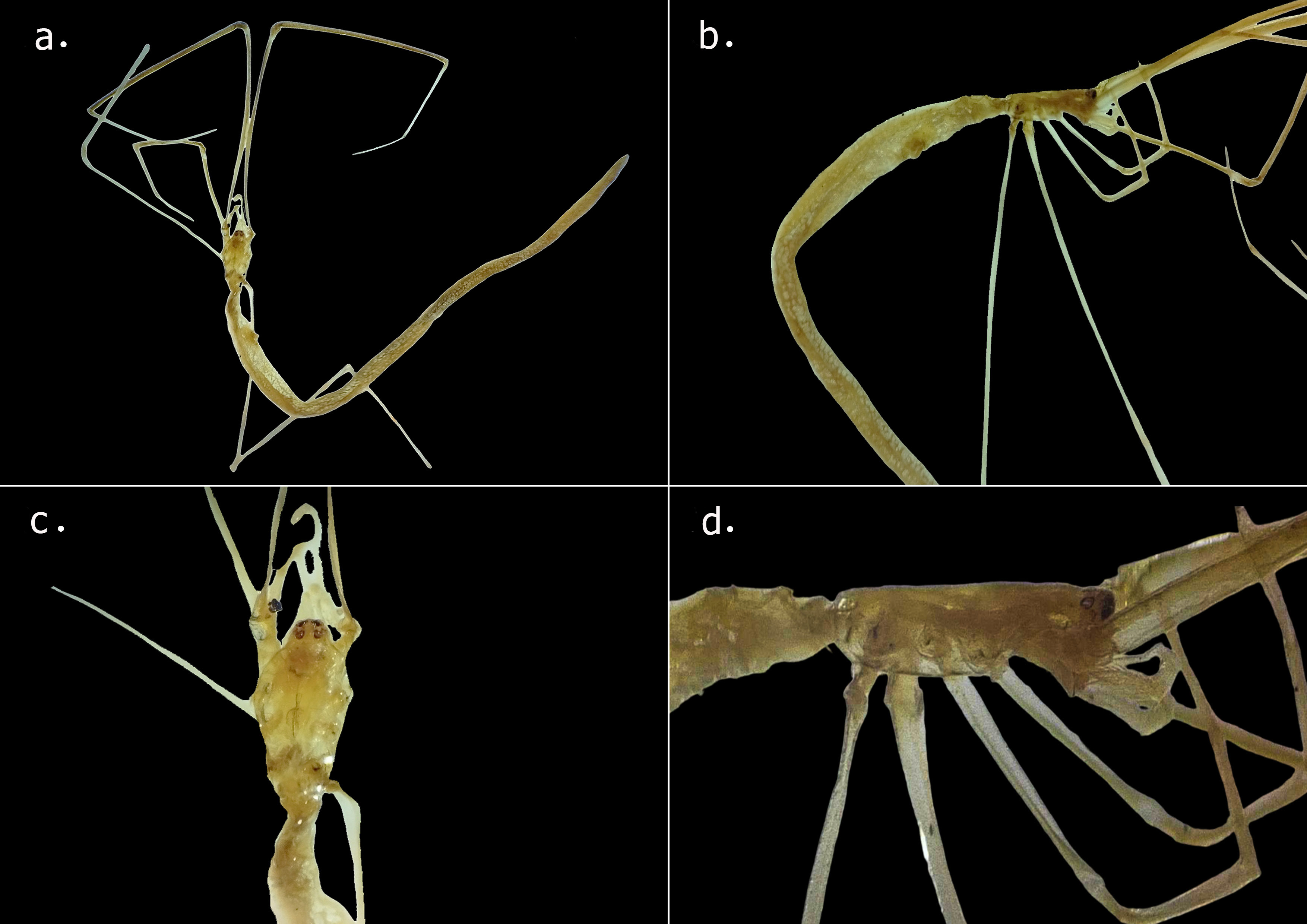
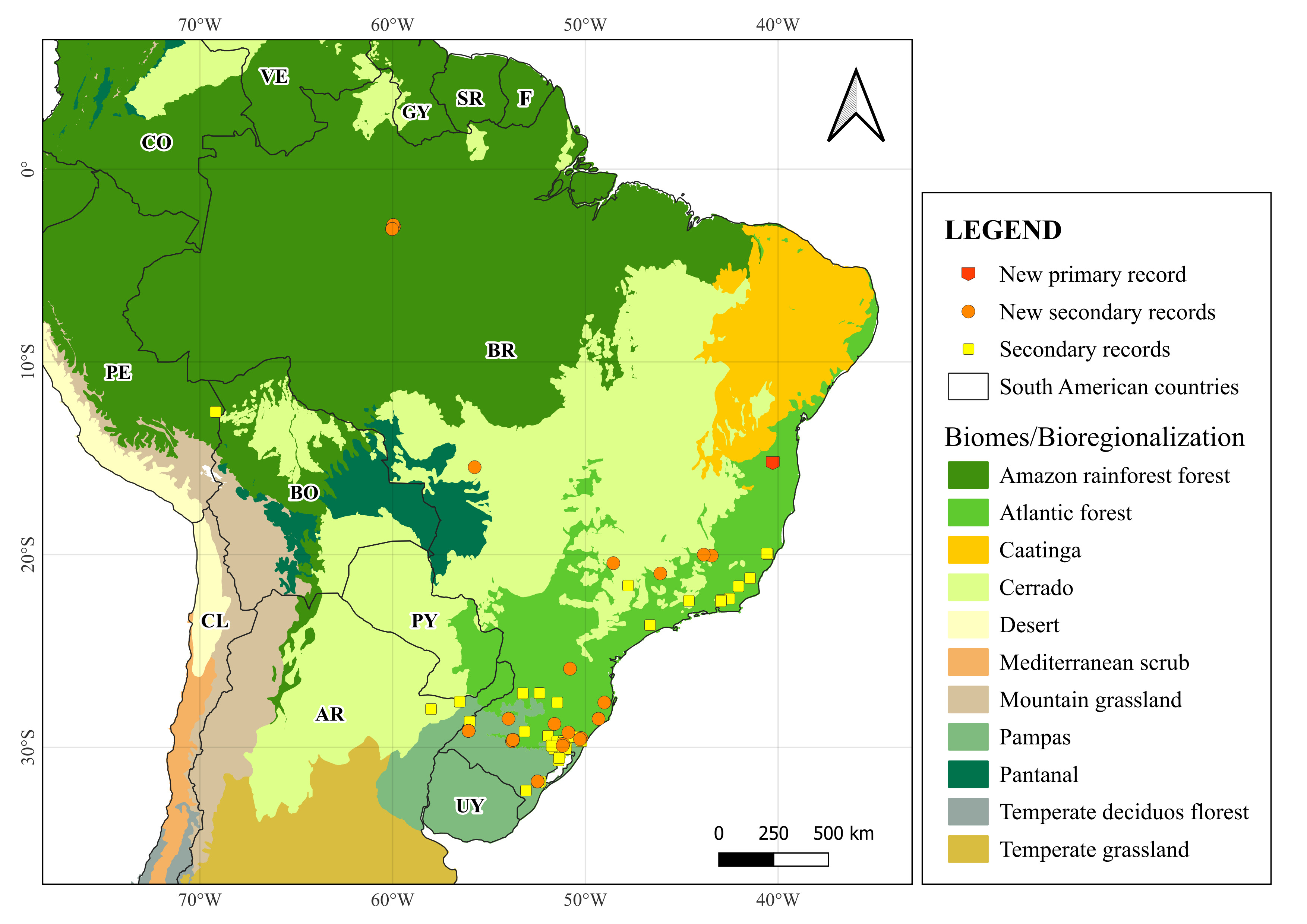
A total of 118 records were compiled from primary data (n = 1) and secondary data (n = 38 from specialized literature; n = 78 from digital databases). Primary data recorded a single locality in Brazil - the first record for the state of Bahia, in the Brazilian Northeast. Three individuals of A. longissimus were examined (1♀ and 2♂), collected in the municipality of Itapetinga, Bahia, and deposited in the zoological collection of LZPA at UESB under the voucher number LZPAØØ575 (Fig. 1a–d). Secondary literature data indicate the species’ distribution across three countries: Peru (n = 1), Argentina (n = 2), and Brazil (n = 35). Within Brazil, occurrences were recorded for the states of Rio Grande do Sul (n = 25), Rio de Janeiro (n = 6), São Paulo (n = 2), Espírito Santo (n = 1), and Santa Catarina (n = 1) (Figure 2). Data from digital databases indicated occurrences only in Brazil: Rio Grande do Sul (n = 64), Santa Catarina (n = 3), Paraná (n = 1), São Paulo (n = 1), Minas Gerais (n = 3), Espírito Santo (n = 1), Mato Grosso (n = 1), and Amazonas (n = 5).
Ariamnes longissimus Keyserling, 1891 from the locality of Itapetinga, Bahia, Brazil, LZPAØØ575. a. Dorsal view, whole body, showing the extremely elongated abdomen. b. Close-up, dorsal view of the cephalothorax and anterior appendages. c. Left lateral view. d. Close-up, left lateral view of the cephalothorax and appendages.
The northernmost occurrence was recorded in Manaus, Amazonas, Brazil (2°53’38.3”S, 59°58’20.9”W), extending the known range in the literature. The southernmost occurrence was in Arroio Grande, Rio Grande do Sul, Brazil (32°14’15.0”S, 53°05’13.0”W). The westernmost occurrence was reported from Puerto Maldonado, Madre de Dios, Peru (12°35’35.0”S, 69°11’20.0”W), while the easternmost record was from Itapetinga, Bahia, Brazil (15°15’07.1”S, 40°17’08.5”W), extending the known range by 0°15’ (Table SI – Supplementary Material).
The species was found in the following biomes: Amazon, Cerrado, Atlantic Forest, and Pampas. The highest frequency of occurrence was in the Atlantic Forest, followed by the Pampas, and then the other biomes. For the first time, the species was recorded in the Cerrado biome. The new northern and eastern distribution limits also represent the northernmost records for the Amazon (Manaus, Amazonas) and Atlantic Forest (Itapetinga, Bahia) biomes. Additionally, this study reports the species for the first time in the Brazilian states of Amazonas, Bahia, Mato Grosso, Minas Gerais, and Santa Catarina.
DISCUSSION
New primary and secondary data compiled in the present study indicate that the geographic distribution of the whip spider Ariamnes longissimus is broader than previously known. Records from a new biome (Cerrado), new localities within previously known biomes (Amazon, Atlantic Forest, Pampas), expanded distribution limits (North and East), and new records in previously unreported geographic areas suggest that the species’ distribution may be underestimated within each biome. In already known biomes (Atlantic Forest, Pampas), new northern and eastern records expand the geographic range by 17° northward and 0°15’ eastward, respectively.
According to Alencar et al. (2023), geographic distribution data reflect knowledge in space and time and are therefore fundamental for proposing new biogeographical insights. Additionally, periodic review studies not only update a species’ distribution but may also lead to new hypotheses regarding its geographic range. For A. longissimus, the newly compiled data from the Amazon, Atlantic Forest, and Cerrado biomes, analyzed at a macro-spatial scale, suggest that its geographic distribution may be substantially underestimated (Rinaldi & Trinca 2008).
The original description of A. longissimus by Keyserling (1891) was based on specimens collected in Rio de Janeiro and Espírito Santo, Brazil. However, details regarding its occurrence—such as (1) lack of precise locality descriptions, (2) absence of information on the holotype’s location, and (3) absence of geographic coordinates, as a product of the time—pose challenges for understanding the species’ original distribution. Subsequent studies documented additional isolated occurrences primarily in southern and southeastern Brazil (Buckup et al. 2010, Curitiba 2022, Indicatti et al. 2013, Avalos et al. 2018). Moreover, information about the species remains largely limited to sporadic records, and little is known about its ecology, behavior, and influential abiotic factors.
Thus, although available records indicate the species’ presence throughout Brazil and in geographically proximate areas of neighboring countries, the distribution is not homogeneous. Approximately 94% of occurrences are concentrated in southern and southeastern Brazil and northeastern Argentina, while only 6% are found in other regions of South America known for the species. This pattern may reflect both the concentration of sampling effort and arachnological faunal studies, as well as multiple historical processes influencing the species’ dispersal and colonization, such as geographic barriers limiting dispersal (e.g., forest refuges, intercontinental river barriers, historical connections, and latitudinal/altitudinal isolation).
Spider dispersal is strongly influenced by geographic barriers, which can limit connectivity between populations and shape distribution over time (Dean & Sterling 1985). Large rivers, such as the Amazon, act as physical obstacles that impede terrestrial species’ migration, restricting their occurrence to certain regions (Ferreira & Tokarski 2007). Mountain ranges, such as Serra do Mar and Serra da Mantiqueira, create environmental gradients that can isolate populations and promote diversification processes (Vanzolini 1992). Vegetation fragmentation caused by human activities further disrupts population connectivity, increasing vulnerability in species with low dispersal capacity (Didham 1997, Fahrig 2003, Rego et al. 2005).
The current distribution of Theridiidae spiders in South America reflects multiple, interconnected biogeographic processes. Among the main factors are the large Amazonian river barriers, such as the Amazonas and Madeira rivers, which limited gene flow in spiders of the genus Anelosimus Simon, 1891, resulting in genetically distinct lineages on opposite riverbanks (Silva et al. 2020).
Despite rivers acting as barriers, periods of higher humidity in the past allowed connections between currently isolated regions. Phylogenetic evidence and paleodistribution models indicate that the Amazon and Atlantic Forest were once connected by humid corridors, potentially facilitating the dispersal of Theridiidae species between these domains (Silva et al. 2020). This historical connectivity helps explain evolutionary relationships among taxa now separated by the so-called “Dry Diagonal”, a vast, arid region extending from northeastern Brazil to Argentina, encompassing the Chaco, Caatinga, and Cerrado (Prado & Gibbs 1993).
Paleoclimatic studies suggest that at various times from the Miocene to the Pleistocene, wetter conditions allowed the formation of forest connections between the Amazon and Atlantic Forest (Auler et al. 2004, Wang et al. 2004, Cheng et al. 2013). These ecological windows may have been crucial for the dispersal of Theridiidae lineages, which later became isolated as drier conditions returned, leading to speciation.
This scenario appears consistent with the geographic distribution of A. longissimus. The whip spider has no known records in the Caatinga or Chaco and only one occurrence in the Cerrado, geographically close to a humid biome. In contrast, the species occurs in the Atlantic Forest and Amazon. This suggests that temperature and humidity may serve as positive proxies for its occurrence, favoring humid biomes (Amazon, Atlantic Forest) and areas not associated with the Dry Diagonal (Caatinga, Cerrado, and Chaco). Thus, we hypothesize that A. longissimus may have followed a dispersal history similar to that discussed by Silva et al. (2020) for other Theridiidae species, via paleodistribution humid corridors between the Amazon and Atlantic Forest. If this is the most parsimonious scenario, the biogeographic expansion of the Dry Diagonal may also contribute to population differentiation, highlighting the need to investigate genetic variation among the species’ populations. Due to the scope of the present study, we did not test this genetic differentiation hypothesis; this discussion serves as a basis for future studies aimed at testing our biogeographic proposal using current data.
In addition to distribution, another relevant aspect is the species’ conservation status. To date, A. longissimus has not been assessed by the IUCN Red List, which limits detailed threat analysis. However, considering its potentially wide distribution and ability to occupy multiple environments, the species may not be under immediate threat. Nevertheless, increasing habitat fragmentation, particularly in the Atlantic Forest, may pose risks to local populations (Ribeiro et al. 2009, Mullu 2016). Future studies should consider not only species distribution but also the influence of anthropogenic factors on its conservation. These new data provide insights for future investigations that aim to deepen understanding of its ecology and distribution.
CONCLUSIONS
The geographic distribution of Ariamnes longissimus is restricted to South America, being primarily recorded in Brazil, Argentina, and Peru. However, the absence of records in other areas of the continent may be attributed to limited sampling and the scarcity of systematic studies on arachnid fauna in certain regions. The results presented here suggest that the species occurs mainly in humid biomes of South America (Atlantic Forest, Pampas, Amazon), and is less associated with biomes under water stress regimes (Cerrado, with no records from Caatinga and Chaco). This expansion indicates that the species’ actual distribution may be substantially underestimated, either due to sampling gaps or its remarkable ecological plasticity, which allows it to occupy different vegetation types. Environmental suitability studies using ecological niche modeling may be fundamental to clarify the species’ environmental envelope and provide further insights. Finally, our data reinforces the need for additional studies on Ariamnes longissimus, addressing both its geographic distribution and ecological and genetic aspects.
Acknowledgements
To the Programa Institucional de Apoio à Infraestrutura de Pesquisa e Inovação Tecnológica at the Universidade Estadual do Sudoeste da Bahia (AuxPQinfra-UESB-2024-01). To the Coordenação de Aperfeiçoamento de Pessoal de Nível Superior – CAPES, for providing the scholarship to DSS (CAPES/No 072.15723.2024.0002184-88), MDCM (CAPES/No 88887.958407/2024-00), and JIM (CAPES/No 072.15723.2024.0002184-88). This research did not receive any funding from commercial or non-profit sectors.
-
Data availability
The dataset supporting the results of this study, including geographic occurrence records and coordinates of Ariamnes longissimus in South America, is publicly available in the Zenodo repository: Soares et al. (2026). GEOGRAPHICAL DISTRIBUTION AND NEW RECORDS OF Ariamnes longissimus KEYSERLING, 1891 (ARANEAE, THERIDIIDAE) IN SOUTH AMERICA [Data set]. Zenodo. https://doi.org/10.5281/zenodo.20089349.
References
-
AGNARSSON I. 2002. On the relation of sociality and kleptoparasitism in theridiid spiders (Theridiidae, Araneae). J Arachnol 30(2): 181-188. DOI 10.1636/0161-8202(2002)030[0181:SAWOTR]2.0.CO;2.
» https://doi.org/10.1636/0161-8202(2002)030 -
AGNARSSON I. 2004. Morphological phylogeny of cobweb spiders and their relatives (Araneae, Araneoidea, Theridiidae). Zool J Linn Soc 141: 447-626. DOI 10.1111/j.1096-3642.2004.00135.x.
» https://doi.org/10.1111/j.1096-3642.2004.00135.x - ALENCAR CERD, GOMES FJS, ALVES ICF & MACHADO RJP. 2023 New records, extended and updated geographic distribution of the South American native antlion Dimares elegans (Perty, 1833) (Neuroptera, Myrmeleontidae). Rev Bras Entomol 66: e20220085. DOI 10.1590/1806-9665-RBENT-2022-0085.
-
ARAÚJO LOF, CARA PAA, KRAUSE L, MACHADO AFP, PAULA A, SÁ-NETO RJ & CORREA MM. 2024. Flora de remanescentes de floresta estacional da bacia do rio Catolé no nordeste brasileiro. Rev Bras Geogr Fís 17(3): 1848-1861. DOI 10.26848/rbgf.v17.3.p1848-1861.
» https://doi.org/10.26848/rbgf.v17.3.p1848-1861 -
AULER AS, WANG X, EDWARDS RL, CHENG H, CRISTALLI PS, SMART PL & RICHARDS DA. 2004. Quaternary ecological and geomorphic changes associated with rainfall events in presently semi-arid northeastern Brazil. J Quat Sci 19(7): 693-701. DOI 10.1002/jqs.876
» https://doi.org/10.1002/jqs.876 - AVALOS G, ACHITTE-SCHMUTZLER HC & LOS-SANTOS, ME. 2018. Caracterização da fauna de aranhas em monoculturas de Eucalyptus e Pinus na Reserva Iberá, Corrientes, Argentina. Rev. Mex. Biodiv 89(1): 134-148. ISSN 0034-7744.
- AVALOS G, RUBIO GD, BAR ME & GONZÁLEZ A. 2007. Arañas (Arachnida, Araneae) asociadas a dos bosques degradados del Chaco húmedo en Corrientes, Argentina. Rev Biol Trop 55: 899-909.
-
BALDISSERA R & SILVA VR. 2010. Diversity and composition of arbustive spiders in an Atlantic Forest fragment and two adjacent areas. Neotrop Biol Conserv 5(2): 77-85. DOI 10.4013/4750.
» https://doi.org/10.4013/4750 -
BALDISSERA R, QUADROS SO, GALETI G, RODRIGUES ENL, LAZZAROTTO LMV & OLIVEIRA AD. 2020. Spider assemblage structure and functional diversity patterns in clear-cut, logged and undisturbed areas in a large Atlantic Forest remnant. Can J For Res 50: 608-614. DOI 10.1139/cjfr-2019-0302.
» https://doi.org/10.1139/cjfr-2019-0302 -
BRESCOVIT AD, OLIVEIRA U & SANTOS AJ. 2011. Spiders (Araneae, Arachnida) from São Paulo State, Brazil: diversity, sampling efforts, and state-of-art. Biota Neotrop 11(1): 717-747. DOI 10.1590/S1676-06032011000500035.
» https://doi.org/10.1590/S1676-06032011000500035 -
BUCKUP EH, MARQUES MAL, RODRIGUES ENL & OTT R. 2010. Lista das espécies de aranhas (Arachnida, Araneae) do estado do Rio Grande do Sul, Brasil. Iheringia, Sér. Zool 100(4): 483-518. DOI 10.1590/S0073-47212010000400021.
» https://doi.org/10.1590/S0073-47212010000400021 - CARVALHO LS, BRESCOVIT AD, SANTOS AJ, OLIVEIRA U & GUADANUCCI JPL. 2014. Aranhas Da Caatinga. In: Bravo F & Adolfo RC (Eds), Artrópodes Do Semiárido: Biodiversidade e Conservação. Feira de Santana: Printmídia, p. 15–32.
-
CHENG H, SINHA A, CRUZ FW, WANG X, EDWARDS RL, D’HORTA FM, RIBAS CC, VUILLE M, STOTT LD & AULER AS. 2013. Climate change patterns in Amazonia and biodiversity. Nat Commun 4(1): 1411. DOI 10.1038/ncomms2415.
» https://doi.org/10.1038/ncomms2415 -
CURITIBA. 2022. Decreto nº 1082, de 29 de julho de 2022. Oficializa o Inventário da Fauna de Curitiba. Diário Oficial do Município de Curitiba, Curitiba, 5 dez. 2022. Available at: https://leismunicipais.com.br/a/pr/c/curitiba/decreto/2022/109/1082/decreto-n-1082-2022-oficializa-o-inventario-da-fauna-de-curitiba Accessed on: 6 May 2025.
» https://leismunicipais.com.br/a/pr/c/curitiba/decreto/2022/109/1082/decreto-n-1082-2022-oficializa-o-inventario-da-fauna-de-curitiba -
DEAN DA & STERLING WL. 1985. Size and phenology of ballooning spiders at two locations in eastern Texas. J Arachnol 13: 111-120. DOI 10.2307/3705236.
» https://doi.org/10.2307/3705236 -
DIAS SR, BRAGAGNOLO C, BRESCOVIT AD & CASARIN FE. 2024. Diversity of spiders (Arachnida: Araneae) of an urban forest fragment in the Atlantic rainforest (São Paulo, Brazil). Biota Neotrop 24(2): e20231532. DOI 10.1590/1676-0611-BN-2023-1532.
» https://doi.org/10.1590/1676-0611-BN-2023-1532 - DIDHAM RK. 1997. The influence of edge effects and forest fragmentation on leaf litter invertebrates in central Amazonia. In: Tropical Forest Remnants: Ecology, Management, and Conservation of Fragmented Communities. Laurance WF & Bierregaard RO (Eds), Chicago: University of Chicago Press, p. 55-70.
-
DUPÉRRÉ N. 2023. Araneae (spiders) of South America: a synopsis of current knowledge. N Z J Zool 50(1): 3-117. DOI 10.6084/m9.figshare.19128135.
» https://doi.org/10.6084/m9.figshare.19128135 - EXLINE H & LEVI HW. 1962. American spiders of the genus Argyrodes (Araneae, Theridiidae). Bull Mus Comp Zool 127: 75-204.
-
FAHRIG L. 2003. Effects of Habitat Fragmentation on Biodiversity. Annu Rev Ecol Evol Syst 34(1): 487-515. DOI 10.1146/annurev.ecolsys.34.011802.132419.
» https://doi.org/10.1146/annurev.ecolsys.34.011802.132419 - FERREIRA EAB & TOKARSKI D. 2007. Bacia hidrográfica do Alto Tocantins: retratos e reflexões. Brasília: Ecodata/WWF Brasil.
-
GBIF. 2024. SECRETARIAT. Ariamnes longissimus Keyserling, 1891 In: _GBIF Backbone Taxonomy_. [2024]. Available at: https://www.gbif.org/species/2157877 Accessed on: 13 Dec 2024.
» https://www.gbif.org/species/2157877 -
HORTAL J, BELLO F, DINIZ-FILHO JAF, LEWINSOHN TM, LOBO JM & LADLE RJ. 2015. Seven Shortfalls that Beset Large-Scale Knowledge of Biodiversity. Annu Rev Ecol Evol Syst 46(1): 523-549. DOI 10.1146/annurev-ecolsys-112414-054400.
» https://doi.org/10.1146/annurev-ecolsys-112414-054400 -
IBGE. 2022. Biomas e sistema costeiro-marinho do Brasil: relação com a vegetação. 2022. Available at: https://www.ibge.gov.br/geociencias/cartas-e-mapas/informacoes-ambientais/15842-biomas.html?edicao=41055&t=acesso-ao-produto. Accessed on: 13 Dec 2024.
» https://www.ibge.gov.br/geociencias/cartas-e-mapas/informacoes-ambientais/15842-biomas.html?edicao=41055&t=acesso-ao-produto - INDICATTI RP, BRESCOVIT AD & VASCONCELLOS-NETO J. 2013. Aranhas (Arachnida, Araneae) da Serra do Japi, Jundiaí-SP. In: Vasconcellos-Neto J, Polli PR & Penteado-Dias AM (Eds), Novos Olhares, Novos Saberes Sobre a Serra do Japi: Ecos de sua biodiversidade, Curitiba: Editora CRV, p. 273-297.
- KEYSERLING E. 1891. Die Spinnen Amerikas. Brasilianische Spinnen. Dritter Band. Nürnberg: Bauer & Raspe, 278 p. DOI 10.5962/bhl.title.64832.
- LOMOLINO MV. 2004. Conservation biogeography. In: Lomolino MV & Heaney LR (Eds), Frontiers of Biogeography: New Directions in the Geography of Nature, Sunderland, MA: Sinauer Associates Inc., p. 293-296.
- MARTINS MDC, SANTOS ES & ALENCAR CERD. 2025. Unveiling the wings: New South American records for Corydalus diasi Navás, 1915 (Megaloptera: Corydalidae). Rev Chil Entomol 51(3): 423-437.
- MULLU D. 2016. Review on the Effect of Habitat Fragmentation on Ecosystem. J Nat Sci Res 6(15). ISSN 2225-0921.
-
NATURAL EARTH. 2024. Free vector and raster map data at 1:10m, 1:50m, and 1:110m scales. Available at: https://www.naturalearthdata.com/ Accessed on: 13 Dec. 2024.
» https://www.naturalearthdata.com/ -
OLIVEIRA U, BRESCOVIT AD & SANTOS AJ. 2017. Sampling effort and species richness assessment: a case study on Brazilian spiders. Biodivers Conserv 26: 1481-1493. DOI 10.1007/s10531-017-1312-1.
» https://doi.org/10.1007/s10531-017-1312-1 -
OTT AP, OTT R & WOLFF VRS. 2007. Araneofauna de pomares de laranja Valência nos Vales do Caí e Taquari, Rio Grande do Sul, Brasil. Iheringia. Ser Zool 97: 321-327. DOI 10.1590/S0073-47212007000300017.
» https://doi.org/10.1590/S0073-47212007000300017 -
PRADO DE & GIBBS PE. 1993. Patterns of species distributions in the dry seasonal forests of South America. Ann Missouri Bot Gard 80(4): 902-927. DOI 10.2307/2399937.
» https://doi.org/10.2307/2399937 - QGIS DEVELOPMENT TEAM. 2024. QGIS Geographic Information System. Open Source Geospatial Foundation Project.
-
REGO FNAA, VENTICINQUE EM & BRESCOVIT AD. 2005. Densidades de aranhas errantes (Ctenidae e Sparassidae, Araneae) em uma floresta fragmentada. Biota Neotrop 5(1a): 45-52. DOI 10.1590/S1676-06032005000200004.
» https://doi.org/10.1590/S1676-06032005000200004 -
RIBEIRO MC, METZGER, JP, MARTENSEN AC, PONZONI FJ & HIROTA, MM. 2009. The Brazilian Atlantic Forest: How much is left, and how is the remaining forest distributed? Implications for conservation. Biol Conserv 142(6): 1141-1153. DOI 10.1016/j.biocon.2009.02.021.
» https://doi.org/10.1016/j.biocon.2009.02.021 -
RIECHERT SE. 1999. The Hows and Whys of Successful Pest Suppression by Spiders: Insights from Case Studies. J Arachnol 27(1): 387-396. DOI 10.2307/3706011.
» https://doi.org/10.2307/3706011 - RINALDI IMP & TRINCA LA. 2008. Spider assemblages in widely-separated patches of cerrado in São Paulo State, Brazil. Acta Biol Par 37(3,4): 165-180.
- RODRIGUES ENL. 2005. Araneofauna of the leaf litter in two areas of restinga forest in Capão do Leão, Rio Grande do Sul, Brazil. Biotemas 18(1): 73-92. ISSN 2175-7925.
- RYPSTRA AL. 1982. Building a better insect trap; an experimental investigation of prey capture in a variety of spider webs. Oecologia 52(1): 31-36. DOI 0029-8549/82/0052/0031/$01.20.
-
SILVA LM, BATALHA-FILHO H, JAPYASSÚ HF & EL-HANI CN. 2020. Population history of a social spider reveals connection between South American tropical forests. Zool Anz 285: 139-146. DOI 10.1016/j.jcz.2020.01.004.
» https://doi.org/10.1016/j.jcz.2020.01.004 -
SINGH R. 2021. Faunal diversity of Theridiidae (Araneomorphae: Araneae: Arachnida) in India: An updated checklist. Intern J Biol Environ Invest 1(1): 12-39. DOI https://doi.org/10.33745/ijbei.2021.v01i01.003.
» https://doi.org/10.33745/ijbei.2021.v01i01.003 -
SOARES DS, MUNIZ JI, MARTINS MDC, SILVA AD & ALENCAR CERD. 2026. GEOGRAPHICAL DISTRIBUTION AND NEW RECORDS OF Ariamnes longissimus KEYSERLING, 1891 (ARANEAE, THERIDIIDAE) IN SOUTH AMERICA [Data set]. Zenodo. https://doi.org/10.5281/zenodo.20089349
» https://doi.org/10.5281/zenodo.20089349 -
SPECIESLINK. 2024. Sistema de Informação Distribuído para Coleções Biológicas (2024). Available at: https://specieslink.net/ Accessed on: 13 Dec. 2024.
» https://specieslink.net/ - STRICKMAN D, SITHIPRASASNA R & SOUTHARD D. 1997. Bionomics of the spider, Crossopriza lyoni (Araneae, Pholcidae), a predator of dengue vectors in Thailand. J Arachnol 25: 194-201.
- THORELL T. 1869. On European spiders. Review of the European genera of spiders, preceded by some observations on zoological nomenclature [first part]. Nova Acta Regiae Soc Sci Upsal 7(3): 1-108.
-
VANZOLINI PE. 1992. Paleoclimas e especiação em animais da América do Sul tropical. Estud Av 6(15): 41-65. DOI 10.1590/S0103-40141992000200003.
» https://doi.org/10.1590/S0103-40141992000200003 -
WANG X, AULER AS, EDWARDS RL, CHENG H, CRISTALLI PS, SMART PL, RICHARDS DA & SHEN CC. 2004. Wet periods in northeastern Brazil over the past 210 kyr linked to distant climate anomalies. Nature 432: 740-743. DOI https://doi.org/10.1038/nature03067.
» https://doi.org/10.1038/nature03067 -
WORLD SPIDER CATALOG. 2025. Version 18.5. Natural History Museum Bern. Available at: https://www.wsc.nmbe.ch/ Accessed on: 18 Oct. 2025.
» https://www.wsc.nmbe.ch/
Edited by
-
Handling editor
Marcela Lima
The dataset supporting the results of this study, including geographic occurrence records and coordinates of Ariamnes longissimus in South America, is publicly available in the Zenodo repository: Soares et al. (2026). GEOGRAPHICAL DISTRIBUTION AND NEW RECORDS OF Ariamnes longissimus KEYSERLING, 1891 (ARANEAE, THERIDIIDAE) IN SOUTH AMERICA [Data set]. Zenodo. https://doi.org/10.5281/zenodo.20089349.