 Diversity of urban reptiles in three Amazonian municipalities: an assessment using a citizen science platform
Abstract
The management and protection of urban habitats are relevant conservation strategies since cities around the world harbor a diversified fauna. Unfortunately, basic species inventories are unavailable for most cities located in tropical regions. In this context, valuable information about the presence of species in cities can be obtained through citizen science platforms. We compiled data available on the iNaturalist platform and in the literature to provide a qualitative assessment of squamate reptile diversity in three major Amazonian municipalities: Belém, Manaus and Rio Branco. We found 1,200 photographic records of 122 reptile species on the iNaturalist platform which represents about 70% of the reptile fauna of the three municipalities. Within the urban perimeters, were recorded 25% (Belém), 38% (Manaus), and 58% (Rio Branco) of reptile species from the regional pool of each municipality. Most of the photographic records were obtained within urban forest fragments or in urbanized environments near them. The species recorded within the cities are subsets of the regional pool of each municipality suggesting that faunal homogenization apparently has not affected the urban reptile assemblages until now. Protecting and managing forest fragments are important strategies for maintaining reptile diversity in these Amazonian cities.
Key words
biotic homogenization; iNaturalist; lizards; snakes; tropical cities
INTRODUCTION
In the next decades, the world will experience an alarming expansion of cities and this will affect the survival of many species (Simkin et al. 2022). Urbanization leads to the loss or fragmentation of natural and semi-natural habitats, as well as changes in biotic and abiotic conditions that define the tolerance limits of animals (Sol et al. 2013, Liu et al. 2016, Callaghan et al. 2020). Biological assemblages that resist urbanization have a lower diversity of native species, greater abundance of exotic and generalist species, and a tendency towards biotic homogenization which increase similarity in species composition among cities, even the distant ones (McKinney et al. 2002, Bonier et al. 2007, Olden et al. 2018).
Despite these negative aspects of urbanization, cities harbor a diversified fauna that often includes endangered and rare species (Luna et al. 2018, França & França 2019, Soanes & Lentini 2019, Boakes et al. 2024). Therefore, the management and protection of natural and artificial habitats in cities are relevant strategies for conserving regional faunas (Spotswood et al. 2021). However, effective management of urban habitats for conservation depends on inventories of species and to understanding the mechanisms responsible for their persistence in the urban ecosystems. Nevertheless, urban faunas have been adequately investigated only in cities with temperate climates in Europe and North America (Aronson et al. 2014, Padilla & Sutherland 2019, Brum et al. 2023). This is a concerning situation since the effects of urbanization on vertebrate diversity appear to be more drastic in species-rich tropical regions (Huang et al. 2023).
Squamate reptiles (snakes, lizards and amphisbaenians) possess relevant attributes for understanding faunal responses to urbanization. As ectothermic organisms, reptiles require specific thermal conditions that may not be found in urban habitats due urban heat islands (Ackley et al. 2015, Espinoza et al. 2023). Additionally, reptile mortality caused by residents, pets or vehicles can be significant in urban and peri-urban environments (French et al. 2018, Kent et al. 2021, Silva et al. 2022). In despite of these challenges to survival in hostile urban habitats, a remarkable diversity of reptiles has been reported in cities around the world, especially in remnants of native vegetation (e.g. Almeida-Correa et al. 2020, Delaney et al. 2021).
Urban forest fragments provide habitats for reptiles in both temperate and tropical regions (Vanegas-Guerrero et al. 2016, Ramalho et al. 2018, Delaney et al. 2021, Rivas et al. 2023). For example, a rich assemblage of reptiles had been documented in fragmented habitats embedded in the urbanized landscape of southern California and Indonesia (Delaney et al. 2021, Patria et al. 2022). Diversified assemblages of reptiles have also been reported in urban forest fragments in Belém and Manaus, the largest Amazonian cities (Ávila-Pires et al. 2018, Almeida-Correa et al. 2020). Even with these advances, basic surveys of reptile species are unavailable for most cities located in species-rich tropical regions, especially in the Amazon Rainforest (Brum et al. 2023).
In this context, the increasing tendency of people to collaborate with citizen or community science platforms offers an opportunity to gather valuable information about the presence of species in urban ecosystems around the world (Fraisl et al. 2022). Indeed, citizen science records in urban environments could accumulate faster than those in natural history museums (Spear et al. 2017). Here, we collated data on the distribution of reptiles available on iNaturalist, one of the most widely used citizen science platforms (Callaghan et al. 2022), to provide a qualitative assessment of reptile assemblages in three Amazonian cities.
Our aim is to provide an evaluation of the regional representativeness of the reptile fauna recorded within the limits of these cities, and the main questions guiding our study were: i) What proportion of the regional reptile fauna is found within the urban limits of the studied municipalities?; ii) Did urban forest fragments affect the distribution of reptiles in the sampled cities? and iii) Are urban reptile assemblages undergoing a homogenization process in the studied cities?
MATERIALS AND METHODS
Study area
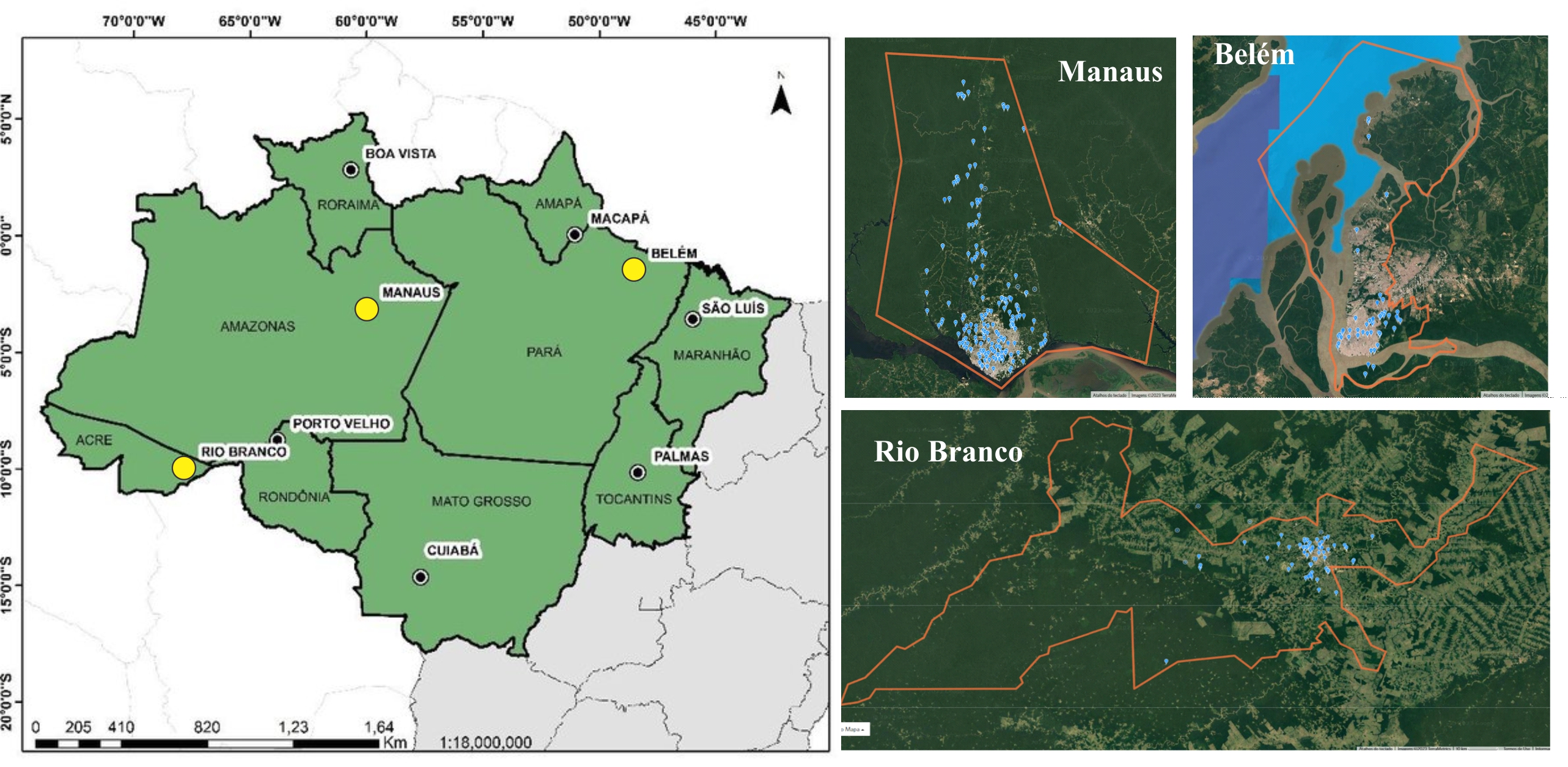
We obtained data on the occurrence of reptiles in three municipalities of the Brazilian Amazon (Fig. 1): Rio Branco (western Amazon), Manaus (central Amazon) and Belém (eastern Amazon). These municipalities are separated by thousands of kilometers and are located in different biogeographical regions (Rego et al. 2024, Godinho & Silva 2018).
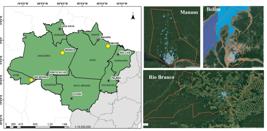
The municipalities differ greatly in size and land-use patterns. Manaus is the largest municipality in terms of area and population size, followed by Belém and Rio Branco (Table I). Belém has the highest proportion of urbanized area, while Manaus and Rio Branco have extensive forest cover (Table I). The proportion of land used for agricultural and livestock activities is higher in Rio Branco compared to the other two municipalities (Table I). A significant portion of Belém’s municipal area is covered by water bodies, including parts of river channels (Fig. 1).
Population size, area and land-use classes of the studied municipalities in the Brazilian Amazon.
Data compilation and analysis
We consulted the iNaturalist platform (https://www.inaturalist.org/) using Order Squamata in the species search module, along with the names of the municipalities in the location search module. The searches were concluded in December 2023. We created a database containing the following information for each photograph: link to the picture, identification profile of the photographer, species group, species name as available on the website, number of platform users who suggested the identity of the species, date of the photograph, city name, latitude, longitude, and the accuracy of geographic coordinates. Each photograph was categorized as taken within the urban perimeter of each city (urban environment) or outside it (forest or rural environment).
We classified photographs taken within urban environments into three major spatial categories: i) records taken inside or on the edge of an urban forest fragment, ii) records taken in urbanized area less than 300 meters from a forest fragment, or iii) records taken in urbanized areas more than 300 meters from a forest fragment. We utilized the satellite image mode available on the iNaturalist website and the map scale to estimate the distance of each record to the nearest forest fragment. For this analysis, we selected only records with coordinate precision of up to 100 meters.
After an initial compilation, we conducted a detailed review of the photographs to identify duplicates based on date and geographic coordinates. Additionally, we performed a thorough analysis of the reptile identification, excluding records with controversies in species identity. Many photographs were posted by professional biologist, which lends greater credibility to the identifications. We believe that the majority of records in the final database used for analysis are correctly identified. The dataset used in this study is available on the zenodo platform (https://zenodo.org/uploads/13370445).
To obtain the most complete and accurate reptile species list for each municipality, we compiled the species records available on the Brazilian Biodiversity System (SiBBr) website (https://www.sibbr. gov.br/) and the herpetological collection of Universidade Federal do Acre (UFAC). We also consulted relevant herpetological literature for each municipality (Cunha & Nascimento 1978, Cunha & Nascimento 1993, Zimmerman & Rodrigues 1990, Vitt et al. 2008, Fraga et al. 2013, Ávila-Pires et al. 2018, Prudente et al. 2018) and standardized species names using Guedes et al. (2023).
Unstructured citizen science platforms like iNaturalist are subject to biases such as misidentifications of morphologically similar species, lack of standardization of sampling effort, overrepresentation of photographs of larger animals, common species, and species that occur in groups (Aceves-Bueno et al. 2017, Callaghan et al. 2021, Barbato et al. 2021). Due to these inherent biases, we opted for qualitative analyses of the species records obtained in each city.
The diversity of reptile species recorded within the urban perimeter was compared with that found throughout the entire municipality as a percentage of recorded species. The similarity in reptile species composition between urban environments and the regional fauna of each municipality was measured using Simpson indices, which are not affected by differences in the number of species between samples (Lennon et al. 2001, Baselga 2010). The similarities in the species composition among the municipalities were then represented in a cluster analysis using unweighted pair group method with arithmetic mean (UPGMA) as the linkage method.
RESULTS
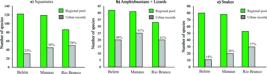
We compiled a list of 176 reptile species (Table SI – Supplementary Material) recorded in the three municipalities (106 snakes, 62 lizards, and eight amphisbaenian species). Belém was the richest municipality with 122 reptile species, followed by Manaus with 119 species, and Rio Branco with 86 species. On the iNaturalist platform, we obtained 1,200 photographic records of reptiles for the three municipalities, with 768 in Manaus, 248 in Rio Branco, and 185 in Belém. The iNaturalist records indicate the presence of 122 reptile species in the three municipalities and these photographic records represent 30%, 70% and 71% of the regional reptile fauna of Belém, Manaus and Rio Branco, respectively. Among the most commonly photographed species are heliothermic native lizards, some snakes and a few exotic peri-domiciliary species (Table II).
Most frequently photographed (minimum of 10 photographs) reptile species in the three Amazonian cities.
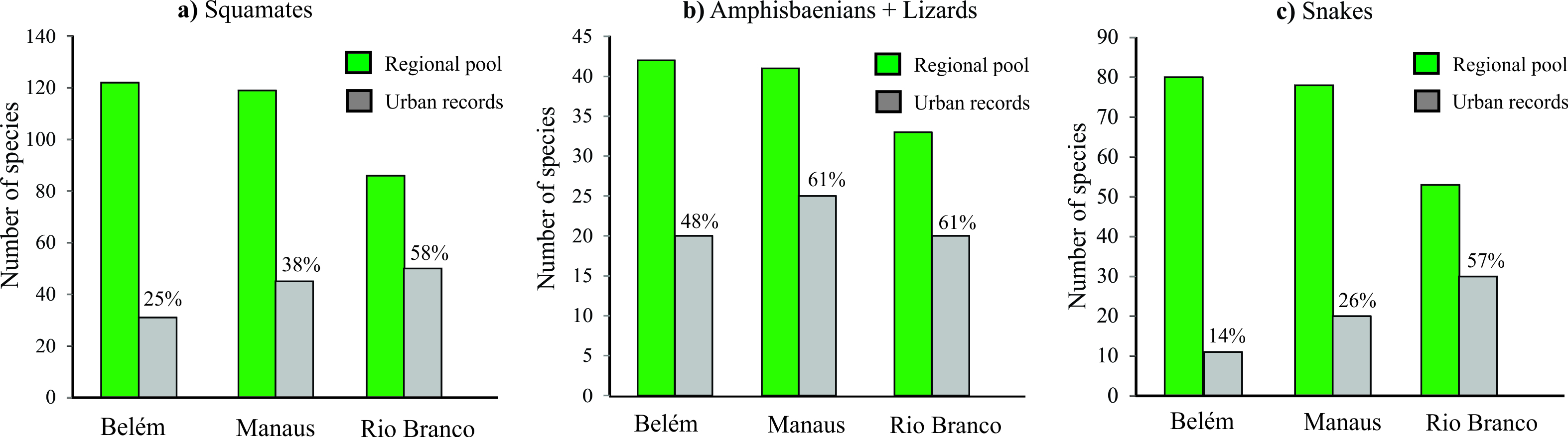
Of the total number of photographs analyzed, 540 were taken in forests or rural environments, and 660 were obtained within the urban limits of the municipalities. The percentage of species recorded within the urban perimeter ranged from 25% (Belém) to 58% (Rio Branco) of the regional pool of species of each municipality (Fig. 2a). Lizard diversity was well represented in all three cities, but snakes have lower representation in Manaus and Belém compared to Rio Branco (Fig. 2b,c).
Location of studied cities in the Brazilian Amazon (yellow dot – map to the left) with the limits of each municipality as found in the iNaturalist platform (maps to the right). Blue dots indicate photographic records of reptiles in each city that were available in the platform up until December 2023. Adapted from de Oliveira et al. (2020) and from the Inaturalist website (https://www.inaturalist.org/).
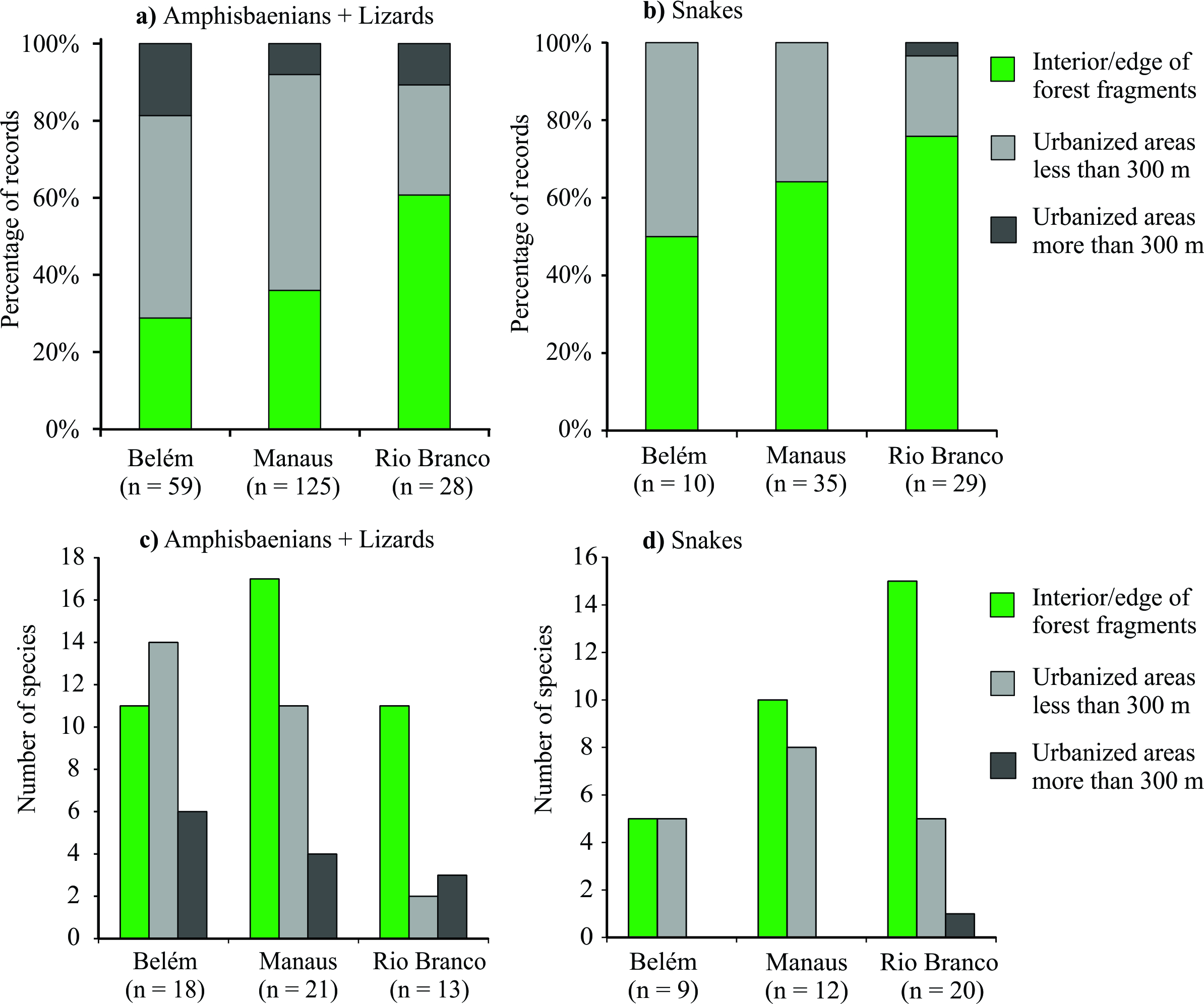
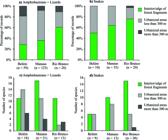
Most of the photographic records of the reptiles were obtained in the interior or on the edge of forest fragments, or in urbanized environments less than 300 meters from those fragments (Fig. 3a,b). Few records of lizards and amphisbaenians were obtained far from forest fragments, and most of them were in Belem (Figure 3a). Among the snakes, more than 50% of the records were associated with forest fragments in the three cities (Figure 3b). Reptile species richness was also greater in urban forest fragments or in their immediate vicinity with richness decreasing in urbanized areas far from forest fragments, especially among the snakes (Figure 3c, d).
Reptile species richness in three municipalities of Brazilian Amazon and their proportional representation in the urban environments: (a) all species, (b) only lizards and amphisbaenians, (c) only snakes.
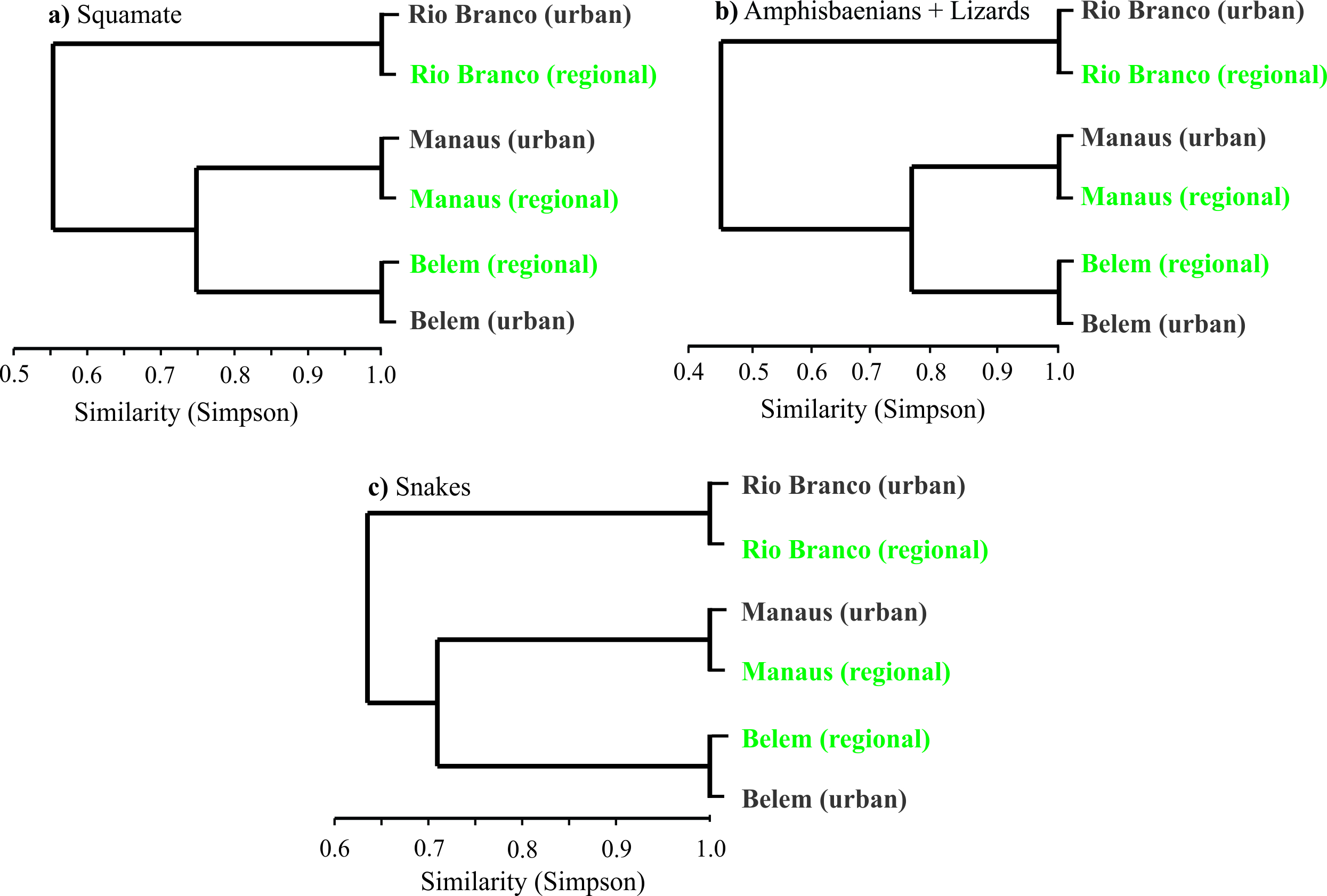
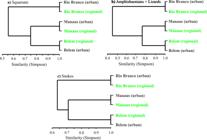
The composition of reptile species in Rio Branco is very different from Belém and Manaus, which tend to share more species (Fig. 4a). Of the total species recorded in urban habitats, only 11 species (12%) were recorded in all three cities. Rio Branco harbor 32 exclusive species and 12 and 21 species were recorded exclusively in Belém and Manaus, respectively. The assemblages of lizards and snakes recorded within city boundaries are impoverished subsets of the species recorded in the regional pool of each municipality (Fig. 4b, c).
Percentage of photographic records (a,b) and species richness of reptiles (c,d) in relation to distance from urban forest fragments in three municipalities of the Brazilian Amazon.
DISCUSSION
Our study represents the most complete and up-to-date compilation of reptile diversity of the three studied municipalities. The reptile diversity found within the cities was quite variable and seems to be associated with the degree of urbanization, the landscape context of each municipality and the biology of the species groups. Belém, with the largest proportion of urbanized area, was the city with the lowest diversity of reptiles, especially for snakes. It is important to emphasize, however, that the limited number of photographs taken in Belém may have led to underreporting of some reptile species in this city. Nevertheless, Belém has a longer history of human occupation compared to the other cities and this longer period of urbanization may have contributed to the loss of reptile species within the urban matrix. Indeed, the period of urbanization has a strong influence on the abundance and diversity of vertebrate species (Gagne & Fahrig 2010, Lourenço-de-Moraes et al. 2018, Souza et al. 2023).
In contrast to Belém, Rio Branco and Manaus have more modest urban areas and are surrounded by rural environments and large blocks of less disturbed forests. Furthermore, several forest fragments of different sizes are found within Rio Branco and Manaus, and these provide key habitats for reptile species (Ávila-Pires et al. 2018, Almeida-Correa et al. 2020, this study). Apparently, less intense urbanization and a greater diversity of environments surrounding the cities appear to favor the greater diversity of reptiles found in the urban matrix of Manaus and Rio Branco compared to Belém. This hypothesis, however, needs be properly tested in quantitative studies that avoid the bias associated with citizen science data, especially uneven sampling effort among the cities.
It appears that lizards could be quite resilient to urbanization, as 48% to 61% of the species from the regional pool were recorded within the urban matrices. Snakes, in turn, appear to be more sensitive to urbanization, as suggested by their lower representation in Bélem and Manaus, the two most urbanized cities. In contrast, Rio Branco has a good regional sample of snake assemblages, possibly due to its smaller size and the surrounding mosaic of rural and forested environments. However, these interpretations need caution, since the availability of photographs on the iNaturalist platform could be biased for more “inoffensive” lizards compared with “dangerous” snakes.
The presence of urban forest fragments was an important predictor of reptile occurrence in the cities. However, it is important to highlight another potential bias in the iNaturalist platform: photographers may search these fragments to obtain pictures of a greater number of species, which can cause bias in the records available in the platform. Nonetheless, most of the reptile species reported in this study are forest specialists (Vitt et al. 2008, Fraga et al. 2013), and forest fragments may represent the only viable habitat for them within the urban landscape. Indeed, urban forest fragments have been identified as critical habitats for reptile assemblages in both tropical and temperate cities (Oliveira et al. 2016, Vanegas-Guerrero et al. 2016, França & França 2019, Delaney et al. 2021, Rivas et al. 2023, Souza et al. 2023).
Our results indicate that the environmental filter promoted by urbanization did not benefit only reptiles with wide geographic distribution or exotic species. Whether biotic homogenization is affecting the reptile assemblages is not clear, but if that is the case we expected that widespread species dominated the urban fauna, increasing the similarity in species composition among the three cities. Nevertheless, the process of faunal homogenization apparently does not affect the studied reptile assemblages since the fauna of each city is a subset of the regional biota. Notwithstanding, some of the most frequently photographed species were found in the three cities, suggesting that these species had better skills to cope with urbanization, an aspect that deserve further investigation. Also, quantitative field studies and monitoring are necessary to investigate the effects the growth of cities on the homogenization of tropical reptile assemblages.
Although our study indicates that urban forest fragments are relevant for reptile conservation, the long-term persistence of these animals within the urban matrix is uncertain. Population monitoring in remnants of vegetation surrounded by urban development in southern California demonstrated a substantial decrease in the population size of three lizard species over a 10-years period (Delaney et al. 2021). Historical analysis (1901-2020) of reptile assemblages in a green area of São Paulo documented a 23% reduction in the species richness of reptiles during this period (Souza et al. 2023). Therefore, monitoring populations and managing urban forest fragments are necessary in order to better understand and improve the value of these urban vegetation remnants for reptile conservation.
In our study, we compiled a representative sample of the reptile diversity in the studied cities, highlighting the relevance of citizen science data for characterizing the urban fauna. Certainly, citizen science data have limitations and biases (Aceves-Bueno et al. 2017, Fraisl et al. 2022), and do not substitute well-designed field inventories. However, for qualitative analysis as presented here, data available in citizen science platforms provide valuable information on the animals and plants species recorded in urban ecosystems (Spear et al. 2017). Our results suggest that, even after decades of urbanization, the investigated cities are still home to a relevant sample of regional reptile diversity, especially of lizards. The long-term maintenance of these assemblages, however, depends on the protection and monitoring of populations in the urban forest fragments, which play a strategic role in reptile conservation as documented in this and other studies in tropical cities.
Acknowledgements
Special thanks to the developers and dozens of dedicated contributors to the incredible iNaturalist platform without whom this work would not have been possible. This publication results from an academic project developed in the Vertebrates II class (Reptiles, Birds and Mammals) at the Universidade Federal do Amazonas (UFAM). Sérgio Henrique Borges was funded by Fundação de Amparo à Pesquisa do Estado do Amazonas (FAPEAM) through the grant from Programa FAPEAM Produtividade em CT&I (call 013/2022).
References
- ACEVES-BUENO E, ADELEYE AS, FERAUD M, HUANG Y, TAO M, YANG Y & ANDERSON SE. 2017. The accuracy of citizen science data: a quantitative review. Bull Ecol Soc Am 98(4): 278-290.
- ACKLEY JW, WU J, ANGILLETTA JR MJ, MYINT SW & SULLIVAN B. 2015. Rich lizards: how affluence and land cover influence the diversity and abundance of desert reptiles persisting in an urban landscape. Biol Conserv 182: 87-92.
- ALMEIDA-CORREA T, FRAZAO L, COSTA DM, MENIN M & KAEFER IL. 2020. Effect of environmental parameters on squamate reptiles in an urban forest fragment in central Amazonia. Acta Amazonica 50: 239-245.
- ARONSON MF ET AL. 2014. A Global Analysis of the Impacts of Urbanization on Bird and Plant Diversity Reveals Key Anthropogenic Drivers. Proc Roy Soc London Ser B Biol Sci 281(1780): 20133330.
- ÁVILA-PIRES ET AL. 2018. Changes in amphibian and reptile diversity over time in Parque Estadual do Utinga, a protected area surrounded by urbanization. Herpetol Notes 11: 499-512.
- BARBATO D, BENOCCI A, GUASCONI M & MANGANELLI G. 2021. Light and shade of citizen science for less charismatic invertebrate groups: quality assessment of iNaturalist nonmarine mollusc observations in central Italy. J Molluscan Stud 87(4): eyab033.
- BASELGA A. 2010. Partitioning the turnover and nestedness components of beta diversity. Glob Ecol Biogeogr 19(1): 134-143.
- BOAKES Z, STAFFORD R, BRAMER I, CVITANOVIĆ M & HARDOUIN EA. 2024. The importance of urban areas in supporting vulnerable and endangered mammals. Urban Ecosyst 27(3): 883-894.
- BONIER F, MARTIN PR & WINGFIELD JC. 2007. Urban birds have broader environmental tolerance. Biol Lett 3(6): 670-673.
- BRUM PH, GONÇALVES SR, STRÜSSMANN C & TEIXIDO AL. 2023. A global assessment of research on urban ecology of reptiles: patterns, gaps and future directions. Anim Conserv 26(1): 1-13.
- CALLAGHAN CT ET AL. 2022. The benefits of contributing to the citizen science platform iNaturalist as an identifier. PLoS Biology 20(11): e3001843.
- CALLAGHAN CT, BENEDETTI Y, WILSHIRE JH & MORELLI F. 2020. Avian trait specialization is negatively associated with urban tolerance. Oikos 129: 1541-1551.
- CALLAGHAN CT, POORE AG, HOFMANN M, ROBERTS CJ & PEREIRA HM. 2021. Large-bodied birds are over-represented in unstructured citizen science data. Sci Rep 11: 19073.
- CUNHA OR & NASCIMENTO FP. 1978. Ofídios da Amazônia, X - As cobras da região leste do Pará. Belém. Publicações Avulsas do Museu Paraense Emílio Goeldi 31: 1-218.
- CUNHA OR & NASCIMENTO FP. 1993. Ofídios da Amazônia: As cobras da região Leste do Pará. Bol Mus Para Emílio Goeldi Zool 9: 1-191,
- DELANEY KS, BUSTEED G, FISHER RN & RILEY SP. 2021. Reptile and amphibian diversity and abundance in an urban landscape: Impacts of fragmentation and the conservation value of small patches. Ichthyol Herpetol 109(2): 424-435.
- DE OLIVEIRA AP, DE AGUIAR ES & PONTES NA. 2020. Doenças tropicais negligenciadas e as vulnerabilidades socioambientais nas capitais amazônicas. Res Soc Develop 9(9): e502997502-e502997502.
- ESPINOZA NS ET AL. 2023. Assessment of urban heat islands and thermal discomfort in the Amazonia biome in Brazil: A case study of Manaus city. Build Environ 227: 109772.
- FRAGA RD, LIMA AP, PRUDENTE AL & MAGNUSSON WE. 2013. Guia de cobras da região de Manaus Amazônia Central. Manaus: Editora INPA.
- FRAISL D ET AL. 2022. Citizen science in environmental and ecological sciences. Nat Rev Methods Primers 2(1): 64.
- FRANÇA RC & FRANÇA FG. 2019. Spatial patterns of snake diversity in an urban area of north-east Brazil. Herpetol J 29(4): 274-281.
- FRENCH SS, WEBB AC, HUDSON SB & VIRGIN EE. 2018. Town and country reptiles: a review of reptilian responses to urbanization. Integr Comp Biol 58(5): 948-966.
- GAGNE SA & FAHRIG L. 2010. Effects of time since urbanization on anuran community composition in remnant urban ponds. Environ Conserv 37(2): 128-135.
- GODINHO MB & SILVA FR. 2018. The influence of riverine barriers, climate, and topography on the biogeographic regionalization of Amazonian anurans. Sci Rep 8: 3427.
- GUEDES TB, ENTIAUSPE-NETO OM & COSTA HC. 2023. Lista de répteis do Brasil: atualização de 2022. Herpetol Bras 12(1): 56-161.
- HUANG CW, OOI JQ & YAU SY. 2023. The landscape ecological view of vertebrate species richness in urban areas across biogeographic realms. Sci Rep 13(1): 16647.
- KENT E, SCHWARTZ AL & PERKINS SE. 2021. Life in the fast lane: roadkill risk along an urban–rural gradient. J Urban Ecol 7(1): juaa039.
- LENNON JJ, KOLEFF P, GREENWOOD JJ & GASTON KJ. 2001. The geographical structure of British bird distributions: diversity, spatial turnover and scale. J Anim Ecol 70: 966-979.
- LIU Z, HE C & WU J. 2016. The Relationship between habitat loss and fragmentation during urbanization: an empirical evaluation from 16 world cities. PLoS One 11(4): e0154613.
- LOURENÇO-DE-MORAES R ET AL. 2018. Nesting patterns among Neotropical species assemblages: can reserves in urban areas be failing to protect anurans? Urban Ecosyst 21: 933-942.
- LUNA A, ROMERO-VIDAL P, HIRALDO F & TELLA JL 2018. Cities may save some threatened species but not their ecological functions. PeerJ 6: e4908.
- MCKINNEY ML. 2002. Urbanization, biodiversity, and conservation. Bioscience 52(10): 883-890.
- OLDEN JD, COMTE L & GIAM X. 2018. The Homogocene: A research prospectus for the study of biotic homogenisation. NeoBiota 37: 23-36.
- OLIVEIRA CN, DA SILVA MUNIZ SL & DE MOURA GJB. 2016. Reptiles of an urban Atlantic Rainforest fragment in the state of Pernambuco, northeastern Brazil. Herpetol Note 9: 175-183.
- PADILLA BJ & SUTHERLAND C. 2019. A framework for transparent quantification of urban landscape gradients. Landsc Ecol 34: 1219-1229.
- PATRIA MP, KHOLIS N, AMARASINGHE AT, WIDODO S, SUNDARI AM, SUPRIATNA J & BOWOLAKSONO A. 2022. A citizen science survey of urban snakes at the campus of Universitas Indonesia. Herpetol Conserv Bio 17(2): 433-441.
- PRUDENTE ALC, SARMENTO JFM, AVILA-PIRES TC, MASCHIO G & STURARO MJ. 2018. How much do we know about the diversity of Squamata (Reptilia) in the most degraded region of Amazonia? South Am J Herpetol 13(2): 117-130.
- RAMALHO WP, SILVA JR, SOARES PT, FERRAZ D, ARRUDA FV & DO PRADO VHM. 2018. The anurans and squamates of a peri-urban Cerrado remnant in the State of Goiás, Central Brazil. Herpetol Note 11: 573-583.
- REGO MA, DEL-RIO G & BRUMFIELD RT. 2024. Subspecies-level distribution maps for birds of the Amazon basin and adjacent areas. J Biogeogr 51(1): 14-28.
- RIVAS LR, EVERSOLE CB & POWELL RL. 2023. Urban herpetofauna of Trinidad, Beni Department, Bolivia. Herpetol Note 16: 399-410.
- SILVA AL, ROPER JJ & MACHADO RA. 2022. Vertebrates road kills along a highway between two cities in the western Brazilian Amazon. Nat On 20(1): 61-77.
- SIMKIN RD, SETO KC, MCDONALD RI & JETZ W. 2022. Biodiversity impacts and conservation implications of urban land expansion projected to 2050. Proc Natl Acad Sci USA 119(12): e2117297119.
- SOANES K & LENTINI PE. 2019. When cities are the last chance for saving species. Front Ecol Environ 17(4): 225-231.
- SOUZA ED, LIMA-SANTOS J, MARQUES OA & HINGST-ZAHER E. 2023. Concrete survivors: the herpetofauna of an urban green area over 100 years of increasing urbanization. Biota Neotrop 23(4): e20231480.
- SOL D, GONZÁLEZ-LAGOS C, MOREIRA D & MASPONS J. 2013. Measuring tolerance to urbanization for comparative analyses. Ardeola 60(1): 3-13.
- SPEAR DM, PAULY GB & KAISER K. 2017. Citizen science as a tool for augmenting museum collection data from urban areas. Front Ecol Evol 5: 86.
- SPOTSWOOD EN, BELLER EE, GROSSINGER R, GRENIER JL, HELLER NE & ARONSON MF. 2021. The biological deserts fallacy: cities in their landscapes contribute more than we think to regional biodiversity. Bioscience 71(2): 148-160.
- VANEGAS-GUERRERO J, FERNÁNDEZ C, BUITRAGO-GONZÁLEZ W & VARGAS-SALINAS F. 2016. Urban remnant forests: are they important for herpetofaunal conservation in the Central Andes of Colombia. Herpetol Rev 47(2): 180-185.
- VITT L, MAGNUSSON W, PIRES TC & LIMA AP. 2008. Guia de Lagartos da Reserva Adolpho Ducke, Amazônia Central. Manaus: Áttema Design Ed.
- ZIMMERMANN BL & RODRIGUES MT. 1990. Frogs, snakes, and lizards of the INPA/WWF reserves near Manaus, Brazil. In: Gentry AH (Ed), Four Neotropical Rainforests. New Haven: Yale University Press, p. 426-454.