 Occurrence and Characterization of Microplastics in Coastal Beach Sand: Insights from a Case Study at Praia Vermelha, Brazil
Abstract
The present study aimed to establish and validate a standardized protocol for the collection, treatment, and characterization of microplastic samples found in beach sands. The methodology was implemented at Praia Vermelha/RJ, demonstrating its effectiveness in identifying and assessing microplastics originating from improper plastic waste disposal in coastal environments. The flotation method showed high efficiency in extracting microplastics, and the subsequent sample treatment, including thorough cleaning and drying processes, ensured reliable results. Through systematic sampling across multiple sections of the beach, a total of 32 microplastics were identified, with polystyrene being the predominant polymer. Optical microscopy effectively confirmed the presence of microplastics, revealing that the most common form was foam, with average sample diameters ranging from 2.1 mm to 4 mm. Fourier Infrared spectroscopy further confirmed the polymer composition, highlighting the dominance of polystyrene among the samples. This study underscores the importance of standardizing collection and analysis protocols for microplastics to enable consistent comparisons across regions and scales. Furthermore, the findings emphasize the urgent need for preventive measures and management strategies to reduce the influx of microplastics into coastal and marine ecosystems. Raising public awareness and promoting sustainable practices are critical steps toward mitigating the environmental impact of plastic pollution.
Key words
Flotation Method; Polymer Characterization; Plastic Pollution; Microplastics
INTRODUCTION
The significant increase in the production and use of plastic products has radically transformed society, providing numerous conveniences in daily life, as well as advancements in medicine and technology. However, improper disposal of plastic products into the environment has led to the generation of microplastics (MPs), which are fragments ranging from 1 micrometer to 5 mm derived from these products. These fragments, resulting from the degradation of plastic products, together with documented environmental concentrations (Lenz et al. 2016), enter marine ecosystems and pose a challenge to biodiversity (Idris et al. 2023). Therefore, understanding their sources and pathways is crucial for mitigating these impacts.
The sources of microplastics range from the degradation of larger plastic items (Debroas et al. 2017, Olivatto et al. 2018) to direct inputs such as plastic microbeads in personal care products (Olivatto et al. 2018). Even as these microplastics break down into smaller fragments, they persist as pollutants. MPs enter marine environments via various pathways: atmospheric transport (wind), rainfall, surface runoff, and direct discharge into marine and coastal ecosystems (Sterl et al. 2020). They are transported by rivers, stormwater runoff, ocean currents, rainfall, and other weather conditions. This underscores the need for more conscious approaches to plastic waste management (Andrady 2011, Zeenat et al. 2021).
Given these multiple sources and entry pathways, marine environments are particularly vulnerable to microplastic pollution (Lebreton et al. 2018). The southeastern region of Brazil, known for its rich marine biodiversity and intense fishing, tourism, and other economic activities, requires focused efforts to monitor the distribution and characteristics of microplastics in these areas. The impact on the marine ecosystem is significant because MPs are persistent pollutants that accumulate in sediments, alter biogeochemical processes, and act as vectors for hydrophobic contaminants, posing risks to microbial communities and higher organisms alike (Kleinteich et al. 2018). Marine fauna may ingest microplastics either by mistaking them for food or due to scarcity of natural food sources (Maynard et al. 2021, Castro et al. 2020).
By selecting Praia Vermelha, located in Rio de Janeiro’s capital, as a case study, this research aims to deepen understanding of microplastics in a coastal environment. Characterization techniques such as Optical Microscopy (OM), Scanning Electron Microscopy (SEM), Fourier Transform Infrared Spectroscopy (FTIR), and Raman Spectroscopy are essential for identifying microplastics (Dey, 2023). The morphology of microplastics, including shape, size, and surface characteristics, helps predict their behavior and potential effects in marine environments (Bissen & Chawchai 2020). Similarly, the chemical nature of microplastics influences their persistence and durability in these environments (Gerritse et al. 2020). Thus, this study employs an integrated approach to microplastic characterization.
A bibliometric assessment was crucial for positioning this study within an objective context and proposing a protocol in the field of microplastics to enable better management and reduction of associated environmental impacts, as the field still faces analytical challenges. The presence of microplastics generated by improper disposal of plastic products on beaches poses a threat to the environment and human health. Current collection, treatment, and characterization methods often compromise data quality due to lack of standardization. For this reason, implementing a standardized methodology from collection to characterization is fundamental to improve understanding, management, and comparability of environmental impact data.
In this study, we propose an additional method for collecting microplastics (MPs) on beaches, whose efficiency will be evaluated in further complementary research. For example, Costa et al. (2010) identified MPs on Boa Viagem Beach (PE), Turra et al. (2014) investigated MP abundance in sediments of beaches in Santos (SP), Martinelli Filho & Monteiro (2019) estimated MP abundance and distribution on Corvina Beach (PA), and Baptista et al. (2019) found synthetic fibers represented nearly 50% of MPs on Rio de Janeiro beaches. However, these studies employed different collection and extraction methodologies, limiting comparative analyses.
The scientific literature reveals methodological inconsistencies. According to Besley et al. (2017), a standardized methodology for MP collection and extraction from beach sand, aimed at reducing variability among studies, could help improve comparability. Nevertheless, adoption of such protocols is not yet universal. Other limitations include variations in extraction and identification methods, such as the use of saline solutions with different densities for separation or diverse chemical digestion techniques, which can affect both extraction efficiency and particle integrity. Additionally, polymer identification relies on characterization techniques such as FTIR or Raman spectroscopy, whose availability and sensitivity vary across laboratories, directly influencing characterization accuracy.
Therefore, implementing an additional methodology encompassing collection through characterization of microplastics is essential to enhance data comparability and support formulation of effective public policies for managing plastic pollution in coastal environments.
Legislation is essential for mitigating microplastic impacts on ecosystems. Some countries have banned the addition of plastic particles in products, including prohibitions on manufacturing, packaging, and distributing cosmetics, personal care products, and over-the-counter medications containing particles smaller than or equal to 5 mm (Government of Canada 2018, FDA 2022, Zhu 2022). Other countries have regulations banning single-use products by 2024 (Korotchenko 2021). In Brazil, there is currently no national ban on disposable plastic items, but since 2020, some cities and states have prohibited plastic bags, straws, and other items (Agência Senado 2025). However, current international legislation primarily targets the manufacture of plastic products containing intentionally added microplastics. Water treatment, purification before discharge into aquatic environments, selective waste collection, and environmental education on responsible solid waste disposal remain under-addressed.
To contextualize, Osuna-Laveaga et al. (2023) reported that Brazil ranked 11th among the world’s largest economies in 2021 with a GDP of 1.648 trillion dollars and a population of approximately 214 million, yet ranked third globally in generating 3,296.7 million tons of poorly managed plastic waste, trailing only Germany and China.
In 2006, the Brazilian government published Decree 5,940, which aimed to establish the separation of recyclable waste discarded by federal public administration bodies and entities at the source, directing it to associations and cooperatives of recyclable material collectors. This decree was later superseded by Law 12,305/10, which established the National Solid Waste Policy, correlating with Decree 11,413 of 2023, addressing the recycling credit certificate for reverse logistics, the structuring and recycling certificate for general packaging, and the future mass credit certificate within reverse logistics systems.
Building on this framework, the Brazilian government is advancing measures to mitigate plastic pollution through Bill 2524/2022, which proposes that all plastic items be reusable, returnable, verifiably recyclable, or compostable, thereby ensuring they remain within the system and preventing environmental disposal.
Therefore, the aim of this study was to develop and implement a new protocol to standardize beach sand collection and to establish a methodology for characterizing the microplastics separated from this sand. This study also outlines guidelines for collection and recommendations for the sequence of microplastic characterization in marine and coastal ecosystems.
The research was structured to analyze how microplastic deposition along the high tide line at Praia Vermelha is influenced by anthropogenic activities and recent extreme weather events. Accordingly, the study aimed to effectively isolate and characterize these fragments while minimizing external contamination. The methodology adopted was designed to: (i) select a sampling point with high potential for environmental impact, (ii) collect samples following a significant meteorological event, and (iii) process and analyze the samples under controlled conditions, ensuring the integrity and reliability of the results obtained.
MATERIALS AND METHODS
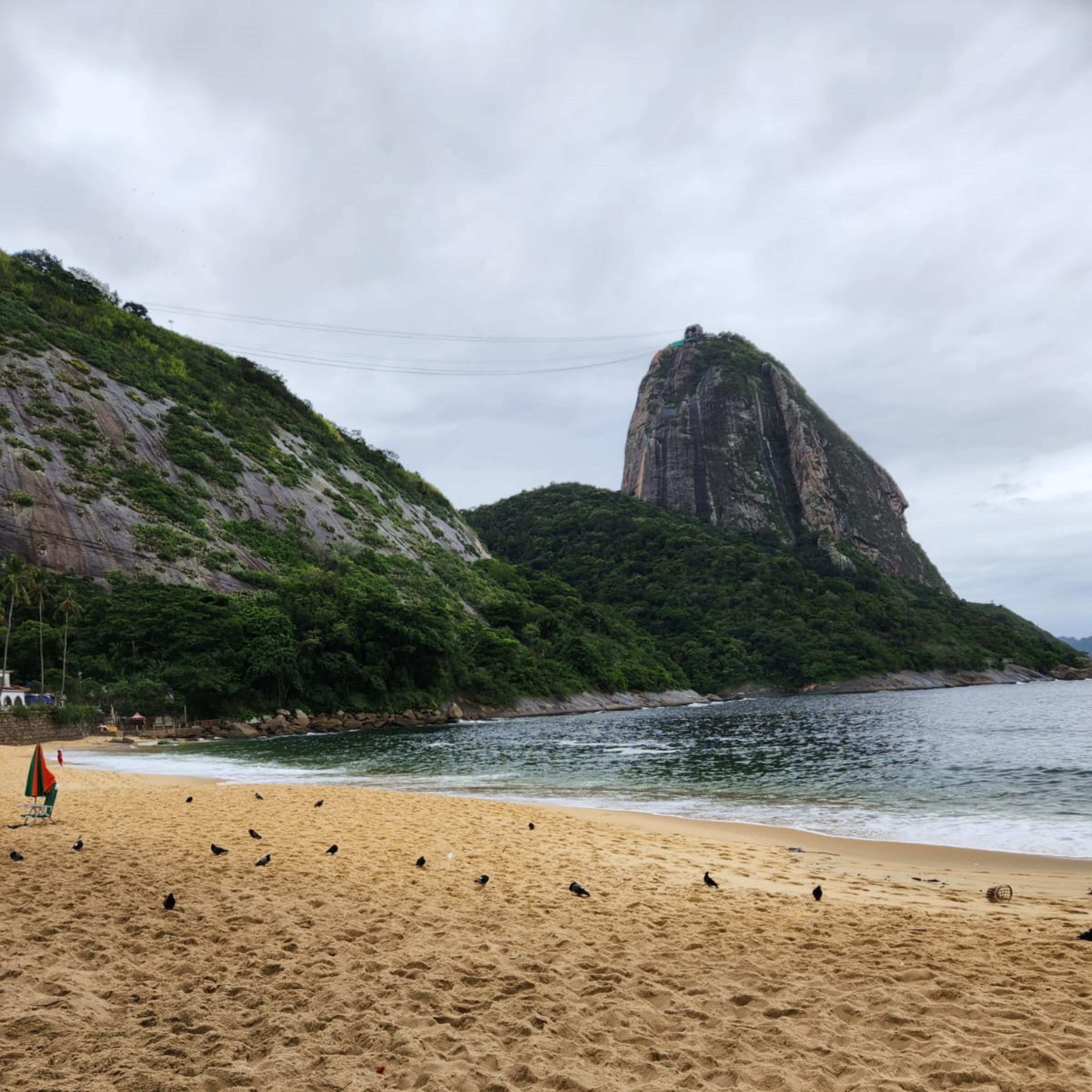
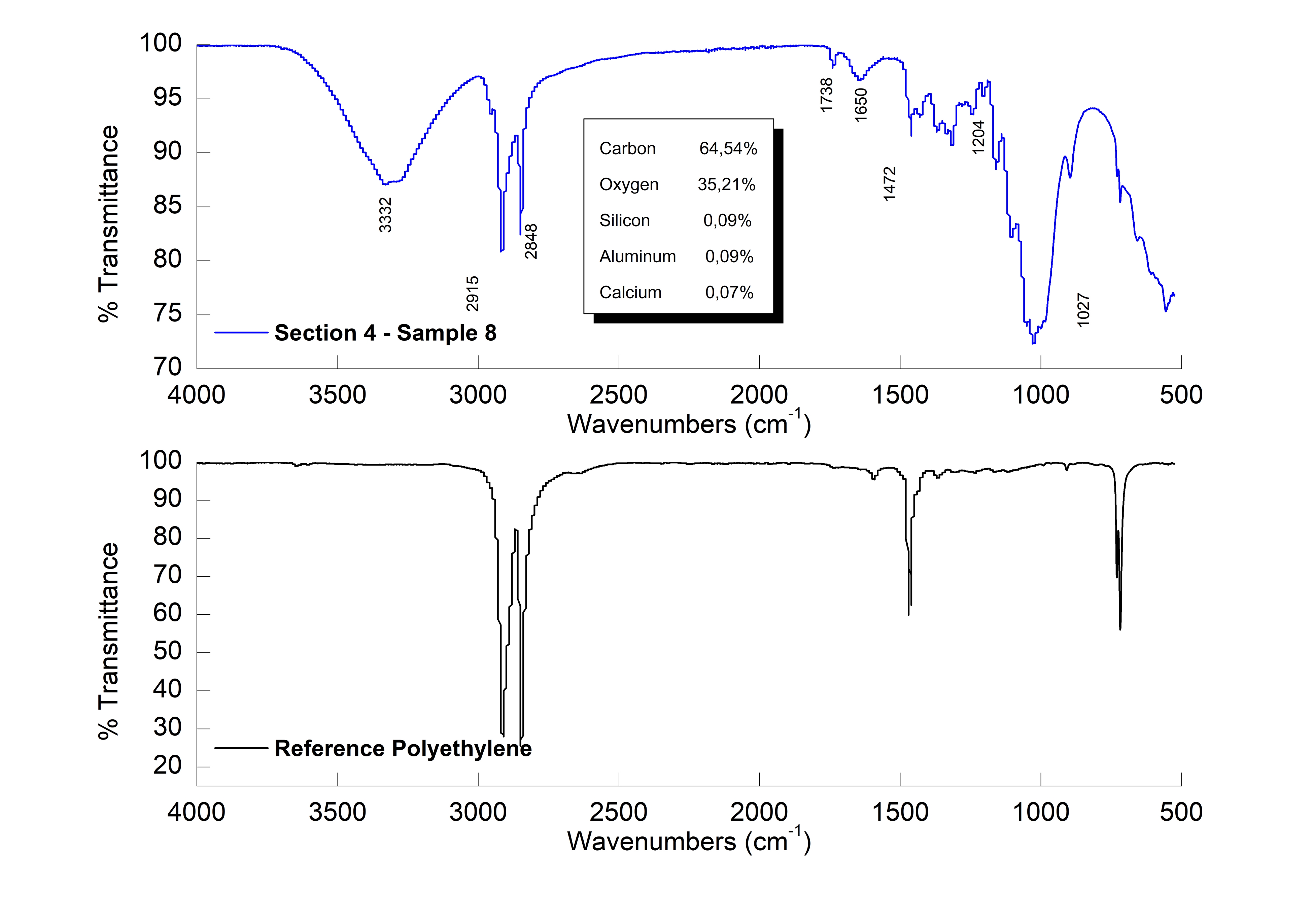
The methodology implemented in this study began with the selection of Praia Vermelha (RJ) as the study location (Figure 1), chosen for its high accessibility and relatively small size approximately 240 meters of sandy beach compared to other beaches in Rio de Janeiro (Kjerfve et al. 1997). Additionally, the site is near high-traffic restaurants and is located close to one of Brazil’s most famous tourist attractions: the cable car to Sugarloaf Mountain. The beach’s open access to the sea was also a factor, ensuring that microplastic deposition would not be influenced by human-made structures such as breakwaters.
The sampling protocol was implemented during spring, on December 12, 2023, at around 8:00 a.m. This date was chosen due to a maritime storm that occurred in early October 2023, when a cold front associated with an extratropical cyclone formed in the southern region and moved up the coast to São Paulo, affecting Rio de Janeiro (INMET 2023). We postulate that allowing a 14-day waiting period after the weather event reduces the presence of microplastics temporarily transported by strong currents and winds, thus avoiding contamination of samples with materials unrelated to long-term environmental impact. This waiting period ensures that microplastics deposited on the beach can be distinguished from recently transported fragments, ensuring analytical results are representative of post-storm conditions and minimizing interference from newly introduced materials. The protocol was implemented as a one-time immediate execution.
Following guidelines from Rocha International (2018), sampling collection was conducted along the high tide line on a day when no beach cleaning was performed, as the greatest microplastic deposition occurs during high tide. Samples were collected between 6:00 a.m. and 9:00 a.m., since tide levels were predicted to start rising again around 9:10 a.m. (Brazilian Navy 2023), with high tide times recorded at 2:17 a.m. (1.3 m) and 2:17 p.m. (1.1 m), and low tide times at 9:02 a.m. (0.3 m) and 9:00 p.m. (0.1 m).
Upon arrival at the sampling site, all relevant environmental conditions were observed. No significant variation in marine currents was noted. The water was clear, with good transparency and no noticeable odor. The entire sampling protocol was completed in approximately 1 hour and 30 minutes on a single day. Praia Vermelha exhibited a small to moderate presence of solid waste scattered along the sand strip at the high tide line.
The validation process included recording relevant information, demarcating the area, collecting samples, developing the flotation method, storing and transporting samples, processing them in the laboratory, applying sequential characterization techniques, and evaluating the results.
Although Rocha International (2018) addressed temporal variation in microplastic concentrations, this study differs by applying a standardized protocol for collection, treatment, and characterization of microplastics, focusing on minimizing external contamination and ensuring data reliability. Furthermore, this research integrates a detailed analysis of the impacts of weather events such as marine storms on the distribution of microplastics along the high tide line, adopting a more controlled and specific approach to polymer identification.
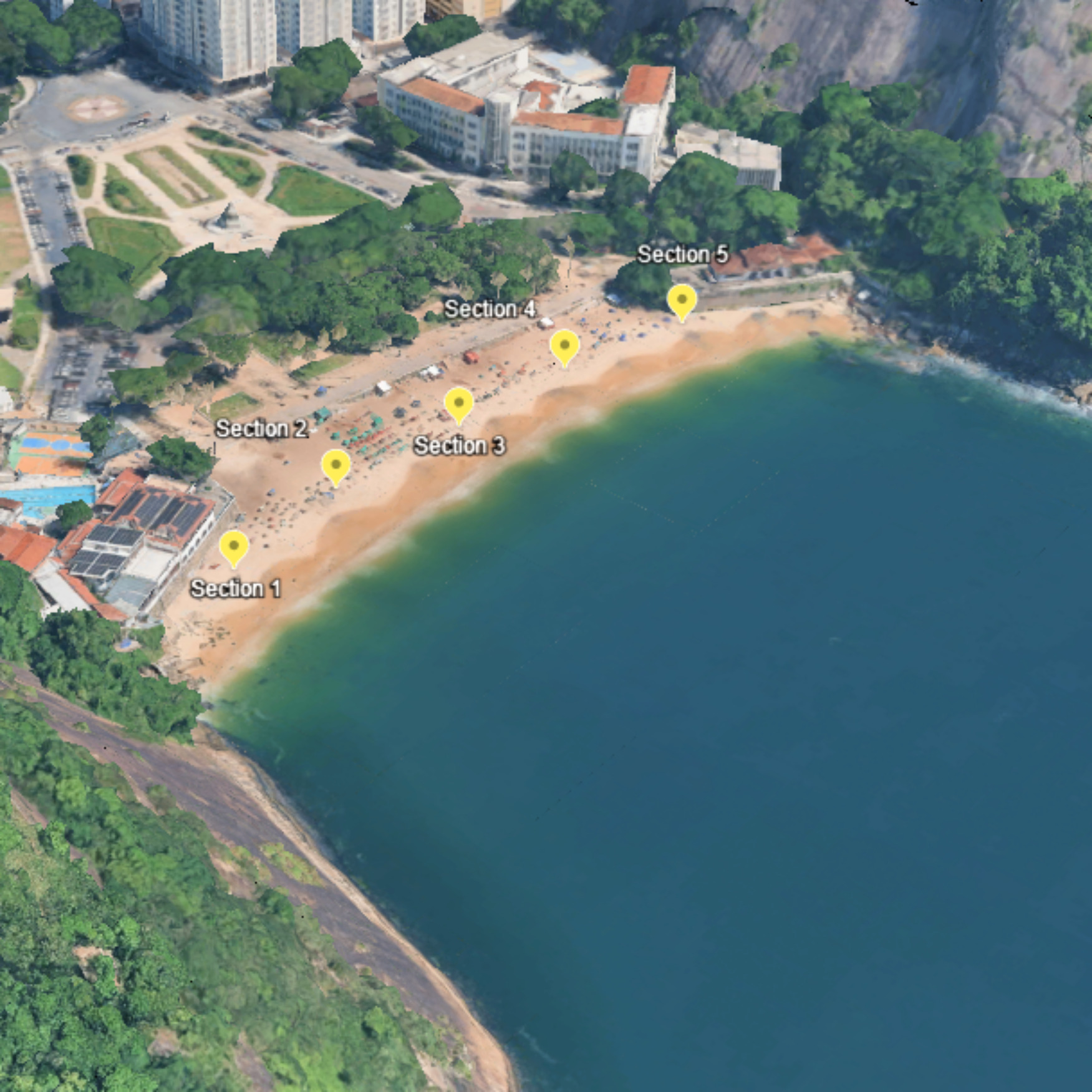
For area demarcation, five sections measuring 50 cm × 50 cm were selected and marked along the coastline, corresponding to the high tide line, across the 240-meter beach stretch. To determine the high tide times, an online consultation with the Brazilian Navy was conducted, which provided the specific days and times for sample collection (Brazilian Navy 2023).
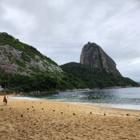
Each 50 cm × 50 cm section represents a sampling unit, defined as a specific area from which sand is collected to analyze microplastic contamination. The five points were marked from south to north using GPS coordinates, with the positions randomly determined by an electronic number generator. The five established sections were marked along the high tide line and indicated with wooden stakes, as illustrated in Figure 2. If a randomly generated position was less than 8 meters from an existing section, a new position was generated to maintain adequate spacing.

To avoid contamination by microplastics floating in seawater used on-site, the seawater was filtered prior to use. This filtration was performed by drawing 20 liters of seawater into a metal bucket and pouring it through a voile fabric filter into another bucket, effectively removing plastic particles. The filtered water was subsequently used in the flotation method, sieve washing, and cleaning of other equipment.
Sediment Sample Collection and Sieving
Following area demarcation and water filtration, sampling was initiated at each section. Using metal shovels, sand was collected to a depth of 5 cm, measured with a metal ruler placed flat on the sand surface, disregarding any peaks or depressions caused by human activity. To maintain consistent depth, a 5 cm trench was first dug along one side of each square section, followed by the adjacent sides, forming an L-shape.
After collecting sand into metal buckets, the flotation process was initiated to separate microplastics. Filtered water was added to the buckets containing sand, which was then manually agitated vigorously for 4 minutes. Each 50 cm × 50 cm section’s sand was subdivided into three parts to ensure the volume of sand remained less than the volume of water during flotation.
During flotation, microplastics floated to the surface due to their density differences. Denser microplastics did not float and remained in the sandy matrix due to gravitational settling, these were subsequently recovered by sieve filtration. Surface residues were poured onto a sequence of sieves with mesh sizes of 2.35 mm and 0.85 mm, allowing particles between these sizes to be collected in glass containers using a metal spoon and tweezers. These containers were labeled according to their section number for transportation to the laboratory.
This collection protocol was applied to all five selected sections along Praia Vermelha beach. To minimize contamination by fibers from clothing, sampling was performed while facing away from the wind. All particles smaller than 0.85 mm, including sand passing through the sieves, were disregarded. After completing on-site sampling, the laboratory phase commenced.
Although sampling occurred during a specific morning window (6 a.m. to 9 a.m.) to standardize tidal influence, this preliminary study did not aim to analyze temporal variations in microplastic concentrations based on time of day. Consequently, no statistical comparisons were made between different time periods. The sampling protocol was designed to minimize variability by controlling environmental factors such as tidal stage, weather conditions, and human activity.
Laboratory Treatment
Immediately after sampling, sediment samples stored in containers were transported to the laboratory for processing. Following the protocol, 70 ml of distilled water was added to each transport container to initiate the first washing of collected microplastics (MPs). Using tweezers, MPs were picked from these containers and transferred into wide-mouth glass jars containing 200 ml of double-distilled water for a second wash. Subsequently, MPs were transferred again into 100 ml Erlenmeyer flasks containing 100 ml of double-distilled water.
All flasks were placed on a magnetic stirring plate set at 70 rpm for 24 hours. Before and after handling samples from each section, all equipment was cleaned three times with distilled water. The drying oven was preheated and maintained at 46°C for 24 hours prior to drying samples. After magnetic stirring, MPs underwent filtration using a Buchner funnel and filter paper. MPs retained on the filter were transferred to glass Petri dishes and dried in an oven at 60°C for 24 hours.
Samples were then manually organized on Petri dishes by section of origin and photographed. Numbering followed an arbitrary pattern for identification.
Characterizations
Optical Microscopy Analysis
Optical microscopy was performed using an Olympus BX50 microscope at 10× magnification. A Mitutoyo caliper ruler (Model 530-212) was micrographed under the same conditions for calibration purposes. The ruler’s markings were used to calibrate the pixel-to-millimeter conversion process in the ImageJ software (version 1.46r).
Longitudinal (L) and transverse (T) dimensions of the samples were measured with two significant figures, and their average was expressed as the mean Feret Diameter (DFM):
Only samples with a Feret Diameter (DFM) ≤ 5.5 mm were considered microplastics (Castañeta et al. 2020). Given the morphological variability observed in the analyzed samples and the inherent limitations of image-based analysis, a technical margin of 0.5 mm above the traditional 5 mm threshold was adopted. Thus, particles with a Feret diameter up to 5.5 mm were included in the dataset to avoid excluding fragments exhibiting physical and environmental characteristics consistent with microplastics. Other samples were not discussed in detail, only their optical microscopy images are presented in Appendix B. Microplastic-related data were plotted and processed using Origin software (v. 8.5, OriginLabs).
The first technique employed was optical microscopy, aimed at determining whether the fragments were microplastics or other materials.
Exclusion and Selection of Microplastics
Microplastics with a DFM greater than 5.5 mm were deliberately excluded to ensure accuracy. An additional selection step based on diameter analysis was implemented, resulting in the exclusion of samples classified as macroplastics.
Fourier-Transform Infrared Spectroscopy (FTIR)
FTIR analyses were performed using a Nicolet iS5 spectrometer (Thermo Fisher Scientific) in attenuated total reflectance (ATR) mode with a diamond crystal. The chemical structures of microplastics collected from the sections were analyzed over a wavenumber range of 500–4000 cm⁻¹, with a resolution of 4 cm⁻¹ and 50 scans per sample.
Scanning Electron Microscopy (SEM) Analysis
SEM analyses were carried out using a TESCAN MIRA 4th generation LMU system operating in Low Vacuum Mode Uni Vac TM 1 (700 Pa), equipped with a Schottky field emission gun (FEG).
Energy Dispersive Spectroscopy (EDS) Analysis
Elemental composition was determined by EDS using a 30 mm² Si₃N₄ window with a resolution below 129 eV for the MnKα emission line. Samples were mounted on copper stubs with double-sided carbon tape and coated with a thin gold layer.
RESULTS AND DISCUSSION
Optical Microscopy Analysis
Based on optical microscopy images and mean Feret diameters (DFM), the types, colors, and sizes of microplastics in each section were analyzed. Tables I to V summarize the results for samples with DFM ≤ 5.5 mm. A total of 32 particles were identified: 1 in section 1, 5 in section 2, 13 in section 3, 8 in section 4, and 5 in section 5.
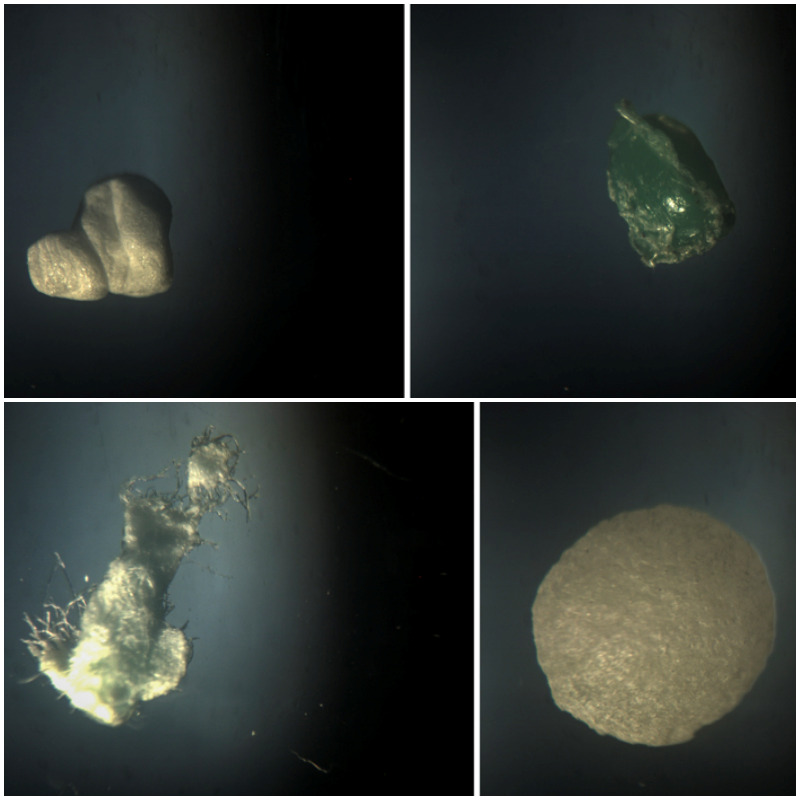
Visual classification of MPs followed the methodology described by Rocha International (A), which guided the identification of microplastic types in the samples. Figure 3 illustrates various MP morphologies identified, including foam (expanded polystyrene), fragment, filament, and pellet, respectively. Foam (expanded polystyrene) was the predominant morphology.
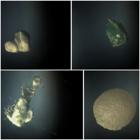
Visual classification of the different MP forms through optical microscopy (OM), showing foam (expanded polystyrene), fragment, filament, and pellet, respectively.
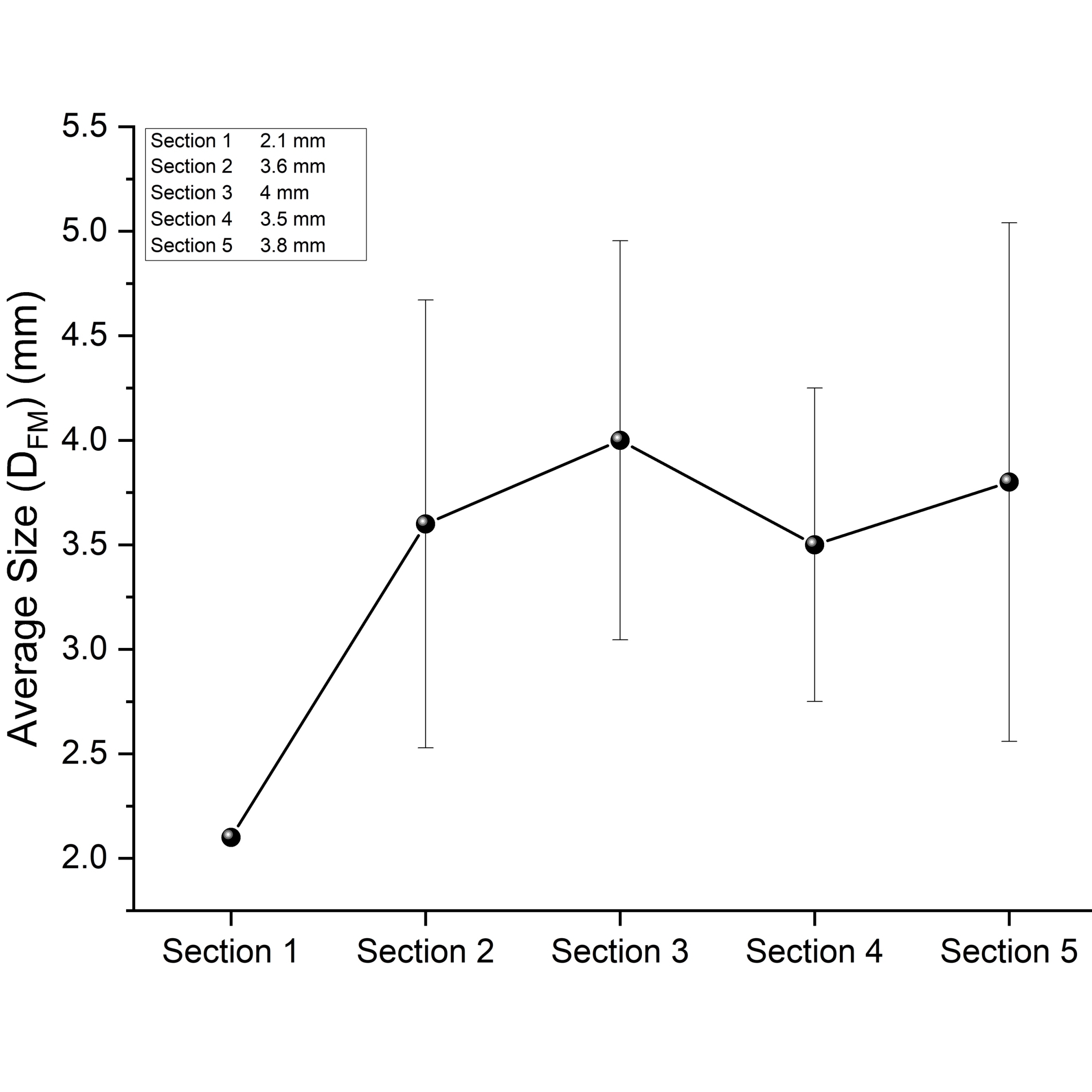
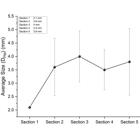
Mean DFM values were calculated for all MP samples. No MPs with DFM below 1 mm were detected. Average diameters per section were as follows: 2.1 mm in section 1, 3.6 mm in section 2, 4.0 mm in section 3, 3.5 mm in section 4, and 3.8 mm in section 5. Figure 4 shows the average sizes and standard deviations of the MPs identified in the sections.
Foam-type MPs were found in all sampled sections, representing a common morphology. Fragment type was the second most frequent, followed by filaments. Pellet morphology was the least observed.
During the analysis, some fragments were identified as silica or microorganisms. It presents the optical microscopy image of sample 7 from Section 4. Subsequently, FTIR analysis was performed on this fragment to identify the base polymer type of the microplastic.
The absorption band at 3442 cm⁻¹ indicates the formation of hydroxyl groups (Shah & Garg 2020), while the bands at 2913 and 2846 cm⁻¹ correspond to axial vibrations of CH groups (Jung et al. 2018). A broad, low-intensity band centered around 1644 cm⁻¹ is associated with ester carbonyl groups, likely arising from material degradation (Zhao et al. 2020). Bands between 1000 and 1100 cm⁻¹ indicate the presence of C–O bonds. Additionally, bands at 1471 and 729 cm⁻¹ correspond to in-plane and out-of-plane angular vibrations of CH₂ bonds (Jung et al. 2018), confirming that this microplastic originates from polyethylene.
Energy Dispersive Spectroscopy (EDS) analysis revealed the elemental composition supporting the FTIR data. The detection of oxygen related to hydroxyl, carbonyl, and C–O groups suggests moisture absorption and degradation processes.
A similar analysis was performed on sample 8 from Section 4 (Figure 5). The FTIR spectrum showed a high-intensity hydroxyl band at 3332 cm⁻¹ and CH group vibrations at 2915 and 2848 cm⁻¹, consistent with polyethylene. Bands at 1738 and 1650 cm⁻¹ were assigned to ketone and ester carbonyl groups, respectively, indicating degradation. Additional broad bands between 1472 and 1204 cm⁻¹ suggested altered chemical interactions due to extensive degradation. The strong band at 1027 cm⁻¹ corresponded to C–O bonds, reinforcing the degradation assessment. EDS corroborated these findings, confirming moisture absorption and oxidative degradation.
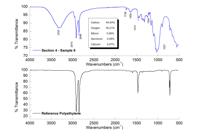
Sample 3 from Section 4 exhibited absorption bands between 3081 and 2848 cm⁻¹, characteristic of CH vibrations. Decreased intensity in bands at 1600, 1492, 1451, and 753 cm⁻¹ likely reflects changes in material interactions, signaling early degradation. The broadening of the 1027 cm⁻¹ band further supports this. These spectral features are characteristic of polystyrene microplastics due to the aromatic ring structure (Jung et al. 2018, Campanale et al. 2023). EDS revealed oxygen presence consistent with moisture absorption and early degradation.
Sample 4 from Section 5 showed similar FTIR features, with bands indicating polystyrene and signs of degradation, supported by EDS analysis confirming oxygen content and degradation onset.
Sample 1 from Section 5 showed FTIR bands indicative of polypropylene: hydroxyl formation and CH vibrations at 2948, 2915, 2865, and 2836 cm⁻¹. An intense, broad band near 1591 cm⁻¹ was associated with degradation-related chemical changes (Jung et al. 2018, Campanale et al. 2023, Song et al. 2017). EDS confirmed oxygen presence, consistent with degradation and fragmentation.
Sample 4 from Section 2 also corresponded to polypropylene microplastic, showing hydroxyl group formation (3299 cm⁻¹), CH vibrations, ester carbonyl formation (~1651 cm⁻¹), and C–O bond changes (1303–808 cm⁻¹) (Fotopoulou & Karapanagioti 2017). Band intensity decreases at 1461 and 1375 cm⁻¹ indicated material degradation. EDS confirmed oxygen presence.
Overall, polyethylene-derived microplastics exhibited the highest degree of degradation, evidenced by pronounced hydroxyl, carbonyl, and C–O group bands.
Initial optical microscopy verified microplastic presence, capturing size, shape, and color for validation. Inorganic and organic fragments of natural origin were excluded, focusing on anthropogenic microplastics, which enter the environment through industrial discharge, improper disposal, urban runoff, fishing, and wastewater effluents.
Samples larger than 5.5 mm were excluded. Color was noted, as it can influence ingestion by marine fauna and affect the food chain (Shah et al. 2008).
The predominant microplastic morphology was ‘foam’ (expanded polystyrene), reflecting the widespread use of polystyrene foam packaging, especially for food. White coloration dominated, consistent with typical expanded polystyrene. Observed discolorations likely resulted from environmental weathering.
The ‘fragment’ category likely includes mechanically deformed foam particles unable to regain their expanded shape.
FTIR and EDS results indicated polystyrene-based microplastics are less susceptible to chemical degradation, suggesting fragmentation dominates their environmental breakdown. Polypropylene-derived microplastics exhibited spectral changes linked to chemical degradation.
FTIR analysis across all sections revealed polystyrene (PS) as the dominant polymer, representing ~70% of total microplastics, consistent with common packaging materials. Section 3, near a main beach entrance and food stall, showed the highest PS concentration.
Distribution by section:
Section 1: 1 PS
Section 2: 3 PS, 1 PE, 2 PP
Section 3: 10 PS, 2 PE, 1 PP
Section 4: 6 PS, 2 PE
Section 5: 3 PS, 1 PE, 1 PP
Polyethylene (PE) and polypropylene (PP) accounted for ~18% and ~12%, respectively, consistent with sources such as films, bags, cups, and bottle caps.
CONCLUSIONS
This study effectively demonstrated the implementation of a standardized protocol for the collection, treatment, and characterization of microplastics in the sands of Praia Vermelha, Rio de Janeiro. The results highlighted the robustness of the proposed methodology, which not only enabled precise identification of microplastics but also revealed the extent of the environmental issue associated with improper plastic waste disposal.
The successful application of the flotation method confirmed its efficacy in recovering microplastics, while the laboratory treatment of samples through rigorous cleaning and controlled drying ensured the accuracy and reliability of the results. The exclusion of particles larger than 5.5 mm and the analysis of 32 samples collected from different sections of the beach provided a clear overview of the distribution and composition of the identified microplastics.
Optical microscopy revealed that foam was the predominant microplastic morphology, with sample diameter variation reflecting a broad size range. FTIR analysis identified polystyrene (PS) as the most common polymer base, confirming that disposable products such as styrofoam packaging constitute a significant source of pollution.
Compared to previous studies, this work underscores the importance of standardized collection and analytical methods, providing a solid foundation for future assessments at both regional and global scales. Furthermore, it emphasizes the urgent need for preventive and management strategies to reduce the influx of microplastics into coastal and marine ecosystems. Public awareness and education are crucial to drive initiatives aimed at reducing and reusing plastic products, highlighting the necessity for decisive action to confront this imminent environmental challenge.
This study serves as a call to action, stressing the importance of sustainable practices and effective policy implementation to mitigate the impact of microplastics on coastal and marine environments.
References
- AGÊNCIA SENADO. 2025. Senado analisa projeto para eliminar plásticos descartáveis. Senado Notícias.
- ANDRADY AL. 2011. Microplastics in the marine environment. Mar Pollut Bull 62: 1596-1605.
-
BESLEY A, VIJVER MG, BEHRENS P, BOSKER TA. 2017. A standardized method for sampling and extraction methods for quantifying microplastics in beach sand. Mar Pollut Bull 114: 77-83. DOI:10.1016/j.marpolbul.2016.08.055.
» https://doi.org/10.1016/j.marpolbul.2016.08.055 - BISSEN R & CHAWCHAI S. 2020. Microplastics on beaches along the eastern Gulf of Thailand – A preliminar Study. Marine Pollut Bull 157: 111345.
-
BRAZILIAN NAVY. 2023. Tabua de maré. Available in: https://www.marinha.mil.br/chm/sites/www.marinha.mil.br.chm/files/dados_de_mare/41-porto_do_rio_tabua_2023_0.pdf
» https://www.marinha.mil.br/chm/sites/www.marinha.mil.br.chm/files/dados_de_mare/41-porto_do_rio_tabua_2023_0.pdf -
CAMPANALE C, SAVINO I, MASSARELLI C & URICCHIO VF. 2023. Espectroscopia de infravermelho com transformada de Fourier para avaliar o grau de alteração de microplásticos envelhecidos artificialmente e intemperizados ambientalmente. Polímeros 15(4): 911. DOI:https://doi.org/10.3390/polym15040911.
» https://doi.org/10.3390/polym15040911 - CASTAÑETA G, GUTIÉRREZ AF, NACARATTE F & MANZANO CA. 2020. Microplásticos: un contaminante que crece en todas las esferas ambientales, sus características y posibles riesgos para la salud pública por exposición. Rev Boliv Quím 37(3): 160-175.
- CASTRO RO, SILVA ML, MARQUES MRC & ARAÚJO FV. 2020. Spatio-temporal evaluation of macro, meso and microplastics in surface waters, bottom and beach sediment soft woembayments in Niterói, RJ, Brazil. Mar Pollut Bull 160: 111537.
- CHAKRABORTY I, BANIK S, BISWAS R, YAMAMOTO T, NOOTHALAPATI H & MAZUMDER N. 2022. Raman spectroscopy for microplastic detection in water sources: a systematic review. Int J Environ Sci Technol 20: 10435-10448.
-
COSTA MF, IVAR DO SUL JA, SILVA-CAVALCANTI JS, ARAÚJO MCB, SPENGLER Â & TOURINHO PS. 2010. On the importance of size of plastic fragments and pellets on the strandline: A snapshot of a Brazilian beach. Environ Monit Assess 168: 299-304. DOI: 10.1007/s10661-009-1113-4.
» https://doi.org/10.1007/s10661-009-1113-4 - DEBROAS D, MONE A & HALLE AT. 2017. Plastics in the North Atlantic garbage patch: A boat-microbe for hitchhikers and plastic degraders. Sci Total Environ 599-600: 1222-1232.
- DEY T. 2023. Microplastic pollutant detection by Surface Enhanced Raman Spectroscopy (SERS): a mini-review. Nanotechnol Environ Eng 8: 41-48.
-
FDA - FOOD AND DRUGS ADMINISTRATION. 2022. The microbead-free water sact: faqs. https://www.fda.gov/cosmetics/cosmetics-laws-regulations/microbead-free-waters-act-faqs
» https://www.fda.gov/cosmetics/cosmetics-laws-regulations/microbead-free-waters-act-faqs -
FOTOPOULOU KN & KARAPANAGIOTI HK. 2017. Degradation of various plastics in the environment. Mar Environ Res 128: 162-171. DOI: 10.1016/j.marenvres.2016.06.002.
» https://doi.org/10.1016/j.marenvres.2016.06.002 - GERRITSE J, LESLIE HA, DE TENDER CA, DEVRIESE LI & VETHAAK AD. 2020. Fragmentation of plastic objects in a laboratory sea water microcosm. Sci Rep 10: 10945.
-
GOVERNMENT OF CANADA. 2018. Microbeads in toiletries regulations. https://laws-lois.justice.gc.ca/eng/regulations/SOR-2017-111/page-1.html#:~:text=(2)%20A%20person%20must%20not,or%20after%20July%201%2C%202019
» https://laws-lois.justice.gc.ca/eng/regulations/SOR-2017-111/page-1.html#:~:text=(2)%20A%20person%20must%20not,or%20after%20July%201%2C%202019 - IDRIS SN, AMELIA TSM, BHUBALAN K, LAZIM AMM, ZAKWAN NAMA, JAMALUDDIN MI, SANTHANAM R, AMIRUL AA, VIGNESWARI S & RAMAKRISHNA S. 2023. The degradation of single-use plastics and commercially viable bioplastics in the environment: A review. Environ Res 231: 115988-Part 1.
-
INMET. 2023. Eventos extremos: setembro/2023 foi marcado por chuva acima da média no Rio Grande do Sul e calor extremo. Available in: https://portal.inmet.gov.br/noticias/eventos-extremos-2
» https://portal.inmet.gov.br/noticias/eventos-extremos-2 -
JUNG MR ET AL. 2018. Validation of ATR FT-IR to identify polymers of plastic marine debris, including those ingested by marine organisms. Mar Pollut Bull 127: 704-716. DOI: https://doi.org/10.1016/j.marpolbul.2017.12.061.
» https://doi.org/10.1016/j.marpolbul.2017.12.061 - KJERFVE B, RIBEIRO CHA, DIAS GTM, FILIPPO AM & QUARESMA VS. 1997. Oceanographic characteristics of animpacted coast albay: baía de Guanabara, rio de janeiro, Brazil. Cont Shel Search 17(13): 1609-1643.
- KLEINTEICH J, SEIDENSTICKER S, MARGGRANDER N & ZARFL C. 2018. Microplastics Reduce Short-Term Effects of Environmental Contaminants. Part II: Polyethylene Particles Decrease the Effect of Polycyclic Aromatic Hydrocarbons on Microorganisms. Int J Environ Res Public Health 15(2): 287. doi: 10.3390/ijerph15020287.
- KOROTCHENKO M. 2021. Russia to fully ban single-use plastic products by 2024 – minister. The Moscow Times.
- LEBRETON L ET AL. 2018. Evidence that the Great Pacific Garbage Patch is rapidly accumulating plastic. Sci Rep 8: 4666.
- LENZ AR, ENDERSA K & NIELSEN TG. 2016. Microplastic exposure studies should be environmentally realistic. PNAS 113(29): E4121–E4122.
-
MARTINELLI FILHO JE & MONTEIRO RCP. 2019. Widespread microplastics distribution at an Amazon macrotidal sandy beach. Mar Pollut Bull 145: 219-223: DOI: 10.1016/j.marpolbul.2019.05.049.
» https://doi.org/10.1016/j.marpolbul.2019.05.049 - MAYNARD IFN, BORTOLUZZI PC, NASCIMENTO LM, MADI RR, CAVALCANTI EB, LIMA AS, JERALDO VLS & MARQUES MN. 2021. Analysis of the occurrence of microplastics in beach sand on the Brazilian coast. Sci Total Environ 771: 144777.
- OLIVATTO PG, CARREIRA R, TORNISIELO VL & MONTAGNER CC. 2018. Microplásticos: Contaminantes de Preocupação Global no Antropoceno. Revista Virtual de Química 10: 1968-1989.
-
OSUNA-LAVEAGA DR, OJEDA-CASTILLO V, FLORES-PAYÁN V, GUTIÉRREZ- BECERRA A & MORENO-MEDRANO ED. 2023. Micro and nanoplastics current status: legislation, gaps, limitations and socio-economic prospects for future. Front Environ Sci 11: https://doi.org/10.3389/fenvs.2023.1241939.
» https://doi.org/10.3389/fenvs.2023.1241939 -
ROCHA INTERNATIONAL A. 2018. Guidelines for Sampling Microplastics on Sandy Beaches. https://www.arocha.org/wp-content/uploads/2018/01/Microplastic-sampling-protocol.pdf
» https://www.arocha.org/wp-content/uploads/2018/01/Microplastic-sampling-protocol.pdf - SHAH AA, HASAN F, HAMEED A & AHMED S. 2008. Biological degradation of plastics: A comprehensive review. Biotechnology Advances 2: 246–265.
-
SHAH V & GARG A. 2020. FTIR spectroscopy analysis of microplastics and degradation products. Materials Today: Proceedings 28: 1214-1218. DOI: 10.1016/j.watres.2018.05.060.
» https://doi.org/10.1016/j.watres.2018.05.060 - SONG YK, HONG SH, JANG M, HAN GM, JUNG SW & SHIM WJ. 2017. Combined Effects of UV Exposure Duration and Mechanical Abrasion on Microplastic Fragmentation by Polymer Type. Environ Sci Technol 18,51(8): 4368-4376. DOI: 10.1021/acs.est.6b06155.
- STERL MF, DELANDMETER P & SEBILLE EV. 2020. Influence of barotropictidal currents on transport and accumulation of floating microplastics in the global open ocean. J Geophys Rese Oceans 125(2): e2019JC015583.
-
TURRA A, MANZANO AB, DIAS RJ, MAHIQUES MM, BARBOSA L, BALTHAZAR-SILVA D & MOREIRA FT. 2014. Three-dimensional distribution of plastic pellets in sandy beaches: Shift. Mar Pollut Bull 78(1-2): 55-60. DOI: 10.1038/srep04435.
» https://doi.org/10.1038/srep04435 - ZEENAT, ELAHI A, BUKHARI DA, SHAMIM S & REHMAN A. 2021. Plastics degradation by microbes: A sustainable approach. J King Saud Univ Science 33(6): 101538.
- ZHAO S, WARD JE, DANLEY M & MINCER TJ. 2020. Field-based evidence for microplastic in marine aggregates and mussels: implications for trophic transfer. Environ Sci Technol 54(5): 2873-2883.
- ZHU H. 2022. EU officially released a draft restricting the use of microplastics in cosmetics. CIRS. DOI: 10.1016/j.matpr.2020.05.41.