 Phylogenetic insights into the genus Scytonema Bornet et Flahault (Cyanobacteria): A 16S rRNA gene review with the taxonomic assessment of S. schmidtii Gomont
Abstract
This study aims to reevaluate the diversity of 16S rRNA gene sequences associated with Scytonema (Nostocales, Cyanobacteria). For that, we first conducted a search for ‘Scytonema’ sequences available in GenBank (NCBI) and aligned the results with reference strains from other Nostocales genera. The alignment totalized 383 OTUs and 800 nucleotide positions analyzed. A FastTree phylogenetic analysis revealed that the ‘Scytonema’ sequences are distributed across 15 distinct clades in addition to the Scytonema sensu stricto clade. These additional clades are positioned among Nostocales genera and phylogenetically distant from the type species, S. hofmanni. Within these clades, we had access to the strain Scytonema sp. CCIBt3568, identified as S. schmidtii, which we believe should be separated from Scytonema, and described as a new genus in the future. Additionally, Bayesian Inference and Maximum Likelihood phylogenies were performed with 97 OTUs and 971 bp, and the polyphyletic status of Scytonema as currently recognized was confirmed.
Keywords:
biodiversity; Nostocales; polyphasic approach; Scytonema; taxonomical review; tropical environments
Introduction
Cyanobacteria are the most morphologically diverse group among prokaryotes. They are the only bacteria capable of performing oxygenic photosynthesis, and the cyanobacterial heterocytous forms possess a remarkable ability to convert atmospheric nitrogen and ammonia into nitrate (Whitton & Potts 2012). This capability grants the group significant economic importance, particularly in agriculture, where cyanobacteria can be utilized as biofertilizers (Whitton & Potts 2012; Hentschke & Gama, 2022).
Among these heterocytous forms, the genus Scytonema Bornet & Flahault is an important component of biodiversity in tropical and subtropical regions (Komárek et al., 2013). Species within this genus grow in various habitats, including terrestrial environments (on tree bark, rocks, soils, and artificial surfaces like concrete walls or monuments), as well as freshwater and marine substrates (Komárek, 2013; Hentschke & Komárek, 2014). These populations can form dense mats, often coexisting with other cyanobacteria, but sometimes occurring in near-isolation conditions (Komárek et al., 2013).
The genus was originally described by Bornet & Flahault (1887) to encompass cyanobacterial species characterized by isopolar heterocytous filaments with an entangled arrangement and false branching. Subsequently, numerous classical studies, such as Gardner (1927), Geitler (1932), and Desikachary (1959) for instance, have described numerous species and documented a wide diversity within this genus, especially in tropical and subtropical regions of the Americas, Africa, and Europe. These studies employed a morphological approach and were highly effective in documenting the extensive diversity of morphotypes within the genus.
With the introduction of molecular approaches, particularly the phylogenies based on the 16S rRNA gene, several divergent clades of strains that were morphologically identified as ‘Scytonema’ began to emerge. These clades were found to be phylogenetically distant from the clade containing the type species, S. hofmanni Bornet & Flahault (Fiore et al., 2007). This is exemplified by the description of the genus Brasilonema Fiore et al., which is both phylogenetically and morphologically distinct from Scytonema. Brasilonema exhibits a parallel arrangement of filaments and rare false branching, whereas Scytonema filaments are entangled and commonly false-branched. These characteristics are consistent and can be employed to differentiate between these taxa (Fiore et al., 2007).
After the description of Brasilonema, the initial effort to assess the molecular diversity of Scytonema was conducted by Komárek et al. (2013), which included 14 sequences from strains classified within the genus. The results of this study revealed the presence of three additional clades alongside the type species clade, S. hofmanni (Komárek et al., 2013). Although no new genera were proposed at that time due to limited data, it is now apparent that all these additional clades may indeed correspond to new cryptic genera, warrantying future descriptions. For example, the strain Scytonema sp. CCIBt3568 is sister to Scytonema sp. HA4185-MV1 and both are placed in a clade phylogenetic related to Brasilonema, although with weak bootstrap support. Both strains are terrestrial, sampled from wet walls in the State Park of Ilha do Cardoso (São Paulo Brazil) and Hawaii, respectively (Komárek et al., 2013).
After that, numerous 16S rRNA gene sequences from strains that were morphologically identified as ‘Scytonema’ were subsequently added to public databases like GenBank (NCBI). As a result, additional clades containing ‘Scytonema’ strains began to emerge in phylogenies related to Nostocales (Johansen et al., 2017; Mcgregor & Sendall, 2017; Sendall & McGregor, 2018).
Based on these data, in addition to the recognition of Brasilonema, two other scytonematoid genera have been segregated from Scytonema: IningainemaMcGregor & Sendall and Heteroscytonema McGregor & Sendall (McGregor & Sendall, 2017; Sendall & McGregor, 2018). The genus Iningainema exhibits both phylogenetic and morphological differences when compared to Scytonema. Iningainema features attenuated trichomes with branches that initially grow in parallel within the sheaths, whereas Scytonema is not attenuated, and its branches soon break the sheaths at right angles to the trichome (McGregor & Sendall, 2017). On the other hand, the genus Heteroscytonema shares morphological similarities with Scytonema, but is phylogenetically distant and is currently classified in the Heteroscytonemataceae family (McGregor & Sendall, 2017; Sendall & McGregor, 2018).
Another significant study regarding the genus Scytonema was conducted by Johansen et al. (2017). This study also confirmed the polyphyletic nature of Scytonema and yielded intriguing results. The authors identified strains labeled as S. hyalinum Gardner within two distinct clades simultaneously. This occurrence is attributed to the presence of two different types of 16S-ITS-23S rRNA operons in these strains, resulting in their ambiguous phylogenetic positioning (Johansen et al., 2017).
Despite these significant contributions, numerous clades containing ‘Scytonema’ sequences have remained unclassified. Therefore, our study seeks to reassess the phylogenetic placement of these ‘Scytonema’ sequences available in NCBI. We have observed that many of these sequences form clades within the Nostocales genera, which are phylogenetically distant from the type species S. hofmanni. Within these clades, we had access to the strain Scytonema sp. CCIBt3568, which we believe should be separated from Scytonema, and described as a new genus in the future, when better-resolved phylogenies become available.
Materials and Methods
Sampling and isolation of the strain
The strain Scytonema sp. CCIBt3568 was isolated from a sample collected by scraping a cyanobacterial mat on a concrete wall, in State Park of Ilha do Cardoso, São Paulo, Brazil (25º04’08’ S, 47º55’88’ W), in June 2010. This strain is the same as that studied morphologically and genetically by Komárek et al. (2013). The culture medium used for isolation and maintenance of the strain was BG-11 nitrogen-free (Rippka et al., 1979). The strains were maintained under a 14 h:10h (light:dark) cycle with white fluorescent light (30 μmol photons.m-2.s-1), at a temperature of 23 (±2) °C, and held in the Culture Collection of the Instituto de Pesquisas Ambientais, São Paulo, Brazil.
Part of the environmental sample was preserved in formaldehyde 4% and deposited in 2010 in the Herbarium Maria Eneyda Pacheco Kauffmann Fidalgo, Instituto de Pesquisas Ambientais, São Paulo State, Brazil (SP401438).
Light microscope analysis
The strain Scytonema sp. CCIBt3568 was observed and photographed under a Leica DMLB microscope, in 2010. Measurements of 40 cells were performed using a dedicated software (Leica LAS EZ; Leica Microsystems). The morphological characters observed were the arrangement of filaments, the presence of false branching, the presence of sheaths and their ornamentation and colors, the attenuation of trichomes, the shape of cells, the presence of heterocytes, and measurements of vegetative cells, heterocytes, and filaments.
16S rDNA gene sequences review
In order to locate the 16S rRNA gene sequences of strains identified as Scytonema archived in GenBank (NCBI), we employed the operator ‘((Scytonema) AND (16S))’ on the NCBI website (https://www.ncbi.nlm.nih.gov/). To enhance the subsequent alignment and phylogenetic analyses, we filtered the sequences by selecting those encompassing a minimum of 1,000 nucleotide positions as detailed in Figure S1 and Table S1. Sequences obtained from Shotgun sequencing approaches were excluded due to their shorter or fragmented nature, as indicated by alignment tests that we conducted (Figure S1). Also, the exclusion criterion was applied to all sequences that could not be adequately aligned. The search was performed on September 18th, 2023.
Phylogenetic analysis
The final dataset comprised 383 Operational Taxonomic Units (OTUs), encompassing a set of sequences that consisted of our 256 results from the query, in addition to 127 sequences of reference strains from other Nostocales genera. The phylogenetic inference was based on the analysis of an 800 bp matrix. The Nostocales reference strains were retrieved from the original descriptions of cyanobacterial genera, as well as from resources such as Cyanoseq (Lefler et al., 2023) and the review of Strunecký et al. (2023).
For sequence alignment, MAFFT (Katoh et al., 2002) was employed, and the optimal evolutionary model, GTR, was selected using MEGA11, considering the AIC criterium (Tamura et al., 2021). The phylogenetic reconstruction was conducted using the FastTree method (Price et al., 2009), with a bootstrap value set by default to 1,000, according to the manual. The command used to run the phylogenetic analysis was ‘FastTree -gtr -nt alignment_file > tree_file’. The tree was edited using iTOL (Letunic & Bork, 2021). The resulting phylogenetic tree is referred to in the text as FastTree analysis.
Additionally, to confirm the phylogenetic position of Scytonema sp. CCIBt 3568, we built two smaller phylogenetic trees using Maximum Likelihood (ML) and Bayesian Inference (BI) methods. These phylogenetic inferences comprised 97 OTUs and a 971 bp matrix. Moreover, from this dataset, a similarity matrix (p-distance) was calculated using the Maximum Composite Likelihood substitution model in MEGA11.
The robustness of the ML tree was estimated by bootstrap percentages, using 1,000 replications using IQ-Tree online version v1.6.12 (Trifinopoulos et al., 2016). Bayesian Inference analysis was carried out in MrBayes version 3.2 (Ronquist et al., 2012) in Cipres Gateway (Miller et al., 2010) in two independent runs with four chains each for 5 x 10⁶ generations. The burn-in fraction was set to 0.25 and the sampling frequency was each 1,000th generation. The average standard deviation of split frequencies of BI phylogenetic analysis was <0.01. For these phylogenies, the optimal evolutionary model, GTR+G+I, was also selected using MEGA11 (Tamura et al., 2021).
The outgroup used in all phylogenies was Gloeobacter violaceus PCC 8105 (AF132791). From the study of Komárek et al. (2013), we obtained the reference strain of the genus, S. hofmanni PCC 7110 (AF132781).
The processing and visualization of the trees were made using FigTree v1.4.4 (http://tree.bio.ed.ac.uk/software/figtree/) and iTOL (Letunic & Bork, 2021).
Results
Light microscopy analysis
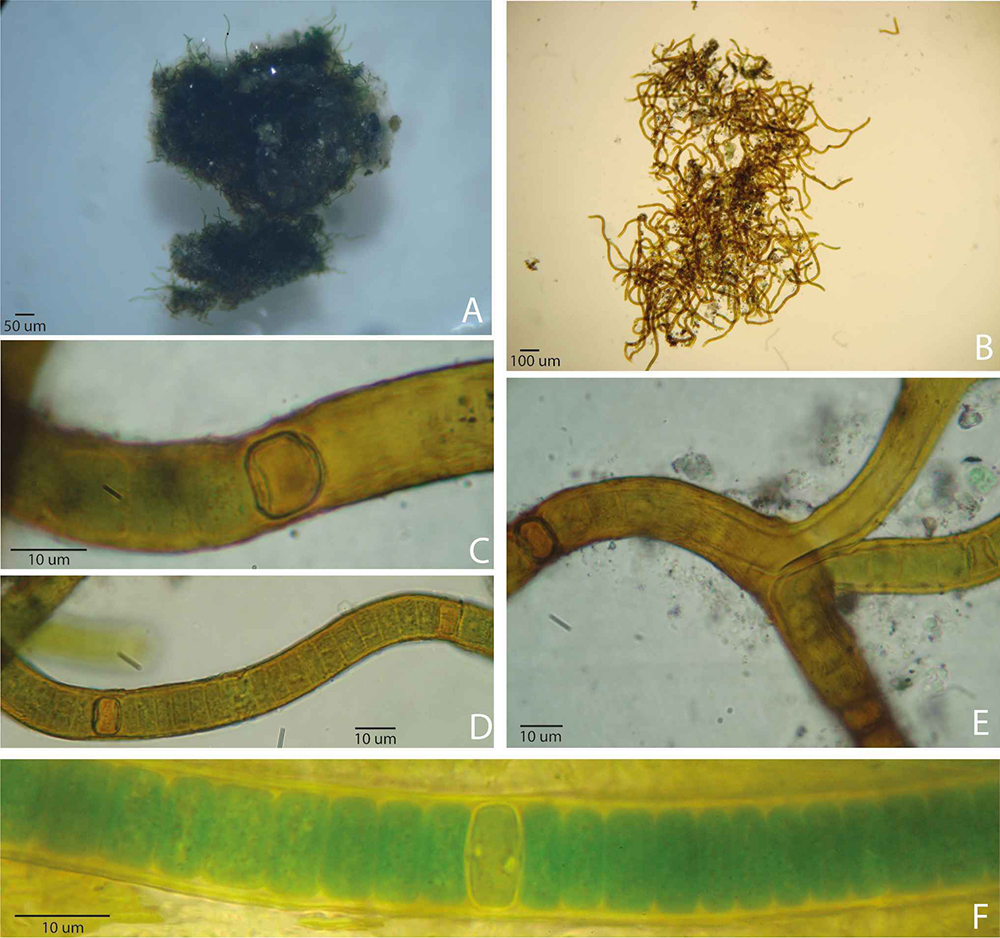
The natural population corresponding to the strain Scytonema sp. CCIBt3568, identified as S. schmidtii in Komárek et al. (2013), presents entangled filaments, with frequent double false branching; sheaths irregularly lengthwise structured; cells quadratic; trichomes 7-18 μm wide, constricted or rarely unconstricted at cross-walls. The sheaths are wide and yellowish (Fig. 1). These characters are unique among other Scytonema species and are used to identify the taxon. In culture, the filaments are thinner and colorless (Komárek et al., 2013).
Based on these characters, we confirm that Scytonema sp. CCIBt3568 morphologically fits in the genus Scytonema circumscription, although it is phylogenetically divergent from this genus. It differs from Brasilonema by the markedly entangled arrangement of the filaments, while Brasilonema presents a parallel arrangement of trichomes.
Morphological characterization of Scytonema sp. CCIBt 3568
Scytonema schmidtii Gomont
(Fig. 1 A-F )
In nature, filaments 9-21 μm wide, creep on substrate forming mats. Filaments intensely entangled, frequently double false branched (Fig. 1 A, B ). Sheaths irregularly striated, wide, yellowish when older (Fig. 1 C, E ). Trichomes cylindrical, constricted (Fig. 1 C ), or rarely not constricted (Fig. 1 D, F ). Cells quadratic or rarely slightly shorter than wide (Fig. 1 C-F ), 7-18 μm wide. Heterocytes with the same shape and size as vegetative cells. In culture, filaments are thinner, 7-15 μm wide, and usually colorless.
Scytonema sp. CCIBt3568. A. Original biomass collected. B. Natural population with intensely entangled filaments. C. Detail of filament from nature, featuring yellowish and rugulose sheaths. D. Detail of filament from nature. E. Filament from nature with false branching, yellowish, and rugulose sheaths. F. Photo with phase contrast of cultured filament. Magnification: Fig. 1A = 4x; Fig. 1B = 10x; Figs. 1C-F = 40x.
Phylogenetic analysis
Our search resulted in 218 sequences of strains identified as ‘Scytonema’, and other sequences labeled as Tolypothrix Bornet & Flahault (1), Desikacharya Saraf et al. (1), Hapalosiphon Bornet & Flahault (1), Iningainema (2), Scytonematopsis Kisseleva (3), Brasilonema (11) and Heteroscytonema (19), totalizing 256 sequences. All of these results were included in our study after the application of the exclusion criteria (Figure S1).
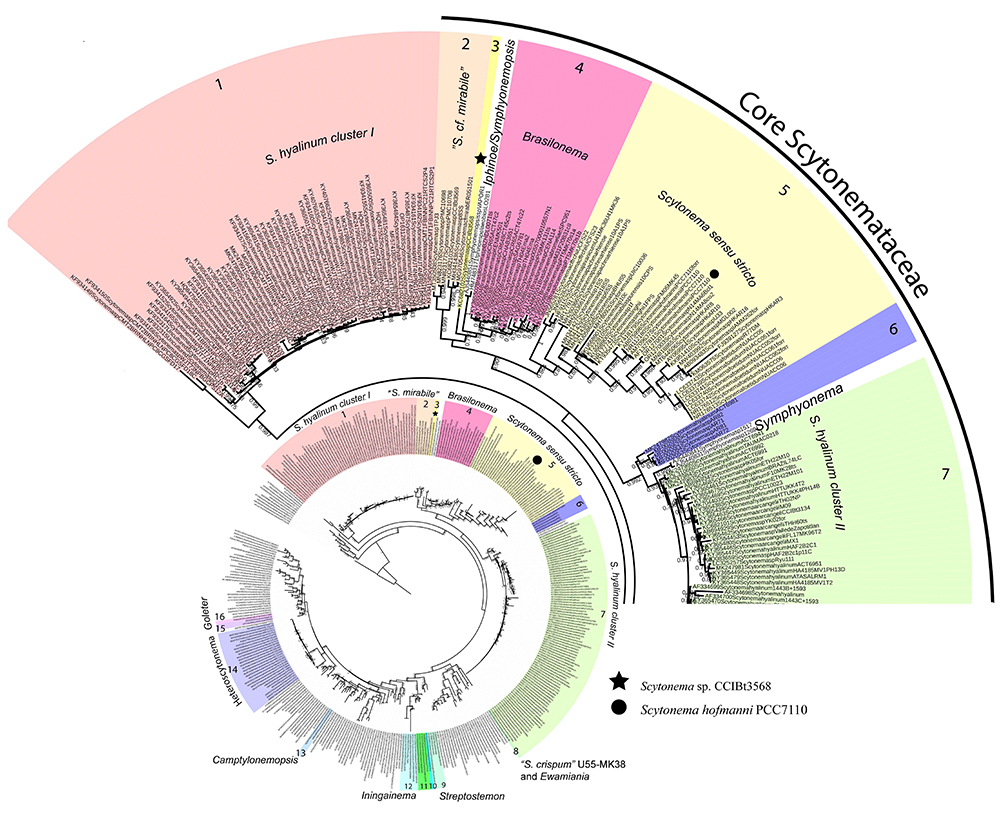
The tree constructed using the FastTree method (Fig. 2) exhibited 16 distinct clades, which may represent different genera and include strains labeled as 'Scytonema'. Among these clades, in addition to the clade where the type of Scytonema (S. hofmanni) was recovered (clade 5), five clades correspond to previously described genera, such as Brasilonema, Streptostemon Sant’Anna et al., Iningainema, Camptylonemopsis Desikachary, and Heteroscytonema (Fig. 2). The remaining ‘Scytonema’ sequences were dispersed among other Scytonemataceae genera, and their classification deserves further investigation, as they may represent potential new cyanobacterial supraspecific taxa, which is discussed further below. The clades containing ‘Scytonema’ sequences are highlighted in different colors in Figure 2.
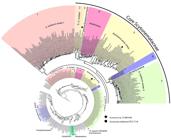
FastTree phylogeny with 383 OTUs and 800 nucleotide positions analyzed. The 16 different clades containing ‘Scytonema’ sequences are ranged in different colors. The outgroup used was Gloeobacter violaceus PCC 8105 (AF132791). Table S1 lists all strains included in the phylogenetic tree.
An overall examination of our FastTree analysis (Fig. 2) revealed that the majority of sequences labeled as ‘Scytonema’ are located within what is referred to here as the core of Scytonemataceae, which comprises two primary lineages. The first lineage includes the Brasilonema clade (clade 4), the true Scytonema sensu stricto clade (clade 5), ‘S. mirabile’ clade (clade 2), Iphinoe Lamprinou & Pantazidou, and Symphyonemopsis Tiwary & Mitra. The second lineage is primarily formed by ‘S. hyalinum’ strains (clades 6 and 7 (S. hyalinum cluster II)) and Symphyonema Jao. More details on these two lineages are provided in the text below. Based on the presence of these true branched genera within the Scytonemataceae cluster, the morphological delimitation of the Scytonemataceae family must be revised.
The clade containing the type species of the genus, S. hofmanni (clade 5), represented by the reference strain S. hofmanni PCC7110 (AF132781), contains other Scytonema species, such as S. javanicum Bornet & Flahault (S. javanicum U41-MK36 (HF911525)), S. pachmarhiense Saraf et al. (S. pachmarhiense 10A1_PS (MH260366)), S. bilaspurensis Singh (S. bilaspurensis 10C-PS (KT222810)), S. singhii Singh (S. singhii 1F-PS (KT935473)), and S. foetidum Tawong et al. (S. foetidum NUACC06 (LC633742). However, this clade has low phylogenetic support (ML = 86%), and the 16S rRNA gene similarity among the sequences within this clade can be very low. For instance, in the case of the comparison between S. javanicum (HF911525) and Scytonema sp. (KX951410), they exhibit only 91.7% similarity. These findings indicate that this clade must undergo further investigation and may or may not represent different genera to be recognized in the future.
It is also possible to observe that there are two additional large clusters, we named ‘S. hyalinum cluster I (clade 1) and II (clade 7)’, both containing S. hyalinum strains, along with other strains identified as S. arcangelii. Regarding these clusters, some strains present in cluster I were also found in cluster II as was the case for S. hyalinum WJT9-NPBG6A, for example. There are two 16S rRNA gene sequences for this strain, Genbank accession KY365488 in S. hyalinum cluster I and KY365451 in cluster II.
Following the FastTree analysis, we identified clades within the sister clade to the Scytonema sensu stricto clade (Fig. 2). The ‘S. cf. mirabile’ clade (clade 2) is sister to the other three clades. Our findings indicate that this clade is phylogenetically distinct from the Scytonema sensu stricto, and the 16S rRNA gene sequence similarity between these clades ranges from 92.4% to 94.4%. The other recognized clades are the Scytonema sp. CCIBT3568 (clade 3), which is sister to the Iphinoe/Symphyonemopsis and the Brasilonema (clade 4) clades, these latter sister to each other.
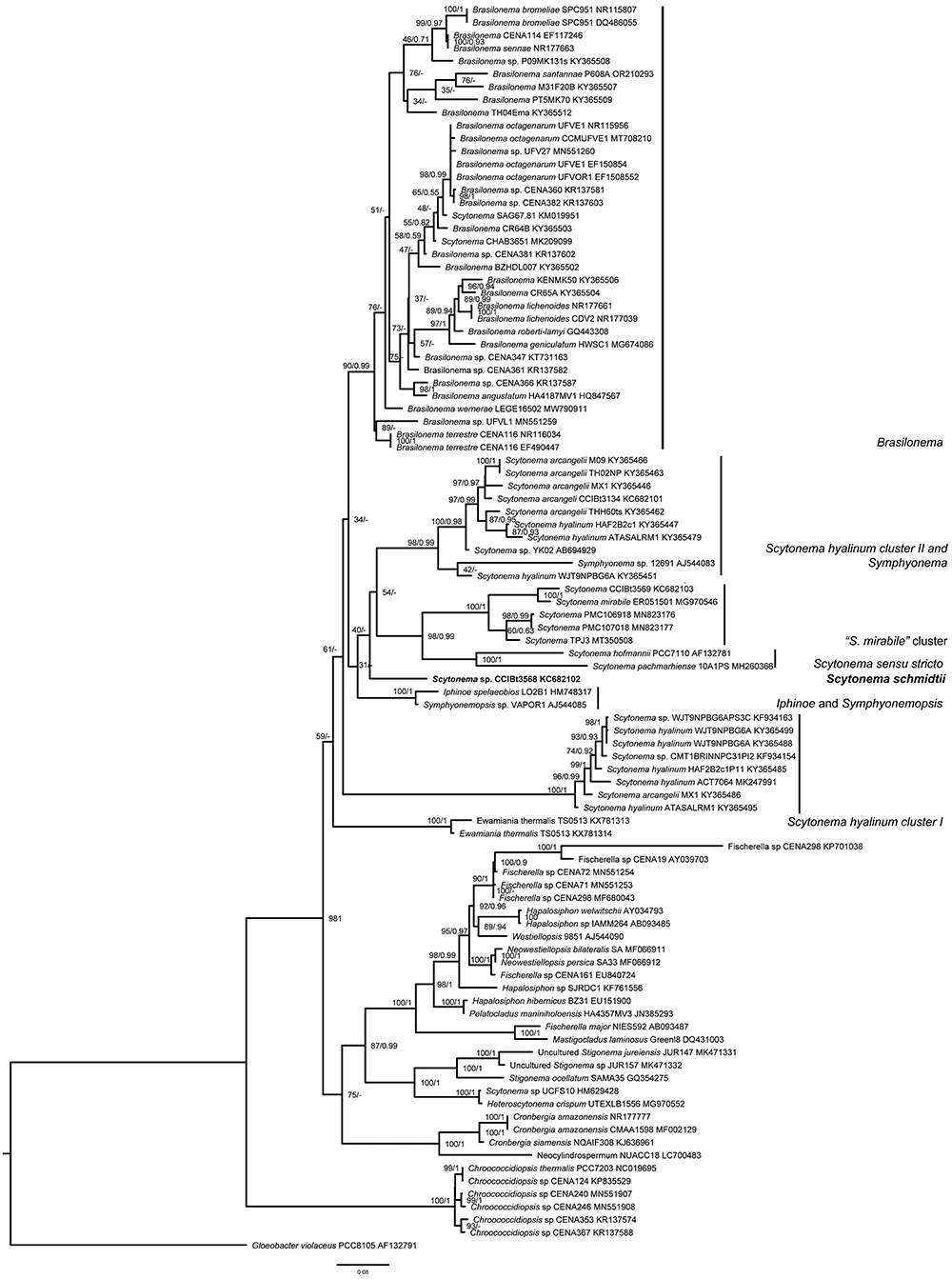
The ML and BI trees (Fig. 3), recovers Scytonema sp. CCIBt3568 not phylogenetically close to the Brasilonema type species, S. bromeliae SPC951 (EF117246), nor to the Iphinoe and Symphyonemopsis type strains I. spelaeobios LO2-B1 (HM748317) and Symphyonemopsis sp. VAPOR1 (J544085). Although morphologically identified as Scytonema, the strain presents low 16S rRNA gene similarity with the Scytonema sensu stricto clade, with values ranging from 93.1% to 93.7% (Table 1), and therefore is not phylogenetically closely related to the type species, S. hofmanni PCC7110 (Fig. 3).
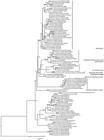
Maximum Likelihood phylogeny of 16S rRNA gene sequences, with 97 OTUs and 971 nucleotide positions analyzed. Bootstrap values are presented at the nodes, along with the Bayesian Inference posterior probabilities. The average standard deviation of split frequencies of BI is <0.01.
Similarity (p-distance) among Scytonema schmidtii (CCIBt3568) and closest related clades according to Fig. 8. Values are represented by percentage.
The 16S rRNA gene analyses revealed high similarity between Scytonema sp. CCIBt3568 and the Brasilonema bromeliae clade, ranging from 95.3% to 97.1%, and also in comparison to Iphinoe and Symphyonemopsis (95.6% to 96%) (Table 1). However, we found that the similarity between the Brasilonema clade and the Iphinoe/Symphyonemopsis clade ranges from 95.7% to 97.3%, and they present very different morphological characters. Brasilonema is a scytonematoid genus, with markedly fasciculate thalli and Iphinoe and Symphyonemopsis present true branching. Scytonema sp. CCIBt3568 is also a scytonematoid type, similar to Brasilonema, but differs by never presenting fascicles. We analyzed nature populations and the cultured Scytonema sp. CCIBt3568 and found that the thallus is intensely entangled (Fig. 1).
Other clades in our FastTree analysis also encompass ‘Scytonema’ strains found in our search. In the big cluster containing Tolypotrichaceae, Rivulariaceae, Hapalosiphonaceae, Nodulariaceae, Aphanizomenaceae, Leptobasaceae, and Nostocaceae genera, is placed the strain Scytonema crispum U55-MK38 (HF911526) as a sister clade of the Scytonemataceae genus Ewamiania (clade 8), with low bootstrap support (ML=89). However, assigning this strain to the genus is not possible, because they share only 92.8% to 93.5% of 16S rRNA gene similarity. Consequently, Scytonema crispum U55-MK38 (HF911526) should be further investigated and can be possibly described as a new genus in further studies. It's worth noting that the genus Ewamiania, placed outside the core Scytonemataceae (Fig. 2, clades 2-7), may undergo taxonomic reevaluation in the future and be moved from this family.
The strains Scytonema sp., ‘Coccocarpia sp. kj30 cyanobiont’ (KF359679), Scytonema sp. ‘Coccocarpia sp. kj16’ (KF359678) and Scytonema sp. ‘Coccocarpia sp. kj38’ (KF359680) are recovered within the genus Streptostemon (KJ5669461) (clade 9) with strong phylogenetic support (ML=99) and share more than 97.8% of 16S rRNA gene similarity with this genus. Consequently, these strains can be possibly assigned as a new species Streptostemon in further studies. These strains are from a cyanobiont population of the lichen Coccocarpia Pers., while the type Streptostemon capitatus Sant’Anna et al., grows forming mats on soils and is not associated with lichens (Sant’Anna et al., 2010).
Within the Iningainema clade (ML=100) (clade 12) (Fig. 2), there are three strains labeled as Scytonema stuposum P15-MK34 (HF911528), S. stuposum P13-MK35 (HF911527) and S. myochrous SERB 29 (KM982578), which should be assigned to Iningainema. Related to this clade are observed two clades (clades 11 as sister to it and 10 as sister to 11 + 12) containing ‘Scytonema’ strains labeled as S. stuposum M10-F15A (KY411153), S. cf. chiastum UCFS19 (JN565280), S. cf. chiastum GSE-NOS-MK14-07B (KY411157), S. cf. chiastum M32-F26III (KY411154), S. cf. chiastum F04-MK25 (KY411155). These strains share more than 91.9% of 16S rRNA gene similarity with Iningainema, and probably are new genera, which should be described in the future. As well as Ewamiania, the current Scytonemataceae genus Iningainema is out of the core Scytonemataceae, and might be moved from this family in the future.
The strain S. mirabile SAG 83.79 (KM019943) (clade 13) is within the Camptylonemopsis clade (ML = 96) and should be assigned to this genus. The strain presents 97.6% of 16S rRNA gene similarity with Camptylonemopsis sp. HA4241-MV5 (HQ847564). The strains S. cf. crispum UCFS16 (JN565276), S. cf. crispum UCFS17 (JN565277), S. cf. crispum UCFS21 (JN565278), Scytonema sp. Ft11 (MG549309), Scytonema sp. UCFS10 (HM629428), Scytonema sp. F12 (MG549312), S. cf. crispum UCFS15 (JN565279) are recovered within the Heteroscytonema clade (clade 14), indicating that these strains most likely belong to Heteroscytonema. The 99% 16S rRNA gene similarity observed among the sequences of this clade further corroborates these findings.
The strain S. bohnerii SAG 255.80 (KM019923) (clade 16) is sister to Goleter, with low bootstrap support (ML=69), but presents high 16S rRNA gene similarity (98.3%) with the strain Goleter apudmare HA4340-LM2 (KF417425), and so far, should be assigned to this genus, until further studies are conducted. As a sister clade to Gloeotrichia Bornet & Flahault are observed the strains Scytonema sp. HAN3/2 (KP701039) (clade 15), Scytonema sp. F18 (MG549319), which share between 93.5% to 96.8% of 16S rRNA gene similarity with the reference strain Gloeotrichia echinulata PYH14 (AM230704). Based on that, more studies are needed to verify if these strains identified as ‘Scytonema’ are a new genus or should be assigned to Gloeotrichia.
Discussion
The primary objective of our paper was to conduct a comprehensive review of the phylogenetic relationships within the genus Scytonema. A prior review of the genus was carried out by Komárek et al. (2013), and more recently, Johansen et al. (2017) investigated strains of S. hyalinum and other Scytonema species with uncertain phylogenetic placement.
Our FastTree analysis (Fig. 2) is in line with Komárek et al. (2013) phylogenetic tree, revealing the polyphyletic nature of the genus Scytonema. This is particularly evident in the case of our S. hyalinum cluster II, which encompasses the strains in the S. hyalinum group from the earlier work. Another clade that is congruent with the phylogenetic tree presented in Komárek et al. (2013) is the Scytonema sp. CCIBt3568 clade, which we believe should be described as a new cyanobacterial genus in the future.
The study of Komárek et al. (2013) showed that the strain Scytonema sp. CCIBT3568 was phylogenetically distinct from the Scytonema sensu stricto clade but the authors had insufficient data to suggest the separation of this strain from Scytonema. Our FastTree analysis (Fig. 2), which incorporates a substantial number of Scytonema sequences from GenBank, enabled us to validate the earlier findings and provide further evidence that Scytonema sp. CCIBt3568 is phylogenetically divergent from the clade where the type of Scytonema is placed. The additional BI and ML phylogenies (Fig. 3) that we constructed also confirm that the strain Scytonema sp. CCIBT3568 is not closely related to the type of Scytonema.
We also believe that in the future, the ‘S. hyalinym’ clusters shall be recognized as a new genus with the employment of phylogenomic data. The ‘S. cf. mirabile’ clade can also be described as a new genus in the future, given that its strains exhibit 16S rRNA gene similarity values below the 94.5% threshold, compared with the Scytonema sensu stricto clade (Yarza et al., 2014).
In the case of Scytonema sp. CCIBt3568, we had the opportunity to analyze the natural population, which proved to help distinguish this strain from Brasilonema. Scytonema sp. CCIBt3568 exhibits a highly entangled filamentous structure, while Brasilonema species consistently display a parallel arrangement of filaments. The significance of observing natural populations has been previously discussed by Hentschke & Sant’Anna (2015) and was corroborated by Kastovsky (2023). With that presented, examining the morphological characteristics of natural populations can assist in identifying differences among morphologically similar genera
Upon comparing our phylogenetic tree with those presented in Johansen et al. (2017), we recovered similar tree topologies and, in both cases, the S. hyalinum strains are recovered as polyphyletic, grouped in two clusters, I and II, with some shared strains among the clades. In that paper, the authors attribute this phenomenon to Horizontal Gene Transfer (HGT) events, possibly from a Scytonemataceae organism which has not been described yet. The occurrence of HGTs in the 16S rRNA gene could have a profound impact on cyanobacteria taxonomy and systematics. However, so far, there have been no other reports of such events occurring in other cyanobacterial genera, making this an exceptional case. Nevertheless, it is important for future research to go deeper into this subject, especially considering that whole-genome phylogenetic analyses are becoming more prominent in cyanobacteria systematics. If HGTs are indeed possible in the 16S rRNA gene, they could also occur in other core genes commonly used in phylogenomic analyses. Such occurrences could significantly influence species classification or higher taxonomic levels, as previously discussed by Hentschke & Gama (2022).
Another important point to note regarding our results is that the topology of our FastTree analysis (Fig. 2) does not precisely match the topology among families presented in the revision of Strunecký et al. (2023), which updated the classification of cyanobacteria. This discrepancy arises because we exclusively relied on 16S rRNA gene analysis, while Strunecký et al. (2023) propose a new classification of cyanobacteria based on phylogenomic data. It is not possible, therefore, to directly compare our phylogenetic tree with that of Strunecký et al. (2023) 16S rRNA gene, as these authors employed a constrained tree derived from phylogenomic data. Additionally, there is a lack of detail regarding the specific sequences used in their 16S rRNA phylogenetic tree and which clades were affected by the constrained model.
Due to the differences observed between our phylogenetic trees and those of Strunecký et al. (2023), we believe that the genera Ewamiania McGregor & Sendall and Iningainema McGregor & Sendall, which are attributed to Scytonemataceae by the authors, may not be part of the core Scytonemataceae, and should undergo through a revision. Other genera deserving attention include Symphyonema Jao, Symphyonemopsis Tiwari & Mitra, and Iphinoe Lamprinou & Pantazidou. These genera are considered part of the Scytonemataceae, as previously documented by Strunecký et al. (2023) and Hentschke et al. (2024). According to Strunecký et al. (2023), the presence of these genera within the Scytonemataceae suggests that the true branching pattern is seemingly homoplasic, and evolved independently on multiple occasions in cyanobacteria. Based on our BI and ML analyses (Fig. 2), Symphyonemopsis and Iphinoe are closely related to Brasilonema and Scytonema sp. CCIBt3568 strain, two taxa without true branching.
Limitations and conclusions
As limitations, we acknowledge that we did not utilize whole genomes for our analysis, which restricts our ability to engage in more extensive discussions or taxonomic modifications within the current classification of Nostocales at the family level. This whole-genome approach is in its early stages within cyanobacteria taxonomy, with only a limited number of genera having their genomes sequenced and accessible in GenBank.
Moreover, there is a lack of research indicating the most suitable set of core genes for this type of analysis. Additionally, investigations concerning HGTs for these genes are needed. The influence of a larger dataset and more variable genes on phylogenies on whole genome analysis is also unknown. These variables have the potential to yield phylogenetic outcomes that may diverge even further from the true evolutionary history of the species. Nonetheless, these studies are promising, and with the accumulation of more data in the future, they hold the potential to enhance cyanobacteria taxonomy at both the species and higher taxonomic levels.
We recognize that another limitation in our study is the usage of the FastTree approach. To overcome that, we built additional more robust BI and ML trees, with a 971 nucleotide bp matrix. These trees confirm the phylogenetic placement of Scytonema sp. CCIBt3568, separated from Scytonema sensu stricto. Despite the phylogenetic divergence and the low 16S rRNA gene similarity between Scytonema sp. CCIBt3568 and the reference strain S. hofmanni PCC 7110, we have chosen to take a more conservative approach at this time and not describe S. schmidtii as a new cyanobacterial genus. Given the case of the two different 16S operons present in ‘S. hyalinum’ clades, we believe that a more detailed study is necessary to search for 16S rRNA gene variants in Scytonema sp. CCIBt3568, before elevating S. schmidtii to the genus level.
In this study, we did not use 16S-23S ITS rRNA secondary structures analysis. Although this analysis is widely used as part of a polyphasic approach to support the recognition of distinct clades into distinct taxa, and we agree that they can aggregate information, it is important to note that comparisons involving secondary structures do not rely on statistical methods, unlike phylogenetic and similarity analyses, which do use clear statistical assumptions. We believe it makes the analysis subjective, and this leads to results that might be biased to agree with the phylogenies. The questions: ‘How much secondary structures can vary within a genus? How different they must be to separate two genera? Is it possible for secondary structures to not be in agreement with the phylogenetic and similarity results?’ have no answer. Instead, a detailed revision should be performed to check whether the 16S-23S rRNA ITS secondary structures are important for taxonomy. Therefore, we advocate that if the questions above cannot be answered, secondary structures should not be considered in differentiating cyanobacterial taxa (Luz et al., 2023). In conclusion, this study indicates that Scytonema sp. CCIBT3568 does not belong to the clade where the Scytonema type is nested, representing a putative separate genus and highlighting the polyphyletic status of Scytonema. Furthermore, this work identifies 16 ‘Scytonema’ clades, seven of which may represent new genera. We provide initial insights towards a systematic revision of the genus and point out valuable information about many ‘Scytonema’ sequences available in NCBI. The proximity of Scytonema with true branched genera, such as Iphinoe, Symphyonema, and Symphyonemopsis indicates that the morphological delimitation of the family Scytonemataceae must be revised.
Acknowledgements
GH thanks FCT Projects UIDB/04423/2020 and UIDP/04423/2020 and to WP9- Portuguese Blue Biobank under the Blue Economy Pact - Project Nº. C644915664-00000026 co-funded by PRR, The Portuguese Republic, and the European Union.
References
- Bornet É, Flahault C. 1887. Revision des Nostocacées hétérocystées contenues dans les principaux herbiers de France (Troisième fragment). Annales des Sciences Naturelles, Botanique 5: 51-129.
- Desikachary TV. 1959. Cyanophyta. New Delhi, Indian Council of Agricultural Research.
-
Fiore MF, Sant’Anna CL, Azevedo MTDP et al 2007. The cyanobacterial genus Brasilonema, gen. nov., a molecular and phenotypic evaluation. Journal of Phycology 43: 789-798. doi: 10.1111/j.1529-8817.2007.00376.x
» https://doi.org/10.1111/j.1529-8817.2007.00376.x - Gardner NL. 1927. New Myxophyceae from Porto Rico. New York, Memoirs of the New York Botanical Garden.
- Geitler L. 1932. Cyanophyceae. In: Rabenhorst L (ed.). Kryptogamen Flora von Deutschl and, Österreichund Der Schweiz. Leipzig, Akademische Verlagsgesellschaft.
-
Hentschke GS, Gama W. 2022. Trends in Cyanobacteria: A contribution to systematics and biodiversity studies. In: Lopes G, Silva M, Vasconcelos V (eds.). The Pharmacological Potential of Cyanobacteria. Elsevier, London. pp. 1-20. doi: 10.1016/B978-0-12-821491-6.00001-6
» https://doi.org/10.1016/B978-0-12-821491-6.00001-6 -
Hentschke GS, Komárek J. 2014. Scytonema santannae, a new morphospecies of Cyanobacteria from the Atlantic rainforest, southeastern Brazil. Brazilian Journal of Botany 37: 293-298. doi: 10.1007/s40415-014-0069-y
» https://doi.org/10.1007/s40415-014-0069-y -
Hentschke GS, Sant’Anna CL. 2015. Current trends and prospects for cyanobacterial taxonomy - are only cultured populations enough? Algological Studies 147: 3-6. doi: 10.1127/algol_stud/2014/0185
» https://doi.org/10.1127/algol_stud/2014/0185 -
Hentschke G, Santos KRS, de Mattos L, Oliveira F, Vasconcelos V. 2024. A journey through cyanobacteria in Brazil: A comprehensive review of genera and 16S rDNA sequence analyses. Cryptogamie Algologie 45: 63-75. doi: 10.5252/cryptogamie-algologie2024v45a6
» https://doi.org/10.5252/cryptogamie-algologie2024v45a6 -
Johansen JR, Mareš J, Pietrasiak N et al 2017. Highly divergent 16S rRNA sequences in ribosomal operons of Scytonema hyalinum (Cyanobacteria). PLoS One 12: e0186393. doi: 10.1371/journal.pone.0186393
» https://doi.org/10.1371/journal.pone.0186393 -
Kastovsky J. 2023. Welcome to the jungle!: An overview of modern taxonomy of cyanobacteria. Hydrobiologia 851: 1063-1077. doi: 10.1007/s10750-023-05356-7
» https://doi.org/10.1007/s10750-023-05356-7 -
Katoh K, Kazuharu M, Kuma K, Miyata T. 2002. MAFFT: A novel method for rapid multiple sequence alignment based on fast Fourier transform. Nucleic Acids Research 30: 3059-3066. doi: 10.1093/nar/gkf436
» https://doi.org/10.1093/nar/gkf436 - Komárek J. 2013. Cyanoprokaryota: 3rd Part: Heterocystous Genera. In: Büdel B, Gärtner G, Krienitz L, Schagerl M (eds.). Süßwasserflora von Mitteleuropa 19/3, XVIII. Berlin, Springer Spektrum.
-
Komárek J, Sant’Anna CL, Bohunická MI et al 2013. Phenotype diversity and phylogeny of selected Scytonema-species (Cyanoprokaryota) from SE Brazil. Fottea 13: 173-200. doi: 10.5507/fot.2013.015
» https://doi.org/10.5507/fot.2013.015 -
Lefler DE, Berthold H, Laughinghouse D. 2023. CyanoSeq: A database of cyanobacterial 16S rRNA sequences with curated taxonomy. Journal of Phycology 59: 470-480. doi: 10.1111/jpy.13335
» https://doi.org/10.1111/jpy.13335 -
Letunic I, Bork P. 2021. Interactive Tree Of Life (iTOL) v5: An online tool for phylogenetic tree display and annotation. Nucleic Acids Research 49: W293-W296. doi: 10.1093/nar/gkab301
» https://doi.org/10.1093/nar/gkab301 -
Luz R, Cordeira R, Kastovsky J et al 2023. Description of four new filamentous cyanobacterial taxa from freshwater habitats in the Azores Archipelago. Journal of Phycology 59: 1323-1338. doi: 10.1111/jpy.13396
» https://doi.org/10.1111/jpy.13396 -
McGregor GB, Sendall BC. 2017. Iningainema pulvinus gen nov., sp nov. (Cyanobacteria, Scytonemataceae) a new nodularin producer from Edgbaston Reserve, north-eastern Australia. Harmful Algae 62: 10-19. doi: 10.1016/j.hal.2016.11.021
» https://doi.org/10.1016/j.hal.2016.11.021 -
Miller MA, Pfeiffer W, Schwartz T. 2010. Creating the CIPRES science gateway for inference of large phylogenetic trees. Proceedings of the Gateway Computing Environments Workshop (GCE): 1-8. doi: 10.1109/GCE.2010.5676129
» https://doi.org/10.1109/GCE.2010.5676129 -
Price MN, Dehal PS, Arkin AP. 2009. FastTree: Computing large minimum-evolution trees with profiles instead of a distance matrix. Molecular Biology and Evolution 26: 1641-1650. doi: 10.1093/molbev/msp077
» https://doi.org/10.1093/molbev/msp077 -
Rippka R, Deruelles J, Waterbury JB, Herdman M, Stanier RY. 1979. Generic assignments, strain histories and properties of pure cultures of cyanobacteria. Journal of General Microbiology 11: 1-61. doi: 10.1099/00221287-111-1-1
» https://doi.org/10.1099/00221287-111-1-1 -
Ronquist F, Teslenko M, Van Der Mark P et al 2012. MrBayes 3.2: Efficient Bayesian phylogenetic inference and model choice across a large model space. Systematic Biology 61: 539-542. doi: 10.1093/sysbio/sys029
» https://doi.org/10.1093/sysbio/sys029 -
Sant'anna CL, Azevedo TMP, Kaštovský J, Komárek J. 2010. Two form-genera of aerophytic heterocytous cyanobacteria from Brazilian rainy forest Mata Atlântica. Fottea 10: 217-228. doi: 10.5507/fot.2010.012
» https://doi.org/10.5507/fot.2010.012 -
Sendall BC, McGregor GB. 2018. Cryptic diversity within the Scytonema complex: Characterization of the paralytic shellfish toxin producer Heterosyctonema crispum, and the establishment of the family Heteroscytonemataceae (Cyanobacteria/Nostocales). Harmful Algae 80: 158-170. doi: 10.1016/j.hal.2018.11.002
» https://doi.org/10.1016/j.hal.2018.11.002 -
Strunecký O, Ivanova AP, Mareš J. 2023. An updated classification of cyanobacterial orders and families based on phylogenomic and polyphasic analysis. Journal of Phycology 59: 12-51. doi: 10.1111/jpy.13304
» https://doi.org/10.1111/jpy.13304 -
Tamura K, Stecher G, Kumar S. 2021. MEGA11: Molecular Evolutionary Genetics Analysis version 11. Molecular Biology and Evolution 38: 3022-3027. doi: 10.1093/molbev/msab120
» https://doi.org/10.1093/molbev/msab120 -
Trifinopoulos J, Nguyen LT, Von Haeseler A, Minh BQ. 2016. IQ-TREE: A fast online phylogenetic tool for maximum likelihood analysis. Nucleic Acids Research 44: 232-235. doi: 10.1093/nar/gkw256
» https://doi.org/10.1093/nar/gkw256 -
Whitton BA, Potts M. 2012. Introduction of the Cyanobacteria. In: Whitton BA (ed.). Ecology of Cyanobacteria II: Their Diversity in Space and Time. Durham, Springer Science/Business Media. p. 1-13. doi: 10.1007/978-94-007-3855-3 1
» https://doi.org/10.1007/978-94-007-3855-3 1 -
Yarza P, Yilmaz P, Pruesse E et al 2014. Uniting the classification of cultured and uncultured bacteria and archaea using 16S rRNA gene sequences. Nature Reviews Microbiology 12: 635-645. doi: 10.1038/nrmicro3330
» https://doi.org/10.1038/nrmicro3330
Supplementary Materials
The following online material is available for this article: