 Socioeconomic influences on the attitudes, knowledge, and perceptions of people about the making of Junina bonfires: A case study in two communities in Northeast Brazil
Abstract
In Northeastern Brazil, the tradition of building bonfires is especially common, particularly during the June festivals. This study aimed to examine the influence of socioeconomic factors on the construction of June bonfires, as well as to analyze the local attitudes, knowledge, and perceptions about this practice in two northeastern communities. Semi-structured interviews were conducted during 2022 and 2023 to collect socioeconomic data and perceptions of the risks associated with bonfires. A Generalized Linear Mixed Model was used to relate the dependent variables (knowledge and volume of wood per person) to the independent variables (sex, age, education level, number of household members, and family income). Additionally, the Collective Subject Discourse method was applied to analyze the population's perceptions of the impacts of bonfires on health and the environment. The results show that family income is positively linked to the amount of wood used, with elderly individuals and those with lower education levels also using more wood. Although environmental impacts were rarely perceived, respiratory problems were frequently mentioned. These results highlight the need for education and awareness of the risks associated with cultural practices and suggest management strategies to protect forest areas that consider local practices.
Keywords:
conservation; culture; ethnobotany; traditional festivals; woody plants
Introduction
Evidence indicates that the use of timber resources by human groups has been fundamental from an evolutionary and cultural perspective (McNeil, 2012; Albuquerque & Alves, 2014a; Albuquerque et al., 2015), especially for cooking food, heating systems, and in some magical-religious rituals (rituals and various cultural manifestations) (Medeiros et al., 2012; Mendes et al., 2023). Currently, timber use is more evident among populations living in areas adjacent to forest resources, as a strategy to meet their family subsistence needs. In this sense, we can observe these behaviors more clearly in communities that have historically suffered from economic and social vulnerabilities, such as local communities in northeastern Brazil (Medeiros et al., 2012; Sobral & Albuquerque, 2016; Silva et al., 2016a; Mendes et al., 2023).
It is important to highlight that there may be peculiar differences related to timber uses and their purposes, which are not investigated in depth in ethnobiological studies. The use of timber for subsistence purposes, such as for cooking, requires specific resource selection criteria, based on their qualities, because efficient wood for daily use implies fewer incursions into the forest and consequently fewer risks for the collector, since in some areas the use of timber is prohibited in Brazil (Medeiros et al., 2012; Ramos et al., 2016; Mendes et al., 2023). However, religious magical use, as is the case with June bonfires in Brazil, is an annual use and a symbolic practice, which is not related to the daily survival of a certain group of people. Therefore, the creation of June bonfires may not require wood perceived as being of good quality and risks of collection in the forest environment. (Almeida et al., 2008). About the construction of June bonfires, it occurs during the June festivities in June, especially in northeastern Brazil, in celebration of religious entities such as Saint Anthony (June 13), Saint John (June 24) and Saint Peter (June 29) (De Lima Martins et al., 2004; Sandroni et al., 2016). This practice, deeply rooted in northeastern cultural and religious traditions, transcends generations and remains significant regardless of the environmental and social context (Lima et al., 2004; Almeida et al., 2008). Thus, in this sense, the differences inherent in the uses of wood for domestic and magical-religious purposes need to be further investigated, as these differences may have implications for the conservation of natural resources, since domestic use requires resources with specific characteristics (Mendes et al., 2023), while for making fires, the wood does not need to be of good quality and people may also seek exotic and invasive species (Almeida et al., 2008). In addition, the cultural uses of some species are associated with their conservation, given their importance (Cocks & Dold, 2008; Cocks et al., 2012).
In addition to the conservationist implications of the approach to the use of wood for magical and religious purposes, it is also necessary to understand the socioeconomic factors that drive and shape the knowledge and use of wood for this purpose, given its specificities. The creation of June bonfires in Brazil, a practice widely spread in the Northeast region, with Catholic influence, may have another dynamic of knowledge and use of wood, with social and environmental implications distinct from domestic use, and investigating such factors will contribute to the theoretical framework of Ethnobotany. Therefore, a more accurate approach to understanding this phenomenon would be to test the influence of socioeconomic variables, which have already been widely studied to understand the knowledge and use of wood for domestic purposes, as well as for magical-religious uses. For example, empirical evidence shows that socioeconomic variables emerge as explanatory predictors of knowledge, use, selection, and preference for timber resources for domestic purposes, especially for fuel use (Gavin & Anderson, 2007; Medeiros et al., 2011; Paniagua-Zambrana et al., 2014; Biara et al., 2021).
In this regard, Medeiros et al. (2011) demonstrated that variables such as gender, age, income, education level, and number of residents in the household have a direct influence on timber use. Other studies show that while men demonstrate greater familiarity with handling wood for construction (Ramos & Albuquerque, 2012), women are more knowledgeable about the resources used for cooking fuel (Machava-António et al., 2022). On the other hand, studies such as the one conducted by Friman (2024) reveal that these gender patterns do not always hold, suggesting that the differences found in the studies may be directly linked to the social roles assigned to individuals according to their cultural and social realities (Pfeiffer & Butz, 2005).
Concerning the age variable, research shows that older people accumulate significant knowledge about the use of timber resources, resulting from various opportunities over time to become familiar with these resources (Voeks, 2007; Ramos et al., 2008a; Oliveira & Neto, 2012). In addition, populations with low purchasing power and large families, especially those living in rural areas, have greater use of and dependence on timber resources (Gavin & Anderson, 2007; Medeiros et al., 2012; Bhatt et al., 2016; Assis et al., 2020). In this context, it is essential to investigate whether the patterns of wood use described in the literature for different purposes also apply to the magical-religious category, since this type of use has a different periodicity from extraction for food preparation or other everyday practices and specific characteristics, already mentioned, which makes this analysis even more relevant, especially given the scarcity of studies on the subject.
In addition to socio-economic aspects, the perception of people regarding timber resources can influence their knowledge and use of them. Perception, which is how individuals interpret and understand the stimuli around them, is shaped by cultural experiences and personal contexts, characterized by a subjective interpretation of external reality (Silva et al., 2016a). Investigating people's perceptions of timber resources can be useful for understanding, for example, changes in the landscape and their possible causes, the criteria involved in selecting, using, and preferring these resources (Silva et al., 2016c; Mendes et al., 2024).
However, in the case of the June festivities, there is still little exploration in ethnobiological studies in the context of how people perceive the impact of using timber resources to build bonfires, which can cause other environmental and social impacts (Soverino, 2016; Arbex et al., 2004; Campos et al., 2017; Colares et al., 2021), in addition to the direct impact of plant species through extraction (Ramos et al., 2016). For example, the burning of bonfires causes CO2 emissions during the June period, in addition to polluting the air, which can cause serious respiratory problems and episodes of burns, especially among children (Arbex et al., 2004; Campos et al., 2017; Colares et al., 2021). The perception of the risk of these impacts on health may be influenced mainly by the periodicity of these festivities, the fact that they are infrequent may lead people to underestimate their possible impacts, unlike other illnesses that are frequent in the lives of individuals (Santoro et al., 2015; Nascimento et al., 2016).
In this sense, we sought to understand what factors might influence knowledge of people, uses, and perceptions of the practice of making bonfires during the June period in two communities in the state of Alagoas, in northeastern Brazil. We sought to answer the following questions: How do socio-economic variables influence the knowledge and use of wood for bonfires? How do people perceive the health and environmental impacts of building bonfires?
Material & Methods
Study Area
Community Lagoa do Junco, municipality of Santana do Ipanema
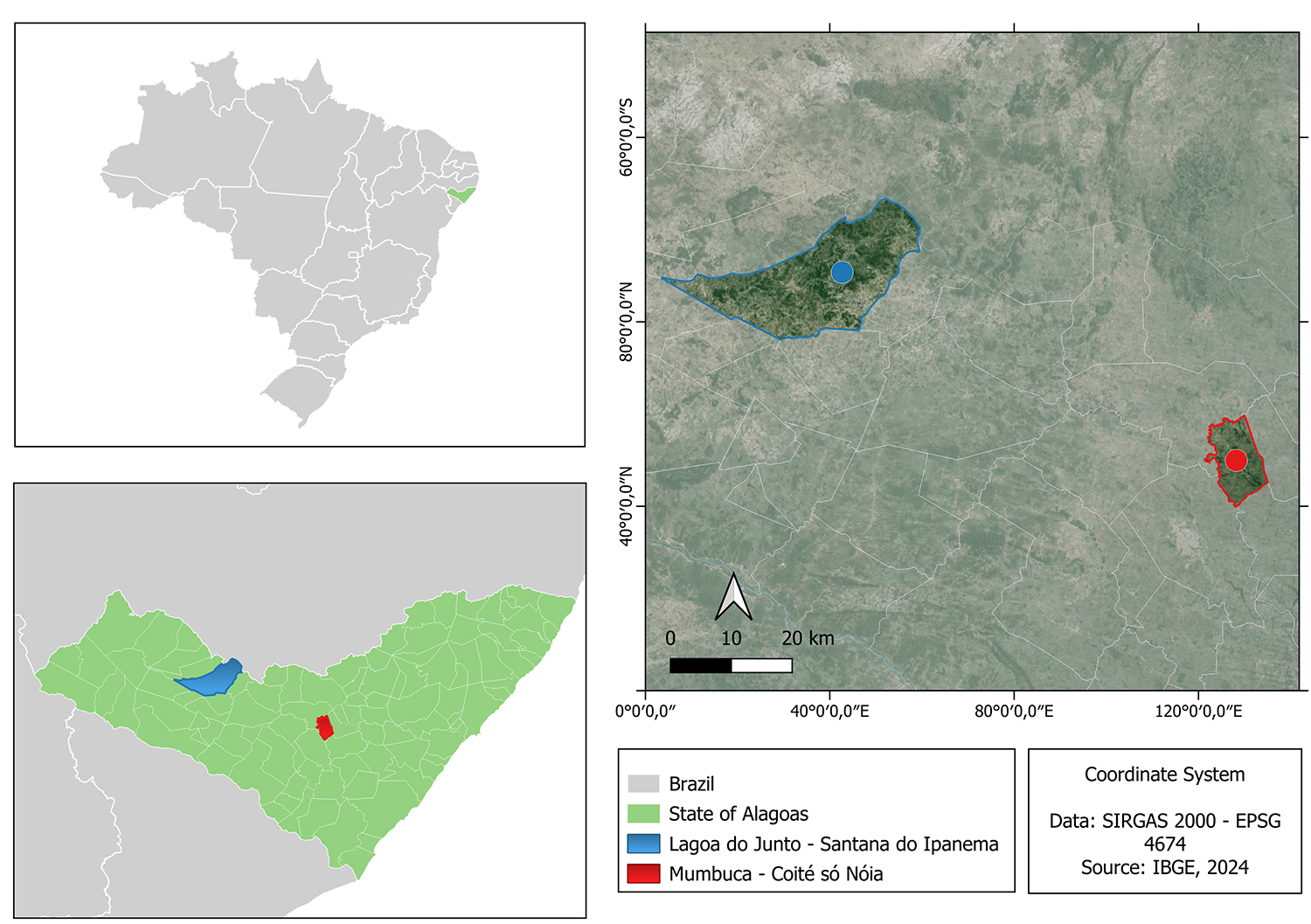
The study was initially conducted in the Lagoa do Junco community, a peri-urban locality located in the city of Santana do Ipanema (Figure 1), in the middle Sertão of Alagoas, Northeastern Brazil, approximately 209 km from the capital municipality of Maceió, covering a territorial extension of 436.160 km². According to the latest IBGE census (Instituto Brasileiro de Geografia e Estatística - IBGE, 2024), the city has a population of 47,910 inhabitants, resulting in a population density of 102.61 inhabitants/km². Located at an altitude of 272 meters (Latitude: 9° 21' 49'' S, Longitude: 37° 14' 54'' W), the region is characterized by a local steppe climate (classified as BSh according to Köppen & Geiger), with an average temperature of 25.2 °C and an annual average rainfall of 461 mm.
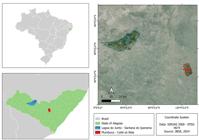
Location of the communities Lagoa do Junco and Mumbuca in the municipalities of Santana do Ipanema and Coité do Nóia, Alagoas, Brazil.
According to information provided by community health agents in Lagoa do Junco, this locality has a population of 511 individuals distributed across 102 families. The community is subdivided into two distinct areas, each under the responsibility of a community health agent, who voluntarily assisted in guiding the approach to the interviewees. Regarding the prevalent religious orientation, there is a predominance of Catholicism, evidenced by the presence of a Catholic church near the entrance of the community. Additionally, other Christian and African-rooted religious expressions coexist. Locally, there are identifiable commercial establishments and public infrastructure, including a basic education institution, a municipal daycare center, a Basic Health Unit (UBS), and a surrounding forest area characterized by the Caatinga ecosystem, according to data from the Brazilian Institute of Geography and Statistics (IBGE) from 2019.
Community Mumbuca, municipality of Coité do Nóia
The second study area is located in the central region of Alagoas, Northeastern Brazil (Figure 1), approximately 228 km from the capital, Maceió. The municipality covers an area of 88.759 km² and recorded 10,810 inhabitants in the last IBGE census (Instituto Brasileiro de Geografia e Estatística - IBGE, 2024), resulting in a population density of 121.79 inhabitants/km². With an approximate altitude of 280 meters (Latitude: 9° 37' 56.0'' S, Longitude: 36° 34' 43.0'' W), it has a tropical climate classified as Aw, with an average temperature of 24.4 °C and an annual average rainfall of 755 mm, according to Köppen & Geiger.
According to information provided by local community health agents, Mumbuca is composed of 564 inhabitants distributed across 173 families. The community is subdivided into three distinct areas, each under the responsibility of a community health agent who also voluntarily assisted us in guiding the approach to the interviewees. In terms of religious orientation, there is also a predominance of Catholicism, with two Catholic churches in the community. Additionally, the coexistence with other Christian and African-rooted religious expressions is evident. Locally, there are commercial establishments and public infrastructure, including a basic education institution, a community association, a Basic Health Unit (UBS), and a surrounding forest area characterized by the Caatinga ecosystem, according to data from the Brazilian Institute of Geography and Statistics (IBGE) from 2019 (Instituto Brasileiro de Geografia e Estatística - IBGE, 2024).
Both communities were chosen due to the close relationship of their members with the environment, evidenced by the practice of family farming, gardening, among other activities. Additionally, both communities depend on wood resources for various daily activities, such as cooking, medicinal use, technological applications, and especially for magical-religious use, such as making bonfires during the June festivities.
Legal Aspects of the Research
The project adhered to all legal and ethical procedures for research involving human subjects and their associated environmental knowledge. The study was approved by the Research Ethics Committee (CEP) of the Federal Rural University of Pernambuco (UFRPE) through the Brazil Platform at the National Research Ethics Commission (CONEP), under the registration CAAE: 64712522.3.0000.9547. After obtaining the necessary licenses, the first contact with the communities was made through periodic visits, conducting door-to-door conversations accompanied by local health agents. During these visits, the justifications, objectives, and contributions of the research were presented to the communities. All individuals responsible who agreed to participate in the research signed the Free and Informed Consent Form (TCLE), authorizing the collection, use, and publication of the information obtained during the interviews, following Resolution No. 466 of 2012 of the National Health Council.
Participant Profile
All individuals responsible for making the bonfires (men or women) at the time of data collection, aged 18 years or older, and residing in the selected communities, were chosen for this study. In total, we interviewed 150 people, including 76 from the community of Lagoa do Junco in Santana do Ipanema, representing 74.5% of the total sample (102 families). Among the interviewees in this community, 38 (50%) were women aged between 18 and 70 years old, while 38 (50%) were men aged between 18 and 80 years.
In the community of Mumbuca in Coité do Nóia, 74 interviews were conducted, which corresponds to 42.8% of the total sample (173 families). Of these, 34 (45.1%) were women aged between 26 and 73 years, and 40 (54.1%) were men aged between 21 and 77 years.
The low participation rate may have been influenced by various factors, particularly the rural nature of the community and the specific focus of the study (i.e., woody resources). Ethnobiological research suggests that the sensitive nature of topics such as firewood collection and hunting can lead to distrust and create barriers between researchers and the community (Albuquerque et al., 2010; Albuquerque & Alves, 2014a).
Ethnobiological Data Collection
In Situ Inventory
To obtain detailed responses and achieve the objectives of this study, in situ inventories (Ramos & Albuquerque, 2012) were conducted at residences with either assembled or in-process bonfires, to measure the volume of the constructed piles, with the builders' permission, to relate to the knowledge about these resources. This step was used to select participants for this study. Semi-structured interviews (Albuquerque et al., 2005) were then conducted with those responsible for the bonfire construction.
Semi-Structured Interviews
The semi-structured interviews were conducted on June 23, 2022, in the community of Lagoa do Junco, in Santana do Ipanema, and on June 23, 2023, in the community of Mumbuca, in Coité do Nóia.
The semi-structured interviews were divided into two complementary stages in each community. The first stage aimed to gather socioeconomic information, such as name, sex, number of household members, age, and education. The second part of the interview included questions about various aspects related to the tradition of making bonfires during the June period, such as motivations (Why do you build bonfires during the June period?), challenges faced (Are there difficulties in accessing these resources?), perceived environmental impacts (Are there any problems associated with lighting bonfires related to nature?).
Additionally, in this stage of the interview, participants were asked to provide a free list of plant species known and used for making bonfires, using the guiding question: "What plants do you know that can be used for making a bonfire?" Participants were then asked to identify which of the listed species were used in making the bonfire.
All botanical material mentioned by interviewees in both communities was collected and deposited in the Herbarium of the Instituto do Meio Ambiente de Alagoas (IMA) for identification. Species that did not present reproductive material, making their collection impossible, were identified using their vernacular names and the geographic location provided by the interviewees, through the REFLORA platform (Flora e Funga do Brasil, 2024). (Available at https://www.floradobrasil.jbrj.gov.br).
Collective Subject Discourse (CSD)
To enrich the investigation, we applied the Collective Subject Discourse (CSD) technique (Lefevre & Lefevre, 2005). This method was used to qualitatively analyze participants' perceptions of possible health and environmental issues arising from the practice of making bonfires. Open-ended questions were designed to explore these perceptions in depth, and responses were analyzed to capture the collective understanding of these aspects.
The analysis involved reviewing responses collected through semi-structured interviews. The main questions addressed in the interviews were: a) Do you perceive any health-related problems associated with lighting bonfires? and b) Do you perceive any environmental problems associated with lighting bonfires? Only responses indicating potential environmental and health concerns were selected for CSD analysis. This approach ensured that representative narratives of the interviewees' concerns and perceptions were included, providing a detailed view of the impacts observed from this cultural practice.
Data Analysis
Influence of Socioeconomic Variables on the Use and Knowledge of Species
To assess the influence of socioeconomic variables on the making of bonfires during the June festivities, two distinct statistical models were used to examine the relationship between a response variable and an explanatory variable, utilizing the R programming (R Core Team, 2020). The models were developed using generalized linear mixed models (GLMMs) with the "lme" function (Bates et al., 2014) from the nlme package in the R statistical environment.
For the first model, the number of species used and the volume of firewood per person were used as response variables, while the independent variables included in the model were gender, age, education level, number of household members, and family income. For the second model, the number of species known by each individual was used as the response variable, with the same independent variables as in Model 1, i.e., the socioeconomic variables.
To conduct the analysis, socioeconomic data were categorized. Specifically, to evaluate the influence of education, it was categorized into nine distinct strata: 0) illiterate; 1) semi-illiterate (individuals in an intermediate position between literacy and illiteracy); 2) MOBRAL (education from the Brazilian Literacy Movement); 3) incomplete elementary education; 4) complete elementary education; 5) incomplete high school; 6) high school student; 7) complete high school; 8) Magistério (a vocational teacher-training course at the secondary level, formerly integrated into high school education in Brazil); 9) complete higher education 10) postgraduate education. The family income was divided into: 0) less than one minimum wage; 1) ≥ 1 and < 2 minimum wages; 2) ≥ 2 and < 3 minimum wages; and 3) ≥ 3 minimum wages. This considers the total income of all household members, given that the minimum wage in Brazil during the interview period was R$ 1,212.00 (approximately US$ 387) in 2022 and R$ 1,320.00 (approximately US$ 421) in 2023.
Occupations were categorized as: 0) student; 1) self-employed; 2) minimum wage employees (whose salary is at the legal minimum level); 3) no fixed income (such as individuals working in household chores); and 4) those with nature-related jobs (agriculture, gardening, market vendors). Age and number of residents per household are numerical and, therefore, were not subjected to categorization. The gender variable was differentiated between male and female, while frequency of use was expressed in specific time terms, such as less than a week, one week, one and a half weeks, and two weeks.
Analysis of the Discourse of the Collective Subject (DSC)
To ensure greater accuracy in transcribing the responses, a lapel microphone connected to a Motorola Moto E7 2020 smartphone was used, supported by the Easy Voice Recorder app, version 2.8.6. The technique involved the following steps: (a) extraction of key expressions that characterize each respondent's answers; (b) identification and grouping of these expressions into pre-established central ideas through coding in the database; and (c) construction of the DSC from the central ideas. Volunteers from both communities were asked two questions: 1) Do you observe any health-related problems when lighting bonfires? 2) Do you perceive any nature-related problems when lighting bonfires? This was conducted according to the DSC technique.
Wood Volume Analysis
The measurement of the firewood volume for the bonfires (165 in total) was conducted using the stack dimensions to calculate the stacked volume (m³), according to the formula proposed by Batista & Couto (2002). This measurement is relevant because the firewood volume was used as a response variable in the generalized linear mixed models (GLMMs) developed for this study. These models allowed us to assess the influence of socioeconomic variables on bonfire construction during the June festivities. Thus, quantifying the firewood volume provides an objective measure that enables robust statistical analyses of the patterns of wood resource use by the studied communities.
Stack Volume = L × l × h
Where:
- “L” represents the length of the stack;
- “l” represents the length of the logs;
- “h” represents the average of the 5 different heights measured from the stack.
Results
Total Wood Volume Used in Bonfires
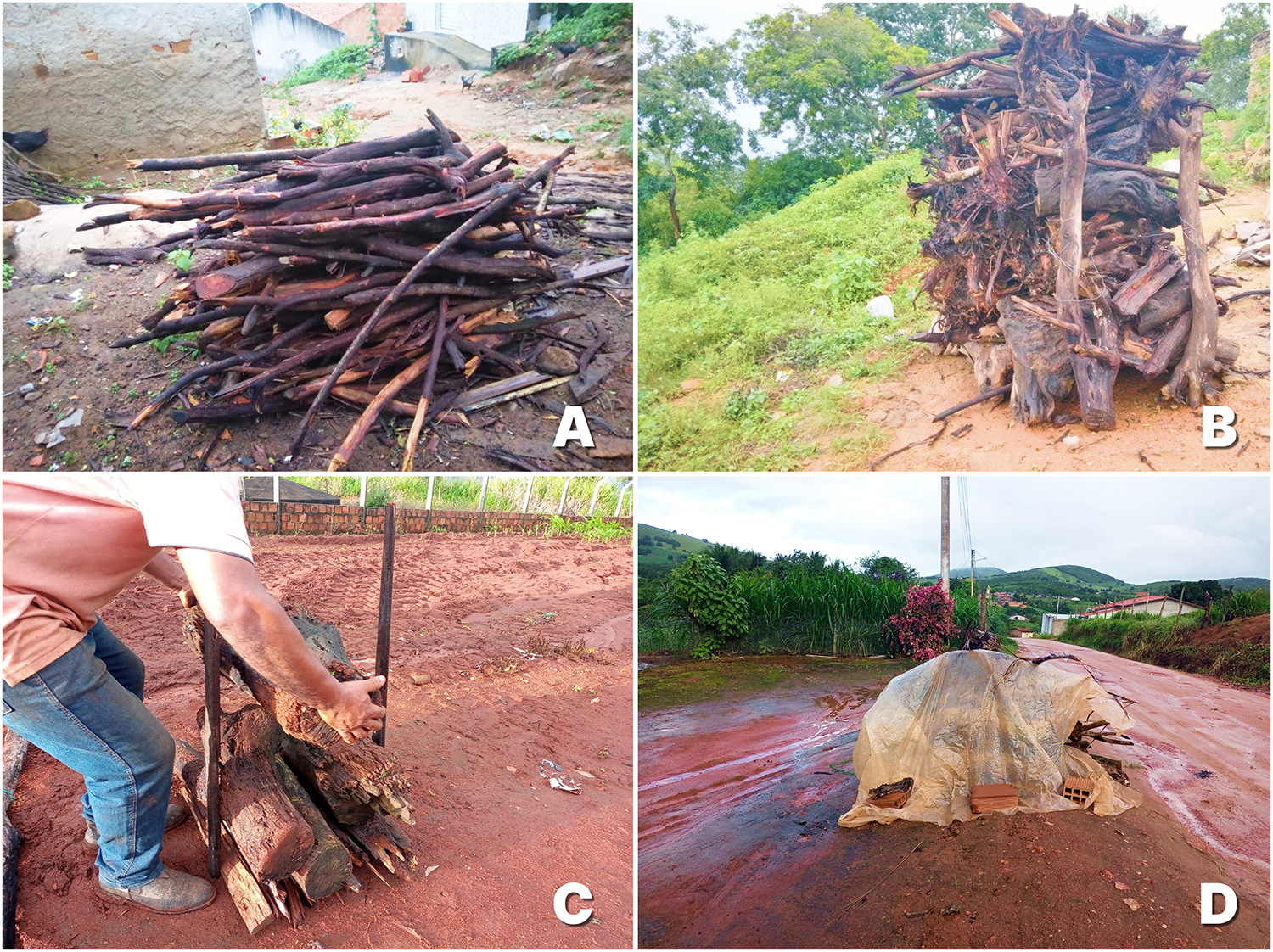
Considering the total sum of all bonfires built in the Lagoa do Junco community, a total of 76.26 m³ of wood was stacked on June 23, 2022, with an average of 0.94 m³ of wood per bonfire (Figure 2). In the Mumbuca community, a total of 124.25 m³ of wood was recorded for the bonfires, with an average of 1.53 m³ per bonfire on June 23, 2023.
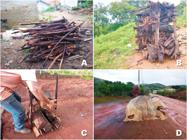
Panel A shows a bundle of firewood specifically purchased for setting up bonfires. Panel B illustrates a bonfire prepared for burning, predominantly composed of tree roots repurposed from other activities. Panel C displays stakes fixed into the ground to stabilize the bonfires. Panel D shows tarps and plastic bags placed over the bonfires to protect the wood from the frequent rainfall during this time of year.
Influence of Socioeconomic Variables on Knowledge of Species Used in Bonfire Construction
In both communities, a total of 22 ethnospecies were cited and collected (Table 1). Out of these, 17 species were identified, distributed across 17 genera and belonging to nine botanical families (Table 1). The Fabaceae family was the most prominent in terms of species (10), while the other families each had only one species (Table 1).
Regarding the composition of the bonfires, the majority of the participants used only forest wood, which was either collected from the surroundings of the community by the participants themselves, purchased from local vendors, or brought in from outside the community (75% in Lagoa do Junco and 85.2% in Mumbuca).
A portion of the respondents stated that they did not know which species they were using, as the wood was either donated to them or brought in by relatives, making it difficult to determine the collection conditions and the species of the wood (11.9% in Lagoa do Junco and 13.5% in Mumbuca).
In Lagoa do Junco, some participants built "mixed bonfires," composed of both reused wood scraps (such as old furniture or construction materials) and forest wood collected from nearby forests or acquired through other means. This practice was reported by 10.5% of the respondents.
Finally, a small portion of participants in both communities reported using exclusively reused wood, such as demolition or renovation materials (2.6% in Lagoa do Junco and 1.3% in Mumbuca).
Among those who knew and used local wood for bonfire construction, it was observed that Jurema (Piptadenia retusa (Jacq.) P.G.Ribeiro, Seigler & Ebinger) (Benth.) had the highest citation rate (27%), followed by Catingueira (Cenostigma pyramidalis (Tul.) Gagnon & G.P.Lewis) (16.8%), and Cajueiro (Anacardium occidentale L.) (12.4%) (Table 1).
Lagoa do Junco community
We did not find a significant influence between the independent variables, such as education (p > 0.240), income (p > 0.879), age (p > 0.225), number of residents in the household (p > 0.352), occupation (p > 0.732), and frequency of wood use (p > 0.097), that could explain the differences in knowledge of species used for the construction of June bonfires
Mumbuca community
We did not find a significant influence between the independent variables, such as education (p > 0.245), income (p > 0.710), age (p >0.331), number of residents in the household (p > 0.535), occupation (p > 0.762), and frequency of wood use (p > 0.933), that could explain the differences in knowledge of species used for the construction of June bonfires.
Influence of Socioeconomic Variables on Bonfire Constructions
Lagoa do Junco community
The independent variables, such as gender, education, number of residents in the household, occupation, and frequency of wood use, did not reveal statistically significant differences that could explain the volume of wood used in bonfire constructions. However, two factors showed statistical relevance: income and age, demonstrating a significant association with a greater volume of wood in the bonfires of the Lagoa do Junco community, as highlighted in Table 2.
Generalized Linear Mixed Model (GLMM) results for socioeconomic variables associated with greater wood volume used for Saint John bonfires in the community of Lagoa do Junco, Santana do Ipanema, Alagoas, Northeastern Brazil.
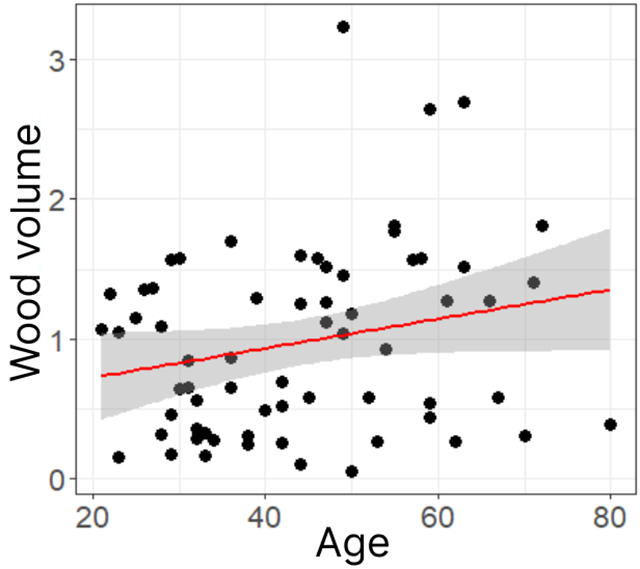
Figure 3 illustrates this data, showing a significant relationship between the age of individuals and the amount of wood used for Saint John bonfires. The results indicate a significant trend of increased wood usage as participants' age increases.
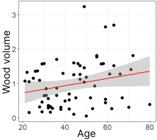
Distribution of interviewees' ages and their respective volumes of wood used in Lagoa do Junco, a community in Santana do Ipanema, Alagoas, Northeastern Brazil.
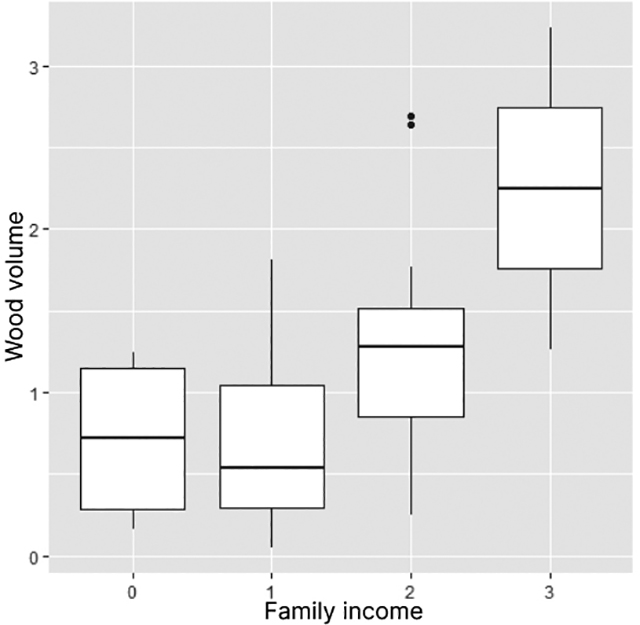
When examining the relationship between income and the volume of wood used (Figure 4), it is evident that a significant relationship exists. As shown, individuals with higher incomes tend to use more wood, likely due to greater purchasing power to acquire this resource.
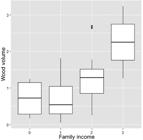
Comparison between the family income of interviewees and the volume of wood used in Lagoa do Junco, a community in Santana do Ipanema, Alagoas, Northeastern Brazil.
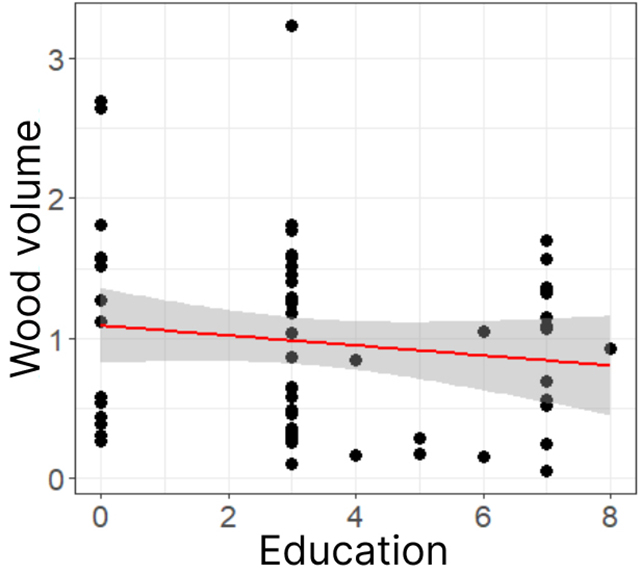
A similar result was observed regarding the level of education (Figure 5), which shows a slight decreasing trend. This indicates that individuals with lower education levels tend to use more wood for bonfire construction.

Representation of a negative correlation between the education level of interviewees and the volume of wood used in the community of Lagoa do Junco, Santana do Ipanema, Alagoas, Northeastern Brazil.
Mumbuca community
Independent variables such as gender, age, education level, number of household residents, occupation, and frequency of use did not indicate significant differences explaining factors that influence the volume of wood in bonfire construction. However, income again emerged as a factor, showing a notable correlation with the larger volume of bonfires in the Mumbuca community (Table 3).
Generalized Linear Mixed Model (GLMM) results for socioeconomic variables associated with greater wood volume used for Saint John bonfire construction in the community of Mumbuca, Coité do Nóia, Alagoas, Northeastern Brazil.
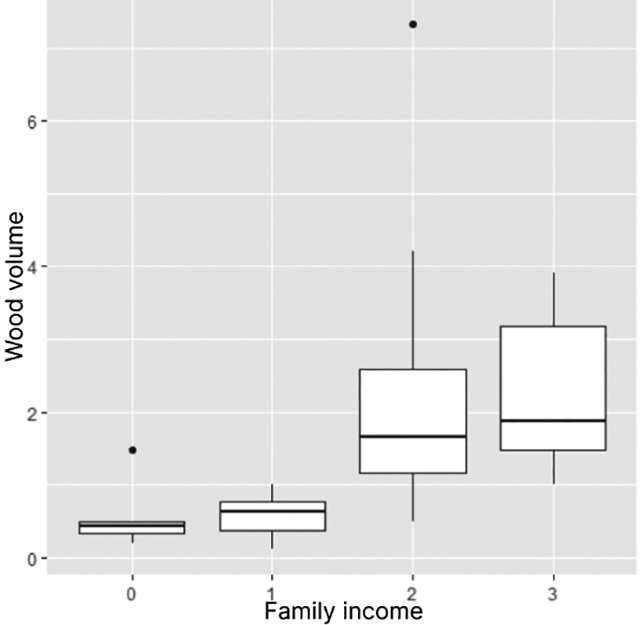
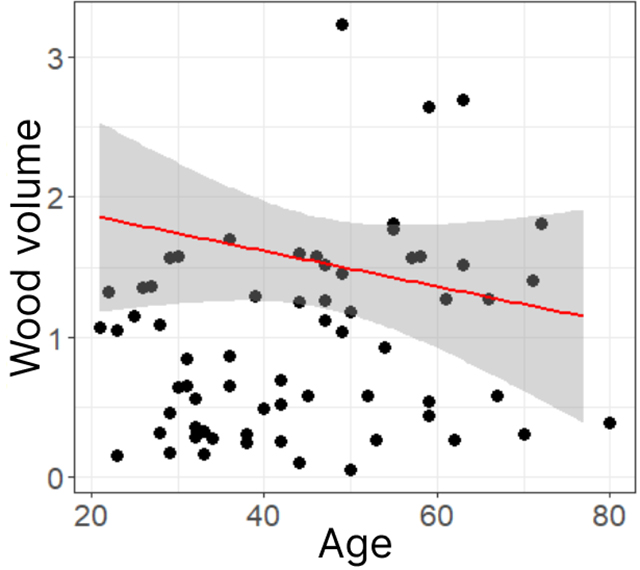
The analysis reveals a significant positive correlation between income and the volume of wood used (Figure 6), indicating that the higher the participants' income, the greater the volume of wood used for the construction of Saint John bonfires. Additionally, we found a significant relationship between age and wood volume (Figure 7), indicating a negative trend. This analysis shows that as individuals age, their use of wood for bonfires decreases.
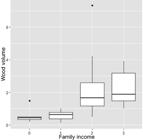
Comparison between the household income of interviewees and the volume of wood used in Mumbuca, a community in Coité do Nóia, Alagoas, Northeastern Brazil.
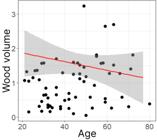
Representation of a negative correlation between the age distribution of interviewees and the volume of wood used in Mumbuca, a community in Coité do Nóia, Alagoas, Northeastern Brazil.
Perception of the Impacts of Making Juninas Bonfires
The subsequent tables present data concerning the DSC. These tables (Table 4, Table 5) delineate the associations between the Central Idea and key expressions, with a proportional distribution of responses based on the participants' opinions. In general, while a small portion of the informants mentioned individual perceptions of negative impacts related to the construction of June bonfires (e.g., deforestation, increase in local temperature, skin burns, smoke inhalation), the majority did not. This suggests a limited awareness among most participants regarding the health risks and environmental impacts caused by this activity.
Regarding environmental impacts, at the Lagoa do Junco community, six interviewees (7.9%) reported problems related to making juninas bonfires, while 70 interviewees (92.1%) did not perceive any issues. In the Mumbuca community, 13 interviewees (17.6%) perceived problems, compared to 61 interviewees (82.4%) who did not.
Concerning the perception of health-related problems, 27.7% of interviewees from the Lagoa do Junco community reported direct effects from the bonfires, while in the Mumbuca community, this percentage was 28.4%. Regarding environmental risks, only 5.3% of interviewees from the Lagoa do Junco community identified problems, whereas in the Mumbuca community, this percentage was 17.6%.
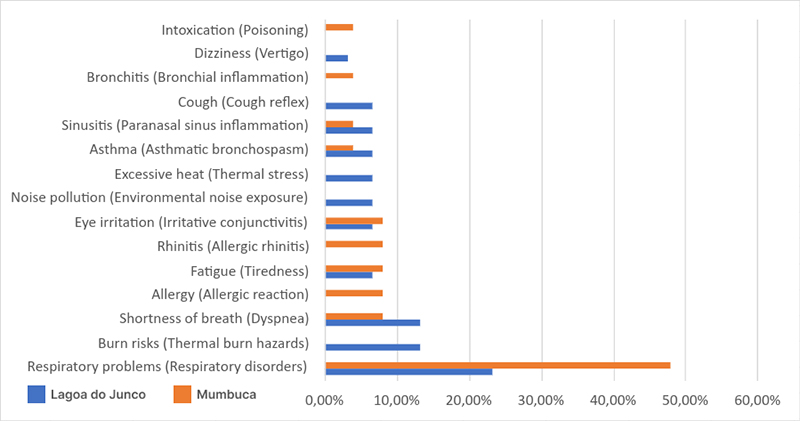
The data on perceived health risks for the populations of the Lagoa do Junco and Mumbuca communities were analyzed, as shown in Figure 8. The analysis highlighted the main health issues associated with the practice of building bonfires during the June period. Among the reported risks, "respiratory problems" emerged as the predominant category, most frequently mentioned by both communities. Other associated risks included burns, shortness of breath, and allergic reactions, all linked to the practice of burning wood during the festivities.
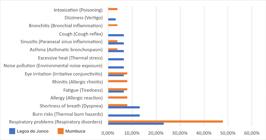
Comparison of health risk perceptions between the communities of Lagoa do Junco and Mumbuca related to bonfire making during the June festivities.
Discussion
Do Socioeconomic Variables Influence the Knowledge and Use of Species in Bonfire Making?
In comparison, a similar study conducted by Almeida et al. (2008) recorded total wood volumes for Saint John celebrations of 39.27 m³ in 2007 and 74.15 m³ in 2008, with respective averages of 0.715 m³ and 0.861 m³ per bonfire. When the volumes from all three celebrations (Saint John, Saint Anthony, and Saint Peter) over the two years were summed, the total reached 146 m³ for 114 bonfires, resulting in a general average of 1.52 m³ per bonfire.
On the other hand, the volumes recorded in the communities studied in this work (76.26 m³ in Lagoa do Junco and 124.25 m³ in Mumbuca) amounted to a total of 200.51 m³ solely for Saint John celebrations. The averages observed were 0.94 m³ per bonfire in Lagoa do Junco and 1.53 m³ per bonfire in Mumbuca. The average for the Mumbuca community is slightly higher than the general average found in Almeida et al. (2008) study (1.52 m³), while the average for Lagoa do Junco is lower, which shows that there is no standard timber volume for this type of use.
It is important to highlight the contextual differences between the studies when interpreting these results. In the communities of Lagoa do Junco and Mumbuca, there are no formal restrictions on wood collection. In contrast, the community of Três Ladeiras analyzed by Almeida et al. (2008) faced strict regulations prohibiting wood extraction from forested areas owned by a local factory, Fábrica São José. Despite these restrictions, the Três Ladeiras community was able to construct significant bonfires through adaptive practices such as collecting wood from non-forested areas (67.3%), using dry or dead wood available in forested areas (20.6%), and gathering wood from agricultural lands (11.3%).
These strategies demonstrate the cultural resilience of the community in maintaining its June festival traditions despite regulatory limitations. However, it is crucial to consider that such practices may have significant environmental implications and should be taken into account when assessing the impact of woody resource use in different contexts.
However, the list of species used for bonfire making was relatively limited, including only 17 species distributed across nine botanical families. Furthermore, the botanical families with the highest number of species were Fabaceae, Anacardiaceae, and Rhamnaceae. Various ecological and ethnobiological studies highlight the physical and chemical properties that facilitate the use of these species for various domestic purposes (Ramos et al., 2008b; Medeiros et al., 2011; Nascimento et al., 2019; Hora et al., 2021; Mendes et al., 2024).
The high presence of these families in various studies on wood resources suggests a pattern of consistent knowledge, extraction, and use of species from these families by human communities within the Caatinga ecosystem (Mendes et al., 2023). This indicates a certain uniformity in the behavior of using well-known and widely utilized timber species across the communities, as people tend to rely on a specific set of species for all categories of timber use. However, this result contrasts with the findings of Almeida et al. (2008), where participants demonstrated a distinct pattern of firewood selection for bonfires compared to that used for daily activities, such as cooking. Furthermore, our findings suggest that these species are subject to varying types of extraction throughout the year: there is a continuous demand for domestic purposes and, periodically, an increased demand during the June festivities. This highlights the need for attention to these species within their environments due to their dual-purpose exploitation.
The observation of low species diversity and the significant presence of the Fabaceae family, for example, may indicate that the use of wood for making June bonfires is primarily linked to categories of use that require the selection of species with favorable characteristics for fuel or that have high ecological attributes, such as abundance and availability of individuals (Hora et al., 2021; Mendes et al., 2024). These evidences are observed in studies investigating human behaviors regarding the selection and preference of wood species for food cooking (Ramos et al., 2008a; Medeiros et al., 2014; Hora et al., 2021; Mendes et al., 2024), where species from the Fabaceae family always stand out in terms of citation numbers, such as Cenostigma pyramidalis (Catingueira) and Piptadenia retusa (Jurema).
This limited use observed in this investigation might be seen as an adjustment to local circumstances where certain species are more abundant or easier to collect due to specific environmental conditions, in addition to indicating that the extraction of these resources occurs in forested areas near these communities, as species from the Fabaceae family are found in the surrounding forest areas of human communities in the caatinga (Ramos et al., 2008a; Medeiros et al., 2014, Hora et al., 2021; Mendes et al., 2024).
Additionally, it was observed that some socioeconomic factors may influence the volume and number of species used for making bonfires, but do not affect the number of species known for this purpose, also indicating a homogeneity in the knowledge of species among the communities. In this regard, a positive relationship was observed between the volume of wood used for making bonfires and the income of the participants in both communities. This result may be related to behaviours such as the purchase of timber resources for the construction of these bonfires. Several studies corroborate our findings, demonstrating that higher-income households tend to purchase larger quantities of wood, typically acquired from distribution centres located near their residences, such as markets or natural resource vendors (Gregory, 1966; Kayo et al., 2015; Álvarez et al., 2021). This behaviour may have also contributed to the homogenisation of knowledge regarding the species used in both communities, as it is likely that the customer has the option to choose the type of wood they desire.
Furthermore, this purchasing practice might reflect a significant increase in pressures from resource extraction, such as a significant decline in ecological abundance and availability rates of used species, as commercial-scale collection tends to be much higher compared to individual or domestic extraction (Álvarez et al., 2021; Mendes et al., 2024).
On the other hand, this result may have been directly influenced by the periodic nature of wood use for bonfires, as this usage does not occur continuously. In other words, income plays a significant role in the purchase of wood resources during the bonfire construction period associated with the June festivities, reflecting the specificity of this category and contrasting with studies that interpret the use of wood resources daily as subsistence resources, such as firewood for cooking (Ramos et al., 2008b; Medeiros et al., 2014; Soe & Yeo-Chang, 2019). That is, the cultural periodicity characteristic of bonfire construction for magical-religious celebrations may have a greater influence on the adoption of specific behaviours, as families with higher income tend to opt for purchasing species rather than spending energy on the process of selecting and extracting species from the natural environment.
Nonetheless, we must still consider that the specific characteristics of this community may have influenced these results, including the presence of a higher number of families with a per capita income greater than one minimum Brazilian wage, as well as the peri-urban nature of the community. This profile may facilitate both the extraction of these resources from the natural environment, as well as from other sources, where access to the city may ease purchasing, thereby increasing the use of species for bonfire construction.
Regarding the age variable, a positive correlation was observed between species use and the age of individuals in the Lagoa do Junco community. Studies show that older individuals possess greater proficiency in knowledge related to timber resources, particularly those used in daily activities for various purposes (Oliveira da Silva et al., 2017; Mahmoudi et al., 2023). Investigations such as those conducted by Oliveira et al. (2017) suggest that this interrelation between variables (i.e., wood volume and age) is classified as a phenomenon based on the strong connection that older individuals maintain with culturally and traditionally significant elements, directly influencing the encouragement of cultural practices (Lunelli et al., 2016).
However, we identified a contrary association between these same variables (age and volume of wood) in the Mumbuca community. This phenomenon suggests a possible correlation with the difficulty of accessing timber resources, as results indicate that older individuals (38 to 65 years) report difficulties in collecting these resources. Additionally, despite the absence of formal prohibitions on natural resource extraction, respondents from the Mumbuca community need to travel longer distances to obtain wood due to the occupation of nearby areas by agricultural and livestock activities. Furthermore, concerning knowledge, factors such as cognitive decline associated with ageing may also hinder the recall and recognition of species by older individuals within this group (Meireles et al., 2021).
However, it is important to emphasise that the interpretations of the results of this study must take into account the discrepancy between the specific contexts analysed. Older adults in the studied community of Lagoa do Junco may also face challenges in acquisition and knowledge. However, the ease of purchasing and accessing information about resources may be greater compared to those in the Mumbuca community.
Additionally, a proportional inverse influence was observed between the variables education and volume of wood. Where a reduction in educational level is associated with an increase in the volume of wood used (Figure 5). This finding aligns with studies indicating that lower educational levels can lead to greater use of natural resources in cultural and magical-religious practices, due to reduced environmental awareness and limited access to information about sustainable practices (Karim, 2022).
Furthermore, the strong cultural tradition of building June bonfires in this peri-urban community may amplify this effect. Deeply rooted cultural practices often prioritize the preservation of traditions over environmental considerations (Albuquerque & Hanazaki, 2009; Reyes-García et al., 2011). This contrasts with the Mumbuca community, where there is a lower proportion of individuals with low educational levels (44.4%) and a higher proportion of individuals with higher educational levels (55.6%) compared to Lagoa do Junco, which has a rate of 59.5% for lower educational levels.
The gender variable did not show an influence on the knowledge and use of wood for making bonfires in both communities, indicating homogeneity in knowledge between men and women regarding this cultural practice. This result suggests that both the knowledge and acquisition of timber resources for this practice are transmitted equally across generations, allowing both genders to acquire the same skills and information without being restricted to a specific social role. This contrasts with studies in other local communities that generally show men having greater knowledge about timber resources than women, due to practices associated with their social roles, such as agriculture (Arruda et al., 2019; Silva et al., 2016a).
Furthermore, when analysing the number of people per household, no significant relationship was found with the knowledge and use of resources, unlike the findings observed in studies examining the daily use of timber resources, which indicate a positive relationship between an increase in household size and higher consumption of natural resources (Gavin & Anderson, 2007; Medeiros et al., 2012; Arruda et al., 2019). This result may again be influenced by the periodic nature of bonfire construction during June, as, for example, in daily use, the amount of wood for cooking may vary depending on the number of people in a household and the amount of food required to meet the demand of these people.
Through the results of the socioeconomic data, we can observe that our findings suggest that the cultural and periodic characteristic of the magical-religious use of bonfires for celebrations directed to Catholic saints (such as Saint John, Saint Anthony, and Saint Peter) has a direct influence on the presence of specific behaviours that distinguish this practice from other categories commonly studied in the ethnobiological context.
Perception of the Impacts of June Bonfire Making
In relation to the perceptions of individuals regarding how the construction of bonfires affects health, the majority of participants from both communities did not express concerns regarding potential impacts. The justification for this lack of awareness and concern was explained by the participants, who cited the seasonal nature of the June festivities, which occur only over a short period of the year (Oh et al., 2022).
When specifically evaluating the small number of residents who reported health impacts associated with the June bonfire activities in the studied communities (Figure 8), it was observed that the predominant risk identified by both communities was 'respiratory problems,' suggesting that a small segment of the communities shared concerns regarding these specific and simultaneous symptoms related to the process of building bonfires.
This perceptual gap may be influenced by the intrinsic characteristic of bonfire construction, that is, the seasonality of the festivities. In this regard, the seasonality of the event may affect how risks are perceived, suggesting that the frequency of certain phenomena may have a greater influence on risk perception in human communities, while more seasonal phenomena have a lesser impact on risk perception regarding the health problems that this event may cause. In other words, people do not perceive the risk related to health problems caused by bonfires because these issues do not occur frequently, unlike problems that are caused more often, as observed in some studies, where people tend to give more attention and concentrate treatment strategies on recurring diseases in their daily lives (Santoro et al., 2015; Nascimento et al., 2019).
Furthermore, another factor that may influence the perception of risk regarding the health problems caused by the construction of bonfires is the type of experience the interviewee has had. For instance, an individual's risk perception regarding the health impacts resulting from bonfire construction may vary depending on their experience, whether direct (the individual themselves experienced health issues due to the bonfires) or indirect (relatives, neighbours, or friends experienced health problems due to the bonfires) (Wachinger et al., 2013; Silva Santos et al., 2023).
Another important factor to highlight is that most participants from both studied communities did not identify environmental impacts resulting from the practice of building bonfires during the June period. This homogeneity in environmental perception suggests that both Lagoa do Junco and Mumbuca residents share a relatively similar level of environmental awareness regarding the impacts of this seasonal practice.
This homogeneous perception may be related to the periodicity of June bonfires, which occur only once a year, reducing participants' attention to potential cumulative environmental damage. Additionally, the strong cultural tradition associated with bonfires may contribute to a more symbolic view of wood use, minimizing concern about its ecological consequences. Previous studies have shown that deeply rooted cultural practices can influence how communities perceive and manage natural resources (Albuquerque et al., 2014b).
Despite this homogeneous perception, our data indicate a concerning mismatch between the lack of recognition of environmental impacts and the actual damage caused by intensive wood extraction and use. Specific studies on June bonfires suggest strategies to balance tradition and environmental conservation.
These findings align with other studies that demonstrate relatively uniform environmental awareness between the Lagoa do Junco and Mumbuca communities in certain cultural contexts (Olivos et al., 2011; Sierra-Barón et al., 2023).
In this sense, these highlights represent various environmental issues, especially regarding how the actual state of natural landscapes might be suffering from intense natural resource exploitation. For instance, Yigezu & Jawo (2021) state in their study that switching from firewood to effective fuel sources can effectively reduce the annual volume of firewood used by rural communities in southern Ethiopia by up to 1.2 tons. In general, this approach can lead to more effective conservation of forest fragments near these communities.
We believe that the mismatch between the perception of negative effects of an activity that can bring harm to health (smoke) and, to a lesser extent, to the environment (seasonal activity), can be problematic, as it can directly hinder efforts to mitigate these damages. Therefore, direct intervention studies in these communities are necessary, especially to understand the ecological pressure that these species may face, and to develop environmental education plans aimed at increasing environmental awareness.
Even though some of the variables studied here exhibit characteristics similar to those found in other ethnobiological studies, particularly those focusing on the use of firewood for cooking, our findings suggest that the cultural and seasonal nature of the magical-religious use of bonfire-making for celebrations dedicated to Catholic saints (such as Saint John, Saint Anthony, and Saint Peter) may have a greater influence on the presence of specific behaviours.
These behaviours reflect a generalist tendency in the use of these resources, which is justified by the significant presence of wood purchases, the use of wood remnants from other functions (e.g., damaged stakes), and even household furniture. It is worth noting that these generalist behaviours are influenced by the seasonality of fire-making, as this activity does not necessitate the selection of wood based on intrinsic attributes that favour its use as fuel. These behaviours distinguish this practice from other categories commonly studied within the ethnobiological field. This highlights the need for studies more focused on the specific differences in usage, especially those aiming to practically test how this seasonality influences extraction behaviours. This would enable the design of control and conservation measures for natural resources to reduce environmental and health impacts caused by the practice of bonfire-making.
We emphasise that our study did not aim to measure the direct impacts of fire-making; however, we highlight the need for further research focusing on how these resources reach communities, which parts are utilised, and which areas are being affected by this use. Despite being a seasonal activity, the generalist behaviour of extraction and use may exert significant pressure on forested areas, particularly on species that are already subject to exploitation for other purposes in the daily lives of the community.
Acknowledgments
The authors would like to express their gratitude to the communities of Lagoa do Junco and Mumbuca for their support during the research. They also extend their thanks to the National Council for Scientific and Technological Development (CNPq) for awarding a scholarship to JCOS under the Institutional Program for Scientific Initiation Scholarships (PIBIC).
References
- Albuquerque UP, Alves AGC. 2014a. O que é etnobiologia? In: Albuquerque UP (org.). Introdução à Etnobiologia. Recife, NUPPEA. p. 17-22.
- Albuquerque UP, Andrade LH, Caballero J. 2005. Structure and floristics of homegardens in Northeastern Brazil. Journal of arid environments 623: 491-506.
- Albuquerque UP, Hanazaki N. 2009. Five problems in current ethnobotanical research - and some suggestions for strengthening them. Human Ecology 37: 653-661.
- Albuquerque UP, Ramos MA, Lucena RFP, Alencar NL. 2014b. Methods and techniques used to collect ethnobiological data. In: Albuquerque UP, Cunha LVFC, Lucena RFP, Alves RRN (eds.). Methods and techniques in Ethnobiology and Ethnoecology. New York, Springer. p. 15-37.
- Albuquerque UP, Medeiros PM, Casas A. 2015. Evolutionary ethnobiology. In: Albuquerque UP, Medeiros PM, Casas A (eds.). Evolutionary Ethnobiology. Cham, Springer. p. 1-5.
- Albuquerque UP, Lucena RFP, Alencar NL. 2010. Métodos e técnicas para coleta de dados etnobiológicos. In: Albuquerque UP, Lucena RFP, Cunha LFVC (eds.). Métodos e técnicas na pesquisa etnobiológica e etnoecológica. Recife, NUPPEA . p. 39-64.
- Almeida ALS, Medeiros PM, Silva TC, Ramos MA, Sieber SS, Albuquerque UP. 2008. Does the June tradition impact the use of woody resources from an area of Atlantic Forest in Northeastern Brazil? Functional Ecosystems and Communities 2: 32-44.
- Álvarez B, Boso À, Rodríguez I, Hofflinger Á, Vallejos-Romero A. 2021. Who buys certified firewood? Individual determinants of clean fuel adoption for promoting the sustainable energy transition in southern Chile. Energy, Sustainability and Society 11: 1-9.
- Arbex MA, Cançado JED, Pereira LAA, Braga ALF, Saldiva PHDN. 2004. Queima de biomassa e efeitos sobre a saúde. Jornal Brasileiro de Pneumologia 30: 158-175.
- Arruda HLS, Santos JFO, Albuquerque UP, Ramos MA. 2019. Influence of socioeconomic factors on the knowledge and consumption of firewood in the Atlantic Forest of Northeast Brazil. Economic Botany 73: 1-12.
- Assis DMS D, Tavares-Martins ACC, Beltrão NES, Sarmento PSDM. 2020. Environmental perception in traditional communities: A study in Soure Marine Extractive Reserve, Pará, Brazil. Ambiente & Sociedade 23: e01481.
- Batista JLF, Couto HTZ. 2002. O estéreo. Metrvm 2: 1-6.
- Bates D, Mächler M, Bolker B, Walker S. 2014. Fitting linear mixed-effects models using lme4. Journal of Statistical Software 67: 1-48.
- Bhatt BP, Rathore SS, Lemtur M, Sarkar B. 2016. Fuelwood energy pattern and biomass resources in Eastern Himalaya. Renewable Energy 94: 410-417.
- Biara E, Egeru A, Mensah S, Salamula JB, Kadigo MM. 2021. Socio-economic factors influencing Afzelia africana Sm. use value and traditional knowledge in Uganda: Implications for sustainable management. Environment, Development and Sustainability 23: 2261-2278.
- Campos FS, Araujo NCF, Sales Silva JC. 2017. Queima da biomassa da Caatinga em fogueiras juninas também influencia problemas respiratórios da população de Santana do Ipanema-AL. Diversitas Journal 22: 232-250.
- Cocks ML, Dold AP. 2008. The Cultural Use of the Wild Olive Tree by the amaXhosa People in the Eastern Cape Province of South Africa. Journal for the Study of Religion, Nature & Culture 23: 292-308.
- Cocks ML, Dold T, Vetter S. 2012. 'God is my forest' - Xhosa cultural values provide untapped opportunities for conservation. South African Journal of Science 108: 52-59.
- Colares CMP, Paulo GML, Margarida MCA et al 2021. Dinâmica dos marcadores laboratoriais em crianças vítimas de queimaduras. Revista Eletrônica Acervo Saúde 1310: e8892.
- De Lima Martins P, Baracuhy JGV, de Melo Trovão DMB, da Costa GM, Farias MLC, de Almeida MVA. 2004. As essências florestais utilizadas nas fogueiras de São João, na cidade de Campina Grande PB. Revista de Biologia e Ciências da Terra 4: 3-5.
- Friman J. 2024. Contested firewood collection in Burkina Faso: Governance, perceptions, and practices. World Development 175: 106495.
-
Flora e Funga do Brasil. Jardim Botânico do Rio de Janeiro. https://floradobrasil.jbrj.gov.br/. 06 May 2024.
» https://floradobrasil.jbrj.gov.br - Gavin MC, Anderson GJ. 2007. Socioeconomic predictors of forest use values in the Peruvian Amazon: A potential tool for biodiversity conservation. Ecological Economics 604: 752-762.
- Gregory GR. 1966. Estimating wood consumption with particular reference to the effects of income and wood availability. Forest Science 12: 1-12.
- Hora JSL, Feitosa IS, Albuquerque UP, Ramos MA, Medeiros PM. 2021. Drivers of species’ use for fuelwood purposes: A case study in the Brazilian semiarid region. Journal of Arid Environments 185: 104324.
-
Instituto Brasileiro de Geografia e Estatística - IBGE. 2024. Santana do Ipanema. https://www.ibge.gov.br/cidades-e-estados/al/santana-do-ipanema.html 9 Aug. 2024.
» https://www.ibge.gov.br/cidades-e-estados/al/santana-do-ipanema.html -
Instituto Brasileiro de Geografia e Estatística - IBGE. 2024. Coité do Nóia. https://www.ibge.gov.br/cidades-e-estados/al/coite-do-noia.html 9 Aug. 2024.
» https://www.ibge.gov.br/cidades-e-estados/al/coite-do-noia.html - Karim A. 2022. Integration of religious awareness in environmental education. QIJIS - Qudus International Journal of Islamic Studies 10: 415-442.
- Kayo C, Oka H, Hashimoto S, Mizukami M, Takagi S. 2015. Socioeconomic development and wood consumption. Journal of Forest Research 20: 309-320.
- Lefèvre F, Lefevre AMC. 2005. Depoimentos e discursos: uma proposta de análise em pesquisa social. São Paulo, Livraria Cortez.
- Lima MP, Baracuhy JGV, Melo TDMB, Costa GM, Farias MLC, Almeida MVA. 2004. As essências florestais utilizadas nas fogueiras de Saint John, na cidade de Campina Grande PB. Revista de Biologia e Ciências da Terra 4: 3-12.
- Lunelli NP, Ramos MA, Oliveira CJF. 2016. Do gender and age influence agroforestry farmers’ knowledge of tree species uses in an area of the Atlantic Forest, Brazil? Acta Botanica Brasilica 30: 667-682.
- Machava-António V, Fernando A, Cravo M et al 2022. A comparison of mangrove forest structure and ecosystem services in Maputo Bay (Eastern Africa) and Príncipe Island (Western Africa). Forests 139: 1466.
- Mahmoudi BNE, Mafi-Gholami D, Eshaghi F. 2023. Forest dwellers’ dependence on forest resources in semi-arid environments. Sustainability 153: 2689.
- McNeil CL. 2012. Deforestation, agroforestry, and sustainable land management practices among the Classic period Maya. Quaternary International 249: 19-30.
- Medeiros PM, Almeida ALS, Silva TC, Albuquerque UP. 2011. Pressure indicators of wood resource use in an Atlantic forest area, northeastern Brazil. Environmental Management 47: 410-424.
- Medeiros PM, Silva TC, Almeida ALS, Albuquerque UP. 2012. Socio-economic predictors of domestic wood use in an Atlantic forest area (north-east Brazil): A tool for directing conservation efforts. International Journal of Sustainable Development & World Ecology 192: 189-195.
- Medeiros PM, Almeida ALS, Lucena RFP, Souto FJB, Albuquerque UP. 2014. Use of visual stimuli in ethnobiological research. In: Methods and techniques in Ethnobiology and Ethnoecology. p. 87-98.
- Meireles MPA Albuquerque UP, Medeiros PM. 2021. What interferes with conducting free lists? A comparative ethnobotanical experiment. Journal of Ethnobiology and Ethnomedicine 17: 1-11.
- Mendes CHT, Silva ML, Mata PT, Ramos MA, Silva TC. 2023. Use of wood by local people in the Caatinga: Northeast of Brazil ecosystem and changes in the landscape. In: Albuquerque UP (ed.). Ethnobotany of the Mountain Regions of Brazil. Cham, Springer International Publishing. p. 43-57.
- Mendes CHT, Ramos MA, Silva TC. 2024. Are firewood preference behaviors influenced by restrictions in access to vegetation, and can they vary over time? Ethnobiology and Conservation 13: e826.
- Nascimento AL, Lozano A, Melo JG, Alves RRN, Albuquerque UP. 2016. Functional aspects of the use of plants and animals in local medical systems and their implications for resilience. Journal of Ethnopharmacology 194: 348-357.
- Nascimento LGDS, Ramos MA, Albuquerque UP, Araújo EDL. 2019. The use of firewood in protected forests: Collection practices and analysis of legal restrictions to extractivism. Acta Botanica Brasilica 33: 292-302.
- Oh HE, Kim SJ, Woo H, Ham S. 2022. Associations between awareness of the risk of exposure to pollutants occurring at fire scenes and health beliefs among metropolitan firefighters in the Republic of Korea. International Journal of Environmental Research and Public Health 19: 8860.
- Oliveira ERD, Menini Neto L. 2012. Levantamento etnobotânico de plantas medicinais utilizadas pelos moradores do povoado de Manejo, Lima Duarte-MG. Revista Brasileira de Plantas Medicinais 14: 311-320.
- Oliveira da Silva RC, Albuquerque UP, Silva TLL, Ferreira Júnior WS, Silva Chaves L, Araújo EL. 2017. Religiousness/spirituality do not necessarily matter: effect on risk perception and adaptive strategies in the semi-arid region of NE Brazil. Global Ecology and Conservation 11: 125-133.
- Oliveira da Silva RC, Albuquerque UP, Silva TLL, Júnior WSF, Silva Chaves L, Lima Araújo E. 2017. Religiousness/spirituality do not necessarily matter: Effect on risk perception and adaptive strategies in the semi-arid region of NE Brazil. Global Ecology and Conservation 11: 125-133.
- Olivos P, Aragonés JI, Amérigo M. 2011. The connectedness to nature scale and its relationship with environmental beliefs and identity. International Journal of Hispanic Psychology 41: 5-19.
- Paniagua-Zambrana NY, Camara-Lerét R, Bussmann RW, Macía MJ. 2014. The influence of socioeconomic factors on traditional knowledge: A cross scale comparison of palm use in northwestern South America. Ecology and Society 19:9
- Pfeiffer JM, Butz RJ. 2005. Assessing cultural and ecological variation in ethnobiological research: The importance of gender. Journal of Ethnobiology 25: 240-278.
- Ramos MA, Medeiros PM, Almeida ALS, Feliciano ALP, Albuquerque UP. 2008a. Can wood quality justify local preferences for firewood in an area of caatinga (dryland) vegetation? Biomass and Bioenergy 326: 503-509.
- Ramos MA, Medeiros PM, Almeida ALS, Feliciano ALP, Albuquerque UP. 2008b. Use and knowledge of fuelwood in an area of Caatinga vegetation in NE Brazil. Biomass and Bioenergy 326: 510-517.
- Ramos MA, Albuquerque UP. 2012. The domestic use of firewood in rural communities of the Caatinga: How seasonality interferes with patterns of firewood collection. Biomass and Bioenergy 39: 147-158.
- Ramos MA, Cavalcanti MCBT, Vieira FJ. 2016. Timber resources. In: Albuquerque UP (ed.). Introduction to Ethnobiology. Cham, Springer . p. 177-183.
- R Core Team. 2020. RA language and environment for statistical computing. Vienna, R Foundation for Statistical Computing.
- Reyes-García V, Pascual U, Vadez V, Huanca T. TAPS Bolivian Study Team. 2011. The role of ethnobotanical skills and agricultural labor in forest clearance: Evidence from the Bolivian Amazon. Ambio 40: 310-321.
- Sandroni C, Souza Santos E, Oliveira Santos C, Sales PM, Iyanaga M. 2016. Musicians in street festivals of Northeastern Brazil: Recent changes in Forró music and St. John's Day festivities. The World of Music 5: 159-179.
- Santoro FR, Ferreira Junior WS, Araújo TADS, Ladio AH, Albuquerque UP. 2015. Does plant species richness guarantee the resilience of local medical systems? A perspective from utilitarian redundancy. PLoS One 10: e0119826.
- Sierra-Barón W, Olivos-Jara P, Gómez-Acosta A, Navarro O. 2023. Environmental identity, connectedness with nature, and well-being as predictors of pro-environmental behavior, and their comparison between inhabitants of rural and urban areas. Sustainability 155: 4525.
- Silva Santos S, Santoro FR, Júnior WSF. 2023. New evidence regarding the role of previous disease experiences on people’s knowledge and learning of medicinal plants and biomedical drugs. Ethnobotany Research and Applications 25: 1-23.
- Silva TC, Júnior WSF, Santoro FR, Araújo TADS, Albuquerque UP. 2016a. Risk perception. In: Albuquerque UP (ed.). Introduction to Ethnobiology. Cham, Springer . p. 111-116.
- Silva TC, Chaves LDS, Albuquerque UP. 2016b. What is environmental perception? In: Albuquerque UP (ed.). Introduction to Ethnobiology. Cham, Springer . p. 93-97.
- Silva TC, Chaves LDS, Albuquerque UP, et al. 2016c. Percepção e aproveitamento de Biota. In: Albuquerque UP, Alves RRN (eds.). Introdução à Etnobiologia. 2nd. ed. Bahia, NUPEEA. [Kindle version]. p. 89.
- Sobral A, Albuquerque UP. 2016. History of ethnobiology. In: Albuquerque UP (ed.). Introduction to Ethnobiology. Cham, Springer . p. 9-14.
- Soe KT, Yeo-Chang Y. 2019. Perceptions of forest-dependent communities toward participation in forest conservation: A case study in Bago Yoma, South-Central Myanmar. Forest Policy and Economics 100: 129-141.
- Soverino T. 2016. Midsummer (Saint John's Feast) in Ireland: The old and the new. Revista Romana de Sociologie 27: 27.
- Voeks RA. 2007. Are women reservoirs of traditional plant knowledge? Gender, ethnobotany and globalization in northeast Brazil. Singapore Journal of Tropical Geography 281: 7-20.
- Wachinger G, Renn O, Begg C, Kuhlicke C. 2013. The risk perception paradox - implications for governance and communication of natural hazards. Risk Analysis 33: 1049-1065.
- Yigezu ZD, Jawo TO. 2021. Empirical analysis of fuelwood consumptions and its environmental implications in rural sub-city, Southern Ethiopia. International Journal of Sustainable Energy 405: 448-459.
Datasets related to this article will be available upon request to the corresponding author.