 Red propolis produced on the island of San Andrés, Colombia: Palynological profile
ABSTRACT
Propolis primarily comprises resins, waxes, pollen, and several compounds collected by honeybees and mixed with secreted fluids. Globally, red propolis production is limited to a few regions, and San Andrés Island (Colombia) is one of these locations. This study aims to outline the palynological profile of red propolis produced by Apis mellifera on San Andrés Island, Colombia, to identify its relationship with the local vegetation. Red propolis samples were collected for the production year 2022 from two apiaries located on the island. Red propolis samples were initially treated with ethanol and KOH for pollen grain analysis, followed by the standard acetolysis techniques. After the palynological analysis and botanical identification, 76 pollen types were identified, associated with 32 plant families, 61 genera, and 42 species. Leguminosae and Asteraceae were the botanical families with the most representative, each with seven pollen types. Pollen types such as Mimosa pudica, Cecropia peltata, and Byrsonima crassifolia exhibited the highest importance values within the pollen spectrum. Most pollen types were associated with arboreal and shrubby taxa, predominantly distributed in forest formations and vegetation characteristic of anthropic areas. The analyses highlighted the distribution and diversity of pollen types within red propolis samples from San Andrés Island.
Keywords:
Apis mellifera; Colombian Caribbean; honeybee products; melissopalynology; red propolis; resinous plants
INTRODUCTION
Propolis is a natural resinous product made by different genera of bees from plant secretions (Salamanca-Grosso, 2017). It exhibits color schemes that vary from brown, dark brown, reddish, green, and, in some cases, black, depending on its botanical and geographical origin (Salamanca-Grosso, 2017; Sforcin et al., 2017). The most well-known propolis is produced by Apis mellifera L., which serves as a thermal insulator and crack sealer and helps to isolate the hive (Matos & Santos, 2017). Furthermore, it is an antimicrobial substance, inhibiting the growth of many bacteria, yeasts, and fungi, most of which are associated with several degrees of pathogenicity in humans (Meneses et al., 2009). It also possesses anti-inflammatory, healing, immunomodulatory, and antitumor activities (Salatino, 2018).
Although it is not easy to establish a general classification for its composition, it is estimated that 40-50% consists of resins, 8-12% of waxes, and 3-5% of volatile compounds, microelements, and pollen grains (Salamanca-Grosso, 2017). The latter can come from intentional honeybee collection or airborne pollen (anemophilous) that accidentally adheres to their bodies (Matos et al., 2014). Thus, it is important to recognize them because they allow the identification of the plants that Apis mellifera L. uses to produce propolis (Matos & Santos, 2017). Therefore, identifying the plants visited by honeybees is of utmost importance to beekeepers, as it provides valuable information about their food sources. Moreover, understanding the composition and structure of the landscape expands the knowledge about their foraging habits, which is crucial since the landscape significantly influences honeybees, especially regarding pollen harvesting. This aspect is pivotal for implementing management and conservation programs (Alves & Santos, 2014; Piroux et al., 2014; Casas-Restrepo et al., 2021).
In Colombia, there has yet to be official data on propolis production. Still, according to López-Patiño (2011), the volume produced is low because beekeepers are unaware of its benefits and there is a lack of standardized methods for its collection. Nevertheless, significant studies on its characterization, especially those related to its physicochemical properties, have been carried out (Bastos et al., 2011; Martínez et al., 2012; Rodríguez et al., 2012; Viloria et al., 2012), along with research on biological activity against different bacteria and fungi (Meneses et al., 2009; Samara-Ortega et al., 2010; Bastos et al., 2011; Campo et al., 2018; Martínez et al., 2012; Herrera et al., 2012). However, palynological studies are scarce, with only one research focused on samples of red propolis from San Andres Island whose analysis of the pollen spectrum evidenced a predominance of pollen types such as Cyperus haematodes, Avicennia germinans, Conocarpus erectus, Dalbergia brownei, among others (Salamanca-Grosso & Osorio-Tangarife, 2019).
Therefore, this research aims to outline the palynological profile (through identification of pollen types) of the red propolis produced by Apis mellifera L. on San Andrés Island, Colombia, to infer the main plant species used by the honeybees for red propolis production.
MATERIALS AND METHODS
Study Area
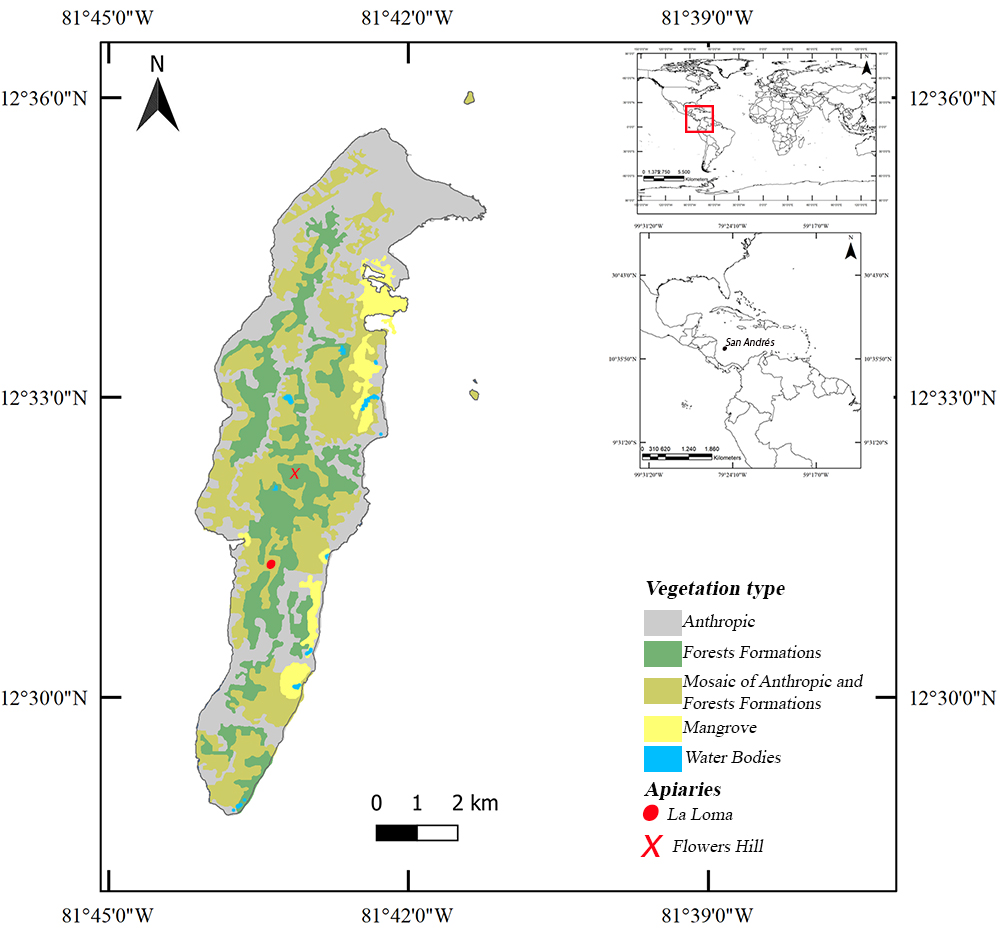
San Andrés Island is in the department of the Archipelago of San Andrés, Providencia, and Santa Catalina, in the Caribbean Sea, at 619 km northwest of the northern coast of Colombia and 150 km east of the coast of Nicaragua (Fig. 1). It is situated in the intertropical zone, presenting a hot and humid climate, and an average annual temperature ranging between 27.5 ºC on the coast and 26.5 ºC in the mountainous area of the island (Gamboa et al., 2012). The average yearly precipitation is 1,950 mm, exhibiting mixed rainfall (Ochoa & Escovitch, 2023).
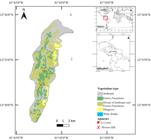
The island’s landscape consists of a system of hills up to 100 m.a.s.l in the central part of the island and a coastal flatland composed of emerged coral terraces (Cortés, 1982; Urrego et al., 2010). The type of vegetation on the island's hills was initially described as a combination of dry and wet forest (Lowy, 2000; Urrego et al., 2010; Tobar-Vargas & Kondo, 2015). However, it currently lacks primary vegetation, and it is dominated by secondary formations composed of trees, shrubs, and vines (Urrego et al., 2010). The coastal flatland area comprises four landscape units: sandy coast, rocky coast, mangroves, and the transition zone between mangrove and terrestrial vegetation (Murcia et al., 2012). Beach vegetation and mangrove forests dominate these flatland areas (Urrego et al., 2010). Furthermore, the beach vegetation is predominantly herbaceous, while in the mangrove forests, Rhizophora mangle L. is the dominant species (Murcia et al., 2012).
Currently, more than 50% of the island's territory is occupied by anthropized land covers, with a predominance of urban areas, pastures, and crops, including coconut plantations (Cocos nucifera L.) and other types of crops such as Noni (Morinda citrifolia L.), cassava (Manihot esculenta Cranz), and plantains (Musa spp.) (Bolivar & Vélez, 2004; Urrego et al., 2010; Velásquez, 2014). Regarding the natural land covers, secondary vegetation is predominant, with dense forests and some water bodies formed during the rainy season (Corporación Ambiental CORALINA & Fundación ALMA, 2015).
Secondary vegetation, grasslands, urban areas, dense forests, and swamps cover the vegetation near the apiaries. In the sectors of La Loma (LL) and Flowers Hill (FH), are found species such as Avicennia germinans (L.) Stearn, Cecropia peltata L., Chrysobalanus icaco L., Cocos nucifera L., Conocarpus erectus L., Ficus spp., Laguncularia racemosa (L.) C.F. Gaertn, Leucaena leucocephala (Lam.) de Wit, Mangifera indica L., Mimosa pudica L., Paspalum paniculatum L., Psidium guajava L., Rhizophora mangle L., Spondias mombin L., Terminalia catappa L., etc. (Corporación Ambiental CORALINA & Fundación ALMA, 2015).
Sample collection
A total of nine (9) samples of red propolis were collected from two apiaries (Flowers Hill - FH and La Loma - LL) for the production year 2022. The samples were collected by scraping the inner walls of the hives with the help of local beekeepers. Afterward, propolis samples were stored in amber jars and sealed for analysis.
Pollen analysis
The analysis process of the red propolis samples followed the procedure established by Matos et al. (2014). Initially, 5g of the sample was dissolved in 95% ethyl alcohol, and the resulting sediment was subjected to a hot solution of 10% KOH. The residue was then dehydrated with glacial acetic acid, subjected to the acetolysis method proposed by Erdtman (1960), mounted between slides and coverslips with glycerin gelatin, and sealed with paraffin for observation using light microscopy (LM). Pollen grains were counted (minimum 500 per sample) and microphotographed using a Leica ICC50 W light microscope.
Pollen identification
Our study is based on the use of morphological characteristics of each pollen type to identify the botanical origin of red propolis samples by linking those pollen types to a specific taxon (e.g., a species, a group of species, a genus, or a family) (De Klerk, 2002; De Klerk & Joosten, 2007). Scientific names were verified using the International Plant Names Index (IPNI, 2024). The identification of pollen grains was carried out as described by Santos (2011), through comparison with reference slides from the pollen library of the Plant Micromorphology Laboratory (LAMIV/UEFS) and specialized palynological literature (Roubik & Moreno, 1991; Villanueva, 2002; Luz et al., 2007; Silva & Santos, 2009; Mambrín et al., 2010; Gosling et al., 2013; Jones & Pearce, 2015; Souza et al., 2016; Stanski et al., 2016; Antonio-Domingues et al., 2018 a ; Antonio-Domingues et al., 2018b; Corrêa et al., 2018; Rakarcha et al., 2018; Adeleye et al., 2020; Dutra et al., 2020; Souza et al., 2020; Assis et al., 2021; Vovides et al., 2021; Lopes et al., 2022; Xiaoyan et al., 2023).
To recognize the vegetation on the island, data reported by Lowy (2000), Tobar-Vargas et al. (2013) and Tobar-Vargas and Kondo (2015) was considered, which also provided information about the type of vegetation in which the taxa related to the pollen types are distributed. However, the types of vegetation were reclassified as follows, considering the classifications already proposed by the cited authors: forest formations (FF), which include transitional vegetation, secondary vegetation, and subxerophytic vegetation; anthropic areas (An): including crops, ruderal species, and ornamental species; wet areas (WA): gallery and swamp vegetation; psammophilous vegetation (Ps); and mangroves (MG).
Based on Bernal et al. (2016 a , 2016b) and different herbarium databases provided information about each taxon’s growth habit. Similarly, information about each species’ vegetal resources for Apis mellifera was obtained from various specialized literature (Table 1).
Data analysis
We compare the pollen type composition variability between samples based on a Non-Metric Multidimensional Scaling (NMDS) and a dendrogram using the PAST-Palaeontological Statistics software, ver. 4.17 (Hammer et al., 2001). Additionally, a multivariate analysis was conducted to evaluate the differences in pollen type composition of the red propolis samples according to the apiary’s location using a Permutational Analysis of Variance (Anderson, 2001). The Jaccard similarity coefficient was employed in all cases, as it does not consider shared absences as similarities.
To quantify the use and preference of resources in the study area, the importance index (IEj) for each pollen type was calculated based on the relative abundance and frequency of the respective pollen types among the apiaries (Nates-Parra et al., 2013) using the following formula:
IEj= Mean relative abundance of type J x (Number of samples containing pollen type J/ Total number of samples)
RESULTS
The pollen spectrum of the analyzed red propolis samples showed 76 pollen types, of which 68 (89.47%) were identified as related to 32 plant families, 61 genera, and 42 species (see Table 1). The most representative families were Leguminosae and Asteraceae (each with seven pollen types), Malvaceae (five), Acanthaceae, Anacardiaceae, and Combretaceae (each with four types). These families were followed by Myrtaceae, Rubiaceae, and Verbenaceae (each with three types), Arecaceae, Convolvulaceae, Lamiaceae, Malpighiaceae, and Sapindaceae (each with two types), and the remaining 18 families contribute one pollen type.
The pollen types per sample ranged from 34 (sample LL1) to 58 (samples LL3 and LL4; Table 1). The samples from the La Loma apiary presented 71 pollen types, while those from Flowers Hill presented 63 pollen types. The unidentified pollen types represented 10.53% (eight types) of the pollen spectrum. The sample FH5 exhibited the highest rate of unidentified pollen types (6.01%; four pollen types), while sample LL1 had the lowest rate (0.40%; one pollen type).
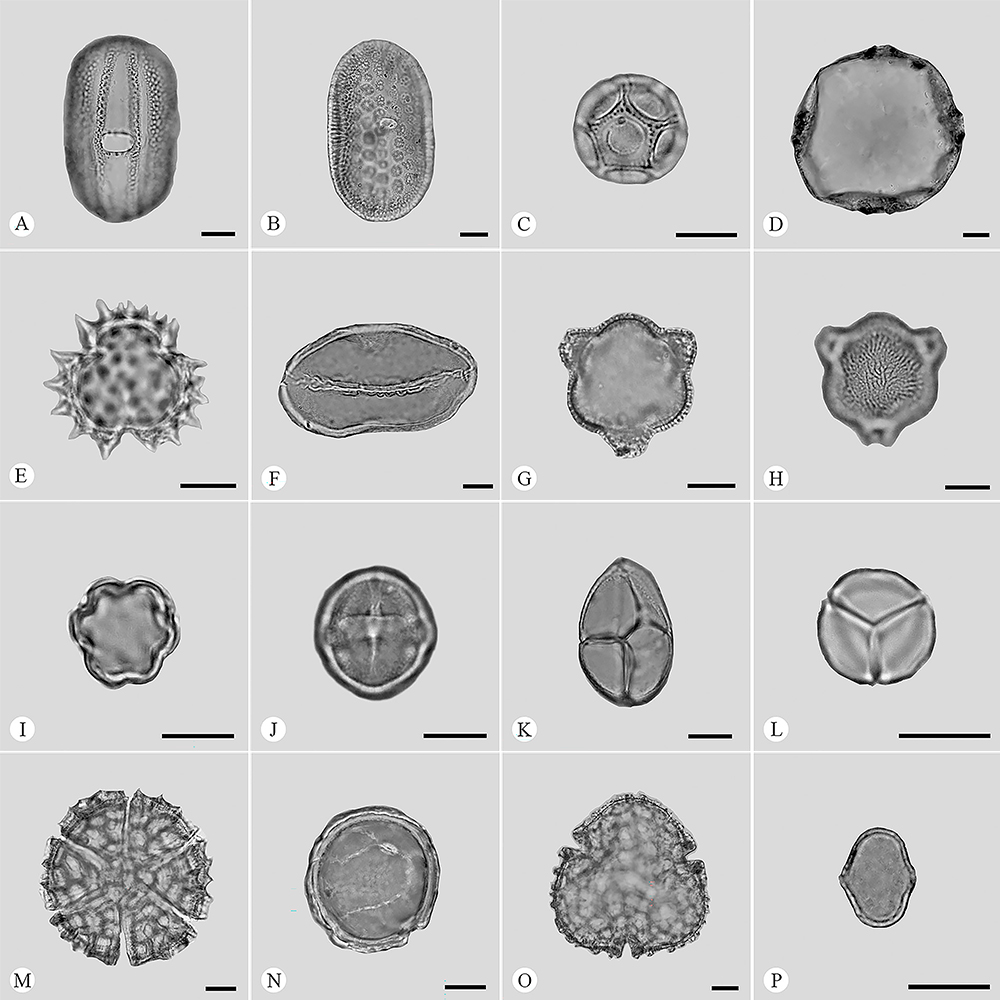
Fifteen pollen types were recorded in all analyzed samples: Aeschynomene americana, Anacardiaceae 1, Avicennia germinans, Cecropia peltata (Fig. 2, P ), Cocos nucifera (Fig. 2, F ), Cyanthillium cinereum, Dalbergia brownei (Fig. 2, J ), Laguncularia racemosa, Leucaena leucocephala, Metopium brownei, Mimosa pudica (Fig. 2, L ), Myrcia splendens, Rhizophora mangle, Rourea glabra, and Spondias mombin. In addition to these pollen types, another 34, including three unidentified, were also registered in more than 50% of the samples, although the abundance of the unidentified types was low. Moreover, 18 pollen types were found in 20 to 50% of the samples, and six were found in less than 20% (Tab. 1). The highest frequency for a pollen type was recorded in the sample LL3, in which 25.14% of the identified pollen grains corresponded to the Mimosa pudica type (Tab. 1).
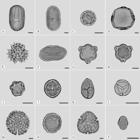
Pollen types registered in red propolis samples from San Andrés Island. A-B. Acanthaceae: A. Dicliptera sexangularis. B. Justicia carthagenensis. C. Amaranthaceae: Alternanthera sessilis. D. Apocynaceae: Mandevilla subcarnosa. E. Asteraceae: Erigeron canadensis. F. Arecaceae: Cocos nucifera. G-H. Burseraceae: Bursera simaruba. I. Combretaceae: Conocarpus erectus. J-L. Fabaceae: J. Dalbergia brownie. K. Mimosa I. L. Mimosa pudica. M. Lamiaceae: Ocimum. N. Malpighiaceae: Stigmaphyllon. O. Malvaceae: Ceiba pentandra. P. Urticaceae: Cecropia peltata. Scale: 10 µm.
The highest importance values (IEj) were registered for the following pollen types: for Flowers Hill, M. pudica (11.30), C. peltata (9.60), B. crassifolia (7.73) R. mangle (6.47), C. nucifera (6.02), and for La Loma, M. pudica (13.70), C. peltata (10.93), M. bijugatus (6.24), D. brownie (6.17), L. alba (5.47) (Figs. 3 A, B).
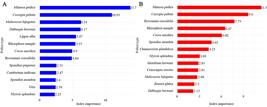
Importance index of pollen types (IEj) used by Apis mellifera in the production of red propolis from San Andrés Island (Colombia) that exhibited a value higher than 2.00. A. La Loma, B. Flowers Hill.
Among the identified pollen types, some of them are related to resin-producing taxa [Anacardiaceae 1, Bursera simaruba (L.) Sarg. (Fig. 2, G-H ), and Phyllanthus L.], while others are related to taxa that produce floral oils [Anacardiaceae 1, Byrsonima crassifolia (L.) Kunth, and Stigmaphyllon A.Juss. (Fig. 2, N ); Tab. 1]. These two groups represented 7.35% of the total types. Moreover, 56 pollen types showed an affinity with nectariferous and/or polliniferous taxa, totaling 82.35% of the pollen spectrum. Seven pollen types had no information regarding the availability of any resource that honeybees could use (Tab. 1).
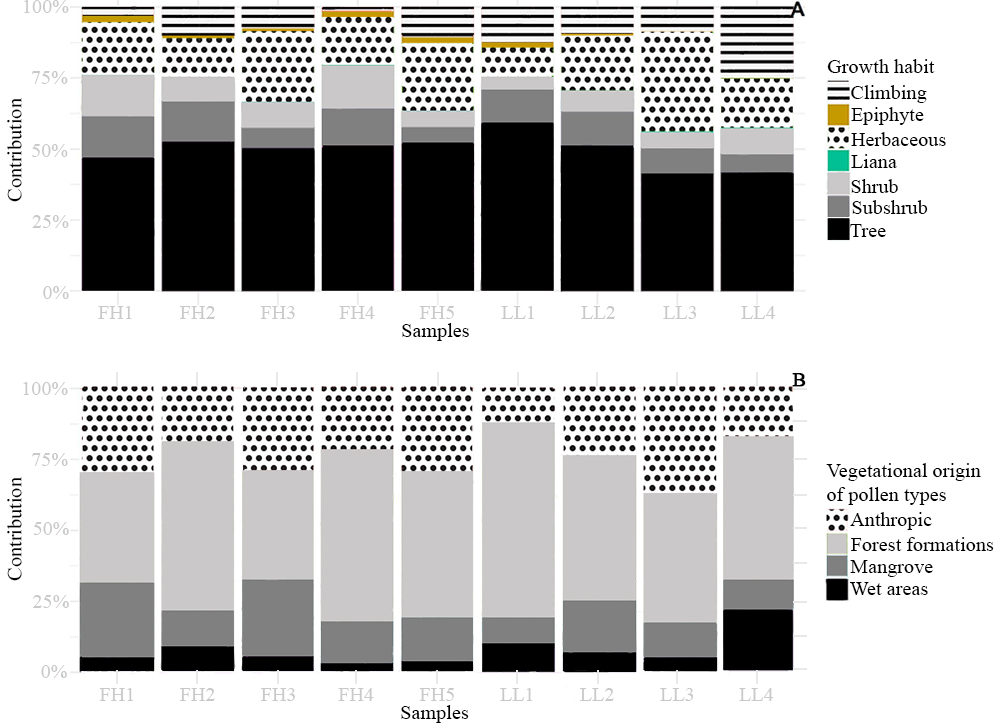
The most frequent growth habits of plants related to the pollen types were as follows: shrubby (28 pollen types; 41.17%), arboreal (24; 35.29%), herbaceous (18; 26.47%), subshrubby (9; 13.23%), climbing (6; 8.82%), lianas (4; 5.88%), and epiphyte (1; 1.47%). Some pollen types were associated with taxa presenting more than one growth habit. However, among the taxa with only one growth habit, the arboreal habit contributed the most to the pollen spectrum (49.88%), followed by the herbaceous (20.94%) and shrubby (13.71%) habits (Fig. 4, A ).
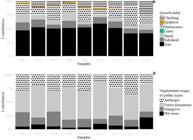
Contribution of growth habit of taxa related to pollen types (A) and vegetational origin of pollen types (B) present in red propolis samples from San Andrés Island, Colombia. FH: Flowers Hill, LL: La Loma.
Some pollen types associated with a specific vegetation type were found (Tab. 2). The vegetation from forest formations contributed the most to the pollen spectrum (48.40%), followed by vegetation associated with anthropic areas (26.50%), mangroves (17.21%), and wetland areas (7.89%) (Fig. 4, B ). Some taxa were associated with more than one type of vegetation.
Pollen-type marker of vegetation in red propolis samples collected by Apis mellifera on San Andrés Island, Colombia.
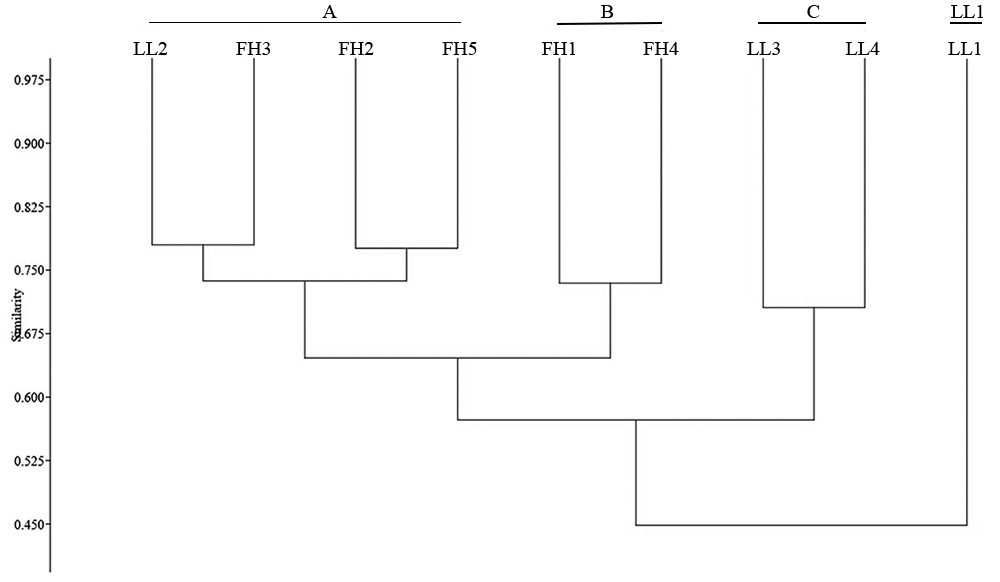
The pollen composition significantly differed between the apiaries, as evidenced by the multivariate analysis. Their location explained approximately 31% of the variance (r2=0.31, p<0.01). The pollen similarity dendrogram between the samples revealed that they clustered into three clades (Fig. 5). In clades A and B, the samples from Flowers Hill grouped with one sample from La Loma (LL2), with a similarity of over 65%. Samples LL3 and LL4 grouped in clade C, which showed a similarity of approximately 55% with clades A and B, and sample LL1 did not group with any. Samples FH2 and FH5 had the highest similarity, sharing nine pollen types.
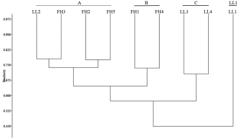
Similarity (Jaccard coefficient) between red propolis samples from San Andres Island, Colombia. Formation of three clades (A-C) according to pollen similarity. FH: Flowers Hill, LL: La Loma.
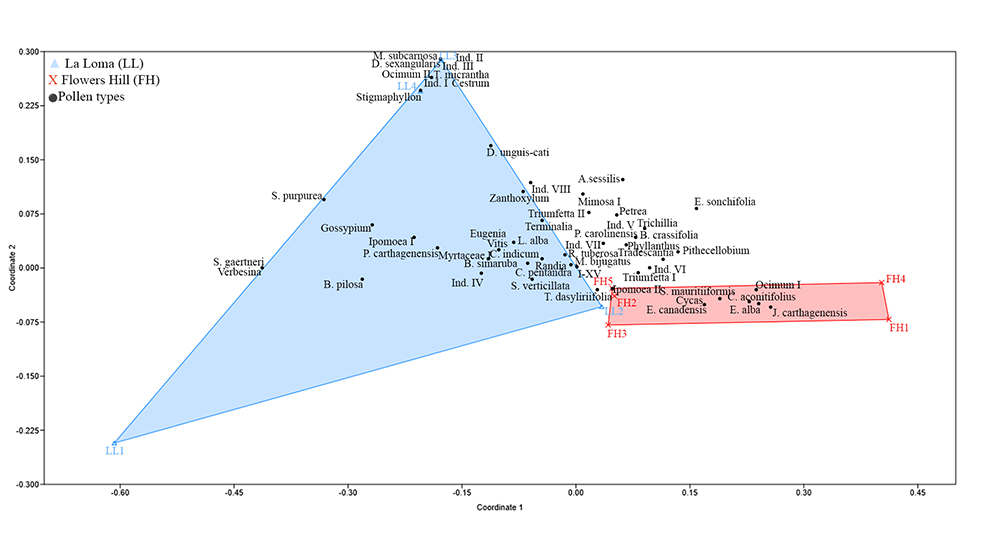
The NMDS (Fig. 6) also showed the difference in the distribution of pollen types, indicating the formation of two polygons corresponding to the different apiaries (FH and LL) based on the presence of pollen types. The La Loma apiary (LL) had more exclusive pollen types (e.g. B. pilosa, Cestrum, D. sexangularis, Gossypium, M. subcarnosa, Ocimum 2, Stigmaphyllon, S. gaertneri, S. purpurea, T. micrantha, Verbesina). In contrast, the Flowers Hill apiary (FH) had only a few exclusive pollen types: C. aconitifolius, Ipomoea 1, J. carthagenensis, and Ocimum 1.
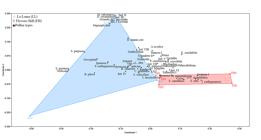
Non-Metric Multidimensional Scale (NMDS) showing the composition of pollen types found in red propolis samples from San Andres Island, Colombia. I-XV: pollen types present in all samples. FH: Flowers Hill, LL: La Loma.
DISCUSSION
Pollen analysis of red propolis samples from San Andrés Island revealed 51 pollen types and 15 families that had not been previously described by Salamanca-Grosso & Osorio-Tangarife (2019), who conducted the first study on propolis collected on the island. This is mainly due to the location of the apiaries, as the vegetation can vary between them. In this study, the frequency and presence of certain pollen types (Mimosa pudica, Cecropia peltata, Byrsonima crassifolia, Rhizophora mangle, and Cocos nucifera) within the area are highly consistent. Therefore, it is possible to infer that these species contribute significantly to the island's apicultural production.
The Leguminosae family has the highest number of species reported on the island, as evidenced by being the family with the most pollen types (Tobar-Vargas & Kondo, 2015). This family has also been reported as significantly crucial in the diet of bees by Avelino & Santos (2018) and Matos et al. (2014) and Matos and Santos (2017) who analyzed different types of propolis from Northeastern Brazil, and from the state of Bahia, Brazil, respectively, and Salamanca-Grosso & Osorio-Tangarife (2019).
Among the pollen types of the Leguminosae family, the Dalbergia brownei pollen type stands out, as it may be related to the red coloration of the propolis, similar to the D. ecastaphyllum type from which Brazilian red propolis is produced (Rufatto et al., 2017). The genus Dalbergia L.f. (Leguminosae: Papilionoideae) comprises nearly 300 species with significant pharmacological potential and represents an important source to produce red propolis (Lotti et al., 2010; Saha et al., 2013).
It is worth noting that after Hurricane Iota in 2020, the frequency of D. brownei (Jacq.) Schinz plants increased significantly. Although initially reported as exclusive to swampy areas (Tobar-Vargas & Kondo, 2015), it has now occupied large mangrove areas. It is even considered an invasive species according to Corporación Ambiental CORALINA (unpublished data). According to Salamanca-Grosso & Osorio-Tangarife (2019), its pollen type was recorded in low frequencies.
Furthermore, Asteraceae is another important family for honeybees, as they provide abundant nectar and pollen per floral unit and are easily accessible and manipulable by honeybees. Therefore, it is common to find a representative number of species from the Asteraceae family in propolis samples (Silva et al., 2013; Casas-Restrepo et al., 2021).
The main pollen types in the spectrum were Mimosa pudica (Leguminosae) and Cecropia peltata (Urticaceae), which were present in all samples with the highest importance index for both apiaries. Mimosa pudica L. is valued for its high pollen production and widespread distribution (Matos et al., 2014), while C. peltata L., an anemophilous species, is common in secondary forests, aligning with the study area (Lowy, 2000; Tobar-Vargas & Kondo, 2015). These results are consistent with previous studies (Barth & Luz, 2009; Freitas et al., 2010), but differ from the findings by Salamanca-Grosso & Osorio-Tangarife (2019). An unusual pollen type, Mimosa 1, was also detected, which is uncommon as M. pudica L. is the unique species of the genus Mimosa L. recorded in the study area (Tobar-Vargas & Kondo, 2015).
Rhizophora mangle L., the dominant mangrove species on the island (Murcia et al., 2012), is widespread near the apiaries and its pollen type showed the highest importance values among mangrove species in the samples (6.47 in Flowers Hill and 5.37 in La Loma). Rhizophora mangle L. produces abundant pollen and secretes a sugary liquid that attracts honeybees (Sucerquia et al., 2019). Salamanca-Grosso & Osorio-Tangarife (2019) identified it as the source of red propolis on San Andrés Island, consistent with previous reports linking it to red propolis production in Cuba (Ledon et al., 2002) and Northeast Brazil (Barth & Luz, 2009).
Furthermore, Cocos nucifera L. is a species that has a wide distribution on the island, as there are extensive areas dedicated to its cultivation, and it is also distributed as part of the beach vegetation and forested areas. Its pollen type was observed in all red propolis samples and has been reported by other authors. Notably, Avelino & Santos (2018) identified this pollen type in samples of red, brown, and green propolis from Northeastern Brazil. It is a very common pollen type in beekeeping products, especially in coastal areas, as highlighted by Alves & Santos (2014).
Five pollen types associated with taxa that produce resin and floral oils were identified (Anacardiaceae 1, Bursera simaruba, Byrsonima crassifolia, Phyllanthus, and Stigmaphyllon). Regarding the Anacardiaceae family, species such as Anacardium occidentale L. are found on the island and represent a source of resin and floral oils, as reported by Barth & Luz (2009). Moreover, B. simaruba (L.) Sarg exhibits an aromatic resin mainly found under the bark, which is used by eusocial bees in propolis production (Missouri Botanical Garden [unpublished data]). Furthermore, B. crassifolia (L.) Kunth and Stigmaphyllon A.Juss., belonging to the Malpighiaceae family, are highlighted by Vogel (1990) as important sources of floral oils, emphasizing their relevance as food sources for honeybees.
Additionally, species considered as nectariferous and polliniferous were found. Spermacoce L. (Rubiaceae) is an example of a plant group classified as nectariferous, and its percentage of pollen types is generally low in analyses (Matos et al., 2014). In this case, S. verticillata pollen type was frequent in the analyzed samples, but its abundance was low. In the studies carried out by Freitas et al. (2010) and Avelino & Santos (2018), its pollen contribution was also low. Therefore, it was considered as a species related to hive-feeding activities. On the other hand, the previously mentioned genera Mimosa L. and Cecropia L. are polliniferous taxa (Matos & Santos, 2017).
Regarding the growth habit, shrubs and trees represented a large portion of the pollen types, suggesting a dominance of these growth forms around the apiaries. Pereira et al. (2004) noted that the arboreal stratum is the primary resource supplier for most bee species (providing nectar, pollen, oil, and resin), and along with the shrub layer, contributes significantly to propolis production (Matos & Santos, 2017). However, both arboreal and herbaceous strata were abundant in pollen contributions, as expected, given the presence of species known for high pollen production, such as C. nucifera L., C. peltata L., R. mangle L., and M. pudica L.
Some authors have reported the generalist habit of Apis mellifera in searching for food (Barth & Luz, 2009; Matos et al., 2014; Matos & Santos, 2017; Avelino & Santos, 2018), which is evident in this study considering the diversity of pollen types registered. However, there is a certain dominance of one vegetation type since pollen types of forest species such as C. peltata, M. brownie, M. bijugatus, P. cururu, R. glabra, and S. mombin were the most frequent, possibly due to their proximity to the apiaries, thus being the immediate food source.
However, species related to anthropic activities were also very present in the pollen spectrum of the analyzed red propolis samples, which evidences anthropization on the island. Some taxa associated with pollen types that act as indicators of crops were found, such as Gossypium L. (cotton), as well as some ornamental species such as Tradescantia L. (canoa), and Cycas L. (Palma funeral). There were also pollen types indicative of wet areas found in most samples (e.g. A. sessilis, D. brownei, Randia, and Stigmaphyllon), indicating the presence of some small wetlands in the area. The identification of pollen markers is important because it facilitates a diagnosis of the interactions that honeybees have with the local vegetation and provides insights into the state of the local flora. In this case, it is observed how the vegetation is mainly affected by anthropization.
The significant difference between the apiaries may be linked to the pollen types unique to each apiary. In the La Loma (LL) apiary, pollen types were associated with taxa from more anthropized areas, including cultivated species (Ocimum L. 2), ruderal species (e.g., Bidens pilosa L., Cestrum L., Scleria gaertneri Raddi, Verbesina L.), and ornamental plants (Mandevilla subcarnosa (Benth.) Benth. & Hook.f.). This is due to the presence of grasslands and cultivated areas in the island's southeast, explaining the abundance of herbaceous plant pollen. In contrast, the Flowers Hill (FH) apiary had fewer pollen types linked to anthropized areas, as it is more influenced by less disturbed natural mosaics. Common pollen types across all samples are related to taxa widely distributed on the island e.g. Aeschynomene americana L., Cyanthillium cinereum (L.) H.Rob., C. nucifera L., C. peltata L., D. brownie (Jacq.) Schinz, Laguncularia racemosa C.F.Gaertn., M. pudica L., R. mangle L.).
The identification of plants that provide resources for beekeeping is important for this industry since this information indicates the vegetal sources used for collecting nectar, pollen, resins, and floral oils, aiming to maximize the use of these trophic resources, both in the establishment of the apiaries, as well as in the preservation of the natural vegetation. The Leguminosae and Asteraceae families were most important for honeybees since they help in their maintenance (nectar and pollen availability). Species such as B. crassifolia (L.) Kunth, B. simaruba (L.) Sarg, Phyllanthus L., and Stigmaphyllon A.Juss. are important resources for Apis, since they provide resins and/or oils. Dalbergia brownie (Jacq.) Schinz and R. mangle L. could be important sources responsible for the coloration of the red propolis of San Andres Island.
ACKNOWLEDGMENT
We thank the National Council for Scientific and Technological Development (CNPq) for the master's scholarship awarded to the first author (Proc162095/2022-8). Thanks to the Graduate Program in Botany, Plant Micromorphology Laboratory, and State University of Feira de Santana, as well as the Physicochemical Properties of Foods Laboratory of the University of Tolima for the acquisition and availability of the samples. This work was supported by the Coordenação de Aperfeiçoamento de Pessoal de Nível Superior (CAPES) -- Financial Code 001.
REFERENCES
- Abrol DP, Shankar U, Chatterjee D. 2017. Foraging rhythm of bees in relation to flowering of sweet basil, Ocimum basilicum L. Current Science 113: 2359-2362.
- Adeleye MA, Hopf FVL, Haberle SG. 2020. Myrtaceae pollen morphology study from Bass Strait islands, Australia, is effective in separating región-specific fossil Myrtaceae pollen types. Review of Palaeobotany and Palynology 281: 104273.
- Almeida AGS, Diniz MR, Ribeiro NR, Filho JJFS, Hrncir M, Rêgo MMC. 2021. Temporal distribution of floral resources for bees in an urban environment in northeastern Brazil. Revista Pesquisas Botânica 76: 97-129.
- Alves RF, Santos FAR. 2014. Plant sources for bee pollen load production in Sergipe, northeast Brazil. Palynology 38: 90-100.
- Anderson MJ. 2001. A new method for non-parametric multivariate analysis of variance. Austral Ecology 26: 32-46.
- Antonio-Domingues H, Corrêa AMS, Queiroz RT, Bitar NAB. 2018a. Pollen morphology of some Fabaceae species from Patos de Minas, Minas Gerais State, Brazil. Hoehnea 45: 103-114.
- Antonio-Domingues H, Corrêa AMS, Rossi ML, Martinelli AP, Luz CFP. 2018b. Morphological analysis of pollen grains from heterodynamous stamens of some Aeschynomene L. (Leguminosae: Papiplionoideae - Dalbergieae). Hoehnea 45: 669-676.
- Apolito CD, Pessoa SM, Balestieri FCLM, Balestieri JBP. 2010. Pollen harvest by Apis mellifera L. (Hymenoptera: Apidae) in the Dourados region, Mato Grosso do Sul state (Brazil). Acta Botanica Brasilica 24: 898-904.
- Assis ACR, Gasparino EC, Saba MD. 2021. Pollen morphology of selected species of Anacardiaceae and its taxonomic significance. Rodriguésia 72: e01422020.
- Avelino LO, Santos FAR. 2018. The presence of Fabaceae in the pollen profile of propolis produced in northeastern Brazil. Acta Botanica Brasilica 32: 602-614.
- Barrance A, Beer J, Boshier DH et al 2003. Árboles de Centroamérica un Manual para Extensionistas. Turrialba, Centro Agronómico Tropical de Investigación y Enseñanza.
- Barth OM, Luz C. 2009. Palynological analysis of Brazilian red propolis samples. Journal of Apicultural Research 48: 181-188.
- Bastos EM, Guzmán D, Figueroa J, Tello J, Scoaris DO. 2011. Caracterización antimicrobiana y fisicoquímica de propóleos de Apis mellifera L. (Hymenoptera: Apidae) de la región Andina colombiana. Acta Biológica Colombiana 16: 175-184.
- Bernal R, Gradstein SR, Celis M. 2016a. Catálogo de plantas y líquenes de Colombia. Capítulos introductorios - Líquenes a Lythraceae. Bogotá D.C., Universidad Nacional de Colombia.
- Bernal R, Gradstein SR, Celis M. 2016b. Catálogo de plantas y líquenes de Colombia. Magnoliaceae a Zygophyllaceae - Especies introducidas y cultivadas. Bogotá D.C., Universidad Nacional de Colombia . vol. II.
- Bolivar J, Vélez S. 2004. Zonificación integral de la vegetación de San Andrés Isla con énfasis en la transición manglar-tierra firme. PhD Thesis, Universidad Nacional de Colombia, Colombia.
- Brandão M, Gavilanes ML, Cunha LHS, Laca JP, Cardoso C. 1984. Plantas consideradas daninhas para culturas como fontes de néctar e pólen. Planta Daninha 7: 1-22.
- Buchmann SL, Shipman CW. 1990. Pollen Harvesting for Apis mellifera L. on Gossypium (Malvaceae) Flowers. Journal of the Kansas Entomological Society 63: 92-100.
- Campbell JW, Irvin JH, Ellis JD. 2018. Bee Contribution to Partridge Pea (Chamaecrista fasciculata) Pollination in Florida. The American Midland Naturalist 179: 86-93.
- Campo Y, Muñoz Y, López A, Contreras-Velásquez J, Martínez M, Bermúdez V. 2018. Evaluación de la capacidad antifúngica de los extractos etanolicos de propóleo ante la antracnosis en tomate de árbol (Solanum betaceum Cav.). Revista de la Facultad de Agronomía de la Universidad del Zulia 35: 435-462.
- Casas-Restrepo LC, Alabat IEG, Salamanca GS, Santos FAR. 2021. Markers for the spatial and temporal differentiation of bee pollen harvested by Apis mellifera L. in the Eastern Andes of Colombia. Journal of Apicultural Research 62: 556-569.
- Chamorro FJ. 2016. La apicultura como alternativa de uso no maderable de los bosques andinos con roble en la cordillera Oriental de Colombia. In: Parra GN (ed.). Iniciativa colombiana de polinizadores abejas. Colombia, Universidad Nacional de Colombia p. 261-273.
-
Chávez SR. 2011. Leucaena leucocephala (Lam.) de Wit Huaxím, Mexico. Malezas de Mexico. https://www.conabio.gob.mx/malezasdemexico/mimosaceae/leucaena-leucocephala/fichas/ficha.htm#5.%20Biolog%C3%ADa%20y%20ecolog%C3%ADa 3 Jan. 2024.
» https://www.conabio.gob.mx/malezasdemexico/mimosaceae/leucaena-leucocephala/fichas/ficha.htm#5.%20Biolog%C3%ADa%20y%20ecolog%C3%ADa -
Chicangana AA, Pame DV, Bados HR. 2023. Guía para la identificación de la oferta floral apícola en apiarios del macizo colombiano, departamento del Cauca. Servicio Nacional de Aprendizaje (SENA). https://repositorio.sena.edu.co/handle/11404/7971 30 Dec. 2023.
» https://repositorio.sena.edu.co/handle/11404/7971 -
Corporación Ambiental CORALINA (unpublished data). Dalbergia brownei (Jacq.) Schinz “Nail whip”. https://www.coralina.gov.co/documentos/284/biblioteca/ 15 Oct. 2024.
» https://www.coralina.gov.co/documentos/284/biblioteca/ -
Corporación Ambiental CORALINA, Fundación ALMA. 2015. Actualización del inventario de humedales interiores de San Andrés, Providencia y Santa Catalina y propuesta general de zonificación para su gestión y manejo. https://issuu.com/fundacionalma/docs/inventario_humedales_san_andres_y_p 28 Jan. 2024.
» https://issuu.com/fundacionalma/docs/inventario_humedales_san_andres_y_p - Corrêa AMS, Rodrigues SS, Pscheidt AC, Antonio-Domingues H, Barros MAVC, Coelho CB. 2018. Flora Polínica da Reserva do Parque Estadual das Fontes do Ipiranga (São Paulo, SP, Brasil): Família: 88 - Myrtaceae. Hoehnea 45: 640-662.
- Cortés A. 1982. Geografia de los suelos de Colombia. Bogotá, Fundación Universitaria de Bogotá Jorge Tadeo Lozano.
- Cristóbal-Pérez EJ, Fuchs EJ, Lobo J, Quesada M. 2022. Genetic diversity, asexual reproduction and conservation of the edible fruit tree Spondias purpurea L. (Anacardiaceae) in the Costa Rican tropical dry forest. PLoS One 17: e0277439.
- De Klerk P. 2002. Changing vegetation patterns in the Endinger Bruch area (Vorpommern, NE Germany) during the Weichselian Lateglacial and Early Holocene. Review of Palaeobotany and Palynology 119: 275-309.
- De Klerk P, Joosten H. 2007. The difference between pollen types and plant taxa: a plea for clarity and scientific freedom. Eiszeitalter and Gegenwart Quaternary Science Journal 56: 162-171.
- Diniz AR, Silva AG, Correia BEF, Almeida EB, Rêgo MMC. 2020. Síndrome de polinização das espécies de restinga no delta do Parnaíba, Maranhão, Brasil. Revista Pesquisas Botânica 75: 197-221.
- Durán-Escalante KC, Ortiz-Díaz JJ, Pinzón-Esquivel JP, Gálvez-Mariscal MA, Alfaro-Bates RG. 2023. Palynological characterisation of palm honey (Sabal yapa) produced in Yucatan (Mexico). Grana 62: 133-145.
- Dutra FV, Bellonzi TK, Souza CN, Gasparino EC. 2020. Pollen morphology of Rubiaceae from Cerrado forest fragments: Pollen unit, polarity and diversity of the types of apertures. Review of Palaeobotany and Palynology 282: 1-17.
- Erdtman G. 1960. The acetolysis method. A revised description. Svensk Botanisk Tidskrift 39: 561-564.
- Flores FF, Hilgert NI, Zamudio F, Fabbio F, Lupo LC. 2021. Pollen analysis of honeys from Apis mellifera and Tetragonisca fiebrigi (Hymenoptera: Apidae) in the Upper Paraná Atlantic Forest, Argentina. Rodriguésia 72: e00902020.
- Free JB, Raw A, Williams IH. 1975. Pollination of coconut (Cocos nucifera L.) in Jamaica by honeybees and wasps. Applied Animal Ethology 1: 213-223.
- Freitas AS, Barth OM, Luz CFP. 2010. Própolis marrom da vertente atlântica do Estado do Rio de Janeiro, Brasil: uma avaliação palinológica. Brazilian Journal of Botany 33: 341-352.
- Galetto L, Bernardello G. 2004. Floral Nectaries, Nectar Production and Chemical Composition in Six Ipomoea Species (Convolvulaceae) in Relation to Pollinators. Annals of Botany 94: 269-280.
- Gamboa L, Posada B, González O, Hurtado G, Andrade-Amaya C. 2012. Descripcion física del archipielago de San Andres, Providencia y Santa Catalina. In: Gómez DI, Segura C, Sierra PC, Garay JA, Taylor E, Bent O (eds.). Atlas de la Reserva de Biósfera Seaflower. Archipielago de San Andrés, Providencia y Santa Catalina. p. 35-59.
- Ghugal SI, Bramhankar KB, Rahile BS, Gedam PA. 2018. Analysis of winter pollen load of domesticated honey bee, Apis cerana indica from Sakoli Tahsil of Bhandara district of Maharashtra. International Journal of Researches in Biosciences, Agriculture and Technology 3: 66-70.
- Giraldo C, Rodríguez Á, Chamorro FJ et al 2011. Guía ilustrada de polen y plantas nativas visitadas por abejas. Bogotá D.C., Universidad Nacional de Colombia .
- Gobatto AA, Chagas LS, Pereira RS. 2021. É o arboreto do Jardim Botânico do Rio de Janeiro HOTSPOT urbano para os polinizadores? Biodiversidade 20: 1-31.
- González-Avilés BY, Reyes-Hernández H, Yáñez-Espinosa L, Carranza-González E, De-Nova JA. 2023. La flora melífera del paisaje aledaño a la Reserva de la Biósfera Sierra del Abra Tanchipa, San Luis Potosí, México. Botanical Sciences 101: 775-803.
- González-Suárez M, Mora-Olivo A, Villanueva-Gutiérrez R, Lara-Villalón M, Vanoye- Eligio V, Guerra-Pérez A. 2020. Diversidad de la flora de interés apicola en el estado de Tamaulipas, México. Revista Mexicana de Ciencias Pecuarias 11: 914-932.
- Gosling WD, Miller CS, Livingstone DA. 2013. Atlas of the tropical West African pollen flora. Review of Palaeobotany and Palynology 199: 1-135.
- Hammer Ø, Harper DAT, Ryan PD. 2001. PAST: Paleontological statistics software package for education and data analysis. Palaeontologia Electronica 4: 1-9.
- Herrera LV, Pisciotti MH, Ramos O et al 2012. Actividad antimicrobiana In Vitro de um propóleo de Santander sobre Enterococcus faecalis UstaSalud 11: 73-78.
-
IPNI - International Plant Names Index. 2024. The Royal Botanic Gardens, Kew, Harvard University Herbaria & Libraries and Australian National herbarium. https://www.ipni.org/ 12 Aug. 2024.
» https://www.ipni.org/ - Jones SE, Pearce KG. 2015. A pollen morphology study from the Kelabit Highlands of Sarawak, Malaysian Borneo. Palynology 39: 150-204.
- Koch A, Castro A, Saraiva A et al 2020. Atlas of pollen and plants used by bees. Rio Claro, Consultoria Inteligente em Serviços Ecossistemicos.
- Ledon N, Casacó A, Gonzalez R, Bracho J, Rosado A. 2002. Assessment of potential dermal and ocular toxicity and allergic properties of an extract of red propolis. Archives of Dermatology 293: 594-596.
- Lopes ACV, Souza CN, Saba MD, Gasparino EC. 2022. Pollen morphology of Malvaceae s.I. from Cerrado forest fragments: Details of aperture and ornamentation in the pollen types definition. Palynology 46: 1-15.
- López-Patiño CL. 2011. Globalización y producción de propóleos (Propolis de Apis mellifera) en Colombia y América Latina. Biotecnología en el Sector Agropecuario y Agroindustrial 9: 119-125.
- Lotti C, Fernandez MC, Piccinelli AL, Cuesta-Rubio O, Hernandez IM. 2010. Chemical constituents of red Mexican própolis. Journal of Agricultural Food Chemistry 58: 2209-2213.
- Lowy P. 2000. Flora Vascular Terrestre del Archipiélago de San Andrés y Providencia. Biota Colombiana 1: 109-124.
- Luz CF, Albanese FJ, Corrêa AM. 2007. Flora polínica da Reserva do Parque Estadual das Fontes do Ipiranga (São Paulo, Brasil): família: 134-Apocynaceae. Hoehnea 34: 415-424.
- Maldonado AO, Méndez FJ. 2020. Identificación de flora apícola y análisis para diferenciación de miel de abeja en Cuilco, Huehuetenango. Huehuetenango, Consorcios Regionales de Investigación Agropecuaria.
- Mambrín MV, Avanza MM, Ferrucci MS. 2010. Análisis morfológico y morfométrico del polen de Corchorus, Heliocarpus, Luehea, Mollia y Triumfetta (Malvaceae, Grewioideae) en la región austral de América del Sur. Darwiniana 48: 45-58.
- Martínez J, Garcia C, Durango D, Gil J. 2012. Caracterización de propóleos provenientes del municipio de Caldas obtenido por dos métodos de recolección. Revista MVZ Córdoba 17: 2861.
- Matos VR, Alencar SM, Santos FAR. 2014. Pollen types and levels of total phenolic compounds in propolis produced by Apis mellifera L. (Apidae) in an area of the Semiarid Region of Bahia, Brazil. Anais da Academia Brasileira de Ciências 86: 407-418.
- Matos VR, Santos FAR. 2017. The pollen spectrum of the propolis of Apis mellifera L. (Apidae) from the Atlantic Rainforest of Bahia, Brazil. Palynology 41: 207-215.
- Matos VR, Santos FAR. 2019. Identificação botânica da própolis-análise palinológica. In: Nunes JM, Matos MR (orgs.). Litoral Norte da Bahia: caracterização ambiental, biodiversidade e conservação. Bahia, EDUFBA. p. 181-194.
- Medabalimi MR, Aluri JSR, Kunuku VR. 2017. Pump mechanism, secondary pollen presentation, psychophily and anemochory in Emilia sonchifolia (L.) DC. (Asteraceae). Journal of BioScience and Biotechnology 6: 129-137.
- Meneses EA, Durango DL, García CM. 2009. Antifungal activity against postharvest fungi by extracts from Colombian propolis. Quimica Nova 32: 2011-2017.
-
Missouri Botanical Garden. (unpublished data). https://www.missouribotanicalgarden.org/PlantFinder/PlantFinderDetails.aspx?taxonid=278310&isprofile=0&cv 28 May 2024.
» https://www.missouribotanicalgarden.org/PlantFinder/PlantFinderDetails.aspx?taxonid=278310&isprofile=0&cv - Montoya-Pfeiffer PM, León-Bonilla D, Nates-Parra G. 2014. Catálogo de polen en mieles de Apis mellifera provenientes de zonas cafeteras en la Sierra Nevada de Santa Marta, Magdalena, Colombia. Revista de la Academia Colombiana de Ciencias Exactas, Físicas y Naturales 38: 364-384.
- Munguía-Rosas MA, Jácome-Flores ME. 2020. Reproductive isolation between wild and domesticated chaya (Cnidoscolus aconitifolius) in sympatry. Plant Biology 22: 932-938.
- Murcia G, Llanos C, Taylor M et al 2012. Una mirada a la biodiversidad del borde costero de la isla de San Andrés. In: Gómez DI, Segura C, Sierra PC, Garay JA, Taylor E, Bent O (eds.). Atlas de la Reserva de Biósfera Seaflower. Archipielago de San Andrés, Providencia y Santa Catalina. p. 87-127.
- Nascimento AS, Carvalho CA, Martins ML. 2014. Plants visited by Apis mellifera L. (Hymenoptera: Apidae) in Recôncavo Baiano, State of Bahia, Brazil. Brazilian Journal of Agriculture 89: 97-117.
- Nates-Parra G, Montoya PM, Chamorro FJ. 2013. Geographical and Botanical Origin of Apis mellifera (Apidae) Honey in four Colombian Departments. Acta Biológica Colombiana 18: 427-438.
- Ochoa, A, Escovitch , - 2023. Variabilidad y tendencias de la precipitación en San Andrés y Providencia, 1988-2022. Cuadernos del Caribe, Universidad Nacional de Colombia, sede Caribe.
- Oliveira MO, Bomfim IGA, Cavalcante MC, Contrera FAL, Souza FX, Freitas BM. 2020 Pollinating potential of bee floral visitors of Spondias mombin (Anacardiaceae) cultivated in northeastern Brazil. Research Society and Development 9: e7389108999.
- Pereira FM, Freitas BM, Alves JE et al 2004. Flora apícola do Nordeste. Teresina, Embrapa Meio-Norte.
- Piroux M, Lambert O, Puyo S et al 2014. Correlating the pollens gathered by Apis mellifera with the landscape features in western France. Applied Ecology and Environmental Research 12: 423-439.
- Rakarcha S, Saensouk S, Saensouk P. 2018. Palynology of some Arecaceae species. Khon Kaen University Journal 37: 328-338.
- Ramírez-Arriaga E, Navarro-Calvo LA, Díaz-Carbajal E. 2011. Botanical characterisation of Mexican honeys from a subtropical región (Oaxaca) based on pollen analysis. Grana 50: 40-54.
- Ramírez-Morillo IM, Fernández-Concha GC, May FC. 2004. Portraits of Bromeliaceae from the Mexican Yucatan Peninsula-IV: Tillandsia dasyliriifolia Baker: Taxonomy and Reproductive Biology. Journal of the Bromeliad Society 54: 112-121.
- Real-Luna N, Rivera-Hernández JE, Alcántara-Salinas G, Zalazar-Marcial E, Pérez-Sato JA. 2021. The melliferous flora of Veracruz, Mexico. Research in Agricultural & Applied Economics 14: 65-80.
- Reis HS, Santos VJ, Silva FHM, Saba MD. 2023. Floristic characterization and pollen morphology of plants visited by Apis mellifera L. in caatinga áreas in Bahia, Brazil. Acta Botanica Brasilica 37: e20220264.
- Rodríguez Y, Catalán FS, Rojano B, Durango D, Gil J, Loaiza JM. 2012. Caracterización fisicoquímica y evaluación de la actividad antioxidante de propóleos recolectados en el departamento del Atlántico, Colombia. Revista U.D.C.A Actualidad & Divulgación Científica 15: 303-311.
- Roubik D, Moreno JE. 1991. Pollen and Spores of Barro Colorado Island. Kew Bulletin 47.
- Rufatto LC, Santos DA, Marinho F, Henriques JA, Ely MR, Moura S. 2017. Red própolis: Chemical composition and pharmacological activity. Asian Pacific Journal of Tropical Biomedicine 7: 591-598.
- Saha S, Shilpi JA, Mondal H et al 2013. Ethnomedicinal, phytochemical, and pharmacological profile of the genus Dalbergia L. (Fabaceae). Phytopharmacology 4: 291-346.
- Salamanca-Grosso G, Osorio-Tangarife M. 2019. Análisis polínico del propóleo rojo de la zona insular de San Andrés, Colombia. Revista de la Academia Colombiana de Ciencias Exactas Físicas y Naturales 43: 689-698.
- Salamanca-Grosso G. 2017. Origen, naturaleza, propiedades fisicoquímicas y valor terapéutico del propóleo. Ibagué, Universidad del Tolima.
- Salatino ASML. 2018. Brazilian red propolis: Legitimate name of the plant resin source. MOJ Food Processing & Technology 6: 21-22.
- Salis SM, Jesus EM, Reis VDA, Almeida AM, Padilha DR. 2015. Calendário floral de plantas melíferas nativas da Borda Oeste do Pantanal no Estado do Mato Grosso do Sul. Pesquisa Agropecuária Brasileira 50: 861-870.
- Samara-Ortega N, Benitez-Campo N, Cabezas-Fajardo FA. 2010. Actividad antibacteriana y composición cualitativa de propoleos provenientes de dos zonas climáticas del departamento del cauca. Biotecnología en el Sector Agropecuario y Agroindustrial 9: 8-16.
- Santos FAR. 2011. Identificação botânica do pólen apícola. Magistra 23: 4-9.
- Santos IEM, Villalobos RR, Varona LD, Valdespino NG, Calderin MG. 2000. Flora apícola de la provincia de Camagüey. Revista del Jardín Botánico Nacional, Universidad de la Habana 21: 235-252.
- Sforcin JM, Conti BJ, Santiago KB et al 2017. Própolis e geoprópolis: uma herança das abelhas. São Paulo, UNESP.
- Silva CRB, Putarov T, Orsi RO. 2013. Pollen spectrum of própolis samples from São Paulo State, Brazil. Acta Scientarium Animal Sciences 35: 297-300.
- Silva FHM, Santos FAR. 2009. Pollen morphology of the shrub and arboreal flora of mangroves of Northeastern Brazil. Wetlands Ecology and Management 17: 423-443.
- Solomon RAJ, Kala GL, Lakshminarayana G. 2021. Floral color shift and entomophily in the hermaphroditic weed, Phyla nodiflora (L.) Greene (Verbenaceae). Species 22: 56-61.
- Sousa RL. 2021. Visitantes florais de Byrsonima crassifolia e Curatella americana em Bom Jardim de Goiás. PhD Thesis, Universidade Federal de Mato Grosso, Brasil.
- Souza LS, Carneiro-Torres DS, Saba MD, Santos FAR. 2016. Pollen morphology of Crotonoideae (Euphorbiaceae) from Seasonally Dry Tropical Forests, Northeastern Brazil. Plant Systematics and Evolution 302: 795-817.
- Souza SO, Oliveira RS, Aona LYS et al 2020. Pollen morphology and viability of Tillandsia (Bromeliaceae) species by light microscopy and scanning electron microscopy. Microscopy Research & Technique 84: 441-459.
- Stanski C, Nogueira MCFS, Luz CFP. 2016. Palinologia de espécies de Asteraceae de utilidade medicinal para a região dos Campos Gerais, Ponta Grossa, PR, Brasil. Hoehnea 43: 349-360.
- Sucerquia DC, Urrego LE, Prado MA. 2019. The utilization of floral resources from mangroves of the Gulf of Urabá (Colombian Caribbean) by introduced honeybees (Apis mellifera). Journal of Apicultural Research 59: 626-637.
- Tobar-Vargas A, Gavio B, Fernández JL. 2013. New records of plants for San Andres and Old Providence islands (International Biosphere Reserve Seaflower), Caribbean Colombia. Check List 9: 1361-1366.
- Tobar-Vargas A, Kondo T. 2015. Taxonomic list of the vascular flora of the islands of San Andres and Old Providence, Colombia. Check List 11: 1-15.
- Urrego LE, González C, Urán G, Polanía J. 2010. Modern pollen rain in mangroves from San Andres Island, Colombian Caribbean. Review of Palaeobotany and Palynology 162: 168-182.
- Velandia M, Restrepo S, Cubillos P, Aponte A, Silva LM. 2012. Catálogo fotográfico de espécies de flora apícola en los departamentos de Cauca, Huila y Bolivar. Bogotá, Instituto Humboldt.
- Velásquez C. 2014. Determinantes ambientales y suelos de protección ambiental de la Isla de San Andrés, Caribe insular colombiano. Gestión y Ambiente 13: 7-20.
- Villalpando-Aguilar JL, Quej-Chi VH, López-Rosas I et al 2022. Pollen Types Reveal Floral Diversity in Natural Honeys from Campeche, Mexico. Diversity 14: 740.
- Villanueva R. 2002. Polliniferous plants and foraging strategies of Apis mellifera (Hymenoptera: Apidae) in the Yucatán Peninsula, Mexico. Revista de Biología Tropical 50: 1035-1044.
- Viloria JD, Gil JH, Durango DL, García CM. 2012. Caracterización fisicoquímica del propóleo de la región del Bajo Cauca Antioqueño (Antioquia, Colombia). Biotecnología en el Sector Agropecuario y Agroindustrial 10: 77-86.
- Vogel S. 1990. History of the Malpighiaceae in the light of pollination ecology. Memoirs of the New York Botanical Garden 55: 130-142.
- Vovides AP, Guevara R, Coiro M, Galicia S, Iglesias C. 2021. Pollen morphology of the Megamexican cycads reveals the potential of morphometrics to identify cycad genera. Botanical Sciences 99: 182-197.
- Wilson J, Goldson-Barnaby A, Bailey D. 2019. Melicoccus Bijugatus (guinep): Phytochemical Properties, Associated Health Benefits and Commercial Applications. Internacional Journal of Fruit Science 20: 659-666.
- Xiaoyan C, Yuqing H, Jawad M et al 2023. The morphological diversity of pollen in the genus Gossypium Journal of Cotton Research 6: 1-12.