 Mutualistic interactions facilitating Ulex europaeus invasion in southern Brazil and its potential disruption of local ecosystems
Abstract
This study investigates the role of mutualistic interactions in facilitating the invasion of Ulex europaeus (Fabaceae) in the southern Brazilian highland grasslands. We assessed its reproductive phenology, floral resources, pollinator interactions, and seed dispersal mechanisms. Observations revealed that U. europaeus flowers predominantly during winter, with peak flowering occurring in August. During this period, no native species were in bloom, and Apis mellifera was the sole pollinator observed. Pollen analysis showed that honeybees carried U. europaeus pollen almost exclusively in winter, but diversified their loads in spring when other species began flowering. We also confirmed seed dispersal by native ant species, although grazing animals did not contribute to seed dispersal. Our findings suggest that the successful invasion of U. europaeus is enhanced by its interaction with A. mellifera, a species with which it co-evolved in its native range, despite limited interaction with native pollinators. Additionally, seed dispersal by native ants further contributes to its spread. These mutualistic relationships, especially with A. mellifera, play a significant role in the species' spread and dominance, potentially threatening local biodiversity. Understanding these ecological interactions is crucial for developing strategies to control the spread of U. europaeus and mitigate its impacts on native ecosystems.
Keywords:
Atlantic Forest; biological invasions; Fabaceae; gorse; Highland grasslands; pollination; seed dispersal
Introduction
Invasion by alien species ranks as the second leading cause of biodiversity loss globally, posing a significant threat to biological diversity (Azevedo et al., 2010; Gardener et al., 2012; IPBES, 2019). These invasive species can drastically alter ecological processes, disrupting the structure, dominance, and distribution of species, affecting the stability and resilience of ecological communities (Wright, 2005; Traveset & Richardson, 2014). This often leads to the competitive exclusion of native species (GISP, 2005; Gardener et al., 2012; Bartomeus et al., 2016; Frost et al., 2019). Furthermore, these species may disrupt the mutualistic interactions between plants and their pollinators or dispersers, resulting in a decline of native populations, a reduction in biodiversity, and altered ecosystem functionality (Bartomeus et al., 2008; 2016; Traveset & Richardson, 2014).
The introduction of exotic species into new environments can profoundly impact plant-pollinator networks. For example, species offering greater floral rewards may attract more pollinators, consequently reducing the visitation to native species (Chittka & Schurkens, 2001; Morales & Traveset, 2008; 2009). Many invasive plants pollinated by generalist floral visitors benefit from these mutualistic interactions, aiding their establishment and spread (Traveset & Richardson, 2006). An invasive plant with abundant and prolonged floral displays can significantly affect native plant communities if preferred by pollinators, diminishing the reproductive success of native flora (Albrecht et al., 2016; Traveset & Richardson, 2006). Moreover, the presence of invasive plants may lead to changes in the native plant community’s composition and structure, potentially altering the local fauna’s feeding habits on fruits or seeds and thus potentially reinforcing plant-pollinator interactions and seed dispersal in exotic species (Traveset & Richardson, 2006; Gosper & Smith, 2010).
Understanding the ecological interactions established by exotic species upon invasion is critical, particularly mutualistic ones, as they can boost pollination, seed dispersal, and exotic plant establishment, thereby increasing their invasion success (Richardson et al., 2000; Díaz Vélez et al., 2020; Marciniak et al., 2020). To date, studies assessing the impact of interactions between exotic species and native pollinators on the pollination success of native plants in southern Brazil are lacking. It is, therefore, essential to identify and monitor these species to evaluate potential risks to ecosystem services.
In this context, the ecosystem of highland grasslands in the Atlantic Forest domain, an important hotspot for global biodiversity, is at risk (Myers et al., 2000). Located in the South Brazilian Plateau, these grasslands are undergoing increasing physiognomic and floristic de-characterization due to extensive human activities such as the removal of the original vegetation for the cultivation of crops and other forms of silviculture (Boldrini, 1997; Crawshaw et al., 2007; Ferreira & Eggers, 2008). Invasive species currently dominate the grasslands, forming monocultures and replacing the diversity of native species. The cultivation of Pinus taeda L. (Pinaceae) trees, the presence of the African species Eragrostis plana Nees (Poaceae), and the spread of the European Ulex europaeus L. (Fabaceae) are among the main changes in the landscape (Buckup, 2010). However, the ecology of these invasive species in this region is still poorly understood (Cordero et al., 2016).
Ulex europaeus, commonly known as gorse, is native to Western Europe and North Africa (Clements et al., 2001). Recognized as one of the world’s 100 most invasive species (Lowe et al., 2000), it has established itself in over 15 countries (Clements et al., 2001; GISD, 2023). Gorse is particularly adept at thriving in disturbed environments, including grasslands, shrublands, forest edges, coastal areas, and neglected lands. Its high competitiveness allows it to outcompete both cultivated and indigenous plants, significantly altering soil chemistry through nitrogen fixation and soil acidification (GISD, 2023). In Rio Grande do Sul State in southernmost Brazil, it is identified as a notably aggressive invasive exotic species (Schneider, 2007). Its introduction to this region dates back to the Portuguese colonial period, predominantly for ornamental use and as a living fence due to its thorny structure and rapid growth (Prestes & Trombini, 2015).
Given its ability to outcompete native species, U. europaeus poses a significant threat to biodiversity (Clements et al., 2001). Despite being the most aggressive invasive alien species in the state, invading even protected areas, there is still a lack of studies on its invasion ecology, including the ecological aspects of its interactions with native species in the region. To contribute to understanding the complex invasive process of U. europaeus, we aim to evaluate whether this alien plant establishes ecological interactions with pollinators and seed dispersers that contribute to its invasiveness in the South Brazilian highland grassland region. The specific objectives were to assess the reproductive phenology of U. europaeus; evaluate whether native pollinators are being displaced from native plants, leading to competition and reproductive interference; analyze the types of floral resources provided by U. europaeus to floral visitors; investigate the potential seed dispersers of U. europaeus in the study area, including livestock as potential contributors through seed dispersal in pastures and animal feces; compare areas with populations of U. europaeus at different stages of succession; and collect and analyze pollen from bees visiting U. europaeus flowers to assess pollen flow dynamics.
Materials and methods
Study site and target species
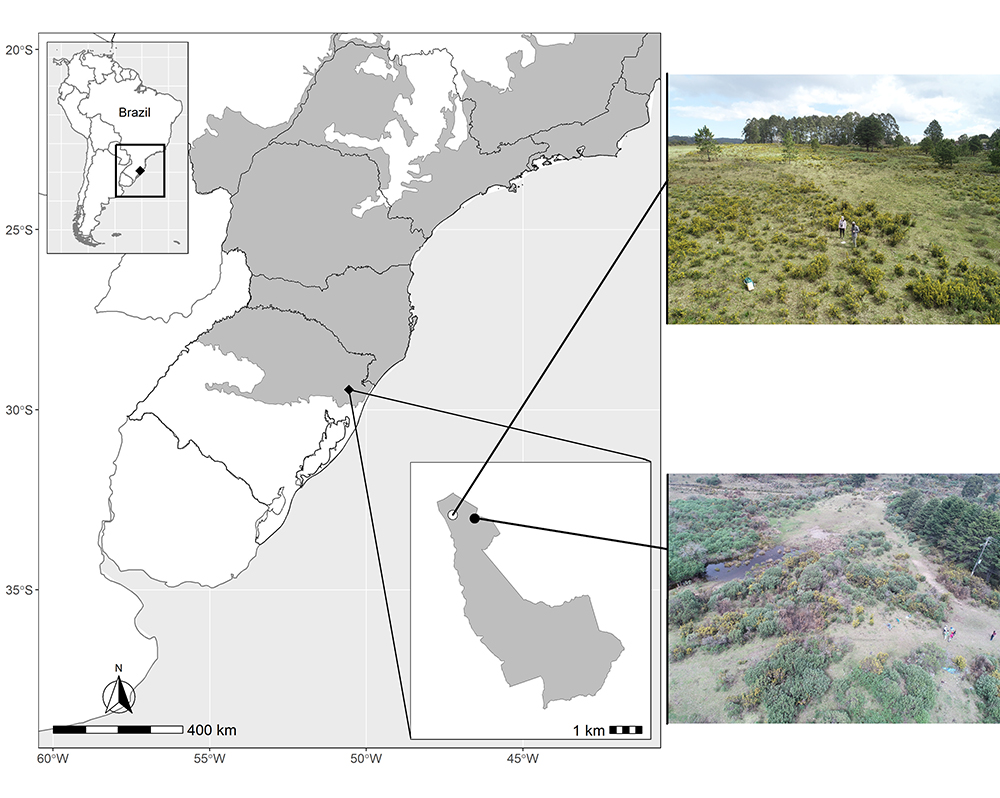
The study was conducted in the Ronda Municipal Natural Park, located in São Francisco de Paula (Rio Grande do Sul State, Brazil). The park is a protected conservation unit covering an area of approximately 1,448 hectares; it comprises ombrophilous and semideciduous seasonal forests and grassy-woody steppe (altitudinal grasslands) (Fig. 1), located at the southern end of the Southern Plateau escarpment. The climate is classified as subtropical Cfa according to Peel et al. (2007), characterized by mild summers and relatively cold winters, with no dry season. The average temperature and annual rainfall range from 18 to 20 °C and 1,650 to 1,850 mm, respectively (INMET, 2022). The typical highest temperature reaches 20.9 °C, with an absolute maximum of 34 °C, while the average lowest temperature is 9.9 °C, with an absolute minimum of -6.5 °C. Negative temperatures are possible from April to November, and frosts are common. The average low temperatures remain at 10 °C or lower for approximately six months. In particularly cold winters, the region may even experience snowfall (Backes, 1999).
Location of the study site (black diamond) in southern Brazil, in the Atlantic Forest hotspot (gray area on the main image), and in the lower image, the Ronda Municipal Natural Park is highlighted in gray. The detail shows the location of Ulex europaeus in managed area (white circle) and unmanaged (black circle), with an indication of aerial images for each site. Photos: Cássio A.H. Oliveira.
According to the park’s management plan, eight exotic species of plants have been recorded, including the most aggressive species, U. europaeus (gorse) and Lonicera japonica Thunb. (Caprifoliaceae) (honeysuckle) (Geoprospect, 2012). In the park, U. europaeus occurs along roads, at the edges of forest formations, and especially in grasslands that were heavily impacted by human activities in the past. The study was conducted in two distinct areas of the park: one where individuals were young and had re-sprouted after a failed attempt at mechanical control, and another where individuals could reach heights of up to 2 meters. Several individuals of cattle and horses freely graze within the park’s grassland areas.
Ulex europaeus is a shrub, native to Western Europe and North Africa (Clements et al., 2001). Its average size ranges from 1 to 3 meters in height, although individuals as tall as 7 meters have been found. It is an extremely spiny species, with young plants having soft, greenish-gray stems covered in trichomes. As the stems mature, they become woody. All branches end in a thorn approximately 50 mm long, and the leaves are 6-30 mm long × 1.5 mm wide, with a waxy coating (Gaynor & MacCarter, 1981). They have yellow hermaphrodite flowers that are 15-25 mm long, with a papilionaceous corolla (Bowman et al., 2008). The flower consists of two anterior petals that form the keel, which includes ten stamens and a carpel. In the absence of pollination, the flowers remain open, albeit their keel remains closed (Bowman et al., 2008). The seeds are found in pod-like fruits normally ejected up to 6 meters away. Primary mechanisms for the long-distance dispersal of gorse seeds include water, vehicles, and wildlife. The use of logging roads and equipment also represents a significant potential route for seed dispersal. Furthermore, dispersal and establishment are often associated with agricultural practices, such as implementing hedgerows (Clements et al., 2001). As observed in other plant species, the seeds possess elaiosomes, which can trigger secondary dispersal through ants (Clements et al., 2001; Gammans et al., 2005; Sasidharan & Venkatesan 2019). It is a cold climate-tolerant species, originating in regions where the daily average is approximately 2 ºC, but adult individuals can tolerate up to -20 ºC, although young individuals are intolerant of cold (Gaynor & MacCarter, 1981). It is a highly adaptable species, easily established in degraded areas such as roadsides and cultivated lands and even invading natural areas. It forms dense patches that reduce pastures and act as an impenetrable barrier for people and animals, in addition to increasing the risk of fires, as it is highly flammable (Clements et al., 2001).
Reproductive phenology and resource availability
To assess the flowering phenology of U. europaeus, we selected 50 individuals in the study area. Biweekly visits were conducted using the Fournier Intensity Percentage method (Fournier, 1974), which quantifies the phenophase from 0 to 4 using a five-category scale. The scale represents the intensity percentage of the phenophase, where 0 = no flowers, 1 = presence of flowers with a 1-25% variation, 2 = presence of flowers with a 26-50% variation, 3 = presence of flowers with a 51-75% variation, and 4 = presence of flowers with a 76-100% variation. The intensity values obtained biweekly for all individuals were summed and divided by the maximum possible value (number of individuals multiplied by four). The resulting proportion is then multiplied by 100 to obtain a percentage value. To determine if the flowers of U. europaeus provide floral resources other than pollen to pollinators, we bagged inflorescences containing pre-anthesis buds in ten different individuals. After the flowers opened, capillaries were used to check for the presence of floral nectar (Galetto & Bernardello, 2005). The voucher was deposited at the Herbarium Campos de Cima da Serra (CCS 450) of the Universidade Estadual do Rio Grande do Sul.
Flower visitors and pollen loads
We conducted focal observations of plants during the flowering period of U. europaeus (May to October 2021), totaling 40 hours distributed between 8:00 am and 3:00 pm. Floral visitors, primarily Apis mellifera bees, were collected using an entomological net and stored in a freezer after each collection. During the flowering period, we collected eight A. mellifera individuals in winter and eight in spring, and removed their pollen loads, which were then mounted on slides with fuchsin gelatin. We quantified the first 100 pollen grains on each slide, visualized them, and recorded how many were from U. europaeus. We also prepared a reference slide containing U. europaeus pollen taken from a pre-anthesis flower bud for comparison.
Seed dispersion
This study quantified the number of U. europaeus seeds in 50 fruits collected from randomly selected individuals. As autochory is the primary mode of seed dispersal, experiments were conducted to investigate whether there is secondary dispersal by ants. Additionally, field surveys were conducted to determine if U. europaeus seedlings were present in areas where horses and cattle, which freely graze within the park, had left feces.
To determine if ants carry U. europaeus seeds, 25-meter transects were established in two areas invaded by this alien species, and a metal lid containing 30 seeds was placed every 5 meters along the transects (Ferreira et al., 2011). When ants were observed carrying seeds, four individuals of each species were collected and preserved in 70% alcohol for later identification by specialists. An experiment was then conducted to evaluate the rate of seed removal by ants in two different areas. One of these areas has recently been managed and is home to young gorse plants. The second area is older and has a lower density of gorse but larger individuals. The experiment consisted of five stations, 2 meters apart, in each area, and was conducted in two periods. At each station, 30 seeds were exposed (totaling 600 seeds), protected by a 300 ml acrylic cup with three equidistant side openings (3 x 3 cm). The cups were fixed with the opening facing the ground using a bamboo skewer inserted in the center. The seeds were placed on an ethylene vinyl acetate base to prevent loss in the soil and facilitate counting (adapted from Ferreira et al., 2011). The experiment was carried out between August 29 and 30 2021, when fruiting began and there were still few seeds available in the soil, and on October 22 and 23 2021, when many fruits were dispersing their seeds. The seeds were exposed for 24 hours in the two populations evaluated for both periods. To determine if there was a difference in the percentage of seed removal between areas (mature and young) and between winter and spring, Two-way analysis of variance tests were performed using the R software (RStudio Team, 2020).
Results
Reproductive phenology and resource availability
The flowering of U. europaeus began in May and continued until November. However, some unmarked individuals were observed flowering throughout all seasons. The peak flowering period occurred in August, during the winter (Fig. 2). In contrast, the fruiting period began in July, with peak fruiting observed from November onwards, coinciding with the initiation of seed dispersal. During the peak flowering of U. europaeus, no native species were in bloom in the study area. The first flowers of native species were recorded only in September, potentially overlapping slightly with the flowering period of U. europaeus. These native species included Mimosa scabrella Benth., M. incana Benth. (Fabaceae), and some species of Baccharis (Asteraceae). Individuals of Polygala linoides Poir. (Polygalaceae) were also observed flowering throughout the year, although their floral visitors differed from those of U. europaeus. As for floral resource availability, none of the flowers evaluated produced nectar. Therefore, the sole floral resource provided by this plant is pollen, which is concealed within the keel petals and requires specialized behavior to access.
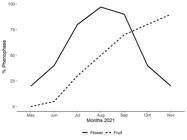
Percentage index of Fournier intensity for each reproductive phenophase of Ulex europaeus between May and November 2021 in the Ronda Municipal Natural Park, São Francisco de Paula, Rio Grande do Sul, Brazil.
Flower visitors and pollen loads
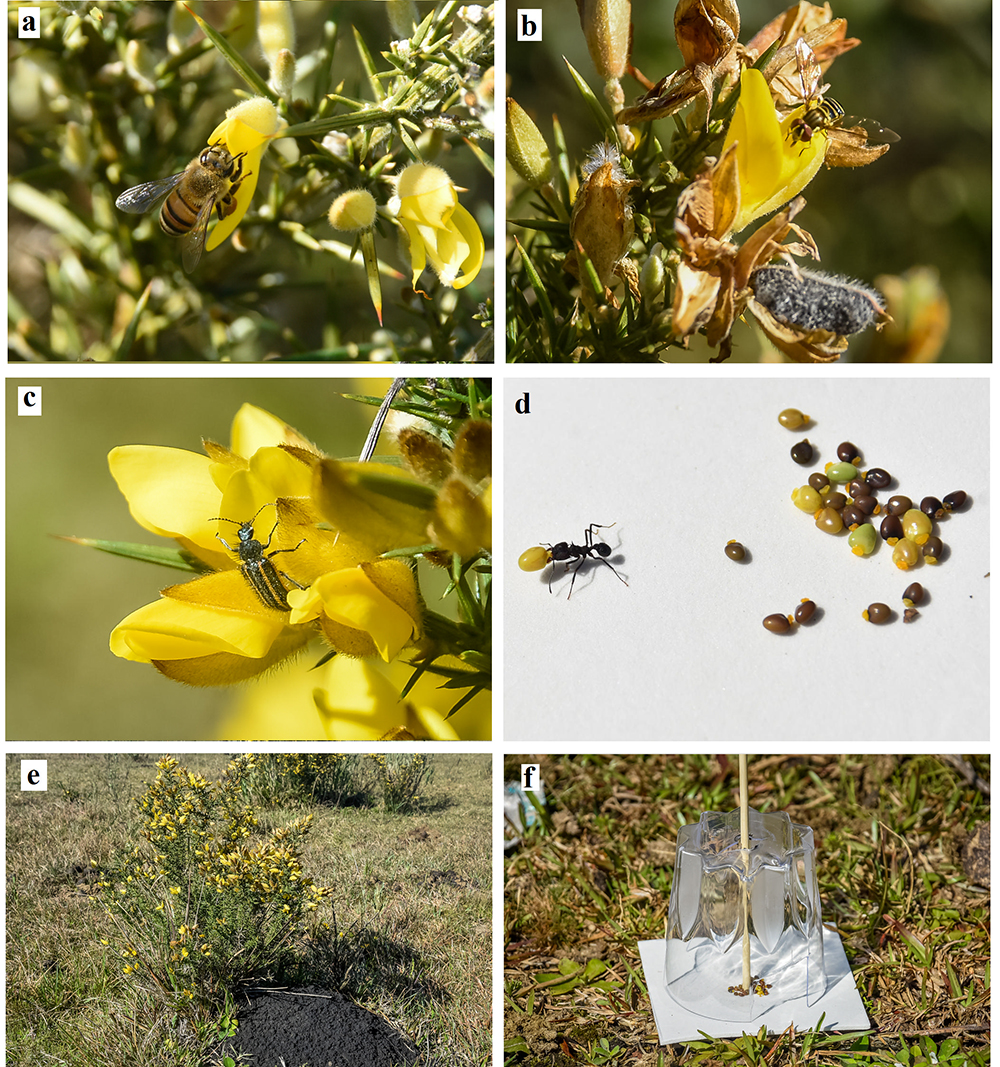
Throughout the study period, we only observed the exotic bee Apis mellifera L. (honeybee) visiting U. europaeus flowers (Fig. 3 A ). In the colder months (June, July, and August), we observed a high frequency of visitation, with several honeybees on a single plant. However, when other species were in bloom in early spring (September and October), the gorse flowers experienced a reduction in visitation numbers. Only one bee was recorded visiting the gorse flowers every half hour in early November, but it was also spotted foraging on native plant blossoms. Despite the abundant availability of U. europaeus flowers, we did not observe any native pollinators capable of pollinating this plant. Hoverflies (Fig. 3 B ) approached the flowers but did not contact the reproductive structures, and a coleopteran (Fig. 3 C ) walked across the flowers but similarly did not interact with the flowers’ reproductive structures. During winter, the pollen loads collected from honeybees foraging on gorse (n = 8) comprised 92-100% of U. europaeus pollen. However, with other flowering species in the area during spring, the loads (n = 8) varied between 40-100% of U. europaeus pollen.
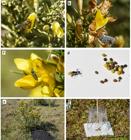
Interactions of Ulex europaeus with pollinators and seed dispersers in Ronda Municipal Natural Park, São Francisco de Paula, Rio Grande do Sul, Brazil. a- U. europaeus flowers being visited by Apis mellifera. b- Syrphid landed on a flower of U. europaeus. c- Coleoptera perched on a flower of U. europaeus. d- Acromyrmex ambiguus carrying a seed of U. europaeus. e- U. europaeus growing alongside ant nests. f- Seed removal experiment. Photos: Francielle P. Araújo-Hoffmann.
Seed dispersion
The fruits of U. europaeus contained an average of 3.12 seeds (± 1.35; n = 50). In addition to its autochorous dispersal ability, we observed secondary seed dispersal of this plant by ant species such as Acromyrmex ambiguus (Fig. 3 D ), Camponotus punctulatus, and Pheidole sp. (Formicidae) within the study area. These seeds were carried close to the ant nests, contributing to extended dispersal. We also found gorse seedlings growing alongside ant nests in the study area (Fig. 3 E ). In the seed experiment (Fig. 3 F ), we observed seed removal in the managed and unmanaged areas and the winter and spring periods. Two-way analysis of variance showed that the percentage of seed removal did not differ significantly between areas (F1,16 = 0.103; p = 0.753), sample seasons (F1,16 = 0.014, p = 0.906), or the interaction between areas and seasons (F1,16 = 1.851; p = 0.192). Despite grazing occurring in areas dominated by gorse, there was no relationship between the grazing animals and U. europaeus dispersal; additionally, seedlings were not found growing on the dung of these animals.
Discussion
The flowering period of gorse can occur throughout the year, but the peak of flowering coincides with the winter period in the study area. In its native distribution, it appears to have two flowering peaks: a more robust one in spring and another in autumn, possibly extending into winter (Harper & Morris, 2007; Tarayre et al., 2007; Bowman et al., 2008). However, Bowman et al. (2008) report that U. europaeus achieves greater reproductive success when it flowers during the winter despite the harsh climatic conditions and low pollinators. One possible explanation is that by flowering in winter, the species avoids competition for pollinators with other species. Indeed, during the winter season, U. europaeus is almost the only plant flowering in Brittany, France (Des Abbayes et al., 1971, apud Bowman et al., 2008), and the same occurs in high-altitude grasslands in southern Brazil. Another explanation for the reproductive success of winter-flowering plants is that the resulting fruits experience less seed predation compared to fruits resulting from spring blossoms in its native distribution (Bowman et al., 2008; Tarayre et al., 2007), but fruit predation was not observed in our study.
In the study area, U. europaeus is exclusively pollinated by Apis mellifera. This bee species is also the primary pollinator of U. europaeus in its native habitat, especially during the winter (Bowman et al., 2008). Ulex europaeus relies heavily on pollination for seed production (Bowman et al., 2008; Atlan et al., 2015). This dependence on pollinators for reproduction, a trait common in many plants, influences their geographical spread (Atlan et al., 2015). In the highland grasslands of southern Brazil, despite the lack of interaction with native pollinators, U. europaeus finds its primary pollinator in A. mellifera bees, with which it co-evolved in its native range (Bowman et al., 2008). These bees, also exotic to Brazil, contribute to the success of U. europaeus in its new environment. The success of invasive species can be influenced by positive interactions established in the introduction area (Richardson et al., 2000; Green et al., 2011; MacIvor et al., 2015; Marciniak et al., 2020), where one exotic species can support the persistence of another.
Although the peak of U. europaeus flowering did not overlap with that of native plant species, even if it did, it would not coopt native pollinators for its flowers. This is because, during the winter peak, native bees remain inactive in the study area (personal observation). While studies indicate that U. europaeus produces only pollen as a floral resource (Talavera et al., 1999; Bowman et al., 2008), some studies mention this plant as an excellent producer of both pollen and nectar (Monsanto, 2013; Galappaththi et al., 2023). Moreover, our tests confirmed that this species does not produce nectar. Plants that abundantly produce floral resources can attract pollinators and receive higher visitation rates, potentially reducing visitation rates on native species (Chittka & Schurkens, 2001), although this was not the case for U. europaeus in southern Brazil. The abundant availability of pollen from gorse exclusively supports A. mellifera bee populations in the invaded area, as a keel protects the pollen of this species, and only large insects such as honeybees or bumblebees are able to open this structure (Ballantyne et al., 2015). However, as spring begins, A. mellifera bees alternate their visits between gorse flowers and those of native plants, which can lead to reproductive interference due to the mixing of heterospecific pollen. Moreover, due to the large number of active worker bees, they may recruit the majority of floral resources from native plants, creating competition with native bees through resource depletion (Mohallem, 2019). As many wild bee species are already under stress due to human activities, there are concerns that added competition and other interactions with introduced bees could further contribute to population declines (Wojcik et al., 2018; Dáttilo et al., 2022; Iwasaki & Hogendoorn, 2022).
The dominance of invasive plants can erode the structure of native plant-pollinator networks in native communities, causing instability and reduced pollination system function (Vanbergen et al., 2018). Ulex europaeus might indirectly affect plant-pollinator interactions in the invaded community by fostering large populations of A. mellifera in the area. This bee species has been introduced to various regions worldwide for apiculture and crop pollination due to its generalist feeding habits, nesting flexibility, and year-round activity (Bowman et al., 2008). As they establish populations in natural habitats, they increase the risk of competition with native bee species (Moritz et al., 2005). Consequently, in the long term, the presence of this exotic plant, by sustaining a population of a competing bee species, may affect native pollinators and interfere with the reproduction of native plants.
The primary dispersal of U. europaeus is carried out by the plant itself through the ejection of its seeds, which can reach up to 5 meters from the parent plant. Secondary dispersal methods involve human transport (Gaynor & MacCarter, 1981). Ants are known for their ability to transport seeds with elaiosomes back to their nests. Nevertheless, this behavior was not observed with gorse in England and is not commonly associated with ants in New Zealand (Hill et al., 2001). In the present study, however, the transport of seeds by some native ant species was confirmed. Consequently, controlling an invasive species becomes considerably more challenging when it has natural vectors for dispersal (Marciniak et al., 2020). There is no evidence grazing animals serve as secondary dispersers of gorse, possibly because the plant exhibits dry branches when the fruits are formed, making them less palatable to these animals. Still, these animals may carry the seeds on their hooves.
While climatic factors significantly influence a species’ potential invasiveness (Christina et al., 2020), it is crucial to also consider the mating systems and ecological interactions of introduced plants to fully understand invasive species’ success (Richardson et al., 2000; Atlan et al., 2015). Baker’s rule (Baker, 1955; 1974) suggests that colonizing species tend to evolve towards reduced dependence on pollinators, increased self-fertility, and lower inbreeding depression. However, U. europaeus, despite its high reliance on pollinators, consistently finds them across various locations where it was established. Hence, the case of gorse does not necessarily contradict Baker’s rule, as noted by Atlan et al. (2015). Without the presence of A. mellifera bees in the region, gorse would likely struggle to achieve invasive status. These two species mutually reinforce each other within the ecosystem, with gorse exhibiting a greater dependence on A. mellifera for its invasion success than the reverse. In turn, gorse helps sustain substantial populations of A. mellifera in southern Brazil’s high-altitude grasslands. Consequently, it becomes imperative to implement control strategies for both species, focusing particularly on protecting natural environments.
The obtained results make a valuable contribution to understanding the invasion of Ulex europaeus and its ecological interactions in southern Brazil. These findings help elucidate the role of mutualistic interactions in the spread of exotic species, complementing previous studies that primarily focused on the intrinsic characteristics of invasive species. This approach may encourage other researchers to explore the role of ecological interactions in species invasions across various geographical and biological contexts. In the context of mutualistic interactions, experimental studies involving the manipulation of A. mellifera are desirable. Such studies could provide a deeper understanding of U. europaeus' dependence on this pollinator and the ecological implications of this interaction. This experimental approach can shed light on crucial aspects and expand our knowledge of the underlying mechanisms of biological invasions.
Acknowledgments
We would like to thank Angela Pelissari Silva for her assistance with fieldwork, Dr. William Dröse for the ant identifications, the Ronda Municipal Natural Park for allowing us to conduct our study, and Atlas Assessoria Linguística for language editing. This work was supported by Fundação de Amparo à Pesquisa do Estado do Rio Grande do Sul and Secretaria Estadual doe Meio Ambiente (FAPERGS/SEMA RS) (Grant number 22/2551-0001819-0).
References
-
Albrecht M, Ramis MR, Traveset A. 2016. Pollinator-mediated impacts of alien invasive plants on the pollination of native plants: The role of spatial scale and distinct behaviour among pollinator guilds. Biological Invasions 18: 1801-1812. doi: 10.1007/s10530-016-1121-6
» https://doi.org/10.1007/s10530-016-1121-6 -
Atlan A, Legionnet AS, Udo N, Tarayre M. 2015. Self-Incompatibility in Ulex europaeus: Variations in Native and Invaded Regions. International Journal of Plant Sciences 176: 515-524. doi: 10.1086/681669
» https://doi.org/10.1086/681669 - Azevedo C, Dechoum MS, Zenni RD, Ziller SR, Zalba S. 2010. Espécies exóticas invasoras. São Paulo, SMA.
- Backes A. 1999. Condicionamento climático e distribuição geográfica de Araucaria angustifolia (Bertol.) Kuntze no Brasil - II. Pesquisas Botânica 49: 31-35.
-
Baker HG. 1955. Self-compatibility and establishment after 'long-distance' dispersal. Evolution 9: 347-349. doi: 10.2307/2405656
» https://doi.org/10.2307/2405656 -
Baker HG. 1974. The evolution of weeds. Annual Review of Ecology and Systematics 5: 1-24. doi: 10.1146/annurev.es.05.110174.000245
» https://doi.org/10.1146/annurev.es.05.110174.000245 -
Ballantyne G, Baldock KCR, Willmer PG. 2015. Constructing more informative plant-pollinator networks: Visitation and pollen deposition networks in a heathland plant community. Proceedings of the Royal Society B: Biological Sciences 282: 20151130. doi: 10.1098/rspb.2015.1130
» https://doi.org/10.1098/rspb.2015.1130 - Bartomeus I, Fründ J, Williams NM. 2016. Invasive plants as novel food resources, the pollinators’ perspective. In: Weis JS, Sol D (eds.). Biological invasions and animal behaviour. Cambridge, Cambridge University Press. p. 119-132.
-
Bartomeus I, Vila M, Santamaria L. 2008. Contrasting effects of invasive plants in plant-pollinator networks. Oecologia 155: 761-770. doi: 10.1007/s00442-007-0946-1
» https://doi.org/10.1007/s00442-007-0946-1 - Boldrini II. 1997. Campos do Rio Grande do Sul: Caracterização fisionômica e problemática ocupacional. Boletim do Instituto de Biociências 56: 1-39.
-
Bowman G, Tarayre M, Atlan A. 2008. How is the invasive gorse Ulex europaeus pollinated during winter? A lesson from its native range. Plant Ecology 197: 197-206. doi: 10.1007/s11258-007-9370-1
» https://doi.org/10.1007/s11258-007-9370-1 - Buckup GB. 2010. Biodiversidade dos Campos de Cima da Serra. Porto Alegre, Libretos.
-
Chittka L, Schurkens S. 2001. Successful invasion of a floral market. Nature 411: 653. doi: 10.1038/35079676
» https://doi.org/10.1038/35079676 -
Christina M, Limbada F, Atlan A. 2020. Climatic niche shift of an invasive shrub (Ulex europaeus): A global scale comparison in native and introduced regions. Journal of Plant Ecology 13: 42-50. doi: 10.1093/jpe/rtz041
» https://doi.org/10.1093/jpe/rtz041 -
Clements DR, Peterson DJ, Prasad R. 2001. The biology of Canadian weeds. 112. Ulex europaeus L. Canadian Journal of Plant Science 81: 325-337. doi: 10.4141/P99-128
» https://doi.org/10.4141/P99-128 - Cordero RL, Torchelsen FP, Overbeck GE, Anand M. 2016. Invasive gorse (Ulex europaeus, Fabaceae) changes plant community structure in subtropical forest-grassland mosaics of southern Brazil. Biological Invasions 18: 1629-1643. doi: 10.1007/s10530-016-1106-5
- Crawshaw D, Dall'Agnol M, Cordeiro JLP, Hasenack H. 2007. Caracterização dos campos sul-rio-grandenses: Uma perspectiva da ecologia da paisagem. Boletim Gaúcho de Geografia 33: 233-252.
-
Dáttilo W, Cruz CP, Luna P et al 2022. The impact of the Honeybee Apis mellifera on the organization of pollination networks is positively related with its interactive role throughout its geographic range. Diversity 14: 917. doi: 10.3390/d14110917
» https://doi.org/10.3390/d14110917 - Díaz Vélez MC, Ferreras AE, Paiaro V. 2020. Seed dispersal interactions promoting plant invasions. In: Traveset A, Richardson DM (eds.). Plant invasions: The role of biotic interactions. CABI. p. 90-104.
-
Ferreira AV, Bruna EM, Vasconcelos HL. 2011. Seed predators limit plant recruitment in Neotropical savannas. Oikos 120: 1013-1022. doi: 10.1111/j.1600-0706.2010.19052.x
» https://doi.org/10.1111/j.1600-0706.2010.19052.x - Ferreira PMA, Eggers L. 2008. Espécies de Cyperaceae do Centro de Pesquisa e Conservação da Natureza Pró-Mata, município de São Francisco de Paula, RS, Brasil. Acta Botanica Brasilica 22: 173-185.
- Fournier LA. 1974. Un método cuantitativo para la medición de características fenológicas en árboles. Turrialba 24: 422-423.
-
Frost CM, Allen WJ, Courchamp F, Jeschke JM, Saul W-C, Wardle DA. 2019. Using network theory to understand and predict biological invasions. Trends in Ecology & Evolution 34: 831-843. doi: 10.1016/j.tree.2019.04.012
» https://doi.org/10.1016/j.tree.2019.04.012 -
Galappaththi HSSD, Silva WAPP, Mccormick AC. 2023. A mini-review on the impact of common gorse in its introduced ranges. Tropical Ecology 64: 1-25. doi: 10.1007/s42965-022-00239-9
» https://doi.org/10.1007/s42965-022-00239-9 - Galetto L, Bernardello G. 2005. Rewards in flowers: nectar. In: Dafni A, Kevan PG, Husband BC (eds.). Practical pollination biology. Canada, Enviroquest Ltd. p. 264-313.
-
Gammans N, Bullock JM, Schonrogge K. 2005. Ant benefits in a seed dispersal mutualism. Oecologia 146: 43-49. doi: 10.1007/s00442-005-0154-9
» https://doi.org/10.1007/s00442-005-0154-9 -
Gardener MR, Bustamante RO, Herrera I et al 2012. Plant invasions research in Latin America: Fast track to a more focused agenda. Plant Ecology & Diversity 5: 225-232. doi: 10.1080/17550874.2011.604800
» https://doi.org/10.1080/17550874.2011.604800 -
Gaynor DL, MacCarter LE. 1981. Biology, ecology, and control of gorse (Ulex europaeus L.)∶ A bibliography. New Zealand Journal of Agricultural Research 24: 123-137. doi: 10.1080/00288233.1981.10420879
» https://doi.org/10.1080/00288233.1981.10420879 - Geoprospect - Geologia e Projetos Ambientais. 2012. Plano de manejo Parque Natural Municipal da Ronda - PNMR, São Francisco de Paula/RS. São Francisco de Paula, Secretaria Municipal de Proteção Ambiental.
-
GISD - Global Invasive Species Database. 2023. Species profile: Ulex europaeus https://www.iucngisd.org/gisd/species.php?sc=69 24 Oct. 2023.
» https://www.iucngisd.org/gisd/species.php?sc=69 - GISP - Programa Global de Espécies Invasoras. 2005. América do Sul invadida. A crescente ameaça das espécies exóticas invasoras. United States of America, GISP.
-
Gosper CR, Smith GV. 2010. Fruit traits of vertebrate-dispersed alien plants: Smaller seeds and more pulp sugar than indigenous species. Biological Invasions 12: 2153-2163. doi: 10.1007/s10530-009-9617-y
» https://doi.org/10.1007/s10530-009-9617-y -
Green PT, O'Dowd DJ, Abbott KL, Jeffery M, Retallick K, MacNally R. 2011. Invasional meltdown: Invader-invader mutualism facilitates a secondary invasion. Ecology 92: 1758-1768. doi: 10.1890/11-0050.1
» https://doi.org/10.1890/11-0050.1 -
Harper G, Morris L. 2007. Flowering and Climate Change. Sibbaldia: The International Journal of Botanic Garden Horticulture 5: 25-42. doi: 10.24823/Sibbaldia.2007.4
» https://doi.org/10.24823/Sibbaldia.2007.4 -
Hill RL, Gourlay AH, Barker RJ. 2001. Survival of Ulex europaeus seeds in the soil at three sites in New Zealand. New Zealand Journal of Botany 39: 235-244. doi: 10.1080/0028825X.2001.9512734
» https://doi.org/10.1080/0028825X.2001.9512734 -
INMET. 2022. Instituto Nacional de Meteorologia. Normais Climatológicas do Brasil 1991-2020. https://clima.inmet.gov.br/ 16 Jun. 2022.
» https://clima.inmet.gov.br/ - IPBES. 2019. Summary for policymakers of the global assessment report on biodiversity and ecosystem services of the Intergovernmental Science-Policy Platform on Biodiversity and Ecosystem Services. Germany, IPBES secretariat.
-
Iwasaki JM, Hogendoorn K. 2022. Mounting evidence that managed and introduced bees have negative impacts on wild bees: An updated review. Current Research in Insect Science 2: 100043. doi: 10.1016/j.cris.2022.100043
» https://doi.org/10.1016/j.cris.2022.100043 - Lowe S, Browne M, Boudjelas S, De Poorter M. 2000. 100 of the World’s Worst Invasive Alien Species: A selection from the Global Invasive Species Database. Auckland, Invasive Species Specialist Group (ISSG).
-
MacIvor JS, Ruttan A, Salehi B. 2015. Exotics on exotics: Pollen analysis of urban bees visiting Sedum on a green roof. Urban Ecosystems 18: 419-430. doi: 10.1007/s11252-014-0408-6
» https://doi.org/10.1007/s11252-014-0408-6 -
Marciniak B, Dechoum MS, Castellani TT. 2020. The danger of non-native gardens: Risk of invasion by Schefflera arboricola associated with seed dispersal by birds. Biological Invasions 22: 997-1010. doi: 10.1007/s10530-019-02139-x
» https://doi.org/10.1007/s10530-019-02139-x - Mohallem ML. 2019. Impacto de Apis mellifera L. no comportamento de abelhas nativas e na rede de interações abelha-planta. MSc Thesis, Universidade Federal de Alfenas, Brazil.
- Monsanto MG. 2013. Caracterização de compostos fenólicos e de minerais em alguns pólenes apícolas. MSc Thesis, Instituto Politécnico de Castelo Branco, Castelo Branco.
-
Morales CL, Traveset A. 2008. Interspecific pollen transfer: Magnitude, prevalence and consequences for plant fitness. Critical Reviews in Plant Sciences 27: 221-238. doi: 10.1080/07352680802205631
» https://doi.org/10.1080/07352680802205631 -
Morales CL, Traveset A. 2009. A meta-analysis of impacts of alien vs. native plants on pollinator visitation and reproductive success of co-flowering native plants. Ecology Letters 12: 716-728. doi: 10.1111/j.1461-0248.2009.01319.x
» https://doi.org/10.1111/j.1461-0248.2009.01319.x -
Moritz RFA, Härtel S, Neumann P. 2005. Global invasions of the western honeybee (Apis mellifera) and the consequences for biodiversity. Ecoscience 12: 289-301. doi: 10.2980/i1195-6860-12-3-289.1
» https://doi.org/10.2980/i1195-6860-12-3-289.1 -
Myers N, Mittermeier RA, Mittermeier CG, Fonseca GAB, Kent J. 2000. Biodiversity hotspots for conservation priorities. Nature 403: 853-858. doi: 10.1038/35002501
» https://doi.org/10.1038/35002501 -
Peel MC, Finlayson BL, McMahon TA. 2007. Updated world map of the Köppen-Geiger climate classification. Hydrology and Earth System Sciences Discussions 11: 1633-1644. doi: 10.5194/hess-11-1633-2007
» https://doi.org/10.5194/hess-11-1633-2007 - Prestes FS, Trombini J. 2015. Tojo (Ulex europaeus): Espécie exótica introduzida na Área de Proteção Ambiental Rota do Sol. Revista Ciência & Desenvolvimento 8: 168-181.
-
Richardson DM, Allsopp N, D'Antonio CM, Milton SJ, Rejmánek M. 2000. Plant invasions - the role of mutualisms. Biological Reviews 75: 65-93. doi: 10.1111/j.1469-185X.1999.tb00041.x
» https://doi.org/10.1111/j.1469-185X.1999.tb00041.x - RStudio Team. 2020. RStudio: Integrated Development for R. Boston, RStudio;PBC.
-
Sasidharan R, Venkatesan R. 2019. Seed elaiosome mediates dispersal by ants and impacts germination in Ricinus communis Frontiers in Ecology and Evolution 7: 246. doi: 10.3389/fevo.2019.00246
» https://doi.org/10.3389/fevo.2019.00246 - Schneider AA. 2007. A flora naturalizada no estado do Rio Grande do Sul, Brasil: Herbáceas subespontâneas. Biociencias (Porto Alegre) 15: 257-268.
- Talavera S, Aedo C, Castroviejo S et al 1999. Flora Iberica: Plantas vasculares de la Península Ibérica e Islas Baleares. Madrid, Real Jardín Botánico.
-
Tarayre M, Bowman G, Legionnet AS, Barat M, Atlan A. 2007. Flowering phenology of Ulex europaeus: Ecological consequences of variation within and among populations. Evolutionary Ecology 21: 395-409. doi: 10.1007/s10682-006-9109-9
» https://doi.org/10.1007/s10682-006-9109-9 -
Traveset A, Richardson DM. 2006. Biological invasions as disruptors of plant reproductive mutualisms. Trends in Ecology & Evolution 21: 208-216. doi: 10.1016/j.tree.2006.01.006
» https://doi.org/10.1016/j.tree.2006.01.006 -
Traveset A, Richardson DM. 2014. Mutualistic Interactions and Biological Invasions. Annual Review of Ecology Evolution and Systematics 45: 89-113. doi: 10.1146/annurev-ecolsys-120213-091857
» https://doi.org/10.1146/annurev-ecolsys-120213-091857 -
Vanbergen AJ, Espindola A, Aizen MA. 2018. Risks to pollinators and pollination from invasive alien species. Nature Ecology & Evolution 2: 16-25. doi: 10.1038/s41559-017-0412-3
» https://doi.org/10.1038/s41559-017-0412-3 -
Wojcik VA, Morandin LA, Adams LD, Rourke KE. 2018. Floral resource competition between honey bees and wild bees: Is there clear evidence and can we guide management and conservation? Environmental Entomology 47: 822-833. doi: 10.1093/ee/nvy077
» https://doi.org/10.1093/ee/nvy077 -
Wright SJ. 2005. Tropical forests in a changing environment. Trends in Ecology & Evolution 20: 553-60. doi: 10.1016/j.tree.2005.07.009
» https://doi.org/10.1016/j.tree.2005.07.009