 Plant dispersal strategies in post-mining restoration areas in the Eastern Amazon
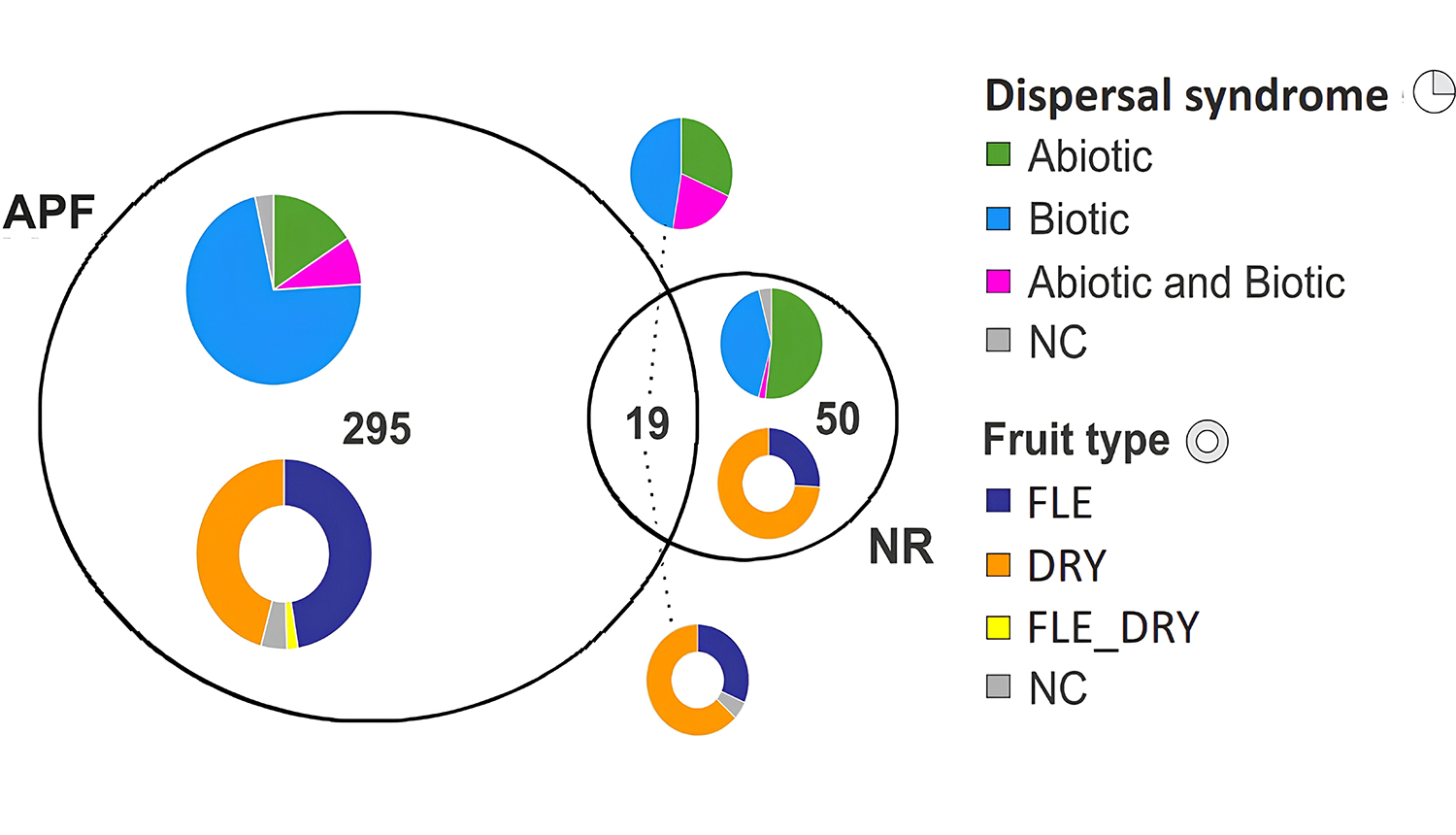
Mining activities in the Amazon result in significant environmental damage to mined areas. Natural regeneration through seed dispersal is a crucial process that aims to reintegrate those mined areas into the native vegetation nearby. In this study, our main objective was to compare seed and fruit dispersal strategies that occur in the vertical stratification in altered primary forest (APF) and natural regeneration (NR) areas after bauxite mining. The results indicate that zoochory was the most frequent dispersal syndrome in APF areas, with fleshy fruits being the most frequent. The NR areas exhibited greater variation in dispersal syndromes, with zoochory, anemochory, and autochory being the most representative, with a predominance of dry fruits. The differences in dispersal modes between APF and NR areas are within the patterns already expected and previously found in other studies on fruit dispersal. These findings emphasize that understanding how species composition and dispersal strategies are influenced by environmental and anthropogenic impacts is crucial for the restoration of these areas. This knowledge helps identify which dispersal mechanisms are best adapted to degraded areas, enabling more effective recovery strategies through planting species with similar dispersal mechanisms, particularly in regions impacted by mining.
Keywords:
dry fruits; dispersal patterns; fleshy fruits; mining; natural regeneration
 Thumbnail
 Thumbnail
 Thumbnail
 Thumbnail
 Thumbnail