 Germination of South Brazilian grassland herbaceous species: state of knowledge and research needs for advancing grassland restoration
Abstract
Ecological restoration of grasslands is widely dependent on seed addition to reestablish native plants. Thus, it is important to know the seed ecology of native species. The South Brazilian grasslands are species-rich ecosystems seriously threatened by land use conversion and invasive species, which makes their restoration extremely urgent. Nevertheless, poor knowledge about the germination of native herbaceous species limits ecological restoration efforts. Here we present, based on a literature search, a synthesis of the knowledge on germination and seedling emergence of native herbaceous species from South Brazilian grasslands, identify knowledge gaps, and present directions to enhance research and its application in restoration. We found 907 tests performed on 127 native species, mostly conducted in a germination chamber, but with a wide variety of seed storage conditions, seed dormancy break treatments, and germination conditions during tests. Poaceae and Fabaceae are the most tested botanical families. We recommend (1) the inclusion of more species, also from more plant families, into testing, considering also a better coverage of different grassland regions in seed collecting; (2) publicizing and making test data openly accessible; (3) developing standardized protocols for seed collection, storage, and germination tests; and (4) increase testing of emergence under field conditions.
Keywords:
Campos Sulinos; ecological restoration; emergence test; germination test; seeds
Introduction
Grassland ecosystems worldwide are strongly impacted, mainly by habitat conversion (Millennium Ecosystem Assessment, 2005; Gibson, 2009). Restoring them is important to ensure biodiversity conservation, ecosystem functioning, and ecosystem services (Clewell & Aronson, 2006; Funk et al., 2008; Gibson, 2009). Grassland regeneration is usually seed-limited, i.e., there is a low potential for vegetation recovery from the soil seed bank and bud bank in severely degraded areas (Buisson et al., 2019; see examples in Fidelis et al., 2014; Vieira et al., 2015). The active introduction of locally absent native species in degraded sites is an important and cost-effective practice in the restoration of grasslands (Kiehl et al., 2010; Buisson et al., 2019; Buisson et al., 2021a). However, knowledge gaps in the basic seed biology of grassland species limit our capacity to use seed-based restoration strategies (Buisson et al., 2021b). Thus, it is important to assess the potential of germination and establishment from seeds of native species (Saatkamp et al., 2019; Buisson et al., 2021b).
In southern Brazil, species-rich grassland ecosystems (Andrade et al., 2023) with high economic and cultural importance (Quadros et al., 2015) are reduced to circa 40 % of their original cover (Vélez-Martin et al., 2015; Baeza et al., 2022), and many of them are degraded, e.g., by invasion of alien species (Guido et al., 2016). Ecological restoration in this region is a recent concern (Overbeck et al., 2013), with several gaps and limitations (Guerra et al., 2020; Thomas et al., 2024b). For example, only three native grass species are sold as seeds in this region: Axonopus affinis Chase and A. compressus (Sw.) P. Beauv., both mainly for landscaping (Rolim et al., 2022), and Paspalum notatum Flüggé cv. Pensacola, as a forage species for cattle. Nevertheless, the seeds commercialized originate from cultivars developed in other countries. The lack of seeds on the market critically limits restoration in practice. Alternatives such as mechanical seed collection in remnants and regulations for the use in the restoration chain have been discussed recently (Dutra-Silva et al., 2024). However, fundamental information on seed ecology of native species, such as optimum storage conditions, dormancy breaking requirements, and germination rates, is rarely available for these herbaceous species (Thomas et al., 2024b).
A synthesis of the knowledge on germination of native species from South Brazilian grasslands (Campos Sulinos) is crucial to develop a research strategy on seed introduction in degraded grasslands in the region. Based on a literature search, we collected data on different aspects of seed and germination biology of native species, including storage, dormancy-breaking requirements, and the germination rate under different conditions. We also synthesize the types of studies or experiments that have been conducted, thus revealing research gaps. With this, we not only show that species with high germination rates are available for use in the restoration of grasslands but also pave the way towards more coordinated research and, ultimately, application in practice.
Methods
Data Collection
We conducted a targeted search for published materials (papers, theses, technical reports, congress abstracts, etc.) of researchers from universities and research institutions in the region of interest, which reported results from germination tests using native species from South Brazilian grasslands. Additionally, in July 2024, we conducted a search on Web of Science with the following syntax ((grassland* OR pamp* OR campo* OR pastizal*) AND (brasil* OR brazil* OR uruguay*) AND (germin* OR sement* OR seed* OR semilla*)), searching in the fields Title or Abstract, or Author Key-words. The search returned 411 results. To be included, the paper had to test germination of native herbaceous species from the Campos Sulinos, and raw germination values needed to be reported in the manuscript. When raw germination values were not available, the corresponding authors were contacted by email to request the data. After July 2024, we added new data as we obtained from new available studies or when previously contacted authors provided the requested data. Additionally, we included data from independent germination tests performed by Laboratório de Ecologia Vegetal (headed by Professor Sandra Müller, UFRGS) and Laboratório de Estudos em Vegetação Campestre (headed by Professor Gerhard Overbeck, UFRGS) and not published as part of any study but available online as LevCamp Seed Dataset (Thomas et al., 2025a; more information at Data Availability section).
While our focus here is on South Brazilian grasslands, our search in the Web of Science included Uruguay due to the shared occurrences of many grassland species between Rio Grande do Sul (the southernmost Brazilian state) and Uruguay. The Pampa grasslands in Brazil and the Uruguayan grassland ecosystems are within the same ecoregion (see Soriano, 1991; Dinerstein et al., 2017). We did not include Argentina in our search because vegetation patterns south of the Río de la Plata are already considerably different, principally in consequence of climatic and soil conditions (Baeza & Paruelo, 2018). Species nomenclatures were standardized using the Flora e Funga do Brasil (2024) databases, in the flora package (Carvalho, 2020) in the R program.
Results
Number of species with germination data
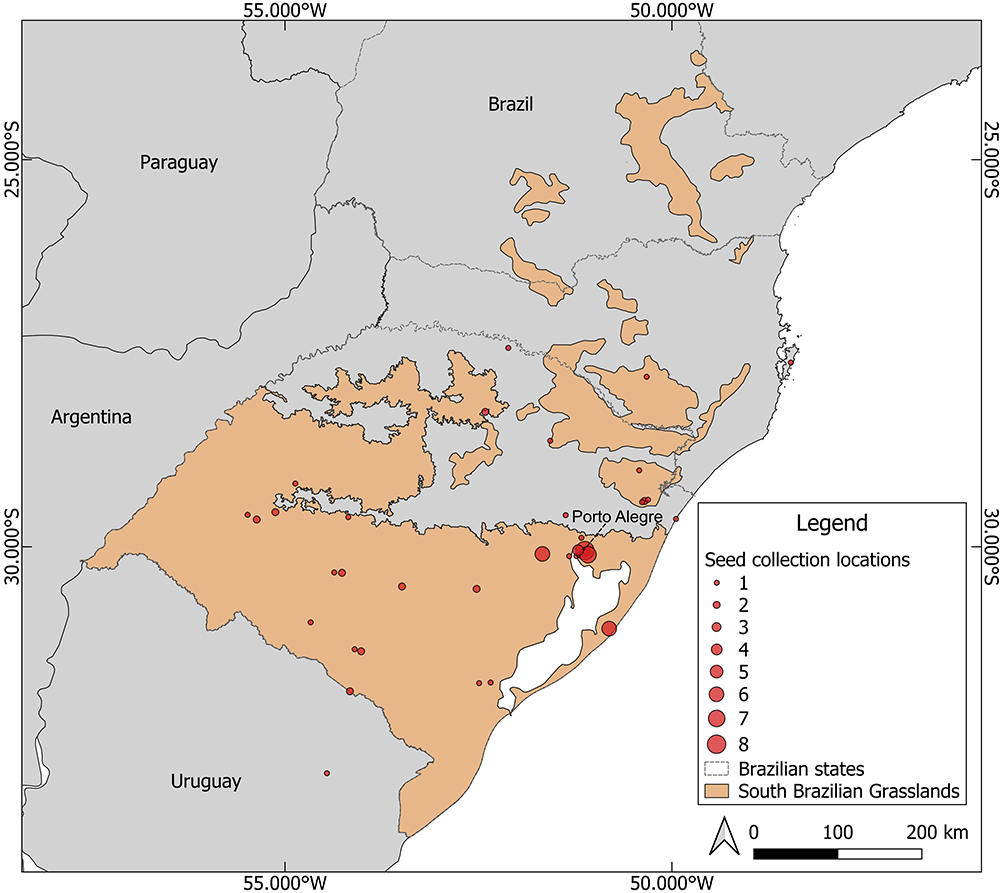
We obtained 902 results (considering one result the data regarding one species tested under one specific condition) from germination tests conducted in germination chambers and seedling emergence trials conducted in the greenhouse or in field studies, from 43 published studies, and from the LevCamp Seed Dataset (data available at Thomas et al., 2025a). These data include 125 plant species from 14 families (Thomas et al., 2025a; Table 1). Most results were obtained from tests performed in germination chambers, followed by greenhouse experiments, and field experiments (Table 2). Studies are clearly focused on the Poaceae, Fabaceae, and Asteraceae families. The five most tested species were the grasses Paspalum notatum (69), P. urvillei Steud. (44), and Bromus auleticus Trin. ex Nees (32) and the legumes Desmodium incanum (Sw.) DC. (33) and Lupinus albescens Hook. & Arn. (32). Most studies were on seeds collected in Rio Grande do Sul state, Brazil (Fig. 1).
Number of tests per botanical family and number of species evaluated per family, considering the totality of tests (germination chamber, greenhouse, field).
Number of tests, tested families, and tested species considering the tests performed at chamber, greenhouse, and field separately.
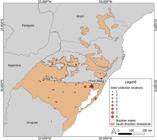
Locations where seeds were collected for germination tests when the location of seed collection was reported. The circle size represents how many studies using seeds from each location were found.
Germination test in the germination chamber
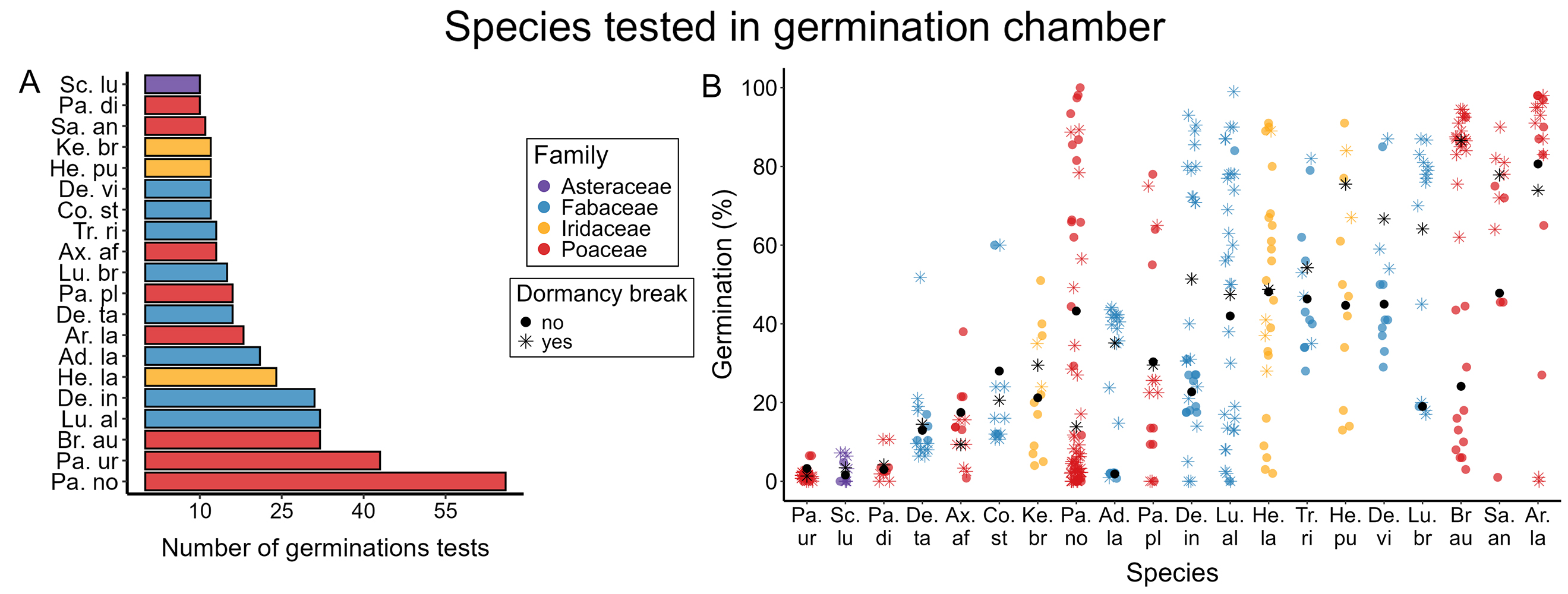
Considering tests performed in the germination chamber, 10 or more tests were conducted for 20 species, totaling 419 tests (Fig. 2), i.e., 16 % of the tested species represent 51 % of the tests performed in the chamber. The grass P. notatum was the most tested species, with 66 tests (Fig. 2A). Aristida laevis (Nees) Kunth was the species with the highest mean germination rate, with and without treatment of breaking dormancy. In general, the germination rates of tested species are highly variable, except for Paspalum urvillei, Schlechtendalia luzulifolia (Desv. ex Ham.) Roseng., B.R. Arrill. & Izag., and Paspalum dilatatum Poir., species with low germination rates.
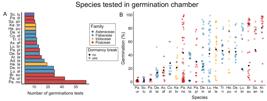
Species with more than ten germination tests in the germination chamber (A) and mean germination percentages for the same species (B). Species codes: Ad. la = Ademis latifolia; Ar. la = Aristida laevis; Ax. af = Axonopus affinis; Br. ca = Bromus catharticus; Co. st = Collaea stenophylla; De. in = Desmodium incanum; De. Ta = Desmathus tatuhyensis; De. vi = Desmathus virgathus; He. la = Herbetia lahue; He. pu = Herbetia pulchella; Ke. br = Kelissa brasiliensis; Lu. al = Lupinus albescens; Lu. br = Lupinus bracteolaris; Pa. di = Paspalum dilatatum; Pa. no = Paspalum notatum; Pa. pl = Paspalum plicatulum; Pa. ur = Paspalum urvillei; Sa. an = Saccharum angustifolium; Sc. lu = Schlechtendalia_luzulifolia; Tr. ri = Trifolium riograndense.
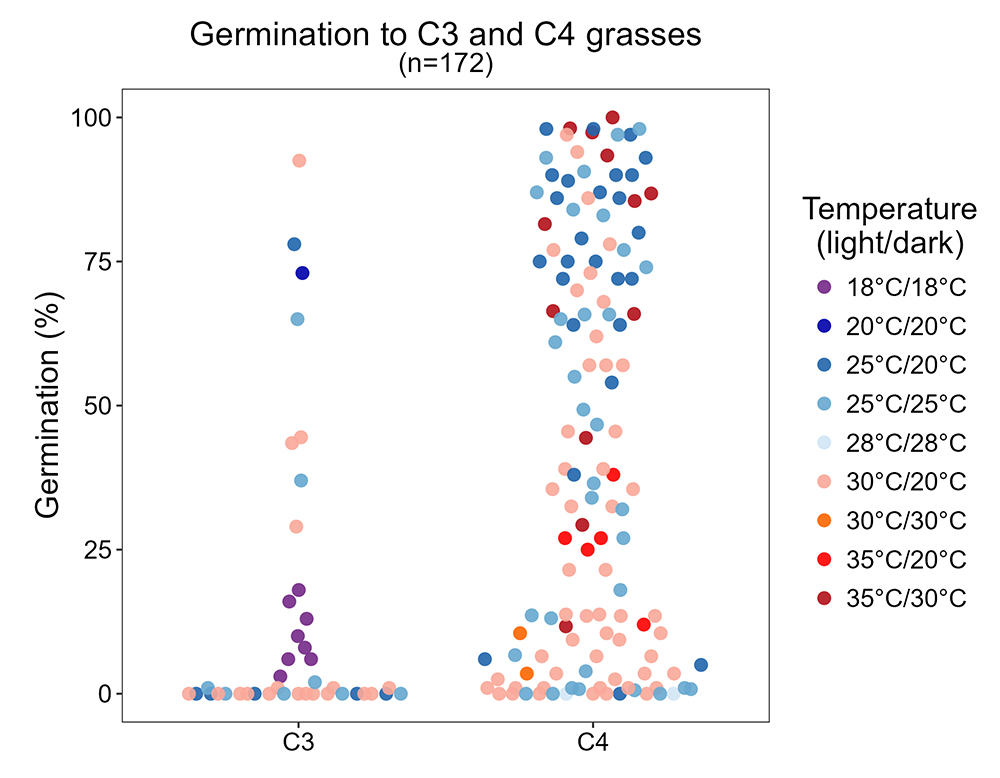
Looking at the temperature in the chamber during tests on C3 and C4 grass species (only considering tests without seed dormancy break; Fig. 3), we observe, in general, higher germination for the 25°C/20°C (light/dark) treatment, which can be considered a rather low temperature for C4 grasses. However, at 30°C/20°C (light/dark), the germination values are lower. Our data also reinforces the need to increase germination testing with C3 grasses.
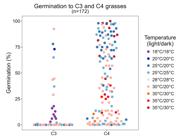
Mean germination rate to C3 and C4 grasses considering different temperatures at germination chamber (only tests performed without seed dormancy break).
Tests of seedling emergence in the greenhouse
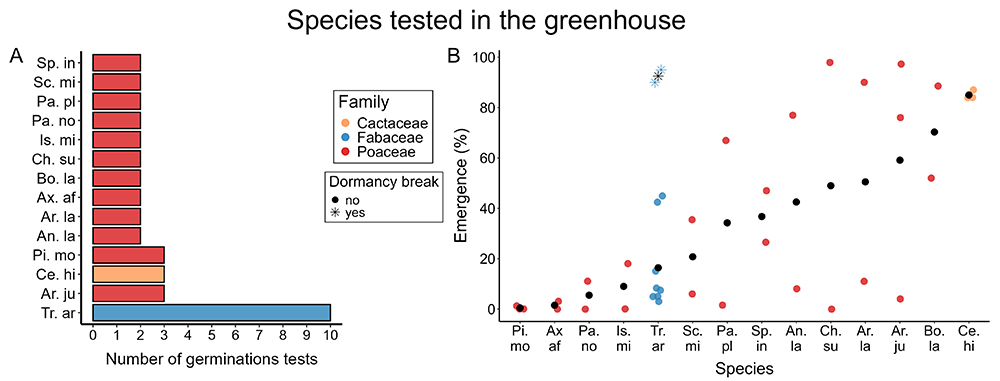
Regarding tests of seedling emergence conducted in greenhouse, only four species were tested three or more times (Fig. 4). The legume Trifolium argentinense Speg. was the most tested species, with ten tests (Fig. 4A). Cereus hildamannianus K.Schum. was the species with the highest mean emergence. Once again, species presented a highly variable mean emergence, except for those species with an extremely low emergence, such as the grasses Piptochaetium montevidense (Spreng.) Parodi, Axonopus affinis, and P. notatum (0.11 % and 0.43 %, 1.5 %, and 5.5 % respectively).
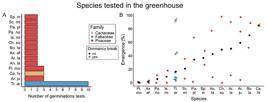
Species with three or more emergence tests in greenhouse (A) and mean germination percentages for the same species (B). Species codes: An. la = Anthaenantia lanata; Ar. ju = Aristida jubata; Ar. la = Aristida laevis; Ax. af = Axonopus affinis; Bo. la = Bothriochloa laguroides; Ch. su = Chascolytrum subaristatum; Ce. hi = Cereus hildmannianus; Is. mi = Ischaemum minus; Pa. no = Paspalum notatum; Pa. pl = Paspalum plicatulum; Pi. mo = Piptochaetium montevidense; Sc. mi = Schizachyrium microstachyum; Sp. in = Sporobolus indicus; Tr. ar = Trifolium argentinense.
Tests of seedling emergence in the field
Regarding emergence tests in the field, we obtained only 23 results from 22 species (Table 2). These data originated from only two studies (Silva et al., 2020; Rolim, 2022). The only species tested twice was the grass Aristida jubata (Arechav.) Herter, while all other species were tested once (therefore, we do not present mean emergence values here). The other 22 species are from three families: Fabaceae (Adesmia latifolia (Spreng.) Vogel, Crotalaria hilariana Benth., C. tweediana Benth., Desmanthus tatuhyensis Hoehne, and D. incanum), Plantaginaceae (Angelonia integerrima Spreng. and Plantago myosurus Lam.), Poaceae (Andropogon selloanus (Hack.) Hack., Anthaenantia lanata (Kunth) Benth., A. filifolia, A. laevis, A. affinis, A. argentinus Parodi, Bothriochloa laguroides (DC.) Herter, Chascolytrum subaristatum (Lam.) Desv., Cinnagrostis viridiflavescens (Poir.) P.M.Peterson, Soreng, Romasch. & Barberá, Nassella neesiana (Trin. & Rupr.) Barkworth, P. notatum, P. regnellii Mez, P. montevidense, and Schizachyrium microstachyum (Desv. ex Ham.) Roseng., B.R.Arrill. & Izag.). Species from Poaceae and Plantaginaceae were tested without breaking seed dormancy, and for Fabaceae species, mechanical scarification was applied.
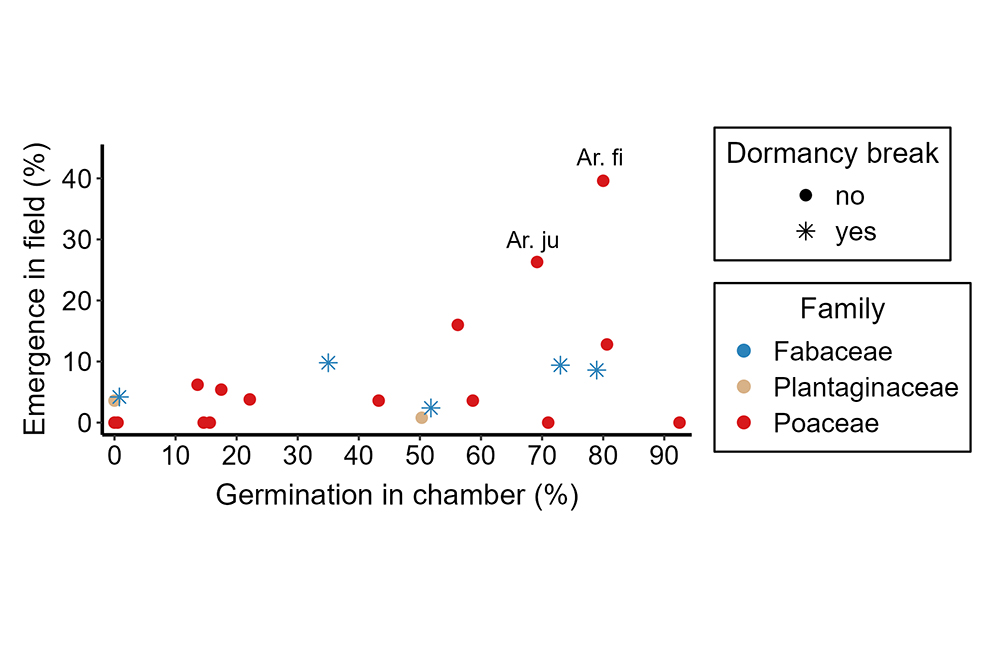
When comparing germination percentages of species in the germination chamber and seedling emergence in field experiments (Fig. 5), we can observe lower values in the field for all species. Only two species, the tussock grasses Aristida filifolia (Arechav.) Herter and A. jubata had seedling emergence higher than 20 % in the field (39.6 % and 26.3 %, respectively).
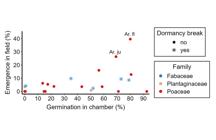
Relation between germination in the germination chamber and emergence in field experiments. Species code: Ar. ju = Aristida jubata; Ar. fi = Aristida filifolia. Data presented here to Poaceae and Plantaginaceae species were obtained without any breaking seed dormancy, while to Fabaceae species were applied mechanical scarification. It is important to salient that, in field, only A. jubata was tested twice, and all other species were tested once.
Seed treatments and germination test conditions
We found a wide variety of seed treatments before the tests, considering both seed storage and treatments to break seed dormancy. Information on seed storage was given only for 242 germination tests (27 % of the total 907), and conditions varied widely (Table 3). Many studies gave only partial information, mostly on the time and temperature of storage.
Different conditions of seed storage (time, temperature, air humidity, and material), across species and type of germination test. In parenthesis, number of tests at each condition.
To synthesize information on treatment to break seed dormancy, we separated the treatments into seven categories: chemical, cold stratification, heat shock, immersion in water, mechanical, smoke, and no seed dormancy break, as well as combinations of two or more treatments. Within each category, there are different treatments. For example, as chemical treatments, studies used alcohol, KNO3, GA3, H2SO4, NaOH, and NaClO, with variations in their concentrations and exposure time, totaling 22 different chemical treatments. The overall most used treatments were no application of seed dormancy break (487), followed by heat shock (185) and mechanical treatments (89). Details for the five most tested species are in Table S1.
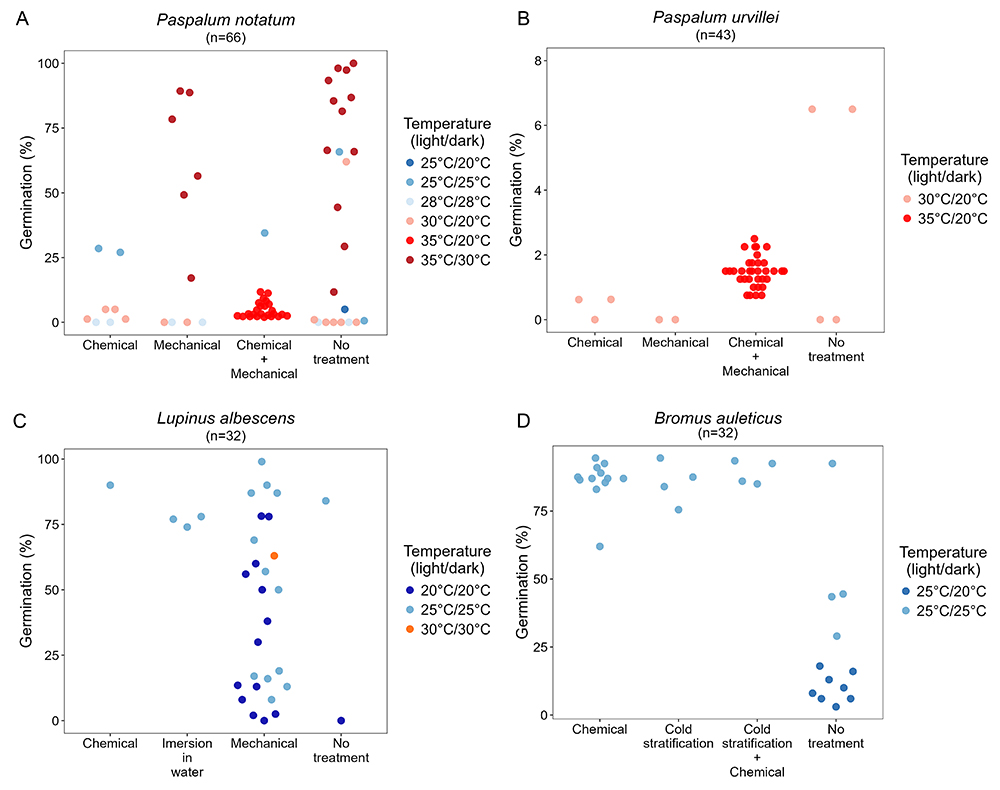
For tests in the germination chamber, where temperature and photoperiod are controlled, we obtained 16 different temperature treatments and six photoperiod treatments. The most common treatments were 30°C/20°C (255) and 12h/12h (363), respectively, considering light/dark conditions. Details for the four most tested species are in tables S2 and S3. We present the germination values of the four most tested species (germination chamber), by seed dormancy break treatment, and temperature at light/dark conditions (Fig. 6). Results vary across species: for Lupinus albescens and B. auleticus, dormancy break treatments consistently increased germination. Paspalum notatum seems to be unresponsive to chemical treatment, while showing high variation of germination, and for P. urvillei, germination was extremely low across treatments.
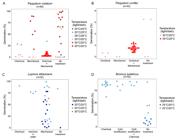
Germination of the four most tested species under different conditions and after different pre-germination treatments to break dormancy (A - Paspalum notatum; B - Paspalum urvillei; C - Lupinus albescens; D - Bromus auleticus). Note that y-axis scale is distinct in B due to low germination of Paspalum urvillei.
Discussion
General results
South Brazilian grasslands are estimated to hold more than 3000 vascular plant species (Boldrini et al., 2015). We found results from germination (laboratory) and seedling emergence (greenhouse and field) tests for 125 native species, i.e., approximately 4 % of the total plant richness of the South Brazilian grasslands. This is evidence that knowledge on germination ecology for the grasslands in the region is very scanty, with implications for ecological restoration. Most tests were performed under controlled conditions in the germination chamber. However, high germination in laboratory trials does not necessarily mean high seedling emergence in the field (see Silva et al., 2020; Rolim, 2022).
As the revised manuscripts were developed with different objectives, the dataset includes species in a variety of ecological situations. The relatively high number of germination tests found for Poaceae (especially C4 grasses) and Fabaceae species was expected for two main reasons: (1) the importance of these families as forage for cattle (e.g.: Paspalum spp.), and (2) the high abundance, in terms of cover and biomass, of many grass and legume species, making them key species of the grasslands in the region. In addition, seeds, especially of many abundant grass species, are relatively easy to collect (e.g., Aristida spp. and Chascolytrum spp.). The number of grass species tested represents around 12 % of the total number of grass species (51 tested species out of 423 native grassland grasses; Boldrini et al., 2015). The grass genus Paspalum stands out to be one of the most frequently tested, which is related to the importance of this genus as forage for cattle and its abundance in natural grasslands. Not all species, though, show high germination (e.g., P. urvillei, P. dilatatum).
Overall, germination varied greatly across the tested species, with some species showing almost no germination and others reaching high percentages. The same is true for greenhouse and field emergence tests, which were conducted for a lower number of species. Species from the genus Aristida (A. filifolia, A. jubata, A. laevis) presented high germination in the germination chamber as well as high seedling emergence in greenhouse and field, which makes them potentially interesting species for restoration projects. However, in greenhouse experiments, A. jubata and A. laevis have shown low biomass production and low establishment (Guido et al., 2019; Roitman, 2021; Thomas et al., 2024a), and future use in field conditions must be tested to assess the real potential of these species. Additionally, these species have low forage value, which might make them unattractive to farmers. On the other hand, as they can colonize compacted soils and develop at rather dry conditions, they may be useful for restoration projects where grazing is not the prime objective, but other aspects such as slope stabilization (Löbmann et al., 2020) or even ornamental purposes (Rolim et al., 2022) are of higher relevance.
Higher germination rates in the laboratory (controlled conditions) compared to the greenhouse or field, which describes the vigor of the seeds, can be expected. From the perspective of ecological restoration, caution is needed to use germination data from the laboratory for decisions on which species to use and at which density to sow them for the recovery of degraded areas. Clearly, we need more research to understand which conditions enhance seedling emergence, including information on the best period of sowing for each species and storage conditions, and time before use. Our data reveal that studies vary greatly in terms of time and storage conditions before experiments; however, not all studies provided many details, and often, choices of storage conditions may have been rather pragmatic, complicating discussion of factors that have the potential to influence germination and seedling emergence. Understanding how storage affects seed viability is crucial for determining how long each species can be stored to be used in restoration projects (De Vitis et al., 2020), especially when considering seed commercialization (Santos et al., 2025). Additionally, seed collection may not always have occurred at the right moment. For example, P. urvillei is a ruderal species, and one should expect high germination, but this was not the case. The reason may be that the seeds were collected before they matured.
All data we retrieved is available in an online database (Thomas et al., 2025a) and can already guide species selection for restoration, even though the database is still in early stages in terms of available information. While we provide a synthesis of current knowledge, the available information is still not sufficient to get a good picture of germination or seedling emergence of South Brazilian grassland species in general. Much more research effort on seed and germination biology is necessary, especially to advance grassland restoration ecology and its supply chain. An improved database will be an important basis for restoration efforts in the field as well as for research on grassland restoration in the Campos Sulinos region.
Strategies towards a better knowledge when using seeds to restore the South Brazilian grasslands
Increase the representability of important species groups and grassland regions
The focus of a considerable part of research on forage species, evidenced by our synthesis, is understandable, as forage production is an important ecosystem service in the region. However, from a biodiversity-oriented restoration perspective, more plant families or species groups should be covered. Research on which species are priority for restoration is still at its beginning, but available priority lists for ecological restoration (Guarino et al., 2018; 28 species in common to our dataset) or for conservation (Rolim et al., 2025) could serve as guidance for selection of studies for germination and emergence trials. Pragmatically, more widely distributed and more abundant species - likely of high relevance for restoration in the region as a whole - could be prioritized initially. On the other hand, it could also be interesting to include endangered species or priority species for conservation. In our dataset, four species are considered locally endangered (Baccharis hyemalis Deble, Trifolium argentinense, Kelissa brasiliensis (Baker), Ravenna, and Hesperozygis ringens (Benth.) Epling; Rio Grande do Sul, 2014) and one species at the national scale (Schlechtendalia luzulifolia; Martinelli & Moraes, 2013). To facilitate research and production, the creation of seed beds (e.g., Merritt & Dixon, 2011; Zinnen et al., 2021) is very important. This would allow us to obtain larger numbers of seeds, thus enabling research testing different germination conditions or methods to break dormancy.
Additionally, it is crucial to expand seed collection efforts across the South Brazilian grasslands. Most seeds tested in the studies were collected in the Porto Alegre region (the most populous city within the original distribution of the South Brazilian grasslands, with the largest university and other research institutions). Seed collection is usually concentrated near large cities and research institutions (Ribeiro et al., 2016). Other regions, such as the grasslands from the Atlantic biome (northern portion of the South Brazilian grasslands), are poorly represented. Genetic differences between populations tend to increase with distance, reflecting adaptations to local environmental conditions (Vander Mijnsbrugge et al., 2010). For plant species from the South Brazilian grasslands, Segatto et al. (2024) show high genetic variation in space, but the number of available studies is still low. This highlights the relevance of considering the genetic variation in the collected seeds to use in ecological restoration and to prioritize collecting seeds from areas close to those to be restored. Regional classifications for South Brazilian grasslands (Andrade et al., 2019) or for Rio Grande do Sul state (Hasenack et al., 2023) could be considered when determining seed transfer zones.
Conduct more tests in the field
Tests in germination chambers are important as they give general information on germination percentages of species based on tests conducted under controlled, standardized, and comparable conditions. This is basic and required information for any commercial distribution of seeds. However, trials in the greenhouse and especially in the field give information on the vigor of seeds (Marcos Filho, 2015). However, under field conditions, several additional variables that are not present under controlled chamber conditions play an important role in seed germination and seedling establishment, such as grassland structure (Zhang et al., 2022) and seed burial depth (Mašková & Poschlod, 2022). The low number of studies conducted under field conditions that give information on seed vigor under specific conditions clearly is a bottleneck for our knowledge on the potential use of a given species in restoration. The scarcity of field tests is also the reality for Cerrado wetlands species (Santos et al., 2025). This is even more important as restored areas can be degraded at various levels. Field experiments with a longer evaluation time will also be helpful in registering the establishment of species with seed dormancy, especially in Poaceae and Cyperaceae that present a large number of species with physiological dormancy (Baskin & Baskin, 2014; Kildisheva et al., 2020).
Develop protocols for seeds on native herbaceous species
The large variation of mean germination percentages we observed was expected due to contrasting treatments of the species used (timing of collection, storage, and treatments to break seed dormancy) and test conditions (temperature and photoperiod), in addition to the natural variation within species or functional groups (e.g., C3 and C4 grasses) across space and time. Several standards for seed analysis exist (AOSA (Baalbaki et al., 2009); RAS (Brasil, 2009); ISTA (International Seed Testing Association, 2025) and can be helpful, but are heavily based on agricultural standardization that does not aim at ecological restoration (Dutra-Silva et al., 2024). The diversity of native species may require different methods for cleaning and testing (Frischie et al., 2020). In consequence, studies use different approaches to break dormancy. It is necessary to know more about seed dormancy, which affects most species and can be a problem for restoration projects when unknown (Kildisheva et al., 2020). Legumes tend to have hard seeds and physical dormancy (Baskin & Baskin, 2014), so scarifying them with sandpaper or soaking them in hot water usually solves the problem. Grasses have many more associated dormancy mechanisms, such as hard seeds, immature embryos (especially when harvested while still in the bunch), phenolic compounds, etc. (Adkins et al., 2002; Baskin & Baskin, 2014). Therefore, the procedures to break dormancy will vary (Adkins et al., 2002). The basis for specific protocols is the understanding of the associated mechanisms, which require basic research on the reproductive biology of the target species. Lack of this understanding may explain the low germination of many species reported in our synthesis.
To advance in seed-based restoration, it is crucial to create protocols to collect, store, describe, and test native seeds. Such protocols focused on South Brazilian grassland species are crucial to boost ecological restoration in the region. Protocols should include tests of seed viability (not considered in our review). The absence of previous viability tests can explain large differences in germination results of the same species. Additionally, it is important that both protocols and published studies include basic information on seed harvesting (date and collection site), storage (temperature, material, and duration), processing (e.g., removal of propagule structures, chemical cleaning to reduce pathogens), dormancy-breaking treatments, and germination conditions. This will be helpful to allow comparison of data across species and studies.
Spread the word, let the data open
We reinforce the importance of providing full data on paper, supplementary material, or on a digital repository accessible to the reader. Several reviewed materials included in our study presented results only in figures (e.g., boxplots), but did not present the raw germination data. As not all authors answered our e-mails requesting germination values data, we thus could not include all the information found. Additionally, seed trait data is important. The low availability of seed traits (including germination data) can limit the power of predictive models and their application in plant conservation (Visscher et al., 2022). Seed trait datasets exist (e.g., Ordóñez‐Parra et al., 2023; Cruz-Tejada et al., 2024) and need to be expanded, including to the global level (Visscher et al., 2022), such as, for example, the SeedArc database (http://unioviedo.es/seedarc/; Fernández-Pascual et al., 2023).
To advance in seed research, we propose the development of a research network covering the South Brazilian grassland regions and the adjacent regions of the Río de la Plata grasslands. Such a network of researchers and research institutions will lead to coordinated research that will allow for a faster assessment of germination and seed biology of priority species and may also allow for evaluating regional or intraspecific variation. The creation of networks on seed ecology in developing countries has the potential to overcome several barriers and boost ecosystem conservation and restoration (Silveira et al., 2024). Data should be included in a curated, but openly available database, thus allowing research to assess the current state of knowledge in real time, thus also avoiding studying the same species (e.g., those easy to collect) over and over again. Quick advances in knowledge on reproductive biology, including germination, of target species for restoration are essential to reach restoration commitments for the South Brazilian grasslands’ region.
Call for data on seeds of South Brazilian grassland species
The authors invite researchers who have data on germination and seed functional traits of South Brazilian grassland species, and who are interested in contributing, to contact the corresponding author. This data will be incorporated into the dataset and included in a future Data Paper.
Supplementary Material
The following online material is available for this article:
Table S1 -
Table S2 -
Table S3 -
Acknowledgments
We thank all the authors who kindly provided germination data upon our e-mail request.
References
-
Adkins SW, Bellairs SM, Loch DS. 2002. Seed dormancy mechanisms in warm season grass species. Euphytica 126: 13-20. doi: 10.1023/A:1019623706427
» https://doi.org/10.1023/A:1019623706427 -
Andrade BO, Bonilha CL, Overbeck GE et al 2019. Classification of South Brazilian grasslands: Implications for conservation. Applied Vegetation Science 22: 168-184. doi: 10.1111/avsc.12413
» https://doi.org/10.1111/avsc.12413 -
Andrade BO, Dröse W, Aguiar CA et al 2023. 12,500+ and counting: Biodiversity of the Brazilian Pampa. Frontiers of Biogeography 15: e59288. doi: 10.21425/f5fbg59288
» https://doi.org/10.21425/f5fbg59288 - Baalbaki R, Elias S, Marcos Filho J, McDonald M. 2009. Seed vigor testing handbook: Contribuition n. 32 to The handbook on seed testing. New York, Association of official Seed Analysts.
-
Baeza S, Paruelo JM. 2018. Spatial and temporal variation of human appropriation of net primary production in the Rio de la Plata grasslands. ISPRS Journal of Photogrammetry and Remote Sensing 145: 238-249. doi: 10.1016/j.isprsjprs.2018.07.014
» https://doi.org/10.1016/j.isprsjprs.2018.07.014 -
Baeza S, Vélez-martin E, Abelleyra DD et al 2022. Two decades of land cover mapping in the Río de la Plata grassland region: The MapBiomas Pampa initiative. Remote Sensing Applications: Society and Environment 28: 100834. doi: 10.1016/j.rsase.2022.100834
» https://doi.org/10.1016/j.rsase.2022.100834 - Baskin CC, Baskin JM. 2014. Seeds: Ecology, biogeography, and, evolution of dormancy and germination. Academic Press, San Diego.
- Boldrini II, Overbeck GE, Trevisan R. 2015. Biodiversidade de Plantas. In: Pillar VP, Lange O (eds.). Biodiversidade de Plantas. Porto Alegre, Rede Campos Sulinos-UFRGS. p. 21-60.
- Brasil. Ministério da Agricultura, Pecuária e Abastecimento. 2009. Regras Para Análise De Sementes. Brasília, MAPA.
-
Buisson E, Almeida T, Durbecq A et al 2021a. Key issues in Northwestern Mediterranean dry grassland restoration. Restoration Ecology 29: e13258. doi: 10.1111/rec.13258
» https://doi.org/10.1111/rec.13258 -
Buisson E, Fidelis A, Overbeck GE et al 2021b. A research agenda for the restoration of tropical and subtropical grasslands and savannas. Restoration Ecology 29: e13292. doi: 10.1111/rec.13292
» https://doi.org/10.1111/rec.13292 -
Buisson E, Le Stradic S, Silveira FAO et al 2019. Resilience and restoration of tropical and subtropical grasslands, savannas, and grassy woodlands. Biological Reviews 94: 590-609. doi: 10.1111/brv.12470
» https://doi.org/10.1111/brv.12470 -
Carvalho G. 2020. flora: Tools for interacting with the Brazilian flora 2020. R package version 0.3.4. https://CRAN.R-project.org/package=flora 12 Sep. 2025
» https://CRAN.R-project.org/package=flora -
Clewell AF, Aronson J. 2006. Motivations for the restoration of ecosystems. Conservation Biology 20: 420-428. doi: 10.1111/j.1523-1739.2006.00340.x
» https://doi.org/10.1111/j.1523-1739.2006.00340.x -
Cruz-Tejada DM, Fernández-Pascual E, Mo A, Mattana E, Carta A. 2024. MedGermDB: A seed germination database for characteristic species of Mediterranean habitats. Applied Vegetation Science 27: e12771. doi: 10.1111/avsc.12771
» https://doi.org/10.1111/avsc.12771 -
De Vitis M, Hay FR, Dickie JB, Trivedi C, Choi J, Fiegener R. 2020. Seed storage: Maintaining seed viability and vigor for restoration use. Restoration Ecology 28: S249-S255. doi: 10.1111/rec.13174
» https://doi.org/10.1111/rec.13174 -
Dinerstein E, Olson D, Joshi A et al 2017. An Ecoregion-Based Approach to Protecting Half the Terrestrial Realm. BioScience 67: 534-545. doi: 10.1093/biosci/bix014
» https://doi.org/10.1093/biosci/bix014 -
Dutra-Silva R, Overbeck GE, Müller SC. 2024. How can Brazilian legislation on native seeds advance based on good practices of restoration in other countries? Perspectives in Ecology and Conservation 22: 224-231. doi: 10.1016/j.pecon.2024.08.002
» https://doi.org/10.1016/j.pecon.2024.08.002 -
Fernández-Pascual E, Carta A, Rosbakh S et al 2023. SeedArc, a global archive of primary seed germination data. New Phytol 240: 466-470. doi: 10.1111/nph.19143
» https://doi.org/10.1111/nph.19143 -
Fidelis A, Appezzato-da-Glória B, Pillar VD, Pfadenhauer J. 2014. Does disturbance affect bud bank size and belowground structures diversity in Brazilian subtropical grasslands? Flora: Morphology, Distribution, Functional Ecology of Plants 209: 110-116. doi: 10.1016/j.flora.2013.12.003
» https://doi.org/10.1016/j.flora.2013.12.003 -
Flora e Funga do Brasil. 2024. Jardim Botânico do Rio de Janeiro. http://floradobrasil.jbrj.gov.br/ 12 Sep. 2025.
» http://floradobrasil.jbrj.gov.br/ -
Frischie S, Miller AL, Pedrini S, Kildisheva OA. 2020. Ensuring seed quality in ecological restoration: Native seed cleaning and testing. Restoration Ecology 28: S239-S248. doi: 10.1111/rec.13217
» https://doi.org/10.1111/rec.13217 -
Funk JL, Cleland EE, Suding KN, Zavaleta ES. 2008. Restoration through reassembly: Plant traits and invasion resistance. Trends in Ecology and Evolution 23: 695-703. doi: 10.1016/j.tree.2008.07.013
» https://doi.org/10.1016/j.tree.2008.07.013 - Gibson DJ. 2009. Grasses and Grasslands Ecology. New York, Oxford University Press.
- Guarino ESG, Overbeck GE, Boldrini II et al 2018. Espécies de Plantas Prioritárias para Projetos de Restauração Ecológica em Diferentes Formações Vegetais no Bioma Pampa: Primeira Aproximação. Embrapa Clima Temperado 457: 79.
-
Guerra A, Reis LK, Borges FLG et al 2020. Ecological restoration in Brazilian biomes: Identifying advances and gaps. Forest Ecology and Management 458: 117802. doi: 10.1016/j.foreco.2019.117802
» https://doi.org/10.1016/j.foreco.2019.117802 -
Guido A, Hoss D, Pillar VD. 2019. Competitive effects and responses of the invasive grass Eragrostis plana in Río de la Plata grasslands. Austral Ecology 44: 1478-1486. doi: 10.1111/aec.12822
» https://doi.org/10.1111/aec.12822 -
Guido A, Vélez-Martin E, Overbeck GE, Pillar VD. 2016. Landscape structure and climate affect plant invasion in subtropical grasslands. Applied Vegetation Science 19: 600-610. doi: 10.1111/avsc.12263
» https://doi.org/10.1111/avsc.12263 - International Seed Testing Association. 2025. International Rules for Seed Testing. Basserdorf, International Seed Testing Association.
-
Hasenack H, Weber EJ, Boldrini II, Trevisan R, Flores CA, Dewes H. 2023. Biophysical delineation of grassland ecological systems in the State of Rio Grande do Sul, Southern Brazil. Iheringia, Série Botânica 78: e2023001. doi: 10.21826/2446-82312023v78e2023001
» https://doi.org/10.21826/2446-82312023v78e2023001 -
Kiehl K, Kirmer A, Donath TW, Rasran L, Hölzel N. 2010. Species introduction in restoration projects - Evaluation of different techniques for the establishment of semi-natural grasslands in Central and Northwestern Europe. Basic and Applied Ecology 11: 285-299. doi: 10.1016/j.baae.2009.12.004
» https://doi.org/10.1016/j.baae.2009.12.004 -
Kildisheva OA, Dixon KW, Silveira FAO et al 2020. Dormancy and germination: Making every seed count in restoration. Restoration Ecology 28: S256-S265. doi: 10.1111/rec.13140
» https://doi.org/10.1111/rec.13140 -
Löbmann MT, Geitner C, Wellstein C, Zerbe S. 2020. The influence of herbaceous vegetation on slope stability - A review. Earth-Science Reviews 209: 103328. doi: 10.1016/j.earscirev.2020.103328
» https://doi.org/10.1016/j.earscirev.2020.103328 - Marcos Filho J. 2015. Seed vigor testing: An overview of the past, present and future perspective. Scientia Agricola 72: 363-374. doi: 10.1590/0103-9016-2015-0007
- Martinelli G, Moraes MA 2013. Livro vermelho da flora do Brasil. Rio de Janeiro, Instituto de Pesquisas Jardim Botânico do Rio de Janeiro.
- Mašková T, Poschlod P. 2022. Soil seed bank persistence across time and burial depth in calcareous grassland habitats. Frontiers in Plant Science 12: 790867. doi: 10.3389/fpls.2021.790867
- Merritt DJ, Dixon KW. 2011. Restoration Seed Banks - A Matter of Scale. Science 332: 424-425. doi: 10.1126/science.1203083
- Millenium Ecosystem Assessment. 2005. Ecosystems and Human Well-Being: Biodiversity Synthesis. Washington, World Resources Institute.
- Ordóñez‐Parra CA, Dayrell RLC, Negreiros D et al 2023. Rock n’ Seeds: A database of seed functional traits and germination experiments from Brazilian rock outcrop vegetation. Ecology 104: e3852. doi: 10.1002/ecy.3852
- Overbeck GE, Hermann J, Andrade BO et al 2013. Restoration Ecology in Brazil - Time to Step Out of the Forest. Natureza & Conservação 11: 92-95. doi: 10.4322/natcon.2013.015
- Quadros FLF, Soares ÉM, Bittencourt L, Ribeiro de O, Marques C. 2015. Cuidar e Fazer Diferente. In: Pillar VP, Lange O (eds.). Cuidar e Fazer Diferente. Porto Alegre, Rede Campos Sulinos - UFRGS. p. 141-148.
- Ribeiro GV, Teixido AL, Barbosa NP, Silveira FA. 2016. Assessing bias and knowledge gaps on seed ecology research: Implications for conservation agenda and policy. Ecological Applications 26: 2033-2043.
- Governo do Estado do Rio Grande do Sul. 2014. Lista de Espécies Ameaçadas da Flora do Rio Grande do Sul. Porto Alegre, Diário Oficial do Rio Grande do Sul.
- Roitman A. 2021. Identificação do potencial de espécies campestres nativas para uso na recuperação de áreas degradadas via semeadura direta nos Campos Sulinos. BSc Thesis, Universidade Federal do Rio Grande do Sul, Brazil.
- Rolim RG. 2022. Contribuições para a conservação e restauração da vegetação campestre do bioma Pampa. PhD Thesis, Universidade Federal do Rio Grande do Sul, Brazil.
- Rolim RG, Rosenfield MF, Overbeck GE. 2022. Are we ready to restore South Brazilian grasslands? Plant material and legal requirements for restoration and plant production. Acta Botanica Brasilica 36: e2021abb0155. doi: 10.1590/0102-33062021abb0155
- Rolim RG, Müller SC, Overbeck GE. 2025. Plantas características de campos conservados: um parâmetro para subsidiar a conservação do bioma Pampa. Bio Diverso 4: 140760.
- Saatkamp A, Cochrane A, Commander L et al 2019. A research agenda for seed-trait functional ecology. New Phytologist 221: 1764-1775. doi: 10.1111/nph.15502
- Santos LV, Gomes AS, Bijos NR, Silva LC, Munhoz CB. 2025. What is known about the germination of plant species from open wetlands in the Cerrado? Restoration Ecology 33: e70011. doi: 10.1111/rec.70011
- Segatto ALA, Quintana IV, Reginato M, Baez-Lizarazo MR, Overbeck GE, Turchetto C. 2024. Microevolutionary Perspectives for Conserving Plant Diversity in South Brazilian Grasslands (Campos Sulinos). Perspectives in Ecology and Conservation 22: 137-145. doi: 10.1016/j.pecon.2024.04.003
- Silva IA, Guido A, Müller SC. 2020. Predicting plant performance for the ecological restoration of grasslands: The role of regenerative traits. Restoration Ecology 28: 1183-1191. doi: 10.1111/rec.13182
- Silveira FAO, Fuzessy L, Phartyal SS et al 2024. Overcoming major barriers in seed ecology research in developing countries. Seed Science Research 33: 172-181. doi: 10.1017/ S0960258523000181
- Soriano A. 1991. Río de la Plata Grasslands. Coupland, Robert T.
-
Thomas PA, Buisson E, Overbeck GE, Müller SC. 2024a. Exploring seed density and limiting similarity to reduce invasive grass performance for grassland restoration purposes. Applied Vegetation Science 27: e12804. doi: 10.1111/avsc.12804
» https://doi.org/10.1111/avsc.12804 - Thomas PA, Overbeck GE, Dutra-Silva R et al 2024b. Ecological Restoration of Campos Sulinos Grasslands. In: Overbeck GE, Pillar VP, Müller SC, Bencke GA (eds.). Ecological Restoration of Campos Sulinos Grasslands. Cham, Springer International Publishing. p. 529-552.
-
Thomas PA, Müller SC, Dutra-Silva R et al 2025a. Dataset from "Germination of South Brazilian grassland herbaceous species: State of knowledge and research needs for advancing grassland restoration". https://doi.org/10.5281/zenodo.17179243 12 Sep. 2025
» https://doi.org/10.5281/zenodo.17179243 -
Thomas PA, Müller SC, Overbeck GE. 2025b. LevCamp Seed Dataset - version 2.2. https://doi.org/10.5281/zenodo.17177777 12 Sep. 2025.
» https://doi.org/10.5281/zenodo.17177777 -
Vander Mijnsbrugge K, Bischoff A, Smith B. 2010. A question of origin: Where and how to collect seed for ecological restoration. Basic and Applied Ecology 11: 300-311. doi: 10.1016/j.baae.2009.09.002
» https://doi.org/10.1016/j.baae.2009.09.002 - Vélez-Martin E, Fante E, Dotta G, Silva TW, Fontana CS, Pillar VDP. 2015. Cidadania e Uso Sustentável dos Campos. In: Pillar VP, Lange O (eds.). Cidadania e Uso Sustentável dos Campos. Porto Alegre, Rede Campos Sulinos - UFRGS. p. 155-166.
-
Vieira MS, Bonilha CL, Boldrini II, Overbeck GE. 2015. The seed bank of subtropical grasslands with contrasting land-use history in southern Brazil. Acta Botanica Brasilica 29: 543-552. doi: 10.1590/0102-33062015abb0026
» https://doi.org/10.1590/0102-33062015abb0026 -
Visscher AM, Vandelook F, Fernández-Pascual E et al 2022. Low availability of functional seed trait data from the tropics could negatively affect global macroecological studies, predictive models and plant conservation. Annals of Botany 130: 773-784. doi: 10.1093/aob/mcac130
» https://doi.org/10.1093/aob/mcac130 -
Zhang X, Ni X, Heděnec P et al 2022. Litter facilitates plant development but restricts seedling establishment during vegetation regeneration. Functional Ecology 36: 3134-3147. doi: 10.1111/1365-2435.14200
» https://doi.org/10.1111/1365-2435.14200 -
Zinnen J, Broadhurst LM, Gibson-Roy P, Jones TA, Matthews JW. 2021. Seed production areas are crucial to conservation outcomes: Benefits and risks of an emerging restoration tool. Biodiversity and Conservation 30: 1233-1256. doi: 10.1007/s10531-021-02149-z
» https://doi.org/10.1007/s10531-021-02149-z
-
Data Availability
The full table with the compiled data that supports this study is available online at Zenodo (Thomas et al., 2025a). The online dataset with the data not published in the reviewed studies is available online at Zenodo (Thomas et al., 2025b).
-
Funding Information
This work was funded by a research grant from the Fundação de Amparo à Pesquisa do Estado do Rio Grande do Sul (FAPERGS) to GEO (project number 22/2551-0001818-1). The Conselho Nacional de Desenvolvimento Científico e Tecnológico (CNPq) supports PAT (176175/2023-7), SCM (314309/2023-3), and GEO (304852/2022-8). Fapergs also supports APB.
The full table with the compiled data that supports this study is available online at Zenodo (Thomas et al., 2025a). The online dataset with the data not published in the reviewed studies is available online at Zenodo (Thomas et al., 2025b).