 New pollen analyses of species belonging to the genus Dicranostyles Benth. - Convolvulaceae Pollen of Dicranostyles (Convolvulaceae)
Abstract
Convolvulaceae is a widely distributed family with its highest species richness in tropical regions. Among its 12 tribes, Maripeae comprises three neotropical genera, including Dicranostyles Benth., with 16 species distributed throughout the Amazon Rainforest. This study characterizes the pollen morphology of Dicranostyles, providing palynological data for future studies on pollen evolution within Maripeae and comparative analyses across Convolvulaceae. Pollen grains were prepared using the acetolysis method, and surface ornamentation was examined through scanning electron microscopy (SEM). The genus showed considerable variation in pollen grain size and shape, as well as amb types ranging from subtriangular to subcircular. SEM analysis revealed the presence of a perforate tectum with microechinate ornamentation, one of the key diagnostic features of the genus. In all species, the sexine is thicker than the nexine, with conspicuous columellae. A consistent tricolpate aperture type (3-zonocolpate) was observed across all species, suggesting its potential as a diagnostic feature for the genus, especially when associated with other palynological traits (tectum, shape). These characteristics reinforce the close morphological relationships among the genera of Maripeae and support the affinity of the tribe within the Dicranostyloideae clade.
Keywords:
Lianas; Maripeae; Microechinate; Pollen; Tricolpate
Introduction
Convolvulaceae is classified within the clade Asterids and the order Solanales (Angiosperm Phylogeny Group IV, 2016; Zuntini et al., 2024). Based on molecular and morphological evidence, the family is subdivided into 12 tribes. However, the phylogenetic relationships among several of these tribes remain unresolved, and the tribe Merremieae continues to be polyphyletic (Stefanović et al., 2003; Simões et al., 2015; 2022). The tribes are distinguished by a combination of traits, including growth habit, leaf venation, style division, stigma shape, fruit type, and dehiscence, as well as the morphological characteristics of pollen grains (Stefanović et al., 2003).
Members of the family are predominantly twining climbers that lack tendrils (Austin & Acevedo-Rodríguez, 2021). Convolvulaceae has a wide distribution, with a significant proportion of its diversity originating in or restricted to tropical regions (Staples, 2012). The family currently comprises 57 genera and approximately 1,900 accepted species (Plants of the World Online - POWO, 2025).
One of the tribes within Convolvulaceae is Maripeae, which includes three primarily Amazonian genera (Dicranostyles Benth., Maripa Aubl., and Lysiostyles Benth.), distributed across forested areas of the Neotropics (Stefanović et al., 2003). The tribe comprises woody lianas with generally coriaceus leaves lacking a cordate base. The sepals are usually of equal size and not accrescent; the corolla varies from cylindrical to infundibuliform, campanulate, or subrotaceous. The style may be partially or completely divided, or fused, with stigmas that are globose, cylindrical, or obpyriform. Fruits are typically woody and indehiscent (Austin, 1973a).
The monophyly of Maripeae is supported by molecular phylogenetic studies (Stefanović et al., 2002, 2003; Pastore, 2023). Moreover, the tribe forms the clade Dicranostyloideae together with Cresseae, Jacquemontieae, and Dichondreae, which comprises several species characterized by bifid styles (Stefanović et al., 2002; 2003). The Dicranostyloideae clade is strongly supported in phylogenetic inferences of the family, although internal relationships among its constituent taxa remain unresolved (Stefanović et al., 2003; Simões et al., 2022).
Dicranostyles comprises 16 species scattered in northern South America, recorded in Amazonian (Austin, 1973a). Of the total, 13 occur in Brazil, in the Amazon region (Pastore & Simão-Bianchini, 2025). Morphologically, Dicranostyles is distinguished from its sister genus Maripa by its smaller flowers, measuring up to 1 cm in length, and by fruits with sepals no longer than 3 mm. Additionally, species of Dicranostyles can be differentiated from some Maripa species by the pollen grain size and the number of apertures. In contrast, Lysiostyles is distinguished by its long-apiculate corolla lobes and anthers with an elongated connective (Austin, 1973a).
Several studies emphasize the eurypalynous condition of Convolvulaceae, as the family displays considerable variation in pollen characters (Erdtman, 1952; Laguardia, 1961; Sengupta, 1971). Pollen grains range from small to very large and exhibit porate or colpate apertures, with exine ornamentation that may be psilate, perforate, spiculate, or spiny (Erdtman, 1952; Sengupta, 1971; Buril et al., 2014; Ashfaq et al., 2017; Moreira et al., 2019; Vasconcelos et al., 2019).
To date, the only palynological study specifically focused on Dicranostyles is that of Austin (1973b), who analyzed the pollen morphology of nine species. In this context, the present study aims to conduct a comprehensive palynological analysis of as many Dicranostyles species as possible, in order to expand and update the available data. This includes providing more detailed descriptions and high-quality images. Additionally, this study contributes to the expansion of palynological knowledge of Convolvulaceae (mainly within the Maripeae tribe).
Materials and Methods
Pollen grains from 14 species, collected from herbarium specimens, were analyzed using light microscopy (LM) following the acetolysis method (Erdtman, 1960) to obtain key metric characters, including polar and equatorial diameters, polar diameter in equatorial view, exine thickness, sexine thickness, nexine thickness, and tectum thickness. For polar and equatorial diameters, as well as the polar diameter in equatorial view, 25 measurements were taken at random from three specimens per species. For the remaining morphometric parameters, 10 measurements were recorded. Vouchers are presented in Table 1.
After quantitative and qualitative analyses of pollen grains under LM, the slides were included in the pollen library of the Plant Micromorphology Laboratory (LAMIV) at Universidade Estadual de Feira de Santana.
Quantitative data were statistically analyzed. For each morphological parameter measured in 25 pollen grains, the arithmetic mean (x̄), standard deviation (s), standard error of the mean (sx̄), coefficient of variation (CV), and 95 % confidence interval (CI) were calculated. For exine-related measurements, only the mean values were calculated based on ten pollen grains. Additionally, a Principal Component Analysis (PCA) was performed using PAST software to identify the morphological characters that contribute to species differentiation or clustering.
Pollen surface analysis under scanning electron microscopy (SEM) was conducted at the Gonçalo Moniz Research Center, Oswaldo Cruz Foundation, using a JSM-6390LV scanning electron microscope. Floral buds were macerated and mounted onto stubs with carbon tape, coated with gold, and subsequently examined.
Pollen characters of the studied species were illustrated with photomicrographs obtained via LM at LAMIV. The palynological terminology used in the LM and SEM descriptions followed the standards proposed by Punt et al. (2007) and Halbritter et al. (2018), respectively.
Results
Of all recognized species of Dicranostyles, only two, D. costanensis Steyerm. & D.F. Austin and D. solimoesensis Mennega did not have their pollen grains analyzed, as suitable material was unavailable. Among the analyzed species (Tab. 1), five are described here for the first time from a palynological perspective: D. falconiana (Barroso) Ducke, D. guianensis Mennega, D. laxa Ducke, D. sericea Gleason, and D. villosus Ducke. The genus exhibits small to medium-sized pollen grains (18.3-37.2 μm), which are isopolar and range from oblate-spheroidal to prolate in shape (P/E ratio: 0.88-1.46). Considerable interspecific and intraspecific variation in size and shape was observed. Most species presented a subtriangular amb (Tab. 2). Notably, the pollen grains were fragile and prone to deformation during the acetolysis process and SEM sample preparation.
Regarding pollen size, species such as D. ampla Ducke, D. globostigma D.F. Austin, D. longifolia Ducke, D. scandens Benth., D. sericea, and D. villosus displayed size variation ranging from small to medium. In contrast, the remaining species D. densa Spruce ex Meisn., D. falconiana, D. guianensis, D. holostyla Ducke, D. integra Ducke, D. laxa Ducke, D. mildbraediana Pilg., and D. yrypoana M. Pastore consistently presented medium-sized grains.
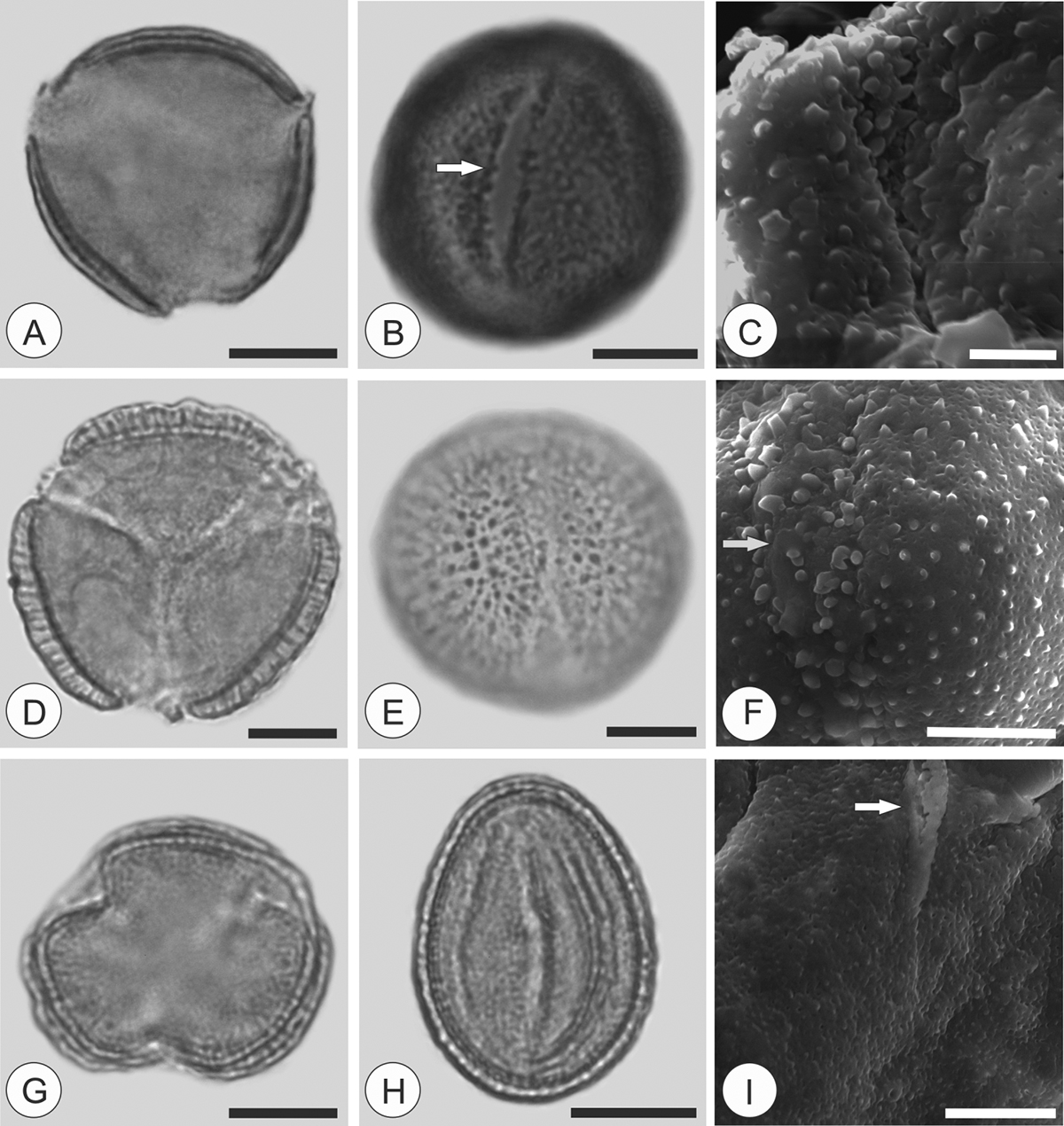
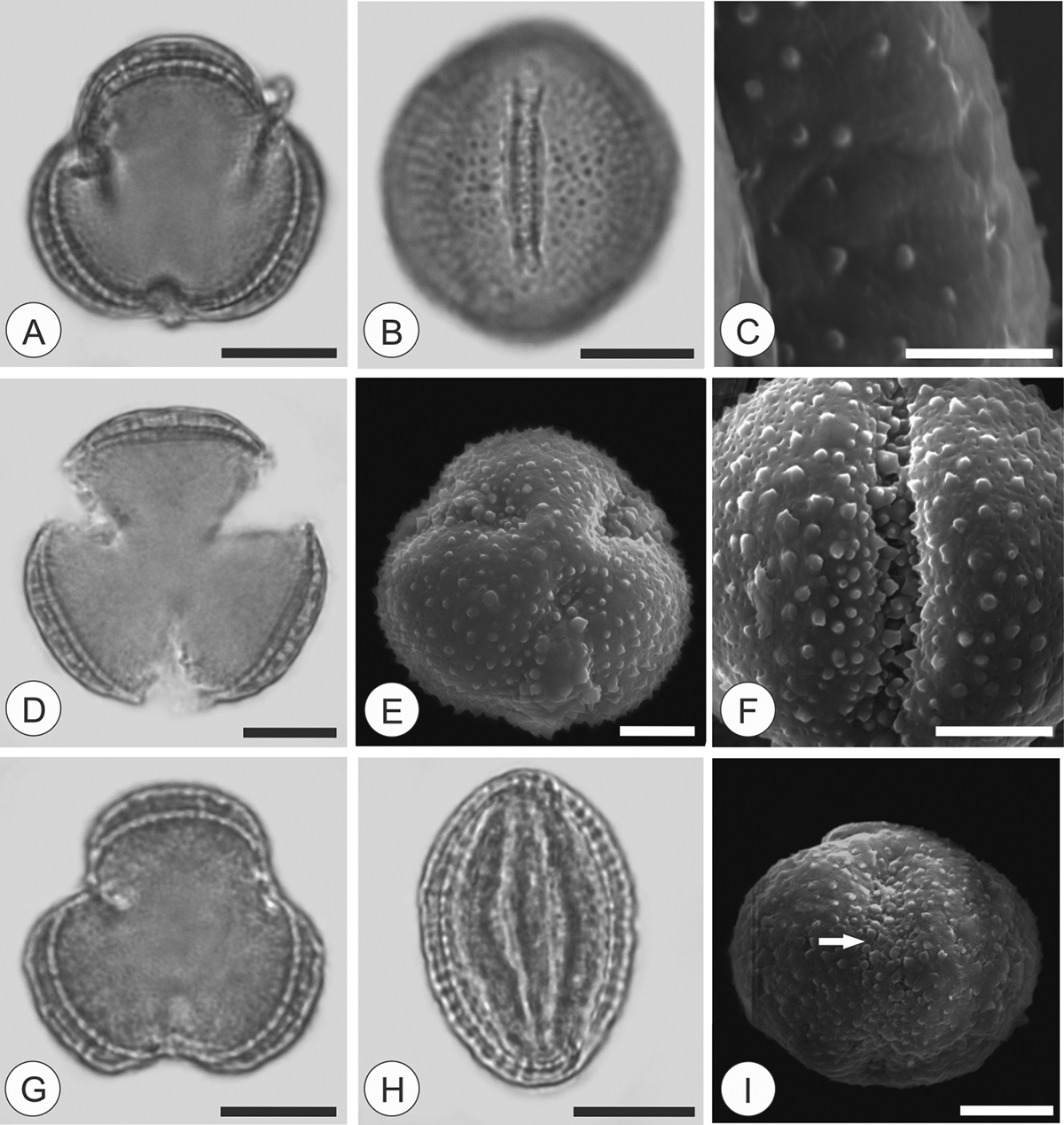
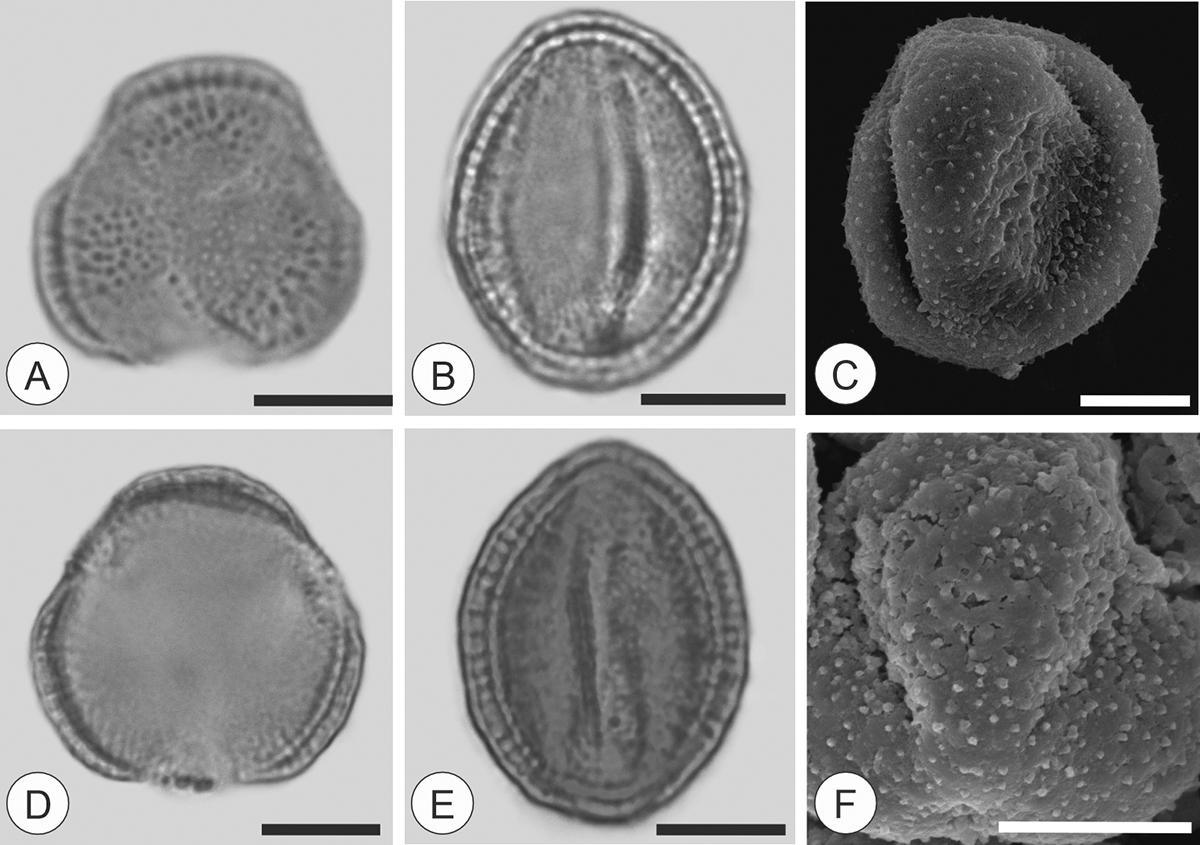
All species analyzed exhibited tricolpate pollen grains (Figs. 1-5), with long and narrow colpi and a microechinate apertural membrane, except for D. falconiana (Fig. 1I), which has a psilate apertural membrane. In D. yrypoana (Fig. 5F), the apertural membrane was not observed (Tab. 2).
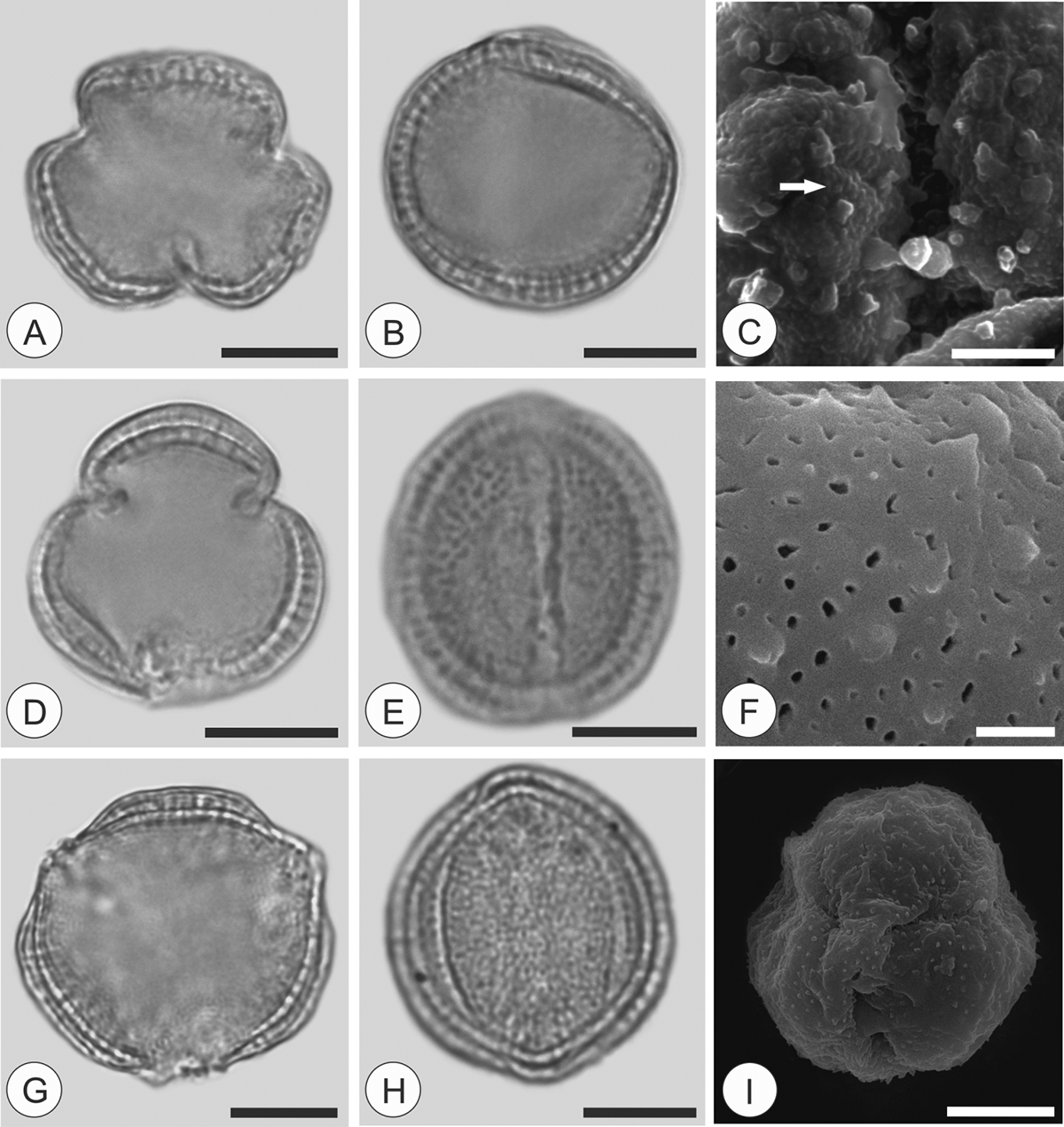
The tectum surface varied from regularly flat to wavy and displayed perforations and supratectal processes in the form of microechinae (Figs. 1-5). In D. globostigma, granulae were also observed alongside microechinae (Fig. 2C), a feature exclusive to this species. Across all species, the sexine was thicker than the nexine, and columellae were conspicuous.
Microechinae had a broad base and sharp apex in all species, though variations were observed in size being smaller in D. falconiana, D. guianensis, D. longifolia, D. sericea, and D. villosus and in density, which was lower in D. laxa, D. longifolia, and D. mildbraediana.
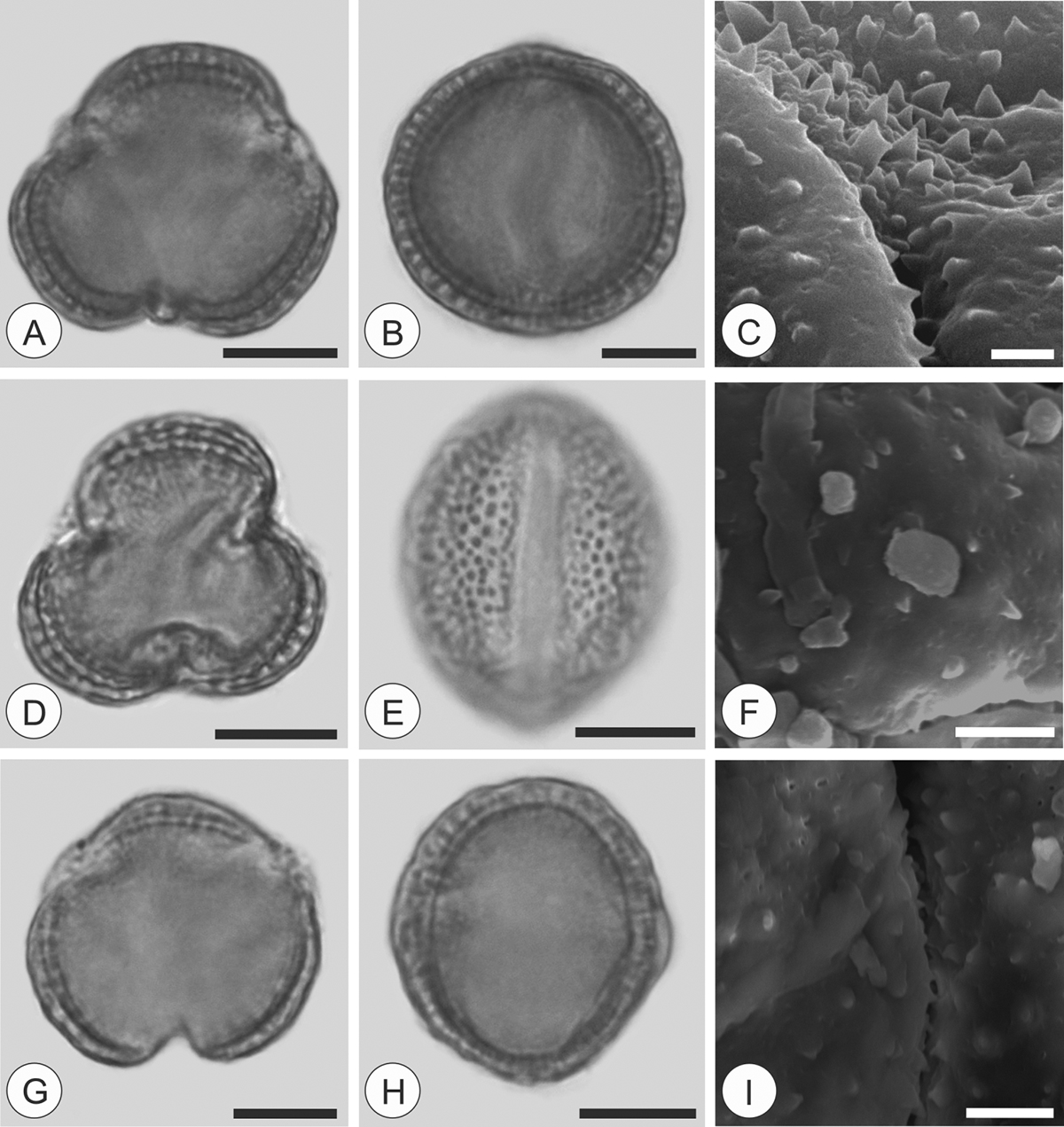
The amb was subcircular in D. falconiana (Fig. 1: G-H), D. globostigma (Fig. 2: A-B), and D. scandens (Fig. 4: D), and subtriangular in the remaining species. Pollen shape ranged from suboblate to subprolate, with D. longifolia displaying the greatest variability (prolate, oblate-spheroidal, and prolate-spheroidal forms). Despite this variation, all taxa shared common features: a perforated tectum, pointed microechinae, conspicuous columellae, and a sexine thicker than the nexine. Notably, D. laxa had a slightly perforated tectum (Fig. 3: F).
Pollen grains of Dicranostyles Benth. Dicranostyles ampla (A-C): A. Ornamentation detail (SEM). B. Aperture. C. Ornamentation detail (SEM). Dicranostyles densa (D-F): D. Polar view (optical section). E. Equatorial view (optical section). F. Detail aperture and aperture membrane (SEM). Dicranostyles falconiana (G-I): G. Polar view (optical section). H. Equatorial view (optical section). I. Detail aperture and aperture membrane (SEM). Scale: 10µm C: 2µm; F, I: 5µm.
Pollen grains of Dicranostyles Benth. Dicranostyles globostigma (A-C): A. Polar view (optical section). B. Equatorial view (optical section). C. Ornamentation detail (SEM). Dicranostyles guianensis (D-F): D. Polar view (optical section).E. Aperture. F. Ornamentation detail (SEM). Dicranostyles holostyla (G-I): G. Polar view (optical section). H. Equatorial view (optical section). I. Polar view in MEV. Scale: 10µm C: 2µm.

Pollen grains of Dicranostyles Benth. Dicranostyles integra (A-C): A. Polar view (optical section). B. Equatorial view (optical section). C. Ornamentation detail (SEM). Dicranostyles laxa (D-F): D. Polar view (optical section).E. Aperture and surface (detail); F. Ornamentation detail (SEM). Dicranostyles longifolia (G-I): G. Polar view (optical section). H. Equatorial view (optical section). I. Ornamentation and aperture details (SEM). Scale: 10µm C, F, I: 2 µm.
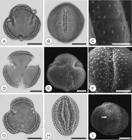
Pollen grains of Dicranostyles Benth. Dicranostyles mildbraediana (A-C): A. Polar view (optical section). B. Aperture; C. Ornamentation detail (SEM). Dicranostyles scandens (D-F): D. Polar view (optical section). E. Polar view (SEM). F. Ornamentation and aperture details (SEM). Dicranostyles sericea (G-I): G. Polar view (optical section). H. Equatorial view (optical section). I. Aperture. Scale: 10µm C: 2µm E, F, I: 5µm.
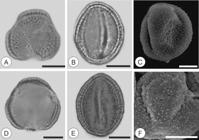
Pollen grains of Dicranostyles Benth. Dicranostyles villosus (A-C): A. Polar view (optical section). B. Equatorial view (optical section). C. Equatorial view (SEM). Dicranostyles yrypoana (D-F): D. Polar view (optical section). E. Equatorial view (optical section). F. Ornamentation detail in polar view (SEM). Scale: 10µm C: 5µm.
Principal Component Analysis
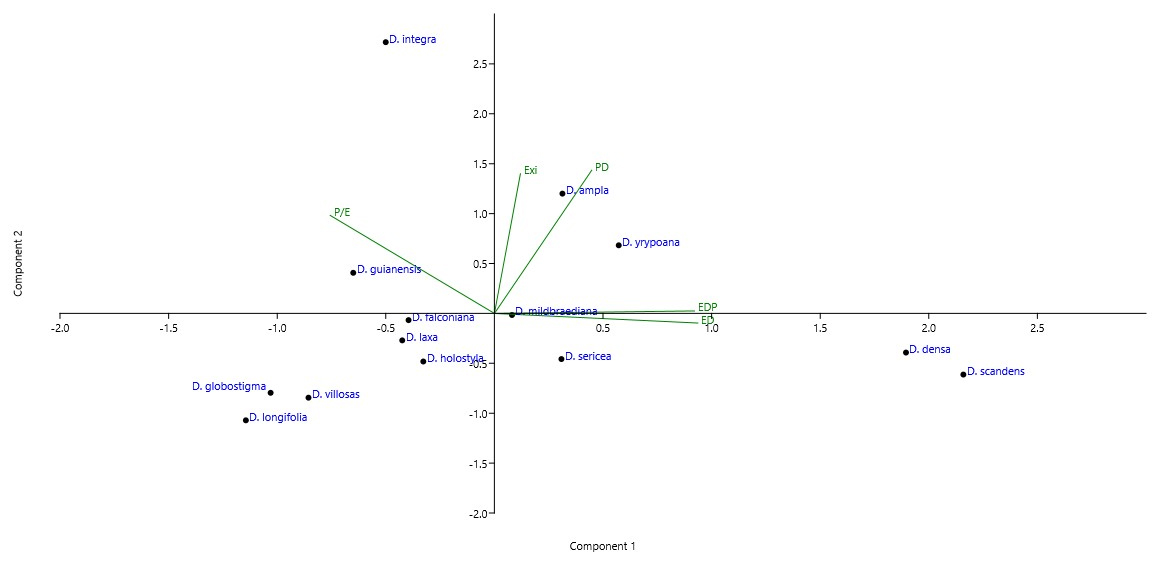
The Principal Component Analysis (PCA) based on five variables Polar Diameter (PD), Equatorial Diameter (ED), Equatorial Diameter in Polar view (EDP), P/E ratio, and exine thickness revealed that the first two components account for 84.2 % of the total variance. The first component, related to the polar diameter, explained 56 % of the variation, while the second, related to the equatorial diameter, explained 28.2 % (Tab. 3).
Species with higher polar diameter values included D. densa and D. scandens, which clustered closely. Dicranostyles ampla and D. integra exhibited the highest equatorial diameter values and stood out in their respective quadrants (Fig. 6). Dicranostyles longifolia recorded the highest EDP values. Additionally, a close spatial proximity was observed among D. globostigma, D. villosus, and D. longifolia. The isolated positioning of D. integra, as well as the clustering of D. falconiana, D. laxa, and D. holostyla, were also noteworthy (Tab. 4).

Principal Component Analysis (PCA) scatterplot of pollen morphometric variables in Dicranostyles Benth. (Convolvulaceae).
Discussion
The pollen of Dicranostyles exhibits low interspecific variation, despite the genus displaying high morphological diversity in its leaves, indumentum, corolla, anthers, gynoecium, and fruits (Austin, 1973a; Pastore, 2023). With a broader sampling of species, we observed the same pattern previously reported by Austin (1973b), with all species presenting tricolpate (or 3-zonocolpate) and microechinate pollen grains. Nevertheless, slight variations in size, shape, exine ornamentation, and tectum can aid in species delimitation. In contrast, within the tribe Maripeae, the genus Maripa shows considerable variation in pollen aperture type and number, ranging from tricolpate to 6-15-pantocolpate, whereas leaf, flower, and fruit morphology is relatively uniform among its species compared to Dicranostyles (Austin, 1973a, b). The pattern 3-zonocolpate is also presented in the monotypic Lysiostyles, corroborating the close relationship with Dicranostyles (Austin, 1973a, b; Santos et al., 2023).
Among the species of Dicranostyles that exhibited intraspecific variation in pollen grain size, the medium size class was predominant, except for D. globostigma and D. villosus, in which small pollen grains were more frequently observed. Given the overall dominance of medium-sized pollen grains across the specimens analyzed, we infer that this trait may be representative of the genus. This observation is associated with general patterns observed in Convolvulaceae, in which medium-sized pollen grains (typically ranging from 26 to 50 µm in diameter) are often considered the ancestral or plesiomorphic state (Harley, 1991; Telleria & Daners, 2003).
The occurrence of predominantly small pollen grains in D. globostigma and D. villosus could reflect derived conditions potentially associated with specific ecological adaptations or pollination strategies (Hao et al., 2020). In angiosperms, a reduction in pollen size has been linked to changes in pollen dispersal mechanisms, floral morphology, or even reproductive efficiency under particular environmental constraints (Walker & Doyle, 1975; Furness & Rudall, 2004). Whether such variation in Dicranostyles represents phylogenetically informative traits or intraspecific plasticity remains to be further investigated with a broader sample and integrative approaches, including phylogenetic and ecological data.
Thus, the predominance of medium-sized pollen grains may serve as a useful diagnostic feature at the genus level, while deviations such as those found in D. globostigma and D. villosus may represent a characteristic of these species. Dicranostyles globostigma is more closely related morphologically to D. yrypoana, whereas D. villosus resembles D. solimoesensis (Pastore, 2023).
It is well established that variations in pollen grain size may occur, as this character can be influenced by palynological preparation methods and environmental factors (Erdtman, 1952). Nonetheless, pollen size remains a widely used parameter in palynological studies and, when considered alongside other morphological features, can serve as valuable taxonomic evidence. In this context, pollen grain size has proven useful in taxonomic studies of several genera within Ipomoea L., and thus may also hold systematic significance within Dicranostyles (Mandoju, 2012; Buril et al., 2014; Moreira et al., 2019). Recognizing that some species within the genus exhibit pollen grains of variable size contributes to a more comprehensive understanding of the palynological diversity and taxonomic relationships within Dicranostyles.
Pollen grain shape also exhibited considerable variation among the analyzed species. In nine species, pollen grains were classified into at least two distinct shapes, suggesting intraspecific diversity or potential variation influenced by environmental or ontogenetic factors. Notably, D. longifolia stood out as the only species to present three distinct pollen shapes, possibly indicating greater morphological plasticity or the presence of distinct reproductive mechanisms.
Five distinct pollen shapes were identified within the genus: subprolate, prolate-spheroidal, prolate, oblate-spheroidal, and suboblate. Among these, the subprolate shape was the most widespread, occurring in nine species, while the suboblate form was restricted to D. scandens. Once again, D. longifolia exhibited the highest degree of intraspecific variation, with three pollen shapes observed across the analyzed specimens. In contrast, five species, namely D. falconiana, D. holostyla, D. laxa, D. mildbraediana, and D. yrypoana showed morphological stability, with all examined specimens consistently exhibiting subprolate pollen grains.
Although pollen shape is generally considered a relatively stable character, variations can occur among specimens within some angiosperm families (Erdtman, 1952). Within Convolvulaceae, studies have documented variation in pollen grain shape in certain genera (Simões et al., 2019; Moreira et al., 2019), and the variability observed in Dicranostyles supports the notion that such morphological diversity is a recurring pattern within the family.
Regarding apertures, tricolpate pollen is widely documented across Convolvulaceae (Laguardia, 1961; Lewis, 1971; Ferguson et al., 1977; Telleria & Daners, 2003; Liao et al., 2005; Wesh et al., 2010; Buril et al., 2014; Simões et al., 2019; Moreira et al., 2019), and is characteristic of many genera, including Aniseia Choisy, Cressa L., Convolvulus L., Cuscuta L., Erycibe Roxb., Evolvulus L., Jacquemontia Choisy, Lysiostyles, Maripa, and Stylisma Raf.
In the present study, we did not group species of Dicranostyles into distinct pollen types. However, the presence of a perforate tectum was a consistent feature across all analyzed species. In some cases, specifically D. globostigma, D. holostyla, and D. yrypoana this feature may have been difficult to observe due to limitations associated with the metallization process during SEM sample preparation. This methodological constraint may explain discrepancies between the present observations and previous descriptions, such as that of D. yrypoana by Pastore et al. (2023), in which the tectum was described as non-perforate.
The presence of a microechinate, perforate tectum is a common palynological feature in Convolvulaceae, notably among genera belonging to tribes closely related to Maripeae, such as Bonamia Thouars, Cressa, Evolvulus, and Jacquemontia (Buril et al., 2014; Moreira et al., 2019). Thus, tectum ornamentation represents an additional palynological character to the set tribes and their respective genera.
The SEM data provided a detailed understanding of the pollen morphology in the studied species, particularly the characteristics of the tectum and microechinae. These observations not only corroborated the morphological differences and similarities identified through LM but also contributed additional and previously undocumented palynological information.
Regarding the PCA results, the Polar and Equatorial diameters accounted for the majority of the total variance, reflecting the significant variation in pollen grain size and shape among the analyzed species. These two variables are critical, as they directly determine overall pollen size and are integral to the calculation of the P/E ratio, which is commonly used to classify pollen shape (Erdtman, 1960). Consequently, species exhibiting higher values for these diameters tend to group more closely in the PCA space.
The P/E ratio emerged as a particularly informative variable, significantly influencing the distribution of D. falconiana and D. mildbraediana, both of which exhibited the highest values for this character, followed by D. laxa. The clustering of D. globostigma, D. longifolia, and D. villosus can be explained by their shared P/E ratio values, which correspond to prolate-spheroidal pollen grains (Tables 2 and 4). A similar rationale applies to the grouping of D. falconiana, D. holostyla, and D. laxa, which all share subprolate pollen grains and, consequently, similar P/E ratios.
Additionally, D. longifolia was positioned in the third quadrant of the PCA, in opposition to the polar and equatorial diameter axes, as well as the P/E ratio. This placement reflects the high morphological variability observed in the pollen grains of this species, which exhibited three distinct shapes. Although D. ampla appeared close to the exine component, the values for exine thickness were relatively homogeneous across the analyzed species and thus did not strongly contribute to species separation in the PCA.
Cumulative variance and Principal Component Analysis (PCA) eigenvectors forpalynological variables in Dicranostyles (Convolvulaceae).
In summary, the results of both SEM and PCA analyses highlight the taxonomic value of pollen characters in Dicranostyles, particularly grain size, shape, and the density of microechinae. These features demonstrate the potential for supporting species delimitation within the genus.
The pollen data obtained for Dicranostyles demonstrate the potential of palynological characters to contribute meaningfully to understanding relationships within the Maripeae tribe. As phylogenetic studies of Maripeae continue to advance, the results presented here offer valuable morphological data that can be integrated into character reconstruction analyses, thereby enhancing our comprehension of the evolutionary history of this distinctive group of Amazonian lianas.
Moreover, these findings provide a foundation for future investigations into pollen evolution within the Dicranostyloideae clade. This is particularly relevant given the occurrence of tricolpate pollen in other genera such as Calycobolus Willd. ex Roem. & Schult., Dichondra J.R.Forst. & G.Forst., and Porana Burm. f. (Telleria & Daners, 2003; Staples & Austin, 2009). In contrast, genera like Jacquemontia and Bonamia exhibit a wider aperture diversity, ranging from tricolpate to pantocolpate pollen grains (Buril et al., 2014; Moreira et al., 2019). Notably, a palynological study of Bonamia (Moreira et al., 2019), also part of Dicranostyloideae, underscored the taxonomic relevance of pollen morphology by revealing inconsistencies between pollen features and traditional infrageneric classifications-results that support molecular evidence for the polyphyly of the genus (Stefanović et al., 2002).
The shape and size variation observed in Dicranostyles pollen grains is consistent with patterns reported in other Convolvulaceae genera (Moreira et al., 2019; Simões et al., 2019). Understanding the drivers and patterns of this morphological variation is fundamental for expanding the palynological database of the family.
In conclusion, this study highlights the importance of palynological investigations, particularly those incorporating detailed morphological analyses and SEM imaging. The new data generated here, especially from previously unstudied species, significantly enhance our knowledge of Dicranostyles pollen morphology and provide a robust foundation for future systematic, phylogenetic, and evolutionary studies within Convolvulaceae.
Acknowledgements
The DAS and MP thank CAPES for the Ph.D. scholarship (88882.447848/2019-01; 88887.633238/2021-00). To the curators of the herbaria for permission to collect the botanical material. To Fiocruz for allowing the performance of analyses under SEM. The American Society of Plant Taxonomists (ASPT), the International Association for Plant Taxonomy (IAPT), and the Idea Wild for Research Grants to MP. To CNPq for a scientific research grant to FARS (#304942/2023-5). This work was carried out with the support of the Coordination for the Improvement of Higher Education Personnel (CAPES), Brazil (Financing Code 001). Registration Code SISGEN: AF884FE.
References
- Angiosperm Phylogeny Group IV. 2016. An update of the Angiosperm Phylogeny Group classification for the orders and families of flowering plants. Botany Journal of Linnean Society 161: 105-121.
-
Ashfaq S, Zafar M, Ahmad M et al 2017. Microscopic investigations of palynological features of Convolvulaceae species from arid zone of Pakistan. Microscopy Research Technique 81: 228-239. doi: 10.1002/jemt.22971
» https://doi.org/10.1002/jemt.22971 -
Austin DF. 1973a. The American Erycibeae (Convolvulaceae): Maripa, Dicranostyles, and Lysiostyles I. Systematics. Annals of the Missouri Botanical Garden 60: 306-412. doi: 10.2307/2395089
» https://doi.org/10.2307/2395089 -
Austin DF. 1973b. The American Erycibeae (Convolvulaceae). Maripa, Dicranostyles and Lysiostyles II. Palynology. Pollen et Spores 15: 203-226. doi: 10.2307/2395089
» https://doi.org/10.2307/2395089 -
Austin DF, Acevedo-Rodríguez P. 2021. Convolvulaceae - Lianas and climbing plants of the Neotropics. https://naturalhistory.si.edu/research/botany/research/lianas-and-climbing-plants-neotropics 20 Jan. 2023.
» https://naturalhistory.si.edu/research/botany/research/lianas-and-climbing-plants-neotropics -
Buril MT, Oliveira PP, Rodrigues R, Santos FAR, Alves M. 2014. Pollen morphology and taxonomic implications in Jacquemontia Choisy (Convolvulaceae). Grana 54: 1-11. doi: 10.1080/00173134.2014.946961
» https://doi.org/10.1080/00173134.2014.946961 - Erdtman G. 1952. Pollen Morphology and Plant Taxonomy - Angiosperms. Stockholm, Almqvisit & Wiksell.
- Erdtman G. 1960. The acetolysis method. A revised description. Svensk Botanisk Tidskrift 39: 561-564.
-
Ferguson IK, Verdcourt B, Poole MM. 1977. Pollen morphology in the genera Merremia and Operculina (Convolvulaceae) and its taxonomic significance. Kew Bulletin 31: 763-773. doi: 10.2307/4109548
» https://doi.org/10.2307/4109548 -
Furness CV, Rudall PJ. 2004. Pollen Aperute Evolution - a crucial factor for eudicot success? Trends Plants Science 9: 154-158. doi: 10.1016/j.tplants.2004.01.001
» https://doi.org/10.1016/j.tplants.2004.01.001 -
Harley MM. 1991. The pollen morphology of the Sapotaceae. Kew Bulletin 46: 379-491. doi: 10.2307/4110538
» https://doi.org/10.2307/4110538 - Halbritter H, Ulrich S, Grímsson F et al 2018. Illustrated Pollen Terminology. 2nd ed. New York, SpringerOpen.
-
Hao K, Tian ZX, Wang ZC, Huang SQ. 2020. Pollen grain size associated with pollinator feeding strategy. Proceedings, Biological Sciences 26: 287. doi: 10.1098/rspb.2020.1191
» https://doi.org/10.1098/rspb.2020.1191 - Laguardia AM. 1961. Morfologia del grano de pollen de algumas Convolvulaceas uruguayas. Boletim Sociedad Argentina Botánica 9: 187-197.
-
Lewis WH. 1971. Pollen differences between Stylisma and Bonamia (Convolvulaceae). Brittonia 23: 331-334. doi: 10.2307/2805701
» https://doi.org/10.2307/2805701 -
Liao GI, Chen MY, Kuoh CS. 2005. Pollen morphology of Cuscuta (Convolvulaceae) in Taiwan. Botanical Bulletin of Academia Sinica 45: 75-81. doi: 10.7016/BBAS.200501.0075
» https://doi.org/10.7016/BBAS.200501.0075 - Mandoju IO. Palinologia de espécies de Convolvulaceae Juss. ocorrentes na região Sudeste, Brasil - tribos Merremieae e Cuscuteae. 2012. MSc Thesis, Universidade do Estado do Rio de Janeiro, Rio de Janeiro.
-
Moreira ALC, Menzzonato-Pires AC, Santos FAR, Cavalcanti TB. 2019. Pollen morphology in the genus Bonamia Thouars (Convolvulaceae) and its taxonomic significance. Review of Palaeobotany and Palynology 264: 11-23. doi: 10.1016/j.revpalbo.2019.02.008
» https://doi.org/10.1016/j.revpalbo.2019.02.008 -
Pastore M, Simão-Bianchini R. 2025. Dicranostyles in Flora e Funga do Brasil. Jardim Botânico do Rio de Janeiro. https://floradobrasil.jbrj.gov.br/FB22546 14 Ago. 2025.
» https://floradobrasil.jbrj.gov.br/FB22546 -
Pastore M, Simão-Bianchini R, Santos DA, Carneiro-Torres DS, Viana PL. 2023. The Discovery of a new species of Convolvulaceae: Dicranostyles yrypoana from the Brazilian Amazon Rainforest. Systematic Botany 48: 88-95. doi: 10.1600/036364423X16758873924126
» https://doi.org/10.1600/036364423X16758873924126 - Pastore M. 2023. Sistemática de Maripeae (Convolvulaceae): Uma Tribo predominantemente Amazônica. PhD Thesis, Universidade Federal Rural da Amazônia, Belém, Brazil.
-
Plants of the World Online - POWO. 2024. Plants of the World Online. Facilitated by the Royal Botanic Gardens, Kew. https://powo.science.kew.org/ 26 Nov. 2024.
» https://powo.science.kew.org/ -
Punt W, Hoen PP, Blackmore S, Nilson S, Le Thomas A. 2007. Glossary of pollen and spore terminology. Review of Palaeobotany and Palynology 143: 1-81. doi: 10.1016/j.revpalbo.2006.06.008
» https://doi.org/10.1016/j.revpalbo.2006.06.008 -
Santos DAD, Oliveira DC, Pastore M, Carneiro-Torres DS, Santos FARD. 2023. Comparison of pollen characters in Lysiostyles Benth. and allied genera (tribe Maripeae - Convolvulaceae). Grana 62: 311-316. doi: 10.1080/00173134.2024.2308935
» https://doi.org/10.1080/00173134.2024.2308935 -
Sengupta S. 1971. On the pollen morphology of Convolvulaceae with special reference to taxonomy. Review of Palaeobotany and Palynology 13: 157-212. doi: 10.1016/0034-6667(72)90030-9
» https://doi.org/10.1016/0034-6667(72)90030-9 -
Simões AR, Culham A, Carine M. 2015. Resolving the unresolved tribe: A molecular phylogenetic framework for the Merremieae (Convolvulaceae). Botanical Journal of the Linnean Society 179: 374-387. doi: 10.1111/boj.12339
» https://doi.org/10.1111/boj.12339 -
Simões ARG, Furness CA, Da Luz CFP. 2019. The systematic value of pollen morphology in Operculina (Convolvulaceae). Grana 58: 1-13. doi: 10.1080/00173134.2018.1511750
» https://doi.org/10.1080/00173134.2018.1511750 -
Simões ARG, Eserman L, Zuntini AR et al 2022. A birds eye view of the systematics of Convolvulaceae: Novel insights from nuclear genomic data. Frontiers in Plant Science 13: 2313. doi: 10.3389/fpls.2022.889988
» https://doi.org/10.3389/fpls.2022.889988 -
Staples G. 2012. Convolvulaceae - the morning glories and bindweeds. http://convolvulaceae. myspecies.info/node/9 15 Mar. 2023.
» http://convolvulaceae. myspecies.info/node/9 -
Staples GW, Austin DF. 2009. Revision of Neotropical Calycobolus and Porana (Convolvulaceae). Edinburgh Journal of Botany 66: 133-153. doi: 10.1017/S0960428609005319
» https://doi.org/10.1017/S0960428609005319 -
Stefanović S, Krueger L, Olmstead RG. 2002. Monophyly of the Convolvulaceae and circumscription of their major lineages based on DNA sequences of multiple chloroplast loci1. American Journal of Botany 89: 1510-1522. doi: 10.3732/ajb.89.9.1510
» https://doi.org/10.3732/ajb.89.9.1510 -
Stefanović S, Austin DF, Olmstead RG. 2003. Classification of Convolvulaceae: A phylogenetic approach. Systematic Botany 28: 797-806. doi: 10.1043/02-45.1
» https://doi.org/10.1043/02-45.1 -
Telleria MC, Daners G. 2003. Pollen types in Southern New World Convolvulaceae and their taxonomic significance. Plant Systematic Evolution 243: 99-118. doi: 10.1007/s00606-003-0069-z
» https://doi.org/10.1007/s00606-003-0069-z -
Vasconcelos LV, Junqueira MER, Simão-Bianchini R, Saba MD. 2019. Morfologia polínica de espécies de Bonamia Thouars, Evolvulus L. e Jacquemontia Choisy (Convolvulaceae) ocorrentes numa região de ecótono no município de Caetité, BA, Brasil. Hoehnea 46: e1032018. doi: 10.1590/2236-8906-103/2018
» https://doi.org/10.1590/2236-8906-103/2018 -
Walker JW, Doyle JA. 1975. The bases of angiosperm phylogeny: Palynology. Annals of the Missouri Botanical Garden 62: 664-723. doi: 10.2307/2395270
» https://doi.org/10.2307/2395270 -
Wesh M, Stefanovic S, Costea M. 2010. Pollen evolution and its taxonomic significance in Cuscuta (dodders, Convolvulaceae). Plant Systematic Evolution 285: 83-101. doi: 10.1007/s00606-009-0259-4
» https://doi.org/10.1007/s00606-009-0259-4 -
Zuntini AR, Carruthers T, Maurin O et al 2024. Phylogenomics and the rise of the angiosperms. Nature 629: 843-850. doi 10.1038/s41586-024-07324-0
» https://doi.org/10.1038/s41586-024-07324-0
Data sharing not applicable.