 Small RNA sequencing reveals important miRNA function in Arabidopsis thaliana calli in response to combined drought and nitrogen deficiency
Abstract
MicroRNAs and transcription factors are crucial components of the stress response network in plants. Arabidopsis callus tissues were exposed to drought and nitrogen deficiency conditions using the Murashige and Skoog culture medium. Sequencing identified 117 differentially expressed miRNAs within comparisons. mir156j, mir157b, mir166b, mir164a, mir160c, mir158b, mir156b, mir159b were among those detected. Upon combination stress, mir160c was upregulated (7.49) whilst downregulated (-6.87) in the drought-only treatment. Some of the known miRNAs identified included mir390, mir781, mir1543, mir829, mir8155, mir5643, and mir403. A total of 17,003 potential target genes were predicted for the identified Arabidopsis miRNAs. The target genes identified by psRNATarget were enriched in gene ontology categories and included processes such as Transcription regulator activity (GO:0140110), DNA binding transcription factor activity (GO:0003700), RNA helicase activity (GO:0003724), Gravitropism (GO:0048653), and Signal transduction (GO:0007165). Furthermore, among the transcription factor genes studied, HD-Zip protein family genes were detected to have varying expressions. UBC24 was upregulated by nitrogen deficiency, while REVOLUTA (controlled by mir165 and mir166) along with RH39 were downregulated after the nitrogen deficiency treatment. Our findings highlight varied expressions within miRNA families depending on the stress condition, along with strand-specific regulation and functions of miRNA target genes which can be leveraged to enhance agricultural productivity.
Keywords:
abiotic stress; climate change; drought; miRNA profiling; nitrogen deficiency; plants; transcriptomics
Introduction
Abiotic stress is a common phenomenon encountered by plants in the wild, affecting metabolism, growth, and development and in most cases, leading to a decrease in crop yield. Adverse climatic conditions together with human activities like pollution are the main reason for the subsequent increase in abiotic stress (Oshunsanya et al., 2019; Kumar, 2020). Drought and nitrogen deficiency are among the predominant abiotic stresses plants face (Song et al., 2019). Drought stress is caused by water insufficiency due to continuous loss of water through transpiration and evaporation, causing extensive cellular damage to the plant by the formation of reactive oxygen species (ROS) (Seleiman et al., 2021; Zhang et al., 2021). Nitrogen deficiency, on the other hand, refers to the inadequate supply of nitrogen. Nitrogen (N), one of the major components that form chlorophyll and amino acids, is a crucial element for plant viability (Leghari et al., 2016). However, nitrogen is not directly available to plants in the soil as atmospheric N needs to be converted to be used. The long steps in the nitrogen conversion cycle lead to decreased nitrogen availability, causing deficiency in plants. Moreover, water availability affects nitrogen uptake because nitrogen must be dissolved in water for plant roots to absorb it (Buljovcic & Engels, 2001: Gloser et al., 2020). Therefore, changes in water availability can alter the concentration of nitrogen in the soil, impacting its uptake by plants (Sajjad et al., 2021).
The combined effect of nitrogen deficiency and drought has been observed to greatly impact plants (Song et al., 2019). Leaf chlorosis due to reduced chlorophyll production in potato plants was attributed to nitrogen deficiency and drought stress (Wellpott et al., 2023). Drought stress can additionally cause wilting, leaf curling, and stomatal closure to minimize water loss (Ali et al., 2022).
Considering the detrimental effects of such conditions, plants have developed intricate mechanisms to adapt and respond to stress, involving complex changes at the molecular, physiological, and biochemical levels, controlled by a network of genes. One of the most prominent regulators of these pathways are microRNAs (miRNAs) (Wang et al., 2004). MicroRNAs are small, non-coding RNA molecules that play important regulatory roles in gene expression (Wang et al., 2004; Zhang, 2015; Luo et al., 2022). In plants subjected to abiotic stress, they can either enhance stress tolerance or promote stress sensitivity depending on the specific miRNA and its target gene (Hajdarpašić & Ruggenthaler, 2012; Sunkar et al., 2012; Shah & Ullah, 2023; Pandita & Pandita, 2023). Cui et al (2006) suggested that miRNAs constitute approximately 1% of the anticipated genes in higher eukaryotic genomes and that miRNAs could potentially regulate a substantial portion, ranging from 10-30%of all genes. The stress responses mediated by microRNAs often display a strong correlation with target transcription factor genes that function in the transcriptional regulation of downstream stress-responsive genes (Palatnik et al., 2003; Sunkar et al., 2012).
Transcription factors (TFs) also play crucial roles in coordinating stress responses by gene expression regulation (Lindemose et al., 2013; Mitsis et al., 2020; Zhang et al., 2023). They do this by binding to specific DNA sequences and modulating the recruitment of RNA polymerase thus activating or deactivating target genes responsible for stress signaling. Previous studies have provided an outline of the following transcriptional factors: basic leucine zipper (Liu et al., 2023), WRKY (Erpen et al., 2018), homeodomain-leucine zipper (Mao et al., 2016), myeloblastoma (Ren et al., 2023), drought-response elements binding proteins/C-repeat binding factor (Vazquez-Hernandez et al., 2017), shine (Shi et al., 2011), wax production-like (Hrmova & Hussain, 2021), and TATA-binding protein (Bertrand et al., 2005). The Teosinte branched1/Cincinnata/proliferating cell factor (TCP) family consists of genes that encode transcription factors specific to plants. This domain in plants consists of a primary section and two alpha helices connected by a loop. The characteristic presence of amino acids in the TCP domain makes it a unique DNA-binding domain in plants (Giraud et al., 2010; Viola et al., 2023).
As potential miRNA target genes, we considered certain Homeodomain leucine (HD-Zip) factors (PHAVOLUTA, TCP24, PHABULOSA, REVOLUTA, CORONA) along with Ubiquitin-Conjugating Enzyme 24 (UBC24), Teosinte Cycloidea Proliferating Cell Factor (TCP24) and a DEAD-box protein-coding gene to assess specific responses of these genes under combined stressors. These target genes were chosen based on their diversity in terms of functions and miRNA-targeted transcription factor activity. They are also known to influence plant's response to abiotic stress either directly or indirectly through their roles in growth and development (Mukhopadhyay & Tyagi, 2015; Sornaraj et al., 2016; Gong et al., 2019; Li et al., 2022; Zhang et al., 2023). In addition, we performed small RNA sequencing to better understand the mechanism underlying the combined drought and nitrogen deficiency stresses. Profiling miRNAs under stress conditions offers promising avenues to enhancing breeding programs and genetic engineering efforts in agriculture. This can permit researchers to identify and manipulate key pathways to improve crop resilience and productivity. miRNA-based technologies have been successfully applied to improve resistance to abiotic and biotic stresses in crops such as rice and wheat, demonstrating their potential to reprogram plant responses and enhance resilience (Nogoy et al., 2018). Additionally, the use of miRNAs in genome editing has shown success in improving traits in rice, highlighting their broader applicability across various plant species (Mangrauthia et al., 2017).
Materials and Methods
Plant growth, tissue culture, and stress treatments
Arabidopsis thaliana Col-0 (Columbia-0) seeds used in this study were originally obtained from The Center for Biotechnology (CeBiTec), Bielefeld University. Seeds were surface sterilized by 70% ethanol wash, three times, and 100% ethanol wash once. Sterile seeds were dried and sown on plates containing Murashige and Skoog (MS) (Murashige & Skoog, 1962) medium supplemented with 3% sucrose and 0.9% agar. Plates were sealed, and seeds were allowed to germinate in the plant growth chamber at 25±2 °C, 16h light/8h dark conditions (Nüve, TK 252). Callus induction media was additionally supplemented with 0.5 mg/L 2,4-Dichlorophenoxyacetic acid (2,4-D) (Sigma, D7299). Plant roots were selected as explants for callus culture due to their high regenerative property, high responsiveness to plant growth regulators, and adaptability to environmental stresses (Fehér, 2019).
Nitrogen deficiency was created by using modified MS basal salts without NH4NO3 (Sigma M2909). To prepare this stress medium, 3% sucrose and 2.7 g/L of modified MS were dissolved in distilled water and 0.9% agar was added. 0.5 mg/L 2,4-D was added after sterilization by autoclave.
Polyethylene glycol 8000 (PEG 8000) was used to simulate drought conditions in vitro. Low water potential treatment was applied according to the protocol modified by Verslues et al. (2006) at an osmotic potential of -0.7Mpa. To prepare the solid phase (½ strength MS), 2.2 g/L MS salts, 1.2 g/L MES (2-(N-morpholino) ethanesulfonic acid) (6mM) and 3% sucrose were dissolved in distilled water. The pH of the solution was adjusted to 5.7. After adding 0.9% agar, the media solution was sterilized by autoclaving, and then 0.5 mg/L 2,4-D was added. To prepare the PEG overlay solution, ½ strength MS media was prepared without agar, and an appropriate amount of PEG 8000 was added gradually to reach -0.7 MPa and stirred until completely dissolved. PEG overlay solution was poured on solidified agar plates in equal volumes. Petri dishes were left at room temperature for at least 12-15 hours to allow the PEG to diffuse into agar plates. The overlay solution was carefully removed, and plates were stored at 4 °C for further use.
To prepare the combined stress medium, a modified MS salt mixture (without NH4NO3) was used along with PEG 8000, following protocols for both drought stress and nitrogen deficiency conditions as outlined above. The PEG overlay was added to the plates, simulating drought stress while the nitrogen-free MS medium induced nitrogen deficiency. This setup ensured that calluses were subjected to both stresses simultaneously. The prepared medium plates were stored at 4oC. 1-month-old calluses were transferred to control, nitrogen deficiency, drought, and combined stress MS medium containing 1 mg/L 2,4-D. This was done three separate times for the different experimental groups. Callus tissues were collected after 7 days in the growth chamber (75% humidity, 16/8-hr photoperiod (Panasonic MLR-352H-PE). All samples were snap-frozen by liquid nitrogen and stored at -80°C.
RNA Isolation, cDNA Synthesis, and Sequencing Workflow
Total RNA was isolated from Arabidopsis thaliana callus tissues using Hibrizol (HibriGen, Turkey) and phenol:chloroform extraction as recommended by the manufacturer. After extraction, the RNA samples were dissolved in DEPC (Diethyl Pyrocarbonate)-treated water. The purity and concentration of the extracted RNA were measured using the spectrophotometer. Extracted RNAs were visualized using agarose gel electrophoresis to determine their integrity (the presence of three RNA-specific bands). RNA samples with an A260/A280 ratio between 1.8-2.0 and which showed the 3 bands (28S, 18S, and 5S) during electrophoresis were sent to a local company (Genoks, Turkey) for sequencing by service procurement. Both the quantity and quality of the RNA were verified using Agilent 2100 Bioanalyzer (Agilent Technologies, USA).
cDNA library preparation and sequencing reactions were conducted by the Genoks, Turkey. After the size selection procedure to select RNA molecules in the 18-40 nucleotide range, short adapters were ligated to the 3' and 5' ends of the small RNA to prevent degradation. These adapters also served as primer binding sites, enabling the amplification of small RNA molecules to generate sufficient material necessary for quality sequencing. The size distribution was verified using the Agilent 2100 Bioanalyzer and the libraries were quantified with the Qubit fluorometer (Thermo Fisher, USA). The small RNA libraries were sequenced on an Illumina NextSeq 2000 using 50bp long single-end (SE) sequencing. The sequencing data has been deposited in NCBI GEO with accession number GSE268439.
Sequence quality was assessed using Mirtrace software, v1.0.1 (Kang et al., 2018). Fastp v0.23.2 (Chen et al., 2018) software was used to filter reads by length. Fastp effectively removed low-quality bases, adapter sequences, and excessively short or overly long reads, thereby improving the overall quality of the dataset. Only high-quality reads of the desired size range were retained for downstream analysis. Filtered reads were then aligned to the reference genome using Bowtie v1.3.1 (Langmead et al., 2009) software. All steps of data analysis were provided by service procurement.
Detection of known small RNAs and identification of miRNA target genes
Preprocessed reads were aligned using miRDeep-P2 v1.1.4 (Kuang et al., 2019) to the Arabidopsis thaliana reference genome (TAIR10) using a short read aligner such as Bowtie software to detect known small RNAs. For this process seqkit v2.4.0 (Shen et al., 2016) was used for file conversion then using the fastx_toolkit v0.0.14 (Gordon & Hannon, 2017), the non- miRNA files were excluded. The above procedure was repeated for each sample, and known miRNAs for each sample were obtained. The abundance analysis was performed using the featureCounts command of the software subread v2.0.3 (Liao et al., 2019). The target genes of known miRNAs were detected using the psRNATarget (Dai & Zhao, 2011) web tool. psRNATarget uses the Smith-Waterman algorithm to perform sequence alignment considering sequence complementarity and target site accessibility. Arabidopsis thaliana was specified as a reference, and known miRNA sequences were used as inputs. The maximum target parameter was determined as 200, and the maximum false base pairing parameter was determined as 2.
Differential expression analysis between groups
DESeq2 v1.38.3, an R package (Love et al., 2014), was used to perform differential expression analysis. The results of 6 different comparisons (A vs. B, A vs. C, A vs. D, B vs. C, B vs. D, C vs. D) for four different groups (Control (A), Nitrogen deficiency (B), Drought (C), Combination (D)) were examined. For this purpose, a “meta” file describing the samples and conditions was also used. The filtering parameters used for differentially expressed genes were adjusted as p-value (padj) < 0.05 and log2foldchange > 1. These differentially expressed genes were then compared for Gene Ontology enrichment.
Target gene enrichment and Gene Ontology analysis
Target gene enrichment analysis to assess whether a specific set of genes is overrepresented or enriched in predefined gene sets or functional categories compared to what would be expected by chance was done using ShinyGO (v0.77). The list of differentially expressed genes (DEG) was analyzed for enrichment in Gene ontology (GO) classification and functional enrichment (Ge et al., 2020). The main role of Gene ontology was to classify the target genes into molecular function (mf), biological process (bp), and cellular component (cc). The FDR parameter was set to 0.05, and the maximum pathway parameter to 20. The enrichment analysis results were visualized using the ggplot R package, v3.4.2 (Villanueva & Chen, 2019).
Analysis of target gene expression levels
Previously designed primers (Tab. 1) for some target genes were assessed by PCR. For this, 2 µl of synthesized cDNA samples were used as a template in a final volume of 20 µl containing 1x SYBR Green Mix (Hibrigen, Turkey) and gene-specific primers. The primers were designed using NCBI Primer BLAST and the list of primers is given in Table 1. qPCR was performed on a CFX 96TM Real-Time System (BIORAD, USA). The reaction conditions were as follows: 95 °C for 1 minute, 40 cycles of 95 °C for 15 s and at the following annealing temperatures for the different genes (PHABULOSA, REVOLUTA, RH39 at 64°C; PHAVOLUTA, TCP24 at 63.5°C; CORONA, UBC24 at 62°C) for 15 s and final extension at 72°C for 45 s. Melting curve analysis was performed for all reactions. Following qRT-PCR, differences in gene expression levels were assessed by analyzing the mean CT values with the positive control housekeeping gene Actin. Actin was chosen due to its consistent and stable expression in various tissues and developmental stages across different experimental conditions (Czechowski et al., 2005; Kozera & Rapacz, 2013; Chen et al., 2019). The relative gene expression was quantified using the comparative ΔΔCT method (Livak & Schmittgen, 2001).
Results
Analysis of Sequencing data
After trimming adapters, low-quality reads were filtered based on sequence quality, read length, and abundance of non-miRNA sequences. Checks performed based on read length ensured all reads were between 18-26 bases. In total, 51 million clean reads were obtained (Table 2).
Alignment of Reads to the Arabidopsis thaliana Reference Genome
Clean reads were aligned to the Arabidopsis thaliana reference genome using the Bowtie software (v 1.3.1) for mapping (Langmead et al., 2009). The Arabidopsis thaliana reference genome (TAIR10) was used, and its annotations were obtained from the Ensembl (Cunningham et al., 2022). Firstly, an index was created for the reference genome alignment. After indexing with Bowtie, index files with “ebwt” extension were created in various sizes and numbers, and alignment was performed. Alignment files in SAM (sequence alignment map) format of each sample were obtained. The resulting SAM files were used as input in the abundance analysis.
Determining Abundance Levels of Small RNAs
This was performed using the 'featureCounts' command of the sub-read (v2.0.3) software.
The control (A), nitrogen deficiency (B), drought (C), and combined (D) stress conditions were aligned to the reference genome at rates of 93.20%, 94.15%, 93.13%, and 93.21% respectively, as seen in Table 3.
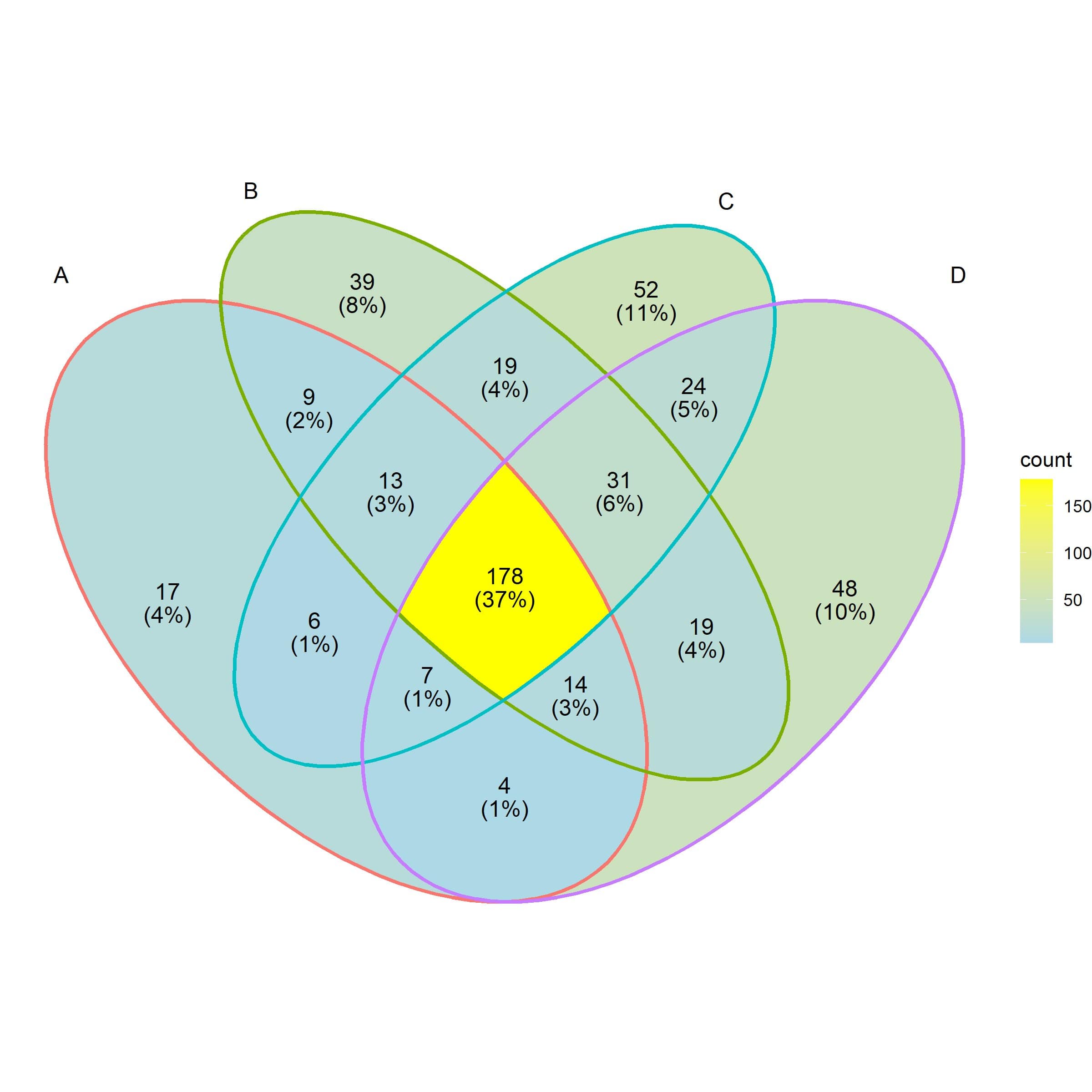
Sequencing analysis detected 247 known miRNAs for the control sample, 322 for the nitrogen deficiency, 329 for the drought, and 324 for the combined stress condition. An average of 178 miRNAs were identified in all stress conditions (Fig. 1). Nineteen known miRNAs were common in the B & C sample, 9 in A & B, 24 in C & D, and 4 in A & D (Fig. 1).
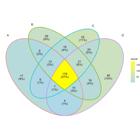
Venn diagram showing the intersection of miRNA found. A (control), B (nitrogen deficiency), C (drought), D (combination).
Combined drought and nitrogen deficiency-responsive miRNAs
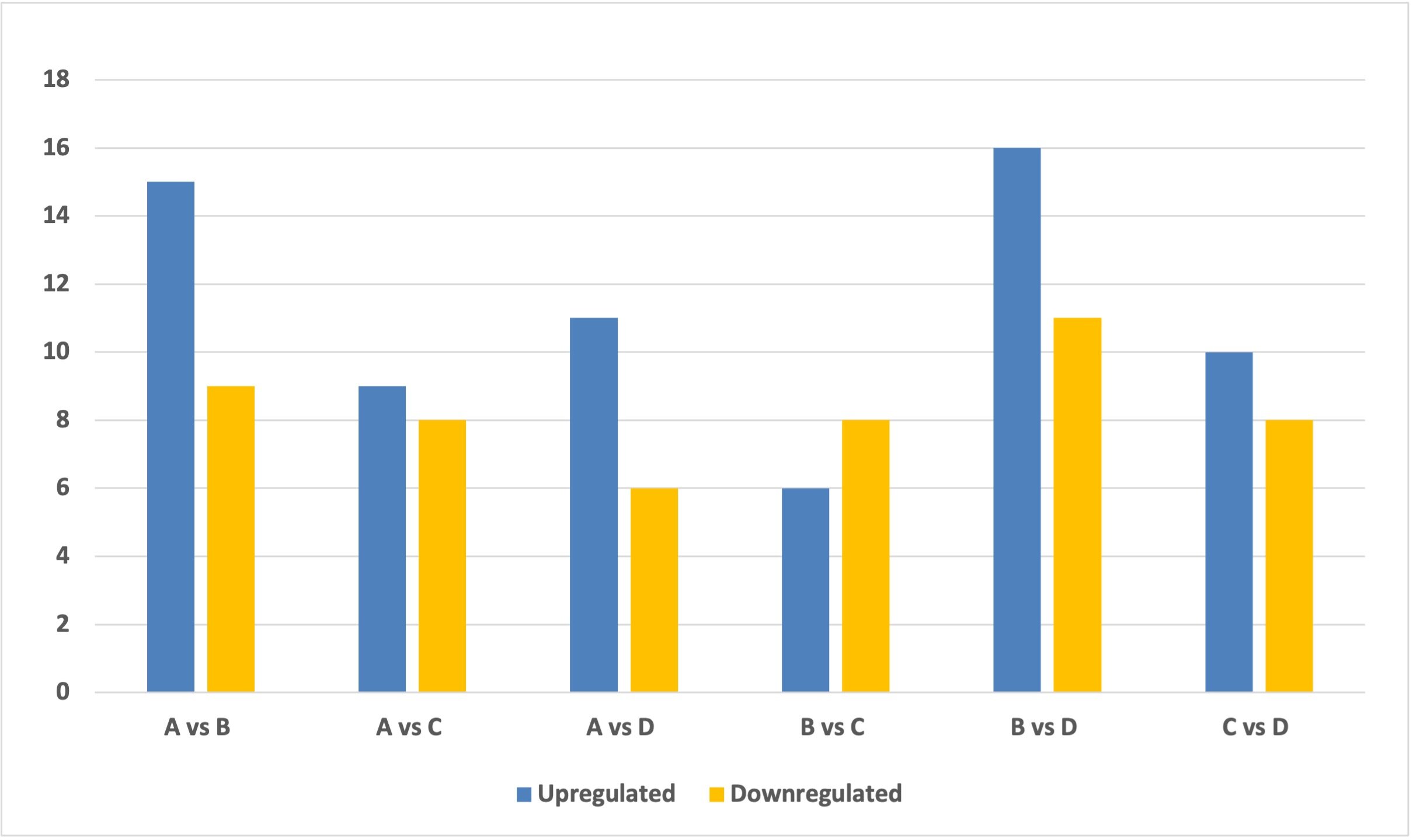
The DESeq2 software identified 117 differentially expressed miRNAs belonging to 12 families (mir156, mir157, mir158, mir159, mir160, mir161, mir162, mir163, mir164, mir165, mir166, and mir167) between the comparisons (Fig. 2). Differentially expressed miRNAs for each comparison were also obtained. The resulting p-values for each comparison were adjusted to control the false discovery rate (FDR), and miRNAs that met the criteria of adjusted p-value (padj) < 0.05 and log2 fold change > 1 were identified as upregulated miRNAs, while miRNAs that satisfied the criteria of padj < 0.05 and log2 fold change < -1 were identified as downregulated miRNAs.
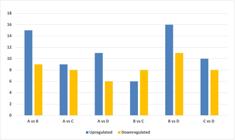
Statistics of differentially expressed miRNAs between comparisons. The X-axis represents comparisons between sample groups. The Y-axis represents the number of differentially expressed miRNAs. Blue: upregulated, red: downregulated.
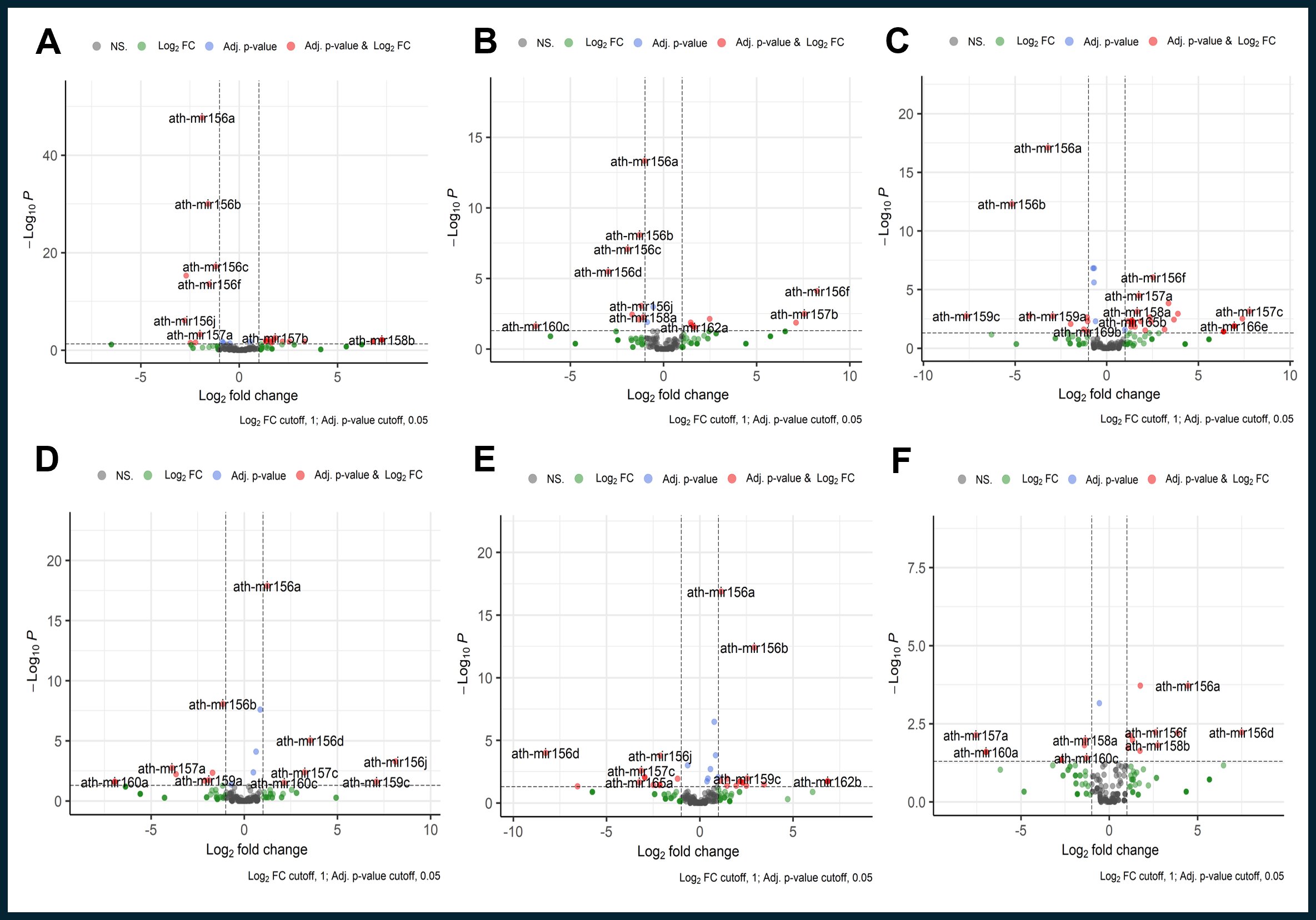
Gene families mir156, mir157, and mir158 were consistently expressed across all conditions. All 12 families were exclusively expressed in the nitrogen deficiency and combined comparison (Fig. 4). The mir156 family had the most significantly upregulated miRNAs, with mir156j having an 8.12 log2foldchange, mir156d a 7.49 log2foldchange, while mir159b and mir158b had similar log2foldchange of 7.26. Generally, mir157b, mir157c, mir158a, mir158b, mir159a, mir159b, mir159c, mir160b, mir160c, mir162a, mir163, mir164a, mir164b, and mir166b were upregulated just for the nitrogen deficiency treatment whilst the downregulated miRNAs for this condition included mir157a, mir165a, mir165b, mir156a, mir156f, mir156d, mir156c, mir156j, mir156b (Fig. 4A).
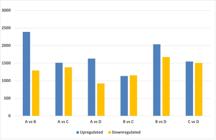
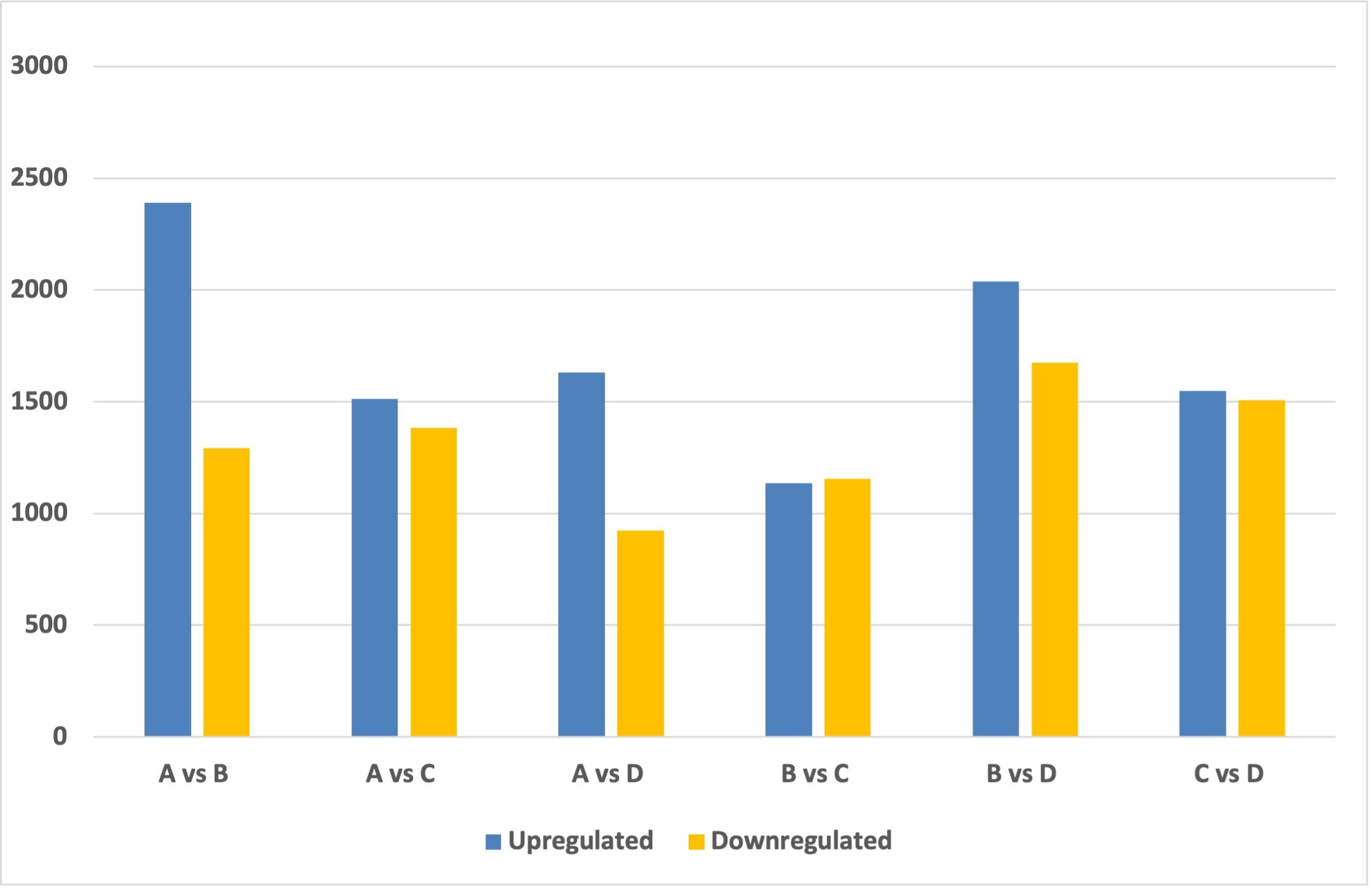
Statistics of differentially expressed miRNA target genes. Red columns represent downregulated miRNA target genes, and blue represent upregulated miRNA target genes.
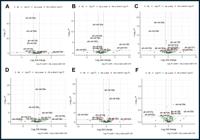
Volcano plots of DEGs. The y-axis shows the statistical significance of changes in miRNA expression. Higher -log10p suggests greater statistical significance. The x-axis shows fold change expressions. A: control vs nitrogen deficiency; B: control vs drought; C: control vs combination; D: nitrogen deficiency vs drought; E: nitrogen deficiency vs combination; F: drought vs combination.
Apart from mir156f, mir160a, and mir160b, the miRNA upregulated during the nitrogen deficiency treatment (mir157b, mir158b, mir159a, mir159c, mir161, mir162a) were also upregulated for the drought treatment. However, mir156d, mir 156j, mir156a, mir156b, and mir156c, in addition with mir157c, mir158a, and mir160c showed a downregulation in drought treatment. Table 4 gives a detailed comparison and expression changes of these miRNAs across conditions.
Table 5 summarizes the target genes of these differentially expressed miRNAs. High numbers of differentially expressed target genes for the miRNAs were obtained for each comparison as the maximum parameter for the target genes was set at 200 (Fig. 3). A detailed list of these miRNAs and predicted genes is available at Table S3.
Target gene enrichment analysis and Gene Ontology (GO)
The analysis in this study showed a statistically significant enrichment of genes in the biological process and molecular function categories (Table S4). The most common subcategories under molecular function were the transcription regulator activity (GO:0140110), DNA binding transcription factor activity (GO:0003700), RNA helicase activity (GO:0003724), and ATP dependent activity (GO:0140657). The most enriched GO genes are shown in Fig. 5. Among the top 19 DEGs between A vs. B in the molecular function category, polynucleotide phosphatase (GO:0098518), lipid transporter activity (GO:0005319) and RNA helicase (GO:0003724) activity were the top 3 categories with 4, 15, and 18 unigenes respectively; RNA helicase activity (GO:0003724), ATP-dependent activity on RNA (GO:0008186) as well as Helicase activity (GO:0004386) for A vs. C comparison (Fig 5C). While for the A vs. D comparison, miRNA binding (GO:0035198), regulatory RNA binding (GO:0061980), and lipid transporter activity (GO:0005319) were significantly enriched.

Target gene enrichment analysis of A: control vs nitrogen deficiency (MF), B; control vs nitrogen deficiency (BP) C; control vs drought (MF), D; control vs drought (BP), E; control vs combine (MF), F; Control vs combine (BP), G; nitrogen deficiency vs drought (MF), H; nitrogen deficiency vs drought (BP) I; nitrogen deficiency vs combine (MF), J; nitrogen deficiency vs combine (BP), K; drought vs combine (MF), L; drought vs combine BP). The FDR parameter was set to 0.05 and the maximum pathway parameter to 20.
In the biological process, the most common and most enriched terms were the stamen development (GO:0048443), positive regulation of development (GO:0045962), androecium development (GO:0048466), floral whorl development (GO:0048438), floral organ development (GO:0048437), and pollen development (GO:0009555). However, these subcategories varied within the comparison. Differentially expressed genes in the combined stress condition were generally under the processes of growth regulation, gene silencing pathways, and signal transduction pathways. Interestingly, gravitropism (GO:0048653), response to gravity (GO:0009629), and tropism (GO:0009606) processes were specific to drought stress treatment only. These, however, target a wide range of genes, some of which were identified as A. thaliana Peroxidase 34 (Prx34), Syntaxin of plants 41, Pip2;2 (Plasma Membrane Intrinsic Protein 2;2), and Receptor-Like Protein 23 amongst others.
Expression of target genes
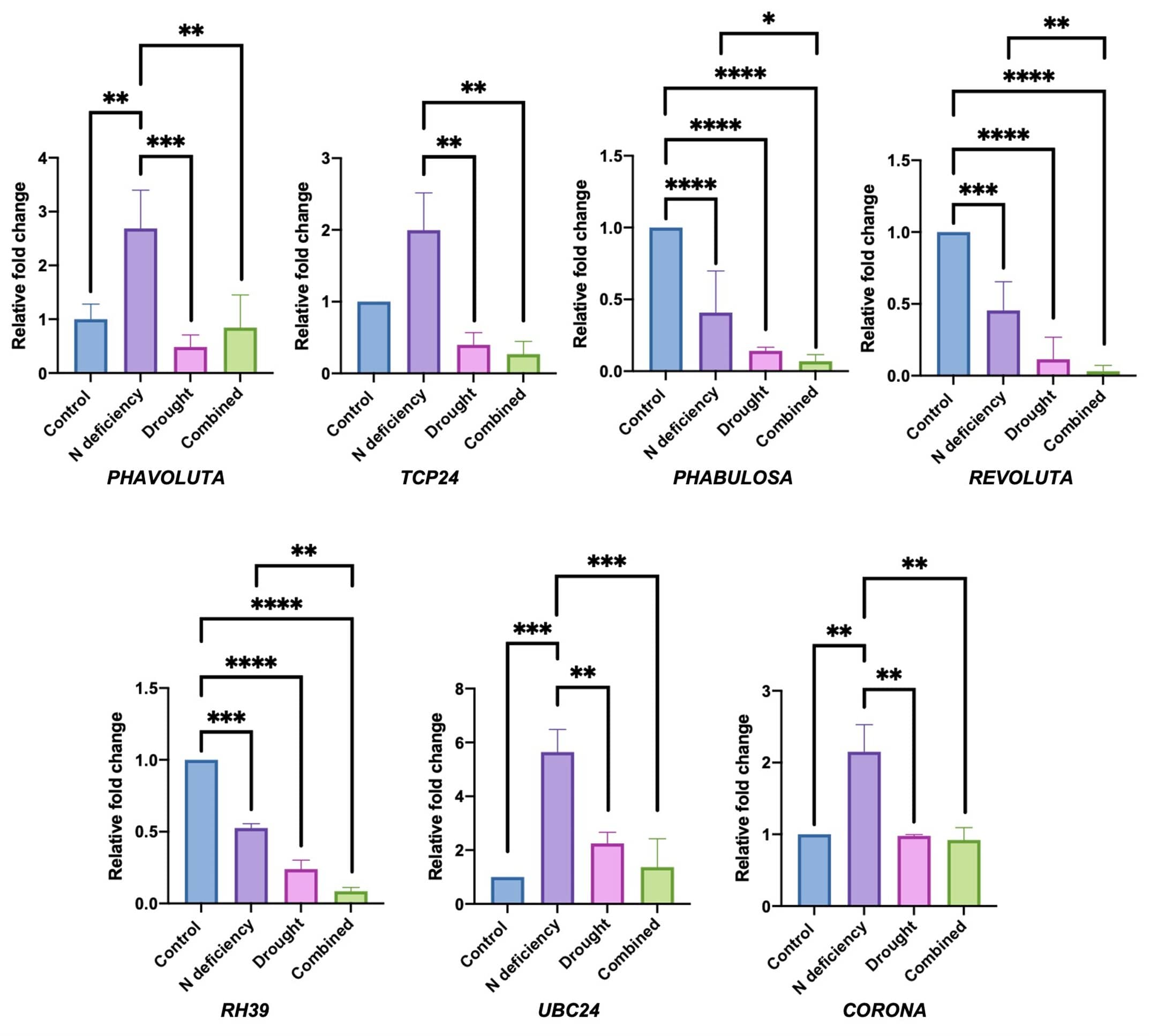
The comprehensive analysis of gene expression patterns under various stress conditions in Arabidopsis yielded insightful findings about the regulatory responses of several genes in this study (PHAVOLUTA, TCP24, PHABULOSA, REVOLUTA, RH39, CORONA, and UBC24). All four genes encoded by the basic leucine zipper transcription domain (HD-Zip III), PHAVOLUTA, PHABULOSA, REVOLUTA, and CORONA, were implicated in all the stress conditions (Fig. 6). Results demonstrated a statistically significant downregulation in the nitrogen deficiency, drought and combined stress conditions for the PHABULOSA and the REVOLUTA genes, while the PHAVOLUTA and CORONA showed a significant upregulation for the nitrogen deficient condition and PHAVOLUTA gene demonstrated a downregulation in the drought and combined stress conditions.
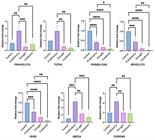
The relative expression levels of A. thaliana genes under Control, N deficiency, Drought, and Combined conditions.
Discussion
Drought and nitrogen deficiency significantly affect plant growth and development. The combined occurrence of these often results in a mutual interaction leading to several pathways and expression of certain genes (Li & Wang, 2023; Cerda & Alvarez, 2024). Plants possess the ability to synthesize or modulate the expressions of specific miRNAs in direct response to stress (Valinezhad-Orang et al., 2014; Dong et al., 2022). This study identified 1,222 known miRNAs in all conditions, 117 differentially expressed miRNAs, and 1,7003 corresponding target genes between comparisons. Most of these target genes were associated with the biological process and molecular function categories of GO terms.
miRNAs were grouped into different miRNA families and mature strands (Table S1). Among the differentially expressed miRNAs in this study, mir156a, mir156b, mir156f, mir157a, mir157c, mir158a, mir159a, mir159c, mir165b, mir166e were commonly expressed in the combined stress condition. The majority of them had previously been reported as conserved between Arabidopsis and Oryza sativa plant species (Wang et al., 2004; Shah & Ullah, 2023). The ability of these miRNAs to mediate combined complex responses highlights their potential as targets for bioengineering crops with improved resilience to multiple stressors (Patil et al., 2021). Under combined stress conditions, mir156f, mir157a, mir158a, mir157c, and mir166e were significantly upregulated as opposed to lower expression when one stress condition was taken into consideration (mir157b and mir158b in nitrogen deficiency and mir162a, mir157b, and mir156f in drought treatment). This reveals the unique regulatory dynamics of miRNAs under combined stress conditions. The downregulation of mir156a and mir156b under nitrogen deficiency and drought stress could indicate a potential shift in resource allocation, prioritizing survival over growth by altering developmental processes (Singh et al., 2020; Yaşar et al., 2024). mir156, previously characterized as a prominent microRNA (Wang et al.,2023) in stress responses and plant biological processes, was also found to be the most prevalent in this study. Past studies in Arabidopsis have demonstrated the involvement of members of this family in regulating drought stress responses. Zheng et al. (2016) reported an upregulation of mir156 under drought stress. According to Chen et al. (2023), an overexpression of mir156 in Arabidopsis resulted in increased drought tolerance, suggesting a positive role for mir156 in drought stress adaptation. Similarly, Ding et al. (2013) and Wen et al. (2024) identified drought-responsive genes targeted by mir156 in Arabidopsis and Camellia, respectively, indicating their regulatory role in drought stress signaling pathways. Despite limited research specifically linking mir156f and mir156j to nitrogen deficiency in Arabidopsis, studies have revealed the responsiveness of mir156 to nitrogen availability in maize, suggesting a potential role in nitrogen metabolism (Xu et al., 2011; Zhao et al., 2012). This study reported a downregulation for mir156f in nitrogen deficiency and an upregulation in drought and combined stress conditions. These findings underscore mir156’s central role in coordinating stress-responsive regulatory networks, particularly through its SPL3 (Squamosa promoter binding protein-like) target, and position it as a key candidate for enhancing crop resilience to multiple stresses.
The expression of mir159 is induced under drought conditions, thus negatively regulating its target gene- MYB33 (Reyes & Chua, 2007). In a study by Liang et al. (2015), the expression of mir165 was found to be responsive to nitrogen availability in Arabidopsis roots. They observed increased levels of mir165 under nitrogen deficiency conditions. This pattern was similar for mir160 (Liang et al., 2012), suggesting a potential role in nutrient stress responses. Moreover, mir166 was found to be differentially expressed in response to drought stress in rice (Zhang et al., 2018) and maize (Li et al., 2020). Yaşar et al. (2024) reported a consistent significant downregulation of mir165a-3p after 7- and 14-day treatment of callus tissues under combined nitrogen deficiency and drought stress conditions, suggesting long-term adaptation to stress by modulating the expression of its target.
We observed that individual miRNAs displayed differential expression when subjected to different stress treatments; mir160c which was significantly upregulated (7.49 log2 fold change) in combined stress conditions was significantly downregulated (-6.87 log2 fold change) in drought treatment. Likewise, the upregulation of mir160a in drought and downregulation in combined stress. This was the same with mir156d upregulated (7.49 log2 fold change) in combination stress but downregulated (-2.68 log2 fold change) in nitrogen deficiency. This observation highlights the specificity of miRNA responses to distinct stress treatments. Interestingly, even members from the same miRNA family exhibited varying expression patterns within treatments. According to Gurtan & Sharp (2013), this is because they are regulated by different transcription factors or signaling pathways. An example is mir157a with target genes such as SPL13, NAC, ATHB-5, TCP2, MYB57, ATRH25, RLP9, PRR8, and bZIP transcription factor family protein that was upregulated in combined conditions, while its isoform mir157b was upregulated for the drought treatment only. All identified miRNAs had at least 50 target genes (Table S1). Unlike the other miRNAs encoding different protein domains, mir156j was specific to SPL. mir156 has been recorded to target SPL genes and regulate their expression levels, thereby influencing plant developmental processes (Li et al., 2023). mir156j is known to target genes involved in developmental processes, such as the regulation of flowering time and phase transition from vegetative to reproductive growth (Wang et al., 2023). The upregulation of mir156j may indicate a reprogramming of developmental pathways to prioritize stress adaptation and survival.
Wang et al (2012), reported sensitivity of mir159 to heat stress in Oryza sativa, therefore, their downregulation seen in this study could be part of the plant's adaptation to the stress conditions. Our analysis revealed that the mir159 family encodes targets for the MYB domains 33, 65,81,97,101,104 and 120, TCP transcription factor 4, TCP2, PCF 24, k-box and MADS-box transcription factor family, protein kinase C-like zinc finger protein, homeodomain-like superfamily protein, mitochondrial inner membrane translocase complex, actin-related protein C3 plant regulator RWP-RK family protein and several other proteins (Table S1). Meanwhile, mir158b targets the MYB domain protein 16, Phosphate-responsive 1 family protein, remorin family protein, histone acetyltransferase of the MYST family 1, flavin-monooxygenase glucosinolate S-oxygenase 2, regulator of chromosome condensation (RCC1) family with FYVE zinc finger domain.
Contrary to our study, Fischer et al. (2013) recorded an upregulation of mir160 targets under nitrogen starvation. The significant downregulation of mir160a and mir160b under nitrogen deficiency and drought stress could imply suppression of their regulatory activity in response to these stresses. The subfamilies mir160a and mir160b are involved in auxin signaling response, which plays essential roles in plant growth, development, and stress adaptation (J Yang et al., 2021; Luo et al., 2022). The decrease in expression of these miRNAs might indicate a reorganization of auxin-related pathways, prioritizing stress resilience over growth stimulation. ARF10 and ARF17 are the specific targets of mir160 in Arabidopsis (Liu et al., 2007), which likely function in transcriptional repression and hormone signaling (Mallory et al., 2005). Together with ARF10 and ARF17, we identified another -ARF16 previously not reported. Our data revealed the ARF genes were targeted by the 5p-derived miRNAs, notably mir160c-5p, suggesting strand-specific targeting. mir157b was upregulated in response to nitrogen deficiency and drought individually; its expression was modulated differently in the context of combined stress. Crosstalk between stress signaling pathways may result in synergistic or antagonistic interactions that influence the expression patterns of miRNAs (Shriram et al., 2016). Crosstalk is the interaction of multiple signaling pathways in plants involved in simultaneous developmental processes and stress responses (both abiotic and biotic) in plants (Sunkar & Zhu, 2007; Luo et al., 2022; Samynathan et al., 2023). Hormonal signaling involving abscisic acid, jasmonic acid, salicylic acid, and ethylene plays a central role in this process (Singh et al., 2017) as miRNAs interact with key components of hormonal signaling pathways, allowing plants to balance responses to both form of stress. The mir165/166 family regulates root growth by targeting HD-ZIP III genes, which are also modulated by various phytohormones (Singh et al., 2017). mir398 regulates responses to both oxidative stress and pathogen infection, modulating levels of reactive oxygen species, a common signaling molecule in various stress pathways (Zhang et al., 2022). mir159 influences ABA signaling (involved in drought stress) and can also affect pathogen defense, demonstrating its role in balancing responses between conflicting stresses (Kumar et al., 2021). Similarly, mir156 and mir160 target transcription factors involved in auxin and jasmonic acid signaling, allowing plants to adjust their growth and stress responses under combined stresses (Luo et al., 2022). mir5658 and mir172 interact with transcription factors like the ERF/AP2 family, influencing transcriptome changes in response to stress (Izadi et al., 2017). Wu et al. (2022), examined the role of miRNA-miRNA crosstalk in adaptation to environmental stress of plant populations of Arabidopsis thaliania through genetic variation and phenotypic plasticity.
Gene Ontology analysis revealed the following enriched processes: Transcription regulator activity (GO:0140110), DNA binding transcription factor activity (GO:0003700), RNA helicase activity (GO:0003724), and ATP-dependent activity (GO:0140657). The significant enrichment of both the DNA binding transcription factor activity and transcription regulator activity suggests that the identified DEGs include transcription factors and other regulatory proteins that directly bind to DNA and modulate the transcription of target genes. These factors and other DNA-binding proteins function as key nodes in regulatory networks, orchestrating the expression of stress-responsive genes and coordinating adaptive responses to stress (Suter, 2020). Based on enrichment analysis, 138 genes were associated with the transcription regulatory activity in the combined stress treatment. Some of the transcription factor genes included SPL (Squamosa Promoter Binding Protein-Like), MYB (Myeloblastosis) family, Homeodomain-like superfamily protein, Zinc Finger family, and AP2/ERF (APETALA2/Ethylene Response Factor) family with DREB/CBF (Dehydration-Responsive Element-Binding/C-repeat Binding Factor) family, specific to drought treatment (Sunkar et al., 2012). Transcription factors involved in abscisic acid signaling influence nitrogen metabolism and responses to nitrate signals (Cerda & Alvarez, 2024). In the combined drought and nitrogen stress conditions, polynucleotide phosphatase activity, ATP-dependent activity acting on RNA, and RNA helicase activity were most enriched. Polynucleotide phosphatases can modulate gene expression by affecting the stability or processing of specific RNA molecules such as non-coding RNAs, through targeted dephosphorylation events (Bandyra et al., 2016). The Phosphoesterase, APE2, and mRNA capping enzyme family proteins were the target proteins identified in this study. ATPases function in osmotic regulation in drought conditions (Li et al., 2022). RNA helicase regulates DNA/RNA metabolism under stress conditions (Singha et al., 2017). The biological process-positive regulation of development (fold enrichment -11.33) and positive regulation of programmed cell death (fold enrichment -6.04) were enriched in the combined stress treatment. The high enrichment of the former may be a mechanism to optimize resource utilization during stress conditions by enhancing root growth and leaf expansion, which are crucial for accessing water and nutrients in the soil (Krouk et al., 2010). Programmed cell death (PCD) is particularly relevant under drought conditions, where plants may selectively eliminate cells to conserve resources. Research indicates that miRNAs play roles in PCD by regulating genes involved in oxidative stress responses, such as the superoxide dismutase and catalase genes (Alonso-Peral et al., 2010; Petrov et al., 2015). miRNA-directed gene silencing is particularly relevant under nutrient deprivation. Under nitrogen stress, mir169 modulates nitrogen-responsive pathways by targeting NF-YA transcription factors. By downregulating NF-YA, mir169 contributes to resource conservation and metabolic adjustment during nutrient stress (Zhao et al., 2011; Liang et al., 2012). mir160 and mir167, are involved in root architecture changes, enhancing root depth and density under drought, which is beneficial when nitrogen is scarce (Gautam et al., 2017; Hao et al., 2022).
Transcription factor genes and associated miRNAs under drought and nitrogen deficiency stress treatments in Arabidopsis calli showed varying expression results. mir165 and mir166 control the activity of PHABULOSA, PHAVOLUTA, REVOLUTA, CORONA, and ATHB-8 (Rhoades et al., 2002) while UCB24 and TCP24 are mir319-dependent (Fujii et al., 2005; Kuo & Chio, 2011; Fang et al., 2021). Our results confirmed the negative regulatory role of miRNAs and their associated target genes as the miRNAs downregulated the expression of their target genes (Fig. 6) This enhances the understanding of how miRNAs fine-tune gene expression by downregulating specific targets, enabling plants to conserve energy and optimize metabolic responses. The observed expression patterns of PHAVOLUTA and CORONA genes in all stress conditions suggest their involvement in Arabidopsis thaliana stress regulatory pathways (Prigge et al., 2005; Mao et al., 2016). Together with REVOLUTA and PHABULOSA, they regulate meristem initiation and vascular development, with different subsets of the genes being involved in each process (Prigge et al., 2005; Hrmova & Hussain, 2021). However, the CORONA gene showed higher expression levels under nitrogen deficiency. Prigge et al. (2005) demonstrated an antagonistic role with the REVOLUTA gene function in the lateral shoot meristem. Consequently, the parallel expression dynamics shared with other genes highlight its potential regulatory relationship and interaction with other transcription factors (Gong et al., 2019; Qiu et al., 2022).
In response to nitrogen deficiency and drought, PHAVOLUTA was upregulated and downregulated respectively. The PHAVOLUTA with its high binding affinity to the pseudo palindromic sequence forms dimers with the HD-Zip region and the leucine zipper domain (Sessa et al., 1998). As the pseudo palindromic sequence is often found in combination with other regulatory elements in the promoters of drought-responsive genes, under such conditions, activated leucine zipper transcription factors recognize and bind to specific DNA sequences (C-box elements) present in the promoter regions of drought-responsive genes (Sornaraj et al., 2016).
Similarly, under combined stress conditions, different signaling pathways activate in response to individual stressors. The crosstalk between the pathways can influence the activation of basic leucine zipper transcription factors, which may be common or distinct depending on the specific combination of stresses (Viswanath et al., 2023). This could explain the effect observed in all stress conditions. There is the possibility for a synergistic activation of stress-responsive genes in combined stress conditions of basic leucine transcription factors leading to a more coordinated response as some genes may have binding sites for multiple transcription factors. According to Prigge et al (2005), these genes are known to play cooperative, opposite, and sometimes independent roles in Arabidopsis development. Overlapping transcription factor binding sites may enable plants to integrate multiple stress signals, resulting in a more resilient and adaptive response. A shared expression pattern was observed for REVOLUTA and RH39. The RH39 encodes photosynthetic proteins with the help of Ribulose-1,5-bisphosphate carboxylase/oxygenase (Asakura et al., 2012; X Yang et al., 2021) which are important components in mediating signaling networks between diverse metabolic pathways to withstand various forms of stress. Consequently, these processes facilitate water conservation, regulate stomata closure, and promote nutrient uptake. Based on our findings, we suggest that RH39 plays an important role in crosstalk signaling between diverse metabolic pathways under multiple stress conditions and could be a potential target for crop improvement.
Fang et al. (2021) discussed the possibilities of mir319 regulating the expression of TCP genes in drought and salt stress in rapeseed plants. During periods of nitrogen deficiency, TCP24 modulates secondary cell wall thickening (Wang et al., 2015; Rivai et al., 2021). The transactivation domain of TCP24 recognizes and binds to certain DNA sequences, promoting interaction with the transcriptional machinery in Arabidopsis. The differences observed between drought and nitrogen deficiency conditions could reveal the distinctive transcriptional adjustments to these stressors. Notably, the higher expression levels of these genes under nitrogen deficiency compared to combined stress suggest a regulatory priority under the latter condition. The contrasting response of the UBC24 gene highlights its sensitivity to nitrogen deficiency. The UBC24 gene is involved in protein-protein interactions and the regulation of various biological processes, such as plant leaf senescence during conditions of nitrogen deficiency (Park et al., 2018). Its phosphate homeostasis role is primarily mediated by mir399 with a downregulated expression when the plant miRNAs are overexpressed (Fujii et al., 2005). These findings not only advance our understanding of miRNA-mediated regulation in plants but also provide insights into developing crop varieties better equipped to withstand the challenges posed by climate change and nutrient deficiency.
This study identified miRNAs differentially expressed and their corresponding target genes in combined drought and nitrogen deficiency stress treatments. We observed that the modulation of miRNA expression was determined by the stress treatment conditions. Combined stress treatments result in fewer downregulated miRNAs compared to upregulated ones. Bioinformatic analysis revealed enrichment of key GO terms related to transcriptional regulation, metabolic processes, developmental processes, enzyme activity, response to stimulus, and nutrient homeostasis, portraying their relation to stress responses in plants. Furthermore, we observed differential expression among the transcription factor genes assessed, confirmed the negative regulatory roles with their corresponding miRNA, and identified other transcription factor targets such as PCF24, TCP2, and TCP4 for the mir159 family and ARF16 for the mir160 family, thus suggesting miRNA targeted transcription activity. Upregulated and downregulated miRNA revealed important protein targets in combined drought and nitrogen starvation stress with strand-specific regulation of mir160c for the ARF genes. miRNA- transcription factor crosstalk unraveled the complex networks and pathways of gene regulation in cells. Strand-specific regulation could likely be a key component in environmental stress regulation.
The identified miRNA profiles from this article can serve as functional biomarkers for selecting drought and nitrogen-deficiency-tolerant crops. We propose using information about these miRNAs in genetic engineering to enhance stress tolerance, especially targeting those involved in root development and stomatal regulation. These results can be combined with traditional and genomic selection methods to facilitate the development of multi-trait crops that maintain yield and quality under stress. We recognize the importance of validating these results with functional assays and also further research on the specific mechanisms by which miRNA regulatory pathways operate and interact with other components of the stress response network. We also recommend examining responses to a broader range of combined stresses to provide a more comprehensive understanding of plant stress adaptation. Furthermore, the use of field trials to ensure the practicality and sustainability of the engineered crops are also needed.
Supplementary Material
The following online material is available for this article:
Table S1.
Table S2.
Table S3.
Table S4.
Acknowledgments
The authors are grateful for the financial support provided by the Istanbul University. This study was funded by The Scientific Research Projects Coordination Unit (BAP) of Istanbul University, Project number: FDK-2022-38952. Emmanuela Lemnyuy Wirsiy is also grateful for the financial assistance provided by Türkiye Bursları (18CM000671).
References
-
Ali Z, Merrium S, Habib-ur-Rahman M, Hakeem S, Abu Bakar Saddique M, Ali SM. 2022. Wetting mechanism and morphological adaptation; leaf rolling enhancing atmospheric water acquisition in wheat crop - a review. Environmental Science Pollution Research 29: 30967-30985. doi: 10.1007/s11356-022-18846-3.
» https://doi.org/10.1007/s11356-022-18846-3 -
Alonso-Peral MM, Li J, Li Y et al 2010. The MicroRNA159-Regulated GAMYB-like Genes Inhibit Growth and Promote Programmed Cell Death in Arabidopsis. Plant Physiology, 154: 757-771. doi: 10.1104/pp.110.160630.
» https://doi.org/10.1104/pp.110.160630 -
Asakura Y, Galarneau E, Watkins, KP, Barkan A, van Wijk KJ. 2012. Chloroplast RH3 DEAD box RNA helicases in maize and Arabidopsis function in splicing of specific group II introns and affect chloroplast ribosome biogenesis. Plant Physiology 159: 961-974. doi: 10.1104/pp.112.197525.
» https://doi.org/10.1104/pp.112.197525 -
Bandyra KJ, Sinha D, Syrjanen J, Luisi BF, De Lay NR. 2016. The ribonuclease polynucleotide phosphorylase can interact with small regulatory RNAs in both protective and degradative modes. RNA 22: 360-372. doi: 10.1261/rna.052886.115.
» https://doi.org/10.1261/rna.052886.115 -
Bertrand C, Benhamed M, Li YF et al 2005. Arabidopsis HAF2 gene encoding TATA-binding protein (TBP)-associated factor TAF1, is required to integrate light signals to regulate gene expression and growth. Journal of Biological Chemistry 280: 1465-1473. doi: 10.1074/jbc.M409000200.
» https://doi.org/10.1074/jbc.M409000200. -
Buljovcic Z, Engels C. 2001. Nitrate uptake by maize roots during and after drought stress. Plant and Soil 229: 125-135. doi: 10.1023/A:1004879201623.
» https://doi.org/10.1023/A:1004879201623 -
Cerda A, Alvarez JM. 2024. Insights into molecular links and transcription networks integrating drought stress and nitrogen signalling. New Phytologist 241: 560-566. doi: 10.1111/nph.19403.
» https://doi.org/10.1111/nph.19403 - Chen S, Zhou Y, Chen Y, Gu J. 2018. fastp: An ultra-fast all-in-one FASTQ preprocessor. Bioinformatics 34: i884-i890.
-
Chen C, Wu J, Hua Q, Tel-Zur N et al 2019. Identification of reliable reference genes for quantitative real-time PCR normalization in pitaya. Plant Methods 15: 70. doi: 10.1186/s13007-019-0455-3.
» https://doi.org/10.1186/s13007-019-0455-3 -
Chen G, Wang Y, Liu X, Duan S et al 2023. The MdmiR156n Regulates Drought Tolerance and Flavonoid Synthesis in Apple Calli and Arabidopsis. International Journal of Molecular Science 24: 6049. doi: 10.3390/ijms24076049.
» https://doi.org/10.3390/ijms24076049 -
Cui Q, Yu Z, Purisima EO, Wang E. 2006. Principles of microRNA regulation of a human cellular signalling network. Molecular Systems Biology 2: 46. doi: 10.1038/msb4100089.
» https://doi.org/10.1038/msb4100089 -
Cunningham F, Allen JE, Allen J et al 2022. Ensembl 2022. Nucleic Acids Research 50: D988-D995. doi: 10.1093/nar/gkab1049.
» https://doi.org/10.1093/nar/gkab1049 -
Czechowski T, Stitt M, Altmann, T, Udvardi MK, Scheible W-R. 2005. Genome-Wide Identification and Testing of Superior Reference Genes for Transcript Normalization in Arabidopsis Plant Physiology 139: 5-17. doi: 10.1104/pp.105.063743.
» https://doi.org/10.1104/pp.105.063743 -
Dong Q, Hu B, Zhang C. 2022. microRNAs and Their Roles in Plant Development. Frontiers in Plant Science 13: 824240. doi: 10.3389/fpls.2022.82424.
» https://doi.org/10.3389/fpls.2022.82424 -
Dai X, Zhao PX. 2011. psRNATarget: A plant small RNA target analysis server. Nucleic Acids Research 39: W155-W159. doi : 10.1093/nar/gkr319.
» https://doi.org/10.1093/nar/gkr319 -
Ding Y, Tao Y, Zhu C. 2013. Emerging roles of microRNAs in the mediation of drought stress response in plants. Journal of Experimental Botany 64: 3077-3086. doi: 10.1093/jxb/ert164.
» https://doi.org/10.1093/jxb/ert164 -
Erpen L, Devi HS, Grosser JW, Dutt M. 2018. Potential use of the DREB/ERF, MYB, NAC and WRKY transcription factors to improve abiotic and biotic stress in transgenic plants. Plant Cell, Tissue and Organ Culture (PCTOC) 132: 1-25. doi: 10.1007/s11240-017-1320-6.
» https://doi.org/10.1007/s11240-017-1320-6 -
Fang Y, Zheng Y, Lu W, Li J, Duan Y, Zhang S. 2021. Roles of miR319-regulated TCPs in plant development and response to abiotic stress. The Crop Journal 9: 17-28. doi: 10.1016/j.cj.2020.07.007.
» https://doi.org/10.1016/j.cj.2020.07.007 -
Fischer JJ, Beatty PH, Good AG, Muench DG. 2013. Manipulation of MicroRNA Expression To Improve Nitrogen Use Efficiency. Plant Science 210: 70-81. doi: 10.1016/j.plantsci.2013.05.009.
» https://doi.org/10.1016/j.plantsci.2013.05.009 -
Fehér A. 2019. Callus, Dedifferentiation, Totipotency, Somatic Embryogenesis: What These Terms Mean in the Era of Molecular Plant Biology? Frontiers in Plant Science 10: 536. doi: 10.3389/fpls.2019.00536.
» https://doi.org/10.3389/fpls.2019.00536 -
Fujii, H, Chiou, TJ, Lin, SI, Aung, K, Zhu, JK. 2005. A miRNA involved in phosphate-starvation response in Arabidopsis. Current Biology 15: 2038-2043. doi: 10.1016/j.cub.2005.10.016.
» https://doi.org/10.1016/j.cub.2005.10.016 -
Gautam V, Singh A, Verma S et al 2017. Role of miRNAs in root development of model plant Arabidopsis thaliana. Indian Journal of Plant Physiology 22: 382-392. doi: 10.1007/s40502-017-0334-8.
» https://doi.org/10.1007/s40502-017-0334-8 -
Gurtan AM, Sharp PA. 2013. The Role of miRNAs in Regulating Gene Expression Networks. Journal of Molecular Biology 425: 3582-3600. doi: 10.1016/j.jmb.2013.03.007.
» https://doi.org/10.1016/j.jmb.2013.03.007 -
Ge SX, Jung D, Yao R. 2020. ShinyGO: A graphical gene-set enrichment tool for animals and plants. Bioinformatics 36: 2628-2629. doi: 10.1093/bioinformatics/btz931.
» https://doi.org/10.1093/bioinformatics/btz931 -
Giraud T, Gladieux P, Gavrilets S. 2010. Linking the emergence of fungal plant diseases with ecological speciation. Trends in Ecological Evolution 25: 387-395. doi: 10.1016/j.tree.2010.03.006.
» https://doi.org/10.1016/j.tree.2010.03.006 -
Gloser V, Dvorackova M, Mota DH, Petrovic B, Gonzalez P, Geilfus CM. 2020. Early Changes in Nitrate Uptake and Assimilation Under Drought in Relation to Transpiration. Frontiers in Plant Science 11: 602065. doi: 10.3389/fpls.2020.602065.
» https://doi.org/10.3389/fpls.2020.602065 -
Gordon A, Hannon G. 2017. Fastx-toolkit. FASTQ/A short reads pre-processing tools. 2010. https://hannonlab.cshl.edu/fastx_toolkit Day month. year.
» https://hannonlab.cshl.edu/fastx_toolkit -
Gong S, Ding Y, Hu S, Ding L, Chen Z, Zhu C. 2019. The role of HD-Zip class I transcription factors in plant response to abiotic stresses. Physiologia Plantarum 167: 516-525. doi: 10.1111/ppl.12965.
» https://doi.org/10.1111/ppl.12965 -
Hajdarpašić A, Ruggenthaler P. 2012. Analysis of miRNA expression under stress in Arabidopsis thaliana Bosnian Journal of Basic Medical Science 12: 169-176. doi: 10.17305/bjbms.2012.2471.
» https://doi.org/10.17305/bjbms.2012.2471 -
Hao K, Wang Y, Zhu Z, Wu Y, Chen R, Zhang L. 2022. miR160: An Indispensable Regulator in Plant. Frontiers in Plant Science 13: 833322. doi 10.3389/fpls.2022.833322.
» https://doi.org/10.3389/fpls.2022.833322 -
Hrmova, M, Hussain, SS. 2021. Plant Transcription Factors Involved in Drought and Associated Stresses. International Journal of Molecular Science 22: 5662. doi: 10.3390/ijms22115662.
» https://doi.org/10.3390/ijms22115662 -
Izadi F, Nikfekr R, Soorni J. 2017. Transcription Factors-microRNAs regulatory network in response to multiple stresses in Arabidopsis thaliana. Plant Omics 10: 183-189. doi: 10.21475/poj.10.04.17.pne516.
» https://doi.org/10.21475/poj.10.04.17.pne516 -
Kang W, Eldfjell Y, Fromm B, Estivill X, Biryukova I, Friedländer MR. 2018. miRTrace reveals the organismal origins of microRNA sequencing data. Genome Biology 19: 213. doi: 10.1186/s13059-018-1588-9.
» https://doi.org/10.1186/s13059-018-1588-9 -
Kozera B, Rapacz M. 2013. Reference genes in real-time PCR. Journal of Applied Genetics 54: 391-406. doi: 10.1007/s13353-013-0173-x.
» https://doi.org/10.1007/s13353-013-0173-x -
Kuang Z, Wang Y, Li L, Yang X. 2019. miRDeep-P2: Accurate and fast analysis of the microRNA transcriptome in plants. Bioinformatics 35: 2521-2522. doi: 10.1093/bioinformatics/bty972.
» https://doi.org/10.1093/bioinformatics/bty972 -
Kumar S. 2020. Abiotic Stresses and Their Effects on Plant Growth, Yield and Nutritional Quality of Agricultural Produce. International Journal of the Science of Food and Agriculture 4: 367-378. doi: 10.26855/ijfsa.2020.12.002.
» https://doi.org/10.26855/ijfsa.2020.12.002 -
Kumar, M, Kumar, PM, Gayachara. 2021. Role of microRNAs in biotic and abiotic stress responses in plants. Molecular Biology Reports 48: 7285-7297. doi: 10.1007/s11033-021-06747-0.
» https://doi.org/10.1007/s11033-021-06747-0 -
Kuo HF, Chiou TJ. 2011. The Role of MicroRNAs in Phosphorus Deficiency Signaling. Plant Physiology 156: 1016-1024. doi: 10.1104/pp.111.175265.
» https://doi.org/10.1104/pp.111.175265 -
Krouk G, Crawford NM, Coruzzi GM, Tsay Y F. 2010. Nitrate signaling: Adaptation to fluctuating environments. Current Opinion in Plant Biology 13: 266-273. doi: 10.1016/j.pbi.2009.12.003.
» https://doi.org/10.1016/j.pbi.2009.12.003 -
Langmead B, Trapnell C, Pop M, Salzberg SL. 2009. Ultrafast and memory-efficient alignment of short DNA sequences to the human genome. Genome Biology 10: 1-10. doi: 10.1186/gb-2009-10-3-r25.
» https://doi.org/10.1186/gb-2009-10-3-r25 - Leghari SJ, Wahocho NA, Laghari GM, Laghari AH, Bhabhan GM, Talpur HK. 2016. Role of nitrogen for plant growth and development: A review. Advances in Environmental Biology 10: 209-218.
-
Li L, Wang Y. 2023. Independent and combined influence of drought stress and nitrogen deficiency on physiological and proteomic changes of barley leaves. Environmental and Experimental Botany 210: 105346. doi: 10.1016/j.envexpbot.2023.
» https://doi.org/10.1016/j.envexpbot.2023 -
Li N, Yang T, Guo Z, Wang Q et al 2020. Maize microRNA166 Inactivation Confers Plant Development and Abiotic Stress Resistance. International Journal of Molecular Science 21: 9506. doi: 10.3390/ijms21249506.
» https://doi.org/10.3390/ijms21249506 -
Li Y, Zeng H, Xu F,Yan F, Xu W. 2022. H+-ATPases in Plant Growth and Stress Responses. Annual Review of Plant Biology 73: 495-521. doi: 10.1146/annurev-arplant-102820-114551.
» https://doi.org/10.1146/annurev-arplant-102820-114551 -
Li Y, He Y, Qin T et al 2023. Functional conservation and divergence of miR156 and miR529 during rice development. The Crop Journal 11: 692-703. doi: 10.1016/j.cj.2022.11.005.
» https://doi.org/10.1016/j.cj.2022.11.005 -
Liao Y, Smyth GK, Shi W. 2019. The R package R subread is easier, faster, cheaper and better for alignment and quantification of RNA sequencing reads. Nucleic Acids Research 47: e47. doi: 10.1093/nar/gkz114.
» https://doi.org/10.1093/nar/gkz114 -
Liang G, He H, Yu D. 2012. Identification of nitrogen starvation-responsive microRNAs in Arabidopsis thaliana PLoS One 9: e11198. doi: 10.1371/journal.pone.0048951.
» https://doi.org/10.1371/journal.pone.0048951 -
Liang G, Ai Q, Yu D. 2015. Uncovering miRNAs involved in crosstalk between nutrient deficiencies in Arabidopsis. Science Report 2: 11813. doi: 10.1038/srep11813.
» https://doi.org/10.1038/srep11813 -
Liu H, Tang X, Zhang N, Li S, Si H. 2023. Role of bZIP Transcription Factors in Plant Salt Stress. Internatıonal Journal of Molecular Science 24: 7893. doi: 10.3390/ijms24097893.
» https://doi.org/10.3390/ijms24097893 -
Lindemose S, O'Shea C, Jensen MK, Skriver K. 2013. Structure, Function and Networks of Transcription Factors Involved in Abiotic Stress Responses. International Journal of Molecular Science 14: 5842-5878. doi: 10.3390/ijms14035842.
» https://doi.org/10.3390/ijms14035842 -
Liu PP, Montgomery TA, Fahlgren N, Kasschau KD, Nonogaki H, Carrington JC. 2007. Repression of AUXIN RESPONSE FACTOR10 by microRNA160 is critical for seed germination and post‐germination stages. The Plant Journal 52: 133-146. doi: 10.1111/j.1365-313X.2007.03218.x.
» https://doi.org/10.1111/j.1365-313X.2007.03218.x -
Livak KJ, Schmittgen TD. 2001. Analysis of relative gene expression data using real-time quantitative PCR and the 2(-Delta Delta C(T)) Method. Methods 25: 402-408. doi: 10.1006/meth.2001.1262.
» https://doi.org/10.1006/meth.2001.1262 -
Love MI, Huber W, Anders S. 2014. Moderated estimation of fold change and dispersion for RNA-seq data with DESeq2. Genome Biology 15: 1-21. doi: 10.1186/s13059-014-0550-8.
» https://doi.org/10.1186/s13059-014-0550-8 -
Luo P, Di D, Wu L, Yang J, Lu Y, Shi W. 2022. MicroRNAs Are Involved in Regulating Plant Development and Stress Response through Fine-Tuning of TIR1/AFB-Dependent Auxin Signaling. International Journal of Molecular Science 23: 510. doi: 10.3390/ijms23010510.
» https://doi.org/10.3390/ijms23010510 -
Mallory AC, Bartel DP, Bartel B. 2005. MicroRNA-directed regulation of Arabidopsis AUXIN RESPONSE FACTOR17 is essential for proper development and modulates expression of early auxin response genes. The Plant Cell 17: 1360-1375. doi: 10.1105/tpc.105.031716.
» https://doi.org/10.1105/tpc.105.031716 -
Mangrauthia SK, Maliha A, Prathi NB, Marathi B. 2017. MicroRNAs: Potential target for genome editing in plants for traits improvement. Indian Journal of Plant Physiology 22: 530-548. doi: 10.1007/S40502-017-0326-8.
» https://doi.org/10.1007/S40502-017-0326-8 -
Mao H, Yu L, Li Z, Liu H, Han R. 2016. Molecular evolution and gene expression differences within the HD-Zip transcription factor family of Zea mays L. Genetica 144: 243-257. doi: 10.1007/s10709-016-9896-z.
» https://doi.org/10.1007/s10709-016-9896-z -
Mitsis T, Efthimiadou A, Bacopoulou F, Vlachakis D, Chrousos GP, Eliopoulos E. 2020. Transcription factors and evolution: An integral part of gene expression (Review). World Academy of Sciences Journal 2: 3-8. doi: 10.3892/wasj.2020.32.
» https://doi.org/10.3892/wasj.2020.32 -
Mukhopadhyay P, Tyagi A. 2015. OsTCP19 influences developmental and abiotic stress signaling by modulating ABI4-mediated pathways. Science Report 5: 9998 doi: 10.1038/srep09998.
» https://doi.org/10.1038/srep09998 -
Murashige T, Skoog F. 1962. A Revised Medium for Rapid Growth and BioAssays with Tobacco Tissue Cultures. Physiologia Plantarum. 15: 473-497. doi: 10.1111/j.1399-3054.1962.tb08052.x.
» https://doi.org/10.1111/j.1399-3054.1962.tb08052.x -
Nogoy, FM, Marjohn C, Niño et al 2018. Plant microRNAs in molecular breeding. Plant Biotechnology Reports 12: 15-25. doi: 10.1007/S11816-018-0468-9.
» https://doi.org/10.1007/S11816-018-0468-9 -
Oshunsanya SO, Nwosu NJ, Li Y. 2019. Abiotic Stress in Agricultural Crops Under Climatic Conditions. In: Jhariya, MK, Banerjee, A, Meena, RS, Yadav, DK (eds.). Sustainable Agriculture, Forest and Environmental Management. Singapore, Springer Singapore. p. 71-100. doi: 10.1007/978-981-13-6830-1_3.
» https://doi.org/10.1007/978-981-13-6830-1_3 -
Palatnik JF, Allen E, Wu X et al 2003. Control of leaf morphogenesis by microRNAs. Nature 425: 257-263. doi: 10.1038/nature01958.
» https://doi.org/10.1038/nature01958 - Pandita D, Pandita A. 2023. Plant MicroRNAs and Stress Response. Boca Raton, CRC Press.
-
Park BS, Yao T, Seo JS et al 2018. Arabidopsis Nitrogen Limitation Adaptation regulates ORE1 homeostasis during senescence induced by nitrogen deficiency. Nature Plants 4: 898-903. doi: 10.1038/s41477-018-0269-8.
» https://doi.org/10.1038/s41477-018-0269-8 -
Patil S, Joshi S, Jamla M et al 2021. MicroRNA-mediated bioengineering for climate-resilience in crops. Bioengineered 12: 10430-10456. doi: 10.1080/21655979.2021.1997244.
» https://doi.org/10.1080/21655979.2021.1997244 -
Petrov V, Hille J, Mueller-Roeber B Gechev TS. 2015. ROS-mediated abiotic stress-induced programmed cell death in plants. Frontiers in Plant Sciences 6: 69. doi: 10.3389/fpls.2015.00069.
» https://doi.org/10.3389/fpls.2015.00069 -
Prigge MJ, Otsuga D, Alonso JM, Ecker JR, Drews GN, Clark SE. 2005. Class III homeodomain-leucine zipper gene family members have overlapping, antagonistic, and distinct roles in Arabidopsis development. Plant Cell 17: 61-76. doi: 10.1105/tpc.104.026161.
» https://doi.org/10.1105/tpc.104.026161 -
Qiu X, Wang G, Abou-Elwafa SF et al 2022. Genome-wide identification of HD-ZIP transcription factors in maize and their regulatory roles in promoting drought tolerance. Physiology and Molecular Biology of Plants 28: 425-437. doi: 10.1007/s12298-022-01147-x.
» https://doi.org/10.1007/s12298-022-01147-x -
Ren C, Li Z, Song P, Wang Y et al 2023. Overexpression of a Grape MYB Transcription Factor Gene VhMYB2 Increases Salinity and Drought Tolerance in Arabidopsis thaliana International Journal of Molecular Science 24: 10743. doi: 10.3390/ijms241310743.
» https://doi.org/10.3390/ijms241310743 -
Reyes JL, Chua NH. 2007. ABA induction of miR159 controls transcript levels of two MYB factors during Arabidopsis seed germination. The Plant Journal 49: 592-606. doi: 10.1111/j.1365-313X.2006.02980.x.
» https://doi.org/10.1111/j.1365-313X.2006.02980.x -
Rhoades MW, Reinhart JB, Lim PL, Burge BC, Bartel B, Bartel PD. 2002. Prediction of plant microRNA targets. Cell 110: 513-20. doi: 10.1016/s0092-8674(02)00863-2.
» https://doi.org/10.1016/s0092-8674(02)00863-2 -
Rivai RM, Takuji A, Tatsuya T et al 2021. Nitrogen deficiency results in changes to cell wall composition of sorghum seedlings. Scientific Reports 11: 23309. doi: 10.1038/s41598-021-02570-y.
» https://doi.org/10.1038/s41598-021-02570-y -
Sajjad N, Bhat EA, Shah D et al 2021. Nitrogen uptake, assimilation, and mobilization in plants under abiotic stress. In: Roychoudhury, A, Tripathi, DK, Deshmukh, R (eds.). Transporters and Plant Osmotic Stress. Elsevier, Academic Press. p. 215-233. doi: 10.1016/B978-0-12-817958-1.00015-3
» https://doi.org/10.1016/B978-0-12-817958-1.00015-3 -
Samynathan R, Venkidasamy B, Shanmugam A, Ramalingam S, Thiruvengadam M. 2023. Functional role of microRNA in the regulation of biotic and abiotic stress in agronomic plants. Frontiers in Genetics 14: 1272446. doi: 10.3389/fgene.2023.1272446.
» https://doi.org/10.3389/fgene.2023.1272446 -
Seleiman MF, Al-Suhaibani N, Ali N et al 2021. Drought Stress Impacts on Plants and Different Approaches to Alleviate Its Adverse Effects. Plants 10: 259. doi: 10.3390/plants10020259.
» https://doi.org/10.3390/plants10020259 -
Sessa G, Steindler C, Morelli G, Ruberti I. 1998. The Arabidopsis ATHB-8, -9 and -14 genes are members of a small gene family coding for highly related HD-Zip proteins. Plant Molecular Biology 38: 609-622. doi: 10.1023/a:1006016319613.
» https://doi.org/10.1023/a:1006016319613 -
Shah SM, Ullah FA. 2023. A Comprehensive overview of miRNA targeting drought stress resistance in plants. Brazilian Journal of Biology 83: e242708. doi: 10.1590/1519-6984.242708.
» https://doi.org/10.1590/1519-6984.242708 -
Shen W, Le S, Li Y, Hu F. 2016. SeqKit: A cross-platform and ultrafast toolkit for FASTA/Q file manipulation. PloS One 11: e0163962. doi: 10.1371/journal.pone.0163962.
» https://doi.org/10.1371/journal.pone.0163962 -
Shi JX, Malitsky S, De Oliveira S et al 2011. SHINE Transcription Factors Act Redundantly to Pattern the Archetypal Surface of Arabidopsis Flower Organs. PLoS Genetics 7: e1001388. doi: 10.1371/journal.pgen.1001388.
» https://doi.org/10.1371/journal.pgen.1001388 -
Shriram V, Kumar V, Devarumath RM, Khare TS, Wani SH. 2016. MicroRNAs As Potential Targets for Abiotic Stress Tolerance in Plants. Frontiers in Plant Sciences 4: 817. doi: 10.3389/fpls.2016.00817.
» https://doi.org/10.3389/fpls.2016.00817 -
Singh A, Roy S, Singh S et al 2017. Phytohormonal crosstalk modulates the expression of miR166/165s, target Class III HD-ZIPs, and KANADI genes during root growth in Arabidopsis thaliana. Scientific Reports 7: 3408. doi: 10.1038/s41598-017-03632-w.
» https://doi.org/10.1038/s41598-017-03632-w -
Singh A, Gandhi N, Mishra V, Yadav S, Rai V Sarkar AK. 2020. Role of abiotic stress responsive miRNAs in Arabidopsis root development. Journal of Plant Biochemistry and Biotechnology 29: 733-742. doi: 10.1007/s13562-020-00626-0.
» https://doi.org/10.1007/s13562-020-00626-0 -
Singha, D, Tuteja, N, Boro, D, Hazarika, G, Singh, S. 2017. Heterologous expression of PDH47 confers drought tolerance in indica rice. Plant Cell Tissue Organ Culture 130: 577-589. doi: 10.1007/s11240-017-1248-x.
» https://doi.org/10.1007/s11240-017-1248-x -
Song J, Wang Y, Pan Y et al 2019. The influence of nitrogen availability on anatomical and physiological responses of Populus alba × P. glandulosa to drought stress. BMC Plant Biology 19: 63. doi: 10.1186/s12870-019-1667-4.
» https://doi.org/10.1186/s12870-019-1667-4 -
Sornaraj P, Luang S, Lopato S, Hrmova M. 2016. Basic leucine zipper (bZIP) transcription factors involved in abiotic stresses: A molecular model of a wheat bZIP factor and implications of its structure in function. Biochimica et Biophysica Acta 1860: 46-56. doi: 10.1016/j.bbagen.2015.10.014.
» https://doi.org/10.1016/j.bbagen.2015.10.014 -
Sunkar R, Li YF, Jagadeeswaran G. 2012. Functions of microRNAs in plant stress responses. Trends in Plant Science 7: 196-203. doi: 10.1016/j.tplants.2012.01.010.
» https://doi.org/10.1016/j.tplants.2012.01.010 -
Sunkar R, Zhu JK. 2007. MicroRNAs and their roles in plant stress responses. Trends in Plant Science 12: 363-369. doi: 10.1016/j.tplants.2007.07.002.
» https://doi.org/10.1016/j.tplants.2007.07.002 -
Suter DM. 2020. Transcription factors and DNA play hide and seek. Trends in Cell Biology 30: 491-500. doi: 10.1016/j.tcb.2020.03.003.
» https://doi.org/10.1016/j.tcb.2020.03.003 -
Valinezhad-Orang, A, Safaralizadeh, R, Kazemzadeh-Bavili, M. 2014. Mechanisms of miRNA-Mediated Gene Regulation from Common Downregulation to mRNA-Specific Upregulation. International Journal of Genomics 2014: 970607. doi: 10.1155/2014/970607.
» https://doi.org/10.1155/2014/970607. -
Vazquez-Hernandez M, Romero I, Escribano MI, Merodio C, Sanchez-Ballesta MT. 2017. Deciphering the Role of CBF/DREB Transcription Factors and Dehydrins in Maintaining the Quality of Table Grapes cv. Autumn Royal Treated with High CO2 Levels and Stored at 0°C. Frontiers in Plant Sciences 8: 1591. doi: 10.3389/fpls.2017.01591.
» https://doi.org/10.3389/fpls.2017.01591 -
Verslues PE, Agarwal M, Katiyar-Agarwal S, Zhu J, Zhu JK. 2006. Methods and concepts in quantifying resistance to drought, salt and freezing, abiotic stresses that affect plant water status. Plant Journal 45: 523-539. doi: 10.1111/j.1365-313X.2005.02593.x.
» https://doi.org/10.1111/j.1365-313X.2005.02593.x -
Villanueva RA, Chen ZJ. 2019. ggplot2: Elegant Graphics for Data Analysis. Measurement: Interdisciplinary Research and Perspectives 17: 160-167. doi: 10.1080/15366367.2019.1565254.
» https://doi.org/10.1080/15366367.2019.1565254 -
Viola IL, Alem AL, Jure RM, Gonzalez DH. 2023. Physiological Roles and Mechanisms of Action of Class I TCP Transcription Factors. International Journal of Molecular Sciences 24: 5437.doi: 10.3390/ijms24065437.
» https://doi.org/10.3390/ijms24065437 -
Viswanath, KK, Kuo, SY, Tu, CW, Hsu, YH, Huang, YW, Hu, CC. 2023. The Role of Plant Transcription Factors in the Fight against Plant Viruses. International Journal of Molecular Sciences 24: 8433. doi: 10.3390/ijms24098433.
» https://doi.org/10.3390/ijms24098433 -
Wang XJ, Reyes JL, Chua NH. 2004. Gaasterland T. Prediction and identification of Arabidopsis thaliana microRNAs and their mRNA targets. Genome Biology 5: R65. doi: 10.1186/gb-2004-5-9-r65.
» https://doi.org/10.1186/gb-2004-5-9-r65 -
Wang H, Mao Y, Yang J, He Y. 2015. TCP24 modulates secondary cell wall thickening and anther endothecium development. Frontiers in Plant Science. 6: 436. doi: 10.3389/fpls.2015.00436.
» https://doi.org/10.3389/fpls.2015.00436 -
Wang Y, Sun F, Cao H et al 2012. TamiR159 directed wheat TaGAMYB cleavage and its involvement in anther development and heat response. PLoS One 7: e48445. doi: 10.1371/journal.pone.0048445.
» https://doi.org/10.1371/journal.pone.0048445 -
Wang Y, Luo Z, Zhao X et al 2023. Superstar microRNA, miR156, involved in plant biological processes and stress response: A review. Scientia Horticulturae 316: 112010. doi: 10.1016/j.scienta.2023.112010.
» https://doi.org/10.1016/j.scienta.2023.112010 -
Wellpott K, Jozefowicz AM, Meise P et al 2023. Combined nitrogen and drought stress leads to overlapping and unique proteomic responses in potato. Planta 257: 58. doi: 10.1007/s00425-023-04085-4.
» https://doi.org/10.1007/s00425-023-04085-4 -
Wen S, Zhou C, Tian C et al 2024. Identification and Validation of the miR156 Family Involved in Drought Responses and Tolerance in Tea Plants (Camellia sinensis (L.) O. Kuntze). Plants 13: 201. doi: 10.3390/plants13020201.
» https://doi.org/10.3390/plants13020201 -
Wu X, Wang X, Chen W et al 2022. A microRNA-microRNA crosstalk network inferred from genome-wide single nucleotide polymorphism variants in natural populations of Arabidopsis thaliana Frontiers in Plant Science 13: 958520. doi: 10.3389/fpls.2022.958520.
» https://doi.org/10.3389/fpls.2022.958520 -
Xu Z, Zhong S, Li X et al 2011. Genome-wide identification of microRNAs in response to low nitrate availability in maize leaves and roots. PloS One 6: e28009. doi: 10.1371/journal.pone.0028009.
» https://doi.org/10.1371/journal.pone.0028009 -
Yang X, Lu M, Wang Y, Wang Y, Liu Z, Chen S. 2021. Response Mechanism of Plants to Drought Stress. Horticulturae 7: 50. doi: 10.3390/horticulturae7030050.
» https://doi.org/10.3390/horticulturae7030050 -
Yang J, Zhang N, Zhang J et al 2021. Knockdown of MicroRNA160a/b by STTM leads to root architecture changes via auxin signaling in Solanum tuberosum Plant Physiology and Biochemistry 166: 939-949. doi: 10.1016/j.plaphy.2021.06.051.
» https://doi.org/10.1016/j.plaphy.2021.06.051 -
Yaşar S, Pulat E, Çakır Ö. 2024. Effects of nitrogen deficiency and drought stresses on miRNA expressions in Arabidopsis thaliana. Plant Cell, Tissue and Organ Culture (PCTOC) 157: 42. doi: 10.1007/s11240-024-02754-0.
» https://doi.org/10.1007/s11240-024-02754-0 -
Zhang B. 2015. MicroRNA: A new target for improving plant tolerance to abiotic stress. Journal of Experimental Botany 66: 1749-1761. doi: 10.1093/jxb/erv013.
» https://doi.org/10.1093/jxb/erv013 -
Zhang J, Zhang H, Srivastava AK et al 2018. Knockdown of rice microRNA166 confers drought resistance by causing leaf rolling and altering stem xylem development. Plant Physiology 176: 2082-2094. doi: 10.1104/pp.17.01432.
» https://doi.org/10.1104/pp.17.01432 -
Zhang H, Sun X, Dai M. 2021. Improving crop drought resistance with plant growth regulators and rhizobacteria: Mechanisms, applications, and perspectives. Plant Communication 3: 100228. doi: 10.1016/j.xplc.2021.100228.
» https://doi.org/10.1016/j.xplc.2021.100228 -
Zhang, F, Yang, J, Zhang, N, Wu, J, Si, H. 2022. Roles of microRNAs in abiotic stress response and characteristics regulation of plant. Frontiers in Plant Science 13: 919243. doi: 10.3389/fpls.2022.919243.
» https://doi.org/10.3389/fpls.2022.919243 -
Zhang Y, Jing X, Ruofan L, Yanrui G, Yufei L, Ruili L. 2023. Plants’ Response to Abiotic Stress: Mechanisms and Strategies. International Journal of Molecular Sciences 24: 10915. doi: 10.3390/ijms241310915.
» https://doi.org/10.3390/ijms241310915 -
Zhao M, Ding H, Zhu J, Zhang F, Li W. 2011. Involvement of miR169 in the nitrogen‐starvation responses in Arabidopsis. New Phytologist 190: 906-915. doi: 10.1111/j.1469-8137.2011.03647.x.
» https://doi.org/10.1111/j.1469-8137.2011.03647.x -
Zhao M, Tai H, Sun S, Zhang F, Xu Y, Li WX. 2012. Cloning and characterization of maize miRNAs involved in responses to nitrogen deficiency. PloS One 7: 29669. doi: 10.1371/journal.pone.0029669.
» https://doi.org/10.1371/journal.pone.0029669 -
Zheng Y, Hivrale V, Zhang X et al 2016. Small RNA profiles in soybean primary root tips under water deficit. BMC Systems Biology 10: 126. doi: 10.1186/s12918-016-0374-0.
» https://doi.org/10.1186/s12918-016-0374-0
The datasets related to this article will be available upon request to the author.