
 Evolutionary and biogeographic history of disjunct species of Polypodiaceae between tropical America and the Afrotropics
Abstract
Across the tropical Atlantic, morphologically similar vascular plants suggest the action of vicariance and dispersal processes. Robbin C. Moran & Alan R. Smith’s research documented this pattern for ferns and lycophytes, particularly within Polypodiaceae. This study aims to determine the evolutionary history and biogeographical relationships of Polypodiaceae species between tropical America and Afrotropics. Using the floristic relationships proposed by Moran & Smith, a dated maximum-credibility topology was constructed with 113 species distributed in 24 genera. A presence-absence matrix was created for each species per bioregion, and biogeographical inferences were made using the BioGeoBEARS package in R. Six possible models were tested, and Stochastic Biogeographic Mapping (BSM) was used to estimate biogeographic events. Most proposed floristic relationships were corroborated by previous studies, except Microgramma lycopodioides (tropical America) and M. mauritiana (Afrotropics), explained by evolutionary convergence. Sympatric speciation and dispersal were the most frequent events, with Central and South America as the main source. Long-distance dispersal events, though less frequent, were crucial for the evolution and establishment of species on new continents, shaping current biogeographical patterns. These findings highlight the importance of understanding biogeographical processes in interpreting global plant diversity and distribution.
Keywords:
Convergence; Ferns; Long-Distance Dispersal; Speciation; Vicariance
Introduction
The occurrence of disjunct species is an intriguing phenomenon in biogeography, where seemingly similar species are found in geographically separated, often distant areas (Moran & Smith, 2001; Christenhusz & Chase, 2013). These disjunctions may reflect a variety of evolutionary and ecological mechanisms experienced by these taxa in the past, including vicariant processes (Barrington, 1993; Sanmartín & Ronquist, 2004); convergent evolution (Colley & Fischer, 2013; Arbuckle & Speed, 2016; Mahler et al., 2017); and dispersal (Wolf et al., 2001; Wu et al., 2022). Although vicariant processes, such as the breakup of Gondwana, have historically been considered the primary explanation, recent molecular divergence time estimates indicate that many taxa are too young to be a product of vicariance (Noben et al., 2017). Thus, dispersal, particularly long-distance dispersal (LDD), has become the most plausible mechanism for explaining transcontinental distribution patterns, especially at the genus level (Gillespie et al., 2012; Christenhusz & Chase, 2013; Wu et al., 2022).
LDD refers to dispersal events that enable species to colonize distant areas, within or beyond the dispersal range of their source populations (Gillespie et al., 2012; Christenhusz & Chase, 2013; Wu et al., 2022). Although the term is widely used, LDD sensu stricto applies specifically to colonization beyond the potential dispersal range (Wu et al., 2022). LDD can occur through terrestrial connections between continents or direct dispersal across oceans, mediated by transport vectors, including wind currents, ocean currents, dispersal by birds and other animals, and even facilitated by island chains between continents (Gillespie et al., 2012; Wu et al., 2022). The effectiveness of LDD depends on critical steps such as the production and transport of propagules, their viability after dispersal, arrival at suitable sites, and the establishment of reproductively viable individuals to form new populations (Gillespie et al., 2012; Wu et al., 2022), creating a strong filter for the type of organism capable of facing the extreme conditions required for successful LDD (Wolf et al., 2001). These processes are particularly relevant in seedless vascular plants, such as homosporous ferns, which produce light, abundant, and resilient spores, facilitating their transport, dispersal, and establishment of new populations (Wolf et al., 2001; Wu et al., 2022).
Moran & Smith (2001) conducted a detailed study on the morphological similarities between ferns and lycophytes from tropical America and Afrotropics (sub-Saharan Africa to South Africa, Madagascar, and the Indian Ocean Islands). Using comparative morphology and a comprehensive review, they proposed 114 floristic relationships between disjunct species. The study revealed patterns of similarity between (1) “same species” found in opposite regions of the tropical Atlantic, as well as (2) “species pairs” that, although distinct species, exhibit strong morphological similarities despite their geographical separation. Both patterns are theorized to be relationships explained by vicariance, convergence, or dispersal events (Moran & Smith, 2001). Additionally, the literature documents deep evolutionary roots associated with vicariance in the evolutionary history of many fern families, especially in older taxa (Noben et al., 2017). However, LDD plays a crucial role in the evolutionary history of more recent fern taxa (Geiger et al., 2007; Sundue et al., 2014). There is evidence of LDD events from tropical America to the Hawaiian Islands in ferns, though mostly are undated (e.g., Schuettpelz & Pryer, 2009; Geiger et al., 2007; Geiger et al., 2013; Rouhan & Gaudeul, 2021; Hennequin et al., 2022), as well as in Andes-Madagascar (e.g., Sundue et al., 2014), tropical America-Paleotropics (e.g., Delgadillo,1993; Bauret et al., 2017), and tropical amphipacific disjunctions (e.g., Wei et al., 2015).
Among the fern families that exemplify these patterns, Polypodiaceae, with more than 60 genera and over 1,200 species, stands out for the high incidence of morphological disjunctions observed in species distributed across distant tropical regions (Moran & Smith, 2001; Smith et al., 2006; 2008). This prevalence can be attributed to its idiosyncratic characteristics, such as the production of small, lightweight, and numerous spores that do not depend on cross-fertilization, in addition to its adaptability to a wide range of habitats, including tropical forests, arid deserts, and rocky terrains (Smith et al., 2006; Wei & Zhang, 2022). Besides its morphological and ecological adaptability, dispersal, and establishment capabilities, this family is an important model in biodiversity and biogeography studies (Suissa et al., 2021). However, many gaps remain in understanding its evolutionary history and the processes underlying the morphological similarities between disjunct species on both sides of the tropical Atlantic, highlighting the need for research that integrates calibrated phylogenetic inferences and biogeographical studies to understand these distribution patterns (Moran & Smith, 2001; Bauret et al., 2017).
Therefore, the main goal of this study was to understand the evolutionary history that explains the morphological similarities between disjunct species in tropical America and Afrotropics within Polypodiaceae. To address this, we focused on two key questions: 1- Does the morphological similarity between the species pairs hypothesized by Moran & Smith result from phylogenetic relatedness, or are they examples of convergent evolution? 2 - What biogeographic processes mainly shape the evolutionary history of these disjunct species?
Materials and Methods
Sampling
We used 15 hypotheses of floristic relationships of disjunct species belonging to the Polypodiaceae family, as proposed by Moran & Smith (2001). These hypotheses include six patterns of similarity between populations of ‘same species’ occurring in opposite regions of the tropical Atlantic, and another nine identified as ‘species pairs,’ which, although distinct species, exhibited morphological similarities despite their geographical separations (Table 1, S1). We then sought published phylogenetic inferences for these taxa (Kreier & Schneider., 2006; Janssen et al., 2007; Otto et al., 2009; Bauret et al., 2017; Almeida et al., 2021; Nitta et al., 2022; Zhou et al., 2023). Based on these studies, we listed which of Moran & Smith’s (2001) hypotheses were 1- sampled in phylogenetic hypotheses and not closely related; 2- sampled in phylogenetic hypotheses and closely related; 3- not sampled or tested in any phylogenetic inference (Table 1). This step aimed to assess whether the morphological similarities observed in the floristic relationships of disjunct species result from phylogenetic relatedness or convergent evolution. After the initial data filtering, we removed species phylogenetically covered by other studies that are not closely related (Table 1).
Floristic relationships in Polypodiaceae described by Moran & Smith (2001) highlighting the tropical American and afrotropical taxa, the relationship type as described by Moran & Smith (2001), references to the phylogenetic inferences, and GenBank data availability.
In a second step, we checked the availability of sequences in GenBank for each species from the 15 floristic relationships proposed by Moran & Smith (2001) from both tropical American and afrotropical localities. This step was crucial in determining which hypotheses could be directly tested based on existing molecular data. From this evaluation, we found that although all relationships had published topologies, eight had sequences available for the target species from both locations, and seven of Moran and Smith’s (2001) hypotheses corresponded to species not closely related (Table 1).
For the phylogenetic and biogeographical analyses, we then tested seven of the 15 relationships of disjunct Polypodiaceae species listed by Moran & Smith (2001), as well as other taxa necessary for constructing the hypotheses. We used the topologies of Kreier & Schneider (2006), Janssen et al. (2007), Otto et al. (2009), Bauret et al. (2017), Almeida et al. (2021), Nitta et al. (2022), and Zhou et al. (2023) to select additional species and outgroups as needed. Therefore, our dataset comprised 113 species (120 specimens) of Polypodiaceae distributed in 22 genera: Aenigmatogrammitis Parris, Alansmia M.Kessler et al., Ceradenia L.E.Bishop, Cochlidium Kaulf., Ctenopterella Parris, Enterosora Baker, Grammitis Sw., Howeogrammitis Parris, Lecanopteris Reinw., Lellingeria A.R.Sm. & R.C.Moran, Leucotrichum Labiak, Melpomene A.R.Sm. & R.C.Moran, Nanogrammitis Parris, Oxygrammitis Parris & Sundue, Phlebodium (R.Br.) J.Sm., Platycerium Desv., Pleopeltis Humb. & Bonpl. ex Willd., Polypodium L., Pyrrosia Mirb., Rouhania Li Bing Zhang et al., Serpocaulon A.R.Sm., and Stenogrammitis Labiak as ingroup, and two species from outgroup genera: Oleandra (Oleandraceae) and Davallia (Davalliaceae) (Table S1). Species classification follows PPG I (2016), except for the Grammitids, for which we followed Zhou et al. (2023). For species with a transatlantic distribution (the Americas and Africa), we chose to include more than one terminal in the analysis. Although these disjunct populations are currently recognized as the same species, there is no evidence confirming gene flow between these populations. We assume that African and American populations may be evolving independently, which justifies the inclusion of separate terminals per bioregion in such cases.
Phylogenetic inferences and divergence time estimates
Marker selection was based on the availability of GenBank sequences, aiming to minimize missing data in the analysis. We obtained five plastidial regions: the rbcL gene, the rps4 gene and the rps4-trnS intergenic spacer (hereafter referred to as rps4-trnS), the trnL intron with short portions of the trnL and trnF genes, and the trnL-trnF intergenic spacer (referred to as trnL-trnF), and the atpB gene. Sequences retrieved from GenBank were aligned individually by marker using MEGA XI software (Tamura et al., 2021) and the MUSCLE algorithm (Edgar, 2004). After alignment, manual adjustments were made. The software package jModelTest v2.1.10 (Darriba et al., 2012) was used to pre-select the best substitution models for each partition: rbcL (SYM+I+G), rps4-trnS (GTR+G), trnL-trnF (HKY+G), and atpB (GTR+I+G). The sequence concatenation for each marker was done using the software package SequenceMatrix v1.9 (Vaidya et al., 2011). In BEAUti software (Drummond et al., 2012), the alignment, models, and priors were entered. Tree and clock models were configured as linked, while the models were kept unlinked. Two fossils were used as calibration points: one in Pleopeltis, calibrated to 17.2 million years (Ma) based on Schneider et al. (2015), and another in Polypodium, calibrated to 30 Ma, based on Kvacek (2001). A relaxed uncorrelated clock and a Birth-Death tree model (Gernhard, 2008) were used, with a normal distribution assigned to all calibrated nodes. The Markov Chain Monte Carlo (MCMC) run consisted of 107 generations, sampling one tree every 104 generations. Bayesian inference was conducted using BEAST software (Bouckaert et al., 2019) through the CIPRES Science Gateway (Miller et al., 2010). The initial 10% (5,000,000) of trees generated were discarded as burn-in. Convergence of runs was evaluated by examining ESS and PSRF parameters (Ronquist et al., 2012) using Tracer software v.1.7.1 (Rambaut et al., 2018). Following the convergence assessment, the results were summarized into a maximum credibility topology using the TreeAnnotator v.2.7.3 software (Bouckaert et al., 2019). The resulting topology served as the basis for subsequent biogeographic inferences (Medeiros & Almeida, 2026).
Biogeographical Inferences
We downloaded and processed the global records of each species in our sample set using the Global Biodiversity Information Facility (GBIF) platform. We accumulated over 50,000 occurrence records of all sampled species (Table S2). The data were filtered to remove records with missing information, geographic and taxonomic errors, and duplicates of specimens deposited in different herbaria, using the Wallace v2.0.5 package in R through the ‘occ()’ function (Kass et al., 2022), and QGIS v. 3.28 (QGIS Development Team, 2023). The resulting dataset comprised over 34,000 occurrence records (Medeiros & Almeida, 2026).
This refined dataset served (1) as input to delineate bioregions, as defined by Edler et al. (2017), using the Infomap Bioregions web application (Edler et al., 2017) (Figs. S1, Medeiros & Almeida, 2026). We adjusted the Infomap output, calibrating them based on the known distribution in the literature for each target species, defining seven bioregions (Fig. 1). Subsequently, (2) we synthesized the location and bioregion data into a matrix of presence and absence of each species by bioregion (Table S3). The generated matrix was used as input for subsequent biogeographical inferences (Medeiros & Almeida, 2026).
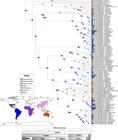
Divergence time estimate tree resulting from BEAST analysis and ancestral areas estimated by BioGeoBEARS for Polypodiaceae. Bioregions are indicated by their colors, defined as Bioregion A: South America (dark blue); Bioregion B: Central America (light blue); Bioregion C: North America (green); Bioregion D: Africa (purple); Bioregion E: Madagascar (yellow); Bioregion F: Oceania (red); Bioregion G: Asia (pink).
For biogeographic history inference, we utilized the BioGeoBEARS package (Biogeography with Bayesian Evolutionary Analysis in R Scripts) (Matzke, 2013) in R software version 4.1.0 (R Core Team, 2020) and RStudio version 1.4.1106 (RStudio Team, 2022). Three analyses were conducted: DEC (Dispersal, extinction, and cladogenesis) (Ree & Smith, 2008), DIVA (Dispersion and Vicariance analysis) (Ronquist, 1997), denoted as DIVALIKE, and BayArea (Bayesian Inference for Discrete Areas) (Landis et al., 2013), denoted as BAYAREALIKE. Additionally, three analyses incorporating the free parameter j (DEC+j, DIVALIKE+j, BAYAREALIKE+j) were performed to account for colonization events outside ancestral range areas (Matzke 2014). We used the adjusted DEC* and DEC*+j modified models, following Massana et al. (2015). Model comparison was conducted using the corrected Akaike Information Criterion (AICc) within BioGeoBEARS to identify the most fitting model, and an ancestral range estimate was plotted using the selected model. We also estimate the mode and number of biogeographic events with BioGeoBEARS using Biogeographic Stochastic Mapping (BSM) (Table S4, Medeiros & Almeida, 2026). Event frequencies were inferred from the mean and standard deviation values of 100 BSMs (Dupin et al., 2016; Matzke, 2016).
Results
Out of the 15 floristic relationships from Moran & Smith (2001), seven are recognized as closely related lineages: (1) Alansmia cultrata, A. senilis, and A. elastica; (2) Cochlidium serrulatum; (3) Grammitis subg. Grammitis sensu Moran & Smith (2001); (4) Melpomene flabelliformis; (5) Platycerium andinum and P. quadridichotomum; (6) Pleopeltis macrocarpa; (7) Stenogrammitis myosuroides, S. prionodes, S. hartii, S. limula + S. hildebrandtii and S. oosora (Table 1). The species pair Microgramma lycopodioides and M. mauritiana was the only one not closely related in previous studies (Table 1). Another seven relationships lacked sufficient or appropriate phylogenetic data to address our questions (Table 1).
Phylogenetic inferences and divergence time estimates
The resulting matrix consisted of 4,129 bp (Table 2, Medeiros & Almeida, 2026). Thirteen genera were recovered as monophyletic: Alansmia, Cochlidium, Grammitis, Leucotrichum, Lellingeria, Melpomene, Nanogrammitis, Polypodium, Pleopeltis, Platycerium, Rouhania, Serpocaulon, and Stenogrammitis. The monophyly of Aenigmatogrammitis, Ctenopterella, Howeogrammitis, Lecanopteris, Oxygrammitis, Phlebodium, and Pyrrosia was not tested, given that only one species was sampled for each of these genera (Fig. 1). Ceradenia and Enterosora were recovered as non-monophyletic, given the positioning of Enterosora barbatula. Pyrrosia+Platycerium+Lecanopteris formed a clade (PP=1), sister of the remaining species, with Pyrrosia+Platycerium (PP=1) sister to Lecanopteris. In the next node, Phlebodium, Pleopeltis, and Polypodium form a clade (PP=1) sister to the remaining species, with the intraclade relationship not resolved. In the subsequent clade, Serpocaulon (PP=1) appears as sister to the other species (PP=0.97), with the next node of the tree presenting the clade Cochlidium+Grammitis (PP=1), sister to the remaining lineages. In the following node, Alansmia+Leucotrichum (PP=1) form a clade sister to the other species, which include Enterosora (PP=1) as sister to Ceradenia+Enterosora barbatula (PP=1). Howeogrammitis+Ctenopterella, sister to Aenigmatogrammitis+Oxygrammitis, forms a sister clade to Rouhania+Nanogrammitis (PP=0.78). Melpomene appears as sister to Stenogrammitis+Lellingeria (PP=1) (Fig. S2).
Partitions, number of taxa, length of sequences, and substitution models selected for each partition used.
Our analysis indicate that Polypodiaceae originated approximately 55.5 Ma (95% HPD 32-106.5), with subsequent diversification events occurring post-Eocene, leading to the emergence of a clade that gave rise to Lecanopteris (45.7 Ma, 95% HPD 21.9- 87.1) + Pyrrosia (37.3 Ma, 95% HPD 17.3-75.4) + Platycerium (24.2 Ma, 95% HPD 10.9-54.2) and another clade giving rise to the remaining genera within the family: Polypodium (29.7 Ma, 95% HPD 24.8-34.6); Phlebodium (44.7 Ma, 95% HPD 26.1-88.4); Pleopeltis (17.5 Ma, 95% HPD 12.2-22.7); Serpocaulon (11.6 Ma, 95% HPD 3.4-43); Cochlidium (19.7 Ma, 95% HPD 6-43); Grammitis (25.4 Ma, 95% HPD 11.5-51.5); Leucotrichum (18.2 Ma, 95% HPD 7.1-41.1); Alansmia (14.5 Ma, 95% HPD 4.3-27.3); Enterosora (12.6 Ma, 95% HPD 4.4-31.4); Ceradenia+Enterosora barbatula (16.5 Ma, 95% HPD 5.2-38.1); Howeogrammitis+Ctenopterella (19.1 Ma, 95% HPD 3.5-48.5); Aenigmatogrammitis+Oxygrammitis (16.3 Ma, 95% HPD 4.1-39.1); Nanogrammitis (16.4 Ma, 95% HPD 6.6-39.1); Rouhania (5.6 Ma, 95% HPD 0.8-23.2); Melpomene (17.1 Ma, 95% HPD 5.34-43.5); Stenogrammitis (12.9 Ma, 95% HPD 5.4-25.7); and Lellingeria (9.5 Ma, 95% HPD 2.4-32.6) (Fig. S3).
Biogeographic inferences
According to the corrected Akaike information criterion (AICc), the BAYAREALIKE+j model (LnL= --384.04; AICc= 774.3) was the best-fitting model, followed by the DEC model (LnL=- -435.96; AICc= 876), and the DEC+J model (LnL= -435.97; AICc= 878.1) (Table 3). The results of the ancestral range analysis suggest the potential emergence of Polypodiaceae either in Central or South America (Bioregions A=South America, B=Central America) (Fig. 1).
Comparative statistics between biogeographic models tested in the BioGeoBEARS analysis. LnL= log-likelihood; d= dispersion rate; e= extinction rate; j = speciation of the founding event, AIC= Akaike Information Criterion corrected; DEC= Dispersion Extinction and cladogenesis; DIVALIKE is the BioGeoBEARS implementation of the DIVA= dispersion and vicariance model; BAYAREALIKE is the BioGeoBEARS implementation of the BayArea= Bayesian inference model for discrete areas.
Platycerium andinum (tropical America) / Platycerium quadridichotomum (Afrotropics)
The genus diverged in Asia (Bioregion G) at 24.2 Ma (95% HPD 14.8-35.2) when diverging from Pyrrosia. Its initial divergence led to a clade comprising P. grande and P. bifurcatum, which remained in Asia (Bioregion G) and Oceania (Bioregion F), and another clade with an uncertain origin spanning Africa and Madagascar (Bioregions DE). The latter clade further diverged, giving rise to two clades: one with P. quadridichotomum and P. ellisii (Bioregion E - Madagascar), and another with P. stemaria (Bioregions DEG), P. alcicorne (Bioregions DE), and P. andinum, which established in South America (Bioregion A) (Fig. 1).
Pleopeltis macrocarpa (tropical America / Afrotropics)
The genus Pleopeltis, sister to Polypodium, likely emerged in Central or North America (Bioregions BC) approximately 17.5 Ma (95% HPD 14.8-20.3). The analysis revealed several dispersal events to South America (Bioregion A), giving rise to the clades from P. murorum to P. remota, P. thyssanolepis + P. platypes, and P. wiesbaurii + P. fructuosa, alongside P. bombycina. The clade including both accessions of P. macrocarpa diverged less than 2 Ma from the closely related clade comprising P. conzattii (Bioregion C - North America) and P. crassinervata (Bioregions BC - Central and North America) (Fig. 1).
Cochlidium serrulatum (tropical America / Afrotropics)
The genus Cochlidium emerged in Central or South America (Bioregions AB) around 19.6 Ma (95% HPD 10.82-29.2) when it diverged from Grammitis. Cochlidium rostratum diverged from others and colonized South, Central, and North America (Bioregions ABC). Cochlidium seminudum diverged 17.9 Ma ago, remaining in Central and South America (Bioregions AB). Cochlidium serrulatum diverged from C. punctatum from an South American ancestor 12.7 Ma, dispersing to Madagascar (Bioregion E) (Fig 2).
Grammitis subg. Grammitis sensu Moran & Smith (2001) (tropical America / Afrotropics)
Part of Grammitis subg. Grammitis, as defined by Moran & Smith (2001), currently encompasses the genera Grammitis s.s., Howeogrammitis, Aenigmatogrammitis, Oxygrammitis, and Nanogrammitis. Grammitis s.s. appears as sister to Cochlidium, with the most recent common ancestor giving rise around 27.7 Ma to both, potentially occurring in Central or South America (Bioregion AB). In Grammitis, a long-distance dispersal occurred to Madagascar (Bioregion E) with subsequent diversification in a clade including G. coriaceifolia, G. copelandii, and G. melanoloma. Another clade remained in South (Bioregion A) or Central America (Bioregion B), such as G. paramicola and G. bryophila. Additional LDDs to Madagascar (Bioregion E) or Africa (Bioregion D), can be inferred to G. kyimbilensis (present in Tanzania and Madagascar), G. cryptophlebia, and G. ebenina (Saint Helena and Madagascar) (Fig. 1).
Howeogrammitis + Ctenopterella + Aenigmatogrammitis + Oxygrammitis + Rouhania (26.6 Ma 95% HPD 17.9-36.3) form a clade with Melpomene + Lellingeria + Stenogrammitis, originating from a most recent common ancestor that likely occurred in South and Central America (Bioregions AB) around 31.7 Ma. Species such as Howeogrammitis diminuta, Aenigmatogrammitis stenophylla, Oxygrammitis denticulata, and Ctenopterella lasiostipes established themselves in Asia (Bioregion G) and Oceania (Bioregion F). Certain species of Nanogrammitis and Rouhania remained in Madagascar (Bioregion E), with potential occasional dispersals to Africa (Bioregion D) observed in Nanogrammitis synsora and Rouhania pygmaea (Fig. 1).
Alansmia cultrata, Alansmia senilis (tropical America) / Alansmia elastica (Afrotropics)
The genus originated in South or Central America (Bioregions AB) around 14.5 Ma (95% HPD 7.9-22), diverging from Leucotrichum. The ancestral range of the clade including A. cultrata, A. senilis, and A. elastica, also includes North America (Bioregions ABC). Alansmia elastica diverged ca. 8.3 Ma, exhibiting dispersal to Africa and Madagascar (Bioregions ABCDE). In contrast, A. cultrata and A. senilis remained restricted to South America, Central America, and North America (Bioregions ABC) (Fig. 1).
Melpomene flabelliformis (tropical America / Afrotropics)
The genus Melpomene emerged in South or Central America (Bioregions AB) at approximately 17.1 Ma (95% HPD 8.7-26.1), diverging from either Lellingeria or Stenogrammitis. The relationship among these genera was not conclusively recovered. While subsequent dispersal events for M. flabelliformis were not conclusively determined, the analysis revealed a North, Central, or South American ancestral range (Bioregions ABC), where it still occurs, and dispersal events to Africa and Madagascar (Bioregions DE) (Fig. 1).
Stenogrammitis myosuroides, S. prionodes, S. hartii, S. limula (tropical America) / Stenogrammitis hildebrandtii, S. oosora (Afrotropics)
The genus Stenogrammitis emerged in Central or South America (Bioregions AB) approximately 21.4 Ma (95% HPD 13.8-29.9), diverging from Lellingeria. Stenogrammitis hildebrandtii was the first to diverge, dispersing widely and establishing in Madagascar (Bioregion E). Subsequently, the clade including Stenogrammitis prionodes, S. hartii, and S. limula diverged, establishing through the Americas (Bioregions ABC) with dispersals from South America or Central America. Within the disjunction relationship described by Moran & Smith, the American clade formed by S. myosuroides, S. jamesonii, S. saffordii, and S. hellwigii was closely related to the afrotropical S. oosora. The range of the most recent common ancestor for those clades (9.9 Ma, 95% HPD 5.8-14.3) was inferred as Africa or Madagascar (Bioregions DE). (Fig. 1).
In the BSM analysis, within area speciation was the most frequent event, accounting for 57.1% (means 96.76) of observed events, followed by range expansion with 29.8% (50.56), and dispersal by founder effect with 13.1% (22.24) (Table 4).
Summary of biogeographic stochastic mapping count for Polypodiaceae using the BAYAREALIKE+j model. The average numbers for the different types of estimated events are shown here, along with the standard deviations in parentheses.
The source area with the highest occurrence of range expansion events coupled with dispersion due to the founder effect was Central America (Bioregion B), representing 29.9% (21.78) of the observed events. This was followed by South America (Bioregion A) with 24.1% (17.52), and North America (Bioregion C) with 14.4% (10.5) of the events. As for sink areas, South America (Bioregion A) led with 20.7% (15.04), followed by Madagascar (Bioregion E) with 18.3% (13.36), Africa with 17.6% (12.82), and North America (Bioregion C) with 17.5% (12.76) of the events (Table 5).
Details of the number of dispersal events estimated in the evolutionary history of Polypodiaceae. The data integrates 100 Stochastic Biogeographic Mappings (BSM). (I) Dispersal events due to area expansion - parameter “d”, plus dispersion events due to the founder effect - parameter “j”; (II) Dispersal events due to area expansion - parameter “d”; (III) Dispersion events due to founder effect-parameter “j”. Standard deviations are presented in parentheses. The warmer the color, the higher the number of events. The rows represent the ancestral states (ancestral ranges) and the columns represent descendant states (current range). Values on the right and below the table represent the sum and percentages of events for each area. The names of the areas in the rows and columns and letters presented in parentheses correspond to the bioregions in Fig. S2.
Central America (Bioregion B) had the highest percentage of observed area expansion events with 30% (15.16 events), followed by South America (Bioregion A) with 19.5% (9.86) and North America (Bioregion E) with 16.1% (8.16). Among sink areas, North America (Bioregion C) led with 22.1% (11.2), followed by Africa (Bioregion D) with 21% (10.62), South America (Bioregion C) with 16.7% (8.42), and Madagascar (Bioregion E) with 12.5% (6.34) (Table 5).
Regarding dispersal events due to the founder effect (long-distance dispersal), South America (Bioregion A) was the main source with 34.4% (7.66 events), followed by Central America (Bioregion B) with 29.8% (6.62), and North America (Bioregion C) with 10.5% (2.34). Among the destination areas, Madagascar (Bioregion E) led with 31.6% (7.02), followed by South America (Bioregion A) with 29.8% (6.62), and Central America (Bioregion B) with 13.4% (2.98) (Table 5).
Discussion
The occurrence of morphological similarities between disjunct species of Polypodiaceae in tropical America and Afrotropics is primarily explained by phylogenetic relatedness, with long-distance dispersal (LDD) emerging as the central biogeographic process for this pattern. Phylogenetic analysis and biogeographic reconstruction revealed that South America and Madagascar were key regions for the family’s diversification, with transoceanic dispersal events occurring sporadically. These results highlight the fundamental role of LDD in the evolutionary history of Polypodiaceae while providing an integrated view of the processes that shaped its current distribution. The inclusion of the “+j” parameter accounting for founder-event speciation events (Matzke, 2014) is particularly relevant for reconstructing the biogeographic history of ferns, given that long-distance dispersal occurs frequently in this group (Barrington, 1993; Moran & Smith, 2001; Wei et al., 2015; Bauret et al., 2017; Almeida et al., 2021; Valle et al., 2026). Although founder-event speciation is often emphasized in island biogeography (Matzke, 2014), it is equally important for ferns, as it helps distinguish the role of long-distance dispersal from other dispersal processes.
The morphological similarities between disjunct taxa within Polypodiaceae proposed by Moran & Smith (2001) have been broadly confirmed by prior phylogenetic studies (Kreier & Schneider, 2006; Otto et al., 2009; Labiak et al., 2010; Bauret et al., 2017; Wei & Zhang, 2022; Zhou et al., 2023; Valle et al., 2026). While some relationships lacked sufficient phylogenetic data, in most cases, phylogenetic proximity adequately explained morphological similarities. Notably, only one relationship, Microgramma lycopodioides (tropical America) + M. mauritiana (Afrotropics), seems to involve evolutionary convergence (Almeida et al., 2021). Throughout the evolution of these species, the predominant biogeographic processes were sympatric speciation and area expansion, with long-distance dispersal playing a lesser role. South, Central, and North America emerged as the most frequent sources of these events.
The methodological approach adopted here to explore the biogeographic patterns of Polypodiaceae revealed significant instances of within-area speciation and dispersal, especially between South, Central, and North America, and Madagascar. Central and South America emerge as crucial centers of diversification and origin for numerous species of this family, likely influenced by geographic and climatic factors. Dispersal events, including range expansion and founder events, constitute ca. 42.9% of evolutionary occurrences, highlighting substantial capacity for intracontinental and intercontinental long-distance dispersal (LDD) in Polypodiaceae. Notably, range expansion events (29.8%) are markedly more frequent than long-distance dispersals (13.1%). This pattern is evident when considering the results of the ancestral range analysis (Fig. 1) and the phylogenetic inference. The overall evolutionary trajectory of Polypodiaceae, dating back to the post-Gondwana fragmentation era, is characterized by numerous sympatric speciation events and dispersal events, occasionally involving intercontinental LDD (Fig. 1). Interestingly, there is an observed trend of increasing LDD event frequency post-Miocene, aligning with the family’s taxonomic diversification (Fig. 1).
Dispersal events have been significant in shaping the biogeographic patterns of the family, as previously indicated by Bauret et al. (2017). Historically, dispersal has been a central concept to explain the movement of organisms or propagules from one origin to another, often associated with area expansion, a process in which a population or species gradually spreads to new regions, continuously expanding its geographic distribution (Wolf et al., 2001; Wu et al., 2022). However, long-distance dispersal (LDD), in which organisms or propagules reach distant locations from the origin point, often resulting in the founder effect, is generally treated as an unlikely event (Christenhusz & Chase, 2013). This perception is due to the low probability of success, the ecological and physiological filters imposed on organisms capable of overcoming such challenges, and its rarity throughout evolutionary history, especially in plants (Wolf et al., 2001).
Long-distance dispersal (LDD) of tropical species has been influenced by various routes and mechanisms over millions of years (Smedmark and Anderberg, 2007; Wei et al., 2015; Dick & Pennington, 2019). Important routes include the Boreotropical Route, which connected Eurasia and North America during the Eocene (Smedmark and Anderberg, 2007; Wei et al., 2015), and the Austrotropical Route, which linked South America, Antarctica, and Australasia via the Magellan Land Bridge (MLB) during the Eocene and Oligocene between 56 and 23Ma. (Dick & Pennington, 2019). These routes facilitated the migration of species across continents, but their influence varied depending on the geological and climatic context.
For example, Wei et al. (2015) demonstrated that, in the genus Diplazium Sw., boreotropical migration and subsequent LDD events were fundamental in shaping intercontinental disjunctions, ruling out the Gondwanan vicariance hypothesis. Similarly, Michalak et al. (2010) analyzed the historical biogeography of the family Hernandiaceae (Laurales), revealing one African-Madagascan-Malesian lineage and another African-tropical American lineage, with an estimated divergence of approximately 122 Ma. However, most intercontinental disjunctions within the family occurred during the Oligocene and Miocene, suggesting transoceanic dispersal events. These findings highlight the importance of LDD, particularly in lineages with more recent divergences (Noben et al., 2017; Wu et al., 2022).
Another significant mechanism was the Great American Biotic Interchange (GABI), which occurred after the closure of the Isthmus of Panama about 3.5 million years ago. This event allowed the migration of species between North and South America, although asymmetrically, with more South American species colonizing Central America (Dick & Pennington, 2019). These land routes were crucial for the initial colonization of many plant groups in South America (Renner, 2004; Dick & Pennington, 2019).
Transatlantic dispersal is another important route for tropical species, occurring mainly through surface ocean currents, trade winds, and floating vegetation rafts or islands. These mechanisms were essential for transporting diaspores and even entire organisms (Renner, 2004). The main dispersal routes were shaped by the South Equatorial Current (SEC) and the North Equatorial Current (NEC), which flow from Africa to South America, while the North Equatorial Countercurrent (NECC) represents the only route in the opposite direction, though less efficient due to its instability (Renner, 2004). Floating vegetation rafts or islands are a well-documented dispersal mechanism, with historical records of plant masses transporting trees up to 15 meters across the Atlantic and studies indicating their regular occurrence under favorable wind and current conditions (Renner, 2004). Although dispersal from South America to Africa has been less studied, Renner (2004) suggests that certain plant groups, such as Bromeliaceae and Malvaceae, may have benefited from seasonal winds to cross the Atlantic. Geological and paleoceanographic evidence indicates that these ocean currents and trade winds have remained relatively stable since the separation of Western Gondwana, enabling the continuity of dispersal routes throughout geological eras (Schneider et al. 2022; Bullock and Clarke, 2000).
The long-distance dispersals (LDD) observed in fern groups can be explained by different routes and mechanisms discussed earlier. The dispersals from Central and South America to Africa or Madagascar in Grammitis (26.94 Ma), Cochlidium (3.04 Ma), Melpomene (0.72 Ma and 0.31 Ma), Stenogrammitis (12.76 Ma), Pleopeltis macrocarpa (2.41 Ma; Valle et al. 2026), and Alansmia spp. (1.28 Ma) align with transatlantic LDD patterns. A possible route involves the southwest trade winds (blowing from east to west), which could transport propagules from South America to Africa. Subsequently, the westerly winds would drive dispersal southward into the Indian Ocean, where the southeast trade winds would finally carry the material to Madagascar (Schneider et al. 2022; Bullock and Clarke, 2000).
Alternatively, dispersal could occur via floating vegetation islands or ocean currents, following the North Equatorial Countercurrent (NECC), a more direct but less likely trajectory (Renner, 2004). Another possibility involves the Brazil Current, which carries water masses southward until it meets the Malvinas Current. From there, the Antarctic Circumpolar Current would transport the material eastward, and the Agulhas Current would direct the flow northward to Madagascar (Muñoz et al., 2004; Renner, 2004). In the case of Platycerium, its colonization of Madagascar (13.37 Ma) and South America (9.67 Ma) suggests possible routes through the Indian and Atlantic Oceans, although the exact origin of the South American lineage remains unclear. These lineage patterns underscore the ongoing role of transatlantic LDD, possibly mediated by atmospheric currents and floating vegetation islands, in shaping the global distribution of Polypodiaceae.
The high levels of sympatric speciation suggested by our analyses likely reflect the complex geological history of Central and South America. The geographic isolation of South America from other continental masses before the formation of the Isthmus of Panama limited plant migration to other regions, promoting speciation (Wolf et al., 2001; Sanmartín & Ronquist, 2004; Wu et al., 2022). Over the past 50 million years, geological events such as the uplift of the Andes and the formation of mountain ranges in the Greater Antilles have progressively altered the region’s environmental and climatic conditions, affecting elevation, atmospheric pressure, temperature, and humidity (Garzione et al., 2008). These changes, combined with topographic barriers, may have reduced gene flow, decreased population sizes, and restricted dispersal, further intensifying speciation processes within the continent (Haufler et al., 2000; Antonelli et al., 2009; Suissa & Sundue, 2020).
South America, Central America, and Madagascar are widely recognized as hotspots of tropical fern diversity (Suissa et al., 2021). In South America, this includes the tropical Andes and southeastern Brazil, while in Central America, it encompasses Mesoamerica and the Greater Antilles (Suissa & Sundue, 2020). In Madagascar, the hotspot extends to islands along the southeastern coast of Africa, known for their high diversity and endemism across several fern and lycophyte families (Yoder & Nowak, 2006; Rouhan & Gaudeul, 2021). The distribution patterns of these ferns may be influenced by several factors. Some authors suggest that climatic and environmental instability facilitates the invasion of pioneering species (Sanmartin et al., 2007; Sniderman & Jordan, 2011; Richardson et al., 2012; Crayn et al., 2015). Conversely, these patterns may also be associated with environments with high species diversity and competition (Richardson et al., 2012; Wu et al., 2022) as well as species with a remarkable dispersal and adaptive capacities (Wolf et al., 2001; Crayn et al., 2015; Wu et al., 2022).
South America has an intricate geological history involving continental movements, mountain chain formations, and sea level fluctuations (Wolf et al., 2001; Sanmartín and Ronquist, 2004; Cody et al., 2010; Wu et al., 2022). Spanning diverse habitats from humid tropical forests to arid deserts, including savannas, pampas, mountains, and coastal areas (Sharpe et al., 2010), South America is mainly characterized as a tropical bioregion with climatic zones ranging from the equator to southern latitudes, encompassing tropical, subtropical, and temperate areas (Cody et al., 2010; Suissa & Sundue, 2020). This environmental heterogeneity, linked to diverse microenvironments and climatic conditions, impacts niche diversification, allowing plant species to adapt to specific temperature, precipitation, and seasonal variation conditions, fostering a diverse array of plants (Garzione et al., 2008).
Given these characteristics, it is hypothesized that during the evolutionary history of Polypodiaceae, following a possible dispersal from Asia to the Americas, a substantial number of species emerged and diversified in Central, North and South America (Garzione et al., 2008; Suissa & Sundue, 2020). This diversification likely followed a museum model, characterized by low extinction rates and a constant accumulation of lineages throughout its geological history. Speciation likely occurred sympatrically, influenced by diverse climatic conditions, a wide range of habitats, and vicariance events within the continent. This was followed by a gradual expansion northwards/southwards after the formation of the Isthmus of Panama (O’Dea et al., 2016), alongside sporadic transcontinental dispersal events.
It is important to emphasize that while all investigated species were already placed in phylogenetic hypotheses, obtaining sufficient data for all target relationships proved challenging. In numerous cases, data were available for only one species of the pair, with sequences from a few molecular markers, or lacking metadata on GenBank (Table 1). This underscores the need for increased sampling efforts in phylogenetic studies, especially for afrotropical taxa, as currently available data are disproportionately focused on tropical American species (Table 1).
In summary, our comprehensive analyses shed light on the floristic relationships, dispersal patterns, and distribution of disjunct species within the evolutionary history of Polypodiaceae. The results demonstrate phylogenetic consistency with previous studies, offering valuable insights into the phylogenetic proximity of many target group species. Additionally, the identification of a potential evolutionary convergence event underscores the intricate processes driving convergent evolution.
The methodological approach adopted to explore the biogeographic patterns of Polypodiaceae revealed significant instances of sympatric speciation and dispersal, notably between South America, Central America, and Madagascar. Central and South America emerges as pivotal centers of diversification and origin for numerous species in this family, likely influenced by geographic and climatic factors. While dispersal plays a significant role in the family’s evolutionary history, range expansion events emerge as the most frequent. Despite their relative rarity, long-distance dispersal events were instrumental in the evolution and establishment of species on new continents, shaping current biogeographic patterns. These findings underscore the importance of comprehending biogeographic processes in interpreting global plant diversity and distribution.
Supplementary Material
The following online material is available for this article:
Table S1 -
Table S2 -
Table S3 -
Table S4 -
Figure S1 -
Figure S2 -
Figure S3 -
Acknowledgments
We thank the Universidade Federal do Oeste do Pará (UFOPA) and the Graduate Program in Biodiversity (PGBEES) for supporting MBM. TEA thanks CNPq for the grant (317091/2021-2) awarded. This study was financed in part by the Coordenação de Aperfeiçoamento de Pessoal de Nível Superior - Brasil (CAPES) - Finance Code 001. MBM thanks the support of the research group from the Laboratory of Fern and Lycophyte Evolution, affiliated with the Federal University of Pernambuco (UFPE), especially K.S. Lima and C.V.M. Sousa for the help with the analyses. MBM and TEA thank D.J.P. Gonçalves for initial discussions and ideas regarding this manuscript. The authors thank the reviewers and editors for their comments and suggestions to improve this work.
References
-
Almeida TE, Salino A, Dubuisson J-Y, Hennequin S. 2021. Insights into long-distance dispersal and ecological and morphological evolution in the fern genus Microgramma from phylogenetic inference. Botanical Journal of the Linnean Society 196: 294-312. doi: 10.1093/botlinnean/boaa107/6130184
» https://doi.org/10.1093/botlinnean/boaa107/6130184 -
Antonelli A, Nylander JAA, Persson C, Sanmartín I. 2009. Tracing the impact of the Andean uplift on Neotropical plant evolution. Proceedings of the National Academy of Sciences 106: 9749-9754. doi: 10.1073/pnas.081142110
» https://doi.org/10.1073/pnas.081142110 -
Arbuckle K, Speed MP. 2016. Analysing convergent evolution: a practical guide to methods. In: Pontarotti P. (ed.) Evolutionary biology: convergent evolution, evolution of complex traits, concepts and methods. Cham, Springer pp. 23-36. doi: 10.1007/978-3-319-41324-2_2
» https://doi.org/10.1007/978-3-319-41324-2_2 -
Bauret L, Gaudeul M, Sundue MA, et al 2017. Madagascar sheds new light on the molecular systematics and biogeography of grammitid ferns: New unexpected lineages and numerous long-distance dispersal events. Molecular Phylogenetics and Evolution 111: 1-17. doi: 10.1016/j.ympev.2017.03.005
» https://doi.org/10.1016/j.ympev.2017.03.005 -
Barrington DS. 1993. Ecological and historical factors in fern biogeography. Journal of Biogeography 20: 275-279. doi: 10.2307/2845635
» https://doi.org/10.2307/2845635 -
Bouckaert R, Vaughan TG, Barido-Sottani J, et al 2019. BEAST 2.5: An advanced software platform for Bayesian evolutionary analysis. PLoS Computational Biology 15: e1006650. doi: 10.1371/journal.pcbi.1006650
» https://doi.org/10.1371/journal.pcbi.1006650 -
Bullock J, Clarke R. 2000. Long distance seed dispersal by wind: Measuring and modelling the tail of the curve. Oecologia 124: 506-521. doi: 10.1007/PL00008876
» https://doi.org/10.1007/PL00008876 -
Christenhusz MJ, Chase MW. 2013. Biogeographical patterns of plants in the Neotropics-dispersal rather than plate tectonics is most explanatory. Botanical Journal of the Linnean Society 171: 277-286. doi: 10.1111/j.1095-8339.2012.01301.x
» https://doi.org/10.1111/j.1095-8339.2012.01301.x -
Cody S, Richardson JE, Rull V, Ellis C, Pennington RT. 2010. The great American biotic interchange revisited. Ecography 33: 326-332. doi: 10.1111/j.1600-0587.2010.06327.x
» https://doi.org/10.1111/j.1600-0587.2010.06327.x -
Colley E, Fischer ML. 2013. Speciation and its mechanisms: conceptual background and recent advances. História, Ciências, Saúde Manguinhos 20: 1671-1694. doi: 10.1590/S0104-597020130005000013
» https://doi.org/10.1590/S0104-597020130005000013 -
Crayn DM, Costion C, Harrington MG. 2015. The Sahul-Sunda floristic exchange: Dated molecular phylogenies document Cenozoic intercontinental dispersal dynamics. Journal of Biogeography 42: 11-24. doi: 10.1111/jbi.12405
» https://doi.org/10.1111/jbi.12405 -
Darriba D, Taboada GL, Doallo R, Posada D. 2012. jModelTest 2: More models, new heuristics and parallel computing. Nature Methods 9: 772. doi: 10.1038/nmeth.2109
» https://doi.org/10.1038/nmeth.2109 -
Delgadillo MC. 1993. The neotropical-African moss disjunction. Bryologist 96: 604-615. doi: 10.2307/3243992
» https://doi.org/10.2307/3243992 -
Dick CW, Pennington RT. 2019. History and geography of neotropical tree diversity. Annual Review of Ecology, Evolution, and Systematics 50: 279-301. doi: 10.1146/annurev-ecolsys-110617-062314
» https://doi.org/10.1146/annurev-ecolsys-110617-062314 -
Drummond AJ, Suchard MA, Xie D, Rambaut A. 2012. Bayesian phylogenetics with BEAUti and the BEAST 1.7. Molecular Biology and Evolution 29: 1969-1973. doi: 10.1093/molbev/mss075
» https://doi.org/10.1093/molbev/mss075 -
Dupin J, Matzke NJ, Sarkinen T, et al 2016. Bayesian estimation of the global biogeographic history of the Solanaceae. Journal of Biogeography 44: 887-899. doi: 10.1111/jbi.12898
» https://doi.org/10.1111/jbi.12898 -
Edgar RC. 2004. MUSCLE: A multiple sequence alignment method with reduced time and space complexity. BMC Bioinformatics 5: 113. doi: 10.1186/1471-2105-5-113
» https://doi.org/10.1186/1471-2105-5-113 -
Edler D, Guedes T, Zizka A, Rosvall M, Antonelli A. 2017. Infomap bioregions: Interactive mapping of biogeographical regions from species distributions. Systematic Biology 66: 197-204. doi: 10.1093/sysbio/syw087
» https://doi.org/10.1093/sysbio/syw087 -
Garzione CN, Hoke GD, Libarkin JC, et al 2008. Rise of the Andes. Science 320: 1304-1307. doi: 10.1126/science.1148615
» https://doi.org/10.1126/science.1148615 -
Geiger JM, Ranker TA, Ramp Neale JM, Klimas ST. 2007. Molecular biogeography and origins of the Hawaiian fern flora. Brittonia 59: 142-158: doi: 10.1663/0007-196X(2007)59[142:MBAOOT]2.0.CO;2
» https://doi.org/10.1663/0007-196X(2007)59[142:MBAOOT]2.0.CO;2 -
Geiger JM, Korall P, Ranker TA, Kleist AC, Nelson CL. 2013. Molecular Phylogenetic Relationships of Cibotium and Origin of the Hawaiian Endemics. American Fern Journal 103: 141-152. doi: 10.1640/0002-8444-103.3.141
» https://doi.org/10.1640/0002-8444-103.3.141 -
Gernhard T. 2008. The conditioned reconstructed process. Journal of Theoretical Biology 253: 769-778. doi: 10.1016/j.jtbi.2008.04.005.
» https://doi.org/10.1016/j.jtbi.2008.04.005 -
Gillespie RG, Baldwin BG, Water JM, et al 2012. Long-distance dispersal: a framework for hypothesis testing. Trends in Ecology & Evolution 27: 47-56. doi: 10.1016/j.tree.2011.08.009.
» https://doi.org/10.1016/j.tree.2011.08.009 -
Haufler CH, Hooper EA, Therrien JP. Modes and mechanisms of speciation in pteridophytes: Implications of contrasting patterns in ferns representing temperate and tropical habitats. Plant Species Biology. 2000 15: 223-236. doi: 10.1111/j.1442-1984.2000.00042.x
» https://doi.org/10.1111/j.1442-1984.2000.00042.x -
Hennequin S, Thiesena JF, Le Pechon T, et al 2022. Origin of Hawaiian ferns of the genus Ctenitis (Dryopteridaceae). Botany Letters 169: 375-389. doi: 10.1080/23818107.2022.2095672
» https://doi.org/10.1080/23818107.2022.2095672 -
Janssen T, Kreier HP, Schneider H. 2007. Origin and diversification of African ferns with special emphasis on Polypodiaceae. Brittonia 59: 159-181. doi: 10.1663/0007- 196X(2007)59[159:OADOAF]2.0.CO;2
» https://doi.org/10.1663/0007- 196X(2007)59[159:OADOAF]2.0.CO;2 -
Kass JM, Pinilla-Buitrago GE, Paz A, et al 2022. wallace 2: A shiny app for modeling species niches and distributions redesigned to facilitate expansion via module contributions. Ecography 2023: e06547. doi: 10.1111/ecog.06547
» https://doi.org/10.1111/ecog.06547 -
Kreier HP, Schneider H. 2006. Reinstatement of Loxogramme dictyopteris, based on phylogenetic evidence, for the New Zealand endemic fern, Anarthropteris lanceolata (Polypodiaceae, Polypodiidae). Australian Systematic Botany 19: 309-314. doi: 10.1071/SB05033
» https://doi.org/10.1071/SB05033 -
Kvacek Z. 2001. A new fossil species of Polypodium (Polypodiaceae) from the Oligocene of northern Bohemia (Czech Republic). Feddes Repertorum 112: 159-177. doi: 10.1002/fedr.20011120302
» https://doi.org/10.1002/fedr.20011120302 -
Labiak PH, Sundue M, Rouhan G. 2010. Molecular phylogeny, character evolution and biogeography of the genus Lellingeria (Polypodiaceae). American Journal of Botany 97: 1354-1364. doi: 10.3732/ajb.0900393
» https://doi.org/10.3732/ajb.0900393 -
Landis MJ, Matzke NJ, Moore BR, Huelsenbeck JP. 2013. Bayesian analysis of biogeography when the number of areas is large. Systematic Biology 62: 789-804. doi: 10.1093/sysbio/syt040
» https://doi.org/10.1093/sysbio/syt040 -
Mahler DL, Weber MG, Wagner CE, Ingram T. 2017. Pattern and process in the comparative study of convergent evolution. The American Naturalist 190: S13-S28. doi: 10.1086/692648
» https://doi.org/10.1086/692648 -
Massana KA, Beaulieu JM, Matzke N, O’Meara BC. 2015. Non-null Effects of the Null Range in Biogeographic Models: Exploring Parameter Estimation in the DEC Model. bioRxiv preprint 026914. doi: 10.1101/026914
» https://doi.org/10.1101/026914 -
Matzke NJ. 2013. BioGeoBEARS: BioGeography with Bayesian (and likelihood) evolutionary analysis in R scripts. R package, v. 0.2.1. http://CRAN.Rproject.org/package=BioGeoBEARSMatzke 11 Nov 2023.
» http://CRAN.Rproject.org/package=BioGeoBEARSMatzke -
Matzke NJ. 2014. Model selection in historical biogeography reveals that founder event speciation is a crucial process in island clades. Systematic Biology 63: 951-970. doi: 10.1093/sysbio/syu056
» https://doi.org/10.1093/sysbio/syu056 -
Matzke NJ. 2016. Stochastic mapping under biogeographical models. Available at: Available at: PhyloWiki BioGeoBEARS. http://phylo.wikidot.com/biogeobears#stochastic_mapping 11 Nov 2023.
» http://phylo.wikidot.com/biogeobears#stochastic_mapping -
Medeiros MB, Almeida TE. 2026. Evolutionary and Biogeographic Roots of Disjunct Species of Polypodiaceae. SciELO Data, v1. https://doi.org/10.48331/scielodata.YHVLLZ 11 Nov 2023.
» https://doi.org/10.48331/scielodata.YHVLLZ -
Michalak I, Zhang LB, Renner SS. 2010. Trans-Atlantic, trans-Pacific and trans-Indian Ocean dispersal in the small Gondwanan Laurales family Hernandiaceae. Journal of Biogeography 37: 1214-1226. doi: 10.1111/j.1365-2699.2010.02306.x
» https://doi.org/10.1111/j.1365-2699.2010.02306.x -
Miller MA, Pfeiffer W, Schwartz T. 2010. Creating the CIPRES Science Gateway for inference of large phylogenetic trees. Gateway Computing Environments Workshop (GCE). New Orleans, IEEE. p. 1-8. doi: 10.1109/GCE.2010.5676129
» https://doi.org/10.1109/GCE.2010.5676129 -
Moran RC, Smith AR. 2001. Phytogeographic relationships between neotropical and African- Madagascan pteridophytes. Brittonia 53: 304-351. doi: 10.1007/BF02812704
» https://doi.org/10.1007/BF02812704 -
Muñoz J, Felicísimo Á, Cabezas F, Burgaz Á, Martínez I. 2004. Wind as a long-distance dispersal vehicle in the Southern Hemisphere. Science 304: 1144-1147. doi: 10.1126/science.1095210.
» https://doi.org/10.1126/science.1095210 -
Renner S. 2004. Plant dispersal across the tropical Atlantic by wind and sea currents. International Journal of Plant Sciences 165: S23-S33. doi: 10.1086/383334
» https://doi.org/10.1086/383334 -
Nitta JH, Schuettpelz E, Ramírez-Barahona S, Iwasaki W. 2022. An open and continuously updated fern tree of life. Frontiers in Plant Science 13: 909768. doi: 10.3389/fpls.2022.909768.
» https://doi.org/10.3389/fpls.2022.909768 -
Noben S, Kessler M, Quandt D, et al 2017. Biogeography of the Gondwanan tree fern family Dicksoniaceae - A tale of vicariance, dispersal and extinction. Journal of Biogeography 44: 2648-2659. doi: 10.1111/jbi.13056
» https://doi.org/10.1111/jbi.13056 -
O’Dea A, Lessios HA, Coates AG, Eytan RI, Restrepo-Moreno SA, Cione AL, et al 2016. Formation of the Isthmus of Panama. Science Advances 2: e1600883. doi: 10.1126/sciadv.1600883
» https://doi.org/10.1126/sciadv.1600883 -
Otto EM, Janßen T, Kreier HP, Schneider H. 2009. New insights into the phylogeny of Pleopeltis and related Neotropical genera (Polypodiaceae, Polypodiopsida). Molecular Phylogenetics and Evolution 53: 190-201. doi: 10.1016/j.ympev.2009.05.001
» https://doi.org/10.1016/j.ympev.2009.05.001 -
PPG I - The Pteridophyte Phylogeny Group. 2016. A community-derived classification for extant lycophytes and ferns. Journal of Systematics and Evolution 54: 563-603. doi: 10.1111/jse.12229
» https://doi.org/10.1111/jse.12229 -
QGIS Development Team. 2023. QGIS Geographic Information System. Open-Source Geospatial Foundation Project. http://qgis.osgeo.org 11 Nov 2023.
» http://qgis.osgeo.org -
R Core Team. 2020. R: A language and environment for statistical computing. R Foundation for Statistical Computing, Vienna. https://www.R-project.org/ 11 Nov 2023.
» https://www.R-project.org/ -
RStudio Team. 2022. RStudio: Integrated Development for R. RStudio, PBC, Boston. http://www.rstudio.com/ 11 Nov 2023.
» http://www.rstudio.com/ -
Rambaut A, Drummond AJ, Xie D, Baele G, Suchard MA. 2018. Posterior summarization in Bayesian phylogenetics using Tracer 1.7. Systematic Biology 67: 901-904. doi: 10.1093/sysbio/syy032
» https://doi.org/10.1093/sysbio/syy032 -
Ree RH, Smith SA. 2008. Maximum likelihood inference of geographic range evolution by dispersal, local extinction, and cladogenesis. Systematic Biology 57: 4-14. doi: 10.1080/10635150701883881
» https://doi.org/10.1080/10635150701883881 -
Richardson JE, Costion C, Muellner AN. 2012. The Malesian floristic interchange: plant migration patterns across Wallace’s Line. In: Gower D, Johnson K, Richardson JE, Rosen B, Rüber L, Williams S. (eds.). Biotic evolution and environmental change in Southeast Asia. Cambridge, Cambridge University Press. pp. 138-163. doi: 10.1017/CBO9780511735882.008
» https://doi.org/10.1017/CBO9780511735882.008 -
Ronquist F, Teslenko M, Van Der Mark P, et al 2012. MrBayes 3.2: Efficient Bayesian phylogenetic inference and model choice across a large model space. Systematic Biology 61: 539-542. doi: 10.1093/sysbio/sys029
» https://doi.org/10.1093/sysbio/sys029 -
Ronquist F. 1997. Dispersal-vicariance analysis: A new approach to the quantification of historical biogeography. Systematic Biology 46: 195-203. doi: 10.1093/sysbio/46.1.195
» https://doi.org/10.1093/sysbio/46.1.195 -
Rouhan G, Gaudeul M. 2021. Exploration and Origins of Biodiversity in Madagascar: The Message of Ferns. In: Grandcolas P, Maurel M-C. (eds.). Systematics and the Exploration of Life. Hoboken, ISTE and John Wiley & Sons. pp. 135-146. doi: 10.1002/9781119476870.ch7
» https://doi.org/10.1002/9781119476870.ch7 -
Sanmartín I, Ronquist F. 2004. Southern Hemisphere Biogeography Inferred by Event-Based Models: Plant versus Animal Patterns. Systematic Biology 53: 216-243. doi: 10.1080/10635150490423430
» https://doi.org/10.1080/10635150490423430 -
Sanmartin I, Wanntorp L, Winkworth RC. 2007. West Wind Drift revisited: testing for directional dispersal in the Southern Hemisphere using event‐based tree fitting. Journal of Biogeography 34: 398-416. doi: 10.1111/j.1365-2699.2006.01655.x
» https://doi.org/10.1111/j.1365-2699.2006.01655.x -
Schneider H, Schmidt AR, Nascimbene PC, Heinrichs J. 2015. A new Dominican amber fossil of the derived fern genus Pleopeltis confirms generic stasis in the epiphytic fern diversity of the West Indies. Organisms Diversity and Evolution 15: 277-283. doi: 10.1007/s13127-015- 0200-3
» https://doi.org/10.1007/s13127-015- 0200-3 -
Schneider JV, Jungcurt T, Cardoso D, Amorim AM, Paule J, Zizka G. 2022. Predominantly eastward long-distance dispersal in pantropical Ochnaceae inferred from ancestral range estimation and phylogenomics. Frontiers in Ecology and Evolution 10: 813336. doi: 10.3389/fevo.2022.813336.
» https://doi.org/10.3389/fevo.2022.813336 -
Schuettpelz E, Pryer KM. 2009. Evidence for a Cenozoic radiation of ferns in an angiosperm dominated canopy. Proceedings of the National Academy of Sciences of the U S A 106: 11200-11205. doi: 10.1073/pnas.0811136106
» https://doi.org/10.1073/pnas.0811136106 - Sharpe JM, Mehltreter K, Walker LR. 2010. Ecological importance of ferns. In: Mehltreter K, Walker LR, Sharpe JM. (eds.) Fern ecology. New York, Cambridge University Press. pp. 1-21.
-
Smedmark JEE, Anderberg AA. 2007. Boreotropical migration explains hybridization between geographically distant lineages in the pantropical clade Sideroxyleae (Sapotaceae). American Journal of Botany 94: 1491-1505. doi: 10.3732/ajb.94.9.1491
» https://doi.org/10.3732/ajb.94.9.1491 -
Smith AR, Pryer KM, Schuettpelz E, Korall P, Schneider H, Wolf PG. 2006. A classification for extant ferns. Taxon 55: 705-731. doi: 10.2307/25065646
» https://doi.org/10.2307/25065646 - Smith AR, Pryer K, Schuettpelz E, Korall P, Schneider H, Wolf PG. 2008. Fern Classification. In: Ranker TA, Haufler CH. (eds). Biology and Evolution of Ferns and Lycophytes. New York, Cambridge University Press. pp. 417-467.
-
Suissa JS, Sundue MA. 2020. Diversity patterns of Neotropical ferns: revisiting Tryon’s centers of richness and endemism. American Fern Journal 110: 211-232. doi: 10.1640/0002-8444-110.4.211
» https://doi.org/10.1640/0002-8444-110.4.211 -
Suissa JS, Sundue MA, Testo WL. 2021. Mountains, climate and niche heterogeneity explain global patterns of fern diversity. Journal of Biogeography 48: 1296-1308. doi: 10.1111/jbi.14076
» https://doi.org/10.1111/jbi.14076 -
Sundue MA, Testo WL, Ranker TA. 2014. Morphological innovation, ecological opportunity, and the radiation of a major vascular epiphyte lineage. Evolution 69: 2482-2495. doi: 10.1111/evo.12749
» https://doi.org/10.1111/evo.12749 -
Sniderman JMK, Jordan GJ. 2011. Extent and timing of floristic exchange between Australian and Asian rain forests. Journal of Biogeography 38: 1445-1455. doi: 10.1111/j.1365- 2699.2011.02519.x
» https://doi.org/10.1111/j.1365- 2699.2011.02519.x -
Tamura K, Stecher G, Kumar S. 2021. MEGA11: Molecular Evolution ary Genetics Analysis Version 11. Molecular Biology and Evolution 38: 3022-3027. doi: 10.1093/molbev/msab120
» https://doi.org/10.1093/molbev/msab120 -
Vaidya G, Lohman DJ, Meier R. 2011. SequenceMatrix: concatenation software for the fast assembly of multi‐gene datasets with character set and codon information. Cladistics 27: 171-180. doi: 10.1111/j.1096-0031.2010.00329.x
» https://doi.org/10.1111/j.1096-0031.2010.00329.x -
Valle C, Salino A, Lima LV, Moura IO, Almeida TE. 2026. Mesoamerican roots: the biogeographic history of the fern genus Pleopeltis Botanical Journal of the Linnean Society 210: boaf108. doi: 10.1093/botlinnean/boaf108
» https://doi.org/10.1093/botlinnean/boaf108 -
Wei R, Xiang Q, Schneider H, et al 2015. Eurasian origin, boreotropical migration and transoceanic dispersal in the pantropical fern genus Diplazium (Athyriaceae). Journal of Biogeography 42: 1809-1819. doi: 10.1111/jbi.12551
» https://doi.org/10.1111/jbi.12551 -
Wei R, Zhang XC. 2022. A revised subfamilial classification of Polypodiaceae based on plastome, nuclear ribosomal, and morphological evidence. Taxon 71: 288-306. doi: 10.1002/tax.12658
» https://doi.org/10.1002/tax.12658 -
Wolf G, Schneider H, Ranker TA. 2001. Geographic distributions of homosporous ferns: does dispersal obscure evidence of vicariance? Journal of Biogeography 28: 263-270. doi: 10.1046/j.1365-2699.2001.00531.x
» https://doi.org/10.1046/j.1365-2699.2001.00531.x -
Wu Z, Milne R, Liu J, Nathan R, Corlett RT, Li D. 2022. The establishment of plants following long-distance dispersal. Trends in Ecology & Evolution 38: 289-300. doi: 10.1016/j.tree.2022.11.003
» https://doi.org/10.1016/j.tree.2022.11.003 -
Yoder AD, Nowak MD. 2006. Has vicariance or dispersion salt been the predominant biogeographic force in Madagascar? Only time will tell. Annual Review of Ecology, Evolution and Systematics 37: 405-431. doi: 10.1146/annurev.ecolsys.37.091305.110239
» https://doi.org/10.1146/annurev.ecolsys.37.091305.110239 -
Zhou XM, Yang JJ, Liang ZL, et al 2023. A global phylogeny of grammitid ferns (Polypodiaceae) and its systematic implications. Taxon 72: 974-1018. doi: 10.1002/tax.12992ha
» https://doi.org/10.1002/tax.12992ha
-
Data Availability
The datasets generated during and/or analyzed during the current study are available in the ScieELO Data repository: [dataset] Medeiros MB, Almeida TE. 2026. Evolutionary and Biogeographic Roots of Disjunct Species of Polypodiaceae. Available at <https://doi.org/10.48331/scielodata.YHVLLZ >, SciELO Data, v1.
The datasets generated during and/or analyzed during the current study are available in the ScieELO Data repository: [dataset] Medeiros MB, Almeida TE. 2026. Evolutionary and Biogeographic Roots of Disjunct Species of Polypodiaceae. Available at <https://doi.org/10.48331/scielodata.YHVLLZ >, SciELO Data, v1.

