 Self-transcendence values explain behavioral intentions toward wild food plants in Brazil
Abstract
This study investigates the role of human values and advertising strategies on behavioral intentions toward wild food plants (WFPs) consumption in Brazil. We performed two distinct case studies with Brazilian university students. The first case study assesses the direct and indirect effects of values on the willingness to buy and consume WFPs, while the second evaluates the impact of targeted advertising messages on these behavioral intentions. Our findings suggest that altruistic values indirectly influence the willingness to buy WFPs, whereas biospheric values have a significant direct and indirect impact, mediated by attitudes toward WFPs. The willingness to consume WFPs is not directly affected by values but is influenced by attitudes. Pieces of basic advertisement emphasizing social benefits that align with altruistic values significantly increase the willingness to buy WFPs, yet do not affect the willingness to consume them. These results highlight the critical role of value-driven advertising in promoting the purchase of WFPs. The study pioneers the examination of the interplay between values, advertising, and behavioral intentions in the context of WFPs consumption in Brazil, which boasts rich biodiversity and significant potential for dietary diversification through WFPs.
Keywords:
Consumer Behavior; Environmental Psychology; Local Food Systems; Personal Values; Wild Edible Plants
Introduction
Global awareness regarding the sustainability of Food Systems is on the rise. In response, even amidst prevalent unsustainable food-related practices, a growing number of contemporary consumers are actively seeking environmentally and socially sustainable food options. This trend encompasses, for example, the consumption of organic (Feil et al., 2020; Rana & Paul, 2017) and local foods (Birch et al., 2018; Lehtinen, 2012).
Wild food plants (WFPs) share characteristics with organic and local foods. These plants are often sold in local markets and open fairs (Łuczaj et al., 2021; Silva et al., 2021), being categorized as local foods, and occasionally at local organic/agroecological markets (Medeiros et al., 2021b). They are species that grow without intentional cultivation or human aid, including both native and naturalized species, as well as some cultivars that are not commonly used as food (Kalle & Sõukand, 2016).
WFPs are part of the dietary landscape in both Global North and Global South countries (Carvalho & Barata, 2016), often seen as supplementary rather than staple components of the diet (Lins-Gomes et al., 2020; Kalle & Sõukand, 2016). Nonetheless, their integration into diets can offer substantial benefits across various societal domains, particularly in the Global South. WFPs can promote healthier lifestyles by diversifying diets and providing essential nutrients that are frequently lacking in globally produced crops, especially micronutrients (FAO, 2017). Additionally, as many WFPs originate from forest ecosystems, their consumption and appreciation can support forest conservation efforts and counteract deforestation (Evans, 1993). A Food System enriched with WFPs may also enhance agroecosystem resilience, offering protection against pests, diseases, and the impacts of climate change (Jacob et al., 2021). Furthermore, as these products are often gathered and sold by local, low-income farmers and harvesters, a deliberate strategy to popularize WFPs could bolster their economic returns (Delang, 2006).
Nevertheless, the sustainability of WFPs consumption warrants careful consideration. Overharvesting can jeopardize WFPs populations, and when supply chains are marked by intense social conflicts, the popularization of WFPs may not uniformly benefit small-scale farmers and harvesters (Medeiros et al., 2021a). Hence, ensuring the sustainable consumption of WFPs requires the implementation of adequate management strategies and public policies. To achieve sustainability, Medeiros et al. (2021a) recommended studying factors like natural stocks, biological profile of the target species, ecosystem characteristics, management practices, demand and market dynamics, characteristics of the value chains, land tenure, and social organization.
Within Ethnobotany, research on WFPs is extensive and primarily focused on local knowledge and use (e.g., Ghorbani et al., 2012; Hamad et al., 2024; Pieroni, 1999). However, to advance Ethnobiology/Ethnobotanical studies in general, Nabhan et al. (2011) and Wolverton (2013) recommended that researchers diversify their use of methods and theoretical approaches by exploring interdisciplinarity. According to Poulain (2021), these theoretical approaches may include, for example, in the case of studying WFPs, economic-ecological and socio-anthropological frameworks, where consumer-centered models are employed as a methodology. In the applied field, by considering the consumer-WFPs relationship, highly marketable products can be developed, which in turn implies a greater valorization of WFPs (Bacchetta et al., 2016). Similarly, these studies have the potential to advance the promotion of more Sustainable Food Systems, which, in addition to WFPs, are based on ethnodiversity and Food Cultures (Poulain, 2021). In this way, this type of study provides elements to address Food Security, a critical concern in Phase 5 of Ethnobiology, by promoting WFPs consumption. It indirectly contributes to this Phase, on the topics of the study of climate change and environmental ethics, as these two aspects are prominent within food systems, and are also related to sustainable consumption. Two examples of studies that have worked with a Consumer Behavior approach are those of Težak Damijanić et al. (2024) and Torrico et al. (2023). The potential contributions and advances that the present work can make through the use of theories and methods from the fields of Consumer Behavior and Advertising are explained in more detail below.
The knowledge concerning the drivers of consumer attitudes, behaviors, or behavioral intentions of WFPs is incipient, particularly beyond the context of local harvesters and sellers. In Austria, for example, organic purchasers have positive attitudes and perceive that WFPs have benefits related to health, taste, and nutrition (Schunko & Vogl, 2020). This is also confirmed by people in New Zealand, in whom edibility, healthiness, environmental friendliness, sustainability, and taste would be a predictor of WFPs consumption behavior or behavioral intentions (Torrico et al., 2023). FAO (2019) has mentioned that, in general, consumer values can influence food biodiversity consumption. These kinds of studies can contribute to both the advancement of ethnobotanical theory and the practice of WFPs consumption and foraging. The first by comprehending psychological factors related to consumer behavior of current and potential consumers, and the second by promoting sustainable consumer behaviors.
In urban areas of Brazil, WFPs consumption remains limited but is likely influenced by environmental, health, and social considerations (Gomes et al., 2023; Kmiecik & Souza Lucca, 2020). However, more robust evidence accompanied by testing consumer behavior theories is required to identify the primary drivers of WFPs consumption, which is essential to inform/create effective popularization strategies.
The literature on factors influencing food choices (e.g., organic and local foods) and other pro-environmental behaviors also suggests that human values are significant predictors, whether through direct or mediated relationships involving attitudes, norms, or specific beliefs (Birch et al., 2018; Steg & De Groot, 2012). Values can be defined as “desirable goals, varying in importance, that serve as guiding principles in people’s lives” (Schwartz, 1992) and tend to be more stable over time than attitudes, norms, or specific beliefs (Vicario et al., 2005; Rokeach, 1973; Steg & De Groot, 2012). According to Schwartz et al. (2012) theory of human values, there are 19 broad values that are dispersed within two bipolar dimensions: openness to change versus conservation and self-enhancement versus self-transcendence. Our study deals with the last dimension. Some values mainly serve individual interests-self-enhancement values-and others serve collective interests-self-transcendence values.
Subsequent studies seeking to elucidate pro-environmental beliefs and behaviors have categorized self-transcendence values as altruistic-concerned with the well-being of other people-and biospheric-concerned with the environment (De Groot & Steg 2007; Steg et al., 2014; Bouman et al., 2018). Although related, altruistic and biospheric values are empirically distinguishable (De Groot & Steg 2007; Snelgar, 2006). Similarly, self-enhancement values have been divided into egoistic-focused on personal resources like authority, influence, wealth, or possessions-and hedonic-focused on personal pleasure and comfort (Bouman et al., 2018). These values, while often correlated, can also be distinguished empirically (Steg et al., 2014).
Evidence shows a strong correlation between self-transcendence values and pro-environmental behaviors, including sustainable eating patterns such as organic food consumption (Arbit et al., 2017; Nguyen et al., 2024; Steg & de Groot, 2012). Self-enhancement values typically reduce the likelihood of pro-environmental behaviors; however, when such behaviors provide egoistic or hedonic benefits (for instance, when organic food is also more affordable, healthier, or tastier), these values may also positively influence pro-environmental behaviors (Bouman et al., 2018; Yadav, 2016).
Values, while generally stable, can be activated through various means, such as information, visual stimuli, and advertising (Bullock et al., 2017; Hahnel et al., 2014). However, activation strategies are only effective if the targeted values are already prominent in individuals (Steg & de Groot, 2012). Research indicates that green marketing or health-oriented advertising can influence behaviors or intentions toward organic food (Bullock et al., 2017; Wang et al., 2021). In the context of WFPs consumption, advertisements highlighting health benefits could activate egoistic values, those emphasizing environmental advantages could activate biospheric values, and those underscoring the importance of WFPs for harvesters’ income generation could activate altruistic values. Conversely, advertisements focusing on the taste of WFPs might influence hedonic values. However, the impact of different advertising strategies on behaviors and intentions still requires investigation.
Identifying the values and advertising strategies linked to WFPs consumption in Brazil could play a pivotal role in guiding WFPs popularization efforts. Our article presents two case studies involving Brazilian university students to explore the relationship between values, attitudes, and behavioral intentions regarding WFPs consumption. To our knowledge, this is the inaugural study to examine the connection between values and behavioral intentions toward WFPs, a critical inquiry within the Brazilian context, given the nation's vast biodiversity and the potential to diversify diets with WFPs.
In Study 1, we operationalize the value-attitude-behavior cognitive hierarchy (Homer & Kahle, 1988), positing that values shape WFPs behavioral intentions both directly and through the mediation of attitudes. Consequently, we propose the following hypotheses:
H1 - Altruistic values positively influence behavioral intentions toward wild food plants either directly or mediated by attitudes.
H2 - Biospheric values positively influence behavioral intentions toward wild food plants either directly or mediated by attitudes.
Regarding Study 2, we anticipate that distinct advertising campaigns will effectively engage specific values, thereby influencing attitudes toward WFPs as well as subsequent behavioral intentions. Accordingly, we put forth the following hypotheses:
H3 - Advertisement emphasizing altruistic values (social benefits) positively influences attitudes and behavioral intentions toward wild food plants.
H4 - Advertisement emphasizing biospheric values (environmental benefits) positively influences attitudes and behavioral intentions toward wild food plants.
Given the contrasting results provided by the literature on pro-environmental behaviors, we chose not to include the role of egoistic and hedonic values among our main research hypotheses. However, we still explored the role of these values in our study, including them in our conceptual models. The same is true for the role of advertisement that activates egoistic and hedonic values.
Studies have shown that Advertising Creativity (AC) has a positive effect on consumer response (Rosengren et al., 2020). However, it was not possible for our experiment in study 2 to evaluate the effects of all possibilities of AC on consumers' attitudes and behaviors toward wild food plants. Therefore, it is important to emphasize that our results concern the effects of basic pieces of advertisement with positive information concerning the specific values we are testing.
Materials and Methods
General procedures
The case studies were conducted via an online survey. We reached out to research offices and coordinators from 150 Brazilian public higher education institutions, presenting our research objectives and a link to the online survey. We requested the institutional staff to distribute the survey among their undergraduate students. The provided link directed participants to either the values survey (study 1) or the advertisement survey (study 2) at random. Each participant was allowed to complete the survey only once, preventing any overlap between the two studies. Finally, regarding to sample size for both study 1 and 2, it was not preestablished, as convenience sampling was used.
In total, 1,196 participants completed the surveys: 682 for study 1 and 514 for study 2. The surveys were created using the web-based version of LimeSurvey (limesurvey.org).
Study 1 - Values - attitudes - behavioral intentions relations
Data collection
Each respondent completed an online form that collected socioeconomic information, including age, gender, educational institution, income, field of study, and state. They were then asked if they were familiar with wild food plants. On the following page, they were presented with a definition of WFP.
Those that are edible to humans and grow naturally in areas like forests, deserts, roads, wastelands, etc. Therefore, they do not need to be planted. They can be herbs, shrubs, trees, etc. The edible parts can be leaves, flowers, fruits, roots, seeds, among others.
Respondents were asked about their views on WFPs consumption and then proceeded to assess a series of items (Table 1). We chose and adapted statements from validated scales to operationalize the constructs in our study’s conceptual framework. For values, we employed all the egoistic, altruistic, biospheric, and hedonic value statements from the Environmental Portrait Values Questionnaire (E-PVQ) (Bouman et al., 2018), translated to Brazilian Portuguese. The Scales of attitudes and willingness to buy/consume were formed by selecting some of the statements already in Brazilian Portuguese from Hoppe et al. (2012) and Iwaya et al. (2021); then, the selected affirmations were brought into the context of WFP. The value constructs were measured on a 6-point Likert scale (ranging from “not at all like me” to “very much like me”), and the scale for attitudes and willingness to buy/consume was a 5-point scale. All the different parts of the questionnaire were tested with our lab’s colleagues as respondents.
Items for measuring values, attitudes, and behavioral intentions toward wild food plants in Brazil.
Given the nature of wild food plant consumption, which can often be gathered rather than purchased, we distinguished between purchase and acquisition in the questionnaires. We clarified to respondents that we were initially only interested in their intentions regarding the purchase of WFPs and subsequently in their intentions concerning WFPs acquisition via broader means (including gathering), and we placed definitions/explanations for each term before starting the parts referring to purchase and acquisition. Research indicates that the volume of WFPs acquired through purchase versus gathering varies (Schunko & Vogl, 2020), suggesting that the factors influencing purchase attitudes/behaviors may differ from those affecting general acquisition behaviors.
Hence, in this study, when referring to general ways of acquiring WFPs, we use the idea of consumption, embedded in the variables consumption attitudes and willingness to consume. In contrast, for aspects strictly related to purchasing, we use the variables purchase attitudes and willingness to buy. The questionnaire for Study 1 is available in Supplementary Material 1.
Data characterization
Our conceptual model for WFPs purchasing included the following variables.
-
Egoistic values: an exogenous latent variable inferred with five measured ordinal variables and placed in the model to explain the endogenous latent variables purchase attitudes and willingness to buy.
-
Altruistic values: an exogenous latent variable inferred with five measured ordinal variables and placed in the model to explain the endogenous latent variables purchase attitudes and willingness to buy.
-
Biospheric values: an exogenous latent variable inferred with four measured ordinal variables and placed in the model to explain the endogenous latent variables purchase attitudes and willingness to buy.
-
Hedonic values: an exogenous latent variable inferred with three measured ordinal variables and placed in the model to explain the endogenous latent variables purchase attitudes and willingness to buy.
-
Purchase attitudes: an endogenous latent variable inferred with five measured ordinal variables and placed in the model to explain the endogenous latent variable, willingness to buy.
-
Willingness to buy: an endogenous latent variable inferred from three measured ordinal variables.
The same variables and paths were used for the conceptual model built for WFPs consumption. The only difference is that the variable purchase attitudes was replaced by consumption attitudes (endogenous variable latent also inferred with five measured ordinal variables), and the variable willingness to buy was replaced with willingness to consume (an endogenous latent variable also inferred with three measured ordinal variables).
Data analysis
We used a Structural Equation Model (SEM) to explore the effects of the different values on the WFPs purchase attitudes, the effect of these values on the willingness to buy WFPs, and the effect of purchase attitudes on the willingness to buy. We used the diagonally weighted least squares + robust standard errors as the estimator, as our model contained ordered and non-normally distributed variables. The same procedure was performed, replacing purchase attitudes with consumption attitudes and willingness to buy with willingness to consume. We used the R package ‘lavaan’ to perform the statistical analyses. The goodness of fit of the models was measured using chi-square tests, root mean square error approximation (RMSEA), comparative fit index (CFI), and Tucker Lewis index (TLI), as used in the literature (Hooper et al., 2008).
Study 2
Data collection
The initial portion of the survey, which included socioeconomic information, prior knowledge of WFPs, an explanation of the concept, and opinions on WFPs consumption, was identical to that used in study 1. On the following page, each respondent was randomly assigned to view one of several graphic advertisements. These advertisements contained concise messages highlighting the social, environmental, health, or pleasure/fun benefits of WFPs, in addition to control advertisements that did not mention any benefits (as shown in Figure 1, Figures S1-S5, Table 2). Each respondent was exposed to only one advertisement.
After examining the advertisements, respondents were then shown the same set of items concerning attitudes and behavioral intentions that were used in study 1 (Table 1). All the different parts of the questionnaire were tested with our lab’s colleagues as respondents. Questionnaire for Study 2 and Images of Advertisement treatments are available on Supplementary Materials 2 and 3, respectively.
Data analysis
Given that we had five variables for purchase attitudes and three for willingness to buy, we utilized Principal Component Analysis (PCA) to condense their dimensionality. We extracted components that encapsulate the variance within the dataset-one for purchase attitudes and one for willingness to buy-using the ‘psych’ package in R.
Due to data non-normality, we applied non-parametric Kruskal-Wallis tests to assess differences in purchase attitudes between respondents exposed to control advertisements and those shown advertisements linked to egoistic, hedonic, altruistic, and biospheric values. For multiple comparisons, we conducted Dunn’s post-hoc tests with Bonferroni correction using the ‘dunn.test’ package in R. We employed the same Kruskal-Wallis and Dunn test approach to examine willingness to buy across different advertisement types, as well as for consumption attitudes and willingness to consume.
All analyses were carried out using RStudio version 2023.12.1. Scripts are provided in Supplementary Material 4.
Results
Study 1
Descriptive results
For study 1, a total of 682 valid responses were received, of which 33.14 % were from male respondents, 64.52 % from female respondents, and 2.34 % from other gender identities. We received answers from 115 different institutions, in all Brazilian regions.
The average age of the participants was 28.6 years. Most respondents were young people (18-28 years old) with low family income (up to 3000 Brazilian Real) and left-wing oriented (Table 3). Furthermore, 50.3 % of people had already heard the term WFP, and 49.7 % of respondents had not heard of that term. Finally, in the open question about participants’ views on WFPs consumption, 52 % of participants did not mention a benefit, while 48% mentioned at least one benefit. Nutritional benefits were the most cited (20.1 % of the total number of respondents), followed by social (12.2 %), economic (8.7 %), ecological (8.9 %), health (19.9 %), and hedonic (1.3 %) benefits.
Hypothesis testing
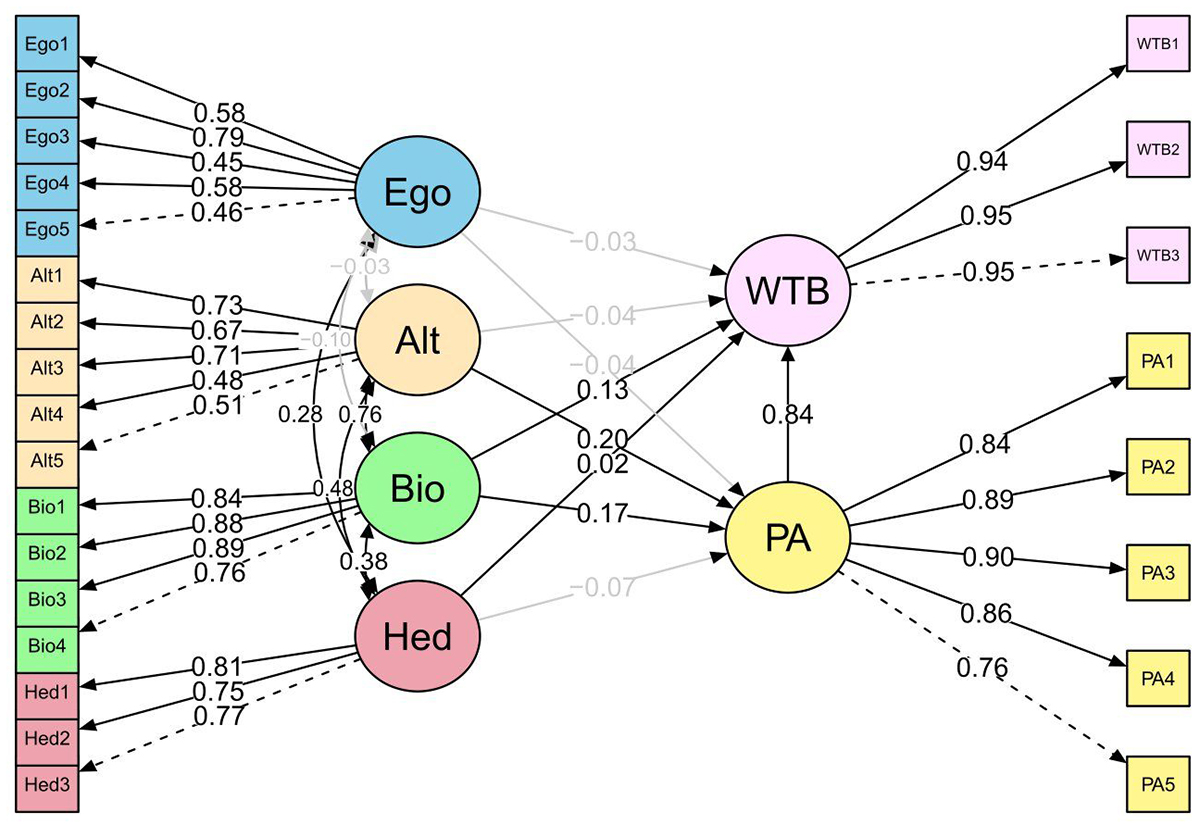
The SEM (Structural Equation Modeling) for the purchase variables was executed with 682 valid responses, and it demonstrated an acceptable fit (χ2 = 751.4, df = 260, RMSEA = 0.065, CFI = 0.93, TLI = 0.92). Most of the indicators showed high standardized factor loadings on the latent variable, suggesting strong convergent validity. The factor loadings were above 0.7 for all latent variables except Egoistic values (ranging from 0.45 to 0.786) and Altruistic Values (0.477 to 0.728). Biospheric Values had factor loadings ranging from 0.762 to 0.888, a similar pattern to what was found for Hedonic Values (0.753 to 0.814). The factor loadings for the Purchase Attitudes Scale varied from 0.758 to 0.898. In case of Willingness to Buy Scale, they varied from 0.939 to 0.951.
We found evidence supporting both H1 and H2. Self-transcendence values, including altruistic and biospheric, influenced purchase attitudes, as shown in Figure 2. However, among the values studied, only biospheric values had a direct effect on the willingness to purchase WFPs. Additionally, purchase attitudes had a strong influence on the willingness to buy. Thus, while biospheric values positively impact willingness to buy both directly and indirectly, altruistic values only had an indirect influence, mediated by purchase attitudes.
Path diagram indicating the direct and indirect influence of human values on the willingness to buy wild food plants in Brazil, with a sample of 682 undergraduate students. Grey lines indicate non-significant relations (p>0.05). Hed = hedonic values, Bio = biospheric values, Alt = altruistic values, Ego = egoistic values, PA = purchase attitudes, WTB = willingness to buy.
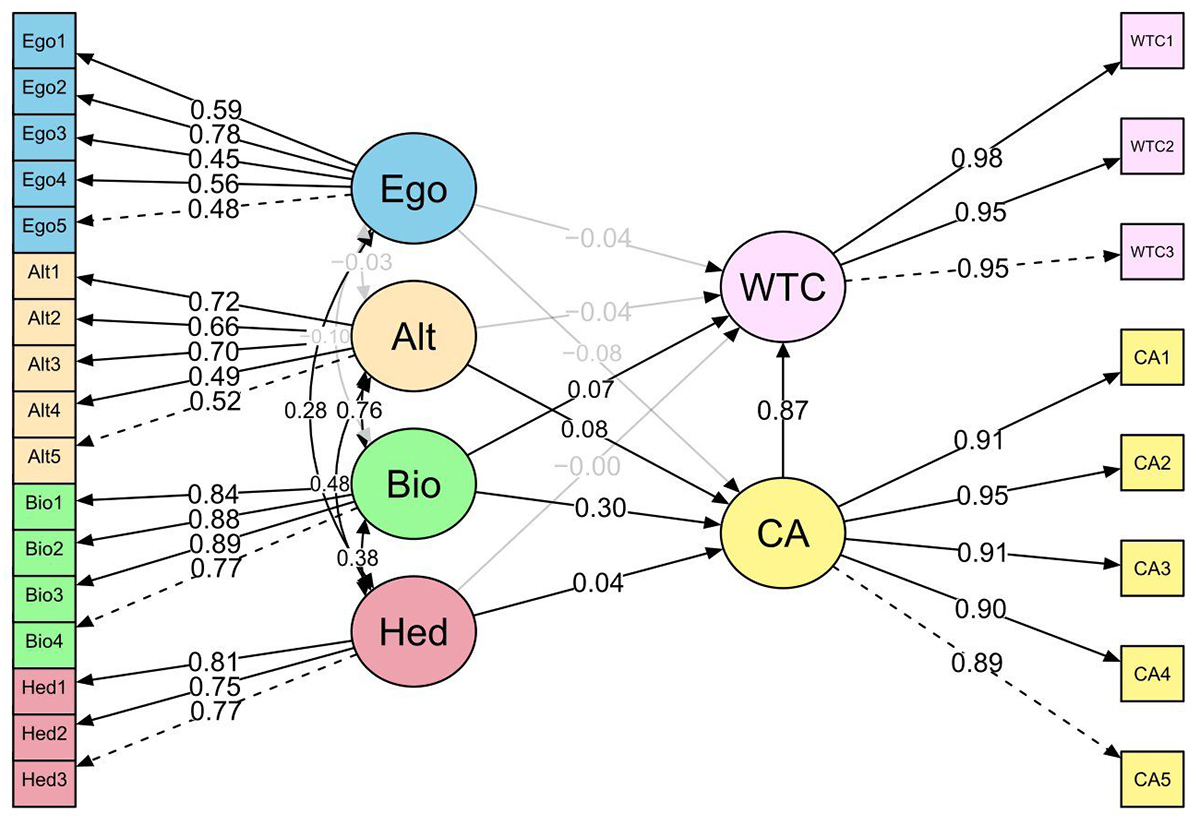
The SEM for consumption variables was generated with 682 valid responses, and it also showed an acceptable fit (χ2 = 814.9, df = 260, RMSEA = 0.077, CFI = 0.92, TLI = 0.91). Most of the indicators showed high standardized factor loadings on the latent variable, suggesting strong convergent validity. The factor loadings were above 0.7 for all latent variables except Egoistic values (ranging from 0.454 to 0.776) and Altruistic Values (0.454 to 0.724). Biospheric Values had factor loadings ranging from 0.767 to 0.893, a similar pattern to what was found for Hedonic Values (0.751 to 0.814). The factor loadings for the Consumption Attitudes Scale varied from 0.89 to 0.948. In the case of the Willingness to Consume Scale, they varied from 0.95 to 0.977. Although no values directly affected willingness to consume, biospheric values did influence consumption attitudes, which in turn affected the willingness to consume (Figure 3).
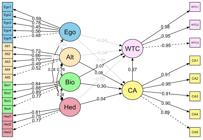
Path diagram indicating the direct and indirect influence of human values on the willingness to consume wild food plants in Brazil, with a sample of 682 undergraduate students. Grey lines indicate non-significant relations (p>0.05). Hed = hedonic values, Bio = biospheric values, Alt = altruistic values, Ego = egoistic values, CA = consumption attitudes, WTC = willingness to consume.
The complete results of the SEM analysis are provided in Supplementary Material 5.
Study 2
Descriptive results
For study 2, a total of 514 valid responses were received, of which 33.27 % were from men, 64.79 % from women, and 1.94 % from another gender identity. We received answers from 97 different institutions, in all Brazilian regions.
The average age of the participants was 26.1 years. Similarly to study 1, most respondents were young people (18-28 years old) with low family income (up to 3000 Brazilian Real) and left-wing oriented (Table 4). Furthermore, 48.8 % of people had already heard the term WFP, and 51.2 % of respondents had not heard of that term. Finally, in the open question about participants’ views on WFPs consumption, 54.9 % of participants did not mention any benefit. 45.1 % mentioned nutritional (17.3 %), social (14.4 %), economic (5.4 %), ecological (8 %), health (18 %), and hedonic (0.6 %) benefits. As the question was open-ended, some participants mentioned more than one benefit.
Results of the statistical analyses (SEM for study 1 and Kruskal-Wallis or Dunn test for study 2) showing whether there is evidence to support the tested hypotheses. As attitudes and behavioral intentions are multiple and diverse, we considered as evidence even when only one of the models (purchase or consumption) had significant findings.
Hypothesis testing
The Principal Component Analysis was performed on the 514 valid responses. Our principal component for purchase attitudes was able to explain a large proportion of the total variance (0.60). The same was true for the components generated for willingness to buy (0.82), consumption attitudes (0.73), and willingness to consume (0.87).
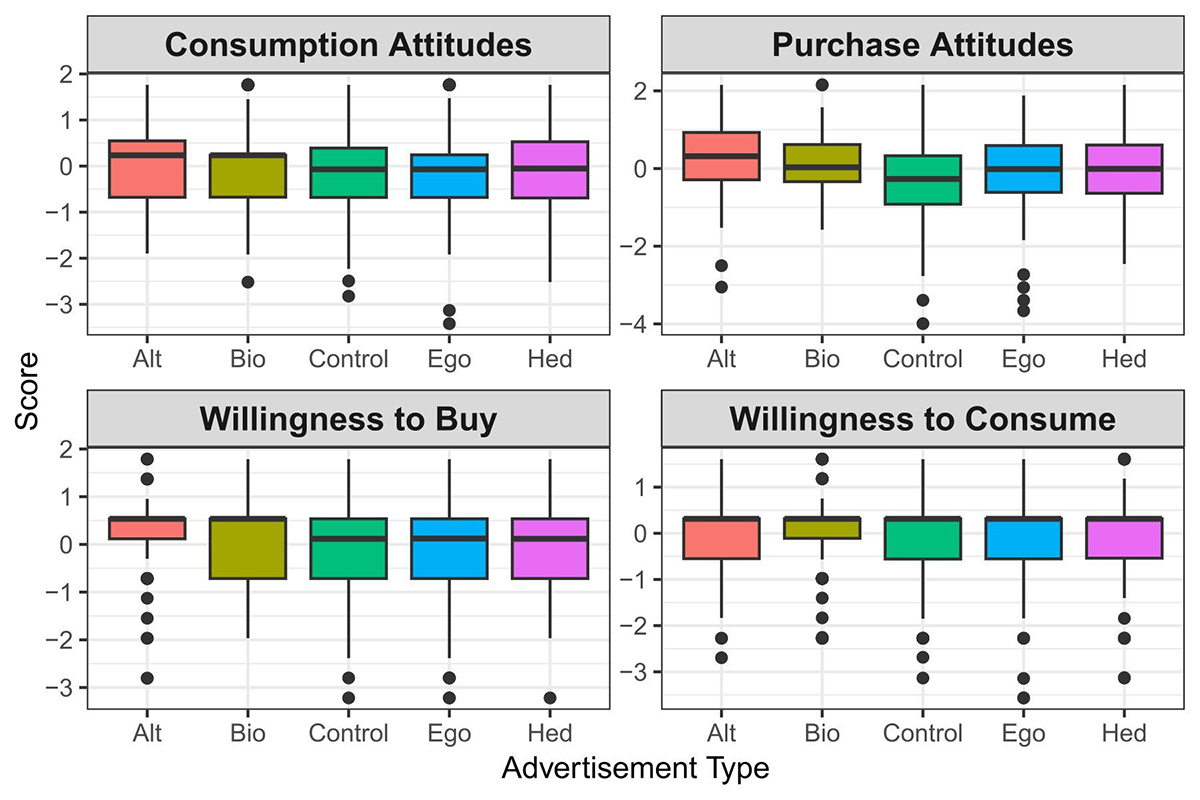
We found evidence supporting H3, but not H4. Significant differences were observed in purchase attitudes among the various advertisements (Kruskal-Wallis χ2 = 21.31; p < 0.001). Altruistic value-related advertisements (social advertisements) resulted in significantly higher purchase attitude scores compared to the control advertisements (Dunn’s test = 4.34; p < 0.001). Advertisements related to biospheric, egoistic, and hedonic values did not show significant differences from the control advertisements (p > 0.05) (Figure 4).
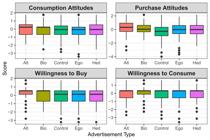
A similar pattern emerged for willingness to buy, with significant differences among the advertisements (Kruskal-Wallis χ2 = 15.21; p < 0.001). Only those advertisements related to altruistic values yielded higher scores when compared with the control advertisements (Dunn's test = 3.48; p < 0.01) (Figure 4).
Pieces of advertising with positive information did not influence either the consumption attitudes (χ2 = 1.55; p>0.05) or the willingness to consume (χ2 = 1.18; p>0.05).
The complete results of the analysis are provided in Supplementary Material 6.
Table 5 synthesizes the results for the analyses and the outcome for hypothesis testing for both study 1 and study 2.
Discussion
Our results led to the following observations: a) altruistic values indirectly influence the willingness to buy WFPs, whereas biospheric values have a significant direct and indirect impact, mediated by attitudes toward WFPs. b) The willingness to consume WFPs is not directly affected by values but is influenced by attitudes. c) Pieces of basic advertisement emphasizing social benefits that align with altruistic values significantly increase the willingness to buy WFPs, yet do not affect the willingness to consume them. Considering interdisciplinarity as one of the aims of Phase 5 of Ethnobiology (Nabhan et al., 2011; Wolverton, 2013), these conclusions allow us to say that we could advance on WFPs Ethnobotany studies as we used not only the Consumer Behavior approach as other authors have done (Težak Damijanić et al., 2024; Torrico et al., 2023), but also we combined Personal Values and Advertisement frameworks. That was possible using modelling methods centered on the consumer, as Poulain (2021) recommends. The use of such approaches permitted progress on practical aspects, as is explained subsequently.
Egoistic and hedonic values did not explain behavioral intentions toward WFP, and advertisements targeting the activation of these values were also not effective. This result suggests that, for most participants, aspects like “being healthy” or "having a good time" are not leading people towards WFPs consumption. It is possible that the group of people who seek to “eat healthy” may already have other preferred healthy foods, or they do not associate WFPs with the healthy label.
As previous studies have shown the influence of self-enhancement values on attitudes, behavioral intentions, or behaviors toward organic food (Bouman et al., 2018; Yadav, 2016), as well as the influence of health advertisement (Bullock et al., 2017), an effective way to boost WFPs consumption could be their contextual association with organics. WFPs in Brazil are commonly sold in organic fairs, and their in-situ management often meets the conditions for a product to be considered organic (Medeiros et al., 2021b), which could make such an association easier. However, its effectiveness needs to be tested in future investigations.
The results of this study align with studies that associate self-transcendence values with sustainable consumption across the Global South. For example, in a cross-cultural study about sustainable consumption between the United States, Switzerland, and India, Indian consumers (Global South consumers) indicated altruistic and biospheric values, whereas people from the United States and Switzerland pointed out egoistic values (Diwanji et al., 2024). Self-transcendence values influence organic and sustainable food consumption (Arbit et al., 2017; Nguyen et al., 2024), which is aligned with our results, which showed that self-transcendence values do indeed influence behavioral intentions toward WFPs in Brazil.
Our results stand in contrast to the open-ended responses, where few mentioned the environmental or social benefits of WFPs. This dichotomy, along with the effectiveness of the social advertisements, indicates there is considerable scope to expand WFPs consumption by activating altruistic values in potential consumers.
While biospheric values emerged as key predictors of behavioral intentions toward WFPs, environmental advertisements did not effectively activate these values. This contrasts with studies showing the impact of green advertising (Nabilla, 2019). The lack of awareness or certainty about WFPs' environmental benefits among many respondents suggests there is a potential to be explored in terms of communicating such benefits. It is possible that our chosen advertisement strategies may not have optimally activated biospheric values. Hence, exploring new green advertising methods, particularly those addressing concerns about unsustainable harvesting, is recommended. Sharing sustainable management practices by communities and cooperatives might be an effective approach.
The distinction between willingness to buy (WTB) and willingness to consume (WTC) unveiled a notable trend. Altruistic values had an indirect impact on WTB, but this relationship was absent for WTC. Likewise, although social advertisements affected WTB, they did not influence WTC. This result can be explained by the fact that the consumption of WFPs benefits local harvesters and farmers primarily through purchasing. Therefore, individuals with strong altruistic values may not necessarily feel inclined to consume WFPs in situations where such consumption does not lead to a social benefit.
These results highlight the critical role of value-driven advertising in promoting the purchase of WFPs. The study pioneers the examination of the interplay between values, advertising, and behavioral intentions in the context of WFPs consumption in Brazil, which boasts rich biodiversity and significant potential for dietary diversification through WFPs.
Recently, social media platforms have made advertising affordable for small sellers (Chen & Guo, 2022). Therefore, individuals and collective groups of farmers may incorporate advertisement strategies focused on such values, especially the altruistic. The strategies must consider not only the content of the advertising pieces but also public targeting strategies in accordance with data-driven marketing communication of social media platforms (Lee & Cho, 2020). For instance, some social media platforms allow programmatic advertising based on users’ interests, and interests connected to self-transcendence values can be mapped to be employed as a segmentation criterion.
Our results can be applied to the food industry to encourage the consumption of wild food plants. However, marketers should carefully investigate and monitor information regarding the benefits of WFPs consumption, as well as details about their origin and production. This is essential to prevent greenwashing practices that promote products with questionable benefits or irregular origins. Examples of misleading claims associated with value categories include: in the biospheric category, claiming certified extraction when the products were illegally sourced-through unauthorized harvesting, transport, production, or sale; in the altruistic/social category, stating that the benefits were shared with local communities when no such collaboration occurred; in the egoistic category, providing false or exaggerated nutritional information; and in the hedonic category, promoting a pleasant sensory experience when the actual taste, texture, or overall experience is unpleasant.
Additionally, professionals providing dietary advice (such as nutritionists) may benefit from these conclusions as they could create personalized plans mentioning one or another benefit of WFPs consumption depending on the person’s personal values segment (egoistic, altruistic, biospheric, or hedonic). Nutritionists could ally with gatherers, family farmers, and producers, as well as with specialties such as Agricultural Sciences, Education, Social Sciences, Ecology, Biology, Gastronomy, and Public Management, to obtain more assertive information about the benefits of WFPs species. The information provided to every single patient will be aligned with their values profile. Nutritionists could also collaborate with marketers and other professionals to generate advertisement strategies with a theoretical basis that serve public programs directed to promote WFPs consumption on a national level. All those recommendations could play a key role in the effectiveness of nutritional interventions and ensure their successful application in real-world food choice environments. Following Ceylão and Recine (2014) and Jacob and Araújo (2020), nutritionists’ capacities previously mentioned, including the ability to know consumer values related to behaviors to promote local biodiverse food consumption, are fundamental to achieving Sustainable Food Systems.
Organizations and cooperatives involved in the harvesting of WFPs stand to gain from investing in advertising to boost product demand. Advertising strategies can be pivotal for local communities and small-scale farmers/harvesters in crafting and sharing a sense of identity tied to either a physical or symbolic territory (Silva & Fuser, 2018). Although these strategies are not commonly seen in the WFPs market in Brazil, there is a growing movement among communities, associations, cooperatives, and agribusinesses to use social media to enhance the social value of their work (Liberato, 2014; Silva & Fuser, 2018). These historically marginalized groups are becoming more organized and are using alternative communication strategies (Liberato, 2014). Thus, incorporating effective social advertising and expanding its reach are key strategies for development. The study has some limitations.
Our findings are based on a convenience sample of undergraduate students, which does not reflect the broader Brazilian population. There could be different results from more diverse or older demographics, including the socioeconomic heterogeneity factor. Hence, future research should either target various segments within Brazil or aim for a nationally representative sample to enhance the generalizability of the findings.
Additionally, given that only a part of the students who received the invitation filled out the form, it is possible that our sampling procedure created an interest bias, as individuals who are more interested in WFPs would be more likely to participate.
Furthermore, a limitation of our study may be associated with a high number of people unfamiliar with the term “WFP” (people who have never even heard of the term, and who only knew the term at the time it was presented at the beginning of the questionnaire), which may lead to inconsistent responses and generate some bias in the data collected and results.
In this study, it was necessary to select some of the statements from previously validated scales and then bring them to the context of the WFPs to better define and capture the constructs related to our investigation. The scales themselves have not undergone any modifications, and we carried out pilot tests of the questionnaire with laboratory members who were not authors of this article. However, we did not perform validation tests for our scales, so we recommend that future studies include this further step.
Another limitation is that we did not include actual purchase/consumption in our models, opting instead to include the willingness to buy/consume. Although behavioral intention is considered an immediate predecessor of the behavior, there may be an intention-behavior gap. Therefore, our research was not able to explain the behavior itself.
In study 2, we were not able to address the effects of Advertisement Creativity (AC). Our results, then, imply that some values could be activated by basic pieces of advertising containing positive information on wild food plants, while other values could not be activated by the same advertising strategy. Future research could benefit from testing the effects of different advertising creativity and graphic design strategies in the activation of the human values considered for this research.
Supplementary Material
The following online material is available for this article:
Supplementary Material 1:
Supplementary Material 2:
Supplementary Material 3:
Supplementary Material 4:
Supplementary Material 5:
Supplementary Material 6:
Acknowledgments
The authors thank the members of the Laboratory of Biocultural Ecology, Conservation and Evolution (LECEB) for the discussions that led to the improvement of the manuscript.
References
-
Arbit N, Ruby MB, Sproesser G, Renner B, Schupp H, Rozin P. 2017. Spheres of moral concern, moral engagement, and food choice in the USA and Germany. Food Quality and Preference 62: 38-45. doi: 10.1016/j.foodqual.2017.06.018
» https://doi.org/10.1016/j.foodqual.2017.06.018 -
Bacchetta L, Visioli F, Cappelli G et al 2016. A manifesto for the valorization of wild edible plants. Journal of Ethnopharmacology 191: 180-187. doi: 10.1016/j.jep.2016.05.061
» https://doi.org/10.1016/j.jep.2016.05.061 -
Birch D, Memery J, De Silva Kanakaratne M. 2018. The mindful consumer: Balancing egoistic and altruistic motivations to purchase local food. Journal of Retailing and Consumer Services 40: 221-228. doi: 10.1016/j.jretconser.2017.10.013
» https://doi.org/10.1016/j.jretconser.2017.10.013 -
Bouman T, Steg L, Kiers HAL. 2018. Measuring Values in Environmental Research: A Test of an Environmental Portrait Value Questionnaire. Frontiers in Psychology 9: 564. doi: 10.3389/fpsyg.2018.00564
» https://doi.org/10.3389/fpsyg.2018.00564 -
Bullock G, Johnson C, Southwell B. 2017. Activating values to stimulate organic food purchases: Can advertisements increase pro-environmental intentions? Journal of Consumer Marketing 34: 427-441. doi: 10.1108/JCM-12-2015-1643
» https://doi.org/10.1108/JCM-12-2015-1643 - Carvalho AM, Barata AM. 2016. The Consumption of Wild Edible Plants. In: Ferreira ICFR, Morales P, Barros L (eds.). Wild Plants, Mushrooms and Nuts, Wiley. p. 159-198.
-
Ceylão C, Recine E. 2014. A atuação profissional do nutricionista no contexto da sustentabilidade. DEMETRA: Alimentação, Nutrição & Saúde 9: 121-136. doi: 10.12957/demetra.2014.6246
» https://doi.org/10.12957/demetra.2014.6246 -
Chen J, Guo Z. 2022. New-media advertising and retail platform openness. MIS Quarterly 46: 431-456. doi: 10.25300/MISQ/2022/15420
» https://doi.org/10.25300/MISQ/2022/15420 -
De Groot JIM, Steg L. 2007. Value orientations and environmental beliefs in five countries: Validity of an instrument to measure egoistic, altruistic and biospheric value orientations. Journal of Cross-Cultural Psychology 38: 318-332. doi: 10.1177/0022022107300278
» https://doi.org/10.1177/0022022107300278 -
Delang CO. 2006. The role of wild food plants in poverty alleviation and biodiversity conservation in tropical countries. Progress in Development Studies 6: 275-286. doi: 10.1191/1464993406ps143oa
» https://doi.org/10.1191/1464993406ps143oa -
Diwanji VS, Baines AF, Bauer F, Clark K. 2024. Green consumerism: A cross-cultural linguistic and sentiment analysis of sustainable consumption discourse on Twitter (X). Journal of Current Issues & Research in Advertising 45: 476-505. doi: 10.1080/10641734.2024.2318705
» https://doi.org/10.1080/10641734.2024.2318705 - Evans M. 1993. Conservation by commercialization. In: Hladik CM, Hladik A, Linares OF, Pagezy H, Semple A, Hadley M (eds.). Tropical forests, people and food: Biocultural interactions and applications to development. Paris, UNESCO/Parthenon Publishing Group. p. 815-822.
-
FAO. 2017. Voluntary guidelines for the conservation and sustainable use of crop wild relatives and wild food plants. Rome, Food and Agriculture Organization of the United Nations. doi: 10.18356/77e996d1-en
» https://doi.org/10.18356/77e996d1-en -
FAO. 2019. Drivers of change of biodiversity for food and agriculture. In: Bélanger J, Pilling D (eds.). The state of the world’s biodiversity for food and agriculture. Rome, FAO Commission on Genetic Resources for Food and Agriculture Assessments. p. 65-111. doi: 10.1007/978-3-030-69139-4_1
» https://doi.org/10.1007/978-3-030-69139-4_1 -
Feil AA, da Silva-Cyrne CC, Wiebusch-Sindelar FC, Barden JE, Dalmoro M. 2020. Profiles of sustainable food consumption: Consumer behavior toward organic food in southern region of Brazil. Journal of Cleaner Production 258: 120690. doi: 10.1016/j.jclepro.2020.120690
» https://doi.org/10.1016/j.jclepro.2020.120690 -
Ghorbani A, Langenberger G, Sauerborn J. 2012. A comparison of the wild food plant use knowledge of ethnic minorities in Naban River Watershed National Nature Reserve, Yunnan, SW China. Journal of Ethnobiology and Ethnomedicine 8: 17. doi: 10.1186/1746-4269-8-17
» https://doi.org/10.1186/1746-4269-8-17 -
Gomes SM, Chaves VM, de Carvalho AM et al 2023. Biodiversity is overlooked in the diets of different social groups in Brazil. Scientific Reports 13: 7509. doi: 10.1038/s41598-023-34543-8
» https://doi.org/10.1038/s41598-023-34543-8 -
Hahnel UJJ, Ortmann C, Korcaj L, Spada H. 2014. What is green worth to you? Activating environmental values lowers price sensitivity towards electric vehicles. Journal of Environmental Psychology 40: 306-319. doi: 10.1016/j.jenvp.2014.08.002
» https://doi.org/10.1016/j.jenvp.2014.08.002 -
Hamad EM, Salih NKE, Gibreel HH. 2024. Traditional use of Wild Edible Plants in Babanosa and Lagawa Districts, West Kordofan State, Sudan. Human Ecology 52: 31-40. doi: 10.1007/s10745-024-00475-8
» https://doi.org/10.1007/s10745-024-00475-8 -
Homer PM, Kahle LR. 1988. A structural equation test of the value-attitude-behavior hierarchy. Journal of Personality and Social Psychology 54: 638-646. doi: 10.1037/0022-3514.54.4.638
» https://doi.org/10.1037/0022-3514.54.4.638 -
Hooper D, Coughlan J, Mullen MR. 2008. Structural equation modelling: Guidelines for determining model fit. Electronic Journal of Business Research Methods 6: 53-60. doi: 10.21427/D79B73
» https://doi.org/10.21427/D79B73 -
Hoppe A, Barcellos MDD, Vieira LM, Matos CAD. 2012. Comportamento do consumidor de produtos orgânicos: Uma aplicação da teoria do comportamento planejado. BASE - Revista de Administração e Contabilidade da Unisinos 9: 174-188. doi: 10.4013/base.2012.92.06
» https://doi.org/10.4013/base.2012.92.06 -
Iwaya GH, Steil AV, Cuffa D. 2021. Intenção de compra de alimentos orgânicos: Evidências de validade da Teoria do Comportamento Planejado. Amazônia, Organizações e Sustentabilidade 10: 304. doi: 10.17648/aos.v10i2.2410
» https://doi.org/10.17648/aos.v10i2.2410 -
Jacob MCM, Araújo FRD. 2020. Desenvolvimento de competências para Nutrição no contexto de Sistemas Alimentares Sustentáveis. Ciência & Saúde Coletiva 25: 4369-4378. doi: 10.1590/1413-812320202511.31652018
» https://doi.org/10.1590/1413-812320202511.31652018 -
Jacob MCM, Chaves VM, Rocha C. 2021. Biodiversity towards Sustainable Food Systems: Four arguments. In: Jacob MCM, Albuquerque UP (eds.). Local Food Plants of Brazil. Ethnobiology. Springer, Cham. p. 3-18. doi: 10.1007/978-3-030-69139-4_1
» https://doi.org/10.1007/978-3-030-69139-4_1 -
Kalle R, Sõukand R. 2016. Current and remembered past uses of Wild Food Plants in Saaremaa, Estonia: Changes in the context of unlearning debt. Economic Botany 70: 235-253. doi: 10.1007/s12231-016-9355-x
» https://doi.org/10.1007/s12231-016-9355-x -
Kmiecik L, Souza Lucca A. 2020. Recomendações para a valorização da biodiversidade local a partir das plantas alimentícias não convencionais em hortas comunitárias urbanas. Revista Gestão & Sustentabilidade Ambiental 9: 898. doi: 10.19177/rgsa.v9e02020898-917
» https://doi.org/10.19177/rgsa.v9e02020898-917 -
Lee H, Cho CH. 2020. Digital advertising: Present and future prospects. International Journal of Advertising 39: 332-341. doi: 10.1080/02650487.2019.1642015
» https://doi.org/10.1080/02650487.2019.1642015 -
Lehtinen U. 2012. Sustainability and local food procurement: A case study of Finnish public catering. British Food Journal 114: 1053-1071. doi: 10.1108/00070701211252048
» https://doi.org/10.1108/00070701211252048 - Liberato RSB. 2014. Comunicação e cidadania: Ecos de um plano de comunicação para comunidades sergipanas. Razón y Palabra 86: 1-19.
-
Lins-Gomes D, dos Santos Ferreira RP, da Costa Santos ÉM, Vasconcelos da Silva RR, Medeiros PM. 2020. Local criteria for the selection of wild food plants for consumption and sale in Alagoas, Brazil. Ethnobiology and Conservation 9. doi: 10.15451/ec2020-04-9.10-1-15
» https://doi.org/10.15451/ec2020-04-9.10-1-15 -
Łuczaj Ł, Lamxay V, Tongchan K et al 2021. Wild food plants and fungi sold in the markets of Luang Prabang, Lao PDR. Journal of Ethnobiology and Ethnomedicine 17: 6. doi: 10.1186/s13002-020-00423-y
» https://doi.org/10.1186/s13002-020-00423-y -
Medeiros PM, Barbosa DM, dos Santos GMC, da Silva RRV. 2021a. Wild Food Plant popularization and biocultural conservation: Challenges and perspectives. In: Jacob MCM, Albuquerque UP (eds.). Local Food Plants of Brazil. Ethnobiology. Cham, Springer. p. 341-349. doi: 10.1007/978-3-030-69139-4_16
» https://doi.org/10.1007/978-3-030-69139-4_16 -
Medeiros PM, Santos GMC, Barbosa DM, Gomes LCA, da Costa Santos ÉM, Silva RRV. 2021b. Local knowledge as a tool for prospecting wild food plants: Experiences in northeastern Brazil. Scientific Reports 11: 594. doi: 10.1038/s41598-020-79835-5
» https://doi.org/10.1038/s41598-020-79835-5 -
Nabilla F. 2019. Advertising Attitude, Green Purchase Intention and Environmental Concern: Promoting Functional Versus Emotional Appeals. International Journal of Business and Administrative Studies 5: 199-223. doi: 10.20469/ijbas.5.10003-4
» https://doi.org/10.20469/ijbas.5.10003-4 -
Nabhan GP, Wyndham F, Lepofsky D. 2011. Ethnobiology for a diverse World Ethnobiology emerging from a time of crisis. Journal of Ethnobiology 31: 172-175. doi: 10.2993/0278-0771-31.2.172
» https://doi.org/10.2993/0278-0771-31.2.172 -
Nguyen HV, Thanh Do L, Thu Le MT. 2024. From environmental values to pro-environmental consumption behaviors: The moderating role of environmental information. Current Psychology 43: 3607-3620. doi: 10.1007/s12144-023-04569-2
» https://doi.org/10.1007/s12144-023-04569-2 -
Pieroni A. 1999. Gathered wild food plants in the upper valley of the Serchio River (Garfagnana), Central Italy. Economic Botany 53: 327-341. doi: 10.1007/BF02866645
» https://doi.org/10.1007/BF02866645 -
Poulain JP. 2021. Biodiversity, Ethno-diversity and Food Cultures: Towards more sustainable Food Systems and diet. In Jacob MCM, Albuquerque UP (eds.). Local Food Plants of Brazil. p. 19-28. Springer International Publishing. doi: 10.1007/978-3-030-69139-4_2
» https://doi.org/10.1007/978-3-030-69139-4_2 -
Rana J, Paul J. 2017. Consumer behavior and purchase intention for organic food: A review and research agenda. Journal of Retailing and Consumer Services 38: 157-165. doi: 10.1016/j.jretconser.2017.06.004
» https://doi.org/10.1016/j.jretconser.2017.06.004 - Rokeach M. 1973. The nature of human values. New York, Free Press.
-
Rosengren S, Eisend M, Koslow S, Dahlen M. 2020. A Meta-Analysis of when and how advertising creativity works. Journal of Marketing 84: 39-56. doi: 10.1177/0022242920929288
» https://doi.org/10.1177/0022242920929288 -
Schunko C, Vogl CR. 2020. Factors determining organic consumers’ knowledge and practices with respect to wild plant foods: A countrywide study in Austria. Food Quality and Preference 82: 103868. doi: 10.1016/j.foodqual.2019.103868
» https://doi.org/10.1016/j.foodqual.2019.103868 -
Schwartz SH. 1992. Universals in the content and structure of values: Theoretical advances and empirical tests in 20 Countries. Advances in Experimental Social Psychology 25: 1-65. doi: 10.1016/S0065-2601(08)60281-6
» https://doi.org/10.1016/S0065-2601(08)60281-6 -
Schwartz SH, Cieciuch J, Vecchione M et al 2012. Refining the theory of basic individual values. Journal of Personality and Social Psychology 103: 663-688. doi: 10.1037/a0029393
» https://doi.org/10.1037/a0029393 -
Silva RRV, Medeiros PM, Gomes DL. 2021. Potentials of value chains of Unconventional Food Plants in Brazil. In: Jacob MCM, Albuquerque UP (eds.). Local Food Plants of Brazil. Cham, Springer International Publishing. p. 351-360. doi: 10.1007/978-3-030-69139-4_17
» https://doi.org/10.1007/978-3-030-69139-4_17 - Silva SA, Fuser B. 2018. Publicidade Social e o MST: novas práticas na ampliação do apoio à agricultura familiar e agroecologia. In: XIII Conferência Brasileira de Comunicação Cidadã, from 21st november to 23rd november 2018, São Luís. p. 1-14.
-
Snelgar RS. 2006. Egoistic, altruistic, and biospheric environmental concerns: Measurement and structure. Journal of Environmental Psychology 26: 87-99. doi: 10.1016/j.jenvp.2006.06.003
» https://doi.org/10.1016/j.jenvp.2006.06.003 -
Steg L, De Groot JIM. 2012. Environmental values. In: Clayton SD (ed.). The Oxford Handbook of Environmental and Conservation Psychology. Oxford, Oxford University Press. p. 81-92. doi: 10.1093/oxfordhb/9780199733026.001.0001
» https://doi.org/10.1093/oxfordhb/9780199733026.001.0001 -
Steg L, Perlaviciute G, Van Der Werff E, Lurvink J. 2014. The significance of hedonic values for environmentally relevant attitudes, preferences, and actions. Environment and Behavior 46: 163-192. doi: 10.1177/0013916512454730
» https://doi.org/10.1177/0013916512454730 -
Težak Damijanić A, Čehić Marić A, Oplanić M. 2024. Psychological factors influencing willingness to purchase Wild-Edible Plants and food products from Wild-Edible Plants. Agriculture 14: 1856. doi: 10.3390/agriculture14111856
» https://doi.org/10.3390/agriculture14111856 -
Torrico DD, Nie X, Lukito D, Deb-Choudhury S, Hutchings SC, Realini CE. 2023. Consumer attitudes and acceptability toward edible New Zealand native plants. Sustainability 15: 11592. doi: 10.3390/su151511592
» https://doi.org/10.3390/su151511592 -
Vicario BA, Liddle BJ, Luzzo DA. 2005. The role of values in understanding attitudes toward lesbians and gay men. Journal of Homosexuality 49: 145-159. doi: 10.1300/J082v49n01_07
» https://doi.org/10.1300/J082v49n01_07 -
Wang J, Dang W, Hui W, Muqiang Z, Qi W. 2021. Investigating the effects of intrinsic motivation and emotional appeals into the link between organic appeals advertisement and purchase intention toward organic milk. Frontiers in Psychology 12: 679611. doi: 10.3389/fpsyg.2021.679611
» https://doi.org/10.3389/fpsyg.2021.679611 -
Wolverton S. 2013. Ethnobiology 5: Interdisciplinarity in an Era of rapid environmental change. Ethnobiology Letters 4: 21-25. doi: 10.14237/ebl.4.2013.11
» https://doi.org/10.14237/ebl.4.2013.11 -
Yadav R. 2016. Altruistic or egoistic: Which value promotes organic food consumption among young consumers? A study in the context of a developing nation. Journal of Retailing and Consumer Services 33: 92-97. doi: 10.1016/j.jretconser.2016.08.008
» https://doi.org/10.1016/j.jretconser.2016.08.008
-
Data Availability
No new data were created or analyzed in this study. Data sharing does not apply to this article.
-
Funding Information
This study obtained funding from National Council for Scientific and Technological Development (CNPq) (productivity grant to PPM2, no. 304866/2020-2), Research Support Foundation of the State of Alagoas (FAPEAL) (Granted to PPM2, no. APQ2022021000027), and L’Oréal (Granted to PMM, International Rising Talents Awards).
No new data were created or analyzed in this study. Data sharing does not apply to this article.