 Use of dupilumab in the management of refractory prurigo nodularis in an immunosuppressed double transplanted patient
Dear Editor,
Prurigo nodularis is a chronic inflammatory dermatosis cha-racterized by intensely pruritic nodules. Its pathophysiology involves a complex neuro-immunological interaction, with a Th2-type inflammatory response and neurogenic media-tors such as substance P.1,2 Its management is complex, and conventional treatments are often insufficient to control pruritus and lesions.3
There is evidence that immunosuppression, whether due to underlying diseases or specific treatments, may be asso-ciated with the onset of prurigo nodularis, although the relationship is neither exclusive nor pathognomonic.1 How-ever, while there are new therapies for nodular prurigo, including the use of dupilumab, immunosuppressed patients have been systematically excluded from clinical trials eval-uating them.
We present the case of a double transplant recipient and immunosuppressed patient with refractory prurigo nodularis who was successfully treated with dupilumab.
A 71-year-old male patient with a history of type 1 dia-betes mellitus and chronic kidney disease due to diabetic nephropathy. He underwent a double kidney and pancreas transplant and has been on immunosuppressive treatment since 2005, currently with tacrolimus 3 mg every 12-hs and prednisone 10 mg every 24-hs.
His last hospitalization was due to septic shock of gastrointestinal origin, where he developed a purpuric vesicular-bullous rash predominantly on the trunk and extremities, consistent with septic vasculitis due to Strep-tococcus pyogenes with skin involvement. An antibiotic regimen with ceftriaxone was completed, and multiple sur-gical cleanings and escharectomies were performed for necrotic lesions. After resolution of the condition, the patient was discharged with dermatology follow-up.
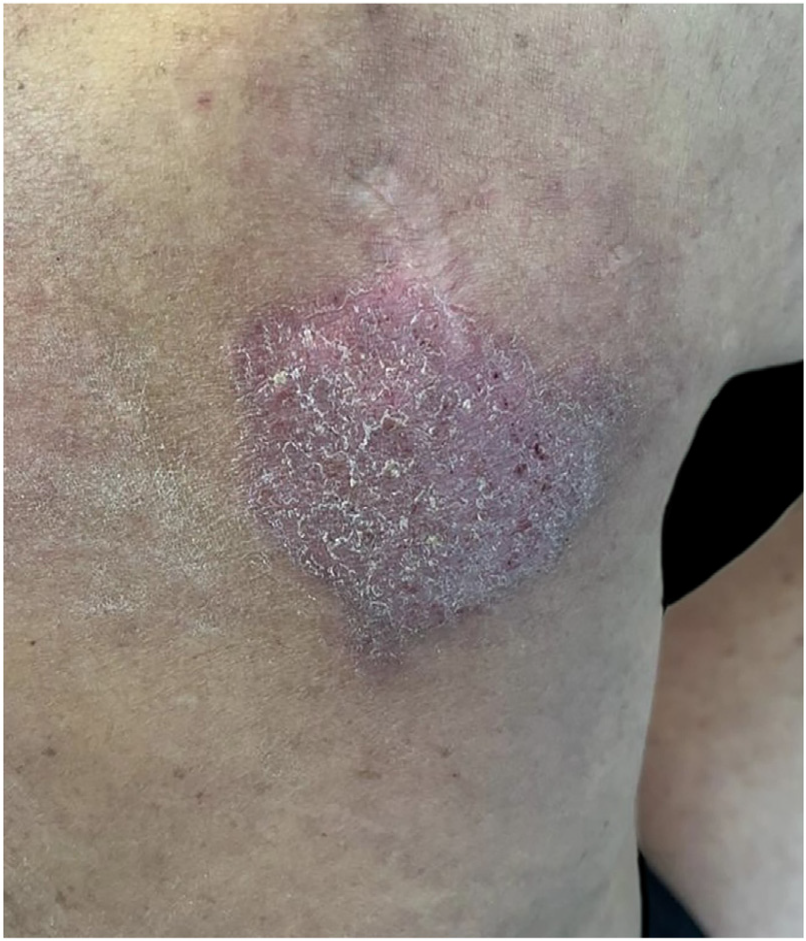
One month after discharge, well-defined, pruritic, rounded erythematous skin lesions were observed on the right shoulder and back, consistent with nummular eczema (Fig. 1). General measures and treatment with topical corti-costeroids and antibiotics were indicated. One month later, the lesions became more hypertrophic and widespread, involving the abdomen and chest, associated with intense pruritus that interrupted sleep. Given the progression of the condition, systemic therapy with prednisone was ini-tiated, and a skin biopsy was requested, which revealed drug-induced spongiotic dermatitis.
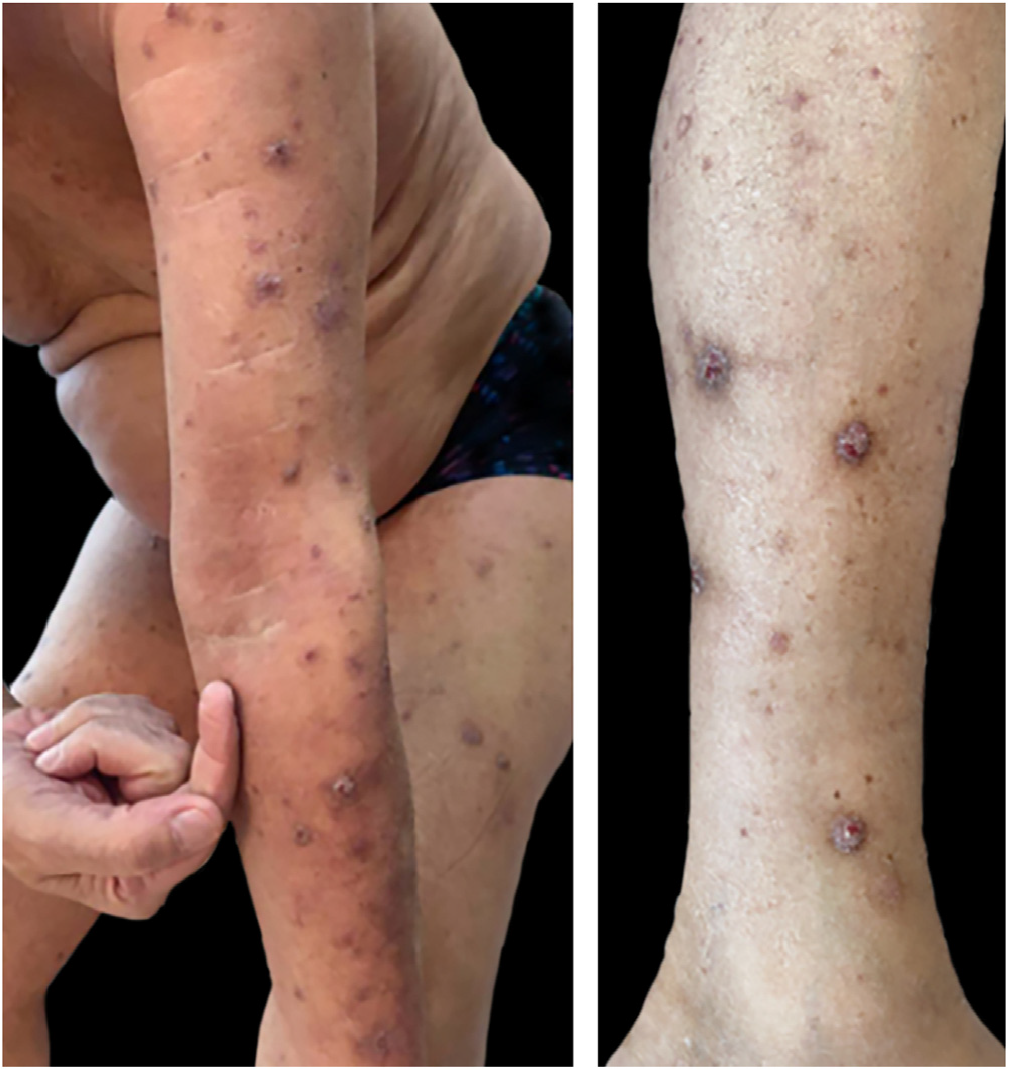
He subsequently continued with partial improvement of symptoms, with the addition of indurated erythematous-violaceous nodules on the anterior aspect of both arms (Fig. 2). A diagnosis of nodular prurigo associated with severe, extensive nummular eczema was established, and therapy was adjusted. Despite multiple topical and systemic therapeutic strategies and phototherapy, he persisted with-out clinical improvement.
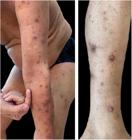
Prurigo nodularis. Indurated, erythematous-violaceous nodules on the anterior aspect of both arms and legs.
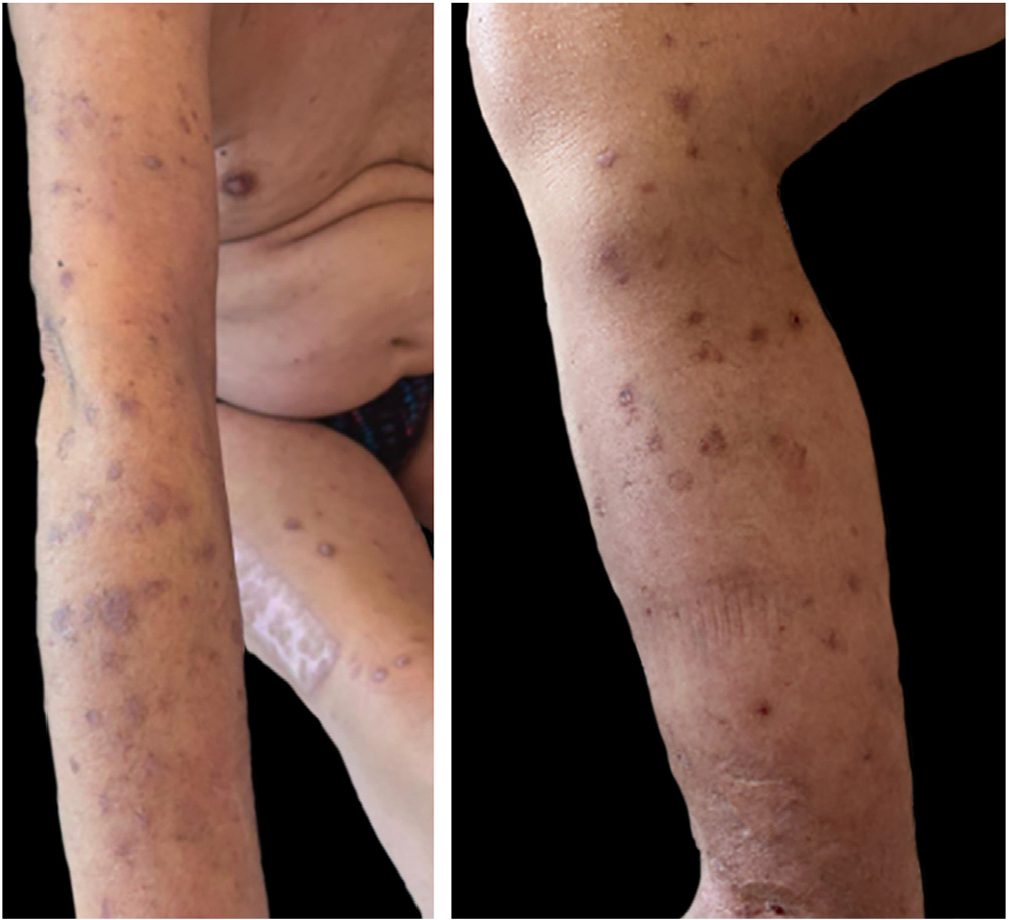
Given the difficulty in managing the condition due to the patient’s history of double transplantation and immunosup-pression, treatment with dupilumab was initiated. At the time of the last check-up, after 8 injections (4-months of treatment), a good response was reported, with a decrease in the number of active lesions (Fig. 3) from 30 to 7, relief of pruritus to 2/10, and improvement in nighttime sleep. Thus, biological treatment proved to be effective in controlling the disease, significantly improving the patient’s quality of life.
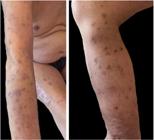
The case presented illustrates the complexity of manag-ing prurigo nodularis in a patient with multiple comorbidities and coexisting dermatological conditions, which hinder treatment and remission. This complexity is accentuated in the context of organ transplantation, where nodular prurigo may be related to both immunosuppression and addi-tional risk factors, such as chronic infections or host-specific immunological alterations.4
Kidney transplant patients, especially those with end-stage kidney disease or transplantation, are particularly susceptible, with the severity of renal disease being an inde-pendent and significant risk factor for the development of prurigo nodularis.5
In this scenario, dupilumab has emerged as an effective therapeutic alternative, blocking the IL-4/IL-13 pathway, reducing both pruritus and the number and severity of nodu-lar lesions, positioning itself as the treatment of choice in cases refractory to conventional therapies.6 Clinical trials have demonstrated its efficacy and safety, with no relevant increase in serious infections or major adverse events.7 How-ever, these studies systematically excluded patients with significant immunosuppression, including solid organ trans-plant recipients, so evidence in this group is limited to case reports and small series.4,7
The reviewed literature suggests that dupilumab could be a valid therapeutic option in patients with prurigo nodularis and immunosuppression, due to its targeted mechanism of action and safety profile that does not cause global immuno-suppression, unlike other classic immunomodulators.4,7 Moreover, drug interactions are almost absent, making it suitable for elderly patients with comorbidities and polypharmacy.8
Research data availability
Does not apply.
References
- 1 Liao V, Cornman HL, Ma E, Kwatra SG. Prurigo nodularis: new insights into pathogenesis and novel therapeutics. Br J Dermatol. 2024;190:798-810.
- 2 Müller S, Zeidler C, Ständer S. Chronic prurigo including prurigo nodularis: new insights and treatments. Am J Clin Dermatol. 2024;25:15-33.
- 3 Kwatra SG, Yosipovitch G, Legat FJ, Reich A, Paul C, Simon D, et al. OLYMPIA 2 Investigators. Phase 3 trial of nemolizumab in patients with Prurigo Nodularis. N Engl J Med. 2023;389:1579-89.
- 4 Biazus Soares G, Yosipovitch G. A critical review of dupilumab for adult patients with prurigo nodularis. Expert Rev Clin Immunol. 2024;20:249-54.
- 5 Kim HS, Kim HJ, Ahn HS. Impact of chronic kidney disease severity on the risk of Prurigo Nodularis: a population-based cohort study. Acta Derm Venereol. 2022;102, adv00781.
- 6 Yosipovitch G, Mollanazar N, Ständer S, Kwatra SG, Kim BS, Laws E, et al. Dupilumab in patients with prurigo nodularis: two ran-domized, double-blind, placebo-controlled phase 3 trials. Nat Med. 2023;29:1180-90.
- 7 Cao P, Xu W, Jiang S, Zhang L. Dupilumab for the treat-ment of prurigo nodularis: a systematic review. Front Immunol. 2023;14:1092685.
- 8 Criado PR, Pincelli TP, Criado RFJ. Dupilumab as a useful treat-ment option for prurigo nodularis in an elderly patient with atopic diathesis. Int J Dermatol. 2020;59:e358-61.
Edited by
-
Editor
Sílvio Alencar Marques.