 Environmental variability drives the spatial and temporal beta diversity of phytoplankton in a tropical reservoir
Abstract:
Aim The aim of this study was to evaluate the local contribution of phytoplankton to beta diversity across space and time in a reservoir in central-western Brazil, and its relationship with environmental filters.
Methods We sampled phytoplankton and environmental variables over three months of drought and three months of rainfall at seven sampling sites along the main axis of the João Leite Reservoir, Goiás, Brazil. We used Euclidean distance to calculate spatial and temporal environmental heterogeneity. We applied the Local Contribution to Beta Diversity (LCBD) index and the Temporal Beta Diversity (TBI) index.
Results Principal Component Analysis revealed a clear separation between lotic and lentic environments. A longitudinal gradient of environmental heterogeneity was formed in the reservoir. The local contribution to beta diversity was primarily structured by species turnover rather than richness differences. Through TBI values, we observed the influence of seasonality, leading to a trend of declining species diversity from the dry to the rainy period. Using Beta Regression, we found a significant relationship between environmental heterogeneity and LCBD values, particularly in the species turnover component. For TBI, we identified a significant relationship with temporal environmental heterogeneity between the last month of drought and the first month of rainfall.
Conclusions Therefore, it is essential to consider different spatial and temporal scales when monitoring diversity in reservoirs, as ecosystems may encompass varying characteristics that influence the provided ecosystem functions and services.
Keywords:
beta diversity; dam; LCBD; longitudinal gradient; planktonic algae
Resumo:
Objetivo O objetivo deste estudo foi avaliar a contribuição local do fitoplâncton para a diversidade beta ao longo do espaço e do tempo em um reservatório no centro-oeste brasileiro e sua relação com os filtros ambientais.
Métodos Amostramos o fitoplâncton e variáveis ambientais durante três meses de seca e três de chuva em sete locais de amostragem no eixo principal do reservatório João Leite, Goiás, Brasil. Utilizamos a distância euclidiana para calcular a heterogeneidade ambiental espacial e temporal. Aplicamos o índice de contribuição local das espécies para a diversidade beta (LCBD), e o índice de Diversidade Beta Temporal (TBI).
Resultados A Análise de Componentes Principais mostrou uma clara separação entre os ambientes lóticos e lênticos. Houve a formação de um gradiente longitudinal na heterogeneidade ambiental do reservatório. A contribuição local para a diversidade beta foi mais estruturada pelos componentes de substituição de espécies do que o de diferenças de riquezas. Através dos valores de TBI observamos a influência da sazonalidade, ocasionando uma tendência de perda de diversidade de espécies do período seco para o chuvoso. Utilizando a Beta Regressão, nós encontramos uma relação significativa entre a heterogeneidade ambiental e os valores de LCBD, principalmente no componente de substituição de espécies. Para o TBI, nós encontramos uma relação significativa com a heterogeneidade ambiental temporal entre o último mês de seca e o primeiro da chuva.
Conclusões Portanto, é essencial considerarmos as diferentes escalas espaciais e temporais para o monitoramento da diversidade em reservatórios, onde um ecossistema pode abranger diferentes características, influenciando as funções e serviços ecossistêmicos fornecidos.
Palavras-chave:
diversidade beta; barragem; LCBD; gradiente longitudinal; algas planctônicas
1. Introduction
The growth of the global population, particularly in urban centers, has increased the demand for resources to meet human needs. In this context, dam construction and reservoir formation have expanded globally (Zarfl et al., 2015; Carneiro & Bini, 2020; Li et al., 2023). These systems serve various purposes, including energy generation, water storage, fisheries production, recreation, and other uses (Tundisi et al., 2008). However, reservoir construction disrupts the natural lotic flow of rivers, creating a longitudinal gradient in physicochemical variables. This gradient arises primarily from changes in sedimentation dynamics and light penetration patterns (Thornton et al., 1991), as well as from reduced natural connectivity within and between lotic systems (Ward & Stanford, 1983).
Additionally, in tropical reservoirs, water level fluctuations play a crucial role in shaping ecosystem dynamics, as droughts and rainfall events can significantly impact the quantity and quality of water resources (Deus et al., 2013; Li et al., 2018; Ning et al., 2026). Rainfall runoff carries landscape-derived substances into rivers, increasing reservoir volume while shorting water residence time, and promoting homogenization. At the same time, suspended particles reduce light penetration. Together, these processes drive seasonal variability in species composition (Rodrigues et al., 2009; Xu et al., 2023).
Thus, aquatic biodiversity in reservoirs is subject to spatial factors related to the reservoir formation (Moura et al., 2021; Trindade et al., 2021; Arcifa et al., 2023; Sirunda et al., 2023; Okkan et al., 2023) and to the hydrological regime prevailing in the basin (Zeng et al., 2026). Phytoplankton, for instance, is a community composed of various organisms that live in suspension within the water column, exhibiting a high diversity of species with a range of morphological and functional characteristics, as well as adaptive strategies (Litchman & Klausmeier, 2008; Brasil & Huszar, 2011; Naselli-Flores et al., 2021). This community changes in response to the environmental gradient within reservoirs, as spatial and temporal heterogeneity act as environmental filters, facilitating new possibilities for niche occupation (Rodrigues et al., 2018; Bortolini et al., 2020; Santos et al., 2021; Vieira da Silva et al., 2022).
Over the years, various analytical tools have been developed and used to assess changes in ecological communities. Diversity indices have been introduced to examine spatial and temporal patterns (Anderson et al., 2011). Beta diversity, for instance, evaluates the dissimilarity between communities across different locations, considering species richness and abundance (Baselga, 2010; Soininen et al., 2018). One of the methods is the Local Contribution to Beta Diversity (LCBD), which aims to identify sites with unique species compositions that make the most significant contributions to beta diversity (Legendre & De Cáceres, 2013). This index can be used to examine species substitution, as well as differences in richness and abundance, and to assess their roles in shaping the spatial structure of communities, thus linking these patterns to environmental variables (Lopes et al., 2011; Moura et al., 2022). The LCBD index has proven to be a valuable tool for investigating species dynamics at the local level, contributing to understanding various biological communities and informing conservation strategies (Soininen et al., 2018). Moreover, evaluating temporal trends within communities enables examining species gains and losses at specific sites over time. This method, known as Temporal Beta Diversity (TBI), effectively detects both natural and human-induced changes in ecosystems (Legendre, 2019) and is an essential tool for assessing community variability in reservoirs. Thus, some studies have incorporated temporal assessments of diversity to better capture community change patterns in reservoirs over time (Zanon et al., 2024), particularly in sites subject to major seasonal hydrological variations (Ortega et al., 2021; Pereira et al., 2024; Vieira et al., 2026).
This study aimed to assess the spatio-temporal factors influencing phytoplankton beta diversity along the lotic-lentic gradient in a tropical water supply reservoir. Understanding the spatial and temporal organization of communities is crucial for conserving biodiversity, comprehending ecosystem functioning, and ensuring the provision of ecosystem services by reservoirs. Our first hypothesis posited that spatial environmental heterogeneity, resulting from the distinct zones within the reservoir, would affect phytoplankton species composition, leading to distinct sites with significant contributions (i.e., high LCBD values) to beta diversity. Our second hypothesis addressed the temporal factor, proposing that temporal heterogeneity, driven by the directional hydrological regime, would significantly influence phytoplankton beta diversity by impacting species turnover (i.e., loss or gain of species, as measured by TBI). Thus, we anticipated a greater gain of species during the dry season due to increased environmental heterogeneity, followed by a reduction in diversity during the rainy season, driven by environmental homogenization.
2. Material and Methods
2.1. Study area
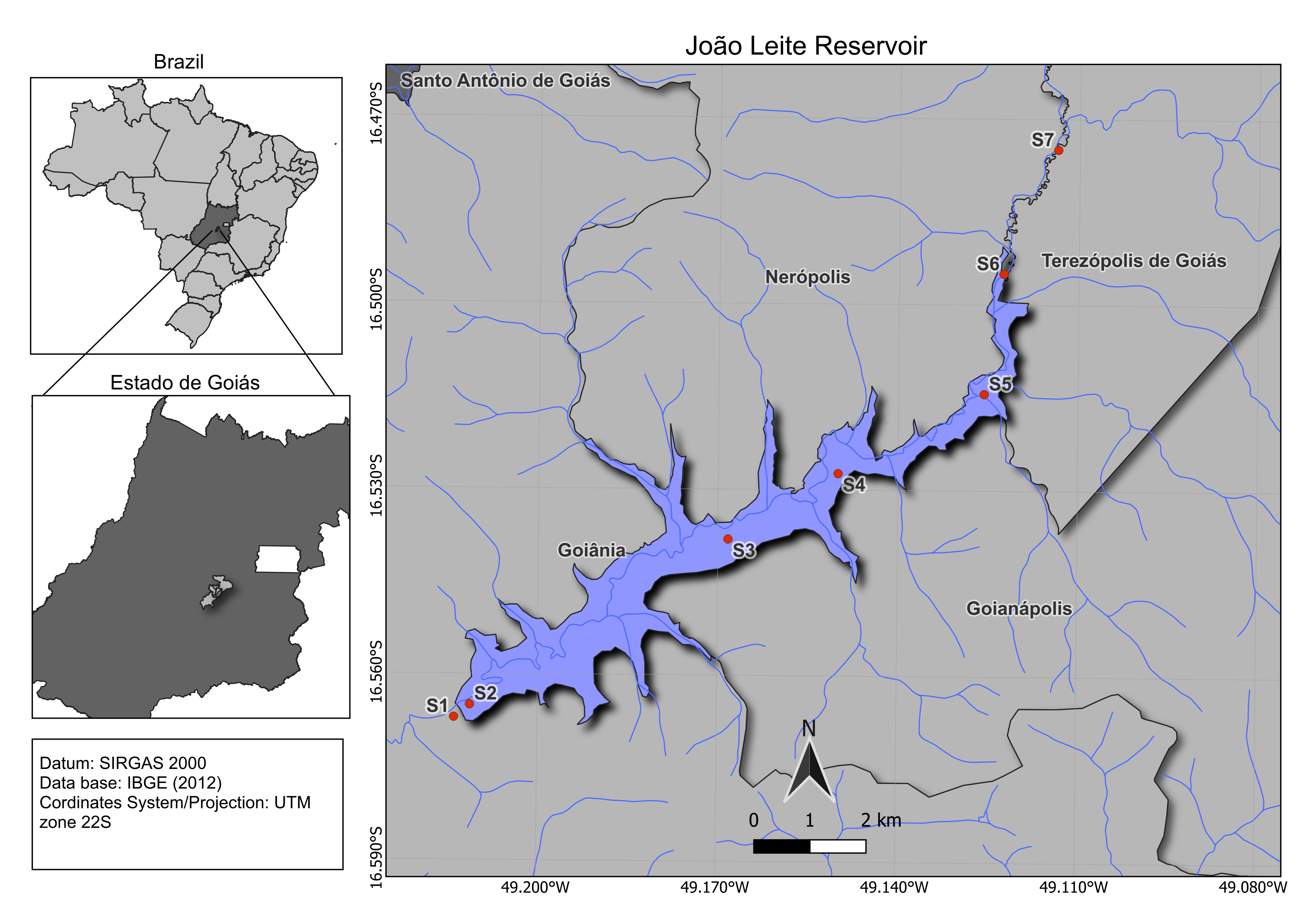
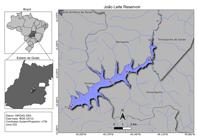
The study was conducted at the João Leite Reservoir in the Goiás state, Brazil (Figure 1). It is part of the Mauro Borges/João Leite system, responsible for approximately 60% of the water supply to Goiânia, and neighboring cities (Goiás, 2021). The reservoir covers an area of approximately 10.4 km2, has a length of 15 km, and a mean width of 800 meters, reaching a depth of 36 meters near the dam.
The surrounding region has 30% native vegetation cover, while at least 60% of the landscape is impacted by livestock farming (Carneiro et al., 2010). The climate in the region is predominantly tropical, with well-defined dry and rainy periods. The rainy season (October to March) is characterized by heavy rainfall and high temperatures, whereas the dry season (April to September) is milder, with lower mean temperatures and no rainfall (Costa et al., 2012; Cardoso et al., 2014).
To capture the environmental heterogeneity of the various regions of the reservoir, we established seven sampling sites along its spatial extent. So, we included the downstream of the dam, classified as lotic (S1), the lentic region (S2, S3, S4, S5, S6), and the lotic region (S7).
2.2. Sampling and analysis of the phytoplankton community and abiotic variables
Sampling was conducted during July, August, and September of the dry season in 2018 (N = 21) and in December 2018, January, and February 2019 during the rainy season (N = 21). At each sampling site, water temperature (WT, °C), pH, electrical conductivity (Cond, µS/cm), and turbidity (Turb, NTU) were measured using portable digital potentiometers. Dissolved oxygen concentrations (DO, mg L−1) were measured using the titration method described in APHA (2017). Concentrations of soluble iron (SI, mg L−1), total iron (TI, mg L−1), and total phosphorus (TP, mg L−1) were measured using the methodologies proposed in APHA (2017). Dissolved inorganic nitrogen (DIN) forms were obtained by summing the concentrations of nitrite, nitrate, and ammoniacal nitrogen (mg L−1), as described by Soares et al. (2008). Precipitation data (mm) for the reservoir area were provided by the Companhia Saneamento de Goiás S/A (Saneago).
Phytoplankton samples were collected directly from the subsurface of the limnetic region at each site using bottles. The samples were immediately fixed in situ with acetic lugol solution (Bicudo & Menezes, 2017). Phytoplankton density was estimated using an inverted microscope (Olympus CKX41 model at 400x magnification), following the Utermöhl method (Utermöhl, 1958), with random field counts. Phytoplankton density was expressed in individuals (cells, cenobia, colonies, or filaments) per milliliter (ind. mL−1), considering the forms in which cyanobacteria and algae occurred in nature. Species richness was defined as the total number of taxa present in each sample.
The taxa were classified, whenever possible, to the lowest taxonomic level (genus or species), according to the classification system presented by Bicudo & Menezes (2017) and Guiry & Guiry (2023). The identified taxa were organized based on their characteristics. These groups were as follows: Green Algae (Chlorophyceae, Trebouxiophyceae, Klebsormidiophyceae); Flagellated Green Algae (Pedinophyceae, Prasinophyceae, Nephrophyceae); Cyanobacteria (Cyanobacteria); Desmids (Zygnematophyceae); Diatoms (Bacillariophyceae, Coscinodiscophyceae, Mediophyceae); Phytoflagellates (Cryptophyceae, Euglenophyceae, Chrysophyceae, Dinophyceae).
2.3. Beta diversity and data analysis
For the spatial scale, we used the calculation of local contribution to beta diversity (LCBD), where we applied the Hellinger transformation to obtain presence-absence data and utilized the function beta.div (Legendre & De Cáceres, 2013). To evaluate whether the LCBD values of the sampled sites in each of the months of both hydrological periods were more structured by species substitution or differences in species richness, we used the LCBD.comp function, which partitions the components of substitution (BDrepl) and richness difference (BDdiff) (Legendre, 2014).
For the temporal scale, we applied the Temporal Beta-diversity Index (TBI) proposed by Legendre (2019), using the TBI function based on species richness and employing the Sørensen transformation to define the distance matrix based on presence and absence. The values were calculated using the percentage difference method (Diff%). For this analysis, we considered the values of the three months of each sampled hydrological period. We performed the analysis month by month and compared the first month of the dry period (T1) to the last month of the rainy period (T2).
We conducted a Principal Component Analysis (PCA) for the environmental data to visually order and compare the differences between the sampled sites and periods based on environmental variables. Additionally, we conducted a variance analysis (ANOVA) for each environmental variable across reservoir regions and hydrological periods to assess environmental gradients and the effect of seasonality. Environmental heterogeneity was initially calculated by transforming the variables (except pH) into a natural logarithmic scale. Then, using the decostand function, the Euclidean distance was calculated for each of the seven sites for each month. We calculated the mean distance for each site with the matrix containing the Euclidean distances from each site to the others. Temporal environmental heterogeneity was also calculated for each month, considering the same transformed data and the Euclidean distance between months was measured as follows:
Yjul e Yaug represents the values previously transformed into logarithms for the K environmental variables collected in July and August, respectively. We analyzed variance, first considering the temporal environmental heterogeneity between July and February and then evaluating the month-to-month differences. Lastly, a variance analysis was performed considering the sites (lotic and lentic) for each month as variables to detect potential differences, thus forming an environmental gradient.
Finally, using the betareg function, we performed beta regression analyses between the LCBD values and their components (BDrepl and BDdiff) and the mean Euclidean distance of environmental variables for each hydrological period (Cribari-Neto & Zeileis, 2010). The same procedure was applied using the TBI values from month to month and between the first and last month.
All analyses were conducted using the R software (R Development Core Team, 2021) with the packages Adespatial (Dray et al., 2018), BiodiversityR (Kindt & Coe, 2005), CAR (Fox, 2007), FactoMineR (Husson et al., 2016), Ggplot2 (Wickham & Chang, 2016), ISwR (Dalgaard, 2020), and Vegan (Oksanen, 2019). The visualization graph of the study area was created using the open-source software QGIS (QGIS Development Team, 2024).
3. Results and Discussion
3.1. Environmental variability in the reservoir
During the dry period, the highest precipitation record occurred in September 2018, with 20.9 mm, and the mean precipitation for the period was 18.6 mm (INMET, 2024). The recorded temperatures had a mean of 23.4°C, with a minimum of 11.4°C and a maximum of 38.5°C (Table 1). In contrast, the rainy period was characterized by high precipitation values, with the highest recorded in February 2019, amounting to 97.6 mm, and the mean for the entire period was 128.7 mm. The mean temperature during the rainy period was 24.5°C, with a minimum of 18.2°C and a maximum of 37.0°C (INMET, 2024).
Mean, coefficient of variation (CV) and ANOVA results for environmental variables across different reservoir regions, hydrologic periods and interaction.
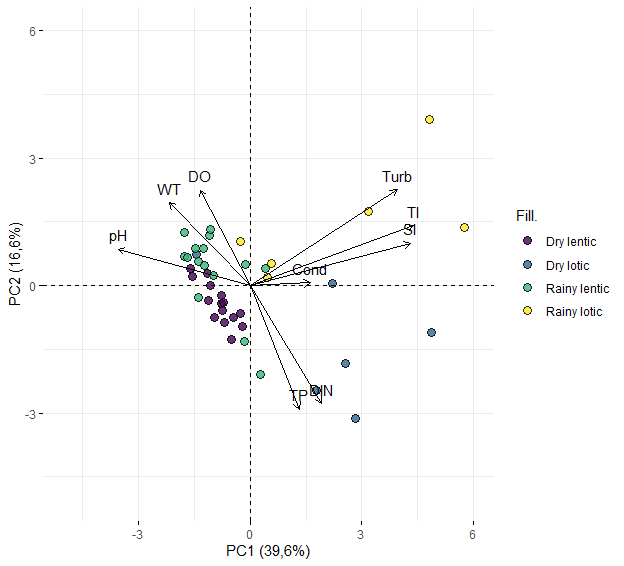
Evidence based on PCA, allows us to observe the expected environmental gradient between lotic and lentic sites across the reservoir, consistent across both hydrological periods (Figure 2). The sites sampled in the lentic region during the dry and rainy periods were positioned on the left side of the diagram, showing a stronger association with pH, water temperature, and DO. Conversely, the lotic region sites exhibited a distinct separation from the other locations, influenced primarily by turbidity and nutrients, such as total iron and soluble iron during the rainy season and total phosphorus and dissolved inorganic nitrogen during the dry season. This pattern is supported by the ANOVA among reservoir regions (Table 1), indicating significant differences in most environmental variables, except TP, DO and conductivity.
Principal Component Analysis (PCA) illustrates the dissimilarity of sites based on environmental variables throughout the hydrological periods in the João Leite reservoir, Goiás, Brazil. WT – water temperature; DO – dissolved oxygen; Turb – turbidity; Cond – conductivity; TI – total iron; TP – total phosphorus; SI – soluble iron; DIN – dissolved inorganic nitrogen)
The formation of reservoirs is a process that extends the water retention time, altering environmental characteristics and directly impacting nutrient cycling and sedimentation processes (Teodoru & Wehrli, 2005). However, these characteristics are not uniform, and the original conditions of the river are maintained in the zones preceding the reservoir and change as it approaches the dam. Therefore, the environmental gradient among reservoir regions drives the distribution of the species assemblage (Rodrigues et al., 2018).
The rainfall regime in the João Leite reservoir basin was previously explored by Santos and colleagues (2011), highlighting its importance for maintaining the basin, given its significance for water supply. It is known that this dynamic of environmental variables significantly affects the aquatic communities within this context (Simões et al., 2015; do Nascimento et al., 2022). Particularly for phytoplankton, the effects of rainfall dynamics on this community have been reported in the literature (Zeng et al., 2026; Klotz et al., 2026) and specifically, in the João Leite basin (Moura et al., 2021; Santos et al., 2021; Trindade et al., 2021; Pereira et al., 2026). However, other studies have reported that the temporal factor is a weak predictor of the variability observed in phytoplankton (Lopes et al., 2011; Padial et al., 2014), possibly due to the geographic location of the studied sites, where seasonality is not as pronounced as in the region of our study.
3.2. Phytoplankton community distribution in the reservoir
We recorded a total of 161 phytoplankton taxa, distributed among the following groups: diatoms (Bacillariophyceae – 55 taxa; Coscinodiscophyceae – 4 taxa; Mediophyceae – 2 taxa), green algae (Chlorophyceae – 36 taxa; Trebouxiophyceae – 5 taxa; Klebsormidiophyceae – 1 taxon), cyanobacteria (Cyanobacteria – 41 taxa; Chamesiphonomaceae – 1 taxon), phytoplankton flagellates (Cryptophyceae – 10 taxa; Euglenophyceae – 10 taxa; Chrysophyceae – 6 taxa; Dinophyceae – 1 taxon), flagellated green algae (Pedinophyceae – 2 taxa; Prasinophyceae – 2 taxa; Nephrophyceae – 2 taxa), and desmids (Zygnematophyceae – 5 taxa). The genera Planktolyngbya Anagnostidis & Komárek, Snowella Elekin, and Cyanodictyon Pascher were abundant throughout the dry season. During the dry season, the genera Monoraphidium Komárková-Legnerová and Navicula Bory exhibited the highest number of species recorded, with seven taxa each. In contrast, during the rainy season, the genera Cryptomonas Ehrenberg and Planktolyngbya were found at all sites and in all months.
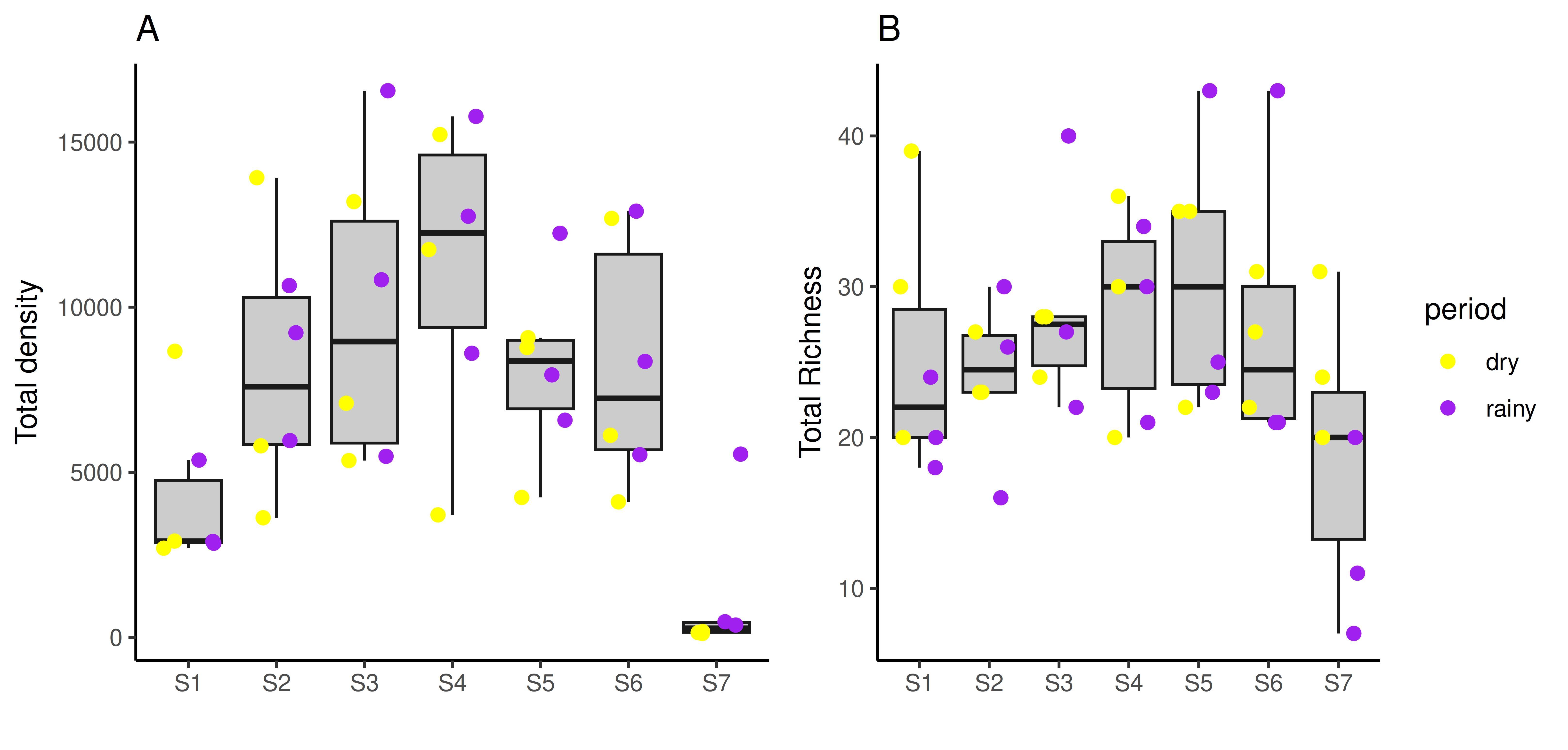
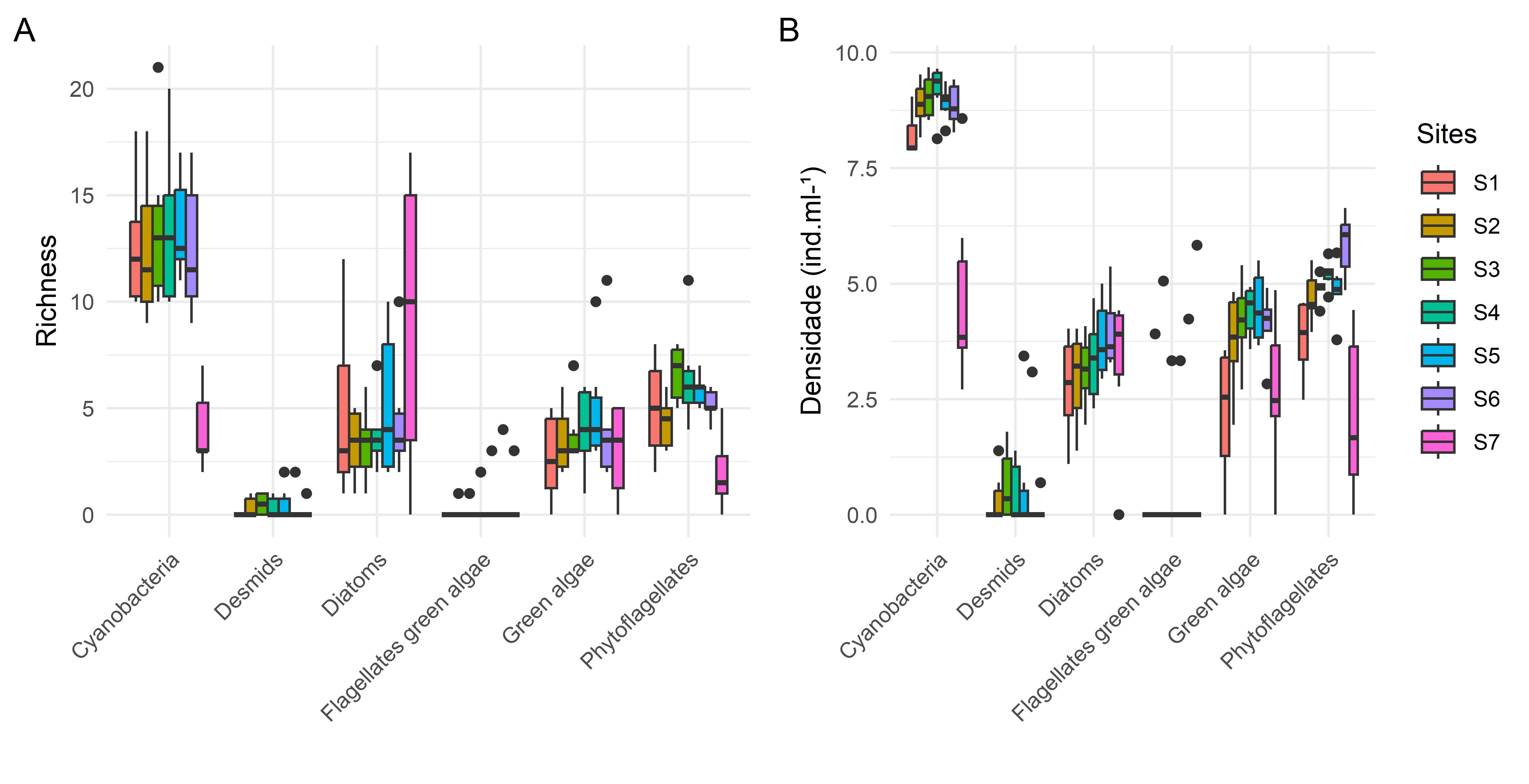
The lentic region exhibited higher richness values than the lotic region (Figure 3). During the rainy season, the lotic region showed lower richness values than the other sites (Figure 3). When evaluating the groups individually, the diatoms contributed significantly more to the lotic sites than to other sites (Figure 4A). Green algae were found in this region and the lentic sites (S4 and S5). Cyanobacteria consistently had high richness values throughout the reservoir, except in the lotic region (Figure 4A). Phytoplankton flagellates exhibited a pattern similar to that of cyanobacteria.
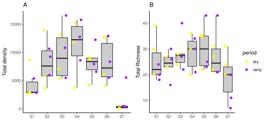
Total density (A) and total richness (B) of the species found across the sites in the João Leite reservoir (Goiás, Brazil) during both hydrological periods.
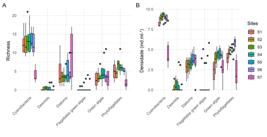
Distribution of the mean richness (A) and density (B) of the main phytoplankton groups found along the João Leite reservoir (Goiás, Brazil) during the two evaluated hydrological periods.
For total density, the highest values were recorded at the sites in the lentic region (S4, S6, S2, and S3), while the lowest values were observed in the lotic region (S7) (Figure 3). Throughout both periods, cyanobacteria distributed high-density values along the entire longitudinal axis of the reservoir, with lower values in the lotic region (Figure 4B). Despite the high richness in the lotic region, diatoms showed low-density values across the entire reservoir. Phytoplankton flagellates exhibited low density throughout most of the reservoir, except at site S6. Green algae displayed a similar pattern, with exceptionally high density at site S5.
Cyanobacteria were consistent in the lentic region, exhibiting high density, and were considered a common group in reservoirs, as reported in previous studies (Bortolini et al., 2017; Moura et al., 2021; Liao et al., 2024). Cyanobacteria have a greater affinity for nutrients and stable water column conditions, which may explain their higher abundance in this region (Padisák et al., 2009). In water supply reservoirs, the presence of cyanobacteria warrants attention due to the potential for blooms of problematic species that can affect public health, as has occurred in the Brazilian semi-arid region (Santos Silva et al., 2020). In addition to cyanobacteria, green algae were prominent throughout the lentic region, which is expected due to their adaptability to lacustrine environments with high light availability (Reynolds et al., 2002).
The diatom group was notably more abundant in the lotic region than in other sites. Their siliceous structure enables them to endure water turbulence, making them well-suited for environments with high turbidity and electrical conductivity (Reynolds, 1997). Similar results have been found in other studied reservoirs, such as the cascade reservoir complexes in the Paraná River basin (Bortolini et al., 2017) and in Capivari and Segredo reservoirs (Borges et al., 2008). Furthermore, phytoplankton flagellates were also significant in the lotic regions, as they are organisms with plastic characteristics that allow them to occupy different niches and resist water turbulence (Reynolds, 1997).
3.3. Local contribution to beta diversity
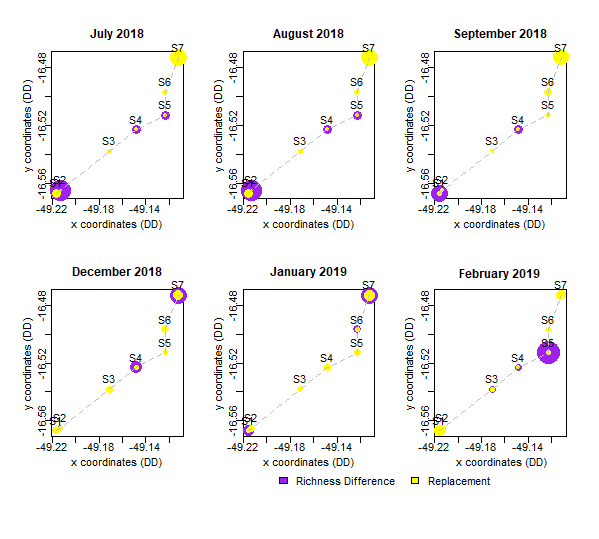
The LCBD values observed along the axis of the reservoir and during the analyzed months (Figure 5) indicated a higher local contribution during the dry period, particularly in the lotic regions (S1 and S7). During this period, BDrepl had the greatest contribution to beta diversity in the lotic region (S7), while BDdiff contributed more to the other sites. In contrast, during the rainy season, the richness difference component had the greatest influence in the lotic regions (S7 and S1) and the lentic region at site S5.
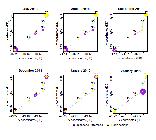
LCBD values and their components of species substitution and richness difference along the sampling points in the João Leite reservoir (Goiás, Brazil) during the dry and rainy periods (DD – decimal degrees).
Despite high values of the BDdiff component at specific points, BDrepl remained constant throughout the reservoir and the months, the main component shaping beta diversity. The BDrepl makes sense when viewed in light of environmental heterogeneity, which was statistically significant, particularly during the dry months. During the rainy season, however, the high influx of allochthonous substances alters the characteristics, potentially leading to a homogenization process that reduces environmental heterogeneity across the reservoir. Different environmental conditions along the reservoir act as filters, selecting species and shaping the community. This mechanism is particularly important in hydrologically connected environments, which receive a continuous influx of new species (Padial et al., 2014).
The beta regression models between the LCBD values and environmental heterogeneity showed a significant relationship for July (pseudo-R2 = 0.890), December (pseudo-R2 = 0.737), and January (pseudo-R2 = 0.469) (Table 2). During these months, there was also a significant difference in the environmental variables along the reservoir (p < 0.05). For BDrepl values, environmental heterogeneity influenced the months of July (pseudo-R2 = 0.832) and December (pseudo-R2 = 0.520) (Table 3). Finally, the BDdiff component was most influenced by environmental heterogeneity in December (pseudo-R2 = 0.392) (Table 4).
Values of the coefficients from the beta regression between the values of local contribution to beta diversity and environmental heterogeneity, along with the analysis of variance of heterogeneity across sites for the months of both hydrological periods.
Coefficients from the beta regression between species replacement values from LCBD and environmental heterogeneity for the months of both hydrological periods.
Coefficients from the beta regression between richness difference values from LCBD and environmental heterogeneity for the months of both hydrological periods.
Diversity metrics were key to understanding community ecology and its relationship with environmental conditions in the reservoir. In our study, the species replacement component drove local beta diversity and responded to environmental heterogeneity. These results are consistent with previous studies, such as those conducted in eight reservoirs across various watersheds (Santos et al., 2016) and in the João Leite reservoir (Pereira et al., 2026). Furthermore, we observed that during the dry period, LCBD values were higher compared to the rainy period, possibly due to greater environmental heterogeneity during this time, allowing species to coexist with different ecological niches. The influence of environmental heterogeneity has been previously observed in tropical reservoirs in other studies (Moura et al., 2022; Pereira et al., 2026). Some sites were more affected by the BDdiff component. However, the abiotic data could not explain the source of this variation (except in December) according to the beta regression.
The lotic region exhibited low organism density, which can be attributed to the short water retention time (Borges et al., 2008) and high turbidity (Carneiro et al., 2014), both considered limiting factors for phytoplankton growth. However, this region showed the highest mean values of environmental heterogeneity and contributed the highest LCBD values, especially with the species replacement component, almost every month. Understanding this premise, we realize that the lotic region, by preserving unique characteristics distinct from other reservoir areas, ultimately selects for a different species composition.
3.4. Temporal beta diversity
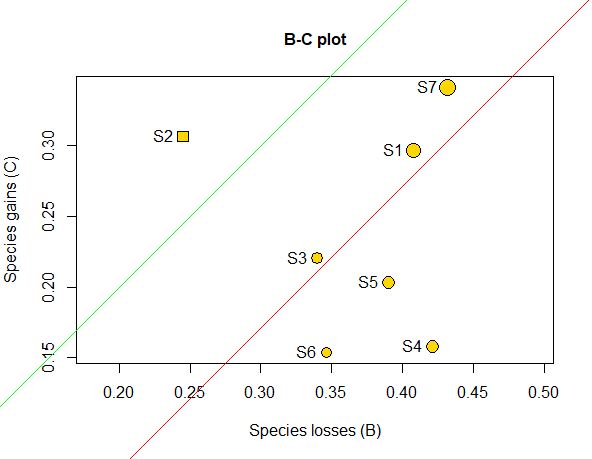
The temporal beta diversity in the reservoir between July and February showed a mean difference between gains and losses of 0.624 (t-test = 2.12; p < 0.05). The sites showed a trend of species richness loss from the dry to the rainy season (Figure 6), with only site S2 showing a gain in species, while site S1 exhibited the greatest species loss (D = 0.886). The temporal environmental heterogeneity for these dry and rainy months differed significantly (F = 14.93; p < 0.05). However, its relationship with temporal beta diversity was not significant (pseudo-R2 = 0.216; p > 0.05) (Table 5). Regarding the variance analyses of temporal environmental heterogeneity month by month, the comparisons between the dry months (July–August, August–September, and September–December) were more significant than the rainy months (Table 5). However, when evaluating its relationship with temporal beta diversity, only between the end of the dry period and the start of the rainy period (September and December) was there a significant effect of environmental heterogeneity.
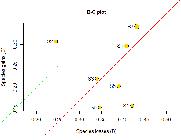
Temporal beta diversity showing the sites that gained (square) and those that lost (circle) species found across the sites in the João Leite Reservoir (Goiás, Brazil) during both hydrological periods.
Values of the coefficients from the beta regression between temporal beta diversity and temporal environmental heterogeneity, along with the analysis of variance for the months of both hydrological periods.
The reflection of the effects of the hydrological regime can be perceived through temporal beta diversity, where a trend of species loss between the hydrological periods was observed. Although this was not statistically significant, we can infer that, in addition to the direct influence of seasonality on the community, there is a tendency toward homogenization due to rainfall. Thus, the hydrological regime may indirectly select species that can adapt to changes in abiotic conditions. Other studies have explored the relationship between rainfall regimes and species loss in aquatic environments (Sampaio et al., 2023; Vieira et al., 2026). There is also some evidence that environmental variability increases diversity and species gain over time (Pereira et al., 2024).
4. Conclusion
In light of our results, it was possible to highlight the influence of the spatial environmental gradient and temporal variability on phytoplankton beta diversity. Furthermore, the species replacement component, linked to environmental heterogeneity, was the main factor in structuring beta diversity in the reservoir's phytoplankton. Additionally, heterogeneity along the longitudinal gradient was an important factor in the distribution of taxonomic groups. Finally, through the temporal variation of beta diversity, a trend of species loss was detected across the hydrological periods. Therefore, this study contributed to the understanding of the effects of environmental variability on phytoplankton in a tropical reservoir, emphasizing the importance of its monitoring, particularly in water supply reservoirs, which play a crucial role in the economy and well-being of local populations, serving as important providers of ecosystem services.
Acknowledgements
We extend our gratitude to the Companhia Saneamento de Goiás S/A (SANEAGO) for their invaluable support in the collection of phytoplankton samples and the provision of abiotic data.
-
Cite as:
Oliveira, A.K.N. et al. Environmental variability drives the spatial and temporal beta diversity of phytoplankton in a tropical reservoir. Acta Limnologica Brasiliensia, 2026, vol. 38, e17. https://doi.org/10.1590/S2179-975X2725
Data availability
The data analyzed in this investigation are not available in any public repository.
References
- American Public Health Association - APHA, 2017. Standard methods for the examination of water and wastewater (Vol. 6). Am. J. Public Health (N. Y.) 16(12), 1228-1232.
-
Anderson, M.J., Crist, T.O., Chase, J.M., Vellend, M., Inouye, B.D., Freestone, A.L., Sanders, N.J., Cornell, H.V., Comita, L.S., Davies, K.F., Harrison, S.P., Kraft, N.J.B., Stegen, J.C., & Swenson, N.G., 2011. Navigating the multiple meanings of β diversity: a roadmap for the practicing ecologist. Ecol. Lett. 14(1), 19-28. PMid:21070562. https://doi.org/10.1111/j.1461-0248.2010.01552.x
» https://doi.org/10.1111/j.1461-0248.2010.01552.x -
Arcifa, M.S., Coelho, P.N., da Silva, L.H., & Righi-Cavallaro, K.O., 2023. Impacts of small dams on the phytoplankton and invertebrates in an Amazonian river. River Res. Appl. 39(4), 661-674. https://doi.org/10.1002/rra.4103
» https://doi.org/10.1002/rra.4103 -
Baselga, A., 2010. Partitioning the turnover and nestedness components of beta diversity. Glob. Ecol. Biogeogr. 19(1), 134-143. https://doi.org/10.1111/j.1466-8238.2009.00490.x
» https://doi.org/10.1111/j.1466-8238.2009.00490.x - Bicudo, C.E., & Menezes, M., 2017. Gêneros de algas de águas continentais: chave para identificação e descrições. São Carlos: RiMa Editora.
-
Borges, P.A., Train, S., & Rodrigues, L.C., 2008. Spatial and temporal variation of phytoplankton in two subtropical Brazilian reservoirs. Hydrobiologia 607(1), 63-74. https://doi.org/10.1007/s10750-008-9367-3
» https://doi.org/10.1007/s10750-008-9367-3 -
Bortolini, J.C., da Silva, P.R.L., Baumgartner, G., & Bueno, N.C., 2020. Environmental filters influencing phytoplankton taxonomic structure in cascade reservoirs. Rev. Bras. Bot. 43(2), 405-412. https://doi.org/10.1007/s40415-020-00604-9
» https://doi.org/10.1007/s40415-020-00604-9 -
Bortolini, J.C., Pineda, A., Rodrigues, L.C., Jati, S., & Velho, L.F.M., 2017. Environmental and spatial processes influencing phytoplankton biomass along a reservoirs-river-floodplain lakes gradient: a metacommunity approach. Freshw. Biol. 62(10), 1756-1767. https://doi.org/10.1111/fwb.12986
» https://doi.org/10.1111/fwb.12986 -
Brasil, J., & Huszar, V.L., 2011. O papel dos traços funcionais na ecologia do fitoplâncton continental. Oecol. Aust. 15(4), 799-834. https://doi.org/10.4257/oeco.2011.1504.04
» https://doi.org/10.4257/oeco.2011.1504.04 -
Cardoso, M.R.D., Marcuzzo, F.F.N., & Barros, J.R., 2014. Climatic classification of Köppen-Geiger for the state of Goiás and the Federal District. Acta Geogr. 8(16), 40-55. https://doi.org/10.18227/2177-4307.acta.v8i16.1384
» https://doi.org/10.18227/2177-4307.acta.v8i16.1384 -
Carneiro, F.M., & Bini, L.M., 2020. Revisiting the concept of longitudinal gradients in reservoirs. Acta Limnol. Bras. 32, e8. https://doi.org/10.1590/s2179-975x1319
» https://doi.org/10.1590/s2179-975x1319 -
Carneiro, F.M., Bini, L.M., & Rodrigues, L.C., 2010. Influence of taxonomic and numerical resolution on the analysis of temporal changes in phytoplankton communities. Ecol. Indic. 10(2), 249-255. https://doi.org/10.1016/j.ecolind.2009.05.004
» https://doi.org/10.1016/j.ecolind.2009.05.004 -
Carneiro, F.M., Nabout, J.C., Vieira, L.C., Roland, F., & Bini, L.M., 2014. Determinants of chlorophyll-a concentration in tropical reservoirs. Hydrobiologia 740(1), 89-99. https://doi.org/10.1007/s10750-014-1940-3
» https://doi.org/10.1007/s10750-014-1940-3 - Costa, H.D.C., Marcuzzo, F.F.N., Ferreira, O.M., & Andrade, L.R., 2012. Espacialização e sazonalidade da precipitação pluviométrica do estado de Goiás e Distrito Federal. Rev. Bras. Meteorol. 27(3), 355-366.
-
Cribari-Neto, F., & Zeileis, A., 2010. Beta regression in R. J. Stat. Softw. 34(2), 1-24. https://doi.org/10.18637/jss.v034.i02
» https://doi.org/10.18637/jss.v034.i02 -
Dalgaard, P., 2020. Package 'ISwR'. R package version 2.0-8. Retrieved in 2021, Nov 15, from https://CRAN.R-project.org/package=ISwR
» https://CRAN.R-project.org/package=ISwR -
Deus, R., Brito, D., Kenov, I.A., Lima, M., Costa, V., Medeiros, A., Neves, R., & Alves, C.N., 2013. Three-dimensional model for analysis of spatial and temporal patterns of phytoplankton in Tucuruí reservoir, Pará, Brazil. Ecol. Modell. 253, 28-43. https://doi.org/10.1016/j.ecolmodel.2012.10.013
» https://doi.org/10.1016/j.ecolmodel.2012.10.013 -
Dray, S., Blanchet, G., Borcard, D., Guenard, G., Jombart, T., Larocque, G., Legendre, P., Madi, N., & Dray, M.S., 2018. Multivariate Multiscale Spatial Analysis. Package 'adespatial'. R package version 0.3-8. Retrieved in 2021, Nov 17, from https://CRAN.R-project.org/package=adespatial
» https://CRAN.R-project.org/package=adespatial -
Fox, J., 2007. Companion to Applied Regression. The car package. R Foundation for Statistical Computing. Retrieved in 2021, Nov 17, from https://CRAN.R-project.org/package=car
» https://CRAN.R-project.org/package=car -
Goiás. Governo de Goiás, 2021. Barragem do João Leite garante abastecimento de água em Goiânia. Retrieved in 2021, Sep 15, from https://www.goias.gov.br/servico/23-infraestrutura/125950-barragem-do-joão-leite-contribui-no-abastecimento-de-água-de-goiânia.html
» https://www.goias.gov.br/servico/23-infraestrutura/125950-barragem-do-joão-leite-contribui-no-abastecimento-de-água-de-goiânia.html -
Guiry, M.D., & Guiry, G.M., 2023. AlgaeBase. World-wide electronic publication, National University of Ireland, Galway. https://www.algaebase.org
» https://www.algaebase.org -
Husson, F., Josse, J., Le, S., Mazet, J., & Husson, M.F., 2016. FactoMineR: Multivariate Exploratory Data Analysis and Data Mining. Package 'FactoMineR' R package version 1.42. Retrieved in 2021, Nov 10, from https://CRAN.R-project.org/package=FactoMineR
» https://CRAN.R-project.org/package=FactoMineR -
Instituto Nacional de Meteorologia - INMET, 2024. Banco de dados meteorológicos. Retrieved in 2021, Nov 21, from https://bdmep.inmet.gov.br/
» https://bdmep.inmet.gov.br/ -
Kindt, R., & Coe, R., 2005. Tree diversity analysis: a manual and software for common statistical methods for ecological and biodiversity studies. Nairobi: World Agroforestry Centre (ICRAF). Retrieved in 2021, Nov 15, from http://www.worldagroforestry.org/output/tree-diversity-analysis
» http://www.worldagroforestry.org/output/tree-diversity-analysis -
Klotz, F., Herrmann, M., Ishikawa, M., Helms, M., Brehm, T., Baschek, B., Fischer, H., & Kleinteich, J., 2026. Spatio-temporal dynamics of riverine cyanobacteria and selected water quality indicators under two hydrological regimes. Sci. Rep. 16(1), 6508. PMid:41692814. https://doi.org/10.1038/s41598-026-38511-w
» https://doi.org/10.1038/s41598-026-38511-w -
Legendre, P., & De Cáceres, M., 2013. Beta diversity as the variance of community data: dissimilarity coefficients and partitioning. Ecol. Lett. 16(8), 951-963. PMid:23809147. https://doi.org/10.1111/ele.12141
» https://doi.org/10.1111/ele.12141 -
Legendre, P., 2014. Interpreting the replacement and richness difference components of beta diversity. Glob. Ecol. Biogeogr. 23(11), 1324-1334. https://doi.org/10.1111/geb.12207
» https://doi.org/10.1111/geb.12207 -
Legendre, P., 2019. A temporal beta-diversity index to identify sites that have changed in exceptional ways in space-time surveys. Ecol. Evol. 9(6), 3500-3514. PMid:30962908. https://doi.org/10.1002/ece3.4984
» https://doi.org/10.1002/ece3.4984 -
Li, Q., Xiao, J., Ou, T., Han, M., Wang, J., Chen, J., Li, Y., & Salmaso, N., 2018. Impact of water level fluctuations on the development of phytoplankton in a large subtropical reservoir: implications for the management of cyanobacteria. Environ. Sci. Pollut. Res. Int. 25(2), 1306-1318. PMid:29086174. https://doi.org/10.1007/s11356-017-0502-4
» https://doi.org/10.1007/s11356-017-0502-4 -
Li, Y., Zhao, G., Allen, G.H., & Gao, H., 2023. Diminishing storage returns of reservoir construction. Nat. Commun. 14(1), 3203. PMid:37311780. https://doi.org/10.1038/s41467-023-38843-5
» https://doi.org/10.1038/s41467-023-38843-5 -
Liao, N., Zhang, L., Chen, M., Li, J., & Wang, H., 2024. The influence mechanism of water level operation on algal blooms in canyon reservoirs and bloom prevention. Sci. Total Environ. 912, 169377. PMid:38101625. https://doi.org/10.1016/j.scitotenv.2023.169377
» https://doi.org/10.1016/j.scitotenv.2023.169377 -
Litchman, E., & Klausmeier, C.A., 2008. Trait-based community ecology of phytoplankton. Annu. Rev. Ecol. Evol. Syst. 39(1), 615-639. https://doi.org/10.1146/annurev.ecolsys.39.110707.173549
» https://doi.org/10.1146/annurev.ecolsys.39.110707.173549 -
Lopes, P.M., Caliman, A., Carneiro, L.S., Bini, L.M., Esteves, F.A., Farjalla, V., & Bozelli, R.L., 2011. Concordance among assemblages of upland Amazonian lakes and the structuring role of spatial and environmental factors. Ecol. Indic. 11(5), 1171-1176. https://doi.org/10.1016/j.ecolind.2010.12.017
» https://doi.org/10.1016/j.ecolind.2010.12.017 -
Moura, L.C., Santos, S.M., Souza, C.A., Santos, C.R.A., & Bortolini, J.C., 2021. Phytoplankton richness and abundance in response to seasonality and spatiality in a tropical reservoir. Acta Limnol. Bras. 33, e13. https://doi.org/10.1590/s2179-975x11419
» https://doi.org/10.1590/s2179-975x11419 -
Moura, W.B., da Silva, P.R.L., Baumgartner, G., Bueno, N.C., & Bortolini, J.C., 2022. Site contributions to phytoplankton beta diversity along two subtropical reservoirs. Aquat. Sci. 84(4), 59. https://doi.org/10.1007/s00027-022-00890-3
» https://doi.org/10.1007/s00027-022-00890-3 -
Nascimento, C.P., Alves, J.C., Latini, J.D., & Gomes, L.C., 2022. Anthropogenic activities and habitat complexity influence fish functional diversity in a Neotropical reservoir. Aquat. Sci. 84(3), 35. https://doi.org/10.1007/s00027-022-00865-4
» https://doi.org/10.1007/s00027-022-00865-4 -
Naselli-Flores, L., Zohary, T., & Padisák, J., 2021. Life in suspension and its impact on phytoplankton morphology: an homage to Colin S. Reynolds. Hydrobiologia 848(1), 7-30. https://doi.org/10.1007/s10750-020-04217-x
» https://doi.org/10.1007/s10750-020-04217-x -
Ning, Y., Nunes, J.P., Zhou, J., Baartman, J., dos Santos, F.M., Liu, X., Ma, L., Ritsema, C.J., & Chen, X., 2026. Forty-year data analysis of droughts and drought-flood dynamics: impacts of cascading reservoirs. J. Hydrol. (Amst.) 668, 134957. https://doi.org/10.1016/j.jhydrol.2026.134957
» https://doi.org/10.1016/j.jhydrol.2026.134957 -
Okkan, U., Fistikoglu, O., Ersoy, Z.B., & Noori, A.T., 2023. Investigating adaptive hedging policies for reservoir operation under climate change impacts. J. Hydrol. (Amst.) 619, 129286. https://doi.org/10.1016/j.jhydrol.2023.129286
» https://doi.org/10.1016/j.jhydrol.2023.129286 -
Oksanen, J., 2019. Vegan: community ecology package. R package version 2.5-7. Retrieved in 2021, Nov 15, from https://CRAN.R-project.org/package=vegan
» https://CRAN.R-project.org/package=vegan -
Ortega, J.C., Geijer, J., Bergsten, J., Heino, J., Herrmann, J., Johansson, F., & Bini, L.M., 2021. Spatio-temporal variation in water beetle assemblages across temperate freshwater ecosystems. Sci. Total Environ. 792, 148071. PMid:34153756. https://doi.org/10.1016/j.scitotenv.2021.148071
» https://doi.org/10.1016/j.scitotenv.2021.148071 -
Padial, A.A., Ceschin, F., Declerck, S.A., De Meester, L., Bonecker, C.C., Lansac-Tôha, F.A., Rodrigues, L., Rodrigues, L.C., Train, S., Velho, L.F.M., & Bini, L.M., 2014. Dispersal ability determines the role of environmental, spatial and temporal drivers of metacommunity structure. PLoS One 9(10), e111227. PMid:25340577. https://doi.org/10.1371/journal.pone.0111227
» https://doi.org/10.1371/journal.pone.0111227 -
Padisák, J., Crossetti, L.O., & Naselli-Flores, L., 2009. Use and misuse in the application of the phytoplankton functional classification: a critical review with updates. Hydrobiologia 621(1), 1-19. https://doi.org/10.1007/s10750-008-9645-0
» https://doi.org/10.1007/s10750-008-9645-0 -
Pereira, A.L.A., de Carvalho, P., Granzotti, R.V., Vieira, L.C.G., & Bini, L.M., 2024. Temporal beta diversity increases with environmental variability in zooplankton floodplain communities. Limnology 25(1), 1-10. PMid:39840382. https://doi.org/10.1007/s10201-023-00724-7
» https://doi.org/10.1007/s10201-023-00724-7 -
Pereira, A.L.A., dos Santos, S.M., de Souza, C.A., dos Santos, C.R.A., & Bortolini, J.C., 2026. Local contribution of taxonomic and functional beta diversity of phytoplankton and its relationships with environmental heterogeneity in a tropical reservoir. Hydrobiologia 853(6), 1873-1890. https://doi.org/10.1007/s10750-025-06038-2
» https://doi.org/10.1007/s10750-025-06038-2 -
QGIS Development Team, 2024. QGIS geographic information system. Open Source Geospatial Foundation Project. Retrieved in 2021, Nov 15, from https://qgis.org
» https://qgis.org -
R Development Core Team, 2021. R: a language and environment for statistical computing [software]. Vienna: R Foundation for Statistical Computing. Retrieved in 2021, Nov 15, from https://www.R-project.org/
» https://www.R-project.org/ - Reynolds, C.S., 1997. Vegetation processes in the pelagic: a model for ecosystem theory. Oldendorf/Luhe: Ecology Institute, vol. 9.
-
Reynolds, C.S., Huszar, V., Kruk, C., Naselli-Flores, L., & Melo, S., 2002. Towards a functional classification of the freshwater phytoplankton. J. Plankton Res. 24(5), 417-428. https://doi.org/10.1093/plankt/24.5.417
» https://doi.org/10.1093/plankt/24.5.417 -
Rodrigues, L.C., Pivato, B.M., Vieira, L.C.G., Bovo-Scomparin, V.M., Bortolini, J.C., Pineda, A., & Train, S., 2018. Use of phytoplankton functional groups as a model of spatial and temporal patterns in reservoirs: a case study in a reservoir of central Brazil. Hydrobiologia 805(1), 147-161. https://doi.org/10.1007/s10750-017-3289-x
» https://doi.org/10.1007/s10750-017-3289-x -
Rodrigues, L.C., Train, S., Bovo-Scomparin, V.M., Jati, S., Borsalli, C.C.J., & Marengoni, E., 2009. Interannual variability of phytoplankton in the main rivers of the Upper Paraná River floodplain, Brazil: influence of upstream reservoirs. Braz. J. Biol. 69(2, Suppl.), 501-516. PMid:19738958. https://doi.org/10.1590/S1519-69842009000300006
» https://doi.org/10.1590/S1519-69842009000300006 - Sampaio, M.F., Ferreira, P.C., Ludwig, T.A.V., & Padial, A.A., 2023. Temporal stability in beta diversity does not guarantee surrogacy or compositional stability in a micro-phytoplankton metacommunity. Limnetica 42(1), 127-141.
- Santos Silva, R.D., Severiano, J.S., de Oliveira, D.A., Mendes, C.F., Barbosa, V.V., Chia, M.A., & de Lucena Barbosa, J.E., 2020. Spatio-temporal variation of cyanobacteria and cyanotoxins in public supply reservoirs of the semi-arid region of Brazil. J. Limnol. 79(1), 1-15.
-
Santos, B.M., dos Santos, S.M., de Souza, C.A., dos Santos, C.R.A., & Bortolini, J.C., 2021. A variabilidade ambiental influencia a composição e biomassa fitoplanctônica de um reservatório neotropical. Oecol. Aust. 25(1), 90-102. https://doi.org/10.4257/oeco.2021.2501.09
» https://doi.org/10.4257/oeco.2021.2501.09 -
Santos, E.H., Griebeler, N.P., & de Oliveira, L.F., 2011. Variabilidade espacial e temporal da precipitação pluvial na bacia hidrográfica do Ribeirão João Leite-GO. Eng. Agric. 31(1), 78-89. https://doi.org/10.1590/S0100-69162011000100008
» https://doi.org/10.1590/S0100-69162011000100008 -
Santos, J.B., Silva, L.H., Branco, C.W., & Huszar, V.L., 2016. The roles of environmental conditions and geographical distances on the species turnover of the whole phytoplankton and zooplankton communities and their subsets in tropical reservoirs. Hydrobiologia 764(1), 171-186. https://doi.org/10.1007/s10750-015-2296-z
» https://doi.org/10.1007/s10750-015-2296-z -
Simões, N.R., Nunes, A.H., Dias, J.D., Lansac-Tôha, F.A., Velho, L.F.M., & Bonecker, C.C., 2015. Impact of reservoirs on zooplankton diversity and implications for the conservation of natural aquatic environments. Hydrobiologia 758(1), 3-17. https://doi.org/10.1007/s10750-015-2260-y
» https://doi.org/10.1007/s10750-015-2260-y -
Sirunda, J., Oberholster, P., Wolfaardt, G., Truter, C., & van der Merwe, S., 2023. Long-term study of the drought impact on the phytoplankton concentration and assemblages in two water supply reservoirs in Namibia. Afr. J. Aquat. Sci. 48(2), 152-165. https://doi.org/10.2989/16085914.2023.2200816
» https://doi.org/10.2989/16085914.2023.2200816 -
Soares, M.C.S., Marinho, M.M., Huszar, V.L., Branco, C.W., & Azevedo, S.M., 2008. The effects of water retention time and watershed features on the limnology of two tropical reservoirs in Brazil. Lakes Reserv. 13(4), 257-269. https://doi.org/10.1111/j.1440-1770.2008.00379.x
» https://doi.org/10.1111/j.1440-1770.2008.00379.x -
Soininen, J., Heino, J., & Wang, J., 2018. A meta-analysis of nestedness and turnover components of beta diversity across organisms and ecosystems. Glob. Ecol. Biogeogr. 27(1), 96-109. https://doi.org/10.1111/geb.12660
» https://doi.org/10.1111/geb.12660 -
Teodoru, C., & Wehrli, B., 2005. Retention of sediments and nutrients in the Iron Gate I Reservoir on the Danube River. Biogeochemistry 76(3), 539-565. https://doi.org/10.1007/s10533-005-0230-6
» https://doi.org/10.1007/s10533-005-0230-6 - Thornton, K.W., Kimmel, B.L., & Payne, F.E., 1991. Reservoir limnology: ecological perspectives. New York: John Wiley & Sons.
-
Trindade, R.M.L., dos Santos, S.M., de Souza, C.A., dos Santos, C.R.A., & Bortolini, J.C., 2021. Using morphofunctional characteristics as a model of phytoplankton dynamics in a tropical reservoir. Rev. Bras. Bot. 44(2), 467-477. https://doi.org/10.1007/s40415-021-00705-z
» https://doi.org/10.1007/s40415-021-00705-z -
Tundisi, J.G., Matsumura-Tundisi, T., & Tundisi, J.E.M., 2008. Reservoirs and human well being: new challenges for evaluating impacts and benefits in the neotropics. Braz. J. Biol. 68(4, Suppl.), 1133-1135. PMid:19197483. https://doi.org/10.1590/S1519-69842008000500020
» https://doi.org/10.1590/S1519-69842008000500020 - Utermöhl, H., 1958. Zur Vervollkommung der quantitativen phytoplankton-methodik. Mitt. Int. Ver. Limnol. 9, 1-38.
-
Vieira da Silva, M., Bortolini, J.C., & Jati, S., 2022. The phytoplankton community as a descriptor of environmental variability: a case study in five reservoirs of the Paraná River basin. Acta Limnol. Bras. 34, e1. https://doi.org/10.1590/s2179-975x4621
» https://doi.org/10.1590/s2179-975x4621 -
Vieira, M.C., de Oliveira Barbosa, H., Vieira, L.C.G., de Souza, C.A., da Silva, L.B., & Bini, L.M., 2026. Temporal beta diversity of local zooplankton communities in small reservoirs is associated with hydrological seasonality. Freshw. Biol. 71(1), e70158. https://doi.org/10.1111/fwb.70158
» https://doi.org/10.1111/fwb.70158 - Ward, J.V., & Stanford, J.A., 1983. The serial discontinuity concept of river ecosystems. In Fontaine, T.D. & Bartell S.M., eds. Dynamics of lotic ecosystems. Ann Arbor: Ann Arbor Science Publications, 29-42.
-
Wickham, H., & Chang, W., 2016. Package 'ggplot2': create elegant data visualisations using the grammar of graphics. R package version 2.1.0. Retrieved in 2021, Nov 15, from https://CRAN.R-project.org/package=ggplot2
» https://CRAN.R-project.org/package=ggplot2 -
Xu, Y., Wang, L., Tang, Q., Naselli-Flores, L., Jeppesen, E., & Han, B.P., 2023. The relationship between phytoplankton diversity and ecosystem functioning changes with disturbance regimes in tropical reservoirs. Ecosystems (N. Y.) 26(4), 752-767. https://doi.org/10.1007/s10021-022-00791-4
» https://doi.org/10.1007/s10021-022-00791-4 -
Zanon, F.M., Pineda, A., Lansac-Tôha, F.M., & Rodrigues, L.C., 2024. Impact of a run-of-river dam in an Amazonian large river on the spatial and temporal patterns of phytoplankton beta diversity. Biol. Conserv. 295, 110656. https://doi.org/10.1016/j.biocon.2024.110656
» https://doi.org/10.1016/j.biocon.2024.110656 -
Zarfl, C., Lumsdon, A.E., Berlekamp, J., Tydecks, L., & Tockner, K., 2015. A global boom in hydropower dam construction. Aquat. Sci. 77(1), 161-170. https://doi.org/10.1007/s00027-014-0377-0
» https://doi.org/10.1007/s00027-014-0377-0 -
Zeng, D., Liao, N., Zhang, L., Chen, M., Li, J., Li, Y., Wang, H., & Zhao, Y., 2026. From deterministic to stochastic: reservoir operations alter phytoplankton assembly processes by mediating nutrient and hydrological regimes. Environ. Res. 297, 124132. PMid:41763470. https://doi.org/10.1016/j.envres.2026.124132
» https://doi.org/10.1016/j.envres.2026.124132
Edited by
-
Associate Editor:
Carla Ferragut.