 Morphological variation and trophic individual specialization of Imparfinis schubarti (Gomes, 1956)
Abstract:
Aim In the present study, we investigated the existence of intraspecific variation in the morphology and diet of the catfish Imparfinis schubarti as body length increases, evaluating whether morphological changes are associated with changes in food, as well determining the degree of individual specialization in the species' diet.
Methods Sixty-one individuals were collected by electrofishing in August 2017, in Areia stream, located in northwestern Paraná, Brazil. The individuals were subjected to geometric morphometric, and stomach content analyses. To investigate trophic specialization, indices that evaluate the overlap of the diet between individuals, the average degree of individual specialization, the pairwise similarity of the diet, and the grouping of individuals based on the sharing of food resources were applied.
Results No significant morphological or dietary changes were observed as body length increased. The population exhibited a high degree of individual specialization, characterized by the coexistence of generalist individuals and those with highly specialized diets, with no significant influence of body size on specialization.
Conclusions The results suggest that, in I. schubarti, morphological and trophic aspects may remain relatively constant as body length increases. Furthermore, the coexistence of generalist and specialized individuals, without association with apparent morphological variations, suggests that individual specialization may be modulated by non-morphological factors, such as behavioral or physiological differences, reflecting distinct adaptive strategies within the population.
Keywords:
trophic ecology; body size; freshwater fish; Piquiri River Basin; interindividual variation
Resumo:
Objetivo No presente estudo, investigamos a existência de variação intraespecífica na morfologia e na dieta do bagre Imparfinis schubarti conforme o aumento do comprimento do corpo, avaliando se mudanças morfológicas estão associadas a alterações alimentares, bem como determinando o grau de especialização individual na dieta da espécie.
Métodos Sessenta e um indivíduos foram coletados por pesca elétrica em agosto de 2017, no riacho Areia, localizado no noroeste do Paraná, Brasil. Os indivíduos foram submetidos a análises morfométricas geométricas e à análise do conteúdo estomacal. Para investigar a especialização trófica individual, foram aplicados índices que avaliam a sobreposição da dieta entre os indivíduos, o grau médio de especialização individual, a similaridade pareada da dieta e o agrupamento dos indivíduos com base no compartilhamento de recursos alimentares.
Resultados Alterações morfológicas ou dietéticas associadas ao aumento do comprimento do corpo não foram observadas. A população apresentou alto grau de especialização individual, caracterizado pela coexistência de indivíduos generalistas e outros com dietas altamente especializadas, sem influência significativa do tamanho do corpo sobre a especialização.
Conclusões Os resultados sugerem que, em I. schubarti, os aspectos morfológicos e tróficos podem manter-se relativamente constantes conforme o aumento do comprimento do corpo. Além disso, a coexistência de indivíduos generalistas e especializados, sem associação com variações morfológicas aparentes, sugere que a especialização individual pode ser modulada por fatores não morfológicos, como diferenças comportamentais ou fisiológicas, refletindo estratégias adaptativas distintas dentro da população.
Palavras-chave:
ecologia trófica; tamanho do corpo; peixes de água doce; Bacia do Rio Piquiri; variação interindividual
1. Introduction
Tropical stream fishes demonstrate a wide diversity of feeding strategies and high intraspecific plasticity in their trophic habits, many of which are associated with morphological, physiological, and behavioral modifications during growth (Dala-Corte et al., 2016; Manna & Rezende, 2021). Variations in body morphology are common and often associated with changes in feeding preferences and microhabitat use throughout growth (Esteves et al., 2021; Manna & Rezende, 2021). Morphological studies with fish mainly examine the association between body shape and feeding habits, based on the idea that morphological variations imply changes in the feeding capacity and, consequently, in the diet of the species (Manna et al., 2019; Reis‐Júnior et al., 2023). These changes during growth can reduce intraspecific competition, optimize the use of available resources and increase growth and survival rates, contributing to population stability (Manna & Rezende, 2021).
Trophic ecology studies can focus on the niche of a species as the sum of the niches of each individual that composes it (Peretti & Andrian, 2004; Buchheister & Latour, 2015). Based on this approach, it is common for several species to be classified as generalists. However, generalist species may harbor specialist individuals that exploit only subsets of the population's total niche (Bolnick et al., 2002; Araújo et al., 2010). In this context, the concept of individual specialization considers the variation in performance or feeding preferences among individuals, influenced both by intrinsic characteristics, such as morphology and behavior, and by extrinsic factors, such as social interactions and population density (Bolnick et al., 2003; Araújo et al., 2008).
Furthermore, the degree to which individuals are clustered based on the sharing of consumed resources is also relevant to understanding these dynamics, as it reveals the formation of groups that specialize in similar sets of resources more intensely than other individuals or groups (Araújo et al., 2008). In that way, individual specialization, dictated by resource partitioning, with clustering or not, is a key mechanism that allows the coexistence of closely related species, reducing niche overlap and interspecific competition through diversification in the use of food resources (Bolnick et al., 2003; Neves et al., 2018).
In the present study, we investigate the associations between morphological variations, dietary changes, and individual specialization of Imparfinis schubarti (Gomes, 1956) in a stream of the Atlantic Forest, in northwestern Paraná. Imparfinis schubarti is a small catfish, with a maximum recorded length of 9.3 cm (Froese & Pauly, 2000), and an elongated body inhabiting the headwaters of streams. With benthic and nocturnal habits (Castro & Casatti, 1997), this species has a strong feeding preference for aquatic invertebrates, adopting a foraging strategy in the substrate (Silva et al., 2012; Severo-Neto et al., 2015).
Although previous studies have described a diet predominantly composed of macroinvertebrates, Mazzoni et al. (2010) reported the inclusion of fish in the diet of the I. schubarti. The consumption of additional items may be related, among other factors, to variation in body size, which could potentially broaden the trophic spectrum explored. As individuals grow, increases in mouth gape and head height may allow the capture and ingestion of larger prey, while changes in fin size and caudal peduncle robustness may be associated with greater propulsion and maneuverability, favoring the exploitation of more mobile prey (Sánchez‐Hernández et al., 2019).
Assessing variation in morphology and diet associated with increasing body length, together with the degree of individual specialization, provides important insights into mechanisms of resource sharing, intraspecific interactions, and population dynamics (Bolnick et al., 2003; Ornelas‐García et al., 2018). Based on this, we aimed to answer the following questions: i) Is there variation in the morphology of I. schubarti as body length increases? ii) Is there variation in the consumed food items as body length increases? iii) What is the degree of individual specialization in the diet of I. schubarti, and how is it influenced by increasing body length and body shape?
2. Methods
2.1. Study area
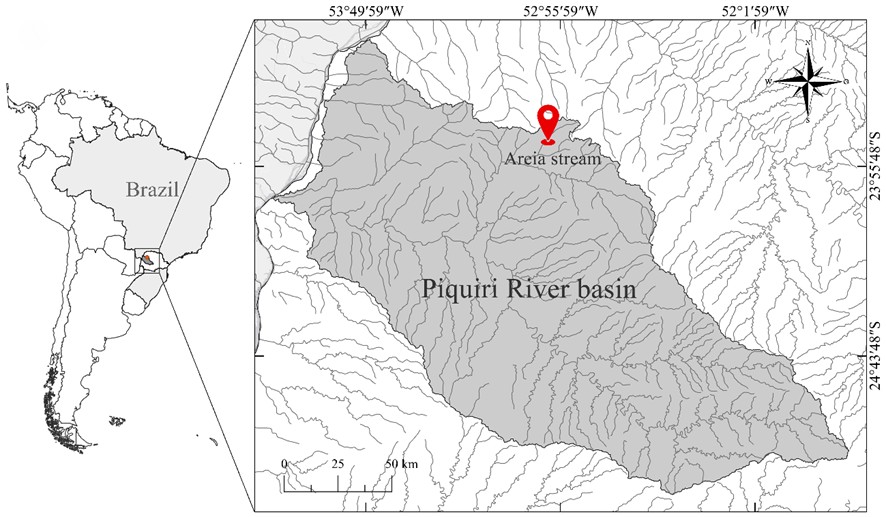
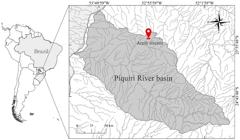
The Piquiri River Basin, which is entirely located in the state of Paraná, covers an area of 24,156 km2 (IAT, 2008). The Areia stream, which comprises the study area, is a first-order stream belonging to the Piquiri River Basin and is located between the municipalities of Tuneiras do Oeste and Cruzeiro do Oeste (23º49'25.12''S 52º58'54.25''W; Figure 1). Although it is a stream located in an area of agricultural influence, there is an extensive ecological corridor of riparian vegetation that can function as a buffer for the aquatic ecosystem.
2.2. Sampling
Fish were collected during a single sampling event conducted in August 2017, during the winter season. The individuals were collected through electrofishing, which was performed using a portable electric current generator (220 V, 50-60 Hz, 3.4-4.1 A, 100 W) connected to two electrodes by a flexible cable measuring 60 m in length. The electrodes consist of two circular hand nets with aluminum frames and a net bag with 1.5 mm meshes. Three successive rounds of electrofishing were performed in the downstream-upstream direction, lasting approximately 30 minutes each, in a 50-meter stretch. After capture, the fish were placed in plastic bags, anesthetized, and fixed in 4% formalin and preserved in 70% alcohol. The protocol was approved by the Committee on the Ethics of Animal Experiments of the Universidade Federal do Rio Grande do Sul (Protocol Number CEUA– 32,734). The fish sampling was conducted under license from the Instituto Chico Mendes de Conservação da Biodiversidade (ICMBio) (Number processes: 25039; 27252).
2.3. Laboratory procedures
Fishes individuals were identified according to specific keys (Graça & Pavanelli, 2007; Ota et al., 2018). A total of 629 fish were captured in the assemblage, of which 109 were I. schubarti (17.3% of the community), indicating that the species was numerically abundant and well represented in the stream. Of these, 61 individuals were used in the morphometric and diet analyses in the present study, while the remaining specimens were used in other studies.
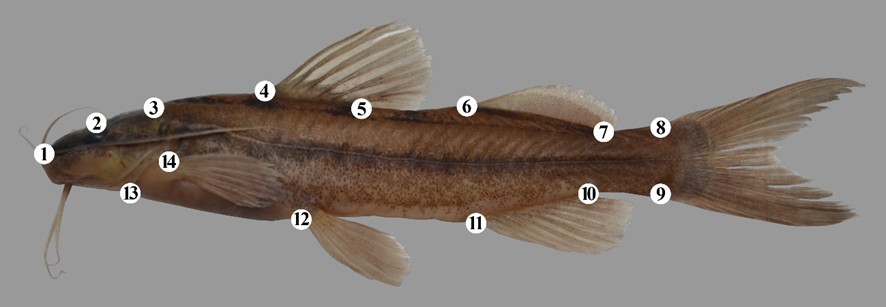
After identification, the total and standard length (SL) and the total mass (g) of the individuals were measured. Geometric morphometrics was used as a tool to evaluate the external morphology of the 61 sampled I. schubarti individuals. Two-dimensional images of the left side of the individuals in lateral view were obtained using a digital camera (Model: Nikon D3100; Resolution: 14 megapixels). The images of the fish were digitized using the tpsUTIL software (Rohlf, 2015) and the 14 anatomical landmarks were digitized at the homologous points of the body using tpsDIG2 (Figure 2): 1) anterior tip of snout; 2) point above the upper margin of the eye socket; 3) posterior tip of head; 4) origin of dorsal fin; 5) insertion of dorsal fin; 6) origin of adipose fin; 7) insertion of adipose fin; 8) origin of anterior dorsal ray of caudal fin; 9) origin of anterior ventral ray of caudal fin; 10) origin of anal fin; 11) insertion of anal fin; 12) origin of pelvic fin; 13) intersection of gill opening and ventral margin of body; and 14) origin of pectoral fin (Sassi et al., 2021; Dwivedi et al., 2022) (Figure 2). The morphological landmarks were chosen according to their ability to capture the general shape of the fish body, as well as functional structures for locomotion and feeding.
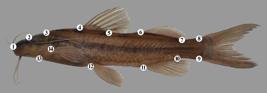
Individual of Imparfinis schubarti with 14 landmarks: 1) anterior tip of snout; 2) point above the upper margin of the eye socket; 3) posterior tip of head; 4) origin of dorsal fin; 5) insertion of dorsal fin; 6) origin of adipose fin; 7) insertion of adipose fin; 8) origin of anterior dorsal ray of caudal fin; 9) origin of anterior ventral ray of caudal fin; 10) origin of anal fin; 11) insertion of anal fin; 12) origin of pelvic fin; 13) intersection of gill opening and ventral margin of body; and 14) origin of pectoral fin.
The stomachs of the same 61 individuals used in the geometric morphometric analyses were removed for stomach content analysis. Quantification of food items was performed using the volumetric method, by displacing each food item in a gridded Petri dish and compressing with glass slide until 1 mm (Hyslop, 1980). The number of quadrants occupied by each food item on the dish was multiplied by 0.001 to obtain volumes in milliliters as proposed by Hellawell & Abel (1971). Food items were identified under a stereomicroscope to the lowest possible taxonomic level using specific identification keys (Bicudo & Bicudo, 1970; Mugnai et al., 2010). The relative volume in percentage of each food item, obtained by the total volume of the item divided by the summed volume of all items, is available in Table 1.
Food items recorded in the diet of Imparfinis schubarti, categorized by origin. Values represent the relative volume (%) of each item across all stomachs analyzed.
2.4. Data analysis
To assess whether there is variation in the body morphology of I. schubarti with increasing body length, a geometric morphometrics analysis of homologous landmarks was performed. Undesired variations resulting from the position, orientation, and scale of individuals were removed through a Generalized Procrustes Analysis (GPA, Rohlf & Slice, 1990) was performed. Principal Component Analysis (PCA) was used to describe the main axes (Principal Components, PCs) of shape variation among individuals. Geometric morphometrics were performed in the R programming environment using the geomorph and RVAideMemoire packages.
To assess whether diet composition varied with body size and body shape, we used the relative volumetric contribution of each food item consumed by each individual. Diet composition was represented as a matrix of relative volumes, with rows corresponding to individuals and columns to food items. Because diet data consisted of proportional values bounded between 0 and 1, we applied an arcsine square-root transformation prior to analysis. We then fitted a multivariate linear model using the mvabund package in R (Wang et al., 2012), treating food items as multivariate responses and body size (CP) and body shape axes (PC1 and PC2 from the geometric morphometric PCA) as predictors. Model significance was assessed using resampling-based multivariate tests with 999 iterations, and item-specific responses were evaluated using multiplicity-adjusted univariate tests. Model adequacy was checked using diagnostic plots of residuals versus fitted values.
To investigate the individual specialization of the species, the relative volume of each food item was measured for each individual (that is, the percentage a food item represents of the total volume, given by the sum of all items, found in one individual stomach content). This was used to calculate the Proportional Similarity index (PSi), to assess the overlap between each individual's diet and the population’s diet, which ranges from 0 to 1, see Table 2 for more details. A value of 1 indicates complete overlap between all individuals and the population niche (i.e., no individual specialization), while lower values reflect narrower individual niches and, consequently, higher degrees of individual specialization (Bolnick et al., 2002). Then, the Individual Specialization index (IS) was measured by the average overlap between the individuals and the population niche (Table 2). The observed IS value was compared against a null distribution generated by Monte Carlo resampling (1000 simulations) to determine whether the observed degree of specialization differed significantly from what would be expected under random resource use.
Summary of indices used in this study, including their ecological meaning, conceptual description, R functions, and theoretical references. All indices were calculated in R using the RInSp package (Zaccarelli et al., 2013).
Since the IS index measures the overlap between each individual's diet and the population’s average diet, but does not account for pairwise overlap among individuals, we also applied the E index of individual specialization, which ranges from 0 (all individuals use the same resources in identical proportions) to 1 (each individual exclusively uses different resources) (Araújo et al., 2008). To correct for potential inflation of E values in cases where individuals consume few resource types, we used the adjusted E index (Table 2), which standardizes the observed E value based on the mean of null E values generated through Monte Carlo simulations (999 replicates). This approach allows testing whether the observed individual specialization differs significantly from random expectations.
With the same data matrix used for IS and E indices, we also calculated the Cws metric of modularity, which quantifies the degree to which individuals cluster based on shared resource use (Table 2). Cws values range from -1 to +1, where values near -1 indicate overdispersed diets (each individual using a unique set of resources), values near +1 reflect modular organization (subgroups of individuals sharing the same subset of resources), and values close to 0 represent a random distribution of resource use without clear clustering (Araújo et al., 2008). As with the E index, the observed Cws was compared against a null distribution generated by Monte Carlo simulations to assess whether the observed modularity differed from random expectations.
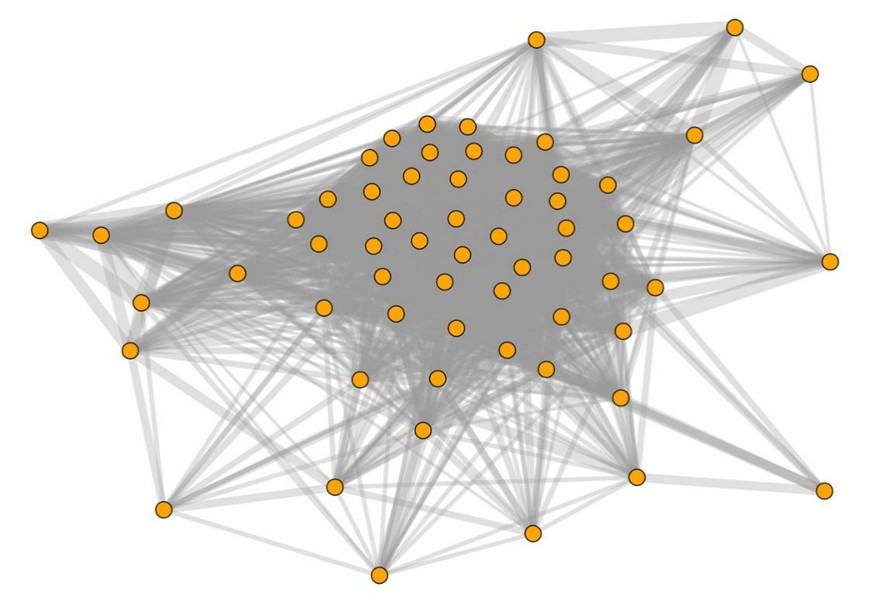
Pairwise diet similarity among individuals was derived from the same proportional diet matrix used to calculate the E index of individual specialization. Specifically, the E index framework computes pairwise dietary overlap between all pairs of individuals based on the proportional contribution of each food item in their diets (Araújo et al., 2008). These pairwise overlap values were extracted from the E index output and used to build an undirected, weighted network, in which nodes represent individuals and edges represent the degree of dietary similarity between pairs of individuals. Edge weights were proportional to pairwise dietary overlap values, such that stronger links indicate higher similarity in resource use. Network visualization was performed using a Fruchterman–Reingold layout to highlight patterns of trophic similarity among individuals within the population.
We also calculated the Nestedness metric based on Overlap and Decreasing Fill (NODF), in this case using a binary diet matrix. NODF values range from 0 to 100, where values close to 0 indicate a lack of nestedness, and values approaching 100 indicate a perfectly nested structure (Table 2). In the context of individual specialization, a nested pattern implies that the diet of some individuals represents a subset of the diets of more generalist individuals. A high NODF value suggests nestedness, where specialists consume only items also used by generalists, whereas a low NODF value indicates dietary clustering, with individuals forming distinct groups based on unique resource use. All individual specialization indexes (Table 2) were measured with the RInSp package (Zaccarelli et al., 2013).
To assess the influence of body size and shape on individual specialization, we employed a beta regression model, by using the betareg R package (Cribari-Neto & Zeileis, 2010), which is appropriate for continuous proportional variables within the open interval (0, 1), using standard length, PC1 and PC2 from the geometric morphometrics PCA as predictors of PSi. The model was fitted using a logit link function and maximum likelihood estimation and was evaluated using pseudo-R2. Prior to the model, we checked for multicollinearity with Variance Inflation Factors (accepting VIF < 3).
3. Results
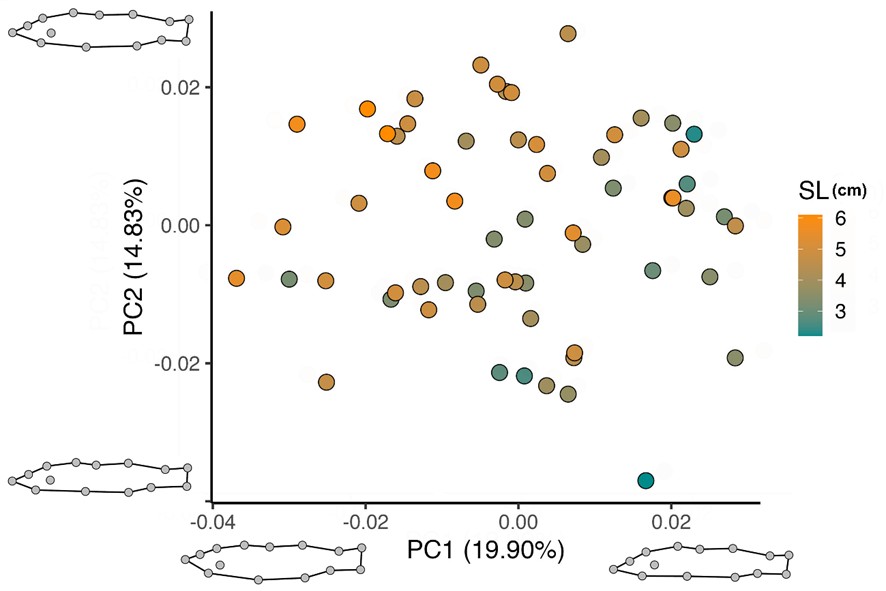
The standard length of I. schubarti individuals ranged from 2.2 cm to 6.1 cm, with a mean of 4.33 cm (± 0.95 cm SD). The first two axes of the PCA (Figure 3) explained 34.73% of the variability in body shape among individuals. On axis 1 (19.90% of variation), individuals located at the negative end had a deeper belly, while those at the positive end had a shallower belly. On axis 2 (14.83% of variation), subtle variations were observed in the caudal peduncle region, with this portion being relatively more elongated in individuals positioned at the negative end compared to the positive end. Despite these subtle differences, an overlap was observed between individuals of different sizes in relation to body shape.
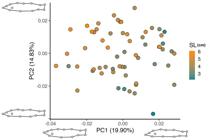
Result of principal component analysis (PCA) showing the intraspecific morphological differences of Imparfinis schubarti and their relationships along the standard length (SL) in Areia stream, Paraná, Brazil. The graph shows the deformation plates demonstrating the variation between the shape of the individuals.
Diet composition was not significantly associated with body length or body shape. Multivariate linear model revealed no effect of body length (F = 19.05, p = 0.115), PC1 (F = 12.17, p = 0.899), or PC2 (F = 9.90, p = 0.980) on diet composition.
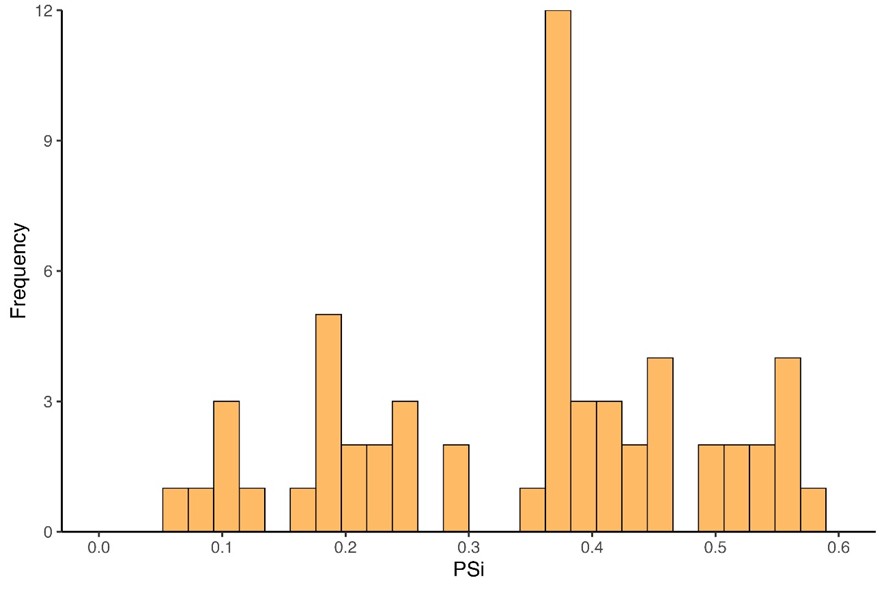
The population exhibited individual specialization (IS = 0.36), which differed significantly from the null distribution generated by Monte Carlo simulations (p < 0.001). The distribution of PSi values revealed the coexistence of moderately specialized individuals and a few highly specialized ones (Figure 4). There was no significant effect of standard length or body shape (PC1 and PC2) on PSi (SL: z = 1.659, p = 0.097; PC1: z = –0.281, p = 0.778; PC2: z = –0.804, p = 0.421). The model explained a low proportion of variance (pseudo-R2 = 0.063), also indicating that variation in PSi was not associated with body size or shape.
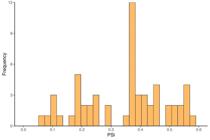
Distribution of the Proportional Similarity index (PSi) values for individual diets in Imparfinis schubarti. PSi theoretically ranges from 0 (no overlap with the population diet) to 1 (complete overlap). In this study, observed PSi values ranged from 0.056 to 0.644. Lower PSi values indicate higher individual specialization, while higher values indicate more generalist individuals.
The adjusted E index was high (Eadj = 0.688), indicating a significant degree of individual specialization in the population when compared to the null expectation (mean Enull = 0.17; p < 0.001). The degree of clustering in the diet similarity network was low (Cws= –0.0018) and did not differ from the null expectation (p = 0.999), suggesting that the observed network structure is not more modular than expected by chance. The diet similarity network revealed a highly interconnected population, with most individuals showing substantial overlap in resource use, and few peripheral individuals (Figure 5). No well-defined clusters were detected, indicating that the organization of individual diets does not follow a modular pattern. Consistently, the nestedness metric based on overlap and decreasing fill was moderate (NODF = 44.51), suggesting only partial nestedness in resource use among individuals.
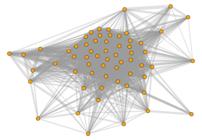
Weighted network of pairwise dietary similarity among individuals of Imparfinis schubarti. Each node represents an individual, and edge thickness is proportional to the individual pairwise diet composition similarity.
4. Discussion
In this study, no marked morphological changes associated with increasing body length were identified, suggesting that individuals of I. schubarti maintain relatively constant body proportions throughout growth. This is the first work to investigate the relationship between morphology variation, body length and individual specialization in I. schubarti, representing an initial step toward understanding the species population dynamics. Moreover, this study provides a first step for future research that may include temporal and spatial variation in these population aspects.
Even characteristics frequently associated with changes in resource use, such as body depth and caudal peduncle length, exhibited subtle variations with no clear pattern in relation to body size. Studies such as Lima-Júnior & Goitein (2003), also conducted on a catfish species, showed that some species maintain similar body proportions as body length increases, even in the presence of diet-related changes. On the other hand, other catfishes such as Horabagrus brachysoma (Günther, 1864) present growth accompanied by functional morphological changes, which directly influence feeding behavior, microhabitat use, and swimming performance (Prasad & Anvar Ali, 2008). These results highlight that the absence of morphological variations throughout increasing body length may be a species-specific characteristic, which prevents generalizations. As shown by Lima-Júnior & Goitein (2003), increases in body length do not always affect body shape in catfishes. Although rarely published, null results like these contribute to a more complete understanding of the relationship between size and morphology.
Unlike studies that report changes in diet composition with increasing catfish body size (Lima-Júnior & Goitein, 2003; Prasad & Anvar Ali, 2008; Manetta et al., 2011), our data do not indicate significant changes along the body size gradient in the diet of I. schubarti. The absence of differences in diet composition throughout growth has been observed in some fish species, whose morphological, physiological or behavioral limitations do not favor marked dietary transitions as size increases (Sánchez-Hernández et al., 2022). In addition, other factors such as competition, prey availability, swimming capacity and intestinal length may influence the change or absence of variations in trophic structure (Sánchez‐Hernández et al., 2019).
The I. schubarti population exhibited a high degree of individual specialization, characterized by the coexistence of generalist individuals and a few highly specialized ones. The absence of significant effects of standard length and body shape on the degree of specialization suggests that interindividual variation in resource use is not necessarily explained by morphological traits. This finding indicates that individual dietary specialization in this species may arise independently of visible morphological differentiation, potentially driven by other factors such as intraspecific competition (e.g., resource partitioning), behavior (e.g., individual boldness), physiology (e.g., specific digestive enzymes), learning (e.g., prey handling experience), or even cognitive constraints (e.g., the ability to remember only a limited set of prey types) (Bolnick et al., 2003). The expression of food preferences may also result from the interaction of multiple ecological and social factors, including prey availability, environmental heterogeneity, social interactions and even population density (Araújo et al., 2008), all of which can shape resource use in a highly individualized manner.
Analysis of the degree of clustering of individuals based on resource sharing revealed a broad overlap of most individuals and the absence of clustering. The lack of modularity in the clustering network indicates that individuals do not organize themselves into subgroups with similar diets, as would be expected in a modular structure (Araújo et al., 2008). Furthermore, the intermediate value of the nestedness metric indicates that individual diets are neither strictly hierarchical nor fully segregated. In a strongly nested structure, specialist individuals would consume only subsets of the resources used by generalists.
However, in our system, individuals with narrower diets often exploit the same high-value or locally abundant resources as more generalist individuals, which makes sense particularly when resource availability is spatially patchy or temporally constrained (Bolnick et al., 2003). This partial sharing of resources prevents the formation of a clear subset structure, resulting instead in an intermediate nestedness pattern. Thus, rather than reflecting a strict specialist-generalist hierarchy, the observed nestedness suggests a flexible dietary organization in which most individuals overlap with several others, while only a few exhibit more restricted diets. Although our analyses focused exclusively on intraspecific trophic organization, such extensive resource sharing may also favor trophic niche overlap with other sympatric species with similar feeding habits, an aspect that can be explored in future studies.
It is important to highlight that the analyses were based on a single sampling event, which imposes spatial and temporal limitations on the dataset and should be considered when interpreting the results. The lack of temporal and spatial replication may obscure individual feeding preferences and aggregation patterns, as these metrics can vary over time. Therefore, the conclusions presented should be interpreted with caution. Future studies incorporating sampling across different seasons, greater spatial replication, and assessment of food availability are necessary to more robustly understand the factors driving individual specialization in I. schubarti. Another important limitation concerns the geometric morphometric approach, as the selected landmarks may not fully capture the subtle nuances of mouth position and morphological variation among specimens. Because mouth morphology represents an aspect of body shape that can influence individual specialization, the inability to adequately quantify this trait may have reduced our capacity to detect fine-scale relationships between morphology and diet in the present study.
Our findings demonstrate that individuals of I. schubarti did not exhibit marked morphological variation or significant dietary shifts as body length increases. These results support the notion that, in some species, morphological and trophic traits may remain relatively stable during growth. We highlight the importance of reporting negative or non-significant results, as they are essential for building a comprehensive understanding of a species natural history and contribute valuable baseline information for future studies. Furthermore, the observed coexistence of generalist and highly specialized individuals, without corresponding morphological differentiation, suggests that individual specialization may arise from alternative mechanisms, such as behavioral strategies or physiological traits. These results reinforce the view that functional individuality in trophic ecology can emerge independently of external morphological changes and may instead be shaped by complex interactions among traits and ecological context.
Acknowledgements
This study was financed in part by the Coordenação de Aperfeiçoamento de Pessoal de Nível Superior – Brazil (CAPES) – Finance Code 001. JHAC is financed by the São Paulo Research Foundation (FAPESP), Brazil, Process Number #2023/14344-5. We thank everyone who helped during the fieldwork.
Data availability
Research data analyzed in this study is not publicly available by any means, but will be made available to anyone who requests it.
-
Cite as:
Selinger, A., et al. Morphological variation and trophic individual specialization of Imparfinis schubarti (Gomes, 1956). Acta Limnologica Brasiliensia, 2026, vol. 38, e11. https://doi.org/10.1590/S2179-975X5425
References
-
Almeida-Neto, M., Guimarães, P., Guimarães Junior, P.R., Loyola, R.D., & Ulrich, W., 2008. A consistent metric for nestedness analysis in ecological systems: reconciling concept and measurement. Oikos 117(8), 1227-1239. https://doi.org/10.1111/j.0030-1299.2008.16644.x
» https://doi.org/10.1111/j.0030-1299.2008.16644.x -
Araújo, M.S., Guimarães Junior, P.R., Svanbäck, R., Pinheiro, A., Guimarães, P., Reis, S.F.D., & Bolnick, D.I., 2008. Network analysis reveals contrasting effects of intraspecific competition on individual vs. population diets. Ecology 89(7), 1981-1993. PMid:18705384. https://doi.org/10.1890/07-0630.1
» https://doi.org/10.1890/07-0630.1 -
Araújo, M.S., Martins, E.G., Cruz, L.D., Fernandes, F.R., Linhares, A.X., Reis, S.F., & Guimarães Junior, P.R., 2010. Nested diets: a novel pattern of individual‐level resource use. Oikos 119(1), 81-88. https://doi.org/10.1111/j.1600-0706.2009.17624.x
» https://doi.org/10.1111/j.1600-0706.2009.17624.x - Bicudo, C.E. & Bicudo, R.M.T., 1970. Algas de águas continentais brasileiras. São Paulo: Fundação Brasileira para o Desenvolvimento do Ensino de Ciências.
-
Bolnick, D.I., Yang, L.H., Fordyce, J.A., Davis, J.M., & Svanbäck, R., 2002. Measuring individual‐level resource specialization. Ecology 83(10), 2936-2941. https://doi.org/10.1890/0012-9658(2002)083[2936:MILRS]2.0.CO;2
» https://doi.org/10.1890/0012-9658(2002)083[2936:MILRS]2.0.CO;2 -
Bolnick, D.I., Svanbäck, R., Fordyce, J.A., Yang, L.H., Davis, J.M., Hulsey, C.D., & Forister, M.L., 2003. The ecology of individuals: incidence and implications of individual specialization. Am. Nat., 161(1), 1-28. PMid:12650459. https://doi.org/10.1086/343878
» https://doi.org/10.1086/343878 -
Buchheister, A., & Latour, R.J., 2015. Diets and trophic‐guild structure of a diverse fish assemblage in Chesapeake Bay, USA. J. Fish Biol., 86(3), 967-992. PMid:25627041. https://doi.org/10.1111/jfb.12621
» https://doi.org/10.1111/jfb.12621 - Castro, R.M., & Casatti, L., 1997. The fish fauna from a small forest stream of the upper Paraná River basin, southeastern Brazil. Ichthyol. Explor. Freshwat., 7, 337-352.
-
Cribari-Neto, F., & Zeileis, A., 2010. Beta regression in R. J. Stat. Softw., 34(2), 1-24. https://doi.org/10.18637/jss.v034.i02
» https://doi.org/10.18637/jss.v034.i02 -
Dala-Corte, R.B., Silva, E.R.D., & Fialho, C.B., 2016. Diet-morphology relationship in the stream-dwelling characid Deuterodon stigmaturus (Gomes, 1947) (Characiformes: Characidae) is partially conditioned by ontogenetic development. Neotrop. Ichthyol., 14(02), e150178. https://doi.org/10.1590/1982-0224-20150178
» https://doi.org/10.1590/1982-0224-20150178 -
Dwivedi, A.K., Verma, H.O., & Dewan, S., 2022. Diversification of body shape in catfishes of the Ganga River. Natl. Acad. Sci. Lett., 45(6), 497-502. https://doi.org/10.1007/s40009-022-01168-w
» https://doi.org/10.1007/s40009-022-01168-w -
Esteves, K.E., Aranha, J.M.R., & Albrecht, M.P., 2021. Ecologia trófica de peixes de riacho: uma releitura 20 anos depois. Oecol. Aust., 25(2), 282. https://doi.org/10.4257/oeco.2021.2502.04
» https://doi.org/10.4257/oeco.2021.2502.04 -
Froese, R., & Pauly, D., 2000. FishBase 2000: concepts, design and data sources. Retrieved in 2025, October 8, from https://fishbase.mnhn.fr/search.php?lang=Portuguese
» https://fishbase.mnhn.fr/search.php?lang=Portuguese - Graça, W.J., & Pavanelli, C.S., 2007. Peixes da planície de inundação do alto rio Paraná e áreas adjacentes. Maringá: Eduem.
-
Hellawell, J.M., & Abel, R., 1971. A rapid volumetric method for the analysis of the food of fishes. J. Fish Biol., 3(1), 29-37. https://doi.org/10.1111/j.1095-8649.1971.tb05903.x
» https://doi.org/10.1111/j.1095-8649.1971.tb05903.x -
Hyslop, E.J., 1980. Stomach contents analysis: a review of methods and their application. J. Fish Biol., 17(4), 411-429. https://doi.org/10.1111/j.1095-8649.1980.tb02775.x
» https://doi.org/10.1111/j.1095-8649.1980.tb02775.x -
Instituto Água e Terra – IAT, 2008. Avaliação Ambiental (Bacia do Rio Piquiri). Curitiba: IAT. Retrieved in 2025, May 12, from https://www.iat.pr.gov.br/Pagina/Avaliacao-Ambiental
» https://www.iat.pr.gov.br/Pagina/Avaliacao-Ambiental -
Lima-Júnior, S.E., & Goitein, R., 2003. Ontogenetic diet shifts of a Neotropical catfish, Pimelodus maculatus (Siluriformes, Pimelodidae): an ecomorphological approach. Environ. Biol. Fishes 68(1), 73-79. https://doi.org/10.1023/A:1026079011647
» https://doi.org/10.1023/A:1026079011647 -
Manetta, G.I., Bialetzki, A., Santos Neto, C., Martinelli, L.A., & Benedito, E., 2011. Ontogenetic changes in the food items assimilated by Plagioscion squamosissimus (Perciformes: Sciaenidae) and Hypophthalmus edentatus (Siluriformes: Pimelodidae). J. Freshwat. Ecol., 26(3), 315-321. https://doi.org/10.1080/02705060.2011.556413
» https://doi.org/10.1080/02705060.2011.556413 -
Manna, L.R., & Rezende, C.F., 2021. Variação intraespecífica em peixes de riacho com ênfase na ecologia trófica. Oecol. Aust., 25(2), 322. https://doi.org/10.4257/oeco.2021.2502.06
» https://doi.org/10.4257/oeco.2021.2502.06 -
Manna, L.R., Villéger, S., Rezende, C.F., & Mazzoni, R., 2019. High intraspecific variability in morphology and diet in tropical stream fish communities. Ecol. Freshwat. Fish 28(1), 41-52. https://doi.org/10.1111/eff.12425
» https://doi.org/10.1111/eff.12425 -
Mazzoni, R., Moraes, M., Rezende, C.F., & Miranda, J.C., 2010. Alimentação e padrões ecomorfológicos das espécies de peixes de riacho do alto rio Tocantins, Goiás, Brasil. Iheringia Ser. Zool., 100(2), 162-168. https://doi.org/10.1590/S0073-47212010000200012
» https://doi.org/10.1590/S0073-47212010000200012 - Mugnai, R., Nessimian, J.L., & Baptista, D.F., 2010. Manual de identificação de macroinvertebrados aquáticos do estado do Rio de Janeiro: para atividades técnicas, de ensino e treinamento em programas de avaliação da qualidade ecológica dos ecossistemas lóticos. Rio de Janeiro: Technical Books Editora.
-
Neves, M.P., Silva, J.C., Baumgartner, D., Baumgartner, G., & Delariva, R.L., 2018. Is resource partitioning the key? The role of intra‐interspecific variation in coexistence among five small endemic fish species (Characidae) in subtropical rivers. J. Fish Biol., 93(2), 238-249. PMid:30241113. https://doi.org/10.1111/jfb.13662
» https://doi.org/10.1111/jfb.13662 -
Ornelas‐García, C.P., Córdova‐Tapia, F., Zambrano, L., Bermúdez‐González, M.P., Mercado‐Silva, N., Mendoza‐Garfias, B., & Bautista, A., 2018. Trophic specialization and morphological divergence between two sympatric species in Lake Catemaco, Mexico. Ecol. Evol., 8(10), 4867-4875. PMid:29876065. https://doi.org/10.1002/ece3.4042
» https://doi.org/10.1002/ece3.4042 -
Ota, R.R., Deprá, G.D.C., Graça, W.J.D., & Pavanelli, C.S., 2018. Peixes da planície de inundação do alto rio Paraná e áreas adjacentes: revised, annotated and updated. Neotrop. Ichthyol., 16(2), e170094. https://doi.org/10.1590/1982-0224-20170094
» https://doi.org/10.1590/1982-0224-20170094 -
Peretti, D., & Andrian, I.D.F., 2004. Trophic structure of fish assemblages in five permanent lagoons of the high Paraná River floodplain, Brazil. Environ. Biol. Fishes 71(1), 95-103. https://doi.org/10.1023/B:EBFI.0000043155.76741.a1
» https://doi.org/10.1023/B:EBFI.0000043155.76741.a1 -
Prasad, G., & Anvar Ali, P.H., 2008. Morphology of the diet in the gut of threatened yellow catfish Horabagrus brachysoma (Gunther 1864) at two life stages. Fish Physiol. Biochem., 34(4), 385-389. PMid:18958596. https://doi.org/10.1007/s10695-007-9198-6
» https://doi.org/10.1007/s10695-007-9198-6 -
Reis‐Júnior, J., Bertrand, A., Frédou, T., Vasconcelos‐Filho, J., Aparecido, K.C., & Duarte‐Neto, P.J., 2023. Community‐scale relationships between body shape and trophic ecology in tropical demersal marine fish of northeast Brazil. J. Fish Biol., 102(5), 1017-1028. PMid:36794454. https://doi.org/10.1111/jfb.15350
» https://doi.org/10.1111/jfb.15350 -
Rohlf, F.J., & Slice, D., 1990. Extensions of the Procrustes method for the optimal superimposition of landmarks. Syst. Zool., 39(1), 40-59. https://doi.org/10.2307/2992207
» https://doi.org/10.2307/2992207 -
Rohlf, F.J., 2015. The tps series of software. Hystrix 26(1), 9-12. https://doi.org/10.4404/hystrix-26.1-11264
» https://doi.org/10.4404/hystrix-26.1-11264 -
Sánchez‐Hernández, J., Nunn, A.D., Adams, C.E., & Amundsen, P.A., 2019. Causes and consequences of ontogenetic dietary shifts: a global synthesis using fish models. Biol. Rev. Camb. Philos. Soc., 94(2), 539-554. PMid:30251433. https://doi.org/10.1111/brv.12468
» https://doi.org/10.1111/brv.12468 -
Sánchez-Hernández, J., Prati, S., Henriksen, E.H., Smalås, A., Knudsen, R., Klemetsen, A., & Amundsen, P.A., 2022. Exploring temporal patterns in fish feeding ecology: are ontogenetic dietary shifts stable over time? Rev. Fish Biol. Fish., 32(4), 1141-1155. https://doi.org/10.1007/s11160-022-09724-9
» https://doi.org/10.1007/s11160-022-09724-9 -
Sassi, F.D.M.C., Perez, M.F., Silva, M.A., & Frehner, K., 2021. Can geometric morphometrics work for species clusteriza-tion on the armored catfish Hypostomus Lacépède, 1803 (Siluriformes Loricariidae)? Biodivers. J., 12(1), 147-153. https://doi.org/10.31396/Biodiv.Jour.2021.12.1.147.153
» https://doi.org/10.31396/Biodiv.Jour.2021.12.1.147.153 -
Severo-Neto, F., Teresa, F.B., & Froehlich, O., 2015. Ecomorfologia e dieta refletem a segregação entre duas espécies de Siluriformes que habitam um córrego do Planalto da Bodoquena, no Brasil Central. Iheringia Ser. Zool., 105, 62-68. https://doi.org/10.1590/1678-4766201510516268
» https://doi.org/10.1590/1678-4766201510516268 -
Silva, J.C.D., Delariva, R.L., & Bonato, K.O., 2012. Food-resource partitioning among fish species from a first-order stream in northwestern Paraná, Brazil. Neotrop. Ichthyol., 10(2), 389-399. https://doi.org/10.1590/S1679-62252012005000008
» https://doi.org/10.1590/S1679-62252012005000008 -
Wang, Y., Naumann, U., Wright, S.T., & Warton, D.I., 2012. Mvabund- an R package for model-based analysis of multivariate abundance data. Methods Ecol. Evol., 3(3), 471-474. https://doi.org/10.1111/j.2041-210X.2012.00190.x
» https://doi.org/10.1111/j.2041-210X.2012.00190.x -
Zaccarelli, N., Bolnick, D.I., & Mancinelli, G., 2013. RInSp: an R package for the analysis of individual specialization in resource use. Methods Ecol. Evol., 4(11), 1018-1023. https://doi.org/10.1111/2041-210X.12079
» https://doi.org/10.1111/2041-210X.12079
Edited by
-
Associate Editor:
Priscilla de Carvalho.