 The potential of recreational activities in promoting students’ mental health
Abstract
Objective To evaluate the potential of a recreational activity related to mental health to improve the mood and quality of life of first-year nursing students.
Methods This was a pre- and post-test pilot study of a recreational activity in the form of a workbook with activities focusing on ways of dealing with emotions. Data collection occurred between May and June of 2023. A total of 39 students participated in the pre-test, and 26 of them completed the post-test stage. The Brunel Mood Scale, the psychological dimension of the quality-of-life questionnaire (WHOQOL-Bref, from the World Health Organization), and sociodemographic questions (administered before and after the activity) were used. The analyses were performed using descriptive statistics and nonparametric tests.
Results Concentration ability (p=0.031) and frequency of negative feelings (p=0.021) showed considerable improvement in the post-test, and fatigue (p=0.041), tension (p=0.005), and confusion (p=0.003) decreased significantly.
Conclusion The recreational activity improved mood and psychological domain of quality of life in first-year nursing students. Recreational activities of this nature provide a quality break in the study routine, also offering a certain degree of relaxation and leisure. This has a positive impact on the sense of well-being, highlighting the potential for incorporating recreational activities into the technical field of mental health promotion.
Keywords
Mental Health; Psychosocial intervention; Students; Health promotion; Quality of life; Surveys and questionnaires
Resumo
Objetivo Avaliar o potencial de uma atividade lúdica relacionada ao tema saúde mental para melhorar o humor e a qualidade de vida de estudantes universitários no primeiro ano do curso de enfermagem.
Métodos Trata-se de um estudo piloto, tipo pré e pós-teste, de uma atividade lúdica no formato de caderno de passatempo com atividades versando sobre os modos de lidar com as emoções. A coleta de dados foi realizada entre maio e junho de 2023. Um total de 39 alunos participaram no pré-teste e 26 deles completaram a etapa do pós-teste. Foram utilizados a Escala de Humor de Brunel, a dimensão psicológica do questionário de qualidade de vida (WHOQOL-Bref, da Organização Mundial da Saúde) e questões sociodemográficas (aplicados antes e após o passatempo). As análises foram realizadas utilizando estatística descritiva e testes não paramétricos.
Resultados A capacidade de concentração (p=0,031) e frequência de sentimentos negativos (p=0,021) apresentaram melhora considerável no pós-teste e fadiga (p=0,041), tensão (p=0,005) e confusão (p=0,003), diminuíram significativamente.
Conclusão A atividade lúdica usada melhorou o humor e o domínio psicológico da qualidade de vida em graduandos no primeiro ano do curso de enfermagem. Atividades lúdicas desse teor possibilitam um intervalo de qualidade na rotina de estudos, proporcionando também certo grau de relaxamento e lazer. Isso se reflete positivamente na sensação de bem-estar, destacando o potencial de incorporar atividades lúdicas no campo técnico da promoção da saúde mental.
Descritores
Saúde mental; Intervenção psicossocial; Estudantes; Promoção da saúde; Qualidade de vida; Inqueritos e questionários
Resumen
Objetivo Evaluar el potencial de una actividad lúdica relacionada con el tema de la salud mental para mejorar el estado de ánimo y la calidad de vida de los estudiantes universitarios en el primer año de la carrera de enfermería.
Métodos Se trata de un estudio piloto, de tipo pretest y postest, de una actividad lúdica en formato de cuaderno de pasatiempos con actividades relacionadas con las formas de manejar las emociones. La recopilación de datos se realizó entre mayo y junio de 2023. Un total de 39 estudiantes participaron en el pretest y 26 de ellos completaron la etapa del postest. Se utilizó la Escala de Humor de Brunel, la dimensión psicológica del cuestionario de calidad de vida de la Organización Mundial de la Salud (WHOQOL-Bref) y preguntas sociodemográficas (aplicadas antes y después del pasatiempo). Los análisis se realizaron utilizando estadística descriptiva y pruebas no paramétricas.
Resultados La capacidad de concentración (p=0,031) y la frecuencia de sentimientos negativos (p=0,021) mostraron una mejora considerable en el postest, y la fatiga (p=0,041), la tensión (p=0,005) y la confusión (p=0,003) disminuyeron significativamente.
Conclusión La actividad lúdica utilizada mejoró el estado de ánimo y el dominio psicológico de la calidad de vida en los estudiantes de primer año de la carrera de enfermería. Las actividades lúdicas de este tipo permiten un descanso de calidad en la rutina de estudios, lo que también proporciona cierto grado de relajación y ocio. Esto se refleja positivamente en la sensación de bienestar y destaca el potencial de incorporar actividades lúdicas en el campo técnico de la promoción de la salud mental.
Descriptores
Salud mental; Intervención psicosocial; Estudiantes; Promoción de la salud; Calidad de vida; Encuestas y cuestionarios
Introduction
Studies on mental health promotion activities for high school and college students have been conducted in several countries around the world, reporting the use of different strategies, such as classes on mental health-related topics, computer-based interventions, and individual and/or group approaches based on life plans.(1-6)
The effects of classes on mental health among high school students and single-session computerized interventions were positive in terms of mental health indicators, both after the interventions and in the two-month follow-up. Among university students, studies show that both individual approaches and group interventions also resulted in improved mental health among students.(3,5)
In addition, interventions based on yoga and meditation sessions, as well as the use of social media resources such as Facebook, have been shown to be effective in reducing symptoms of stress and anxiety and improving levels of self-esteem and self-efficacy perceived both after the intervention and during follow-up.(4,6)
The specific characteristics of nursing students should be addressed here. Studies have indicated that this group has higher rates of mental illness when compared to students in other health-related courses, as well as young adults in the same age group who do not attend higher education. Among the main findings are higher levels of burnout, depression, and anxiety.(7-9)
These results can be explained by the presence of multiple stressors that permeate these students’ academic trajectories, including changes in routine and lifestyle, challenges related to integration into clinical practices, and complex demands imposed by the overlap of personal responsibilities and the rigorous academic practices of the nursing program.(10,11)
In this context, studies that evaluated interventions aimed at promoting mental health in nursing students showed that strategies such as gamification and online activities contribute to improving self-efficacy and reducing symptoms of depression, anxiety, and stress.(8,9,12)
Therefore, it appears that a consolidated body of knowledge about the benefits of different approaches to improving students’ mental health exists. However, the interventions proposed by studies on this topic are generally more technical in nature, and the mental health indicators adopted in these studies focus mainly on the symptoms of mental disorders, stress, and anxiety.(1-6; 8,9,12)
The literature reveals a gap in terms of proposing and evaluating the potential of recreational activities in promoting students’ mental health, incorporating measures related to mood and health satisfaction, aiming at the intersection between mental health, general health, and well-being. The use of recreational resources is believed to favor the development of intellectual, social, and affective skills, serving not only as a therapeutic tool but also as a political stance capable of destabilizing traditional pedagogies. (13,14) It is, therefore, a powerful strategy for addressing the challenges experienced by undergraduate nursing students. The objective of this study was to evaluate the potential of a recreational activity related to mental health to improve the mood and quality of life of first-year nursing students.
Methods
This was a pre- and post-test pilot study conducted at a nursing school at a public university in the interior of the state of São Paulo, from May to June of 2023.
The study population consisted of students who enrolled in the nursing program. The college has approximately 130 new students each year. The eligibility criteria were, being over 18 years of age and having no visual impairment that would prevent reading the material used in the activity. Recruitment was conducted through the institutional communication platform that disseminates information via email to the academic community, and the invitation was reinforced in person by the researcher responsible during class breaks. A total of 39 students participated in the study’s pre-test, and 26 of them completed the post-test stage.
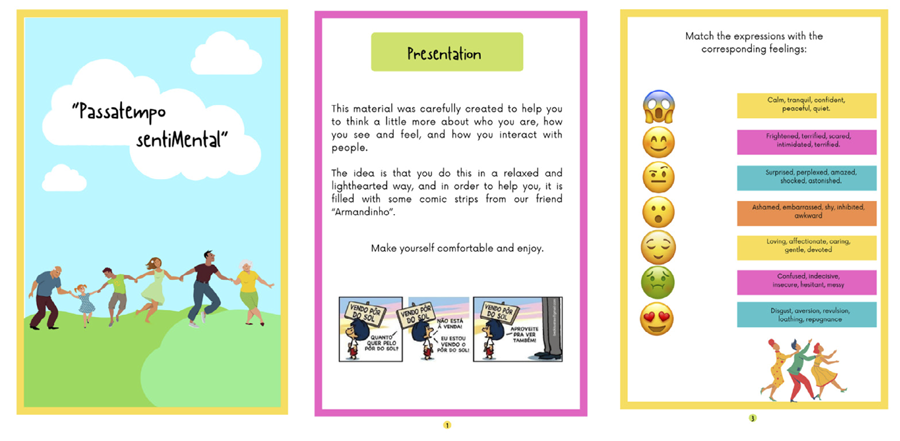
The proposed strategy consisted of a set of recreational activities on the mental health theme, compiled in the form of a book entitled “Passatempo sentiMental”, developed as part of a doctoral thesis.(15) The workbook contains six activities, including: crossword puzzles, mazes, and word searches related to the following themes: recognizing feelings, social skills, and expressing subjectivity.
Each activity is preceded by a short text that contextualizes the theme and is accompanied by Armandinho comic strips that illustrate the themes addressed (Figure 1). Cartoonist Alexandre Beck formally authorized the free use of his creations as part of the activity and approved its final version. The material is currently being registered at the National Library. Thus, the strategy consisted of having the study participants complete the activities in the activity.

Data were collected using sociodemographic questions developed by the researchers based on minimum indicators from the Brazilian Institute of Geography and Statistics (such as age, sex, race, marital status, and family income), the Brunel Mood Scale, and specific questions from the abbreviated version of the Quality-of-Life Assessment questionnaire (WHOQOL-Bref-World Health Organization Quality of Life - BREF
The Brunel Mood Scale consists of a structured questionnaire (24 items) subdivided into six domains: (1) Confusion: Responses to anxiety and/or depression manifested by feelings of uncertainty and instability in controlling emotions; (2) Depression: Related to a depressive state in which personal inadequacy is present. Indication of depressed mood and not clinical depression; 3) Fatigue: Emotional state ranging from mild feelings to stimuli of the autonomic nervous system; 4) Anger: Describes feelings of hostility from moods related to antipathy towards others and oneself; 5) Tension: Referring to high musculoskeletal tension, not observed directly or through psychomotor manifestations; (6) Vigor: States of energy, excitement, and activity, indicating a positive mood. (16)
To calculate the score, the response options were coded using a five-point Likert scale (where 0 = not at all and 4 = extremely). Thus, by adding the specific scores for each item, a score ranging from zero to 16 was obtained for each domain (mood state), such that the higher the domain value, the greater the manifestation of the respective mood.(16)
The WHOQOL-bref questionnaire was designed by the World Health Organization and produced by centers in various locations around the world. It consists of 26 questions that are answered using a Likert scale from 1 to 5 (1=very low; 5=very high). They are based on the ideas of intensity, capacity, frequency, and evaluation, depending on the question.(17)
In this project, only the two general questions on quality of life perception and health satisfaction were used: (1. How would you rate your quality of life?; 2. How satisfied are you with your health?), and the psychological domain corresponding to questions 5, 6, 7, 11, 19, and 26: (5. How much do you enjoy life?; 6. To what extent do you think your life has meaning?; 7. How well can you concentrate?; 11. Are you able to accept your physical appearance?; 19. How satisfied are you with yourself?; 26. How often do you have negative feelings such as bad mood, despair, anxiety, depression?), due to the perception that these two constructs were appropriate for the main objective proposed.(17)
In the pre-test stage, printed questionnaires were made available by the principal investigator at the time of recruitment, before participants received the hobby book. After completing the questionnaires, participants received the physical version of the activity book and were instructed to complete one activity per day. One week later (post-test), participants were again invited to answer the initial questions via Google Forms. Data were collected by the principal investigator. To minimize collection bias, the researcher conducted theoretical and practical training sessions on how to administer the instruments.
The data were transferred to a structured database in SPSS software, which was used for the statistical analyses. First, the percentages corresponding to the participants’ characteristics were calculated, and a table was created with their characteristics. Next, the mean and standard deviation of the scores for each dimension of the Mood Scale were calculated. The responses to the WHOQOL-bref questions were dichotomized (“satisfied” or “not satisfied”) for each aspect evaluated, and the percentage of participants who gave such responses was presented in a graph. The quantitative variables (Mood Scale scores) were submitted to the Kolmogorov-Smirnoff test, which identified the normality of the distribution in all dimensions (p>0.05), i.e., no evidence to reject the null hypothesis. The paired t-test was then used to compare the pre- and post-test measures of these scores. To analyze the questions related to quality of life in the pre- and post-test, the nonparametric McNemar test was used because it is appropriate for dichotomous categorical variables in paired measures. A significance level of 0.05 and a confidence interval of 95% were adopted.
This study was conducted in accordance with the guidelines and standards for research involving human subjects, in compliance with Resolution No. 466 (12/12/2012) of the National Health Council (Ministry of Health, Brasília, DF).(18)The project was approved by the Research Ethics Committee of the higher education institution (CAE: 58699922.7.0000.5393; Opinion: 5.782.937). The institution then authorized the research, and participants were invited to participate in the study at a time that did not interfere with their academic activities. Those who agreed to participate in the study were informed about the ethical aspects, signed the Terms of Free and Informed Consent Form, and were instructed to complete the instruments.
Results
Sociodemographic characteristics of participants
Regarding participant characteristics, as shown in Table 1, most students were female and self-identified as white (Table 1).
Pre-and post-test results
In the pre-test, as can be seen in Figure 2, overall quality of life was the dimension in which most students were satisfied, in contrast to the frequency of negative feelings (for which more than 40% reported dissatisfaction) and the ability to concentrate, which many of them reported as neither good nor bad (Figure 2).

Distribution of participants in the pretest in relation to self-perceived quality of life according to the WHOQOL-bref
The aspects of quality of life that most needed improvement showed significant modifications in the post-test. A total of 18 people (pre-test: 6 people; post-test: 12 people) reported being able to concentrate well (p=0.031). In addition, 20 people (pre-test: 14; post-test: 6) reported having frequent negative thoughts (p=0.021).
Regarding negative mood modulation, the domains that had the highest scores in the pre-test were fatigue, tension, and confusion, which were also those that were positively highlighted in the post-test measures, i.e., they showed a statistically significant reduction.
Positive mood (vigor) showed a slight reduction in descriptive terms (Table 2).
Discussion
Population specificity of the sample
The predominance of women in the sample enables us to question the historical feminization of nursing, a profession socially constructed as an extension of the caregiving role attributed to women.(19) This process of feminization reinforces the idea of a vocational profession, contributing to economic devaluation and imposing physical and emotional burdens, negatively impacting the mental health of these professionals.(19) In higher education, the reality is no different; the academic and personal demands placed on nursing students result in negative consequences for their mental health. A study that investigated symptoms of depression and anxiety and their association with the sociodemographic characteristics of nursing graduates in Juiz de Fora (MG) identified differences in the mean scores between genders, with women presenting higher values.(20) These findings are consistent with other studies, which point to worse mental health indicators among women, often related to the intersection of vulnerability factors (such as gender, cultural, biological, and social issues).(21) It is therefore recommended that future research thoroughly analyze the relationship between the feminization of nursing and mental health outcomes to support pedagogical strategies that consider gender differences in health training and care.
Perception of the psychological domain of quality of life
In this study, the overall quality of life was rated as good or very good by 80% of participants. This result is in line with previous studies conducted with Brazilian medical students.(22-23) In contrast, more than 40% of participants reported frequent negative feelings, a result also observed in a previous study, in which this item in the psychological domain obtained one of the highest means among the other domains of quality of life.(22)
The high frequency of negative feelings may reflect the different types of physical and psychological demands of health courses, which can contribute significantly to higher levels of stress. The high score in the “frequency of negative feelings” dimension was observed mainly in the items “inadequate sleep pattern” and “reduced leisure time.” These factors are considered a risk for high levels of stress and the development of common mental disorders identified in medical students in Brazill.(24)
In another study on quality of life, also developed with medical students in Brazil, the authors found that the psychological domain as a whole was the second worst rated, behind only the environmental domain. This suggests a higher risk of developing common mental disorders among students in this field.(25) Therefore, as the frequency of negative feelings is part of the psychological domain, the present study agrees with this finding.
The ability to concentrate was another aspect of quality of life that was negatively rated by students. A study from Taiwan, which used gamification in the teaching-learning process of undergraduate nursing students, identified a significant improvement in student performance, self-efficacy, and motivation to learn.(12) As the ability to concentrate is an important aspect related to cognitive issues, it is understood that its improvement can positively reflect on the performance of these students.
A study analyzed the relationship between certain activities (such as reading, playing video games, using computers, and playing sports) and attention levels in Brazilian children aged 6-11 years.(26) The study found a significant association between the habit of daily reading and greater attention skills, highlighting the importance of reading in improving concentration. As the use of technology is increasingly widespread, especially among young people (the target audience of the current study), and as it offers countless stimuli, this may be related to reduced attention span.(27)
The number of students who reported frequent negative feelings (a quality-of-life item highlighted in the pre-test data) decreased significantly, and the number of participants who reported being able to focus well doubled in the post-test. This finding also suggests that activities that provide distraction and consequent relaxation (in relation to the constant demands during the undergraduate period) can lead to better levels of concentration. As a result, students focus not only on their academic obligations, but also on leisure and entertainment. This provides flexibility and a kind of “rest” in cognitive exercise, which can lead to positive effects in this aspect. Another study conducted in São Paulo that assessed mental health interventions in students diagnosed with Attention Deficit Hyperactivity Disorder also used recreational activities and strategy games. They proved to be effective in stimulating the concentration, memory, and attention of these students, confirming the importance of interventions that incorporate student entertainment.(28)
Perception of mood modulation
With regard to the results for negative mood indicators, the highest scores identified in the pre-test were in the domains of tension, fatigue, and confusion, supporting the findings of a previous study with Brazilian professionals.(29) In both studies, fatigue and tension were the two most emphasized factors, although they were developed with different populations (professionals and students). This may indicate how the lifestyles adopted by society in today’s world (with heavy work or study loads) may be reflected in negative mood.
Similarly, a study involving 216 Brazilian students observed that physical exercise was directly related to mood perception. Physically inactive students showed lower levels of vigor and higher levels of negative mood, such as tension and fatigue.(30) Therefore, the strategy of encouraging physical activity is an important point to consider in promoting well-being, since increases in negative mood, especially fatigue, are related to changes in memory, concentration, and attention.(30)
The number of students who reported high levels of tension, fatigue, and confusion on the mood scale also decreased significantly in the post-test, suggesting the potential of recreational activities for these items as well. Studies conducted with Brazilian university students have indicated an association between stress levels and the development of anxiety disorders and academic impairment in this population.(31,32) These findings suggest that promoting relaxation and reducing stress may also help prevent anxiety.
The expectation regarding the findings was not that vigor would increase and all domains of negative mood would decrease, but rather that the domains of negative mood would not exceed the values of vigor (positive mood), since the healthy pattern (in relation to mood) is one of moderation, i.e., mood should not have polarized modulations. Therefore, the tension and fatigue scores in the pre-test were higher than the vigor score, however, this imbalance improved in the post-test, as the mean tension score was lower than that observed in the positive mood domain.
The reduction observed in tension and confusion scores was more significant than in fatigue scores. The latter showed a small reduction in the post-test, although the difference was statistically significant. This suggests that a single strategy is not sufficient to produce effective and uniform improvements in all multiple dimensions of the mental health construct. In order to achieve certain goals and objectives, it is therefore extremely important to promote diverse activities with different methods, purposes, and contexts.
Considering the findings obtained, the strategy used was identified as promising, as the negative feelings, tension, confusion, and fatigue of the participants decreased, and their ability to concentrate improved significantly. These findings suggest that recreational activities of this nature provide a valuable break in the study routine, offering a degree of relaxation and leisure, with positive effects on well-being, corroborating the potential identified in other non-recreational interventions conducted with Brazilian(33) and Chinese(34,35) university students. The findings of this study suggest that we should consider incorporating recreational activities into the technical area of mental health promotion. Their relevance should be considered not only as a therapeutic resource but also as a strategy to address the rigidity in the teaching-learning process experienced by nursing students, as previously mentioned.
The limitations of the study include the sample size and the use of nonparametric tests. In addition, it was not possible to exclude a bias from other events over time due to the longitudinal nature of the study.
Conclusion
The recreational activity used improved mood and psychological domains of quality of life in first-year nursing students. Recreational activities focused on developing skills to deal with emotions enable a quality break in the study routine, providing relaxation and leisure. The importance of strategies that transcend the technical dimension, encompassing the recreational aspect and the demand for activities with diverse methods, purposes, and contexts to promote mental health from a comprehensive perspective, is highlighted.
Acknowledgments
This study was conducted with support from the Institutional Program for Scientific Initiation Scholarships (PIBIC) of the National Council for Scientific and Technological Development (CNPq).
References
- 1 Yamaguchi S, Ojio Y, Foo JC, Michigami E, Usami S, Fuyama T, et al. A quasi-cluster randomized controlled trial of a classroom-based mental health literacy educational intervention to promote knowledge and help-seeking/helping behavior in adolescents. J Adolesc. 2020;82(1):58-66.
- 2 Wasil AR, Park SJ, Gillespie S, Shingleton R, Shinde S, Natu S, Weisz JR, Hollon SD, DeRubeis RJ. Harnessing single-session interventions to improve adolescent mental health and well-being in India: Development, adaptation, and pilot testing of online single-session interventions in Indian secondary schools. Asian J Psychiatr. 2020 Apr;50:101980.
- 3 Barnett P, Arundell LL, Saunders R, Matthews H, Pilling S. The efficacy of psychological interventions for the prevention and treatment of mental health disorders in university students: A systematic review and meta-analysis. J Affect Disord. 2021;280 Pt A:381-406.
- 4 Ribeiro RM, Bragiola JVB, Eid LP, Ribeiro RCHM, Siqueira CAC, Pompeo DA. Impacto de uma intervenção pelo Facebook no fortalecimento da autoestima de estudantes de enfermagem. Rev Lat Am Enfermagem. 2020;28:e3237
- 5 Alves CF, Teixeira MA. Construção e Avaliação de uma Intervenção de Planejamento de Carreira para Estudantes Universitários. Psico USF. 2020;25(4): 697-709.
- 6 Lemay V, Hoolahan J, Buchanan A. Impact of a Yin Yoga and meditation intervention on pharmacy faculty and student well-being. J Am Pharm Assoc. (2003). 2021;61(6):703-8.
- 7 Gómez-Urquiza JL, Velando-Soriano A, Membrive-Jiménez MJ, Ramírez-Baena L, Aguayo-Estremera R, Ortega-Campos E, et al. Prevalence and levels of burnout in nursing students: A systematic review with meta-analysis. Nurse Educ Pract. 2023;72:103753.
- 8 Ciezar Andersen S, Campbell T, White D, King-Shier K. An intervention to improve mental and physical health of undergraduate nursing students. Can J Nurs Res. 2024;56(3):317-28.
- 9 Holden S, O'Connell KA. Using meditation to reduce stress, anxiety, and depression in nursing students. J Nurs Educ. 2023;62(8):443-9.
- 10 Black Thomas LM. Stress and depression in undergraduate students during the COVID-19 pandemic: nursing students compared to undergraduate students in non-nursing majors. J Prof Nurs. 2022;38:89-96.
- 11 Boostel R, Bortolato-Major C, Silva NO, Vilarinho JO, Fontoura AC, Felix JV. Contribuições da simulação clínica versus prática convencional em laboratório de enfermagem na primeira experiência clínica. Esc Anna Nery. 2021;25(3):e20200301.
- 12 Chang CY, Setiani I, Darmawansah D, Yang JC. Effects of game-based learning integrated with the self-regulated learning strategy on nursing students' entrustable professional activities: A quasi-experimental study. Nurse Educ Today. 2024;139:106213.
- 13 Tarcha CS, Carmo CP, Paz JF. A ludopedagogia na Educação Especial: o brincar como possibilidade de ensinar e de incluir alunos com deficiências. Rev Fac Famen. 2024;5(1):16-27.
- 14 Nespoli G, Paro CA, Lima LO, Silva CR. Por uma pedagogia do cuidado: reflexões e apontamentos com base na Educação Popular em Saúde. Interface (Botucatu). 2020;24:e200149.
- 15 Oliveira JL. O efeito de uma atividade de promoção da saúde mental nos indicadores psicossociais de mulheres vulneráveis de uma cidade do interior do Estado de São Paulo (tese) Ribeirão Preto: Escola de Enfermagem de Ribeirão Preto, Universidade de São Paulo; 2023.
- 16 Rohfls IC. Validação do teste BRUMS para avaliação de humor em atletas e não atletas brasileiros. (tese). Florianópolis: Universidade do Estado de Santa Catarina - UDESC; 2006.
- 17 Fleck MP. O instrumento de avaliação de qualidade de vida da Organização Mundial da Saúde (WHOQOL-100): características e perspectivas. Cien Saude Colet. 2000;5(1):33-8.
- 18 Brasil. Resolução nº 466, de 12 de dezembro de 2012. Brasília (DF): Ministério do Estado da Saúde; 2012.
- 19 Montañés Muro MP, Ayala Calvo JC, Manzano García G. Burnout in nursing: A vision of gender and "invisible" unrecorded care. J Adv Nurs. 2023;79(6):2148-54.
- 20 Coelho LD, Tony AC, Laguardia GC, Santos KB, Friedrich DB, Cavalcante RB, et al. Are symptoms of depression and anxiety in nursing students associated with their sociodemographic characteristics? Rev Bras Enferm. 2021;74(3 suppl 3):e20200503.
- 21 Liu Y, Frazier PA, Porta CM, Lust K. Mental health of US undergraduate and graduate students before and during the COVID-19 pandemic: differences across sociodemographic groups. Psychiatry Res. 2022;309:114428.
- 22 Silva RC, Pereira AA, Moura EP. Qualidade de vida e transtornos mentais menores dos estudantes de medicina do centro universitário de Caratinga (UNEC) - Minas Gerais. Rev Bras Educ Med. 2020;44(2):e064.
- 23 Pires AM, Gusmão WD, Carvalho LW, Amaral MM. Qualidade de vida de acadêmicos de medicina há mudanças durante a graduação? Rev Bras Educ Med. 2020;44(4):e124.
- 24 Barros GF, Coimbra Neto JB, Campanholo EM, Ritter GP, Silva AM, Almeida RJ. Fatores associados à ansiedade, depressão e estresse em estudantes de Medicina na pandemia de Covid-19. Rev Bras Educ Med. 2022;46(4):e135.
- 25 Santos HA, Segundo JM, Barreto ML, Santos VR, Azevedo GD, Sousa AC. Fatores associados à qualidade de vida dos estudantes de medicina do interior do Nordeste brasileiro. Rev Bras Educ Med. 2021;45(3):e167.
- 26 Ramos DK. Exercício da atenção e resolução de problemas em atividades cotidianas da infância. Psico USF. 2019;24(4):751-62.
- 27 Ramos DK, Vieira RM. Repercussões das tecnologias digitais sobre o desempenho de atenção: em busca de evidências científicas. Rev Bras Educ. 2020;25:e250048.
- 28 Costa CR, Moreira JC, Seabra Júnior MO. Estratégias de ensino e recursos pedagógicos para o ensino de alunos com TDAH em aulas de educação física. Rev Bras Educ Espec. 2015;21(1):111-26.
- 29 Almeida LY, Oliveira JL, Almeida LC, Zanetti AC, Pillon SC, Souza J. The role of mood states in alcohol consumption, a study with workers. Texto Contexto Enferm. 2020;29:e20190094.
- 30 Gaia JW, Ferreira RW, Pires DA. Efeitos da atividade física sobre os estados de humor de jovens estudantes. J Phys Educ (Maringá). 2021;32:e3233.
- 31 Souza JP, Demenech LM, Dumith SC, Silva LN. Sintomas de ansiedade generalizada entre estudantes de graduação: prevalência, fatores associados e possíveis consequências. J Bras Psiquiatr. 2022;71(3):193-203.
- 32 Freitas PH, Meireles AL, Ribeiro IK, Abreu MN, Paula W, Cardoso CS. Sintomas de depressão, ansiedade e estresse em estudantes da saúde e impacto na qualidade de vida. Rev Lat Am Enfermagem. 2023;31:e3884.
- 33 Kantorski LP, Guedes AC, Brum AN, Treichel CA, Santos VB, Gonçalves BA, et al. Transtornos psiquiátricos menores em estudantes universitários durante a pandemia da Covid-19. Rev Gaucha Enerm. 2023; 44:e20220064.
- 34 Chen L, Zhang G, Zhao N. Post-traumatic psychological intervention in college athletes. Rev Bras Med Esporte.2023;29:e2022_0468
- 35 Yue Y, Xiao H. Effects of moderate-intensity physical training on students' mental health recovery Rev Bras Med Esporte. 2023;29:e2022_0291
-
Data availability:
The survey data are available in the article.
Edited by
-
Associate Editor:
Thiago da Silva Domingos (https://orcid.org/0000-0002-1421-7468) Escola Paulista de Enfermagem, Universidade Federal de São Paulo, São Paulo, SP, Brazil.
The survey data are available in the article.