
 Hospital care transition as perceived by professionals in leadership positions
Abstract
Objective To analyze the challenges perceived by professionals in strategic leadership positions regarding care transition in hospital settings in light of clinical management.
Methods This is a qualitative study conducted at a federal university hospital in the Brazilian Midwest with professionals in strategic leadership positions, from March to April 2024, using semi-structured interviews. Data processing was performed using the IRaMuTeQ software, with thematic content analysis.
Results The study included 17 participants. The text corpus generated six classes, with two subdivisions, resulting in three thematic categories, namely: 1) Challenges in the Healthcare Network for care transition, which highlights the difficulties arising from insufficient documentation and records, and lack of communication, coordination, and integration of services for continuity of care; 2) Challenges in assessing care transition quality, which highlights the lack of monitoring and use of quantitative indicators to assess the effectiveness of care transition strategies; 3) Challenges in standardizing processes and educating people for care transition, in which respondents revealed the absence of standardized processes and training of professionals for the implementation of protocols.
Conclusion The challenges perceived by professionals in strategic leadership positions include coordinating services within the Healthcare Network, communication among the multidisciplinary team regarding patient information, and the lack of standardization of clinical practices for care transition.
Keywords
Transitional care; Patient discharge; Leadership; Health manager
Resumo
Objetivo Analisar os desafios percebidos por profissionais em posições estratégicas de liderança acerca da transição de cuidados na atenção hospitalar à luz da gestão da clínica.
Métodos Trata-se de pesquisa qualitativa realizada em hospital universitário federal no centro-oeste brasileiro com profissionais em posição estratégica de liderança, no período de março a abril de 2024, por meio de entrevistas semiestruturadas. O processamento dos dados aconteceu no software IRaMuTeQ, com análise de conteúdo temática.
Resultados O estudo contou com 17 participantes. O corpus textual gerou seis classes, com duas subdivisões, resultando em três categorias temáticas, intituladas a saber: 1) Desafios na Rede de Atenção à Saúde para transição do cuidado, que destaca as dificuldades decorrentes da insuficiência de documentação e registros, e falta de comunicação, coordenação e integração dos serviços para a continuidade do cuidado; 2) Desafios na avaliação da qualidade da transição de cuidados, que destaca a falta de monitoramento e uso de indicadores quantitativos para avaliar a efetividade das estratégias de transição de cuidados; 3) Desafios na uniformização dos processos e educação de pessoas para transição de cuidados, em que os entrevistados revelaram a ausência de processos padronizados e capacitação dos profissionais para implementação de protocolos.
Conclusão Os desafios percebidos pelos profissionais em posição estratégica de liderança incluem a coordenação dos serviços da Rede de Atenção à Saúde, a comunicação entre a equipe multiprofissional em relação às informações dos pacientes, bem como a ausência de padronização das práticas clínicas para transição do cuidado.
Descritores
Cuidado transicional; Transferência do paciente; Liderança; Gestor de saúde
Resumen
Objetivo Analizar los desafíos percibidos por los profesionales en puestos estratégicos de liderazgo con relación a la transición de la atención hospitalaria de acuerdo con la gestión clínica.
Métodos Se trata de una investigación cualitativa realizada en un hospital universitario federal en el centro-oeste de Brasil con profesionales en puestos estratégicos de liderazgo, en el período de marzo a abril de 2024, mediante entrevistas semiestructuradas. El procesamiento de los datos se realizó con el software IRaMuTeQ, con análisis de contenido temático.
Resultados El estudio contó con 17 participantes. El corpus textual generó seis clases, con dos subdivisiones, lo que dio como resultado tres categorías temáticas, tituladas a saber: 1) Desafíos en la Red de Atención a la Salud para la transición de la atención, que destaca las dificultades derivadas de la insuficiencia de documentación y registros, y la falta de comunicación, coordinación e integración de los servicios para la continuidad de la atención; 2) Desafíos en la evaluación de la calidad de la transición de la atención, que destaca la falta de seguimiento y el uso de indicadores cuantitativos para evaluar la eficacia de las estrategias de transición de la atención; 3) Desafíos en la estandarización de los procesos y la educación de las personas para la transición de la atención, en la que los entrevistados revelaron la ausencia de procesos estandarizados y la falta de capacitación de los profesionales para la implementación de protocolos.
Conclusión Los desafíos percibidos por los profesionales en puestos estratégicos de liderazgo incluyen la coordinación de los servicios de la Red de Atención Sanitaria, la comunicación entre el equipo multidisciplinario con relación a la información de los pacientes, así como la ausencia de estandarización de las prácticas clínicas para la transición de la atención.
Descriptores
Cuidado de transición; Alta del paciente; Liderazgo; Gestor de salud
Introduction
Care transition is a complex and multifaceted process that involves coordinating actions among different levels of care or services within the same organization, with the aim of ensuring continuity of care(1) throughout a patient’s journey.(2) This process is essential to ensure that patients’ health needs are met in a comprehensive, humane, and continuous manner, from admission to referral to other services within the Healthcare Network (In Portuguese, Rede de Atenção à Saúde - RAS).(3-5) However, despite its relevance to maintaining quality of care, care transition is marked by challenges related to lack of coordination among teams,(6)communication failures,(7)the absence of standardized protocols,(8)among others, which interfere with its proper implementation.
These challenges are sometimes accompanied by initiatives that seek to improve the process, such as the introduction of new technologies and the enhancement of resources.(9)However, such initiatives do not always result in the expected efficiency, and an inadequate transition can compromise patient safety, increase the risk of complications and readmissions, and even contribute to mortality.(1,10,11)
In this context, professionals in hospital leadership positions play a strategic entrepreneurial role in care transition, especially nurses, given their potential for coordination within the multidisciplinary team and their involvement in the management of care processes. This involvement contributes to expanding continuity of care, enhancing the reach of interventions and comprehensiveness of care.(9,12) Thus, it is postulated that these professionals can contribute to the formulation of strategies that allow overcoming the obstacles faced, proposing solutions adapted to the reality of healthcare services, with the aim of providing better experiences for patients during care transition.
Several studies discuss fundamental strategies for ensuring a smooth care transition.(3,5,11,13) However, it is crucial to understand how healthcare leaders perceive the existing gaps in this process and the strategies to overcome them. This understanding is important because it fosters the development of interventions that optimize hospital care and improve patient experience.
Clinical management, as a theoretical framework based on principles such as orientation to health needs, quality and safety, articulation of knowledge, co-responsibility, continuous education, and transparency,(14,15)offers a valuable interpretative lens for understanding this dynamic, as it allows for the analysis of care practices in an integrated and strategic manner with management and education practices, aligning patient needs with organizational objectives and service quality.(14,16)
Despite advances in the literature on the subject, gaps persist regarding the perspective of professionals in strategic leadership positions in hospital settings. The literature highlights structural and operational limitations, such as the absence of institutional protocols and specific roles responsible for coordinating hospital discharge,(14)in addition to emphasizing the effectiveness of transition care strategies in reducing readmissions,(6)especially among older adults.(6,11)Additionally, reviews identify interventions that facilitate care transition,(11)often conducted by nursing professionals,(5,10)as well as exploring these professionals’ perception of weaknesses in communication among teams and the consequent increase in risks to patient safety, both during procedures(7) and in the pre-hospital setting.(8) It is also worth highlighting the growing interest shown by Brazilian university hospitals in implementing management actions aimed at continuity of care(9) and valuing the experience of patients during the transition to home care.(2)
However, to date, no studies have been found that address the perceptions of professionals in strategic leadership positions in hospital care regarding the challenges faced in this process, especially from the perspective of clinical management, the theoretical framework adopted in this investigation. This gap reinforces the need for research that explores these perceptions, which are fundamental for the planning, implementation, and sustainability of safe and integrated hospital discharge strategies. Furthermore, such investigations have the potential to offer relevant contributions to improving the management of clinical practice and advancing knowledge in hospital management. Therefore, this study sought to answer the following questions: what challenges are perceived by professionals in strategic leadership positions in care transition in hospital care? And how can these challenges be analyzed from the perspective of clinical management?
Given the above, this study aimed to analyze the challenges perceived by professionals in strategic leadership positions regarding care transition in hospital care in light of clinical management.
Methods
This is a descriptive study of a qualitative nature, which is guided by guidelines for reporting qualitative research established by the COnsolidated criteria for REporting Qualitative research.(17)
The study was conducted at a medium-sized federal university hospital with approximately 120 beds, located in midwestern Brazil, under the management of Empresa Brasileira de Serviços Hospitalares. The hospital stands out as an important center for the articulation between teaching, research, outreach, and healthcare services in the region, adopting the clinical management model as one of its predominant administrative approaches. This model contributes to improving care transition by promoting co-responsibility among professionals, strengthening multidisciplinary collaboration, organizing care processes focusing on patient needs, and integrating different points of healthcare attention.(14,15)However, no formalized initiatives focused on care transition among hospital units and other points in RAS were identified within the available institutional structure.
The study population consisted of healthcare professionals in strategic leadership positions selected based on the institution’s organizational chart. These professionals were linked to the healthcare management (HCM) and the teaching and research management (TRM), encompassing leaders of sectors and units related to healthcare, quality management and patient safety, and teaching and research. For the purposes of this study, “healthcare professionals in strategic leadership positions” are defined as those who hold positions with direct responsibility for decision-making regarding the planning, implementation, and assessment of healthcare, educational, and hospital management practices, and who have influence on the conduct of organizational strategies and the coordination among different areas and services.(12) Eligibility criteria required that participants have held one of these positions at the hospital for at least six months, excluding professionals who were absent for any reason.
Data collection took place between March and April 2024 through pre-scheduled semi-structured interviews, conducted in person or online, according to participants’ preference. To select participants, a survey of professionals holding managerial positions was conducted based on the institution’s organizational chart. Thirty-two professionals in strategic leadership positions linked to one of the management areas (HCM, TRM) were identified. From there, contacts were established through convenience sampling until the sample size was defined.
The data collection instrument included questions to characterize the professional profile and to inquire about perceptions, challenges, and possible strategies related to care transition in hospital settings. The interviews were audio-recorded, with an average duration of 20 minutes, and subsequently transcribed in full, organized in Microsoft Word® 2013, and sent back to participants for content validity.
The sample size definition was guided by the power of information technique,(18) saturation sampling which prioritizes information quality and relevance so that the amount of data collected is sufficient to understand the phenomenon investigated, taking into account participants’ central experiences and perspectives. There were no refusals. Two participants scheduled their interviews, but did not attend and did not respond to subsequent attempts to contact them for rescheduling.
Data processing was performed using the Interface de R pour les Analyses Multidimensionnelles de Textes et de Questionnaires (IRaMuTeQ), which employs Reinet’s method and Descending Hierarchical Classification. The analysis followed the thematic content analysis approach,(19)structured in three stages. The first stage is pre-analysis, which sought an overview of the first impressions identified in the data, carried out by the researcher during the text corpus preparation. At this point, the researcher performed a floating reading to identify the meaning of the words and patterns of relationship with the central theme and the theoretical framework. The second stage involved material exploration, which was done through the software’s lexical analysis, generating the classes. The researcher then read the classes, associating them with the text segments of the colored corpus to explore the lexical analyses’ semantic content, generating the categories. The third stage consisted of processing of results, which involved the inference of the findings by the authors, interpreting them in light of the theoretical framework on clinical management.
This study is part of a matrix project entitled “Experimentações em design na produção de artefatos para a gestão da clínica na atenção hospitalar”, which followed all ethical and legal guidelines established by Resolution 466 of December 12, 2012 of the Brazilian National Health Council. The project was approved by the local Research Ethics Committee, under Opinion 6,080,123 (Certificate of Presentation of Ethical Consideration 68867823.4.0000.5541). Participation was voluntary, with participants signing the Informed Consent Form, which explained the study conditions, including the right to interrupt at any time, without prejudice. To guarantee anonymity, participants’ statements were coded with the letter “I” (for interviewee), followed by the sequential number of the interview.
Results
This study included 17 professionals in strategic leadership positions, 82% (n=14) of whom were female and 18% (n=3) male, aged between 33 and 50 years. Regarding professional training, 70.5% (n=12) were nurses, 6% (n=1), physiotherapists, and 23.5% (n=4), physicians. In terms of academic training, 59% (n=10) held a stricto sensu graduate degree (master’s), and 41% (n=7), a lato sensu specialization. The length of experience in management positions in healthcare institutions ranged from nine months to 15 years. The text corpus processing generated six classes, with two subdivisions, resulting in an 83.69% utilization rate, as shown in the dendrogram in Figure 1, which organizes the classes hierarchically. The value of text segments (TSs) represents the relative frequency of each class within the analyzed corpus. In the first subdivision, class 6 (TS=14.8%) stands out from classes 2 (TS=20.8%) and 3 (TS=19.9%), which present convergent vocabulary. In the second subdivision, class 5 (TS=14%) stands out from classes 4 (TS=16.1%) and 1 (TS=14.4%), which also converge with each other.
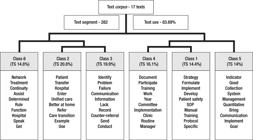
Text corpus dendrogram using the Interface de R pour les Analyses Multidimensionnelles de Textes et Questionnaires
The challenges perceived by professionals in strategic leadership positions in hospital care transition were organized into three main categories, as described below.
Challenges in coordination and communication during care transition
In the reported experiences, coordination and communication between professionals and services, particularly during care transitions, were identified as critical factors compromising continuity of care. Three main points were highlighted: failures in communication and record-keeping; difficulties in intra-hospital patient transfers; and problems in coordination with RAS. Concerning communication failures and insufficient documentation and record-keeping, it was found that, in different situations, the exchange of information among professionals was considered poor, both due to the absence of clear records and the limited use of formal channels, as reported:
When care is transferred to another care area or to another institution [...] there are communication failures and a lack of relevant information [...] there are also failures in record keeping. (I4)
This information is easier to convey verbally, but I might not understand everything there, and having a well-written record would help me with that. (I4)
Today, this transition is done via a piece of paper, sometimes with very little or insufficient information. For instance, a joint assessment was requested, but it remains patients’ responsibility to submit their own case. (I8)
Difficulties in coordination and communication during patient transfers among hospital departments were also reported. In this regard, it was observed that, although some teams adopt good practices, these actions do not follow an institutional standard, which compromises continuity of care.
Patients end up being transferred from one unit or sector of the hospital to another without this care. There are teams that take care to prepare a report to refer patients with all the prescribed care, but this is not done in a standardized way across the hospital. (I2)
Sometimes, there is no transfer of patients from the surgical center to the nurse there or from the gynecology and obstetrics clinic. There is no such contact. (I3)
If we had a unified medical record, the professional receiving the patient [at the other facility] could consult all the information about the care received [at the hospital]. (I8)
Furthermore, participants discussed problems with integration into RAS and continuity of care after hospital discharge, reporting structural difficulties in referrals, lack of defined flows, and fragmentation among points in the network.
We have many problems with counter-referrals. Everything is in writing. There are progress reports, but nothing is standardized. Assessment is not effective, and there is a major problem even in building it. (I2)
There are many serious cases that are referred here, and after treatment, the child should be transferred to the network, but we have nowhere to refer them. (I2)
There is no standardization in the coordination with the network. The service points are disconnected in relation to the treatments offered by each unit. (I15)
Challenges in assessing care transition quality
The lack of specific indicators to monitor care transition is one of the main challenges identified by participants. Although the hospital has institutional initiatives aimed at assessing quality, such as the notification of patient safety incidents and monthly meetings to monitor goals, these actions do not yet systematically address this process, as described by one manager:
We have good initiatives at the hospital [...] such as VIGIHOSP, which provides notifications, and the monthly indicator meeting related to contracting. However, we still don’t have an indicator for care transition. (I4)
In general, monitoring practices are carried out in a sector-specific manner, focusing on specific moments during hospitalization:
Each sector has its own set of indicators to present. We have quality targets for admission, continuing care, nutritional guidance, the ICU [Intensive Care Unit], post-anesthesia recovery, and hospital discharge. These quality indicators are assessed every year. (I8)
However, at the management level, there is periodic monitoring of healthcare data:
Monthly, management reviews hospital indicators, where I monitor the hospital occupancy rate and the length of stay. Each clinic has a target to follow, and this is discussed. When a clinic has a very high average length of stay, it’s necessary to know what’s happening. Weekly, they record the decisions in the minutes, and the impact of this is monitored by management through the indicators. (I13)
In any case, even though the data are used for decision-making, communication about the results does not always reach everyone involved in care:
We disclose these indicators in certain circumstances, and their adoption is communicated to immediate supervisors, care areas, and the extended board. (I14)
Thus, the reports point to the need to incorporate care transition into the scope of institutional assessments, strengthening the capacity to produce relevant information for continuous improvement, safety of care, and effectiveness of health actions.
Challenges in standardizing processes and educating people for care transition
The absence of clear institutional protocols was also identified as one of the obstacles to improving care transition. In practice, actions are conducted based on individual experience and informal transmission among co-workers, which highlights the lack of standardization, as reported by participants:
Since strategies for transferring the patient haven’t been developed yet, we have nothing defined. Each professional follows what they believe is best based on their experience and what would be feasible once the patient leaves here. (I1)
The strategies here [...] are built by people in lower management, at the base level, and then go through the approval process at senior management. Nothing can be imposed; it’s built together. (I7)
There’s no well-defined workflow; there’s nothing anyone can just walk in and do. There’s no manual. Professionals who arrive at the clinic will learn from their co-workers what needs to be done. (I9)
In addition to standardization, professionals highlighted the need for continuous training actions for the implementation of new protocols, as well as for reinforcing existing ones. This process reinforces the importance of continuing education and the collective construction of institutional workflows as fundamental pillars for ensuring continuity and safety of care during transitions:
Regarding the implementation of strategies, further training is proposed to reinforce existing protocols or, if not, to develop and implement such protocols. (I10)
It is necessary to work with guidance and education based on the existing protocol, reinforcing the guidelines already contained within it [...] a training on a protocol that already exists. (I17)
It needs to be institutionalized; it’s not simply a matter of saying I’m transferring care [...]. (I8)
There need to be weekly meetings in inpatient clinics. (I13)
Discussion
The research highlighted three main categories that reflect the difficulties faced by professionals in strategic leadership positions: Challenges in coordination and communication during care transition; Challenges in assessing care transition quality; and Challenges in standardizing processes and educating people for care transition.
The first category revealed challenges in coordination and communication during hospital care transition, essential aspects to ensure continuity of care and patient safety. These challenges were identified by participants, who highlighted insufficient communication and the absence of detailed records in transfer processes. The predominant use of verbal communication, although efficient, was perceived as an obstacle because it is often not accompanied by adequate documentation, which hinders continuity of care and the implementation of appropriate interventions.
This scenario is supported by other studies, which indicate that undocumented verbal communication and a lack of standardization in information are critical factors for failures in care transition, increasing the risk of errors and compromising patient safety.(13,20) The absence of relevant data during the transition period makes it difficult to fully understand the health condition, which can lead to medication errors and treatment delays.(13) In this context, communication needs to go beyond the simple verbal transmission of data; it must be accompanied by standardized records that guarantee care accuracy and continuity.(20)
In light of clinical management, these findings indicate failures in the governance and integration of care practices. Standardizing these processes is fundamental to ensuring that quality of care remains uninterrupted, regardless of transitions among health sectors or services.(14,16) Thus, the absence of clear operational protocols and adequate documentation tools, such as unified medical records and transfer reports, compromises service quality, highlighting the need for planning care transition actions to improve these processes.
Another challenge identified was the difficulty in coordination and communication during the transfer of patients among different sectors or even to external institutions. As described by participants, the absence of a structured and standardized process for transferring information among teams about the care provided to patients makes this process vulnerable to errors, harming continuity of care and increasing risks to patients.
This finding is consistent with current literature, which indicates that the absence of cross-cutting approaches in healthcare networks, the lack of protocols for operationalizing information flow, communication failures, and a lack of understanding of how the system works contribute to difficulties in care transition.(21) Solutions such as shared electronic health records, phone calls between hospital staff and primary care, and discharge forms have proven effective in improving communication and strengthening continuity of care, allowing for a safer and more coordinated transition.(5)
From a clinical management perspective, formalizing communication among different levels of care is essential, ensuring that all professionals involved in care transition have access to complete and up-to-date information in a transparent and continuous manner.(14) When electronic medical records and transfer reports are not integrated and standardized, teams find themselves helpless, lacking the necessary information to continue care. In this regard, the articulation among different areas of knowledge and care practices is essential for teams to share information and integrate actions that promote patient well-being.(14,15)
Furthermore, professionals also identified the integration of RAS after hospital discharge or transfer to another institution as a challenge. The lack of coordination between hospital services and RAS has generated difficulties in counter-referral and in the appropriate referral of patients for continuity of care so that they end up seeking services after hospital discharge on their own. Care fragmentation, resulting from this lack of coordination, is a significant barrier to the success of transition, as it can lead to duplication of services and increased costs, resulting in an experience of fragmented and discontinuous care.(4,14,20,22)
Referral and counter-referral strategies ensure longitudinal communication throughout RAS, encouraging care maintenance, follow-up, and continuity within the network itself.(6,21,23) A recent cohort study showed that implementing post-discharge follow-up strategies in healthcare services was able to significantly reduce readmission and death rates within 30 days, highlighting the importance of coordination and agreement among services at the time of discharge.(6) Along the same lines, the clinic’s management proposes strengthening the articulation of RAS through collaborative actions and shared management, with integration among services at different levels of care. This would allow for better coordination among health teams and, consequently, continuity of care.(14-16)
The second category identified in this study refers to the challenges in assessing hospital care transition quality, an essential aspect for ensuring the effectiveness of interventions and patient safety. Although some monitoring initiatives and practices are present in the investigated reality, care transition assessment is still limited, which interferes with quality of continuous care and the effectiveness of the implemented strategies.
Among the main challenges, professionals in strategic leadership positions highlighted the absence of specific indicators to monitor care transition. Although metrics exist in areas such as hospital admission, continued care, and hospital discharge, these do not specifically cover care transition, creating a gap in the overall assessment of care in this hospital. Participants reported that, while monitoring initiatives through notification tools and monthly meetings focused on indicators such as occupancy rate and length of stay, and the communication of results through reports, offer an overview of hospital performance, they do not reflect care transition quality, highlighting the need for greater integration between the assessment of results and practical improvement actions.
This scenario is supported by authors who point out that the lack of specific metrics for care transitions makes the assessment of the quality of these practices imprecise, hindering the identification of areas that need improvement.(6) Implementing care transition at the time of discharge is seen as a strategy to improve performance and quality indicators, as it impacts readmission rates, mortality rates, and hospital costs.(6) However, in practice, its consolidation is still influenced by issues of institutional culture, health policy demands, and the structural conditions of the services, altering the institution’s discharge management.(5,9)These factors indicate that, in order to better assess care transition quality, it is necessary to develop indicators for this practice, which allow for a more precise analysis of results and the implementation of more appropriate corrective strategies.
The clinic’s management argues that improving monitoring processes through the creation of specific indicators is fundamental to ensuring continuity and quality of care, as well as allowing for adjustments to care practices based on the results obtained.(14) This highlights that, although hospitals have quality assessment systems in various areas, these indicators are not sufficiently aligned with the complexity of care transition, which compromises the ability to monitor and assess the effective impact of these transitions on patients. In this sense, it becomes necessary to incorporate specific indicators that allow for the direct assessment of the stages involved in care transition, ensuring that this process occurs continuously, with the necessary information and without disruptions in care.
In a systematic review using the Delphi method, conducted in Canada, 38 quality indicators were identified as feasible for routine application in hospitals, most of which are related to the emergency department. Among these, hospital readmission rates, waiting times, and measures of effectiveness and safety during care transitions stand out.(24) Additionally, a scoping review that analyzed 89 international programs in 12 countries identified a total of 361 quality indicators, organized according to fundamental dimensions such as patient-centeredness, punctuality and effectiveness, efficiency, and safety of care.(25)
Supporting this evidence, another study, involving specialists from different areas of health and also using the Delphi technique for validity, pointed to indicators such as a reduction in the readmission rate within 30 days, a decrease in emergency room visits, and a reduction in avoidable admissions as priorities in the effectiveness domain. In the patient safety domain, indicators such as the incidence of adverse drug reactions, a reduction in falls, and a reduction in pressure ulcers stood out. Finally, in the patient-centeredness domain, the assessment of user experience and the level of satisfaction of patients and their caregivers in relation to the service provided were highlighted.(26)
The third category addressed in this study concerns the challenges in standardizing processes and educating professionals involved in hospital care transition. Analysis of results revealed that, although some training and standardization initiatives are underway, gaps remain regarding the implementation of uniform processes within the hospital. The main difficulty identified by the participants was the lack of uniformity in the application of care transition processes, resulting in a wide variety of practices adopted by professionals. According to them, this occurs mainly because, to date, formal strategies for patient transfer have not been fully established in the investigated setting, and instead of a clear and defined flow, professionals adopt approaches based on their own experience and individual understanding of what should be done, which, in addition to generating inconsistencies in care practices, undermines transition safety and continuity.
This finding is supported by studies that indicate that the absence of standardized protocols is a critical challenge frequently associated with failures in communication among teams and in care transition. Since care protocols provide conformity to clinical practice, contributing to improved quality of care,(27)their absence represents a significant risk to patient safety, as it is a driver of errors, weakening communication in care transfer.(8) Implementing standardized communication processes during care transition ensures that relevant patient information is conveyed clearly and concisely, allowing the next healthcare professional to continue care safely and efficiently.(7) A study conducted in Boston showed that standardization, through checklists for transfers among departments, improved communication among teams by 93%, with the exchange of information being standardized, which promoted individualized, high-quality, and safe service.(28) In Brazil, a study that reported on the implementation of the Situation Background Assessment Recommendation tool, used to standardize communication among professionals during care transition, demonstrated that the use of this record-keeping model can reduce the occurrence of incidents and minimize complications in healthcare settings.(20)
The clinic’s management recognizes that standardizing processes is essential for organizational efficiency, allowing teams to follow clear guidelines regardless of individual experience or area of expertise, ensuring that all patients receive consistent and appropriate care.(14) The lack of standardization not only compromises quality of care, but also generates doubts about responsibilities, making it difficult to assess the performance of professionals in carrying out processes.
Participants also mentioned challenges in the continuing professional development of staff to ensure the effectiveness of care transitions. The lack of systematic and consistent training was cited as a barrier to the consistent implementation of transition practices. Although new training programs are proposed, they often occur in a piecemeal and non-integrated manner, hindering the institutionalization of transition strategies.
In this context, clinic management argues that for the successful implementation of protocols, it is essential to ensure that professionals receive regular training and that training is not seen as an isolated action, but as a continuous, permanent process integrated into professional development so that health problems and challenges trigger learning.(14)In-service education promotes the improvement of actions, reorientation and redirection of processes, and can support proposals for actions with greater effectiveness,(29)minimizing variability in the care provided. Hence, clinical management encourages a culture of continuing education and continuous assessment in daily work, necessary for the reorientation of health practices, in the logic of organization that is transforming,(15)emphasizing the institutionalization of care transition practices as indispensable to the sustainability of these practices over time.
Despite the valuable analysis of the challenges faced by professionals in strategic leadership positions in hospital care transition, some limitations should be considered in this study. The sample of professionals concentrated in a single hospital may not reflect the totality of perspectives within hospital institutions, restricting the generalization of results to a broader universe. However, these limitations open opportunities for future studies that could expand the sample, include different types of healthcare institutions, and conduct investigations that allow for a broader view of the prevalence of the identified challenges, or even explore more deeply the repercussions of these challenges on the implementation of transitional care by healthcare professionals, or even on patient experience during transition.
This study contributes to the field of applied sciences in hospital care by providing a detailed analysis of the main challenges faced by hospital leaders in care transition. Furthermore, it offers important insights for management practice in nursing due to nurses’ fundamental role in communication and process management during care transition. By identifying barriers that hinder improvements in quality of care, it enables the development of solutions that promote continuous improvement and enhance patient care experiences.
Conclusion
The challenges perceived by professionals in strategic leadership positions regarding care transition in hospital settings revealed difficulties in coordination and communication, with failures in interaction among teams and insufficient documentation. These obstacles hinder continuity of care and indicate the need to improve information transfer and record-keeping processes. Furthermore, a lack of specific indicators to monitor care transition was identified, hindering the assessment of the effectiveness of practices and the identification of areas for improvement, which reinforces the need to incorporate specific indicators into quality management. Finally, the absence of standardized protocols and the lack of continuous training for professionals contribute to inconsistency in transition practices, making it essential to create unified processes and invest in continuing training to ensure efficient and safe transitions that strengthen the organizational culture in this context. Overcoming these challenges is necessary to improve hospital care quality and safety, as well as to enhance experiences during transition and strengthen continuity of care.
Acknowledgments
This work was carried out with the support of Fundação de Amparo à Pesquisa do Estado de Mato Grosso (FAPEMAT) - Funding Code 001.
References
- 1 Bernardino E, Sousa SM de, Nascimento JD do, Lacerda MR, Torres DG, Gonçalves LS. Cuidados de transição: análise do conceito na gestão da alta hospitalar. Esc Anna Nery. 2022;26:e20200435.
- 2 Saragosa M, Nizzer S, McKay S, Kuluski K. The hospital-to-home care transition experience of home care clients: an exploratory study using patient journey mapping. BMC Health Serv Res. 2023;23:934.
- 3 Hervé MEW, Zucatti PB, Lima MADDS. Transition of care at discharge from the Intensive Care Unit: a scoping review. Rev Lat Am Enfermagem. 2020;28:e3325.
- 4 Tofani LF, Furtado LA, Guimarães CF, Feliciano DG, Silva GR, Bragagnolo LM, et al. Caos, organização e criatividade: revisão integrativa sobre as Redes de Atenção à Saúde. Ciênc Saúde Coletiva. 2021;26(10):4769-82.
- 5 Gallo VCL, Khalaf DK, Hammerschmidt KS de A, Santiago ML, Vendruscolo C. Estratégias de transição para alta hospitalar utilizadas por enfermeiros: revisão integrativa. Rev Enferm UFSM. 2021;11:e79.
- 6 Gheno J, Ulbrich AH, Andreatta AP, Fish P, Petry RC, Nunes TS, et al. Impact of transition of care on clinical outcomes: historical cohort. Texto Contexto Enferm. 2024;33:e20230231.
- 7 Francisco AF, dos Santos BM, de Jesus PC, Souza LM. Comunicação na transferência de cuidados para realização de exames de imagem na ótica da enfermagem. J Nurs Health. 2024;14(2):e1425789.
- 8 Miorin JD, Pai DD, Ciconet RM, Lima MA, Gerhardt LM, Indruczaki NS. Transfer of pre-hospital care and its potential risks for patient safety. Texto Contexto Enferm. 2020;29:e20190073.
- 9 M'batna AJ, Cechinel-Peiter C, Costa MF, Cunha CLF, Debétio JO, Lemos M, et al. Continuidade do cuidado: ações realizadas em hospitais universitários brasileiros. Acta Paul Enferm. 2025;38:eAPE0003391.
- 10 Pedrosa AR, Ferreira OR, Baixinho CR. Transitional rehabilitation care and patient care continuity as an advanced nursing practice. Rev Bras Enferm. 2022;75(5):e20210399.
- 11 Uchimura LY, Figueiró MF, Silva DB, Paiva LK, Chrispim PP, Yonekura T. Evidências de efetividade dos cuidados de transição em idosos após internação hospitalar: uma revisão sistemática rápida. Rev Panam Salud Publica. 2023;47:e143.
- 12 Richter SA, Santos EP dos, Kaiser DE, Capellari C, Ferreira GE. Ações empreendedoras em enfermagem: desafios de enfermeiras em posição estratégica de liderança. Acta Paul Enferm. 2019;32(1):46-52.
- 13 Santos SG, Silva KL, Prado AL, Porto CL, Garcia SG. A influência da comunicação efetiva nos desfechos do paciente hospitalizado. RISE. 2024;5(2):56-1.
- 14 Mendes EV. Desafios do SUS. Brasília (DF): Edição 1; 2019.
- 15 Padilha RQ, Gomes R, Lima VV, Soeiro E, Oliveira JM, Schiesari LM, et al. Princípios para a gestão da clínica: conectando gestão, atenção à saúde e educação na saúde. Ciênc Saúde Coletiva. 2018;23(12):4249-57.
- 16 Mendes VA, Costa MF, Martins AF, Mocheuti KN, Ferreira GE, Ribeiro MR. Continuity of care for patients recovering from Covid-19 under the angle of clinical management principles. Rev Esc Enferm USP. 2023;57:e202320123.
- 17 Souza VR, Marziale M, Silva GT, Nascimento PL. Tradução e validação para a língua portuguesa e avaliação do guia COREQ. Acta Paul Enferm. 2021;34:e0263.
- 18 Malterud K, Siersma VD, Guassora AD. Sample size in qualitative interview studies: guided by information power. Qual Health Res. 2016;26(13):1753-60.
- 19 Bardin L. Análise de conteúdo. São Paulo: Edição 70; 2016.
- 20 Pena MM, Melleiro MM, Braga AT, Meres AL. Emprego da ferramenta SBAR na transição do cuidado: Uma técnica para a comunicação efetiva. Rev Enferm Centro-Oeste Mineiro. 2021;11:e3142.
- 21 Marrafon CB, Alcantra DS, Buges NM, de Melo MP, Costa GD. Referência e contrarreferência na atenção primária. Cuad Educy Desarrol. 2024;16(8):e5020-e5020.
- 22 Belga SM, Jorge AO, Silva KL. Continuidade do cuidado a partir do hospital: interdisciplinaridade e dispositivos para integralidade na rede de atenção à saúde.. Saúde Debate. 2022; 46(133): 551-70.
- 23 Oliveira CC, Silva EA, Souza MK. Referral and counter-referral for the integrality of care in the Health Care Network. Physis. 2021;31(1):e310105.
- 24 Kim SK, Hwang YS, Ock M, Jo HS. Development of items for transitional care service and outcome indicators of discharged patients for improvement in quality of care. J Korean Med Sci. 2023;38(32):e246.
- 25 Fernando RL, Inacio MC, Sluggett JK, Ward SA, Beattie E, Khadka J, et al. Quality and safety indicators for care transitions by older adults: a scoping review. J Am Med Dir Assoc. 2025;26(3):105424.
- 26 Tate K, Lee S, Rowe BH, Cummings GE, Holroyd-Leduc J, Reid RC, et al. Quality indicators for older persons' transitions in care: a systematic review and delphi process. Can J Aging. 2022;41(1):40-54.
- 27 Binkowski S, Soares RG, Borges RM, Veira TW, Sakamoto VT, Blatt CR, et al. Proposta de implementação e monitoramento: protocolo assistencial de enfermagem para pacientes com derivação ventricular externa. Rev Gaúcha Enferm. 2024;45:e20240171.
- 28 Talley DA, Dunlap E, Silverman D, Katzer S, Huffines M, Dove C, et al. Improving postoperative handoff in a surgical intensive care unit. Crit Care Nurse. 2019;39(5):e13-e21.
- 29 Silva VB da, Mendes VA, Lima SC, Gonçalves TL, Paes GO, Stipp MA. Educação permanente na prática da enfermagem: integração entre ensino e serviço. Cogitare Enferm. 2021;26:e71890.
-
Data availability:
The survey data are available in the article.
-
Associate Editor:
Alexandre Pazetto Balsanelli (https://orcid.org/0000-0003-3757-1061) Escola Paulista de Enfermagem, Universidade Federal de São Paulo, São Paulo, SP, Brazil
The survey data are available in the article.

