 Lignin content, morphoanatomical traits and antioxidant activity as determinants of soybean seed storage tolerance and quality
ABSTRACT.
The storage of soybean seeds is a critical aspect of the production process, making it essential for genotypes to show tolerance during this phase to maintain seed quality. This study aimed to examine and correlate lignin content in the seed coat, enzyme activity expression, and morphoanatomical characteristics of soybean cultivars with the preservation of physiological quality and storage tolerance. Eight soybean cultivars were selected, produced, and harvested under uniform edaphoclimatic conditions. Physiological quality assessments were conducted at six storage intervals: 0, 60, 120, 180, 240, and 360 days. Evaluations included tests for germination, emergence, accelerated aging, electrical conductivity, and lignin content in the seed coat. Additionally, biochemical and enzymatic analyses of antioxidant metabolism and morphoanatomical examinations were performed using light microscopy on seeds stored for 0 and 360 days. The experiment used an 8 × 6 factorial arrangement, encompassing eight cultivars and six storage periods. For the enzymatic and morphoanatomical analyses, a 4 × 2 factorial design was employed, involving four cultivars and two storage durations. The results showed that genotype significantly influenced the tolerance of soybean seeds to extended storage periods. Seeds proving high physiological quality and storage resilience exhibited reduced hydrogen peroxide accumulation and diminished lipid peroxidation. Furthermore, morphoanatomical analyses provide a promising method for selecting genotypes with enhanced physiological quality and storage tolerance.
Keywords:
seed anatomy; Glycine max L.; deterioration; physiological quality; antioxidant metabolism
Introduction
Seed storage is a critical stage in the seed production process, during which maintaining seed quality prior to sowing is essential.
Despite the various technologies available on the market, seed quality can deteriorate during storage due to several external factors, including initial lot quality, seed moisture content, relative humidity and storage air temperature (Thirusendura-Selvi & Saraswathy, 2018).
In addition to these factors, genetic variations among genotypes can significantly affect seed storability (Carvalho et al., 2016; Ruppin et al., 2019). Therefore, understanding the behaviour of seeds during storage in relation to these several factors is essential for decision making in seed quality management (Smaniotto et al., 2014).
Some soybean cultivars, despite their high productivity, show different responses to quality variations during storage. Studies by Rosa et al. (2017) and Mathias et al. (2019) have seen variations in storage tolerance among soybean cultivars contingent upon their genotypic characteristics. Schons et al. (2019) also found that soybean cultivars respond differently depending on storage location and seed treatment, which reinforces the relevance of the genotype factor.
Seed quality and chemical composition are intertwined with genetic attributes and can be subject to environmental influences (Batista et al., 2022). The genetic traits and environmental circumstances prevailing during the stages of production and post harvesting are pivotal factors determining the viability period of seeds, directly affecting their quality (Batista et al., 2022; Gris et al., 2010).
In soybean breeding programs, efforts have been made to select genotypes with desirable characteristics for disease and pest resistance, and for higher oil, protein, and lignin contents (Carvalho et al., 2015). Superior levels of lignin in soybean seed coats have been associated with greater tolerance to seed deterioration (Rao et al., 2023). The use of this trait alone in breeding programs may be insufficient to obtain superior genotypes in terms of physiological quality and storage tolerance. Thus, studies at the molecular level and morphoanatomical analyses of seeds may contribute to these efforts. Pinheiro et al. (2021) examined the morphoanatomical characteristics of soybean seeds, and Madureira et al. (2023) evaluated seed quality following preharvest deterioration, finding a correlation between lignin content and anatomical changes related to reduced seed quality. Carvalho et al. (2014a) saw differences in isoenzymatic expression and storage tolerance in seeds of soybean cultivars.
Currently, there are increasing reports of problems with cultivars that show marked deterioration in quality during prolonged storage, so studies in this context are important and needed. Studies are still needed to clarify the causes and factors that affect this trait to guide breeding programs. We hypothesize that lignin content, enzymatic activity expression, and morphoanatomical characteristics of soybean cultivars are related to the maintenance of physiological quality and storage tolerance.
Material and methods
The soybean cultivars were grown under identical edaphoclimatic conditions, so that environmental factors were mitigated. Eight soybean cultivars were used: M6410 IPRO, Brasmax Desafio (8473RSF RR), UFLA 6301 RR, Brasmax Foco (74177RSF IPRO), Syn 15640 IPRO, M7739 IPRO, Brasmax Bônus (8579RSF IPRO), and P96R70 IPRO.
Soil sampling was performed (0-20 cm depth), and with the results of soil analysis, fertilization was carried out in accordance with the recommendations of the 5th approach described by Ribeiro et al. (1999) for soybean. The sowing furrows were prepared with mechanized traction at a spacing of 0.50 m, and fertilizer was applied. When sowing, the seeds were inoculated with Bradyrhizobium japonicum, and cobalt (Co), molybdenum (Mo), and the commercial product CoMo Plus® were added. Sowing was performed manually, and thinning was performed after 15 days of emergence to maintain the stand of plants per hectare recommended for each soybean cultivar.
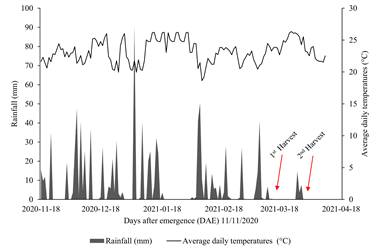
The data on precipitation and mean air temperature, shown in Figure 1, were collected from the meteorological station located in Lavras, Minas Gerais State, Brazil, ESAL-UFLA, 10 km from the production field. Between the two harvests that were performed according to the cycles of the cultivars used, an accumulation of 20 mm of rainfall was observed (Figure 1).
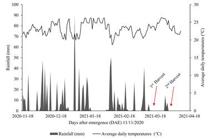
Meteorological data of rainfall and average daily temperatures of the Lavras, Minas Gerais State, Brazil, and ESAL-UFLA stations during the soybean crop cycle.
The plants were harvested manually when the water content of seeds reached 15%. The harvest was performed on two occasions due to the difference in the cultivars in group maturation (GM): the first group was harvested at the end of March, including cultivars M6410 (GM 6.4), UFLA6310 (GM 6.3), Syn15640 (GM 6.9), and P96R70 (GM 6.7), and the second group was harvested in early April, including cultivars Desafio (GM 7.4), Foco (GM 7.2), M7739 (GM 7.7), and Bônus (GM 7.9).
After harvest, threshing was performed using a stationary electric threshing machine, the seeds were precleaning using sieves followed by drying to 12% water content, and then the seeds were conditioning. After drying and processing, the seeds of each genotype were sampled in portions necessary for each evaluation time throughout storage, with subsequent selection and identification. Starting in May, the seeds were placed in kraft paper bags and stored in a chamber with a constant temperature of 20°C.
Physiological quality evaluations were conducted after 6 storage periods: 0, 60, 120, 180, 240, and 360 days. For enzymatic analyses, samples were collected at each evaluation period and stored at -18°C until analysis. The physiological analyses were performed using the following tests, with four replicates consisting of fifty seeds.
Germination between paper: Sowing was performed with four replicates of 50 seeds on rolled paper towel substrate (2 sheets) in rolls damped with distilled water in an amount 2.5 times the weight of the paper, and the paper was maintained in a Mangelsdorf germinator at 25 ± 2°C. Normal seedlings were counted 8 days after sowing (International Seed Testing Association [ISTA], 2024).
Seedling emergence: Sand substrate + soil (ratio 2:1) in plastic trays were irrigated at 60% of field capacity at sowing and as needed thereafter. The trays were maintained in a greenhouse at 25 ± 2°C (Krzyzanowski et al., 2020). Four replicates of 50 seeds each were used for this methodology. The emergence count was performed 8 days after sowing.
Accelerated aging: Plastic boxes fitted with suspended aluminum screens were used. A layer of seeds was added over the entire screen, followed by the addition of water of 40 milliliters. Subsequently, they were placed in a chamber at 41 ± 1°C for 48h. After this period, sowing was conducted following the procedure outlined in the germination test, with four replicates of 50 seeds each. The assessment of normal seedlings was conducted 5 days after sowing, and the outcomes were presented as percentages (Marcos-Filho, 2020).
Electrical conductivity: 75 mL of deionized water was added to the seeds, and they were placed in a chamber at 25 ± 2°C for 24 hours. Following this period, the electrical conductivity of the solution was assessed using a conductivity meter (Digimed, model CD-21). The findings were reported as μS cm-1 g-1 (Vieira & Marcos-Filho, 2020).
The lignin content in the seed coat was also quantified using 4 replicates of 100 seeds each. The seed coat was extracted and dried in an oven at 105 ± 2°C for 24 hours. Following this, 300 mg of the seed coat was weighed and subjected to centrifugation with various solutions to isolate the cell wall. After drying, the samples were macerated to obtain protein-free material. Lignin quantification was conducted using the acetyl bromide method (Moreira-Vilar et al., 2014), and the results were reported in mg g-1.
Based on the outcomes of the physiological assessments, the four cultivars with the most contrast in quality were selected to be evaluated in the enzymatic analyses, two of high quality and two of low quality, with storage periods of 0 and 360 days.
For enzymatic biochemical analyses of antioxidant metabolism, the seeds were macerated with liquid nitrogen, and insoluble polyvinylpolypyrrolidone (PVPP), stored at -18°C and subjected to the following analyses.
Catalase activity: 200 mg samples of the macerated material were mixed thoroughly in 1.5 mL of extraction buffer containing 100 mM potassium phosphate (pH 7.0), 0.1 mM EDTA, 10 mM ascorbic acid, and water. The mixture was then centrifuged at 13,000 × g for 20 minutes at 4°C, and the resulting supernatant was collected. Catalase (CAT) activity was assessed following the protocol outlined by Azevedo et al. (1998).
Quantification of hydrogen peroxide and lipid peroxidation: 200 mg samples of macerated material were homogenized with 1500 µL of 0.1% trichloroacetic acid (TCA) and then centrifuged at 12,000 × g for 15 minutes at 4°C. The hydrogen peroxide (H2O2) content was determined following the method described by Velikova et al. (2000). Lipid peroxidation was assessed by quantifying thiobarbituric acid-reactive species, as outlined by Buege and Aust (1978), with the extraction conducted according to Velikova et al. (2000). Aliquots of the supernatant were mixed with a reaction medium containing 0.5% thiobarbituric acid (TBA) and 10% trichloroacetic acid (TCA), and the absorbance readings were taken at 535 and 600 nm using a spectrophotometer.
A morphoanatomical analysis was performed for soybean seeds of the same cultivars selected for enzymatic analysis. The analyses were performed at the beginning of storage and after 360 days. The morphoanatomical analysis was performed by light microscopy, with samples of 10 seeds of each genotype. The seeds were placed in Falcon tubes and immersed in a solution of FAA50 (formaldehyde, acetic acid, and 50% ethyl alcohol, at a proportion of 1:1:18, v: v: v) under low pressure for a period of 48 hours. Then placed in an increasing ethyl alcohol series of 70, 85, and 95% ethyl alcohol. Next, the samples were immersed in Leica methacrylate resin. Subsequently, the samples were embedded in the resin and sectioned at 5 μm. After preparation, histological slides were mounted, five for each sample. They were stained with toluidine blue and sodium acetate (pH 4.7), mounted, and photographed in an Olympus AX70 photomicroscope. Five fields were photographed per slide containing 10 histological sections from both the regions of the seed coat and the embryonic axis. The images were analyzed to evaluate morphological and anatomical changes.
The physiological analyses were subjected to a randomized design, ensuring unbiased distribution, with 4 replicates in an 8 x 6 two-way involving 8 soybean seed cultivars and 6 evaluation times during storage. For the enzymatic analysis, a 2 x 4 factorial design was used, with two storage periods and four soybean cultivars. The conducted statistical analyses utilizing analysis of variance through R® software (R Core Team, 2022), with a significance level of 5% employing the F test (p < 0.05). Mean comparisons were conducted employing the Scott‒Knott test at a significance level of 5% or through polynomial regression analyses.
Results and discussion
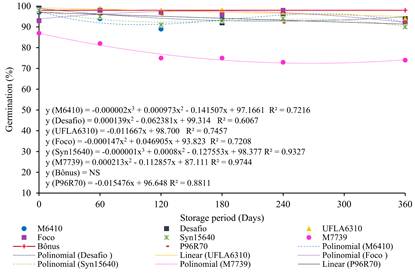
In the germination test, cultivars Foco and M7739 exhibited lower initial germination rates than the other cultivars (Table 1). As the storage period progressed, the seeds of cultivar M7739 had lower germination averages (Table 1). In contrast, cultivars UFLA6310 and Bônus had the highest germination averages compared to the other cultivars in all evaluated periods.
In addition to genetic variability, the storage capacity of a seed batch may be influenced by the degree of deterioration occurring from field maturation to the end of the storage period. This suggests that both seed longevity and germination are also affected by the initial physiological quality of the seeds (Pirredda et al., 2023).
The importance of initial seed quality for storage tolerance was evident in the germination test, where seeds with high initial quality exhibited lower reductions in germination rates during storage, maintaining higher germination levels. However, for seeds of cultivar M7739, which demonstrated an initial germination rate of 87%, significant losses in quality were observed after the initial storage period (Table 1 and Figure 2).
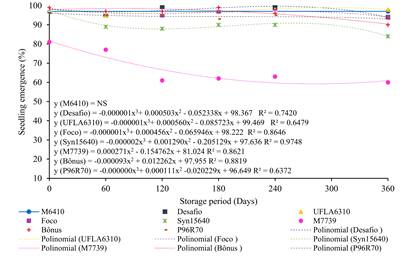
For seedling emergence, the results were consistent with those obtained in the germination tests. Seeds from cultivar M7739 exhibited a lower initial percentage and, consequently, maintained lower quality throughout all evaluation periods (Table 2). As storage progressed, greater differences were observed in physiological quality between cultivars. After 60 days of storage, cultivar Syn15640 exhibited lower emergence percentages, a trend that continued in subsequent evaluation periods. Conversely, cultivars M6410 and UFLA6310 demonstrated the highest emergence averages across all storage durations, achieving notable values of 97 and 98%, respectively, after 360 days of storage (Table 2).
At the conclusion of the storage period, only the seeds of cultivars Syn15640 and M7739 exhibited seedling emergence rates below 90%, with differences of 14 and 38 percentage points, respectively, compared to cultivar UFLA6310. Cultivar M7739 demonstrated a significant decline in emergence starting from the initial storage period, attributable to its low initial quality coupled with reduced storage tolerance. Conversely, seeds of cultivar Syn15640, despite exhibiting high initial quality, experienced a rapid decline in quality during the early storage periods, which may indicate low storage tolerance (Table 2 and Figure 3).
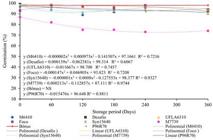
Normal seedlings in germination (%) of soybean of different cultivars seeds throughout the storage period.
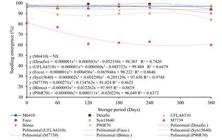
Seedling emergence (%) in soybean seeds of different cultivars throughout the storage period.
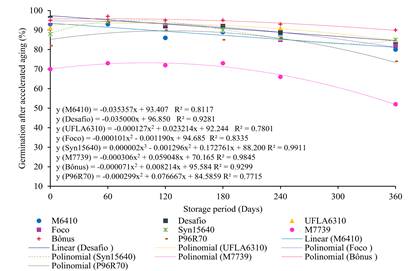
Varying levels of storage tolerance exist among different soybean cultivars, with seeds exhibiting higher water absorption demonstrating reduced tolerance and increased susceptibility to deterioration under uncontrolled conditions (Abati et al., 2021b). Based on the results of the accelerated aging test, significant differences in vigor were evident among the cultivars at the beginning of storage. Seeds from cultivars Syn15640, M7739, and P96R70 exhibited the lowest vigor values, which remained lower compared to the other cultivars throughout the storage period, especially after 120 days. By the conclusion of the storage period, aside from these three cultivars, cultivar M6410 exhibited diminished vigor in its seeds. (Table 3 and Figure 4).
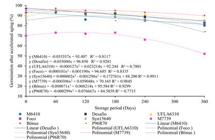
Germination after accelerated aging (%) in soybean seeds of different cultivars throughout the storage period.
Seeds of cultivar Bônus exhibited consistently higher mean vigor across all evaluated storage periods during the accelerated aging test. At the conclusion of the storage period, seeds from cultivars Desafio, UFLA6310, Foco, Syn15640, and Bônus demonstrated superior performance compared to the other cultivars (Table 3 and Figure 4). Consistent with findings from other physiological assessments, seeds from cultivars UFLA6310 and Bônus exhibited high quality, indicating enhanced storage tolerance.
Accelerated aging is an effective vigor test for soybean batch selection based on storage potential, as it simulates the deterioration process (Matera et al., 2019).
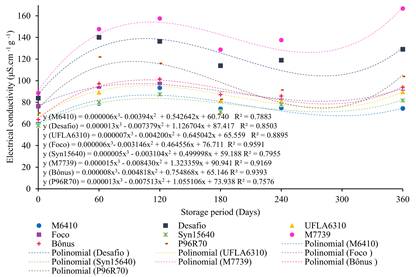
The results of the electrical conductivity test were consistent with those observed in other physiological assessments. The highest electrical conductivity values were recorded in seeds from cultivars with low physiological quality, notably cultivars M7739 and P96R70, particularly at extended storage durations (Table 4). However, the electrical conductivity values were strongly influenced by genotype, which in some cases, due to morphoanatomical characteristics and cell membrane properties, tended to yield high values even for seeds with good physiological quality, such as the seeds of cultivar Desafio, and the inverse was observed for the seeds of cultivar Syn15640 (Table 4 and Figure 5). Therefore, a careful analysis is necessary when this test is used for genotype comparison to ensure consistent results.
In general, there was a discernible trend of increasing electrical conductivity across all cultivars as the storage period extended, particularly in the final third of the duration, after 240 days (Figure 5). During this period, more significant reductions in physiological qualities, such as emergence and performance in the accelerated aging test, were observed (Tables 2 and 3).The more pronounced the exudate release (electrolytes) is, the greater the electrical conductivity of the solution, which corresponds to a lower vigor in the seed lot as a function of the degree of disruption of the membranes and the metabolic state of the seeds (Marcos-Filho, 2015). The increasing release of electrolytes from seeds into imbibition water during the storage period indicates a loss of vigor and physiological quality (Smaniotto et al., 2014). Similar findings have been reported by other researchers examining soybeans stored under various conditions (Carvalho et al., 2016; Mavaieie et al., 2019).
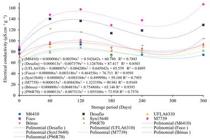
Electrical conductivity (μS cm-1 g-1) of soybean seeds of different cultivars throughout the storage period.
Despite variations in electrical conductivity values among soybean genotypes, baseline values have been established for seed vigor assessment. For example, Vieira and Marcos-Filho (2020) suggests that electrical conductivity values ought to be under 70-80 μS cm-1 g-1 in high vigor seeds. The electrical conductivity values between 70-80 μS cm-1 g-1 indicate a strong inclination in seeds towards medium vigor and, seeds with values below these have high vigor (Carvalho et al., 2014b).
At the beginning of storage, the cultivars exhibiting the highest physiological quality coincided with those showing the lowest conductivity values, 65.63 (cultivar UFLA6310) and 64.08 μS cm-1 g-1 (cultivar Bônus), confirming the hypothesis for high initial vigor. After storage, the seeds of these cultivars showed some loss of vigor, but they still showed values close to 90 μS cm-1 g-1 at the end of 360 days of storage.
In general, the physiological tests indicated that cultivars UFLA6310 and Bônus exhibited superior and consistent results regarding seed physiological quality. Conversely, seeds from cultivars Syn15640 and M7739 displayed the lowest physiological quality.
In terms of lignin content within the seed coat, cultivar M7739, along with cultivars M6410 and Desafio, exhibited some of the lowest values, with only these cultivars displaying lignin concentrations below 50 mg g⁻¹ of cell wall. Among these cultivars, only the seeds of cultivar M7739 were characterized as having low physiological quality and low storage tolerance. Among those with values above 50 mg lignin g-1 cell wall (5% lignin), the seeds of cultivars UFLA6310 and Bônus were characterized as having good physiological quality. The seeds of cultivar Syn15640, despite the higher lignin content, were categorized as possessing low physiological quality (Table 5), and for the same cultivar, were observed decreased values of electrical conductivity (Table 4 and Figure 5).
Reduced electrical conductivity in soybean seed soaking solutions is directly linked to higher lignin content in the seed coat (Mertz-Henning et al., 2015). According to Krzyzanowski et al. (2023), the lignin present in the seed coat of soybean affects their storage potential. Abati et al. (2021a) reported that cultivars characterized by higher lignin contents demonstrated enhanced storage potential. The authors concluded that the lignin content correlates with soybean seed resistance to mechanical damage, so higher levels of lignin were found to reduce the occurrence of mechanical damage, consequently contributing to superior seed quality (Krzyzanowski et al., 2023).
Seeds with higher lignin content were not necessarily of higher physiological quality (Castro et al., 2024). The same result was observed in this study, where seeds of cultivars UFLA6310 and Bônus, with lignin contents of 5.119% (51.19 mg lignin g-1 cell wall) and 5.077% (50.77 mg lignin g-1 cell wall), respectively (Table 5), had better physiological quality in most of the tests. However, in seeds of some cultivars, lignin content values above 5% were observed, but the physiological quality of seeds was unsatisfactory, such as in cultivars Syn15640 and Bônus. This may be due to the influence of environmental factors and interactions between factors, since physiological quality is a trait controlled by many genes and strongly influenced by the environment (Castro et al., 2024). This suggests that reliance on this trait alone may not be sufficient to identify genotypes with superior seed physiological quality and storage tolerance.
The presence of lignin in seeds provides not only resistance to mechanical damage but also enhances tolerance to deterioration while preserving cell wall integrity (Rao et al., 2023). Thus, it is essential to select genotypes with these traits in breeding programs, which, coupled with other desirable agronomic traits, may affect the quality of soybean seeds. In addition to these traits, the physiological quality of seeds is also highly influenced by environmental factors, and several genes engage in the expression of this attribute (Moreno et al., 2019). Therefore, evaluations of other traits and markers related to physiological quality are relevant.
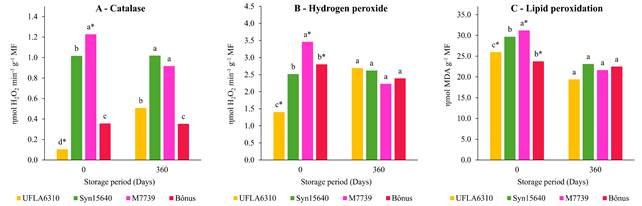
At the beginning of storage (0 days), seeds of cultivars Syn15640 and M7739 showed higher catalase (CAT) activity, with cultivar M7739 exhibiting the highest activity. The seeds of cultivars Syn15640 and M7739 had the lowest physiological quality, especially cultivar M7739, relative to the beginning of storage. In the seeds of cultivars UFLA6310 and Bônus, both with high physiological quality seeds, lower amounts of this enzyme were observed (Figure 6).
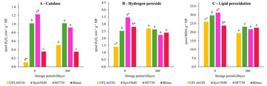
Expression of the enzymes catalase (A), hydrogen peroxide (B) and lipid peroxidation (C) in soybean seeds at 0 and 360 days of storage. Means that shared a common lowercase letter were not statistically distinguishable from each other, as determined by the Scott-Knott test (p < 0.05). Means marked with * differed after storage for each cultivar.
Catalase and superoxide dismutase function together as a defense system in seeds. Superoxide dismutase acts by scavenging reactive forms of oxygen, producing hydrogen peroxide. Then, catalase serves to inhibit the creation of additional reactive compounds by converting hydrogen peroxide into water and oxygen, thereby transforming it into non-reactive species (Nakada et al., 2011). Carvalho et al. (2014a) also found that there was increased activity of enzymes within the antioxidant system is related to greater stress during storage, especially in an uncontrolled environment, which leads to the generation of free radicals and thus causes an increase in the activity of these enzymes to combat oxidative damage. Thus, high values of catalase may indicate that the seeds of these cultivars that are less tolerant to storage had a higher level of free radicals due to higher degrees of stress.
After 360 days of storage, the results were like those observed at 0 days of storage, which reiterates the greater storage tolerance of cultivars UFLA6310 and Bônus relative to cultivars Syn15640 and M7739, as confirmed by the previous physiological results (Figure 6A).
For seeds of cultivar UFLA6310, which were classified as having high physiological quality and storage tolerance, there was lower catalase activity at the beginning of storage, with an increase at 360 days, but the levels remained lower than those of cultivars Syn15640 and M7739. The storage tolerance of this genotype was due to lower stress levels and less formation and accumulation of free radicals, leading to lower CAT antioxidant activity, especially at the beginning of storage (Figure 6A). This is directly related to the lower accumulation of hydrogen peroxide and lower lipid peroxidation in seeds of this genotype (Figure 6). For cultivar M7739, there was a reduction in the levels of catalase after storage. Since high values of electrical conductivity and low physiological quality were seen for this cultivar, both indicative of deterioration, it is likely that CAT activity decreased with storage and was insufficient in preventing oxidative damage in the seeds.
Reduced catalase activity and lower efficiency of antioxidant systems have been reported in deteriorated seeds. As the storage duration increases, increased lipid peroxidation and a decrease in activity of peroxide-removing enzymes such as catalase occur, with consequent deterioration (Carvalho et al., 2014a; Castro et al., 2019).
In hydrogen peroxide analysis, higher values of H2O2 were seen for seeds of cultivar M7739 at the beginning of storage (Figure 6B). Sharma et al. (2013) reported that in stored soybean seeds, this accumulation is one of the factors that results in the loss of viability and vigor, a fact that was confirmed in this study for this cultivar based on its low physiological quality at the beginning of storage.
At 360 days, there were no differences in the accumulation of H2O2 between cultivars; however, when storage periods were compared, there was an increase in hydrogen peroxide for cultivar UFLA6310, like that seen for catalase. For cultivars M7739 and Bônus, there were reductions in the levels of this compound (Figure 6).
In cultivars Syn15640 and M7739, there were higher values of lipid peroxidation, showing greater oxidative damage, resulted in diminished physiological quality in the seeds at the onset of storage. Lower lipid peroxidation levels were seen in cultivars UFLA6310 and Bônus at the onset of storage (Figure 6C). These cultivars showed higher physiological quality and higher storage tolerance.
Abati et al. (2022) suggested that a rise in the hydrogen peroxide concentration in the seed coat signifies diminished physiological integrity in seeds subjected to unregulated storage conditions. Additionally, the authors noted that the variation in soybean seed tolerance to degradation during storage correlates with the lignin composition. Hernández et al. (2000) reported increased lipid peroxidation as the main symptom of oxidative damage, and it is often used as an indicator of damage to cell membranes. Sharma et al. (2013) reported that soybean seeds stored at room temperature underwent lipid peroxidation.
The accumulation of lipid peroxidation and H2O2 were the main factors that resulted in a loss of viability in deteriorated soybean seeds (Min et al., 2017). These results corroborate the electrical conductivity and other physiological test results in this study. For example, the seeds of cultivar M7739 had high conductivity values, high lipid peroxidation and greater deterioration.
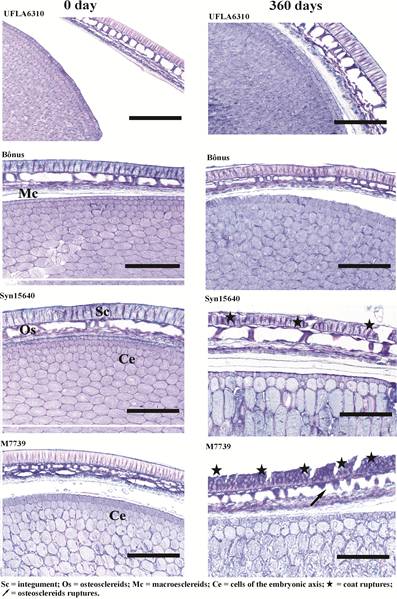
To evaluate the anatomy of the seeds, images of the embryonic axis and seed coat were captured (Figure 7). The results were consistent with those of the physiological tests and enzymatic analyses; specifically, seeds from cultivars with low physiological quality and low storage tolerance (Syn15640 and M7739), showed alterations in cellular structures and conformations after 360 days of storage. These changes included disorganization and ruptures in the seed coat cell layers, as well as fractures in the osteosclereids (Figure 7).
For the seeds of cultivars UFLA6310 and Bônus, classified as having high physiological quality, the cell structures remained intact even after an extended storage period of 360 days. Especially the coat cells and the sclereids (including macrosclereids and osteosclereids), which contributed to the greater tolerance of these materials to storage and to greater maintenance of seed quality (Figure 7).
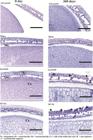
Histological sections of soybean seeds of different cultivars at 0 and 360 days of storage.
Marcos-Filho (2015) said that in seeds that exhibit changes in the composition, structure or integrity of the coat, the process of imbibition is impaired during germination. This confirms the observations in this study. Cultivars that had ruptures and disorders in the coat cells also had lower physiological quality after storage. The results obtained on the integrity of the coat (Figure 7) could also be linked to the lignin content of the seeds, especially for cultivar UFLA6310, which had high quality and high lignin content, and cultivar M7739, which had low quality and low lignin content in the coat. A higher lignin content is usually linked with higher seed quality. This phenomenon may be associated with the mechanical protection provided by this compound, leading to lower seed deterioration (Castro et al., 2019; Pirredda et al., 2023).
Thus, differences in storage tolerance among soybean cultivars exist, even when seeds are produced under identical soil and climatic conditions. The lignin content in the seed coat was a key factor that can be used as a tool in the selection of soybean genotypes with high storage potential, along with biochemical analyses, such as assessments of antioxidant metabolism, as well as evaluations of the morphoanatomical characteristics of the seed coat.
Conclusion
The soybean genotype significantly influences the ability of soybean seeds to withstand prolonged storage periods. Seeds from genotypes characterized by high physiological quality and storage resilience show reduced accumulation of hydrogen peroxide and diminished lipid peroxidation. Furthermore, these seeds prove lower catalase activity, which is attributed to the decreased stress levels associated with these genotypes. Morphoanatomical analyses may offer valuable insights for the assessment of genotypes exhibiting both high physiological quality and storage tolerance, genotypes with these characteristics display fewer alterations in the structure of the seed coat and osteosclereid cells.
Data availability
Does not apply.
Acknowledgements
The authors express their gratitude to the National Council for Scientific and Technological Development (CNPq), the Research Support Foundation of the State of Minas Gerais (FAPEMIG), and the Coordination for the Improvement of Higher Education Personnel (CAPES) for their financial support, including scholarships and a research productivity scholarship/CNPq. Special thanks also to Embrapa Soja for conducting the lignin content analysis
References
-
Abati, J., Zucareli, C., Brzezinski, C. R., Krzyzanowski, F. C., França-Neto, J. B. & Henning, F. A.. (2021a). Metabolites of the phenylpropanoid pathway and physiological quality of soybean seeds in storage. Journal of Seed Science, 43, 1-14. https://doi.org/10.1590/2317-1545v43253585
» https://doi.org/https://doi.org/10.1590/2317-1545v43253585 -
Abati, J., Zucareli, C., Brzezinski, C. R., Lopes, I. O. N., Krzyzanowski, F. C., Moraes, L. A. C. & Henning, F. A.. (2021b). Water absorption and storage tolerance of soybean seeds with contrasting seed coat characteristics. Acta Scientiarum. Agronomy, 44(1), 1-10. https://doi.org/10.4025/actasciagron.v44i1.53096
» https://doi.org/https://doi.org/10.4025/actasciagron.v44i1.53096 -
Abati, J., Zucareli, C., Brzezinski, C. R., Moraes, L. A. C., Lopes, I. O. N., Mertz-Henning, L. M., Krzyzanowski, F. C. & Henning, F. A.. (2022). Physiological potential and antioxidant metabolism during storage of soybean seeds contrasting with phenylpropanoid pathway compounds. Bragantia, 81, 1-14. https://doi.org/10.1590/1678-4499.20210319
» https://doi.org/https://doi.org/10.1590/1678-4499.20210319 -
Azevedo, R. A., Alas, R. M., Smith, R. J. & Lea, P. J. (1998). Response of antioxidant enzymes to transfer from elevated carbon dioxide to air and ozone fumigation, in the leaves and roots of wild‐type and a catalase‐deficient mutant of barley. Physiologia Plantarum, 104(2), 280-292. https://doi.org/10.1034/j.1399-3054.1998.1040217.x
» https://doi.org/https://doi.org/10.1034/j.1399-3054.1998.1040217.x -
Batista, E. C., Villela, G. M., Pires, R. M. O., Santos, H. O., Carvalho, E. R. & Bruzi, A. T.. (2022). Physiological quality of soybean seeds and the influence of maturity group. Journal of Seed Science, 44, 1-11. https://doi.org/10.1590/2317-1545v44261325
» https://doi.org/https://doi.org/10.1590/2317-1545v44261325 -
Buege, J. A. & Aust, S. D. (1978). Microsomal lipid peroxidation. In Methods in Enzymology (v. 52). (pp. 302-310). Elsevier. https://doi.org/10.1016/S0076-6879(78)52032-6
» https://doi.org/https://doi.org/10.1016/S0076-6879(78)52032-6 -
Carvalho, E. R., Mavaieie, D. P. R., Oliveira, J. A., Carvalho, M. V. & Vieira, A. R.. (2014a). Alterações isoenzimáticas em sementes de cultivares de soja em diferentes condições de armazenamento. Pesquisa Agropecuária Brasileira, 49(12), 967-976. https://doi.org/10.1590/S0100-204X2014001200007
» https://doi.org/https://doi.org/10.1590/S0100-204X2014001200007 -
Carvalho, E. R., Oliveira, J. A. & Caldeira, C. M.. (2014b). Qualidade fisiológica de sementes de soja convencional e transgênica RR produzidas sob aplicação foliar de manganês. Bragantia, 73(3), 219-228. https://doi.org/10.1590/1678-4499.0096
» https://doi.org/https://doi.org/10.1590/1678-4499.0096 -
Carvalho, E. R., Oliveira, J. A., Reis, L. V. & Ferreira, T. F.. (2015). Mn foliar sobre a qualidade sanitária e lignina de sementes de soja convencional e resistente ao glifosato. Revista Ciência Agronômica, 46(1), 135-143. https://doi.org/10.1590/S1806-66902015000100016
» https://doi.org/https://doi.org/10.1590/S1806-66902015000100016 -
Carvalho, E. R., Oliveira, J. A., Mavaieie, D. P. R., Silva, H. W. & Lopes, C. G. M.. (2016). Pre-packing cooling and types of packages in maintaining physiological quality of soybean seeds during storage. Journal of Seed Science, 38(2), 129-139. https://doi.org/10.1590/2317-1545v38n2158956
» https://doi.org/https://doi.org/10.1590/2317-1545v38n2158956 -
Castro, D. G., Bruzzi, A. T., Zambiazzi, E. V., Rezende, P. M., Zuffo, A. M., Sales, A. P., Soares, I. O., Borges, I. M. M. & Bianchi, M. C.. (2019). Qualidade fisiológica e expressão enzimática de sementes de soja RR®. Revista de Ciências Agrárias, 40(1), 222-235. https://doi.org/10.19084/RCA16054
» https://doi.org/https://doi.org/10.19084/RCA16054 -
Castro, E. M., Lima, A. E., Labory, C. R. G., Santos, H. O., Alves, E. & Guerra, A. F. R.. (2024). Physiological quality, lignin and the ultrastructural characterization of soybean seeds. Acta Scientiarum. Agronomy, 46(1), 1-12. https://doi.org/10.4025/actasciagron.v46i1.63621
» https://doi.org/https://doi.org/10.4025/actasciagron.v46i1.63621 -
Gris, C. F., Pinho, E. V. R. V., Andrade, T., Baldoni, A. & Carvalho, M. L. M.. (2010). Qualidade fisiológica e teor de lignina no tegumento de sementes de soja convencional e transgênica RR submetidas a diferentes épocas de colheita. Ciência e Agrotecnologia, 34(2), 374-381. https://doi.org/10.1590/S1413-70542010000200015
» https://doi.org/https://doi.org/10.1590/S1413-70542010000200015 -
Hernández, J. A., Jiménez, A., Mullineaux, P. & Sevilia, F.. (2000). Tolerance of pea (Pisum sativum L.) to long‐term salt stress is associated with induction of antioxidant defences. Plant, Cell & Environment, 23(8), 853-862. https://doi.org/10.1046/j.1365-3040.2000.00602.x
» https://doi.org/https://doi.org/10.1046/j.1365-3040.2000.00602.x -
International Seed Testing Association . (2024). International rules for seed testing. ISTA. https://doi.org/10.15258/istarules.2024.F
» https://doi.org/https://doi.org/10.15258/istarules - Krzyzanowski, F. C., França-Neto, J. B., Gomes-Junior, F. G. & Nakagawa, J. (2020). Testes de vigor baseados em desempenho de plântulas. In F. C. Krzyzanowski, R. D. Vieira, J. B. França-Neto & J. Marcos-Filho (Eds.), Vigor de sementes: conceitos e testes(2. ed.), (pp. 79-140). ABRATES.
-
Krzyzanowski, F. C., França-Neto, J. B. & Henning, F. A.. (2023). Importance of the lignin content in the pod wall and seed coat on soybean seed physiological and health performances. Journal of Seed Science, 45, 1-19. https://doi.org/10.1590/2317-1545v45268562
» https://doi.org/https://doi.org/10.1590/2317-1545v45268562 -
Madureira, A., Molinari, M. D. C., Marin, S. R. R., Pagliarini, R. F., Henning, F. A., Nepomuceno, A. L., Finatto, T. & Mertz-Henning, L. M.. (2023). Correlations between lignin content and related genes, weathering deterioration, and soybean seed quality at pre-harvest. Journal of Crop Science and Biotechnology, 26, 489-497. https://doi.org/10.1007/s12892-023-00193-5
» https://doi.org/https://doi.org/10.1007/s12892-023-00193-5 - Marcos-Filho, J. (2015). Seed physiology of cultivated plants. ABRATES.
- Marcos-Filho, J. (2020). Teste de envelhecimento acelerado. In F. C. Krzyzanowski, R. D. Vieira, J. B. França-Neto & J. Marcos-Filho (Eds.), Vigor de sementes: conceitos e testes (2. ed.). (pp. 79-140). ABRATES.
-
Matera, T. C., Pereira, L. C., Braccini, A. L., Krzyzanowski, F. C., Scapim, C. A., Piana, S. C., Marteli, D. C. V., Pereira, R. C., Ferri, G. C. & Suzukawa, A. K.. (2019). Accelerated aging test and its relationship to physiological potential of soybean seeds. Journal of Seed Science, 41(3), 301-308. https://doi.org/10.1590/2317-1545v41n3212746
» https://doi.org/https://doi.org/10.1590/2317-1545v41n3212746 -
Mathias, V., Coelho, C. M. M. & Garcia, J.. (2019). Soluble protein as indicative of physiological quality of soybean seeds. Revista Caatinga, 32(3), 730-740. https://doi.org/10.1590/1983-21252019v32n317rc
» https://doi.org/https://doi.org/10.1590/1983-21252019v32n317rc -
Mavaieie, D. P. R., Carvalho, E. R., Ferreira, V. F., Oliveira, J. A., Ferreira, T. F. & Reis, L. V.. (2019). Performance of treated seeds of different soybean cultivars in function of environments and storage periods. Revista de Agricultura, 94(3), 179-195. https://doi.org/10.37856/bja.v94i3.3243
» https://doi.org/https://doi.org/10.37856/bja.v94i3.3243 -
Mertz-Henning, L. M., Nagashima, A. I., Krzyzanowski, F. C., Binneck, E. & Henning, F. A.. (2015). Relative quantification of gene expression levels associated with lignin biosynthesis in soybean seed coat. Seed Science and Technology, 43(3), 445-455. https://doi.org/10.15258/sst.2015.43.3.13
» https://doi.org/https://doi.org/10.15258/sst.2015.43.3.13 -
Min, C. W., Lee, S. H., Cheon, Y. E., Han, W. Y., Ko, J. M., Kang, H. W., Kim, Y. C., Agrawal, G. K., Rakwal, R., Gupta, R. & Kim, S. T.. (2017). In-depth proteomic analysis of Glycine max seeds during controlled deterioration treatment reveals a shift in seed metabolism. Journal of Proteomics, 169, 125-135. https://doi.org/10.1016/j.jprot.2017.06.022
» https://doi.org/https://doi.org/10.1016/j.jprot.2017.06.022 -
Moreira-Vilar, F. C., Siqueira-Soares, R. D. C., Finger-Teixeira, A., Oliveira, D. M., Ferro, A. P., Rocha, G. J., Ferrarese, M. L. L., Santos, W. D. & Ferrarese-Filho, O.. (2014). The acetyl bromide method is faster, simpler and presents best recovery of lignin in different herbaceous tissues than Klason and thioglycolic acid methods. PLoS ONE, 9(10), 1-7. https://doi.org/10.1371/journal.pone.0110000
» https://doi.org/https://doi.org/10.1371/journal.pone.0110000 -
Moreno, K. A. A., Pires, R. M. O., Castro, M. L. R., Vasconcellos, R. C. C. & Santos, H. O.. (2019). Gene expression related to physiological quality of soybean seeds. Journal of Agricultural Science, 11(3), 370-380. https://doi.org/10.5539/jas.v11n3p370
» https://doi.org/https://doi.org/10.5539/jas.v11n3p370 -
Nakada, P. G., Oliveira, J. A., Melo, L. C. & Gomes, L. A. A.. (2011). Desempenho fisiológico e bioquímico de sementes de pepino nos diferentes estádios de maturação. Revista Brasileira de Sementes, 33(1), 113-122. https://doi.org/10.1590/S0101-31222011000100013
» https://doi.org/https://doi.org/10.1590/S0101-31222011000100013 -
Pinheiro, D. T., Dias, D. C. F. S., Medeiros, A. D., Ribeiro, J. P. O., Silva, F. L. & Silva, L. J. (2021). Weathering deterioration in pre-harvest of soybean seeds: Physiological, physical, and morpho-anatomical changes. Scientia Agricola, 78(Suppl. 1), 1-10. https://doi.org/10.1590/1678-992x-2020-0166
» https://doi.org/https://doi.org/10.1590/1678-992x-2020-0166 -
Pirredda, M., Fañanás-Pueyo, I., Oñate-Sánchez, L. & Mira, S.. (2023). Seed longevity and ageing: A review on physiological and genetic factors with an emphasis on hormonal regulation. Plants, 13(1), 1-21. https://doi.org/10.3390/plants13010041
» https://doi.org/https://doi.org/10.3390/plants13010041 -
R Core Team. (2022). R: A language and environment for statistical computing. R Foundation for Statistical Computing. https://www.R-project.org/
» https://www.R-project.org/ -
Rao, P. J. M., Pallavi, M., Bharathi, Y., Priya, P. B., Sujatha, P. & Prabhavathi, K.. (2023). Insights into mechanisms of seed longevity in soybean: A review. Frontiers in Plant Science, 14, 1-13. https://doi.org/10.3389/fpls.2023.1206318
» https://doi.org/https://doi.org/10.3389/fpls.2023.1206318 - Ribeiro, A. C., Guimarãez, P. T. & Alvarez, V. H. (1999). Recomendação para o uso de corretivos e fertilizantes para o Estado de Minas Gerais. 5a aproximação. CFSEMG.
-
Rosa, D. P., Nobre, D. A. C., Oliveira, D. S., Silva, F. C. S., Bezerra, A. R. G., Silva, A. F. & Sediyama, T.. (2017). Genetic diversity in soybean seed quality under different storage conditions. Semina: Ciências Agrárias, 38(1), 57-72. https://doi.org/10.5433/1679-0359.2017v38n1p57
» https://doi.org/https://doi.org/10.5433/1679-0359.2017v38n1p57 -
Ruppin, N. W., Terra, L. E. M., Fernandes, T. O. M., Alburquerque, C. J. B. & Brandão Junior, D. S.. (2019). Caracterização morfofsiológica de sementes de diferentes cultivares de soja armazenadas sob condições não controladas. Caderno de Ciências Agrárias, 11, 1-8. https://doi.org/10.35699/2447-6218.2019.14731
» https://doi.org/https://doi.org/10.35699/2447-6218.2019.14731 -
Schons, A., Silva, C. M., Pavan, B. E., Silva, A. V. & Mielezrski, F.. (2019). Respostas do genótipo, tratamento de sementes e condições de armazenamento no potencial fisiológico de sementes de soja. Revista de Ciências Agrárias, 41(1), 109-121. https://doi.org/10.19084/RCA17183
» https://doi.org/https://doi.org/10.19084/RCA17183 -
Sharma, S., Kaur, A., Bansal, A. & Gill, B. S.. (2013). Positional effects on soybean seed composition during storage. Journal of Food Science and Technology, 50(2), 353-359. https://doi.org/10.1007/s13197-011-0341-0
» https://doi.org/https://doi.org/10.1007/s13197-011-0341-0 -
Smaniotto, T. A. S., Resende, O., Marçal, K. A. F., Oliveira, D. E. C. & Simon, G. A.. (2014). Qualidade fisiológica das sementes de soja armazenadas em diferentes condições. Revista Brasileira de Engenharia Agrícola e Ambiental, 18(4), 446-453. https://doi.org/10.1590/S1415-43662014000400013
» https://doi.org/https://doi.org/10.1590/S1415-43662014000400013 -
Thirusendura-Selvi, D. & Saraswathy, S.. (2018). Seed viability, seed deterioration and seed quality improvements in stored onion seeds: A review. The Journal of Horticultural Science and Biotechnology, 93(1), 1-7. https://doi.org/10.1080/14620316.2017.1343103
» https://doi.org/https://doi.org/10.1080/14620316.2017.1343103 -
Velikova, V., Yordanov, I. & Edreva, A.. (2000). Oxidative stress and some antioxidant systems in acid rain-treated bean plants. Plant Science, 151(1), 59-66. https://doi.org/10.1016/S0168-9452(99)00197-1
» https://doi.org/https://doi.org/10.1016/S0168-9452(99)00197-1 - Vieira, R. D. & Marcos-Filho, J. (2020). Teste de condutividade elétrica. In F. C. Krzyzanowski, R. D. Vieira, J. B. França-Neto & J. Marcos-Filho (Eds.), Vigor de sementes: conceitos e testes (2. ed.). (pp. 333-388). ABRATES.
Edited by
-
Associate Editor in charge:
Alessandro Lucca BracciniCarlos Alberto Scapim