 Lignin content, morphoanatomical traits and antioxidant activity as determinants of soybean seed storage tolerance and quality
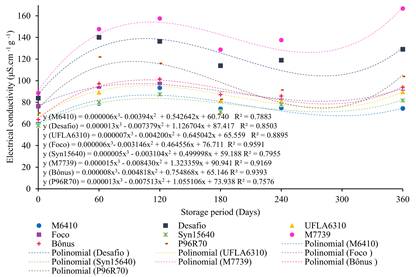
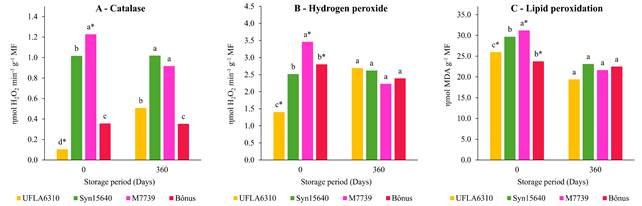
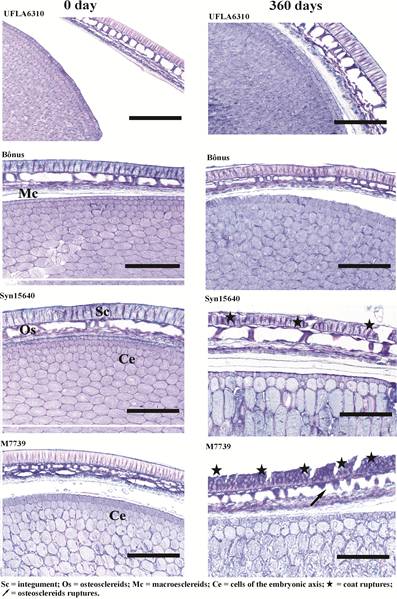
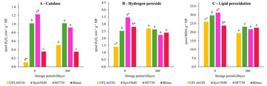
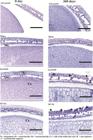
The storage of soybean seeds is a critical aspect of the production process, making it essential for genotypes to show tolerance during this phase to maintain seed quality. This study aimed to examine and correlate lignin content in the seed coat, enzyme activity expression, and morphoanatomical characteristics of soybean cultivars with the preservation of physiological quality and storage tolerance. Eight soybean cultivars were selected, produced, and harvested under uniform edaphoclimatic conditions. Physiological quality assessments were conducted at six storage intervals: 0, 60, 120, 180, 240, and 360 days. Evaluations included tests for germination, emergence, accelerated aging, electrical conductivity, and lignin content in the seed coat. Additionally, biochemical and enzymatic analyses of antioxidant metabolism and morphoanatomical examinations were performed using light microscopy on seeds stored for 0 and 360 days. The experiment used an 8 × 6 factorial arrangement, encompassing eight cultivars and six storage periods. For the enzymatic and morphoanatomical analyses, a 4 × 2 factorial design was employed, involving four cultivars and two storage durations. The results showed that genotype significantly influenced the tolerance of soybean seeds to extended storage periods. Seeds proving high physiological quality and storage resilience exhibited reduced hydrogen peroxide accumulation and diminished lipid peroxidation. Furthermore, morphoanatomical analyses provide a promising method for selecting genotypes with enhanced physiological quality and storage tolerance.
Keywords:
seed anatomy; Glycine max L.; deterioration; physiological quality; antioxidant metabolism
 Thumbnail
 Thumbnail
 Thumbnail
 Thumbnail
 Thumbnail
 Thumbnail
 Thumbnail