
 Characterization of wildlife trafficking seizures in a biodiversity hotspot in Brazil
Wildlife trafficking (WT) poses a threat to biodiversity, especially in regions with high faunal richness and low institutional effectiveness. This study analyzed 271 seizure reports from 2017 to 2021 by three government agencies in Mato Grosso do Sul (MS), Brazil. A total of 1,276 individuals from 33 threatened species were recorded, with Amazona aestiva being the most frequently seized. Seizures were concentrated in five municipalities and in Campo Grande, the state capital. Most records occurred in the Cerrado biome, with underrepresentation of the Pantanal. Institutional actions varied according to agency structure and responsibilities. The data reveal geographic, taxonomic, and institutional patterns of WT in a biodiversity hotspot and provide input for more strategic enforcement efforts. Findings highlight the urgency of integrated public policies focused on threatened species conservation and strengthening environmental enforcement.
Keywords:
wildlife trafficking; biodiversity; enforcement; Cerrado;
Amazona aestiva
 Thumbnail
 Thumbnail
 Thumbnail
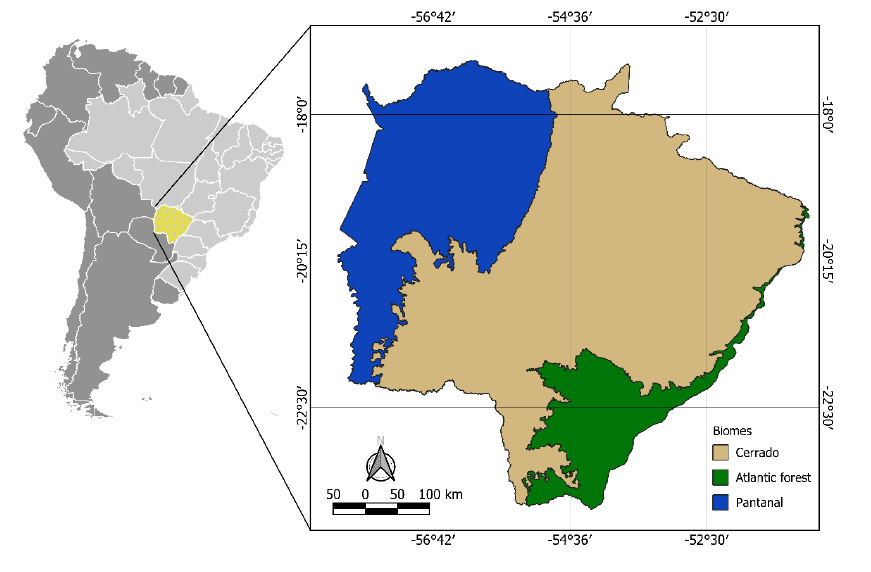 Source: the authors, 2025. Adapted from IBGE (2019)
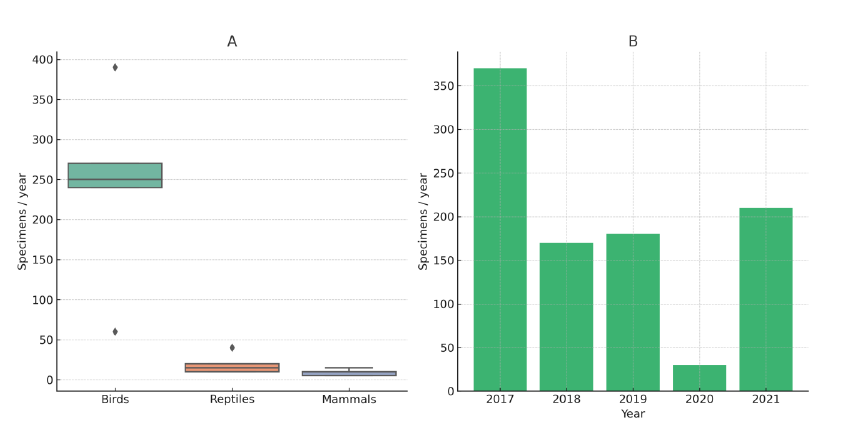 Source: the authors, 2025.
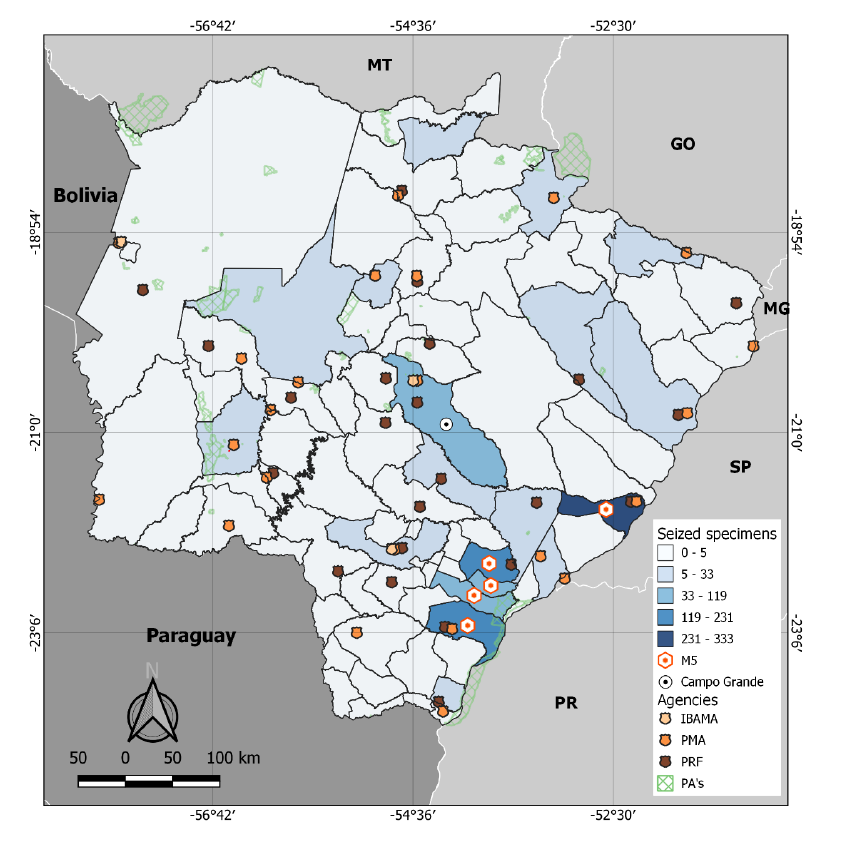 Source: the authors, 2025.