
 IMMERSIVE LEARNING TECHNOLOGIES IN ARCHITECTURE AND URBANISM: A CRITICAL REVIEW IN FOUR DIMENSIONS
Abstract
The use of Immersive Learning Technologies (ILT) has become popular in recent years. This article proposes a critical analysis of its implementation in the teaching of theory and history of architecture, with the methodological innovation of an analytical rule in four dimensions (sensory, cognitive, emotional and social). From a literature review and the analysis of three case studies (immersive virtual reality, augmented reality and learning on game platforms), we sought to understand the pedagogical reaches and limits of these technologies. The results demonstrate that the sensory and emotional dimensions are privileged, especially with the use of digital reconstruction of buildings, an advanced field in architecture, which promotes immersion. Cognitive issues are highlighted in experiences that use gamification, in which the narrative, characters, and challenges are stimuli to learning, when the tasks align with the higher levels of the revised Bloom Taxonomy, allowing analysis and creation, as demonstrated by experiences in immersive studios. However, not much is explored Such findings also warn of the risks of cognitive overload in hyper-realistic environments. This study, despite its limitations of scope and approach, opens the discussion for the implementation and critical analysis of ILT in the teaching of theory and history of architecture and urbanism and in related areas. It is concluded that, in order to expand the potential of ILT, it is necessary to design inclusive, collaborative practices that are articulated with principles such as Universal Design for Learning, in addition to reflecting on methodological and curricular implications.
Keywords:
immersive learning technology; theory and history of architecture and urbanism; evaluation.
Resumo
O uso de Tecnologias de Aprendizagem Imersiva (TAI) popularizou-se nos últimos anos. Este artigo propõe uma análise crítica de sua implementação no ensino de teoria e história da arquitetura, com a inovação metodológica de uma régua analítica em quatro dimensões (sensorial, cognitiva, emocional e social). A partir de revisão bibliográfica e da análise de três estudos de caso (realidade virtual imersiva, realidade aumentada e aprendizagem em plataformas de jogos), buscou-se compreender os alcances e limites pedagógicos dessas tecnologias. Os resultados demonstram que as dimensões sensorial e emocional são privilegiadas, especialmente com o recurso da reconstrução digital de edifícios, campo avançado na arquitetura, que promove a imersão. As questões cognitivas são destaques nas experiências que usam a gamificação, nas quais a narrativa, personagens e desafios são estímulos à aprendizagem quando tarefas se alinham aos níveis superiores da Taxonomia de Bloom revisada, permitindo análise e criação, como demonstram experiências em estúdios imersivos. Entretanto, pouco se explora as questões sociais da aprendizagem, com pouca ou nenhuma atividade colaborativa ou interdisciplinar. Tais achados alertam também para riscos de sobrecarga cognitiva em ambientes hiper-realistas. Este estudo, apesar das suas limitações de escopo e abordagem, abre a discussão para a implementação e análise crítica das TAI no ensino de teoria e história da arquitetura e urbanismo e em áreas afins. Conclui-se que, para ampliar o potencial das TAI, é necessário desenhar práticas inclusivas, colaborativas e articuladas a princípios como o Design Universal para a Aprendizagem, além de refletir sobre implicações metodológicas e curriculares.
Palavras-chave:
tecnologia de aprendizagem imersiva; teoria e história da arquitetura e urbanismo; avaliação.
Resumen
El uso de Tecnologías de Aprendizaje Inmersivo (TAI) se ha popularizado en los últimos años. Este artículo propone un análisis crítico de su implementación en la enseñanza de teoría e historia de la arquitectura, con la innovación metodológica de una escala analítica en cuatro dimensiones (sensorial, cognitiva, emocional y social). A partir de una revisión bibliográfica y del análisis de tres estudios de caso (realidad virtual inmersiva, realidad aumentada y aprendizaje en plataformas de juegos), se buscó comprender los alcances y limitaciones pedagógicas de estas tecnologías. Los resultados muestran que las dimensiones sensorial y emocional son privilegiadas, especialmente mediante la reconstrucción digital de edificios, un campo avanzado en la arquitectura que potencia la inmersión. Los aspectos cognitivos se destacan en experiencias que utilizan la gamificación, donde la narrativa, los personajes y los desafíos actúan como estímulos para el aprendizaje, particularmente cuando las tareas se alinean con los niveles superiores de la Taxonomía de Bloom revisada, permitiendo análisis y creación, como lo demuestran las experiencias en estudios inmersivos. Sin embargo, la dimensión social del aprendizaje se explora poco, con escasas o nulas actividades colaborativas o interdisciplinares. Estos hallazgos también advierten sobre riesgos de sobrecarga cognitiva en entornos hiperrealistas. Este estudio, a pesar de sus limitaciones de alcance y enfoque, abre la discusión sobre la implementación y el análisis crítico de las TAI en la enseñanza de teoría e historia de la arquitectura y el urbanismo, así como en áreas afines. Se concluye que, para ampliar el potencial de las TAI, es necesario diseñar prácticas inclusivas y colaborativas, articuladas con principios como el Diseño Universal para el Aprendizaje, además de reflexionar sobre implicaciones metodológicas y curriculares.
Palabras clave:
tecnología de aprendizaje inmersiva; teoría e historia de la arquitectura y el urbanismo; evaluación.
1 INTRODUCTION
In addition to the recurring discussion about the impacts of technologies on our daily lives, it is intended to address the challenges and opportunities that digital culture offers in educational environments. Digital Technologies of Information, Communication and Expression (DTICE) are booming, despite their diversity of application and inequalities of access, especially in the heterogeneous Brazilian reality. In a world increasingly connected by computers, smartphones, tablets, and others, these technologies offer multiple configurations to obtain information, communicate, and express themselves (Santos, 2021), even if, in many cases, access is limited in terms of speed and quality.
It is necessary to distance ourselves from reductionist and simplistic concepts that may argue that the mere adoption of DTICE in the educational context already results in changes, innovations or positive aspects in teaching and learning. It is also necessary to abandon a demonizing judgment of technologies as responsible for all educational ills. Therefore, beyond extremism, these technologies are an inherent part of contemporary society and it is necessary to debate them beyond a merely instrumental use of certain resources, devices and technologies. There is an urgent need to discuss means of pedagogical and technological mediation, in which the teacher is a facilitator who acts in the relationship between the student, knowledge and technologies, through the encouragement and motivation of these processes (Masetto, 2013; Oliveira; Silva, 2022).
Among the myriad of DTICE, the so-called immersive technologies were chosen, exemplified by extended reality (XR) and also encompassing a range of other possibilities. In this study, they will be called Immersive Learning Technologies (ILT). According to Mystakidis and Lympouridis (2023), the set of active phenomenological experiences based on presence - physical or virtual - define "immersive teaching". This concept is rooted in experiential learning, in which learning by doing has always been fundamental (Martins, 2007). In the case of this experience being mediated by technology, digital media are used to simulate real situations, with security and control, which are sometimes inaccessible in physical reality. For example, a medical student can train a complex surgery without exposing a patient to risks. Although many texts indicate a positive view of their use for the engagement generated, there is a need for a critical view of the potential of immersive technologies as effective and meaningful pedagogical practices (Dengel; Mägdefrau, 2018), as well as its limitations in terms of accessibility and the inherent psychological risks.
The objective of this article is to evaluate the use of ILT in the teaching of theory and history of architecture and urbanism. This analysis was structured in four dimensions (sensory, cognitive, emotional and social) with the methodological innovation of an analytical-comparative rule. The choice of this field was due to the experience of the author, a teacher in the area for more than 12 years.
Although there is a wide literature on the subject indicating that the use of immersive technology enhances learning, there are few studies on the implementation of these immersive technologies for the teaching of theory and history in particular.
Various digital tools have entered architectural education in recent decades. Hand drawings on artboards migrated to the computer. According to Soliman, Taha and El Sayad (2019), computational tools have been important in transforming the imagination and architectural practical possibilities.
Teaching architectural history is not just about categorizing a timeline of iconic buildings. An important competence is the sedimentation of sociocultural contexts, in order to create a critical panorama for reading and intervention in the built space. In this sense, architecture can be understood as the material support for a series of intangible relationships. Aristotle (2010) defined memory as the knowledge of the past, obtained through seeing, feeling, observing, hearing and learning. Memory can be seen as the mental imprint of an image that can be retrieved through the experience of existing objects and places. The buildings, as tangible elements of the city in its various historical layers, reveal the memories of the past to the present and direct us to an experience of time through matter. Therefore, the teaching of architectural history can be raised as a link that connects the past to the present and, eventually, to the future.
Technological mediation with ILT for the area is a tool still in the beginning of experimentation. The virtual representation of buildings can aggregate several layers of historical data. The advancement of digital data research in the last decade has made it possible for academics and experts in architecture and heritage to accurately record the geometry and state of conservation of cultural assets. This allows access to historic buildings - renovated, already demolished or in ruins - and interaction with these buildings without the risk of compromising their physical integrity, through the accurate reproduction of their spatial features (Kebir et al., 2020; Hou et al., 2024). They can be, therefore, an important instrument in providing better spatial understanding, democratizing access to information.
It is important to highlight from the outset that the adoption of technologies must be accompanied by critical reflection on inclusion, accessibility, and psychological impacts. Recent studies in neuroscience applied to education warn of risks such as cognitive fatigue and anxiety when there is no adequate dosage between traditional and virtual methodologies (Fonseca, 2016). Likewise, technology-mediated pedagogical practices must dialogue with principles of inclusive education and Universal Design for Learning (CAST, 2024), ensuring access to different student profiles.
2 THEORETICAL FRAMEWORK
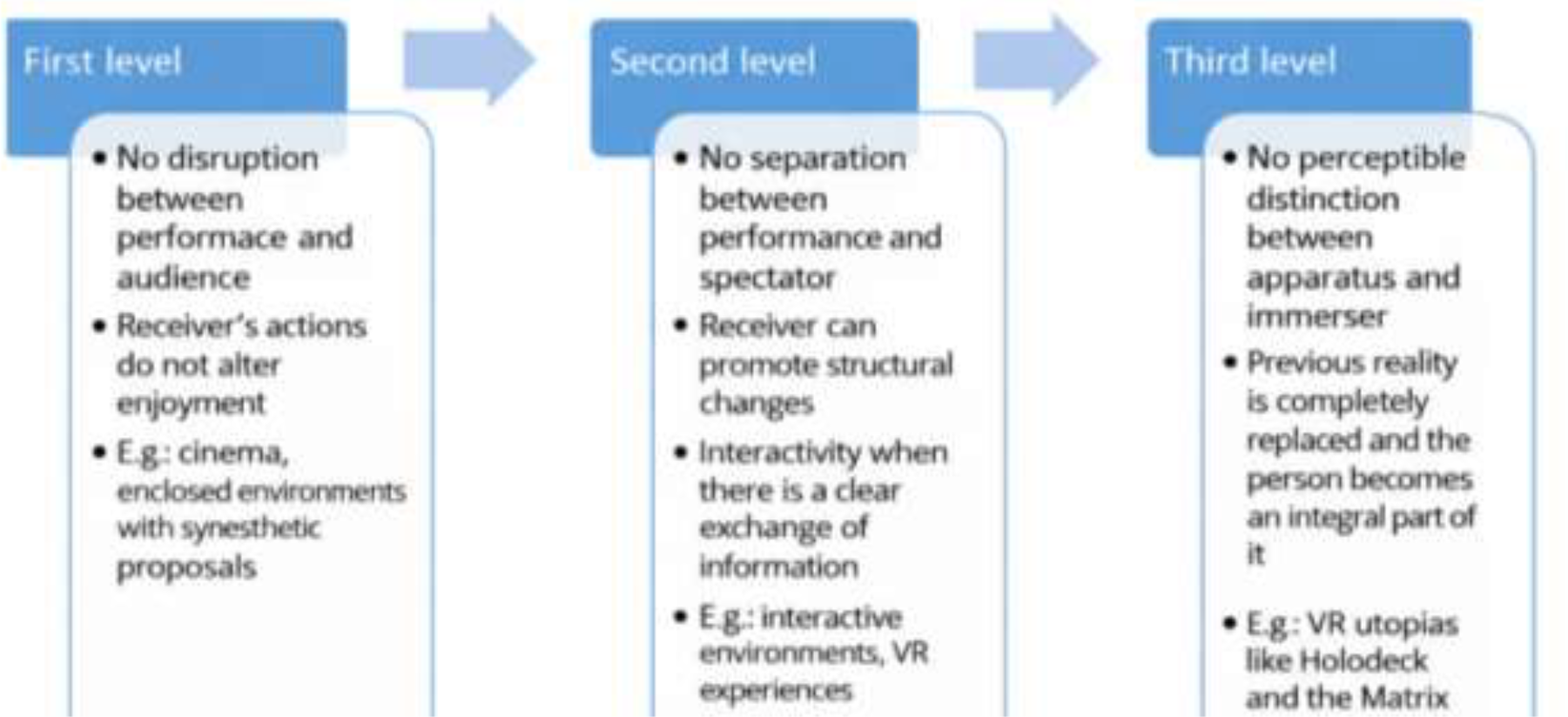
But what is "immersion"? In etymology, the word comes from the Latin immẽrgo, which means "to dive into, to immerse" (Faria, 1962). In the midst of the polysemy that the term can have, here it is used in the sense of an experience when someone is intensely absorbed in something and tends to temporarily forget what surrounds them (Yuen et al., 2013). This can apply to many situations, e.g. in a music show, in a film, in a landscape or even in your thoughts. Specifically for the visual arts, Leote (2000, pp. 99-100), who proposed three distinct levels of immersion due to the spectatorspectacle distance formed by the interface, as shown in Figure 01.
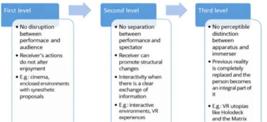
Although the author refers to the artistic scope, a parallel with the teachinglearning processes is possible. The first level encompasses experiences that are almost daily, but as there is no rupture between action-spectator (or, in our terms, teachingstudent), its application to education is not sufficient in the face of the current processes of pedagogical mediation3, (Oliveira; Silva 2022) since it does not promote active learning (Weltman, 2007). In other words, it is understood that both students and teachers should be involved in the production of knowledge, not only in its reproduction (Demo, 2012).
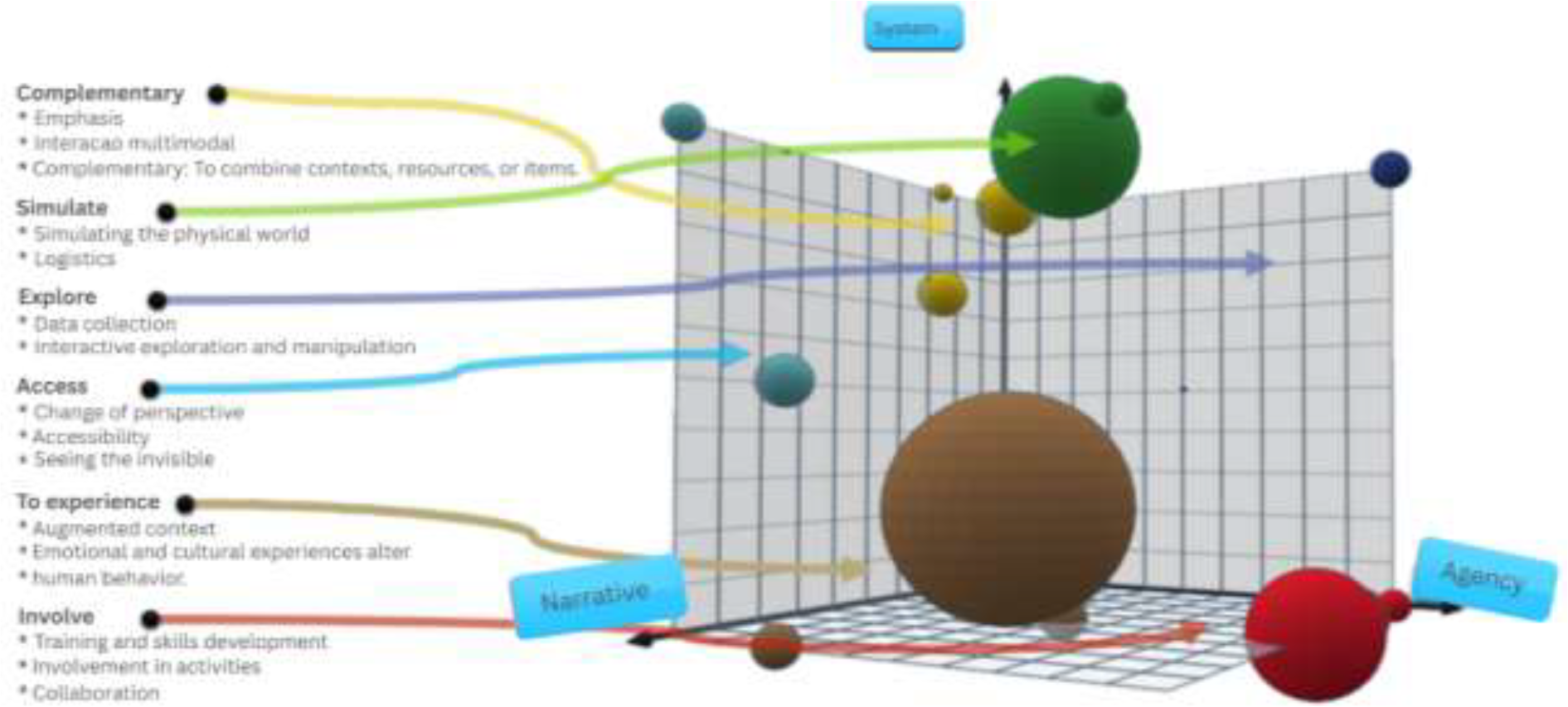
At the same time, the third level is still very far from our technological possibilities and, therefore, let us leave it in the utopian sphere. Thus, the second level is of interest, in which immersion is mediated by technological tools that "offer the promise of experiential learning, in which the real world is enhanced with information and graphics or is completely simulated" (Vassigh et al., 2018, p. 180). An immersive virtual reality environment allows "replacing the sensations of the physical world with virtual ones" (Heeter, 1992, n.p.) and, with this, it "supports the illusion of being submerged in a virtual world, that is, the illusion is immersion" (Heim, 1993, p. 110). Nilsson et al. (2016) identify multiple definitions that oscillate between sensory focus (substitution of real stimuli) and phenomenological focus (narrative and agency immersion).) The phenomenon in immersion is three-dimensional (Nilsson et al., 2016; Beck et al., 2020) in the sense that it is
[...] a phenomenon that emerges from immersion in the system, the subjective sensation of being surrounded, from immersion in narrative, absorption by contextual meaning, including its temporal, spatial and emotional aspects; and from immersion by agency, absorption by the possibilities of active involvement (Morgado, 2022, p. 104 - emphasis added).
From this perspective, the first dimension mentioned can occur in real or virtual circumstances, being perceived through the senses. In most virtual systems, headmounted displays (HMDs) cut through visual and sound sensations of the surrounding world and replace them with computer-generated sensations (Heim, 1993). The body moves through artificial space using data gloves or joysticks. However, to be relevant in the context of teaching, it is necessary to involve students in a deep and meaningful way, making them feel that they are completely immersed in the content and learning activities. Therefore, it is necessary to go beyond a merely sensory immersion, in which students are stimulated through sight or hearing (and, very rarely, other senses), but without there being other layers of meanings. Hence the other dimensions insert the idea of narrative and active involvement ("agency" or “agência” in the translation of Morgado, 2022) generated by reaction to the challenges that emerge from the context. These two dimensions merge, and give rise to learning. For example, the work of Ummihusna and Zairul (2022) evaluates the immersive learning experience on two more outcomes: cognitive and affective.
Therefore, in this article we understand that immersion when applied to education should be understood as a multidimensional experience. It is not limited to the replacement of physical stimuli with virtual ones, but translates into a condition of active, meaningful, and collaborative learning, in which technology, narrative, and pedagogy are intertwined.
The Theory of Cognitive Load4 (Sweller, 1988; Sweller; Ayres; Kalyuga, 2011) helps to understand that highly immersive experiences can overload working memory if there is no balance between sensory stimuli and pedagogical objectives. Hence the importance of constructive alignment (Biggs, 2003). For him, objectives, activities and evaluation must be coherently integrated. In this context, another central milestone is Universal Design for Learning (CAST, 2024), which proposes multiple forms of engagement, representation, and action/expression, ensuring accessibility and inclusion from planning to the application of immersive experiences. In other words, the application of ILT must be born from reflection and be constantly evaluated and edited to ensure its effectiveness.
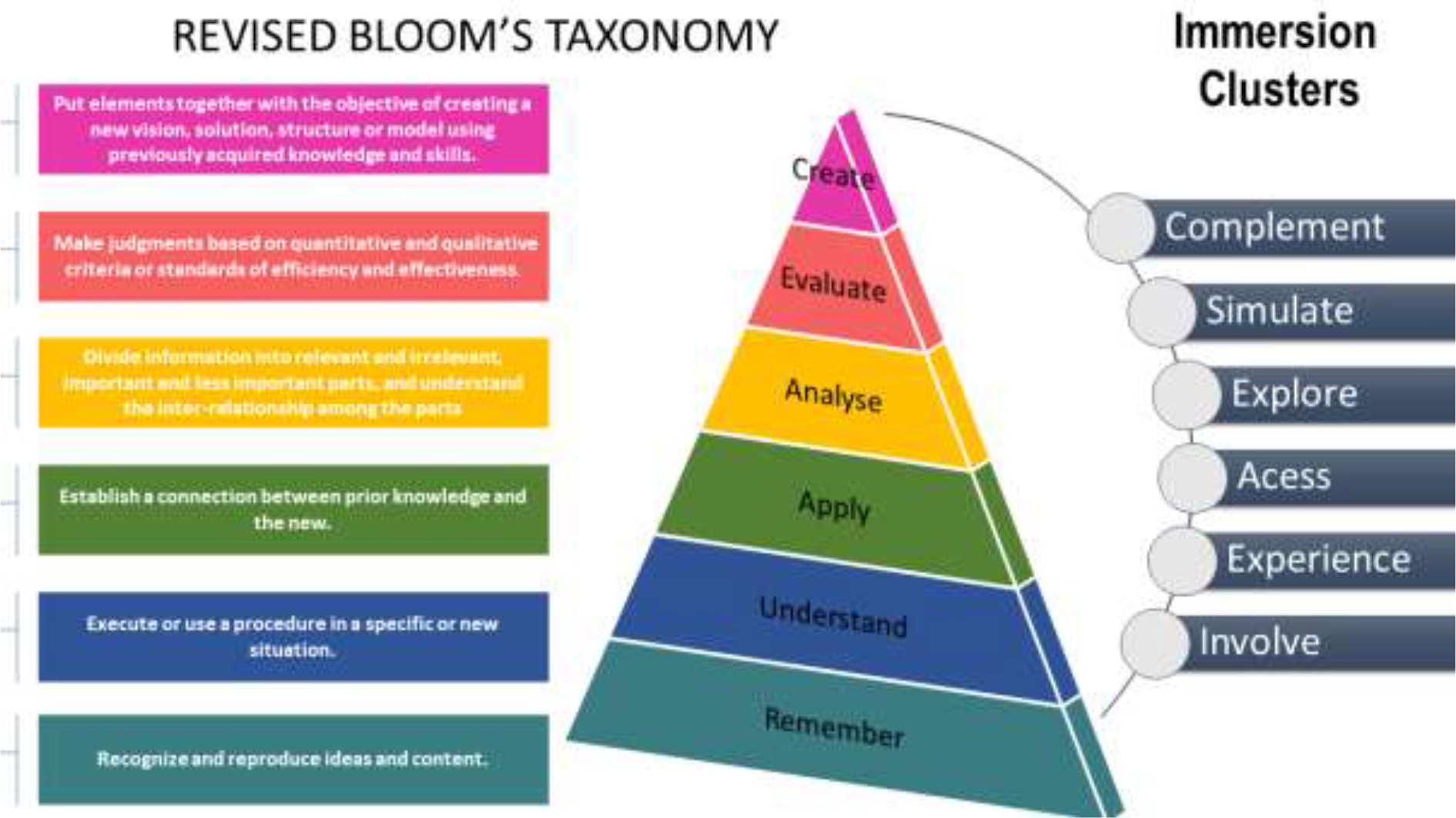
The search for cognitive outcomes - understood as mental processes involved in the acquisition, processing, storage and use of information - is at the heart of learning processes (Piaget, 1960). Given the complexity involved in these procedures, Bloom's Taxonomy was structured in the 1950s, which categorizes educational objectives into levels (Bloom et al., 1956). In the review conducted by Anderson et al. (2001) the categories began to be expressed in the form of verbs to better reflect the cognitive processes: Remember, Understand, Apply, Analyze, Evaluate and Create (inserted at the top of the pyramid to reflect the creative nature of critical thinking) - Figure 02.
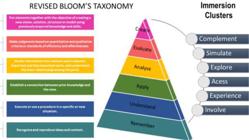
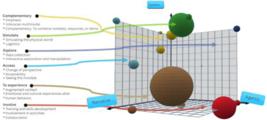
Returning to the discussion for the ILT, Beck et al. (2020), through a literature review on the use of Immersive Learning Environments, systematize the main themes of the research and aggregate them, proposing the following verbs: complement, simulate, explore, access, experience, and involve, which Morgado (2022) joins with the dimensions (system, narrative, and agency or challenge) - Figure 03. These verbs define "clusters", that is, areas of concentration of research in relation to the three dimensions of analysis that highlight the main paths and trends of research on the uses of immersive learning environments. The less explored clusters point to future research directions. These actions can be added to the verbs proposed in the revision of Bloom's Taxonomy (Figure 02), not as a hierarchical sequence, but as cognitive coalitions to be achieved with the ILT. Therefore, immersive learning can add new actions for the acquisition of knowledge, although more research needs to be undertaken to discuss these issues in depth.
In the affective field, Bloom's team made some incursions into the system of categorizing competencies, but did not arrive at a full systematization. However, from them in the field of psychology, personality inventories were developed based on five categories or "big five": openness to experience, conscientiousness, extroversion, agreeableness and neuroticism or emotional instability (Costa; McCRAE, 1992, 1999). Although these categories are related to the general dimensions of personality, it is understood that these can influence learning (Chart 01). That is, personality traits can influence attitudes, motivations, and learning behaviors, which are components of the affective domain.
In the view of Gondim, Morais and Brantes (2014), the mastery of motivational and affective aspects - both in oneself and in other individuals - has the ability to ensure learning, development, and the transfer of such capacities to other work contexts. This dimension should be considered in the process of pedagogical mediation, since:
Emotions are an essential source of learning, as people (children, adolescents, adults, and the elderly) seek out activities and occupations that make them feel good, and tend, on the contrary, to avoid activities or situations in which they feel bad. Emotions give meaning to human life as we adapt, learn, succeed and make friends, but equally they also emerge as we face episodes, events and situations that crush, hurt, ridicule and frustrate and sadden us, for all this, emotions and facial and gestural expressions provide adaptive information of enormous relevance for learning, they are phenomenological because they are subjectively experienced and experienced (Fonseca, 2016, p. 366 - emphasis added).
Due to this relevance of emotions in learning, several studies (Alvarez; Lemos, 2006; Vieira, 2012; Bartoszeck, 2014) based on neuroscience bring contributions to support teaching. Studies such as that of Brandão and Caliato (2019, p. 543), e.g. indicate the importance of considering the feelings that drive learning in a positive or negative way. Although this is an area in full expansion, there is still a lot of potential for deepening research and application in educational practices mediated by technology.
However, emotion and cognition need to be linked to socialization. The studies of Lev Vygotsky (1896-1934) reveal that intellectual development is profoundly influenced by social and cultural interaction (Vygotsky, 1988, 1999). Without going into depth about their contributions, it is understood that interaction is a relevant part of the teaching and learning process. For example, the effective participation of students in the classroom - among themselves and with teachers - is one of the variables that interfere in these processes. In other words, "social interactions in the socio-historical perspective allow us to think of a human being in constant construction and transformation who, through social interactions, conquers and confers new meanings and perspectives on life in society and group agreements" (Martins, 1997, p. 116).
Language as a communication tool therefore plays a central role in promoting interaction. It is necessary to speak and listen to the other, but it is also necessary to expand the domain of language in a dynamic process of knowledge construction. In other words, education and training take place not only through the sum of experiences, but - above all - through the confrontation between differences. The role of the teacher is again that of mediator in these processes. Thus:
The classroom is, as we mentioned earlier, a laboratory, in which the discursive process occurs through negotiations and conflicts that appear in the face of the new, in the face of what is not known or not fully mastered and that we present to the students in a problematizing way. When motivated, our students enter the "interactive channel", get involved in the discussions, feel stimulated and want to participate, because internally they are mobilized by external strategies - seductive tools that the teacher must use to mobilize his class (Martins, 1997, p. 121).
In the preceding quotation, the interconnection between the two previous dimensions is clear, as the final result is always a cognitive domain and motivation is a field of the emotional domain. Therefore, it is understood that the three dimensions are integral and inseparable parts of the teaching-learning process. It is also worth noting the indication of using "seductive tools" as strategies to promote motivation and interaction. Although, in that text from the 1990s, the author acknowledged the help of computational tools, he indicated that they "cannot create, on their own, the necessary interactive fields" (Martins, 1997, p. 121). Almost 30 years later, in times of artificial intelligence, the possibility that machines create on their own is getting closer and closer. Meanwhile, it cannot be denied how much progress has been made in the creation of virtual environments that are capable of promoting interaction (mediated or not by the teacher).
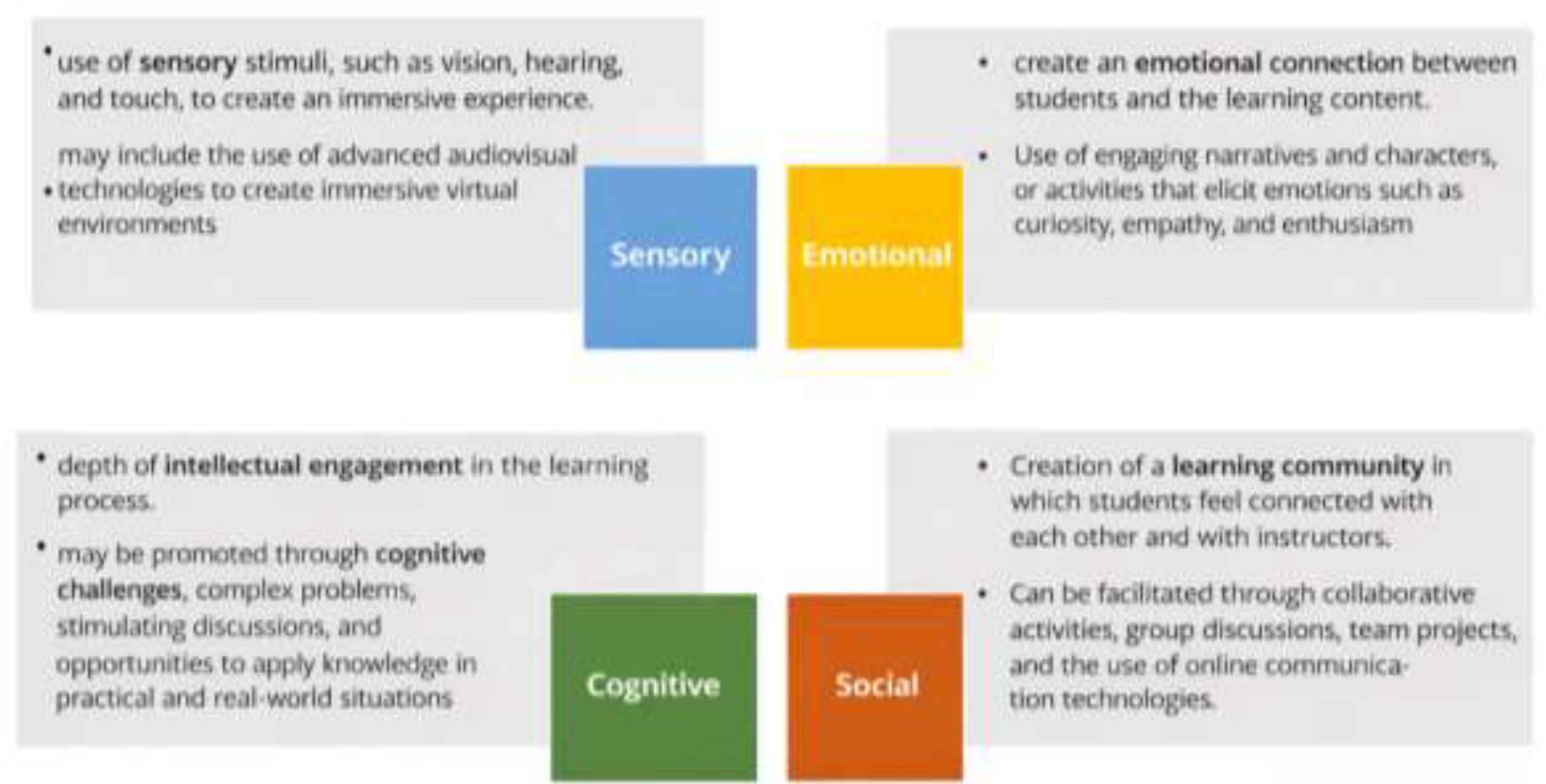
Therefore, returning to the focus on the ILT, we conclude that in order to achieve the learning objectives, it is necessary that this immersion covers the sensory, cognitive, emotional and social dimensions. It would be naïve to think that it is a simple and direct transposition of traditionally carried out practices to virtuality. Figure 03 gives examples of how these immersion modes can permeate these different approaches, be achieved by various means, and have particular goals/results. It is from this expanded conception that the proposal of the analytical ruler in 4D originates, used to critically evaluate experiences as detailed below.
3 METHOD-TOOLING DESIGN AND ANALYSIS CATEGORIES
Given the review presented, the central question of this research is constructed: how or to what degree are the four dimensions present in the technological tools of an immersive learning environment? Some excerpts are necessary to advance in this analysis. First, three typologies stand out in this broad scope: immersive virtual reality (IVR), augmented reality (AR) or virtual learning on a gaming platform. The choice of these typologies is due to their recurrence in previous studies (Dengel; Mägdefrau, 2018; Morgado, 2022; Mystakidis; Lympouridis, 2023) and initially it was intended to include a fourth, mixed reality (MR), but no articles were located for this typology (Chart 02).
Secondly, a field was delimited for its application: the teaching of Theory and History of Architecture and Urbanism, as will be further detailed below. The research used the Capes Journal platform and, complementarily, ScienceDirect. In the advanced search, the descriptive words "immersive learning", "architecture", "architectural history", "virtual reality", "immersive virtual reality", "augmented reality", "virtual learning", "game", "gamification" were used. These keywords were searched in any type of material and both in the title and in the abstracts. The results are shown in Chart 02. We opted for works in English due to the almost total absence of studies in Portuguese5.
The choice of works for the case study was made by reading the full articles (not all the works listed on the platforms were accessed), in which it was observed that the study adhered to this research (area of application and typology of the ILT), that they were studies that had already been applied/tested and that there were evaluation questionnaires with users (students). These data were essential for the application of the proposed methodology, as will be detailed below. It is recognized that the analysis is restricted to what has been published, without direct collection from users, which constitutes an important methodological limitation. It is noteworthy that evaluating cases is, above all, a validation test of the proposed methodology, and it is necessary that future studies focus on more cases.
Finally, a third approach is the construction of a qualitative-quantitative framework to guide the comparison and diagnosis between experiences, categories and dimensions. This work intrinsically carries a limitation of scope: the experiences were evaluated based on their reports, that is, on what was published about them. Critically, it is necessary to define from the outset that such an obstacle will generate partial results, since it will not directly reach the users of the ILT. However, some studies listed by Ummihusna and Zairul (2022) indicate the use of student assessment questionnaires, interviews, and other quali-quantitative methods. These studies were prioritized.
Despite these limitations, the four proposed dimensions have some correlation with the system of Won et al. (2022) which established four categories of VR design attributes: a) Sensory, related to the representational fidelity of the virtual environment that is subdivided into (i) vision and graphics; (ii) sound; (iii) tactile feedback; b) Action, which evaluates the design of intuitive interface in a virtual environment seem natural and intuitive for students to feel that they are making real changes in the environment, evaluated in (i) interactivity; (ii) body movement; c) Narrative, related to the content and learning activities for students to feel emotionally and intellectually engaged and is subdivided into (i) roles; (ii) contextual stories; (iii) challenging tasks and achievements; and d) Social, in which students and learning are supported through mediated social interactions. If categories [a] and [d] are named exactly as in this article, items [b] and [c] seem to mix emotional and cognitive criteria as indicated in the studies by Beck et al. (2020) and Morgado (2022).
In order to create a guideline, it was arbitrarily defined to create two indicators per dimension that will be evaluated on a Likert Scale from 1 to 5 and presented in comparative graphs such as "radar". For the sensory dimension, initially the degree of visual and auditory detailed (and others, if any) will be observed. The idea is to verify the complexity and fidelity of the resources from their textual and imagery description. For example, the use of terms such as "high fidelity", "realistic", "detailed" etc., and also the appearance of the illustrated scenarios will be verified. The second indicator is the diversity of sensory interactions, i.e. how many different opportunities are offered to users, such as e.g. touch, sounds, manipulation of virtual objects, space exploration.
In cognitive analysis, the level of difficulty and depth of the tasks that students need to perform are evaluated, e.g., "challenges", "critical analysis", "complex problem solving", among others. The complexity assessment will be carried out through Bloom's Taxonomy (Ummihusna; Zairul, 2022). It will also be observed if there is mention in the articles of implications of the use of these contents and tasks in student education beyond those of the experience in immersive environments, that is, if students are able to interrelate content and apply it in other contexts.
For the emotional dimension, the first indicator will be the direct mention in the articles of the students' emotional reactions, e.g. "enthusiasm", "curiosity", "empathy", "satisfaction, involvement and trust" (Ummihusna; Zairul, 2022, p. 272) and others. In parallel, the use of narratives (Won et al., 2022) or elements that evoke emotions within the ILT environment will also be evaluated, e.g., storytelling, dramatic scenarios, and others.
Finally, in the social dimension, the first indicator will be the presence and quality of social and collaborative interactions among students, e.g. chat, teamwork, group discussions, information sharing, and other collective activities. As a second indicator, the insertion of inter and transdisciplinary elements in the proposed activities is evaluated, e.g. integration with other disciplines of the course or other areas of knowledge.
This methodological design was called the "4D analytical ruler", functioning as an instrument of comparative analysis. The differential of the proposal is that it does not look only at the technological (graphic or hardware resources), but at the pedagogical, allowing different cases to be compared from the same perspective. Thus, it is also possible to identify imbalances (e.g., experiences rich in sensory stimuli, but poor in social interaction) and point out paths for pedagogical improvement (e.g., including collaborative roles or aligning tasks at higher levels of Bloom's Taxonomy).
4 CASE STUDIES
4.1 Case 01 - Immersive Virtual Reality (IVR)
VR can be defined as "the sum of hardware and software systems that seek to perfect an all-encompassing sensory illusion of being present in another environment" (Biocca; Delaney, 1995, p. 63). VR allows students to experience environments in an immersive and interactive way. They can virtually explore space that no longer exists or that is distant and difficult to access, or even buildings that have never been built, which can significantly enrich their understanding of architecture. There are many studies on the subject. On a broad scope, Won et al. (2022) develop a systematic review with 219 educational studies on IVR, finding that technological resources were implemented and investigated to the detriment of pedagogical resources. It was observed that the use of VR obtained better gains in knowledge compared to traditional methods (Ibrahim; Al-Rababah; Bani-Baker, 2021). In general, almost all of the results analyzed by Gomes et al. (2023) suggest a positive or very positive relationship with the implementation of virtual reality for teaching purposes.
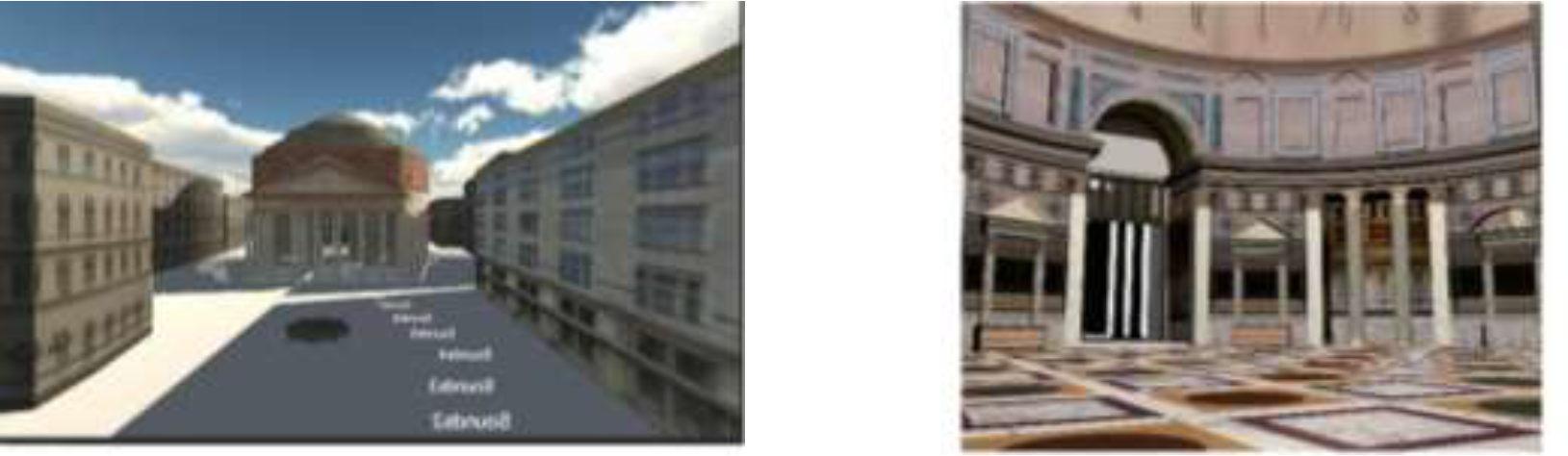
In the article selected for analysis, Chan; Bogdanovic and Kalivarapu (2022) present the use of IVR technologies for teaching architectural history using, specifically, the Pantheon in Rome (Figure 04) as a test to evaluate its effectiveness. The study used two successive evaluations, with 57 and 68 students, who evaluated five variables: (a) learning about architecture, (b) history, (c) sense of presence in VR, (d) structural realism and (e) comparison with classroom learning. The images that illustrate the article explain the accuracy in the three-dimensional representation of the building, but according to the authors "it is impossible with current technology to recreate 100% of every detailed of a building or to cover wide swathes of information" (Chan; Bogdanovic; Kalivarapu, 2022, p. 4381). It was complemented with audios that gave historical information associated with internal and external construction objects, organizing a "guided tour".
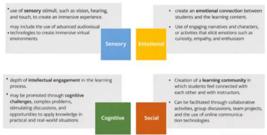
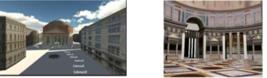
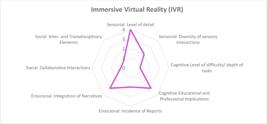
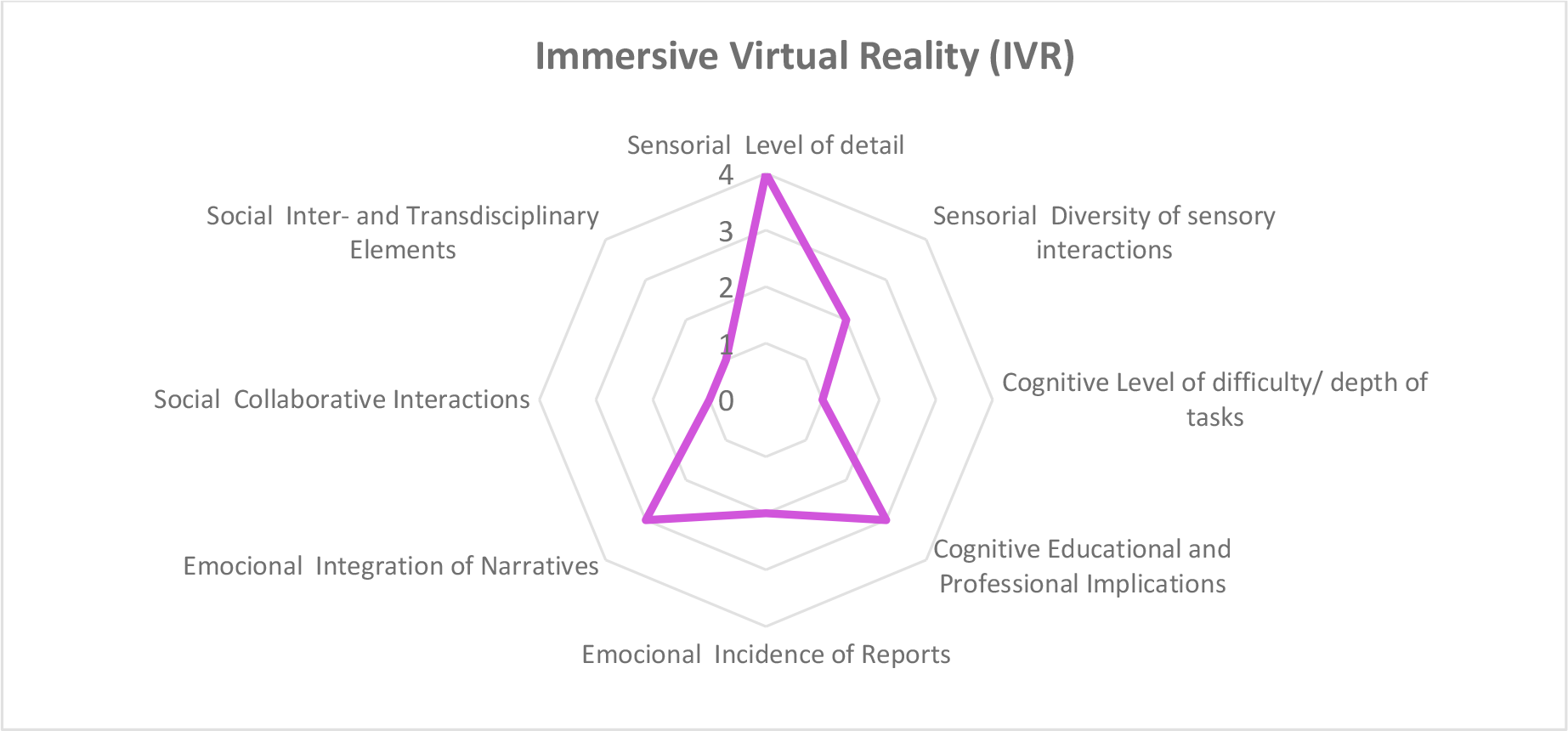
Chart 03 and Graph 01 systematize the analysis of the variables, visually presented in Graph 01. The almost zero social interaction of the model is highlighted, since the visit was made individually, which the authors themselves perceive as a limitation, emphasizing that "in the classroom, interaction is a crucial component for effectiveness. If the VR building could be viewed together and comments were shared as a seminar format, the learning outcomes would be more efficient" (Chan; Bogdanovic; Kalivarapu, 2022, p. 4387). It is suggested that mediated debates could overcome the absence of social interaction.
Despite this, the statements collected in the questionnaires highlight that "VR makes you feel like you are inside the structure... It gives you a better idea of how the structure is built than photos or lectures" (unidentified student in Chan; Bogdanovic; Kalivarapu, 2022, p. 4383). Finally, the text highlights the difficulties of cost, time, effort, and energy of teamwork to build a model like the one presented and its potentialities and limitations for application in remote teaching.
4.2 Case 02 - Augmented Reality (AR)
Augmented Reality is a system that integrates natural and virtual worlds, recording three-dimensional objects, and real-time interaction (Lungu et al., 2021). These are tools that show great potential especially when applied to education and numerous studies have proven their effectiveness in increasing student motivation (Prasetya et al., 2024). Despite the positive results, the same study acknowledges certain limitations, including the need for more research to explore the diverse dimensions of AR learning experiences and their long-term impact on student motivation. In the closest field of architectural history, although there is not much research, Han et al. (2013) propose that AR can help reveal layers of historical transformations in urban environments, providing a connection between the past and the present, making the invisible visible through the projection of elements in real scenarios.
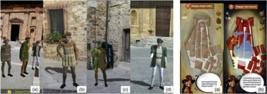
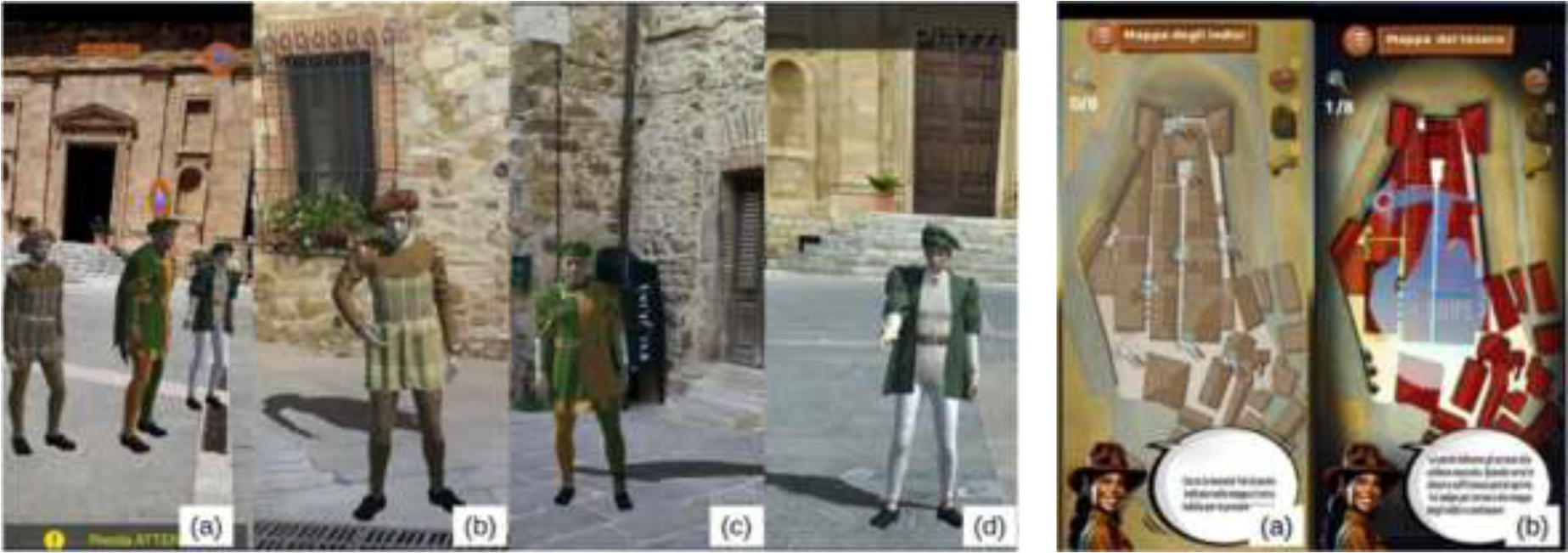
The article by Capecchi et al. (2024) that although it does not apply to architecture students (but to adolescents, designated in the text as "generation alpha"), there is a strong interrelationship with the area. The research describes a serious game based on the use of GPS-guided augmented reality in an Italian Renaissance village, a scenario in which the importance of urban heritage is discussed. In this example, the existence of a narrative that revolves around historical characters of the city recreated in 3D (Figure 05) is of great importance, in what the authors describe as an experience that arouses curiosity, engagement and motivation. In the game, users have to decipher clues and answer questions "to make participants understand the reasons for architectural and urban historical choices, to develop their sense of observation of urban heritage, but also to create a sense of territorial identity in the participants" (Capecchi et al., 2024, p. 526).
A total of 79 users evaluated the experience through questionnaires, in which questions about usability, motivation and intentions were observed. In general, the results are positive, especially for the ease of use, its graphic and design elements. The potential of gamified learning stands out, as it "combines educational content with fun, game-like elements motivating users to engage more deeply with the content" (Capecchi et al., 2024, p. 533).
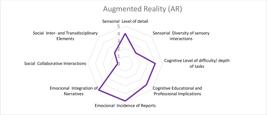
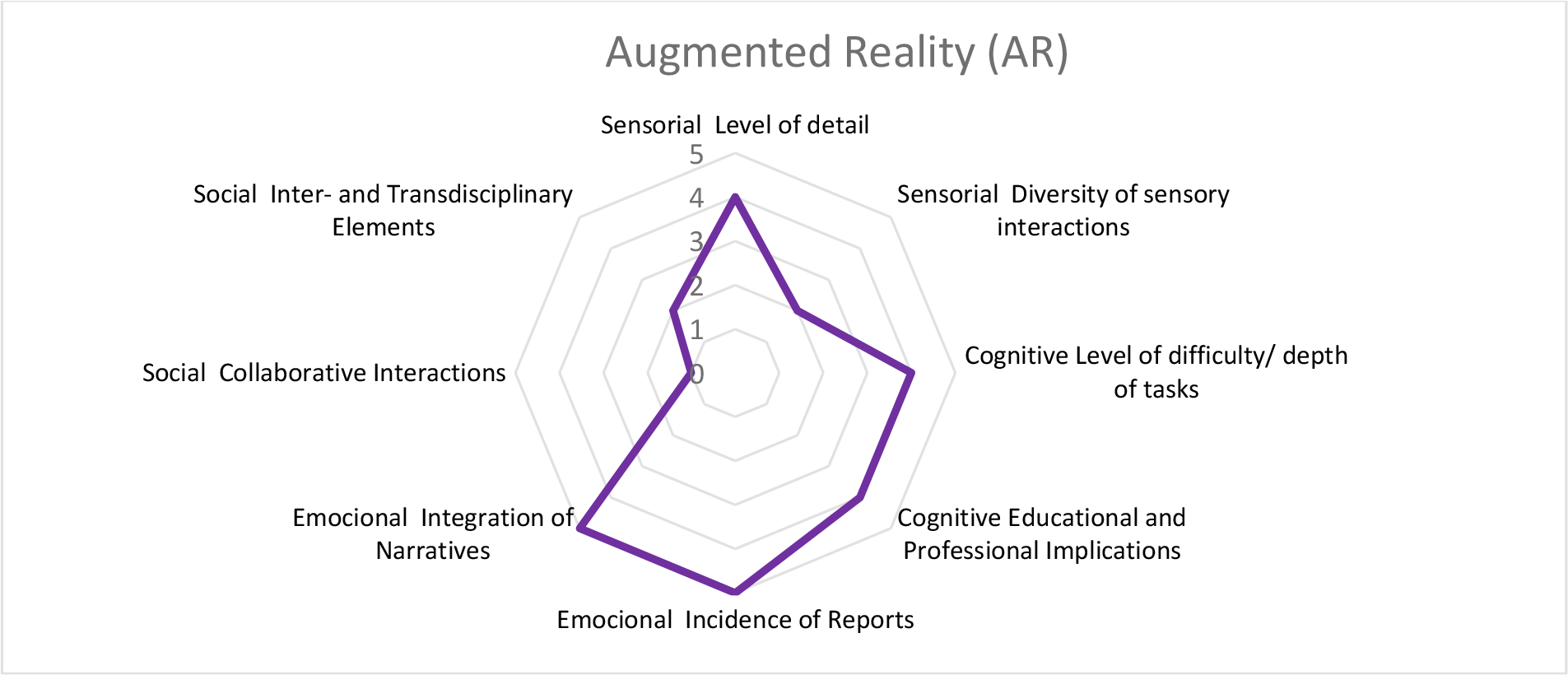
Chart 04 and Graph 02 systematize the findings of the analyses. Gamification is responsible for the increase in the score in the cognitive dimension, as well as for the excellent evaluation of the emotional aspects collected in the reports. However, the social dimension is impaired, since it is implied in the text that the game is carried out individually and there is no indication of collaborative elements beyond its interlocution with the area of heritage education. Collective mapping tasks could enrich the social dimension, e.g.
4.3 Case 03 - Virtual learning on a gaming platform
Gamification, understood as the use of playful mechanisms of games, has gained considerable interest in education circles due to its ability to improve the learning process and motivation among students (Khaleel et al., 2017; Hakak et al., 2019). The concept of "serious game" emerges, since the ultimate goal goes beyond mere entertainment by incorporating the element of learning. Hakak et al., (2019) identify five key elements for the implementation of gamification in education: (i) motivation; (ii) short-term tasks; (iii) reward system; (iv) task design; and (v) game identity. The use of digital games has been the target of research and experimentation in contemporary times, in which the use of virtual reality and the availability and portability of smartphone devices are mixed.
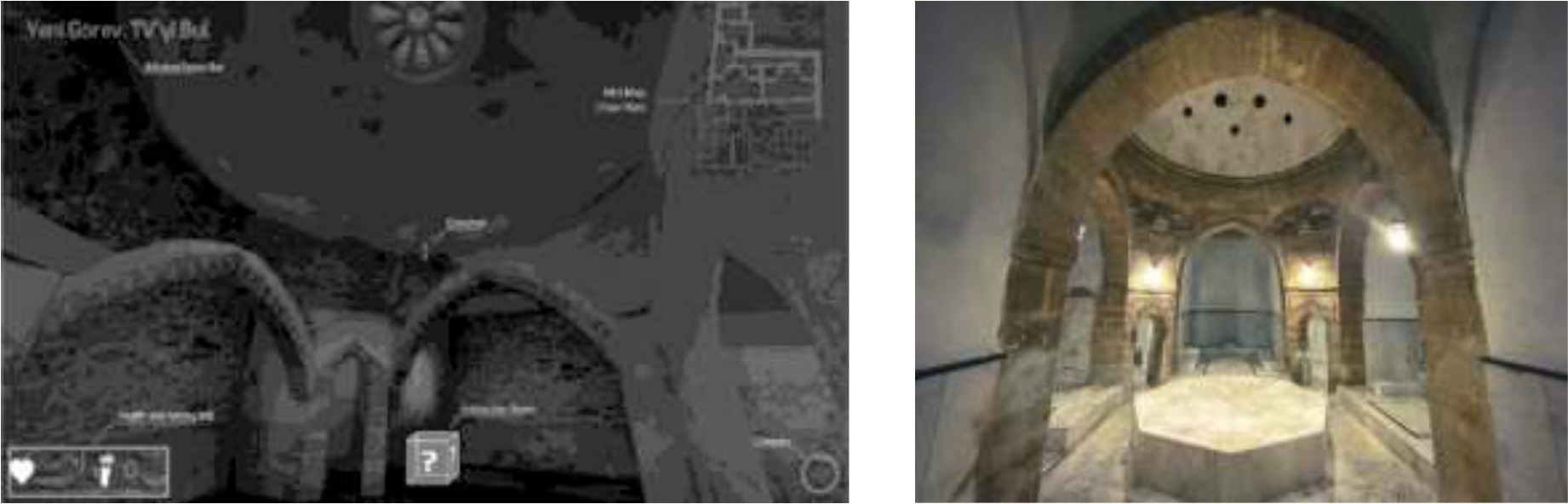
The chosen study applies these ideas to historic buildings, specifically in a Greek resort in Safranbolu (Turkey) through the game Escape from Haunted Building. The digital reconstruction of the building was carried out by means of technical drawings, which ensured its accuracy and reliability (although the images that illustrate the article, in black and white, do not accurately demonstrate these characteristics - Figure 06).
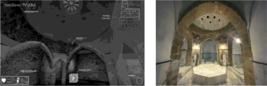
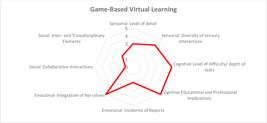
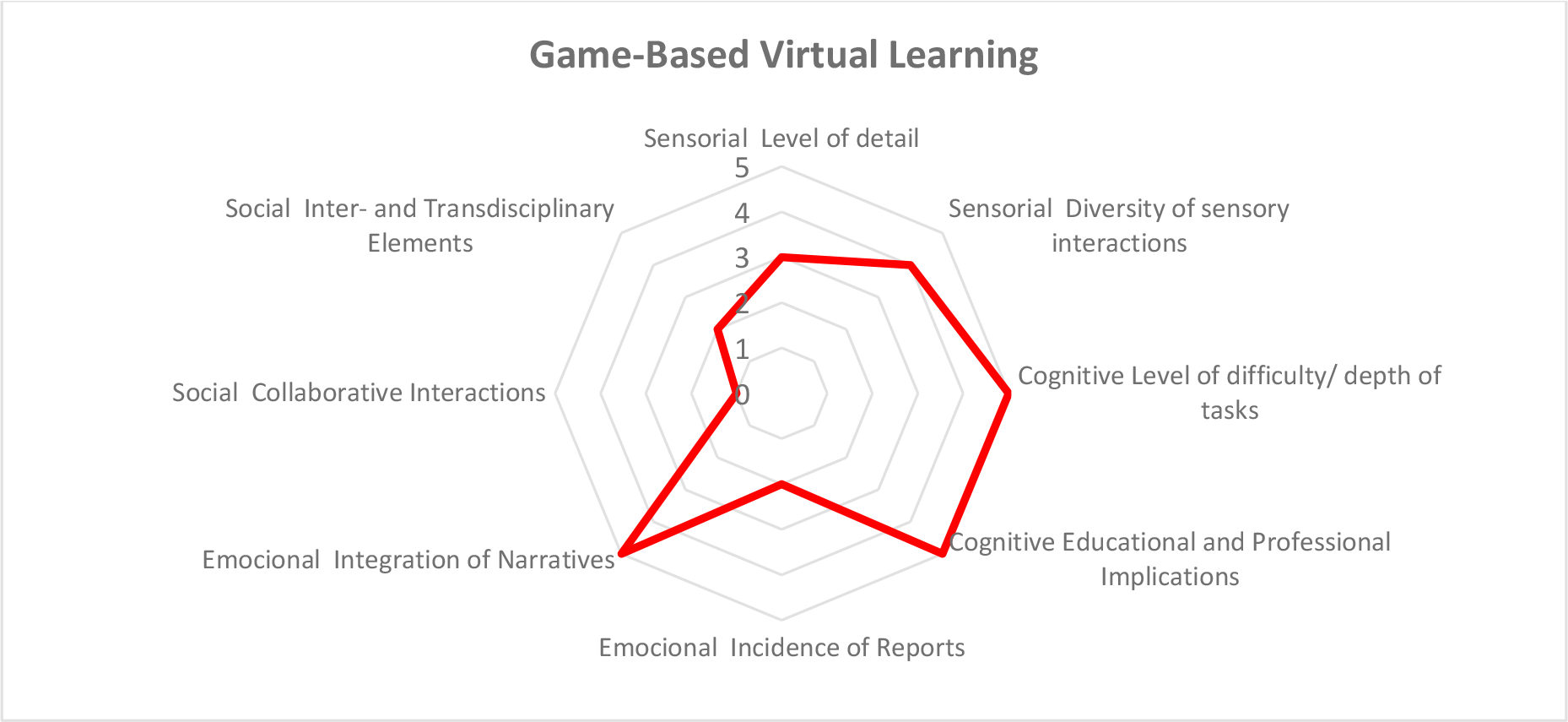
In the narrative created, students interact with a ghost and other creatures to complete a series of quests and escape the building. Mysterious objects are in several rooms of the resort to arouse curiosity and with the function of teaching about some part of the building and its history. 45 students from the Department of Architecture of the University of Karabük participated in the experiment, being divided into three groups: those who played the game, those who visited the building in loco and those who attended a lecture about it in the classroom. The results of these groups in a test were contrasted, and the students who played the game obtained more knowledge about the category of cultural heritage than the others (Şahbaz; Özköse, 2018). The article reinforces the view that students can gain valuable educational knowledge and experiences through digital environments that are typically associated only with entertainment. Table 05 and graph 03 indicate the analysis of the experience. Although there is a great emphasis on the cognitive dimension, the game is played individually, not proposing collaborative activities. The assignment of collaborative roles and tasks could enhance social learning.
4.4 Comparison
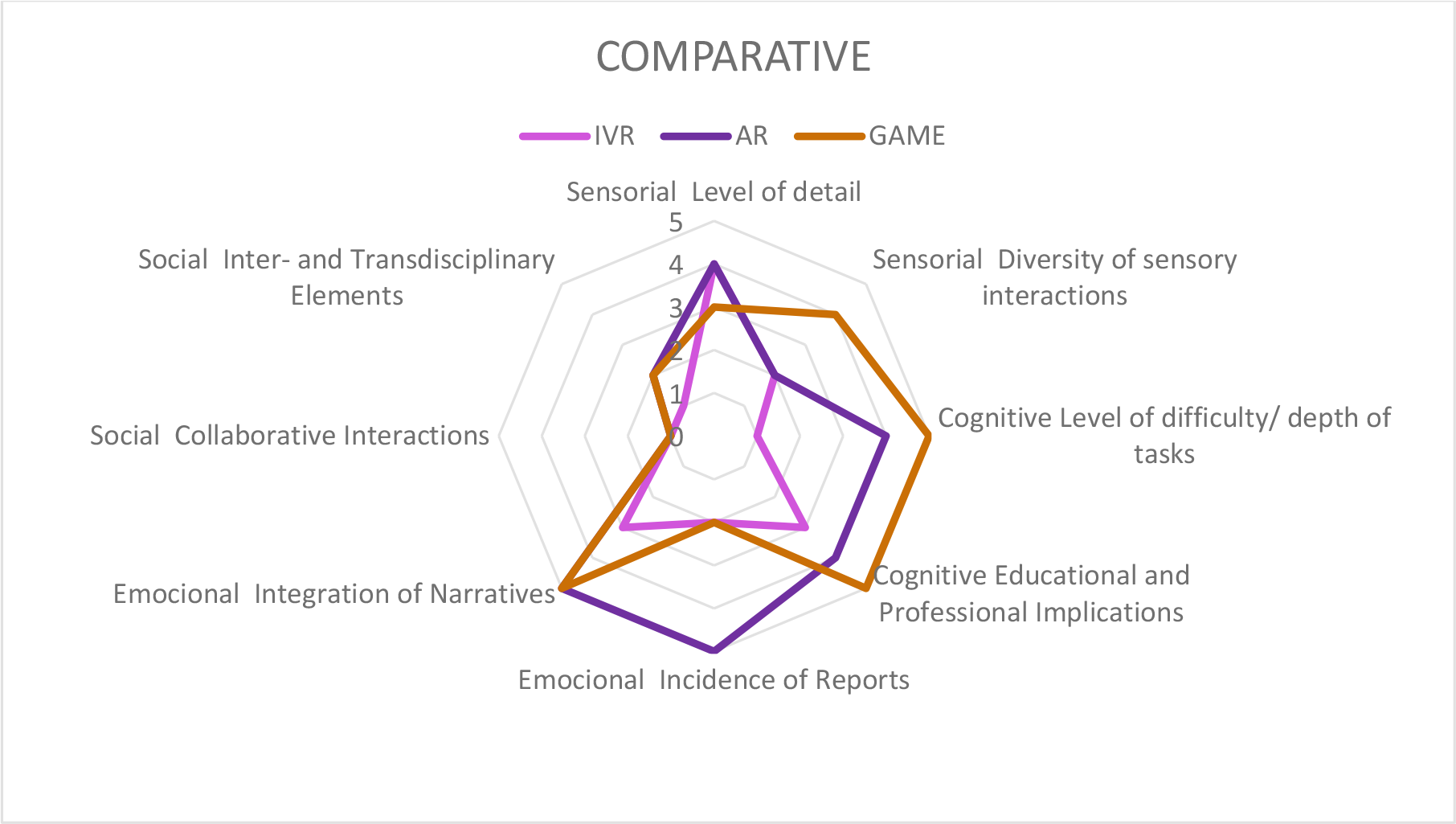
Graph 04 superimposes the results of the three cases analyzed. In terms of the sensory dimension, in relation to the degree of detailed of the environments, a medium to high score is perceived. The field of digital modeling in architecture has advanced a lot in recent years, being able to accurately represent buildings. However, to make these models realistic, with lighting and texture rendering, a large processing capacity is required from the machines, which makes the process costly. Although advances in digital modeling have raised the level of graphic detailed, recent studies (Hou et al., 2024) indicate that the search for realism can generate cognitive overload and exclude institutions with limited infrastructure, which reinforces the need to balance visual fidelity with pedagogical objectives. The design of the experience also directly impacts the diversity of sensory interactions, that is, the final goal of the experience will define what actions users have taken. In the guided tour not much is explored of the senses, beyond sight and hearing, while in the other experiences there are a variety of actions to be carried out.
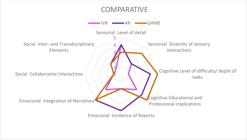
In the cognitive dimension, experiences that are limited to "remembering" and "understanding" fall short of formative potential, while serious games that explore "analyzing" and "creating" fall into line with higher levels of Bloom's Taxonomy. The use of gamification, with challenges to be overcome, adds significantly to the experiences. In terms of the difficulty and depth of this learning, the game played with university students was better evaluated than the experience with adolescents. This perspective of serious games also seems to be related to the implication in training, since the reports indicate their preference over traditional methods (specifically, lectures) of teaching. Gamification also plays a relevant role in the emotional issue by promoting student motivation and involvement through narratives and characters, although there were no student reports to support these results in all cases. Gamification can increase motivation, but as Mystakidis and Lympouridis (2023) warn, without structured feedback/feedforward, initial enthusiasm tends to disperse, reducing learning retention.
Finally, in the social dimension, the lowest results are obtained, as the cases analyzed do not propose collaborative activities among the participants and do not go beyond the limits of the area of knowledge. The low score of the social dimension is not only due to technological limitations, but also to the absence of collaborative pedagogical design. Experiments with co-creation in AR environments (Ummihusna; Zairul, 2022) demonstrate that role assignment and teacher mediation can significantly expand collective engagement, in line with principles of Universal Design for Learning (CAST, 2024).
5 FINAL CONSIDERATIONS: FINDINGS AND LIMITS
The main contribution of this work lies in the formulation and application of the 4D analytical ruler, an original methodological tool that allows the systematic diagnosis of balances and imbalances between sensory, cognitive, emotional and social dimensions in experiences with ILT. This rule offers teachers and researchers an instrument to not only evaluate specific results, but also to guide the design of future activities. The pedagogical implications are multiple: (i) adoption of active methodologies that expand student protagonism; (ii) incorporation of collaborative and interdisciplinary tasks that reinforce the social dimension; (iii) planned use of feedback and feedforward as part of instructional design; (iv) effective integration of these practices into curricula; and (v) observance of principles of accessibility and inclusion, such as those advocated by Universal Design for Learning. The study not only analyzes specific cases - which are used more for an initial testing of the method - but offers a methodological framework for the critical consolidation of ILT in the teaching of Architecture and Urbanism (and other areas).
However, the methodological limitation of choosing a small sample of three studies is recognized. It is suggested that in future studies more cases be evaluated, in more areas, in order to elaborate more complete panoramas. For example, detailed work on the use of VR, the most widespread area, is recommended in order to identify trends and limitations.
Despite this, there seems to be a warning. If ILT can have good sensory results - depending on the technological capacity of the devices - and if the cognitive and emotional dimensions can be stimulated through a design that is articulated with gamification strategies, the social dimension is relegated to the background. In a world where we are increasingly "immersed" in our smartphones, in bubbles on our social networks, we almost completely forget the real world that surrounds us. Perhaps this is an inherent problem of this technological immersion, but there needs to be criticality in the educational sphere. Even in pedagogical practices mediated by technology, the student body must be encouraged to interact with each other, with teachers and with the world that surrounds them, in order to promote exchanges by adding the look of "the other" and, who knows, shorten the distances - physical and virtual - in the teaching-learning process. This can be planned and aggregated in different ways, depending on the objectives and the
The little (or no) accessibility of these experiences for students with some type of disability also needs to be vigilant. Is it not possible to teach architectural history to a student with low vision or deafness? Or, perhaps, it is necessary to question how technologies can aggregate and enable access to knowledge in a more democratic way. In addition, excessive use of electronic devices can cause fatigue in addition to psychological problems such as anxiety. Proper dosing between traditional and virtual methodologies may be key.
In spite of these considerations, it is understood that in the contemporaneity of our information society, technologies will be increasingly present in classrooms. It is up to teachers to take ownership of them, in a conscious and critical way, building active roles of pedagogical and technological mediation.
-
3
It is understood here that pedagogical mediation refers to how the teacher conducts the pedagogical practice, approaches and develops the contents and the construction of knowledge together with the students.
-
4
The theory assumes that knowledge can be divided into biologically primary knowledge, which we evolved to acquire, and biologically secondary knowledge, which is important for cultural reasons. Secondary knowledge, unlike primary knowledge, is the object of instruction. Since its conception in the 1980s, the theory has used aspects of human cognitive architecture to generate experimental and instructional effects.
-
5
For example, in Portuguese only one work was located relating VR and architectural history, applied specifically to heritage education in a building in São Paulo. For AR there is a Brazilian article about the Basilica of Hagia Sophia (Turkey). About games, although about ten works have been located, most were physical. The only digital game introduces tourists to characteristics of Rio de Janeiro's architecture. However, the application is still under development and there are no consolidated results.
DATA AVAILABILITY
The contents underlying the text of the research are available in the article.
References
-
ALVAREZ, Ana; LEMOS, Ivana de Carvalho. Os neurobiomecanismos do aprender: a aplicação de conceitos no dia-a-dia escolar e terapêutico. Revista de Psicopedagogia, São Paulo, v. 23, n. 71, p. 181-190, 2006. Disponível em: https://pepsic.bvsalud.org/scielo.php?script=sci_abstract&pid=S0103-84862006000200011 Acesso em: 21 ago. 2024.
» https://pepsic.bvsalud.org/scielo.php?script=sci_abstract&pid=S0103-84862006000200011 -
ANDERSON, Lorin W.; KRATHWOHL, David R.; AIRASIAN, Peter W.; CRUIKSHANK, Kathleen A.; MAYER, Richard E.; PINTRICH, Paul R.; RATHS, James; WITTROCK, Merlin C. A taxonomy for learning, teaching, and assessing: a revision of bloom's taxonomy of educational objectives. New York: Longman, 2001. Disponível em: https://haqaa2.obsglob.org/wp-content/uploads/2020/11/2001_Anderson_Ataxonomy-for-learning-teaching-and-assessing.-A-Revision.pdf Acesso em: 21 ago. 2024.
» https://haqaa2.obsglob.org/wp-content/uploads/2020/11/2001_Anderson_Ataxonomy-for-learning-teaching-and-assessing.-A-Revision.pdf - ARISTÓTELES. Sobre a alma Lisboa: Centro de filosofia da universidade de Lisboa/Imprensa nacional-Casa da moeda, 2010.
-
BARTOSZECK, Amauri B. Neurociências, altas habilidades e implicações no currículo. Revista Educação Especial, Santa Maria, v. 27, n. 50, p. 611-626, 2014. Disponível em: https://periodicos.ufsm.br/educacaoespecial/article/view/14284 Acesso em: 25 ago. 2024.
» https://periodicos.ufsm.br/educacaoespecial/article/view/14284 -
BECK, Dennis; MORGADO, Leonel; O'SHEA, Patrick. Finding the gaps about uses of immersive learning environments: a survey of surveys. Journal of universal computer science, Graz, v. 26, n. 8, p. 1043-1073, 2020. Disponível em: https://repositorioaberto.uab.pt/handle/10400.2/10070 Acesso em: 25 ago. 2024.
» https://repositorioaberto.uab.pt/handle/10400.2/10070 - BIGGS, John B. Teaching for quality learning at university Buckingham: Open University Press; Society for Research into Higher Education, 2003.
- BIOCCA, Frank; DELANEY, Ben. Immersive virtual reality technology. In: BIOCCA, Frank; LEVY, Mark R. (ed.) Communication in the age of virtual reality Londres: Routledge, 1995. p. 57-124.
- BLOOM, Benjamin S.; ENGELHART, Max D.; FURST, Edward J.; HILL, Walter H.; KRATHWOHL, David R. Taxonomy of educational objectives: the classification of educational goals. Handbook I: cognitive domain. New York: David McKay Company, 1956.
-
BRANDÃO, Aline da Silva; CALIATO, Silmara Gonçalves. Contribuições da neuroeducação para a prática pedagógica. Revista Exitus, Santarém, v. 9, n. 3, p. 521-547, 2019. Disponível em: https://periodicos.ufopa.edu.br/index.php/revistaexitus/article/view/926 Acesso em: 25 ago. 2024.
» https://periodicos.ufopa.edu.br/index.php/revistaexitus/article/view/926 -
CAPECCHI, Irene; BERNETTI, Iacopo; BORGHINI, Tommaso; CAPORALI, Alessio; SARAGOSA, Claudio. Augmented reality and serious game to engage the alpha generation in urban cultural heritage. Journal of cultural heritage, Amsterdam: Elsevier, v. 66, p. 523-535, 2024. Disponível em: https://www.sciencedirect.com/science/article/abs/pii/S1296207424000049?via%3Dihub . Acesso em: 1 set. 2024.
» https://www.sciencedirect.com/science/article/abs/pii/S1296207424000049?via%3Dihub -
CAST - Center for applied special technology. Universal design for learning guidelines version 3.0. Cast, 2024. Disponível em: https://udlguidelines.cast.org/ Acesso em: 15 set. 2025.
» https://udlguidelines.cast.org/ -
CHAN, Chiu-Shui; BOGDANOVIC, Jelena; KALIVARAPU, Vijay. Applying immersive virtual reality for remote teaching architectural history. Education and Information Technologies, Dordrecht: Springer, v. 27, p. 4365-4397, 2022. Disponível em: https://link.springer.com/article/10.1007/s10639-021-10786-8 Acesso em: 1 set. 2024.
» https://link.springer.com/article/10.1007/s10639-021-10786-8 - COSTA, P.T. Jr.; McCRAE, R. R. Revised NEO Personality Inventory (NEO-PI-R) and NEO Five-Factor Inventory (NEO-FFI) Professional manual Odessa: Psychological Assessment Resources, 1992.
- COSTA, P.T. Jr.; McCRAE, R. R. The five-factor theory of personality. In: PERVIN, L. A.; JOHN, O. P. (eds.). Handbook of personality: theory and research. New York: Guilford Press, 1999. p. 139-153.
-
DEMO, P. Educação, avaliação qualitativa e inovação. In: CICLO DE COLÓQUIOS DO INEP, 2012, Brasília. Disponível em: https://acervo.inep.gov.br Acesso em: 27 ago. 2024.
» https://acervo.inep.gov.br -
DENGEL, Andreas; MÄGDEFRAU, Jana.Immersive learning explored: subjective and objective factors influencing learning outcomes in immersive educational virtual environments. In: IEEE INTERNATIONAL CONFERENCE ON TEACHING, ASSESSMENT, AND LEARNING FOR ENGINEERING (TALE), 7., 2018, Wollongong. Proceedings [...]. Piscataway: IEEE, 2018. p. 608. Disponível em: https://www.researchgate.net/publication/369559346_Immersive_Learning Acesso em: 28 ago. 2024.
» https://www.researchgate.net/publication/369559346_Immersive_Learning -
DE WET; JIN. Guia de Viagem de Safranbolu: As Melhores Coisas para Fazer e Lugares para Visitar na Cidade Mais Bonita da Turquia. Museu da peregrinação, [S. l], 04 out. 2025. Disponível em: https://museumofwander.com/safranbolu-turkey-things-to-do/ Acesso em: 15 fev. 2026.
» https://museumofwander.com/safranbolu-turkey-things-to-do/ - FARIA, E. Dicionário Escolar Latino - Português Brasília: MEC, 1962.
-
FONSECA, V. Importância das emoções na aprendizagem: uma abordagem neuropsicopedagógica. Revista Psicopedagogia, São Paulo, v. 33, n. 102, p. 365-384, 2016. Disponível em: https://pepsic.bvsalud.org/pdf/psicoped/v33n102/14.pdf Acesso em: 27 ago. 2024.
» https://pepsic.bvsalud.org/pdf/psicoped/v33n102/14.pdf -
GOMES, Emerson; REBELO, Francisco; VILAS BOAS, Naylor; NORIEGA, Paulo; VILAR, Elisângela. Virtual reality in the teaching of history of architecture and urbanism: a literature review. In: MARCUS, Aaron; ROSENZWEIG, Elizabeth; SOARES, Marcelo M. (eds.) Design, User Experience, and Usability. HCII 2023. Lecture Notes in Computer Science, v. 14031. Cham: Springer, 2023. p. 437-453. Disponível em: https://link.springer.com/chapter/10.1007/978-3-031-35696-4_32 Acesso em: 10 ago. 2024.
» https://link.springer.com/chapter/10.1007/978-3-031-35696-4_32 -
GONDIM, Sônia Maria Guedes; MORAIS, Francineide Alves de; BRANTES, Carlos dos Anjos. As competências socioemocionais: fator-chave no desenvolvimento de competências para o trabalho. Revista Psicologia: Organizações e Trabalho, Florianópolis, v. 14, n. 4, p. 394-406, 2014. Disponível em: https://pepsic.bvsalud.org . Acesso em: 11 ago. 2024.
» https://pepsic.bvsalud.org -
HAKAK, Saqib; NOOR, Nasser N.; AYUB, Muhammad N.; AFFAL, Hamid; IMRAN, Muhammad; GUIZANI, Mohsen. Cloud-assisted gamification for education and learning - Recent advances and challenges. Computers & electrical engineering, Amsterdam: Elsevier, v. 74, p. 22-34, 2019. Disponível em: https://www.sciencedirect.com/science/article/abs/pii/S0045790618304968?via%3Dihub . Acesso em: 1 set. 2024.
» https://www.sciencedirect.com/science/article/abs/pii/S0045790618304968?via%3Dihub -
HAN, Jae-Geun; PARK, Ki-Woo; BAN, Ki-Jung; KIM, Eun-Kyung. Cultural heritage sites visualization system based on outdoor augmented reality. AASRI Procedia, Amsterdam: Elsevier, v. 4, p. 64-71, 2013. Disponível em: https://www.sciencedirect.com/science/article/pii/S2212671613000127?via%3Dihub Acesso em: 4 set. 2024.
» https://www.sciencedirect.com/science/article/pii/S2212671613000127?via%3Dihub -
HEETER, Carrie. Being there: the subjective experience of presence. Presence: teleoperators and virtual environments. Cambridge, v. 1, n. 2, p. 262-271, 1992. Disponível em: http://gel.msu.edu/carrie/publications/beingthere.html Acesso em: 5 ago. 2024.
» http://gel.msu.edu/carrie/publications/beingthere.html -
HEIM, Michael. The essence of VR. In: HEIM, Michael. The metaphysics of virtual reality. New York: Oxford University Press, 1993. p. 109-128. Disponível em: http://www.stanford.edu/class/history34q/readings/Michael_Heim/HeimEssenceVR.html Acesso em: 10 ago. 2024.
» http://www.stanford.edu/class/history34q/readings/Michael_Heim/HeimEssenceVR.html -
HOU, Ning; WANG, Wei; ZHANG, Yifan; ZHANG, Lei. Virtual reality space in architectural design education: learning effect of scale feeling. Building and environment, Amsterdam: Elsevier, v. 248, p. 111060, 2024. Disponível em: https://www.sciencedirect.com/science/article/pii/S0360132323010879?via%3Dihub Acesso em: 1 set. 2024.
» https://www.sciencedirect.com/science/article/pii/S0360132323010879?via%3Dihub -
IBRAHIM, Ayman; AL-RABABAH, Ala’ I.; BANI-BAKER, Qais.Integrating virtual reality technology into architecture education: the case of architectural history courses. Open House International, Bingley: Emerald Publishing Limited, v. 46, n. 4, p. 498-509, 2021. Disponível em: https://www.emerald.com/ohi/articleabstract/46/4/498/512032/Integrating-virtual-reality-technologyinto?redirectedFrom=fulltext Acesso em: 2 set. 2024.
» https://www.emerald.com/ohi/articleabstract/46/4/498/512032/Integrating-virtual-reality-technologyinto?redirectedFrom=fulltext -
KEBIR, Amel; AMARA, Abderrahmane; HAZZAB, Abdelkader. PRADO: An education tool for moorish architectural heritage through virtual reality. Digital presentation and preservation of cultural and scientific heritage, Sofia, v. 10, p. 195-204, 2020. Disponível em: https://dipp.math.bas.bg/dipp/article/view/dipp.2020.10.14 Acesso em: 6 ago. 2024.
» https://dipp.math.bas.bg/dipp/article/view/dipp.2020.10.14 -
KHALEEL, F. L. Gamification-based learning framework for a programming course. In: KHALEEL, Firas Layth; ASHAARI, Noraidah Sahari; WOOK, Tengku Siti Meriam Tengku; ISMAIL, Amirah. Gamification-based learning framework for a programming course. In: International Conference on Electrical Engineering and Informatics (ICEEI). IEEE, 6., 2017, Langkawi. Proceedings [...]. Piscataway, NJ: IEEE, 2017. p. 1-6. Disponível em: https://ieeexplore.ieee.org/abstract/document/8312377 Acesso em: 6 ago. 2024.
» https://ieeexplore.ieee.org/abstract/document/8312377 - LEOTE, R. O potencial performático no meio eletrônico: das novas mídias às performances biocibernéticas. 2000. Tese (Doutorado em Artes) - Escola de Comunicação e Artes da Universidade de São Paulo, - ECA-USP, São Paulo, 2000.
-
LUNGU, Andrei J.; MISRA, Sarthak; RAY, Ayan; DAVIDSON, Bryan; LEE, Glenn K. A review on the applications of virtual reality, augmented reality and mixed reality in surgical simulation: an extension to different kinds of surgery. Expert Review of Medical Devices, London: Taylor & Francis, v. 18, n. 1, p. 47-62, 2021. Disponível em: https://www.tandfonline.com/doi/full/10.1080/17434440.2021.1860750 Acesso em: 1 set. 2024.
» https://www.tandfonline.com/doi/full/10.1080/17434440.2021.1860750 - MASETTO, M. T. Mediação pedagógica e tecnologias de informação e comunicação. In: MORAN, J. M.; MASETTO, M. T.; BEHRENS, M. A. (eds.). Novas tecnologias e mediação pedagógica. Campinas: Papirus, 2013. p. 133-173.
-
MARTINS, Eliane R. A teoria da aprendizagem experiencial como alicerce de estudos sobre desenvolvimento profissional. Revista Brasileira de Educação, Rio de Janeiro, v. 12, n. 2, p. 169-181, jul./dez. 2007. Disponível em: https://www.scielo.br/j/epsic/a/rWD86DC4gfC5JKHTR7BSf3j/?lang=pt Acesso em: 28 ago. 2024.
» https://www.scielo.br/j/epsic/a/rWD86DC4gfC5JKHTR7BSf3j/?lang=pt -
MARTINS, J. C. Vygotsky e o papel das interações sociais na sala de aula: reconhecer e desvendar o mundo. São Paulo: FDE, 1997. Disponível em: http://www.ia.ufrrj.br/ppgea/conteudo/T2SF/Akiko/46-Vygotsky.pdf Acesso em: 7 ago. 2024.
» http://www.ia.ufrrj.br/ppgea/conteudo/T2SF/Akiko/46-Vygotsky.pdf -
MORGADO, Leonel. Ambientes de aprendizagem imersivos. Vídeo journal of social and human research, Faro, v. 1, n. 2, p. 102-116, 2022. Disponível em: https://vjshr.uabpt.uema.br/index.php/ojs/article/view/19 Acesso em: 27 ago. 2024.
» https://vjshr.uabpt.uema.br/index.php/ojs/article/view/19 -
MYSTAKIDIS, Stylianos; LYMPOURIDIS, Vasileios. Immersive Learning. Encyclopedia, Basel: MDPI, v. 3, p. 396-405, 2023. Disponível em: https://www.mdpi.com/26738392/3/2/26 Acesso em: 8 ago. 2024.
» https://www.mdpi.com/26738392/3/2/26 -
NILSSON, Niels Christian; NORDAHL, Rolf; SERAFIN, Stefania. Immersion revisited: a review of existing definitions of immersion and their relation to different theories of presence. Human technology, Jyväskylä, v. 12, n. 2, p. 108-134, 2016. Disponível em: https://ht.csr-pub.eu/index.php/ht Acesso em: 27 ago. 2024.
» https://ht.csr-pub.eu/index.php/ht -
OLIVEIRA, Ana Augusta; SILVA, Yara Fernanda de Oliveira. Mediação pedagógica e tecnológica: conceitos e reflexões sobre o ensino na cultura digital. Revista Educação em Questão, Natal, v. 60, n. 64, 2022. Disponível em: https://periodicos.ufrn.br/educacaoemquestao/article/view/28275 Acesso em: 9 ago. 2024.
» https://periodicos.ufrn.br/educacaoemquestao/article/view/28275 - PIAGET, J. A construção do real na criança Rio de Janeiro; Zahar, 1960.
-
PRASETYA, Febri; FORTUNA, Aprilla; SAMALA, Agariadne Dwinggo; RAWAS, Soha; MYSTAKIDIS, Stylianos; SYAHRIL; WASKITO; PRIMAWATI; WULANSARI, Rizky Ema; KASSYMOVA, Gulzhaina Kuralbayevna. The impact of augmented reality learning experiences based on the motivational design model: a meta-analysis. Social Sciences & Humanities Open, Amsterdam: Elsevier, v. 10, p. 100926, 2024. Disponível em: https://www.sciencedirect.com/science/article/pii/S2590291124001232?via%3Dihub Acesso em: 5 set. 2024.
» https://www.sciencedirect.com/science/article/pii/S2590291124001232?via%3Dihub -
ŞAHBAZ, Emre; ÖZKÖSE, Ayşe. Experiencing historical buildings through digital computer games. International Journal of Architectural Computing, London: SAGE Publications, v. 16, n. 1, p. 22-33, 2018. Disponível em: https://journals.sagepub.com/doi/10.1177/1478077117749960 Acesso em: 3 set. 2024.
» https://journals.sagepub.com/doi/10.1177/1478077117749960 - SANTOS, D.; PRIMI, R. Desenvolvimento socioemocional e aprendizado escolar: uma proposta de mensuração para apoiar políticas públicas. Relatório sobre resultados preliminares do projeto de medição de competências socioemocionais no Rio de Janeiro. São Paulo: OCDE, SEEDUC, Instituto Ayrton Senna, 2014.
-
SANTOS, Gilberto Lacerda. Educação, tecnologias e inovação pedagógica: em busca do interativismo colaborativo. Revista da FAEEBA: Educação Contemporaneidade Salvador, v. 30, n. 64, p. 226-240, 2021. Disponível em: https://www.revistas.uneb.br/index.php/faeeba/article/view/11741 Acesso em: 22 ago. 2024.
» https://www.revistas.uneb.br/index.php/faeeba/article/view/11741 -
SOLIMAN, Sara; TAHA, Doaa; EL SAYAD, Zeinab. Architectural education in the digital age: computer applications: between academia and practice. Alexandria Engineering Journal, Amsterdam: Elsevier, v. 58, n. 2, p. 809-818, 2019. Disponível em: https://shre.ink/8Ync Acesso em: 1 mar. 2024.
» https://shre.ink/8Ync -
SWELLER, John. Cognitive load during problem solving: effects on learning. Cognitive science, Norwood, v. 12, Is. 2, p. 257-285, 1988. Disponível em: https://onlinelibrary.wiley.com/doi/10.1207/s15516709cog1202_4 Acesso em: 24 ago. 2024.
» https://onlinelibrary.wiley.com/doi/10.1207/s15516709cog1202_4 - SWELLER, J.; AYRES, P.; KALYUGA, S. Cognitive load theory New York: Springer, 2011.
-
UMMIHUSNA, Asmadiyah; ZAIRUL, Mohd. Investigating immersive learning technology intervention in architecture education: a systematic literature review. Journal of applied research in higher education, Bingley: Emerald Publishing Limited, v. 14 n. 1, p. 264-281, 2022. Disponível em: https://www.emerald.com/jarhe/article-abstract/14/1/264/433608/Investigatingimmersive-learning-technology?redirectedFrom=fulltext Acesso em: 7 jun. 2024.
» https://www.emerald.com/jarhe/article-abstract/14/1/264/433608/Investigatingimmersive-learning-technology?redirectedFrom=fulltext -
VASSIGH, Saeideh; LI, Lijuan; ANDERSON, Gregory. Teaching building sciences in immersive environments: a prototype design, implementation, and assessment. International Journal of Construction Education and Research, London: Taylor & Francis, v. 16, n.3, p. 180-196, 2018. Disponível em: https://www.tandfonline.com/doi/full/10.1080/15578771.2018.1525445 Acesso em: 18 jun. 2024.
» https://www.tandfonline.com/doi/full/10.1080/15578771.2018.1525445 -
VIEIRA, Elaine Patrícia Pires. Neurociências, cognição e educação: limites e possibilidades na formação de professores. Revista Práxis, Volta Redonda, v. 4, n. 8, p. 31 - 38, 2012. Disponível em: https://revistas.unifoa.edu.br/praxis/article/view/573 Acesso em: 18 jun. 2024.
» https://revistas.unifoa.edu.br/praxis/article/view/573 - VYGOTSKY, L. S. Linguagem, desenvolvimento e aprendizagem São Paulo: Ícone/EDUSP, 1988.
- VYGOTSKY, L. S. Psicologia da arte. São Paulo: Martins Fontes, 1999.
-
WELTMAN, D. A comparision of traditional and active learning methods: an empirical investigation utilizing a linear mixed model. 2007. Tese (Doutorado em Filosofia) - The University of Texas at Arlington, EUA, 2007. Disponível em: https://mavmatrix.uta.edu/infosystemsopmanage_dissertations/50/ Acesso em: 1 ago. 2024.
» https://mavmatrix.uta.edu/infosystemsopmanage_dissertations/50/ -
WON, Minseok; BAILENSON, Benjamin K.; BAILENSON, Jeremy N. Diverse approaches to learning with immersion virtual reality identified from a systematic review. Computers & Education, Amsterdam: Elsevier, v. 195, p. 104701, 2022. Disponível em: https://www.sciencedirect.com/science/article/pii/S036013152200272X?via%3Dihub Acesso em: 1 set. 2024.
» https://www.sciencedirect.com/science/article/pii/S036013152200272X?via%3Dihub -
YUEN, Steve Chi-Yin; GALAYANEE, Yaoyuneyong; JOHNSON, Erik. Augmented reality and education: applications and potentials. In: HUANG, Ronghuai; KINSHUK; SPECTOR, J. Michael (orgs.). Reshaping learning New frontiers of educational research. Berlin: Springer, 2013. p. 331-349. Disponível em: https://link.springer.com/chapter/10.1007/978-3-642-32301-0_17 Acesso em: 1 set. 2024.
» https://link.springer.com/chapter/10.1007/978-3-642-32301-0_17
-
Section Editor: Milena Pavan Serafim | Layout Editor: Silmara Pereira da Silva Martins
Edited by
-
Revised and translated by:
Eduarda Morena Roma Buzar E-mail: eduarda.morena2013@gmail.com

 Source: Prepared by the authors based on
  Source: Prepared by the authors based on
  Source:
  Source: Prepared by the authors (2024).
 Fonte:
  Source: Prepared by the authors, 2024.
 Fonte: Adapted from
  Source: Prepared by the authors, 2024.
 Source:
  Source: Prepared by the authors, 2024.
 Source: Prepared by the authors, 2024.