 Production and Quality in Squash Fruity 'Type Butternut' with Fruiting Induced by Cytokinin and Auxin
Abstract
The need for a pollinator is a problem for cucurbit producers, as productivity depends on the efficiency of natural or artificial pollination. Growth regulators are gaining more and more importance in inducing fruiting in cucurbits, and can be an alternative for producers to increase their productivity. The objective of this work was to evaluate the effect of applying cytokinin (CPPU) and auxins (AIB and 2,4-dichlorophenoxyacetic acid) on inducing fruiting in butternut pumpkin. The application of 10 mg l-1 of IBA (indole-3-butyric acid) via the flower on the external part provides greater mass and length of the fruit, ensuring greater production of butternut pumpkin. The application of 3.0 mg l-1 of CPPU (N-(2-chloro-4-pyridyl)-N'-phenylurea) via the flower in the internal part results in a greater number of fruits. The physicochemical quality of butternut pumpkin fruits is not influenced by the application of auxins (AIB and 2,4-dichlorophenoxyacetic acid) and cytokinin (CPPU).
Keywords:
Cucurbita moschata Duch; Phytohormones; parthenocarpy.
HIGHLIGHTS
The use of growth regulators to induce fruiting in pumpkins, without natural pollination.
Application of IBA via flower on the outside shows higher production of 'butternut type' squash.
The CPPU application via flower in the inner part provides a greater number of fruits.
The physicochemical quality of butternut squash fruits is not influenced.
INTRODUCTION
Cucurbitaceae compose one of the families of the highest economic importance in Brazil. Within this family, pumpkins of the species Cucurbita moschata Duch. are included, which hold social relevance in terms of generating direct and indirect employment, as they require a significant amount of labor from planting to commercialization [1].
The global production of pumpkins and squash was estimated at around 27.67 million tons in an area of approximately 2.04 million ha in 2018 [2]. This production volume is very significant, considering its social importance and subsistence cultivation in most producing regions. Asia stands out with 61.5% of world production, followed by Europe with 15.8% and America with 11.7%. Among the main pumpkin producing countries, the following stand out: China (5,492,389 t = 19.86% of world production), India (4,179,570 t = 15.11% of world production) and Russia (959,276 t = 3.47% of world production) according to data from the Food and Agriculture Organization of the United Nations [3].
O Brazil presented a harvested area of 78,671 hectares, with a production of 417,839 tons of pumpkin, squash, and pumpkin. The Northeast region is responsible for 24.1% of the national production, with the largest producers being Bahia, Maranhão, and Pernambuco. Paraíba had a harvested area of 3,030 hectares and a production of 3,964 tons, with notable contributions from the cities of Lagoa Seca (278 tons), Massaranduba (226 tons), and Alagoa Grande (197 tons) [4]. The value and demand for pumpkins are increasing in the states of Brazil, driven by an increase in consumption and strong demand from the foreign market, allowing for exports to other countries.
The Atlas F1 pumpkin is a hybrid of the butternut squash variety that produces fruits of excellent quality. Its production is primarily for export, making it a profitable crop adopted by producers [5]. However, its yield depends on the successful pollination of a large number of flowers, and it is crucial for the fruits to be naturally developed through frequent visits by pollinating agents, with at least 30 visits per day. Inadequate pollination can reduce fruit quality and increase the number of aborted flowers [6]. The need for a pollinator is a challenge for cucurbit producers, as productivity relies on the efficiency of natural or artificial pollination. Environmental factors such strong winds, or continuous rainfall can significantly reduce the activity of pollinating insects [7].
Another way to achieve fruiting is through the use of synthetic hormones, as growth regulators are synthetic compounds similar to plant hormones that, in small quantities, regulate biochemical, physiological, and morphological processes. Proper use of growth regulators can lead to higher yield and fruit quality, while also circumventing problems related to weather conditions that may affect bee pollination activities [8].
Inoue and coauthors [9] report that the synthetic cytokinin CPPU is known to promote fruit growth and enlargement. According to Medeiros [10], watermelons 'Crimson Sweet' and 'Extasy,' treated with a concentration of 2.5 mg L-1 of CPPU applied exogenously to the ovary of flowers during anthesis for two consecutive days, resulted in a higher number of marketable fruits per plant and increased total production.
Studies conducted with pumpkins and cucumbers, inducing fruit set with the use of another auxin group acid, 2,4-dichlorophenoxyacetic acid (2,4-D), demonstrated the possibility of obtaining quality fruits. The use of 2,4-D at a dose of 225.0 mg L-1 in "Tetsukabuto" pumpkins resulted in an increased average weight of harvested fruits and a 123.8% increase in crop yield with a dose of 212.8 mg L-1 [11, 12].
Among the synthetic auxins used, indole-3-butric acid (IBA) is a substance with higher photo-stability, localized action, and less sensitivity to biological degradation [13]. IBA has shown effectiveness in plant growth by inducing rooting of cuttings, as stated by Shahab and coauthors [14] and Mehta and coauthors [15], however, there are few studies involving its use in fruiting.
The use of growth regulators in the induction of fruiting in pumpkins, without natural pollination, may be an alternative for producers to optimize production. Therefore, the objective of this study was to evaluate the effect of applying the cytokinin (CPPU) and auxins (IBA and 2,4-dichlorophenoxyacetic acid) on fruiting induction in 'butternut' type pumpkins.
MATERIAL AND METHODS
The experiment was carried out at the Agro-Food Science and Technology Center of the Federal University of Campina Grande (CCTA/UFCG), Pombal, PB. The municipality of Pombal is located in the western region of the State of Paraíba, under the geographic coordinates 06°46' S, 37°48' W and an altitude of 148 m [16]. According to Alvares and coauthors [17] the climate of the region is classified as hot and dry semi-arid, with average annual evaporation of 2,000 mm and average precipitation of approximately 750 mm year-1.
Seeds of the 'butternut' type pumpkin variety Atlas were used for the experiment. These seeds were sown in expanded polystyrene trays with 128 cells to produce seedlings. Each cell was filled with commercial substrate Tropstrato HT Hortaliças® to avoid thinning and save on seed usage. The seedlings were manually watered daily and kept in a greenhouse until they reached two true leaves.
Before transplanting to the experimental plot, the soil was prepared by manually cleaning the area with hoes, followed by the construction of raised beds. The dimensions of the raised beds were 0.20 m in height, 0.45 m in width, and 12 m in length. The raised beds were covered with black plastic mulch to control weeds.
An irrigation system was set up with hoses equipped with drippers with a minimum flow rate of 2.7 L per hour, placing one dripper per plant to meet their water needs.
Transplanting of the 'butternut' pumpkin seedlings was done 14 days after sowing, in the late afternoon when transpiration is lower, and immediate irrigation was applied afterward. The seedlings were spaced at 1.5 m x 0.5 m, with two plants in each plot. A white non-woven fabric (TNT) cover was installed over the seedlings for the first 30 days of cultivation. The cover was supported by iron arches, 50 cm in height and 50 cm in width at the base, spaced every 3 m.
Fertilizations and necessary corrections were carried out according to the recommendations for irrigated pumpkin cultivation, where 120 kg ha-1 of nitrogen, 120 kg ha-1 of potassium, and 90 kg ha-1 of phosphorus were applied [18]. The mineral fertilizer sources used were monoammonium phosphate (MAP) (62% P2O5 and 12% N), Urea (45% N), and Potassium chloride (KCl) (60% K2O).
The mineral fertilizers were applied through fertigation using a venturi-type fertilizer injector, divided throughout the crop's cycle. The phosphate fertilizer (MAP) was split into three applications, with the first one applied one day before transplanting and the others in the two following weeks.
The nitrogen amount applied via MAP was balanced, and the remaining quantity was divided into eight applications throughout the crop cycle, using Urea as the source. Potassium was applied via KCl, distributed along the crop's cycle.
Insecticide applications (Evidence® 700 WG) were carried out due to the occurrence of whiteflies (Bemisia tabaci), with the applications performed following the established recommendation for the crop, which was 300g ha-1 of the commercial product.
The experimental design was a randomized complete block design, with 12 treatments and four blocks, totaling 48 experimental units with two plants per plot. The treatments employed are listed in Table 1.
Treatments applied in the induction of fruiting in 'butternut' type pumpkin. CCTA/UFCG. Pombal-PB, 2020.
In the preparation of the 2,4-D solutions, the commercial product U 46 BR with a concentration of 806 g l-1 of the active ingredient was used. To achieve the established concentrations, the product was diluted according to the proposed treatments.
The solution of 10 mg l-1 IBA was prepared by weighing 0.01 g of IBA and then diluting it in 10 ml of ethyl alcohol and topping it up to 1 liter with distilled water. For the solution of 3.0 mg l-1 CPPU, 3 ml of sitofex was taken and completed to 1 liter with distilled water.
The application via flower was performed on the female flowers during anthesis, using a 1000 mL manual plastic sprayer from tramontina to moisten the entire wall of the ovary for treatments on the external part. For the treatments on the inner part, the application was done to moisten the entire inside of the flower where the pistil is located, using the same sprayer. The foliar application was carried out at the beginning of the reproductive stage (appearance of female flowers), using a manual sprayer to cover all the leaves of the plant. All treatments with growth regulators were applied on two consecutive days. Before and after the application of the treatments, all female flowers were protected with TNT bags to prevent natural pollination. The protection on the flowers was removed during the second application.
When the fruits reached physiological maturity, identified by their intense cream coloration, the following characteristics were evaluated:
Average fruit mass: Determined by weighing the fruits on a scale to obtain their fresh mass, with values expressed in kilograms (kg).
Number of fruits per plant: Counted for each plant.
Plant production analysis: All harvested fruits from the different treatments were weighed on a scale, and the results were expressed in kilograms per plant (kg/plant).
Dry fruit mass: Approximately 100 g samples were collected and then placed in a drying oven with circulating air at 65 ± 2 ºC for 72 hours. Afterward, the samples were weighed on an analytical balance, and the results were expressed in grams per plant (g plant-1).
Fruit length: Measured using a graduated ruler and expressed in centimeters (cm).
Bulb and neck diameter: Measured using a digital caliper and expressed in millimeters (mm). The bulb represents the apical portion of the pumpkin where the seeds are concentrated, near the insertion of the floral whorls. The neck refers to the solid portion of the pumpkin near the peduncle insertion.
Bulb pulp thickness: Obtained by measuring the distance between the internal part of the skin (epicarp) and the internal cavity of the fruit, using a digital caliper and expressed in millimeters (mm).
Neck pulp thickness: Measured horizontally from one end to another since the neck is entirely filled with pulp. The measurement was expressed in millimeters (mm).
Fruit pulp firmness: Divided longitudinally into two parts, and two readings were taken on the equatorial region of the pulp using a texturometer - FRUIT HARDNESS TESTER, with a penetration depth of 2.0 cm and an 8 mm tip. The results were expressed in Newtons (N).
For the chemical analyses of the fruits, samples of the pulp were collected and homogenized in a food processor to obtain the juice. From the juice, the following characteristics were determined:
Soluble solids (SS, %): Measured using a digital refractometer (model PR - 100, Palette, Atago Co., LTD., Japan), expressed as a percentage (%) [19].
Titratable acidity (ATT, % citric acid): Determined according to the methodology recommended by the Adolfo Lutz Institute [20], using 5 ml of homogenized pulp diluted in 50 ml of distilled water, followed by titration with a standardized 0.1N NaOH solution using phenolphthalein as an indicator. The results were expressed as a percentage of citric acid (%).
SS/ATT ratio: Calculated by dividing the soluble solids content by the titratable acidity.
pH: Determined using a benchtop digital pH meter with a direct reading on the homogenized pulp, following the [19] method.
Vitamin C: Obtained by shaking 1 mL of diluted juice with 49 mL of oxalic acid and then titrated with a DFI solution, following the Tilman method [19], with results expressed as a percentage of ascorbic acid (%).
Carotenoids: Pigments were extracted in 80% acetone and quantified by spectrophotometry, as described by Lichtenthaler [21], with some adaptations. 200 mg of juice was used, along with 0.2 mg of calcium carbonate and subsequent dilution in 5 mL of acetone. The sample was then centrifuged for 10 minutes at 3,000 rpm, and readings were taken from the supernatant at 470, 646, and 663 nm. The values were expressed in milligrams per 100 grams (mg/100g).
The data obtained for the measured variables were subjected to F-test through analysis of variance and compared using the Tukey test (p≤0.05). The statistical analyses were performed using the SISVAR software version 5.6 [22].
RESULTS
The treatment that used 25 mg l-1 of 2,4-D via foliar (T6) did not induce fruiting; instead, it had negative effects on the plants, such as epinasty, waxy leaves, and interrupted growth. However, when 50 mg L-1 of 2,4-D was applied via foliar (T5), similar symptoms were observed, but fruiting still occurred. The treatment with 10 mg l-1 of AIB via foliar (T9) also did not induce fruiting and resulted in flower abortion. Therefore, the treatments that did not yield fruits were not included in the statistical analysis. The treatments T6 and T9 will not induce fruiting, leading to flower abscission.
Among the evaluated characteristics, significant effects (p < 0.05) of the applied treatments were observed in the pumpkin variety Atlas for fruit mass, number, and length (Table 2). However, the diameter of the neck and bulge, as well as the pulp thickness in the neck or bulge region of the fruit, were not influenced by the treatments' application.
Summary of the analysis of variance for the characteristics fruit mass (MF), number of fruits (NF), neck diameter (DP), bulge diameter (DB), fruit length (CF), neck pulp thickness (EPP), bulge pulp thickness (EPB), and production (PROD) in the induction of fruiting in 'butternut' type squash through cytokinin and auxin application at CCTA/UFCG, Pombal-PB, 2020.
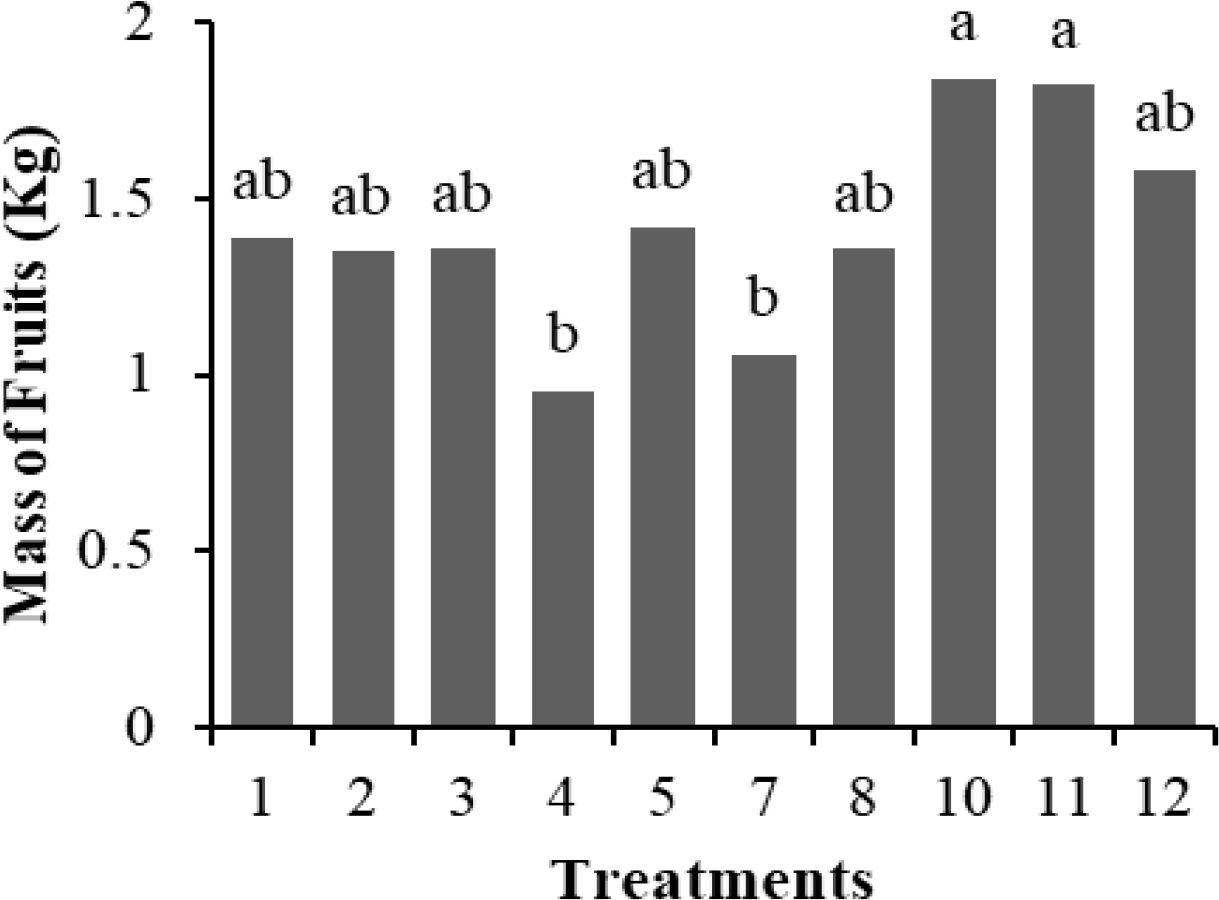
The highest fruit mass values were observed when applying the auxin AIB inside the flower (T10) and AIB outside the flower (T11) (Figure 1). There was an increase of 14.12% (T10) and 13.22% (T11) compared to the control treatment, with no significant difference between them. The lowest average fruit mass values were obtained when using CPPU outside the flower (T4) and CPPU + 2,4-D inside the flower (T7), with values of 0.957 kg and 1.058 kg, respectively, representing a decrease of 39.4% and 33% compared to the control treatment. When 2,4-D was used alone (100 mg l-1), applying it inside the flower resulted in higher values than when applied externally, with decreases of 12% and 14.5%, respectively, compared to the control treatment. This might be due to the low dose of 2,4-D used.
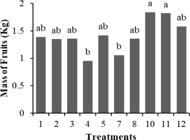
Fruit mass of 'butternut' type squash with fruiting induced by cytokinin and auxin application. CCTA/UFCG, Pombal-PB, 2020.
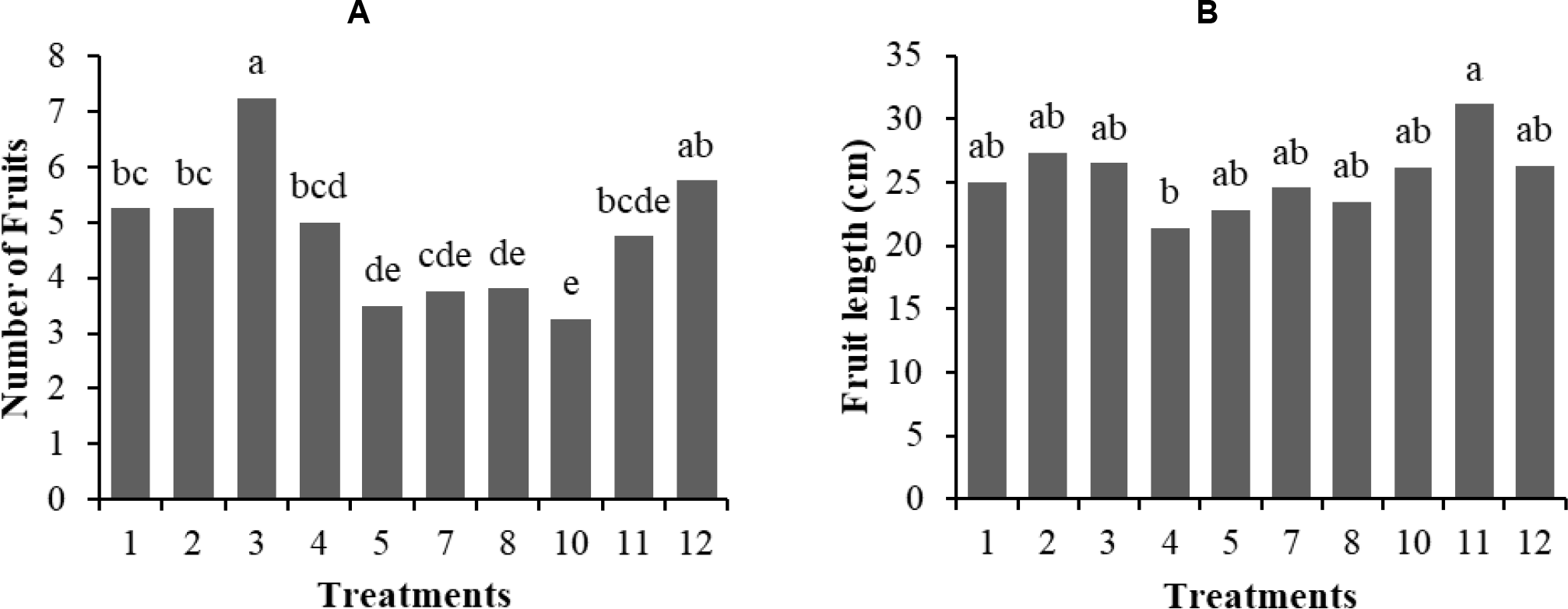
For the number of fruits, there was an increase of 20.68% when using CPPU inside the flower (T3) compared to the control treatment, with averages of 7.25 and 5.75 fruits, respectively, showing no significant difference. The treatment with AIB inside the flower (T10) resulted in the lowest value, with an average of 3.25 fruits per plant (Figure 2A). This same treatment exhibited the highest fruit mass values, where we can observe a source-sink relationship that results in more photosynthates allocated to a lower fruit demand, leading to mass gain.
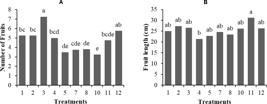
Number of fruits (A) and fruit length (B) of 'butternut' type squash with fruiting induced by cytokinin and auxin application. CCTA/UFCG, Pombal-PB, 2020.
For fruit length, the application of AIB outside the flower (T11) resulted in the highest averages (31.1 cm), with an increase of 15.6% compared to the control treatment. On the other hand, the application of CPPU outside the flower (T4) showed the lowest average length of 21.4 cm, but when this concentration was applied inside the flower (T3), it had an increase of 19.2% compared to the outside application. The use of 2,4-D showed higher values when applied outside the flower, whereas the treatment with CPPU + 2,4-D inside the flower resulted in longer fruit compared to the outside flower application (Figure 2B).
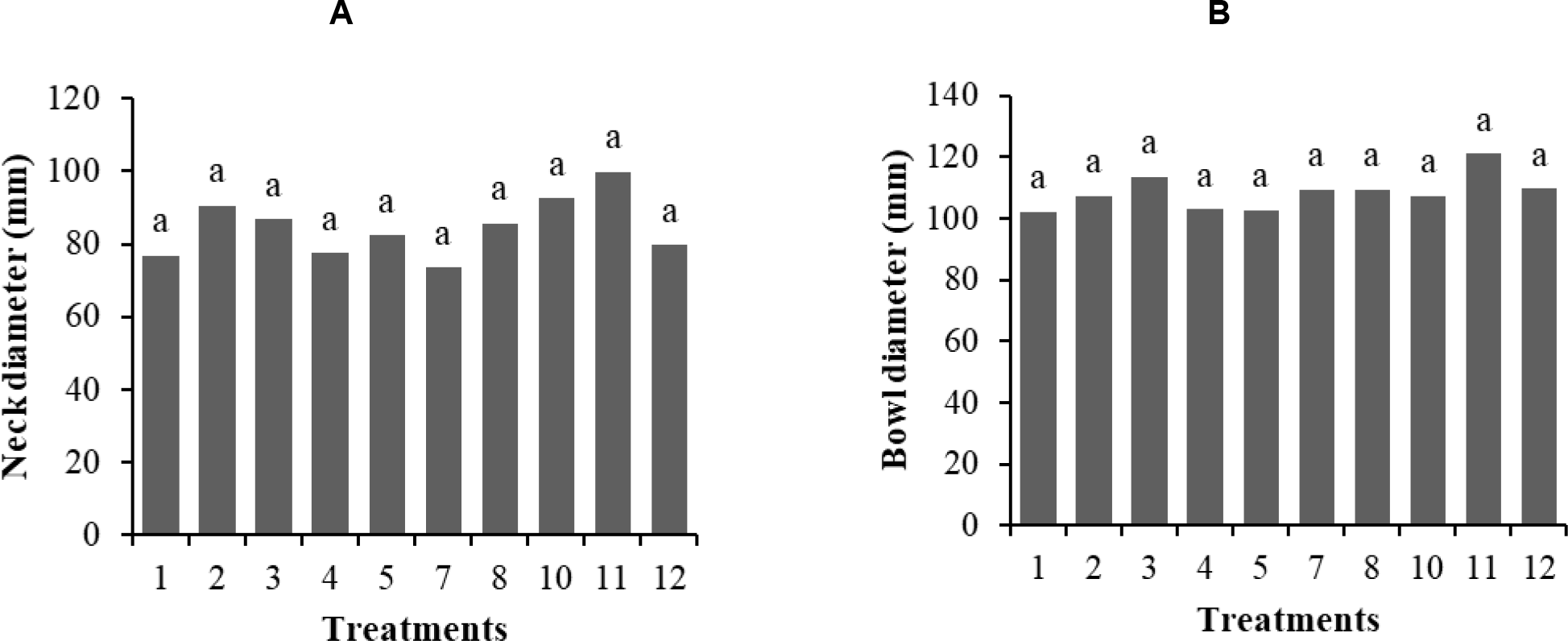
As for the neck and bulge diameter, there was no significant effect (p < 0.05). The treatment with AIB outside the flower (T11) had the highest values of 99.78 mm and 121 mm, showing an increase of 20.1% and 10.5%, respectively, compared to the control treatment (Figure 3A and B). Compared to the control treatment, reductions of 7.8% in neck diameter were observed when applying the combination of CPPU + 2,4-D inside the flower (T7), and 6.9% in bulge diameter when applying 2,4-D alone inside the flower (T1).
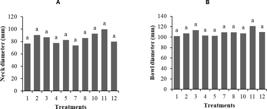
Neck diameter (A) and bulge diameter (B) of 'butternut' type squash fruits with fruiting induced by cytokinin and auxin application. CCTA/UFCG, Pombal-PB, 2020.
The treatment with the isolated use of 2,4-D applied outside the flower (T2) had values of neck and bulge diameter superior to the control treatment, with increases of 13.8 mm and 5.4 mm, respectively. On the other hand, the treatment with CPPU applied inside the flower (T3) resulted in an increase of 10.7% and 9.4% in neck and bulge diameter, respectively, compared to the treatment where CPPU was applied outside the flower (T4).
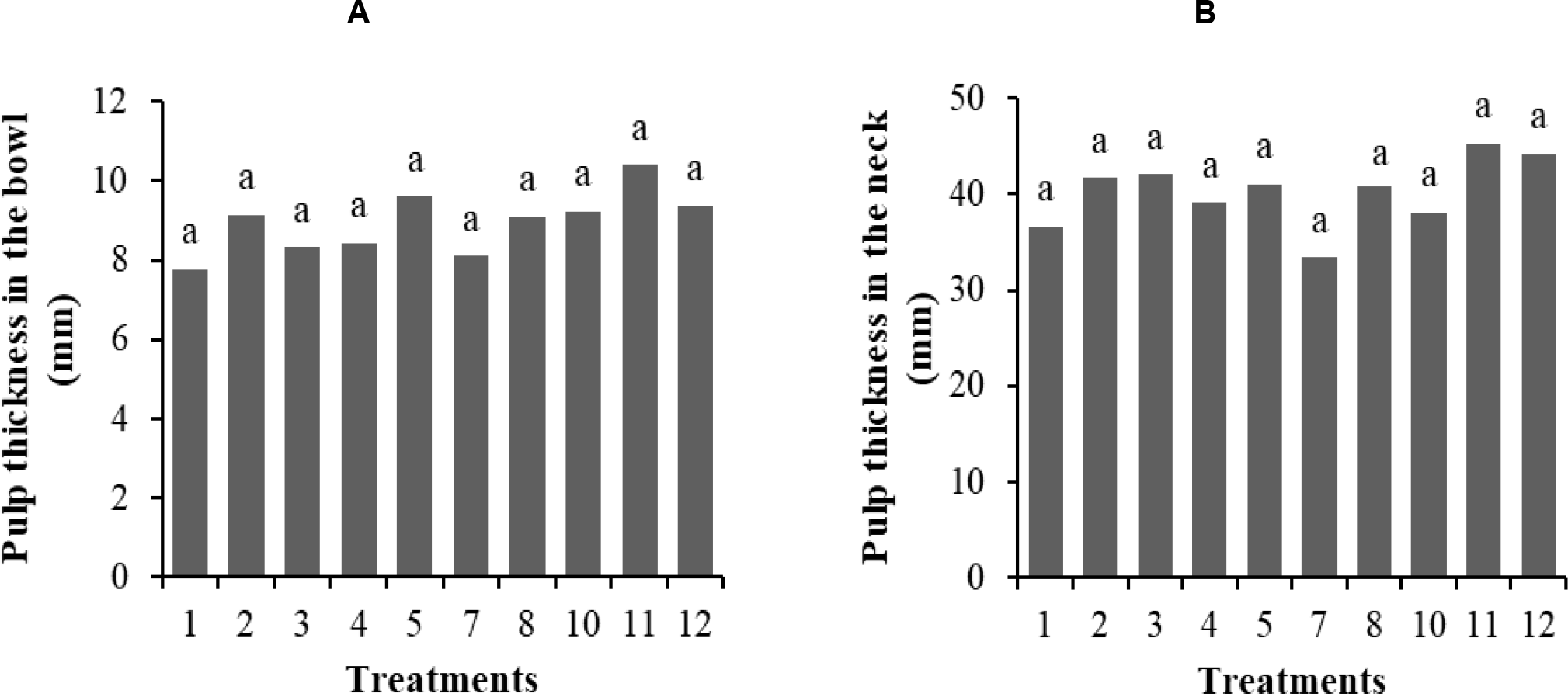
The pulp thickness in the neck and bulge did not show a significant effect (p > 0.05). However, the application of AIB outside the flower (T11) resulted in the highest averages (45.3 mm and 10.4 mm) for neck and bulge thickness, respectively (Figure 4A and B). These values are directly related to the previous variables since higher fruit mass leads to increased diameter and pulp thickness. In this same treatment, the lowest number of fruits was observed, which might have directly influenced the source-sink relationship.
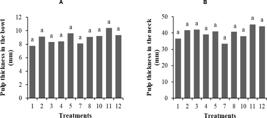
Pulp thickness in the bulbous region (A) and in the neck region (B) of 'butternut-type' pumpkin fruits induced through the application of cytokinin and auxin. CCTA/UFCG, Pombal-PB, 2020.
The treatments with CPPU + 2,4-D inside the flower (T7) and the isolated use of 2,4-D applied inside the flower (T1) resulted in lower values of pulp thickness in the neck and bulge, with reductions of approximately 24.4% and 16.8%, respectively, compared to the control treatment.
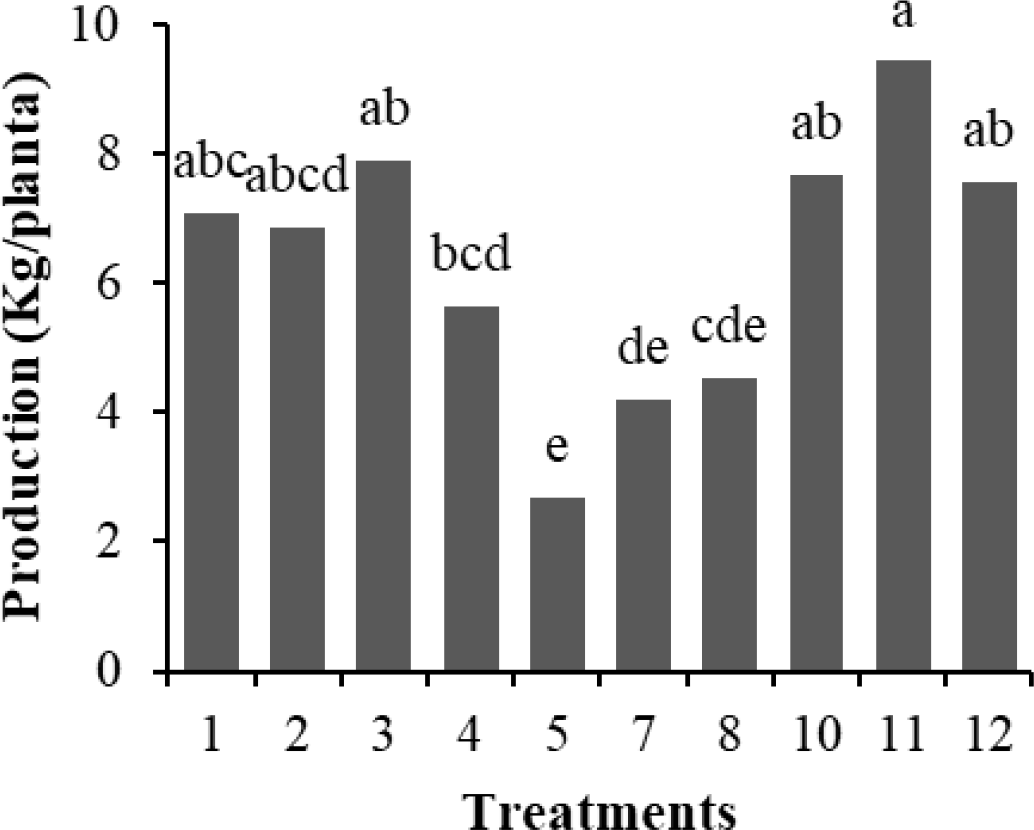
The production of 'butternut' type squash was influenced by the application of growth regulators. The application of 10 mg l-1 of AIB outside the flower (T11) obtained the highest values, with 9.43 kg/plant and an increase of 19.7% compared to the control treatment, showing no significant difference (Figure 5). The lowest values were obtained with the application of 50 mg l-1 of 2,4-D via foliar (T5), resulting in a production decrease of 64.3% compared to the control treatment.
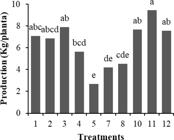
Production of 'butternut' type squash with fruiting induced by cytokinin and auxin application. CCTA/UFCG, Pombal-PB, 2020.
The treatments with the isolated application of 2,4-D, regardless of the application method (T1 and T2), did not show significant differences compared to the control treatment, but they still led to a decrease in production.
It should be noted that the dosage of 100 mg l-1 of 2,4-D might be low when compared to the results of other studies.
These results can be directly influenced by the edaphoclimatic conditions in which the treatments were tested, as well as the genetic material used. Therefore, the use of these lower dosages that exhibit a favorable productivity response to the farmer is more important, as dosages closer to the optimal maximum are also closer to phytotoxic levels.
There was no significant effect (p < 0.05) on the physical-chemical characteristics of 'butternut' type squash fruits, such as titratable acidity, soluble solids, SS/TA ratio, hydrogen potential (pH), firmness, vitamin C content, carotenoids, and fruit dry mass, for the application of auxins (AIB and 2,4-D) and cytokinin (CPPU) (Table 3).
Summary of variance analysis for physical-chemical characteristics: titratable acidity (ATT), soluble solids (SS), SS/TA ratio (SS/TA), pH, firmness (FM), vitamin C content (VTC), carotenoids (CART), and fruit dry mass (MSF) in 'butternut' type squash subjected to cytokinin and auxin application. CCTA/UFCG, Pombal-PB, 2020.
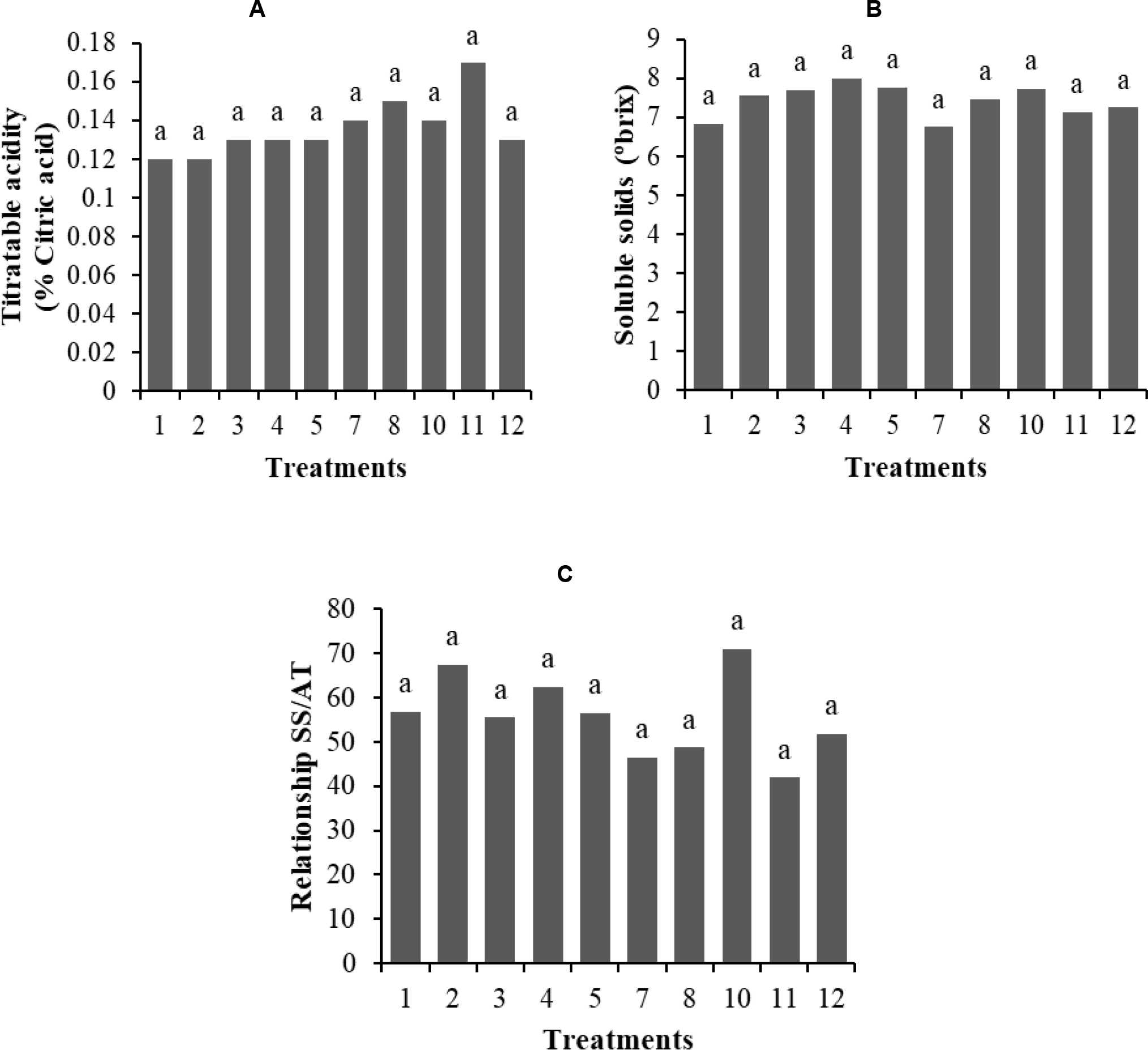
The titratable acidity of 'butternut' pumpkin fruits resulting from the application of AIB via floral on the outer part (T11) and CPPU + 2,4-D via floral on the outer part (T8) remained with average values approximately 30% and 13% higher, respectively, when compared to the control (Figure 6A).
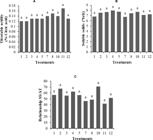
Titratable acidity (A), soluble solids (B), and SS/AT ratio (C) of 'butternut' pumpkin fruits induced by the application of cytokinin and auxin. CCTA/UFCG, Pombal-PB, 2020.
However, this difference was not significant (p > 0.05). The use of 2,4-D applied via floral on the inner part (T1) and outer part (T2) showed the lowest mean titratable acidity, with both having a difference of 7.6% compared to the control.
Regarding the soluble solids, there was no significant difference (p > 0.05). However, an increase of 10.3% and 6.8% was observed in fruits resulting from the application of CPPU via floral on the outer part (T4) and 2,4-D via foliar (T5), respectively, compared to the control.
The lowest amount of soluble solids was found in fruits resulting from the application of CPPU + 2,4-D via floral on the inner part (T7) and 2,4-D applied via floral on the inner part (T1) (Figure 6B).
Regarding the SS/AT ratio (Figure 6C), fruits from the treatment with AIB applied via floral on the outer part (T11) showed a decrease of 40.9% compared to the highest values. Fruits from this treatment also presented the highest values of titratable acidity (Figure 6A). These characteristics are common in fruits at the early stage of maturation.
This likely occurred due to the delay in fruit induction, resulting in fruits with incomplete maturation at the time of harvest. The highest SS/AT ratio was observed in fruits resulting from the application of AIB via floral on the inner part (T10), with an increase of 36.9% compared to the control. It was also observed that when applying 2,4-D or CPPU, both individually, regardless of the application site, 'butternut' pumpkin fruits showed higher SS/AT ratios than the control.
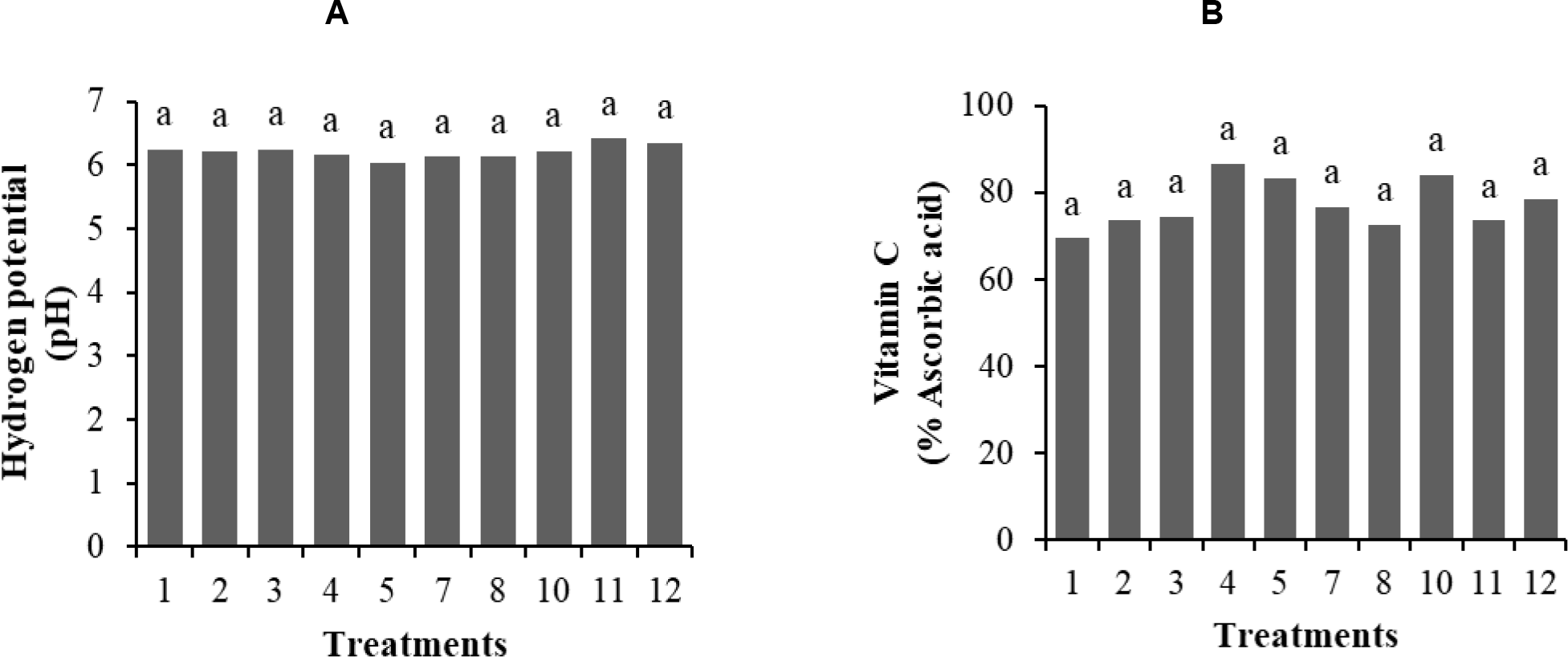
The hydrogen ion potential (pH) of 'butternut' pumpkin fruits from different treatments showed no significant difference (p > 0.05), with minimal variations, remaining at an average value of around 6.0 (Figure 7A).
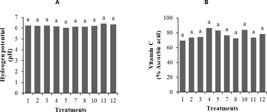
Hydrogen ion potential (pH) (A) and Vitamin C (B) of 'type butternut' pumpkin with fruit induction through the application of cytokinin and auxin. CCTA/UFCG, Pombal-PB, 2020.
Pumpkin fruits resulting from the application of CPPU via flower on the external part (T4) showed a 10.3% increase in vitamin C content compared to the control group, while the application of 2,4-D via flower on the internal part (T1) resulted in a 11.4% decrease (Figure 7B).
When the auxin AIB was applied via flower on the internal part (T10), the values of ascorbic acid (vitamin C) were higher compared to the application on the external part (T11), showing an increase of 12.7%. Similarly, the same application location had higher values when the treatments involved the combination of the auxin 2,4-D with cytokinin CPPU, resulting in a 5.3% increase in the percentage of ascorbic acid (Figure 7).
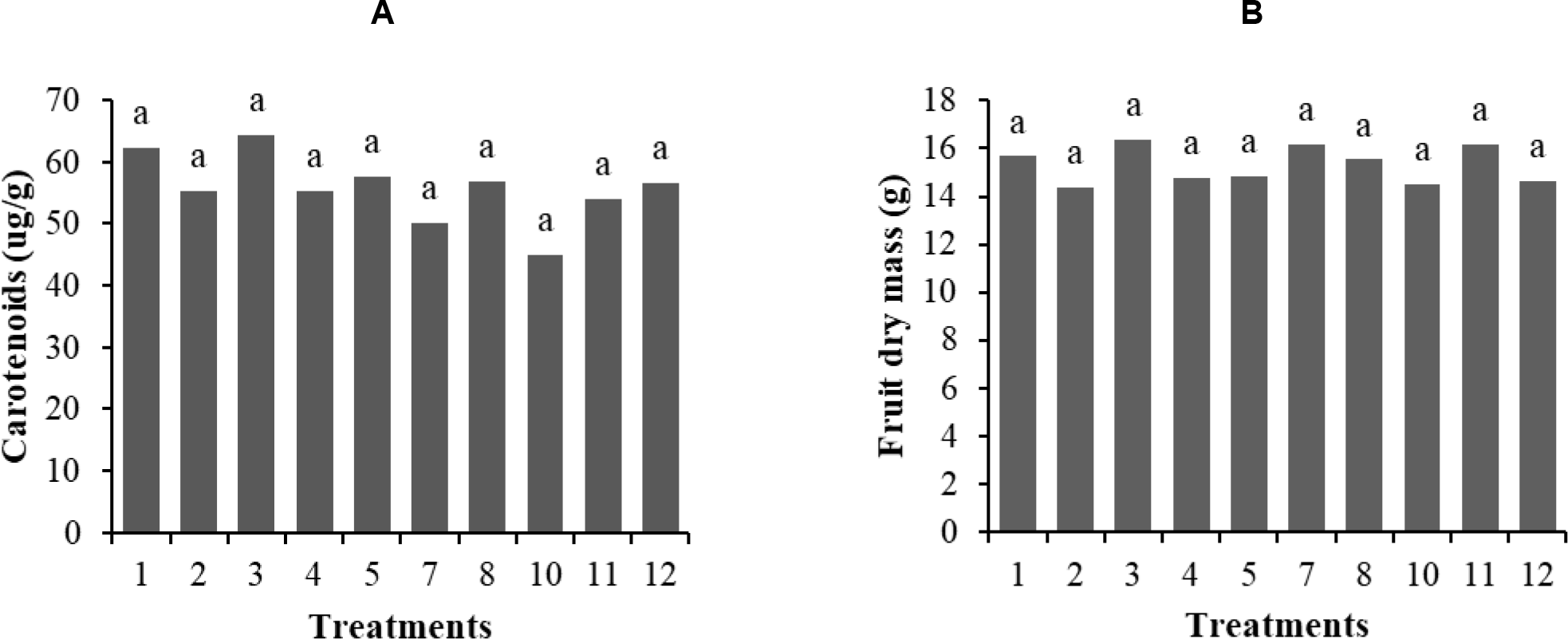
The carotenoid content of 'type butternut' pumpkin fruits from the other growth regulator treatments (auxin and cytokinin) did not show significant differences. However, the application of CPPU via floral on the inner part (T3) resulted in average values of approximately 64.3 µg g-1, representing an increase of 13.8% compared to the control.
The lowest amount of carotenoids was found in fruits from the application of AIB via floral on the inner part (T10), with a decrease of 20.5% compared to the control. The application of 2,4-D via floral on the inner part (T1) showed a higher carotenoid content compared to the application on the outer part (T2), with an increment of 11.3%.
On the other hand, the treatment with CPPU + 2,4-D via floral on the inner part (T7) presented lower values when compared to the application on the outer part, with 50.1 and 56.8 μg/g, respectively (Figure 8A).
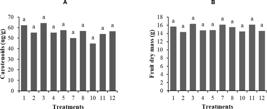
Carotenoids (A) and dry matter content of fruits (B) of 'type butternut' pumpkin with fruit set induced by the application of cytokinin and auxin. CCTA/UFCG, Pombal-PB, 2020.
Regarding the dry matter content of the fruits, the highest values (16.3 and 16.1) were observed for the treatments with CPPU applied via floral on the inner part (T3) and CPPU + 2,4-D applied via floral on the inner part (T7), with an increase of 10.4% and 9.3% respectively, compared to the control (Figure 8).
The treatment with 2,4-D applied via floral on the outer part (T2) showed the lowest means (14.3), and the treatments studied here did not have a significant effect (p > 0.05).
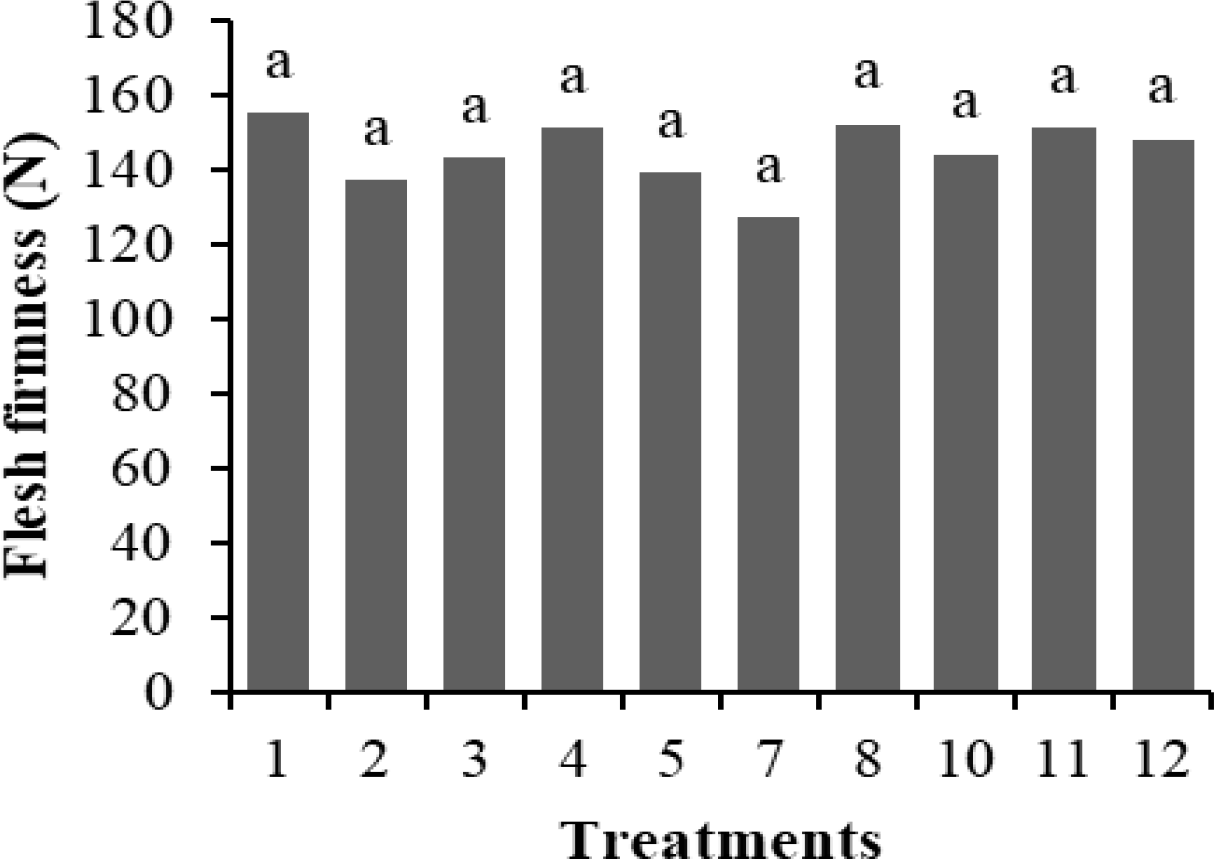
For pulp firmness, the treatments did not show significant differences (p > 0.05), with the highest values found when the treatment with 2,4-D applied via the inner part of the flower (T1), showing a 4.3% increase compared to the control. However, the treatment with CPPU + 2,4-D applied via the inner part of the flower (T7) resulted in a 13.8% decrease in fruit firmness. Regarding the use of CPPU alone, the application on the outer part of the flower showed higher firmness compared to the application on the inner part of the flower (Figure 9).
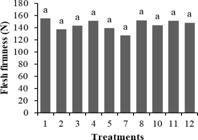
Firmness of 'Butternut' pumpkin fruits with fruit set induced by the application of cytokinin and auxin. CCTA/UFCG, Pombal-PB, 2020.
DISCUSSION
The treatments 25 mg/l of 2,4-D foliar spray (T6) and 10 mg/l de IBA through the leaf (T9) will not induce fruiting, leading to flower abscission. Similarly, when Garcia worked with cucumber and applied foliar auxin, he found that higher concentrations promoted a greater flower abscission compared to the control treatment [23]. This may be due to the increase in auxin in the plant, inducing ethylene synthesis, where one of the main effects on the plant is abscission.
In relation to the mass of the fruits, working with Japanese pumpkin fruiting and applying doses of 2,4-D, Ferreira and coauthors [24] observed that the use of 2,4-D at a dose of 225.0 mg l-1 resulted in an increase in the average weight of harvested fruits. The isolated and higher application of CPPU via foliar route does not promote an increase in fruit fresh mass. However, when combined with 50% and 25% of AIB via foliar and ovary routes, respectively, there is a significant increase [25].
Auxin is relevant for fruit patterning, while cytokinin is involved in the growth of the placenta and ovules. In other words, both regulators can act simultaneously or dependently to improve productivity.
The treatment with AIB inside the flower (T10) resulted in the lowest value for the number of fruits, this same treatment exhibited the highest fruit mass values, where we can observe a source-sink relationship that results in more photosynthates allocated to a lower fruit demand, leading to mass gain.
During the course of the experiment, it was noted that several flowers abscised in this treatment, wherein the quantity of applied AIB showed influence on fruit induction.
Queiroga and coauthors [26], studying the yield and fruit quality of Tetsukabuto pumpkin induced with doses of 2,4-D under dry conditions, found that its application at a concentration of 212.1 mg l-1 resulted in a 269.5% increase in the number of fruits.
Santos and coauthors [27], while working with the physicochemical characterization of Atlas pumpkin fruits induced by cytokinin and auxin, observed a 28.24% increase in this variable with a 50/50% (CPPU/AIB%) ratio applied via foliar route, and a 27.88% increase with a 75/25% ratio applied to the ovary, when compared to the control. Taiz and coauthors [28] suggest that plants exhibit high levels of auxins in the pollen grain found in the ovary as a result, well-pollinated flowers experience significant ovarian growth, whereas poorly pollinated flowers develop deformed ovaries. Plant hormones increase fruit growth, altering the production and allocation of photoassimilates in the development period of the reproductive organs, where the requirements for auxin and cytokinin in fruiting are greater.
The values of pulp thickness in the neck and bulge are directly linked to the previous variables, as there is a greater mass of fruits, the values of diameter and pulp thickness tend to be higher. In the same treatment, the lowest values of number of fruits were recorded, which may have directly influenced the relationship between source and sink. The foliar application of CPPU can promote its accumulation in the pericarp, leading to active cell division and an increase in cells in this region, ultimately resulting in greater thickness compared to pollinated fruits [29].
Regarding production, treatments with isolated application of 2,4-D, regardless of the application method (T1 and T2), did not show significant differences in relation to the control treatment, but still led to a decrease in production.
These results can be directly influenced by the soil and climate conditions in which the treatments were tested, as well as by the genetic material used. Therefore, the use of these lower dosages that present a favorable productivity response for the farmer is more important, since dosages closer to the maximum optimum are also closer to the phytotoxic levels. A similar result was found by Ferreira and coauthors [22] while studying fruit induction in Japanese pumpkin using 2,4-D, where they observed no increase in productivity.
Pereira and coauthors [11], evaluating doses of 2,4-D ranging from 60 to 240 mg l-1 in Testsukabuto fruiting, concluded that the dosage of 212.8 mg l-1, when compared to sexual production, increased the number and mass of fruits produced per plant, resulting in a 123.8% increase in crop productivity.
Oliveira and coauthors [30] and Gonçalves and coauthors [31] found that fruit production with larger diameter was achieved with a dosage of 700 mg l-1. When evaluating the increase in fruit induction by testing escalating doses of 2,4-Dichlorophenoxyacetic acid (187.5; 200; 212.5; 225; 237.5; 250; and 262.5 mg l-1 of 2,4-D), it was concluded that with the increase in 2,4-D doses up to 250 mg l-1, there was an increase in productivity and average fruit weight [32].
These results can be directly impacted by the soil and climate conditions in which the treatments were evaluated, as well as by the genetic material used. Therefore, it is more important to use lower doses that provide a good productivity response to the rural producer, since doses close to the maximum ideal are also closer to phytotoxic levels.
The acidity in vegetables is related to the presence of organic acids, which are dissolved in the vacuoles of cells, either in free form or combined with other compounds like esters, glycosides, etc. Hence, its content decreases with ripening, also serving as a maturation indicator for various crops [25].
For soluble solids, similar results were observed to those found by Kumar and coauthors [33], who when using 2,4-D (10 ppm) applied via the foliar route, also found a relative increase in the content of soluble solids, therefore suggesting that auxins play an important role in the accumulation of carbohydrates.
For pulp firmness, the treatments did not show significant differences, according to Cavalcante and coauthors [34], the firmness of fruit pulp is an important characteristic due to its direct relationship with fruit resistance. In addition to being an attribute related to aroma and flavor, it is essential for post-harvest shelf life as it makes fruits more resilient against injuries that can occur during transportation and commercialization.
CONCLUSION
The application of 10 mg l-1 of IBA (Indole-3-butyric acid) via flower on the outer part provides greater fruit mass and length, ensuring higher production of 'butternut' type squash.
The application of 3.0 mg l-1 of CPPU (N-(2-chloro-4-pyridyl)-N'-phenylurea) via flower on the inner part results in a higher number of fruits.
The physicochemical quality of 'butternut' type squash fruits is not influenced by the application of auxins (IBA and 2,4-dichlorophenoxyacetic acid) and cytokinin (CPPU).
-
Funding:
The authors thank Coordenação de Aperfeiçoamento de Pessoal de Nível Superior (CAPES).
Acknowledgments:
None
REFERENCES
- 1 Resende GM, Borges RME, Gonçalves NPS. Productivity of pumpkin cultivation at different planting densities in the São Francisco Valley. Hortic. Brasileira. 2013 Set;31(3):504-8.
- 2 Amaro GB, Amaro GB, Hanashiro MM, Pinheiro JB, Madeira NR, Borges RME. Technical recommendations for the cultivation of pumpkins and squashes. Embrapa Hortaliças - Technical Circular (INFOTECA-E) 2021 Jan;43.
- 3 Madeira NR, Amaro GB. Climate requirements and ecophysiology. In: Nick C, Borém, A. (Ed.). Pumpkins and squashes from planting to harvest. Viçosa, MG. UFV. 2017;21-35.
-
4 Ibge. Brazilian Institute of Geography and Statistics. 2017. Available from: https://censoagro2017.ibge.gov.br/templates/censo_agro/resultadosagro/agricultura.html?localidade=0&tema=76409
» https://censoagro2017.ibge.gov.br/templates/censo_agro/resultadosagro/agricultura.html?localidade=0&tema=76409 - 5 Terradas FR, Seno S, Mantes RM, Junior MJAF. Effect of guiding different productive branches of the hybrid pumpkin Atlas. Hortic. Brasileira. 2008 Mar;26(2).
- 6 Tajiri NS. Atlas F1 Hybrid Butternut Squash: Technical bulletin ref. SAKATA Seed Southern Sudamerica (Pty) Ltd.
- 7 Franco, M. Pumpkins: phytohormone increases production. Supplement of the Campo section of the Jornal de Brasília. 1999.
- 8 Vilela NJ, Filho EG, Almeida VES. Evaluation of Economic, Social, and Environmental Impacts - Sexual and Asexual Fruiting of the Hybrid Pumpkin. Brasília - DF: Embrapa hortaliças. 2007.
- 9 Inoue Y, Hirano A, Murata I, Kobata K, Kanamori I. Assessment of the Physical Properties of Inclusion Complexes of Forchlorfenuron and γ-cyclodextrin derivatives and Their Promotion of Plant Growth. ACS Omega. 2018 Oct;3(10):13160-69.
- 10 Medeiros JE. Application of CPPU Cytokinin in the Induction of Parthenocarpic Fruiting in Diploid and Triploid Watermelon Plants. [Dissertation]. Pombal: Universidade Federal de Campina Grande, Agroindustrial Systems, 2013. 82 p.
- 11 Pereira AM, Silva GD, Almeida RRP, Silva AB, Queiroga RCF. Pumpkin Fruiting of Tetsukabuto Under Application of 2, 4-D Doses in the Dry Season in Pombal-PB. Rev. Verde. Sust. 2012;7(4):38-43.
- 12 Ferreira MG, Alves FM, Silva DJH, Nick C. The Crop. In: Nick C, Borém A. Pumpkins and Squashes: From Planting to Harvest. Viçosa. UFV. 2017 Nov;1:9-20.
- 13 Dutra TR, Massad MD, Sarmento MFQ, Oliveira JC. Indolebutyric Acid and Substrates in the Air Layering of Umbuzeiro. Pesq. Agropec. Tropical. 2012. Dez;42(4):424-29.
- 14 Shahab M, Ayub G, Rahman A, Rashid A, Jamal A, Ali J. Assessment of IBA (Indole Butyric Acid) levels and planting time for rooting and growth of Alstonia cuttings. J. Nat. Sci. Res. 2013 Dec;3(14):59-67.
- 15 Mehta SK, Singh KK, Harsana AS. Effect of IBA concentration and time of planting on rooting in pomegranate (Punica granatum) cuttings. J. Med. Plants Stud. 2018 Jan;6(1):250-53.
- 16 Beltrão BA. Diagnosis of the municipality of Pombal. Project for the registration of groundwater supply sources. Recife: Ministério de Minas e Energia/CPRM/PRODEM. 2005 Oct; 23 p.
- 17 Alvares CA, Stape JL, Sentelhas PC, Gonçalves JLM, Sparovek G. Köppen’s climate classification map for Brazil. Meteorol. Z. 2013 Dec; 22:711-28.
- 18 Cavalcante FJA. Fertilization recommendations for the state of Pernambuco. Recífe, IPA. 2008. 198 p.
- 19 Aoac - Association of Official Analytical Chemists. Official methods of Analysis. 18 ed. Washington DC USA, 2006.
- 20 Ial - Instituto Adolfo Lutz. Métodos físico-químicos para análise de alimentos. São Paulo, versão eletrônica. 2008. 1020 p.
- 21 Lichtenthaler HK. Chlorophylls and carotenoids: pigments of photosynthetic biomembranes. In: Packer L, Douce R. (Ed.). Methods in Enzimology. London: Academic Press. 1907 Dec; 350-82.
- 22 Ferreira DF. Sisvar: A guide for its bootstrap procedures in multiple comparisons. Ciênc. Agrotecnol. 2014. Apr;38(2):109-12.
- 23 Garcia RM. Aplicación de Ácido Naftalenacético y 6 Benciladenina para el Control de Abortos en el Pepino (Cucumis sativus L.). [master's thesis]. Antonio Narro (MX): Universidad Autónoma Agraria. 2017. 49 p.
- 24 Ferreira TA, Oliveira CR, Chaves PPN, Milhomens KKB, Barros HB, Nascimento IR. Induction of Parthenocarpic Fruit Set in Japanese Pumpkin Hybrid with 2,4-D under High Temperature Conditions. Nucleus. 2017 May;14(1):145-52.
- 25 Santos GL. Phytomass of the Plant and Physicochemical Characterization of Pumpkin Produced with the Application of Cytokinin and Auxin. [Dissertation]. Pombal: Universidade Federal de Campina Grande; 2019. 73 p.
- 26 Queiroga RCF, Silva GD, Pereira AM, Almeida RRP, Silva AB. Yield and quality of the Tetsukabuto squash fruits induced with 2,4-D doses under dry conditions. Hortic. Brasileira. 2017 Apr-Jun;35(2):271-77.
- 27 Santos GL, Pereira FHF, Queiroga FM, Sousa VFO, Sousa DDA, Fernandes JEM. Growth and accumulation of dry mass in squashes with fruiting induced by cytokinin and auxin. Rev. Bras. Ciênc. Agrár. 2020 May;15(2): e6745,8 p.
- 28 Taiz L, Zeiger E, Moller IM, Murphy A. Physiology and Plant Development. Porto Alegre(RS): Artmed, 6ª ed.,2017.888p.
- 29 Ding J, Chen B, Xia X, Mao W, Shi K, Zhou Y, Yu J. Cytokinin-induced parthenocarpic fruit development in tomato is partly dependent on enhanced gibberellin and auxin biosynthesis. PloS one. 2013 Jul;8(7):1-17.
- 30 Oliveira AF, Magalhães CG, Gonçalves VD, Oliveira HR, Viana FJ, Oliveira NB, Morais MS. Growth of Hybrid Pumpkin Fruits "Tetsukabuto" under Different Applications of 2,4-D and Nitrogen. Anais...8º FEPE, 2015.
- 31 Gonçalves JFRF, Magalhães CG, Gonçalves VD, Viana FJ, Oliveira AF, Duarte, AR, Porto DMV. Quality of Hybrid Pumpkin Fruits "Tetsukabuto" Submitted to Different Applications of Synthetic Auxin and Nitrogen Fertilization. Anais...8º FEPE, 2014.
- 32 Miranda FFR, Nascimento IR, Chaves PPN, Muraishi CT, Dourado DP. Agronomic characteristics of punpkin fruits of “Tetsukabuto” hybrid as a function of 2,4-D doses. Commun. Sci. 2017 Dec;8(4):521-25.
- 33 Kumar R, Mishra S, Singh S. Improve the fruit setting and quality of pomegranate (Punica granatum L.), cv. Bhagwa by spraying the plant growth regulators under Allahabad agro climatic conditions. Int. J. Chem. Stud. 2018 Apr;6(4) 2209-11.
- 34 Cavalcante RR, Tavares AT, Mendes FC, Cerqueira FB, Nascimento IR. Post-harvest Characteristics of Parthenocarpic Watermelon Fruits Obtained with the use of 2,4-D. Braz. J. Appl. Technol. Agric. Sci. 2017 Apr;10(1) 51-7.
-
Editor-in-Chief:
Bill Jorge Costa
-
Associate Editor:
Bill Jorge Costa