 Beauveria bassiana Colonizes the Chiltepin Pepper (Capsicum annuum var. glabriusculum) Using Different Inoculation Techniques under Varying Shading Levels
Abstract
Chiltepin (Capsicum annuum var. glabriusculum), a wild chili pepper valued for its pungency, may benefit from colonization by endophytic fungi to enhance plant growth; however, such interactions have not yet been studied in this species. This study compared two sodium hypochlorite concentrations (3% and 5%) for surface disinfection during endophyte isolation from Beauveria bassiana-inoculated seedlings (leaf, stem, and root tissues evaluated at 7 days post-inoculation, dpi). Additionally, two inoculation methods (foliar spray and soil drench) were assessed for colonization efficiency under four shading levels (0%, 20%, 55%, and 70%), monitored at 14 and 30 dpi. Fungal isolates exhibiting morphological characteristics consistent with Beauveria were recovered from colonized tissues and confirmed by molecular identification. Plant height and stem diameter were measured at 14 and 28 dpi to evaluate growth promotion. Results demonstrated equivalent surface disinfection efficacy between NaOCl concentrations for endophyte studies. Foliar application achieved greater B. bassiana colonization in stems (14-35%) and leaves (up to 73%) compared with soil drench, while shading had no significant effect. Molecular analyses confirmed the identity of B. bassiana isolated from plant tissues. In terms of growth promotion, control plants exhibited greater height and stem diameter than inoculated plants. These findings demonstrate that a NaOCl concentration of 3-5% is effective for chiltepin tissue disinfection and provide the first report of B. bassiana colonization in this species, identifying foliar application as the most effective method for endophytic establishment.
Keywords:
Surface disinfection; Inoculation; Foliar and drench application; Fungal endophyte; ITS.
HIGHLIGHTS
• Sodium hypochlorite (3-5%) effectively disinfects chiltepin plant parts for fungal endophytes isolation.
• Stems showed the highest colonization of Beauveria bassiana compared to roots.
• Foliar inoculation achieved 73% B. bassiana leaf colonization - the most efficient method.
• First report of B. bassiana as a chiltepin endophyte.
INTRODUCTION
Plants of the Capsicum genus rank among the world's most important crops due to their use as vegetables, colorants, seasonings, and medicinal resources. Approximately 35 wild species are native to the Americas, yet only five have been domesticated and cultivated: C. pubescens (Ruiz & Pav.), C. chinense (Jacq.), C. frutescens (L.), C. baccatum (L.), and C. annuum (L.) [1]. Most cultivated peppers belong to C. annuum, which includes bell peppers, pasilla, guajillo, de árbol, paprika, ancho, serrano, and jalapeño varieties, with chiltepin (C. annuum var. glabriusculum [Dunal] Heiser & Pickersgill) as the ancestral progenitor of all these cultivars. Recently, chiltepin has gained market demand in certain North American regions for its gourmet culinary applications and premium hot sauces, being recognized as the second hottest pepper [2].
Chiltepin is a wild pepper species currently undergoing domestication efforts due to unsustainable harvesting practices in its natural habitat (where entire plants are uprooted during fruit collection), leading to population decline and ecosystem service degradation [3]. Research has focused on replicating wild growth conditions using shade nets with up to 95% light reduction [4]. However, domestication may alter the plant's adaptive traits and phenotypic characteristics across different growth environments [5,6]. This necessitates cost-effective techniques and technologies to facilitate successful adaptation during this transitional phase.
An alternative strategy involves inoculating production systems with endophytic microorganisms to mitigate crop adaptation challenges. Endophytic fungi-particularly Fusarium, Aspergillus, Trichoderma, Penicillium, Colletotrichum, and Beauveria [7,8]-offer a sustainable solution by colonizing plant tissues without causing harm while enhancing growth, phytoprotection, and stress resistance. Beauveria has been widely documented across diverse plant species for its multifunctional benefits [9], making it particularly promising for supporting chiltepin's domestication while reducing ecological impacts of wild harvesting.
The entomopathogenic fungus Beauveria bassiana has demonstrated dual roles as both an endophytic colonizer and plant growth promoter across multiple plant species [10,11], including various Capsicum cultivars. Mantzoukas & Lagogiannis [12] reported 80-100% leaf colonization in bell peppers following foliar spray application (to runoff point), with concurrent aphid population reductions of 63% (1 week post-inoculation) and 95% (21 days post-inoculation). Similarly, Saragih and coauthors [13] compared seed, soil, and foliar applications of B. bassiana (isolated from diverse host plants) in chili peppers, finding foliar treatment most effective achieving 80% colonization and increasing plant height by 32% versus non-inoculated controls.
Notably, no studies have compared inoculation techniques (foliar spray vs. soil drench) in chiltepin to determine their relative efficiency in achieving tissue colonization [14]. To address this gap, our study had two objectives: (1) to establish an optimal sodium hypochlorite concentration for surface sterilization of plant material to enable endophyte evaluation, and (2) to assess the endophytic capacity of B. bassiana using two application methods (foliar and soil drench) under four shading regimes (0%, 20%, 55%, and 70%), and their effects on the vegetative growth of chiltepin pepper.
MATERIAL AND METHODS
The experimental conditions
This study was conducted in vitro and in vivo. The laboratory study took place in the Biological Control I laboratory of the Graduate Studies area, while the field studies were carried out in both open-field and greenhouse conditions. The greenhouse featured a low-tech asymmetric metal structure with zenithal ventilation, 25×40 mesh anti-aphid walls, and a 720-gauge milky-white plastic cover. All facilities belonged to the Faculty of Biological and Agricultural Sciences at the University of Colima, located at Colima-Manzanillo highway km 40, Col. La Estación, CP. 28930, Tecomán, Colima, México (geographic coordinates: 18° 56' 54.8" N, 103° 53' 52.5" W). Laboratory conditions-maintained 25 ± 2 °C and 60 ± 10 % relative humidity. The field studies in Tecomán, Colima, México has a Köppen-Geiger BSh climate classification (very warm and warm semi-arid with summer rainfall) [15]. Table 1 presents the soil physicochemical properties during the experiment. Prior to transplantation, soil was disinfected with hydrogen peroxide at a rate of 10 mL per liter of irrigation water.
Physicochemical soil characteristics (30 cm depth) in B. bassiana colonization trials under differential shading in chiltepin pepper.
Plant material
Seeds of chiltepin pepper (Capsicum annuum var. glabriusculum [Dunal] Heiser & Pickersgill) were sown in 200-cell trays at 0.5 cm depth using BM2 substrate (Berger®; peat-perlite-vermiculite mix, pH 5.5). Seeds were pre-hydrated with 500 ppm gibberellic acid solution for 24 h [3]. Seedlings were watered daily and received Steiner nutrient solution (pH 5.5, EC 0.8 dS m⁻1) upon emergence of true leaves. Transplant-ready seedlings were selected at the four-true-leaf stage (15 cm height; two months post-sowing) for experimental establishment.
Beauveria bassiana strain
The study utilized B. bassiana strain B1 from the endophytic fungi collection of the Biological Control I Department at the University of Colima. This strain was originally isolated from blue agave (Agave tequilana Weber var. Azul) under conventional agronomic management in Zapotitlán de Vadillo, Jalisco, México. The B1 strain was identified by morphological characterization of Beauveria grown on agave tissue and isolated on PDA, followed by molecular confirmation through PCR amplification and Sanger sequencing of the ITS region using ITS5/ITS4 primers [16]. The ITS sequences obtained from agave tissues were deposited in the GenBank database under accession number PV616700.1. B. bassiana was produced on a large scale following the methodology proposed by Barajas-Méndez and coauthors [17], in which fungal conidia were produced on rice grains (Oryza sativa L.) inside high-density polyethylene bags with a 2 kg capacity. The rice grains were washed five times with potable water and then air-dried under sunlight. Once dry, 120 g of rice were weighed and placed into the polyethylene bags. These were sterilized in an autoclave at 127 °C and a pressure of 1.0 kg cm-2 for 15 minutes. After sterilization, the bags were cooled to room temperature, and each received 5 mL of B. bassiana fungal inoculum at a concentration of 1 × 10⁸ conidia mL-1. The inoculated rice grains were incubated for 28 days at 27 ± 2 °C, under a 10:14 h light:dark photoperiod and 75-90% relative humidity. After mass production, the conidia were recovered using a 0.1% Tween-80 solution. Rice grains containing the inoculum were placed in Falcon tubes and vortexed for one minute to suspend the conidia. The concentration of conidia per mL in the stock solution was determined using a Neubauer chamber, and a germination test was conducted by assessing spore viability 12 hours after plating on PDA agar. The results showed a germination rate of 65%. Prior to application of the fungal solution, the B. bassiana formulation was prepared at a concentration of 1 × 10⁸ viable conidia mL⁻1 [12; 13].
Experimental design
To determine the surface disinfection concentration of chiltepin plant parts for endophyte evaluation, the study was conducted using a random arrangement, where the treatments consisted of different concentrations of the disinfectant (3% and 5% sodium hypochlorite). The experimental unit was defined as a chiltepin plant that had been sprayed with microbial inoculum, subsequently dissected into its plant parts, and placed in Petri dishes, with a total of 12 replicates per treatment. On the other hand, to evaluate the colonization of B. bassiana as an endophyte in chiltepin pepper plants under different inoculation techniques and shading levels during plant growth, a completely randomized experimental design with a factorial arrangement was used. The factors included were the inoculation method of B. bassiana (Control, Tween drench, Tween foliar, B. bassiana drench, and B. bassiana foliar) and the level of shading during plant growth (0%, 20%, 55%, and 70%). This latter experiment comprised a total of 20 treatments (Table 2). The experimental unit was like that used in the previous test, differing only in the number of replicates, which consisted of three replicates per treatment.
Experimental treatments for evaluating Beauveria bassiana colonization in chiltepin pepper under different shading levels.
Surface disinfection concentration of chiltepin plant parts for endophyte evaluation
Surface disinfection was carried out using chiltepin seedlings with the previously described characteristics, which were inoculated with a concentrated suspension of B. bassiana at the time of transplanting into the greenhouse. One week later, the seedlings were collected and transported to the Biological Control I laboratory, where they were thoroughly washed (leaves, stems, and roots) under running water to remove excess particles, soil, and substrate from the root ball. Subsequently, the plants were dissected by first separating the root system from the aerial part and then dividing the shoot into three equal sections. The section closest to the root was discarded; the middle third was used for colonization analysis in the stem after leaf removal. Finally, the apical third of the plant, just above the cut between it and the middle third, had three to five leaves removed for colonization assessment. The plant parts were placed in a laminar flow hood, where 9 mm2 (3 × 3 mm) segments were cut from the leaves, and 2-3 mm segments were obtained from the stems and roots. These segments were surface disinfected by immersion in 3% and 5% sodium hypochlorite solutions for 30 seconds each, with constant agitation. Afterwards, the plant parts were rinsed twice with sterile distilled water for 1 minute each rinse, and the excess water was removed using sterile paper for one minute.
Finally, seven segments of each plant part (leaf, stem, and root) were placed equidistantly in Petri dishes (90 mm diameter) containing Sabouraud Dextrose Agar supplemented with 250 mg L-1 of chloramphenicol to prevent bacterial growth. To confirm the efficiency of surface disinfection, 100 µL of the final rinse water was plated onto the same culture medium. The Petri dishes containing the plant material were incubated for one week at 27 ± 2 °C, after which B. bassiana colonization was assessed.
Colonization of B. bassiana as an endophyte in chiltepin pepper under different inoculation techniques and different shading levels
Shading implementation and B. bassiana inoculation were performed during transplantation (Table 2). Transplanting occurred between 18:00-19:00 h, while fungal inoculation was conducted from 21:00-23:00 h to optimize humidity and minimize solar radiation for conidiospore germination. Foliar applications used a 1 L manual mist sprayer (Truper®) to deliver 3 mL of the conidial suspension, with root balls covered by plastic film and 3" PVC cylinders preventing root inoculation and spray drift. Soil drench applications applied 20 mL inoculum at the stem base using a calibrated dispenser, with equivalent procedures for 0.1% Tween solutions (both foliar and drench). Control treatments received identical volumes of sterile water through both application methods to maintain consistent hydration [14].
Crop management of chiltepin pepper
The pepper plants were managed under an open-field soil system. The species was transplanted using a topological spacing of 1.5 m between beds and 0.5 m between plants, resulting in a planting density of13 333 plants ha⁻1. Fertilization was carried out using the Steiner nutrient solution [18], adjusted to the vegetative growth stage of the crop (up to 30 days after transplanting) [19]. A 20% shading level was achieved by using a translucent plastic cover on the greenhouse structure. In contrast, 55% and 70% shading levels were provided by installing monofilament shade nets inside the greenhouse, with mesh characteristics of 16 × 13 (35% shading) and 25 × 15 threads per 2.54 cm2, respectively. For the treatment without shade (0%), the plants were exposed to full solar radiation without any type of covering.
Response variables
In the surface disinfection concentration of chiltepin plant parts for endophyte evaluation, the percentage of colonization was determined by observing and counting the number of segments (leaf, stem, and root tissues) in each Petri dish from which B. bassiana emerged, relative to the total number of segments per dish [14]. Morphological features characteristic of this fungus include dense white mycelium that turns cream to pale yellow at the edges [13].
In the experiment evaluating B. bassiana colonization as an endophyte in chiltepin pepper under different inoculation techniques and shading levels, the following variables were assessed: (i) climatic variables under each shading regime, (ii) endophytic colonization in different plant tissues, (iii) persistence of B. bassiana within the host plant, and (iv) plant growth promotion. In addition, molecular identification was performed to confirm the presence of the endophyte. These variables are described below.
Climatic Variables: Daily maximum and minimum values of relative humidity (%) and temperature (°C) were recorded using a digital hygrometer HTC-3. Additionally, daily light intensity (µmol·m-2·s-1) was measured at 12:00 h with a Quantum 3415A light meter (Ligthscout®), along with a lux meter (lux) Smart Sensor AS803.
Following inoculation of B. bassiana into chiltepin seedlings, endophytic colonization (%) was evaluated as previously described, using a 3% sodium hypochlorite solution for surface disinfection of the plant tissue and the subsequent procedure outlined above. Colonization was assessed using three analytical approaches: (i) to determine the effect of shading on colonization, inoculated plants were grouped using foliar spraying and soil soaking, and colonization percentages were calculated for each shading level at 14 days post-inoculation (dpi); and (ii) to evaluate tissue-specific colonization, the plant part (leaf, stem, and root) was considered as a factor using data from inoculated plants under all application methods and shading regimes at 14 dpi. iii) Finally, endophytic colonization in leaf, stem, and root tissues was quantified at 14 and 28 dpi for each treatment (Table 2), following the methodology of Jaber and Enkerli [14].
The persistence of B. bassiana in chiltepín was evaluated by grouping plants inoculated via foliar spray and soil drench according to sampling dates (14 and 28 dpi) and estimating the percentage of colonization at each time point.
Fungi exhibiting morphological characteristics consistent with Beauveria were re-isolated from colonized leaf, stem, and root fragments and subsequently identified using molecular methods. Identification was based on amplification and Sanger sequencing of the internal transcribed spacer (ITS) region of ribosomal DNA, along with partial sequences of the translation elongation factor 1-alpha (TEF1-α) and β-tubulin (TUB2) genes. The primers used were ITS5/ITS4, EF1-728F/EF1-986R, and Bt2a/Bt2b, respectively [16, 20, 21, 22, 23]. PCR products were sequenced on an Applied Biosystems 3130 Genetic Analyzer at the Integral Plant Health Diagnosis Laboratory (LADIFIT; https://www.colpos.mx/posgrados/fitosanidad/doctorado/ladifit ), located in the Estado de México, México.
Growth promotion: Plant height (cm) was determined by measuring from the base of the stem to the apical growth point using a tape measure, while stem diameter (mm) was measured one centimeter above the stem base using a vernier caliper, both measurements were taken at 14 and 28 dpi.
Statistical analysis
For disinfection concentration and persistence, data were tested for normality (Shapiro-Wilk test) and homogeneity of variances (Levene's test). However, as assumptions were violated, non-parametric Mann-Whitney U tests were employed (α = 0.05). Climatic variables and colonization data according to the B. bassiana application method and shading levels were also evaluated for these assumptions. In all cases, the data were non-parametric and therefore analyzed using the Kruskal-Wallis test, applied separately for each factor. Significant results (P ≤ 0.05) underwent post hoc Bonferroni testing. On the other hand, the growth promotion data, after meeting the aforementioned assumptions, were subjected to analysis of variance (ANOVA) and Tukey's multiple range test at the same level of significance. All analyses were conducted using RStudio v4.4.
RESULTS
Surface disinfection concentration of chiltepin plant parts for endophyte evaluation
Disinfection with 3% and 5% sodium hypochlorite applied to chiltepin plant parts wasstudied to evaluate the colonization of endophytic B. bassiana in this plant. However, the presence of B. bassiana was not exclusive, as other bacterial and fungal microorganisms, different from the inoculated strain, were also detected (data not shown). The plating of rinse water used to remove residual chlorine from the plant parts prior to their placement on the culture medium confirmed the effectiveness of the disinfection protocol. Out of the 20 treatments evaluated, none showed bacterial or fungal growth, indicating successful surface sterilization.
The results of plant parts disinfection to assess B. bassiana endophytic colonization in chiltepin pepper showed no statistically significant differences between the two sodium hypochlorite concentrations (3% and 5%) for the stem (n = 10, W = 86, P = 0.41), leaf (n = 10, W = 73.5, P = 0.95), or root (n = 10, W = 67, P = 0.71) (Figure 1). The colonization ranges in the stem were 0-71.4% for the 3% concentration and 0-57.1% for the 5% concentration, with medians of 28.6% and 14.3%, respectively. For the leaves, identical colonization percentages were observed between both concentrations, with ranges from 0 to 100% and a median of 7.14%. Regarding root colonization, the lowest values were recorded, with a median and minimum range of 0% for both treatments. The maximum range reached 50% for the 3% treatment and 33% for the 5% treatment.

Endophytic colonization of Beauveria bassiana using two concentrations of sodium hypochlorite (3% and 5%) for disinfection of the stem (a), leaf (b), and root (c) of chiltepin pepper one week after inoculation.
Colonization of B. bassiana as an endophyte in chiltepin pepper under different inoculation techniques and different shading levels
Shading level showed highly significant differences across all climatic variables (P < 0.001), except for maximum relative humidity, which remained consistently at 99% across all shading levels (df = 3, X2 = 3, P = 0.39) (Table 3). The highest temperatures were recorded under 0% and 20% shading (37.5 and 37.7 °C, respectively), while temperatures decreased to 32.0 and 30.6 °C as shading intensity increased (55% and 70%, respectively) (df = 3, X2 = 78.0). Regarding minimum temperature, the lowest value was observed under 0% shading (19.1 °C), showing statistically significant differences compared to higher shading levels (20.9-22.0 °C) (df = 3, X2 = 33.5). Similarly, relative humidity exhibited an inverse relationship with maximum temperature, where higher temperatures corresponded to lower humidity levels. Under 0% and 20% shading, relative humidity decreased to 34% and 45%, respectively, whereas it increased to 56% and 67% under higher shading levels (55% and 70%). Regarding light intensity, both measurements - in lux (lux meter) and µmol·m-2·s-1 (quantum light meter) - showed the same pattern. The highest radiation values (1 923 µmol··m-2·s-1 and 169 900 lux) were recorded under 0% shading, while the lowest values, significantly different from the other treatments, were 227 µmol·m-2·s-1 and 13 460 lux under the highest shading level.
Regarding the effect of shading and B. bassiana inoculation on chiltepin pepper, the analysis did not show statistically significant differences in endophyte colonization across the different shading levels (df = 3, X2 = 5.29, P = 0.15) (Figure 2).

Colonization of Beauveria bassiana in chiltepin pepper under different shading levels 14 days post-inoculation. S0 = 0% shading, S20 = 20% shading, S55 = 55% shading, and S70 = 70% shading.
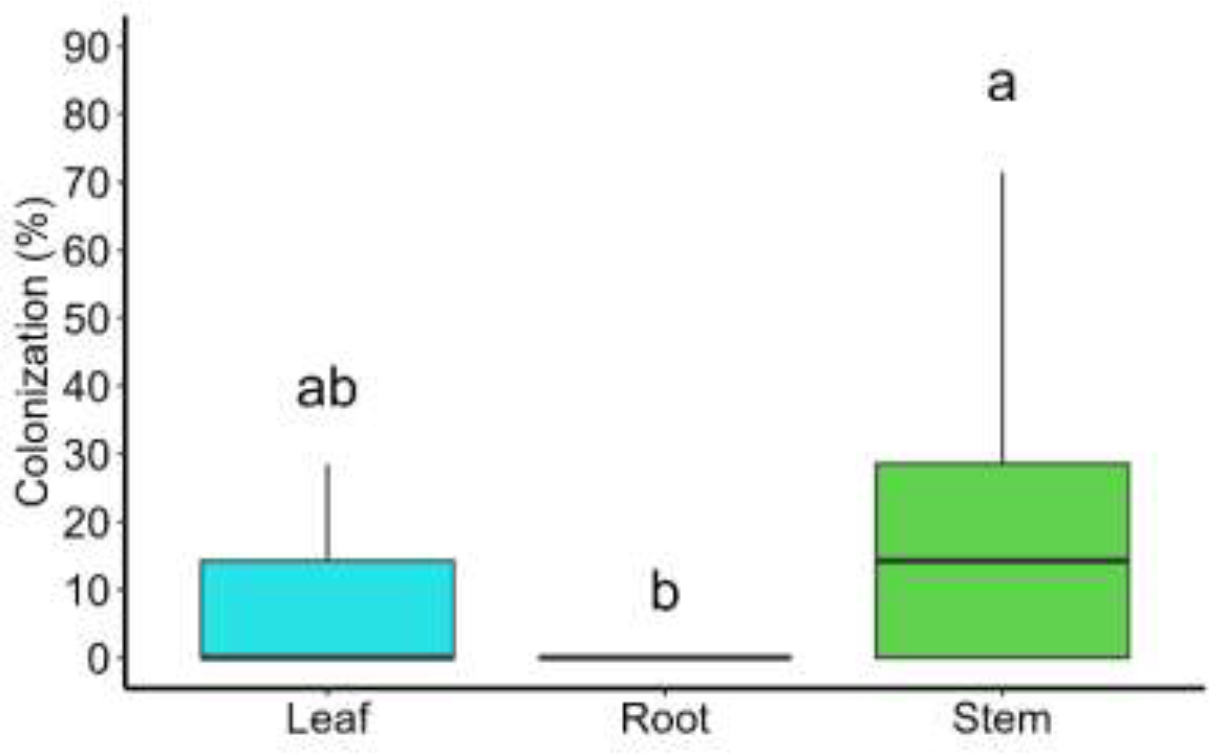
The stem was the most susceptible plant part to B. bassiana colonization in chiltepin pepper, showing a colonization rate of 16.4% and differing significantly from roots, which showed 0% colonization. In contrast, leaves did not show statistically significant differences compared to the other plant parts (df = 2, X2 = 9.63, P = 0.01) (Figure 3).

The statistical analysis revealed significant differences between the two sampling dates (14 and 28 days) in terms of B. bassiana colonization in chiltepin parts (n = 24, W = 397.5, P = 0.006). At 14 days post-inoculation, colonization was recorded at 7%, whereas no colonization was observed at 28 dpi (Figure 5).


Persistence of the endophytic fungus Beauveria bassiana in chiltepin pepper at two sampling dates after inoculation.
The colonization percentage of B. bassiana varied depending on the plant parts and inoculation technique at 14 dpi (Figure 4). In roots, no significant differences in colonization were observed among treatments or shading levels (0%: df = 4, X2 = 6.96, P = 0.14; 20%: df = 4, X2 = 3.1, P = 0.54; 70% shading: df = 4, X2 = 1.13, P = 0.89), except under 55% shading (df = 4, X2 = 12.88, P = 0.01), where foliar inoculation showed a colonization rate of 7.14%, compared to 0% for all other treatments. In contrast, the foliar inoculation technique resulted in the highest B. bassiana colonization in stems across all shading conditions (0%: df = 4, X2 = 17.75, P < 0.001; 20%: df = 4, X2 = 10.8, P = 0.03; 55%: df = 4, X2 = 19.22, P < 0.001; 70% shading: df = 4, X2 = 12.98, P = 0.01), with colonization percentages of 14.3%, 14.3%, 35.7%, and 26.2% under 0%, 20%, 55%, and 70% shading, respectively. Regarding leaf colonization, the foliar inoculation method was effective under 0% and 70% shading, showing colonization rates of 21.4% and 73.8%, respectively. The latter value represented the highest colonization level recorded in this study (Table 4). Regarding B. bassiana colonization in chiltepin plants 30 dpi, the results showed no statistically significant differences between the control treatments (Control, Tween) and the inoculation techniques (foliar or drench).
Colonization percentage of Beauveria bassiana in different parts (leaf, stem, and root) of chiltepin pepper grown under artificial shading levels at 14 and 30 days after transplanting and foliar/drench inoculation.
Molecular identification based on ITS, TEF1-α, and β-tubulin (TUB2) sequences confirmed that the fungal isolates correspond to Beauveria bassiana. The sequences obtained from leaf, stem, and root tissues were deposited in the GenBank database. The ITS sequences have been assigned the accession numbers PX410283, PX410282, and PX410281, respectively.
Growth promotion, as expressed by plant height, showed significant differences between the uninoculated control and the drench applications of B. bassiana and Tween at 14 dpi (g = 4, F = 5.14, P < 0.001). At 28 dpi, differences were observed between the plant height in the control and both foliar and drench applications of B. bassiana (g = 4, F = 5.30, P < 0.001) (Table 5); on both dates the control was greater. Regarding stem diameter, at 14 dpi, the uninoculated control showed the highest values, significantly different from the rest of the treatments (g = 4, F = 13.35, P < 0.001). At 28 dpi, the control also exhibited the largest diameter, which was significantly greater than that of the Tween drench treatment (g = 4, F = 3.17, P = 0.01); however, both treatments were statistically similar to the foliar application of Tween and to both foliar and drench applications of B. bassiana (Table 5).
Plant height (Ph) and stem diameter (Sd) of chiltepin pepper inoculated at transplant via foliar and soil with the endophytic fungus Beauveria bassiana.
DISCUSSION
Results demonstrate an effective protocol for endophyte assessment in chiltepin (C. annuum var. glabriusculum) using 3-5% sodium hypochlorite disinfection, representing the first documented application for this wild pepper species. This study provides the first evidence of successful B. bassiana colonization in chiltepin, with foliar inoculation achieving significantly higher colonization rates (73% in leaves) compared to soil drench (35% in stems) (P < 0.05). NaOCl concentrations proved equally effective for surface sterilization. These findings establish B. bassiana as a viable endophyte for chiltepin cultivation while introducing a standardized disinfection method for future endophyte research in wild Capsicum varieties.
Regarding disinfection protocols, sodium hypochlorite (3-5%) followed by double rinsing with distilled water effectively eliminated epiphytic microorganisms, enabling accurate endophytic colonization assessment in chiltepin stems, leaves, and roots without microbial contamination in rinse water. These findings align with Martínez-Martínez and coauthors [24], who used 5% NaOCl (30 s) with double sterile rinsing to study pathogens in 'San Luis' poblano pepper. Similarly, Narayan and coauthors [25] employed a sequential protocol (i.e. tap water, 95% ethanol 1 min, 4% NaOCl 4 min, 95% ethanol 30 s, and triple distilled-water rinsing) for chili endophyte quantification. Collectively, these results underscore the critical need to adapt surface sterilization methods to both research objectives and species-specific traits, as evidenced by variations in reagent exposure times, chemical inputs, and procedural steps across studies [26]. In this method, a lower chlorine concentration (3%) was used for the disinfection of root, stem, and leaf tissues, representing an optimization of previously described disinfection protocols for plants of the genus Capsicum.
The colonization of B. bassiana showed no significant influence from shading levels in the non-parametric analysis (Kruskal-Wallis). However, was observed a trend of increased fungal infestation with higher shading (corresponding to reduced PAR radiation). These findings align with Bahnweg [27], who reported 29-fold higher Apiognomonia errabunda DNA levels in shaded Fagus sylvatica leaves compared to sun-exposed controls. Similar studies by Abdolmaleki and coauthors [28] and Fadaei and coauthors [29] demonstrated enhanced endophytic fungal growth and host plant performance under low light intensity (≤70% shading). This phenomenon reflects the critical role of abiotic habitat conditions in endophyte establishment, particularly UV radiation, phyllosphere moisture, and nutrient availability [9]. In the present study, the 70% shading treatment created optimal microclimate conditions with both the lowest radiation and highest relative humidity. New controlled studies could be conducted on this species at earlier developmental stages (in seeds or seedlings), replicating the shade conditions in order to enhance colonization and its subsequent effects on seedling growth prior to transplanting to the field.
Present results revealed that the foliar spray method was more effective for the plant colonization by B. bassiana compared to the soil drench, which contrasts with some other studies, such as Saragih and coauthors [13], who reported comparable colonization rates in chili peppers between foliar (29.73%) and drench applications (27.18%), while Afandhi and coauthors [10] observed superior B. bassiana establishment in common bean (Phaseolus vulgaris) via both drench (65.36%) and foliar sprays (63.97%) relative to seed soaking (12%). These discrepancies may reflect host-specific responses or methodological differences in inoculation protocols (e.g., spore concentrations, application timing, or environmental conditions). Our findings underscore the need for crop-tailored optimization of endophyte delivery methods. These findings indicate that foliar spraying is more efficient for the colonization of B. bassiana in chiltepin, offering a practical advantage for growers, as it entails lower input requirements, reduced labor, and less time compared to drench application for endophytic fungal inoculation.
The highest B. bassiana colonization in chiltepin occurred in leaves (73.8%) following foliar application under 70% shading, aligning with Afandhi and coauthors [10] who reported 66.9% leaf colonization in common bean (Phaseolus vulgaris). Stems showed the highest average colonization across all shading levels (16.4%), consistent with Jaber & Enkerli's [14] findings of 69.5% stem colonization in faba bean (Vicia faba). Root colonization remained low (≤7.14%), contrasting sharply with Akter and coauthors [30] who observed 66-72% root colonization in rice (O. sativa) under saline stress (120 mM NaCl). This discrepancy likely reflects methodological differences: seed inoculation versus our established-plant protocol and controlled versus field-like conditions. These results suggest that early inoculation timing and direct root application methods may significantly enhance endophytic colonization in belowground tissues.
Current understanding of the genetic and biochemical mechanisms underlying B. bassiana's endophytic colonization remains limited. However, it is established that plant immune responses, including the salicylic acid (SA) pathway, are activated during both pathogenic and endophytic colonization attempts. Successful colonization likely depends on the microorganism's ability to counteract these defenses through enzymatic degradation (e.g., salicylate hydroxylase production) [31] or other SA-suppression strategies. Our findings of plant part-specific colonization patterns in chiltepin (leaves > stems > roots) may reflect differential SA accumulation or tissue-specific immune responses across plant parts [32]. This highlights the need for future research on B. bassiana's molecular adaptation mechanisms during its endophytic phase in Capsicum species.
The persistence of B. bassiana in chiltepin showed a temporal decline, with average colonization decreasing from 14% at 14 dpi to 4% by 28 dpi across all plant parts. Comparable patterns were observed by Jaber & Alananbeh [33] in sweet pepper (C. annuum) under controlled greenhouse conditions, where soil drench application resulted in colonization dropping from 21.9% (7 dpi) to 0% (35 dpi). Wilberts and coauthors [34] similarly detected no leaf colonization in sweet pepper four weeks after 18-hour fungal immersion. Contrastingly, Mantzoukas & Lagogiannis [12] reported sustained high colonization (90% to 80% between 14-21 dpi) in chili plants infested with aphids (Myzus persicae Sulzer), suggesting pest pressure modulates endophyte dynamics. These studies collectively indicate that endophytic persistence reflects a cost-benefit equilibrium in the symbiosis, mediated by ecological factors [35]. Under low pest pressure, the nutritional cost of maintaining fungal symbionts may lead to host-mediated suppression, whereas insect herbivory provides alternative nutrient sources for the fungus, enhancing its persistence while benefiting the host through biocontrol. In this context, understanding the biotic conditions (e.g., pest pressure), abiotic factors (e.g., shading regimes), and inoculation techniques that promote endophytic colonization and niche establishment will facilitate the adoption of this approach for sustainable agriculture. Such biological strategies can significantly reduce reliance on synthetic agrochemicals while maintaining crop productivity [7,8]. Alternatively, future studies should focus on evaluating B. bassiana inoculation in chiltepin subjected to biotic stress, along with periodic re-inoculation of the endophytic fungus at 7- to 21-day intervals to determine its persistence and potential impact on plant growth promotion.
The limited endophytic colonization of B. bassiana observed in this study may be partially associated with the origin of the strain used, which was originally isolated from Agave tequilana. As this endophyte is not native to chiltepin pepper, its capacity to successfully establish and persist within this host plant may be constrained. Such host-endophyte specificity has been reported for other endophytic fungi and could contribute to the low colonization levels detected, which in turn may explain the absence of a positive effect on plant growth promotion, as indicated by Yerukala and coauthors [36] in their meta-analysis of 1 051 studies on B. bassiana colonization. They reported that studies showing colonization rates between 50-60% achieved greater effectiveness, and that the highest colonization was observed when an inoculum concentration of 1×10¹² conidia mL-1 was applied-higher than that used in the present study. This hypothesis warrants further investigation using strains native to Capsicum species or research could focus on identifying appropriate inoculum concentrations for application in this species, evaluating their effects on plant growth promotion, as well as the mitigation of abiotic and biotic stress. Moreover, it would be advisable to increase the number of variables assessed for such purposes.
Finally, this study represents a preliminary approach to understanding the interaction between chiltepin (C. annuum var. glabriusculum) and the endophytic fungus B. bassiana. These results are ecologically significant, although further research is needed to determine whether B. bassiana could provide various benefits to the host plant under specific growth and environmental conditions, especially considering the recent domestication of this species. Among the potential ecological benefits of this endophyte to its host are enhanced nutrient acquisition, synthesis of phytohormones, pest and disease control, and increased tolerance to biotic and abiotic stress [37]. Furthermore, B. bassiana has been proposed to offer additional ecosystem services by remaining active in association with other plant species in the ecosystem and even persisting in the soil as a saprophyte, feeding on decomposing plant material or, through its entomopathogenic capacity, helping to regulate insect populations [38].
CONCLUSION
This study establishes an optimized protocol for endophyte assessment in chiltepin using 3-5% NaOCl sterilization, with foliar inoculation achieving 73.8% leaf colonization, significantly higher than soil drench (35% in stems). While shading (0-70%) showed no significant effect, colonization decreased temporally (14% to 4% by 28 dpi), suggesting host regulation without biotic stress. Plant part-specific patterns (leaves>stems>roots) likely reflect differential plant immune responses. Compared to other crops, chiltepin's lower root colonization highlights host-specific adaptation needs. On the other hand, the lack of a positive growth response in chiltepin due to inoculation may be attributed to the overall low colonization levels and the limited number of variables evaluated to assess the effects of inoculation in this species. These findings position B. bassiana as a promising, yet transient, endophyte for the sustainable cultivation of chiltepin.
-
Funding:
The funds used in this research came from a graduate scholarship granted by the Secretaría de Ciencias, Humanidades, Tecnología e Innovación (SECIHTI, México), under the number CVU-735739, intended for the development of doctoral studies in Agricultural Sciences at the Universidad Autónoma de Sinaloa.
-
Institutional Review Board Statement:
Not applicable
-
Informed Consent Statement:
Not applicable.
-
Use of Generative Artificial Intelligence:
The authors declare that no generative artificial intelligence (AI) or AI-assisted technologies were used to generate or modify the scientific content of this manuscript, including the conception of the study, data collection, data analysis, interpretation of results, or creation of original text, figures, tables or graphical abstracts, apart from routine tools for spelling, grammar checking and reference management that do not create original scholarly content.
Acknowledgments:
The authors have no acknowledgments to declare.
Data Availability Statement:
Research data are only available upon request for corresponding author.
REFERENCES
-
1 Barchenger DW, Bosland PW. Chapter 7. Wild chile pepper (Capsicum L.) of North America. In: Greene S, Williams K, Khoury C, Kantar M, Marek L, editors. North American crop wild relatives, Switzerland:Springer Nature; 2019. 2:225-42. https://doi.org/10.1007/978-3-319-97121-6_7
» https://doi.org/10.1007/978-3-319-97121-6_7 - 2 Flores-González P, Franco-Bañuelos A, Hernández-Martínez J, Moreno-Limón S, Hernández-Pineiro JL, Pinedo-Espinoza JM. [Physicochemical evaluation and antioxidant capacity of wild chiltepin from Nuevo León, Mexico]. Research Development Science. 2018;3:529-34.
- 3 Araiza-Lizarde N, Araiza-Lizarde E, Martínez-Martínez JG. [Evaluation of germination and seedling growth of chiltepin peppers (Capsicum annuum L. variety glabriusculum) in a greenhouse]. Colombian Journal of Biotechnology. 2011;13(2):170-5.
-
4 Jiménez-Leyva A, Orozco-Avitia J, Gutiérrez A, Vargas G, Sánchez E, Muñoz E, Esqueda M. Functional plasticity of Capsicum annuum var. glabriusculum through multiple traits. AoB Plants 2022;14(3): plac017. https://doi.org/10.1093/aobpla/plac017
» https://doi.org/10.1093/aobpla/plac017 -
5 Sandoval-Rangel A, Tapia-González A, González-Fuentes JA, Benavides-Mendoza A. [Age, benefit, and gibberellic acid affect the germination and production of piquin chili plants]. Mexican Journal of Agricultural Sciences. 2018;9:4199-209. https://doi.org/10.29312/remexca.v0i20.990
» https://doi.org/10.29312/remexca.v0i20.990 -
6 Díaz-Sánchez DD, López-Sánchez H, Silva-Rojas HV, Gardea-Béjar AA, Cruz-Huerta N, Ramírez-Ramírez I, et al. Pungency and fruit quality in Mexican landraces of piquín pepper (Capsicum annuum var. glabriusculum) as affected by plant growth environment and postharvest handling. Chil. J. Agr. Res. 2021;81(4):546-56. https://doi.org/10.4067/S0718-58392021000400546
» https://doi.org/10.4067/S0718-58392021000400546 -
7 McKinnon AC, Saari S, Moran-Diez ME, Meyling NV, Raad M, Glare TR. Beauveria bassiana as an endophyte: a critical review on associated methodology and biocontrol potential. BioControl. 2017;62:1-17. https://doi.org/10.1007/s10526-016-9769-5
» https://doi.org/10.1007/s10526-016-9769-5 -
8 Suganthi S, Kavitha S. Fungal endophytes: a potent microbiome for plant growth promotion. Res. J. Agric. Sci. 2023;14(6):1863-71. http://rjas.org/Article/Article/5699
» http://rjas.org/Article/Article/5699 -
9 Vega FE. The use of fungal entomopathogens as endophytes in biological control: a review. Mycologia. 2018;110(1):4-30. https://doi.org/10.1080/00275514.2017.1418578
» https://doi.org/10.1080/00275514.2017.1418578 -
10 Afandhi A, Widjayanti T, Emi AAL, Tarno H, Afiyanti M, Handoko RNS. Endophytic fungi Beauveria bassiana Balsamo accelerates growth of common bean (Phaeseolus vulgaris L.). Chem. Biol. Technol. Agric. 2019;6(1):1-6. https://doi.org/10.1186/s40538-019-0148-1
» https://doi.org/10.1186/s40538-019-0148-1 -
11 Rajab L, Habib W, Gerges E, Gazal I, Ahmad M. Natural occurrence of fungal endophytes in cultivated cucumber plants in Syria, with emphasis on the entomopathogen Beauveria bassiana J. Invertebr. Pathol. 2023;107868. https://doi.org/10.1016/j.jip.2022.107868
» https://doi.org/10.1016/j.jip.2022.107868 -
12 Mantzoukas S, Lagogiannis I. Endophytic colonization of pepper (Capsicum annum) controls aphids (Myzus persicae Sulzer). Appl. Sci. 2019;9(11):2239. https://doi.org/10.3390/app9112239
» https://doi.org/10.3390/app9112239 -
13 Saragih M, Trizalia, Nurbailis, Yusniwati. Endophytic colonization and plant growth promoting effect by entomopathogenic fungus, Beauveria bassiana to red chili (Capsicum annuum L.) with different inoculation methods. In IOP Conf. Ser.: Earth Environ. Sci., The 4th International Conference on Biological Sciences and Biotechnology, 2018 December 8-9, Medan, North Sumatera, Indonesia, 2019;305:012070. https://doi.org/10.1088/1755-1315/305/1/012070
» https://doi.org/10.1088/1755-1315/305/1/012070 -
14 Jaber LR, Enkerli J. Fungal entomopathogens as endophytes: can they promote plant growth?. Biocontrol Sci. Technol. 2017;27(1):28-41. https://doi.org/10.1080/09583157.2016.1243227
» https://doi.org/10.1080/09583157.2016.1243227 -
15 Peel MC, Finlayson BL, McMahon TA. Updated world map of the Köppen-Geiger climate classification. HESS. 2007;11(5):1633-44. https://doi.org/10.5194/hess-11-1633-2007
» https://doi.org/10.5194/hess-11-1633-2007 - 16 Glass, N. L., & Donaldson, G. C. Development of primer sets designed for use with the PCR to amplify conserved genes from filamentous ascomycetes. Appl. Environ. Microbiol, 1995; 61(4), 1323-30.
-
17 Barajas-Méndez KN, Toscano-Verduzco FA, Delgado-Salas CI, Chan-Cupul W, Sánchez-Rangel JC, Buenrostro-Nava MT, et al. [Emergence, growth and plant quality of two papaya (Carica papaya L.) genotypes inoculated with entomopathogenic fungi]. Sci. Agropecu. 2022;13(4):411-21. http://dx.doi.org/10.17268/sci.agropecu.2022.037
» http://dx.doi.org/10.17268/sci.agropecu.2022.037 - 18 Steiner, AA. The universal nutrient solution. In 6. International Congress on Soilless Culture, Lunteren (Netherlands), 29 Apr-5 May 1984. ISOSC.
-
19 Mendoza-Villarreal R, Robledo-Torres V, Pérez-Rodríguez MÁ, Guillén-Enríquez RR, Martínez-Cueto V, Paredes-Jácome JR. [Impact of cover, ecotype and endomycorrhiza on morphology and quality of piquin chili]. Mexican Journal of Agricultural Sciences. 2021;12(2):193-204. https://doi.org/10.29312/remexca.v12i2.2847
» https://doi.org/10.29312/remexca.v12i2.2847 -
20 White TJ, Bruns T, Lee S, Taylor J. Amplification and direct sequencing of fungal ribosomal RNA genes for phylogenetics. In Innis MA, Gelfand DH, Sninsky JJ, White TJ. (Eds.). Protocols: a guide to methods and applications. New York: Academic Press. 1990. p. 315-22. https://doi.org/10.1016/B978-0-12-372180-8.50042-1
» https://doi.org/10.1016/B978-0-12-372180-8.50042-1 -
21 Carbone, I., & Kohn, L. M. A method for designing primer sets for speciation studies in filamentous ascomycetes. Mycologia, 1999; 91(3), 553-6. https://doi.org/10.1080/00275514.1999.12061051
» https://doi.org/10.1080/00275514.1999.12061051 -
22 Servicio Nacional de Sanidad, Inocuidad y Calidad Agroalimentaria (SENASICA). [Diagnostic Protocol: Passalora fulva (Cooke) U. Braun & Crous, 2003 (Tomato Leaf Mold)] [Publication V.1]. Tecámac, State of Mexico: Mexico. 2019 Jul [cited 2026 Feb 6]. Available from: https://www.gob.mx/cms/uploads/attachment/file/723688/12._Protocolo_P._fulva_Pub_V._1.pdf
» https://www.gob.mx/cms/uploads/attachment/file/723688/12._Protocolo_P._fulva_Pub_V._1.pdf -
23 Cai, F., Druzhinina, I.S. In honor of John Bissett: authoritative guidelines on molecular identification of Trichoderma Fungal Diversity, 2021; 107, 1-69. https://doi.org/10.1007/s13225-020-00464-4
» https://doi.org/10.1007/s13225-020-00464-4 -
24 Martínez-Martínez TO, Martínez-Camacho AP, Rodríguez-Guerra R, Marisol-Amaro L, Rivas-Valencia P. Isolation and identification of antagonistic fungi of fungi associated with chili wilt in southern Guanajuato, Mexico. Rev. Mex. Fitopatol. 2023;41(2):268-84. https://doi.org/10.18781/r.mex.fit.2302-1
» https://doi.org/10.18781/r.mex.fit.2302-1 -
25 Narayan CP, Deng JX, Sang HK, Choi YP, Yu SH. Distribution and antifungal activity of endophytic fungi in different growth stages of chili pepper (Capsicum annuum L.) in Korea. Plant Pathol. J. 2012;28(1):10-9. https://doi.org/10.5423/PPJ.OA.07.2011.0126
» https://doi.org/10.5423/PPJ.OA.07.2011.0126 -
26 Sahu PK, Tilgam J, Mishra S, Hamid S, Gupta A, Jayalakshmi K, et al. Surface sterilization for isolation of endophytes: ensuring what (not) to grow. J. Basic Microbiol. 2022;62(6):647-68. https://doi.org/10.1002/jobm.202100462
» https://doi.org/10.1002/jobm.202100462 -
27 Bahnweg G, Heller W, Stich S, Knappe C, Betz G, Heerdt C, et al. Beech leaf colonization by the endophyte Apiognomonia errabunda dramatically depends on light exposure and climatic conditions. Plant Biol. 2005);7(6):659-69. https://doi.org/10.1055/S-2005-872943
» https://doi.org/10.1055/S-2005-872943 -
28 Abdolmaleki AK, Pirdashti H, Yaghoubian Y, Abbasian A, Ghadirnezhad-Shiade SR. Endophytic fungi improve growth and yield of wheat (Triticum aestivum L.) under limited light conditions. Gesunde Pflanzen. 2023;75(5):1517-29. https://doi.org/10.1007/s10343-022-00816-x
» https://doi.org/10.1007/s10343-022-00816-x -
29 Fadaei A, Asghari H, Pirdashti H, Yaghoubian Y, Nouri-Akandi Z. Endophytic symbiosis enhances the growth, yield, and antioxidant defense in soybean (Glycine max (L.) Merrill) exposed to various light intensities. J. Crop Health. 2024;76(5):1167-78. https://doi.org/10.1007/s10343-024-01017-4
» https://doi.org/10.1007/s10343-024-01017-4 -
30 Akter T, Akter MA, Asraful HMd, Motaher HMd, Kumar GT, Zinan N, et al. Seed priming with Beauveria bassiana improves growth and salt stress response in rice. Environ. Exp. Bot. 2023;213:105427. https://doi.org/10.1016/j.envexpbot.2023.105427
» https://doi.org/10.1016/j.envexpbot.2023.105427 -
31 Ortiz-Urquiza A. The split personality of Beauveria bassiana: Understading the molecular basis of fungal parasitism and mutualism. AMS. 2021; 6(4):e00766-21. https://doi.org/10.1128/mSystems.00766-21
» https://doi.org/10.1128/mSystems.00766-21 -
32 Mengistu AA. Endophytes: colonization, behaviour, and their role in defense mechanism. Int J Microbiol. 2020;1-8: 6927219. https://doi.org/10.1155/2020/6927219
» https://doi.org/10.1155/2020/6927219 - 33 Jaber LR, Alananbeh KM. Fungal entomopathogens as endophytes reduce several species of Fusarium causing crown and root rot in sweet pepper (Capsicum annuum L.). Biocontrol. 2018;126:117-26.
-
34 Wilberts L, Rojas-Preciado N, Jacquemyn H, Lievens B. Fungal strain and crop cultivar affect growth of sweet pepper plants after root inoculation with entomopathogenic fungi. Front. Plant Sci. 2023;14:1196765. https://doi.org/10.3389/fpls.2023.1196765
» https://doi.org/10.3389/fpls.2023.1196765 -
35 Rodriguez RJ, White JrJF, Arnold AE, Redman ARA. Fungal endophytes: diversity and functional roles. New Phytol. 2009;182(2):314-30. https://doi.org/10.1111/j.1469-8137.2009.02773.x
» https://doi.org/10.1111/j.1469-8137.2009.02773.x -
36 Yerukala S, Butler DM, Bernard EC, Gwinn KD, Grewal PS, Ownley BH. Colonization efficacy of the endophytic insect-pathogenic fungus, Beauveria bassiana, across the plant kingdom: a meta-analysis. Crit. Rev. Plant Sci. 2022; 41(4):241-70. https://doi.org/10.1080/07352689.2022.2109287
» https://doi.org/10.1080/07352689.2022.2109287 -
37 Wani ZA, Ashraf N, Mohiuddin T, Riyaz-Ul-Hassan S. Plant-endophyte symbiosis, an ecological perspective. Appl. Microbiol. Biotechnol. 2015;99(7):2955-65. https://doi.org/10.1007/s00253-015-6487-3
» https://doi.org/10.1007/s00253-015-6487-3 -
38 Ranesi M, Vitale S, Staropoli A, Di Lelio I, Izzo LG, De Luca MG, et al. Field isolates of Beauveria bassiana exhibit biological heterogeneity in multitrophic interactions of agricultural importance. Microbiol. Res. 2024; 286:127819. https://doi.org/10.1016/j.micres.2024.127819
» https://doi.org/10.1016/j.micres.2024.127819
-
Editor-in-Chief:
Bill Jorge Costa
-
Associate Editor:
Adriel Ferreira da Fonseca